FILE NO. 0108Case status Archived
Sexsomnia is a recognized sleep disorder, but establishing that it caused a particular alleged offence is an altogether different matter.
“I was asleep” may sound like an implausibly convenient response to an allegation of sexual assault. Yet, sexsomnia is a genuine clinical condition, documented in sleep medicine literature and recognized as a form of non-rapid eye movement parasomnia.
That medical reality does not make every claim credible. Nor does a diagnosis automatically determine criminal responsibility. In forensic practice, the central question is not simply whether an accused person is capable of experiencing sexsomnia. It is whether the evidence supports the conclusion that the specific act under examination occurred during an episode of impaired consciousness.
That distinction places sexsomnia cases in one of the most difficult areas where medicine, law and sexual consent intersect.
What Is Sexsomnia?
Sexsomnia involves sexual behaviour arising during sleep, usually during a partial arousal from non-REM sleep. Reported behaviours range from sexual vocalizations and masturbation to fondling or intercourse. The person may appear awake, move purposefully and even have their eyes open while remaining substantially unaware of what they are doing.
Partial or complete amnesia is common. The person may learn about the episode only from a sleeping partner or another witness.
Sexsomnia belongs to the same broad family of disorders of arousal as sleepwalking and confusional arousals. It may coexist with other parasomnias or sleep disorders, including obstructive sleep apnea. Sleep deprivation, stress, disrupted sleep, medication, alcohol and other substances may also require consideration, although their presence does not prove that an episode occurred.
Alternative explanations must be examined carefully. Nocturnal epilepsy, REM sleep behaviour disorder, dissociative conditions, intoxication, deliberate conduct and malingering can produce or be associated with superficially similar accounts.
A Diagnosis Is Not Proof of an Episode
This is the first major forensic difficulty.
A clinical diagnosis establishes that a person has, or may have, a sleep disorder. It does not establish that every disputed nocturnal act was caused by that disorder. A person with a documented history of sleepwalking or sexsomnia remains capable of intentional conduct while awake.
Video polysomnography, commonly known as a sleep study, may provide useful evidence about sleep architecture, abnormal arousals and conditions such as sleep apnea or epilepsy. In rare cases, it may capture sexual behaviour during sleep.
Its limitations are equally important. Parasomnias are intermittent and are seldom reproduced on demand in a laboratory. A normal study does not necessarily exclude sexsomnia. Conversely, recording a parasomnia during a later study cannot prove that an earlier alleged offence occurred during the same state.
Forensic assessment is therefore retrospective. Experts must reconstruct the disputed episode from incomplete evidence rather than claim scientific certainty that the available methods cannot provide.
Automatism and Criminal Responsibility
When sexsomnia is raised in criminal proceedings, the relevant legal argument is generally some form of automatism: conduct performed without conscious, voluntary control.
Automatism is not simply a claim of poor memory. Amnesia can occur for several reasons, including intoxication, and forgetting an act does not prove that it was involuntary when committed. The legal issue is whether the accused lacked the level of conscious control required for criminal responsibility at the time.
The precise rules vary considerably between jurisdictions. Courts may distinguish between “insane” and “non-insane” automatism, impose different evidential or persuasive burdens, and attach different consequences to each classification.
It is therefore inaccurate to say, as a universal rule, that the defence must prove sleep beyond a reasonable doubt. In England and Wales, for example, current Crown Prosecution Service guidance states that the defence must first establish a proper evidential foundation supported by expert medical evidence. The allocation and standard of proof thereafter depend on the form of automatism in issue and the applicable law.
A psychiatric or sleep-medicine diagnosis cannot answer the ultimate legal question. Experts explain the clinical evidence; judges determine whether the defence can be considered, and juries or other fact-finders decide whether the legal test has been satisfied.
What Evidence Matters?
A credible forensic evaluation should extend well beyond the accused person’s statement that they cannot remember what happened.
Relevant evidence may include:
- A documented history of sleepwalking, confusional arousals or other parasomnias predating the allegation
- Independent accounts from former partners, relatives or others who witnessed earlier episodes
- Medical, psychiatric, neurological and sleep-treatment records
- The timing of the alleged behaviour within the sleep period
- Sleep deprivation, shift work, stress, medication, alcohol or drug use
- Evidence of sleep apnea, epilepsy or another possible explanation
- The accused person’s words and actions before, during and after the incident
- Messages, recordings, digital evidence and observations from the scene
- The nature and complexity of the alleged behaviour
- Evidence relevant to possible exaggeration, fabrication or malingering
Collateral accounts are particularly important because genuine arousal disorders commonly involve amnesia. The accused may be the person least able to describe the episode reliably.
Investigators and experts should also construct a detailed chronology. Behaviour suggesting sustained planning, recognition, concealment, decision-making or adaptation to changing circumstances may be difficult to reconcile with a disorder of arousal, although complexity alone should not be treated as conclusive. Some automatic behaviours can be surprisingly elaborate.
The whole evidential picture matters. No single symptom, laboratory result or witness statement should be treated as a forensic shortcut.
The Danger of Stigma and Credulity
Sexsomnia creates two opposing risks.
The first is that a genuine disorder will be dismissed because the behaviour appears too organized, intimate or disturbing to have occurred during sleep. That can lead to an unjust conviction.
The second is that a weak or fabricated claim will be accepted because experts cannot categorically exclude every possibility. Scientific uncertainty can be misunderstood as affirmative support for the defence.
A 2024 Observer investigation identified dozens of British cases in which sleepwalking or sexsomnia had been raised in response to allegations of sexual offending. Its analysis suggested that not-guilty outcomes were common among the cases it found. Those figures came from a journalistic review rather than a complete court database, but the reporting highlighted concerns about inconsistent expert assessment and insufficient scrutiny of some claims.
The proper response is neither blanket disbelief nor automatic acceptance. It is a disciplined examination of the evidence.
The Forensic Psychiatrist’s Role
The forensic psychiatrist must remain independent of both prosecution and defence.
A comprehensive assessment may involve reviewing medical and legal records, interviewing the accused, obtaining collateral histories, considering psychiatric and neurological alternatives, assessing substance use and examining whether the alleged behaviour resembles previously documented sleep episodes.
A psychosexual assessment may also be relevant when the circumstances require it. Its purpose is not to assume that unusual sexual behaviour reflects a paraphilic disorder, but to examine alternative explanations and identify risk factors that may be relevant to the court.
Because sexsomnia is principally a sleep disorder, collaboration with a suitably qualified sleep physician or neurologist may be essential. The most defensible opinion is often multidisciplinary.
The expert should explain:
- Whether the person appears to have a recognized disorder of arousal
- Which evidence supports or weakens that conclusion
- Whether the disputed behaviour is clinically consistent with such an episode
- What alternative explanations were considered
- What limitations prevent a more definite opinion
- Whether treatment or risk-management measures are indicated
The expert should not decide whether the accused is truthful, whether the complainant should be believed or whether the legal defence succeeds. Those are matters for the court.
The Impact on Complainants and Survivors
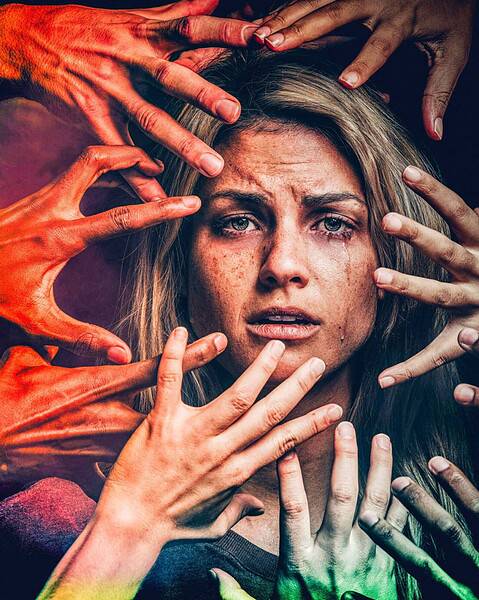
The clinical legitimacy of sexsomnia must never obscure the experience of the person subjected to the sexual contact.
Hearing that an accused person may have been asleep can intensify confusion, anger and distress. A finding that the necessary criminal intent or voluntary control was absent does not mean that the contact was consensual, harmless or imagined. It means only that the prosecution may not have established the elements required for criminal liability under the applicable law.
A responsible legal process must therefore hold two realities at once: an accused person should not be convicted without proof of criminal responsibility, and the absence of criminal responsibility does not erase another person’s trauma.
Careless language can cause further harm. Sexsomnia should never be described as making sexual contact “acceptable.” It is a possible medical explanation for involuntary behaviour, not retroactive consent.
Ethical and Risk-Management Questions
Clinicians treating a person with suspected sexsomnia may face difficult questions involving confidentiality, safeguarding and foreseeable risk. The relevant professional and legal duties vary by jurisdiction and circumstance.
Where a credible risk exists, management may include treating underlying sleep disorders, improving sleep stability, avoiding identified triggers, reducing or eliminating alcohol and recreational drug use, changing sleeping arrangements and ensuring that potential sleeping partners are appropriately protected.
A previous episode should not be ignored merely because it occurred without conscious intent. Once a person is aware of the risk, failure to follow reasonable precautions may have clinical and, depending on the jurisdiction, legal significance.
A Science Still Developing
Research into sexsomnia remains limited. Much of the literature consists of case reports, small clinical series and retrospective medico-legal analyses. There is no single biomarker capable of proving that a particular historical act occurred during sexsomnia.
Future progress is more likely to come from standardized forensic protocols, improved sleep-monitoring techniques and closer collaboration among sleep physicians, neurologists, forensic psychiatrists and legal professionals. Better science may improve diagnostic confidence, but it is unlikely to eliminate the need for careful reconstruction of each individual event.
Sexsomnia is real. So is the possibility of error, exaggeration or misuse.
It is not a “get-out-of-jail-free card,” and it should never be presented as one. It is a complex clinical hypothesis that must be tested against medical history, witness evidence, behaviour, forensic findings and the law of the relevant jurisdiction.
The expert’s responsibility is not to excuse, condemn or dramatize. It is to identify what the science can support, acknowledge what it cannot establish and help the court distinguish medical possibility from evidential probability.
Frequently Asked Questions
Is sexsomnia a recognized medical condition?
Yes. Sexsomnia is recognized as a form of non-REM parasomnia involving sexual behaviour during sleep or partial arousal.
Does a sexsomnia diagnosis prove that an alleged offence happened during sleep?
No. A diagnosis may establish susceptibility to the disorder, but it cannot prove that the person experienced an episode during a specific historical incident.
Can a sleep study confirm sexsomnia?
A sleep study can support a diagnosis and identify other sleep disorders. Because episodes are intermittent, however, it may not capture the behaviour. Even a positive study cannot retrospectively prove the cause of a separate event.
Is memory loss enough to establish automatism?
No. Amnesia does not necessarily mean the person lacked conscious control. Intoxication and other conditions can impair memory without making conduct involuntary.
Who has the burden of proving sexsomnia?
That depends on the jurisdiction and the form of defence being advanced. Courts generally require a proper evidential foundation, often including expert medical evidence, before automatism can be considered.
Does a successful defence mean the sexual contact was consensual?
No. A finding concerning voluntariness or criminal responsibility does not transform non-consensual contact into consensual contact or erase the harm experienced.
What does a forensic psychiatrist assess in these cases?
The psychiatrist reviews the accused person’s history, collateral accounts, medical evidence, alternative diagnoses, possible malingering, psychosexual factors and risk-management needs. The court, not the expert, determines the verdict.
Sources
- Crown Prosecution Service: Rape and Sexual Offences Prosecution Guidance
- Holoyda et al.: Forensic Evaluation of Sexsomnia
- Pressman: Forensic Evaluation of a Disorder of Arousal in a Sleepwalking Defence
- Ingravallo et al.: Sleep-Related Violence and Sexual Behavior in Sleep
- Sexual Behaviors and Sexual Health of Individuals With Sexsomnia
- The Guardian: Fears Over the Use of the Sexsomnia Defence
[taxopress_postterms id=”1″]
Browse every case in the Case File Index
Discover more from The Dark Side of Humanity
Subscribe to get the latest posts sent to your email.