FILE NO. 0206Case status Convicted
Charles Manson
The Family, nine murders, the control system, the music-world bridge and the trial record, and the mythology that made one manipulator larger than the people he harmed.
Died in custody · Nov. 19, 2017
Manson was convicted of nine first-degree murders in two proceedings: the seven Tate–LaBianca victims in January 1971, then Gary Hinman and Donald “Shorty” Shea in December 1971.12 The wider “Manson Family” story includes other allegations and later claims, and none of them counts as a conviction. The established facts here come from the California appellate opinions, corrections and parole records, and contemporaneous reporting. Where they conflict, this file says so.
Charles M. Manson
Tried with him or separately
Atkins, Krenwinkel and Van Houten tried with Manson; Watson tried separately1
- V-01Gary Allan HinmanJuly 25–27, 1969 · age 34
- V-02Steven Earl ParentAug. 8–9, 1969 · age 18
- V-03Sharon Tate PolanskiAug. 8–9, 1969 · age 26
- V-04Jay SebringAug. 8–9, 1969 · age 35
- V-05Abigail FolgerAug. 8–9, 1969 · age 25
- V-06Wojciech “Voytek” FrykowskiAug. 8–9, 1969 · age 32
- V-07Leno LaBiancaAug. 9–10, 1969 · age 44
- V-08Rosemary LaBiancaAug. 9–10, 1969 · age 38
- V-09Donald Jerome “Shorty” SheaAug. 16 – Sept. 1, 1969 · age 35
- Case
- People v. Manson
- Counts
- 7 murder + conspiracy
Items in the trial record
- Buntline revolver, People’s Exh. 40 · grip pieces found at the Tate house1
- “Pig” in blood on the Tate front door1
- “Death to the Pigs,” “Rise,” “Healter Skelter” · LaBianca walls and refrigerator1
- Krenwinkel’s fingerprint at the Tate residence1
- Discarded clothing near Cielo Dr. · type B human blood · hair like Atkins’s1
- Leather thong on Leno LaBianca’s wrists · Manson habitually carried thongs1
- Rosemary LaBianca’s wallet · left in a gas-station restroom1
SRC: People v. Manson (1976) 61 Cal.App.3d 102
Charles Manson died in state custody on Nov. 19, 2017.
Charles Manson died of natural causes on Nov. 19, 2017, aged 83, while serving life sentences. He had been housed at Corcoran State Prison since 1989.2
Patricia Krenwinkel is still in custody. The parole board found her suitable on May 30, 2025, and Gov. Newsom reversed the grant on Oct. 13, 2025.6 Robert Beausoleil’s Jan. 7, 2025 grant was reversed on May 2, 2025.6 Charles “Tex” Watson was denied parole for the 18th time on Oct. 15, 2021.5
Leslie Van Houten was released on parole on July 11, 2023, after the Court of Appeal overturned the governor’s reversal.75 Susan Atkins died in custody in 2009. Steve Grogan is the only person convicted in the nine murders who was paroled before 2023.35
Board actions after Oct. 2025 haven’t been confirmed in an official record and aren’t stated as fact here.
This file describes the stabbing, shooting and beating deaths of nine people, among them a woman eight to eight and a half months pregnant and an 18-year-old. The detail comes from the coroner’s findings and witness testimony summarized in California appellate opinions: wound counts, ligatures and words written in the victims’ blood. It also discusses coercive sexual control inside the group. Quotations are exact. A racial slur quoted in the court record is not reproduced.
What actually happened?
The compressed answer before the mythology takes over
What actually happened?
Charles Manson built the “Family” into a coercive commune in late-1960s California, first around Haight-Ashbury and then at the Spahn Ranch near Chatsworth. He used status, isolation, sex, drugs, apocalyptic rhetoric, personal domination and criminal loyalty to shape what his followers did.1 In the summer of 1969 members of the group killed Gary Hinman, the five people at 10050 Cielo Drive, Leno and Rosemary LaBianca, and Donald “Shorty” Shea.14 Manson rarely inflicted the fatal wounds himself. California courts nonetheless upheld his nine first-degree murder convictions, because the prosecution proved conspiracy, orders, and enough participation for criminal liability.14 His death sentence became life imprisonment after People v. Anderson (1972), and he died in custody in 2017.82
Case snapshot
What is legally established, what is historically inferred, and what should remain separate
Nine murders
Not one killer
The criminal record names separate people for separate acts. Manson’s command role matters, but so do the actions of Charles “Tex” Watson, Susan Atkins, Patricia Krenwinkel, Leslie Van Houten, Robert Beausoleil, Bruce Davis, Steve Grogan and others.14 Linda Kasabian, charged in the same indictment, testified for the prosecution under a grant of immunity.1
“Brainwashing” is too simple
The evidence supports a coercive, high-control environment, but the followers were not interchangeable puppets. Agency, ideology, fear, belonging, violence and criminal participation varied from person to person. Courts have treated each defendant’s conduct separately, and so have the parole board and governors, decades later.76
| Layer | What it covers | Boundary |
|---|---|---|
| Convicted murders | Nine: the seven Tate–LaBianca victims, plus Gary Hinman and Donald Shea.2 | Each is a jury verdict affirmed on appeal. |
| Associated violence | Other conduct and allegations, such as the aborted attempt on an actor at the beach on Aug. 10, 1969, belong to the wider Family history.1 | Not part of the conviction count. |
| Myth layer | Later claims, rumours and pop-culture retellings. | Labelled separately from court findings and official records. |
Who were the key people in the case?
Key-people cards · names and roles from the record
Charles Milles Manson
- Born
- Nov. 12, 1934, Cincinnati, to 16-year-old Kathleen Maddox
- Role
- Leader of the Family; convicted of nine first-degree murders and conspiracy
- Sentence
- Death (1971), modified to life
- Died
- Nov. 19, 2017, aged 83
Charles “Tex” Watson
- Role
- Did most of the killing on both nights, by the record
- Trial
- Charged in the same indictment, tried separately; convicted of seven murders and sentenced to death in 1971
- Now
- Denied parole for the 18th time, Oct. 15, 2021
Susan Atkins
- Role
- At Cielo Drive; at Hinman’s house; in the car on the LaBianca night
- Convicted
- Seven murders + conspiracy (1971); pleaded guilty in the Hinman case
- Died
- In custody, 2009
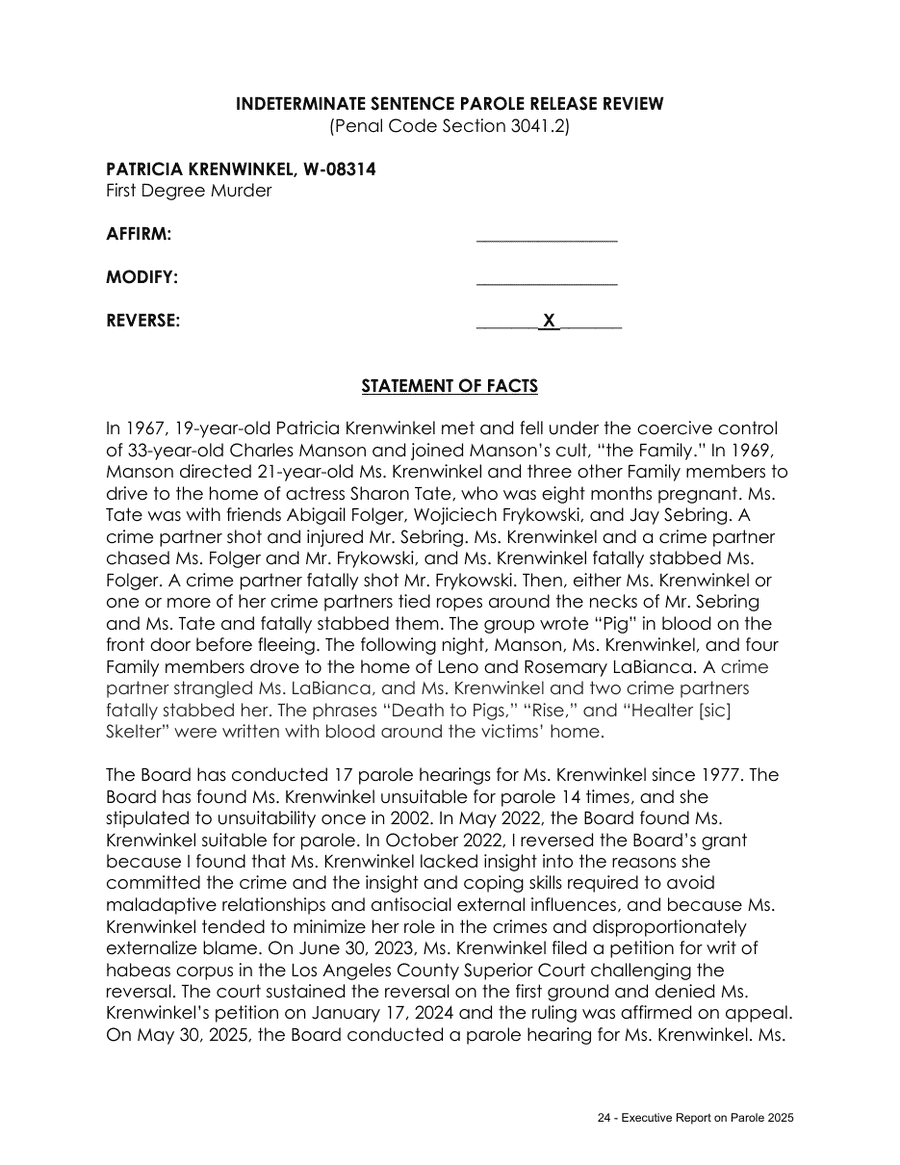
Patricia Krenwinkel
- Role
- At both houses; fatally stabbed Abigail Folger
- Age then
- 21; met Manson at 19, in 1967
- Now
- Parole grant reversed Oct. 13, 2025
Leslie Van Houten
- Role
- LaBianca house; stabbed Rosemary LaBianca after Watson did
- Convicted
- 1971; reversed 1976; hung jury 1977; convicted again 1978
- Now
- Paroled July 11, 2023
Linda Kasabian
- Role
- Lookout at Cielo Drive; driver on the second night
- Status
- Indicted, then granted immunity; testified from July 27, 1970
- On the stand
- 18 days
Sources 1
Robert “Bobby” Beausoleil
- Role
- Stabbed and smothered Gary Hinman
- Age then
- 21
- Now
- Board grant reversed May 2, 2025
Bruce Davis
- Role
- Held the gun at Hinman’s house; charged in Shea’s murder
- Convicted
- Hinman and Shea, Apr. 21, 1972 (separate trial; affirmed 1976)
- Parole
- Release blocked by the governor, June 18, 2021
Steve “Clem” Grogan
- Role
- In the car on the LaBianca night; convicted of Shea’s murder (affirmed 1973)
- Parole
- Paroled 1985, after revealing where Shea was buried
Charles H. Older
- Role
- L.A. Superior Court judge at the Tate–LaBianca trial
- Record
- Signed Kasabian’s immunity order on Aug. 10, 1970
Vincent Bugliosi
- Role
- Deputy district attorney; assigned Nov. 18, 1969; filed the Dec. 1, 1969 murder complaint against Watson
- Use here
- His trial testimony and book are the prosecutor’s account, and are labelled that way
Irving Kanarek · Daye Shinn · Paul Fitzgerald · Ronald Hughes / Maxwell Keith
- Clients
- Manson · Atkins · Krenwinkel · Van Houten
- Hughes
- Vanished Nov. 30, 1970; Keith appointed Dec. 3, 1970
Sources 1
Defendant photographs are left as labelled empty slots. The booking and custody photos on Wikimedia Commons have unverified rights, so none are used.
Before the Family
Institutionalization, crime, prison culture and the danger of turning biography into destiny
A life repeatedly inside institutions
Manson was born in Cincinnati on Nov. 12, 1934, to a 16-year-old mother, and spent much of his youth and early adulthood in juvenile institutions, reform school and federal custody.3 His record before the Family included car theft, parole violations and, by his own later account, pimping learned from older inmates at Terminal Island.3 He was released from federal prison in March 1967, having spent a large share of his life under institutional control.53
Trauma is not an explanation for murder
The old dossier treated childhood instability and institutional abuse as a direct causal road to homicide. That is too neat. Adversity can shape development, but it does not predict cult leadership or murder. The evidence begins with what Manson later did: manipulation, violence, coercion, criminal direction and repeated exploitation.
The control system
How belonging became dependency, and dependency became obedience
Belonging
Manson offered a substitute family to young people already drifting through the counterculture. In 1967 in Haight-Ashbury he gathered “runaways, drop outs” and others cut off from conventional society, got a Volkswagen bus and took to the road.1
Identity erosion
Followers were pushed toward a collective identity, repeated slogans and deference to Manson. He decided where they lived, slept and ate and what they wore. He ruled that children not be raised by their mothers, to free them of the mothers’ “ego.”1
Sex and intimacy
Sexual access and the control of intimacy weakened ordinary boundaries and reinforced his authority. He told Paul Watkins to recruit more women, and directed sexual acts. Barbara Hoyt testified that she obeyed one order to perform a sex act on Juan Flynn because she was afraid of Manson.1
Drugs
LSD and other drugs were part of the group’s life; Kasabian admitted using LSD about 50 times since 1965. Drug use can intensify suggestibility and destabilization, but it is not a magic explanation for homicide.1
Isolation
The Spahn Ranch at Chatsworth, a camp in Devils Canyon called the “Waterfall,” and later the desert ranches near Death Valley put distance between members and their families, ordinary work and outside relationships.14
Infallibility
Family member Danny DeCarlo testified that each co-defendant said “Charlie sees all and knows all.” Kasabian was told: “We never question Charlie. We know that what he is doing is right.” Guards, weapons and walkie-talkies made the cost of dissent concrete.1
“The establishment and retention of his position … was one of design”
The Court of Appeal treated the control system as evidence, not background. “The Family’s willingness to follow Manson’s directions is salient to the People’s theory of the case,” it wrote.1
For a broader evidence-based framework on coercive groups, see deadly cult evidence and coercive control.
The music-world bridge
Dennis Wilson, Terry Melcher, Cielo Drive and the part of the story that was real before it became legend
Manson got unusually close to the music business
In the spring of 1968 Beach Boys drummer Dennis Wilson picked up two hitchhiking Family members. They introduced him to Manson, and the Family lived for a time at Wilson’s house in Pacific Palisades.3 Wilson introduced Manson to people in the Los Angeles music business, among them the producer Terry Melcher. The Beach Boys later recorded a reworked version of Manson’s song “Cease to Exist” as “Never Learn Not to Love.”3
Cielo Drive was not an unknown address
Melcher, Doris Day’s son, had rented 10050 Cielo Drive with Candice Bergen. He considered signing Manson but passed.143 He testified at the 1970 trial that he had rejected Manson after an audition.15 The house was a place Manson knew, even though Melcher no longer lived there when Sharon Tate and Roman Polanski rented it.114 Watson later testified that Manson told him to go “up to where Terry Melcher used to live” and “kill everybody in the house as gruesome as I could.”3
“Helter Skelter”
What the prosecution proved, what later retellings simplified, and why motive is not the same as mythology
An apocalyptic race war
The trial evidence preserved Manson’s prediction of a coming racial upheaval, which he called “Helter Skelter.” In it Black people would rise up and kill the “Pigs,” the white establishment. Manson would lead the Family to safety in “a bottomless pit located in Death Valley,” and they would emerge to take control of the world.1 Barbara Hoyt testified that between April and September 1969 Manson spoke of it often, saying it “was coming down fast” and that he “would like to show the Blacks how to do it.”1 The prosecution argued that the murders of wealthy white victims were staged to start that war. On the first murder night, Kasabian testified, Manson told her: “Now is the time for Helter Skelter.”1
One motive does not explain every decision
Helter Skelter is part of the trial record, but it shouldn’t erase other pressures: Manson’s musical rejection, the money dispute with Gary Hinman, the fear that Shea was talking to authorities, personal domination, opportunism and the group’s escalating violence.4914 A prosecution theory can be legally sufficient without becoming the only psychological explanation.
The victims
Nine people in Manson’s murder convictions: not a body count, not scenery for offender mythology
Gary Allan Hinman
A musician and an acquaintance of Family members, who saw him as a possible source of money. His killing came first, two weeks before Cielo Drive.
- Killed
- July 25–27, 1969
- Scene
- 964 Old Topanga Canyon Rd., Malibu. Held in his house for about two days; stabbed twice in the chest, one wound fatal through the heart; a sword cut from the left ear to the lip. “Political Piggy” and a paw print in blood on the wall. Found July 31.
- Outcome
- Beausoleil, Davis and Manson convicted; Atkins pleaded guilty
Steven Earl Parent
An 18-year-old from El Monte who had been visiting William Garretson, the caretaker living in the guest house.
- Killed
- Aug. 8–9, 1969
- Scene
- 10050 Cielo Drive. Shot in his car near the gate as he was leaving. He said, “Please don’t hurt me, I won’t say anything.” The coroner found five gunshot wounds. He was the first person killed that night.
- Outcome
- Count in the 1971 verdict
Sharon Tate Polanski
An actor known for “Valley of the Dolls,” married to the director Roman Polanski, who was out of the country. She was eight to eight and a half months pregnant.
- Killed
- Aug. 8–9, 1969
- Scene
- Living room, joined by a rope to Jay Sebring. The coroner counted 16 stab wounds. She pleaded for her unborn child’s life.
- Outcome
- Count in the 1971 verdict
Jay Sebring
A Hollywood hairstylist whose clients included Warren Beatty, and a former boyfriend of Tate’s.
- Killed
- Aug. 8–9, 1969
- Scene
- Living room, a towel over his face. Seven stab wounds and one fatal gunshot wound.
- Outcome
- Count in the 1971 verdict
Abigail Folger
An heir to the Folgers coffee fortune and an investor in Sebring’s salons, living at Cielo Drive with Wojciech Frykowski.
- Killed
- Aug. 8–9, 1969
- Scene
- Found on the lawn. Stabbed 28 times. Krenwinkel chased her outside and fatally stabbed her.
- Outcome
- Count in the 1971 verdict
Wojciech “Voytek” Frykowski
A friend of Polanski’s from Poland, staying at the house with Folger.
- Killed
- Aug. 8–9, 1969
- Scene
- Found on the lawn. He got out of the house bloodied; Kasabian saw Watson stab him and beat him on the head with a gun. The coroner counted 51 stab wounds, 13 scalp lacerations and two gunshot wounds.
- Outcome
- Count in the 1971 verdict
Leno LaBianca
A Los Angeles supermarket executive; with his wife, owner of a chain of grocery stores.
- Killed
- Aug. 9–10, 1969
- Scene
- 3267 Waverly Drive, Los Feliz. Hands tied with a leather thong, a pillowcase over his head, an electric cord around his neck. Thirteen stab wounds and 14 punctures from a carving fork left in his abdomen; “War” scratched on his skin.
- Outcome
- Count in the 1971 verdict
Rosemary LaBianca
Co-owner, with her husband, of a chain of Los Angeles grocery stores, by the L.A. Times’s account. Her 16-year-old son, Frank Struthers, came home on Aug. 10 and found his stepfather’s body.
- Killed
- Aug. 9–10, 1969
- Scene
- Bedroom. A pillowcase over her head, held with a lamp cord around her neck; hands tied. Forty-one stab wounds, from Krenwinkel, Watson and Van Houten.
- Outcome
- Count in the 1971 verdict; Van Houten retried for it
Donald Jerome “Shorty” Shea
A Spahn Ranch hand and handyman whose ambition was to be an actor and stuntman. His wife last saw him on Aug. 16, 1969.
- Killed
- Aug. 16 – Sept. 1, 1969
- Scene
- Spahn Ranch. Killed in the latter part of August, by trial testimony. His remains were found in December 1977 in a hillside grave below the old ranch.
- Outcome
- Manson, Davis and Grogan convicted
The record behind each card
Nine people are named in Manson’s murder convictions. Each card gives the name and age the record gives, what is known about the person’s life, and the scene as the coroner and witnesses described it. Where sources conflict, the figures are listed beside this card rather than silently picked. No victim photographs are used, and each card carries a typographic placeholder.
Sharon Tate’s fame has often made her shorthand for the whole case. That night had five victims, and the case as a whole had nine.
Chronology of escalation
From prison release in 1967 to the last parole fights: the sequence, dated from the record
The sequence is more revealing than the legend
Dennis Wilson connection
The Family stays for a time at Wilson’s Pacific Palisades house, which brings Manson into contact with music-business figures, including Terry Melcher.3
Beausoleil arrested
Found driving Hinman’s Fiat station wagon on Highway 101 near San Luis Obispo; a knife is in the spare-tire well.4
Tate murders
Manson sends Watson, Atkins, Krenwinkel and Kasabian to 10050 Cielo Drive. Kasabian stays outside and later becomes the prosecution’s key witness. Five people are killed.1
Spahn Ranch raid
Sheriff’s deputies raid the ranch and arrest Manson; he is released.4
Donald Shea killed
The ranch hand disappears after tensions with the group. Manson, Davis and Grogan are later convicted of his murder.4
Barker Ranch raids
In two days of raids, the second on Oct. 12, rangers, highway patrolmen and deputies arrest 26 people near Death Valley on suspicion of arson, vandalism and car theft. Manson is found under a bathroom sink. No one yet links them to Tate–LaBianca.16
Hinman and Shea convictions
Manson receives two more first-degree murder convictions.2
Tate–LaBianca appeal
The Court of Appeal affirms Manson, Atkins and Krenwinkel and reverses Van Houten’s conviction.1
Manson dies in custody
CDCR reports that he died of natural causes, aged 83.2
Krenwinkel and Beausoleil
The governor reverses both board grants: Beausoleil’s on May 2, Krenwinkel’s on Oct. 13.6
The Hinman murder
July 1969: money, a sword and the first conviction
Money, a house and stocks
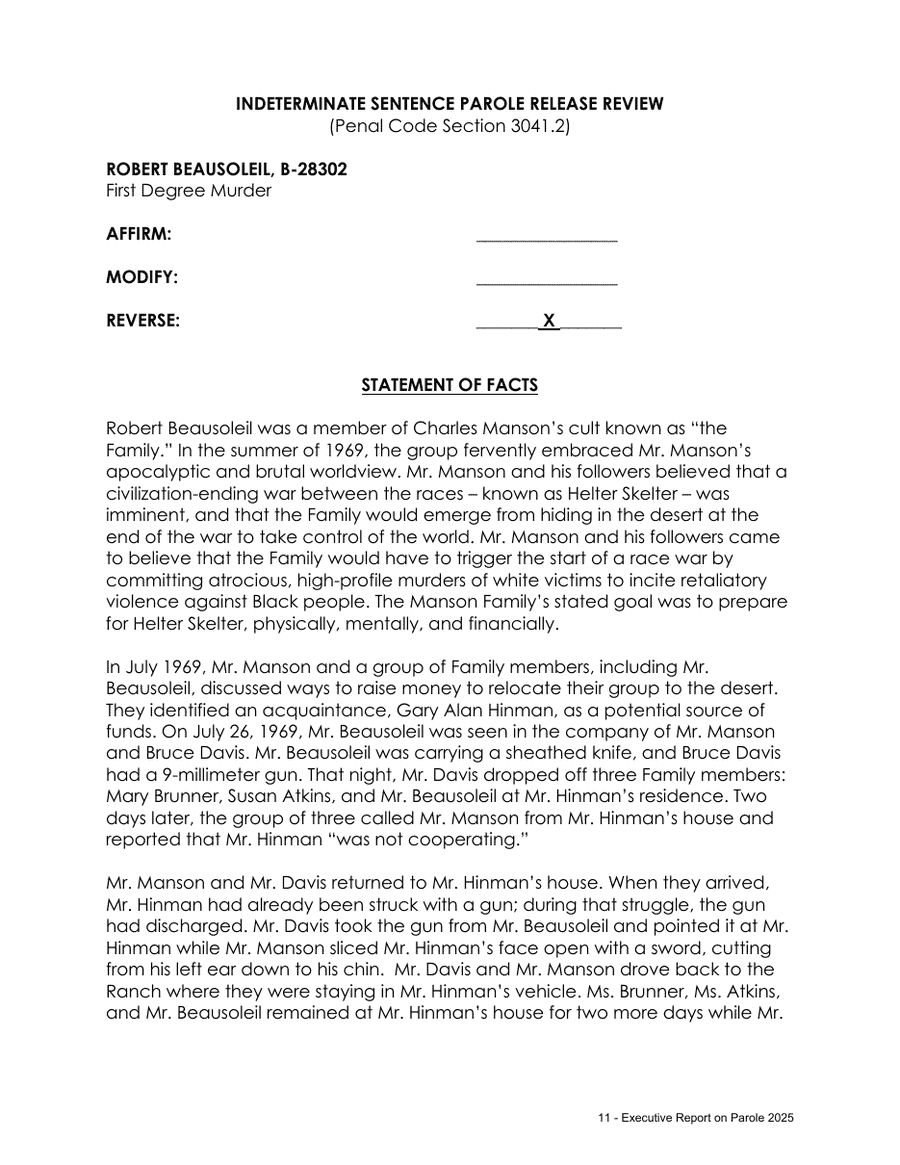
In May and June 1969, Manson talked to followers about “going out” to get money for dune buggies so the group could live in the desert. In July, Ella Jo Bailey testified, names of possible sources were discussed, among them Gary Hinman, because he owned a house and stocks and bonds.4 On July 26, by the governor’s summary of the record, Bruce Davis drove Beausoleil, Atkins and Mary Brunner to Hinman’s house at 964 Old Topanga Canyon Road. Beausoleil carried a sheathed knife; Davis had a 9-millimetre gun.64
“Hinman was not cooperating”
The three called Manson from the house to say Hinman “was not cooperating.” Manson and Davis drove there, and Manson cut Hinman’s face open with a sword, from his left ear down to his chin. Manson and Davis left in Hinman’s car. Brunner, Atkins and Beausoleil stayed for two more days while Hinman lay bleeding, until Beausoleil stabbed him in the chest and smothered him with a pillow.6 Using Hinman’s blood, the group wrote “political piggy” and drew an animal paw print on the walls; Beausoleil later went back to wipe off the paw print.64 Manson told the man he gave Hinman’s microbus to say, if questioned, that he got it from a Gary Hinman who “was supposed to be a Black Panther.”4
“Sure, I went to Hinman’s house”
The record contains Manson’s admissions. Bailey said he described the sword cut the next morning. A witness named Al Springer said Manson told him he had “whacked a guy’s ear off.” And on Aug. 10, 1971, during his own trial, Manson leaned over at the counsel table to Sgt. Paul Whiteley and said, by Whiteley’s testimony: “Sure, I went to Hinman’s house and got the gun and sliced his ear. I don’t deny that. … Hinman deserved to die.”4 The Court of Appeal held that Manson, by his own admissions, “struck Hinman with a sword in aid of the robbery”; that Beausoleil struck the fatal blow did not relieve him of responsibility.4
The first arrest
Hinman’s body was found on July 31, badly decomposed. Beausoleil’s fingerprint was on a door frame inside. On Aug. 6, 1969, a highway patrolman found him driving Hinman’s Fiat station wagon on Highway 101 near San Luis Obispo and arrested him; a knife was in the spare-tire well.4 Two days later came Cielo Drive. Atkins was later jailed in the Hinman case, and it was there, in the fall of 1969, that she talked.51
The Tate murders
Aug. 8–9, 1969, at 10050 Cielo Drive: the night as the record tells it
“Now is the time for Helter Skelter”
Kasabian testified that on the evening of Aug. 8 Manson told her to get a change of clothes, a knife and her driver’s licence, and to “go with Tex and to do what Tex told [her] to do.” As the car was leaving he leaned in and told the women: “You girls know what I mean, something witchy.”1 Watson drove straight to 10050 Cielo Drive, got out and appeared to cut some overhead wires.1
Five people killed
As a car came toward the gate, Watson stepped out with a gun. The driver, Steven Parent, said: “Please don’t hurt me I won’t say anything.” Watson shot him.1 Watson sent Kasabian to look for open doors or windows at the back, then told her to go back and stand lookout. Within minutes she heard screams and the words “No, please, no.” She ran to the house and saw a man, covered in blood, come out the door and fall; when he got up, Watson stabbed him and clubbed him. She saw Krenwinkel, knife in hand, chasing a woman.1 On the way back, the three changed clothes and Kasabian threw the bloody clothing and knives from the car. At the ranch Manson asked if they felt any remorse. They said no.1
What the housekeeper found
Winifred Chapman, the cook and housekeeper, had left at 4 or 4:30 p.m. on Aug. 8. She returned the next day and the police found Parent in his Rambler near the entry gate, Frykowski and Folger on the front lawn, and Tate and Sebring in the living room, connected by a piece of rope, a towel wrapped around Sebring’s neck and over his face. “Pig” was written in blood on the front door. Nothing had been taken: jewellery and money were found on the victims and in the house.1
What Bugliosi said, labelled as his
Deputy District Attorney Vincent Bugliosi testified at the penalty phase that he believed Atkins had stabbed Tate, even though he knew she would deny it. The Court of Appeal’s comment: “Bugliosi’s opinion on the subject is just that.”1 His later book argued for a secondary motive, quoting Atkins as saying the house was picked “to instill fear into Terry Melcher.”3 Both are the prosecutor’s account, not court findings.
The LaBianca murders
Aug. 9–10, 1969, at 3267 Waverly Drive, and the conflict over who went in first
“Too messy”
The next evening Manson gathered Atkins, Watson, Krenwinkel, Van Houten, Steve Grogan and Kasabian. The killings of the night before had been “too messy,” he said, and he would show them how to do it. As they got in the car he handed Kasabian a leather thong. With Kasabian driving and Manson directing, they drove around for hours while Manson checked out possible targets.17
3267 Waverly Drive
Manson had Kasabian stop on Waverly Drive in front of a house she recognized as Harold True’s, a man some of the Family knew. When she objected, Manson said he was going next door, to the LaBianca house. He returned a few minutes later and said he had tied up a man and a woman. Then he told Van Houten, Krenwinkel and Watson: “Don’t let them know you are going to kill them.”1 Inside, by the later appellate summaries, Watson told the two women to take Rosemary LaBianca into the bedroom and kill her. Van Houten put a pillowcase over her head and wrapped a lamp cord around her neck; Krenwinkel stabbed her; Van Houten called Watson, who stabbed her eight times with a bayonet; then Van Houten stabbed her between 14 and 16 times.117 Van Houten wiped away fingerprints while Krenwinkel wrote in blood on the walls.7
A wallet, a beach and an actor
Manson gave Kasabian Rosemary LaBianca’s wallet to dispose of so that “a black person” would find it and use the cards, in the hope that Black people would be blamed. Kasabian hid it in a gas-station restroom.1 At the beach Manson gave her a pocket knife and told her to kill an actor she had met; she testified that she deliberately led Atkins and Grogan to the wrong apartment door. Manson had told Van Houten and Watson to hitchhike back to the ranch, and Krenwinkel to go to the Waterfall camp.1
Frank Struthers comes home
On Aug. 10, Rosemary LaBianca’s 16-year-old son, Frank Struthers, came home from a holiday and found his stepfather’s body. Police found Leno LaBianca in the living room and Rosemary in the bedroom. “Death to the Pigs” was written in blood on a living-room wall, “Rise” over a door, and “Healter Skelter” on the refrigerator. Apart from her wallet, nothing appeared to be missing.1
The Shea murder
Late August 1969: the ranch hand, the boasts and the body found eight years later
A ranch hand who wanted to be a stuntman
Donald Jerome “Shorty” Shea was a handyman who lived most of the time at the Spahn Ranch. He wanted to be an actor and stuntman, and he owned a matched pair of Colt .45s he swore he would never sell. Frank Retz, who was buying the ranch, wanted the Family off the property and had talked about hiring Shea as a guard. About a week before Aug. 16, Manson threw a knife at Shea that stuck in a door in front of him.4
The raid, then the screams
Deputies raided the ranch on Aug. 16, 1969, and arrested Manson. After his release, Barbara Hoyt testified, he said Shea was responsible for the raid.4 Ruby Pearl, who had known Shea 15 years, saw Manson, Watson, Grogan and Davis get out of a car and close in on him. She drove away and never saw him again. Late one night in the latter part of August, Hoyt heard screams from down by the creek and recognized Shea’s voice.4 The next day she overheard Manson tell DeCarlo: “Shorty committed suicide, with a little help from us.”4
A conviction on circumstantial evidence
Shea’s body wasn’t found before the 1971 trial. The case rested on Manson’s admissions to Hoyt, Brooks Poston and Paul Watkins, and on physical traces: Shea’s car, found on Dec. 9, 1969, on a street in Chatsworth with his footlocker in the trunk bearing Davis’s fingerprint; the Colt .45s, pawned and sold by DeCarlo; and his suitcase and briefcase, found under brush in Goler Wash in February 1970.4 The jury convicted after 24 days of jury selection and 43 trial days. The Court of Appeal affirmed in 1977: “Production of the body is not a condition precedent to the prosecution for murder.”4
The remains, and the lie about them
Manson had boasted that Shea was cut into “nine pieces,” and witnesses quoted him as saying Grogan cut off his head.4 When sheriff’s investigators recovered skeletal remains in December 1977 from a shallow grave below the old ranch, near Santa Susana Pass Road, the skeleton was reported to be complete and intact. Sgt. Bill Gleason said the decapitation stories “were told by Manson family members to strike fear and keep others (potential witnesses) from talking.”10 Grogan, convicted of the murder, had disclosed where the body was, and was paroled in 1985.53
Geography of the case
Spahn Ranch, two murder nights and the desert: where the record places each scene
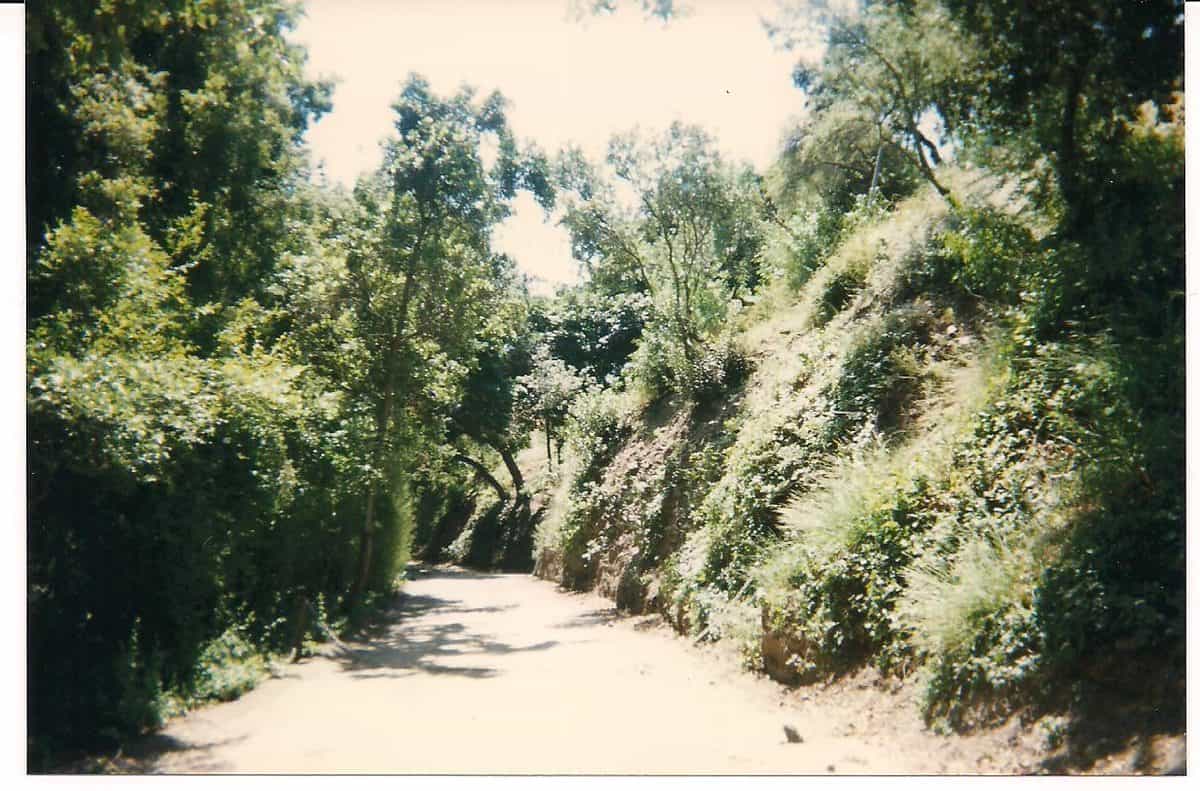
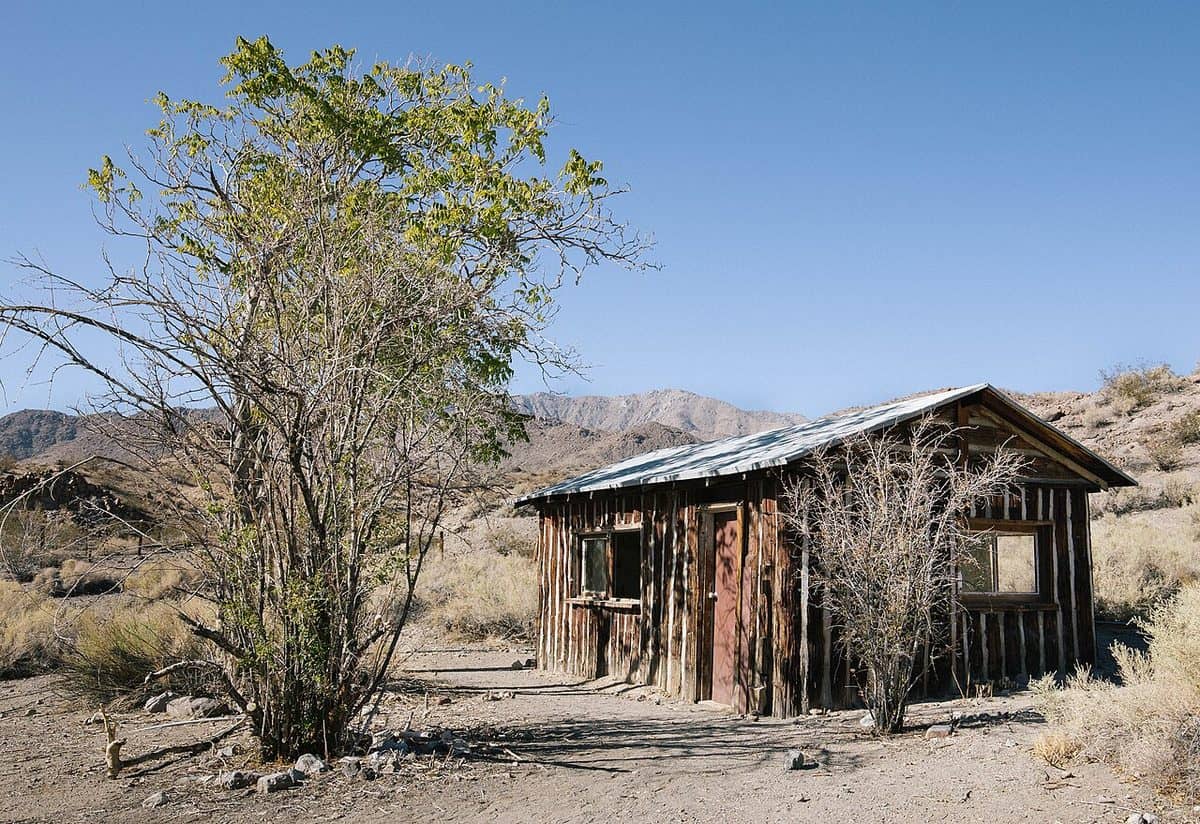
- 1 Spahn Ranch, Santa Susana Mountains above Chatsworth: the Family’s base
- 2 964 Old Topanga Canyon Rd., Malibu: Gary Hinman, July 1969
- 3 10050 Cielo Dr., Benedict Canyon: five victims, Aug. 8–9
- 4 3267 Waverly Dr., Los Feliz, next to Harold True’s house: Aug. 9–10
- 5 The beach: the aborted attempt on an actor, Aug. 10
- 6 Hall of Justice, downtown Los Angeles: the 1970–71 trial
The ranch was the hub
Both murder nights began and ended at the Spahn Ranch. On the first, Watson drove directly to Cielo Drive. On the second, Manson directed Kasabian on a long, apparently random route before stopping on Waverly Drive, then sent the car on to a gas station and the beach.1 The 1976 opinion treats Manson’s familiarity with both houses as corroboration: he knew Cielo Drive and Harold True’s house before August 1969.1
Where the Family went next
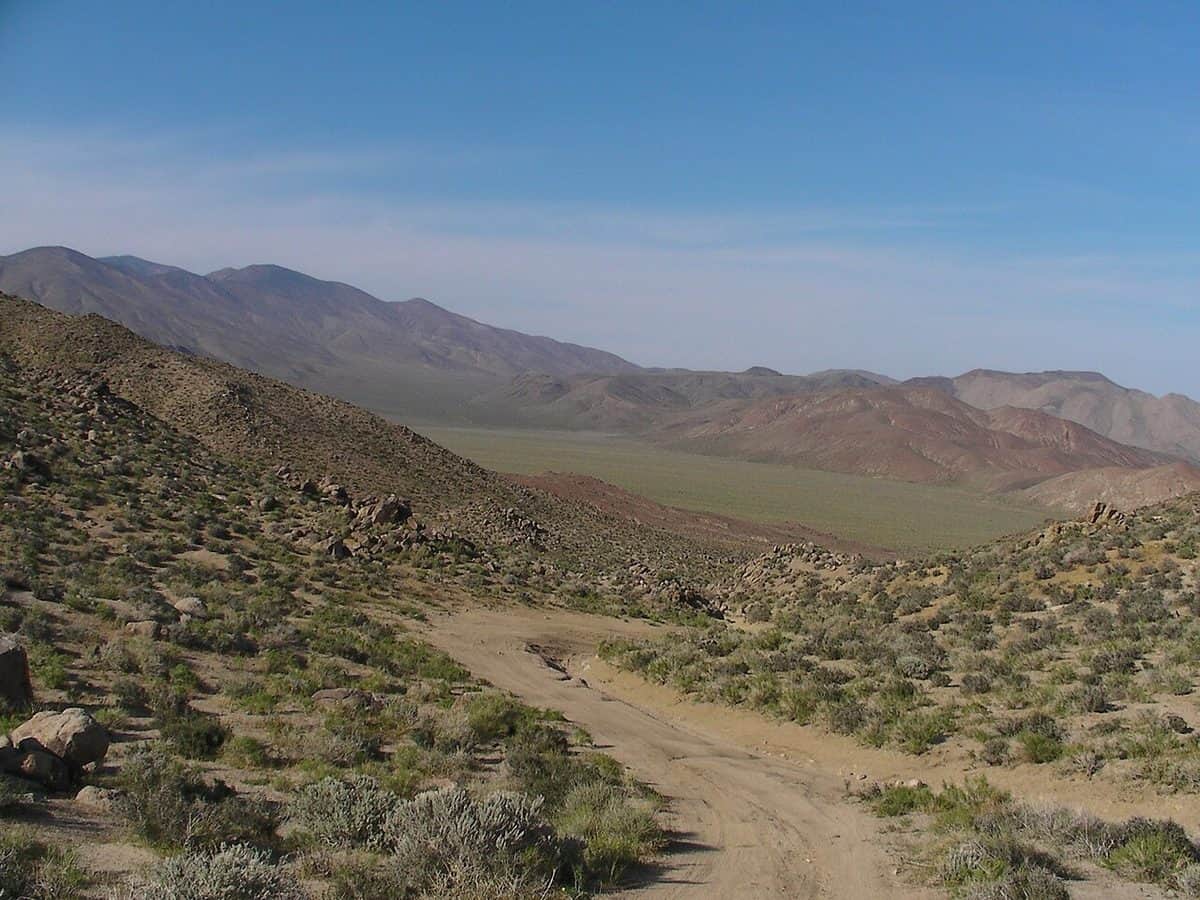
After Shea’s killing, most of the Family left the ranch for the Barker and Myers ranches in the desert, travelling by Ballarat and Goler Wash.4 That is where rangers, highway patrolmen and deputies arrested them in October 1969, on suspicion of arson, vandalism and car theft, about 250 miles from Los Angeles.16
Who did what?
Group crime becomes inaccurate when everyone is reduced to “Manson’s followers”
Charles Manson
Charles “Tex” Watson
Susan Atkins
Patricia Krenwinkel
Leslie Van Houten
Held Rosemary LaBianca down with a pillowcase and lamp cord, and stabbed her 14 to 16 times after Watson had stabbed her. Her later parole history became a public debate over rehabilitation, culpability and Manson’s influence. Released on parole in July 2023; that decision didn’t change the conviction.117
Linda Kasabian
Lookout at Cielo Drive and driver on the second night; didn’t enter either house. Testified for the prosecution under immunity for 18 days; her testimony was the only direct evidence of the commands and the sequence.1
Group crime becomes inaccurate when everyone is “Manson’s followers”
Each card names what the record attributes to one person. Beausoleil, Davis and Grogan, convicted in the Hinman and Shea cases, are in the key-people cards (§02) and the charges matrix (§18). For wider context on women as active participants in group homicide, see female offenders and active participation in group murder.
How the case broke
Not one clue: a desert arson case, jailhouse disclosures, insiders, ballistics and scene links
The arrests that weren’t about murder
In mid-September 1969 a new park-service loader was set on fire in Death Valley. Rangers, highway patrolmen and deputies traced it to the Barker Ranch and, in two days of raids in October, arrested 26 people on suspicion of arson, vandalism and grand theft auto. On Oct. 12 a patrolman found Manson hiding under a bathroom sink. The name meant nothing to the officers.16
Atkins becomes the break point
Atkins, already charged in the Hinman murder, was held at the Sybil Brand Institute. In November 1969 she described the Tate murders to two fellow inmates, Virginia Graham Castro and Roni Howard, who told law enforcement.15 She recounted details of the Tate scene that, in the police’s judgment, only the killers could have known.13 Those statements were the bridge from an already-known Family member to the unsolved August killings.
Two nights, linked staging
Words written in the victims’ blood and the obvious overkill at both houses suggested a connection, but the investigation didn’t immediately join the cases. When police announced in December 1969 that the Tate case was solved, the LaBianca killings were still being described as possible “copycat” killings.13 The case eventually depended on connecting scene evidence to people around the Spahn Ranch.1
Kasabian and former insiders
Kasabian’s testimony supplied a first-person account of the murder nights. She began testifying on July 27, 1970, after being offered immunity; the written order came on Aug. 10, after her direct examination.1 Other insiders, among them Danny DeCarlo, Paul Watkins, Barbara Hoyt, Dianne Lake and Juan Flynn, described Manson’s statements, the Helter Skelter rhetoric, his orders and the group’s hierarchy.1
Weapons, clothing, vehicles and locations
The prosecution tied together physical evidence, firearms, vehicles, witness accounts and the group’s movements: the Buntline revolver, found by a boy on Sept. 1, 1969, whose broken grip matched pieces at Cielo Drive; a bundle of dark clothing found on a hillside near Benedict Canyon, with type B human blood and a hair similar to Atkins’s; and Krenwinkel’s fingerprint inside the house.1 Manson’s liability didn’t depend on proving that his hands held every weapon.
The trial record
Why “he didn’t personally kill them” didn’t defeat murder liability
Conspiracy
The prosecution argued that Manson and others agreed to a murder programme and took overt steps to carry it out. The appeal court found that the evidence “strongly supported a theory that the homicides were the product of conspiratorial relationships and activities.”1
Solicitation / command
Witness testimony and circumstances supported the claim that Manson directed followers to kill and shaped the mission: “go with Tex,” “something witchy,” “Don’t let them know you are going to kill them.”1
Participation
On the LaBianca night, Manson went to the house first and came back saying he had tied up the couple, then left the others to complete the killings. Whether Watson went in with him is disputed (§11).111
Corroboration
California law requires that an accomplice’s testimony be corroborated. For Manson, the court pointed to his own statements, his link to the Buntline revolver (Exh. 40), his familiarity with both houses, and his habit of carrying leather thongs like the one that bound Leno LaBianca.1
Appellate review
The Court of Appeal affirmed the Tate–LaBianca convictions of Manson, Atkins and Krenwinkel and reversed Van Houten’s. It separately affirmed the Hinman–Shea convictions in 1977.14
Sentence
Manson was sentenced to death. After Anderson invalidated the death penalty in 1972, the sentence became life imprisonment; the 1976 opinion modified the judgments, and CDCR records the change on Feb. 2, 1977.812
Why “he didn’t personally kill them” didn’t defeat murder liability
The conviction rested on conspiracy and on aiding and abetting: in the courts’ reasoning, a person who agrees to a killing and directs it is guilty of it even when someone else strikes the blows. The 1977 court said the same of Hinman: “The fact that Beausoleil was the person who struck the fatal blow does not relieve Manson of responsibility.”4
- Dec. 10, 1969Publicity orderIssued by the court before trial
- June 15–16, 1970Jury selection beginsJury sequestered from June 15
- July 17Ronald HughesBecomes Van Houten’s counsel
- July 27Kasabian testifies18 days on the stand
- Aug. 4–5Nixon headlineManson shows the jury a “MANSON GUILTY” banner; co-defendants chant next day
- Nov. 30Hughes vanishesFails to appear; Maxwell Keith appointed Dec. 3
- Jan. 15 – 25, 1971Verdicts11 days of deliberation; guilty on every count
- Feb. 17 – Mar. 23Penalty phaseJury unsequestered, then re-sequestered
- Mar. 29, 1971PenaltyDeath for all four
Sources: People v. Manson (1976); CNN Fast Facts.15 The 1976 opinion quotes the headline both as “MANSON GUILTY, NIXON DECLARES” and as “Nixon Says Manson Guilty.”
Exhibitionism on the record
Manson appeared in court with an X carved into his forehead, and followers outside did the same.35 On Aug. 4, 1970, he held up to the jury a newspaper with the banner “MANSON GUILTY, NIXON DECLARES”; the next day his co-defendants chanted, “Why don’t you convict us the president says we’re guilty.” The court noted that this “belies the sincerity” of their complaints about publicity.1 At one point Manson jumped over the counsel table and made a dash for the bench; Judge Charles H. Older began carrying a .38-calibre revolver under his robe.3
The lawyer who disappeared
Ronald Hughes had represented Van Houten since July 17, 1970. On Monday, Nov. 30, after both sides had rested, he failed to appear. On Dec. 3 Maxwell Keith was appointed over Van Houten’s objection, with the transcript already over 18,000 pages.1 In 1976 the Court of Appeal’s majority held that Keith, who “neither saw nor heard any witness during the guilt phase,” couldn’t effectively argue the credibility of witnesses, and reversed her conviction. Presiding Justice Wood dissented on that point.1
Evidence ledger
What each category can establish, and where interpretation starts
| Evidence | What it supports | Limit |
|---|---|---|
| California appellate opinions | Charges, testimony summaries, conduct, convictions and legal reasoning.111 | Opinions summarize the trial record; they are not full transcripts, and later opinions sometimes summarize it differently. |
| CDCR record | Nine murder convictions, the sentence history, parole denials and the date and cause of death.2 | Administrative history doesn’t explain motive. |
| Kasabian testimony | Manson’s orders, the group’s movements and the sequence of both nights; 18 days on the stand.1 | An immunized accomplice needs corroboration and a credibility assessment. She had used LSD about 50 times since 1965. |
| Atkins jailhouse statements | The investigative lead linking the Family to the Tate murders; admissible against her.1 | Admissible only against Atkins at trial. She later called her grand-jury testimony false. |
| Physical evidence | The Buntline revolver and its broken grip, Krenwinkel’s fingerprint, discarded clothing with type B blood, leather thongs.1 | Ties particular people to particular scenes. It doesn’t narrate the crime. |
| Manson’s admissions | To Juan Flynn, to Hoyt and DeCarlo about Shea, and to Sgt. Whiteley at counsel table about Hinman.14 | Admissions have to be weighed for context and the witness’s reliability. |
| Crime-scene writing | Links between the scenes, the killers’ messaging, intent to shock or misdirect.1 | The writing alone doesn’t prove the whole Helter Skelter theory. |
| Melcher testimony | Manson knew Melcher and had been to, or was connected with, Cielo Drive.1514 | Rejection by Melcher can’t explain all the killings, and investigators discounted it as the motive. |
| Parole-board records | Each surviving defendant’s later account of the crimes and the board’s and governor’s findings.67 | Prepared decades later and focused on current dangerousness, not on proving the 1969 facts. |
Charges and sentences
Charges, verdicts and sentences matrix
- 7 murders + conspiracy1
- Guilty, 19715
- Death → life5
- Parole denied an 18th time, Oct. 15, 20215
- 7 murders + conspiracy1
- Guilty, Jan. 25, 19711
- Death → life1
- Board grants 2022 and May 30, 2025; both reversed by the governor6
- 2 murders (LaBianca) + conspiracy1
- Death (1971); then concurrent 7-to-life terms7
- Hinman murder4
- Guilty; affirmed (2d Crim. 22232)4
- Jan. 7, 2025 grant reversed May 2, 20256
- Hinman + Shea4
- Life5
- Parole blocked by the governor, June 18, 20215
One case, many outcomes
Nine people were charged in the nine murders, by different routes. Manson, Atkins, Krenwinkel and Van Houten were tried together; Watson, held in Texas, was tried separately; Kasabian was immunized; and the Hinman and Shea cases produced separate trials for Manson, Beausoleil, Davis and Grogan, and a guilty plea from Atkins.14
The legal path
Appeals, retrials and parole: five decades of litigation
- Dec. 1969L.A. County grand juryIndictment: Manson, Watson, Atkins, Krenwinkel and Kasabian on the seven murders; Van Houten on the two LaBianca counts; all on conspiracy.51
- Jan. – Mar. 1971L.A. Superior CourtGuilty on every count, Jan. 25; death sentences, Mar. 29.51
- Dec. 1971L.A. Superior CourtManson convicted of the Hinman and Shea murders; life.24
- Feb. 18, 1972California Supreme CourtPeople v. Anderson, 6 Cal.3d 628: the death penalty held unconstitutional; the pending appeal is transferred to the Court of Appeal.81
- Aug. 13, 1976Calif. Court of AppealPeople v. Manson, 61 Cal.App.3d 102: Manson, Atkins and Krenwinkel affirmed, death modified to life; Van Houten reversed. Rehearing denied Sept. 10; Supreme Court review denied Dec. 9, 1976.1
- Apr. 25, 1977U.S. Supreme CourtCertiorari denied, 430 U.S. 986.4
- June 23, 1977Calif. Court of AppealPeople v. Manson, 71 Cal.App.3d 1: the Hinman and Shea convictions affirmed.4
- 1977 · 1978L.A. Superior CourtVan Houten’s second trial ends in a hung jury; a third jury convicts her.1112
- Dec. 15, 1980Calif. Court of AppealPeople v. Van Houten, 113 Cal.App.3d 280: the 1978 conviction affirmed.12
- 1978 – 2012Board of Parole HearingsManson denied parole 12 times; he last attended a hearing in 1997.2
- Mar. 1, 2004Calif. Court of AppealIn re Van Houten, 116 Cal.App.4th 339: a superior court’s order against the board is reversed, and her 2000 parole denial stands.11
- 2016 – 2022Board · Governors Brown and NewsomBoard grants for Van Houten in 2016, 2017, 2019, 2020 and 2021, each reversed by the governor.75
- May 30, 2023Calif. Court of AppealIn re Van Houten (B320098): the governor’s 2020 reversal is vacated; she is released July 11, 2023.75
- 2025Board · Governor NewsomBeausoleil’s grant reversed May 2; Krenwinkel’s May 30 grant reversed Oct. 13.6
Why Van Houten’s conviction fell and the others didn’t
The Court of Appeal found the evidence against all four defendants sufficient, and rejected their publicity, venue and jury claims; “a jury sequestered from June 15, 1970, to January 15, 1971 … would not be expected to protract deliberation if it harbored a bias for conviction.” What it couldn’t accept was that Van Houten’s closing argument was made by a lawyer who had seen none of the guilt-phase witnesses, after her own lawyer vanished.1 When the California Supreme Court denied review on Dec. 9, 1976, three justices would have granted the People’s petition as to Van Houten.1
Parole and status
Life terms with the possibility of parole, and five decades of hearings
Twelve denials, death in custody
Manson arrived in state prison on Apr. 22, 1971. Because California had no sentence of life without parole at the time, he became eligible for parole hearings, and was denied 12 times between Nov. 16, 1978 and Apr. 11, 2012. He last attended a hearing on Mar. 27, 1997. He was housed at San Quentin, Folsom, Pelican Bay and the California Medical Facility before Corcoran, where he lived from 1989.2 He was cited for breaking prison rules more than 100 times.3 He died on Nov. 19, 2017. His next parole eligibility would have been in 2027.2
Two grants, two reversals
The board has held 17 hearings for Krenwinkel since 1977. It found her unsuitable 14 times, she stipulated to unsuitability in 2002, and it found her suitable in May 2022. The governor reversed that grant in October 2022, a superior court upheld the reversal on Jan. 17, 2024, and the ruling was affirmed on appeal. At a May 30, 2025 hearing, at which she exercised her right not to testify, the board again found her suitable. On Oct. 13, 2025, Gov. Newsom reversed it, citing the evaluating psychologist’s finding of “a tendency to externalize blame.” She was 77 and had served more than 55 years.6
The only Tate–LaBianca defendant released
The board found Van Houten suitable in 2016, 2017, 2019 and 2020, and again in November 2021. Governors reversed every grant.75 On May 30, 2023, the Court of Appeal held that no evidence supported the governor’s finding that she remained currently dangerous, and vacated the 2020 reversal; Presiding Justice Rothschild dissented.7 She was released on parole on July 11, 2023.5 The decision concerned parole risk; it didn’t revise her convictions.
Beausoleil, Watson, Davis, Grogan, Atkins
Robert Beausoleil, 21 at the time of the crime and 77 in 2025, was granted parole in January 2019 and again on Jan. 7, 2025; the governor reversed both, the second on May 2, 2025.6 Watson was denied parole for the 18th time on Oct. 15, 2021. Bruce Davis was granted parole by the board in 2019, and on June 18, 2021 Gov. Newsom blocked his release, by CNN’s count the seventh time a governor had done so.5 Steve Grogan was paroled in 1985, and Susan Atkins died in custody at Chowchilla in 2009.53
Parole as a recurring injury
Sharon Tate’s mother, Doris Tate, became a victims’ rights advocate and helped collect more than 350,000 signatures opposing parole for Manson and his followers. After her death in 1992, her daughter Patti Tate appeared at the hearings. Prosecutor Stephen Kay attended 60 parole hearings before retiring in 2005.3
Archival image file
Court-document exhibits and archival views: the record before the spectacle
Public-record and archival material: the record and the places, not the spectacle. The pages below come from the official court opinions and the governor’s parole report. No crime-scene, autopsy, booking or victim photographs are used. The earlier version’s booking images, custody photos and a 1969 raid mugshot are removed because their rights couldn’t be verified, and victims are represented on their cards by typographic placeholders.
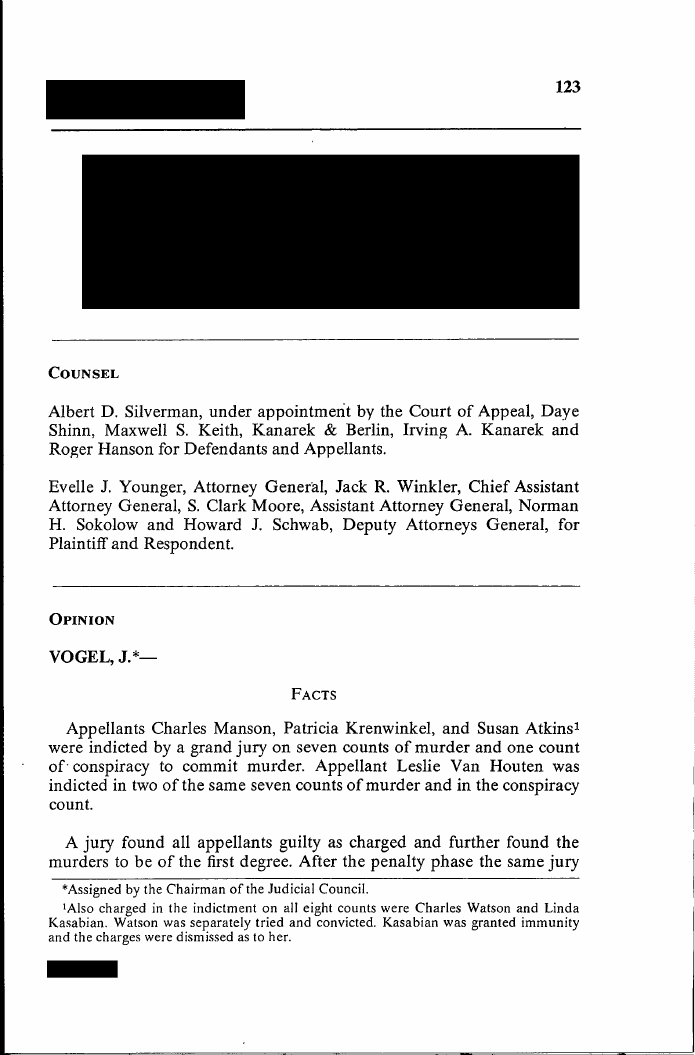
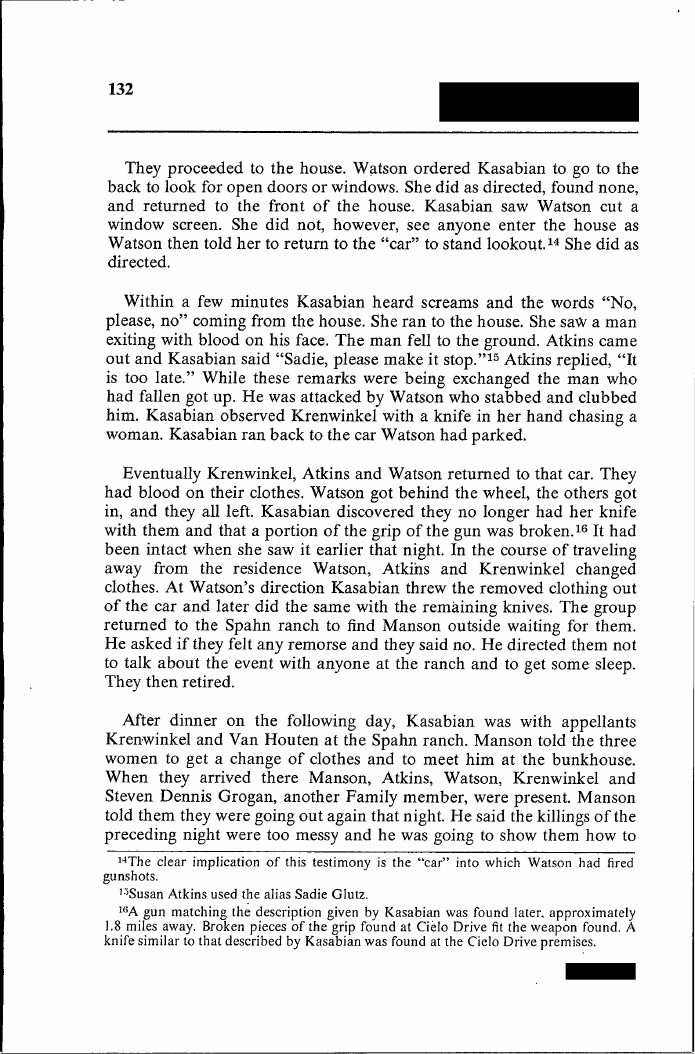
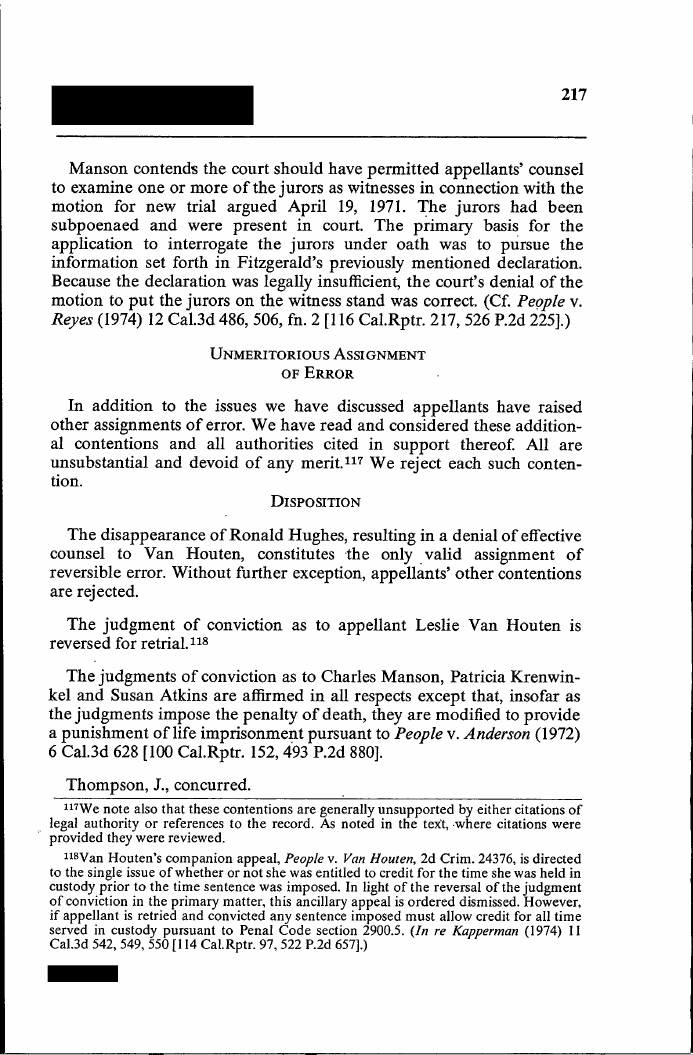
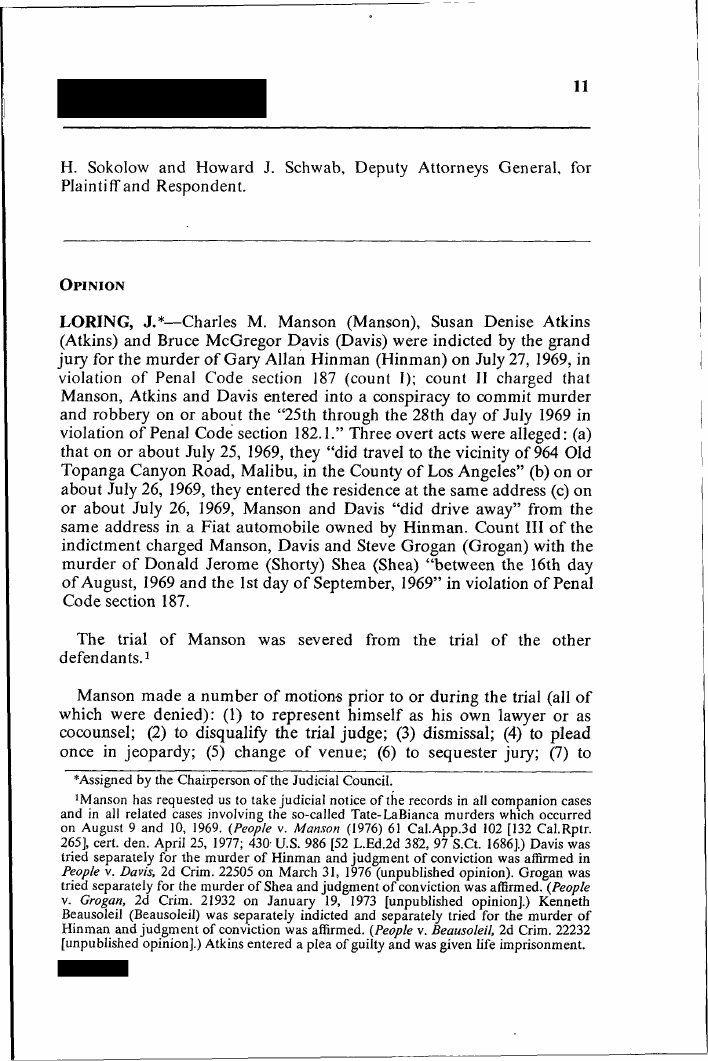
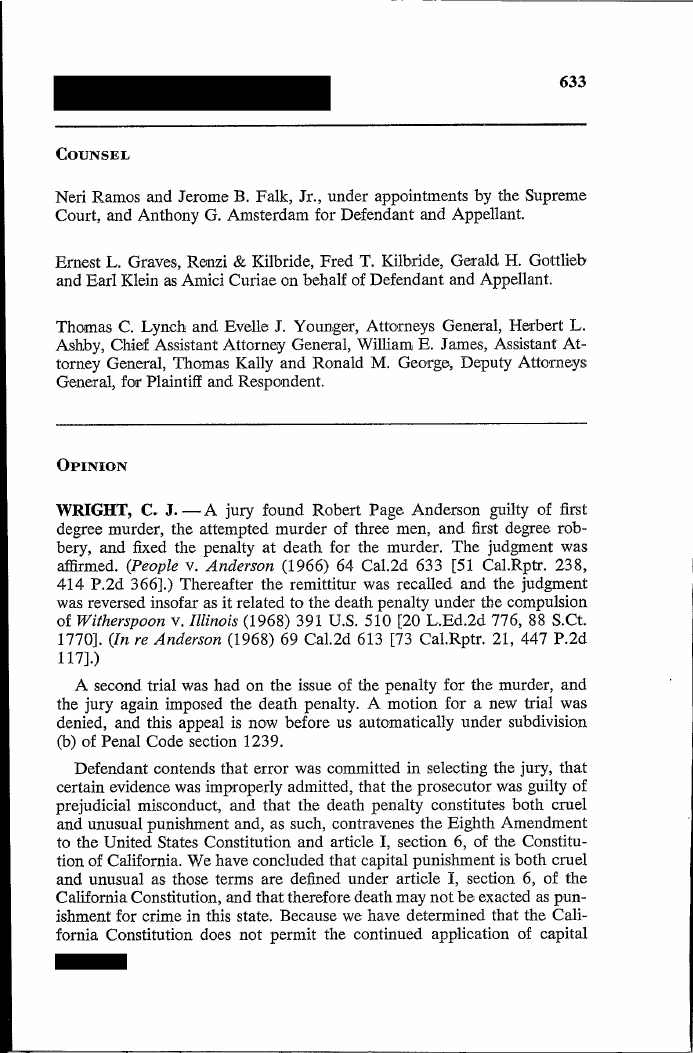
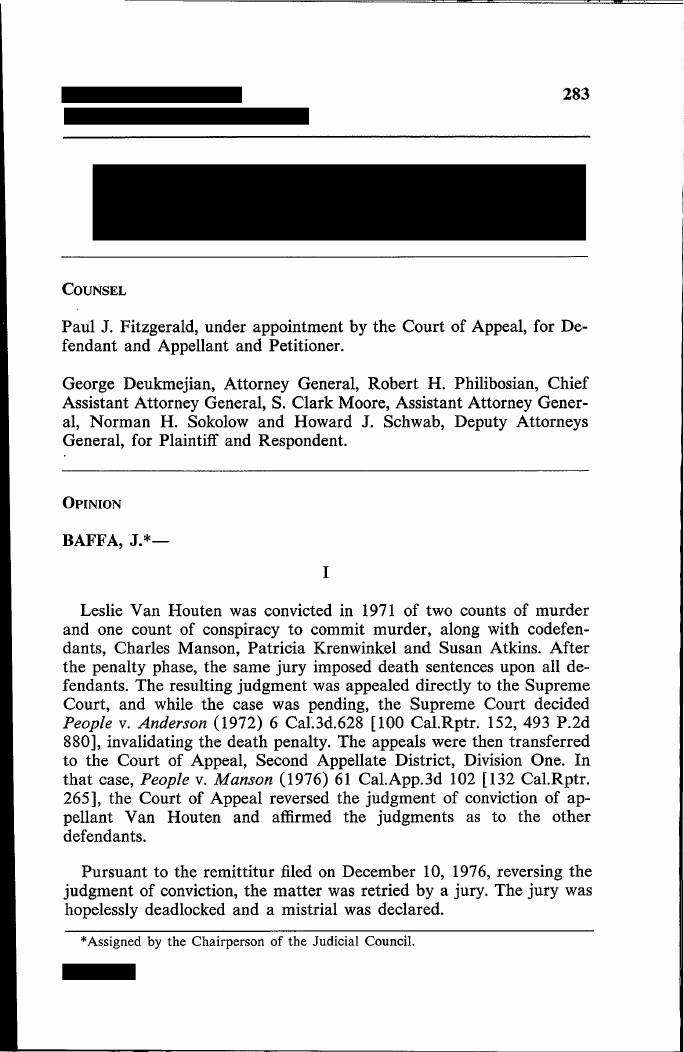
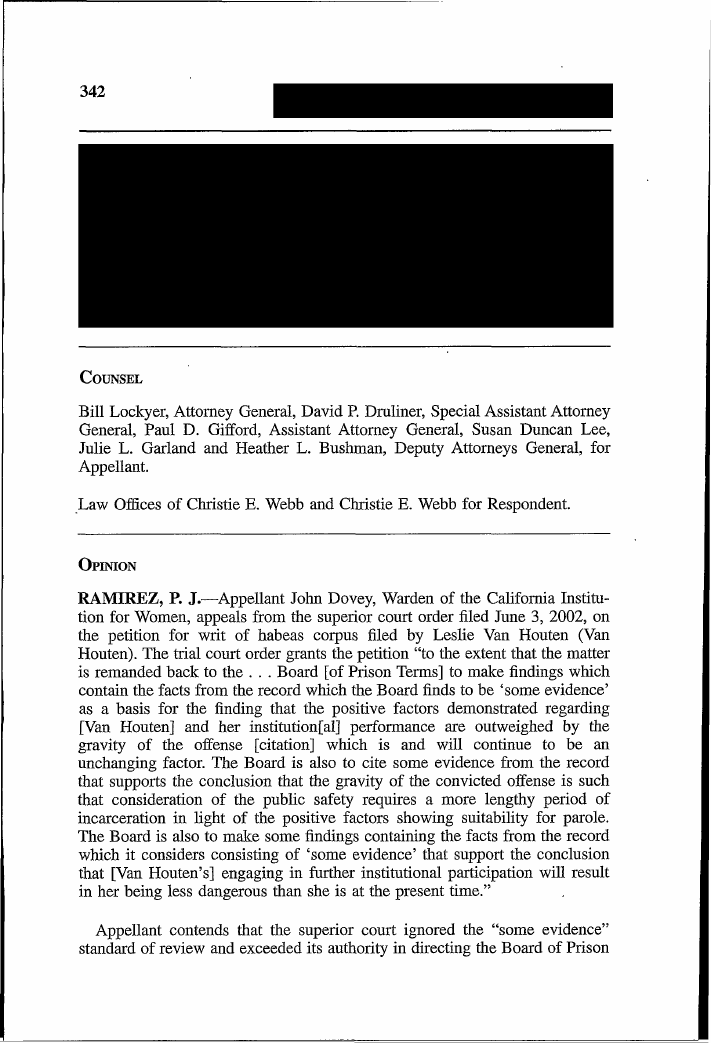
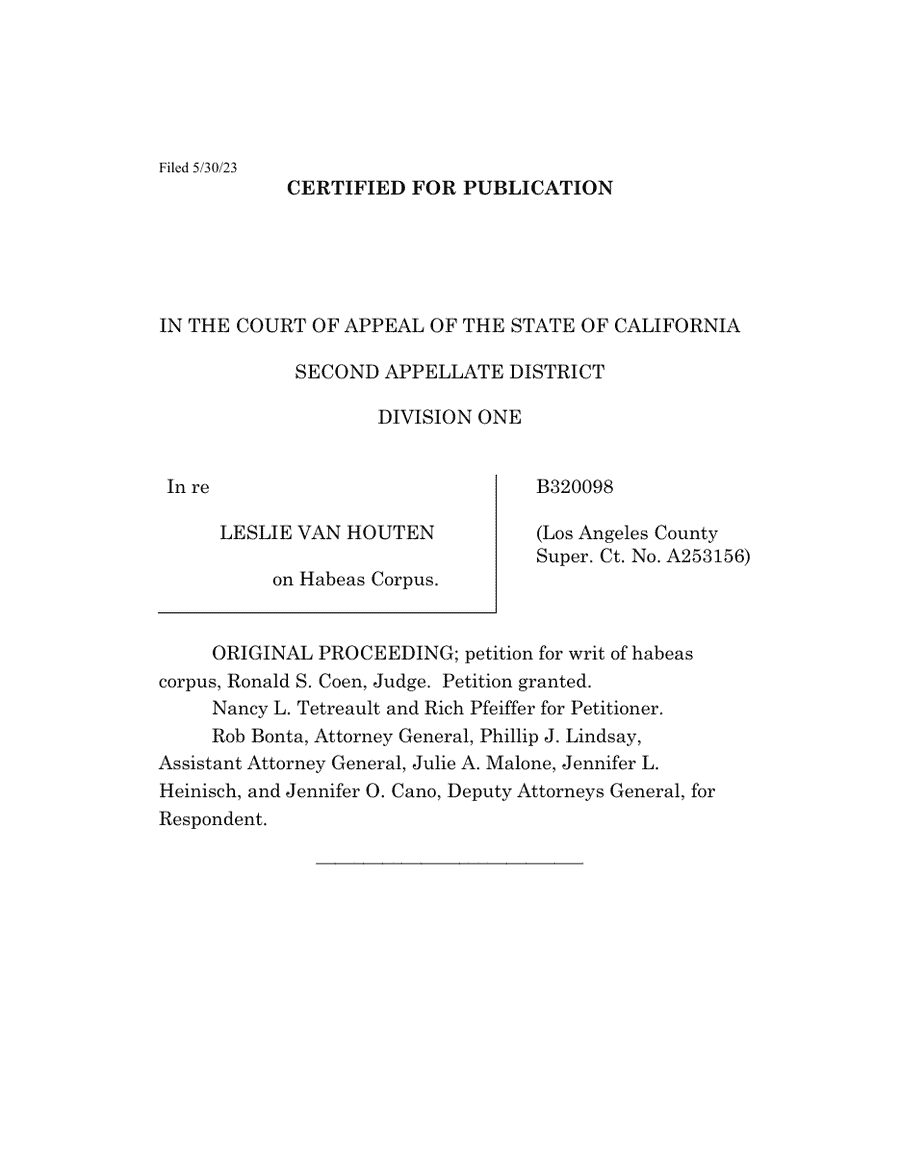
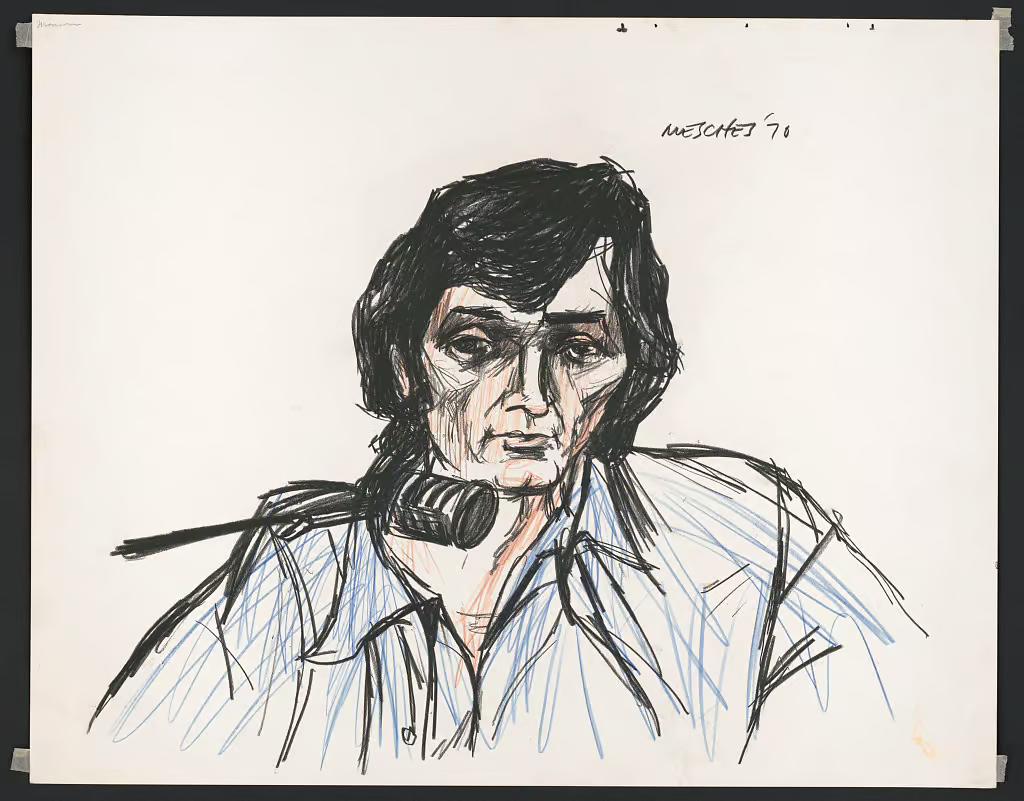

Bill Robles: Manson on the witness stand
Bill Robles’s 1970 drawing of Manson on the stand is in the Library of Congress, which marks it “publication may be restricted.” This file links to it rather than reproducing it, along with the LOC exhibition page.1819
Myth vs. record
The case has been retold so often that shorthand now competes with evidence
Manson personally killed the Tate–LaBianca victims
False. His liability came from conspiracy, orders, taking part in parts of the plan, and separate involvement in Hinman and Shea, where by his own admission he cut Hinman with a sword. Different followers inflicted the fatal violence in different cases.14
The victims were all celebrities
False. The nine included a musician, a ranch hand, an 18-year-old visitor, grocery-business owners and friends of Tate, as well as Tate herself.9
Helter Skelter explains everything
Too simple. It was a major prosecution theory supported by testimony, but the record also includes a money robbery (Hinman), suspicion of an informer (Shea), resentment over music-industry rejection, loyalty enforcement and escalating group violence.149
The followers were brainwashed puppets
Too simple. Coercive control matters, but the law, and decades of parole decisions, distinguish what each person did. Different participants made different choices and committed different acts.76
Manson was a criminal mastermind
The “evil mastermind” frame turns improvisation, intimidation and opportunism into strategic brilliance. The first murder night was, in his own words, “too messy,” and the first arrests came over a burned park-service loader in the desert.116 His power depended on a small, unstable social system, not supernatural charisma.
Shea was cut into nine pieces
That was Manson’s boast. The remains found in 1977 were reported to be intact, and the sheriff’s investigator said the stories were told to frighten potential witnesses.410
Only two of the nine convicted have been paroled
The death sentences ended because of Anderson, which applied to every condemned prisoner in California. Van Houten’s conviction was reversed, and she was convicted again. Only Grogan, in 1985, and Van Houten, in 2023, have been paroled.81135
Afterlife of the case
Parole, pop culture, moral panic and the commercial immortality of Manson’s face
The offender became the logo
Manson’s image became a commodity: shirts, album covers, films, documentaries, memorabilia and endless “most evil” rankings. He turned the X carved on his forehead during the trial into a swastika.3 That commercial afterlife makes the man who gave the orders seem more important than the people who died, or than the followers who carried out the killings. Former prosecutor Stephen Kay said young people drawn to Manson’s mystique “don’t know what he’s really about, what he really did.”3
Put the names back
The cleanest correction is structural: name the nine victims, separate the actors, distinguish proven conduct from legend, and treat every later conspiracy claim as a claim that needs evidence. That same editorial approach runs through the site’s victim-first true crime archive.
What the FBI Vault holds
The FBI’s public Vault holds a four-part file on Manson, filed under “Violent Crime.”20 It is a federal file, not the state trial record; the convictions rest on the California proceedings.
For broader context, see Manson Family and cult mythology, the Manson Family in dangerous cult history, and the Cults & Extremism hub.
Related case files
Coercive groups, joint offending and the site’s other case files
Charles Manson FAQ
Direct answers to the case questions most often flattened by mythology
Did Charles Manson personally kill the Tate–LaBianca victims?
No. The record doesn’t show that he struck any fatal blow at Cielo Drive or Waverly Drive. His murder liability came from conspiracy, his orders and his participation, and the courts distinguish his role from that of the people who carried out the attacks. In the separate Hinman case he admitted cutting Hinman’s face with a sword.14
How many murders was Charles Manson convicted of?
Nine first-degree murders: the seven Tate–LaBianca victims, plus Gary Hinman and Donald “Shorty” Shea.2
Who were the Tate–LaBianca victims?
The Tate victims were Sharon Tate Polanski, Jay Sebring, Abigail Folger, Wojciech Frykowski and Steven Parent. The LaBianca victims were Leno and Rosemary LaBianca.1
What was Helter Skelter?
Manson’s name for an apocalyptic race war he predicted, which the prosecution argued the murders were meant to start. It is part of the trial record, but it shouldn’t erase the other motives, disputes and control dynamics in the case.1
Was the Manson Family a cult?
The group showed many high-control features: isolation, dependence, sexual control, ideological pressure, loyalty tests, criminal escalation and obedience to Manson’s authority. The Court of Appeal described his position as unquestioned leader as “one of design.”1
Why wasn’t Charles Manson executed?
He was sentenced to death in 1971, but in 1972 the California Supreme Court’s ruling in People v. Anderson invalidated the death penalty, and every death sentence in the state became life imprisonment. California had no life-without-parole sentence then, so he was eligible for parole hearings and was denied 12 times.82
Are any of the Manson Family killers still in prison?
As of the latest official records reviewed (October 2025), yes. Patricia Krenwinkel’s 2025 parole grant was reversed by the governor on Oct. 13, 2025, and Robert Beausoleil’s on May 2, 2025. Charles “Tex” Watson was denied parole in 2021. Leslie Van Houten was paroled in July 2023, Steve Grogan in 1985, and Susan Atkins died in custody in 2009.657
Why does the Manson case still matter?
It shows how coercive groups, offender mythology, media fascination and the erasure of victims can distort public understanding of murder.
Source ledger
Court records and official archives first; reputable historical reporting second
People v. Manson (1976) 61 Cal.App.3d 102 (Tate–LaBianca appeal; Vogel, J.; Wood, P.J., concurring and dissenting)
The Tate–LaBianca appeal: the facts, the coroner’s findings, Kasabian’s testimony, corroboration, the trial events and the Van Houten reversal.
Notes 1
Open source ↗People v. Manson (1977) 71 Cal.App.3d 1 (Hinman–Shea appeal; Loring, J.)
The Hinman–Shea appeal: Bailey, Springer, Whiteley, Hoyt, Pearl and the corpus delicti without a body.
Notes 4
Open source ↗People v. Anderson (1972) 6 Cal.3d 628
The 1972 death-penalty ruling.
Notes 8
Open source ↗People v. Van Houten (1980) 113 Cal.App.3d 280
Van Houten’s third trial, affirmed.
Notes 12
Open source ↗In re Van Houten (2004) 116 Cal.App.4th 339
The 2004 parole appeal, with the LaBianca facts as later summarized.
Notes 11
Open source ↗In re Van Houten (2023) 92 Cal.App.5th 1, No. B320098 (Cal. Ct. App., May 30, 2023)
The 2023 habeas ruling that led to Van Houten’s release, and the dissent.
Notes 7
Open source ↗Office of the Governor of California, Annual Executive Report on Parole 2025 (Apr. 2026): Krenwinkel and Beausoleil reversals
The governor’s 2025 reversals for Krenwinkel and Beausoleil, with statements of fact.
Notes 6
Open source ↗California Department of Corrections and Rehabilitation, “Inmate Charles Manson dies of natural causes,” Nov. 19, 2017
CDCR’s death notice: convictions, sentence history, parole denials, prisons and death.
Notes 2
Open source ↗FBI Records: The Vault, “Charles Manson”
The FBI’s four-part file, filed under “Violent Crime.”
Notes 20
Open source ↗“Charles Manson, cult leader behind 1969 Tate-LaBianca murders, dies at 83,” Los Angeles Times, Nov. 19, 2017
The L.A. Times obituary: biography, the Wilson and Melcher links, courtroom events and parole.
Notes 3
Open source ↗Los Angeles Times, Dec. 2, 1969 (reprinted in the Times archive, July 27, 2019)
The Dec. 2, 1969 L.A. Times report of the break in the case.
Notes 13
Open source ↗“Remembering the victims of the Manson murders,” Los Angeles Times, July 2019
The victims, with ages, as the L.A. Times recorded them in 2019.
Notes 9
Open source ↗“Terry Melcher, 62; Songwriter, Singer Produced Hit Records,” Los Angeles Times, Nov. 21, 2004
Melcher and the Cielo Drive house.
Notes 14
Open source ↗“Record Producer Rejected Manson; Says at Trial That Audition Did Not …,” The New York Times, Oct. 24, 1970 (headline as archived)
Melcher’s trial testimony (headline as archived).
Notes 15
Open source ↗“Manson Family Murders Fast Facts,” CNN (updated)
Dates for the indictment, trial and parole actions (one error noted in §11).
Notes 5
Open source ↗National Parks Conservation Association, “A Mystery in Death Valley,” National Parks magazine
The Death Valley arson investigation and the Barker Ranch raids.
Notes 16
Open source ↗“Shorty Shea’s Body Believed Found,” Chatsworth dateline, Dec. 16, 1977 (newspaper not named in the archived reprint at Cielodrive.com)
The December 1977 recovery of Shea’s remains.
Notes 10
Open source ↗Arnold Mesches, “Manson testifies” (1970), Library of Congress Prints & Photographs Division, LC-DIG-ppmsca-50680
The Mesches drawing, with no known restrictions on publication.
Notes 17
Open source ↗Numbered notes
- People v. Manson (1976) 61 Cal.App.3d 102 (Tate–LaBianca appeal; Vogel, J.; Wood, P.J., concurring and dissenting). static.case.law
- California Department of Corrections and Rehabilitation, “Inmate Charles Manson dies of natural causes,” Nov. 19, 2017. www.cdcr.ca.gov
- “Charles Manson, cult leader behind 1969 Tate-LaBianca murders, dies at 83,” Los Angeles Times, Nov. 19, 2017. www.latimes.com
- People v. Manson (1977) 71 Cal.App.3d 1 (Hinman–Shea appeal; Loring, J.). static.case.law
- “Manson Family Murders Fast Facts,” CNN (updated). www.cnn.com
- Office of the Governor of California, Annual Executive Report on Parole 2025 (Apr. 2026): Krenwinkel and Beausoleil reversals. www.gov.ca.gov
- In re Van Houten (2023) 92 Cal.App.5th 1, No. B320098 (Cal. Ct. App., May 30, 2023). www.courts.ca.gov
- People v. Anderson (1972) 6 Cal.3d 628. static.case.law
- “Remembering the victims of the Manson murders,” Los Angeles Times, July 2019. www.latimes.com
- “Shorty Shea’s Body Believed Found,” Chatsworth dateline, Dec. 16, 1977 (newspaper not named in the archived reprint at Cielodrive.com). www.cielodrive.com
- In re Van Houten (2004) 116 Cal.App.4th 339. static.case.law
- People v. Van Houten (1980) 113 Cal.App.3d 280. static.case.law
- Los Angeles Times, Dec. 2, 1969 (reprinted in the Times archive, July 27, 2019). www.latimes.com
- “Terry Melcher, 62; Songwriter, Singer Produced Hit Records,” Los Angeles Times, Nov. 21, 2004. www.latimes.com
- “Record Producer Rejected Manson; Says at Trial That Audition Did Not …,” The New York Times, Oct. 24, 1970 (headline as archived). www.nytimes.com
- National Parks Conservation Association, “A Mystery in Death Valley,” National Parks magazine. www.npca.org
- Arnold Mesches, “Manson testifies” (1970), Library of Congress Prints & Photographs Division, LC-DIG-ppmsca-50680. www.loc.gov
- Bill Robles, “[Charles Manson on the witness stand]” (1970), Library of Congress Prints & Photographs Division. www.loc.gov
- Library of Congress, “Drawing Justice: The Art of Courtroom Illustrations,” Charles Manson on the stand. www.loc.gov
- FBI Records: The Vault, “Charles Manson”. vault.fbi.gov
Browse every case in the Case File Index
Discover more from The Dark Side of Humanity
Subscribe to get the latest posts sent to your email.