FILE NO. 0157Case status Archived
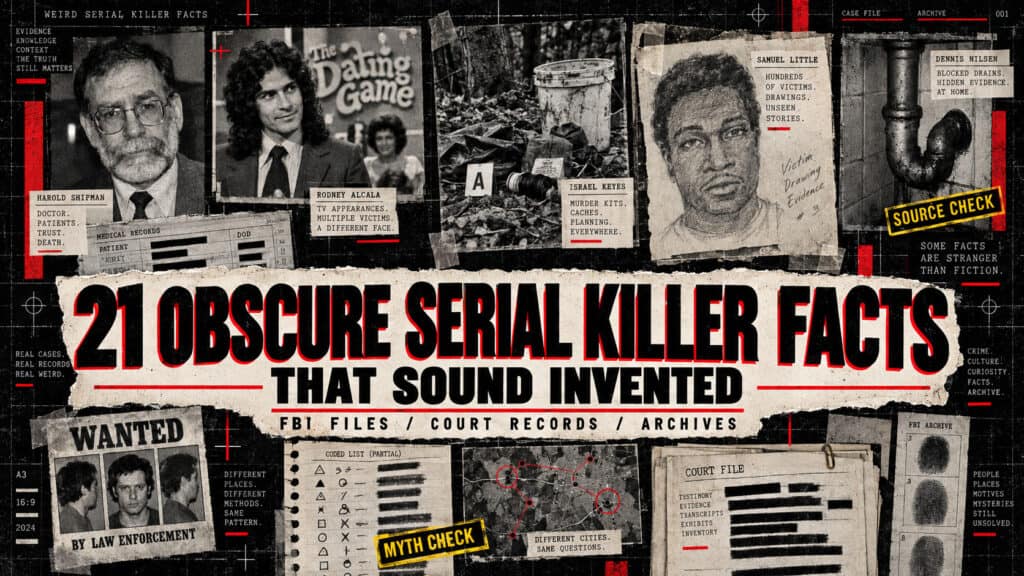
Documented facts from historical serial homicide cases reveal the unusual mechanics behind real investigations, trials, and evidence collection. Using official archives, FBI records, and court transcripts, the collection distinguishes verified forensic details from offender boasting, press folklore, and inflated media mythology.
The cases demonstrate that serial offenders are rarely criminal masterminds. Instead, investigations often depend on routine systems, chance, and mundane mistakes, such as blocked plumbing, forged wills, or archived television footage. Additionally, several popular stories are corrected where public legend exceeds documented facts.
21 Obscure Serial Killer Facts That Sound Invented
Twenty-one weird and bizarre serial killer facts from actual investigations, trials, arrests and historical archives. This is a documented case-fact collection, not a general serial-killer psychology guide. Every entry is built around a sourceable fact, and the dossier separates court records, police evidence and institutional archives from offender boasting, press folklore and later mythmaking.
“Bizarre” does not mean “cool.” The point of this file is to expose the strange mechanics of detection, concealment, media mythology and institutional failure without turning offenders into supernatural masterminds. When a detail is based on confession, press reporting or later recollection rather than a conviction record, that limit is stated.


Content and Evidence Warning
Serial homicide, body disposal, poisoning, child victims, sexual violence, and offender confessions.
What Makes a Serial Killer Fact Worth Keeping?
The weird detail should reveal something about evidence, detection, concealment or myth.
The verified core
These 21 weird serial killer facts are documented oddities from actual serial-murder cases, not a general guide to serial-killer psychology. The strangest reliable facts are often not the theatrical details that dominate documentaries. They are administrative, forensic and accidental. A forged will typed on the killer’s own typewriter. A blocked drain. A television game-show appearance preserved on tape. A journalist publishing information only the killer should know. A hidden bucket placed years before a crime. A coded list admitted into evidence. These details matter because they show that serial homicide is rarely a contest between a brilliant offender and a brilliant profiler. It is a collision between predatory behavior, routine systems, chance, vulnerable victims, incomplete information and the offender’s eventual mistakes.
Evidence Index: 21 Weird Serial Killer Facts
Jump directly to any documented oddity in the fact file.
How We Verified These Serial Killer Facts
Not every famous anecdote deserves the same confidence.
6 Serial Killers Who Helped Get Themselves Caught
Six cases where the strangest evidence came from the offender’s own choices.
Harold Shipman Was Exposed by a Terrible Forged Will
Shipman’s medical authority had helped him avoid suspicion around repeated patient deaths. The break came when Kathleen Grundy’s daughter, solicitor Angela Woodruff, saw a new will supposedly leaving Grundy’s estate to Shipman. The document was badly typed, contained crude signature simulations, and was produced on a battered Brother typewriter later recovered from Shipman’s surgery. Investigators also found one of Shipman’s fingerprints on the will. The financial forgery forced scrutiny of a death that otherwise might have passed as natural.
The oddity is not that a sophisticated killer made one mistake. It is that the mistake was bureaucratic and embarrassingly ordinary. A fake legal document triggered the inquiry that the death-certification system had failed to trigger.
A Crime Reporter Wrote About Murders Police Later Linked to Him
Vlado Taneski covered the murders of women in Kicevo, Macedonia, for national newspapers. Police said his articles contained details that had not been released publicly, including information about the cord used to bind and strangle victims. That unusual inside knowledge helped make him a suspect. Police then said DNA evidence connected him to victims, and he was charged with two murders while investigators examined additional cases.
The case is almost mechanically self-referential: the journalist who was helping construct the public narrative of a serial killer was also giving police reasons to look at the author.
Charles Sobhraj Escaped a Maximum-Security Prison by Drugging the Guards’ Sweets
In March 1986, Sobhraj escaped Tihar Jail in New Delhi with other inmates after guards and prison staff were incapacitated by drug-laced food and sweets presented during a birthday celebration. Contemporary reporting described unconscious guards and a waiting escape vehicle. He was recaptured several weeks later in Goa.
This reads like fiction because the security breach was built around hospitality. The same social manipulation associated with Sobhraj’s crimes worked inside a prison, where the people responsible for keeping him confined accepted food from the man they were guarding.
A Game-Show Appearance Became Investigative Evidence Decades Later
Welsh murderer John Cooper appeared on ITV’s darts game show Bullseye shortly before the 1989 murders of Peter and Gwenda Dixon. When detectives reopened the Pembrokeshire murders years later, the footage helped demonstrate Cooper’s resemblance to a police sketch. ITV’s account of the investigation also notes that Cooper discussed his knowledge of the coastline on the show.
The footage did not convict him by itself. DNA, fibre evidence and other forensic work mattered far more. The bizarre part is that entertainment television unintentionally preserved a moving image of the future defendant from almost exactly the right period.
Rodney Alcala Won The Dating Game During His Murder Era
In 1978, Rodney Alcala appeared as a contestant on The Dating Game and was selected by the bachelorette. Years later he was convicted of multiple murders. The television appearance became so embedded in the case that a clip was shown during his 2010 trial, when Alcala represented himself and used the footage in an attempt to dispute prosecution evidence about an earring.
The episode is unsettling because the show transformed a dangerous man into a playful consumer choice. The television format did not create the danger, but it captured how ordinary social performance can coexist with serious violence. See the Rodney Alcala case dossier for the broader investigation, victims and trial history.
Dennis Nilsen’s Murders Were Exposed by a Plumbing Problem
Residents at 23 Cranley Gardens called for help after the building’s drains became blocked. The obstruction turned out to include human remains that Nilsen had attempted to dispose of through the plumbing. Police were called, and the investigation rapidly moved into his flat.
The detail is famous for a reason: years of homicide were not broken by psychological profiling or a dramatic witness confrontation. A drain failed.
Serial Killer Evidence: Murder Kits, Lists and Victim Drawings
Hidden kits, coded lists, drawings and preserved traces that turned into evidence.
The FBI Says Israel Keyes Buried “Murder Kits” for Future Crimes
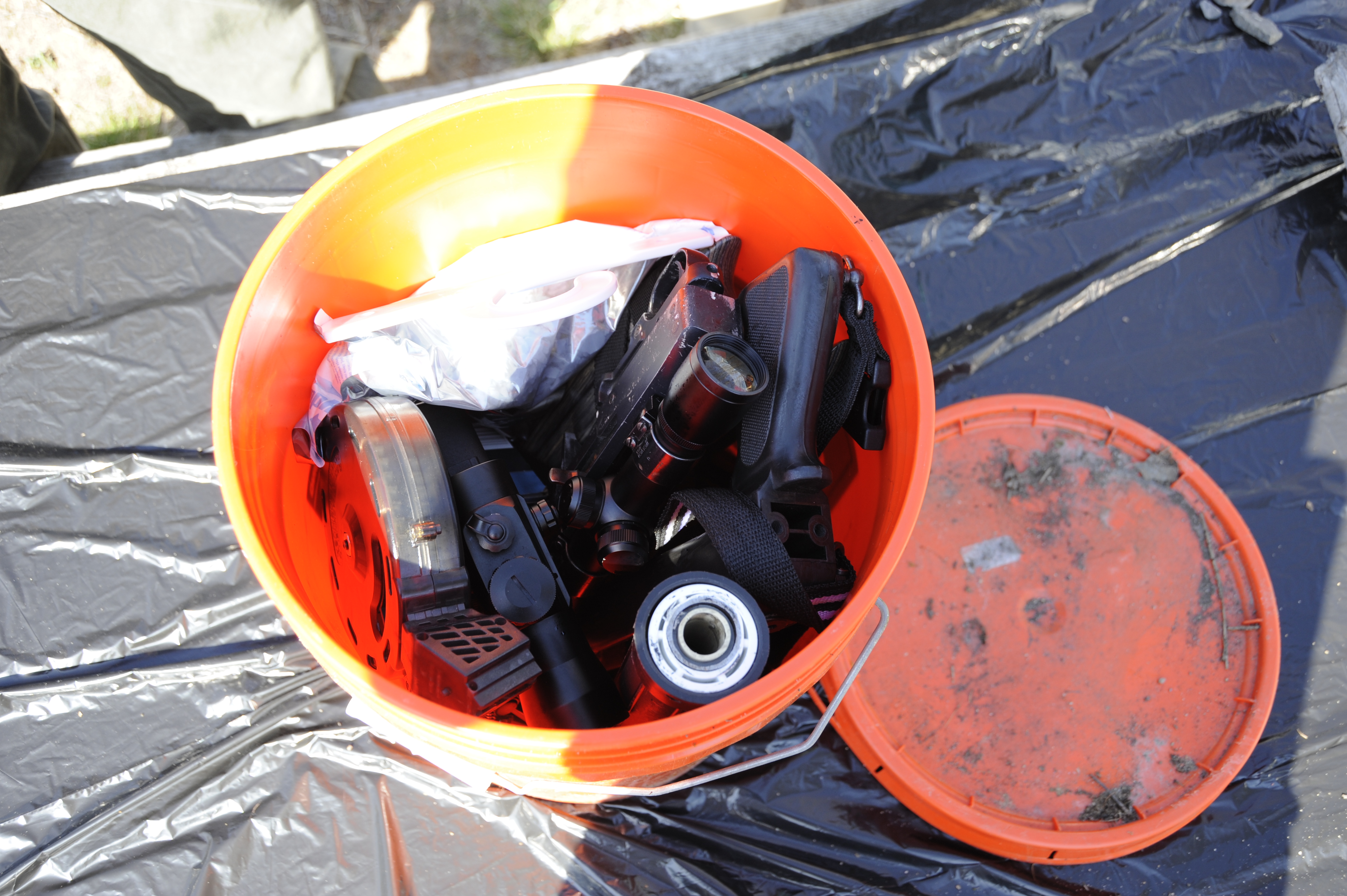
The FBI says Keyes placed hidden caches around the United States containing weapons, tools and cash. One New York cache was stored in a watertight bucket and contained a modified .22-caliber Ruger, ammunition, magazines and a silencer. The FBI explained that the caches reduced the need to transport weapons by air or create credit-card records close to a crime.
By the FBI’s account, this was not improvisation at the scene. The odd fact is the time separation between preparation and victim selection. In some locations, the FBI says, the logistics of a future crime were waiting underground before the victim had even been chosen. Keyes was charged in Samantha Koenig’s case and died before trial in December 2012; the FBI said in 2013 that it believes there were 11 victims.
Randy Kraft Kept a Coded List Prosecutors Treated as a “Death List”
After Kraft’s arrest, deputies found a handwritten document in his car. Prosecutors argued that its cryptic entries corresponded to victims. Kraft challenged the list as speculative and prejudicial, but the California Supreme Court later upheld its admission into evidence. Contemporary reporting described 61 entries and the prosecution’s theory that the notations were a personal scorecard.
The bizarre part is not that police found a list. It is that a serial-murder case generated litigation over whether the defendant’s own private shorthand could be decoded as an index of human beings.
Samuel Little Drew His Victims From Memory, and the FBI Published the Portraits
During later interviews, Samuel Little produced color drawings of women and at least one male victim from memory. The FBI published the portraits alongside approximate dates, locations and descriptions in an attempt to connect confessions to unidentified victims and unresolved cases. Some drawings were linked to Jane Does. Others remained attached to unmatched confessions.
That makes the drawings simultaneously evidence, memory artifact and public identification tool. They are also a reminder that a killer’s recollection is not the same thing as corroboration. The FBI explicitly separated matched cases from unmatched confessions.
Bizarre Ways Serial Killers Were Caught
The mechanics are real even when the setup sounds impossible.
Marcel Petiot’s House Was Exposed Because the Chimney Would Not Stop Smoking
In March 1944, neighbors in Paris complained about foul smoke and a persistent odor coming from 21 rue Le Sueur. Firefighters and police entered the property and discovered human remains, some burned or treated with quicklime. French archival media sources identify the smoke and smell as the practical trigger for the discovery of the charnel house.
Petiot’s wartime context made the scene even stranger. Victims included people trying to disappear from German and Vichy authorities, which gave ordinary disappearance an already dangerous explanation.
Petiot Used a Fake Escape Network as a Murder Pipeline
During the German occupation of France, Petiot presented himself as someone who could help people escape to South America. French historical accounts describe victims who were instructed to bring money and valuables and were told they needed an inoculation before travel. Instead of being moved through an escape route, they vanished inside Petiot’s system.
It is one of the darkest examples of predation attaching itself to an existing emergency. The victims were not simply deceived by a charismatic doctor. They were already navigating persecution, illegality and fear, which made secrecy look normal.
Javed Iqbal Surrendered at a Newspaper Office to Write a Confession
After sending a letter that claimed an enormous number of child murders and led investigators to physical evidence, Javed Iqbal appeared at the Lahore offices of the Urdu-language newspaper Jang in December 1999. Contemporary reporting said he told staff he wanted to write a confession.
The claimed victim count should be treated separately from what could be independently established. The surrender itself, however, is well documented. Instead of entering a police station, he walked into a newsroom and attempted to control how the story would be told.
Donald Gaskins Killed Another Death-Row Prisoner With a Bomb Hidden in a Radio
Donald Gaskins was already incarcerated for multiple murders when he killed fellow death-row inmate Rudolph Tyner in 1982 using a homemade bomb disguised as a radio. He was later executed for Tyner’s murder.
This is a rare serial-killer fact where the post-conviction crime is stranger than many of the pre-conviction stories. Maximum-security confinement did not end Gaskins’s capacity to commit homicide.
Historical Cases With Almost Impossible Details
These survive because archives exist, not because the folklore is automatically true.
Leonarda Cianciulli’s Trial Really Was a “Soap-Maker” Case
The University of Milano-Bicocca’s historical crime archive records Cianciulli’s 1946 prosecution for aggravated murder, robbery and the destruction of three bodies. Contemporary coverage preserved by the archive called it the trial of the saponificatrice, the soap-maker. The archive also includes photographs of the large pot associated with the case, while Rome’s criminological collections preserve objects linked to the murders.
The popular claim that she turned victims into soap has a stronger historical basis than many serial-killer legends because body destruction using caustic soda was central to the prosecution. The often repeated story that she baked and served human-blood cakes is less secure and should be attributed to later accounts and her own statements rather than treated as independently demonstrated forensic fact.
Bela Kiss’s Alleged Victims Were Found Sealed in Metal Drums While He Was Away at War
Hungarian archival material revisiting the 1916 Cinkota case documents the discovery of bodies connected to tinsmith Bela Kiss while he was serving in the military during the First World War. Contemporary newspapers described metal casks containing women. Kiss was not present to be arrested, and later reported sightings never produced a definitive resolution.
The enduring oddity is structural: the container itself became the crime scene, the principal suspect was absent because of a world war, and the case entered history already half criminal file and half disappearance mystery.
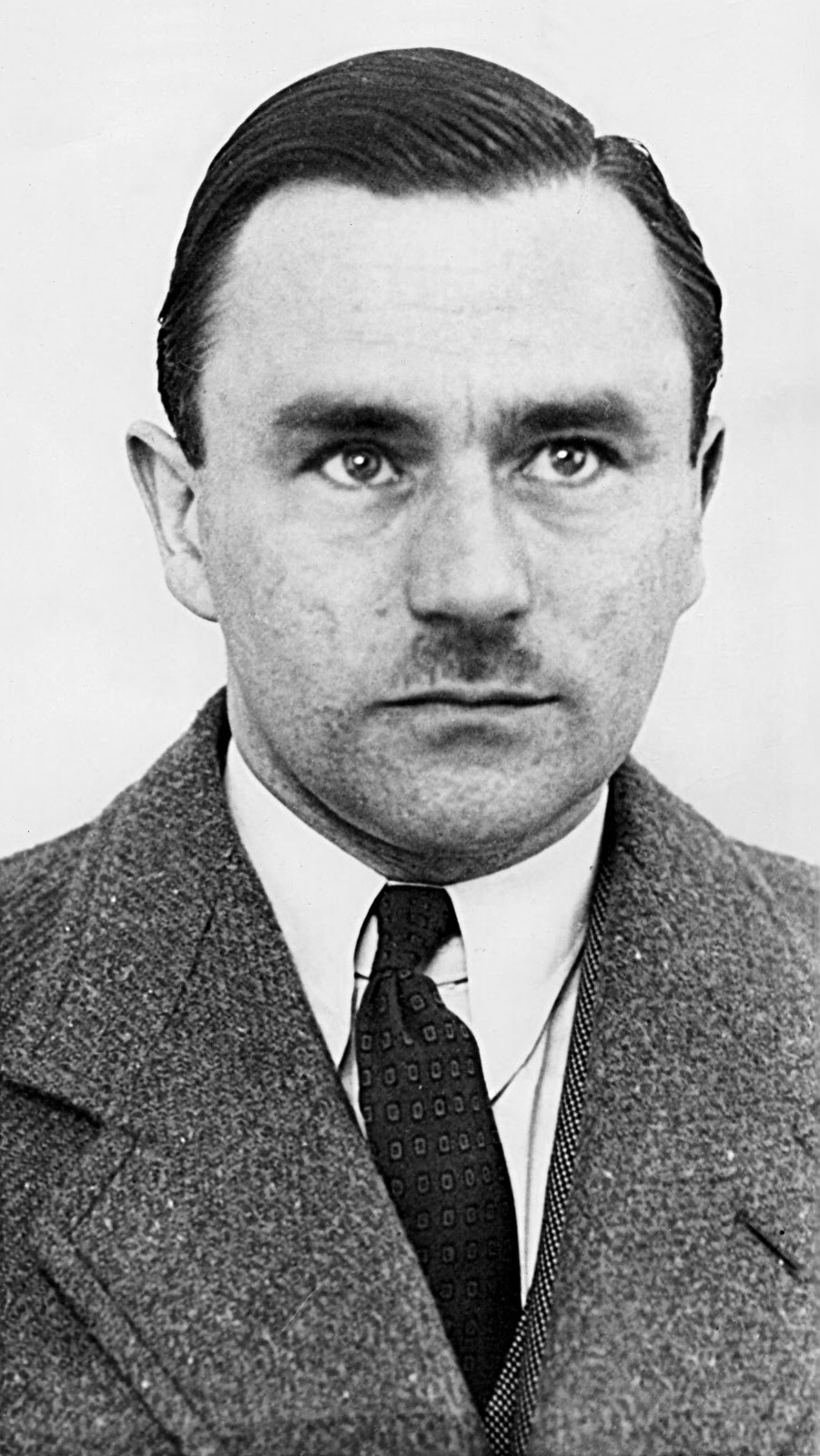
John George Haigh Asked How Police Could Prove Murder Without a Body, but the Acid Left Evidence
After dissolving victims in sulphuric acid, Haigh told investigators that his final victim no longer existed and asked, in substance, how murder could be proved without a body. The prosecution’s answer was forensic rather than philosophical. Investigators recovered human material, including intact dentures identified by the victim’s dentist, along with other traces from the disposal site.
The weird legal myth is often summarized as Haigh misunderstanding corpus delicti. What can be demonstrated directly from contemporary court reporting is simpler: he believed destruction of the body had eliminated the case, and physical evidence survived anyway.
When Murder Turned Into a Private Record System
Counting, cataloguing and memory became part of the case evidence.
Alexander Pichushkin Said He Wanted a Victim for Every Square on a Chessboard
Pichushkin was convicted of 48 murders and three attempted murders. Reuters reported that he told detectives he had hoped to place a coin on every square of a 64-square chessboard for each victim. Contemporary reporting also described a chessboard recovered from his home and claims by Pichushkin that his actual total exceeded the number of convictions.
The evidence boundary matters. The chessboard motif is real enough to be documented in court-era reporting, but the larger self-reported body count is not interchangeable with the 48 murders for which he was convicted.
Mikhail Popkov Reconstructed Old Murders With Enough Detail to Lead Investigators Back to Evidence
Former Russian police officer Mikhail Popkov received a second life sentence after being convicted of 56 additional murders, bringing his convictions to 78. Reuters reported that investigators said his later confessions contained enough detail to locate old remains, personal effects and weapons, and that a prosecutor described his memory for victim clothing, tattoos and jewellery as extraordinary.
The bizarre detail is not a trophy cabinet or a coded diary. It is memory functioning like an archive across crimes separated by decades.
The Public Role Was Part of the Camouflage
Wrestler, doctor, journalist, policeman, entertainer.
Mexico City’s “Little Old Lady Killer” Had Worked as a Professional Wrestler
Juana Barraza was arrested in 2006 after being seen leaving the home of an elderly woman who had been strangled. Established reporting identified Barraza as a former professional wrestler who had used the ring name “The Lady of Silence.” Before the arrest, composite images and witness descriptions had contributed to mistaken speculation that the offender might be a male cross-dresser.
The case is a caution against letting cultural expectations become a suspect profile. Investigators were looking for a serial murderer of elderly women, while the person arrested had a public identity built around athletic performance and spectacle. For broader context, see women serial killers and investigative stereotypes and the site’s analysis of female serial homicide patterns.
Tsutomu Miyazaki’s Tape Collection Helped Turn “Otaku” Into a National Moral-Panic Label
After the murders committed by Tsutomu Miyazaki in Japan, reporting focused heavily on his collection of thousands of videotapes and manga. The Japan Times has described the case as a major reason the word otaku, then associated with obsessive hobbyists, entered wider public usage with a deeply stigmatized meaning.
The strange fact is cultural rather than forensic. One offender’s media collection became a shortcut for explaining an entire category of people, even though owning tapes, manga or niche media has no diagnostic relationship to serial homicide.
The Bizarre Fact Is Sometimes That the Famous Story Is Wrong
Serial-killer mythology often becomes more elaborate than the underlying case.
Was H. H. Holmes’s Murder Castle Real? The Myth Behind the Story
The familiar story says Holmes operated a fully functioning World’s Fair hotel packed with trapdoors, gas chambers, soundproof torture rooms and a basement death factory. Smithsonian’s historical review notes that much of this architecture was amplified by yellow journalism and later retellings. The building was not functioning as the hotel of legend, and historians have been able to verify far fewer victims than the body counts often attached to Holmes.
This is a useful ending because the most “bizarre” serial-killer fact may be the machinery of myth itself. Repetition can make a newspaper embellishment feel more factual than a court record. Compare the H. H. Holmes Murder Castle dossier and the broader discussion of how historical serial-killer legends become inflated.
Master Fact Ledger
Twenty-one claims, their source posture, and why each one matters.
| # | Case | Bizarre fact | Evidence posture | Why it matters |
|---|---|---|---|---|
| 01 | Harold Shipman | Forged will typed on his own typewriter helped expose him | Trial evidence | Ordinary document fraud broke a medical murder case |
| 02 | Vlado Taneski | Reported murders using unreleased details | Police + DNA | Media work itself helped generate suspicion |
| 03 | Charles Sobhraj | Drugged prison guards with sweets and escaped | Contemporary reporting | Manipulation breached maximum security |
| 04 | John Cooper | Game-show footage helped compare him to a sketch | Police reconstruction | Entertainment archive became investigative material |
| 05 | Rodney Alcala | Won The Dating Game during his murder era | Broadcast + trial | Public charm coexisted with serious violence |
| 06 | Dennis Nilsen | Blocked drains exposed human remains | Police case history | Mundane infrastructure ended concealment |
| 07 | Israel Keyes | Pre-positioned hidden murder kits | FBI | Planning was geographically and temporally separated from victims |
| 08 | Randy Kraft | Coded list admitted as evidence | Court opinion | Private notation became contested homicide evidence |
| 09 | Samuel Little | Drew victims from memory for investigators | FBI | Art became an identification tool |
| 10 | Marcel Petiot | Smoke and odor exposed the charnel house | French archives | A neighborhood complaint pierced concealment |
| 11 | Marcel Petiot | Fake wartime escape route fed victims into his system | Historical record | Persecution made secrecy exploitable |
| 12 | Javed Iqbal | Surrendered at a newspaper office to write a confession | Claim count disputed | Offender tried to control the narrative through media |
| 13 | Donald Gaskins | Killed a death-row inmate with a radio bomb | Conviction | Serial murder continued after incarceration |
| 14 | Leonarda Cianciulli | Triple body destruction became the “soap-maker” trial | Court archive | A famous grotesque detail has archival support |
| 15 | Bela Kiss | Bodies were found in metal drums while suspect was away at war | Historical unresolved | World war disrupted a serial-murder investigation |
| 16 | John George Haigh | Acid failed to erase dentures and other evidence | Court-era record | Physical evidence survived an attempted total-body disposal |
| 17 | Alexander Pichushkin | Chessboard victim-count scheme | Confession + court reporting | Self-created counting system became part of case identity |
| 18 | Mikhail Popkov | Decades-later recall led investigators back to remains and objects | Reuters / prosecution | Memory functioned as delayed evidence locator |
| 19 | Juana Barraza | Former professional wrestler arrested leaving a victim’s home | Contemporary reporting | Public persona contradicted investigative expectations |
| 20 | Tsutomu Miyazaki | Video collection became fuel for an “otaku” moral panic | Cultural impact | One case stigmatized a broader subculture |
| 21 | H. H. Holmes | Much of the “Murder Castle” legend is later embellishment | Myth correction | Serial-killer folklore can outgrow the underlying record |
What These Facts Actually Reveal
The pattern is less “evil genius” and more access, system gaps, memory, luck and mistakes.
Serial Killers Are Often Caught by Boring Systems
Plumbing, wills, television archives, newsroom habits, record keeping and document examination appear repeatedly. None sounds like the climactic end of a thriller. That is precisely why they matter. Routine systems create records, and records can outlast deception.
Access Is More Important Than Mystique
Shipman had medical access. Taneski had information access. Petiot exploited wartime secrecy. Barraza could approach elderly victims. Sobhraj exploited social trust even in prison. The common feature is not supernatural charisma. It is access to people, places or systems that other offenders would not have. That pattern is consistent with the serial-killer “evil genius” myth: longevity can reflect opportunity and system gaps rather than extraordinary intelligence.
Some Offenders Build Their Own Archives
Kraft’s list, Pichushkin’s chessboard scheme, Little’s drawings and Popkov’s later recollections are different forms of private record. Each shows how memory, counting or notation can become part of the investigative record after arrest.
Myth Is a Second Crime Scene
Holmes demonstrates why famous cases require a second layer of investigation: not just what the offender did, but what newspapers, authors, television and repetition later added. The “best” fact can be the discovery that the famous fact is not actually secure.
Archival Image File
Public-domain and official images used as documentary context, not offender worship.


Frequently Asked Questions
Short answers to the questions this dossier is designed to settle.
What is the strangest way a serial killer was caught?
There is no objective winner, but Dennis Nilsen’s blocked drains and Harold Shipman’s forged will are unusually mundane. Both cases illustrate how routine systems can expose crimes that had survived much more serious scrutiny.
Did a serial killer really win a dating show?
Yes. Rodney Alcala appeared on The Dating Game in 1978 and was chosen by the bachelorette. He was later convicted of multiple murders, and the show footage was even introduced during his 2010 trial.
Did a serial killer really work as a crime reporter?
Vlado Taneski was a Macedonian journalist who reported on murders police later linked to him. Investigators said his articles contained details that had not been released to the public.
Did Israel Keyes really bury murder kits?
Yes, according to the FBI. The FBI recovered hidden caches and publicly documented their contents. The agency said the caches were positioned to support crimes while reducing the traceability created by travel with weapons or nearby purchases.
Did Leonarda Cianciulli really make soap from victims?
The historical record strongly supports that caustic-soda body destruction was central to the case and to her “soap-maker” notoriety. More elaborate claims, especially the often repeated story about baked goods made with victim blood, deserve more cautious attribution. See the full Leonarda Cianciulli dossier for the court-established record and confession-dependent claims.
Was H. H. Holmes’s Murder Castle real?
The building was real and Holmes was a murderer and serial fraudster. The famous image of a functioning World’s Fair hotel purpose-built as a vast mechanical torture maze is heavily inflated by yellow journalism and later retelling.
Why include myths in a facts dossier?
Because myth correction is itself factual work. Serial-killer folklore can shape public memory, search results and even later investigative narratives. Knowing where a story becomes unsupported is part of knowing the case.
Do bizarre habits help identify future serial killers?
No. These are retrospective case facts, not a predictive checklist. Collecting tapes, wrestling, drawing, working as a doctor, playing chess or appearing on television does not predict homicide. The meaningful facts are criminal behavior, evidence and context.
Which serial killer was caught because of a blocked drain?
Dennis Nilsen. A plumber investigating blocked drains at his London building found human remains in the pipework, prompting police involvement and the search that exposed the murders.
Which killer does the FBI say buried murder kits?
Israel Keyes, according to the FBI. The FBI documented hidden caches containing weapons, tools and cash that it says he positioned in advance of crimes.
Which serial killer appeared on Bullseye?
John Cooper appeared on the British darts game show Bullseye in 1989. Years later, investigators compared the archived footage with an offender sketch during the Pembrokeshire murder investigation.
Which serial killer kept a coded victim list?
Randy Steven Kraft. Prosecutors used a handwritten coded list found in his possession as evidence, while the California Supreme Court later addressed challenges to its admission.
Source Ledger
Primary, official, institutional and high-quality reporting used for the fact set.
Federal Bureau of Investigation
Primary source for Israel Keyes’s hidden caches and Samuel Little’s confession-matching project and victim drawings.
People v. Randy Steven Kraft
California Supreme Court decision discussing the handwritten list prosecutors characterized as a coded victim list and the challenge to its admission.
UK National Archives
Metropolitan Police statement material in the John George Haigh acid-bath murder file.
Atlante del Crimine
University of Milano-Bicocca historical-crime project documenting Leonarda Cianciulli’s 1946 trial, charges, sentence and surviving visual archive.
Magyar Nemzeti Levéltár
Hungarian National Archives review of the Bela Kiss case using county archival holdings and period press.
INA / Radio France
Archival reconstruction of Marcel Petiot, the 21 rue Le Sueur discovery and the wartime context of his victims.
Guardian / AP / UPI / Reuters
Used selectively for trial evidence, police statements, arrests, historical prison escape reporting, the Taneski investigation, Barraza, Popkov and post-conviction events.
Smithsonian Magazine
Used to separate documented H. H. Holmes crimes from the later “Murder Castle” architecture and body-count mythology.
Browse every case in the Case File Index
Discover more from The Dark Side of Humanity
Subscribe to get the latest posts sent to your email.