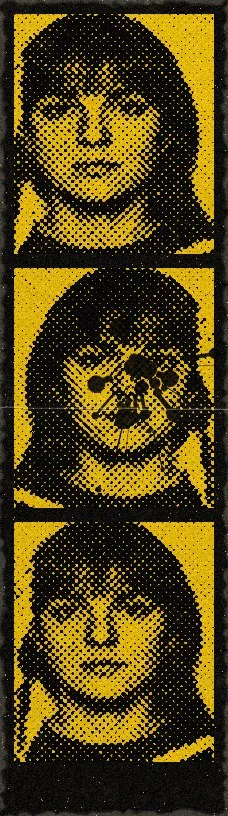
FILE NO. 0207Case status Convicted
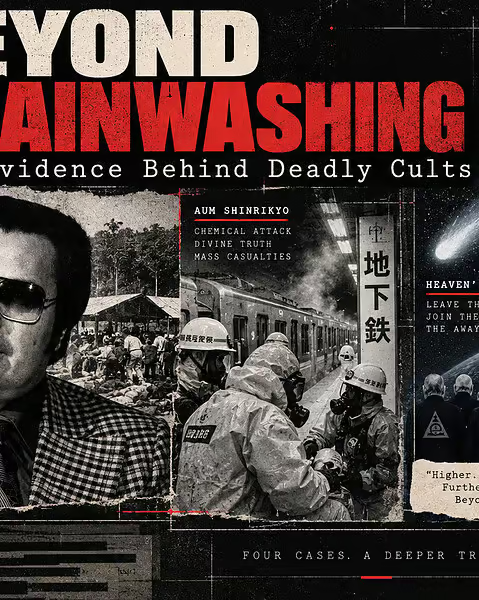
Aum Shinrikyo, led by Shoko Asahara, evolved from a spiritual yoga group into a violent apocalyptic cult. The organization utilized technical expertise and financial resources to normalize coercion and internal violence. Its doctrine shifted from personal enlightenment toward triggering a global catastrophe to establish a new social order.
The 1995 Tokyo subway sarin attack caused thousands of injuries and multiple deaths, highlighting vulnerabilities in public infrastructure. After extensive trials, Asahara and twelve disciples were executed in 2018. The case remains a significant example of how closed ideological systems can weaponize technical skill and exploit public trust.
Aum
Shinrikyo
Shoko Asahara, coercive control, the Sakamoto murders, Matsumoto, the Tokyo subway sarin attack, and the closed system that turned doctrine and technical capacity into mass violence.

What Was Aum Shinrikyo?
The case in one evidence-led paragraph.
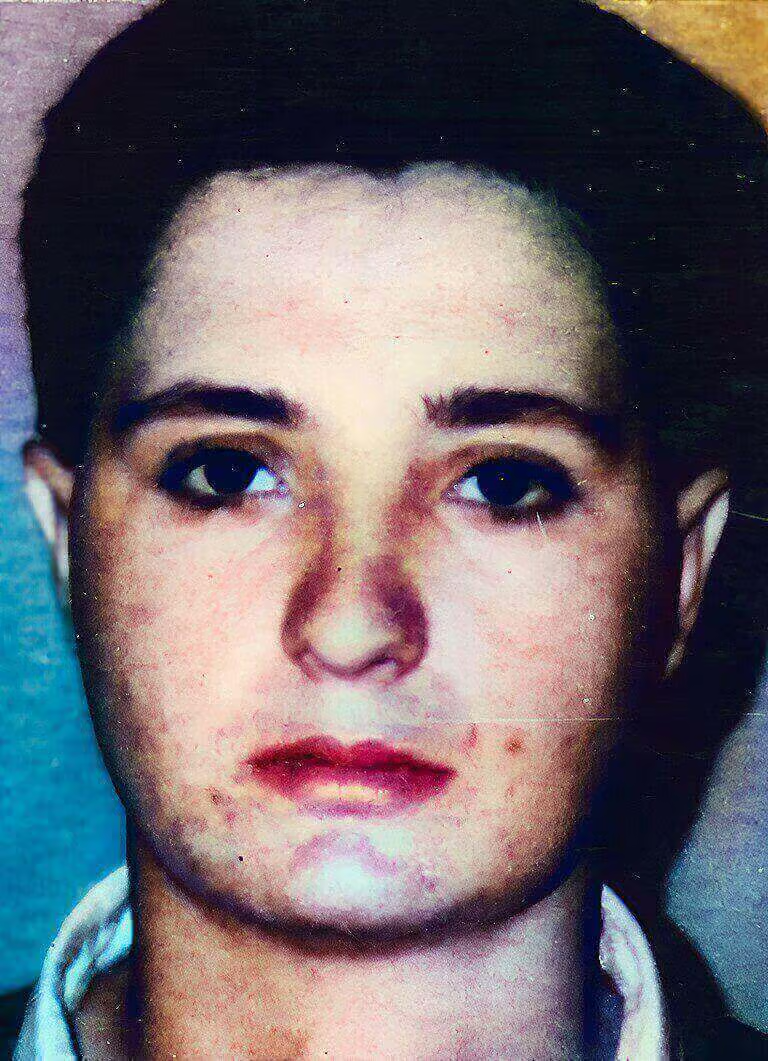
Aum Shinrikyo was a Japanese apocalyptic religious movement founded by Chizuo Matsumoto, known as Shoko Asahara. It evolved from a spiritual movement into a coercive, authoritarian organization that committed murders, pursued chemical and biological weapons programs and carried out the 1994 Matsumoto sarin attack and the 20 March 1995 Tokyo subway sarin attack. The case matters because it fused charismatic authority, closed-group control, wealth and technically trained followers into an organization capable of mass-casualty terrorism.
Case Snapshot
Core facts, record boundaries and why casualty counts vary.
Shoko Asahara
Born Chizuo Matsumoto in 1955. He remade himself as guru, prophet and final authority inside a movement that increasingly equated obedience with spiritual survival.
20 March 1995
Five coordinated teams released sarin on Tokyo subway trains during the morning commute, striking lines converging near the central government district.
Casualty count drift
Early official reporting and later retrospective counts are not perfectly uniform. This dossier preserves that discrepancy instead of forcing a false single-number certainty.
Shoko Asahara
The constructed messiah and the architecture of dependence.
From Matsumoto to Asahara
Asahara’s authority depended on performance as much as doctrine. Followers were asked to treat him as guru, healer, prophet and final interpreter of reality. Claimed supernatural powers and apocalyptic prophecy made disagreement easier to recast as spiritual contamination.
Salvation became obedience
Aum’s most dangerous shift was not simply end-times belief. It was the fusion of salvation with submission. If Asahara alone could identify spiritual danger and decide who could be saved, internal reluctance could be redefined as impurity and violence could be rationalized as mercy.
The Cult System
Recruitment, money, expertise, isolation and a shadow-state fantasy.
For a broader framework on high-control groups, see deadly cult evidence and coercive control.
The Road to Tokyo
The mass attack was an escalation point, not the beginning.
Yoga circle becomes a movement
Matsumoto built a spiritual association offering certainty, discipline and transcendence to followers who felt alienated from conventional Japanese life.
Sakamoto family murdered
Anti-cult lawyer Tsutsumi Sakamoto, his wife and their infant son were murdered by Aum members after Sakamoto challenged the group on behalf of families.
Election failure
Asahara and followers failed in parliamentary elections. Inside Aum, political rejection fed the claim that ordinary institutions were corrupt and hostile.
Weapons programs intensify
The group pursued chemical and biological capabilities while violence against critics and defectors escalated.
Matsumoto sarin attack
Sarin was released in Matsumoto, Nagano Prefecture, in an attack connected to judges expected to rule against Aum in a civil matter. It killed multiple people and injured hundreds.
Police pressure closes in
The kidnapping and death of Kiyoshi Kariya intensified scrutiny. Aum understood that raids were likely.
Tokyo subway sarin attack
Five coordinated teams attacked rush-hour trains on lines converging near Kasumigaseki and the central government district.
Raids, trials, executions
Police raids and years of criminal proceedings followed. Asahara and twelve senior disciples were executed in 2018.
Sarin: The Weapon Boundary
Health effects and public-safety meaning only: no operational chemistry.
What sarin does
Sarin is a nerve agent that disrupts normal nerve signalling. Exposure can produce eye pain, constricted pupils, sweating, coughing, breathing difficulty, weakness, confusion, convulsions and respiratory failure. The danger is intensified by rapid onset and the fact that victims may not immediately understand what they encountered.
No reusable attack detail
This dossier omits synthesis routes, precursor information, quantities, optimization details, container methods, timing templates and any diagram or description that would make the 1995 attack easier to reproduce.
20 March 1995
The attack as a public-health catastrophe and breach of everyday social trust.
The body became the alarm
Passengers did not see an explosion. Many first understood that something was wrong through sudden vision problems, breathing distress, collapse and confusion. Early symptoms looked medical before the event was recognized as a coordinated criminal attack.
Commuters and helpers
The dead and injured included ordinary passengers, station employees and responders. Secondary exposure risk complicated rescue because the people trying to help could themselves become casualties.
| Dimension | Case meaning | Investigative lesson |
|---|---|---|
| Attack form | Coordinated chemical releases inside a transit network. | Mass-casualty planning can exploit ordinary public infrastructure without visible conventional weapons. |
| Recognition lag | Symptoms emerged before institutions knew the cause. | Transit, hospital and emergency systems need shared chemical-event protocols. |
| Secondary exposure | Helpers could be endangered by contaminated people or items. | Responder protection and decontamination are part of victim care. |
| Perpetrator type | A religious organization with money, laboratories and educated recruits. | Threat assessment must consider ideological groups with technical capacity, not only conventional armed organizations. |
Aftermath and Reckoning
Raids, prosecutions, successor organizations and the long tail of survivor harm.
Years of prosecutions
Police raids exposed a much broader criminal infrastructure than the public initially understood. The central legal conclusion was clear: the subway attack was organized terrorism, not a spiritual accident or misunderstood ritual.
Executions
Asahara and twelve senior disciples were executed in 2018. Their deaths ended major criminal proceedings but did not erase questions about institutional warning failures, compensation and survivor care.
Aleph and Hikari no Wa
After Aum fragmented, successor groups emerged under new names. Japanese public-security authorities continued monitoring because elements of the movement and reverence for Asahara persisted.
Trauma outlived the headlines
Survivors reported chronic vision problems, respiratory injury, neurological symptoms, anxiety, traumatic memory and lasting disruption to everyday transit and work. The enduring archive is not offender mythology; it is the harm carried by victims and families.
For broader comparative context, see Aum Shinrikyo in dangerous cult history and Japanese cult violence after Aum.
Photo and Evidence File
Contextual, non-graphic visual records with explicit provenance.
Kasumigaseki Station, modern context view. Source record.

Sarin structural formula, included only as a non-operational identifier. Source record.

Historical United States Public Health Service facility diagram, used as evidence context rather than instruction. Source record.

Aum Shinrikyo symbol shown as organizational iconography, not as proof of any specific act. Source record.
Analytical Findings
Why Aum remains an unusually important case study.
Charisma became infrastructure
Asahara’s personal authority did not remain a private bond with followers. It became organizational architecture: ministries, laboratories, internal security, commercial fronts and ritual economies.
Expertise was ideologically captured
The case demonstrates that technical education is not protection against absolutist belief. Inside a closed moral system, expertise can become the means by which delusion is converted into capacity.
Earlier violence was diagnostic
The Sakamoto murders, attacks on critics and defectors and the Matsumoto sarin attack were not side stories. They were escalating evidence of a group willing to redefine murder as necessity.
Public trust was the attack surface
The subway worked because strangers trusted shared space. The attack weaponized ordinary routines, helpful station staff and open medical systems, turning the mechanics of civic life into part of the emergency.
Aum also belongs in the wider study of non-state ideological violence. Compare domestic terrorism and symbolic target selection and ritual extremism and the line between doctrine and crime.
Aum Shinrikyo FAQ
Direct answers without operational detail.
Who was Shoko Asahara?
Shoko Asahara was the name used by Aum founder Chizuo Matsumoto. He positioned himself as guru and apocalyptic prophet and became the ultimate authority inside the group.
Was the Tokyo subway attack Aum’s first major act of violence?
No. The group had already committed murders and targeted attacks, and it carried out the 1994 Matsumoto sarin attack before the Tokyo subway attack.
Why did Aum attract educated followers?
Education did not immunize recruits from charismatic authority, apocalyptic certainty or closed-group dependency. In Aum, technical expertise became especially dangerous because it could be redirected toward leadership goals.
What happened to Aum after 1995?
The organization fractured under prosecution and public scrutiny. Successor groups including Aleph and Hikari no Wa emerged, and Japanese authorities continued monitoring them.
Source Ledger
Public-health, institutional, investigative and image-provenance sources.
CDC Sarin Fact Sheet
Used for non-operational health effects, exposure framing and emergency-response context. Open CDC source.
U.S. Senate Staff Statement
Used for the 1995 international-security framing of Aum as a non-state WMD case study and for the early casualty record. Open report.
Associated Press retrospective
Used for survivor-centred aftermath, later casualty framing, 2018 executions and successor-group context. Open AP source.
Public Security Intelligence Agency
Referenced for the continuing public-security framework around Aum successor groups. Open PSIA source.
Browse every case in the Case File Index
Discover more from The Dark Side of Humanity
Subscribe to get the latest posts sent to your email.