FILE NO. 0203Case status Convicted
Donatien Alphonse François de Sade was a French aristocrat repeatedly accused of coercive sexual violence, including the Rose Keller case and Marseille affair. While he spent years in administrative detention, he had no verified homicide convictions, and a 1772 death sentence in absentia was later annulled.
Sade’s actions demonstrate a pattern of using aristocratic privilege to exert power, restraint, and control over vulnerable individuals. His explicit literature illustrates violent fantasies rather than proof of real murders, and modern clinical diagnoses cannot be applied retrospectively to his historical record.
Marquis de Sade Criminal Profile
Violence, power, coercion, censorship and the man whose name became an accusation. This public dossier examines the Marquis de Sade crimes question through the documented record: no verified homicide conviction, no modern psychiatric diagnosis, but repeated allegations of coercive and violent conduct.
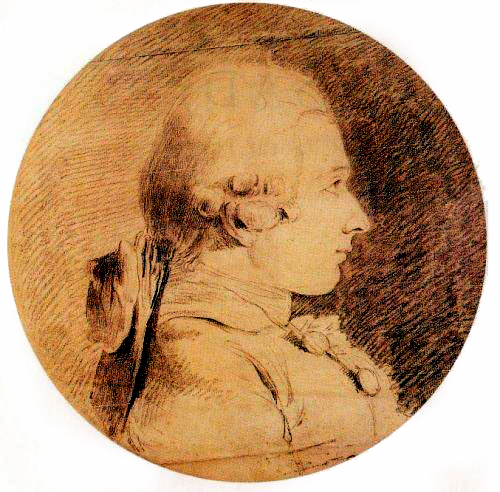
Marquis de Sade Case Overview
The Marquis de Sade, Donatien Alphonse François de Sade (1740–1814), was a French aristocrat and writer whose criminal history became inseparable from the modern meaning of sadism. His record includes allegations of coercion and violent sexual conduct, the 1768 Rose Keller case, the 1772 Marseille affair, imprisonment and a death sentence later annulled. This criminal profile examines what Sade actually did, what courts established, and what later legend exaggerated.
Marquis de Sade Archival Visuals

The Scene Is Institutional
Sade’s story is not a clean offender file. It runs through royal warrants, family power, police discretion, censorship, asylum custody and archives that were often built to manage scandal rather than test truth.
The Cool-Headed Read
The most defensible profile is not “secret murderer” and not “persecuted innocent.” It is a record of credible harm, uneven proof, class power and confinement without consistent legality.
Marquis de Sade Crimes: Was He a Criminal?
This dossier argues for a narrower, more disciplined assessment: Sade was not proved to be a serial killer, but he was repeatedly and plausibly accused of coercive sexualized violence in settings shaped by rank, money and control.
The central tension is evidentiary. Sade left no homicide conviction and no valid basis for a modern clinical diagnosis. What survives is more unstable and more useful: contemporaneous complaints, partial admissions, overturned judgments, administrative confinement, prohibited books and a long record of powerful institutions moving scandal away from open adjudication.
The article rejects two distortions. One turns every novel into confession and every allegation into proved fact. The other turns Sade into a harmless writer punished only for ideas. The record supports neither simplification.
Marquis de Sade Timeline: Allegations, Custody and Control
Marquis de Sade Evidence: What the Record Establishes
| Category | Supported by the Record | Boundary / Caution |
|---|---|---|
| Documented events and admissions | Testard and Keller complaints; Sade’s partial acknowledgement of a paid flagellation encounter; Marseille illness after sweets; flight from proceedings; manuscripts and corrected books tied to prohibited publications. | Documentation does not automatically establish every alleged detail. |
| Judicial outcomes | 1772 death sentence in absentia; 1778 annulment of that capital judgment; lesser finding concerning debauchery; no murder conviction. | The overturned death sentence cannot responsibly be treated as an attempted-murder conviction. |
| Credible but unadjudicated allegations | Threats, confinement, whipping, compelled participation, disputed consent and later institutional boundary concerns. | These claims deserve serious treatment, but many were not tested in public criminal trials. |
| Myth and inference | The fiction repeatedly imagines domination, suffering, isolation and murder. | Fiction is not a confession, not a crime-scene statement and not evidence of secret homicide victims. |
Principal Allegations Against the Marquis de Sade
Testard’s complaint is presented as the first well-documented scandal in the file. The recurring structure is clear: a socially vulnerable woman, a private location controlled by a wealthier man, ritualized transgression, fear and a response managed through influence rather than open court.
The episode ended administratively. There was no trial determining every claimed act, but the complaint was contemporaneous, specific and serious enough to trigger detention and family intervention.
Keller alleged that Sade took her to a house at Arcueil, locked her in, restrained and whipped her. Later versions add details that should be treated cautiously, but the stable centre of the complaint remains grave: disputed recruitment, confinement, restraint and injury.
Sade did not offer a complete denial. He acknowledged a paid flagellation encounter while contesting Keller’s account of consent, severity and circumstance. The family negotiated with Keller, who withdrew the complaint after receiving 2,400 livres.
The Marseille affair involved Sade, Latour and four women at a private sexual gathering. Sade distributed anise-flavoured sweets. The women later became ill, and authorities treated the sweets as poisoned, with cantharides suspected.
The evidentiary limit matters: contemporary testing did not identify arsenic, corrosive sublimate or another mineral poison, and the attempted-poisoning theory failed to survive later review. The death sentence existed, but it was an in-absentia judgment later annulled.
Later accounts involving servants and young people at Lacoste should not be flattened into certainty. The responsible conclusion is structural rather than sensational: Sade controlled employment, lodging, money and access in an aristocratic household where dependency could undermine refusal.
Marquis de Sade Behavioural Profile: Power, Consent and Control
Victimology: Asymmetry
- Women who sold sex retained boundaries, but their occupation made later writers more likely to minimize harm.
- Poor complainants could be pressured through settlement, fear or disbelief.
- Servants depended on household power, lodging and employment.
- Prisoners and patients existed inside institutions where consent could be compromised by supervision and confinement.
Method: Access to Control
- Recruitment through money, employment or sexual services.
- Movement into private locations controlled by Sade.
- Staging through rules, speech, restraint, ritual or substances.
- Containment after exposure through minimization, negotiation, flight or family intervention.
Marquis de Sade Legal Record: Privilege, Detention and Due Process
The record repeatedly separates Sade’s dangerousness from the legality of his confinement. Royal warrants and administrative decisions could suppress scandal without establishing truth in open court. The same machinery that shielded him from adjudication also deprived him of liberty for years without an ordinary sentence.
This is the dossier’s hardest conclusion: a person can pose a danger and still be denied due process. A complainant can be credible even without a verdict. An overturned conviction can correct a grave legal error without making every underlying allegation false.
Sade’s Fiction Is Not a Victim List
The 120 Days of Sodom, Justine, The New Justine and Juliette repeatedly imagine closed worlds where power licenses cruelty and victims are reduced to instruments. The overlap with the allegations (domination, isolation, hierarchy and suffering) is relevant context.
But the sensational leap from fiction to confession fails. Authors invent. Narrators are not their creators. Recurrent fictional murder does not identify real victims, and it should not be collapsed into lust murder and erotophonophilia without evidence of actual homicide.
Can the Marquis de Sade Be Diagnosed Today?
The profile does not diagnose Sade with sexual sadism disorder, psychopathy, antisocial personality disorder or narcissism. A modern diagnosis would require assessment of duration, arousal, conduct, consent, distress or impairment and direct clinical context.
The word “sadism” was derived from Sade’s name after his death, but the historical term is not the same thing as a modern clinical diagnosis. In this article, “sadism” is treated as a cultural and historical label unless a specific diagnostic framework is being discussed.
The more defensible formulation is behavioural: Sade wrote repeatedly about domination and suffering, acknowledged interest in flagellation and was accused by multiple women of conduct involving fear, restraint or violence beyond consent. That is why retrospective labels should be separated from the forensic assessment of paraphilic disorders.
Marquis de Sade Final Assessment
What Holds
Repeated allegations involving coercion, fear, restraint, private control, vulnerable complainants and post-incident containment through money, family influence or flight.
What Fails
The serial-killer myth, the attempted-poisoning certainty, and the idea that the novels can be treated as a literal confession or hidden victim list.
What Matters
The behavioural pattern is power: recruitment, isolation, staged domination, contested consent and systems willing to bury the complaint instead of adjudicating it cleanly.
Case Read: Credible Harm Without Complete Adjudication
Sade’s archive closes without innocence and without the monster mythology. The record supports a careful, darker conclusion: alleged and partly admitted coercive sexual violence, amplified by aristocratic privilege, then blurred by courts, family warrants, censorship and administrative confinement.
Marquis de Sade FAQ
No. The supplied record attributes no verified homicide to Sade and identifies no murder conviction.
No verified homicide is attributed to Sade in this dossier. The article treats murder in his fiction as literary material, not proof of actual victims.
Sade was confined at different times because of scandals, allegations, family and royal intervention, publication offences and later administrative decisions. The record includes serious allegations, but also unstable procedures that often avoided ordinary public adjudication.
Yes, in absentia in 1772 alongside Latour. The judgment was later annulled in 1778, so the sentence cannot be treated as a surviving capital conviction.
The women became ill after eating sweets he supplied, and cantharides were suspected. The supplied profile says contemporary testing did not substantiate the sensational poisoning theory, and the attempted-poisoning basis did not survive review.
No, not responsibly from the historical record alone. The dossier supports behavioural description, not a modern psychiatric diagnosis.
Sources & Further Reading
BnF: Sade Biography and Chronology
Bibliothèque nationale de France supports the broad chronology: birth and death dates, the 1763 scandal, Marseille allegations, Vincennes/Bastille confinement, release after abolition of lettres de cachet, later publication-related confinement and death at Charenton.
BnF: The 120 Days Scroll
BnF restoration notes document the Bastille manuscript, its scroll format, its later preservation and its 2021 acquisition into the BnF/Arsenal collections.
French Ministry of Culture
The Ministry announcement confirms the national acquisition of Sade’s 120 Days of Sodom manuscript for the BnF collections in 2021.
Clinical Boundary
Merck Manual Professional and the APA Dictionary of Psychology support the diagnostic caution: modern sexual sadism disorder cannot be assigned casually or retrospectively from literary reputation alone.
Discover more from The Dark Side of Humanity
Subscribe to get the latest posts sent to your email.