Robert Pickton
The Port Coquitlam pig farmer known as Willie, the women who vanished from Vancouver’s Downtown Eastside, the six murders a jury convicted him of, the 20 charges that were never tried, and the inquiry that found the police investigations a “blatant failure.”
Died in custody · May 31, 2024 · record checked 2:30 PM ET, Oct. 7, 2026
In its own voice this file says Robert William Pickton was convicted of six counts of second-degree murder, and of nothing else. He was charged with the murders of 20 more women; those charges were stayed in 2010 and never tried. The remains or DNA of 33 women were found on his farm. He told an undercover officer he had killed 49. Each of those numbers means something different, and each is credited to whoever gave it. One woman connected to the case is protected by a court-ordered publication ban and is not named here.
- Case
- B.C. · 1997 to 2002
- Accused
- R. W. Pickton
Items in the cited record
- An asthma inhaler and clothing linked to two missing women2736
- A firearm consistent with the gun used to kill three women1
- Restraints, some bearing his DNA, per the Crown’s summary1
- A knotted length of electrical wire from a headboard1
- Personal belongings and trace DNA of four of the six women1
- A jacket and boots seized in 1997, later tested for DNA5
SRC: SCC 2010; Forsaken; Globe and Mail
Died in custody on May 31, 2024. Status as of 2:30 PM ET, Oct. 7, 2026.
Robert Pickton was convicted of six counts of second-degree murder in 2007, was serving a life sentence, and died in hospital on May 31, 2024, aged 74, after an assault by another inmate.81 The 20 other murder charges against him were stayed in 2010 and never tried.1332
Convicted of six counts · 20 counts stayed · died in custody 2024 · status as of 2:30 PM ET, Oct. 7, 2026.
This file concerns the murders of women, many of them Indigenous, who were living in poverty in Vancouver’s Downtown Eastside. It describes what happened without graphic detail and does not reproduce descriptions of remains or injuries beyond what is needed to explain the legal record. The women are named as the public record names them, and are described as their families and the public inquiry described them. One woman who survived an attack in 1997 is protected by a court-ordered publication ban; she is referred to only by the pseudonym the inquiry used. No photographs of the women or of Pickton are used.
What did Robert Pickton do?
A Canadian case · direct answer first
What did Robert Pickton do, and what was he convicted of?
Robert William Pickton, a pig farmer from Port Coquitlam, east of Vancouver, was convicted on Dec. 9, 2007, of the second-degree murders of six women who had disappeared from Vancouver’s Downtown Eastside: Sereena Abotsway, Mona Wilson, Andrea Joesbury, Brenda Wolfe, Marnie Frey and Georgina Papin. The Crown’s case was that he picked women up in the Downtown Eastside, took them to his farm with offers of money or drugs, and killed them there. The jury acquitted him of first-degree murder on each count. He was sentenced to life in prison with no chance of parole for 25 years, the most the law allowed.11011
He was also charged with the first-degree murders of 20 other women. Those charges were never tried: the Crown stayed them in August 2010, after the Supreme Court of Canada upheld the six convictions, because another trial could add nothing to his sentence. Police found the remains or DNA of 33 women on the farm. A public inquiry later concluded that the police investigations into the missing women had been a “blatant failure.” Pickton died on May 31, 2024, aged 74, after another inmate attacked him in a Quebec prison.1330948
Convicted of six. Charged with 20 more.
Everything in this file follows one distinction. Pickton was convicted of six murders, all second-degree, by a jury in New Westminster. For 20 more women he was charged with first-degree murder, and those counts were stayed, which means the Crown halted them. A stay is not an acquittal and not a conviction; the charges were simply never put to a jury. One further count, for a woman who has never been identified, was quashed by the trial judge in 2006.11323
That is why this file says “convicted of” only for Sereena Abotsway, Mona Wilson, Andrea Joesbury, Brenda Wolfe, Marnie Frey and Georgina Papin, and “charged with” for the 20 others. It is the language of the court record, and it does not diminish any of the women. The Crown said in 2010 that it was staying the 20 counts because a second trial could impose no further penalty, not because it doubted them.13032
Four counts that are easily confused
Four numbers circulate about this case, and they measure different things. Six is the number of murders he was convicted of. Twenty-six is the number of named women he was charged with killing. Thirty-three is the number of women whose remains or DNA were found on his farm, as reported by CBC News and the Associated Press. Forty-nine is a number Pickton himself gave an undercover police officer posing as his cellmate after his arrest; it was never tested in court.193515
A fifth number belongs to the wider story. The public inquiry identified 67 women who went missing from the Downtown Eastside, or whose disappearances could have been reported, during the years it examined, and who were never found alive. Most of those women are not connected to Pickton by any evidence in the public record. §03 sets out each count and who gave it.4
Who were the six women Pickton was convicted of murdering?
The convicted counts · who the women were
Six women, named by the jury’s verdicts
The six women whose murders Pickton was convicted of are listed in the verdicts read in a New Westminster courtroom on Dec. 9, 2007. As CBC News reported the verdicts, each count gave a window of time and a place: “near Port Coquitlam,” between a date on which the woman was last known to be alive and Feb. 5, 2002, the day police first went onto the farm with a warrant.10
The public inquiry that followed set out to reverse what its commissioner called the “unforgiving shorthand” used about the women. It wrote a profile of each, drawn from families, friends and records. The profiles below draw on those pages and are credited to them. They are short because the record is short, and because the families, not this file, are the keepers of these lives.45
Sereena Abotsway
- Born
- Aug. 20, 1971, Vancouver5
- Last seen
- Aug. 1, 2001, per the inquiry5
- Count window
- July 18, 2001, to Feb. 5, 20021022
- In the record
- Raised from age four by foster parents in Langley, whom she phoned regularly until she died. She marched every year for the missing women and wrote a poem for them. She was reported missing when she failed to come to a planned birthday party with her foster parents.5
Mona Wilson
- Born
- Jan. 13, 1975, Kelowna5
- Last seen
- End of November 2001, per the inquiry5
- Count window
- Dec. 1, 2001, to Feb. 5, 20021022
- In the record
- The youngest of seven children, from a family belonging to the O’Chiese First Nation. As a girl she loved the colour pink. Before she disappeared she lived in East Vancouver with her partner of several years and was often seen washing windshields on Commercial Drive.522
Andrea Joesbury
- Born
- Nov. 6, 1978, Victoria5
- Count window
- June 5, 2001, to Feb. 5, 200210
- In the record
- Grew up in Victoria with her grandparents, close to her brother and sister. At school she loved sports and drama. She kept in touch with her family by phone, and at the WISH Drop-in Centre she was known as quiet and polite, with a bright smile.5
Brenda Ann Wolfe
- Born
- Lethbridge, Alberta5
- Nation
- Kahkewistahaw First Nation5
- Count window
- March 5, 1999, to Feb. 5, 200210
- In the record
- The oldest of five children, a school badminton champion who earned a hairdressing certificate in 1991, and the mother of two daughters. In the Downtown Eastside she was known as a strong, quiet woman people turned to for protection, who liked country music, jazz and dancing.5
Marnie Frey
- Born
- Aug. 30, 1973, Campbell River5
- Last seen
- Around her 24th birthday in 1997, per the inquiry5
- Count window
- Aug. 30, 1997, to Feb. 5, 200210
- In the record
- Her mother was Aboriginal. Raised mostly by her father, a fisherman, she fished, hunted and camped as a girl and had a way with animals; her favourite bird was the eagle. Her stepmother remembered her as “energetic, full of life,” and she had a daughter, born in 1992.5
Georgina Faith Papin
- Born
- March 11, 1964, Edmonton5
- Nation
- Enoch Cree Nation5
- Count window
- March 1, 1999, to Feb. 5, 200210
- In the record
- The fourth of nine children, she had a large family of her own, four girls and three boys. She kept Cree traditions, danced, beaded and drew, attended powwows, and loved jewellery and the colour red. While in custody she volunteered with the Native Sisterhood, bringing women back to their traditions. Her last family contact was in March 1999, when she asked her younger sister to celebrate her birthday with her.5
“Finally”
The families waited a long time for the verdicts, and longer for an accounting. When the jury convicted Pickton of second-degree murder rather than first, Marnie Frey’s father, Rick Frey, told CBC News it was still, in a sense, a good day, “in that this guy’ll never see the light of day.” He added that his family had been at this “since 1997.”10
In May 2024, when Pickton died, Cynthia Cardinal, Georgina Papin’s sister, told the Associated Press that his death meant she could finally move on. “I’m like, wow, finally. I can actually move on and heal and I can put this behind me.”35
What is left out, and why
The inquiry’s profiles also describe abuse in childhood, foster care, addiction and violence from partners. Those pages were written with families, as context for how the women came to be in danger. This file does not repeat them. Where dates differ between sources, the profiles above use the inquiry’s, and the windows in the counts are the jury’s.510
Who were the other women in the case?
Charged, quashed, and found but never charged
The 20 women in the stayed counts
Pickton was charged with first-degree murder in the deaths of 20 more women. In August 2006 the trial judge, Justice James Williams, split those counts from the six that went to trial first, and in August 2010 the Crown stayed them. The charges were never heard by a jury, so in law these 20 deaths remain charges against him, not convictions.281332
The women in those counts, as CBC News listed them when the stay was announced and as the inquiry spelled their names, are: Cara Ellis, Andrea Borhaven, Kerry Koski, Wendy Crawford, Debra Jones, Tiffany Drew, Sarah de Vries, Cynthia Feliks, Angela Jardine, Diana Melnick, Jacquelene McDonell, Dianne Rock, Heather Bottomley, Jennifer Furminger, Helen Hallmark, Patricia Johnson, Heather Chinnock, Tanya Holyk, Sherry Irving and Inga Hall.135
Some of them are well known through their families’ work. Sarah de Vries kept journals and wrote poetry, and her sister Maggie de Vries wrote about her in the book Missing Sarah. Heather Bottomley’s father, Barry Bottomley, told The Globe and Mail on the day of the stay, “There’s no justice.” Angela Jardine’s sister, Deborah Jardine, said she was “rather relieved” not to face another trial.1330
The woman known as Jane Doe
A 27th count concerned a woman who has never been identified. The inquiry wrote that all that is known about her is that her DNA was found on Pickton’s property and that she died sometime before Feb. 23, 1995. The Vancouver Sun reported that part of her skull had been found near Mission, B.C., in 1995, and that further remains were later found on the farm.533
Pickton refused to enter a plea to that count, and the court entered a plea of not guilty for him. In March 2006, CBC News reported, Justice Williams ruled that the count did not meet the minimum requirements of the Criminal Code: “Accordingly, it must be quashed,” he wrote. The Canadian Encyclopedia attributes the ruling to the lack of information about her identity and the time of her death. Evidence about her was later heard by the trial jury and then withdrawn from its consideration by a ruling of Aug. 27, 2007, according to the Vancouver Sun.233633
Six women whose DNA was found but whose deaths were not charged
The inquiry’s profiles identify six more women whose DNA was found on the farm but whose deaths never led to charges against Pickton: Sharon Abraham, Yvonne Boen, Nancy Clark, Dawn Crey, Stephanie Lane and Jacqueline Murdock. For several of them the DNA was identified after the trial. The inquiry records that in 2009 the RCMP recommended charges for Stephanie Lane and five other women, and that charges were not laid.5
This file does not describe Pickton as having killed these women. The record says only where their DNA was found and that no charge was laid. Stephanie Lane’s mother, Michele Pineault, has spoken publicly for years about her daughter, including before Pickton’s eligibility for day parole in 2024.517
How many women did Robert Pickton kill?
Six, 26, 33, 49, 67: what each number means
How many women did Robert Pickton kill?
The honest answer is that no court has said. A jury found that he murdered six women. He was charged with murdering 26 named women and one woman who has never been identified. Investigators found the remains or DNA of 33 women on his farm. After his arrest he told an undercover officer posing as his cellmate that he had killed 49 women and wanted to make it “an even fifty.” The inquiry counted 67 missing and murdered women from the Downtown Eastside within its mandate, most of whom have never been connected to him by evidence.19154
Every one of those figures appears in reporting about the case, and they are often used as if they were interchangeable. They are not. The table below sets out each number, what it measures and who gave it.
| Figure | What it measures | Source | Status |
|---|---|---|---|
| 6 | Murders he was convicted of (second-degree) | Jury verdicts, Dec. 9, 2007; upheld by the Supreme Court of Canada101 | ESTABLISHED |
| 26 | Named women he was charged with murdering (first-degree) | Charges; 20 stayed in 2010113 | ESTABLISHED |
| 27 | All murder counts laid, including the unidentified woman | Supreme Court of Canada1 | ESTABLISHED |
| 33 | Women whose remains or DNA were found on the farm | CBC; AP; Forsaken9354 | ESTABLISHED |
| 49 | Women he claimed to have killed, speaking to an undercover officer | Crown summary quoted by the Supreme Court; CBC; BBC11534 | NOT ESTABLISHED |
| 65 | Women who disappeared from the Downtown Eastside from 1978 to 2001 | The Canadian Encyclopedia36 | CREDITED |
| 67 | Missing and murdered women within the inquiry’s terms of reference | Forsaken4 | ESTABLISHED |
A boast to a cellmate
The 49 comes from Pickton’s conversations with an RCMP officer who was placed in his cell after his arrest, posing as another prisoner. The Crown relied on those admissions at trial, and the defence argued that they were his “unsophisticated efforts to impress his cell mate.” The jury was trying six counts, not 49, and no court has ever tested his claim against the evidence.115
The figure is still quoted, sometimes as if it were established, by news outlets and by the TDSH roundup posts that mention Pickton. This file reports it only as his claim.935
What was Robert Pickton convicted of, and what was he only charged with?
The legal status, count by count
Not an acquittal, not a conviction
In Canada a stay of proceedings entered by the Crown halts a prosecution without a verdict. The Forsaken inquiry explained that a stay can be reversed within a year if there is significant new evidence or a significant change in circumstances. When the Crown stayed the 20 counts in 2010, it said the public interest did not require a second trial when no further penalty could be imposed, since Pickton was already serving the maximum sentence the law allowed.43230
That is why the women in those counts are described here as women he was charged with killing. The Crown, the courts and the families did not describe the stay as a finding that he had not killed them; CBC News reported that the Crown had chosen to try first the six cases most likely to lead to convictions.1330
How this file uses the words
Where this file says Pickton “murdered” or “killed” someone in its own voice, it means one of the six women in the convicted counts. For the 20 women in the stayed counts it says he was charged with their murders. For the woman known as Jane Doe it says the count was quashed. For the six women whose DNA was found without a charge, it says exactly that. Where another source goes further, the claim is attributed to that source.
Who were the missing women of the Downtown Eastside?
The neighbourhood, the list and the women behind it
The Downtown Eastside
The women in this case lived in or passed through the Downtown Eastside, a few blocks of Vancouver east of downtown that the Supreme Court of Canada placed about 30 kilometres from Pickton’s farm. The Court described the missing women as drug-dependent and working in the sex trade in that area. The inquiry asked readers to see past those words: it wrote that the women were too often referred to by “the unforgiving shorthand of ‘sex trade workers,’ ‘STWs’ or ‘prostitutes,’” and that strangers had told families their loved ones “deserved” what happened to them.14
The Canadian Encyclopedia describes the neighbourhood’s high rates of poverty, homelessness and open drug use, and reports a survey of sex workers there between 1999 and 2001 which found violence against them frequent and rarely reported. Many of the women had grown up elsewhere in Canada and some had lost touch with their families, which delayed reports that they were missing.364

A third of the women, a fraction of the population
The inquiry found that Aboriginal women made up about 3 percent of British Columbia’s population but approximately 33 percent of the missing and murdered women from the Downtown Eastside. Of the 33 women whose DNA was found on Pickton’s farm, it counted 12 as Aboriginal. Three of the six women in the convicted counts were from First Nations: Mona Wilson (O’Chiese), Brenda Wolfe (Kahkewistahaw) and Georgina Papin (Enoch Cree), and the inquiry records that Marnie Frey’s mother was Aboriginal.5
The Canadian Encyclopedia notes that the case focused national attention on missing and murdered Indigenous women and girls, which led to a national inquiry beginning in 2016. When Pickton died, Correctional Service Canada said it was “mindful that this offender’s case has had a devastating impact on communities in British Columbia and across the country, including Indigenous peoples, victims and their families.”368
Will they remember me when I am gone, or would their lives just carry on?Sarah de Vries, quoted at the opening and close of Forsaken4
Disappearances that police were slow to accept
Families and advocates had been raising the alarm for years before Pickton was arrested. The inquiry found that police accepted most missing persons reports immediately, but that some people faced substantial barriers to reporting, that investigations “were not treated as urgent,” and that the serial killer theory was not fully accepted by the institutions involved until a joint forces operation was set up in late 2000. In public, it found, the Vancouver Police Department continued to downplay the risk of a serial killer as late as 2000.4
Reporters helped keep the disappearances in view. The inquiry counted at least 56 newspaper articles about the missing women between 1997 and 2000 and singled out the work of Lindsay Kines of the Vancouver Sun for its impact on public awareness. When Pickton was charged in February 2002, CBC News described the case as that of “Vancouver’s 50 missing women,” and police told The Globe and Mail the case involved 50 missing women.42227
Who was Willie Pickton?
The farm, the trailer and what police knew
Port Coquitlam
Robert William Pickton, known as Willie, grew up on his family’s pig farm in Port Coquitlam, a suburb east of Vancouver. The Canadian Encyclopedia gives his birth year as 1949 and reports that he and his siblings sold most of the land for development, leaving a farm of about 6.5 hectares. The Crown’s summary at trial, quoted by the Supreme Court of Canada, described a 17-acre property on which Pickton had lived in a trailer at the north end since 1997.361
Pickton ran a pig butchering business next to his home on the property, in the Supreme Court’s words, and the Crown described him as “a butcher by avocation” who slaughtered pigs there weekly. The Canadian Encyclopedia adds that he was a partner with his brother David in a salvage business and lived alone in his trailer. The inquiry records that he lived on the same property as his brother and a niece, in a different residence.1366
No record, and a nightclub in a barn
When police dealt with him in 1997, the inquiry found, Pickton had no criminal record. He worked on the property as a farmer and in demolition with his brother, and the inquiry described him as having “considerable wealth.” The RCMP knew he associated with members of the Hells Angels who socialized at an after-hours club on the property known as Piggy’s Palace.6
The Canadian Encyclopedia reports that the brothers registered the Piggy’s Palace Good Times Society as a charity in 1996, that parties there drew as many as 1,700 people, and that the City of Port Coquitlam shut it down in 2000.36
From the farm to the rendering plant
Pickton regularly took barrels of offal from his slaughtering to a rendering plant near the Downtown Eastside, according to the Crown’s summary of its case. The inquiry identified it as the West Coast Reduction plant. The Canadian Encyclopedia reports that his trips to the plant are how he came to know the neighbourhood.1436
That plant figures twice in the record. Andrew Bellwood, a Crown witness, testified that Pickton had told him he disposed of women’s remains there, and Pickton told the undercover officer the same. The inquiry found that police surveillance once followed him to the plant as he delivered drums, but that officers did not check what was in them.14
Robert or Willie
How did Pickton lure women to the farm?
The Crown’s case and the witnesses who described it
Money, drugs and a ride out of the city
The Crown’s case at trial, as summarized for the Supreme Court of Canada, was that Pickton went to the Downtown Eastside, paid women there for sex, and “lured these women away from their usual working areas to his Port Coquitlam farm 30 kilometres away by offering additional money, drugs, or both.” Personal belongings and trace DNA of four of the six women in the convicted counts were found in his trailer, and the evidence, including the remains, was within 70 metres of it.1
The woman the inquiry calls Ms. Anderson, who survived an attack on the farm in 1997, told police he had picked her up in the Downtown Eastside, offered her money to come back to his place, and promised to drive her back within a few hours. She also told police that he said he went to the Downtown Eastside about once a week to pick up women.4
Two people who said they knew
Two Crown witnesses told the jury what they said they had learned on the farm. Andrew Bellwood testified that Pickton had described to him how he lured women from the Downtown Eastside, restrained and killed them, and disposed of their remains. Lynn Ellingsen testified that she went with Pickton to the Downtown Eastside one evening when he picked up a woman and brought her back to the farm, and that she later saw him with the woman’s body in his slaughterhouse; she identified the woman as the victim in one of the six counts.1
The Crown pointed out that both had given their accounts to police before any remains were found at Pickton’s end of the farm. The defence argued that both were chronic drug users whose testimony was “implausible, unreliable, and unconfirmed,” and the judge gave the jury a strong warning about relying on them without confirmation. The inquiry later found that police handling of Ms. Ellingsen in the summer of 1999 was “a colossal failure that derailed the Pickton investigation.”14
The details this file does not repeat
The Crown’s summary and some trial reporting describe in detail what was done to the women’s bodies. This file does not reproduce those descriptions. They are in the cited court record for readers who need them, and nothing in the legal story depends on repeating them here.1
One widely repeated version of Bellwood’s testimony, given by the Associated Press, says Pickton told him he fed remains to his pigs. The Crown’s summary quoted by the Supreme Court refers to disposal “including at a rendering plant.” Because the accounts differ, this file uses the court’s wording.351
What happened in March 1997?
The woman who escaped, and the charges that were stayed
The woman the inquiry called Ms. Anderson
On the night of March 22 to 23, 1997, a woman Pickton had driven from the Downtown Eastside to his trailer fought him off when he put a handcuff on one of her wrists. Both were badly hurt with a knife, and both were taken to hospital. She escaped across the property and was helped by a passing couple, who called 911. A publication ban protects her identity; the inquiry called her Ms. Anderson, and this file uses that name only.43
The inquiry wrote that she “courageously survived Pickton’s attack,” came to the justice system “numerous times” to tell her story, and that “ultimately, her story and her courage helped to stop Pickton.” As far as was known, it said, hers is “the only first-hand account from a target prey of Robert Pickton.”4
Attempted murder, and a stay
On April 1, 1997, Pickton was arrested and charged with attempted murder, assault with a weapon, forcible confinement and aggravated assault. He was granted bail on April 8, and a five-day trial was set for Feb. 2 to 6, 1998. The lead RCMP investigator, Cpl. Mike Connor, sent a message to police across the Lower Mainland warning that Pickton should be considered a danger to women in the sex trade.4
A week before the trial, after meeting Ms. Anderson, the trial prosecutor decided she could not proceed, and the Criminal Justice Branch entered a stay of all four charges. The inquiry found the stay was entered on Jan. 26, 1998, not Jan. 27 as its own terms of reference said. It also found that the Crown file on the case had been destroyed by mistake in 2001.46
A case that could have changed the investigation
The inquiry was barred from second-guessing the prosecutor’s decision to stay the charges, and it accepted her evidence that she could not go ahead because Ms. Anderson’s testimony “was the case.” But it found serious limits in what happened around the decision: Ms. Anderson was interviewed only once by police, in hospital and in pain; no formal statement was taken; her vulnerability and addiction were not accommodated in preparing her for trial; and her remark that she believed there were other women on the property was not followed up.4
It concluded that from 1997 on, a reasonable person would have seen that Ms. Anderson might have important evidence about the missing women, and that further interviews “could have changed the investigation in 1997-1998 and, perhaps, the Stay Decision.” Pickton was never tried for the attack. At his murder trial the Crown asked to put the 1997 events before the jury as similar fact evidence, and the application was dismissed, so the jury did not hear her account.4314
What the 1997 evidence later showed
The 1997 case left one more trace. Police had seized clothing from Pickton after the assault, and the inquiry records that DNA from Cara Ellis, one of the 20 women in the stayed counts, was later found on his jacket from that seizure.5
When the publication bans on the trial were lifted in 2010, the news that Pickton had faced an attempted murder charge years before his arrest became public for the first time in many outlets. CBC News reported that the woman still could not be legally identified.1432
Why wasn’t Pickton stopped sooner?
Tips, a profiler’s warning and a stalled investigation, 1998 to 2001
Bill Hiscox and Ross Caldwell
In July and August 1998, calls to a tip line that Sarah de Vries’s friend Wayne Leng had set up, and to Crime Stoppers, pointed police to a man called “Willie” and to women’s identification and clothing seen in his trailer. All the calls were later traced to one man, Bill Hiscox, whose information was largely second-hand and implicated Pickton in the deaths of more than one of the missing women. The inquiry found that his information started the Coquitlam RCMP’s investigation of Pickton, and that it was specific and detailed: a Vancouver detective was able to connect his report of a “Native girl’s ID” in Pickton’s trailer to the disappearance of Janet Henry. Almost a year later, a second source, Ross Caldwell, gave police information about a possible killing on the farm.4
The inquiry called these informants, together with Ms. Anderson, people with “compelling information that was not fully exploited by the police.” It found that the Vancouver police first heard Pickton’s name in connection with the missing women in July 1998, that he was first referred to as a serial killer that September, and that he was on the Vancouver force’s list of persons of interest from October 1999, staying in its top ten. Yet “at no time was Pickton pursued to the point of being confirmed or ruled out as the suspect.”4
Kim Rossmo’s warning
Det. Insp. Kim Rossmo, a geographic profiler with the Vancouver Police Department, wrote in a report dated Sept. 4, 1998, that a working group should determine “if a serial murderer(s) is preying upon females in Vancouver’s Downtown Eastside.” The inquiry found it was the first time a police officer in an official capacity had used the words in the case. In May 1999 he set out what the inquiry called “a highly compelling analysis” that a serial killer was the most likely explanation. Senior officers treated it as speculative.4
CBC News summarized the episode when Pickton died: warnings of a possible serial killer from the department’s geographic profiler were dismissed by its leadership more than four years before the arrest. Rossmo told The Globe and Mail in 2002 that his suggestions had been rejected by those in charge.927
An investigation that went into “hibernation”
In August 1999 the lead Coquitlam RCMP investigator, Cpl. Connor, was transferred, a move the inquiry called “incomprehensible” and said “effectively marked the end of a concerted investigation into Pickton.” Coquitlam RCMP interviewed Pickton in January 2000. The inquiry found that the interview “did not meet even the most basic police standards” and that afterwards the investigation “entered a period of hibernation.”4
Surveillance was used only sporadically. On one occasion officers followed Pickton to the rendering plant where he delivered 45-gallon drums, but did not get out to look at what was in them. The inquiry wrote that a dedicated surveillance strategy over six to nine months “would likely have brought the Pickton investigation to a conclusion.”4
The joint Vancouver police and RCMP task force, Project Evenhanded, began in January 2001, with a formal agreement between the forces signed in May or June. The inquiry found it started on the mistaken belief that the killings had stopped. Women continued to disappear through 1999, 2000 and 2001. Five of the six murders he was convicted of have count windows that open in 1999 or later: those of Georgina Papin and Brenda Wolfe in March 1999, and those of Andrea Joesbury, Sereena Abotsway and Mona Wilson in 2001.4105
How was Robert Pickton caught?
February 2002: a gun warrant, a task force and two murder charges
A firearms warrant
According to CBC News, on Tuesday, Feb. 5, 2002, RCMP officers searched the Pickton farm with a warrant to look for illegal firearms. Members of the missing women task force went along. The next day they applied for their own warrant, and on Thursday, Feb. 7, the task force’s 30 members and a dozen other RCMP officers moved onto the property. Pickton was charged with firearms offences.21
Police said little in public. An RCMP spokesperson told reporters only that the task force had shown a judge enough to obtain a search warrant, and CBC News reported that police said at the time that Pickton was not a suspect in the missing women investigation. Feb. 5, 2002, is the date on which each of the six murder counts ends, and the date on which the inquiry’s terms of reference close.21104
Arrested and charged with murder
On Friday, Feb. 22, 2002, the task force arrested Pickton at one of his businesses in Surrey and charged him with the first-degree murders of Sereena Abotsway and Mona Wilson. Police told The Globe and Mail that in the first days of the search they had found an asthma inhaler and clothing that they linked to two missing women. The Canadian Encyclopedia reports that the inhaler had been prescribed to Sereena Abotsway.222736
He appeared in provincial court in Port Coquitlam on the following Monday for less than five minutes. His lawyer, Peter Ritchie, told reporters his client was “overwhelmed by all this.” Outside the court, Mona Wilson’s partner, Stephen Rix, said she was a “really good, very intelligent girl. She didn’t deserve this.”22
From two counts to 27
The charges grew as the forensic search went on. CBC News reported 15 first-degree murder counts by March 2004. By the time of the pre-trial hearings in 2006 there were 27, one of them for the unidentified woman known as Jane Doe, and Pickton pleaded not guilty to the 26 counts naming women.24231
The task force grew too: The Globe and Mail reported that it doubled to 85 officers soon after the search began, and that a police tip line drew more than 600 calls in two weeks. Families told the paper they had given police information about the farm in 1999 and felt it had not been followed up.27
What did Pickton tell police?
The interrogation, the cell plant and the boast of 49
“Head honcho”
After his arrest Pickton was interrogated by police; his defence later put the length at 12 hours. CBC News, which published the transcript after the publication bans were lifted in 2010, reported that he denied any involvement for most of the interview, then said “there’s other people involved.” Asked how many women investigators might find on the property, he said, “I’d say two,” and then, “probably two, maybe three.” At one point he told the officers, “You’re making me more of a mass killer than I am.”115
The Crown’s summary of his formal statement, quoted by the Supreme Court, was that he admitted being the “head honcho” responsible for the deaths of missing women while saying that others were involved too. The Supreme Court noted that his references to others did not exclude his own participation.1
“An even fifty”
Police also put an RCMP officer in his cell, posing as another prisoner. According to the Crown’s summary, Pickton told the officer he was a serial killer who had killed 49 women and planned to kill one more to make “an even fifty,” that he disposed of remains at a rendering plant, and that he had been caught because he became “sloppy towards the end.”1
In transcripts released in 2010, CBC News reported, he boasted, “I’m a legend already,” and said, “Everybody knows about me, right?” He also told the officer he had no vices: “I don’t do drugs, I don’t smoke, I don’t drink … I am just a farm boy.”15
Parroting, and trying to impress
The defence told the jury that none of this amounted to a reliable admission. Its summary for the Supreme Court said Pickton “scored low on verbal intelligence tests” and was “simply parroting back to the police accusations that were put to him,” in an attempt to get police off his property and to protect people close to him, and that what he told the cellmate “reflected his unsophisticated efforts to impress” him.1
The jury heard both the statement and the cell recordings. It convicted him of six murders, and the trial judge’s instructions and the Supreme Court’s ruling turned on how he had taken part in them, not on whether the admissions were true in every detail. Some TDSH roundup posts describe him as having a low IQ; this file reports only the defence’s argument about test results.1
What did police find on the farm?
The search, the scale and the meat advisory
The largest crime scene in Canadian history
After the arrest, the farm became what The Canadian Encyclopedia calls the largest crime scene in Canadian history. It reports that investigators took 200,000 DNA samples, seized 600,000 exhibits and sifted 383,000 cubic yards of soil, at an estimated cost of nearly $70 million. Those figures are not given in the court rulings or the inquiry report this file relies on, so they are credited to the encyclopedia.36
CBC News reported in March 2004 that the excavation of the farm had ended the previous November. Some DNA identifications came later: the inquiry records that DNA of some of the women was identified on the farm only after the trial ended in 2007.245
What the health officer actually said
In March 2004 British Columbia’s provincial health officer, Dr. Perry Kendall, said he could not rule out that human remains had been mixed into meat processed on the farm. “Given the state of the farm and what we know about the investigation, we cannot rule out the possibility that cross contamination may have occurred,” he said.24
He also said the meat was never distributed commercially. About 40 friends and neighbours had eaten meat from the farm at barbecues or taken some home, and tests showed a very low risk of disease, especially if it had been cooked. Claims that Pickton sold human remains to the public in pork, repeated in some TDSH roundup posts, are not supported by the record.24
Why was Pickton tried on only six counts?
The 2006 severance ruling, explained after the ban
Six counts and 20
By 2006 Pickton faced 26 counts of first-degree murder naming women. Justice James Williams of the B.C. Supreme Court, the trial judge, decided that trying them all together would place “an unreasonable burden” on a jury, with a trial expected to last two years. On Aug. 9, 2006, he divided the counts into a group of six and a group of 20. A publication ban kept his full reasons out of the news until 2010.2831
When the reasons could be reported, The Globe and Mail explained them. The defence accepted that the six women in the first group were dead, based on what had been found on the farm, but said it would require the Crown to prove that the other 20 were not still alive. The prosecution said it might have to call as many as 535 witnesses just to establish that those 20 women were missing. “The ability of 12 men and women of the community, doing their best to fulfill an important civic function, is not without limit,” Justice Williams wrote.31
“Ludicrous” and “irrelevant”
The ruling divided families too. Marilyn Kraft, stepmother of Cynthia Feliks, whose count was in the group of 20, told The Globe and Mail: “I think this is ridiculous. We have waited all this time and this is what happens.” Pat deVries, Sarah de Vries’s mother, said she did not mind how it was done, as long as the charge of murdering her daughter was eventually heard in court: “Whether they charge all at once or in threes and sixes is irrelevant to me.”28
The attorney general at the time, Wally Oppal, who would later lead the public inquiry, called it a sound decision, and a prosecution spokesperson said that none of the charges had been dismissed. Four years later the 20 counts were stayed without a trial.281332
What the pre-trial rulings settled
Several other pre-trial rulings shaped the trial. The count for the unidentified woman was quashed in March 2006 (§02). The jury would not hear the evidence of the woman attacked in 1997, because the judge accepted a defence argument that it was not directly relevant to the six counts (§08). And most of what was argued in court before and during the trial was covered by publication bans until August 2010 (§19).231432
What happened at Pickton’s trial?
Almost a year, 129 witnesses and six verdicts
New Westminster, 2007
The trial before a jury opened in B.C. Supreme Court in New Westminster on Jan. 22, 2007. Justice LeBel of the Supreme Court of Canada later wrote that it “took almost a year to complete” and that 129 witnesses were called by the two sides; CBC News and The Globe and Mail reported 128. Pickton did not testify. The defence called 31 witnesses.361311029
The Crown’s position from start to finish was that Pickton alone had killed all six women. Both sides accepted that three of the women had died of a gunshot wound to the head; The Globe and Mail identified them as Sereena Abotsway, Andrea Joesbury and Mona Wilson. For the other three, the Crown relied on the similarity of the evidence to argue that he had killed them too.129
“A bee-hive of activity”
The defence did not dispute that the women had died or that their remains were on the farm. It argued that Pickton’s property was “a bee-hive of activity” and that other people, some named and some unknown, could have used it to kill the women without his criminal involvement. It attacked the reliability of his statements and of the Crown’s two main witnesses, and argued that the forensic evidence did not support the Crown’s theory.110
This file does not name the people the defence pointed to. The Supreme Court’s ruling records their names only as part of the defence’s theory, and nothing in this file should be read as a finding about them.1
Nine days and a question
The jury of seven men and five women began deliberating on Nov. 30, 2007, and was sequestered in a motel. On the sixth day it sent the judge a question about whether it could find that Pickton had killed a woman “if we infer that the accused acted indirectly.” The judge revised his instructions on the three gunshot counts in response (§15). Three days later, on Sunday, Dec. 9, the jury returned its verdicts.10291
As the foreman said “not guilty” to first-degree murder on the first count, there was a scream in the courtroom. He then said “guilty” of second-degree murder, six times. Families held a ceremony outside the courthouse in the snow, lighting a candle for each of the six women and remembering the 20 others.101229
It doesn’t bring my daughter back.Karin Joesbury, Andrea Joesbury’s mother, to CBC News on the day of the verdict12
Why was Pickton convicted of second-degree murder, not first?
The jury, the question and the instruction
Not guilty of first degree, guilty of second
Under Canada’s Criminal Code, as CBC News explained on the day of the verdict, murder is first degree when it is planned and deliberate, or when death is caused during certain other offences such as forcible confinement. Second-degree murder carries the same mandatory life sentence but allows parole eligibility to be set between 10 and 25 years.1011
Jury deliberations are secret, so the reasons for the verdict are not known. Pickton’s lawyer, Peter Ritchie, said afterwards that the jury had evidently not been satisfied the murders were planned and deliberate. The Globe and Mail’s reporters wrote that the verdict meant the jury did not believe Pickton planned the killings on his own but was involved in them, perhaps with someone else; that is their reading, not the jury’s.1029
“Or was otherwise an active participant”
On the last day of his charge to the jury, at the defence’s request and with the Crown’s consent, Justice Williams told the jurors that on the three gunshot counts they had to find that Pickton shot the woman; if they had a reasonable doubt about whether he shot her, they must acquit. On the sixth day of deliberations the jury asked whether it could find he was the killer if it inferred that he “acted indirectly.”1
After a brief pause, the judge called the jury back and replaced the instruction: they should find the element proven if Pickton “shot [the victim] or was otherwise an active participant in her killing.” Defence lawyer Adrian Brooks objected in court that the trial should end “right now” if the judge changed his charge six days into deliberations.129
An instruction that was “unduly favourable to the defence”
The Supreme Court of Canada held that the original “actual shooter” instruction was itself wrong in law, because it invited the jury to acquit on a factual doubt that did not necessarily clear Pickton. Writing for the majority, Justice Charron said the case “was never about whether Mr. Pickton had a minor role,” but about whether he had actually killed the women, and that limiting liability to active participation made the instructions “unduly favourable to the defence.”1
Three judges, writing through Justice LeBel, found errors in the instructions but held that there was “compelling, overwhelming evidence” of Pickton’s participation. They added: “Indeed, this properly instructed jury would likely have convicted Mr. Pickton of first degree rather than second degree murder.”1
What sentence did Pickton get?
Life, with no parole eligibility for 25 years
The maximum
Two days after the verdict, CBC News reported, Justice Williams heard 18 victim impact statements and argument on parole. The Crown asked for the maximum 25 years before parole eligibility; the defence asked for 15 to 20. The judge said parole eligibility in most second-degree cases does not exceed 20 years, but that this case warranted the maximum. He sentenced Pickton to life imprisonment with no eligibility for parole for 25 years, on each count, the six sentences to be served concurrently.11
“Mr. Pickton’s conduct was murderous and repeatedly so. I cannot know the details but I know this: What happened to them was senseless and despicable,” Justice Williams said, reading out the names of the six women. “Mr. Pickton, there is really nothing I can say to express the revulsion the community feels about these killings.” He called it a “rare case that properly warrants the maximum period of parole ineligibility available to the court.”1135
“A good day for us”
Rick Frey said that when the verdict was second degree, “you kinda go down a bit,” but that with the maximum, “it’s good. It’s a good day for us.” Pickton did not make a statement to the court. The attorney general, Wally Oppal, said it would be difficult to ever conclude that he would “see the light of day again.”11
Families and social workers used the occasion to call for a public inquiry into the police handling of the missing women cases. It would be announced three years later.114
Did Pickton appeal?
The B.C. Court of Appeal in 2009 and the Supreme Court of Canada in 2010
The Crown and the defence both appealed
Both sides appealed. The Crown challenged the severance order and the six acquittals on first-degree murder. Pickton appealed his six convictions for second-degree murder, arguing that the judge’s answer to the jury’s question had changed the “goal posts” late in the trial and made it unfair.1
On June 25, 2009, the B.C. Court of Appeal dismissed Pickton’s appeal by a majority of two to one. Justice Low, with Chief Justice Finch, held that the defence had known throughout that other routes to liability were in play; Justice Donald, dissenting, would have ordered a new trial because the jury had not been instructed on aiding and abetting. In the Crown’s appeal, a unanimous Court of Appeal ordered a new trial on all 26 counts, an order that was put on hold until Pickton’s own appeal was finally decided.21
July 30, 2010: “He is not entitled to more”
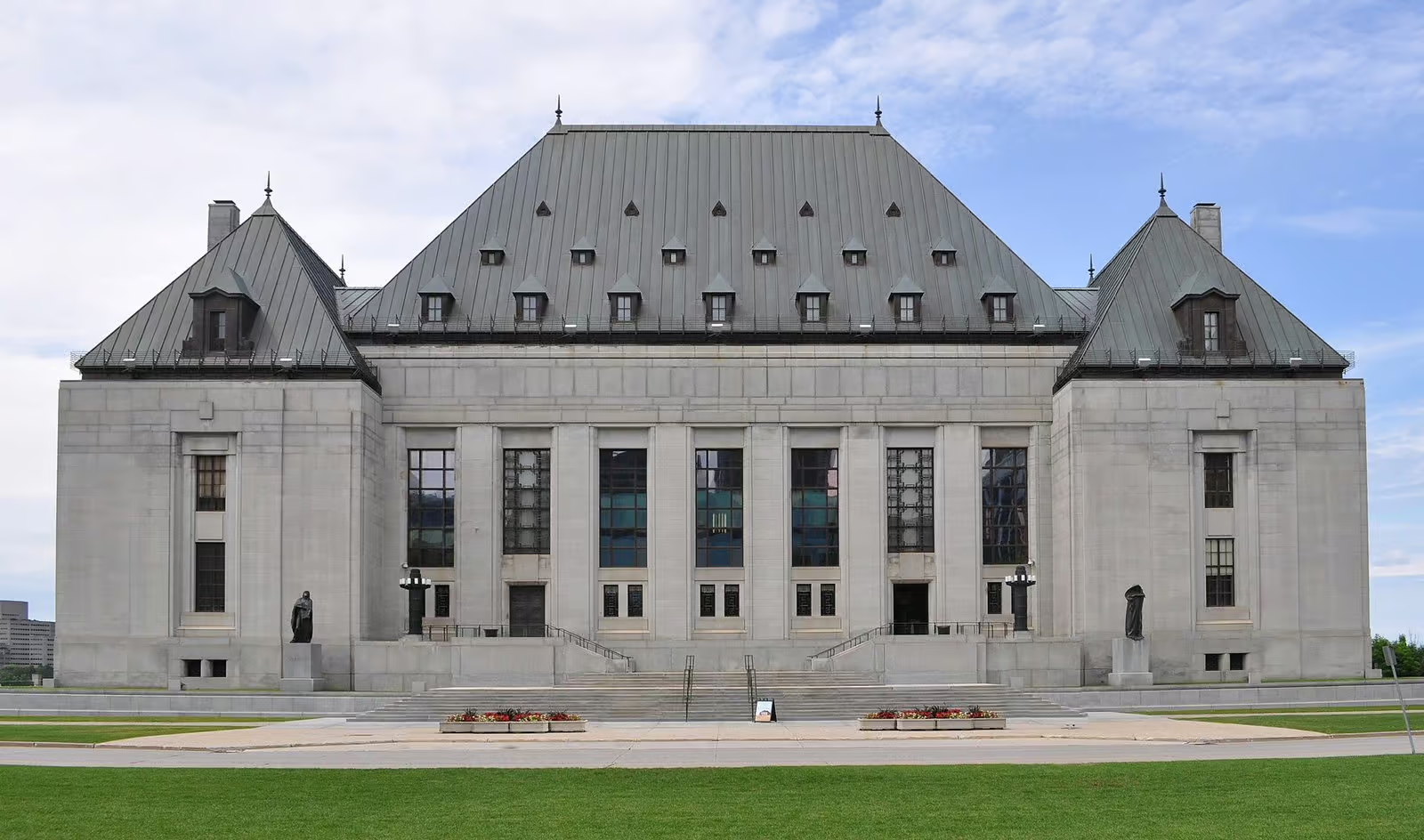
The Supreme Court of Canada heard Pickton’s appeal on March 25, 2010, and on July 30, 2010, dismissed it unanimously and affirmed the convictions. The majority of six judges, in reasons by Justice Charron, found that the instructions as a whole adequately conveyed the law and that the defence had not been taken by surprise. Three judges, in reasons by Justice LeBel, found errors in the instructions but applied the Criminal Code’s curative proviso because the evidence was overwhelming.21
Justice LeBel ended his reasons by calling it “a long and difficult trial,” adding that “it was also a fair one.” He went on: “Despite the errors set out above, there was no miscarriage of justice occasioned by the trial proceedings. Mr. Pickton was entitled to the same measure of justice as any other person in this country. He received it. He is not entitled to more.”1
What happened to the other 20 murder charges?
Stayed in 2010, never tried
Twenty counts stayed in one afternoon
Five days after the Supreme Court’s ruling, Crown prosecutor Melissa Gillespie stayed the 20 outstanding counts of first-degree murder in B.C. Supreme Court in New Westminster. She told the court that the public interest, and in particular the safety of the public, did not require a second trial “when no more penalty at law could be imposed.” Justice Williams ordered Pickton moved from a provincial pretrial centre to a federal penitentiary.3230
The stay also ended the Crown’s own successful appeal: with no second trial, the order for a new trial on all 26 counts was never acted on. A Crown spokesperson told the Vancouver Sun the decision had been difficult, and that a main consideration was that Pickton was already serving the maximum sentence.132
Relief and anger
Families were divided. Barry Bottomley, Heather Bottomley’s father, said: “I can tell you right now, I’m not happy with it. There’s no justice. They can’t have a trial for more than six?” Deborah Jardine, whose sister Angela Jardine disappeared in 1998, said she was “rather relieved,” because going through another trial would be “a terrible step to your body and mind and well-being.”30
The Canadian Encyclopedia records the same split: the decision angered some families of the 20 women, and others said they were relieved to be spared another long and difficult trial.36
What can and cannot be published about the Pickton case?
The publication bans, then and now
Years of bans
For most of the case, much of what was said in court could not be reported. Under the Criminal Code, anything argued while the jury was out of the room could not be published during the trial, and pre-trial rulings, including the reasons for the severance and for quashing the Jane Doe count, were also covered by bans. When the Crown stayed the 20 counts on Aug. 4, 2010, Justice Williams lifted most of the bans, and outlets began to publish the 1997 case, the reasons for the severance and the transcripts of Pickton’s statements.323313215
Person X, certain witnesses and undercover officers
Two kinds of restriction remain. The court’s publication restriction notice says that information that may identify certain witnesses and undercover police officers may not be published, and that all other bans in the proceeding have expired. And on Aug. 25, 2010, Justice Williams made a final order protecting the woman Pickton was charged with attacking in 1997, referred to in the ruling as Person X.3
The order forbids publishing, by any means including the internet, her given name, her initials, or any information identifying her family members. It also forbids publishing information that would tend to identify websites or other sources from which that information can be found, “including, but not limited to, links to articles which were published on the internet prior to the issuance of this order.” She had asked that her name, not her story, be protected, and the judge noted that she “does not seek to prevent the details of her story from being published.”3
What we do not publish, and do not link
This file does not name Person X or give any detail that could identify her or her family. It uses only the pseudonym, Ms. Anderson, that the public inquiry used. It does not link to any page that names her, which is why some widely used reference pages are not among the sources here. It also does not name the undercover officers or any witness whose identity remains protected, and it limits the names of other people to those that appear in the court rulings, the inquiry report or mainstream reporting after the bans were lifted.34
What did the Pickton inquiry find?
Forsaken, the report of the Missing Women Commission of Inquiry
The Missing Women Commission of Inquiry
British Columbia set up the Missing Women Commission of Inquiry in September 2010, with former attorney general Wally Oppal as commissioner. Its mandate was to make findings about the police investigations into women reported missing from the Downtown Eastside between Jan. 23, 1997, and Feb. 5, 2002, about the 1998 decision to stay the charges arising from the 1997 assault, and to recommend changes. According to CBC News, it held 93 days of hearings and heard 85 witnesses, and its report, Forsaken, ran to 1,448 pages; it was released on Dec. 17, 2012.416
The inquiry identified 67 women within its terms of reference, and it began with them: a volume of profiles, written with families, intended to “acknowledge the terrible loss of these women, as individuals.”45
“A blatant failure”
The commissioner concluded that “the initiation and conduct of the missing and murdered women investigations were a blatant failure.” He identified seven critical police failures: poor report taking and follow-up on missing women; faulty risk analysis; an inadequate strategy to prevent further harm; failure to consider and properly pursue all investigative strategies; failure to follow major case management practices; failure to address problems between police jurisdictions; and failure of internal review and external accountability.4
He found that systemic bias against the women contributed to those failures, while stressing that this was not a legal finding of discrimination and did not mean “the police did not care about the women.” He also singled out officers who had “strived valiantly,” naming Det. Cst. Lori Shenher, Cpl. Mike Connor, Det. Cst. Mark Chernoff, Det. Ron Lepine, Cst. Dave Dickson and Det. Insp. Kim Rossmo.4
Allegations of a police conspiracy or cover-up, made by counsel for some families, were rejected as “completely unsupported and unsubstantiated by any evidence.”4
I have found that the missing and murdered women were forsaken twice: once by society at large and again by the police.Wally Oppal, Forsaken, 2012416
Sixty-three of them
Forsaken made 63 recommendations under four themes: equality, community engagement, collaboration and accountability. CBC News listed some of them on the day of release: round-the-clock funding for emergency centres serving women in the sex trade; better public transit along Highway 16, the so-called Highway of Tears; a compensation fund for the children of the missing women; a healing fund for families; a regional police force for Greater Vancouver; and better police training on vulnerable people and on the history of Aboriginal people.416
Speaking at the release, Oppal said: “The women didn’t go missing. They aren’t just absent, they didn’t just go away. They were taken, taken from their families, taken from their friends, taken from their communities.”16
What happened after the inquiry?
Compensation, new standards and a parole date
$50,000 for each child
In March 2014, CBC News reported, 11 of 13 families in a civil lawsuit brought by children of women whose remains or DNA were found on the farm agreed to settle with the City of Vancouver and the provincial and federal governments for $50,000 each. The suit claimed police and the Crown had failed to warn women in the Downtown Eastside that a serial killer might be at large. Troy Boen, whose mother Yvonne Boen’s DNA was found on the farm, said: “How can you put a price on someone who fed you, clothed you, took you to school, drove you here, there, everywhere?”25
The next day, CBC News reported, the three governments announced a $4.9-million fund to pay the same amount to as many as 98 children of the women identified by the inquiry, whether or not they were connected to Pickton. Establishing such a fund had been one of the inquiry’s key recommendations.26
New standards for missing persons cases
Following the report, the Canadian Encyclopedia reports, the Vancouver Police Department made its missing persons unit permanent and required investigations to start without delay, with families consulted and the file kept open until the person is found. CBC News reported in 2024 that British Columbia’s provincial standards for missing person investigations now say police must consider that “Aboriginal women and girls are at an increased risk of harm.”369
Day parole eligibility, and the evidence
Pickton became eligible to apply for day parole on Feb. 22, 2024, according to the Parole Board of Canada as quoted by CBC News, 22 years to the day after his arrest on the first murder charges. The Parole Board of Canada said that did not mean a hearing would be held; offenders have to apply. On the evening before, CBC News reported, families held a vigil at the site of the farm, now held by the B.C. government. “Pickton should not walk on this Earth,” said Michele Pineault, Stephanie Lane’s mother.17
The vigil also came amid RCMP applications, begun in 2020 according to CBC News, for court permission to dispose of exhibits from the 2007 trial. The RCMP said it could not hold evidence indefinitely. The niece of Sherry Irving, one of the women in the stayed counts, said her family wanted her aunt’s evidence examined further.17
How did Robert Pickton die?
An assault in a Quebec prison, and a guilty plea
Death at Port-Cartier
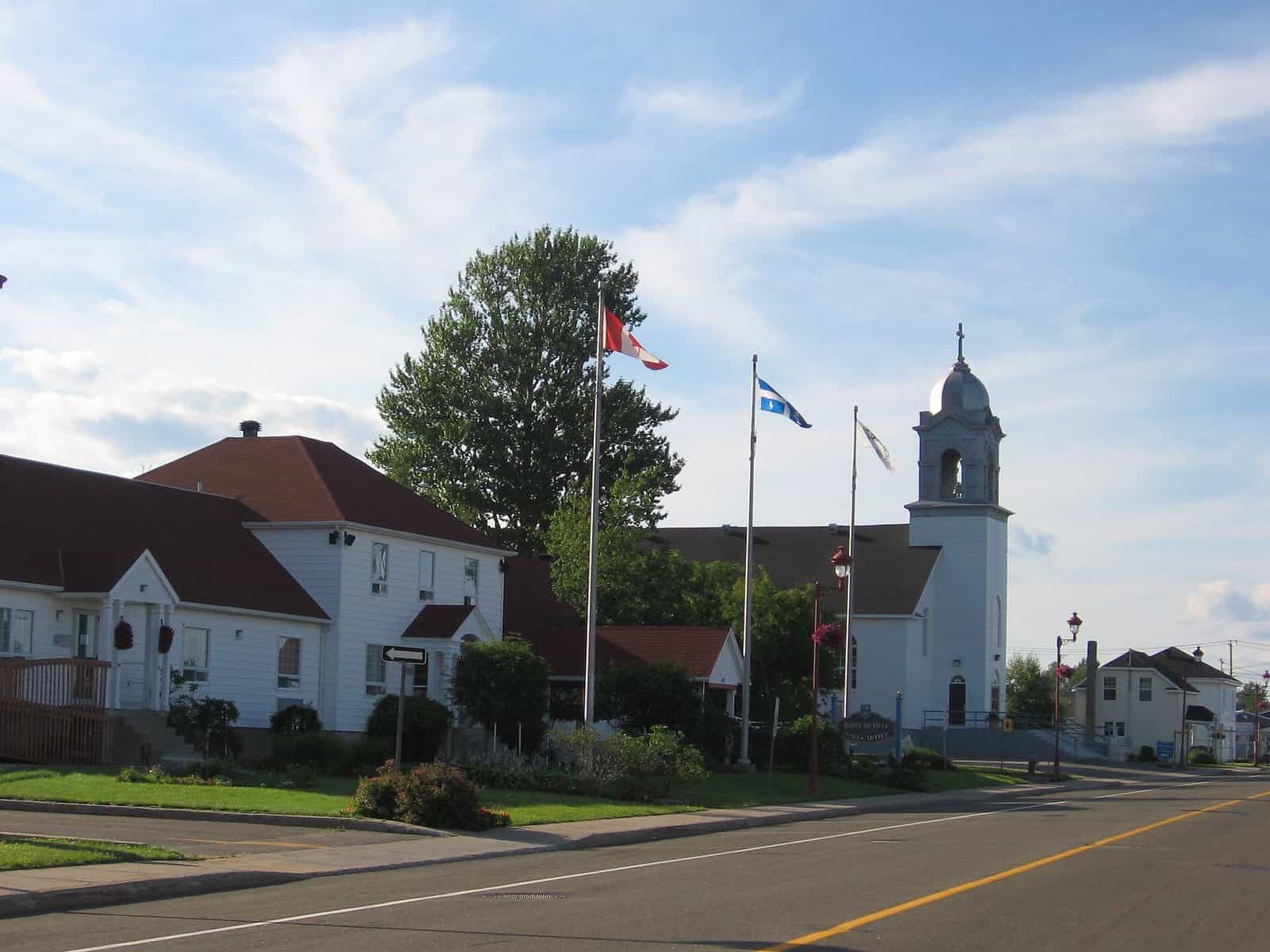
On May 19, 2024, Pickton was attacked by another inmate at Port-Cartier Institution, a maximum-security federal prison that CBC News placed about 480 kilometres northeast of Quebec City. He was taken to hospital, then flown to Quebec City and admitted to intensive care, and was kept in a medically induced coma on life support. He died in hospital on May 31, 2024, at the age of 74.891837
Correctional Service Canada said he had been serving an indeterminate sentence that began on Dec. 11, 2007, for six counts of second-degree murder, that his next of kin and registered victims had been notified, and that it was launching a Board of Investigation into the assault.8
Brooms that were not locked away
Correctional Service Canada’s Board of Investigation report, released in July 2025 and reported by CBC News, found that Pickton was attacked while medication was being distributed in his unit, and that inmates had free access to cleaning tools, including mops and brooms that were not kept in locked cabinets. The board made three recommendations, including reducing access to items that could be turned into weapons. It also found that the wrong family member had been contacted about his death.18
The CSC’s own copy of the report is published on a Government of Canada site that could not be reached for this file; its findings are given here as CBC News reported them.18
A guilty plea in Sept-Îles
Martin Charest, a fellow inmate, was charged with first-degree murder on July 3, 2025. On Sept. 25, 2025, in a hearing in Sept-Îles, Quebec, he pleaded guilty, telling the court, “I killed Robert Pickton for the victims.” The statement of facts read in court gave the cause of death as “blunt polytrauma.” The prosecutor said there would be no victim impact statements on Pickton’s behalf; his brother did not want to speak.1920
Superior Court Justice Carl Thibault sentenced Charest to life in prison with no chance of parole for 25 years. He noted that Pickton had been guilty of “the worst atrocities a person can commit towards others,” but that he still had the right to serve his sentence “in safety.”20
How did the Pickton case unfold?
Date by date · 1949 to 2025
Born
Robert William Pickton is born, according to The Canadian Encyclopedia. He grows up on his family’s pig farm in Port Coquitlam.36
The inquiry’s window opens
The start of the period the Missing Women Commission of Inquiry would examine.4
The attack on Ms. Anderson
A woman he drove from the Downtown Eastside escapes his trailer after a struggle; both are hospitalized.4
Charged with attempted murder
Also charged with assault with a weapon, forcible confinement and aggravated assault; bail on April 8.4
“Serial murderer”
Kim Rossmo’s report is the first official police use of the term in the case.4
A “colossal failure”
Interviews of Lynn Ellingsen go badly; in August Cpl. Connor is transferred off the case.4
Pickton interviewed
The interview “did not meet even the most basic police standards.”4
Project Evenhanded
The joint VPD and RCMP task force begins its work.4
Firearms search
RCMP officers search the farm with a gun warrant; task force members go along.21
The task force moves in
Thirty task force members and a dozen RCMP officers begin the search under their own warrant.21
Excavation ends
CBC later reports that the excavation of the farm ended in November 2003.24
Meat advisory
The provincial health officer says cross-contamination cannot be ruled out; the meat was never sold commercially.24
Jane Doe count quashed
Pickton pleads not guilty to 26 counts naming women.23
Person X order
Final publication ban protecting the woman attacked in 1997.3
Inquiry established
Wally Oppal appointed commissioner.4
Day parole eligibility
The Parole Board says a hearing is not automatic; families hold a vigil.17
Assault
Attacked by another inmate at Port-Cartier Institution, Quebec.8
Charge
Martin Charest charged with first-degree murder.19
Guilty plea
Charest pleads guilty and is sentenced to life with no parole for 25 years.20
What does the record say, word for word?
Exhibits CF-1 to CF-8 · exact text
Six counts out of 27
“In pre-trial rulings, the trial judge quashed one count and severed 20 others and the trial proceeded on the remaining six counts of first degree murder. At the conclusion of what was a lengthy trial, the jury returned a verdict of not guilty of first degree murder, but guilty of second degree murder on each of the six counts.”1
The admission to the cell plant
“To an undercover officer posing as his cellmate, Pickton admitted to being a serial killer who had killed forty-nine women and planned to kill one more to make an ‘even fifty.’ He told the officer that he disposed of his victims’ remains at a rendering plant. He admitted getting caught because he had become ‘sloppy towards the end.’”1
This is the Crown’s summary of its own case, quoted by the Court. It is not a finding that he killed 49 women.
The jury’s question and the new instruction
The jury’s question: “When considering Element 3 on one or more of the counts, are we able to say ‘Yes’, if we infer that the accused acted indirectly?”1
The amended instruction: “If you find that Mr. Pickton shot [the victim] or was otherwise an active participant in her killing, you should find that the Crown has proven this element.”1
First degree, likely
“It would surpass belief that a properly instructed jury would not have found him guilty of murder in the presence of such cogent evidence of his involvement. Indeed, this properly instructed jury would likely have convicted Mr. Pickton of first degree rather than second degree murder.”1
The Person X order
“Pursuant to the inherent jurisdiction of the Court, there shall be no publication or broadcast by any means, including the internet, of the given name of Person X or use of that persons initials, or any information identifying the family members of Person X from the date of this publication ban. This ban remains in effect until further order of the Court.”3
The 1997 case, in the inquiry’s words
“The investigation into the Anderson assault, the charges, and the prosecution by the Criminal Justice Branch were the closest that authorities came to potentially convicting Pickton for a serious crime until his arrest in February 2002.”4
The conclusion
“I conclude that the initiation and conduct of the missing and murdered women investigations were a blatant failure. I hasten to add these systemic police failures were not all encompassing.”4
The death notice
“At the time of his death, the inmate had been serving an indeterminate sentence, which commenced on December 11, 2007, for six counts of second-degree murder. The inmate was 74 years old.”8
What is established, and what is still disputed?
The ledger · established, credited, disputed, not established
| Claim | Status | Basis |
|---|---|---|
| Pickton murdered Sereena Abotsway, Mona Wilson, Andrea Joesbury, Brenda Wolfe, Marnie Frey and Georgina Papin | ESTABLISHED | Jury verdicts, upheld on appeal101 |
| He planned and deliberated those murders (first degree) | NOT ESTABLISHED | The jury acquitted him of first-degree murder; three Supreme Court judges said a properly instructed jury would likely have convicted of first degree1 |
| He killed the 20 women in the stayed counts | NOT ESTABLISHED | Charged, never tried; counts stayed1332 |
| The remains or DNA of 33 women were found on the farm | ESTABLISHED | Forsaken, CBC, AP4935 |
| He killed 49 women | NOT ESTABLISHED | His claim to an undercover officer only115 |
| Others took part in the killings | NOT ESTABLISHED | Argued by the defence and noted in his statement; no court finding115 |
| Remains were disposed of at a rendering plant, or fed to pigs | DISPUTED | Rendering plant in the Crown summary; pigs in AP’s account of Bellwood’s testimony135 |
| Human remains were sold to the public in pork | NOT ESTABLISHED | Health officer: contamination could not be ruled out; the meat was never sold commercially24 |
| Year of the preliminary hearing | DISPUTED | 2003 (CBC; The Canadian Encyclopedia) or 2005 (the 2010 B.C. Supreme Court ruling)14363 |
| Number of trial witnesses | DISPUTED | 129 (Supreme Court of Canada) or 128 (CBC, Globe and Mail)11029 |
| Date of the 1998 stay | ESTABLISHED | Jan. 26, 1998, as the inquiry found; its terms of reference said Jan. 2746 |
| Police could have stopped him sooner | CREDITED | The inquiry’s finding that surveillance or interviews “would likely” or “could have” changed the investigation4 |
| Police conspired to cover up the case | NOT ESTABLISHED | Rejected by the inquiry as “completely unsupported”4 |
| Dates on which several of the 20 women were last seen | DISPUTED | CBC’s 2010 list, the Globe’s 2002 list and the inquiry’s profiles differ for several women; this file gives none13275 |
What do people get wrong about the Pickton case?
Myth against record
| What gets repeated | What the record shows | Basis |
|---|---|---|
| Pickton was convicted of killing 49 women. | He was convicted of six murders. Forty-nine is what he told an undercover officer in his cell. | 115 |
| He was convicted of 26 murders. | He was charged with 26 murders of named women. Twenty of those counts were stayed and never tried. | 113 |
| He confessed in court. | He did not testify. The admissions were made to police and to an undercover officer, and were challenged at trial. | 1 |
| He sold human remains in pork to the public. | The provincial health officer said in 2004 that cross-contamination of meat from the farm could not be ruled out, and that the meat was never distributed commercially. | 24 |
| The 1997 victim was not believed, so the case was dropped. | Police believed her account. The prosecutor decided she could not testify a week before trial, and the inquiry found her vulnerability was not accommodated. | 4 |
| Police never suspected him before 2002. | He was named to police in 1998 and was on the Vancouver police list of persons of interest from 1999. | 46 |
| He was found guilty of first-degree murder. | The jury acquitted him of first-degree murder and convicted him of second-degree murder. | 110 |
| He was released on parole. | He became eligible to apply for day parole in 2024. He was never released, and died in custody. | 178 |
| The women were all sex workers. | Many of the women had worked in the sex trade, but the inquiry warned against reducing them to that “unforgiving shorthand.” They were mothers, daughters and sisters. | 45 |
What do readers ask most about Robert Pickton?
Short answers · each one sourced
Who was Robert Pickton?
Robert William Pickton (1949 to 2024), known as Willie, was a pig farmer from Port Coquitlam, B.C. He was convicted in 2007 of the second-degree murders of six women from Vancouver’s Downtown Eastside and sentenced to life with no parole eligibility for 25 years. He died in custody in 2024 after an assault by another inmate.361118
Who is Willie Pickton?
Willie Pickton is Robert Pickton. The Canadian Encyclopedia gives his name as Robert William “Willie” Pickton, and the AP used “Willie” when he died.3635
How many women did Robert Pickton kill?
A jury convicted him of six murders. He was charged with 26 murders of named women, and the remains or DNA of 33 women were found on his farm. He claimed 49 to an undercover officer. No court has found a total. See §03.1915
Who were Robert Pickton’s victims?
He was convicted of murdering Sereena Abotsway, Mona Wilson, Andrea Joesbury, Brenda Wolfe, Marnie Frey and Georgina Papin. He was charged with the murders of 20 other women, listed in §02.1013
Why was he convicted of second-degree murder and not first?
The jury acquitted him of first degree, which requires proof of planning and deliberation or a killing during certain other offences. Jury deliberations are secret. See §15.101
Why weren’t the other 20 charges tried?
The Crown stayed them in 2010 because a second trial could not add to his sentence, which was already the maximum. See §18.3230
Was Robert Pickton ever released?
No. He became eligible to apply for day parole in February 2024, but he was never released.178
How did Robert Pickton die?
Another inmate attacked him at Port-Cartier Institution in Quebec on May 19, 2024. He died in hospital on May 31, aged 74. Martin Charest pleaded guilty to first-degree murder in 2025.820
What did the Pickton inquiry find?
Forsaken (2012) found the police investigations into the missing and murdered women “a blatant failure,” identified seven critical police failures and systemic bias, and made 63 recommendations.416
Who is the woman who escaped in 1997?
She is protected by a court-ordered publication ban, and her name, initials and family must not be published or linked to. The inquiry called her Ms. Anderson.34
Where do these facts come from?
Source ledger · numbered notes
Supreme Court of Canada, 2010 SCC 32
The 27 counts of first-degree murder, the quashed count and the 20 severed counts; the six convictions for second-degree murder; the Crown’s and the defence’s summaries of the trial evidence; the “actual shooter” instruction and the jury’s question on the sixth day of deliberations; the 129 witnesses; the statements to police and to an undercover officer; the unanimous dismissal of the appeal.
Note 1
Open source ↗Supreme Court of Canada, docket 33288
The date of the B.C. Court of Appeal judgment (June 25, 2009, 2009 BCCA 299); the hearing on March 25, 2010; the judgment of July 30, 2010, dismissing the appeal and affirming the convictions.
Note 2
Open source ↗B.C. Supreme Court, 2010 BCSC 1198
The publication ban protecting the identity of the woman Pickton was charged with attacking in 1997, her family, and the sources from which her name can be found; the continuing restrictions on information that may identify certain witnesses and undercover police officers; the expiry of all other publication bans in the proceeding.
Note 3
Open source ↗Forsaken, Executive Summary
The inquiry’s mandate (Jan. 23, 1997 to Feb. 5, 2002); the 67 women within its terms of reference; 12 Aboriginal women among the 33 whose DNA was found on the farm; the 1997 assault on the woman called Ms. Anderson and the stay of the charges; the tips from Bill Hiscox and Ross Caldwell; Kim Rossmo’s analysis; the seven critical police failures; the finding of systemic bias; the rejection of conspiracy claims; the 63 recommendations.
Note 4
Open source ↗Forsaken, Volume I
The commission’s profiles of the women, drawn from families, friends and records: dates of birth and disappearance, family background, and what became of each case, including the six women whose DNA was found but whose deaths were never charged.
Note 5
Open source ↗Forsaken, Volume IIA
The detailed account of the 1997 assault and prosecution; the note that the publication ban protecting Ms. Anderson was ordered by Justice Williams; the finding that the stay was entered on Jan. 26, 1998, not Jan. 27; what police knew of Pickton in 1997 (no criminal record; Piggy’s Palace).
Note 6
Open source ↗Forsaken, Volume IV
The commission’s document protocol, which redacted any information that might identify the 1997 complainant because of the publication ban.
Note 7
Open source ↗Correctional Service Canada, 2024
His death in hospital on May 31, 2024, after an assault by another inmate on May 19; the indeterminate sentence that began on Dec. 11, 2007, for six counts of second-degree murder; his age, 74; the Board of Investigation; the service’s statement about victims and Indigenous communities.
Note 8
Open source ↗CBC News, May 31, 2024
The major assault at Port-Cartier; the induced coma; the six convictions and 26 charges; the six named victims; the remains or DNA of 33 women; the claim to an undercover officer of 49; day parole eligibility in February 2024; the provincial standards that followed the inquiry.
Note 9
Open source ↗CBC News, Dec. 9, 2007 (verdict)
The jury of seven men and five women; nine days of deliberation from Nov. 30; the six verdicts with the date range in each count; the 128 witnesses CBC counted; the defence theory; the families’ ceremony outside the courthouse; Rick Frey’s words.
Note 10
Open source ↗CBC News, Dec. 11, 2007 (sentence)
Justice James Williams’s sentence of life without parole eligibility for 25 years; the 18 victim impact statements; his words in court; the Crown’s and defence’s positions on parole; the concurrent life sentences.
Note 11
Open source ↗CBC News, Dec. 9, 2007 (families)
The reaction in the courtroom; the Frey family’s response to the second-degree verdicts.
Note 12
Open source ↗CBC News, Aug. 4, 2010 (20 charges)
The stay of the 20 outstanding charges; the Crown’s choice to try first the six cases most likely to convict; the names of the 20 women.
Note 13
Open source ↗CBC News, Aug. 4, 2010 (1997 charge)
The 1997 attempted murder charge revealed when the bans were lifted; that the woman still could not be legally identified; her injuries; her testimony at the 2003 preliminary hearing; the jury never hearing it; the release of the police statement.
Note 14
Open source ↗CBC News, Aug. 6, 2010 (transcripts)
Transcripts of his conversations with an officer posing as his cellmate in 2002, and of his police interrogation, released after the bans were lifted.
Note 15
Open source ↗CBC News, Dec. 17, 2012
The public release of Forsaken; Wally Oppal’s words at the release; 93 days of hearings and 85 witnesses; the 1,448-page report and its 63 recommendations.
Note 16
Open source ↗CBC News, Feb. 22, 2024
Day parole eligibility on Feb. 22, 2024, and the Parole Board’s statement; Michele Pineault and Stephanie Lane; the farm site now held by the B.C. government; the RCMP’s applications since 2020 to dispose of trial exhibits.
Note 17
Open source ↗CBC News, July 7, 2025
Correctional Service Canada’s Board of Investigation report: the assault during medication distribution, the transfer to Quebec City, free access to cleaning tools, the three recommendations, the next-of-kin error; the independent observer’s report naming the inmate.
Note 18
Open source ↗CBC News, July 21, 2025
The first-degree murder charge laid against Martin Charest on July 3, 2025.
Note 19
Open source ↗CBC News, Sept. 25, 2025
Martin Charest’s guilty plea to first-degree murder in Sept-Îles; the statement of facts; the cause of death; the life sentence imposed by Justice Carl Thibault; the absence of victim impact statements for Pickton.
Note 20
Open source ↗CBC News, Feb. 8, 2002
The firearms search on Tuesday (Feb. 5, 2002), the task force’s own warrant and its move onto the farm; the firearms charges; the police statement at the time that Pickton was not a suspect.
Note 21
Open source ↗CBC News, Feb. 26, 2002
His arrest on Friday, Feb. 22, 2002, and the first two counts of first-degree murder, for Sereena Abotsway and Mona Wilson; Mona Wilson’s partner’s words.
Note 22
Open source ↗CBC News, March 2, 2006
Justice Williams quashing the count concerning the unidentified woman known as Jane Doe; Pickton’s not-guilty pleas to the 26 named counts.
Note 23
Open source ↗CBC News, March 11, 2004
The provincial health officer’s warning about meat from the farm; that it was never sold commercially; about 40 people who ate or received it; the end of the excavation in November 2003; 15 counts at that time.
Note 24
Open source ↗CBC News, March 17, 2014
The settlement of the civil suit brought by the children of women whose remains or DNA were found on the farm; Troy Boen’s words; Wally Oppal on compensation.
Note 25
Open source ↗CBC News, March 18, 2014
The $4.9-million fund for up to 98 children of the women identified by the inquiry; the attorney general’s statement.
Note 26
Open source ↗The Globe and Mail, Feb. 23, 2002
The arrest at one of the brothers’ businesses in Surrey; the inhaler and clothing linked to two missing women; the tip line; the families’ complaint that 1999 information was not followed up; the 50-name list of missing women.
Note 27
Open source ↗The Globe and Mail, Aug. 10, 2006
The severance into a group of six and a group of 20; Justice Williams’s “unreasonable burden” on a jury; family reactions; the attorney general’s comment.
Note 28
Open source ↗The Globe and Mail, Dec. 9, 2007
The verdict; the judge’s correction of his instruction on three counts; the Crown’s case that the women were lured with drugs and money.
Note 29
Open source ↗The Globe and Mail, Aug. 4, 2010
Justice Williams’s words as the 20 charges were stayed; the Crown’s reasons; the families’ divided reactions; the transfer to a federal penitentiary; the planned release of cell recordings once undercover officers could not be identified.
Note 30
Open source ↗The Globe and Mail, Aug. 4, 2010 (why six)
Justice Williams’s ruling of Aug. 9, 2006, reported once the ban was lifted: the defence accepted only six women were dead; up to 535 witnesses to prove the 20 others were not alive; the judge’s words on the limits of a jury.
Note 31
Open source ↗Vancouver Sun, Aug. 4, 2010
Crown prosecutor Melissa Gillespie staying the 20 charges; the lifting of most publication bans; the ban that remained on the identity of the woman attacked in 1997; the Crown’s defence of its 1998 decision.
Note 32
Open source ↗Vancouver Sun, Aug. 4, 2010 (Jane Doe)
The history of the Jane Doe evidence: the partial skull found near Mission in 1995, bones found on the farm, the evidence put before the jury and then withdrawn by the judge’s ruling of Aug. 27, 2007; the attempt to compare DNA with 720 missing women.
Note 33
Open source ↗BBC News, Aug. 6, 2010
The 1997 case as revealed at the end of the proceedings; the unanimous Supreme Court ruling; the claim to an undercover officer of 49 killings.
Note 34
Open source ↗AP, May 31, 2024
His death at 74; the remains or DNA of 33 women; the claim of 49; Andrew Bellwood’s trial testimony as AP summarised it; the meat advisory; the words of Georgina Papin’s sister Cynthia Cardinal; Justice Williams’s sentencing words.
Note 35
Open source ↗The Canadian Encyclopedia
His birth year, 1949; the family farm and the land sales; Piggy’s Palace Good Times Society (1996 to 2000); the trial start date; the 2016 book; the scale of the farm search (DNA samples, exhibits, soil, cost), credited where used.
Note 36
Open source ↗CBC News, Sept. 4, 2025
The independent observer’s account of the assault; the air ambulance to Quebec City; the induced coma before his death.
Note 37
Open source ↗Numbered notes
- Supreme Court of Canada, “R. v. Pickton, 2010 SCC 32, [2010] 2 S.C.R. 198,” judgment of July 30, 2010 (reasons of Charron J. for the majority; LeBel J. concurring in the result for three judges). scc-csc.lexum.com
- Supreme Court of Canada, “Docket 33288: Robert William Pickton v. Her Majesty the Queen,” case information and proceedings. www.scc-csc.ca
- Supreme Court of British Columbia, “R. v. Pickton, 2010 BCSC 1198: Ruling re Publication Ban (Person X),” Williams J., Aug. 25, 2010. www.bccourts.ca
- Wally T. Oppal, Commissioner, “Forsaken: The Report of the Missing Women Commission of Inquiry, Executive Summary,” British Columbia, Nov. 19, 2012. www2.gov.bc.ca
- Wally T. Oppal, Commissioner, “Forsaken: The Report of the Missing Women Commission of Inquiry, Volume I: The Women, Their Lives and the Framework of Inquiry,” British Columbia, Nov. 19, 2012. www2.gov.bc.ca
- Wally T. Oppal, Commissioner, “Forsaken: The Report of the Missing Women Commission of Inquiry, Volume IIA: Nobodies, How and Why We Failed the Missing and Murdered Women,” British Columbia, Nov. 19, 2012. www2.gov.bc.ca
- Wally T. Oppal, Commissioner, “Forsaken: The Report of the Missing Women Commission of Inquiry, Volume IV: The Commission’s Process,” British Columbia, Nov. 19, 2012. www2.gov.bc.ca
- Correctional Service Canada, “Death of an inmate from Port-Cartier Institution,” news release, May 31, 2024 (distributed by Cision/Newswire). www.newswire.ca
- Karin Larsen, CBC News, “Serial killer Robert Pickton dead,” May 31, 2024. www.cbc.ca
- CBC News, “Pickton found guilty on 6 counts of 2nd-degree murder,” Dec. 9, 2007. www.cbc.ca
- CBC News, “Pickton gets maximum sentence for murders,” Dec. 11, 2007. www.cbc.ca
- CBC News, “Pickton verdict evokes ‘elation,’ ‘disappointment’ from victims’ friends, family,” Dec. 9, 2007. www.cbc.ca
- CBC News, “20 Pickton murder charges not to be tried,” Aug. 4, 2010. www.cbc.ca
- CBC News, “Pickton escaped 1997 charge before murders,” Aug. 4, 2010. www.cbc.ca
- CBC News, “‘I’m a legend’: Pickton,” Aug. 6, 2010. www.cbc.ca
- CBC News, “Pickton inquiry slams ‘blatant failures’ by police,” Dec. 17, 2012. www.cbc.ca
- CBC News, “Victims’ families hold vigil at site of Robert Pickton’s farm,” Feb. 22, 2024. www.cbc.ca
- CBC News, “Inmate killed B.C. serial killer Robert Pickton with broken broom handle, investigation finds,” July 7, 2025. www.cbc.ca
- CBC News, “Inmate charged with 1st-degree murder in death of serial killer Robert Pickton,” July 21, 2025. www.cbc.ca
- CBC News, “Robert Pickton’s killer tells court he did it ‘for the victims’ during guilty plea,” Sept. 25, 2025. www.cbc.ca
- CBC News, “Police provide few details as they dig through pig farm,” Feb. 8, 2002. www.cbc.ca
- CBC News, “Suspect in case of missing B.C. women makes court appearance,” Feb. 26, 2002. www.cbc.ca
- CBC News, “1 of 27 murder charges against Pickton thrown out,” March 2, 2006. www.cbc.ca
- CBC News, “Human remains may have been in farm meat,” March 11, 2004. www.cbc.ca
- CBC News, “Robert Pickton’s victims’ families to get $50K each,” March 17, 2014. www.cbc.ca
- CBC News, “B.C. missing women’s children to share $4.9M in compensation,” March 18, 2014. www.cbc.ca
- Jane Armstrong, The Globe and Mail, “B.C. farmer charged in deaths of two women,” Feb. 23, 2002. www.theglobeandmail.com
- Robert Matas, The Globe and Mail, “Pickton murder charges divided into two trials,” Aug. 10, 2006. www.theglobeandmail.com
- Rod Mickleburgh and Robert Matas, The Globe and Mail, “Pickton guilty on 6 counts of second-degree murder,” Dec. 9, 2007. www.theglobeandmail.com
- Rod Mickleburgh, The Globe and Mail, “Pickton legal saga ends as remaining charges stayed,” Aug. 4, 2010. www.theglobeandmail.com
- Robert Matas, The Globe and Mail, “Why the Pickton trial dealt with 6 murder charges, not 26,” Aug. 4, 2010. www.theglobeandmail.com
- Vancouver Sun, “Pickton won’t face remaining 20 murder charges,” Aug. 4, 2010. vancouversun.com
- Vancouver Sun, “Ghost of Jane Doe haunted Pickton’s legal proceeding,” Aug. 4, 2010. vancouversun.com
- BBC News, “Canadian court releases new details on serial killer,” Aug. 6, 2010. www.bbc.com
- Associated Press, “Canadian serial killer Robert Pickton, who brought victims to pig farm, is dead after prison assault,” May 31, 2024. apnews.com
- The Canadian Encyclopedia (Historica Canada), “Robert Pickton Case,” last edited July 24, 2025. thecanadianencyclopedia.ca
- CBC News, “Man accused of murdering serial killer Robert Pickton to plead guilty,” Sept. 4, 2025. www.cbc.ca
Discover more from The Dark Side of Humanity
Subscribe to get the latest posts sent to your email.