FILE NO. 0089Case status Archived
Serial murder isn’t random. For many offenders, it follows a repeating psychological pattern: a build-up of fantasy and pressure, the hunt, the kill, and the emotional crash that follows.
Criminologist Joel Norris popularized a six-phase model showing how many serial murderers move from fantasy to action:
Aura → Trolling → Wooing → Capture → Murder/Totem → Depression
Not every killer fits the cycle perfectly, but as a lens on the psychology of serial murder, it’s disturbingly accurate.
This breakdown walks through each phase: what’s happening internally, what it looks like externally, how it connects to cooling-off periods, and how investigators still use (and critique) the model today.
Inside the file
Where the Model Comes From
The six-phase cycle is attributed to Dr. Joel Norris, who identified a recurring sequence in interviews and case studies of serial offenders.
Later profilers expanded on this framework, sometimes splitting Murder and Totem into separate phases, but the foundation remains:
Fantasy → Hunt → Approach → Capture → Kill → Crash
It’s a behavioral model (not legal, not diagnostic) focusing on how killers escalate internally and behaviorally.
Phase 1: The Aura → Fantasy Takes Over
The Aura Phase begins long before any crime. It’s rooted in the killer’s internal fantasy world becoming more powerful than their real one.
What happens psychologically
- Violent, sexual, or domination fantasies grow more vivid and intrusive.
- Daily life feels dull next to imagined scenarios of control or violence.
- The killer begins identifying with a fantasy persona, usually powerful, dominant, untouchable.
- Over time, fantasy becomes compulsion.
Norris described this as the moment where offenders begin “losing their grip on reality” as fantasy supersedes normal function.
How it appears externally
This can last days, months, or years. Outward signs may include:
- Social withdrawal
- Sudden obsession with violent porn, weapons, crime content, or paraphilic material
- Mood swings and disrupted routines
- Fixation on a certain “victim type”
Alone, these behaviors prove nothing, but in known offenders, fantasy escalation is nearly universal.
Phase 2: Trolling – The Hunt Begins
Once fantasy no longer satisfies, the killer transitions into active search mode.
What “trolling” means
In criminology, trolling refers to:
Searching for a suitable victim and a suitable crime location.
Killers often scout:
- Familiar places (their “comfort zone”)
- Target-rich environments matching their victim profile
- Situational opportunities: someone isolated, distracted, intoxicated, or vulnerable
Geographic profiling consistently shows that many killers hunt close to home, work, or habitual routes.
Internal state
During this phase:
- The killer becomes hyper-focused and opportunistic.
- Fantasy demands an actual target.
- Anticipation and arousal spike, sometimes more intensely than the murder itself.
This phase can be brief or drag on for months, depending on the offender’s caution level and specific preferences.
Phase 3: Wooing – Gaining Trust
Once he identifies someone who fits the fantasy, the killer enters the Wooing Phase: manipulation disguised as normal interaction.
What happens here
The goal is simple:
Lower the victim’s guard without raising suspicion.
Common tactics:
- Charm or friendliness
- Feigned authority (police, security, maintenance, “official” roles)
- Vulnerability ploys (injuries, asking for help, lost pet stories)
- Social mirroring (“we’re from the same town,” “we know the same people”)
Killers may practice this type of interaction repeatedly, refining what works.
Why wooing matters
This phase demonstrates:
- Calculated deception
- Boundary testing
- Increasing confidence in manipulation
- A gradual tightening of the psychological trap
Some killers skip wooing entirely (blitz attackers), but for many, this is the moment the script is set.
Phase 4: Capture – No Way Out
The Capture Phase is the shift from manipulation to control, and the moment the victim realizes something is horribly wrong.
Forms of capture
- Physical overpowering
- Restraint or confinement
- Luring into an isolated environment, then blocking exit
- Weapon intimidation
This is the point where escape is no longer realistic.
Psychological dynamics
For the killer:
- The fantasy persona fully takes over.
- Control becomes the primary reward.
- The mask drops; domination becomes the focus.
For the victim:
- Fight/flight/freeze responses activate.
- Panic and realization often occur simultaneously.
Phase 5: Murder & Totem – The Emotional High
Norris grouped these phases together, though many profilers separate them. The psychology is linked: the act and preserving the memory.
The Murder Phase
Here the fantasy becomes real:
- Methods often reflect desired intimacy or control (e.g., strangulation over firearms).
- Some killers ritualize the process, forming a consistent “signature.”
- For many offenders, this moment is a psychological or sexual peak: the climax of the fantasy cycle.
The Totem Phase
After the killing, many offenders keep or create something to relive the event:
- Jewelry, clothing, IDs
- Photos, video, or audio
- Body parts or symbolic objects
Totems allow the killer to:
- Replay the murder mentally
- Sustain fantasy during the next cooling-off period
- Reassert control when life feels mundane or humiliating
Law enforcement often discovers these trophies hidden away, sometimes linked to multiple victims.
Phase 6: Depression – The Crash and the Cooling-Off Period
Once the high fades, the killer enters emotional collapse.
The crash
Common internal states:
- Emptiness
- Irritability or disappointment
- A temporary sense of failure
- Brief moments of shame (rarely enough to stop them)
The murder fails to match the fantasy’s intensity, which renews the cycle.
Cooling-off period
This phase explains why:
- Serial killers typically have time gaps between murders.
- These gaps can range from days to decades.
- The cycle resets only when fantasy builds again.
Cooling-off periods are a defining element of serial murder in criminology.
During this phase, killers may:
- Try to reinsert themselves into normal life: work, family, errands
- Obsess over news coverage, especially if the crime gets media attention
- Return mentally (or physically) to the scene, replaying the murder
- Rely heavily on pornography, fantasy, or their totems to reignite the emotional charge
For some, the depression is boredom and emotional flatness. For others, it’s closer to despair, frustration, or rage when the real act fails to live up to the fantasy they envisioned.
Either way, one thing always happens:
The fantasy starts building again. And the cycle restarts.
How the Cycle Repeats
Serial killers don’t begin with a perfect, polished cycle. It evolves over time.
First-time vs. repeat cycles
- First murders are usually messy, impulsive, and disorganized (see the FBI organized vs disorganized typology). The killer may not move through each phase cleanly or intentionally.
- Afterward, they mentally “score” themselves:
- Did the approach work?
- Was the victim type “right”?
- Was the location too risky?
- Did they get the emotional high they expected?
The cycle refines itself over time
- Aura Phase: fantasies get sharper, more ritualized
- Trolling: they learn “better” hunting grounds
- Wooing & Capture: their pretexts and methods get smoother
- Murder/Totem: signature behaviors start forming
- Depression: may shorten as they chase the high more frequently
This is why:
- Early murders may be months apart
- Later murders may occur days or even hours apart
As killers become emboldened, they take more risks, shorten their cooling-off periods, and escalate more violently.
External stressors can disrupt or restart the cycle
Career issues, relationship problems, arrests for unrelated crimes: these can temporarily interrupt the pattern. When killers “stop” for years, it’s often because life momentarily redirected their internal pressure.
When that collapses, the cycle resumes.
How Investigators Use the Cycle
Police and profilers don’t literally say “he’s in the Wooing Phase,” but the framework helps shape investigative thinking.
1. Understanding behavioral stages
The cycle helps investigators interpret:
- Pre-crime behavior (stalking, cruising, repetitive presence in certain areas)
- Approach patterns (charm, authority, blitz attacks)
- Post-crime behavior (returning to scenes, monitoring coverage, reinserting into investigation)
It turns chaos into something with a timeline.
2. Linking cases together
If multiple cases share:
- The same victim type
- Similar approach method
- Consistent control techniques
- Recurring ritual or signature elements
…investigators can reasonably suspect they’re looking at different iterations of one offender’s cycle.
The Murder/Totem Phase is especially useful for linkage:
- Ritualized injuries
- Posing
- Souvenirs consistently taken
Those details persist even as killers get better at avoiding physical evidence.
3. Anticipating danger windows
When investigators know:
- The interval between previous murders
- Stressors the suspect may be facing
…they can estimate when the next Aura/Trolling spike is likely.
No, the model isn’t perfect, but it’s far better than treating each murder as random.
Where the Model Breaks Down
Real life refuses to fit neatly into six boxes. Several scenarios don’t align well with Norris’s cycle.
1. Not all serial killers ritualize
Some offenders kill:
- For profit (hitmen)
- For convenience (certain healthcare killers)
- As part of criminal enterprise
These offenders may plan and repeat behaviors, but lack:
- Intense fantasy build-up
- Emotional highs
- Totem-taking
2. Team killers and groups
When killers operate in pairs or packs, psychology gets messy:
- One may be dominant and fantasy-driven
- Another may be submissive or seeking approval
- Their “cycle” becomes group-based, not individual
The six-phase model was built for lone offenders, not collective dynamics.
3. Psychotic vs. psychopathic killers
The model works best for:
- Organized, psychopathic, predatory offenders
It works poorly for:
- Psychotic killers driven by delusions or hallucinations
- Killers whose acts are chaotic or not tied to elaborate fantasy
They may follow a loose build-up → act → crash pattern, but not the structured ritualization Norris describes.
4. Data limitations
What we “know” comes from:
- Killers who were caught
- Killers who were talkative
- Killers who left enough evidence to study
This creates biases:
- Non-sexual killers are underrepresented
- Highly successful killers (who were never caught) don’t shape the model
- Media-famous cases over-influence our understanding
The cycle is a tool, not a universal rule.
Why This Matters: Control, Pattern, and Prevention
Why break down something horrific into six phases? Because understanding the cycle has real implications.
1. Serial murder is not random
The cycle shows that serial murder is:
- Planned
- Rehearsed
- Escalating
- Repeated
These are long-term behavioral patterns, not sudden, unpredictable explosions of violence.
2. The cycle highlights intervention windows
Across childhood, adolescence, and adulthood, there are signs that often go unaddressed:
Early behaviors:
- Animal cruelty
- Fire-setting
- Extreme isolation
- Sexualized violence
Adult escalation:
- Stalking
- Voyeurism
- Paraphilic behavior
- Harassment of vulnerable groups
Pre-crime trolling:
- Repeated cruising patterns
- Stalking specific areas
- Approaching vulnerable individuals frequently
You can’t predict serial murder with certainty, but warning signs exist long before the first kill.
3. It demystifies rather than glorifies
True crime often paints killers as supernatural predators. The cycle reveals:
- No mystique
- No genius
- No mythical power
It’s compulsion + opportunity + escalation.
Understanding this strips away the glamor and focuses on reality.
4. It restores a victim-centered lens
The cycle highlights something grim but important:
Serial killers target vulnerable people: those who are alone, marginalized, intoxicated, desperate, trusting, or overlooked.
The pattern isn’t about the killer’s brilliance.
It’s about the victim’s vulnerability and the systems that fail to protect them.
Case Vignettes: How the Serial Killer Cycle Plays Out in Real Life
The six-phase cycle isn’t just theory. You can see it unfolding, step by step, in the lives of real offenders. Below are three case vignettes that show the Aura → Trolling → Wooing → Capture → Murder/Totem → Depression pattern in action.
These aren’t here to glorify them.
They’re here to expose how calculated, repetitive, and structured this behavior can be.
1. Ted Bundy: Charm, Crutches, and the Campus Hunt
Ted Bundy is practically the textbook example of an “organized” serial killer living in a repeated psychological cycle.
Aura
Bundy’s violence started in fantasy, not action. As a teenager he was already harboring intrusive, violent sexual fantasies.
- He fixated on a victim type: young, attractive women with long dark hair parted down the middle, eerily similar to an ex who rejected him.
- That type became the blueprint for his later victims.
- Outwardly: law student, political volunteer, hotline worker.
- Internally: a growing fantasy world of domination and control.
Trolling
In 1974, Bundy began actively patrolling college campuses in Washington and later Utah:
- He learned which areas had poor lighting.
- He watched where women walked alone or parked at night.
- He repeatedly cruised the same zones in his VW Beetle.
He wasn’t wandering. He was hunting for someone who fit the fantasy script.
Wooing
Bundy weaponized charm and fabricated vulnerability:
- Fake injuries (arm sling, leg brace) asking women for help loading items into his car.
- Appearing polite, slightly awkward, even endearing.
His wooing phase relied on empathy and social conditioning… a trap delivered with a smile.
Capture
Once the victim stepped near or into the car:
- She was isolated instantly.
- Doors and locks closed the escape route.
- Bundy overpowered quickly and efficiently.
His capture phase was rehearsed, controlled, and fast: the persona switched from “nice guy” to predator.
Murder & Totem
Bundy’s murders were:
- Hands-on and intimate, emphasizing control.
- Followed by him returning to dump sites, revisiting scenes to relive the emotional high.
Even without physical trophies, the landscape itself became a totem.
Depression
After the murders, Bundy slipped seamlessly into normal life:
- Law classes
- Time with his girlfriend
- Volunteer hotline work
But internally, the high faded. Pressure rebuilt. His intervals shortened and violence escalated, culminating in his reckless Florida attacks.
Bundy’s cycle is one of the clearest: fantasy → hunt → approach → control → kill → crash → repeat.
2. Jeffrey Dahmer: Fantasy, Apartment as Trap, and the Totem Obsession
If Bundy represents the charismatic hunter, Dahmer represents the killer who builds a private universe, his apartment, as the stage for fantasy and control.
Aura
From adolescence onward, Dahmer’s inner world was dominated by:
- Fantasies of control over unresisting male bodies
- Obsession with possession and preventing abandonment
By adulthood, these fantasies were no longer mental. They were plans.
Trolling
Dahmer’s hunting grounds were consistent and intentional:
- Gay bars, bus stops, street corners in Milwaukee
- Areas where young men were marginalized or less likely to be reported missing
He repeated the same circuit again and again, refining his method.
Wooing
Dahmer’s approach relied on:
- Offers of money to pose for photos
- Alcohol and promises of a relaxed hangout
- Tailored communication, even using written notes for a deaf victim
He appeared awkward but harmless enough to get men through his door.
Capture
The apartment door closing was the point of no return:
- Drinks were often drugged.
- Victims became unconscious or unable to resist.
- Dahmer had designed the apartment as a controlled environment for acting out every layer of his fantasy.
Capture for Dahmer wasn’t brute force. It was systematic elimination of resistance.
Murder & Totem
Without graphic detail:
- His killings emphasized control over the victim’s awareness.
- Dismemberment was not just disposal: it was retention.
- He kept skulls, bones, and other remains, arranging and revisiting them.
His apartment was a physical totem: a shrine, a laboratory, and a crime scene merged.
Depression
Dahmer oscillated between:
- Attempts at normal work
- Heavy drinking
- Isolation and withdrawal
- Increasing entrapment in his fantasy world
Each murder escalated the next, condensing his timeline and intensifying his rituals until a victim’s escape broke the cycle from the outside.
3. Dennis Rader (BTK): Domestic Mask, Long Dormancy, and Performance
Dennis Rader, BTK, is a prime example of a killer whose cooling-off periods stretched for years, yet whose internal cycle kept looping even when he wasn’t actively killing.
Aura
From a young age, Rader:
- Experienced sadistic fantasies involving helpless female victims
- Tortured animals and engaged in voyeurism
- Built elaborate internal scripts involving binding and domination
Even as a husband, father, church leader, and city worker, he described himself as a “predator.”
Trolling
Rader’s hunting style was suburban and methodical:
- Cruising neighborhoods
- Watching women inside their homes
- Learning routines and vulnerabilities
He preferred home invasions because the victim’s house became his controlled environment.
Wooing
Rader didn’t often “woo” socially, instead he:
- Posed as a utility worker or official
- Used his community roles to access or approach homes
- Exploited the inherent trust of suburban life
His wooing phase was shorter, more tactical, and focused on gaining entry.
Capture
Once inside:
- Victims were overpowered and bound
- Rooms became stages designed to match his fantasies
- He controlled pacing, positioning, and environment
His famous moniker (Bind, Torture, Kill) is literally his internal sequence made external.
Murder & Totem
Rader’s totems included:
- Stolen personal items
- Crime scene photographs
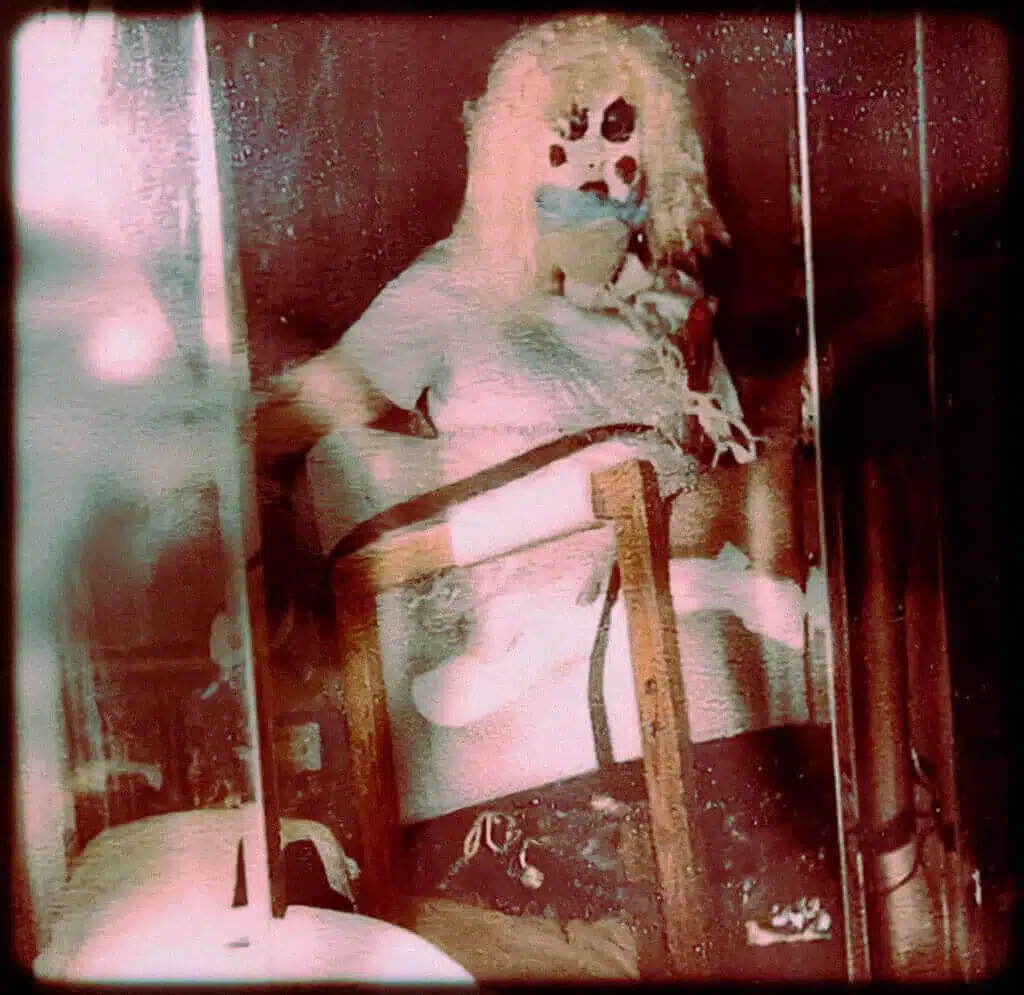
- Self-staged images posing as bound victims
He also used communication with police and media as psychological trophies, reliving dominance through letters and taunts.
Depression & Long Dormancy
Rader’s dormancy periods lasted years:
- He lived a seemingly normal suburban life
- Meanwhile, he fed his fantasy cycle with writings, photos, and trophies
Researchers still debate whether he truly “stopped” or simply shifted into a private fantasy cycle between confirmed murders.
What These Vignettes Reveal About the Cycle
Across Bundy, Dahmer, and BTK, several patterns are unmistakable:
- Fantasy comes first. Aura is the engine behind the violence.
- The hunt is intentional. Trolling is calculated, not random wandering.
- Approach is customized. Charm, alcohol, authority: whatever fits the persona.
- Capture and murder follow an internal script. It’s ritual, not improvisation.
- Totems keep the cycle alive. Items, photos, scenes, or even letters maintain the emotional charge.
- Depression isn’t remorse. It’s the low before the next build-up.
The cycle doesn’t explain everything, but it explains far more than randomness ever could.
Comparison Table: How the Six-Phase Cycle Appears in Different Serial Killers
Serial Killer Cycle Comparison
| Phase / Killer | Ted Bundy | Jeffrey Dahmer | Dennis Rader (BTK) |
| Aura | Early, escalating sadistic sexual fantasies about young women; fixated on a specific “type” (young, white, long dark hair, part in the middle); double life as student / volunteer while internally rehearsing control and violence. | From adolescence, intense fantasies about total possession of unresisting male bodies; obsession with control, paralysis, and keeping people from leaving; alcohol abuse and isolation deepen dependence on fantasy. | Early fantasies of binding and dominating women; animal cruelty and voyeurism; later describes himself as a “natural born predator”, rationalizing his urges as inherent, not chosen, even while living a conventional family and church life. |
| Trolling (Hunting) | Campus and nightlife hunter: cruised college campuses, parking lots, and nearby streets; identified areas with poor lighting, women walking alone, hitchhikers; used his car (VW Beetle) as both transport and mobile hunting blind. | Worked a bar / street circuit in Milwaukee: gay bars, bus stops, public places; targeted young men (often marginalized or vulnerable); apartment became the “final destination” of a repeated route between nightlife and home. | Suburban neighborhood scout: drove and walked through residential areas; watched women in their homes; learned routines and layouts; used his job and community roles to move around unnoticed while identifying potential targets and houses. |
| Wooing (Approach / Lure) | Played the charming, slightly injured nice guy: fake arm or leg injuries, arm in a sling, asking women for help to load or carry items; leveraged appearance as polite, educated, safe. | Used offers and substances: invited men home with promises of money for photos, drinks, or a place to hang out; used alcohol and laced drinks to lower resistance; tailored approach (including written notes) to each victim. | Less about charm, more about pretext and authority: posed as someone with a legitimate reason to approach (worker, official, compliance role); exploited the assumed safety of suburban home visits to get close or gain entry. |
| Capture (Entrapment) | Once near or inside his car, switched from friendly to force: overpowered victims, used the car’s confined space and locks; removal from public space was rapid and practiced. | The apartment door closing was the turning point: victims often drugged via spiked drinks, leaving them unconscious or semi-conscious; the apartment functioned as a sealed stage where escape became nearly impossible. | Home becomes the trap: forced entry or entry by ruse; once inside, victims are overpowered and bound; Rader carefully manipulated the environment (positions, restraints) to align with his internal script. |
| Murder & Totem (High + Souvenirs / Reliving) | Preferred hands-on methods that maximized control; sometimes revisited dump sites to re-engage with what he’d done; crime scenes and bodies acted as psychological totems even when no physical item was kept; kept photographic memories in his mind as trophies. | Killing methods designed to preserve a sense of absolute control; apartment turned into a macabre archive: stored remains, skulls, bones; objects and arrangements acted as long-term totems; photos and the environment itself allowed him to repeatedly relive prior murders. | Highly ritualized binding and killing; staged victims in specific ways; kept stolen personal items and created photo sets and writings as trophies; later took self-staged photos where he posed as bound victims; letters and taunting communication with media/police became a form of public totem, replaying his power over the city. |
| Depression / Cooling-Off | Returned to life as law student, boyfriend, volunteer; initially longer gaps between murders; as the high faded, boredom and frustration set in, leading to shorter intervals and more reckless attacks; emotional crash fueled escalation. | Fluctuated between brief attempts at normal work and increasing alcohol-fueled isolation; turned deeper into his apartment world and trophies when the emotional charge faded; eventually compressed his timeline as he chased the same high more frequently. | Long “dormant” periods between confirmed murders; on the surface, lived as family man, church leader, city employee; privately fed the cycle with trophies, staged photos, and fantasy; Aura and Totem loops continued internally even when he wasn’t actively killing. |
Bibliography
FBI, Serial Murder: Multi-Disciplinary Perspectives for Investigators
Federal Bureau of Investigation
https://www.fbi.gov/stats-services/publications/serial-murder
Douglas, John: “Mindhunter” (Behavioral Profiling Overview)
Scribner / Based on FBI Behavioral Science Unit methods
https://www.simonandschuster.com/books/Mindhunter/John-E-Douglas/9781501191965
Holmes & Holmes: Violent Crime Profiling Framework
Profiling Violent Crimes (SAGE Publications)
https://us.sagepub.com/en-us/nam/profiling-violent-crimes/book233390
Hickey, Eric: Serial Murderers and Their Victims
Cengage Learning (Academic Overview of Serial Killer Typologies)
https://www.cengage.com/c/serial-murderers-and-their-victims-7e-hickey/
Norris, Joel: The Six-Phase Serial Killer Cycle
Referenced in Serial Killers (Anchor Press)
https://www.penguinrandomhouse.com/books/233916/serial-killers-by-joel-norris/
Vronsky, Peter: Method & Psychology of Serial Murder
Serial Killers: The Method and Madness of Monsters
https://www.penguinrandomhouse.com/books/180405/serial-killers-by-peter-vronsky/
Bundy Case: The New York Times Archive
Major coverage of Bundy investigations & psychological profile
https://www.nytimes.com/topic/person/ted-bundy
Jeffrey Dahmer Case: Biography Overview
(High-trust summary of chronology and behavioral patterns)
https://www.biography.com/crime/jeffrey-dahmer
Dennis Rader (BTK): FBI Case Summary
Archived offender overview from law enforcement sources
https://www.fbi.gov/history/famous-cases/btk-killer
Case file · FAQ
Frequently asked questions
Who created the serial killer cycle model?
The six-phase cycle is attributed to Dr. Joel Norris, who identified a recurring sequence in interviews and case studies of serial offenders.
What are the six phases?
Aura, Trolling, Wooing, Capture, Murder and Totem, and Depression.
What is the Aura phase?
The phase where the killer’s internal fantasy world becomes more powerful than the real one. It begins long before any crime and can last days, months or years.
What is the Totem phase?
After the killing, many offenders keep or create something to relive the event, such as jewelry, clothing, IDs, photos, video or audio.
Does every serial killer fit the cycle?
No. Real life refuses to fit neatly into six boxes. Some offenders kill for profit, for convenience or as part of a criminal enterprise, and team killers complicate the psychology.
Browse every case in the Case File Index
Discover more from The Dark Side of Humanity
Subscribe to get the latest posts sent to your email.