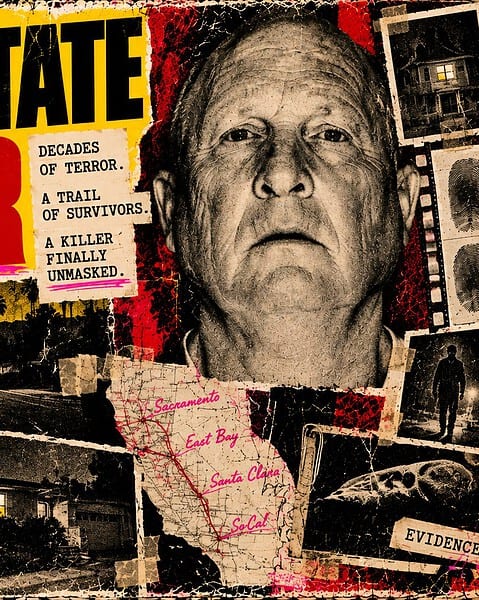
FILE NO. 0223Case status Convicted
John Wayne Gacy
Disposition: convicted of 33 murders; executed May 10, 1994, at Stateville Correctional Center.
Case at a glance
CASE FILE: Offender Profile
Author: DarkHumanity
Jurisdiction: Cook County / Norwood Park Township / Des Plaines, Illinois
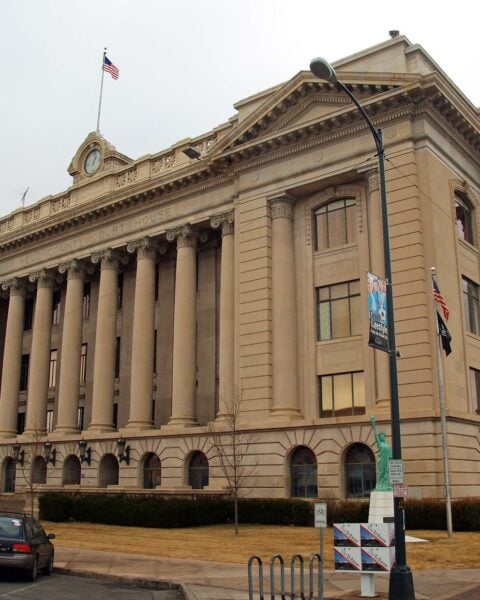
Court of record: Circuit Court of Cook County; affirmed, Supreme Court of Illinois (People v. Gacy, 103 Ill. 2d 1 (1984))
Disposition: Convicted of 33 murders; executed May 10, 1994, Stateville Correctional Center
Related on TDSH: Crime Dossier · Peter Kürten: The Sadist
Case file · 01
Index
- Overview / Case Snapshot
- Identity & Aliases
- Geography
- Chronology
- Victims
- Crimes Pattern
- Investigation
- Arrest & Confession
- Trial
- Conviction, Appeals, Execution
- Cultural Aftermath
- Record Boundary
- Research and Source Ledger
Case file · 02
01. Overview / Case Snapshot
John Wayne Gacy was a Chicago-area contractor, Democratic precinct captain, and part-time clown performer who murdered teenage boys and young men between 1972 and 1978. He buried most of the dead beneath and around his ranch house at 8213 West Summerdale Avenue in unincorporated Norwood Park Township, Cook County: a short drive from Des Plaines, Illinois. Others were recovered from waterways south of Chicago, including the Des Plaines River corridor.
The case that finally stopped him was not a cold tip from the crawl space. It was the disappearance of Robert Piest, a 15-year-old Maine West High School sophomore last seen leaving Nisson Pharmacy on Touhy Avenue in Des Plaines on the evening of December 11, 1978, after telling his mother he was going to speak with a building contractor about a job. That contractor was Gacy. Des Plaines police, led in significant part by Lt. Joseph Kozenczak, built a surveillance and search-warrant trail that ended with Gacy’s arrest on December 21, 1978, and the excavation of human remains from the crawl space that same night.
In March 1980, a Cook County jury convicted Gacy of 33 counts of murder, plus deviate sexual assault and indecent liberties with a child related to Piest. The aggravated kidnaping count was dismissed during trial. He was sentenced to death on 12 murder counts (those the State proved occurred after Illinois’s post-Furman death-penalty statute took effect) and to natural life on the remaining murder counts. After state and federal appeals failed, Gacy was executed by lethal injection at Stateville Correctional Center near Joliet and pronounced dead at 12:58 a.m. on May 10, 1994.
As of Cook County Sheriff’s Office public statements after the October 2021 identification of Francis Wayne Alexander, 28 of the 33 victims have been identified by name; five remain unidentified. The Sheriff’s Office continues to solicit DNA from relatives of males missing roughly 1970–1979.
This file is an offender profile (court outcomes, investigative chronology, geography, and record boundaries) not gore tourism and not a Crime Ledger bulletin.
Case file · 03
02. Identity & Aliases
| Field | Record |
|---|---|
| Legal name | John Wayne Gacy |
| Born | March 17, 1942, Chicago, Illinois (standard biographical record; Britannica; major wire summaries) |
| Died | May 10, 1994 (executed), Stateville Correctional Center, Illinois |
| Known public roles | Owner/operator of PDM Contractors; Norwood Park Township Democratic precinct captain; volunteer clown performer |
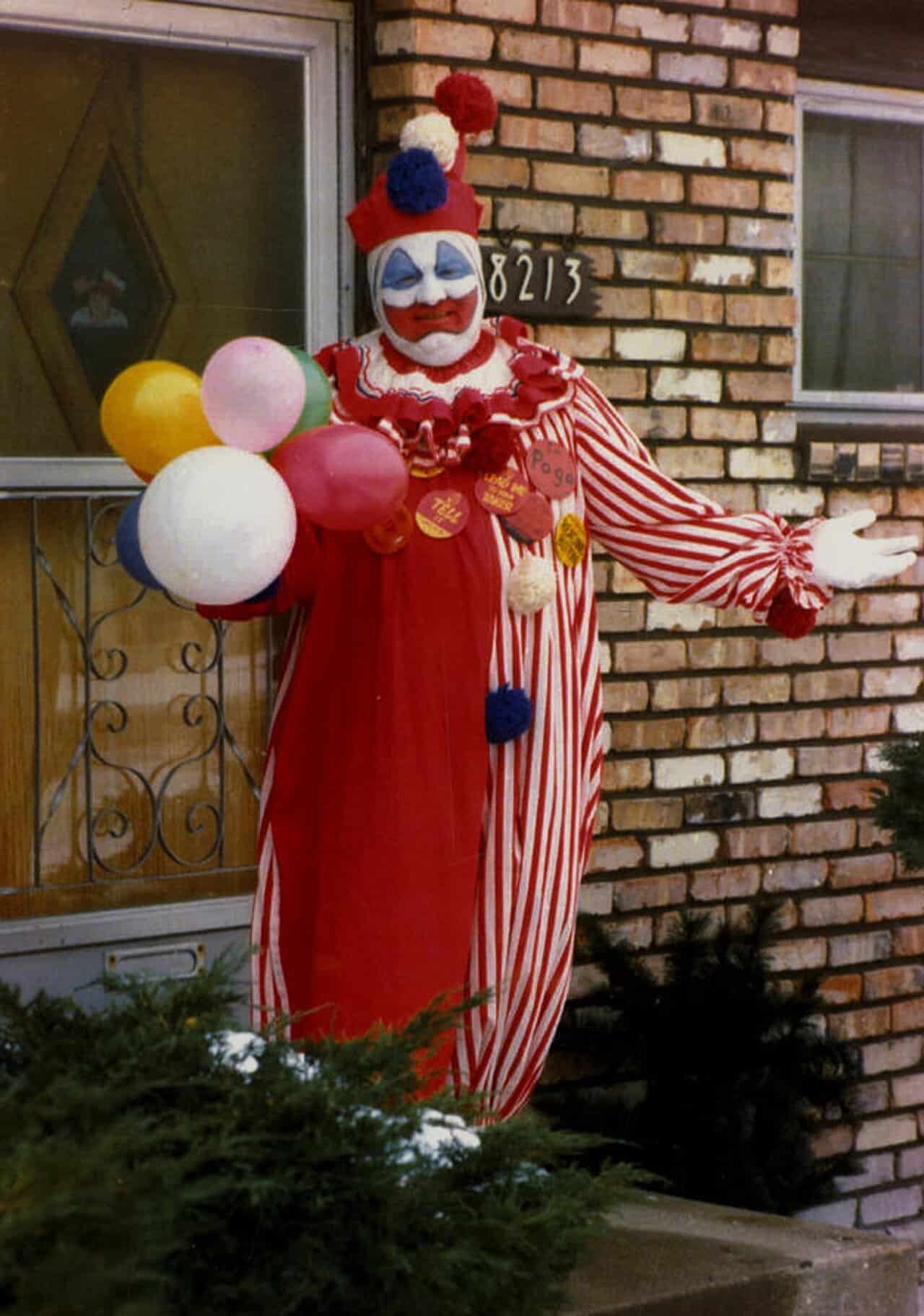
| Documented clown persona | Pogo the Clown: community performances and photographic record; Chicago Metropolitan Clown Guild publicly addressed the association after the bodies were found (Chicago Tribune timeline) |
| Media sobriquet | Killer Clown: press nickname after arrest; not a legal alias |
| Secondary clown name in secondary literature | Patches (also “Patches the Clown”): widely repeated in later summaries as a second persona Gacy described as more “serious” than Pogo. A firm primary contemporaneous source for Patches has not surfaced; it is reported, not a court finding. |
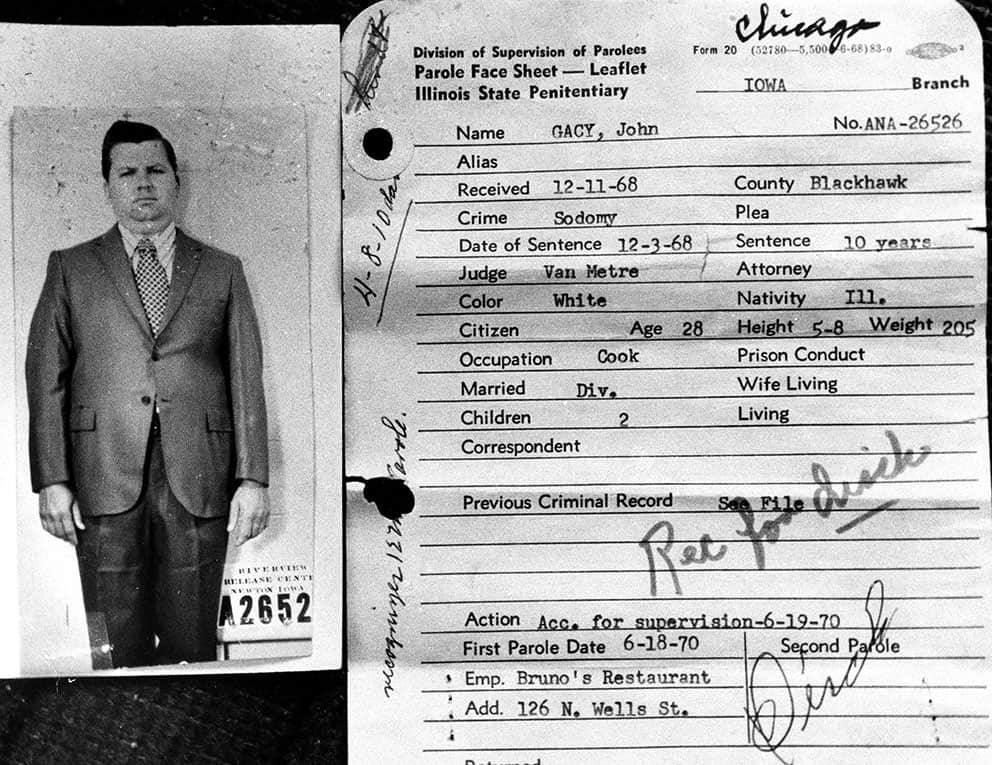
| Prior felony (Iowa) | 1968 sodomy conviction, Waterloo, Iowa; sentenced to 10 years; paroled ~1970 and returned to the Chicago area (AP/NYT Dec. 1978 reporting; Tribune timeline) |
| Marriages (biographical, non-charge) | Married Marlynn Myers (1960s; Iowa period); later married Carole Hoff (1970s). Both marriages ended in divorce. |
Gacy’s civic mask mattered to the case only insofar as it explained why neighbors, party organizers, and even federal protective details (he photographed with First Lady Rosalynn Carter at a Polish Constitution Day event on May 6, 1978, after Secret Service clearance, per Tribune archives) did not read him as a predator until Des Plaines locked onto Robert Piest.
Case file · 04
03. Geography
Primary crime scene / residence: 8213 West Summerdale Avenue, unincorporated Norwood Park Township, Cook County, Illinois, just east of O’Hare International Airport in the northwest Chicago metropolitan fringe. Chicago Tribune contemporaneous photography and later timeline graphics place the ranch house at that address at the time of the December 1978 arrest. The house was razed on April 10, 1979. A later residence was built on the lot; reporting notes the street number was changed (commonly given as 8215 West Summerdale after redevelopment).
Investigative hub: Des Plaines Police Department; Nisson Pharmacy, 1920 Touhy Avenue area, Des Plaines (Piest’s workplace; People v. Gacy factual summary and Tribune).
Body recovery zones (high-level):
- Crawl space beneath the Summerdale house (majority of remains)
- Other locations on the property (garage floor / driveway-adjacent recoveries reported during excavation)
- Waterways south of Chicago, including Des Plaines River / Illinois River recovery points tied by confession and later identification to river-dumped victims (Piest; Landingin; Mazzara; O’Rourke among those named in Tribune/court-adjacent reporting)
Prior geography: Waterloo, Iowa (KFC management / 1968 sodomy case); Chicago birth and later return after Iowa parole.
Jurisdictional friction is part of the investigative story: Chicago Police Department youth/sex-crime contacts with Gacy in the mid-1970s did not produce a murder case; Des Plaines, a suburban department with a missing 15-year-old, did.
Case file · 05
04. Chronology
Dense beats below are drawn primarily from Chicago Tribune archival timeline reporting, Cook County Sheriff statements, Illinois Supreme Court / Seventh Circuit summaries, and contemporaneous AP/NYT coverage. Where sources compress differently, the conflict is noted in §12.
Pre-murder record (Iowa)
- 1968: In Waterloo, Iowa, Gacy is convicted of sodomy involving a teenage boy; sentenced to 10 years; held at Iowa men’s reformatory / Anamosa-associated custody. Paroled ~1970 and allowed to return to the Chicago area; parole ends October 1971 (Tribune timeline paraphrasing parole documentation).
- Post-parole: Establishes PDM Contractors; acquires the Summerdale ranch house with family financial help (standard biographical/Tribune framing).
Documented murder span (Illinois)
- January 3, 1972 (per Gacy statements to investigators): First killing inside the house, later identified (1986) as Timothy Jack McCoy, 16, connected to a Greyhound bus-station encounter narrative Gacy gave police (Tribune).
- 1972–1975: Additional killings; pace accelerates after mid-decade. Exact per-victim homicide dates for many crawl-space recoveries remain estimate ranges based on disappearance dates and burial order, not always courtroom day-certain.
- August 1, 1975: John Butkovich, an employee, last seen after a wage dispute visit to Gacy’s house; later identified as the body Gacy marked under the garage (Tribune).
- 1976–1978: Cluster of disappearances among Chicago-area teens and young men later recovered from the property or rivers (see §05).
- March 1977: Jeff Rignall reports chloroform/sexual assault after being taken to Gacy’s house; civil settlement and misdemeanor battery track reported; no murder charge then (Tribune).
- December 31, 1977: Chicago arrest after a 19-year-old alleges kidnap/sexual assault; ASA declines prosecution after Gacy claims consensual encounter (Tribune).
- May 6, 1978: Photographed with Rosalynn Carter after Polish Constitution Day Parade duties (Tribune archive).
- November 12, 1978: Body of Frank Landingin recovered from Des Plaines River at Channahon; later tied to Gacy (Tribune).
- December 11, 1978, ~9:00 p.m.: Robert Piest leaves Nisson Pharmacy to speak with Gacy about a job; never returns. Missing-person report filed 11:29 p.m. (Tribune).
- December 12–13, 1978: Des Plaines focuses on Gacy; first search warrant executed December 13; film receipt tied to Piest’s circle recovered; Gacy released that night (Tribune; Des Plaines PD document dumps on Internet Archive).
- December 14–20, 1978: Around-the-clock surveillance; class ring tied to missing John Szyc; Iowa conviction confirmed; Gacy’s lawyers file civil-rights suit alleging police harassment (Tribune).
- December 21, 1978: Arrest (marijuana packaging handoff under surveillance used as hold); second warrant for Piest’s remains; crawl-space excavation begins; human remains found; garage burial marked by Gacy (Tribune; People v. Gacy warrant discussion).
- December 22, 1978: Extended confession statements; charged with Piest murder; property recovery continues (Tribune; AP/NYT).
- December 23, 1978 – March 1979: House dismantled; body count on property climbs to 29; river recoveries and IDs proceed; Piest identified April 9, 1979 (Tribune).
- April 10, 1979: House demolished.
- April 23, 1979: Grand jury expands indictments to 33 murders (Tribune).
- February 6 – March 12, 1980: Trial before Judge Louis Garippo; jury convicts on murder counts and Piest sex counts; death sentences March 13, 1980 (Tribune; Illinois Supreme Court opinion headnotes).
- June 6, 1984: Illinois Supreme Court affirms (People v. Gacy, 103 Ill. 2d 1).
- March 4, 1985: U.S. Supreme Court denies certiorari on direct appeal track (Tribune).
- 1988: Illinois Supreme Court rejects collateral attack (cited in Gacy v. Welborn, 994 F.2d 305 (7th Cir. 1993)).
- April 12, 1993: Seventh Circuit affirms denial of federal habeas (Gacy v. Welborn).
- May 10, 1994: Execution at Stateville; pronounced dead 12:58 a.m. (LA Times; UPI; NYT; Tribune).
Identification work after execution
- October 12, 2011: Sheriff Tom Dart announces renewed DNA effort on then-unidentified victims.
- November 29, 2011: William George Bundy identified.
- July 19, 2017: James “Jimmy” Haakenson identified.
- October 25, 2021: Francis Wayne Alexander (Victim #5) identified via genetic genealogy with DNA Doe Project collaboration (Cook County Sheriff press release).
- Ongoing: Five unidentified; Sheriff’s Office DNA solicitation active.
Case file · 06
05. Victims
Confirmed count (court + recovery)
Convicted murders: 33.
Indictments in the Circuit Court of Cook County charged Gacy with 33 counts of murder, one count of deviate sexual assault, one count of indecent liberties with a child, and one count of aggravated kidnaping. After the kidnaping count was dismissed at trial, the jury convicted on the remaining counts (People v. Gacy, 103 Ill. 2d 1 (1984); Gacy v. Welborn, 994 F.2d 305 (7th Cir. 1993)).
Recovery geography (source-sensitive):
Chicago Tribune investigative timeline and Cook County Sheriff materials describe 29 bodies recovered on the Summerdale property (commonly broken out as 26 in the crawl space and three elsewhere on the lot) and four recovered from waterways, totaling 33. The Seventh Circuit’s 1993 narrative compresses disposition as crawl space / driveway / Des Plaines River without the Tribune’s 26/3/4 split. This file treats 33 convicted murders as the hard court number and treats on-property vs. waterway tallies as consistent in total but differently summarized by outlet. See §12.
Identified vs. unidentified (as of Sheriff’s Office post-2021 posture):
Cook County Sheriff: five victims remain unidentified; DNA profiles suitable for comparison exist for all five. After Alexander’s 2021 identification, public materials describe 28 identified / 5 unidentified. Earlier Tribune memorial language (pre-Alexander) used different identified/unknown splits as IDs accrued.
Respectful named list (authoritative journalism / Sheriff / court-adjacent ID announcements)
Names below are drawn from Chicago Tribune victim/timeline reporting and Cook County Sheriff identification announcements. Ages and disappearance dates are those reported in those outlets; where a source gives only a year, that limit is respected. This is a memorial/accountability list, not a method catalogue.
Identified (28):
- Timothy Jack McCoy: first killing narrative (1972); identified 1986 (Tribune).
- John Butkovich, disappeared Aug. 1, 1975; garage burial (Tribune).
- Darrell (Darrel) Samson, identified between November 1979 and March 1980 (Tribune; spelling varies Darrel/Darrell).
- Samuel Stapleton: 14; disappeared May 13, 1976 (Tribune).
- Randall Reffett: 15; identified April 11, 1979 via prior hospital X-ray (Tribune).
- Michael Bonnin: 17; last seen June 3, 1976 (Tribune).
- William Carroll: 16; disappeared June 13, 1976 (Tribune).
- James “Jimmy” Byron Haakenson: 16; Minnesota youth; identified July 19, 2017 as Victim #24 (Tribune; Sheriff).
- Rick Johnston: 17; last seen June 8, 1976 (Tribune).
- William George Bundy: 19; disappeared October 1976; identified Nov. 29, 2011 as Victim #19 (Sheriff/Tribune).
- Michael Marino: 14; disappeared Oct. 24, 1976 with friend Kenneth Parker (Tribune). Family later challenged identification; forensic orthodontist Edward Pavlik publicly stood by the dental match (Tribune 2012). Dispute noted; court/investigative ID stands in public record unless formally vacated.
- Kenneth Parker: 16; disappeared Oct. 24, 1976 (Tribune).
- Gregory Godzik: 17; disappeared Dec. 11, 1976 (Tribune).
- John Szyc: 19; disappeared Jan. 20, 1977; class ring found in first December 1978 search (Tribune).
- Jon Prestidge: 20; last seen March 15, 1977 (Tribune).
- Matthew Bowman: 18; reported missing July 5, 1977 (Tribune).
- Robert Gilroy: 18; last seen Sept. 15, 1977; father a Chicago police sergeant (Tribune).
- John Mowery: 19; reported missing Sept. 25, 1977 (Tribune).
- Russell Nelson: ~21–22; Cloquet, Minnesota; last seen Oct. 17, 1977 (Tribune).
- Robert Winch: 16; disappeared Nov. 11, 1977 (Tribune).
- Tommy Boling Jr.: 20; disappeared Nov. 18, 1977 (Tribune).
- David Talsma, identified Nov. 16, 1979; missing Dec. 1977 (Tribune).
- William Kindred: 19; last seen Feb. 16, 1978 (Tribune).
- Timothy O’Rourke: body recovered June 30, 1978, Illinois River near Dresden Island Lock and Dam; identified Jan. 1979 (Tribune).
- Frank Landingin, recovered Des Plaines River Nov. 12, 1978 (Tribune).
- James Mazzara: Elmwood Park; recovered Des Plaines River Dec. 28, 1978 (Tribune).
- Robert Jerome Piest: 15; Des Plaines; disappeared Dec. 11, 1978; identified April 9, 1979 (Tribune; People v. Gacy).
- Francis Wayne Alexander: Victim #5; crawl space Dec. 26, 1978 recovery; killed ~early 1976–early 1977; identified Oct. 25, 2021 (Cook County Sheriff).
Unidentified (5): Remains recovered from the Gacy property in late 1978 / early 1979; DNA comparison profiles exist (Cook County Sheriff’s Office unidentified-victims page). Families of males missing 1970–1979 are asked to contact Sheriff’s Police.
How identification worked, then and now
1979–1986 methods: Dental charts, radiographs, personal effects (bracelets, belt buckles, jackets), fingerprints where soft tissue survived, and disappearance timelines. Orthodontist Edward Pavlik’s work for the Sheriff’s Office became central on difficult matches, including McCoy’s distinctive dental work.
2011–present: Sheriff Tom Dart’s office exhumed still-unidentified remains for modern DNA. William Bundy’s 2011 ID came from sibling DNA after his mother’s earlier dental-chart hunt failed because a retired dentist had destroyed records. Jimmy Haakenson’s 2017 ID used sibling DNA after his mother’s 1979 Chicago trip failed for lack of dental records. Francis Wayne Alexander’s 2021 ID added genetic genealogy via the DNA Doe Project and GEDmatch-range cousin matches, confirmed with maternal and half-brother samples, plus financial/public-record “last proof of life” analysis (traffic ticket January 5, 1976; scant 1976 income; no later life evidence). The Sheriff’s Office states usable DNA profiles now exist for all five who remain nameless and asks blood relatives of males missing 1970–1979 to submit comparison samples.
No additional victim names are invented here. Claims of victims beyond the 33 convicted murders (whether “34+,” interstate extras, or clown-costume kills) are folklore unless a court or competent authority adopts them. See §12.
Case file · 07
06. Crimes Pattern (as courts and investigation framed it)
Court and investigative summaries converge on a pattern without needing cinematic reenactment:
- Victim profile: Adolescent males and young men, employees, hitchhikers, travelers, neighborhood youths, job seekers.
- Approach: Job offers through PDM Contractors; street/cruising contacts; social invitations. Mid-1970s Chicago Police interest in an Uptown “John” picking up young men foreshadowed the suburban case without stopping it (Tribune).
- Control / homicide method (investigative and appellate description): Binding or handcuffing; strangulation/choking; some mouths found with cloth/rags; rope around necks noted in recoveries (Tribune excavation reporting; Seventh Circuit factual précis).
- Disposal: Primary concealment in the house crawl space (lime and trenches noted in appellate narrative); additional on-property burials; later river dumps when space ran out (Gacy’s January 1979 statements to investigators as reported by Tribune).
- Sexual assault charges litigated at trial: Deviate sexual assault and indecent liberties counts tied to Robert Piest; aggravated kidnaping dismissed during trial (People v. Gacy).
- Iowa predicate: Prior sodomy conviction established sexual-violence history years before the Illinois murder series.
This is the charge-and-pattern layer. It is not a how-to and not a recreation.
Case file · 08
07. Investigation
Trigger: Robert Piest (December 11–12, 1978)
Piest, 15, worked at Nisson Pharmacy in Des Plaines. On the evening of December 11, his mother, Elizabeth, arrived to pick him up for her birthday gathering. He asked her to wait while he spoke with a contractor about a job paying roughly twice his pharmacy wage. He walked out. He did not come back.
Elizabeth Piest filed a missing-person report at 11:29 p.m. Lt. Joseph Kozenczak, whose own son attended Maine West with Piest, pushed an aggressive response. Pharmacy owner Phil Torf and coworkers placed Gacy at the store that evening; Gacy’s PDM Contractors had recently remodeled the pharmacy. Gacy’s vehicle presence near the store at the relevant time became a hinge fact in later court summaries.
First approach and the night of December 12–13
Des Plaines asked Gacy to come in. Tribune timeline reporting reconstructs a late call in which Gacy asked whether detectives still wanted to talk, promised a half-hour arrival, then failed to appear. Investigators later concluded that during that interval Gacy moved Piest’s body from the attic to a vehicle and drove south to dump it in the Des Plaines River. Tow records placing Gacy’s car in a snowbank on the Tri-State Tollway in the early hours of December 13 became part of the reconstruction.
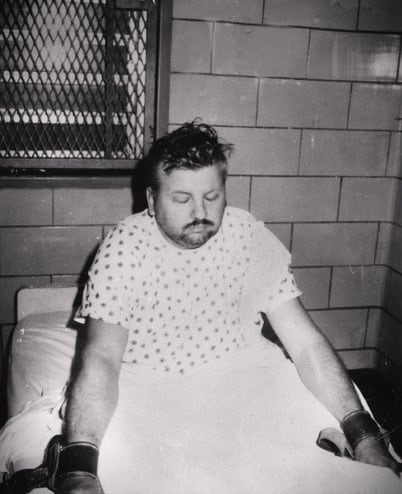
Gacy appeared at the station in the early morning of December 13 with mud on pants and shoes, then returned later for a statement. Kozenczak presented a search warrant; Gacy surrendered keys under protest.
First search warrant (December 13, 1978)
Des Plaines investigators and Cook County Sheriff’s evidence personnel searched 8213 W. Summerdale. Among items seized: a customer film-processing receipt later tied to a female friend of Piest (Piest had offered to drop the film). Other items (including a Maine West class ring later linked to John Szyc, handcuffs, and clothing inconsistent with Gacy’s size) fed suspicion even though Piest’s body was not found that day. Gacy was released the night of December 13.
Des Plaines PD case materials later released via archive collections document coordination with Assistant State’s Attorney Terry Sullivan, warrant drafting with investigator Bedoe, and approval by Judge Marvin Peters: names that recur in the People v. Gacy warrant litigation.
Surveillance pressure (December 14–20)
Police placed Gacy under continuous surveillance. An employee interview flagged disappeared former workers. The Szyc ring linkage expanded the missing-persons matrix beyond Piest. On December 19, officers invited inside for breakfast reported smelling death. Gacy’s attorneys filed a substantial civil-rights suit against Des Plaines alleging harassment: a legal counteroffensive that did not stop the criminal investigation.
By December 20, Iowa’s 1968 sodomy conviction and parole history were confirmed in the investigative file.
Second warrant and crawl-space breakthrough (December 21, 1978)
Under surveillance, Gacy was seen passing a package containing marijuana to a gas station clerk. Detectives used that conduct to take him into custody while a second warrant, specifically authorizing a search for Piest’s remains, was finalized before Judge Peters (People v. Gacy discusses the December 21 warrant complaint by Lt. Kozenczak).
With Gacy held, Des Plaines and Cook County Sheriff’s investigators reentered the house. Reporting describes Gacy denying Piest was present, then admitting a self-defense killing and marking a garage burial site with spray paint. Evidence technician work at the crawl-space trapdoor rapidly produced human remains. Excavation and structural demolition followed for weeks.
Multi-agency recovery
Cook County Sheriff’s officers, medical examiner staff under Chief Medical Examiner Robert Stein, dental consultants, and anthropologists worked the site. By late December the body count on the property was climbing through the teens and into the twenties; by March 1979, Tribune reporting places 29 recoveries on the lot, with river victims identified in parallel. National attention and parental inquiries flooded the agencies. A computerized missing-persons push at CPD was publicly tied to lessons from the case (Tribune, January 1979).
December 22–30, 1978: from confession to mass recovery
December 22 brought hours of statements. Cook County Sheriff Richard Elrod described a suspect “giving all kinds of statements” about bodies in the house, the property, and water. Gacy was charged with Piest’s murder while Piest’s remains were still missing. The house was already being opened for forensic access; papers and property of missing youths including John Szyc and Gregory Godzik surfaced inside.
By December 26, Tribune reporting places nine recoveries on the property, with concentration under the office area where Gacy ran remodeling work. Frank Landingin, recovered from the Des Plaines River at Channahon on November 12, was publicly tied to Gacy. December 27 coverage described fifteen of eighteen bodies then known removed from the lot, some with underwear forced into mouths, others with rope at the neck. A diagram attributed to Gacy guided diggers. Crowds and broadcast trucks filled Summerdale. By December 28–29 the on-property count was reported in the twenties; Medical Examiner Robert Stein indicated more remains remained under the structure. Parents’ calls arrived unevenly: investigators publicly worried that stigma around homosexual overtones suppressed missing-person inquiries.
December 30 reporting pushed the death toll tied to the property toward twenty-nine as demolition continued. Dental experts announced the first on-property identification: John Butkovich, 18, the former employee last seen August 1, 1975, over unpaid wages, the garage burial Gacy had marked on December 21.
January–April 1979: identifications, Piest found, house razed
New Year’s Day meetings compared dental charts from remains against charts from families of the missing. Early identifications included Gregory Godzik, John Szyc, and Rick Johnston. The Chicago Metropolitan Clown Guild held a press event about booking losses tied to the Pogo association.
On January 3, Gacy told authorities they “have all the bodies,” describing the progression from crawl-space burials to river dumps. He placed the first killing on January 3, 1972: later matched to Timothy Jack McCoy. Investigators still lacked Piest. On January 4, Piest’s down jacket was recovered under laundry-room flooring exactly where Gacy directed them. January 6–9 brought further IDs (Michael Bonnin, Robert Gilroy, Jon Prestidge, Russell Nelson) and formal indictments on seven murders plus Piest-related felonies; State’s Attorney Bernard Carey said the case would stay in Cook County. Timothy O’Rourke’s Illinois River recovery from June 1978 was tied in by fingerprints. Gacy pleaded not guilty January 10 before Judge Garippo.
Through late winter, excavators found a twenty-eighth body under the driveway area (March 9), a location not marked on Gacy’s earlier sketch, and a twenty-ninth under an addition (March 16). William Carroll was identified March 17. Robert Piest was positively identified April 9 via dental charts and X-rays. The house came down April 10. On April 23, a Cook County grand jury returned additional indictments bringing the murder total charged to 33, then described as the largest number charged to one person in U.S. history.
Pretrial (mid-1979 – January 1980)
Identifications continued: William Kindred (May); Tommy Boling Jr. and Robert Winch (September); Samuel Stapleton (November); David Talsma (November). Judge Garippo consolidated the thirty-three murder indictments into one trial (August 28), citing the futility of fragmenting prosecution. County payment of defense costs was litigated after Amirante and Motta reported insolvency. Jury selection was ordered for Rockford with trial in Chicago (January 7, 1980 order). Gacy was moved to Winnebago County under heavy security January 26 for voir dire.
The investigation’s core virtue was boring and decisive: a suburban missing-teen case, a contractor last seen with the boy, a prior sex felony, a receipt that put the boy’s world inside the house, surveillance that held long enough for a second warrant, and a crawl space that ended the argument.
Case file · 09
08. Arrest & Confession
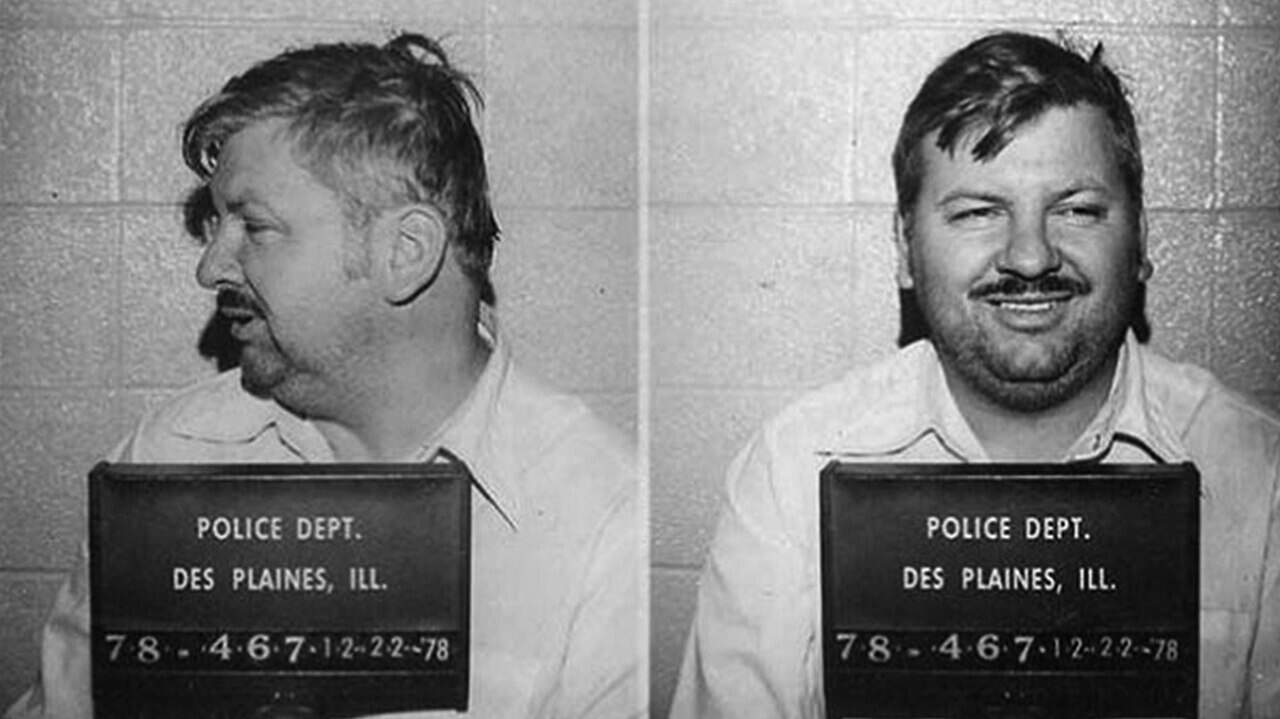
Arrest: December 21, 1978 (Des Plaines custody on the marijuana-related hold while murder probable cause crystallized; murder charging follows as remains and statements accumulate). Mug shot and station photography from Des Plaines PD are part of the public visual record.
Confession posture (as reported contemporaneously and in later appellate précis):
On December 22 and thereafter, Gacy gave lengthy statements acknowledging a large number of killings after sexual encounters, speaking at times in the third person about “Jack” / “John.” Tribune reporting summarizes admissions on the order of ~32 young men killed, drawings of burial locations, and naming of some victims. Exact transcript wording belongs in primary police/court files; this profile does not invent dialogue. The Seventh Circuit later noted Gacy “regaled the police with stories about his exploits, which he attributed to ‘Jack,’ an alternative personality.”
Early charging: Murder of Robert Piest (body not yet recovered when first charged). January 8, 1979 indictments expand to seven murders plus Piest-related felonies; April 23, 1979 grand jury reaches 33 murder counts (Tribune). January 10, 1979: not-guilty plea before Judge Louis Garippo.
Counsel: Defense attorneys Sam Amirante and Robert Motta (later withdrawn after trial; fee and book-deal controversy covered in Tribune 1980). Prosecution leadership associated with William J. Kunkle Jr., Robert Egan, Terry Sullivan, and State’s Attorney Bernard Carey’s office.
Case file · 10
09. Trial
Court: Circuit Court of Cook County; Judge Louis Garippo.
Venue mechanics: After change-of-venue litigation, the jury was selected in Winnebago County (Rockford) and sequestered for trial in Chicago, a cost-and-publicity compromise Garippo announced in January 1980 (Tribune).
Trial dates: Opened February 6, 1980; verdict March 12, 1980; death sentence March 13, 1980.
Charges tried: 33 murders; deviate sexual assault; indecent liberties with a child; aggravated kidnaping (dismissed during trial). Capital eligibility turned on Illinois law treating multiple murder / felony murder pathways as death-eligible after reenactment of capital punishment post-Furman.
Defense theory: Not guilty by reason of insanity, supported by defense psychiatric testimony diagnosing serious mental illness (schizophrenia-spectrum claims appear in Britannica/secondary summaries of trial testimony).
State theory: Sane, calculating predator; “killed people like he was swatting flies” (ASA Robert Egan, opening, as quoted in Tribune).
Evidence categories (public reporting / appellate framing): Crawl-space and property recoveries; Gacy’s diagrams and statements; personal effects (Piest jacket under laundry-room flooring found January 4, 1979; Szyc ring; wallets/IDs); odor and lime/trench testimony; prior Iowa conviction context; survivor/assault witnesses where admitted.
Jury: Seven men, five women (Tribune). Deliberated under two hours on guilt. Penalty phase the next day produced death verdicts on the 12 post-statute murders after roughly two hours of deliberation (Tribune; Seventh Circuit notes the short penalty deliberation).
Guilt phase texture
Garippo barred spectators under sixteen because of the graphic evidence. Five weeks of testimony pulled psychiatrists for both sides, police and evidence technicians, neighbors who had lived with the smell, acquaintances from the contracting and political worlds, and relatives of the dead. The State walked the jury through the Piest disappearance, the warrant sequence, the crawl-space recoveries, river victims, and Gacy’s own maps and admissions. The defense leaned on insanity: multiple personality / schizophrenia-framed expert narratives meant to convert confession into proof of disease rather than proof of guilt.
The jury was out less than two hours on March 12. Guilty on the murder counts and the Piest sexual counts. Applause from victims’ families marked the March 13 death verdict announcement near 6:30 p.m. Garippo’s remarks, as carried by the Tribune, framed the cost of the trial as “a small price we pay for our freedom.” Automatic stay pending Illinois Supreme Court review followed; Menard death row received Gacy on March 14 as one of the early post-restoration capital inmates in the new unit.
Post-verdict identification work did not stop: Kenneth Parker, Michael Marino, and Darrell Samson were named at the end of March 1980. In July, Medical Examiner Stein released Betty Pat Gatliff facial reconstructions for still-unidentified victims and urged families to come forward without shame narratives. On June 12, 1981, nine unidentified victims received a public memorial burial sequence with markers reading “We remembered.”
Sentence: Death on 12 counts; natural life on remaining murder counts; Judge Garippo set an initial execution date of June 2, 1980, automatically stayed pending appeal. Gacy transferred to Menard Correctional Center death row.
Case file · 11
10. Conviction, Appeals, Execution
Direct appeal
People v. Gacy, 103 Ill. 2d 1, 468 N.E.2d 1171 (June 6, 1984): Illinois Supreme Court affirms convictions and death sentences, rejecting a large slate of claimed errors (Tribune: 39 issues in a 72-page opinion framing).
U.S. Supreme Court denies certiorari March 4, 1985 (Tribune).
Collateral attacks
Illinois Supreme Court rejects state collateral attack (125 Ill. 2d 117 (1988); cert. denied 1989): citations preserved in Gacy v. Welborn.
Federal habeas: Northern District of Illinois denies relief (1992 WL opinions cited by Seventh Circuit).
Gacy v. Welborn, 994 F.2d 305 (7th Cir. April 12, 1993) (Easterbrook, J.): affirms denial; among issues, alleged capital-sentencing instruction slip between oral and written forms; court finds no substantial likelihood of improper verdict given written instructions and short deliberations.
Habeas themes (non-technical)
By the early 1990s, written opinions in the Gacy litigation already ran hundreds of pages. The Seventh Circuit refused to treat a misread capital instruction as fatal when jurors held a correct written charge and returned death verdicts in about two hours, too fast, the court reasoned, for a hidden unanimity confusion to have driven the result. Gacy’s team raised instruction-comprehension studies and other constitutional theories; Illinois courts and then federal habeas courts held the convictions and sentences. When final stays collapsed in May 1994, the factual core that began with a missing Des Plaines sophomore remained intact: thirty-three murder convictions, twelve death judgments, no successful innocence claim.
Execution
Final stays fail in early May 1994. Illinois Gov. Jim Edgar declines clemency (UPI chronology).
May 10, 1994: Lethal injection at Stateville Correctional Center. Pronounced dead 12:58 a.m. UPI and other wires reported a temporary clog/gelling in the IV line carrying the second drug (pancuronium bromide), requiring tubing replacement before the execution completed. His requested final meal was french fries, fried shrimp, fried chicken and fresh strawberries (Los Angeles Times, 1994).
Gacy was 52. Demonstrators for and against capital punishment gathered outside. Some family members of victims later participated in destruction of purchased Gacy paintings (Tribune/AP June 1994 auction aftermath).
Case file · 12
11. Cultural Aftermath
The case’s cultural afterlife is real; the mythology is louder than the record.
- Clown panic / Pogo: Chicago Metropolitan Clown Guild publicly addressed lost bookings as parents associated clowns with Gacy (Tribune, January 1979). The “Killer Clown” label stuck in American true-crime vernacular.
- House as dark tourism relic: Razed 1979; lot redeveloped; address changed. Curiosity crowds had already gathered during the excavation (Tribune photojournalism).
- Art / murderabilia: Prison paintings sold and sometimes bought specifically for destruction (1994 Naperville auction coverage).
- Screen and books: Multiple documentaries, dramatizations, and investigator memoirs (including Kozenczak’s The Chicago Killer), usefulness varies; none outrank court and Sheriff records for facts.
- Ongoing identification project: Sheriff Dart’s post-2011 DNA/genetic-genealogy work is the most consequential modern chapter, Bundy (2011), Haakenson (2017), Alexander (2021), five names still missing.
Auction and murderabilia fights after the execution, including purchases intended for burning, turned Gacy’s prison paintings into a secondary morality play about whether destroying art harms victims or centers the killer. Harold Piest’s participation in a 1994 bonfire of purchased works is on the photographic record (AP/Tribune). Separately, true-crime television repeatedly returned to the crawl space and the clown makeup; useful as cultural weather, unreliable as primary fact. For TDSH purposes, the durable public goods are the court judgments, the Sheriff’s unfinished identification project, and the Des Plaines missing-person investigation that worked.
No claim is made here that Gacy murdered in clown makeup; that rumor circulates without evidence in mainstream investigative chronologies (secondary explainers note the absence of such proof).
Case file · 13
12. Record Boundary (Confirmed vs. Myth)
| Claim | Status |
|---|---|
| Convicted of 33 murders in Cook County | Confirmed: verdict and appellate opinions |
| Death sentences on 12 counts; natural life on others | Confirmed: People v. Gacy; Gacy v. Welborn |
| Executed May 10, 1994, 12:58 a.m., Stateville | Confirmed: LA Times, UPI, NYT, Tribune |
| Lived/killed at 8213 W. Summerdale, Norwood Park Twp. | Confirmed: Tribune, Britannica, PD materials |
| Trigger case: Robert Piest, Dec. 11, 1978, Des Plaines | Confirmed: court factual summary; Tribune |
| Performed as Pogo the Clown | Confirmed in community/press record |
| Performed as Patches | Reported in secondary literature; thinner open primary trail: flag |
| Killed while wearing clown costume | Myth / unverified rumor, not established in core investigative chronologies |
| Victim total higher than 33 | Unproven relative to convictions; do not state as fact |
| “Jack” alternate personality as clinical DID proving insanity | Rejected by jury; statements exist; diagnosis disputed at trial |
| Body-count split (crawl vs. yard vs. river) | Totals agree at 33; outlet-level splits differ (Tribune 26+3+4 vs. 7th Cir. compression): cite carefully |
| All victims identified | False: five unidentified per Cook County Sheriff |
| Photographed with Rosalynn Carter | Confirmed: Tribune archive May 6, 1978 |
| Secret Service “cleared” him | Reported in Tribune timeline as receiving clearance for event access; the photo shows him wearing an “S” lapel pin indicating security clearance (UPI via The New York Times, 1979) |
| Exact dialogue in interrogation rooms | Only quote from transcripts/reliable transcripts; this file avoids invented speech |
| Encyclopedia.com-style “May 19, 1994” execution date | Error against wire consensus of May 10 |
Case file · 14
13. Research and Source Ledger
Courts & primary legal
-
Supreme Court of Illinois: People v. Gacy, 103 Ill. 2d 1 (1984)
https://law.justia.com/cases/illinois/supreme-court/1984/53212-6.html
Mirror: https://www.leagle.com/decision/1984104103ill2d11104 -
Midpage / case text mirror: People v. Gacy, 103 Ill. 2d 1 (factual summary of Piest disappearance, warrants, charging)
https://app.midpage.ai/document/people-v-gacy-2234277 -
U.S. Court of Appeals, Seventh Circuit: Gacy v. Welborn, 994 F.2d 305 (1993)
https://law.resource.org/pub/us/case/reporter/F2/994/994.F2d.305.92-3965.92-3448.html - Illinois collateral / cert denials as cited inside Gacy v. Welborn (125 Ill. 2d 117 (1988); U.S. Supreme Court cert. denials 1985, 1989)
Law enforcement / official
-
Cook County Sheriff’s Office: John Wayne Gacy Victim Identified (Francis Wayne Alexander), Oct. 25, 2021
https://cookcountysheriffil.gov/john-wayne-gacy-victim-identified/ -
Cook County Sheriff’s Office: Unidentified Victims John Wayne Gacy (five remain; DNA solicitation)
https://cookcountysheriffil.gov/departments/c-c-s-p-d/unidentified-victims-john-wayne-gacy/
Alternate host: https://www.cookcountysheriff.org/departments/c-c-s-p-d/unidentified-victims-john-wayne-gacy/ -
Des Plaines Police Department: Gacy case document collection (Internet Archive text/OCR)
https://archive.org/stream/Gacy_DesPlainesPD/Gacy_4_of_6_Redacted_djvu.txt -
DNA Doe Project: Gacy Victim Five / Francis Wayne Alexander case page
https://dnadoeproject.org/case/gacy-victim-five/
Chicago Tribune (core chronological spine)
-
Chicago Tribune: John Wayne Gacy interactive / new timeline (blurb HTML; Dec. 1978–execution–IDs)
https://graphics.chicagotribune.com/john-wayne-gacy-new-timeline/blurb.html -
Chicago Tribune, John Wayne Gacy’s victims: What is known about the 28 identified and 5 unknown men (updated post-Alexander framing)
https://www.chicagotribune.com/2021/10/25/john-wayne-gacys-victims-what-is-known-about-the-28-identified-and-5-unknown-men/ -
Chicago Tribune: Timeline of the suburban Chicago serial killer’s case and efforts to recover/name 33 victims
https://www.chicagotribune.com/2021/10/25/john-wayne-gacy-timeline-of-the-suburban-chicago-serial-killers-case-and-the-efforts-to-recover-name-his-33-victims/
(Also mirrored on third-party republishers; prefer tribune.com) -
Chicago Tribune: Remembering the 33 victims of John Wayne Gacy (2018 memorial essay; identified/unknown counts predate Alexander)
https://www.chicagotribune.com/2018/12/18/remembering-the-33-victims-of-john-wayne-gacy/
Wire / national newspapers (arrest week & execution)
-
The New York Times / AP: Three Bodies Found Under Home; Illinois Suspect Accused of Murder (Dec. 23, 1978)
https://www.nytimes.com/1978/12/23/archives/three-bodies-found-under-home-illinois-suspect-accused-of-murder.html -
Los Angeles Times: Gacy Executed in Illinois for Murders of 33 (May 10, 1994)
https://www.latimes.com/archives/la-xpm-1994-05-10-mn-55926-story.html -
The New York Times: Gacy, Killer of 33, Is Put To Death as Appeals Fail (May 11, 1994)
https://www.nytimes.com/1994/05/11/us/gacy-killer-of-33-is-put-to-death-as-appeals-fail.html -
UPI Archives: The events leading to Gacy’s execution (May 10, 1994 chronology)
https://www.upi.com/Archives/1994/05/10/The-events-leading-to-Gacys-execution/7264768542400/ -
UPI Archives: Lethal injection malfunction probed (May 10, 1994)
https://www.upi.com/Archives/1994/05/10/Lethal-injection-malfunction-probed/6049768542400/ -
Associated Press (via AP News): DNA brings pain, closure to family of John Wayne Gacy victim (Alexander ID)
https://apnews.com/article/chicago-7c42a32827a76ea67f887a0b9720d5dd -
Daily Herald: How genealogy search and DNA helped identify latest John Wayne Gacy victim (Oct. 25, 2021)
https://www.dailyherald.com/20211025/news/how-genealogy-search-and-dna-helped-identify-latest-john-wayne-gacy-victim/
Local / investigative role
- Chicago Sun-Times: Joseph R. Kozenczak, Des Plaines detective chief on the Gacy serial-slayer case, dies at 75
https://chicago.suntimes.com/2015/9/23/18544038/joseph-r-kozenczak-des-plaines-detective-chief-on-the-gacy-serial-slayer-case-dead-at-75
Reference / secondary (used cautiously)
-
Encyclopaedia Britannica: John Wayne Gacy
https://www.britannica.com/biography/John-Wayne-Gacy
Archive: https://web.archive.org/web/20231027161127/https://www.britannica.com/biography/John-Wayne-Gacy -
Encyclopedia.com, John Wayne Gacy Trial: 1980 (trial overview; execution date conflicts with other sources)
https://www.encyclopedia.com/law/law-magazines/john-wayne-gacy-trial-1980 -
A&E, John Wayne Gacy’s Execution: What His Final Days Like?
https://www.aetv.com/articles/john-wayne-gacy-death
Note: Secondary color (final meal, crowd); not used as sole authority for legal facts.
Related reading:
-
TDSH: Marquis de Sade criminal profile
https://thedarksideofhumanity.com/marquis-de-sade-criminal-profile/ -
TDSH, The Toy Box Killer: David Parker Ray
https://thedarksideofhumanity.com/the-toy-box-killer-david-parker-ray/ -
TDSH: Aum Shinrikyo case file
https://thedarksideofhumanity.com/aum-shinrikyo-case-file/ -
TDSH: Charles Manson case file
https://thedarksideofhumanity.com/charles-manson-case-file/
Wikipedia (orientation only, not cited as authority)
- Wikipedia: John Wayne Gacy
https://en.wikipedia.org/wiki/John_Wayne_Gacy
Used only to locate primary/secondary citations (Pogo/Patches club membership claims); this file relies on Tribune/court/Sheriff sources.
DarkHumanity: The Dark Side of Humanity
CASE FILE / Offender Profile, not a Crime Ledger entry
Browse every case in the Case File Index
Discover more from The Dark Side of Humanity
Subscribe to get the latest posts sent to your email.