Occult crime standards require clear evidence linking beliefs or symbolism to actual criminal conduct. While symbols and imagery can provide context, they do not independently prove motive or group involvement. Proper investigation relies on physical corroboration, witness testimony, and factual legal records rather than supernatural claims.
Cases involving alleged occult elements fall into distinct categories, ranging from genuine belief-driven violence and instrumental intimidation to offender performance, fabricated covers, and moral panics. Distinguishing between documented facts and secondary retellings prevents contamination, ensuring that sensational narratives do not replace objective evidence in criminal investigations.
Panic vs. Proof
A source-led occult crime dossier separating ritual murder claims, satanic panic, offender theatre, belief-driven violence, coercive doctrine and documented case records.

What Is Occult Crime?
A concise evidence standard for readers, search systems and AI summaries.
Five Ways the Occult Enters a Case
The same symbol can mean doctrine, intimidation, staging, self-mythology or nothing criminal at all.
Belief-Driven Violence
Doctrine, prophecy or a spiritual system appears to shape planning, victim selection, group control or the meaning assigned to death. The Order of the Solar Temple is the clearest example here because apocalyptic doctrine, hierarchy, staged deaths and written material are part of the historical record.
Instrumental Ritual
Ritual language or practice is used as a tool for intimidation, protection, secrecy, initiation or obedience. The Matamoros case is important because drug trafficking, coercion, homicide and ritual claims operated inside the same criminal system.
Sadistic Theatre
Occult imagery becomes a terror device. Richard Ramirez used Satanic language and iconography to dominate victims and cultivate notoriety, but that does not turn each attack into a formal ritual homicide.
Fabricated Supernatural Cover
An offender may invent demons, possession or supernatural commands to obscure ordinary motives, manipulate investigators or intensify public fear. David Berkowitz’s demon-dog story illustrates why a confession narrative still requires corroboration.
Moral Panic
Fear can become an evidence-making machine. McMartin remains a major warning about suggestive interviewing, escalating allegations and confirmation bias in cases framed through hidden satanic networks.
Symbols Are Clues, Not Verdicts
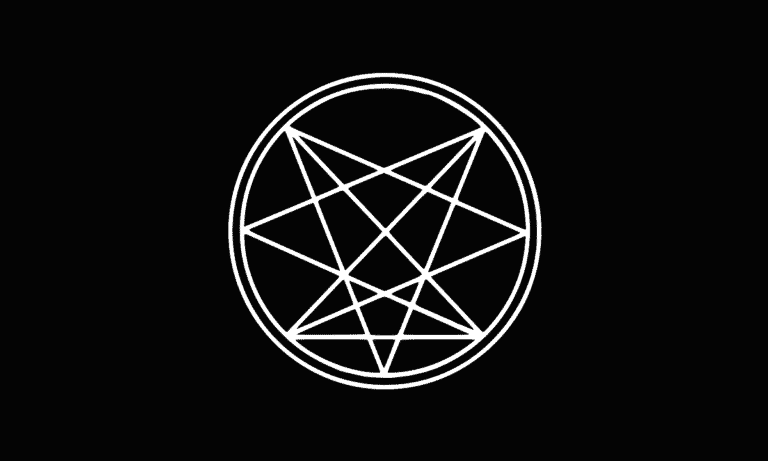
A pentagram, candle, animal remains, robe, sigil, ritual phrase or occult book should open questions, not close them. Context determines whether the object reflects religion, fantasy, intimidation, pathology, staging or motive.
What Actually Moves a Claim Toward Proof?
Occult interpretation gets stronger only when independent evidence converges.
Timeline of Panic vs. Proof
Six records show why occult-looking cases belong in different evidentiary categories.
Son of Sam
Berkowitz killed six people and wounded others in New York. The letters were real; the later demon narrative became part of the mythology. The lesson is not that offender statements are useless, but that supernatural claims require ordinary corroboration.
Chicago Rippers
The underlying criminal record includes rape, kidnapping and murder convictions. The more sensational cultic interpretation is unevenly documented and should be kept separate from what Illinois courts actually established.
McMartin Preschool
Claims expanded into tunnels, ritual abuse, animal killing and conspiracy. No convictions resulted. Later analysis focused heavily on suggestive interviewing, contamination and the dangers of building a theory before evidence is independently tested.
Richard Ramirez
Satanic imagery and language were part of Ramirez’s intimidation and public persona. The evidentiary distinction is between documented terror performance and the much stronger claim that the attacks were formal ritual homicides.
Matamoros / Rancho Santa Elena
Mark Kilroy’s murder exposed a violent criminal group associated with Adolfo Constanzo. Ritual claims, trafficking, coercion, recovered bodies and criminal conduct intersected in a way that makes this one of the stronger modern ritual-crime records.
Order of the Solar Temple
The transnational deaths involved apocalyptic doctrine, hierarchy, murder, suicide, assisted death, fire and staged arrangements. This is better understood as belief-system violence and coercive group control than as generic “occult crime.”
Six Case Files, Six Different Evidentiary Problems
The point is not to rank “occultness.” It is to identify what the evidence actually supports.
Adolfo Constanzo & Matamoros
The documented crime pattern included drug trafficking, coercion, homicide and ritual claims at Rancho Santa Elena. The occult element functioned as claimed protection, intimidation and group cohesion. For the case-specific record, see Sara Aldrete and the Matamoros ritual-murder case.
- Evidence boundary: do not use Constanzo’s violence to indict Afro-Caribbean religions generally.
- Victim focus: Mark Kilroy and the other victims remain the human centre of the record.
Order of the Solar Temple
The Solar Temple record includes apocalyptic doctrine, leader control, staged deaths, fires and transnational fatalities. Some people died voluntarily; others were murdered or subjected to assisted death. This case belongs beside the site’s analysis of deadly cult evidence and coercive control.
- Core issue: sincere belief and coercive control can coexist.
- Record: “cult suicide” is too simple for a record containing homicide as well as self-inflicted death.
Richard Ramirez
Ramirez’s Satanic language and symbols matter because victims experienced them as terror and because he used them in self-mythologizing. That is different from evidence of a ritual organization directing the crimes. The broader media problem connects to occult theatre and serial killer mythology.
David Berkowitz
Berkowitz’s demon-dog explanation amplified the occult aura around Son of Sam. Investigatively, the useful lesson is that bizarre claims can be strategic, unstable or notoriety-seeking. The existence of a statement is evidence that the statement was made, not that its supernatural content is true.
McMartin Preschool
McMartin remains a central cautionary case in the history of satanic ritual abuse allegations. It belongs with the site’s broader discussion of satanic panic and 1980s group violence because the evidentiary problem was not simply “belief” but interview technique, escalating claims and theory-driven interpretation.
Chicago Rippers
The Illinois court record establishes serious criminal conduct. Edward Spreitzer was convicted of the aggravated kidnapping and murder of Linda Sutton; Robin Gecht was convicted of attempted murder, aggravated kidnapping and sexual assault offences. Those findings are stronger than generic “Satanic cult” labels. The separate occult-claim roundup can carry the broader retellings: documented occult-claim cases.
Photo & Symbol Archive
Images establish identity, geography or symbol history. They are not substitutes for proof of ritual motive.


Investigator Rules
How to read occult claims without becoming either a zealot or a cynic.
| Rule | Question | Why it matters |
|---|---|---|
| Separate symbol from motive | Was the symbol functional, decorative, threatening or post-event staging? | A symbol can be meaningful without proving ritual homicide. |
| Grade the source | Is the claim from a court record, police statement, victim statement, confession, journalist or later retelling? | Occult cases mutate rapidly in secondary retellings. |
| Check contamination | Who interviewed whom, when, and with what prompts or prior assumptions? | Satanic-panic cases show how repeated prompting can corrupt the evidentiary record. |
| Test ordinary motives | Do sex, money, power, sadism, control, trafficking or domestic hierarchy explain more? | Occult framing can conceal ordinary criminal mechanisms. |
| Distinguish doctrine from crime | Does a text or belief direct conduct, or is it only present in the offender’s environment? | The line between ideology and conduct is an evidentiary question. See ritual extremism and the line between doctrine and crime. |
| Respect real belief systems | Is the offender distorting a tradition, or is the tradition itself being blamed? | A violent criminal distortion should not become an indictment of an entire religious or cultural tradition. |
Occult Crime FAQ
Short answers to the highest-intent questions behind ritual-crime and satanic-panic searches.
Do occult symbols prove ritual murder?
No. A symbol can be a clue, but it does not prove ritual motive by itself. Investigators need behaviour, statements, recovered material, victim testimony, planning evidence or court-supported findings.
Are all occult crime claims false?
No. Some cases involve genuine belief systems, coercive doctrine or ritualized criminal conduct. The error is assuming every occult-looking detail is automatically true or automatically fake.
What was the satanic panic?
The satanic panic was a wave of fear, allegations and investigations in which weak or contaminated evidence was often interpreted through claims of hidden satanic networks, ritual abuse and conspiracy.
Was Richard Ramirez a ritual killer?
Ramirez used Satanic language and imagery as terror performance and offender self-mythology. That does not prove every attack was a formal ritual homicide.
Why is McMartin important?
McMartin is a major cautionary case about panic, suggestive interviewing, escalating allegations, enormous prosecution costs and the difference between accusation and proof.
What is the safest way to report occult crime?
Separate symbol from motive, grade the source, check contamination, test ordinary motives and avoid blaming an entire belief tradition for a criminal distortion.
What This Dossier Rests On
Investigative guidance, court records, academic cult studies, institutional records and clearly labelled case reporting.
OJP / Kenneth V. Lanning
1992 investigator guide on allegations of ritual child abuse. The report argues for fact-led investigation, alternative explanations and caution against seeing satanism everywhere.
People v. Spreitzer
Illinois Supreme Court record documenting Edward Spreitzer’s aggravated-kidnapping and murder conviction in the Linda Sutton case. Useful for grounding Ripper Crew criminal conduct in court findings rather than mythology.
People v. Gecht
Appellate decision summarizing Robin Gecht’s convictions for attempted murder, aggravated kidnapping, deviate sexual assault and rape.
People v. Kokoraleis
Appellate record addressing Thomas Kokoraleis’s murder and rape prosecution, confessions and later retrial history. It provides another primary legal anchor for the Chicago group cases.
Order of the Solar Temple
Academic overview of the group’s origins, apocalyptic doctrine and series of deaths across Europe and Canada.
Matamoros / Rancho Santa Elena
Historical case overview used for the Mark Kilroy, Adolfo Constanzo and Rancho Santa Elena context; treated as secondary reporting rather than a substitute for court records.
Discover more from The Dark Side of Humanity
Subscribe to get the latest posts sent to your email.
Related Posts