FILE NO. 0094Case status Convicted

John E. Robinson was a prolific fraudster and convicted serial killer who targeted women across Kansas and Missouri from the mid-1980s through 2000. Known as the first internet serial killer, he adapted established methods of forgery and coercion to early online platforms to recruit, groom, and financially exploit his victims.
The investigation utilized a combination of digital forensics and traditional physical evidence to uncover eight murders. Robinson concealed his crimes by assuming false identities and sending forged communications to victims’ families. He remains incarcerated under a Kansas death sentence and five life-without-parole sentences in Missouri.
John E. Robinson built a career on stories that sounded just plausible enough to be trusted. He posed as a businessman, philanthropist, employer, romantic partner, and dominant figure in online BDSM communities. Behind those identities was a convicted serial killer who used forged documents, private mailboxes, email accounts, personal ads, and early internet communication to recruit and control women. Widely described as the first internet serial killer, Robinson did not invent predation online. He demonstrated how efficiently an established predator could adapt old methods of fraud and coercion to a new medium.
The murders connected to John E. Robinson unfolded across Kansas and Missouri between the mid-1980s and 2000. Some victims met him through work, charitable promises, or personal connections. Others encountered him online. What linked the cases was not one website or one alias, but a repeatable process: identify a need, offer a solution, isolate the target, take control of her money and records, and create false communications after she disappeared.
This account follows the court record and documented reporting, distinguishes established evidence from interpretation, and centers the eight women whose murders resulted in convictions or guilty pleas.
John E. Robinson case overview
- Full name: John Edward Robinson Sr.
- Born: December 27, 1943
- Known aliases: John Osborne, James Turner, Jim Turner, and online identities associated with the title “Master”
- Media labels: the first internet serial killer and the Internet Slavemaster
- Victims covered by convictions or guilty pleas: Lisa Stasi, Paula Godfrey, Catherine Clampitt, Beverly Bonner, Sheila Faith, Debbie Faith, Izabela Lewicka, and Suzette Trouten
- Arrested: June 2, 2000
- Legal status: under a Kansas death sentence and five Missouri life-without-parole sentences; a June 2026 clemency request was denied, and post-conviction litigation remains pending
The internet is central to this serial killer case, but it is only part of the chronology. Robinson’s first known murders predated widespread public internet access. By the time he began meeting women through BDSM websites and online personal ads, he had already spent decades practicing impersonation, forgery, embezzlement, and bureaucratic manipulation. Technology increased his reach; it did not create his methods.
Before the first internet serial killer: a life organized around fraud
Long before journalists called him an internet serial killer, John Edward Robinson presented himself as a respectable family man with the credentials and connections to open doors. Contemporary accounts describe an Eagle Scout and former seminarian who repeatedly manufactured status he had not earned. His criminal record stretched back to the late 1960s and included theft, embezzlement, forgery, and other financial offenses.
One episode captured the pattern. In the 1970s, Robinson helped engineer a “Man of the Year” honor for himself, using fabricated endorsements and a nonexistent award to produce the appearance of civic recognition. The scheme was grandiose, but its mechanics were practical: create an institution, make documents that appear official, and trust that most people will accept the paperwork before questioning the authority behind it.
That method resurfaced throughout the murder investigations involving John E. Robinson. He created businesses with legitimate-sounding names. He used job offers to establish authority, private mailboxes to intercept money, forged signatures to redirect benefits, and false letters to persuade relatives that missing women had chosen to leave. His offenses escalated, but the operating principle remained stable. If he controlled the story and the documents supporting it, he could delay scrutiny.
The Kansas Supreme Court later summarized the prosecution’s theory as a common course of conduct: Robinson lured women with promises of employment, travel, or other benefits; exploited them financially, sexually, or otherwise; killed them; and used fraud and deception to conceal the crimes. That description is more useful than speculative diagnoses. The record shows a practiced offender who treated trust as an opening and paperwork as a weapon.
The women who disappeared before Robinson went online
Paula Godfrey
Paula Godfrey was 19 when she disappeared in 1984. She had been hired in connection with Equi II, one of Robinson’s business ventures. After she vanished, her parents received a typed letter saying that she was safe and did not want contact. Because Godfrey was legally an adult and the message appeared to explain her absence, the document helped suppress the urgency that should have surrounded the case.
Godfrey’s remains have never been found. In 2003, however, John E. Robinson pleaded guilty in Missouri to her murder. That plea matters because older summaries sometimes describe Godfrey only as a suspected victim. Legally, her murder was one of five first-degree murder counts resolved by Robinson’s Missouri plea agreement.
Lisa Stasi and the theft of Tiffany’s identity
Lisa Stasi was a 19-year-old mother trying to stabilize her life after separating from her husband. In January 1985, she told relatives that a man calling himself John Osborne had offered help with employment, education, and housing. She and her infant daughter, Tiffany, were placed in a motel. Family members last saw them together that month.
Stasi disappeared, but Tiffany survived. Robinson delivered the baby to his brother and sister-in-law, who had been seeking to adopt. He supplied adoption papers carrying forged signatures from lawyers, a judge, and a purported notary. The official court record later established that no valid adoption proceeding existed. Tiffany was raised under the name Heather Robinson until the investigation in 2000 connected her identity to Lisa Stasi through matching infant footprints.
The Stasi evidence showed the full range of Robinson’s manipulation. He invented a charitable program, found a young mother in need, produced a false account of her departure, and replaced a legal process with fabricated documents. A Kansas jury convicted John E. Robinson of Stasi’s first-degree murder and aggravated interference with parental custody. Lisa Stasi’s body has never been recovered.
Catherine Clampitt and Beverly Bonner
Catherine Clampitt was 27 when she disappeared in 1987 after becoming connected to Robinson and Equi II. Her remains have never been found. Like Godfrey, Clampitt was included in the five Missouri murder counts to which Robinson pleaded guilty in 2003.
Beverly Bonner met Robinson while she worked as a librarian at the Western Missouri Correctional Center, where he was serving time for financial crimes. After his release, she planned a new job and life connected to him. Her family last saw her after her final divorce proceeding in February 1994.
Robinson leased a private mailbox and storage units under Bonner’s name. Her former husband mailed $1,000 monthly alimony checks to the mailbox, and the checks were deposited into a business account controlled by Robinson. Bonner’s brothers received letters claiming that she was working and traveling abroad. DNA recovered from envelopes matched Robinson, according to the Kansas court record. Her remains would later be found in a barrel inside a Missouri storage unit.
How John E. Robinson became the first internet serial killer
After his release from prison in the early 1990s, John E. Robinson entered an online environment built around screen names, personal ads, email, and rapidly forming communities. For someone already skilled at creating false authority, the medium offered scale and distance. He could present wealth, international connections, employment, romance, or sexual dominance before a target met him in person.
The title first internet serial killer is a media description rather than a formal criminological category. It is nevertheless grounded in a documented distinction: Robinson was among the earliest known serial murderers to use the internet systematically to establish relationships with victims. Reporting at the time called him a “Cyber Ripper,” while later coverage popularized “Internet Slavemaster.”
Descriptions of the case often reduce this activity to AOL chat rooms. That phrase evokes the period, but the appellate record is more precise. It documents BDSM websites, online personal advertisements, multiple email accounts, telephone calls, stored passwords, and messages sent under false identities. The digital evidence was not one decisive chat log or one IP address. It was a network of communications that aligned with physical records, witness accounts, financial evidence, and property linked to the victims.
The “Slavemaster” identity and victim grooming
Robinson participated in online BDSM spaces and used dominant identities, including the name or title “Slavemaster.” The distinction between consensual BDSM and Robinson’s conduct is essential. BDSM communities depend on informed consent, negotiated boundaries, and the ability to withdraw. Robinson used the language of consensual power exchange while allegedly hiding material facts, inventing credentials, and pursuing financial and physical control. The community did not cause his crimes; it gave him a specialized vocabulary with which to disguise coercion.
His pattern of victim grooming combined emotional promises with practical dependency. He offered jobs, housing, travel, education, medical assistance, or financial security. He encouraged women to move, give up existing arrangements, share passwords, sign documents, or place property under his control. Each step narrowed the victim’s alternatives and increased the cost of leaving.
The so-called slave contracts found in the investigation made that strategy visible. One contract associated with Izabela Lewicka formalized a dominant-submissive relationship. Another signed by Vicki Neufeld was seized with her property. In isolation, a role-play contract is not evidence of a crime. In this case, however, the documents were part of a broader evidentiary record that included false identities, financial control, missing women, forged communications, and personal property retained by John E. Robinson.
That is why coercive control is a more accurate lens than sensational labels. Robinson’s power came from controlling information, money, movement, and the victim’s perception of available help. The online persona was persuasive because it was reinforced by real apartments, business stationery, rented vehicles, mailboxes, and carefully repeated lies.
Sheila and Debbie Faith: promises of security
Sheila Faith was a 45-year-old widow. Her daughter Debbie was 16 and lived with cerebral palsy and other disabilities that limited her mobility. After Sheila’s husband died, mother and daughter moved to Colorado and relied on Social Security benefits. Sheila hoped to find companionship and answered personal advertisements.
Sheila told people close to her that she had met a man with a good job who promised travel and assistance, including a new wheelchair and accessible van for Debbie. She referred to him as Jim Turner, one of Robinson’s aliases. When Sheila and Debbie left Colorado in 1994, they packed as though they expected to return. Neither was seen by family or friends again.
Letters later arrived under Sheila’s name, but her sisters questioned the typed format, wording, and signatures. Meanwhile, Social Security checks for Sheila and Debbie were redirected to a private mailbox in Olathe and deposited into accounts controlled by John E. Robinson. He also used a forged medical report to keep Debbie’s disability benefits flowing.
The remains of Sheila and Debbie Faith were recovered in 2000 from barrels in the Raymore, Missouri, storage unit. The medical examiner found blunt-force injuries to both victims’ heads. Sheila also had a fractured forearm consistent with a defensive injury. John E. Robinson later pleaded guilty to both murders in Missouri.
Izabela Lewicka and Suzette Trouten: the online trail
Izabela Lewicka
Izabela Lewicka was born in Poland and moved to the United States as a child. She studied at Purdue University, drew and painted, and was interested in several alternative subcultures. In 1997, she told friends that an older man named John, whom she had met online, had offered work in Kansas City illustrating and editing books. She also described plans for BDSM training and travel.
Lewicka moved to Kansas and worked on advertising graphics for Robinson’s publication business. Their relationship was presented differently to different people: employee, adopted daughter, niece, partner, or wife. She signed a slave contract, and a power-of-attorney document gave Robinson legal authority over aspects of her affairs. By late summer or fall 1999, she had disappeared. Robinson transferred furniture, bedding, books, and artwork from her apartment to another woman’s home.
Lewicka’s father continued receiving emails from her account. Earlier messages had a recognizable blunt tone. Later emails were unusually polite and claimed that she was traveling in China and elsewhere. The change did not by itself prove authorship, but it became part of a wider pattern of post-disappearance communications that benefited John E. Robinson by creating the appearance that victims had left voluntarily.
Suzette Trouten
Suzette Trouten was a 27-year-old nurse from Michigan who was close to her family and active in online BDSM communities. She placed personal ads seeking a submissive relationship and began communicating with Robinson by email. He offered her a highly paid job caring for his elderly father during international travel. Trouten visited Kansas, accepted the offer, and moved in February 2000 with her two dogs and detailed plans for staying in touch.
Trouten spoke to her mother regularly until March 1. She then vanished. Letters and emails claimed that she had changed plans, left with a man named Jim Turner, traveled to California, or stolen money and gone to Mexico. Her relatives and friends noticed inconsistencies in the language, timing, and postmarks. Jim Turner was not an independent witness; he was another identity used by Robinson.
The deception continued online. While presenting himself as Turner, Robinson emailed one of Trouten’s friends and asked for information about her previous partners. He also created other identities to approach women in Trouten’s circle. When one woman requested a reference, she was directed to a “slavedancer” account. Investigators later found that account’s address and password in Robinson’s home, along with records confirming its registration.
This was internet crime joined to physical predation: one person operating several identities, using one false persona to validate another, and repurposing a missing woman’s social network as a new pool of potential targets. The communications helped investigators understand both the concealment of Trouten’s disappearance and the ongoing risk to other women.
The investigation: digital forensics meets physical evidence
The investigation that ended John E. Robinson’s crimes began to cohere after Suzette Trouten was reported missing in March 2000. Lenexa police formed a multijurisdictional task force and used surveillance, interviews, trash searches, subpoenas, pen registers, a court-authorized wiretap, and search warrants. The inquiry also drew strength from women who reported encounters with Robinson and from relatives who preserved suspicious letters and emails.
Vicki Neufeld provided another immediate lead. After contacting Robinson through an online personal ad, she visited Kansas to discuss a relationship and a possible move. She later reported property that he had failed to return. That complaint supported theft-related charges, while the larger investigation continued to focus on Trouten’s disappearance and Robinson’s attempts to recruit other women.
Telephone evidence was especially important. Investigators analyzed call records and obtained a wiretap on Robinson’s cell phone. They intercepted him using the name Jim Turner and making false claims about Trouten’s whereabouts. A telephone bill recovered from his trash documented a call from his rural Linn County property on the morning Trouten disappeared.
What the digital forensics actually showed
The phrase digital forensics can suggest a single technical breakthrough. In the Robinson investigation, the strength came from convergence. Police found printed emails, handwritten lists of addresses and passwords, records of account registrations, messages between Robinson and victims, and communications sent under aliases. Trouten’s contact list was found near messages sent to those same contacts. Lewicka’s family had emails sent from her account after she disappeared. Robinson possessed account information that allowed him to impersonate other people and make his false identities corroborate one another.
The Kansas Supreme Court later addressed the authentication of several email exhibits. Witnesses identified messages they had sent or received, investigators described where printed copies were seized, and circumstantial evidence connected the communications to Robinson. The court treated accurate email printouts as valid reproductions of electronically stored information. That ruling is a more defensible account of the case’s digital evidence than the frequently repeated but poorly supported claim that AOL IP logs alone exposed him.
Traditional evidence remained indispensable. Searches recovered identification documents, personal possessions, financial records, forged paperwork, benefit statements, and property belonging to missing women. The digital trail explained how victim grooming and impersonation worked; the physical evidence showed what those deceptions were designed to hide.
The record became persuasive because each independent source of evidence narrowed the space in which Robinson’s alternate stories could survive.
The interaction between online behavior and established investigative methods is one reason the John E. Robinson case still matters to the history of digital forensics. Investigators did not solve an internet case by staying online. They connected communications to phone records, addresses, storage leases, bank deposits, mailed envelopes, fingerprints, DNA, witness memories, and recovered property.
The barrels at La Cygne and Raymore
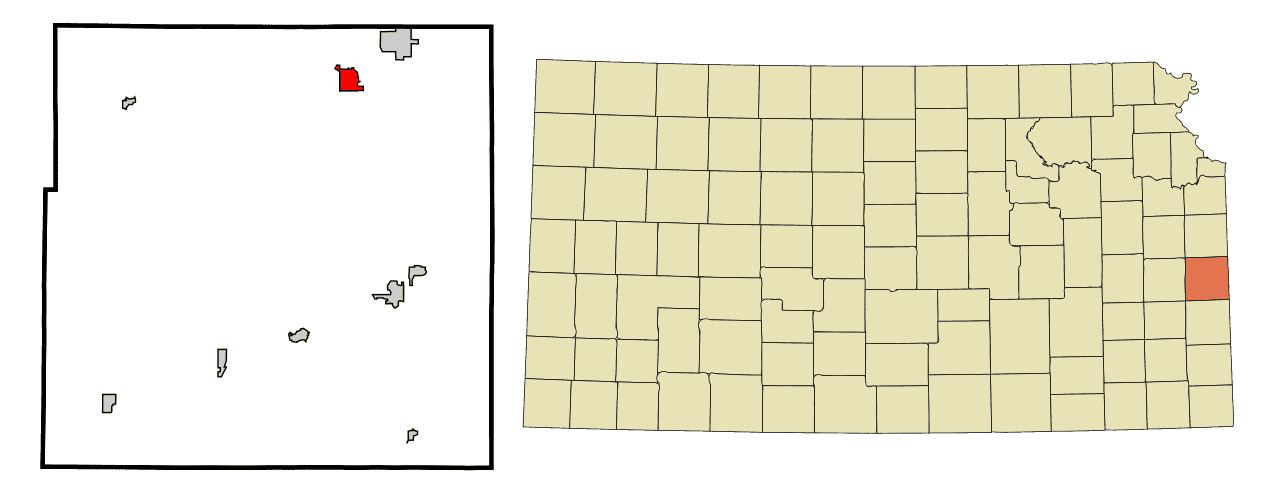
On June 2, 2000, police arrested John E. Robinson and searched his Olathe residence and storage unit. They recovered books about false identities, documents bearing aliases, records connected to the victims, email communications, signed contracts, and the personal documents of Trouten and Lewicka. The following day, officers began searching Robinson’s rural property near La Cygne in Linn County, Kansas.
A cadaver dog alerted to two yellow metal barrels positioned near a shed. Inside were the remains of Suzette Trouten and Izabela Lewicka. The deputy coroner concluded that Trouten died from a blunt-force blow to the left side of her head. Lewicka had two blunt-force injuries to the skull, either of which could have been fatal. Dental records confirmed both identities.
Trace evidence inside the trailer tied the scene to the victims. DNA from blood on a paper towel and wallboard matched Trouten. A root from a recovered hair also produced her DNA profile. Blood on a roll of duct tape matched Lewicka, and pieces of tape were found inside the barrel containing her body. Bedding and other property linked to Lewicka were recovered from another residence to which Robinson had moved her possessions.
On June 5, investigators searched a storage unit in Raymore, Missouri, leased under Beverly Bonner’s name and controlled by Robinson. Three barrels held the remains of Bonner, Sheila Faith, and Debbie Faith. The medical examiner found fatal blunt-force head trauma in all three cases. Fingerprints matching Robinson were recovered from plastic and duct tape surrounding the barrels.
The barrels are the most recognizable image from the case, but treating them as macabre symbols can eclipse what the evidence represented. Five women had been concealed in rented or privately controlled spaces while Robinson continued to collect money, move property, and send messages in their names. The containers were not an abstract expression of evil. They were part of a practical concealment system that John E. Robinson sustained through fraud.
Convictions, guilty pleas, and the death sentence
A Kansas jury convicted John E. Robinson in October 2002 of capital murder in connection with Suzette Trouten and Izabela Lewicka, first-degree murder of Lisa Stasi, aggravated kidnapping, theft, and aggravated interference with parental custody. The jury imposed death sentences on the capital counts, and the trial judge formally sentenced him in January 2003.
In October 2003, Robinson pleaded guilty in Missouri to five counts of first-degree murder: Paula Godfrey, Catherine Clampitt, Beverly Bonner, Sheila Faith, and Debbie Faith. He received life without parole on each count. The agreement resolved the deaths of Godfrey and Clampitt even though their remains had never been found.
The Kansas appeal produced a complicated result. In 2015, the Kansas Supreme Court affirmed one capital murder conviction and its death sentence. It reversed a second capital conviction and the separate first-degree murder conviction for Lisa Stasi because those counts overlapped with the surviving capital count under the way the state had charged a single common scheme. The ruling did not exonerate Robinson or overturn the surviving death sentence.
As of October 16, 2026, John E. Robinson remains incarcerated at El Dorado Correctional Facility. Kansas Governor Laura Kelly denied his request to commute the death sentence in June 2026. His attorney has said a post-conviction appeal remains pending. Kansas has not carried out an execution since 1965, so the existence of a death sentence should not be confused with a scheduled execution.
What the John E. Robinson case teaches about online predation
The technology in this case now looks primitive: dial-up connections, early websites, email printouts, landlines, pagers, and personal ads. The social engineering does not. A catfishing predator still builds a desirable identity, mirrors a target’s needs, creates urgency, moves communication into private channels, and tests how much control the target will surrender.
Modern romance fraud, financial exploitation, and sextortion use some of the same mechanisms, though they are not identical crimes. The useful parallel is the progression from attention to dependency. The offender offers intimacy or rescue, asks for secrecy, isolates the target from trusted people, collects compromising information, and makes leaving appear dangerous or humiliating.
The Robinson case also shows why an online identity should be verified through independent channels. A reference supplied by the person being checked is not independent. A company website, email address, or official-looking contract does not prove that the organization exists. Travel promises and urgent job offers deserve scrutiny when they require relocation, financial access, secrecy, or separation from family.
For investigators, the lesson is equally durable. Online evidence gains meaning when it is preserved and connected to the physical world. Account credentials, message histories, device records, phone data, financial transactions, travel details, and witness testimony can reinforce one another. Families who notice a sudden change in writing style, communication habits, or requests for secrecy may be identifying a meaningful break in pattern, even if no single discrepancy proves a crime.
Readers interested in the broader behavioral distinctions used in serial-murder investigations can also review Serial Killer Facts & Psychology: Modern Predator. Those frameworks are most useful when they organize documented behavior; they should not be used to diagnose an offender from a distance or reduce victims to elements in a profile.
Remembering the victims beyond the Internet Slavemaster label
The phrase Internet Slavemaster is memorable, but it centers the identity Robinson designed for himself. The women in this case were not a single “type,” and their interests, relationships, or financial difficulties did not make them responsible for his crimes. They were students, mothers, daughters, professionals, artists, caregivers, and people trying to build safer or more stable lives.
Paula Godfrey’s family waited nearly two decades for a legal resolution. Lisa Stasi’s daughter grew up inside a false identity created through forged adoption papers. Catherine Clampitt’s family still has no remains to bury. Beverly Bonner’s relatives received letters that extended uncertainty for years. Sheila and Debbie Faith were promised security and assistance. Izabela Lewicka’s art and belongings were redistributed after she vanished. Suzette Trouten’s close contact with family helped expose messages that did not sound like her.
John E. Robinson exploited the distance between one institution and another: Kansas and Missouri, police and social services, online identity and physical reality, a typed letter and the person whose name appeared beneath it. His advantage eroded when those fragments were assembled into one chronology.
That is the lasting significance of the first internet serial killer. The case was not simply a warning that dangerous people can be found online. It showed that a persuasive digital persona can extend an established pattern of coercion, and that uncovering the truth requires attention to both sides of the screen. The technology has changed. The need to verify identity, preserve evidence, share information across jurisdictions, and listen carefully when families report that something is wrong has not.
On June 18, 2026, Governor Laura Kelly said: “As the existence of a credible claim of innocence or evidence of manifest injustice are absent in his request, I have denied John Robinson\’s request to commute his death sentence.” Her office said his case was pending in the Kansas Supreme Court on a post-conviction appeal. Source: Office of the Governor of Kansas, media release, June 18, 2026: https://content.govdelivery.com/accounts/KSOG/bulletins/41b41e9
Confirmed victim and case timeline
Case register
Frequently Asked Questions
Why is John E. Robinson called the first internet serial killer?
He used early online chat rooms and personal ads to recruit and groom victims.
How many murders is he linked to?
Eight.
Where were the bodies found?
In barrels on his property near La Cygne, Kansas, and in a storage unit in Raymore, Missouri, in June 2000.
What was he convicted of in Kansas?
Capital murder for Suzette Trouten and Izabela Lewicka and first-degree murder of Lisa Stasi, in October 2002. In 2015 the Kansas Supreme Court affirmed one capital conviction and its death sentence.
What did he plead to in Missouri?
Five counts of first-degree murder in October 2003, for Paula Godfrey, Catherine Clampitt, Beverly Bonner, Sheila Faith and Debbie Faith. He received life without parole on each.
Was his death sentence commuted?
No. Governor Laura Kelly denied his clemency request on June 18, 2026.
Is his case still in court?
Yes. A post-conviction appeal is pending in the Kansas Supreme Court.
Sources
- Kansas Supreme Court: State of Kansas v. John E. Robinson Sr., No. 90,196
- State v. Robinson: searchable text of the Kansas Supreme Court opinion
- Associated Press via Lawrence Journal-World: Robinson’s five Missouri guilty pleas
- KCTV5: June 2026 clemency denial and current legal status
- Kansas Attorney General: 2026 death-row clemency proceedings
- The Observer/Guardian: contemporary reporting on Robinson’s online activity
- The Washington Post: historical context on Robinson’s fraud and internet activity
Discover more from The Dark Side of Humanity
Subscribe to get the latest posts sent to your email.