Luis Garavito
The man Colombia called “La Bestia,” the children he took from parks, markets and bus stations across the country in the 1990s, and the long legal record that followed: confessions, a long series of convictions, a 40-year ceiling and a death in custody.
Died in custody · Oct. 12, 2023 · record checked 1:53 p.m. ET, Wednesday, October 7, 2026
In its own voice this file states only what courts, prosecutors and consistent reporting establish: Luis Alfredo Garavito Cubillos was arrested in 1999, confessed to killing children across Colombia, was convicted in a long series of cases, was held under a 40-year term and died in prison custody in 2023. How many children he killed is not a settled number. Every count in this file is credited to whoever gave it.
- Case
- Colombia · 1990s
- Suspect
- L. A. Garavito C.
Items in the cited record
- A notebook of places, dates and ages23
- A kraft-paper list of town initials and numbers, per Semana10
- Newspaper cuttings about missing children62
- Caps from the same cheap liquor at scenes810
- Fingerprints matching “Bonifacio Morera Lizcano”29
- A worn shoe pointing to a limp, per Semana10
SRC: AP; BBC; El Tiempo; El País; Semana
Died in custody on Oct. 12, 2023. Status as of 1:53 p.m. ET, Wednesday, October 7, 2026.
Luis Alfredo Garavito was convicted in a long series of cases, held under a 40-year term and died in custody in Valledupar on Oct. 12, 2023, aged 66.135 He was never released.
Convicted · 40-year term · died in custody 2023 · status as of 1:53 p.m. ET, Wednesday, October 7, 2026.
This file concerns the abduction, sexual abuse and murder of children. It describes what happened without graphic detail and does not reproduce descriptions of injuries. Children are named only where a court record or prosecutors have made the name public, or where their families have spoken publicly. Spanish quotations are exact and are followed by TDSH’s translation. No photographs of victims or of Garavito are used.
What did Luis Garavito do?
A national case · direct answer first
What did Luis Garavito do, and how was he punished?
Luis Alfredo Garavito Cubillos, a man from the coffee-growing department of Quindío who moved from town to town, abducted, sexually abused and killed children across Colombia during the 1990s, most of them boys between 8 and 16 from poor families. He was arrested near Villavicencio on April 22, 1999, after a man nearby interrupted an attack on a boy, and in October 1999 he confessed to about 140 killings. Colombia’s chief prosecutor said at the time that 114 skeletons had been found.967
He was convicted in a long series of separate cases. By 2012 the Fiscalía, Colombia’s national prosecution service, counted 172 cases against him, 138 of them with convictions, and sentences adding up to 1,853 years and nine days. Because of the legal ceiling that applied to him, he served under a single term of 40 years. He died in custody in Valledupar on Oct. 12, 2023, aged 66, without ever being released.16125
A record, not a legend
Garavito is often described in superlatives: the worst, the most prolific, the beast. Those labels are not wrong in spirit, but they flatten a case that is, at its core, a list of children who were taken from ordinary places, the people who looked for them, and a justice system that had to process one man’s crimes one case at a time.69
This file is built the other way round. It starts with what is on the record: who he was, how he found children, how investigators in different cities came to realise they were chasing the same man, what he confessed, what he was convicted of, and why a man with sentences adding up to more than 1,800 years was held under a 40-year term. Where the record is uncertain, the file says so and names who says what.316
A national case, tried piece by piece
Victims were found in dozens of towns. AP and BBC Mundo put the number of municipalities at 59; El País, reporting from the first wave of disclosures in 1999, said about 60 localities in 11 of Colombia’s 32 departments. Garavito also confessed to killing children in Ecuador.1372
Each death fell under the prosecutor and court of the place where the body was found. A Fiscalía investigator told El Tiempo in November 1999 that, at that stage, the cases could not be grouped into a single file. That is why the Garavito record is not one trial but a long ledger of separate proceedings, some of them still open years after his arrest.916
Who were the children Garavito killed?
The victims · what the record holds, and whom it names
Children who worked, played and waited in public
The children Garavito took had a great deal in common, and it was that pattern that eventually helped investigators connect killings hundreds of kilometres apart. Colombia’s chief prosecutor, Alfonso Gómez Méndez, said in October 1999 that most were boys from poor families aged between 8 and 16. Many, the BBC reported, were the children of street vendors, often left on their own in parks and at traffic lights while their parents worked.6
AP described them as mostly from low-income families. An EFE report from January 2000, citing the Fiscalía, said many of the children worked. El País, writing as the confession became public, put it in one line: all of them humble, almost all of them boys.1128
Some sold newspapers or lottery tickets. Some shined shoes, sold coffee in the street or watched parked motorbikes. These were children who were out in public because their families needed them to be, which is exactly where Garavito went looking.89101324
The children whose names are public
Most of the children in this case have never been publicly named. According to the Fiscalía, most of the remains recovered by early 2000 had been identified through DNA testing. This file names the children whose names appear in a court ruling or whose families have chosen to speak, and no others.1214
Jaime Andrés González Suárez was killed in Tuluá, in Valle del Cauca. People there knew him as “el niño de los tintos,” the boy who sold coffee. Another man was convicted of his murder in 1994; in October 1999 Garavito confessed to it, and in 2004 a Tuluá court convicted Garavito of it. His case is told in §13.13
Carlos Olaya Aristizábal was 12 when he disappeared in Pereira on Aug. 19, 1997. Jhon Fredy Pineda was 15 when he disappeared on Sept. 15, 1998. Caracol Radio reported in April 2003 that the Fiscalía’s investigators in Pereira and its genetics laboratory had identified both boys’ remains, bringing to 11 the number of children in the case identified by name at that point.14
Ronald Delgado Quintero was killed in Tunja. According to a December 1999 wire report, his death was one of the first two cases in which Garavito was sentenced.11
Javier Mauricio Ordóñez was 14 when he disappeared in Florencia, in Caquetá. His mother, Nelly Cuéllar Méndez, told Noticias Caracol in 2021 that he was in the sixth grade and spent his afternoons watching motorbikes outside the old market to help support the family. « Él me colaboraba mucho, era muy juicioso mi niño y buen estudiante », she said: “He helped me a lot; my boy was very responsible and a good student.”2425
Two boys in Chone
In December 1999 Semana reported from Chone, a town in Ecuador’s Manabí province, where two boys had vanished on consecutive days the year before: Abel Gustavo Loor Vélez, 14, on July 20, 1998, and Jimmy Leonardo Palacios Anchundia, 12, on July 21. Abel had sold newspapers and shined shoes since he was eight. His mother, Rosa Candelaria Loor Vélez, told the magazine she had waited with his meal ready and he never came home, and that she was now certain Garavito had taken him. Semana reported that Ecuadorian police had linked both disappearances to him.10
Colombia’s Supreme Court later recorded that Garavito had confessed in the Colombian proceedings to the deaths of two minors in Ecuador, in Santo Domingo de los Colorados and Chone, giving exact dates and places. The court’s summary, as reported, does not name the children, so this file does not connect those findings to particular names.1715
“I never saw him again”
When remains began to be found in Pereira, El País reported, mothers who had been reporting their children missing for days crowded into the morgue. Their words, as the paper recorded them in October 1999, are the plainest account of what this case was. « Salió de madrugada a vender periódicos; no lo volví a ver »: “He went out before dawn to sell newspapers; I never saw him again.” Another mother remembered her son asking permission to go and fetch a cow for a 2,000-peso errand. « Iba feliz »: “He was happy to go.”8
Two decades later the families were still there. When Colombians learned in 2021 that Garavito might be eligible for conditional release, Nelly Cuéllar Méndez appealed to other parents to join her in fighting it. « Ese tipo no merece salir de la cárcel », she said: “That man does not deserve to leave prison.”2425
« Salió de madrugada a vender periódicos; no lo volví a ver ».A mother in Pereira, quoted by El País, Oct. 31, 1999. “He went out before dawn to sell newspapers; I never saw him again.”
Where does the case stand today?
Status · as of 1:53 p.m. ET, Wednesday, October 7, 2026
Death in custody
The criminal case against Garavito ended with his death. On the afternoon of Thursday, Oct. 12, 2023, Colombia’s prison authority, INPEC, announced that he had died at a clinic in Valledupar, the capital of Cesar department, where he had been taken from La Tramacúa, the high-security prison in which he had been held since 2002. He was 66. He had been suffering from leukemia and from cancer in one eye.52931
He was never released. INPEC’s statement, as Caracol Radio reported it, was brief: « El señor Luis Alfredo Garavito Cubillos, que estaba recluido en la ciudad de Valledupar, falleció en los últimos minutos »: “Mr. Luis Alfredo Garavito Cubillos, who was being held in the city of Valledupar, died in the last few minutes.”29
What the record never settled
Three things remained unresolved when he died. The first is the true number of children he killed: his own figure was higher than the number of cases prosecutors could prove, and the number of cases was higher than the number of convictions. The second is the full list of the dead: in April 2003, Caracol Radio reported, the Fiscalía’s investigators in Pereira had identified only 11 of the children by name. The third is how many other people were punished for his crimes: one man, Nelson Bonilla Garzón, spent years in prison for a killing Garavito later confessed to, and the Fiscalía said in 2000 that Garavito had claimed other killings for which other men had been blamed.316141312
How many children did Garavito kill?
The count · a credited range, never one number
| Figure | Who gives it | What it counts |
|---|---|---|
| 114 | Alfonso Gómez Méndez, chief prosecutor, October 199967 | Skeletons found by then |
| 124 | The Fiscalía, as reported by EFE, January 200012 | Killings with evidence against him by then |
| 138 | The Fiscalía, as reported by El Espectador, 201216 | Cases with a conviction |
| About 140 | His confession, October 1999, as reported by BBC, El País, El Tiempo, Semana67910 | Killings he admitted that night |
| 172 | The Fiscalía, as reported by El Espectador, 2012 and 2023165 | Cases prosecuted |
| 182 | EFE, citing the Fiscalía, January 200012 | Killings he had confessed to by then |
| 189 | El País, 2021 and 2023224 | Children it says he raped and killed |
| More than 190 | AP, 2021 and 2023121 | Killings he confessed to |
| 197 | Caracol Radio, 202329 | Children it says he admitted killing and abusing |
| “A little more than 200” | Garavito himself, quoted by BBC News Mundo3 | His own count of homicides |
No single number
There is no one correct figure for how many children Luis Garavito killed, and this file does not print one in its own voice. The numbers in the table above are all real. They are simply answers to different questions: how many bodies had been found, how many killings he admitted, how many cases prosecutors could build, how many ended in a conviction.612163
The safest statement the record supports is a range with names attached. Colombia’s chief prosecutor said in 1999 that 114 skeletons had been found. By 2012 the Fiscalía counted 138 convictions out of 172 prosecuted cases. Garavito himself, in an interview quoted by BBC News Mundo, put the number of children he killed at « un poquito más de 200 », “a little more than 200.” Every other figure that appears in the press sits somewhere in that span.6163
Bodies, confessions, files, verdicts
The figures grew over time for practical reasons. When Garavito confessed in October 1999, investigators had a list of remains already recovered and a set of open disappearance files. As he talked, he named places where children had been left; EFE reported in January 2000 that, using information he provided, the Fiscalía’s investigators had located ten more bodies, and that his confessed total had reached 182.912
A confession, though, is not a conviction. Each killing had to be investigated by the prosecutor where it happened, matched to remains, and tried. BBC News Mundo reported that the Fiscalía counted 32 cases beyond those Garavito himself reported. And identifying the dead was slow: in April 2003, Caracol Radio reported, the Fiscalía’s investigators in Pereira had identified only 11 children by name.16314
Ages, years and places
Even the outline of the pattern varies by source. Most reports, including the chief prosecutor’s in 1999, AP’s in 2023 and El País’s, describe victims aged 8 to 16; BBC News Mundo wrote 8 to 14. In his confession, as Semana reconstructed it, Garavito himself said all were between 8 and 16. This file uses 8 to 16 and notes that some victims fell outside any summary.614310
The span of years also differs. Garavito told investigators his first killing was in 1992, and El Espectador dates the series from 1992; EFE’s January 2000 report said 1993 to 1999. El País wrote at the time that the series lasted eight years; Semana, seven; the BBC in 1999, five. The number of departments is given as 11 by AP, El País and El Tiempo, and as 13 by Semana and El Espectador. These are credited where they appear.1051286149
Who are the key people?
Named only where the role is official or consistently reported
Luis Alfredo Garavito Cubillos
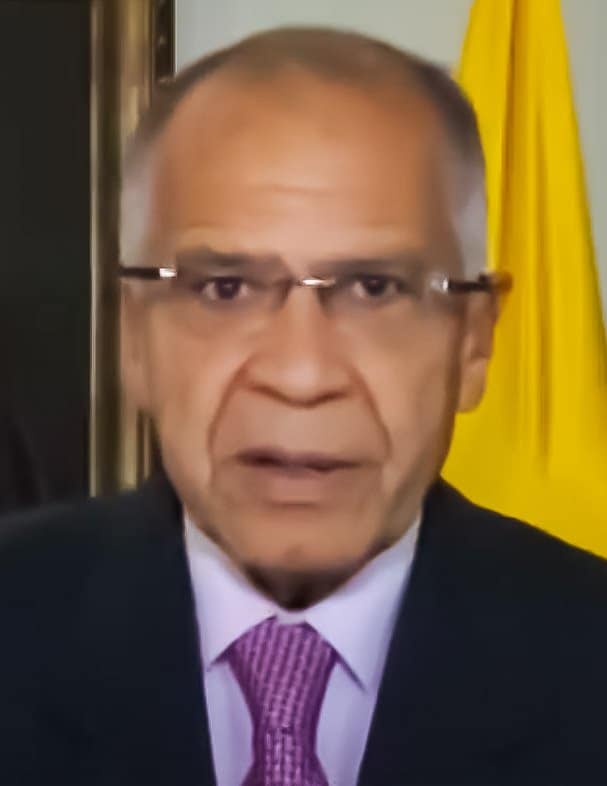
Alfonso Gómez Méndez
María Lily Naranjo Patiño
Harold Mauricio Sánchez and Aldemar Durán
- Role
- Found the same liquor caps at Génova scenes, according to Semana10
Pedro Babativa
- Role
- Corporal who, with two officers, made the arrest, according to El Tiempo9
Nelson Bonilla Garzón
Nelly Cuéllar Méndez
Camilo Manrique Serrano
Who is named here, and who is not
Officials are named where their role is recorded in the sources. The man who heard the boy’s cries near Villavicencio in April 1999 and drove off the attacker is not named in any source TDSH could find, and the boy himself, a child at the time, is not named here. Garavito’s relatives are not named.9
Who was Luis Garavito before the killings?
Origins · what is documented, and what rests on his word
Génova, Quindío, 1957
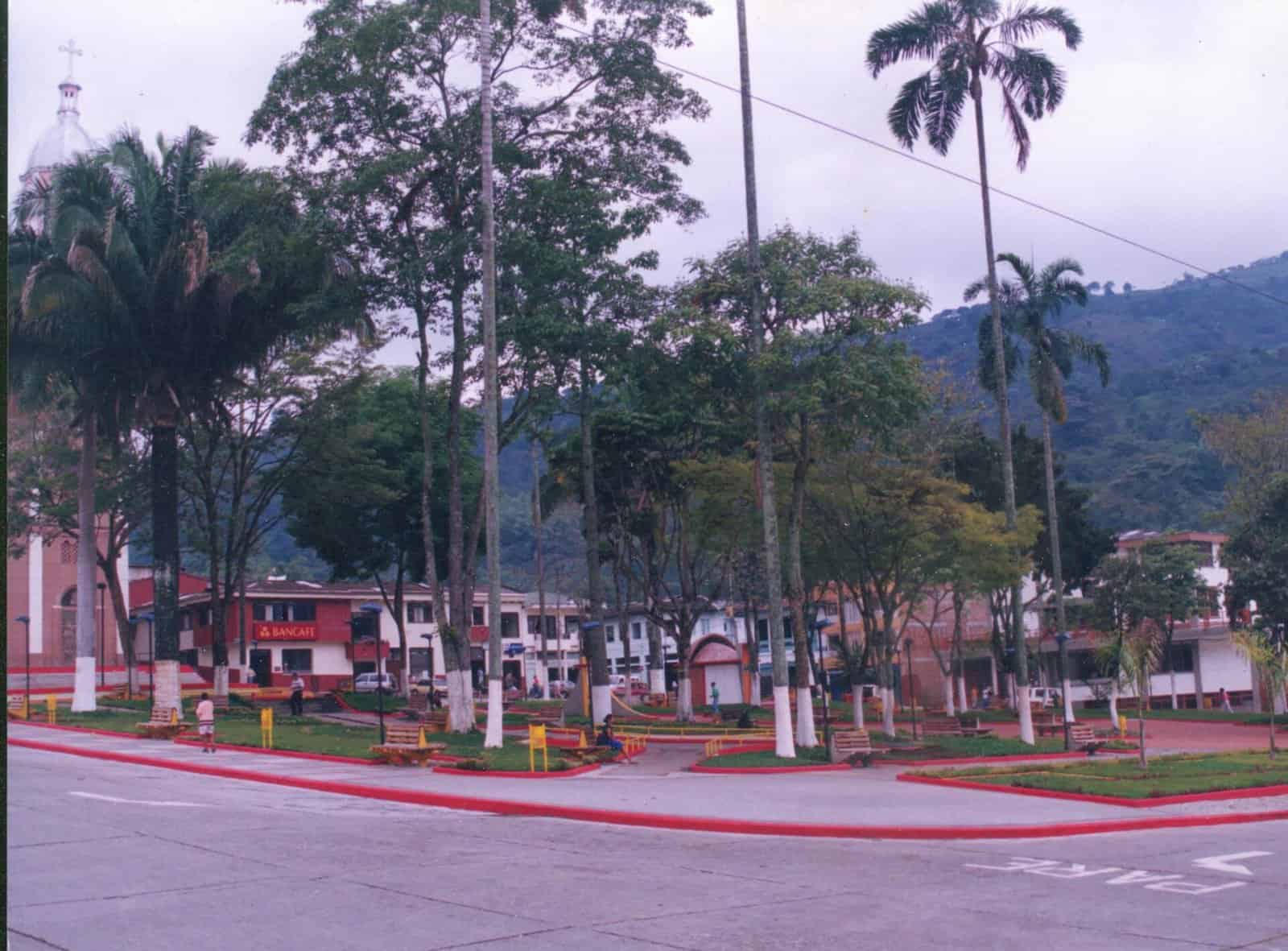
Luis Alfredo Garavito Cubillos was born on Jan. 25, 1957, in Génova, a small municipality in Quindío, in the coffee-growing region of western Colombia. The date and place are given by AP and El Tiempo, and he confirmed them himself when he was questioned in 1999. He told investigators then that he had gone only as far as the fifth grade of primary school.22810
Years later he would be called “the Monster of Génova” after his birthplace, as well as La Bestia, the beast. In the towns he passed through, he picked up other names. Colombia’s chief prosecutor said in 1999 that in some places he was known as El Loco, the crazy one, or El Cura, the priest. El País listed La Bestia, El Loco, Tribilín (the Spanish name for Disney’s Goofy), Conflicto and El Cura.428687
What he said about his childhood
Almost everything published about Garavito’s early life comes from Garavito. When he confessed in October 1999, El País reported, he described growing up in poverty with six siblings, being raped as a child, beaten and thrown out of the house, and turning to alcohol as a teenager. Semana’s reconstruction of the same questioning has him describing an attack by two men when he was 12 and the daily violence of his father. In interviews from prison, BBC News Mundo reported, he repeated that he had suffered a lack of affection, physical abuse and sexual abuse as a child.8103
These are his statements, and this file reports them as such. They were never tested in a trial, and no source TDSH found corroborates them independently. They also served a purpose in his telling: in the same questioning he linked his crimes to what he said had been done to him. The two most detailed reports of that 1999 questioning disagree about what he said of his own mental health, so this file does not summarise it.108
Drinking, and an earlier arrest he described
El Espectador reported that his conduct went back to the age of 15, when he first harassed a boy while living in Génova, and that he began his series of crimes in 1992, when he was 35. In his October 1999 confession, as Semana reconstructed it, he said the first killing took place that year in Jamundí, in Valle del Cauca, after a night of heavy drinking.510
Drink runs through every account. A 1999 Reuters report in El País said he apparently acted while drunk; BBC News Mundo wrote that he killed while drunk; and Semana reported that the prosecutors questioning him were working on the theory that most of his crimes were committed under the influence of alcohol. He told them the urge came « cada vez que yo tomaba », “every time I drank.”7310
He also described an earlier brush with the law. According to Semana, he told investigators he had been detained in Corinto, in Cauca, in 1994 over the disappearance of a child, that the case against him was dropped, and that he had in fact intended to take the boy. No court record of that detention was found for this file, so it is reported only as his statement.10
Not a genius, and not out of control
The people who caught him resisted both of the easy explanations. Pablo González, director of the Fiscalía’s investigative unit, the CTI, told El País in 1999: « No estamos frente a un genio del crimen, pero sí frente a un individuo que no tenía frenos inhibitorios para matar »: “We are not dealing with a criminal genius, but with an individual who had no inhibitions against killing.”8
BBC News Mundo reported that he committed his crimes in an orderly and premeditated way, and that prison guards, investigators and journalists who dealt with him agreed he was manipulative and able to present different personalities as it suited him. This file does not offer a diagnosis; it records what the people who dealt with him said.3
How did Garavito lure children?
The method · disguises, offers and places, all sourced
| Disguise or role | Reported by |
|---|---|
| A monk | Gómez Méndez via BBC (1999); AP; El País; BBC News Mundo6183 |
| A street vendor, like the children’s own parents | BBC (1999); AP; El País; BBC News Mundo6183 |
| A homeless man or beggar | AP; El País; BBC News Mundo1843 |
| A disabled or sick man, at times in an orthopaedic collar | AP (Spanish); El País; BBC News Mundo2834 |
| A representative of a children’s charity or foundation | Gómez Méndez via BBC (1999); BBC News Mundo63 |
| A speaker visiting school classrooms, in his best suit | El País, 19998 |
How he approached children
Garavito did not snatch children at random. He changed his appearance. On one day, El País reported in 1999, he was a monk; on another he wore an orthopaedic collar and begged on street corners; on another he was a street vendor; and on another, in his best suit, he presented himself as a speaker in school classrooms. Colombia’s chief prosecutor told the BBC he posed as a monk, a charity representative or a street vendor like the children’s parents.86
The offers reported were small and ordinary. The chief prosecutor spoke of food and drink. El País listed sweets, money, food and gifts. EFE, citing the Fiscalía in January 2000, mentioned food, sweets or school notebooks. BBC News Mundo said he offered money. In his own account of one killing, as Semana reconstructed it, he told two boys he had sugar cane to cut: an offer of work.6812310
Parks, schools, bus stations, markets
He went where children were already on their own. BBC News Mundo reported that he approached boys in parks, on sports fields and at bus terminals. Investigators quoted by Semana in 1999 said that in each region he would stand outside schools, at bus terminals and in parks. El País reported in 2023 that he approached foundations that worked with children.3104
From there he persuaded the child to walk with him, often for a long way, to a remote rural area, the chief prosecutor said in 1999. The BBC noted that many of the victims were the children of street vendors, often left unattended in parks and at traffic lights while their parents approached motorists, and that one of his disguises was a street vendor “like their parents.” Javier Mauricio Ordóñez, his mother said, was approached « bajo engaños », “under false pretences,” while he was watching motorbikes in Florencia.624
Daylight, a notebook and newspaper cuttings
He told investigators he killed by day, because he was afraid of the dark; that is his statement, as Semana recorded it. More useful to investigators was what he kept. AP and BBC News Mundo both reported that he kept a notebook recording the places he had been and the ages of the children. Searches turned up newspaper cuttings about missing children, the chief prosecutor said in 1999; Semana quoted him as saying he kept them to show his son how horrible life was.10236
His habit of keeping cuttings later created a problem of its own. Investigators warned, EFE reported in January 2000, that a man who collected press reports about murdered children might also claim crimes he had not committed. It is one more reason this file does not take his own figures at face value.12
Where did Garavito kill?
The geography · his route as confessed and as investigated
| Place | What the record says | Basis |
|---|---|---|
| Jamundí, Valle del Cauca | Where he said his first killing took place, in 1992 | His confession, per Semana10 |
| Bogotá | Where he said he killed several children; where he said he broke his left leg in August 1995 | His confession, per Semana10 |
| Quindío: Génova, Armenia, Quimbaya, Calarcá | Killings he described from 1993; three boys found dead on a farm in Génova, the case that the Fiscalía says started the investigation | Semana; BBC News Mundo, citing the Fiscalía103 |
| Valle del Cauca: Tuluá, Zarzal, Trujillo, Palmira | Killings he described; the Tuluá killing of Jaime Andrés González Suárez; a child’s body found by a Palmira prosecutor in March 1998 | Semana; Corte Constitucional1013 |
| Pereira, Risaralda | The largest concentration of remains: 36 children by the counts of BBC and El País in 1999, 33 by Semana’s | BBC; El País; Semana6810 |
| Tunja, Boyacá | The killing of Ronald Delgado Quintero; witnesses who saw a man limp away, per Semana | Wire report; Semana1110 |
| Florencia, Caquetá | Where Javier Mauricio Ordóñez disappeared | Noticias Caracol; Semana (2021)2425 |
| Villavicencio, Meta | Thirteen children’s skeletons found on a lot on the city’s outskirts; his arrest in April 1999 | El Tiempo9 |
| Ecuador | Four killings he confessed to in 1998; Chone and Santo Domingo de los Colorados | AP; El Universo (EFE); Ámbito Jurídico21517 |
| Venezuela | Killings he said he committed there; no Venezuelan proceedings found | Semana; El País; BBC News Mundo1083 |
A route, not a territory
Most of what is known about the sequence of Garavito’s movements comes from his own confession, which Semana reconstructed in detail in December 1999. In it he moved through Valle del Cauca, Bogotá, Quindío, Risaralda, Boyacá and Meta, and abroad into Ecuador, describing killings in each. Prosecutors in each place then had to test his account against their own files. The table above marks which entries rest on his word.109
The geography mattered to the investigation in a simple way. Colombia’s police and prosecutors were organised by region, and in the 1990s, a Fiscalía prosecutor told the Spanish journalist Jon Sistiaga, as BBC News Mundo reported, the country’s investigators were overwhelmed by terrorism, paramilitary and guerrilla violence and high-profile assassinations. The investigation that finally caught him depended on comparing files from different departments, as the next section shows.3
A detail that became evidence
One event on the route became a clue. Garavito told investigators, as Semana reported, that he broke his left leg in Bogotá in August 1995, ended up in hospital and afterwards begged on crutches, and that the leg was held together with plates and screws. Semana reported that a morphologist in Buga examined a worn shoe that a Palmira prosecutor found with a child’s body in a pasture in March 1998, and concluded its owner had a defect in one leg, and that witnesses in Tunja saw the suspect limp as he fled a crime scene. With that, Semana wrote, the Fiscalía closed in.10
How did investigators connect the killings?
The investigation · Pereira, Génova, Villavicencio, Tunja
Remains in the city’s empty lots
The case that turned scattered disappearances into a national investigation began in Pereira, the largest city in Colombia’s coffee region. El País, writing in October 1999, dated the first discovery to Nov. 7, 1998, when children playing football found a skeleton on waste ground in a working-class neighbourhood; eight days later more remains appeared on another lot. Caracol Radio later reported that the remains of one boy, Carlos Olaya Aristizábal, were found in the Nacederos sector of Pereira on Nov. 10, 1998.814
Other reports place the start a year earlier. The BBC wrote in October 1999 that police were first alerted to a possible serial killer in 1997, when they discovered remains of 36 bodies in Pereira, and a Reuters report in El País gave the same year. The number of children is also reported differently: 36 by the BBC and El País, 33 by Semana. This file gives both dates and both counts, credited, rather than choosing.6710
Early theories ranged widely. The BBC reported that the grave was first thought to be the work of a satanic cult; El País reported talk of satanic sects, a psychopath and « limpieza social », the killing of street people by vigilantes. What tied the deaths together, El País reported, was what investigators kept finding at the scenes: nylon cord and caps from bottles of liquor. « El asesino es el mismo », they concluded: “The killer is the same.”68
Three boys and a bottle cap
In Quindío, according to the Fiscalía as quoted by BBC News Mundo, the case that began the investigation was that of three boys, aged 9, 12 and 13, found dead in 1998 on a farm in Génova, Garavito’s birthplace. Semana reported that the investigators there, Harold Mauricio Sánchez and Aldemar Durán, kept finding caps from the same cheap brandy at the scenes, traced who drank it, and found a farm near Génova where Garavito had stayed and drunk the same liquor.310
An inter-agency group
On the other side of the Andes, in Villavicencio, the capital of Meta, children’s remains were turning up on a lot on the edge of the city. El Tiempo reported that an inter-agency group was formed on Sept. 17, 1998: two prosecutors, investigators from the Fiscalía’s CTI, the DAS security service and the police intelligence unit SIJIN, supported by the national forensic institute, Medicina Legal. Since June, the paper said, the skeletons of 13 children aged between 7 and 16 had been found on that lot.9
By December 1998, according to El Tiempo, the group had concluded that two people were committing the crimes across the country, because similar killings were coming to light in Pereira at the same time. Seven months later that hypothesis would collapse into a single name.9
Pereira, Armenia, Tunja
AP reported that authorities began to follow Garavito’s trail when they noticed similarities between disappearances of children in Pereira, Armenia and Tunja. They then cross-checked information from different parts of the country and found the record of an arrest: a man calling himself Bonifacio Morera Lizcano, held for trying to abuse a boy. When they compared that man’s fingerprints with Garavito’s, AP wrote, they found they belonged to the same person.21
El Tiempo reported the decisive steps. Between July 14 and 17, 1999, investigators from different parts of the country who were working on children’s remains met in Pereira; the exchange of information, the paper said, established that the killer was the man arrested in Villavicencio on April 22. Searches followed across the country, and on Tuesday, July 20, 1999, the CTI’s forensic unit established his full identity as Luis Alfredo Garavito Cubillos. Semana added that a Villavicencio prosecutor, Fernando Aya Galeano, had found a notebook of telephone numbers that matched the cities where children had been found dead.910
BBC News Mundo reported that the Fiscalía had to assemble a large interdisciplinary team for the investigation. What the record describes is not a single deduction but the slow work of making files from different departments talk to each other.293
How was Garavito caught?
The arrest · April 22, 1999, Villavicencio
A boy, a stranger, and a stone
Garavito was caught in the act, and not by detectives. El Tiempo reconstructed the arrest in November 1999. On April 22, a man who happened to be near a stretch of the ring road outside Villavicencio, close to the La Coralina neighbourhood, heard a boy who sold lottery tickets calling for help. He found the boy tied up and being attacked by a man. He threw stones at the attacker, who lunged at him with a knife, missed, and ran into the undergrowth. The rescuer took the boy to a nearby farmhouse, Rosa Blanca, and the police were called. A corporal, Pedro Babativa, and two officers caught the attacker.9
The reports describe the rescuer differently: El Tiempo called him a drug user, and a wire report published by La Nación called him a beggar. Neither names him, and neither does this file. The boy is not named in any source TDSH found, and his reported age differs between accounts, so it is not given here.9116
Bonifacio Morera Lizcano
The man in custody told police his name was Bonifacio Morera Lizcano. He was held on a charge of attempted rape, the BBC and AP reported, and El Tiempo wrote that he was immediately linked to the inter-agency group investigating the skeletons on the edge of Villavicencio. For three months he remained, on paper, someone else.961
Then the files met. After the July 1999 meeting of investigators in Pereira, El Tiempo reported, it was established that the killer was the man arrested in Villavicencio; on July 20, the CTI identified him fully as Luis Alfredo Garavito Cubillos. AP reported that the decisive comparison was of fingerprints: Morera’s matched Garavito’s.92
“I took the wrong bus”
Garavito told it differently. In his October confession, as Semana reconstructed it, he said he had come to Villavicencio looking for a house, took the wrong bus, got off at a roundabout where police happened to be running an operation, and was detained. His account leaves out the boy entirely. It is reported here because it shows how he presented himself, not because any source supports it.10
What did Garavito confess?
The confession · Oct. 28 to 31, 1999, and after
A night in a Fiscalía office in Villavicencio
The questioning that broke the case began on Thursday, Oct. 28, 1999, in Villavicencio. Semana reported that María Lily Naranjo Patiño, a prosecutor from Armenia, had come to question him about the rape and killing of three boys in Génova. In the room were Óscar Armando Díaz Beltrán, a psychiatrist from Medicina Legal who had studied him, and his state-appointed defender, Óscar Fernando Rincón. On a table, Semana wrote, was a briefcase of evidence that Garavito had not yet seen.1098
That morning, Semana reported, he had said he was held only because he was accused of an alleged rape. Later he began to cry, and his own defender told him: « Con las pruebas que hay es mejor que confiese »: “With the evidence there is, it is better that you confess.” He asked for time to pray. El País reported that, cornered by evidence linking him to at least 20 deaths, he admitted those 20, and that by the time the questioning ended in the early hours of Friday the list had reached 140.108
The reports differ on the hour and the length. El País gave 4:30 a.m. as the end and El Tiempo 5 a.m.; BBC News Mundo wrote that he confessed after more than eight hours of questioning, and Semana that the session lasted 10. This file says only that it ended at dawn on Friday, Oct. 29.89310
A paper list, and an apology
Partway through, Semana reported, Garavito asked to see a sheet of kraft paper the Fiscalía had seized from a box kept for him by a woman he knew from Alcoholics Anonymous. On it were the initials of towns and numbers. He looked at it and said it was a list of the children who had died: « fueron 11 niños en el 93 », “it was 11 children in ’93.” Of 1994 he pointed to the paper, where Semana counted 27 cases.10
He prayed, and he asked forgiveness. « Pido perdón a Dios, a mucha gente, a la sociedad y a la justicia, pido perdón », Semana quoted him: “I ask forgiveness of God, of many people, of society and of justice.” El País quoted him giving another reason altogether: « Lo hice para vengarme de la sociedad », “I did it to take revenge on society.” The statement ran to nearly 50 pages, Semana reported, and by the end he said: « Yo no quiero que me miren como a un monstruo, soy un ser humano »: “I don’t want you to look at me like a monster; I am a human being.”108
“The most important investigative follow-up”
On the night of Friday, Oct. 29, the chief prosecutor, Alfonso Gómez Méndez, told the country. « Es el seguimiento investigativo más importante que se haya hecho en Colombia en este tipo de delito », he said, as El País reported: “It is the most important investigative follow-up ever carried out in Colombia for this type of crime.” To the BBC he said: “Luis Alfredo Garavito has admitted the murder of about 140 children. We have so far found 114 skeletons and we’re still investigating the disappearance of other children.”86
AP’s account compresses the moment into a single exchange: when an investigating judge asked him whether he was the killer of 114 children whose bodies had been found in 59 Colombian towns, he admitted it and begged forgiveness, then confessed to more. That same year, AP reported, he apologised to victims’ families at a court hearing: « Yo les quiero pedir perdón por todo lo que hice y voy a confesar. Sí, yo los maté y no sólo a esos, maté a otros más »: “I want to ask your forgiveness for everything I did, and I am going to confess. Yes, I killed them, and not only those; I killed others.”12
Prosecutor by prosecutor
The confession did not end in one room. On Sunday, Oct. 31, El Tiempo reported, he gave a further statement to a prosecutor from Pereira about the children found in that city, and he was due to answer, one by one, to every prosecutor holding a file on children’s remains elsewhere. That same day, according to Colombia’s Constitutional Court, he confessed to the killing of Jaime Andrés González Suárez in Tuluá, a crime for which another man was already in prison (see §13).913
Over the following weeks his count kept rising. EFE reported in January 2000, citing the Fiscalía, that he had by then confessed to 182 killings, that CTI investigators had located ten more bodies using his information, and that evidence against him then existed for 124 rapes and killings. AP reported that in many cases he told investigators where remains could be found.122
What was Garavito convicted of?
The sentences · traced where a court record or report allows
| Decision | Court or body | When | What the record says |
|---|---|---|---|
| First sentence | Juzgado Quinto Penal, Tunja | December 1999 | 52 years and six months for aggravated homicide and attempted violent rape involving two children, one of them the killing of Ronald Delgado Quintero; reduced from 60 years after an early-sentencing request, per a wire report11 |
| A later sentence | Juzgado Segundo Penal del Circuito, Tuluá | April 30, 2004 | 250 months for aggravated homicide and violent sexual assault against Jaime Andrés González Suárez, by early sentencing13 |
| Cumulative total | Fiscalía General de la Nación | Reported 2012 | 172 cases: 138 convictions, 32 in investigation, 1 on appeal, 1 awaiting sentence; sentences totalling 1,853 years and nine days16 |
| Cumulative total, other reports | AP | 2021 and 2023 | More than 50 convictions221 |
| Total years, other reports | El País | 1999 article, later note; 2023 | 835 years in 2000 (archive note); “more than 1,800 years” in 2000 (2023)84 |
| Time actually served | Colombian law | Throughout | A 40-year maximum; see §122345 |
Why there are so many sentences
There was never one Garavito trial. Each killing belonged to the prosecutor and court of the place where the body was found, and in November 1999 an investigator told El Tiempo that, at that early stage, the case could not be grouped legally into a single file. The convictions therefore arrived one at a time, from different courts, over years.913
The charges reported against him were violent sexual acts, violent carnal access (rape), homicide, simple kidnapping and negligent arson, El Espectador and El País reported. No source TDSH found explains the arson charge, so this file does not speculate about it.5429
Confession as a legal strategy
Two of the sentences that can be traced show the same mechanism. In the first, in Tunja in December 1999, a wire report said the judge’s 60-year sentence was reduced to 52 years and six months after his state-appointed lawyer requested « sentencia anticipada », early sentencing, a procedure the report described as speeding up the case. In the Tuluá case in 2004, the Constitutional Court records that he was sentenced by sentencia anticipada to 250 months.1113
Confession, in other words, was not only a moral act in this case. It was also how the cases against him were closed. El Espectador wrote in 2023 that his good conduct, his cooperation, the early sentencing and his confession could all bring reductions in his time.26
Why did Garavito face only 40 years?
The cap · what the statutes say, and what is not established
| Rule | What it says | In force |
|---|---|---|
| Constitution of 1991, Art. 34 | « Se prohíben las penas de destierro, prisión perpetua y confiscación »: exile, life imprisonment and confiscation are banned37 | Since 1991 |
| Penal Code of 1980, Art. 44, as amended by Ley 40 de 1993, Art. 28 | Prison « hasta sesenta (60) años »: up to 60 years32 | From 1993 until the new code took effect |
| Ley 599 de 2000 (new Penal Code), Art. 37.1, original text | « La pena de prisión tendrá una duración máxima de cuarenta (40) años »: a maximum of 40 years30 | From July 2001, one year after its promulgation30 |
| Ley 599 de 2000, Art. 31, original text | For multiple offences, « en ningún caso » may the prison term exceed 40 years30 | From July 2001 |
| Ley 599 de 2000, Art. 64, original text | Conditional release after three-fifths of a sentence longer than three years, subject to good conduct30 | From July 2001 |
| Constitution of 1991, Art. 29 | In criminal matters, a later, more favourable law applies in preference to a harsher one33 | Since 1991 |
| Ley 890 de 2004 | Raised the maximum to 50 years, and 60 for multiple offences31 | From Jan. 1, 200531 |
| Ley 1098 de 2006, Art. 199 | No conditional release for intentional homicide or sexual crimes against children35 | From 2006 |
| Acto Legislativo 1 de 2020 | Allowed reviewable life imprisonment for certain crimes against children; struck down by the Constitutional Court in ruling C-294 of 20213422 | Never applied |
Colombia has no life sentence
Garavito’s sentences, added together, came to well over a thousand years. He was never going to serve them. Colombia’s 1991 Constitution prohibits life imprisonment, and the country’s criminal law sets a ceiling on any prison term. The figure reported for him in every account of his death is 40 years, described by El País, Caracol Radio and Noticias Caracol as the maximum Colombian law allowed at the time. BBC News Mundo put it this way: because Colombian justice does not allow life imprisonment and because Garavito cooperated with the authorities, his final sentence was 40 years.374293
The ceiling moved while his cases were open
The statutes tell a more complicated story than “the maximum at the time.” When Garavito committed his crimes in the 1990s, and when he was first sentenced in December 1999, the ceiling under the 1980 Penal Code, as amended in 1993, was 60 years. That fits the first sentence: a wire report described the Tunja judge’s 60 years as the highest penalty in Colombian law, before the early-sentencing reduction to 52 and a half.3211
Colombia then adopted a new Penal Code, Ley 599 de 2000, which took effect in July 2001. Its original text capped prison at 40 years and said that even for multiple crimes the total could « en ningún caso », in no case, exceed 40. Article 29 of the Constitution requires that, in criminal matters, a later and more favourable law be applied in preference to a harsher one. The same mechanism appears in the record of this case: in 2003, Nelson Bonilla’s 40-year sentence for a killing Garavito later confessed was readjusted « por favorabilidad », on favourability grounds, to 25 years.303313
That sequence is consistent with the 40-year figure reported for Garavito. But TDSH did not locate the court order that fixed his combined sentence at 40 years, and none of the news reports cited here identifies it. This file therefore does not say which court set the figure, when, or on what reasoning.3033
Reductions, and a date in 2039
Even 40 years was not a fixed term. El País reported in 2021 that Garavito had taken five years off his sentence through study or work. El Espectador wrote in April 2023 that the sentence would end in 2039, when he would be 82, and that his good conduct, cooperation, early sentencing and confession could all bring further reductions.2226
Under the original 2000 code, a prisoner could ask for conditional release after serving three-fifths of a sentence. The criminal lawyer Francisco Bernate told El Colombiano, as reported by El Espectador, that the favourability principle gave Garavito the right to be considered at that point. Later laws were harsher, among them a 2006 children’s code that bars conditional release for intentional homicide and sexual crimes against children, but those laws postdate his crimes.302635
His case also hung over a national argument about life sentences. Congress approved a constitutional amendment in 2020 to allow reviewable life imprisonment for certain crimes against children; in September 2021 the Constitutional Court struck it down, finding it a step backward in the humanisation of punishment. BBC News Mundo wrote that his case was at the heart of that debate.34223
Who went to prison for one of Garavito’s killings?
Nelson Bonilla Garzón · the coffee boy of Tuluá
The boy who sold coffee
On the night of Feb. 2, 1994, in Tuluá, in Valle del Cauca, a boy named Jaime Andrés González Suárez was murdered. He sold « tintos », small cups of black coffee, and the case became known as the case of « el niño de los tintos », the coffee boy. Noticias Caracol reported that he was 11.1336
A man named Nelson Bonilla Garzón, described by Noticias Caracol as a humble vendor, was convicted of the killing. On Dec. 2, 1994, the Seventh Criminal Circuit Court of Tuluá sentenced him to 40 years for aggravated homicide, and on Feb. 1, 1995, the Superior Court of Buga upheld the sentence in full. In March 2003 it was readjusted, on favourability grounds, to 25 years. According to the petition the Constitutional Court summarised, he had been in custody since Feb. 19, 1994.1323
A confession, a DNA test, a second conviction
On Oct. 31, 1999, Garavito confessed to killing the coffee boy. Prosecutors in Risaralda opened a case against him in July 2000; a judge annulled part of it so the sexual-assault charge could be proved; the boy’s body was exhumed and DNA tests confirmed his identity. On May 22, 2003, Bonilla’s lawyers asked the Supreme Court to set aside his conviction on the ground of new evidence. On April 30, 2004, the Second Criminal Circuit Court of Tuluá sentenced Garavito, by early sentencing, to 250 months for the same killing.13
For more than a year after that, two men stood convicted of one child’s murder, and one of them remained in prison.13
The Constitutional Court steps in
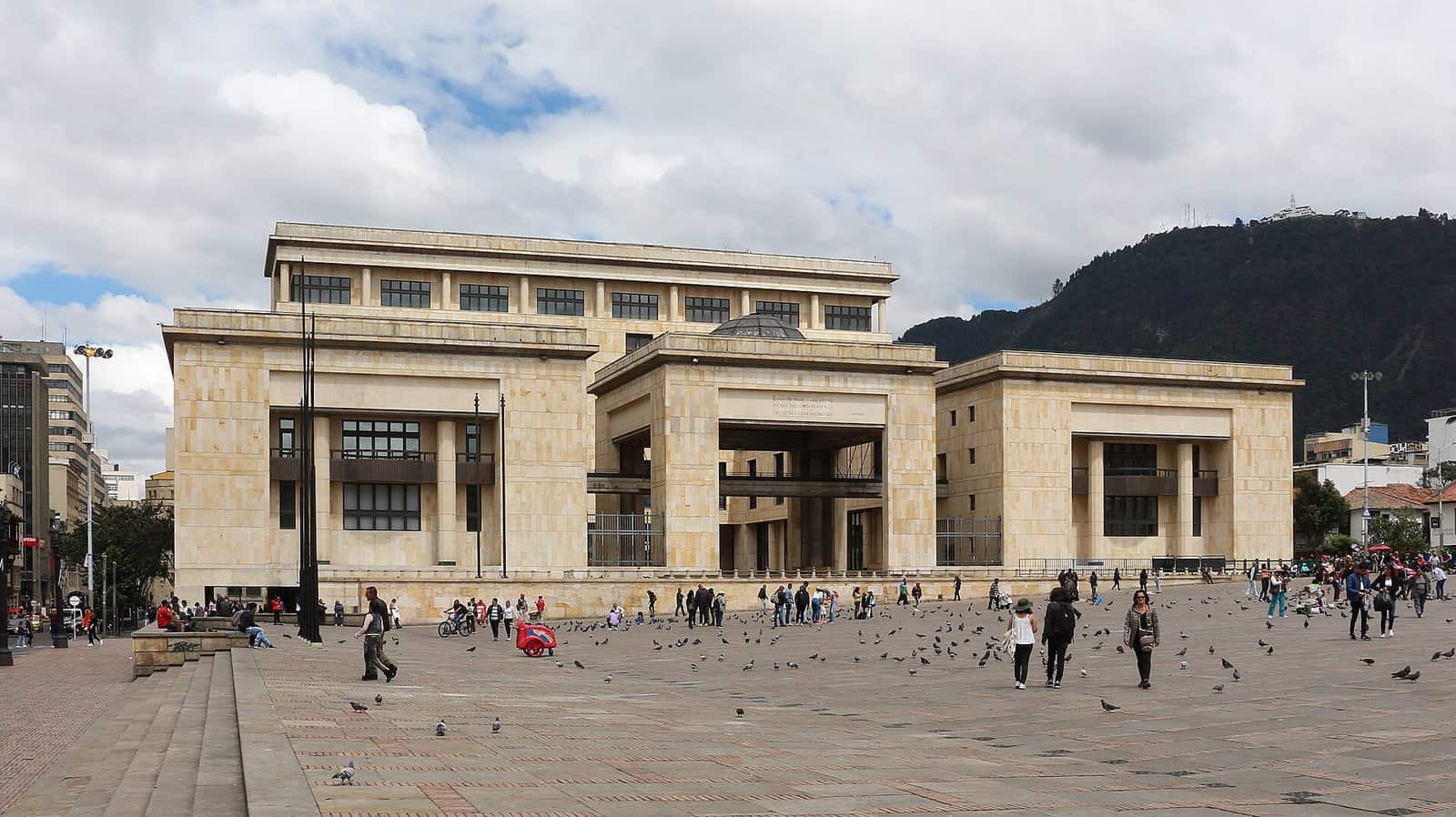
Bonilla’s request for release went back and forth. The Supreme Court’s criminal chamber said the question belonged to the sentence-enforcement judge in Popayán; that judge said it belonged to the Supreme Court. On June 23, 2005, Colombia’s Constitutional Court ended the loop. In ruling T-659 of 2005, written by Justice Clara Inés Vargas Hernández, it found that keeping a man in prison while a revision was pending, when another person had acknowledged sole responsibility for the same acts, was a disproportionate measure that served no legitimate constitutional end.13
The court wrote that Bonilla « continúa injustamente privado de su libertad por un crimen que el Estado colombiano consideró que había cometido Luis Alfredo Garavito Cubillos »: he “remains unjustly deprived of his liberty for a crime that the Colombian state considered to have been committed by Luis Alfredo Garavito Cubillos.” It ordered his release within 48 hours, as a temporary measure until the Supreme Court decided his revision.13
What became of Nelson Bonilla
Noticias Caracol, revisiting the case in 2021, reported that Bonilla had spent more than a decade in prison (its two reports say 11 and 12 years), that a lawyer, Édison Tovar, took up his case without charging him, and that Bonilla died in poverty in 2016 without ever receiving compensation from the state. TDSH did not find the Supreme Court’s final decision on his revision, so this file does not say how it ended.2336
Eight killings, five other men
Bonilla was not the only man whose case Garavito’s confessions touched. In January 2000, EFE reported, citing the Fiscalía, that Garavito had claimed eight killings for which five other men had been blamed; four had been sentenced to prison terms of up to 50 years, and one, held in pre-trial detention, had been killed by fellow inmates. The Fiscalía said then that it had not yet been able to establish that those men were innocent, and that it had sent a report to the judges so the cases could be reviewed.12
This file names only Nelson Bonilla Garzón, whose case was decided in a published ruling. TDSH found no court record of what became of the other men’s cases, and naming them would repeat accusations whose outcome is not known.1213
What happened in Ecuador?
Across the border · confessions, a request, a refusal
What he confessed about Ecuador
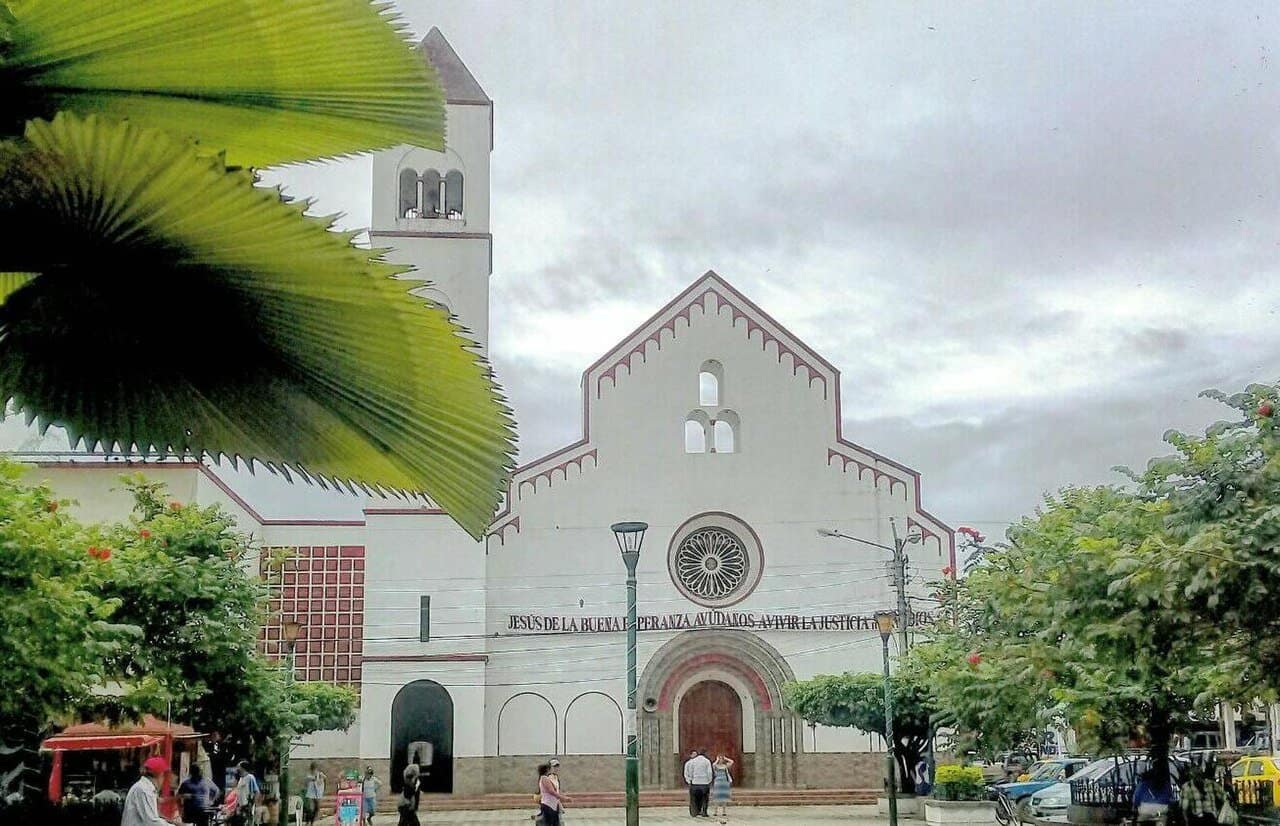
Garavito confessed to killing four children in Ecuador in 1998, AP and EFE reported. Colombia’s chief prosecutor said in October 1999 that Colombian authorities were cooperating with police in Ecuador, where Garavito had lived. In Chone, in Manabí province, Semana reported, traders in the central market recognised him as a man with a strong Colombian accent who had hung around the market in July and August 1998 and sometimes asked for money (the two boys who disappeared from Chone are named in §01).215610
The places do not line up neatly. Semana reported in 1999 that Ecuadorian police had ruled out early speculation about two killings in Santo Domingo de los Colorados, because no child had been reported missing there. But AP reported that Garavito described to a Colombian judge a killing in Santo Domingo de los Colorados, and Colombia’s Supreme Court recorded in 2012 that he had confessed to the deaths of two minors in Santo Domingo de los Colorados and Chone.1021715
Ecuador asks for him
In 2011 Ecuador asked Colombia to extradite him. AFP, citing the Colombian ruling, dated the request to May 12, 2011, and said the murder charge came from the 17th Criminal Court of Pichincha; El Espectador reported the request as dating from July 2011, and wrote that Ecuador wanted to receive him in one of its prisons once he had finished his Colombian sentence. EFE reported that Ecuador wanted him to serve a 22-year prison sentence imposed there for the rape and murder of two children.181615
The Supreme Court says no
In May 2012 the criminal chamber of Colombia’s Supreme Court of Justice issued a negative opinion on the extradition. Its reasoning, as quoted by EFE and AFP, was that the events for which Ecuador wanted him « constituyen cosa juzgada », were res judicata, already decided, because the specific acts had been investigated and tried by Colombian courts. That, the court wrote, « inhibe la realización de un nuevo juicio y torna improcedente la extradición »: it barred a new trial and made extradition inadmissible. EFE identified the judge who wrote the opinion as José Leonidas Bustos Martínez. The principle is the familiar one: no one may be tried twice for the same crime.15181716
The text of the 2012 ruling was not available to TDSH when this file was checked; the quotations above are as published by the two news agencies.1518
Could Garavito have gone free?
2021 · a prison letter, a judge’s refusal, a national outcry
A letter from La Tramacúa
On May 14, 2021, the director of the high-security prison in Valledupar where Garavito was held, Maj. César Fernando Caraballo Quiroga, sent a letter to Camilo Manrique Serrano, the first sentence-enforcement judge of Valledupar, El Tiempo reported. It forwarded Garavito’s file so the judge could study « lo concerniente a la concesión o no del subrogado de libertad condicional », whether or not to grant conditional release. Attached was a prison resolution, number 0445 of April 23, 2021, recording that Garavito’s conduct had been good throughout his detention and rated « Ejemplar », exemplary, in the latest period.19
On May 21, 2021, the judge denied release. He told the television programme Los Informantes that Garavito had served three-fifths of his sentence but did not meet all the legal requirements, chief among them that he had not paid compensation to the families of the children he killed. AP put the unpaid amount at about US$41,500. El País of Cali reported that the judge left open the possibility of release if the requirements were later met.19362120
The country finds out
The letter became public on Sunday, Oct. 31, 2021, when Los Informantes, a Caracol Televisión programme, broadcast the story. The reaction was immediate. The next day President Iván Duque, speaking to reporters in Glasgow, said: « Que le quede claro al señor Garavito que en la cárcel se tendrá que quedar »: “Let it be clear to Mr. Garavito that he will have to stay in prison.”193621
INPEC, the national prison service, said it had not asked for his release. Its director, Maj. Gen. Mariano Botero Coy, said the institute was required by law to send a prisoner’s file to the judge once three-fifths of a sentence had been served, and that Garavito would not be released under any circumstances. In a statement, INPEC said the documents « no representan ningún aval », represented no endorsement of release. Los Informantes, for its part, reported that the law Botero first cited did not say what he said it did.19222036
“That man does not deserve to leave prison”
For the families, the episode reopened everything. In Florencia, Nelly Cuéllar Méndez, the mother of Javier Mauricio Ordóñez, told Noticias Caracol that her son had been raped, murdered and badly beaten, and was found on the outskirts of Morelia with other children. She called on other parents to join forces « si toca volver a demandar », even if it meant going back to court, to keep him in prison.2425
Noticias Caracol drew a contrast with Nelson Bonilla, the man imprisoned for a crime Garavito confessed (see §13): INPEC, the broadcaster reported, had never sought conditional release for him. Garavito remained in La Tramacúa. He was never released.362
What did Garavito say from prison?
The interviews · attributed, and read with care
Two decades in isolation
What he told journalists
He gave several interviews from prison. The best known, BBC News Mundo reported, was with the Colombian journalist Guillermo Arturo Prieto La Rotta, known as Pirry, in 2006, in which he denied raping his victims and claimed he had committed the crimes because he was possessed by the devil. That is his claim; it contradicts his own 1999 confession and the charges of which he was convicted.3105
In 2016 he told the Spanish journalist Jon Sistiaga: « Soy un ser humano como cualquier otro con unas fallas, pero no que yo sea peligroso »: “I am a human being like any other, with some failings, but it isn’t that I am dangerous.” And: « Para el hombre no tendré perdón; para Dios sí »: “From man I will have no forgiveness; from God, yes.” At the end of that interview, El Espectador reported, Sistiaga told him it came very cheap to kill 200 children. Garavito replied: « sí, estoy de acuerdo, para lo que hice es muy poco »: “Yes, I agree; for what I did, it is very little.”35
In prison he said he had converted to Christianity and was repentant, AP and El País reported. Rafael Poveda, one of the last journalists to interview him, in 2022, described to BBC News Mundo a man who tried to intimidate with his one remaining open eye.243
Why this file quotes him sparingly
Garavito spoke a great deal over 24 years, and much of what he said contradicts something else he said: that he acted out of revenge, that he acted while drunk, that the devil made him do it, that he was not dangerous, that his punishment was too little. The people who dealt with him described a man who presented different personalities as it suited him. This file quotes him where his words are part of the record, and attributes every one.8103
How did Luis Garavito die?
Oct. 12, 2023 · Valledupar
Death in a Valledupar clinic
Luis Alfredo Garavito died on Thursday, Oct. 12, 2023, at the age of 66, in the Nueva Clínica Santo Tomás in Valledupar, INPEC announced. El Espectador reported that he died at about 1 p.m., and, citing sources close to INPEC, that he had been rushed to the clinic that day with severe pain. He had leukaemia and cancer in his left eye, which had cost him the sight of that eye.1252927
He was still a prisoner. INPEC’s brief statement, as quoted by Caracol Radio, said that « el señor Luis Alfredo Garavito Cubillos, que estaba recluido en la ciudad de Valledupar, falleció en los últimos minutos »: Garavito, who was held in Valledupar, had died in the last few minutes.29
Natural causes, a lawsuit, a cremation
His body stayed at the Medicina Legal forensic institute in Valledupar for 70 days. El Tiempo reported that the first autopsy results were listed as under study, that histopathological analysis then established that he died of natural causes, and that his lawyer, Gabriel Alfonso Beltrán, had filed a tutela, a fundamental-rights lawsuit, to obtain the release of the body; the court ruled in the family’s favour. The cemetery had asked for certification from the Fiscalía before it would cremate him.2728
He was cremated on Thursday, Dec. 21, 2023, at the Jardines del Recuerdo cemetery in Valledupar. El Tiempo reported that his family could not afford a burial; he had wanted to be buried in Valledupar. The mayor of Valledupar, Mello Castro, paid the cost of the cremation, 2.7 million pesos. His ashes were to be taken to a relative in Trujillo, in Valle del Cauca.2827
The case after his death
His death ended the question that had hung over Colombia since 2021: he would not walk out of prison. BBC News Mundo wrote that it closed a painful chapter not only for the victims’ families but for a country that had feared his release. It did not settle how many children he killed, which of them remain unnamed, or what became of the other men whose cases his confessions touched. Those questions are set out in §02 and §20.3
How did the Garavito case unfold?
Date by date · 1957 to 2023
The coffee boy of Tuluá
Jaime Andrés González Suárez is murdered. Another man, Nelson Bonilla Garzón, is convicted that December.13
A broken leg in Bogotá
By his own account, he breaks his left leg; witnesses would later describe a limping suspect.10
Three boys in Génova
Three boys, aged 9, 12 and 13, are found dead on a farm in Génova; the Fiscalía calls it the case that began the investigation.3
Chone, Ecuador
Two boys disappear on consecutive days in Chone, Manabí.10
An inter-agency group
Prosecutors, CTI, DAS and SIJIN investigators form a group in Villavicencio.9
Caught in the act
Arrested near Villavicencio after a passer-by interrupts an attack on a boy; he gives a false name.9
The files meet
Investigators meet in Pereira; on July 20 the CTI identifies him as Garavito.9
First sentence
A Tunja court sentences him to 52 years and six months.11
The count rises
EFE reports 182 confessed killings and evidence in 124 cases.12
A new Penal Code
Ley 599 de 2000 takes effect, with a 40-year maximum.30
La Tramacúa
He is held from this date in the high-security prison of Valledupar.28
Convicted of the Tuluá killing
A Tuluá court sentences him to 250 months for the murder Bonilla was jailed for.13
Bonilla ordered freed
The Constitutional Court orders Nelson Bonilla Garzón released within 48 hours.13
The Pirry interview
He claims the devil made him do it and denies rape.3
The release file
The prison forwards his file for conditional release; a judge denies it.19
No life sentences
The Constitutional Court strikes down the 2020 life-imprisonment amendment.34
Cremation
After 70 days and a lawsuit, his body is cremated in Valledupar.28
What does the record say, word for word?
Exhibits CF-1 to CF-8 · exact text, with translations
The identification
« En todo el país se hicieron allanamientos y se recaudaron más pruebas y el martes 20 de julio, Criminalística del CTI logró establecer la identificación plena de Luis Alfredo Garavito Cubillos. »9
Translation: “Searches were carried out across the country and more evidence was gathered, and on Tuesday, July 20, the CTI’s forensic unit succeeded in establishing the full identity of Luis Alfredo Garavito Cubillos.”
The night of the confession
« El jueves, Luis Alfredo Garavito, de 42 años, el único sospechoso detenido, acorralado por las pruebas que lo señalaban como el autor de al menos 20 de estas muertes, decidió hablar. (…) Pero a las 4.30 de la mañana, cuando terminó el interrogatorio, la lista de crímenes llegaba a 140. »8
Translation: “On Thursday, Luis Alfredo Garavito, 42, the only suspect in custody, cornered by evidence that pointed to him as the author of at least 20 of these deaths, decided to talk. (…) But at 4:30 in the morning, when the questioning ended, the list of crimes had reached 140.”
The first sentence
« Aunque Garavito fue sentenciado a una pena de 60 años de cárcel, la más alta establecida en Colombia, su abogado asignado por el Estado, obtuvo una rebaja al pedir la “sentencia anticipada”, mecanismo que agiliza el proceso. »11
Translation: “Although Garavito was sentenced to 60 years in prison, the highest established in Colombia, his state-appointed lawyer obtained a reduction by requesting ‘early sentencing,’ a mechanism that speeds up the process.”
The 40-year ceiling
Art. 37.1: « La pena de prisión tendrá una duración máxima de cuarenta (40) años. » Art. 31, second paragraph: « En ningún caso la pena privativa de la libertad podrá exceder de cuarenta (40) años. »30
Translation: “The prison sentence shall have a maximum duration of forty (40) years.” “In no case may the custodial sentence exceed forty (40) years.”
On Nelson Bonilla Garzón
« De tal suerte que, el Señor Bonilla continúa injustamente privado de su libertad por un crimen que el Estado colombiano consideró que había cometido Luis Alfredo Garavito Cubillos. »13
Translation: “So it is that Mr. Bonilla remains unjustly deprived of his liberty for a crime that the Colombian state considered to have been committed by Luis Alfredo Garavito Cubillos.”
The count in the courts
« Según la Fiscalía, de esos casos 138 tienen fallo condenatorio, 32 están en instrucción, uno en apelación y uno está para sentencia. Las condenas suman 1.853 años y nueve días. »16
Translation: “According to the Fiscalía, of those cases 138 have a guilty verdict, 32 are under investigation, one is on appeal and one is awaiting sentence. The sentences total 1,853 years and nine days.”
Ecuador’s request refused
« Los sucesos por los cuales es requerido el señor (Luis Alfredo) Garavito Cubillos en el Ecuador constituyen cosa juzgada, teniendo en cuenta que los específicos hechos que allí se le imputan, fueron objeto de investigación y juzgamiento por parte de las autoridades judiciales de Colombia. »15
Translation: “The events for which Mr. (Luis Alfredo) Garavito Cubillos is sought in Ecuador are res judicata, given that the specific acts attributed to him there were investigated and tried by the judicial authorities of Colombia.”
The release file
« (…) para que se estudie y verifique por parte de su despacho, lo concerniente a la concesión o no del subrogado de liberad condicional en favor del PPL referenciado. »19
Translation: “(…) so that your court may study and verify the matter of whether or not to grant the substitute measure of conditional release in favour of the said prisoner.” The misspelling « liberad » is in the text as published.
What is established, and what is still disputed?
The ledger · established, credited, disputed, not established
| Claim | Status | Basis |
|---|---|---|
| Garavito abducted, abused and killed children across Colombia in the 1990s, and confessed | ESTABLISHED | Confession, convictions and every source12391316 |
| He was arrested on April 22, 1999, near Villavicencio, during an attack on a boy | ESTABLISHED | El Tiempo, EFE, BBC; one 2023 report says the child was a girl915629 |
| He confessed on the night of Oct. 28 to 29, 1999 | ESTABLISHED | El Tiempo, El País, Semana; one 2023 report gives Nov. 25, 1999981026 |
| The exact number of children he killed | DISPUTED | Figures from 114 to more than 200; see §03612163 |
| The number of convictions | DISPUTED | 138 (Fiscalía, 2012) or more than 50 (AP)162 |
| The total of his sentences | DISPUTED | 1,853 years and nine days (Fiscalía) or 835 years (El País archive note)168 |
| He was serving a 40-year maximum | ESTABLISHED | Every report of his death234529 |
| Which court fixed the 40 years, when, and how | NOT ESTABLISHED | Order not located; see §123032 |
| When the Pereira remains were first found | DISPUTED | 1997 or November 199867814 |
| A killing in Santo Domingo de los Colorados, Ecuador | DISPUTED | Ruled out by Ecuadorian police per Semana; included per AP and the Supreme Court10217 |
| Killings in Venezuela | NOT ESTABLISHED | His own claim; no proceedings found103 |
| The abuse he described in his childhood | NOT ESTABLISHED | His own account only8103 |
| The outcome of Nelson Bonilla’s revision | NOT ESTABLISHED | Not found; he was freed provisionally in 20051336 |
| The fate of the other five men’s cases | NOT ESTABLISHED | EFE, 2000, only12 |
| He died of natural causes | CREDITED | Medicina Legal, per his lawyer, reported by El Tiempo2728 |
What do people get wrong about the Garavito case?
Myth against record
| What gets repeated | What the record shows | Basis |
|---|---|---|
| Garavito was sentenced to 1,853 years. | His convictions added up to that, according to the Fiscalía, but Colombian law capped the time he could serve. He was serving 40 years. | 163 |
| Forty years was the legal maximum when he committed his crimes. | Not according to the statutes. The ceiling in the 1990s was 60 years; the 40-year cap came with the Penal Code that took effect in 2001. How it was applied to him is not documented in the sources TDSH found. | 323011 |
| A single exact number of victims is known. | No single figure is settled. Each number belongs to a different count: bodies found, confessions, cases filed, convictions. See §03. | 6121613 |
| Detectives tracked him down. | He was caught in the act after a passer-by intervened. Investigators then linked him to the killings through shared files and fingerprints. | 92 |
| He was freed in 2021. | No. A judge refused conditional release in May 2021, and he died in custody in 2023. | 19211 |
| He served time in Ecuador. | No. Ecuador sought his extradition; Colombia’s Supreme Court refused it in 2012 because he had already been tried in Colombia for those acts. | 151617 |
| He was killed in prison. | No. He died in a clinic of illness; Medicina Legal found natural causes, according to his lawyer. | 527 |
| Colombia now has life imprisonment for child killers. | Congress passed it in 2020; the Constitutional Court struck it down in 2021. | 3422 |
What do readers ask most about Luis Garavito?
Short answers · each one sourced
Who was Luis Garavito?
Luis Alfredo Garavito Cubillos (1957 to 2023), from Génova in Quindío, is considered Colombia’s worst serial killer of children. Arrested in 1999, he confessed to killing more than 140 children across Colombia, and to killings in Ecuador and Venezuela. He died in prison custody in Valledupar on Oct. 12, 2023.128
How many victims did Luis Garavito have?
There is no single settled number. In 1999 investigators had found 114 skeletons; he confessed to about 140; the Fiscalía later pursued 172 cases and recorded 138 convictions; AP reported he confessed to more than 190, and he told interviewers « un poquito más de 200 ». This file reports the range, with each figure credited.681613
Why was he called La Bestia?
The press called him La Bestia, the Beast, and the Monster of Génova. In some towns he passed through he was also known as El Loco and El Cura, the priest, Colombia’s chief prosecutor said in 1999.146
How did Luis Garavito lure children?
He posed as a monk, a street vendor, a beggar, a disabled man or a charity representative, and offered children sweets, money, food or work, then persuaded them to walk with him to isolated places. See §06.1683
How was he caught?
On April 22, 1999, near Villavicencio, a passer-by interrupted his attack on a boy, and police arrested him. He gave a false name. Investigators identified him as Garavito on July 20, 1999, through shared case files and fingerprints.92
Why did Luis Garavito get only 40 years?
Colombia’s Constitution bans life imprisonment and its criminal law caps prison terms. Reports of his death describe 40 years as the maximum at the time. The statutes show the cap was 60 years in the 1990s and 40 under the 2000 Penal Code; the order that fixed his term was not located. See §12.3732303
Was Luis Garavito ever released?
No. In 2021 his prison forwarded his file for conditional release, and a judge refused it, citing unpaid compensation to victims’ families. He died in custody.1921
When and how did Luis Garavito die?
On Oct. 12, 2023, at 66, in the Nueva Clínica Santo Tomás in Valledupar. He had leukaemia and eye cancer. Medicina Legal found natural causes, according to his lawyer.1527
What happened to his body?
It remained at Medicina Legal in Valledupar for 70 days. He was cremated on Dec. 21, 2023; the mayor of Valledupar paid the cost.2827
Did anyone else go to prison for his crimes?
Yes. Nelson Bonilla Garzón was convicted in 1994 of the murder of Jaime Andrés González Suárez in Tuluá. Garavito confessed to it in 1999 and was convicted of it in 2004; the Constitutional Court ordered Bonilla freed in 2005. See §13.13
Where do these facts come from?
Source ledger · numbered notes
AP (English), 2023
His death at 66 in Valledupar; the 1957 birth in Quindío; the 11 departments; victims aged 8 to 16, mostly from low-income families; the disguises (monk, homeless person, street vendor); the April 1999 arrest on an attempted rape charge; the 114 children found in 59 towns; the confession to more than 190; the 1999 apology in court; the 2021 release debate.
Note 1
Open source ↗AP (Spanish), 2023
Birth on Jan. 25, 1957, in Génova, Quindío; the disguises; the four killings in Ecuador he confessed to; the notebook of dates, places and ages; the newspaper cuttings; the fingerprint match with the name Bonifacio Morera Lizcano; more than 50 convictions; the charges; the 40-year maximum; the 1999 apology, in Spanish.
Note 2
Open source ↗BBC News Mundo, 2023
His own figure of “un poquito más de 200”; leukemia and eye cancer; sentences totalling 1,853 years; the 40-year term; the three-fifths rule; the 2006, 2016 and 2022 interviews; the confession to 140 children in 59 municipalities; the 32 further cases counted by the Fiscalía; the Génova case; the disguises, the notebook and the places where he approached children.
Note 3
Open source ↗El País (English), 2023
His death at the Santo Tomás clinic; the figure of 189; the sentence of more than 1,800 years and the 40-year maximum; the charges; the 2021 parole episode; at least 11 of Colombia’s 32 departments; the disguises and the lures; his claimed conversion.
Note 4
Open source ↗El Espectador, 2023
The time and place of death; the eye cancer and leukemia; La Tramacúa from 2002; the 1,853 years for 172 victims, per the Fiscalía; the charges; 13 departments; the Ecuador extradition refusal; the 2016 exchange with Jon Sistiaga.
Note 5
Open source ↗BBC News, 1999
The words of Alfonso Gómez Méndez, Colombia’s chief prosecutor: about 140 children admitted, 114 skeletons found; victims mostly poor boys aged 8 to 16; the Pereira remains; disguises as a monk, a charity representative or a street vendor; the names El Loco and El Cura; the newspaper cuttings; the attempted rape charge.
Note 6
Open source ↗El País (Reuters), 1999
The confession to 140 children aged 8 to 16; at least 114 skeletons in about 60 localities in 11 of 32 provinces; the prosecutor’s statement; the Pereira discovery dated to 1997 and the 36 bodies.
Note 7
Open source ↗El País (Pilar Lozano), 1999
The Pereira discovery dated to Nov. 7, 1998; the mothers’ words; the nylon cords and liquor caps; the confession ending at 4:30 a.m.; the disguises; the nicknames; his own account of his childhood; the CTI director’s words; the archive note on an 835-year sentence and 189 confessed killings.
Note 8
Open source ↗El Tiempo, 1999
The April 22, 1999, arrest near Villavicencio; the boy selling lottery tickets; the man who threw stones; Corporal Pedro Babativa; the false name; the Villavicencio inter-agency group of Sept. 17, 1998; the 13 skeletons; the July 1999 Pereira meeting; identification on July 20, 1999; the confession to 140; the separate case files.
Note 9
Open source ↗Semana, 1999
Its reconstruction of the October 1999 questioning: prosecutor María Lily Naranjo Patiño; his statements on his childhood and drinking; the kraft-paper list; investigators Harold Mauricio Sánchez and Aldemar Durán and the liquor caps; the limp; the places he named; the Ecuador disappearances in Chone.
Note 10
Open source ↗La Nación (agencies), 1999
The first conviction, in Tunja: 52 years and six months after a reduction for early sentencing; the Tunja victim, Ronald Delgado Quintero; the Villavicencio attempt.
Note 11
Open source ↗Crítica (EFE), 2000
The Fiscalía’s statement that he had claimed eight killings for which five other men had been blamed; 182 confessed killings and evidence in 124 cases by January 2000; victims aged 8 to 16; food, sweets or notebooks as lures.
Note 12
Open source ↗Corte Constitucional, T-659/05
Nelson Bonilla Garzón’s 1994 conviction for the killing of Jaime Andrés González Suárez; Garavito’s Oct. 31, 1999, confession to that killing; Garavito’s April 30, 2004, conviction for it; the court’s order to free Bonilla while his review was decided.
Note 13
Open source ↗Caracol Radio, 2003
The identification by the CTI in Pereira and the Fiscalía genetics laboratory of Carlos Olaya Aristizábal and Jhon Fredy Pineda; 11 children identified by name at that point.
Note 14
Open source ↗El Universo (EFE), 2012
The Supreme Court’s words on res judicata; the reporting justice, José Leonidas Bustos Martínez; the 22-year Ecuadorian sentence; the two killings in Santo Domingo de los Colorados and Chone in July 1998; the nicknames.
Note 15
Open source ↗El Espectador, 2012
The refusal on double-jeopardy grounds; the Fiscalía’s breakdown of 172 cases (138 convictions, 32 under investigation, one on appeal, one awaiting sentence); 1,853 years and nine days.
Note 16
Open source ↗Ámbito Jurídico, 2012
The Supreme Court’s finding that he had confessed, in the Colombian proceedings, to the deaths of two minors in Santo Domingo de los Colorados and Chone, giving exact dates and places.
Note 17
Open source ↗El Nuevo Día (AFP), 2012
Ecuador’s request of May 12, 2011, from the 17th Criminal Court of Pichincha; the AFP figures of 172 attributed, about 140 confessed, 114 found; AFP’s claim of a reduction to 24 years (not adopted).
Note 18
Open source ↗El Tiempo, 2021
The May 14, 2021, letter signed by Major César Fernando Caraballo Quiroga; Resolution 0445 of April 23, 2021; Judge Camilo Manrique Serrano’s refusal on May 21, 2021, and his words; the INPEC director’s response.
Note 19
Open source ↗El País (Cali), 2021
INPEC’s statement that it sent documents rather than asking for release; the letter of May 14 to the First Sentence Enforcement Court of Valledupar; the conditions for conditional release.
Note 20
Open source ↗AP (Spanish), 2021
President Iván Duque’s words; the refusal because of an unpaid award of about US$41,500; INPEC’s statement.
Note 21
Open source ↗El País, 2021
The prison letter and its words on good conduct; the refusal for unpaid damages; Duque’s reaction; the Constitutional Court’s September 2021 ruling; the Pereira remains of at least 20 children.
Note 22
Open source ↗Noticias Caracol, 2021
Nelson Bonilla’s 11 years in prison, his death in poverty and his lawyer, Édison Tovar.
Note 23
Open source ↗Noticias Caracol, 2021 (Nelly Cuéllar)
Nelly Cuéllar Méndez’s account of her son, Javier Mauricio Ordóñez, 14, of Florencia, Caquetá.
Note 24
Open source ↗Semana, 2021
Second account of Nelly Cuéllar Méndez’s words about her son.
Note 25
Open source ↗El Espectador, April 2023
The 1,853-year figure for 172 victims; the 40-year maximum; the confession to 140; the sentence’s nominal end in 2039.
Note 26
Open source ↗El Tiempo, Dec. 13, 2023
The necropsy result as described by his lawyer; La Tramacúa from Sept. 12, 2002; the leukemia and the loss of his left eye.
Note 27
Open source ↗El Tiempo, Dec. 21, 2023
The cremation in Valledupar after 70 days; who paid; his birth date and place; his isolation in La Tramacúa.
Note 28
Open source ↗Caracol Radio, 2023
INPEC’s statement on the death; the charges; the figure of 197; the 40-year term dated to 2000; the 2021 refusal.
Note 29
Open source ↗Ley 599 de 2000 (original text)
The 40-year ceiling for a single prison term and for combined sentences; conditional release at three-fifths; entry into force one year after promulgation.
Note 30
Open source ↗Ley 890 de 2004
The new ceilings of 60 years for combined sentences and 50 years for a single offence, in force from Jan. 1, 2005.
Note 31
Open source ↗Ley 40 de 1993
The 60-year maximum prison term under the 1980 code as amended in 1993.
Note 32
Open source ↗Constitución Política, Art. 29
The rule that, in criminal matters, a later and more favourable law applies in preference to a harsher one (Art. 29).
Note 33
Open source ↗Corte Constitucional, C-294/21
The ruling striking down the 2020 constitutional amendment that allowed reviewable life imprisonment.
Note 34
Open source ↗Ley 1098 de 2006, Art. 199
The bar on conditional release for intentional homicide and sexual crimes against children, enacted in 2006.
Note 35
Open source ↗Noticias Caracol, Nov. 1, 2021
The judge’s name and the reason for the refusal; INPEC’s position; Nelson Bonilla, the 11-year-old coffee seller Jaime Andrés González, and Bonilla’s death in poverty in 2016 without compensation.
Note 36
Open source ↗Constitución Política, Art. 34
The ban on exile, life imprisonment and confiscation (Art. 34).
Note 37
Open source ↗Numbered notes
- Associated Press, “Colombian serial killer who confessed to murdering more than 190 children dies in hospital,” Oct. 12, 2023. apnews.com
- Astrid Suárez, Associated Press, « Muere en Colombia el asesino serial de niños Luis Alfredo Garavito », Oct. 12, 2023. apnews.com
- BBC News Mundo (Redacción), « Muere Luis Alfredo Garavito: los crímenes contra casi 200 niños del mayor asesino en serie de la historia de Colombia », Oct. 13, 2023. www.bbc.com
- Santiago Triana Sánchez, El País (English edition), “Luis Alfredo Garavito, who raped and murdered 189 children, dies in Colombia,” Oct. 13, 2023. english.elpais.com
- El Espectador (Redacción Judicial), « Luis Alfredo Garavito murió en una clínica de Valledupar, anuncia el INPEC », Oct. 12, 2023. www.elespectador.com
- BBC News, “Colombian child killer confesses,” Oct. 30, 1999. news.bbc.co.uk
- El País (Reuters), « Un hombre confiesa la muerte de 140 niños en Colombia », Oct. 30, 1999. elpais.com
- Pilar Lozano, El País, « El asesino de 140 niños en Colombia confiesa que actuó por venganza », Oct. 31, 1999 (with a later note added to the archive page). elpais.com
- El Tiempo, « Así fue capturado autor de 140 muertes », Nov. 3, 1999. www.eltiempo.com
- Semana, « La confesión », edition 915, published online Dec. 12, 1999. www.semana.com
- La Nación (Costa Rica), wire report, « Condenan a 52 años a hombre que confesó muerte de al menos 140 niños en Colombia », Dec. 17, 1999. www.nacion.com
- Crítica (Panama), Agencias Internacionales (EFE), « Asesino de 182 niños se atribuye crímenes de cuatro condenados », Jan. 18, 2000. portal.critica.com.pa
- Corte Constitucional de Colombia, Sentencia T-659/05 (Nelson Bonilla Garzón), June 23, 2005, M.P. Clara Inés Vargas Hernández. www.corteconstitucional.gov.co
- Caracol Radio, « Identifican otras dos víctimas de Garavito », April 1, 2003. caracol.com.co
- El Universo (EFE), « Corte colombiana niega extradición de Garavito a Ecuador », May 23, 2012. www.eluniverso.com
- El Espectador, « Corte Suprema niega extradición de Luis Alfredo Garavito », May 23, 2012. www.elespectador.com
- Ámbito Jurídico, « Corte Suprema dio concepto negativo a la solicitud de extradición de Luis Alfredo Garavito a Ecuador », May 24, 2012. www.ambitojuridico.com
- El Nuevo Día (AFP), « Corte niega extradición a Ecuador de Garavito », May 23, 2012. www.elnuevodia.com.co
- Aura María Saavedra Álvarez, El Tiempo, « Polémica por pedido del Inpec sobre libertad condicional a Garavito », Oct. 31, 2021. www.eltiempo.com
- Álvaro José Carvajal Vidarte, El País (Cali), « Inpec asegura que no solicitó libertad de Garavito y aclara que él seguirá en la cárcel », Nov. 1, 2021. www.elpais.com.co
- Associated Press, « Duque rechaza posible libertad de asesino serial en Colombia », Nov. 1, 2021. apnews.com
- Catalina Oquendo, El País, « Un juez colombiano niega la libertad condicional a Luis Alfredo Garavito, asesino de 189 niños », Nov. 2, 2021. elpais.com
- Noticias Caracol (Los Informantes), « Un hombre pasó 11 años en la cárcel por un crimen que confesó Luis Alfredo Garavito », Oct. 31, 2021. www.noticiascaracol.com
- Marisol Valdés, Noticias Caracol, « Madre de víctima de Garavito pide no dejar libre al asesino », Nov. 3, 2021; republished with additions Oct. 12, 2023. www.noticiascaracol.com
- Camila Rivera, Semana, « “Ese tipo no merece salir de la cárcel”: madre de niño asesinado por Garavito », Nov. 4, 2021. www.semana.com
- El Espectador (Redacción Colombia), « La historia de Garavito, ¿el asesino podría quedar en libertad? », April 27, 2023. www.elespectador.com
- Ludys Ovalle Jácome, El Tiempo, « Luis Alfredo Garavito, ‘La Bestia’, murió por causa natural y ahora sí será cremado », Dec. 13, 2023. www.eltiempo.com
- Ludys Ovalle Jácome, El Tiempo, « Fue cremado el cuerpo de Garavito, violador y asesino serial de niños en tres países », Dec. 21, 2023. www.eltiempo.com
- Caracol Radio, « Murió Luis Alfredo Garavito a sus 66 años: esto se sabe », Oct. 12, 2023. caracol.com.co
- Congreso de Colombia, Ley 599 de 2000 (Código Penal), Diario Oficial 44.097, July 24, 2000: original text of Articles 31, 37 and 64 and Article 476 (entry into force), as reproduced with its legislative history by the Organization of American States. www.oas.org
- Congreso de Colombia, Ley 890 de 2004, Articles 1, 2 and 15, Secretaría General del Senado. www.secretariasenado.gov.co
- Congreso de Colombia, Ley 40 de 1993, Article 28 (amending Article 44 of the 1980 Penal Code), Secretaría General del Senado. www.secretariasenado.gov.co
- Constitución Política de Colombia (1991), Article 29, Secretaría General del Senado. www.secretariasenado.gov.co
- Corte Constitucional de Colombia, Comunicado 33, Sentencia C-294/21, Sept. 2 and 3, 2021, M.P. Cristina Pardo Schlesinger. www.corteconstitucional.gov.co
- Congreso de Colombia, Ley 1098 de 2006 (Código de la Infancia y la Adolescencia), Article 199, Secretaría General del Senado. www.secretariasenado.gov.co
- Mireya Fernández Beltrán, Noticias Caracol, « Inpec pidió la libertad condicional de Luis Alfredo Garavito », Nov. 1, 2021. www.noticiascaracol.com
- Constitución Política de Colombia (1991), Article 34, Secretaría General del Senado. www.secretariasenado.gov.co
Discover more from The Dark Side of Humanity
Subscribe to get the latest posts sent to your email.