FILE NO. 0182Case status Unsolved
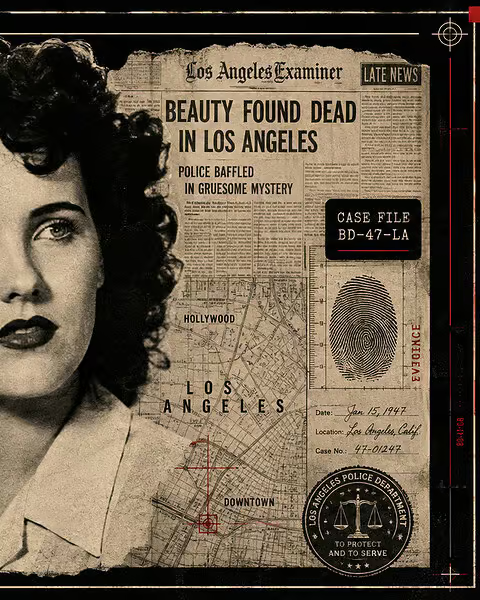
Black Dahlia Murder. The 1947 murder of young Elizabeth Short, known as the Black Dahlia, remains one of Los Angeles’s most famous unsolved cases: an American cold-case mythology in the same cultural register as the D. B. Cooper hijacking. Discovered in a vacant lot, Short’s body was severely mutilated. Despite an extensive investigation involving local police and federal authorities, no one was ever charged with the crime.
Sensationalist media coverage created enduring myths, falsely depicting Short as an aspiring actress or femme fatale. Decades of theories have proposed various suspects, but forensic evidence is severely limited or missing. Nearly eighty years later, the case remains defined by its missing timeline and cultural legend.
Evidence standard: this dossier separates confirmed records, suspect theory, press mythology and unresolved forensic questions. A suspect theory is not a solved case.
| Case snapshot | Record |
|---|---|
| Victim | Elizabeth Short, known as Betty |
| Age | 22 |
| Recovered | January 15, 1947 |
| Recovery site | Vacant lot on South Norton Avenue, Leimert Park, Los Angeles |
| Lead agency | Los Angeles Police Department, with FBI assistance |
| Status | Unsolved; no one has ever been charged |
Was the Black Dahlia Murder Ever Solved?
No. Elizabeth Short’s murder has never been solved, and no suspect has ever been prosecuted for killing her. The FBI assisted the LAPD, identified Short through fingerprints and ran down leads across the country, but the killer was never publicly established.
No one has been conclusively identified as the Black Dahlia killer. George Hodel, Leslie Dillon, Mark Hansen and others remain historical or later suspect theories. Robert “Red” Manley was an early suspect and a key timeline witness, but he was cleared. An unknown-offender category remains necessary because no named theory has become a legal finding.
Three things are firmly established: Short was identified through fingerprints in federal files; the Norton Avenue lot was a recovery and display site rather than the place where she was killed; and none of the suspect theories has been adjudicated. Everything else in this file is weighed against those fixed points.
A Woman in the Weeds
On the morning of January 15, 1947, a young mother named Betty Bersinger was walking with her small daughter along South Norton Avenue in Los Angeles. The block lay in Leimert Park, then a district of new houses interrupted by lots where wartime building delays had left weeds, bare ground, and unfinished edges. Bersinger was pushing a stroller through a sidewalk littered with broken glass when she noticed something pale in the lot beside her. At first glance, she thought it might be a discarded mannequin. Then she saw the dark hair, the shape of a human body, and the impossible division at the waist.
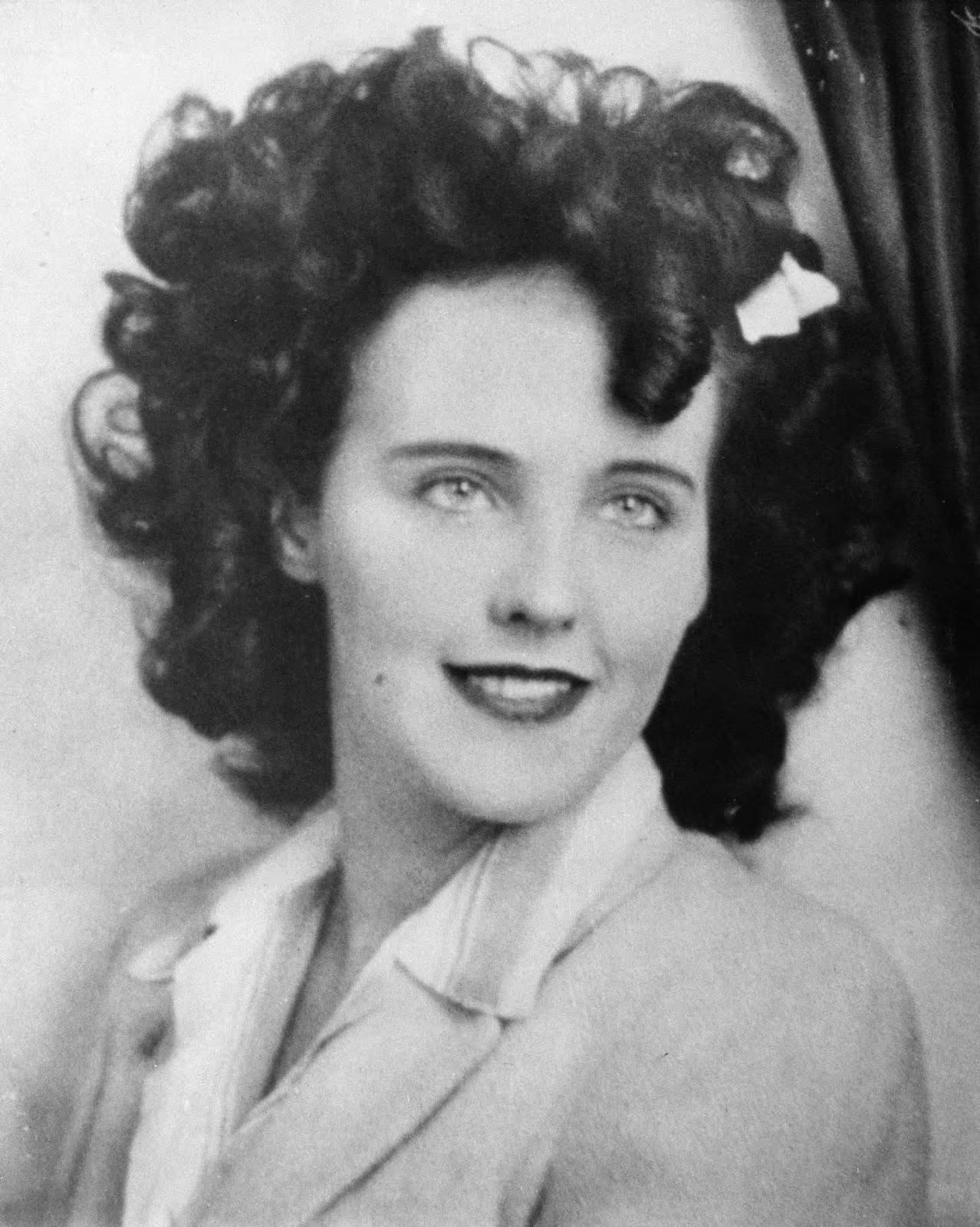
The woman in the lot was Elizabeth Short, a 22-year-old from Massachusetts who had moved through California, Florida, New England, and back again in the few years before her death. She was known to friends and family as Betty. The name that would swallow her afterward, the Black Dahlia, was either a nickname from a Long Beach drugstore or a press-sharpened invention that drew power from the 1946 film “The Blue Dahlia,” depending on which account one accepts. Even the origin of the name is contested. What is not contested is what happened after Bersinger found her: a homicide scene became, almost instantly, a theater of police urgency, newspaper appetite, and public fascination.
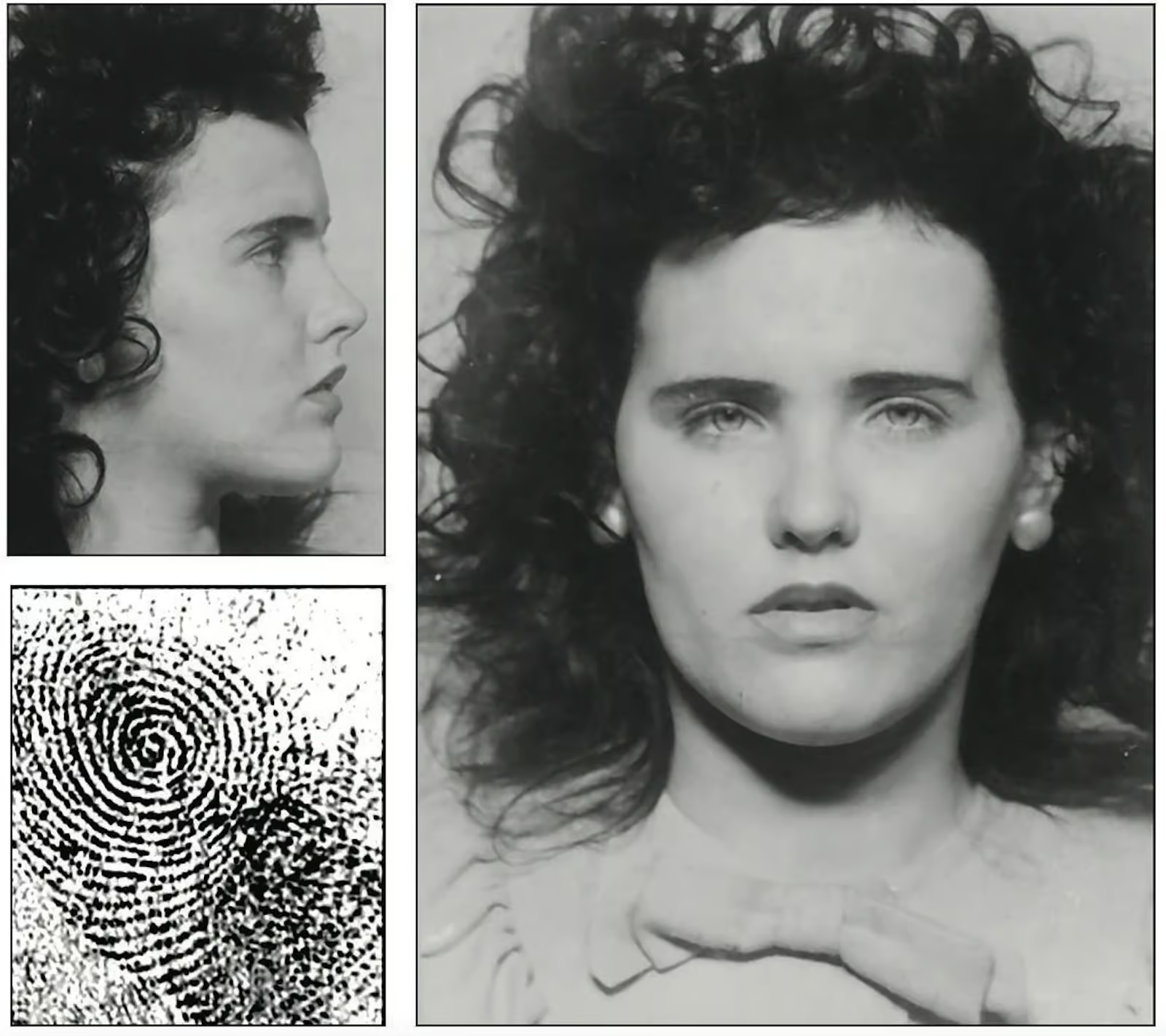
The FBI’s official case summary is blunt about the matter that still defines it: the 1947 murder of Elizabeth Short has never been solved. The Los Angeles Police Department led the investigation, while the FBI assisted with identification, record checks, fingerprint comparisons, and interviews nationwide. The Bureau says it identified the victim as Short just 56 minutes after receiving blurred fingerprint images from Los Angeles by “Soundphoto,” an early wirephoto system used by news services. Her fingerprints were in federal files because she had applied for work at Camp Cooke in 1943 and had been arrested in Santa Barbara that same year for underage drinking.
Those dry identifying details matter because the Black Dahlia murder is a case in which the facts have spent nearly 80 years fighting for oxygen. The myth is louder. The myth says Hollywood. It says femme fatale, starlet, secret life, doomed glamour. It says the city itself consumed her. But the public record points to something more fragile and more severe: a young woman without a stable home, living on borrowed kindness and brief acquaintances, dropped at the Biltmore Hotel on January 9, 1947, and not reliably seen again before her body appeared six days later in an open lot.
This is the chronological story that can be responsibly told from public records, official summaries, and the work of reporters who have tried to separate the woman from the legend.
Hyde Park, Medford, and the First Disappearance
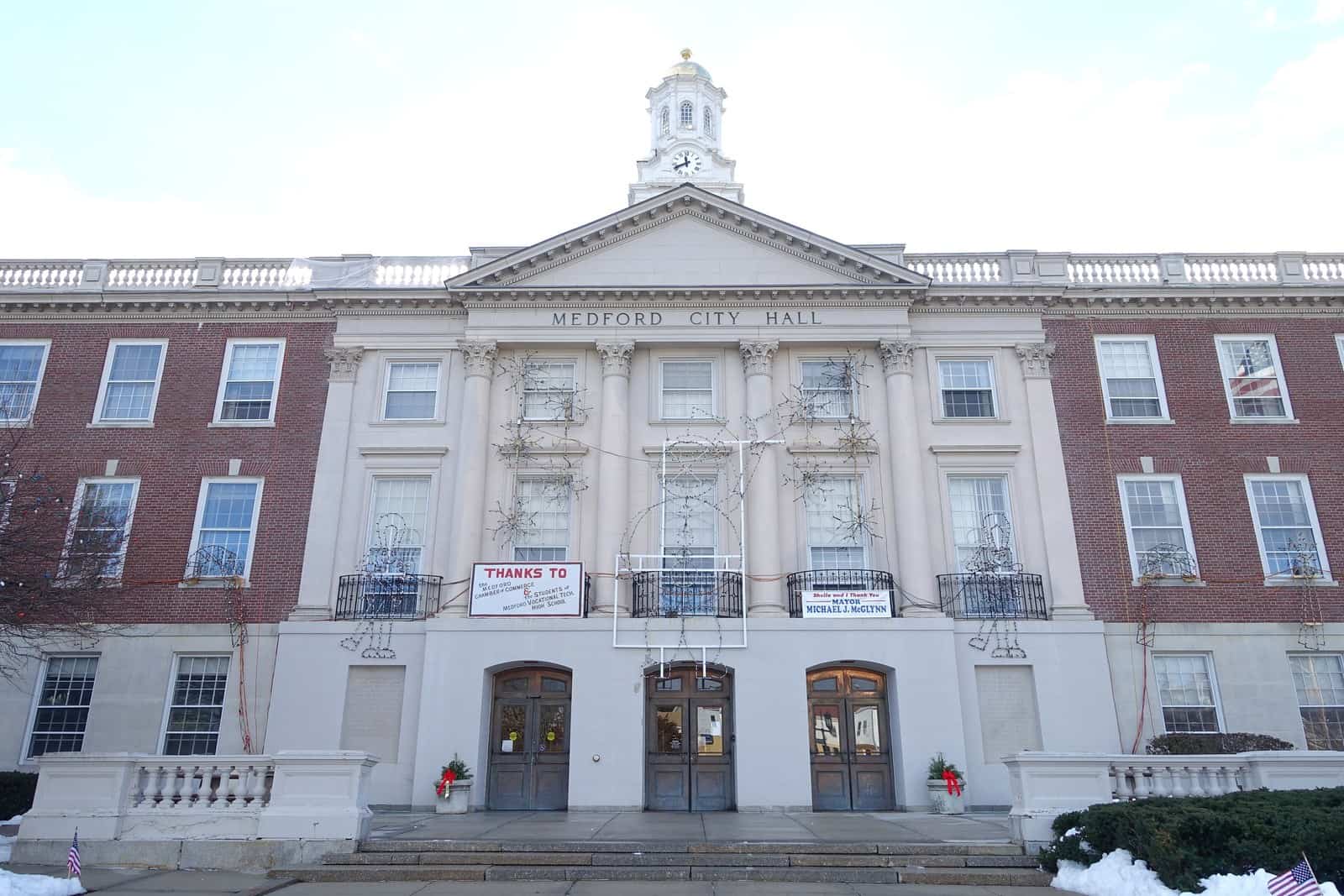
Elizabeth Short was born in Boston on July 29, 1924, and grew up mainly in Medford, Massachusetts, one of five daughters of Phoebe and Cleo Short. Her childhood was shaped by the Depression and by an earlier disappearance: her father’s. In 1930, Cleo Short’s car was found abandoned near the Charlestown Bridge, and his family believed he had killed himself. Years later, he reappeared from California, alive, having built another life.
That first family rupture has often been treated as a clue, though it should be handled more carefully as context. It did not “explain” Elizabeth Short’s murder. It did not predestine her. But it formed part of the instability through which she moved. Her mother worked to support the girls. Elizabeth, who suffered from respiratory illness, spent winters in Florida. She left school early. By her late teens, she had already begun the restless pattern that would later be recast in harsher, more moralizing terms by newspapers and true-crime writers.
In late 1942, after learning her father was alive, Short went west to California to live with him. The reunion did not become the healing episode a story might demand. She and Cleo clashed. She moved on. She worked briefly at Camp Cooke, where her fingerprints were taken as part of a job application. In September 1943, Santa Barbara police arrested her for being underage in a bar. She was 19. That arrest later gave investigators the fingerprint file that let the FBI identify her after death.
During World War II, Short formed attachments to servicemen. One story she told, and that later became part of the romantic architecture around her, concerned Maj. Matthew Michael Gordon Jr., an Army Air Forces officer. Short said Gordon had proposed while recovering from injuries, and that she accepted. Gordon died in a plane crash in 1945. How exactly that relationship should be characterized has been debated, but the loss appears to have been real in her own account of herself. By 1946, she was back in Southern California, pulled less by Hollywood than by relationships, temporary addresses, and the hope that somewhere in the motion she might find a place to stand.
The later shorthand “aspiring actress” is only partly true, and only in the loosest cultural sense. Los Angeles Times reporting has emphasized that there is no evidence Short had acting credits, was registered with Central Casting, or seriously pursued studio work. She had friends who wanted film careers. She borrowed stories. She wrote hopeful versions of herself to people back home. That does not make her sinister. It makes her young, poor, and improvising.
She also acquired the reputation that the press would later weaponize: attractive, evasive, willing to accept rides and meals from men, reluctant to settle anywhere. In postwar Los Angeles, where women who had lived independently during wartime were being pushed back toward domestic roles, this was enough to make her vulnerable not only to danger but to judgment after death.
Southern California, 1946: Temporary Rooms and Borrowed Names
By the last months of 1946, Short was moving among Long Beach, Hollywood, and San Diego. She stayed with acquaintances. She had little money. She sometimes slept in all-night movie theaters. She used charm, fiction, and need to get by. Some accounts describe her as secretive; others, more generously, as guarded and adrift. She had worked as a waitress and cashier, but there is no strong evidence of steady employment in the final period of her life.
The rumors that attached themselves to her were immediate and durable. She was called a prostitute. She was called frigid. She was called pregnant. She was called a lesbian. These labels circulated in police speculation, newspaper gossip, later books, and public retellings. They are not supported as settled facts by the reliable record. The contemporary investigation did question men who knew her and collected sexual gossip, but rumor should not be mistaken for evidence. The Black Dahlia autopsy, as later summarized by multiple accounts, found no evidence that she had ever been pregnant, and sperm testing was negative.
This is one of the moral injuries of the Black Dahlia case: Short’s private life became an open lot of its own. Men who had known her briefly supplied statements; reporters shaped those statements into character; later writers amplified the worst implications. The person at the center receded. In her place came a type: the girl who came to Hollywood and paid for it.
That type was useful to newspapers. Los Angeles in January 1947 was a city of competing dailies, each hungry for the headline that would win the street. The Examiner, the Herald-Express, the Times, and others fought for details. Police and reporters occupied the same physical spaces with a closeness that would be unthinkable at a modern homicide scene. Photographers reached the lot. Reporters approached witnesses and relatives. The case became a circulation event before investigators had secured anything like a stable narrative.
In the final weeks of her life, Short was in San Diego. A family there had taken her in after finding her at an all-night theater. She eventually became too much for the household to manage, or at least that was how the arrangement ended. She contacted Robert “Red” Manley, a married salesman she had met in San Diego, and asked him to come get her. Manley later became one of the central figures in the early investigation because he was among the last people known to have been with her.
On January 8, 1947, Short and Manley stayed at a motel in Pacific Beach. Manley maintained that the stay was platonic. The next day, January 9, he drove her north toward Los Angeles. This part of the chronology is comparatively firm: she checked her suitcases at the downtown bus station, and Manley took her to the Biltmore Hotel. Short told him she was meeting her sister Virginia there. That was not true. Her sister was not coming.
At about 6:30 p.m. on January 9, Manley left her at the Biltmore. He had a family to return to and, by his account, no reason to think he was leaving her in mortal danger. After that, certainty collapses. The so-called “missing week” between January 9 and January 15 has produced decades of alleged sightings, confessions, theories, and reconstructed routes. Many of those sightings were made by people who did not know Short. Some were later dismissed as mistaken. The best-supported statement is also the most frustrating: her movements after the Biltmore are unknown.
January 9 to January 15: The Missing Week
The Biltmore Hotel became a symbolic threshold in the Black Dahlia murder. It supplied an elegant last-known location, a downtown lobby where noir imagination could do its work. In some retellings, a doorman watches Short leave and vanish into the city. Larry Harnisch, whose Los Angeles Times work has been central to debunking Black Dahlia myths, noted that the doorman scene does not appear in the intensely detailed contemporary coverage. That absence matters. The early papers reported almost every claimed contact with Short; a reliable doorman story should have left a clearer footprint.
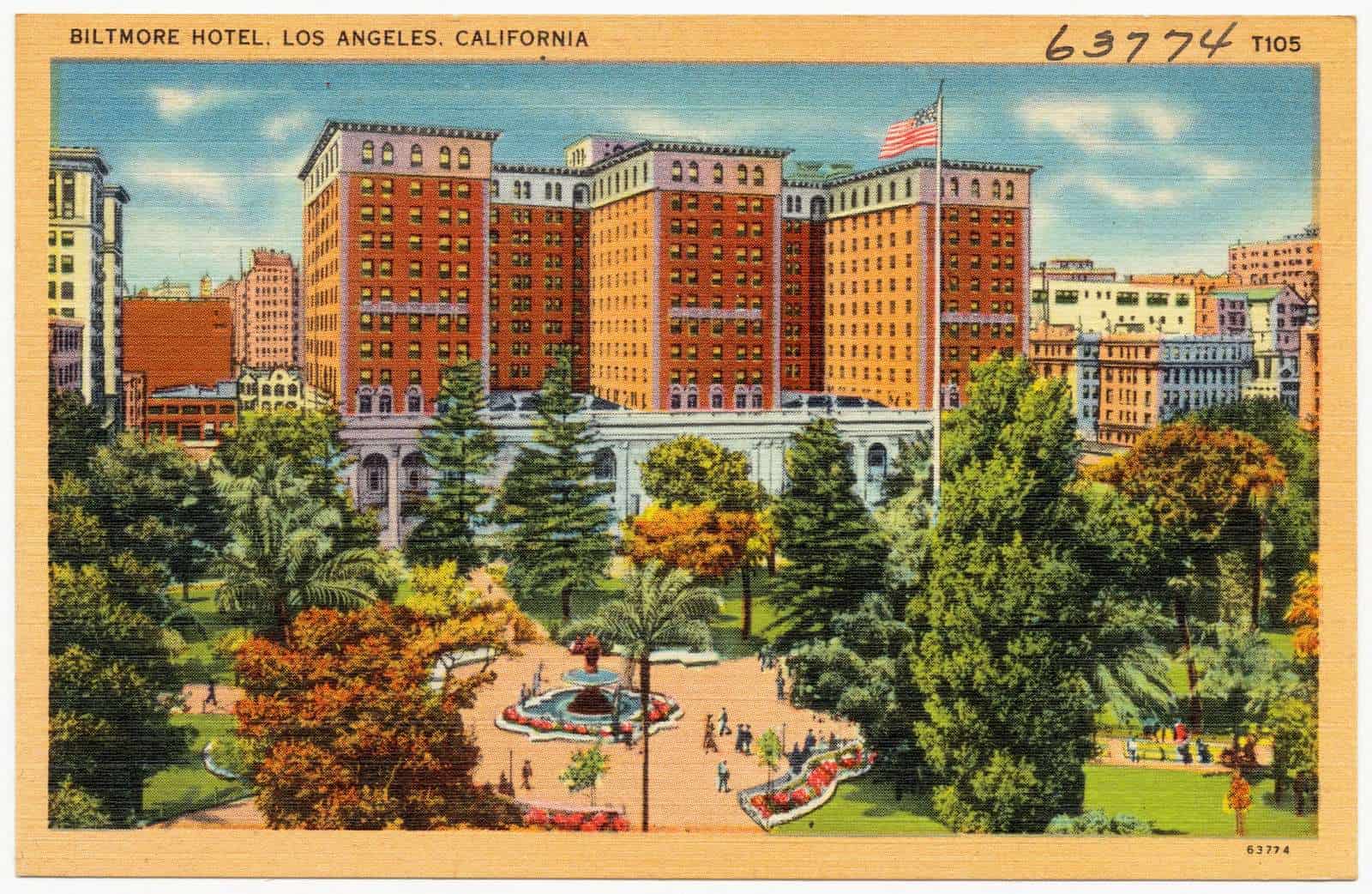
There are reports that she made calls from the Biltmore lobby. There are later claims that she was seen at nearby bars. There are stories of threats and fear. Some are possible. Some are weak. Some come through later suspect-driven theories and should be treated cautiously. The responsible chronology cannot fill those six days with cinematic certainty. It can only mark the last firm point, the checked luggage, the hotel, Manley leaving, and then the vacant space before the body was found.
That gap has tempted nearly every major theory of the case. If one believes the killer was someone from her immediate circle, the missing week becomes a series of meetings, betrayals, and escalating violence. If one believes the killer had medical training, the week becomes a hidden captivity in an office, home, or rented room. If one believes the murder was opportunistic, the week may have included only one fatal encounter with a man whose name never entered the file. Every version has to pass through the same narrow door: there is no conclusive public evidence of where Short spent those days or with whom.
By the evening of January 14 or the early hours of January 15, she was dead. The condition of the body indicated that the killing and mutilation occurred elsewhere. The FBI’s official summary notes the absence of blood at the scene and says that fact indicated she had been killed somewhere else. The body had been washed. It had been arranged. It had been placed close to the sidewalk where it would be found quickly.
The killer did not bury her. He did not hide her in the mountains or the desert. He placed her in a residential neighborhood where ordinary morning life would discover what had been done.
The Scene on Norton Avenue
The first officers and reporters encountered a scene that was both stark and compromised. Short’s body was nude, bisected at the waist, and posed on her back. Her arms were raised above her head. Her legs were spread. Her face had been cut at the corners of the mouth. The body had been cleaned, and the lack of blood in the lot indicated that the fatal assault and postmortem cutting had occurred elsewhere.
The level of mutilation became the engine of the case’s notoriety, but precision is necessary. Later accounts, drawing on the autopsy as reproduced or summarized, describe blows to the head and face, lacerations to the face, ligature marks, superficial cuts, and the severing of the body between lumbar vertebrae. The cause of death has been reported as hemorrhage and shock associated with facial lacerations and head trauma, with cerebral hemorrhage or brain concussion often referenced in summaries. The bisection appears to have occurred after death, based on the limited bruising at the cut line reported in autopsy summaries.
The language around “surgical precision” should be handled with restraint. The cut was clean enough to suggest anatomical knowledge to some investigators, and early police interest included checking medical students. But “surgical” has often been inflated into certainty that the killer must have been a surgeon. That is not established. A person familiar with anatomy, butchery, mortuary work, hunting, or wartime trauma could plausibly have possessed relevant practical knowledge. Former FBI profiler John Douglas, reviewing records decades later for the Los Angeles Times, suggested the offender might have been someone comfortable with a knife and blood rather than necessarily a physician. That is a behavioral opinion, not proof.
The scene also exposed the investigative standards of the era. Reporters and photographers were able to get very close. One examiner later recalled closing Short’s eyes before the police arrived. If true, that act captures both the humanity and the contamination of the moment: a gesture of pity that would be unacceptable at a secured homicide scene. Physical evidence in 1947 was fragile. DNA testing did not exist. Fingerprint preservation was primitive by modern standards. Chain-of-custody practices were weaker. The case began with urgency, but not with the forensic protections that a comparable murder would receive now.
What the display site tells investigators
The Norton Avenue lot was a recovery and display scene, not the place where Short was killed. That single fact shapes every reconstruction of the case.
- Secondary scene: the available evidence strongly indicates that Short was killed elsewhere before her body was transported to Norton Avenue.
- Transport and privacy: the offender needed time, privacy, a vehicle and a place where cleanup could happen without immediate detection.
- Public discovery: the body was placed close enough to the sidewalk to be found quickly. That suggests display, communication or a wish for control, but motive cannot be proved from placement alone.
The official medical findings, and what they can and cannot prove about the offender, are examined separately in our Black Dahlia autopsy analysis.
Jane Doe No. 1
The body was first identified as “Jane Doe No. 1,” the first unidentified female homicide victim in Los Angeles that year. The anonymity did not last long. The Examiner transmitted fingerprints to the FBI through its Soundphoto wirephoto equipment, reportedly in exchange for an identification scoop. The FBI identified Short quickly from its files. Within hours, the unknown woman had a name. Within days, she had a legend.
Identification, the Examiner, and the Cruelty of the Scoop
The identification of Elizabeth Short is one of the few parts of the investigation in which the official record and newspaper accounts align clearly. The FBI says it identified her from fingerprints after Los Angeles asked for help. Her prints appeared twice in federal files: on the Camp Cooke job application and the Santa Barbara arrest. The speed of the identification became a point of institutional pride.
What happened next is one of the ugliest episodes in American crime reporting. Examiner staff contacted Phoebe Short, Elizabeth’s mother, in Massachusetts. According to later Los Angeles Times reporting, the paper used a ruse, telling Phoebe her daughter had won a beauty contest in order to draw out biographical details before revealing that Elizabeth had been murdered. The paper then helped bring Phoebe to Los Angeles while attempting to protect its exclusive access to her.
This was not merely aggressive journalism. It shaped the victim’s public biography at the moment of maximum family shock. Phoebe Short was not allowed to learn of her daughter’s death privately, through the police, with the care owed to a parent. She was pulled into a media apparatus that had already decided the case was a spectacle. The Black Dahlia story was born not only from violence but from the conversion of grief into content.
The press did more than name and narrate. It sexualized. It moralized. It framed Short as a woman whose mobility and dependence on men explained her fate. Newspapers called her an “adventuress.” Some accounts implied promiscuity without proof. Others repeated claims of torture that authorities reportedly knew were false or unconfirmed but allowed to circulate to conceal the actual cause of death. The public was given a victim who could be consumed safely because she was made into a warning.
That warning had a postwar shape. Los Angeles in 1947 was crowded, changing, and anxious. The war had expanded women’s independence and labor. The return to peacetime brought a cultural demand that women retreat into domestic order. Short, with her suitcases at a bus station and no permanent address, became useful to commentators who wanted to say what happened to women who strayed too far from family, marriage, and supervision.
The truth was less tidy. She was not a moral lesson. She was not a noir archetype. She was a young woman moving through a city without enough money, security, or reliable protection, and someone killed her.
Red Manley and the First Suspects
Robert Manley was an obvious early focus. He had driven Short to Los Angeles. He was married. He was among the last people confirmed to have seen her alive. Police questioned him, booked him as a suspect, and administered a polygraph. He was released. Later, after years of suspicion and personal troubles, he was again examined through sodium pentothal by Veterans Administration doctors in 1954 and again cleared, according to Los Angeles Times reporting. Manley died in 1986, on the anniversary of the day he left Short at the Biltmore.
Mark Hansen, a nightclub and theater owner, also drew attention. Short had stayed at a residence connected to Hansen, and an address book with his name on it became part of the evidence later mailed to the Examiner. Some acquaintances said Hansen had been interested in Short and that she had rejected him. Police questioned him. He was not charged.
There were many others. The case produced tips with industrial force. Men confessed falsely. Some were disturbed. Some seemed to want attention. Some had not even been born when Short died, according to later accounts of the decades of false confessions. The volume of noise became part of the investigation’s failure. Leads that might have deserved careful attention had to compete with fantasy, publicity, and obsession.
On January 24, 1947, an envelope addressed to the Los Angeles Examiner and other papers arrived at a post office and was turned over to authorities. It contained personal belongings identified as Short’s, including her birth certificate, Social Security card, photographs, and an address book. The envelope and contents had been treated with gasoline, apparently to remove fingerprints. The sender used cut-and-pasted words. The note read: “Los Angeles Examiner and other Los Angeles papers, here is Dahlia’s belongings. Letter to follow.” Later communications, signed or framed as from the “Black Dahlia Avenger,” promised surrender and then withdrew the promise.
Whether every communication came from the killer is uncertain. The first package, containing genuine personal effects, was noticeably heavy. Other letters and postcards may have been hoaxes. The case’s publicity invited imitation almost immediately. But the package of belongings indicates that someone connected to the crime, or someone with access to Short’s possessions after the crime, was manipulating the press and police.
The address book sent investigators toward dozens of men. Many told similar stories: brief meetings, meals, rides, little or no intimacy, and then no further contact. Those statements contributed to a recurring image of Short as a woman who moved through male attention without anchoring in it. But they did not identify a killer.
The authentication problem
The mailing of genuine personal effects is one of the stronger reasons some communications are treated as potentially significant. But the case attracted hoaxers almost immediately. Once newspapers printed details, false confessors could repeat information that looked private but was already public. Every letter therefore has to be judged on its own provenance, not on how closely it matches the legend.
The Investigation Widens and Thins
The LAPD investigation was massive for its time. Detectives, patrol officers, and outside agencies pursued leads. The FBI ran checks and conducted interviews. Early suspicions about anatomical knowledge led investigators to look at people with medical or dissection training, including students at the University of Southern California Medical School. The police also explored whether other unsolved murders of women in Los Angeles might be connected.
The scale of the effort did not translate into a prosecutable case. That is not unusual in a homicide where the body is moved, the primary scene is unknown, and the victim’s last days are unclear. But the Black Dahlia investigation also suffered from the frenzy around it. Reporters were everywhere. Details, true and false, circulated. Confessions and suspect names piled up. The case file grew, but the central proof did not.
The confession flood
The case generated a steady stream of confessions and accusations, some of them naming relatives or acquaintances. Most collapsed because of alibis, impossibilities or the absence of any detail that had not already been printed. Investigators examined people with possible anatomical knowledge, but formal medical training was never shown to be either necessary or sufficient to explain the injuries.
By spring 1947, the case had cooled. Detectives assigned from other divisions returned to their regular work. Lead investigators Harry Hansen and Finis Brown continued to pursue leads, but nothing conclusive emerged. In 1949, a Los Angeles County grand jury examined the failure to solve several murders, including Short’s. Public alarm over the unsolved killings of women and children had grown. The grand jury process led to further investigation, but no charges were filed.
This period also marked the beginning of the long life of suspect theories. Some were grounded in genuine investigative interest. Others were built from coincidence, psychological speculation, or the author’s need for a solution.
George Hodel, a physician and later one of the most famous suspects, was not publicly central to the case until much later, though he had been investigated during the broader era. His son, former LAPD detective Steve Hodel, argued after George’s death that his father killed Short and others. The theory draws on Hodel’s medical background, his disturbing personal history, and a recorded statement from a 1949 surveillance operation that has been interpreted by some as suggestive. But George Hodel was never charged, and the chain of evidence remains disputed.
Leslie Dillon, a bellhop and former mortician’s assistant, became the focus of another major theory, revived by author Piu Eatwell. Critics, including Harnisch, have argued that Dillon was cleared and was in San Francisco at the relevant time. Walter Bayley, a surgeon proposed by Harnisch as a plausible suspect, had a geographic connection through his estranged wife’s residence near the dump site and a possible indirect connection to Short through her sister. The Los Angeles Times reported in 2024 that Harnisch continues to hedge the theory, and retired cold-case Detective David Lambkin found it among the more plausible because it connects a suspect to the location. But Bayley, too, was never charged, and the case against him remains circumstantial.
Other names have ranged from nightclub figures to gangsters, artists, drifters, and relatives named in recovered-memory claims. Many collapse under scrutiny. Some are impossible to test now. A few remain plausible only in the limited sense that they cannot be conclusively ruled out based on public information. None has crossed the legal threshold from theory to proof.
The Forensic Problem
Modern readers often ask why the Black Dahlia murder cannot be solved now through DNA. The answer is partly historical and partly practical. The usable physical evidence appears to be limited, degraded, missing, or compromised. A 2024 Los Angeles Times article quoted retired LAPD cold-case Detective David Lambkin, saying that by the time he reviewed the matter in 2001, the physical evidence was nearly nonexistent. The Los Angeles city public-records portal confirms that previously released records exist, and the FBI Vault provides two parts of federal files, but publicly available summaries do not indicate a clean modern forensic path to a suspect.
The package mailed to the Examiner might seem promising. Accounts differ on what fingerprint material it yielded. The FBI’s own case history says the Bureau searched for a match to fingerprints found on an anonymous letter that may have been sent by the killer, but the prints were not in FBI files. The gasoline treatment was destructive. Items handled by reporters, postal workers, officers, and others in 1947 would present complex contamination issues even if preserved. DNA testing thrives on biological material and controlled evidence histories; the Dahlia case offers neither in obvious abundance.
The unknown primary crime scene is another barrier. Investigators knew the body had been moved, but not from where. Without that location, they lacked blood patterns, trace evidence, tool marks in context, witness proximity, and the environmental details that help reconstruct a homicide. The vacant lot was a display site, not the place where the killing unfolded.
Autopsy evidence also has limits. The body could show injury, cause of death, postmortem mutilation, and signs of restraint, but it could not identify the offender without comparative evidence. The suggestion of anatomical skill narrowed possibilities only vaguely. The absence of semen did not exclude sexual motive or assault; it simply prevented one route of identification. The lack of blood at the scene told investigators that the murder occurred elsewhere, but it did not say where.
This is why the case has become a magnet for profiler logic and circumstantial suspect-building. When forensic evidence is absent, people construct patterns based on location, personality, opportunity, and symbolic meaning. Some of that work is thoughtful. Much of it is reckless. The line between inference and invention is thin, and the Black Dahlia case has suffered whenever writers have treated a compelling pattern as a solved murder.
Could Modern DNA Solve the Black Dahlia Murder?
Modern science can only help if authenticated evidence survives with a defensible chain of custody.
- DNA and correspondence: biological material on a verified communication or evidence item could, in theory, be useful. Old handling, contamination and uncertain authorship can destroy the value of any profile.
- Tool-mark and wound review: modern imaging could refine the sequence of injuries or the class of tool used, but a tool class does not name a suspect without a comparison object and chain-of-custody proof.
- The missing primary scene: the place where Short was killed likely held blood-pattern, trace, fibre and cleanup evidence. Its absence remains the case’s most damaging forensic loss.
- No DNA miracle without provenance: modern methods cannot rescue evidence that cannot be authenticated. Chain of custody is not a technical footnote; it is the difference between a clue and noise.
What each evidence class established
| Evidence | What it established | Limit |
|---|---|---|
| Fingerprints | Identified Elizabeth Short rapidly through FBI files | Identified the victim, not the offender |
| Norton Avenue scene | Established an open display site and a secondary-scene pattern | Did not reveal the primary crime scene |
| Autopsy findings | Documented injuries and supported a missing primary scene | Frequently paraphrased; complete public access is limited |
| Anonymous mailings | Suggested possible offender communication and possession of Short’s property | Hoaxes and uncertain authorship complicate every letter |
| Witness timeline | Mapped hotels, acquaintances, travel and final-days sightings | Contradictory accounts and media exposure weakened precision |
Myth, Misogyny, and the Woman Who Disappeared Twice
Elizabeth Short disappeared once between January 9 and January 15, 1947. She disappeared again after her body was found.
The second disappearance happened in language. “Betty” became “the Black Dahlia.” Her poverty became seduction. Her instability became decadence. Her efforts to survive became evidence of moral failure. She was treated as if the way she moved through the world explained the violence done to her.
Larry Harnisch’s 1997 Los Angeles Times anniversary piece and later reporting have been important because they challenge that narrative. Harnisch did not make Short into a saint. He described her as secretive, transient, and prone to stories. But he also pushed back against the lurid inventions: the certain prostitution, the certain Hollywood ambition, the reliable Biltmore doorman, the heavily fictionalized accounts that turned rumor into biography.
Christopher Goffard’s 2024 Los Angeles Times article likewise revisited the case through the problem of myth. It quoted Harnisch sharply rejecting several popular theories about suspects and emphasized that Short’s “Hollywood hopeful” image is not strongly supported. The durability of that label is visible even in official writing: the FBI’s own public case history still describes her as a “Hollywood hopeful.” The article also placed the case in a larger cultural frame: postwar Los Angeles, noir imagination, misogyny, and the public appetite for a woman whose life could be shaped into warning and fantasy.
That is the dark heart of the Black Dahlia murder as a cultural event. The crime was horrifying enough. But the afterlife of the crime required something additional: the public’s willingness to keep using Short. Her face, her clothes, her body, her supposed sexuality, her supposed ambition, her supposed secrets. She became a symbol that could be revised for every era’s anxieties.
In the 1950s, she could be read as a cautionary figure from wartime looseness. In the noir revival, she became Los Angeles distilled into a corpse. In true-crime publishing, she became the cold case every author wanted to solve. In the internet age, she became an endless puzzle board. Each transformation made it easier to forget that her family had to live with the spectacle. Her sister Muriel told the Los Angeles Times in 1997 that every new retelling reopened old pain.
The most responsible way to write the case is not to strip it of atmosphere. The atmosphere is real: postwar Los Angeles, newspaper war, downtown hotels, vacant lots, the sharp glamour of a city selling reinvention while leaving people stranded in its margins. But the atmosphere must not become evidence. A dark tone cannot be allowed to convict a suspect, invent a motive, or turn Elizabeth Short into the very stereotype that distorted her.
The Later Suspects and the Need for Restraint
The Black Dahlia case is unusual not because it has suspects, but because it has too many suspects who have been made famous by books, documentaries, and family claims.
George Hodel remains the best-known modern suspect largely because Steve Hodel brought professional police credibility and a personal family story to the allegation. Some elements are authentically disturbing: George Hodel’s background as a physician, allegations involving his daughter for which he was acquitted, his social circles, and the ambiguous recorded remark from a surveillance operation. But disturbing does not equal proven. The evidence has not produced charges, and George Hodel died in 1999. Assertions that he was responsible for a series of murders expand the claim far beyond what the public record can establish.
Walter Bayley is less famous but, in some expert discussions, more intriguing. The theory depends on geographic logic and possible connections. Bayley was a surgeon; his estranged wife lived near the body-disposal site; Short’s sister had a connection to the Bayley family; Bayley reportedly suffered a brain condition and died in 1948. This makes a coherent circumstantial theory, especially if one accepts the premise that the dump site was chosen for its meaning to the killer. But coherence is not proof. No confession, forensic link, or direct witness places Bayley with Short during the missing week.
Leslie Dillon’s theory depends on his background as a mortuary assistant, his statements, and alleged connections to other figures. Its critics argue that the case against him ignores exculpatory records. Mark Hansen, Red Manley, and others were investigated and cleared or never charged. The long parade of named suspects should teach caution. In a case this old, a theory can look persuasive simply because the people who could contradict it are dead, records are incomplete, and coincidence can be arranged into a narrative after the fact.
The case has also attracted more extravagant claims linking it to the Cleveland Torso murders, the Chicago “Lipstick” murder of Suzanne Degnan, and, more recently, the Zodiac killings. Such theories usually rely on similarities in mutilation, writing, geography, or symbolic interpretation. Similarity may justify inquiry; it does not establish common authorship. The danger is that one unsolved case becomes a container for another, and uncertainty is mistaken for permission.
Later claims involving Marvin Margolis have also circulated. They are not given equal weight here because their public source trail is weaker than that of the established historical suspect field. Those claims remain allegations unless law enforcement publicly confirms a charge, a forensic match or an official conclusion.
Finally, the physical facts require someone with time, privacy, transport, cleanup capacity and enough practical skill to divide and stage a body. Keeping an unknown-offender category prevents dramatic named theories from absorbing every fact by force.
| Person | Why discussed | Current evidentiary status |
|---|---|---|
| George Hodel | Medical background and a later circumstantial theory advanced by family research and books | Unproven; no prosecution or judicial finding |
| Walter Bayley | Surgeon whose estranged wife lived near the recovery site | Unproven; circumstantial |
| Leslie Dillon | Police interest, detailed correspondence and possible anatomical discussion | Unproven historical suspect |
| Mark Hansen | Social connection to Short’s circle and later suspect-network theories | Unproven; questioned, never charged |
| Robert Manley | Last confirmed driver and early investigative focus | Cleared |
| Unknown offender | No named suspect has become a legal finding | Identity unknown |
The strongest conclusion remains the least satisfying: Elizabeth Short’s killer has not been identified to any legal standard. The Black Dahlia murder remains unsolved.
Questions That Remain Unanswered
The case remains open because the core location, timeline and identity questions were never answered.
Where was Short killed?
The primary scene likely required privacy, water, a work surface, lighting, cleanup and vehicle access. No location has been proved.
Who mailed the personal effects?
The sender may have been the killer, an accomplice, a hoaxer with access to her property, or someone who obtained the items after her death. Public records do not settle it.
Can any item still yield a usable profile?
Only authenticated evidence with a clean enough handling history could answer that. Public reporting has not established a solved forensic profile.
Was the display designed for publicity?
The open placement and the later mailings support a communication theory. They do not prove a complete motive.
What Can Be Said
A careful chronology can say this:
Elizabeth Short was born in Boston in 1924 and grew up in Massachusetts under economic and family strain. She went west as a teenager after learning her father was alive. She moved often. She worked intermittently. She formed attachments to servicemen and acquaintances but did not establish a stable adult home. By late 1946, she was in Southern California, moving between temporary shelter and the help of people she barely knew.
On January 8, 1947, she was with Robert Manley in San Diego. On January 9, he drove her to Los Angeles. She checked her luggage at the downtown bus station. He left her at the Biltmore Hotel around early evening. Her stated plan to meet her sister was false. Her movements after that are not reliably known.
By January 15, she was dead. Her body was found that morning on South Norton Avenue, posed in a vacant lot. The condition of the body indicated she had been killed elsewhere. The FBI identified her through fingerprints. The press rapidly transformed the case into a national spectacle. A package containing her belongings was mailed to the Examiner, apparently by someone connected to the crime. Multiple suspects were questioned. False leads multiplied. No one was charged.
The investigation continued in waves: immediate police work in 1947, grand jury concern in 1949, later cold-case reviews, and decades of public theorizing. Modern official and reputable sources continue to describe the case as unsolved.
What cannot be responsibly said is equally important. It cannot be said that Short was killed because she was a prostitute; that premise is unsupported. It cannot be said that she was a Hollywood actress whose failed ambition led to death; that is a myth. It cannot be said that any named suspect killed her, unless one is clearly presenting a theory and not a fact. It cannot be said that modern media claims of a “solution” have closed the case.
The Black Dahlia murder endures because it combines three elements that are hard to extinguish: an unsolved homicide, a violent and symbolically charged crime scene, and a victim whose nickname turned her into a figure of American darkness. But the endurance of the story is not the same as justice. Justice would have required evidence, a trial, and an answer. What remains is a file, a city, a family’s wound, and the discipline to say only what the record supports.
Elizabeth Short Photos and Archive Records
Many photographs circulated in connection with this case show the recovery site or her body. This file does not reproduce them. The records below are the ones that help readers see Elizabeth Short as a person and follow the investigation through primary material. Each link opens the holding archive, where rights and reuse terms are stated.
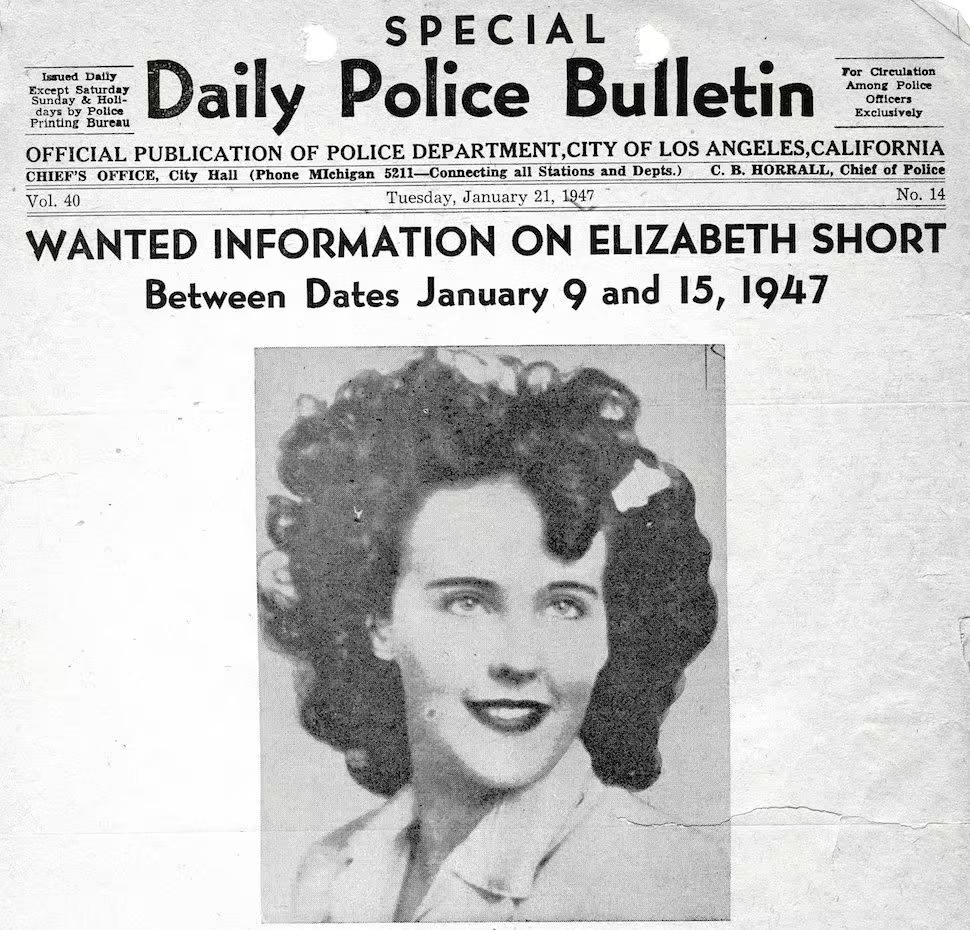
- Portrait of Elizabeth Short (Los Angeles Public Library Photo Collection)
- Elizabeth Short at the beach, circa 1945 (Los Angeles Public Library Photo Collection)
- Robert “Red” Manley testifying at the inquest (Los Angeles Public Library Photo Collection)
- Leslie Dillon, a historical suspect who was never charged (Los Angeles Public Library Photo Collection)
- Letter signed “Black Dahlia Avenger” (Los Angeles Public Library Photo Collection)
- Angelenos reading the Black Dahlia headlines (Los Angeles Public Library Photo Collection)
- FBI Records: The Vault, Black Dahlia file, the Bureau’s released case file in two parts, including fingerprint correspondence
- FBI History: The Black Dahlia, which reproduces the LAPD wanted-information flyer
The Case as of 2026
As of 2026, no one has ever been charged with or convicted of the Black Dahlia murder. The FBI’s public case page states that Elizabeth Short’s killer was never found. Los Angeles public-record portals make previously released records available, and the FBI Vault hosts federal files reflecting the Bureau’s support role in 1947 and 1948. Modern reporting continues to revisit the case, especially as new books and documentaries revive old suspects or propose new ones.
The passage of time has narrowed the possibilities. The killer, if an adult in 1947, is almost certainly dead. Most direct witnesses are dead. Physical evidence appears limited. New claims still emerge, but claims are not evidence. A breakthrough would likely require the discovery of preserved biological material, a reliable confession supported by nonpublic details, or a primary record that has not yet been fully understood.
Until then, the case belongs to a difficult category: historically open, culturally overdetermined, legally unresolved.
Elizabeth Short was 22. Her last confirmed evening remains fixed in downtown Los Angeles, at the edge of a hotel lobby and a lie about meeting her sister. Six days later, she was found in a vacant lot. Between those points is the silence that built the Black Dahlia legend. The silence is not an invitation to invent. It is the central fact of the case.
Frequently Asked Questions
Who was the Black Dahlia?
The Black Dahlia was Elizabeth Short, a 22-year-old woman from Massachusetts whose body was found in Los Angeles on January 15, 1947. She was known to family and some acquaintances as Betty.
Was the Black Dahlia murder ever solved?
No. No one has ever been charged or convicted, and the case remains officially unsolved.
Where was Elizabeth Short found?
Her body was found in a vacant lot near South Norton Avenue in Los Angeles, in the Leimert Park area.
What was the “missing week”?
The missing week refers to the uncertain period between January 9, 1947, when Short was reportedly dropped off in downtown Los Angeles, and January 15, when her body was discovered.
Did the FBI investigate the Black Dahlia murder?
The LAPD led the investigation. The FBI assisted by identifying Short through fingerprints, running records checks, conducting interviews, and examining possible fingerprint evidence.
Why is the Black Dahlia case so famous?
The case became famous because of the brutality of the crime, the Hollywood-era setting, intense newspaper coverage, the unsolved status, and decades of books, films, and suspect theories.
When was Elizabeth Short murdered?
Her body was discovered on January 15, 1947. The exact date and place of death remain unresolved; the evidence indicates she died late on January 14 or early on January 15, somewhere other than the lot.
Was George Hodel the Black Dahlia killer?
George Hodel is a major later suspect theory, but the claim remains disputed and has never resulted in a prosecution or judicial finding.
What did the Black Dahlia autopsy show?
Public summaries describe severe injuries and evidence supporting a missing primary scene. The detailed forensic interpretation is in our dedicated Black Dahlia autopsy article.
Why was Elizabeth Short called the Black Dahlia?
The nickname was popularized by the press after her death. Accounts trace it to a Long Beach drugstore nickname, to her rumoured taste for black clothing, or to the 1946 film “The Blue Dahlia.” It became more famous than her actual name, which is one reason victim-centred coverage matters.
Could DNA still solve the Black Dahlia case?
Only if authenticated evidence survives with enough biological material and a defensible chain of custody. Public records do not establish that such evidence exists or has been tested.
Related Case Files
- Black Dahlia autopsy findings: detailed forensic evidence, cause-of-death discussion and anatomical-skill claims.
- Erotophonophilia and sexual homicide: the Black Dahlia case is sometimes discussed in relation to lust-murder characteristics, but with no identified killer, motive and classification cannot be established.
- The hunt for the lust murderer (infographic): a behavioural overview in which the case appears as a brief illustration.
- D. B. Cooper hijacking: another American cold case shaped as much by legend as by evidence.
Sources
Primary and official sources:
- FBI: Black Dahlia
- FBI Vault: Black Dahlia (Elizabeth Short)
- FBI Vault: Black Dahlia Part 01 PDF
- FBI Vault: Black Dahlia Part 02 PDF
- Los Angeles City NextRequest: Elizabeth Short Public Records PDF listing
Reporting and secondary sources consulted:
- Los Angeles Times: “A Slaying Cloaked in Mystery and Myths”
- Los Angeles Times: “The Black Dahlia mystery: Wild theories, enduring myths and a long-overlooked suspect”
- The Delacorte Review / Medium: “The Black Dahlia: The Long, Strange History of Los Angeles’ Coldest Cold Case”
- A&E: “Case File: Elizabeth Short”
- A&E: “The Black Dahlia: How ‘Moral Panic’ Gripped the Community”
- John Gilmore, Severed: The True Story of the Black Dahlia Murder (Amok Books). A detailed journalistic account; its interpretations should be read critically.
- John E. Douglas and Mark Olshaker, The Cases That Haunt Us (Scribner). Behavioural discussion of the case.
- Larry Harnisch / LA Daily Mirror: Black Dahlia Ask Me Anything, June 2026
Discover more from The Dark Side of Humanity
Subscribe to get the latest posts sent to your email.