FILE NO. 0072Case status Convicted
For months, a missing child’s life and an ascendant musician’s career moved along separate public tracks. Then Celeste Rivas Hernandez was found in a Tesla registered to David Anthony Burke. What followed was an investigation built from messages, vehicle data, purchase records and fragments recovered from a Hollywood Hills garage. Burke has pleaded not guilty, and every charge against him remains an allegation.
Celeste Rivas Murder Case
September 8, 2025: The Tow Yard
The black Tesla had already passed through the slow machinery of a Los Angeles parking complaint. It had been left on Bluebird Avenue in the Hollywood Hills long enough for neighbors to notice. A parking officer marked its tires on August 27, then cited it on September 3 for violating the city’s 72-hour rule. On September 5, it was removed to Hollywood Tow, according to parking records reviewed by the Los Angeles Times.
Three days later, a worker noticed an odor coming from the vehicle. Police were called. A detective obtained a warrant, opened the Tesla’s front storage compartment and found human remains inside bags. The Los Angeles County Department of Medical Examiner recorded the discovery at 11 a.m. on September 8. The remains were badly decomposed, making the first, most basic question difficult to answer: who had been left there?
The car supplied a name, but not the victim’s. It was registered to David Anthony Burke, then 20, the singer and songwriter known as d4vd. His 2022 song “Romantic Homicide” had helped turn a teenager making music on a phone into an international act. By the time the Tesla was opened in Hollywood, Burke was away on the North American leg of a tour for his first full-length album, Withered, a career arc documented in contemporaneous Associated Press coverage.
The collision of celebrity and violent death made the discovery instantly combustible. The title of Burke’s biggest song was recycled into headlines. Old photographs, tattoos, lyrics and social-media fragments were stripped of context and treated as clues. But the official record at that moment was narrow. There was a dead girl in the front trunk of a car registered to Burke. Her identity, the cause of her death and the circumstances that placed her there had not yet been established. Police had not accused the singer of a crime.
That caution mattered. In a September 29 statement, the Los Angeles Police Department said the medical examiner had not determined either cause or manner of death. Investigators could then say only that criminal responsibility might extend to concealment of the body. The homicide case that would emerge later was not yet a public fact. It had to be assembled.
The first task was to return a name to the dead.
A Child From Lake Elsinore
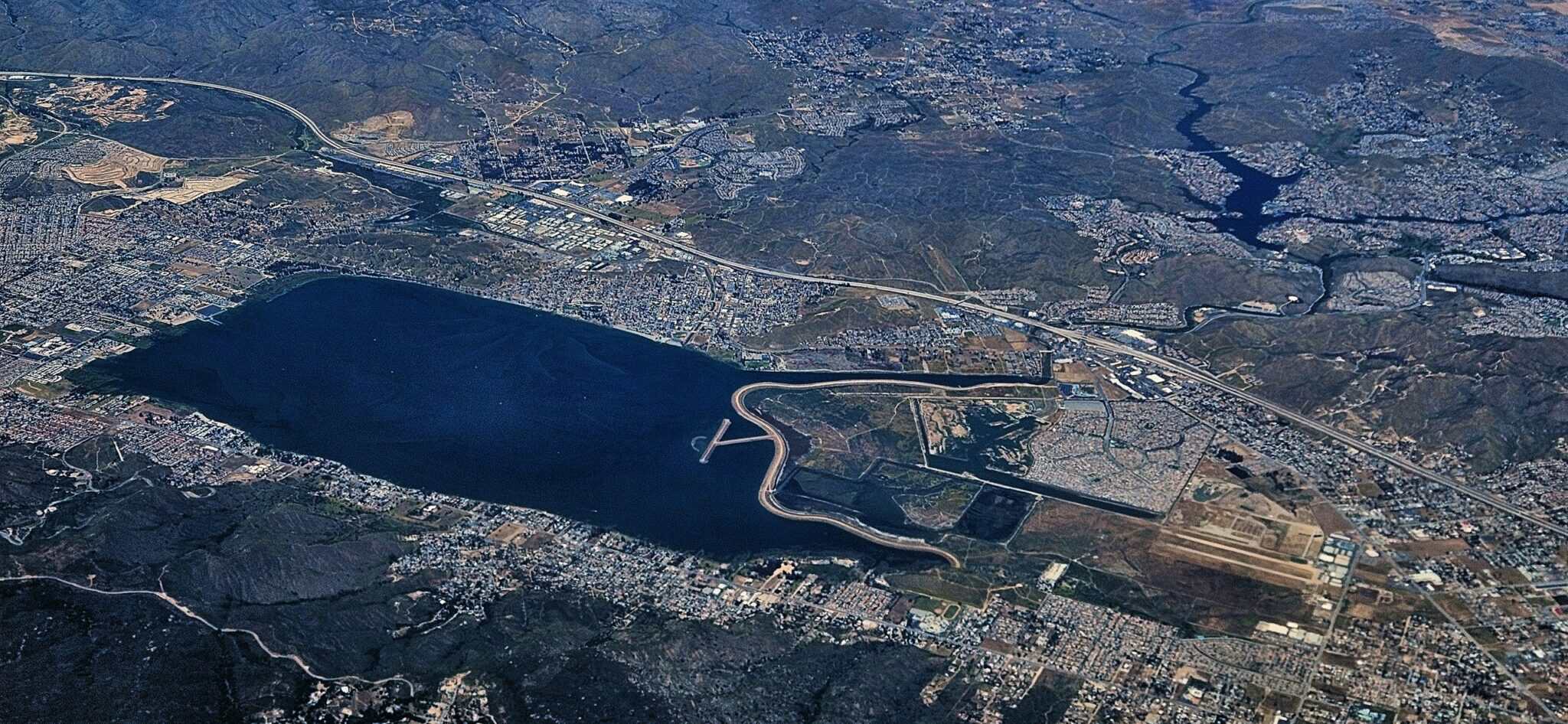
Dental records provided the identification. On September 16, the medical examiner confirmed that the remains belonged to Celeste Rivas Hernandez of Lake Elsinore, an Inland Empire city roughly 80 miles southeast of the Hollywood Hills home at the center of the investigation.
The timing produced an early confusion that persists in accounts of the case. Celeste was born on September 7, 2010. Her body was found one day after what would have been her 15th birthday, and early official records described her as 15. The prosecution’s case, however, places her death on April 23, 2025, when she was 14. At the July 2026 preliminary hearing, the pathologist who examined her remains testified that she had died before reaching 15.
Public records preserve only a limited portrait of Celeste before she became the subject of a criminal prosecution. She attended schools in the Lake Elsinore Unified School District from transitional kindergarten through seventh grade. A family acquaintance remembered her as studious, intelligent and hard-working. Residents recalled missing-person flyers bearing a photograph of a girl with large, curly hair. In the words her parents later issued through their lawyer, she was “a beautiful, strong girl who loved to sing and dance.” Friday nights at home were movie nights, they said.
These ordinary details, collected in reporting from Lake Elsinore, are slight, but they resist the flattening force of the case. Celeste was not a body in a celebrity’s car. She was a child whose routines, friendships and possible futures ended before high school.
Her family reported her missing three times in early 2024, according to Riverside County Sheriff’s Department records reviewed by the Los Angeles Times. The last report was made on April 5, when she was 13 and in seventh grade. Authorities described her as a runaway.
That label identifies a circumstance, not a measure of the danger a child faces or the responsibility adults owe her. It also obscured a more complicated pattern that prosecutors would later present to a judge.
According to the prosecution’s timeline, Celeste had met Burke online when she was 11. Prosecutors allege that a sexual relationship began in November 2023, after Celeste had turned 13 and Burke was 18. Those allegations form the basis of a charge of continuous sexual abuse of a child under 14. Burke has pleaded not guilty to that charge, as he has to all counts.
The first documented intervention came in February 2024, during one of Celeste’s disappearances. Riverside County investigators contacted Burke. Los Angeles County Sheriff’s deputies then went to his home looking for her. Body-camera video played at the preliminary hearing showed Burke telling deputies he had met Celeste only once in person and believed she was 18. The deputies told him she was 13. He allowed them to search the home, and they did not find her there. Celeste returned home two days later, prosecutors said. The encounter and the state’s later allegations are set out in the Associated Press chronology.
The significance of that encounter is not merely retrospective. It establishes that by February 2024, Burke had been expressly told Celeste’s age. Prosecutors allege that contact continued afterward.
At the preliminary hearing, a detective described an extensive archive of messages and photographs recovered from Burke’s phone and cloud account. Some were so explicit that they were described but not displayed publicly; they form part of the state’s case that sexual abuse occurred while Celeste was 13 and 14. Other messages concerned a pregnancy and abortion when she was 13.
Because Celeste was a minor, the intimate details need not be repeated to understand the evidentiary point: prosecutors say the digital record documents an ongoing sexual relationship, while Burke’s not-guilty plea leaves that allegation for trial.
The state’s chronology says Celeste traveled with Burke after her April 2024 disappearance, including trips to Las Vegas, London and Texas. It also says the two described themselves as having broken up in November but remained in contact, and that Celeste eventually returned to Lake Elsinore.
The record publicly reported so far does not provide a simple, continuous account of where she lived during every month between the missing-person report and her death. That gap should not be replaced with inference. At the preliminary hearing, prosecutors presented evidence that she was again in Lake Elsinore on the final night of her life and that a ride was sent to bring her to Hollywood.
The Distance Between Their Lives
While Celeste moved in and out of home and official missing-person systems, Burke’s public world expanded at high speed. He had begun making his own songs to avoid copyright problems in gaming videos. “Romantic Homicide” went viral in 2022 and reached No. 4 on Billboard’s Hot Rock & Alternative Songs chart. He signed with Darkroom and Interscope, released two EPs in 2023 and opened for SZA.
His music occupied the melancholy, genre-blurred territory where a private bedroom recording can become a global commodity before its creator is old enough to drink.
By spring 2025, Burke’s debut album and a world tour were approaching. Financial testimony at the preliminary hearing placed his earnings between $10 million and $11.5 million from 2023 through 2025.
That figure matters because prosecutors have alleged financial gain as a special circumstance: their theory is not that Celeste’s death produced a direct payment, but that Burke killed to protect a lucrative career from disclosure of criminal conduct. The allegation could make the case eligible for the death penalty if a jury ultimately convicts him and finds the special circumstance true. The district attorney has not yet decided whether to seek death.
The prosecution uses the asymmetry between the two lives as motive. One was a child known locally through school and missing-person flyers. The other was a legal adult whose voice, image and private work had become a multimillion-dollar enterprise. In the state’s account, Celeste’s ability to expose the relationship threatened that enterprise. The defense rejects the conclusion that this supplied a plan or intent to kill.
Any responsible account must hold both propositions at once. The evidence of a sexual relationship, as described in court, is central to the state’s charges and theory. It is not itself proof that Burke committed murder. Motive can help explain a crime; it cannot substitute for evidence that the accused carried it out.
April 22 to 23, 2025: The Last Messages
On April 22, Celeste and Burke argued by text about another woman in his life. The messages were angry and volatile. Prosecutors emphasized Celeste’s threats to expose their relationship and destroy his career.
The defense emphasized other parts of the exchange: Celeste repeatedly asked to see him, Burke did not immediately agree, and she also used violent language toward him. A 14-year-old’s words, written in the turbulence of an unequal relationship, would later become a contested piece of a capital murder case.
The following evening, the messages shifted toward a meeting. Prosecutors say Burke ordered an Uber to collect Celeste in Lake Elsinore and take her to his rental home on Doheny Drive in the Hollywood Hills. Shortly after 10 p.m., as the car approached, Celeste sent the final message attributed to her: “girly pop i’m almost there open ur door if ur home.” Burke replied that the front door was open, according to the testimony summarized after the hearing.
Then her phone went silent.
No public evidence places an eyewitness inside the home. There is no publicly identified recording of the killing. The prosecution’s account is a reconstruction: Celeste’s messages ended when she reached Burke’s residence; her remains later appeared in his car; her DNA and material linked to her body were recovered from his garage; and purchase and location records, prosecutors say, show preparations to conceal and dismember her remains.
The state alleges that Burke was waiting for Celeste and fatally attacked her soon after she entered. The medical examiner ultimately identified two penetrating injuries to her upper body with associated internal damage, including injury to the liver and ribs. Because of decomposition, pathologist Dr. Grant Ho could not determine an exact time of death. He testified that she had been dead for at least weeks and possibly months before discovery.
The official medical examiner finding is broader than the prosecution’s account: death resulted from multiple penetrating injuries caused by an object or objects, and the manner was homicide.
“Homicide” in a medical examiner’s report means death at the hands of another; it does not identify that person or decide criminal guilt. The prosecution alleges the object was a sharp instrument wielded by Burke. The defense argues that the autopsy’s inability to specify the weapon, precise time or full circumstances leaves the murder case incomplete.
Purchases, Travel and Concealment
The days after April 23 form the most methodical part of the prosecution’s circumstantial case. A homicide detective testified that Burke ordered a shovel, three chainsaws, a body bag and a blue inflatable pool online.
Some purchases were made under the alias “Trayvion Davis,” according to the testimony, but paid for with Burke’s cards and delivered to his Hollywood home. Two chainsaws, the pool and other items were later recovered from the garage. A third chainsaw was not found. The purchases and recoveries were detailed on the first day of the preliminary hearing.
Prosecutors allege that Celeste’s body was placed in the pool and dismembered in the garage. The criminal complaint dates the unlawful mutilation to on or about May 5. That act is charged separately from murder because postmortem concealment and the killing itself are legally distinct conduct.
The physical evidence described in court was both specific and qualified. A rubber garage mat had cuts and marks that reacted to a chemical screening for possible blood. A DNA analyst testified that samples from the mat, a rowing machine and a Tesla charger strongly matched Celeste’s genetic profile. Her DNA was also detected on cleaning wipes.
Blue plastic fragments recovered with her remains were, according to a trace-evidence criminalist, a physical fit with the damaged inflatable pool found in the garage. AP’s report on the DNA testimony also recorded the qualifications elicited by the defense.
The defense used cross-examination to expose the limits of those findings. The DNA analyst could not say with certainty that every DNA-bearing stain was blood, could not establish when or how the material was deposited and acknowledged that transfer was possible. Celeste had spent time at the residence, according to the state’s own evidence, so her DNA there was not by itself unexpected.
The two recovered chainsaws tested negative for blood, and their handles were not swabbed for touch DNA after that result. Defense lawyers also questioned evidence-handling decisions in the Tesla and why some surfaces were not sampled.
Those concessions do not erase the physical evidence, but they define what it can prove. A DNA match answers whose biological material was detected; depending on the sample, it may not answer when it arrived, how it arrived or whether it came from blood.
The prosecution asks the jury to understand the evidence as a pattern: sharp-force death, a cut garage mat, DNA on multiple garage objects, specialized purchases, a damaged pool and matching fragments. The defense is entitled to separate that pattern into individual uncertainties.
Location evidence added another route to the state’s reconstruction. Prosecutors say Burke’s phone and Tesla traveled to a remote area of Santa Barbara County on the night Celeste arrived at his home and returned to the area on later trips.
In January 2026, a road worker found Celeste’s passport in brush beside a rural road there, according to court testimony. Earlier, before the passport had been publicly connected to the case, LAPD cautioned that it had evidence only of a spring 2025 trip and had not yet drawn conclusions about its relevance. By the preliminary hearing, prosecutors were presenting the recovered passport and device data together as evidence of attempted disposal.
The state further alleges that Burke kept Celeste’s remains concealed for months and misled people who noticed an odor around the house or car. Late in July 2025, the Tesla was left around the corner from the Doheny Drive home on Bluebird Avenue. On August 5, Burke began the Withered tour. The vehicle stayed behind.
September: A Name, a Search and a Flood of Rumor
When the Tesla was finally opened on September 8, Burke had not been publicly connected to Celeste by any official source. The car registration created the first link. Celeste’s father created the second.
After seeing reports about the unidentified remains, Jesus Rivas contacted police because he feared the girl might be his daughter. Dental records confirmed that fear on September 16.
Investigators served a search warrant at the Doheny Drive residence the following day. They seized electronics and examined the garage and the Tesla. What the public first saw as a celebrity mystery was becoming a forensic investigation spread across several kinds of evidence: the body, the home, the car, online purchases, cloud accounts, phones and travel records.
The professional consequences arrived faster than any legal conclusion. Remaining U.S. tour dates and multiple European appearances disappeared from ticketing and venue sites. The planned September 19 deluxe edition of Withered did not arrive. The Associated Press later confirmed that Interscope dropped Burke at some point in 2025.
These were commercial decisions, not findings of guilt, but they showed how little distance exists between a criminal investigation and the market surrounding a young performer.
Online, the same gap is filled with rumor. Some claims were later flatly contradicted. On November 25, the LAPD said Celeste’s body had not been frozen, and she had not been decapitated. The department also warned that it had not determined why Burke traveled to Santa Barbara.
This matters because a sensational error does more than distort a case. It can contaminate public understanding before a jury is selected, burden a victim’s family with invented horrors and encourage people to confuse repeated assertions with proof.
The most consequential facts remained out of sight. On November 21, at the LAPD’s request, a court placed a security hold on the medical examiner file. The department publicly objected, saying it had previously rejected a police request for a hold as insufficient and that such restrictions were rare. The order prevented release of the cause and manner of death even after the medical examiner reached a determination on December 9.
The dispute reflected two legitimate institutional pressures. Detectives wanted to preserve information that could test witness accounts and protect an active investigation. The medical examiner’s office argued that death findings belong in the public record and that the victim’s family should not be left waiting. The seal held until after Burke’s arrest.
The Investigation Turns Toward Burke
For much of autumn 2025, official language remained guarded. The LAPD’s September statement did not say that Celeste had been murdered. It confirmed the car belonged to Burke but did not call him a suspect. Behind the scenes, the case widened. A Los Angeles County grand jury began hearing evidence in November.
The secrecy cracked in February 2026, not through a police announcement but through a subpoena dispute in Texas. Burke’s parents and brother challenged orders compelling their testimony. Documents made public in that litigation described Burke as the target of a grand-jury investigation and said investigators were examining possible murder. The Tesla, the papers noted, was registered in his name at his family’s address. The documents were first widely reported in late February.
The disclosure changed his public status, but it did not amount to a charge. A grand jury investigates in secret, and a person described as a target retains the presumption of innocence. Two more months passed.
On April 16, 2026, officers arrested Burke at a Hollywood Hills home. He was booked on suspicion of murder and held without bail. His lawyers, Blair Berk, Marilyn Bednarski and Regina Peter, responded that the evidence would show he did not murder Celeste and did not cause her death, according to the Los Angeles Times arrest report.
Four days later, the Los Angeles County District Attorney’s Office filed case 26CJCF02399. The criminal complaint and charging announcement set out one count each of murder, continuous sexual abuse of a child under 14 and unlawful mutilation of human remains.
It also alleged three special circumstances: murder by lying in wait, murder for financial gain and murder of a witness. A weapon allegation stated that Burke personally used a sharp instrument.
Burke pleaded not guilty. That plea is more than a procedural sentence. It fixes the burden where the law requires it: prosecutors must prove every element to a jury beyond a reasonable doubt. The complaint is the state’s accusation, not its verdict.
On April 22, after the court lifted the hold, the medical examiner released the cause and manner of Celeste’s death. The office said the autopsy had been performed on September 10 and the conclusions reached in December: multiple penetrating injuries, homicide.
The public finally learned what investigators had known for months. Celeste had not simply died and been concealed. An official forensic finding said another person had caused her death.
July 21 to 27, 2026: The Evidence Enters Court
The preliminary hearing began July 21 before Los Angeles County Superior Court Judge Charlaine Olmedo. Its purpose was limited but crucial. The judge was not being asked to decide guilt. She had to determine whether probable cause existed to believe the charged crimes had occurred and Burke had committed them. That standard, as reflected in coverage of the ruling, is far lower than proof beyond a reasonable doubt at trial.
Over five days, prosecutors called 12 witnesses. The testimony moved backward and forward through the chronology: the tow-yard discovery; purchase records; the 2024 body-camera encounter; the search of the garage; DNA, trace and location analysis; the financial value of Burke’s career; the autopsy; and the messages and photographs recovered from his accounts.
Detective Joshua Byers described the online orders and the items recovered from the garage. Criminalists explained where apparent biological stains were located and how the pool fragments were compared. A DNA specialist testified to a statistical match between Celeste and several samples. A California Highway Patrol officer described the discovery of her passport in Santa Barbara County. Detective Corey Farrell walked the court through communications that prosecutors say documented sexual abuse and the final deterioration of the relationship.
The hearing forced Celeste’s parents to encounter the case in its most institutional form: evidence numbers, chemical reactions, timestamps and autopsy findings. They remained in the front row for much of the proceeding but left during portions of the sexual-abuse testimony and did not sit through every graphic presentation. Their lawyer later criticized defense questioning that, in the family’s view, shifted blame toward a child.
The defense’s work was to test whether the pieces necessarily produced the conclusion the prosecution claimed. Lawyers elicited that the recovered chainsaws showed no blood, that no date could be assigned to the DNA, that some DNA might have come from touch or transfer, and that the pathologist could not determine the exact time of death.
They challenged gaps in evidence collection and argued there was no proof of the deliberate intent required for murder. The messages, defense attorney Marilyn Bednarski argued, did not show a history of violence by Burke toward Celeste. She also noted that Celeste had repeatedly requested the April 23 visit, a point aimed at the allegation that Burke lay in wait.
The defense did not have to offer an alternative account of Celeste’s death at this stage, and it did not do so. In closing, its lawyers concentrated their challenge on the murder evidence; according to the Associated Press, they did not separately argue against holding Burke on the sexual-abuse and mutilation counts. That tactical choice was not a concession of guilt. His not-guilty pleas remain in place.
Prosecutors answered that circumstantial evidence is evidence, and that its force comes from combination. Celeste’s communications stopped when she reached the house. The medical examiner identified homicidal penetrating injuries. Records showed purchases of tools and concealment materials immediately afterward. Her genetic profile appeared on multiple garage samples. Fragments on her remains matched the damaged pool. Her passport was recovered at a location connected by device and vehicle data to Burke. Her remains were found in his Tesla.
The motive alleged by the state appeared, it argued, in messages threatening exposure days before the album and tour were to become the center of Burke’s commercial life.
On July 27, Judge Olmedo ruled that the prosecution had met the probable-cause standard on all three counts and the special circumstances. She ordered Burke to stand trial and continued his detention without bail. The district attorney’s official announcement said he faces either death or life without parole if convicted as charged, though the office’s death-penalty decision remains pending.
The ruling resolved one legal question only: there was enough evidence for a trial. It did not decide that the state’s reconstruction is true beyond a reasonable doubt.
What the Case Is, and Is Not, Now
Status as of October 16, 2026. David Anthony Burke, 21, is in custody without bail. On July 27, 2026, he was ordered to stand trial. At his post-preliminary arraignment on August 31, his private lawyers, led by Blair Berk, were allowed to withdraw without a stated reason, and public defender Walid Kandeel took over. The judge refused Kandeel’s request to postpone, and Burke again pleaded not guilty to murder with special circumstances, continuous sexual abuse of a child under 14 and unlawful mutilation of human remains. His next court date is October 19, 2026. No trial date has been set. He is presumed innocent unless convicted. Sources: Los Angeles County District Attorney (July 27, 2026); ABC7 Los Angeles (Aug. 31, 2026).
The public record is far stronger than it was when Celeste was identified, but it is not complete. The prosecution has presented a detailed circumstantial theory supported by digital, physical and forensic evidence.
The defense has identified limitations in the testing, uncertainty in the autopsy and the absence, at least in the public presentation so far, of an eyewitness or a recovered murder weapon conclusively tied to the killing. A trial will determine what evidence is admissible, how experts withstand fuller examination and whether the entire record eliminates reasonable doubt.
The case also contains institutional questions that a verdict alone may not answer. Celeste was reported missing repeatedly. Deputies knew in February 2024 that a 13-year-old girl had contact with an 18-year-old man and told him her real age. Prosecutors allege the contact continued and deepened.
The accessible record does not yet explain what tools child-protection and law-enforcement agencies used after that encounter, what information was shared across county lines or whether any intervention could have changed what followed. Those are questions for records, testimony and review, not retrospective certainty.
Nor should the case be reduced to the dark vocabulary of Burke’s music. A song title is not forensic evidence. Violent performance imagery is not a confession. The seduction of the coincidence is precisely why the legal process must proceed by authenticated messages, tested samples, records, witnesses and rules that allow each claim to be challenged.
Celeste’s family asked for something simpler than the spectacle that gathered around the Tesla. “All we want is justice for Celeste,” her parents said.
Justice, in this case, requires two forms of restraint at once: refusal to look away from evidence of a child’s exploitation and violent death, and refusal to declare an accused man guilty before a jury has heard the case.
For nearly five months after prosecutors say Celeste died, her absence was hidden. For several more, the cause of her death was sealed. The preliminary hearing brought a state theory to light, but it did not deliver a final judgment. The road ahead runs through arraignment, motions, expert disputes and, unless the case resolves another way, a jury trial.
At its center is not the grim irony of a famous song or the wreckage of a career. It is the curtailed life of a girl from Lake Elsinore who loved singing, dancing and Friday movie nights, and whose name must remain larger than the place where she was found.
Frequently Asked Questions
Who was Celeste Rivas Hernandez?
A girl from Lake Elsinore, California. Prosecutors place her death on April 23, 2025, when she was 14.
Where were her remains found?
In a Tesla registered to David Anthony Burke, towed from Bluebird Avenue in the Hollywood Hills on September 8, 2025.
What is David Burke charged with?
Murder with special circumstances, continuous sexual abuse of a child under 14 and unlawful mutilation of human remains. He has pleaded not guilty and is presumed innocent.
Has he been convicted?
No. He was ordered to stand trial on July 27, 2026. No trial date has been set.
Who represents him now?
Public defender Walid Kandeel. His private lawyers withdrew at the August 31, 2026, arraignment.
When is the next court date?
October 19, 2026.
Sources
- Los Angeles County Medical Examiner: Cause and Manner of Death Determination for Celeste Rivas Hernandez
- Los Angeles County Medical Examiner: Statement on the Security Hold for Case 2025-14252
- Los Angeles Police Department: September 29, 2025 Investigation Statement
- Los Angeles Police Department: November 25, 2025 Misinformation Correction
- Los Angeles County District Attorney: David Burke Charging Announcement
- Los Angeles County District Attorney: Criminal Complaint in People v. Burke
- Los Angeles County District Attorney: Burke Ordered to Stand Trial
- Associated Press: Timeline Leading to the Murder Charge
- Associated Press: Celeste Rivas Hernandez’s Life in Lake Elsinore
- Associated Press: Online Purchases and First Day of Preliminary Hearing
- Associated Press: Garage and Vehicle Forensic Evidence
- Associated Press: DNA Testimony and Defense Challenges
- Associated Press: Autopsy and Digital-Evidence Testimony
- Associated Press: Judge Orders Burke to Stand Trial
- Associated Press: Tour Dates Removed After Celeste Was Identified
- Associated Press: Grand Jury Documents Identify Burke as Investigation Target
- Los Angeles Times: Lake Elsinore Vigil and Celeste’s Missing-Person History
- Los Angeles Times: The Tesla’s Parking and Impound Timeline
- Los Angeles Times: Celeste’s Repeated Missing-Person Reports
- Los Angeles Times: Burke’s Arrest and the Investigation
Discover more from The Dark Side of Humanity
Subscribe to get the latest posts sent to your email.