Their Own Words
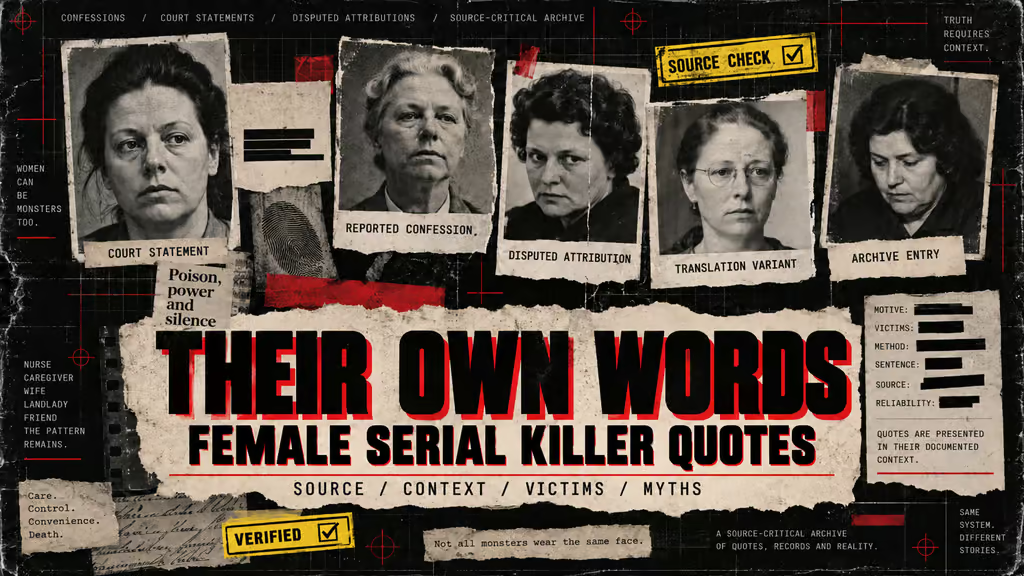
Female killers, confessions and verified statements, separated from quote-site mythology, translation drift and offender glamour.
This archive examines statements attributed to women responsible for multiple murders. It distinguishes court records, official final statements, reported confessions, translations, historical attributions and excluded myths. It is not a trophy wall of “killer quotes.”
VICTIMS BEFORE NOTORIETYWhat Is This Archive?
Direct answer for readers, search engines and AI summaries.
The Verification Edition
A curated archive, not a falsely complete anthology.
Named statement entries with explicit provenance and context.
Popular lines withheld because the source chain is inadequate.
Court record, final statement, testimony, interview, historical report and translation.
Zero fabricated dialogue, invented transcript detail or reconstructed “perfect quotes.”
Not Every Entry Is a Serial Killer
Classification follows event structure and evidence, not notoriety.
How a Quote Enters the Archive
Words are evaluated as evidence with a chain of transmission.
Verbatim institutional record
Official transcript, appellate filing, recorded interview, prison final statement or audio-video record. Even here, context and completeness still matter.
Contemporary reported statement
A journalist, witness or investigator reproduced the words near the event. Useful, but quotation marks do not guarantee stenographic accuracy.
Historical attribution
The line survives through older newspapers, biographies or police histories. Translation and dramatic compression may have changed it.
Excluded
No traceable origin, only circular websites, quote graphics or later fictionalization. The line stays outside the archive.
Their Words, With Labels
All 14 entries are static, crawlable HTML. No runtime script is required to expose the archive.
Aileen Wuornos
“I killed those men, robbed them as cold as ice. And I'd do it again, too.”
Context: A 2001 filing made while Wuornos sought to end her appeals. It does not resolve her earlier, shifting self-defence accounts; it documents a later position taken while asking the state to proceed with execution.
Source chain: Florida appellate and competency record; wording reproduced in court reporting.
Victim record: Six murder convictions; seven confessed killings. Peter Siems' body was never recovered.
Jane Toppan
“My ambition is to have killed more helpless people than any man or woman.”
Context: The line is repeatedly attributed to Toppan after arrest. Surviving newspaper and later book versions vary, so the archive treats it as a historical reported statement rather than a verbatim modern transcript.
Source chain: Contemporary press reporting and later historical compilations; punctuation modernized.
Victim record: Convicted of one murder and found not guilty by reason of insanity in additional charged deaths; many more were suspected.
Leonarda Cianciulli
“I threw the pieces into a pot and added caustic soda.”
Context: Cianciulli gave elaborate accounts of dismembering three women. English versions derive from translated confession and memoir material; exact phrasing varies substantially across editions.
Source chain: Italian confession and memoir tradition; translated quotation, wording varies.
Victim record: Convicted of three murders. The notorious soap-and-cake narrative should not eclipse the victims' identities and financial exploitation.
Clementine Barnabet
“I killed them all: men, women and babies.”
Context: Barnabet's alleged confession was reported amid sensational coverage of the Church of Sacrifice investigation. The surviving record contains contradictions, racialized reporting and uncertain attribution across multiple attacks.
Source chain: Contemporary Louisiana newspaper accounts; historical reliability limited.
Victim record: Convicted in one family murder case; broader serial attribution remains historically disputed.
Mary Bell
“I like hurting people.”
Context: This brief line is widely reproduced from accounts of Bell's childhood conduct. Juvenile records, retrospective interviews and commercial retellings complicate exact-source verification.
Source chain: Reported in later case histories; juvenile-record restrictions apply.
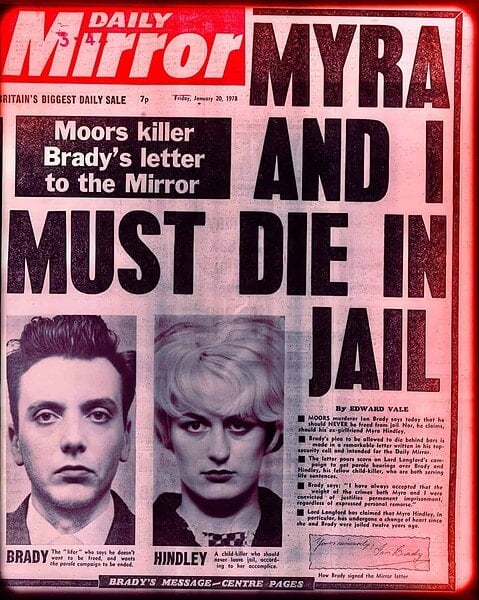
Victim record: Convicted of manslaughter on diminished-responsibility grounds for the deaths of Martin Brown and Brian Howe.
Susan Atkins
“She kept begging, so I stabbed her.”
Context: Atkins gave multiple, changing accounts about the Tate murders. Any quotation must be read against recantations, grand-jury testimony, co-offender evidence and the distinction between personal conduct and group liability.
Source chain: Grand-jury and trial-era reporting; accounts changed over time.
Victim record: Convicted in the Tate–LaBianca murders. She was part of a group offence, not a lone serial offender.
Joanna Dennehy
“I want my fun.”
Context: The phrase was reported through witness and prosecution evidence during proceedings concerning three murders and two attempted murders. It is a fragment, not a complete account of motive.
Source chain: English court reporting; short phrase attributed through witness evidence.
Victim record: Pleaded guilty to three murders and two attempted murders; received a whole-life order.
Waltraud Wagner
“The ones who got on my nerves were dispatched to a free bed with the good Lord.”
Context: The line is attributed to Wagner in accounts of the Lainz Angels of Death case. Translation choices change tone, and the statement should not be treated as a clinical explanation.
Source chain: German-language interview and press tradition; translated wording varies.
Victim record: Convicted with three co-workers in a hospital-patient murder case involving elderly and seriously ill victims.
Maria Zwanziger
“Yes, I killed them all and would have killed more.”
Context: Zwanziger's confession survives through historical German accounts. English wording is necessarily translated and should be treated as an attributed summary rather than a stenographic transcript.
Source chain: Early nineteenth-century German legal and historical reporting; translated.
Victim record: Convicted of poisoning multiple members of households in which she worked.
Mariam Abiola
“I do not feel bad after killing anyone because I see it as a job.”
Context: The quotation circulated in Nigerian crime reporting after arrest. This archive has not located a publicly accessible transcript or judgment reproducing the full interview.
Source chain: Press-reported police statement; primary transcript not located.
Victim record: Included as a multiple-homicide attribution example, not automatically classified as serial murder.
Martha Wise
“The only fun I ever had was after I killed people.”
Context: The line is repeatedly attributed to Wise in historical reporting. It may reflect press compression of longer statements and should not be treated as a precise psychological self-assessment.
Source chain: 1920s newspaper reporting and later historical compilations.
Victim record: Convicted of one murder after a poisoning series affecting relatives; additional deaths were attributed to her.
Amelia Dyer
“You will know all mine by the tape around their necks.”
Context: This statement is traditionally attributed to Dyer after bodies were recovered from the Thames. The wording appears in historical retellings; the original police note or verbatim transcript is not consistently cited.
Source chain: Victorian press and police-history tradition; exact documentary chain incomplete.
Victim record: Convicted of one infant murder and linked to many more deaths within the baby-farming system.
Karla Faye Tucker
“I am so sorry. I hope God will give you peace.”
Context: Tucker's final statement was recorded by the Texas prison system. Her inclusion demonstrates why this archive is about women responsible for multiple murders, not only offenders who meet one serial-murder definition.
Source chain: Texas Department of Criminal Justice final-statement archive.
Victim record: Convicted and executed for the murders of Jerry Lynn Dean and Deborah Thornton.
Nannie Doss
“I was searching for the perfect mate.”
Context: The phrase is widely attributed to Doss in press accounts after her confession. It is a condensed media line and cannot by itself explain the long pattern of intimate-partner and family poisonings.
Source chain: Mid-century newspaper interview tradition; exact transcript not located.
Victim record: Pleaded guilty to one murder and confessed to multiple family and intimate-partner poisonings.
Who Disappears When the Quote Becomes the Story
Victim context is part of the evidence record, not a sidebar.
Dependency as access
Children, infants, elderly patients and disabled adults can be harmed in settings where illness or dependency lowers scrutiny. See the wider analysis of women serial killers and victim patterns.
Quiet methods, familiar spaces
Poisoning, smothering, medication access and domestic control can delay recognition, but they are patterns, not a predictive profile.
Pattern deviations matter
Firearms, blades, roadside encounters and overt attacks show why simplistic “women only poison” narratives fail.
True-crime distortion
Memorable lines become identity shorthand. That is where true crime quote mythology can turn evidentiary fragments into entertainment.
Agency Must Be Individualized
Team cases require evidence, not gender scripts.
Active participation
Planning, procurement, transport, concealment, direct assault and independent benefit can all show individual agency.
Coercion and plea incentives
Threats, isolation and bargaining can shape both conduct and later statements. See female accomplice narratives and coercion evidence.
Homolka as a media test case
Offender mythology can swing between “helpless girlfriend” and “evil seductress,” obscuring the actual record. The Bernardo/Homolka cluster is discussed in Karla Homolka and team-offender mythology.
Wuornos as an individual case
Shifting self-defence claims, court records and execution-stage statements require a case-specific chronology. See the Aileen Wuornos court and execution record.
Systems That Can Hide Repeated Harm
Access and institutional blind spots shape both detection and later mythology.
One payment, continuing cost
Victorian care markets could reward shorter survival where registration, burial controls and oversight were weak. Later body counts can exceed what surviving evidence proves.
Cluster is not cause
A statistical cluster can generate a question but cannot replace toxicology, records, opportunity and proof in each event. See healthcare serial killer detection problems.
Famous Lines We Are Not Publishing
An ethical archive records absence and uncertainty.
Elizabeth Báthory
Blood-bathing speeches and theatrical confessions are excluded. Surviving records are mediated by hostile testimony, politics and later legend.
Delphine LaLaurie
Dramatic first-person quotations circulating online lack a traceable contemporary source.
Belle Gunness
Many alleged final words and letters are paraphrases, reconstructions or unverified newspaper copy.
Juana Barraza
Frequently circulated English quotations vary across translations and remain excluded until matched to a Spanish-language transcript.
Beverley Allitt
No direct first-person quotation meeting this archive’s provenance threshold has been located.
Genene Jones
The archive does not invent a quote where a reliable transcript is unavailable.
How a Quote Becomes a Myth
The most repeatable sentence is rarely the most representative evidence.
Female Killer Quotes FAQ
Direct answers to the archive’s highest-intent search questions.
Are female serial killer quotes always reliable?
No. Many famous lines survive through newspapers, biographies, translations or quote websites. This archive labels source quality before treating a quote as evidence.
Why are some famous quotes excluded?
They are excluded when they lack a traceable source, rely on circular websites, appear fictionalized or cannot be matched to a transcript, filing, recording or credible contemporary report.
Is every woman listed here a serial killer?
No. The archive covers women responsible for multiple murders, including serial, team, double-murder, repeated family homicide and disputed cases.
Why include victim context with quotes?
Offender statements can erase victims when the quote becomes the story. Victim context keeps the words tied to harm, evidence and legal outcome.
Research Base
Primary records, research standards and clearly labelled secondary context.
Serial Murder: Multi-Disciplinary Perspectives
Investigative definition, linkage problems and task-force considerations.
Female Serial Murder Study
Used for sample-bound victim relationship, caregiving access and method patterns, not predictive profiling.
National Academies
Broader rule that forensic claims require validated methods, quality systems and transparent limitations.
Old Bailey Online
Searchable proceedings useful for testing whether a famous historical quotation appears in an actual court record.
Library of Congress
Digitized newspapers that can reveal the earliest appearance and wording changes of a reported confession.
Texas Executed Offenders Archive
Official final statements provide a stronger documentary chain than quote websites, while still requiring legal context.
Discover more from The Dark Side of Humanity
Subscribe to get the latest posts sent to your email.