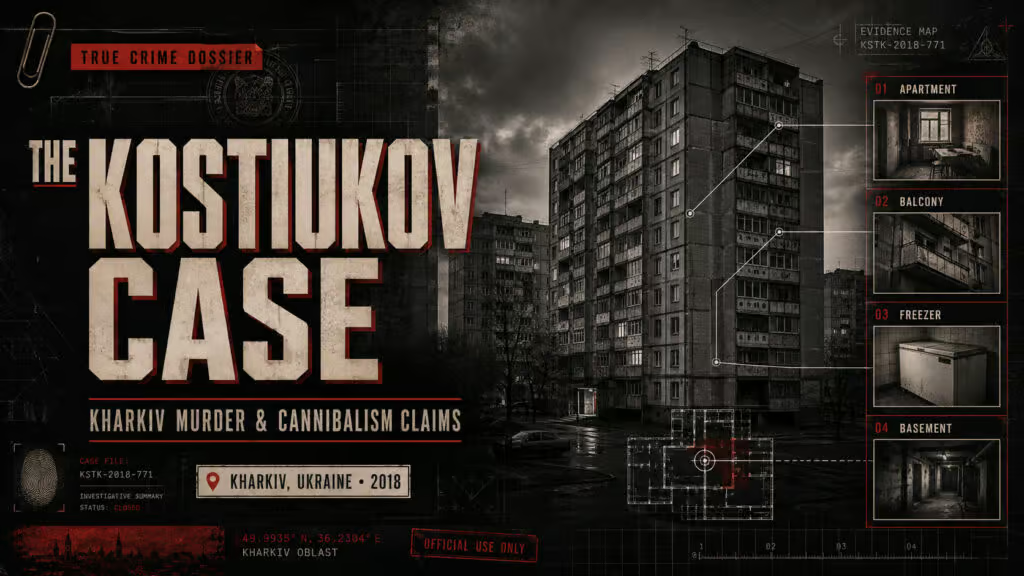
In October 2018, Maksym and Yaroslav Kostiukov murdered Yevhen Petrov in a Kharkiv, Ukraine apartment. Following the killing, the father and son decapitated and dismembered the victim’s body, scattering his remains across multiple locations to conceal the crime.
Although law enforcement reported evidence that human tissue was cooked and consumed, both defendants later denied cannibalism. In 2020, both men were convicted of aggravated intentional murder and sentenced to fifteen years in prison, with no separate conviction for cannibalism or ritualistic crime.
The Kharkiv Cannibalism Case: Kostiukov Murderers
Murder conviction. Postmortem mutilation. Disputed cannibalism allegations. No ritual finding.

Kostiukov Case: Key Facts
The core facts before the cannibalism label takes over the record.
What Happened in the Kostiukov Case?
Yevhen Petrov was killed in a Kharkiv apartment after drinking with Maksym and Yaroslav Kostiukov. His body was decapitated and mutilated, his torso was later recovered near a basement, and his head remained in a box or bag on the apartment balcony. Both defendants were convicted of aggravated intentional murder in 2020.
Were They Convicted of Cannibalism?
No separate cannibalism conviction was entered. Police and prosecutors described evidence that human tissue had been cooked and consumed, but both defendants later denied cannibalism. The conviction was for aggravated intentional murder.
Who Was Yevhen Petrov?
The victim entity comes before the sensational body-recovery narrative.
Yevhen Petrov
Petrov was a 45-year-old Kharkiv resident and former patrol-service employee. Reporting describes unemployment and alcohol misuse, but those details explain vulnerability rather than reducing the seriousness of his death.
He had an ex-wife and a son. Trial reporting says relatives sought compensation, and his former wife had to identify him from the recovered head.
Not a Body-Part Inventory
The case should not reduce Petrov to gore, “human broth,” a former job title, or a cannibalism headline. The offence began with the killing of a person and continued through the destruction and attempted concealment of his remains.
What Is Confirmed in the Kostiukov Case?
Court findings, physical evidence, statements and later denials occupy different evidentiary levels.
Aggravated Murder
Both defendants were convicted of intentional murder committed with particular cruelty and by prior agreement. Each received a fifteen-year prison term.
Mutilation
A decapitated body was recovered near a basement. The head was recovered from the apartment balcony, and broad tissue loss and missing organs were described in public reporting.
Consumption
Police described frozen tissue and cooked liver. Yaroslav initially implicated his father, but later courtroom positions denied cannibalism or challenged the reliability of early statements.
Kharkiv Case Visual Archive
Non-graphic visual context and source-linked records. No fabricated apartment, body or cooking images.
Ukrainian Court Register
Case 645/2/19 is the strongest legal anchor for the conviction and offence category.
Ukrainska Pravda
Reports the January 2019 prosecution transfer to trial for murder committed with particular cruelty and by prior agreement.
No Ritual Finding
The public evidence supports murder, mutilation and disputed consumption allegations. It does not establish an occult group, ritual symbols or ceremonial motive.
Kostiukov Case Timeline: 2018 Murder to 2020 Verdict
The encounter, killing, concealment, discovery, investigation and judgment.
| Date | Event | Evidence standard | Why it matters |
|---|---|---|---|
| 3–4 Oct 2018 | Petrov meets the Kostiukovs and drinks with them before entering the apartment. | reported / date conflict | Public accounts differ on exact date, but the apartment encounter is the start of the case narrative. |
| Apartment gathering | An argument escalates into a fatal knife assault. | court narrative | Supports joint participation rather than simple postmortem assistance. |
| Following day | Petrov’s body is decapitated and extensively cut. | physically corroborated | Postmortem conduct becomes central to aggravation, cannibalism reporting and media framing. |
| 11 Oct 2018 | The torso is found near a basement entrance under garbage bags. | documented recovery | Transforms a missing-person case into a homicide and concealment investigation. |
| 13 Oct 2018 | The defendants are detained; the head is recovered on the apartment balcony. | police release | Directly links the residence to the victim and collapses the disposal strategy. |
| 5 May 2020 | Both men are convicted and sentenced to fifteen years. | court outcome | Final public conviction point; no verified appeal outcome is included here. |
Did the Kostiukovs Eat Human Flesh?
The most searched question requires careful language: alleged consumption, not a separate cannibalism conviction.
Stored, Cooked, Consumed
Police and prosecutors publicly described evidence that human tissue was stored in a freezer, liver was cooked and eaten, and the son became ill after consuming it. The son’s early account reportedly implicated his father in boiling and eating flesh.
Later Denials
Both defendants later denied eating human flesh. Defence positions challenged the reliability of early statements. The legal conviction was for aggravated murder; cannibalism was part of the factual allegation and media identity, not a separate verdict label.
Were They Convicted of Cannibalism?
No separate cannibalism conviction was entered. The responsible language is “reported cannibalism,” “cannibalism claims,” “alleged consumption” or “police said human tissue was cooked and consumed.”
Other Cannibalism Cases
For broader context, see other documented and alleged cannibalism cases.
Was the Kostiukov Murder an Occult or Ritual Crime?
Extreme postmortem mutilation and alleged cannibalism do not automatically prove ritual motive.
No Ritual Record Located
No evidence located for this dossier establishes a ritual or occult motive. The accessible sources do not show ritual symbols, ceremonial planning, a known occult group, sacrifice language, written doctrine or religious motive.
Occult Labelling Risk
The case can be discussed beside documented occult and ritual crime only as a classification boundary: how investigators distinguish evidence from sensational labelling.
Evidence Against Maksym and Yaroslav Kostiukov
An evidence ledger separating court core, physical exhibits, police statements and secondary reporting.
| Exhibit | Item | Source / recovery | Status | Investigative value |
|---|---|---|---|---|
| E-01 | Decapitated torso | Recovered near basement entrance | forensic core | Established homicide, dismemberment and transfer from apartment. |
| E-02 | Victim’s head | Box or bag on balcony | physically documented | Identity evidence and direct link between residence and victim. |
| E-03 | Smooth-edged tissue excisions | Chest, abdomen, back, thigh, shin | forensic observation | Supported deliberate cutting after the assault. |
| E-04 | Missing internal organs | Autopsy / forensic reporting | partly public | Supported postmortem organ removal; exact inventory not fully public. |
| E-05 | Frozen flesh | Apartment freezer | police statement | Supported extended storage and alleged consumption narrative. |
| E-06 | Cooked liver / food residue | Apartment kitchen | police statement | Reported basis for cannibalism allegation; full lab detail not public. |
| E-07 | Knife assault evidence | Court and police accounts | wound conflict | Public sources differ between chest-stabbing and neck-wound accounts. |
| E-08 | Early statement by Yaroslav | Reported police / court coverage | later disputed | Central to cannibalism allegation, but challenged by later defence position. |
Kostiukov Trial, Conviction and 15-Year Sentences
The verdict resolved murder liability but left appeal reporting and some forensic details incomplete in public sources.
Maksym Kostiukov
Trial reporting assigned the stabbing role to Maksym, while police and prosecution sources connected him to postmortem handling and alleged consumption. He denied eating human flesh at trial.
Yaroslav Kostiukov
Trial reporting described Yaroslav restraining Petrov during the assault and assisting with dismemberment. Early statements attributed consumption to his father; later defence accounts challenged that version.
15 Years Each
Both men received fifteen-year prison sentences in May 2020. Prosecutors had sought life imprisonment and reportedly discussed appeal; a publicly verified final appellate outcome has not been located.
Kostiukov Case FAQ
Answers that do not turn disputed claims into proven facts.
What is the Kostiukov case?
The Kostiukov case is a 2018 Kharkiv murder in which Maksym and Yaroslav Kostiukov were convicted of killing Yevhen Petrov, mutilating his body and attempting to conceal remains.
Who was Yevhen Petrov?
Yevhen Petrov was a 45-year-old Kharkiv resident and former patrol-service employee who was killed after entering the defendants’ apartment.
Did the Kostiukovs eat human flesh?
Police and prosecutors publicly described evidence of human tissue being cooked and consumed, but the defendants later denied cannibalism. No separate cannibalism conviction was entered.
What sentence did they receive?
Both Maksym and Yaroslav Kostiukov were sentenced to fifteen years in prison after their 2020 aggravated-murder convictions.
Was this an occult or ritual murder?
No evidence located for this dossier establishes a ritual or occult motive. The case involved extreme mutilation and alleged cannibalism, but those facts alone do not prove ceremonial intent.
What happened to the appeal?
No clearly authoritative later appellate result has been located. The final appeal outcome remains unverified.
Sources and Verification
Court register first, then police, Ukrainian reporting, trial reporting and carefully marked secondary coverage.
Ukrainian Court Register
Case 645/2/19 identifies the offence category and court-file context for the 2020 judgment entry.
Kharkiv Police
Confirms the discovery, arrests, balcony head recovery and early account of boiling and eating flesh.
Ukrainska Pravda
Reports that the father and son were sent to trial for murder committed with particular cruelty and by prior agreement.
NewsRoom
Reports missing tissue, absent organs, brilliant-green-treated cuts, freezer storage, cooked liver and psychiatric findings.
Kharkiv Times
Reports the 5 May 2020 judgment, fifteen-year terms, defendants’ positions and balcony head recovery.
Translation Note
Names are standardized as Maksym Kostiukov, Yaroslav Kostiukov and Yevhen Petrov. English-language sources may use Maxim, Kostyukov, Yevgeny or Evgeny.
Discover more from The Dark Side of Humanity
Subscribe to get the latest posts sent to your email.