FILE NO. 0134Case status Active

On the afternoon of Saturday, August 1, 2026, a gunman opened fire at a newly opened In-N-Out Burger in Twin Falls, Idaho, and along the busy road and parking lots around it. Three people were killed and seven were wounded. An off-duty Idaho state trooper and an armed bystander fired back, and police credit them with driving the gunman away from the restaurant. He then crossed to the Twin Falls Visitor Center and onto the canyon rim trail, where he shot himself when an officer found him. The restaurant had been open for eight days.
Content warning: this report concerns a public mass shooting, firearm violence, death and serious injury.
The Restaurant
Twin Falls, a southern Idaho city of about 56,000 people, is a regional centre for much of the south of the state. The In-N-Out on Blue Lakes Boulevard North opened on July 24 as part of the California chain’s expansion into Idaho. It sits in a busy shopping plaza on the city’s north side, an area of hotels, chain stores and restaurants near the visitor centre and the Perrine Bridge over the Snake River Canyon. Hundreds of people were in the area that afternoon.
The Payment Window
Police received the first reports of an active shooter at about 2:29 p.m. MDT. Surveillance video later released by police, with police narration, shows how it began. The gunman drove up to the drive-through payment window and fatally shot the first victim, In-N-Out employee Ashley Garibay. He parked and shot a second man, Christopher Claunch, who was in his own car.
A former Twin Falls police officer and former state trooper, Austin Scott James, was in the drive-through line with his wife and a friend. He ran toward the shooting and was shot once; the bullet shattered his arm and severed an artery. He had not drawn his own gun before he was hit, for fear that arriving officers would take him for the shooter. Others pulled him back.
The gunman returned to the payment window, saw employees giving aid to Garibay, and fired through the window at them. His handgun jammed. He went back to his car for a rifle. A driver across the street filmed a man dressed in black walking to a white car with a long rifle, opening the door and the trunk and reaching inside. The driver left, fearing he was getting more weapons.
Inside
Nayeli Rodriguez, 40, of Burley, was inside waiting for food with her daughters when she heard shots from the kitchen area. An employee called out that it was a shooting and told people to get down. An older man tried to protect her and her daughters, and they were among the last to run out. “We were trying to get as far as we could and some angels let us in their car,” she said. “I left my car there in the parking lot.”
The video shows terrified employees diving for cover and shielding one another. Steve McClain, an off-duty Idaho State Police trooper, was inside the restaurant. According to police, he searched for the gunman and helped usher people to the exit, moving past fleeing employees toward the payment window.
The Road
The gunman ran back to the drive-through with the rifle and fired at customers. He exchanged fire with McClain at the payment window, then fired into it again and hit a man in the abdomen who was trying to help McClain and Garibay. He moved away from the restaurant toward Blue Lakes Boulevard North and fired at cars stopped at a red light. Two sisters-in-law were hit: one in the face, critically, and the other, six months pregnant, less seriously. A man on a motorcycle was shot in the left elbow.
Lane Koehn, 34, was at the light. He saw someone with an AR-style rifle come out of the drive-through, and bullets hit the car in front of him. “I could tell he was trying to figure out where to go, and somebody in the drive-thru line with a handgun was shooting at him,” he told NBC News. He described the gunman as “panicked” and moving “kind of erratically,” and believed the bystander’s fire drew the gunman’s attention: “The shooter was solely focused on him, and [it] allowed us to get out.”
The Bystander
The armed bystander was Jordan Salinas, 35, of nearby Kimberly. He had arrived with his girlfriend after the shooting began and went toward the gunfire, carrying a suppressed FN Five-seven pistol. He told ABC News he saw the gunman aiming a rifle at passing vehicles. “He seemed unusually comfortable aiming that rifle at those cars,” he said. “And then as soon as some rounds started coming at him everything changed.” He said the gunman did not know where he was when he opened fire. “My goal was to try to help as many people get home, as possible,” he said.
Koehn pulled into a lot on the other side of the restaurant and saw an employee dragging a wounded co-worker, shot in the chest, across the parking lot, “screaming her name, telling her, ‘Wake up.'” The employee, Koehn and the man with the pistol stayed with her, along with a retired EMT, until paramedics arrived.
The Charging Station

The gunman ran north to a Tesla charging station and fired into two parked cars. In the first, he wounded Terry Dudley, a taxi driver, who was shot “in the back, around the neck area,” his son told NBC News; he was intubated in hospital. In the second, he killed Dale Schultz, 66, of Salt Lake City, and wounded Schultz’s wife. The couple had been driving home from a family reunion.
The Visitor Center and the Trail


He walked on toward the Twin Falls Visitor Center, where about three dozen people were inside. A tour guide, Gabrielle Burton, had opened the front door thinking the sounds were fireworks. When she realised they were gunshots, she brought visitors in from outside, moved everyone away from the windows and, when she saw the gunman approaching, ordered them into a back hallway that could be locked. Two people hid behind a drink refrigerator and another behind a stagecoach. The gunman walked past the stagecoach without seeing the person behind it and left through an emergency exit onto the Canyon Rim Trail.
On the trail he met two employees from a Dick’s Sporting Goods store. One, Braxton Stuebe, 17, had evacuated customers through the back of the store. Stuebe talked to the gunman, pleaded with him to stop shooting and mentioned his family. The gunman reportedly became emotional and said, “Just get away from me, man.” The exchange let a group farther up the trail run away. He fired at Stuebe, missed, and ran on.
The first officer was on the scene within three minutes of the call, Police Chief Matthew Hicks said, and McClain directed him toward the gunman. Officers searched the trail, a construction site and the canyon edge while chasing false reports of a second shooter. An officer found the gunman hiding near the canyon edge between the construction site and a Petco. When the officer confronted him, he shot himself, and his body fell into the canyon. Hicks said it took about 90 minutes “to determine there was only one shooter involved,” because of “multiple reports of possible active shooters in different locations,” including reports of suspects heading toward the mall.
The Dead

Ashley Garibay, 23, of Stockton, California, was an In-N-Out manager working at the new location to train staff. Lynsi Snyder, the company’s president, said she “was taking care of our most important asset” and that “her life was taken by a disgusting human who doesn’t value the lives of others or his own.” A vigil was held for her in the parking lot of a Stockton In-N-Out.
Christopher Claunch, 59, was from Hagerman, Idaho. Dale Schultz, 66, was from Salt Lake City. About 100 people attended a service for him at St. Olaf Catholic Church in Salt Lake City on August 4, where church leaders said a bronze piece he had made and donated would become a lasting part of the church.
The Wounded
On Sunday, August 2, police said two of the wounded had been treated and released, three were stable and two were critical. The woman shot in the face on Blue Lakes Boulevard was released from St. Luke’s Magic Valley Medical Center on August 14 and faces reconstructive surgery. The motorcyclist needed his elbow and arm reconstructed and was left with nerve damage in his fingers. A man shot twice while waiting for his Tesla to charge, with injuries to his spine and lung, spent 30 days in a coma and stayed in hospital for 60 days.
The Gunman

Police identified the gunman as Chad Williams, 24, and said he died of a self-inflicted gunshot wound. Detectives are confident he acted alone, Hicks said, and his family is cooperating fully. On August 7 police said there was no known motive. Williams attended the College of Southern Idaho from August 2022 to December 2023 without graduating. He served as a student senator and was impeached from the post for “procedural” reasons. Property records show his family had lived in Waddell, Arizona, since 2010. No one has been charged in connection with the attack.
Use of Force
Hicks credited McClain and Salinas: “We believe their actions helped drive the suspect away from the scene, preventing further casualties.” He later called Stuebe a “hero” whose actions “likely gave others the time they needed to escape harm.” Twin Falls County Sheriff Jack Johnson called them “true heroes.” Salinas later received a silver bullet from a precious metals dealer and, on September 2, the Speaker’s Award for Patriotic Valor from the Idaho House speaker, Mike Moyle.
The Twin Falls Prosecuting Attorney, Grant Loebs, reviewed a Twin Falls police officer’s use of force during the response. According to the police department, he found that the officer had a “reasonable belief that he was acting in defense of civilians fleeing the active-shooter scene” and that insufficient evidence existed to “support criminal charges.” The fetched report does not say what that use of force was.
Aftermath
The FBI joined the investigation on August 2 and set up an online tip line. Officers from Boise, Nampa, Caldwell and Meridian and extra state troopers came to Twin Falls to support local police, who were also dealing with an unrelated shooting elsewhere in the city that day. A family assistance center opened at Sawtooth Elementary School on August 4 and 5. The city said anyone who had been at the restaurant, the Canyon Park West complex, the visitor center, the trail or on Blue Lakes Boulevard during the shooting was a victim and might qualify for mental health support through the Idaho Crime Victims Compensation Program.
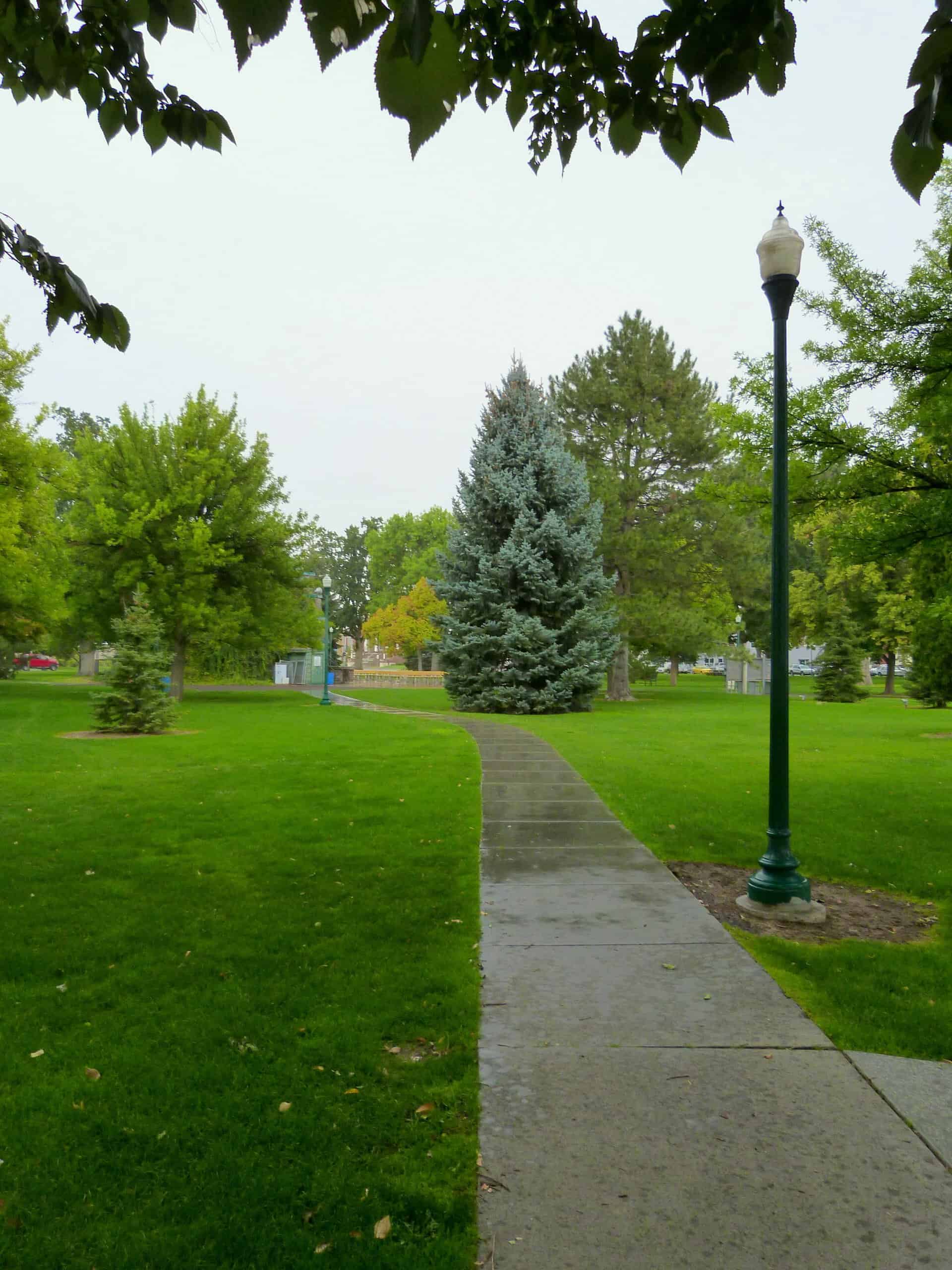
A candlelight vigil was held at Twin Falls City Park on August 4. The In-N-Out stayed closed for six days and reopened at 4:15 p.m. on August 7. Police and the school district put a permanent resource officer in every secondary school. On October 1, after pressure from owners who could not quickly unplug from chargers, Tesla announced an Emergency Drive Away feature for U.S. vehicles.
What Remains Open
No motive has been made public. The gunman is dead, so there will be no prosecution for the killings. The full reconstruction of the shooting, including the exact sequence of fire between the gunman, McClain and Salinas, has not been published in the sources reviewed.
Frequently Asked Questions
What happened in Twin Falls on August 1, 2026?
A gunman opened fire at an In-N-Out Burger and in the surrounding area, killing three people and wounding seven.
Who was killed?
Ashley Garibay, 23, of Stockton, California; Christopher Claunch, 59, of Hagerman, Idaho; and Dale Schultz, 66, of Salt Lake City.
Who was the gunman?
Chad Williams, 24. Police say he acted alone and died of a self-inflicted gunshot wound.
Who fired back?
Off-duty Idaho State Police trooper Steve McClain and an armed bystander, Jordan Salinas, 35. Police credit them with driving the gunman away from the restaurant.
Where did the gunman go after the restaurant?
Through the Twin Falls Visitor Center and onto the Canyon Rim Trail, where he shot himself when an officer found him.
What was the motive?
On August 7, police said there was no known motive.
Will anyone be prosecuted?
No. The gunman is dead. A prosecutor found insufficient evidence to charge a Twin Falls police officer over his use of force during the response.
Sources
Citations & Sources
- PBS NewsHour (Associated Press), “Authorities seek a motive in mass shooting at an Idaho In-N-Out Burger,” August 3, 2026: https://www.pbs.org/newshour/nation/authorities-seek-a-motive-in-mass-shooting-at-an-idaho-in-n-out-burger
- NBC News, “Armed bystander distracted gunman in fatal Idaho In-N-Out shooting,” August 2026: https://www.nbcnews.com/news/us-news/bystander-handgun-distracted-gunman-fatal-shooting-rcna590473
- KMVT, “Witness speaks out after confronting gunman at Twin Falls In-N-Out,” August 5, 2026: https://www.kmvt.com/2026/08/05/witness-speaks-out-after-confronting-gunman-twin-falls-in-n-out/
- ABC30 (ABC News), “In-N-Out shooting: Police release chilling surveillance video from chaotic scene,” August 7, 2026: https://abc30.com/story/shooting-police-release-chilling-surveillance-video-chaotic-scene/19642114/
- KIVI, “Twin Falls prosecutor clears officer in In-N-Out shooting response”: https://www.kivitv.com/twin-falls/twin-falls-prosecutor-clears-officer-in-in-n-out-shooting-response
- Wikipedia, “2026 Twin Falls shooting” (accessed October 16, 2026): https://en.wikipedia.org/wiki/2026_Twin_Falls_shooting
Discover more from The Dark Side of Humanity
Subscribe to get the latest posts sent to your email.