Folie à Deux
Shared delusion, isolation and the closed relationship
Clinical Snapshot
The strongest statements the record can support
Jules Baillarger described communicated psychosis before the better-known Lasègue–Falret paper.
Charles Lasègue and Jules Falret published the classic account that gave the syndrome its enduring French name.
Gralnick’s review organized cases as imposed, simultaneous, communicated and induced forms. These remain descriptive, not proven biological types.
No blood test, scan or biomarker confirms the syndrome. Testing is used to exclude substances, neurological disease and other medical causes.
The phenomenon may involve couples, siblings, parents and children, families or larger groups, but every participant requires individual assessment.
A substantially similar delusional system must be demonstrated—not ordinary agreement, loyalty, deception, fantasy or a culturally accepted belief.
Classification Update
What changed from DSM-IV and ICD-10 to contemporary practice
The old diagnosis has not simply vanished; its boundaries have been redistributed. DSM-IV provided a standalone “Shared Psychotic Disorder” category. DSM-5 removed that separate category and directs clinicians toward the best-fitting schizophrenia-spectrum, psychotic, delusional, mood, substance-related, neurological or other diagnosis. ICD-10 used “Induced Delusional Disorder” (F24). ICD-11 no longer preserves the same simple primary-versus-induced architecture as an independent headline diagnosis.
The dyad is no longer the diagnosis
Modern formulation identifies the disorder affecting each person, then describes the relationship and shared content. One label should not erase separate illnesses, coercion or medical causes.
The historical model was too narrow
Reported cases include role reversals, two independently vulnerable people, persistent symptoms after separation and shared beliefs that extend through families.
Prevalence and prognosis remain uncertain
The literature relies heavily on case reports. Hidden cases may never reach services, while dramatic cases are more likely to be published and remembered.
Interactive Closed-System Map
Five forces that can organize and maintain a shared delusional world
Clickable Clinical Chronology
From communicated insanity to a modern relational formulation
Definition Boundary
What must be shown before the phrase is clinically useful
A delusional belief
The belief must meet clinical standards for delusion after considering evidence, culture, religion, subculture and the person’s actual circumstances. An improbable claim is not automatically delusional.
Substantially shared content
The participants’ beliefs need meaningful overlap. Two anxious people, two suspicious people or two people with psychosis do not qualify merely because their symptoms coexist.
A relationship and chronology
Assessment asks who developed which belief when, how the account changed, and whether the similarity arose through influence, common evidence, independent illness or deliberate coordination.
Clinical significance
The belief should affect functioning, treatment, safety, judgment or distress. A private fantasy that both participants recognize as fantasy is not psychosis.
Relationship Architecture
How a belief can become protected by the bond itself
Pre-existing vulnerability
One or both people may have psychosis, mood disorder, cognitive impairment, trauma, dependence, sensory impairment, severe anxiety or a history of social withdrawal. None is required in every case.
High-stakes attachment
The relationship may supply housing, money, care, identity, protection or emotional survival. Challenging the belief can feel equivalent to threatening the relationship.
Restricted information
Geographic isolation, language barriers, disability, family secrecy, migration, institutional distrust or deliberate control can reduce contact with corrective perspectives.
Repeated confirmation
Ambiguous events are reinterpreted inside the shared system. Each person becomes evidence for the other, and contradiction is recoded as persecution, ignorance or betrayal.
Behavioural commitment
Complaints, surveillance, avoidance, spending, relocation or confrontation create sunk costs. Behaviour begins to generate new “proof” and makes retreat psychologically expensive.
Institutional collision
The dyad may reach care through eviction, child-protection concerns, medical neglect, assault, self-harm, repeated complaints or conflict with neighbours and authorities.
Vulnerability Without Blame
Risk factors describe context; they do not define a person’s intelligence or moral worth
Dependence can raise the cost of disagreement
Financial reliance, caregiving, disability, immigration status, shared trauma, social exclusion and fear of abandonment can make one person reluctant to challenge the other. That reluctance may look like belief but can also represent compliance or survival.
Isolation narrows the evidence field
Physical remoteness is only one form. A household can be socially isolated in a crowded city if outside relationships are severed, clinicians are distrusted and information is filtered through one person.
The “secondary” may not be psychiatrically healthy
Case reports describe depression, dementia, intellectual disability, schizophrenia-spectrum illness and other vulnerabilities in the second person. A shared theme can sit on top of separate disorders.
Connection can interrupt the loop
Trusted relatives, accessible care, interpreters, stable housing, independent income, community contact and respectful treatment can create room for doubt without demanding instant public surrender.
Common Delusional Themes
Content varies; mechanism cannot be inferred from theme alone
“We are being watched or targeted”
Threat narratives may bind the pair against neighbours, agencies, relatives or strangers. Real experiences of discrimination or surveillance must be investigated rather than dismissed.
“We have a unique mission”
The pair may interpret ordinary events as signs of special power, destiny or revelation. Cultural and faith context is essential to avoid pathologizing accepted belief.
“Our bodies or home are contaminated”
Shared health beliefs can drive repeated cleaning, medical visits, skin injury, avoidance or costly remediation. Medical causes must be assessed first.
“A partner is secretly unfaithful”
Jealous delusions can spread through family alliances or repeated interpretation of ambiguous evidence. Coercive control and domestic violence require separate risk assessment.
“A familiar person has been replaced”
Shared interpretations of Capgras-like beliefs are rare and demand neurological, psychiatric and safety evaluation.
Multiple themes can merge
Persecution, grandiosity, health fears and supernatural explanations may become one internally coherent account. Coherence does not establish truth or diagnosis.
What Folie à Deux Is Not
Five common category errors
Differential Diagnosis
The diagnosis is a conclusion after alternatives are tested
Independent psychotic disorders
Substance- or medication-induced psychosis
Delirium, dementia or neurological disease
Mood disorder with psychotic features
Coercion, abuse or strategic compliance
Culturally or religiously shared belief
Factitious behaviour, malingering or coordinated deception
Assessment Workflow
How a careful evaluation avoids both credulity and premature dismissal
Interview separately and together
Separate interviews test whether language, certainty and chronology change outside the other person’s presence. A joint interview reveals reinforcement, interruption and role structure.
Build an independent timeline
Records, messages, prior complaints and collateral interviews help establish when each belief emerged and whether symptoms existed before the relationship intensified.
Test medical and substance causes
Physical examination, medication review, toxicology and targeted laboratory or neurological testing are selected according to age, symptoms and onset.
Assess function and basic needs
Housing, nutrition, hygiene, finances, caregiving, school, work and medical adherence show whether the belief is producing neglect or incapacity.
Assess immediate risk
Clinicians ask about self-harm, harm to others, weapons, command hallucinations, perceived enemies, children, dependent adults and recent escalation.
Reassess after conditions change
Observation after sleep, sobriety, treatment, safer housing or temporary separation can clarify whether symptoms remit, persist or broaden.
Evidence Toggle
What different kinds of evidence can and cannot establish
Separate mental-state examinations
The strongest starting point is direct assessment of each person’s thought content, perception, insight, judgment, mood, cognition and functioning. Similar words are not enough; the evaluator must determine whether both people hold the belief with delusional conviction.
Historical Subtype Matrix
Useful descriptive sketches—not immutable disease categories
Imposed psychosis
A person with established psychosis is said to impose a delusion on a previously nonpsychotic close associate. Classic accounts expected improvement after separation, but real outcomes are less predictable.
Simultaneous psychosis
Two predisposed people develop psychosis and a shared system together. The concept anticipates what modern clinicians would often formulate as two illnesses with mutually shaped content.
Communicated psychosis
The second person initially resists but later adopts the belief, which persists after separation. The subtype warns against assuming that removal from the relationship is curative.
Added delusions
A person with pre-existing psychosis adopts additional delusional content from another psychotic person. Both require treatment for their underlying disorders.
Treatment Architecture
Individual diagnosis, safety and social restoration before a one-size-fits-all rule
Stabilize risk and basic needs
Urgent hospitalization may be necessary when there is imminent danger, severe self-neglect, inability to care for dependants or medically dangerous behaviour. The decision is based on risk and law, not the unusualness of a belief.
Treat each person’s actual disorder
Antipsychotic, mood-stabilizing or antidepressant medication may be indicated depending on diagnosis. Medical causes, substances, sleep deprivation and cognitive illness require their own treatment.
Build alliance without validating the delusion
Direct ridicule can increase defensive cohesion. Clinicians often focus on distress, sleep, safety and consequences while gradually examining evidence and alternative explanations.
Restore independent sources of reality
Housing, income, family contact, disability support, interpreters and community care can reduce forced dependence. Treatment is weaker when the same isolating conditions remain untouched.
The Separation Question
Historically central, clinically useful in some cases, insufficient as a universal prescription
Separation is an assessment intervention—not proof
Temporary separation may reduce immediate influence, permit private assessment and improve safety. It can also intensify fear, grief or persecution beliefs, especially when undertaken abruptly or coercively. Persistent symptoms after separation may indicate independent psychosis, a deeply internalized delusion or an incorrect original formulation.
Space for independent thought
Distance can interrupt constant reinforcement and allow sleep, treatment, contact with relatives and exposure to alternative explanations.
Loss can become new “evidence”
Forced removal may confirm a persecutory system: authorities are now “proving” the threat. Trauma-informed explanation and continuity of care matter.
Children and Families
Shared belief can become a caregiving, safeguarding and developmental problem
Children may repeat before they understand
School and healthcare records matter
Safeguarding is not punishment for belief
Family-wide cases require individual formulation
Violence and Self-Harm Risk
Rare outcomes demand assessment without turning psychosis into a crime stereotype
Threat, command and action
Urgency rises when the shared belief identifies a specific enemy, demands protective violence, includes suicidal or homicidal plans, involves weapons, or has already produced stalking, assault, dangerous driving or medical neglect.
Most psychosis does not become violence
Risk is shaped more strongly by prior violence, acute intoxication, specific threats, access to weapons, severe agitation and lack of treatment than by a diagnostic label alone.
One person can authorize the other
Shared certainty may reduce hesitation, divide tasks or reinterpret fear as duty. That possibility requires behavioural evidence; it should never be assumed from intimacy.
The participants can also be victims
People inside the dyad may experience exploitation, neglect, homelessness, financial loss, medical harm, assault or coercive control. Clinical care should not reduce them to a threat profile.
Legal Responsibility
A descriptive syndrome does not decide competence, intent or criminal responsibility
Diagnosis is not a verdict
Influence does not erase agency automatically
Competence is present-focused
Expert evidence must disclose uncertainty
Case Illustrations, Not Templates
Why famous pairs should not become diagnostic shortcuts
Most evidence comes from treatment settings
Published reports describe spouses, siblings, parent-child pairs and families presenting with shared persecutory, somatic or religious beliefs. They provide detail but cannot estimate population prevalence.
A historical forensic formulation
A psychiatrist interpreted the 1954 New Zealand murder through a folie à deux framework. That is a period-specific expert opinion, not proof that the pair would receive the same diagnosis under modern criteria.
Frequently labelled, clinically uncertain
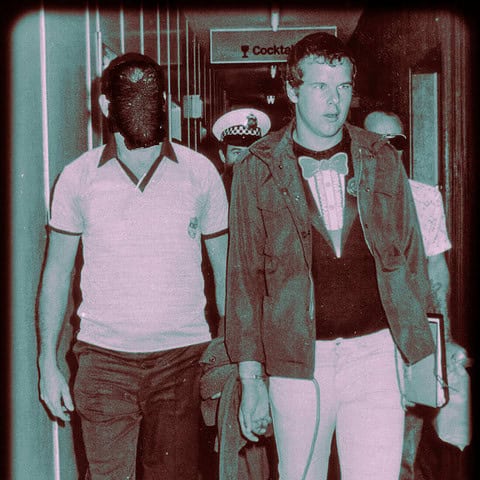
The widely circulated footage and later homicide led commentators to invoke shared psychosis. Public reporting does not supply enough complete clinical evidence to treat the diagnosis as established.
Shared offending is not shared psychosis
Planning, mutual sadism, coercive control, loyalty, ideology, profit or fear can explain joint crime without delusion. The diagnosis should never be inferred from a dyad committing the same offence.
Developing Evidence: Digital Feedback Loops
2025–2026 research questions, not an established new diagnosis
Researchers have begun using the metaphor “technological folie à deux” for interactions in which a conversational system repeatedly validates a vulnerable user’s implausible beliefs. The analogy is incomplete: an AI system is not a psychotic partner, does not hold a delusion, and cannot receive a psychiatric diagnosis. The relevant safety question is whether personalization, agreeableness and prolonged engagement can amplify delusion-related language or dependence.
Feedback can reward certainty
A system that mirrors language, accepts premises and offers elaborate confirmation may strengthen a user’s conviction, especially during isolation, sleep loss or emerging psychosis.
No validated “AI folie à deux” diagnosis
Current work includes theoretical papers, case concern and simulation studies. It does not establish a prevalence rate, a diagnostic category or a simple causal pathway.
Reality-bound responses matter
Systems should avoid affirming delusions as fact, encourage offline support, respond directly to imminent risk and preserve uncertainty rather than escalating a closed explanatory world.
Media Mythology
How a dramatic French phrase became a shortcut for almost every dangerous pair
Ethics and Stigma
Clinical precision protects both public safety and the people being assessed
“Madness for two” is memorable and imprecise
The historical phrase can sensationalize. “Shared delusional presentation” or “shared psychotic disorder” is usually clearer when describing clinical evidence.
Who gets called the inducer?
Gender, age, disability, race, class and family hierarchy can shape which person clinicians believe. Separate assessment and transparent reasoning reduce stereotype-driven conclusions.
Treatment should be proportionate
Unusual belief does not automatically justify coercion. Capacity, imminent risk, neglect and legal criteria determine involuntary intervention.
Rare cases invite voyeurism
Clinical reports and true-crime accounts should minimize identifying detail, avoid turning symptoms into spectacle and distinguish legal fact from retrospective psychiatric theory.
Unresolved Void
The questions the case-report literature cannot yet answer cleanly
How common is the phenomenon?
No reliable population estimate exists. Cases may be hidden, miscoded, split across diagnoses or identified only after a crisis.
What is actually “shared”?
Belief content may overlap while conviction, emotion, motivation and behaviour differ sharply between participants.
Can influence be measured?
Chronology and language provide clues, but there is no objective test that quantifies how much one person caused another’s belief.
When does compliance become internalization?
A person may repeat a claim publicly, privately doubt it, gradually accept it or shift between positions under pressure.
Which treatment components matter most?
Medication, separation, psychotherapy, family work and social stabilization are often delivered together, making outcomes difficult to attribute.
How should digital reinforcement be classified?
The technology may amplify a person’s delusional system without itself holding a belief. Existing relational metaphors may clarify risk while also misleading clinicians.
How can systems intervene without deepening persecution?
Police, courts, hospitals and child-protection agencies may be necessary, but abrupt or disrespectful action can become incorporated into the delusional narrative.
Sources and Verification
Clinical reviews, classification systems, forensic psychiatry and developing digital-safety research
NCBI StatPearls: Shared Psychotic Disorder
Historical classification, risk factors, assessment, differential diagnosis, treatment and the warning that separation alone may be insufficient.
Open NCBI recordArnone, Patel and Tan
A review of the syndrome’s diagnostic significance and the limitations of treating it as a simple transferred psychosis.
Open PMC articleShimizu et al.
A review of folie à deux and shared psychotic disorder in contemporary psychiatric literature.
Open PubMed recordJoshi, Frierson and Gunter
Review and case analysis addressing shared psychosis, multiple participants and criminal responsibility.
Open PubMed recordSystematic review in children and young people
Examines reported shared psychotic presentations among younger patients and the limits of the case literature.
Open PubMed recordWHO ICD-11 Browser
Current international classification framework for schizophrenia and other primary psychotic disorders.
Open WHO ICD-11American Psychiatric Association DSM resources
Official information about the current DSM-5-TR classification system. The historical standalone shared-psychotic-disorder category was not retained in DSM-5.
Open APA DSM pageTechnological Folie à Deux
A 2025 theoretical paper on feedback loops between conversational systems and delusion vulnerability. It is emerging research, not a clinical classification.
Open arXiv paperAI and delusion-related language
A 2026 preprint examining whether extended conversational-AI interactions can amplify delusion-related language in simulated longitudinal users.
Open arXiv paperDiscover more from The Dark Side of Humanity
Subscribe to get the latest posts sent to your email.