FILE NO. 0111Case status Convicted
CONTENT WARNING: This article discusses murder, cannibalism (see also the broader dossier of notorious cannibalism cases), mutilation, sexual violence, and severe psychological disturbance. For longer historical context, see the history of cannibalism.
THE HOUSE THAT HID THE FANTASY
The farmhouse in Wüstefeld did not announce itself as the site of one of Europe’s most disturbing modern crimes. It was not a ruined asylum, not a cellar beneath a city, not the obvious lair of a predator. It was a sprawling timber-framed property near Rotenburg an der Fulda in Hesse, Germany, occupied by a man many neighbours regarded as polite, helpful, quiet, and harmless.

Armin Meiwes did not present as chaos. He presented as order.
He had served in the German army. He worked as a computer technician. He helped neighbours with practical tasks, hosted gatherings, and cultivated the mild social camouflage of a lonely but functional middle-aged man. To the community around him, he was eccentric, perhaps, but not dangerous. The horror was not visible from the road.
It was upstairs.
Inside the farmhouse, investigators later found the evidence of a private world built around a fantasy so extreme that it seemed to test the limits of criminal law, forensic psychology, and moral language itself. There was a room prepared for slaughter. There were tools. There was a video recording. There were stored human remains. And there was the almost incomprehensible fact that the victim, Bernd Jürgen Brandes, had not been abducted in the conventional sense. He had travelled to Meiwes willingly.
The case became known globally as the Rotenburg Cannibal case. But that label, while accurate in the most basic sense, is also too crude. Cannibalism was only the final expression of the pathology. The deeper terror lay in the architecture beneath it: abandonment turned into possession, loneliness turned into appetite, consent twisted into annihilation, and fantasy given a room, a schedule, a camera, and a freezer.
THE BOY WHO INVENTED A BROTHER
Armin Meiwes was born on December 1, 1961, in Essen, West Germany. His early life has often been examined through the lens of abandonment, isolation, and maternal control. His father left the family when Meiwes was young, and accounts of his upbringing describe a household dominated by his mother, Waltraud, whose influence became suffocating after the departure of the male figures in his life.
The absence of a stable father and the loss of his brothers left Meiwes with a wound that appears to have become central to his later fantasy life. As a child, he reportedly invented an imaginary younger brother named “Franky.” This figure was not merely a playmate. He was a psychological substitute for permanent companionship: someone who would not leave, betray, reject, or abandon him.
That word permanent is crucial.
For most people, intimacy is relational. It requires separation. One person loves another while accepting that the other remains independent, embodied, and free. In Meiwes’s fantasy system, separation itself became intolerable. The only relationship that felt secure was one in which the other person could be taken completely inside himself. The desire for companionship mutated into the desire for incorporation.
Cannibalistic fantasy, in this context, was not only about flesh. It was about possession. To eat another human being was, in Meiwes’s distorted emotional logic, to solve the problem of abandonment forever.
This does not excuse him. It explains the fantasy’s internal structure.
The psychological danger lay in the way childhood loneliness fused with sexual development. By adolescence, Meiwes’s fantasies of consuming another person reportedly had erotic force. The imagined act was not only a way to keep someone close; it became the ultimate form of intimacy, dominance, and fulfilment. Over time, the fantasy hardened. It became rehearsed, elaborated, and protected.
Then his mother died.
Her death in 1999 appears to have removed the last external constraint from his private world. Meiwes was left alone in the large farmhouse. The controlling maternal presence that had shaped his life was gone, but the psychological damage remained. Isolation deepened. The house became not merely a residence, but an extension of the fantasy.
And the internet gave that fantasy access to others.
THE INTERNET AS HUNTING GROUND
The Rotenburg case cannot be understood without the early-2000s internet. Before social media became domesticated by real-name profiles and corporate platforms, the web contained more hidden spaces where fantasy communities could form around extreme desires. Some were harmless role-play. Some were grotesque but theatrical. Others blurred the line between fantasy and intention.
Meiwes entered online cannibalism forums under aliases and began searching for what he described as a willing victim. His posts were explicit. He was not merely seeking sexual conversation. He was seeking a man who wanted to be killed and eaten.
That specificity matters. Meiwes did not behave like an impulsive street predator. He did not seize the first vulnerable person he encountered. He corresponded with multiple men, screened them, tested their commitment, and reportedly allowed some to leave when they hesitated or withdrew consent. This behaviour reflected organization, patience, and a rigid fantasy structure. He needed not only a body, but a participant.
His fantasy required the victim’s agreement.
That agreement did not make the act morally neutral. It made the case more complex, both legally and psychologically. Meiwes was not looking for resistance. He was looking for surrender. He wanted someone who would appear to choose the role of sacrifice, thereby transforming murder into what he imagined as union.
Then Bernd Brandes answered.
BERND BRANDES: THE VICTIM WHO WANTED TO DISAPPEAR
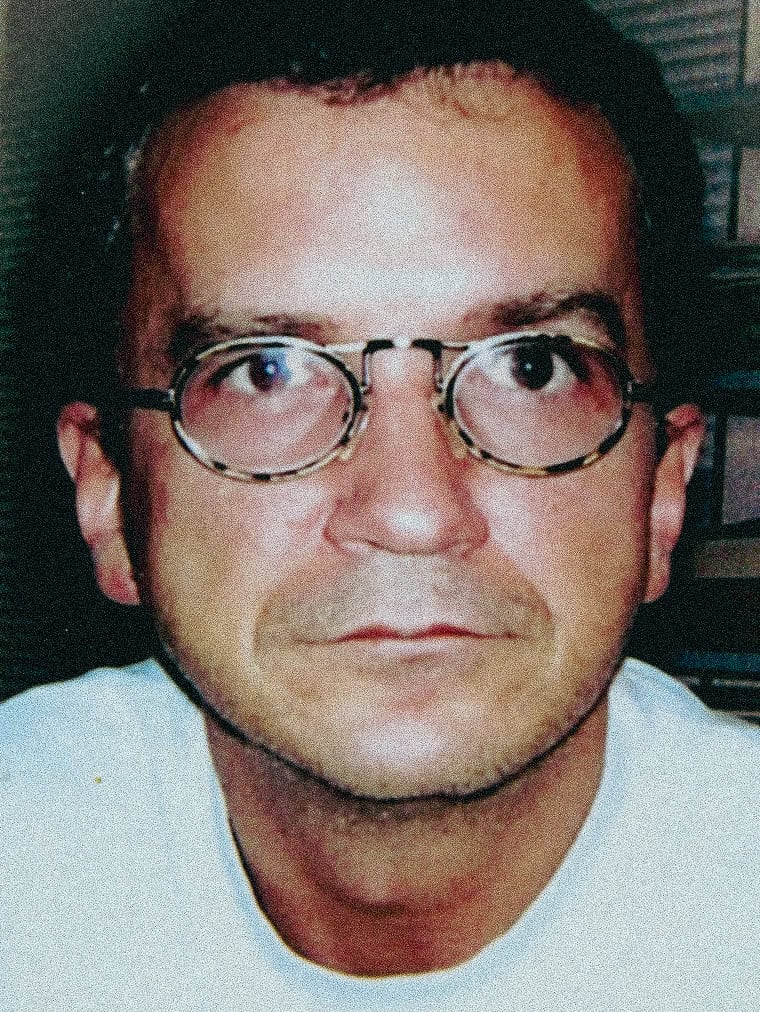
Bernd Jürgen Armando Brandes was not an anonymous drifter. He was a successful engineer from Berlin, professionally capable, financially stable, and outwardly functional. But the exterior facts of his life did not reveal the severity of his inner collapse.
Brandes had his own self-destructive fantasies. Accounts of the case describe him as a man with a profound desire for bodily obliteration. He did not simply express suicidal ideation in the ordinary sense. He sought an extreme form of erasure in which his body would be destroyed, consumed, and removed.
This is one of the most disturbing elements of the case: the convergence of two pathologies. Meiwes wanted to consume someone as a form of permanent possession. Brandes wanted to be consumed as a form of disappearance. One man’s fantasy of incorporation met another man’s fantasy of annihilation.
That convergence has sometimes led to careless descriptions of the case as “consensual cannibalism.” The phrase is legally provocative but psychologically inadequate. Consent does not exist in a vacuum. It depends on capacity, context, mental state, and the nature of the act being consented to. A person may articulate desire while also being driven by severe disorder, compulsion, or self-destructive pathology. The central legal question was not whether Brandes said yes. He did. The deeper question was whether a person can meaningfully consent to being killed, dismembered, and eaten.
German courts would wrestle with that question for years.
MARCH 9, 2001: THE PACT BECOMES PHYSICAL
On March 9, 2001, Brandes travelled from Berlin to meet Meiwes. The journey itself has become one of the chilling markers of the case: the victim was not taken from the street, not lured under a conventional pretext, not surprised by the offender’s intent. He travelled toward the fantasy.
At Meiwes’s farmhouse, the two men entered the prepared world that had existed for years in Meiwes’s mind. What followed was recorded on video. The existence of that recording became central to both the investigation and the trials. It documented not only the violence, but the verbal and behavioural dynamics between the men.
Brandes consumed alcohol and medication. Meiwes mutilated him at his request. They attempted to cook and eat the severed tissue. Brandes then spent hours bleeding, weakened by intoxication and injury. When he did not die quickly, Meiwes eventually killed him.
After death, Meiwes dismembered the body and stored portions of Brandes’s remains. Over the following months, he consumed parts of the body in prepared meals.
The details are grotesque, but the behavioural meaning is more important than the shock value. Meiwes did not appear to treat the act as a frenzy. He treated it as fulfilment. The killing was organized, documented, and ritualized. The later meals were not desperate acts of concealment. They were the continuation of the fantasy.
For Meiwes, consumption was the point.
MODUS OPERANDI: ORGANIZATION, SCREENING, AND CONTROL
Meiwes’s modus operandi was strikingly methodical. He used the internet to locate candidates, engaged in prolonged correspondence, and sought repeated confirmation of willingness. His behaviour shows planning rather than impulsive escalation.
The online advertisements allowed him to access a rare pool of people who could engage with his fantasy. He could filter respondents. He could distinguish between role-play and apparent intent. He could withdraw from unsuitable candidates while continuing to refine his search.
This screening process is crucial because it reveals how specific the fantasy was. Meiwes did not merely want to kill. He wanted a man who would symbolically give himself over to him. The victim’s surrender was part of the psychological script.
His preparation of the house also reflects organization. The room, tools, recording equipment, and later storage of remains all point to a controlled offender operating inside a fantasy architecture he had constructed over time. There is no evidence that the killing was a sudden loss of control. It was the execution of a long-incubated internal design.
SIGNATURE: POSSESSION THROUGH CONSUMPTION
If the modus operandi explains how Meiwes committed the crime, the signature explains why the crime had to take this form.
The signature was not simply cannibalism. It was the ritual of incorporation.
Meiwes repeatedly described the act in terms of connection. He wanted another person to become part of him. In his mind, eating Brandes created a bond stronger than companionship, sex, friendship, or family. It transformed the victim into something internal and permanent.
This is why the case occupies such a disturbing place in forensic psychology. The violence was not only sadistic in the obvious physical sense. It was intimate, symbolic, and ritualized. The victim was reduced to meat, but also elevated in Meiwes’s fantasy as the answer to lifelong loneliness. That contradiction is part of the horror. Brandes was both objectified and idealized.
The video recording also formed part of the signature. It preserved the act. It allowed the fantasy to be revisited. In legal terms, this became significant because German courts later considered whether sexual gratification could occur not only during the killing, but through later viewing of the recorded material.
The camera turned the murder into an artifact.
THE MASK OF NORMALITY
One of the most unsettling features of the Rotenburg case is how ordinary Meiwes appeared before his arrest. This is not unusual in organized offenders, but the contrast is especially stark here. He was socially functional enough to work, serve in the military, interact with neighbours, and avoid suspicion.
The public often imagines extreme offenders as visibly monstrous. They expect madness to announce itself through appearance, speech, or disorder. Meiwes demonstrates the danger of that assumption. Severe deviance can be compartmentalized. A person may maintain employment, perform politeness, and appear socially useful while harbouring fantasies of extraordinary violence.
That does not mean everyone who is lonely or eccentric is dangerous. It means behavioural threat is not reliably detected through surface impressions alone. Meiwes’s external life did not contradict his inner pathology. It was its cover.
Case Timeline
- Dec. 1 1961: Birth in Essen. Armin Meiwes was born in Essen, West Germany. The supplied material frames his later fantasy system through abandonment, isolation, and maternal control.
- Childhood: The Imaginary Brother. Meiwes reportedly invented an imaginary younger brother named “Franky,” described as a substitute for permanent companionship.
- 1999: Mother Dies. The death of Waltraud Meiwes is described as removing the last external constraint from Meiwes’s private world inside the farmhouse.
- Early 2000s: Internet Search. Meiwes entered online cannibalism forums under aliases and sought a man who wanted to be killed and eaten.
- Mar. 9 2001: Brandes Travels. Brandes travelled from Berlin to meet Meiwes at the Wüstefeld farmhouse.
- Mar. 9–10 2001: Killing and Dismemberment. The violence was recorded. Brandes consumed alcohol and medication; Meiwes mutilated him at his request, later killed him, dismembered the body, stored remains, and consumed portions over subsequent months.
- Dec. 2002: Arrest. Renewed online activity reportedly alarmed another user. Police searched the farmhouse and found human remains, evidence of dismemberment, and the video recording.
- 2004: Initial Conviction. Meiwes was convicted of manslaughter and sentenced to eight and a half years.
- 2005–06: Retrial and Murder Conviction. Germany’s Federal Court of Justice ordered a retrial. In 2006, Meiwes was convicted of murder and disturbing the peace of the dead, receiving life imprisonment.
- 2018: Early Release Rejected. A German court rejected his bid for early release after he had served the minimum term typically associated with parole consideration in life sentences.
- 2025–26: Conditional-Release Review Reopened. A new request for conditional release entered review in 2025. By February 2026, the Kassel court was still awaiting updated prison information, and no release decision had been reported.
THE INVESTIGATION: A DIGITAL TIP AND A FREEZER
Meiwes was not caught because investigators found a missing-person trail that immediately led to his door. He was exposed because he returned to the internet.
After killing Brandes and consuming parts of his body over time, Meiwes reportedly sought another victim. His renewed online activity alarmed a user who recognized that the posts did not read like fantasy alone. Authorities were notified, and the investigation eventually led police to Meiwes’s property in December 2002.
When investigators searched the farmhouse, the case moved from disturbing allegation to physical reality. They found human remains stored in the home. They found evidence of dismemberment. They found the video recording.
Meiwes confessed. His position was not that the killing had not occurred. His position was that Brandes had consented.
That confession did not simplify the case. It made it more legally explosive.
THE LEGAL PARADOX: CAN A PERSON CONSENT TO BEING KILLED?
Germany did not have a criminal statute that made cannibalism itself the central charge. The legal system therefore had to address the killing through homicide law and the treatment of human remains.
The prosecution argued that Meiwes had killed for sexual gratification and should be convicted of murder. The defence argued that Brandes had requested his own death, pushing the case toward the German concept of killing on request rather than murder. That distinction mattered enormously. Murder could mean life imprisonment. Killing on request carried a far lighter penalty.
In 2004, Meiwes was convicted of manslaughter and sentenced to eight and a half years. The verdict shocked many observers, not because the court approved of the act, but because it appeared to place substantial weight on Brandes’s participation and apparent consent.
The prosecution appealed.
In 2005, Germany’s Federal Court of Justice ordered a retrial. The higher court rejected the narrow handling of the murder question and emphasized that killing for sexual gratification could apply even if the offender sought gratification later through watching the video recording. That point became critical. It meant the recording was not merely evidence of consent or a form of documentation. It could be evidence of motive.
At the 2006 retrial, Meiwes was convicted of murder and disturbing the peace of the dead. He received a life sentence.
The final legal outcome affirmed a boundary: a person’s stated wish to die does not give another person licence to kill them for private gratification. Consent cannot convert ritualized homicide into a private contract.
THE FALSE COMFORT OF “CONSENT”
The Rotenburg case remains disturbing partly because it weaponizes a word modern societies often treat as clarifying: consent.
In most contexts, consent is essential. It marks the difference between autonomy and violation. But this case exposes the limits of the concept when applied to death, severe mental disorder, and irreversible harm. Brandes’s agreement did not make Meiwes safe. It did not make the act ethical. It did not erase the offender’s predatory role.
Meiwes required a willing victim not because he respected autonomy, but because consent was part of his fantasy. The victim’s agreement helped him preserve the illusion that he was not destroying a person, but completing a mutual ritual. In that sense, consent was not a safeguard. It was absorbed into the pathology.
This is where the case becomes more than a grotesque crime story. It becomes a study in how language can fail under extreme conditions. Words like “choice,” “agreement,” and “willingness” become unstable when the chosen act is self-erasure and the receiving party is sexually and psychologically invested in killing.
Brandes may have said yes. But Meiwes still built the room, held the knife, recorded the act, stored the remains, and ate the body.
BEHAVIOURAL ANALYSIS: LONELINESS, SADISM, AND INCORPORATION
Meiwes’s psychology has been interpreted through several overlapping frameworks: schizoid personality features, sexual sadism, paraphilic cannibalistic fantasy, narcissistic entitlement, and profound attachment disturbance. No single label fully contains the case.
The loneliness element is real, but it must not be softened into sympathy. Many lonely people do not harm others. Meiwes’s loneliness became dangerous because it fused with entitlement, fantasy rehearsal, sexual arousal, and objectification. He did not merely want connection; he wanted ownership so complete that the other person would cease to exist independently.
The sadism in this case was not necessarily loud, explosive, or theatrical. It was controlled. It existed in the prolonged nature of the act, the recording, the ability to observe suffering without meaningful intervention, and the transformation of a human being into a consumable object.
The cannibalistic element functioned as the final stage of possession. In Meiwes’s mind, eating Brandes solved the wound of abandonment. It made the victim permanent. But the permanence was imaginary. The act did not heal the emptiness. It only proved how completely the fantasy had colonized his moral world.
His return to the internet after the killing is evidence of that failure. If consuming Brandes had truly completed him, he would not have needed to search again. The hunger came back.
Fantasy did not cure loneliness. It fed on it.
THE AFTERMATH: PRISON, PAROLE, AND PUBLIC MEMORY
After his murder conviction, Meiwes remained imprisoned. In 2018, a German court rejected his bid for early release after he had served the minimum term typically associated with parole consideration in life sentences. The court relied on expert assessment and concluded that release was not appropriate.
Reports have also described Meiwes as becoming vegetarian in prison, a detail often repeated because of its grotesque irony. But that fact should not distract from the central reality: his crime was not driven by ordinary appetite. It was driven by fantasy, possession, and sexualized psychological need.
The Rotenburg farmhouse itself became infamous, attracting morbid attention. Like many crime scenes associated with extreme violence, it became a physical symbol onto which outsiders projected fascination, disgust, and fear. But the true architecture of the case was never only the house. It was the internal architecture Meiwes had built over decades: abandonment at the foundation, fantasy as the walls, consent as the door, and annihilation as the final room.
FINAL ASSESSMENT
The case of Armin Meiwes is not terrifying because it proves that monsters exist outside society. It is terrifying because it shows how monstrous systems can be quietly built into ordinary lives.
Meiwes was not a raving stranger in an alley. He was a neighbour, an employee, a former soldier, and a community member. His crime was not spontaneous. It was designed. It emerged from a long private rehearsal in which loneliness became entitlement, fantasy became ritual, and another human being became the material through which he attempted to cure himself.
Bernd Brandes was not merely “the willing victim.” He was a psychologically vulnerable man whose self-destructive desires intersected fatally with a predator who needed his consent as part of the script. His agreement did not erase his victimhood. It deepened the tragedy.
The Rotenburg Cannibal case forces an unbearable question: what happens when one person wants to disappear and another person wants to possess them completely?
In Wüstefeld, the answer was not intimacy. It was murder.
And the law, after hesitation, finally named it as such.
BIBLIOGRAPHY
- Bundesgerichtshof. “Urteil des 2. Strafsenats vom 22. April 2005: 2 StR 310/04.” April 22, 2005.
- Bundesgerichtshof. “Kannibalen-Fall muss neu verhandelt werden.” Pressemitteilung Nr. 62/2005. April 22, 2005.
- Bundesgerichtshof. “‘Kannibale von Rotenburg’ jetzt rechtskräftig wegen Mordes verurteilt.” Pressemitteilung Nr. 26/2007. February 16, 2007.
- Bundesverfassungsgericht. “Beschluss der 2. Kammer des Zweiten Senats vom 7. Oktober 2008: 2 BvR 578/07.” October 7, 2008.
- Harding, Luke. “Victim of Cannibal Agreed to Be Eaten.” The Guardian. December 4, 2003.
- Al Jazeera. “German Cannibal Jailed.” January 30, 2004.
- Mail & Guardian. “Victim of Cannibal Agreed to Be Eaten.” December 4, 2003.
- Mail & Guardian. “Retrial for German Killer Cannibal.” April 23, 2005.
- ABC News Australia / Agence France-Presse. “German Cannibal Sentenced to Life in Prison.” May 9, 2006.
- CBS News. “German Cannibal Convicted of Murder.” May 9, 2006.
- Reuters. “Court Sentences German Cannibal to Life for Murder.” May 9, 2006.
- Spiegel International. “Retrial Delivers Tougher Sentence: German Cannibal Gets Life for Eating Willing Victim.” May 9, 2006.
- Associated Press. “German Court Rejects Early Release for Cannibal Case Convict.” October 5, 2018.
- Euronews / Reuters. “German Court Rejects Cannibal’s Appeal for Suspended Sentence.” October 5, 2018.
- Welt. “‘Kannibale von Rotenburg’ beantragt vorzeitige Entlassung.” August 2025.
- Welt. “‘Kannibale von Rotenburg’ will weiter früher aus Haft.” February 2026.
- Beier, Klaus M. Sexueller Kannibalismus: Sexualwissenschaftliche Analyse der Anthropophagie. Elsevier / Urban & Fischer, 2007.
- Knecht, Thomas. “Kannibalismus als Tötungsmotiv.” Der Kriminalist, 2005.
- Kreuzer, Arthur. “Herausforderungen des Kannibalen-Prozesses.” Strafverteidiger, 2007.
- Scheinfeld, Jörg. Der Kannibalen-Fall: Verfassungsrechtliche Einwände gegen die Einstufung als Mord und gegen die Verhängung lebenslanger Freiheitsstrafe. Mohr Siebeck, 2009.
- Werthmann, Hans-Volker. “Die Leere war weg: Psychoanalytische Anmerkungen zum Rotenburger Kannibalismus-Fall.” Psyche, 2006.
- Petricius, Egon, and Bernd Ramm. Der Kannibalen-Fall von Rotenburg. Branchenforum Schmidt, 2004.
- Riße, Manfred. Abendmahl der Mörder: Kannibalen, Mythos und Wirklichkeit. Militzke, 2007.
- Scharnweber, Hans-Uwe. Kannibalismus, Tötungsdelikte und ein Justizskandal. AtheneMedia-Verlag, 2012.
- Stampf, Günter. Interview mit einem Kannibalen: Das geheime Leben des Kannibalen von Rotenburg. Seeliger, 2007.
- Crime + Investigation UK. “Armin Meiwes: German Cannibal.”
- Wikipedia. “Armin Meiwes.” Secondary orientation source, not a primary citation.
- Murderpedia. “Armin Meiwes.” Secondary background and timeline cross-reference only.
Browse every case in the Case File Index
Discover more from The Dark Side of Humanity
Subscribe to get the latest posts sent to your email.