FILE NO. 0132Case status Active
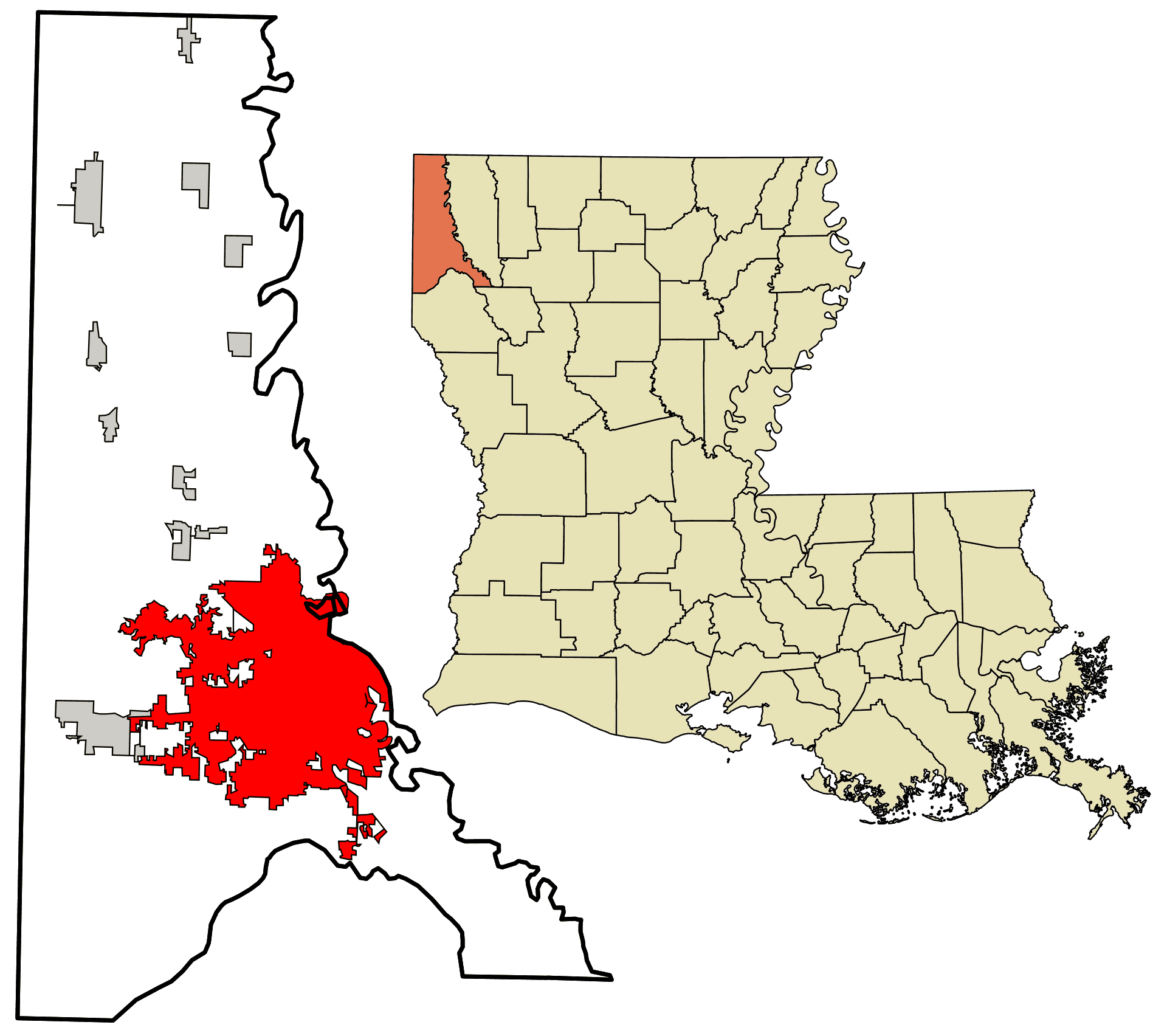
Eight children were killed before most of Shreveport had awakened. The violence lasted minutes. The warning signs had been accumulating for years.
Content warning: This report concerns the murders of eight children between the ages of 3 and 11, intimate-partner violence, gun violence, suicide, and severe trauma suffered by surviving family members. It discusses prior threats, institutional failures, and missed opportunities for intervention. Reader discretion is advised. Support resources appear at the end.
At approximately 5:55 on the morning of April 19, 2026, a woman called 911 from the backyard of a house on West 79th Street in Shreveport, Louisiana.
There had been gunfire inside. People had been shot. The caller, Keosha Pugh, had escaped through an upstairs window with her 12-year-old daughter. They had jumped from the roof to reach the ground.
Keosha suffered broken bones in the fall. Her daughter escaped with scratches. Behind them, inside the house, eight children remained.
When officers entered the Cedar Grove residence minutes later, they found all eight dead.
The youngest was 3. The oldest was 11.
Seven were the biological children of 31-year-old Shamar Elkins. The eighth was their cousin. Five were girls. Three were boys. They belonged to two interconnected families whose lives, homes, school routines, and relationships had overlapped for years.
Their mothers, Shaneiqua Pugh and Christina Snow, had also been shot. Both survived. Snow, wounded nine times, used Siri to call for help.
Elkins fled Shreveport in a stolen vehicle. Thirty-four minutes after the first emergency call, police confronted him in neighbouring Bossier City. Shots were exchanged. A preliminary autopsy later attributed his death to a self-inflicted gunshot wound.
By then, eight children had been murdered in what would become one of the deadliest single-incident killings of children in recent American history.
It was immediately described as a domestic dispute. But that phrase, clinical and familiar, is too small for what happened in Cedar Grove.
This was not an argument that inexplicably became violent. It was the final escalation of an identifiable pattern: an explicit threat to kill a woman, her children, and himself; a previous weapons conviction; a recent suicide attempt; continuing suicidal ideation; access to firearms despite a legal prohibition; and a marriage ending in a court hearing scheduled for the following morning.
The massacre was sudden only in its final execution. The danger had been announcing itself for years.
Before They Became the “Eternal 8”
In the days after the killings, the eight children were spoken of collectively. Their names appeared together on memorials, funeral programs, donation pages, and signs carried at vigils. The community came to call them the “Eternal 8.”
But they were not a collective before they were killed. They were eight individual children.
Jayla was 3. Shayla and Braylon were 5. Kayla and Khedarrion were 6. Layla was 7. Markaydon was 10. Sariahh, the eldest, was 11.
They lived in an extended family where childcare, school schedules, meals, and everyday responsibilities were shared. Relatives described mothers who were deeply involved in their children’s lives. Christina Snow’s cousin spoke publicly of her devotion to her two sons and daughter.
The children were inside a place that should have represented their greatest security: a family home in the early-morning hours. Investigators said some appeared to have been asleep when the attack began.
On May 9, eight small caskets were brought into Summer Grove Baptist Church for a joint funeral. The children were buried together in the public memory, but each left behind a separate absence: an empty classroom seat, an unfinished routine, a mother waking to a life from which several children had disappeared at once.
Thirty-Four Minutes
The killings and pursuit unfolded with extraordinary speed. From the first emergency call to the police confrontation in Bossier City, approximately 34 minutes elapsed.
The following chronology is based on police timelines, emergency-call data, coroner findings, and official statements.
Investigators determined that the sequence began at Christina Snow’s Harrison Street residence, where Elkins shot her, and continued at the West 79th Street house occupied by members of the Pugh family and the children.
At West 79th Street, evidence suggested an attack carried out against a household with little time to understand what was happening, much less defend itself. Bullet holes were later observed in a rear door. Keosha and her daughter escaped by climbing out and jumping from the roof.
Elkins carried a .22-calibre Mossberg 715P, a rifle-style pistol, and at least one additional small-calibre handgun. He fled in a red Kia Sportage, which was taken near the scene, and travelled south toward Bossier City.
Police located him on Brompton Lane. Early official statements left open the possibility that he had been struck by police gunfire during the confrontation. The preliminary autopsy, however, identified a self-inflicted gunshot wound as the cause of death.
There would be no interrogation and no trial. There would be no opportunity to hear Elkins’ account of the sequence of decisions that ended with eight children dead.
But the public record already contained part of the answer.
The Threat Had Already Been Spoken
Shamar Elkins was born on December 7, 1994. He served in the Louisiana Army National Guard from 2013 until 2020 as a signal systems and fire-support specialist. He was never deployed and left the Guard as a private. By 2026, he was employed by United Parcel Service.
Family members described a troubled childhood. His biological mother, Mahelia Elkins, struggled with crack cocaine dependency, and he was raised primarily by a family friend, Betty Walker. He later re-established contact with his mother.
That history may help explain parts of his life. It does not explain away what he chose to do.
Elkins had already demonstrated a willingness to use a gun in public. In 2019, he fired five rounds at a vehicle less than 300 feet from Caddo Magnet High School while children were outside. He was arrested for illegal use of weapons and carrying a firearm on school property.
He pleaded guilty to the illegal weapons charge and received 18 months of probation. The school-property charge was dismissed. The conviction made him legally prohibited from possessing a firearm for at least ten years under Louisiana law.
Before that, in 2016, he had been convicted of driving while intoxicated.
Elkins had three children with Christina Snow. He later married Shaneiqua Pugh in 2024, and they had four children together.
By early 2026, the marriage was ending. Pugh had filed for divorce, citing infidelity. The couple was scheduled to appear in court on April 20: the day after the children were killed.
The danger surrounding that separation had not gone entirely unseen.
According to family members, Pugh considered leaving Elkins in 2023 and taking the children with her. His response was not ambiguous.
“I’ll kill you, my kids and myself.”
Three years later, the threatened configuration was nearly complete: the partner, the children, and Elkins himself.
Threats of homicide-suicide are sometimes dismissed as emotional manipulation, exaggeration, or words spoken during an argument. In domestic violence risk assessment, they are neither vague nor harmless. A person who threatens to kill a partner, children, and himself has described not only violent intent but also a potential victim group and an anticipated ending.
Elkins had supplied the outline of the crime long before he carried it out.
“Some People Don’t Come Back From Their Demons”
In February 2026, approximately two months before the killings, Elkins attempted suicide.
He received medication and counselling at a local Veterans Affairs hospital and remained there for approximately a week and a half. The treatment represented a crucial point of contact: a suicidal man with a prior weapons conviction, a deteriorating marriage, and a history of threatening to kill his partner and children had entered a healthcare system designed, in part, to respond to acute crisis.
He left the hospital alive. The danger did not end.
On April 5, two weeks before the murders, Elkins called his biological mother. During the conversation, he told his stepfather that he was having “dark thoughts,” including thoughts of suicide.
He ended the call with a statement that would later read less like metaphor than warning:
“Some people don’t come back from their demons.”
He also posted a prayer on Facebook asking for help to “guard my mind and my emotions” and to reject depression, anger, anxiety, and panic.
Relatives encouraged him to seek additional help. Elkins indicated that he would handle the problem himself.
His family could see that something was wrong. The healthcare system had documented a suicide attempt. The criminal-justice system knew of his prior gun offence. His wife knew he had threatened to kill her and the children. Yet those pieces remained separated, held by different people and institutions, never assembled into a complete picture of escalating risk.
Shreveport police later said they were unaware of any previous domestic-violence calls involving Elkins.
The absence of a police report, however, is not the absence of abuse or danger. Much domestic violence occurs beyond official view. Threats may be disclosed only to relatives. Coercive control may never produce a 911 call. A household can be approaching a lethal crisis while remaining largely invisible to law enforcement.
The Gun That Should Not Have Been There
Elkins was not legally permitted to possess the firearm investigators identified as the principal weapon.
Federal investigators traced the Mossberg 715P to Charles Ford, 56, who was also a convicted felon and therefore prohibited from possessing firearms.
Ford initially told federal agents that he knew nothing about the weapon. He later claimed that Elkins had taken it from his truck. Ford said he confronted Elkins about the gun but ultimately “let it go.”
He was charged on April 21 with being a felon in possession of a firearm and making false statements to agents of the Bureau of Alcohol, Tobacco, Firearms and Explosives. He was indicted in May, initially pleaded not guilty, and changed his plea to guilty in June. Sentencing was scheduled for October 2026.
A second man, Michael Mayence, was charged in connection with the residence toward which Elkins fled following the killings. Mayence was accused of illegally possessing firearms while subject to a domestic-violence-related court order.
Both men were legally barred from possessing guns. Yet a firearm moved through that prohibited network and into the hands of Elkins.
The distinction matters. This was not simply a case in which a dangerous man encountered a weapon by chance. It was a case in which multiple legal restrictions existed, multiple people were prohibited from possessing firearms, and those restrictions failed at the point where enforcement mattered most.
The law had already identified the risk. The gun was there anyway.
A City That Had Already Named the Crisis
The killings occurred within a city that had already acknowledged the scale of its domestic violence problem.
Shreveport, with a population of approximately 180,000, has recorded a substantial proportion of homicides connected to domestic relationships. City Council member Grayson Boucher described domestic violence as “a true epidemic,” saying that more than 30 percent of the city’s homicides were classified as domestic.
One month before the Cedar Grove killings, the Shreveport City Council withdrew from a planned partnership with the Caddo Parish Sheriff’s Office to operate a domestic-violence resource centre from a new police substation.
Mayor Tom Arceneaux’s office said it continued to support a comprehensive sheriff-led centre. Even so, the withdrawal exposed friction over coordination, location, responsibility, and resources at precisely the time local officials were publicly acknowledging an epidemic.
No single resource centre can prevent every act of domestic homicide. It would be inaccurate to claim that the abandoned partnership directly caused the deaths in Cedar Grove. But prevention depends on functioning pathways: places where threats can be documented, survivors can create safety plans, firearms can be addressed, high-risk cases can be shared across agencies, and separation can be treated as a period of acute danger rather than a routine legal transition.
The divorce hearing scheduled for April 20 was not incidental. Separation is one of the most dangerous periods in an abusive relationship, particularly when the person losing control has threatened homicide or suicide and has access to a firearm.
Police Chief Wayne Smith described the killings as emerging from a “domestic dispute” and added that “the chances are good that this was not the first time.”
Louisiana Governor Jeff Landry emphasized the deliberate movement between locations, describing the attacks as “systematic.”
That distinction separates the Cedar Grove killings from a momentary loss of control. Elkins moved from one house to another. He attacked two mothers. He killed eight children. He acquired transportation and attempted to escape. The violence had sequence, targets, and direction.
Whatever emotional crisis preceded it, the act itself required decisions.
The Women Who Survived
The dead became the centre of the public story. The surviving women were left to inhabit its aftermath.
Christina Snow was shot nine times. One bullet entered through her nose and remained lodged in her face. Surgeons initially determined that removing it presented too great a risk. In the immediate aftermath, she experienced memory fluctuations while recovering from wounds that could easily have killed her.
She had survived an attempt on her life. Her three children had not.
Shaneiqua Pugh was also shot and hospitalized. She survived the destruction of the household she had tried to leave and the deaths of her four daughters.
Keosha Pugh escaped the West 79th Street house with her daughter by jumping from the roof. Keosha suffered broken bones. Her daughter sustained comparatively minor physical injuries, but survived an event whose psychological consequences cannot be measured by the condition of the body alone.
The survivors faced physical recovery, displacement, funeral arrangements, criminal investigations, public attention, and the near-impossible task of grieving several children simultaneously.
Governor Landry’s Love One Louisiana Foundation covered funeral expenses. The Community Foundation of North Louisiana established funds to assist the surviving family members and support domestic violence protection efforts.
A prayer vigil was held on April 20, the date Elkins and Pugh were scheduled to appear in divorce court. The joint funeral followed on May 9.
Outside the homes, neighbours left flowers, balloons, candles, and stuffed animals. The objects were small, bright, and unbearably familiar, the ordinary things adults place at scenes where children have died because language has become inadequate.
City officials and faith leaders called for stronger domestic-violence and mental-health resources, including services accessible to Black families and neighbourhoods disproportionately affected by violence.
As of early August 2026, the criminal cases connected to Ford and Mayence remained active, with Ford’s sentencing still scheduled for October. Investigators had identified no additional suspects in the murders themselves. No major new public findings regarding motive, final autopsy details, or further institutional reviews had been released beyond the core facts established in the weeks after the killings.
This Was Not Unknowable
After mass violence, the public is often told that no one could have imagined what the perpetrator would do.
In Cedar Grove, imagination was not required.
Elkins had reportedly described the intended crime years earlier: kill his partner, kill the children, kill himself.
The case contains several factors repeatedly identified in research on intimate-partner homicide and family annihilation:
- An explicit threat to kill a partner, the children, and himself.
- A relationship ending through separation or divorce.
- A recent suicide attempt and continuing suicidal ideation.
- Anger, desperation, and perceived loss of control.
- A previous gun offence and established willingness to discharge a firearm.
- Access to firearms despite a legal prohibition.
- Children living across interconnected households allowing a perpetrator to move through a known family network.
No single factor proves that a person will commit murder. Mental illness alone does not make someone violent. Suicidal thoughts do not automatically become homicidal intent. A difficult childhood does not create a family annihilator.
But risk assessment is not built on isolated facts. It depends on combinations.
A recent suicide attempt is one fact. A threat to kill a partner and children is another. A divorce scheduled for the next day is another. A prior weapons conviction and unlawful access to a firearm add still more.
Together, they form a pattern that should demand intervention.
Different institutions encountered different fragments of that pattern. The criminal justice system processed the 2019 weapons offence. The VA treated the suicide attempt. Family members heard the threats and “dark thoughts.” The civil court system scheduled the divorce proceedings. Local officials debated the structure of domestic violence services.
No institution appears to have held the complete map.
That does not absolve Elkins of responsibility. He was not a passive product of failed systems. He issued threats. He obtained a firearm he was forbidden to possess. He travelled between homes. He shot two women. He killed eight children.
The systemic question is not whether someone else committed his crimes. It is whether the danger he presented could have been recognized and interrupted before he committed them.
Potential intervention points existed:
- Enforcement capable of preventing prohibited people from obtaining and circulating firearms.
- Domestic-violence screening that treats homicide-suicide threats as emergency indicators.
- Safety planning and heightened protection during divorce and separation proceedings.
- Post-hospitalization follow-up that evaluates danger to family members as well as suicide risk.
- Information-sharing systems capable of connecting criminal, medical, domestic, and civil-court warning signs.
- Stable local domestic-violence infrastructure with clear responsibility and sufficient resources.
Prevention rarely arrives as a single dramatic rescue. More often, it is a chain of smaller actions that must hold: a threat taken seriously, a gun removed, a survivor protected, a crisis followed beyond discharge, a court alerted, an agency willing to act before violence supplies incontrovertible proof.
In Cedar Grove, too many links failed.
Case Status
Status as of October 16, 2026. Shreveport police said on October 2, 2026, that Shamar Elkins died of a self-inflicted gunshot wound. Some earlier reports said officers shot him; the police statement supersedes them.
Charles Ford, 56, charged with illegally possessing the gun Elkins used and with lying to an ATF agent about it, pleaded not guilty on May 13, changed his plea to guilty on June 15, and was sentenced in federal court on October 13, 2026, to 78 months for possessing the gun and 60 months for lying to the ATF agent. The terms run concurrently, for a total of 78 months.
Michael Mayence, whose home Elkins fled to after the shooting, was charged on April 25 and indicted on May 7 with illegally possessing a gun while under a domestic-violence court order. He has not been convicted of that charge and is presumed innocent.
Sources: KSLA, “Charles Ford sentenced” (Oct. 13, 2026); KSLA, “Elkins died from self-inflicted gunshot wound, police say” (Oct. 2, 2026).
Coda: Eight Names
True-crime reporting has a vocabulary for men who kill their families. They are called family annihilators. Their motives are classified. Their childhoods are examined. Their threats, relationships, finances, grievances, and final movements are reconstructed.
That scrutiny can make the perpetrator seem like the centre of the story. He is not. The centre of this story is Jayla. Shayla. Kayla. Layla. Braylon. Khedarrion. Sariahh. Markaydon.
Eight children with separate personalities, attachments, fears, habits, friendships, and imagined futures. Eight children whose lives ended inside a family home before sunrise on an April morning.
Their surviving mothers and relatives live with injuries that extend beyond the visible wounds. Their community carries the knowledge that the massacre occurred not in the absence of warning, but amid warnings distributed across families and institutions.
Cases such as this are often sealed off with the language of incomprehensible evil. That language can provide emotional distance, but it offers little protection. If a perpetrator is treated as an unknowable monster, then nothing can be learned except that monsters sometimes appear.
The record in this case offers a more difficult conclusion.
The threat had been spoken. The suicidal crisis had been documented. The relationship was ending. The firearm was prohibited. The city had already named domestic violence an epidemic.
The warning signs did not need to be discovered after eight children died. They needed to be connected before.
The Eternal 8 deserved more than mourning after the fact. They deserved systems capable of reading the map in time.
Support Resources
Citations & Sources
- National Domestic Violence Hotline: Call 1-800-799-7233 or visit thehotline.org
- 988 Suicide & Crisis Lifeline: Call or text 988
- Louisiana domestic violence services: Local programs can be located through the Louisiana Coalition Against Domestic Violence
- Veterans Crisis Line: Call 988 and press 1
Reporting Note
This report reflects verified public information available through August 4, 2026. Core facts: victim identities and ages, the sequence of locations, Elkins’ prior conviction and suicide attempt, the divorce hearing scheduled for the following day, the firearm trace to Charles Ford, the self-inflicted nature of Elkins’ death, and the community response including the May 9 joint funeral: are confirmed across official statements, the Caddo Parish Coroner’s Office identifications, federal charging documents, and consistent multi-outlet reporting.
No major new public developments regarding motive, final investigative conclusions, or additional institutional reviews had emerged by early August beyond the status of the related federal cases (Ford’s sentencing still set for October 2026). Minor variations in early reporting (e.g., exact age/gender of one escaping child) have been resolved in favor of the most consistent official and family accounts.
Frequently Asked Questions
What happened in Cedar Grove?
On April 19, 2026, Shamar Elkins shot two women and killed eight children, aged 3 to 11, in Shreveport’s Cedar Grove neighborhood. The violence lasted minutes.
How did Shamar Elkins die?
Shreveport police said on October 2, 2026, that he died of a self-inflicted gunshot wound. Earlier reports that officers shot him are superseded by that statement.
Was Elkins allowed to have a gun?
No. The file records that he obtained a firearm he was forbidden to possess.
Who is Charles Ford?
A 56-year-old convicted felon charged with illegally possessing the gun Elkins used and with lying to an ATF agent about it. He pleaded guilty on June 15, 2026.
What sentence did Charles Ford receive?
On October 13, 2026, a federal court sentenced him to 78 months for possessing the gun and 60 months for lying to the ATF agent, to run concurrently, for a total of 78 months.
Who is Michael Mayence?
The man whose home Elkins fled to after the shooting. He was charged on April 25 and indicted on May 7, 2026, with illegally possessing a gun while under a domestic-violence court order. He has not been convicted and is presumed innocent.
Were there warning signs?
Yes. Elkins had made threats, and the file argues that the danger he presented could have been recognized and interrupted before the shooting.
Works Cited
- Wikipedia. “2026 Shreveport shooting.” Updated through early August 2026.
- The New York Times. “Haunted by ‘Dark Thoughts,’ Louisiana Father Kills 8 Children” (April 19 to 20, 2026).
- CNN. “Shreveport shooting: Louisiana gunman killed 8 children…” and follow-up coverage (April 19 to 20, 2026).
- KSLA. “Detailed timeline of Cedar Grove mass shooting…” (April 20, 2026).
- U.S. Attorney’s Office, Western District of Louisiana. Press release on Charles Ford charges (April 21, 2026).
- KTBS / Shreveport-Bossier Advocate. Coverage of the May 9 joint funeral for the “Eternal 8” and community response.
- Caddo Parish Coroner’s Office identifications and Shreveport Police Department statements (April 19 to 23, 2026), as reported across local outlets including KSLA, KTBS, and the Shreveport-Bossier Journal.
- Associated Press, USA TODAY, and local reporting on Elkins’ military service, prior 2019 conviction, suicide attempt, and family statements regarding threats and “dark thoughts.”
Discover more from The Dark Side of Humanity
Subscribe to get the latest posts sent to your email.


