TL;DR: Erotophonophilia describes sexual arousal specifically connected to killing, but it is not a formal DSM-5-TR diagnosis and cannot be reliably inferred from a crime scene alone. Sexual homicide is a broader, inconsistently defined category: a killing may occur alongside sexual activity without death itself being the source of arousal.
Claims about “lust murder” profiles, stable signatures, inevitable escalation, cooling-off periods, psychopathy, or a standard path from fantasy to homicide are far less certain than popular culture suggests. Meaningful conclusions require converging evidence, such as admissions, digital records, forensic findings, victimology, and verified investigative facts, not assumptions based on restraints, mutilation, body positioning, or other dramatic details.
Erotophonophilia: Behind the clinical-sounding terminology lies a field marked by unstable definitions, small samples, contested profiling methods, and a central warning: neither an unusual crime scene nor a familiar serial-killer narrative can establish motive or diagnosis.
A Rare Moment of Clarity

On June 27, 2005, Dennis Rader stood before a Kansas judge and pleaded guilty to ten counts of first-degree murder. When the judge asked him to explain the “fantasy” he said had preceded the killing of four members of the Otero family, Rader answered with unusual directness: “Sexual fantasy, sir.”
Over the course of the hearing, Rader described selecting and watching prospective victims, preparing equipment, entering homes under false pretenses, restraining people, and preserving photographs. His account was self-serving and emotionally barren, but its evidentiary significance was unmistakable. In that courtroom, the connection between sexual fantasy and homicidal conduct did not have to be divined from a wound pattern or reconstructed by a profiler. The defendant stated it himself while supplying the factual basis for his guilty pleas. The record therefore offers something researchers often lack: direct, legally consequential evidence about an offender’s claimed motivation. Rader guilty-plea transcript
Even that evidence has limits. Rader’s words were not a psychiatric assessment, and the hearing did not transform “erotophonophilia” into his formal diagnosis. Nor does his history supply a universal template for other offenders. It establishes what Rader admitted about his own crimes. It cannot tell investigators what another person intended merely because a second crime contains restraints, strangulation, disturbed clothing, mutilation, or an apparently ritualistic arrangement.
That distinction is the beginning of any responsible examination of erotophonophilia. The subject has accumulated an extraordinary burden of folklore: the killer whose fantasies grow inexorably from adolescence, the stranger selected to fit an inner script, the stable signature left like a fingerprint, the shortening “cooling-off” periods, the souvenirs preserved to relive the crime, and the outwardly ordinary man concealing a second life. Elements of that portrait have appeared in documented cases. But once assembled into a generic profile, they offer more certainty than the research permits.
Erotophonophilia is a real descriptive concept. It is not a simple diagnostic key, a universally accepted category of homicide, or an explanation that can safely be imposed on a crime from its appearance alone.
From Lust Murder to Forensic Sexology
The attempt to classify sexualized killing predates the modern term. In 1886, German-Austrian psychiatrist Richard von Krafft-Ebing published Psychopathia Sexualis, a medico-legal catalogue of sexual behavior that included discussions of sadism, mutilation, necrophilia, and what later English editions called “lust murder.” His work became foundational to early sexology, but it also reflected nineteenth-century assumptions about normality, degeneration, gender, and sexuality that modern psychiatry has discarded.
Krafft-Ebing’s historical importance should therefore be separated from contemporary validity. He helped make private fantasies, sexual behavior, and violent conduct subjects of clinical and forensic inquiry. He did not provide a timeless scientific classification. His case histories were assembled before modern diagnostic reliability studies, standardized psychometric assessment, contemporary forensic pathology, or today’s distinction between consensual atypical interests and disorders involving distress or harm.
“Lust murder” continued to acquire different meanings. In a 1980 FBI Law Enforcement Bulletin article, agents Robert Hazelwood and John Douglas described it as a particular form of sexualized homicide marked by a mutilating attack or displacement of sexual anatomy. They divided supposed perpetrators into “organized nonsocial” and “disorganized asocial” (a lineage later popularized in the FBI organized/disorganized classification) personalities and proposed that the location of a body, the presence of torture or mutilation, evidence of rape, and the amount of physical evidence could assist in identifying the offender type.
That article helped popularize ideas that would become central to criminal profiling. It also contained a caution that later retellings sometimes neglect: psychological profiling might assist an investigation, the authors wrote, but it must not alter or replace prescribed investigative work. Its typology was built from case reports, discussions with investigators, and a literature review, not from a representative population study. Hazelwood and Douglas, “The Lust Murderer”
The specific word erotophonophilia entered the prominent forensic-sexology literature through psychologist and sexologist John Money. In a 1990 article titled “Forensic Sexology: Paraphilic Serial Rape (Biastophilia) and Lust Murder (Erotophonophilia),” Money described sexual arousal associated with staging and carrying out a murder. His formulation treated the killing itself, not merely accompanying sexual contact, as central to the arousal pattern. Money’s 1990 article
The word is constructed from Greek-derived elements associated with erotic desire, killing, and attraction. Its clinical sound can be misleading. Naming a pattern does not establish that it is a validated diagnostic entity, that its boundaries are settled, or that an investigator can reliably identify it from crime-scene behavior. The history of sexual-homicide research is filled with labels that overlap, conflict, or describe different levels of analysis: an interest, a diagnosis, a motive, an offense classification, or an investigative hypothesis.
Janet McClellan’s 2010 book Erotophonophilia: Investigating Lust Murder reflects a continuing effort to create a workable classification. It reviews several profiling systems, examines offenders including Theodore Bundy, Jeffrey Dahmer, and Dennis Rader, and proposes a composite typology for investigations. The book is a genuine secondary contribution to the field, but it is not a diagnostic manual or a consensus statement. Its reliance on offender typologies must be read alongside later research questioning how stable, distinct, and reproducible those typologies are. McClellan book record
What Modern Psychiatry Recognizes

Erotophonophilia is not one of the eight paraphilic disorders specifically named in the American Psychiatric Association’s Diagnostic and Statistical Manual of Mental Disorders, Fifth Edition, Text Revision—DSM-5-TR. Those named diagnoses are voyeuristic, exhibitionistic, frotteuristic, sexual masochism, sexual sadism, pedophilic, fetishistic, and transvestic disorders. DSM-5-TR acknowledges that many other paraphilias have been described and that some may qualify for an “other specified” or unspecified diagnosis when the full requirements for a paraphilic disorder are met. It does not recognize erotophonophilia as a separately codified disorder with its own validated criteria. DSM-5-TR paraphilic disorders chapter
This matters because DSM-5 and DSM-5-TR distinguish a paraphilia from a paraphilic disorder. An atypical sexual interest is not, by itself, a mental disorder. According to the APA’s explanatory material, a disorder requires personal distress not attributable merely to social disapproval, significant impairment, or an interest or behavior involving another person’s psychological distress, injury, death, or inability or unwillingness to consent. APA paraphilic disorders fact sheet
The World Health Organization’s ICD-11 makes related distinctions. It includes coercive sexual sadism disorder and broader categories for paraphilic disorders involving nonconsenting people, but erotophonophilia is not a named standalone diagnosis. The ICD-11 framework also seeks to distinguish an enduring pattern of sexual arousal from criminal behavior that may occur for other reasons. A violent or sexual offense does not automatically prove a paraphilic disorder; the diagnosis requires evidence about the person’s persistent arousal pattern and clinical presentation. WHO ICD-11 clinical descriptions and diagnostic requirements
Consequently, three propositions must remain separate. First, a person may report or demonstrate sexual arousal connected to killing. Second, a homicide may be classified by researchers or investigators as sexual. Third, a qualified clinician may diagnose a paraphilic disorder after an appropriate assessment. Those propositions can coexist, but none automatically establishes the others.
The same caution applies to sexual sadism. Sexual sadism concerns arousal from another person’s suffering, humiliation, bondage, or pain. Death is not necessary. A person who kills during a sexual assault has not necessarily killed because death itself was arousing. Conversely, someone who experiences arousal contingent on killing might not leave evidence of conventional sexual contact. The overlap may be considerable in some cases, but the terms are not interchangeable.
Necrophilia introduces another distinct possibility: sexual interest in corpses or sexual activity after death. A killing might facilitate access to an unresisting body without the death itself being the primary erotic stimulus. Postmortem sexual activity could also be part of a broader sadistic, possessive, or experimental pattern. Reliable classification therefore depends on the sequence of events, admissions, digital or written material, clinical evidence, and the complete investigative record—not one visually striking feature.
The Problem of Defining Sexual Homicide
Researchers have spent decades trying to define sexual homicide, yet no universally accepted definition has emerged. Some definitions focus on evidence of sexual activity. Others require a sexual motive. Still others include substitute sexual behavior, sexualized posing, genital exposure, insertion of objects, or indications that sadistic fantasy shaped the offense. The resulting samples do not always describe the same phenomenon.
A major literature review by Kevin Kerr, Anthony Beech, and David Murphy concluded that sexuality and aggression are linked in these cases, but that the nature of the link lacks consensus. Sexual homicide may represent several different pathways rather than a single offense type. In some cases, death is part of the intended sexual scenario. In others, a person kills to overcome resistance, avoid identification, conceal a prior assault, or respond to an unexpected event. Anger, opportunity, sadism, instrumental calculation, and sexual gratification may appear in different proportions. Kerr, Beech and Murphy
This distinction separates sexual association from sexual motivation. Consider a homicide committed after rape to eliminate a witness. The crime unquestionably occurred in a sexual context, and a research database might classify it as sexual homicide. Yet that does not show that killing was the source of arousal. Describing it as erotophonophilia would require evidence not contained in the sequence of rape followed by homicide alone.
An influential FBI-derived operational definition classifies a homicide as sexual when the record includes such evidence as disturbed or absent clothing, exposed sexual anatomy, sexually explicit body positioning, insertion of objects into body cavities, sexual contact, substitute sexual activity or sadistic fantasy. These criteria provide researchers with observable coding rules. They do not necessarily determine motive. A recent scoping review of sexual-homicide typologies emphasizes both the diversity of these crimes and the proliferation of classification systems, many of which have never been independently replicated. Scoping review of sexual-homicide typologies
The definition also affects frequency estimates. Reviews have placed police-recorded sexual homicides at approximately one to four percent of homicides in some North American and British samples. Those figures should not be presented as a universal prevalence rate. Jurisdictions record motive differently; investigators may not recognize a sexual element, bodies may not be recovered, and decomposition or scene alteration may destroy evidence. A definition based on physical signs will identify a different group from one requiring an admitted sexual motive.
The prevalence of erotophonophilia itself is unknown. The population is hidden, the behavior is extraordinarily rare, and researchers usually study convicted or institutionalized offenders rather than representative community samples. Some people who experience violent fantasies never act on them; some offenders never disclose them; and some statements made after conviction may be incomplete, exaggerated, strategic, or influenced by prior exposure to criminal narratives. The most defensible conclusion is not that erotophonophilia constitutes a precise fraction of homicide, but that sexually motivated killing is rare and difficult to classify reliably.
Fantasy Without an Inevitable Script
Fantasy occupies a prominent place in theories of sexual homicide. In its simplest formulation, an offender repeatedly rehearses an imagined scenario involving dominance, restraint, fear, injury, death, or postmortem activity. The fantasy may influence victim selection, preparation, dialogue, the sequence of acts, or what the offender does after death. In some documented cases, diaries, images, computer files, photographs, recorded statements, or confessions provide direct evidence of such rehearsal.
But fantasy is not a one-way road to action. It is neither scientifically responsible nor socially useful to suggest that a person who experiences a violent thought is progressing toward homicide. Thoughts, fantasies, urges, plans, preparations, and criminal acts are different phenomena. Risk assessment concerns the relationship with a particular person, including intent, access, behavioural escalation, self-control, other offending, and the presence of concrete planning. A fantasy on its own is not a prediction.
Research samples illustrate why caution is necessary. A British study examined official files involving 100 men serving life sentences for non-serial sexual killings of female victims aged 14 or older. Forty-two had disclosed offense-related deviant fantasy; 58 had not. The fantasy-disclosing group differed from the nondisclosing group on several recorded childhood, social, clinical, and crime-scene variables. Yet the study was exploratory, substantial information was missing from the files, and disclosure could not be equated with the actual presence or absence of fantasy. Its most important lesson is heterogeneity: even within a tightly selected group of convicted sexual killers, the record did not contain disclosed fantasy for the majority. UK Ministry of Justice analytical summary
The childhood findings require particular restraint. Sexual-homicide studies have reported histories of abuse, neglect, family violence, isolation, behavioral problems, and troubled relationships among some offenders. These are risk correlates, not exclusive causes. Childhood adversity is far more common than sexual homicide, and the overwhelming majority of people who survive abuse do not become violent offenders. Retrospective prison interviews and incomplete official files also carry obvious risks of recall error, selection bias, and inconsistent recording.
There is no empirically established sequence in which exposure to violent material produces voyeurism, voyeurism develops into sexual sadism, and sexual sadism culminates in homicide. Individual cases may follow portions of such a trajectory. Presenting it as the standard developmental pathway confuses a narrative reconstructed after the fact with a validated prospective model.
The FBI’s 2008 multidisciplinary report on serial murder reached a similarly guarded conclusion. Its participants found no generic profile and no specific combination of traits that distinguishes serial murderers from other violent offenders. Biological, psychological, and social influences may interact, but more research is needed to identify developmental pathways. Although that report concerns serial murder more broadly, its warning is directly relevant whenever a narrow group of sexually motivated offenders is converted into a universal personality type. FBI, Serial Murder: Multi-Disciplinary Perspectives for Investigators
Psychopathy, Sadism, and Heterogeneity
Psychopathy is often invoked as though it explains sexual homicide. It does not. Psychopathy refers to a cluster of interpersonal, emotional, lifestyle, and antisocial traits generally assessed with specialized instruments such as the Psychopathy Checklist–Revised. It is not synonymous with homicide, sexual offending, sadism, narcissism, or antisocial personality disorder.
A study of 51 male sexual-homicide offenders in Scotland found that slightly more than one-third had been categorized as sexual sadists under the study’s DSM-IV approach, just under one-third screened positive on a dimensional sexual-sadism scale, and one-quarter met the study’s threshold for “Hare psychopathy.” Sexual sadism and psychopathy were related but far from identical. Different dimensions predicted different offense characteristics. Darjee and colleagues
Those results undermine two common assumptions. First, not every sexual-homicide offender is a sexual sadist. Second, not every sexual-homicide offender is psychopathic. Even in a forensic clinical sample selected because the participants had committed sexual homicide, most did not satisfy the study’s psychopathy threshold.
Narcissistic traits may be relevant in an individual case, particularly where evidence demonstrates grandiosity, entitlement, a need for recognition, or fantasies of control. But describing “many” sexual killers as pathological narcissists requires prevalence data and standardized assessment. A person’s cruelty does not itself establish narcissistic personality disorder. Nor should apparent confidence, social competence, marriage, employment, or manipulation be treated as proof of psychopathy.
The notion of an outward “mask of normality” contains a limited truth. Some serial murderers have maintained employment, family relationships, community roles, and an unremarkable public appearance. Rader, for example, was married, had children, worked for local government, and served as president of his church council. The FBI has used his history to counter the myth that every serial murderer is an isolated, visibly dysfunctional loner. FBI Kansas City history
But ordinary social roles are not a behavioral signature. Millions of people have families, jobs, and civic affiliations. Those facts cannot narrow a suspect pool without case-specific evidence. Treating conventional appearance as inherently sinister merely replaces one stereotype—the visibly deranged stranger—with another—the neighbor whose normality is itself suspicious.
Seriality, Escalation, and the Cooling-Off Myth
Erotophonophilia is frequently discussed alongside serial murder, but the categories are not equivalent. A sexually motivated homicide may be a single offense. A serial murderer may kill for financial gain, anger, ideology, perceived power, attention, or several evolving motives without evidence that death is sexually arousing.
The claim that a person who kills for sexual gratification will necessarily repeat the act is unsupported. The FBI’s serial-murder report identifies the inability to stop as a myth. Some offenders cease killing for extended periods or altogether before capture. Life circumstances, imprisonment for another offense, aging, illness, changes in opportunity, substitute behavior, fear of detection, or unknown factors may interrupt a series.
Escalation is similarly uneven. An offender may become more violent, more confident, more cautious, less organized, or simply different as circumstances change. What looks like escalation can also reflect a new victim’s resistance, a different location, the availability of a weapon, intoxication, panic, or efforts to destroy evidence. The severity of injuries should never be translated automatically into the intensity of fantasy.
“Cooling-off period” once served as a defining feature separating serial from spree murder. Its psychological implications have proved difficult to sustain. In its 2008 report, the FBI symposium rejected the cooling-off concept as a useful basis for maintaining “spree murder” as a separate category. A later statistical study of 2,837 intervals between murders by 1,012 American serial-homicide offenders found a broad, smooth distribution of intervals rather than a clear natural boundary. The research does not support a general rule that intervals progressively shorten as an urge becomes uncontrollable. Yaksic, Simkin and Roychowdhury
Seriality is a pattern observed across events. It should not be mythologized as an internal pressure gauge.
Victimology Without Victim Blame
Victimology is necessary because investigators must reconstruct access: where the victim was last seen, who knew them, what communications occurred, whether routine activities created contact with the offender, and whether other cases share meaningful circumstances. Properly conducted, this work restores detail to a life that the crime has violently interrupted.
Improperly framed, victimology can turn a person into a prop in an offender’s fantasy. Assertions that a victim “symbolized” a class of people, possessed an ideal hair color or body type, or fulfilled a rehearsed script require evidence. Such interpretations may be supported by an offender’s writings, searches, statements, or consistent behavior across several well-documented crimes. Without that support, they are hypotheses.
Both stranger and known-victim sexual homicides occur. A 2024 study using 772 solved cases from France and Canada specifically compared stranger and acquaintance offenses, demonstrating that the relationship cannot be assumed from the sexual nature of the homicide. Different situational and behavioral features altered probabilities, but probabilities are not proof for any individual case. Study of victim-offender relationships

Investigators sometimes organize victim-selection factors around availability, vulnerability, and perceived desirability. These can be useful descriptive questions: Could the offender reach this person? Did the circumstances reduce the chance of interruption? Was the person selected, opportunistically encountered, or already known? Yet “vulnerability” must describe the offender’s exploitation of circumstances, not a defect in the victim.
Labels such as “high-risk victim” can obscure structural conditions. A person may face exposure because of housing insecurity, employment, discrimination, dependence on transportation, criminalization, or the failure of institutions to take prior violence seriously. The offender remains responsible for exploiting that exposure. Ethical victimology examines those conditions while refusing to imply that ordinary decisions caused the crime.
A shared victim characteristic may justify comparing cases. It cannot link them on its own. Reliable linkage depends on the total pattern, including forensic evidence, geography, time, approach, control, sexual behavior, injuries, disposal, communications, and known changes across the series.
What a Crime Scene Can and Cannot Say
A homicide scene records actions, but actions do not come with motive labels. Investigators and medical examiners can document what was done, in what probable sequence, and what physical consequences resulted. Moving from those observations to an offender’s psychological purpose is a separate and more uncertain task.

Sexual contact may leave biological or physical evidence. Genital exposure, disturbed clothing, sexual positioning, foreign-object insertion, bondage, or injuries to sexual anatomy may support classification as a sexual homicide under a particular operational definition. Yet alternative explanations must be considered. Clothing can be displaced while a body is moved. A scene can be staged. An offender can mutilate to hinder identification, express rage, destroy evidence, or satisfy a curiosity unrelated to sexual arousal. Sexual activity may have occurred consensually before an unrelated homicide. The evidence must be interpreted together.
The term “overkill” is particularly vulnerable to misuse. It generally refers to injury perceived as exceeding what was necessary to cause death, but researchers have struggled to define and code it consistently. Multiple injuries can occur because a weapon is inefficient, because the victim resists, because the offender panics, because more than one offender participates, or because anger, intoxication, sadism, or another process shapes the assault. Overkill is not a diagnostic marker of erotophonophilia. Review of overkill definitions
Body positioning presents the same problem. A body may be posed to fulfill fantasy, express retaliation, shock whoever discovers it, degrade the victim, simulate a different crime, or misdirect police. Position alone cannot choose among those possibilities. An Office of Justice Programs summary of posing research identifies fantasy, retaliation, and staging as distinct motives, underscoring the danger of reading every arrangement as a sexual ritual. OJP body-posing summary
Nor can the method of killing reliably reveal intimacy or control. Strangulation requires physical proximity, but proximity is not a psychological diagnosis. A firearm creates distance, but that does not exclude personal hatred or sexual motivation. The method must be understood in relation to opportunity, skill, access, evidence, victim resistance, and the remainder of the conduct.
Forensic language must remain exact. Cause of death identifies the injury or disease responsible for death. The mechanism describes the physiological process by which death occurred. Manner of death classifies the circumstances—commonly natural, accident, suicide, homicide, or undetermined, depending on the jurisdiction. Prosecutorial theory addresses criminal responsibility and intent. A paraphilic diagnosis concerns a clinical pattern of arousal. Collapsing those levels turns pathology into motive and motive into proof.
Profiling and the Unstable “Signature”

The organized/disorganized typology is one of the field’s most recognizable ideas. In its classic form, an organized scene was said to reflect planning, social competence, mobility, and controlled behavior, while a disorganized scene suggested impulsivity, social difficulty, limited planning, and a chaotic assault. It was memorable, intuitive, and easy to dramatize.
Its empirical foundation did not match its influence. In 2004, David Canter and colleagues examined 39 crime-scene features from 100 murders committed by 100 American serial killers. They found no discrete subsets corresponding to organized and disorganized types. Organized features appeared commonly across the sample, while disorganized features were rarer and did not cluster into a distinct offender category. The authors warned against using the typology to prioritize suspects in a live investigation. Canter and colleagues
The related concept of “signature” also requires revision. In traditional profiling language, modus operandi refers to what an offender does to accomplish the crime—approach, control, weapon use, escape—while ritual refers to psychologically meaningful conduct unnecessary for its practical completion. A signature is supposed to be the distinctive combination expressing that psychological need.
These categories can help investigators organize observations. The error arises when the signature is treated as a fixed calling card. People adapt. Victims respond differently. Locations constrain conduct. Time pressure, intoxication, injury, equipment failure, interruption, confidence, and forensic awareness all influence behavior.
A 2010 study examined 38 serial sexual-homicide offenders responsible for 162 victims. It found substantial consistency in some categories of conduct but did not support the proposition that offenders performed the same rituals or left a unique signature at every scene. Behavior was complex and variable. A missing ritual does not prove that offenders are different; a shared ritual does not prove that there is only one offender. Schlesinger and colleagues
Research on serial sexual assault reaches a similar conclusion. Behavioral dimensions can sometimes help distinguish offenses, but offenders rarely display total consistency. Some maintain particular behaviors; others show a recognizable trajectory of change. Linkage is therefore probabilistic and multidimensional, not a matter of matching one dramatic act. NIJ-sponsored linkage research
Modern behavioral analysis is broader than the popular image of a profiler announcing an offender’s age, occupation, intelligence, and childhood history. The FBI describes its Behavioral Analysis Units as providing criminal investigative analysis, interview strategy, investigative recommendations, and threat assessment. Its Violent Criminal Apprehension Program, ViCAP, maintains a centralized database through which agencies can compare homicides, sexual assaults, missing-person cases, and unidentified remains that may be related. FBI behavioral-analysis services
These services can structure information and generate leads. Their conclusions remain hypotheses to be tested against evidence. A behavioral opinion should not become the reason exculpatory facts are discounted, a suspect is forced into a template, or ambiguous conduct is reinterpreted to preserve a theory.
The Investigation That Evidence Requires
The strongest sexual-homicide investigations begin with the same disciplines required in every suspicious death: scene security, documentation, a lawful and traceable chain of custody, a thorough postmortem examination, preservation of biological and trace material, witness development, timeline reconstruction, and continuing review of alternative explanations.
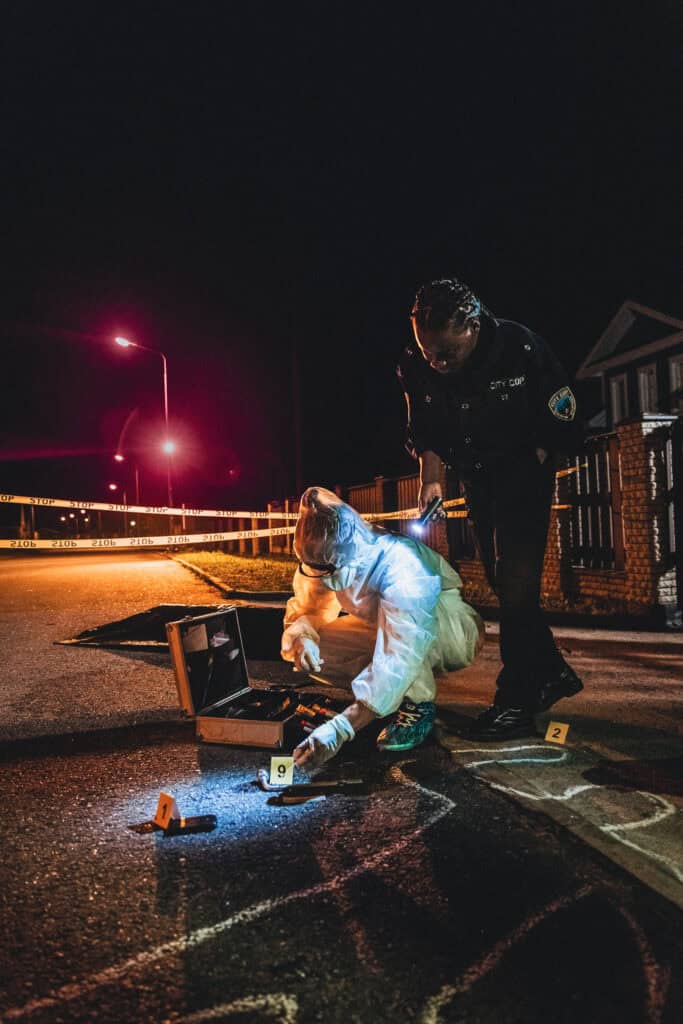
Sexual context changes what investigators must look for, but not the standard of proof. Clothing should be documented before it is moved. Bindings and knots should be preserved when possible. Injuries must be assessed for whether they occurred before, around, or after death, recognizing the limits of that assessment. Appropriate samples may be collected for DNA, toxicology, microscopy, and other examinations. Investigators should distinguish evidence of contact from evidence of force, and evidence of force from proof of a particular motive.
DNA can be powerful, especially when a clear single-source profile from probative biological material is compared with an appropriate reference sample. But DNA ordinarily addresses whose biological material may be present, not how or when it was deposited. Trace DNA may arrive through innocent contact or secondary transfer; mixtures and small samples can be difficult to interpret. The National Institute of Standards and Technology cautions that DNA results are only one part of a case and that source-level comparison cannot independently answer questions about actions, timing, or motive. NIST forensic DNA guidance
Trace evidence carries similar limits. Fibers, hairs, soil, glass, paint, and other materials may associate people, objects, and places, but the strength of the conclusion depends on the method, the rarity of the characteristics, transfer and persistence, contamination controls, and the relevant competing explanations. “Consistent with” should never be converted into “came from” unless the method supports source attribution at that level.
Digital evidence may be uniquely important when motive is disputed. Search histories, communications, images, journals, location data, purchases, recordings, and deleted files can reveal preparation or persistent interests. Yet digital evidence must be attributed to a user, placed in context, and distinguished from material passively received or never viewed. A disturbing file does not interpret itself.

Geography and timelines can show opportunity. A suspect’s movements, access, employment, vehicles, devices, and relationship to the victim may connect evidence that otherwise appears isolated. Databases such as CODIS, fingerprint systems, ballistics networks, missing-person systems, and ViCAP can reveal links across jurisdictions. Forensic linkage is generally more persuasive than a shared behavioral flourish because it rests on measurable evidence rather than a presumed psychological meaning.
Interviews should be evidence-led and tailored to the individual, not to a speculative diagnosis. Investigators may use behavioral consultation to plan sequencing, rapport, disclosure of evidence, or questions about fantasy. They should not assume that every suspect is psychopathic, narcissistic, charming, compulsive, or eager to describe the crime. Information only the perpetrator would know must be protected from contamination through public reporting or leading questions.
Documented Cases and the Limits of Analogy
Rader’s guilty-plea hearing illustrates the value of convergence. His stated sexual fantasy did not stand alone. It appeared alongside admissions of planning, surveillance, prepared equipment, restraint, photography, and repeated killing. Investigators also recovered items from his home, and his communications helped connect him to the crimes. The evidentiary picture came from confession, physical recovery, digital metadata, documented behavior, and a legal proceeding—not a profile imposed on an unknown offender.
His public life is equally instructive, but only in a limited sense. It disproves the proposition that every serial murderer will appear conspicuously isolated or disordered. It does not prove that an employed parent or church officer should be suspected because an unknown offender appears organized.
Theodore Bundy provides another example of how a verified case fact can be distorted into a general type. Reputable reporting documents that he sometimes feigned injury to obtain assistance from women. In Utah, survivor Carol DaRonch testified that he approached her while posing as a police officer, lured her toward his vehicle, and attempted to restrain her. Her escape and identification of Bundy became central to his kidnapping conviction. State v. Bundy
Those facts support the conclusion that Bundy used deception. They do not establish that deceptive approaches are peculiar to erotophonophilia, that all offenders of this type are superficially charming, or that a “con” approach reveals a specific paraphilia. Most importantly, the investigative significance lies not in an offender’s supposed sophistication but in a survivor who escaped, reported what happened, preserved critical details, and testified.
Historical cases demand even greater caution. Gilles de Rais was convicted in 1440 in ecclesiastical and secular proceedings concerning the abuse and killing of children. The surviving record can be studied as legal and cultural history. It cannot sustain a modern clinical diagnosis delivered nearly six centuries later. Retrospective labels erase differences in legal procedure, evidentiary standards, language, and psychiatric concepts while implying access to an inner life that the record cannot reliably provide.
Prevention, Treatment, and Responsible Attention

There is no public checklist that can identify a future sexual murderer. Childhood adversity, isolation, unusual fantasy, pornography use, narcissistic traits, substance misuse, anger, or relationship problems are neither individually nor collectively a deterministic profile. Treating them as one risks stigmatizing large numbers of people while contributing little to prevention.
Clinical intervention becomes relevant when a person is distressed by persistent harmful sexual interests, fears acting on them, has begun planning, has offended, or presents an identifiable risk to others. Assessment must be individualized and conducted by appropriately qualified professionals. Treatment guidelines for paraphilic disorders discuss psychological interventions and, in selected cases, medication, but the evidence varies by population and outcome. No treatment claim about erotophonophilia specifically should be made from the sexual-homicide literature alone. WFSBP treatment guideline record
For law enforcement, prevention is less theatrical and more concrete: take stalking and escalating sexual violence seriously; preserve and compare evidence; share information across jurisdictions; investigate missing people without allowing social marginalization to determine urgency; and use behavioral analysis as support rather than proof. When a person communicates a specific target, intent, preparation, access, or movement toward violence, threat assessment focuses on those behaviors instead of a fictional portrait of the “type” of person who kills.
Journalism has its own preventive duty. Sexualized homicide attracts attention far beyond its frequency. That imbalance can convert perpetrators into dark celebrities while victims become evidence of someone else’s pathology. The Office for Victims of Crime advises media and advocates to protect the privacy, dignity, and informed choices of homicide survivors and families, recognizing that exploitative coverage can compound trauma. OJP privacy and dignity guide
Responsible coverage uses the minimum graphic detail needed to understand the investigation. It distinguishes diagnosis from description, allegation from proof, and probability from certainty. It names methodological limits rather than filling them with atmosphere. Above all, it remembers that a person killed in a sexual homicide was not born to complete an offender’s fantasy or a reader’s story.
The Knowledge at the Edge of the Crime
Erotophonophilia names one of the most disturbing possible relationships between sexuality and violence: arousal contingent on killing. The word is useful when evidence truly supports that relationship. It becomes dangerous when treated as a master explanation.
The research does not reveal a single childhood, personality, victim type, crime scene, or progression. Sexual-homicide offenders include people with and without disclosed fantasy, psychopathy, sexual sadism, prior sexual offenses, close relationships, stranger victims, elaborate planning, or repeated killing. Their acts may be sexually motivated, sexually associated, opportunistic, angry, instrumental, or shaped by several motives at once.
A crime scene can document conduct. Forensic evidence can associate people and places. Digital records can reveal preparation. Witnesses and survivors can establish patterns of approach and behaviour. Courts can determine criminal responsibility. Clinicians can assess persistent arousal patterns. None of those disciplines should silently assume the authority of the others.
The darkest fact is also the most ordinary one: classification cannot restore a life. Its legitimate purpose is narrower, to improve investigation, test claims, guide proportionate assessment, and prevent uncertainty from being disguised as expertise. In that work, restraint is not a failure of imagination. It is the discipline that keeps the evidence intact.
Frequently Asked Questions
Is erotophonophilia an official DSM-5-TR diagnosis?
No. Erotophonophilia is a descriptive term used in forensic sexology, but it is not one of DSM-5-TR’s eight named paraphilic disorders. A clinician could consider a broader specified or unspecified category when appropriate, but diagnosis requires an individual assessment.
Is erotophonophilia the same as sexual homicide?
No. Sexual homicide is a broad and inconsistently defined offense category. It may include a killing associated with sexual activity, even when death was not the source of arousal. Erotophonophilia refers more narrowly to sexual arousal connected to killing.
Are all sexual homicides serial murders?
No. A sexual homicide may be a single offense. Serial murder describes two or more killings committed in separate events and does not require a sexual motive.
Can mutilation or overkill prove a sexual motive?
No. These findings may prompt further investigation, but they have multiple possible explanations. Motive must be assessed from the complete scene, postmortem findings, statements, digital evidence, history, and other corroboration.
Do violent sexual fantasies inevitably lead to homicide?
No. Fantasy, planning, and action are distinct. Research does not support an inevitable progression from violent fantasy to murder. Risk assessment must consider case-specific intent, preparation, access, behavior, and other evidence.
What is the difference between modus operandi and signature?
Modus operandi refers to the practical methods used to commit a crime. “Signature” traditionally refers to psychologically meaningful behavior that is unnecessary to commit. Empirical research shows that behavior can vary, and offenders do not necessarily leave a stable or unique signature at every scene.
How are potentially related sexual homicides linked?
Investigators compare DNA, fingerprints, trace material, ballistics, timelines, geography, victim access, digital evidence, approach, control, injuries, disposal, and other behaviors. Systems such as ViCAP can help agencies compare cases across jurisdictions. Behavioral similarity remains probabilistic and requires corroboration.
How common is erotophonophilia?
Its prevalence is unknown. Recorded sexual homicides have been estimated at roughly one to four percent of homicides in some jurisdictions, but erotophonophilia is a narrower concept and cannot be assigned the same rate.
Primary and Official Sources
- State of Kansas v. Dennis L. Rader: Guilty-Plea Transcript, June 27, 2005
- American Psychiatric Association: DSM-5-TR Paraphilic Disorders
- American Psychiatric Association: Paraphilic Disorders Fact Sheet
- World Health Organization: ICD-11 Clinical Descriptions and Diagnostic Requirements
- FBI: Serial Murder—Multi-Disciplinary Perspectives for Investigators
- FBI: Behavioral Analysis and ViCAP
- FBI Kansas City Field Office History: Dennis Rader Investigation
- National Institute of Standards and Technology: Communicating Forensic Biology Findings
- UK Ministry of Justice: Factors Indicative of Fantasy Disclosure by Sexual Homicide Perpetrators
- Office of Justice Programs: Privacy and Dignity in Homicide Media Coverage
- State v. Bundy, Utah Supreme Court
Research and Secondary Sources
- John Money: “Forensic Sexology: Paraphilic Serial Rape and Lust Murder”
- Kerr, Beech and Murphy: Sexual Homicide—Definition and Motivation
- Chan and Heide: Sexual Homicide—A Synthesis of the Literature
- Canter et al.: The Organized/Disorganized Typology of Serial Murder
- Schlesinger et al.: Ritual and Signature in Serial Sexual Homicide
- Darjee et al.: Sexual Sadism and Psychopathy in Sexual Homicide Offenders
- “Sorting Things Out”: A Scoping Review of Sexual-Homicide Typologies
- Tell Me What You Do: Victim-Offender Relationships in Sexual Homicide
- Yaksic, Simkin and Roychowdhury: Intervals Between Serial Homicides
- WFSBP Guidelines for Pharmacological Treatment of Paraphilic Disorders
- Janet McClellan: Erotophonophilia—Investigating Lust Murder
Discover more from The Dark Side of Humanity
Subscribe to get the latest posts sent to your email.