The Ken and Barbie Killers
Paul Bernardo & Karla Homolka // Ontario, Canada // 1986–1995


Case Snapshot
Convictions, admitted conduct, arrest, sentence and custody
Bernardo was convicted of the first-degree murders of Leslie Mahaffy and Kristen French. No murder conviction was entered for Tammy Homolka’s death.
Police attributed at least fourteen sexual assaults to the Scarborough series. Later admissions expanded the known record, but not every admitted offence was separately prosecuted.
Bernardo was arrested on February 17, after delayed DNA analysis linked him to the Scarborough attacks and Homolka began cooperating with authorities.
The 1995 jury convicted him on all nine counts before it, including murder, kidnapping, forcible confinement, aggravated sexual assault and indignity to a body.
He received life imprisonment with twenty-five years before parole eligibility and was also designated a dangerous offender.
Day and full parole were denied in 2018, 2021 and again in November 2024.

Record Boundary
Court-established facts separated from admissions, suspicion and media mythology

Victim Ledger
Three teenage girls whose names must remain larger than the offenders’ brand
Tammy Homolka
Tammy died in December 1990 after being drugged and assaulted inside a family setting. Her death became central to the later case record, but Paul Bernardo was not convicted of her murder. The legal distinction matters even when the historical account is broader.
Leslie Mahaffy
Leslie was a teenager moving through an ordinary residential environment. Bernardo was convicted of kidnapping, confinement, aggravated sexual assault and first-degree murder in connection with her death.
Kristen French
Kristen was abducted in public view, prompting an intensified joint investigation. Bernardo was convicted of kidnapping, confinement, aggravated sexual assault and first-degree murder in connection with her death.
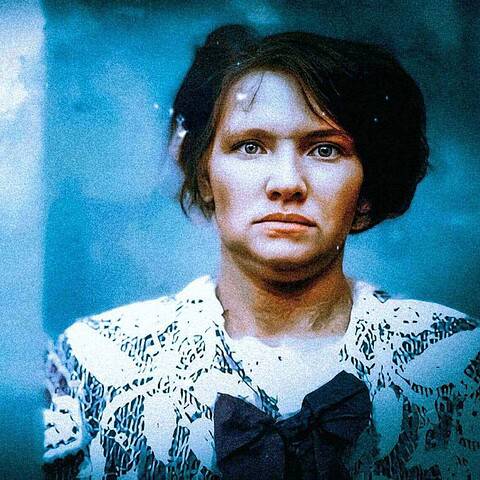
Victim portrait coverage: all three named victims are shown in the archival portrait panel above. The original composite is kept intact so no identity is altered through an invented crop or substituted portrait.

Case Update
Transfer, parole and transparency through the latest public record
The criminal verdict has not changed. The modern dispute concerns custody classification, parole review and how correctional decisions are communicated to victims’ families.
Medium-security transfer
In May 2023, Correctional Service Canada transferred Bernardo from Millhaven Institution to La Macaza Institution in Quebec. The move triggered national scrutiny because the security classification changed while the dangerous-offender designation remained.
Policy compliance is not victim confidence
A correctional review concluded that the reclassification and transfer followed applicable law and policy. The controversy nevertheless exposed serious failures in advance communication, ministerial briefing and trauma-informed notification.
Release remains denied
The Parole Board denied release for a third time in November 2024. The continuing issue is not whether he is automatically freed after twenty-five years; eligibility only permits review, and the Board must still assess risk.


Case Geography
Scarborough, Niagara, Burlington, Lake Gibson and federal custody
Serial sexual-assault investigation, 1990 interview and biological sample collection.
Residence, captivity site and location of Bernardo’s arrest.
Mahaffy abduction and French recovery geography.
Recovery site connected to Leslie Mahaffy.
Current federal custodial location after transfer.


Chronology
Independent CSS-only case events from the Scarborough series through parole review

Victimology
Opportunity, isolation and offender responsibility
Isolation was engineered
In the Scarborough series, Bernardo exploited transit routes, darkness, walking paths and moments when women or girls were alone. In the later crimes, access expanded through a vehicle, a private residence and Homolka’s presence. The victims’ routines did not cause the offences. The offender studied circumstances that reduced witnesses and increased control.
Leslie Mahaffy and Kristen French were teenagers moving through ordinary community spaces. Tammy Homolka was harmed inside a family environment where trust should have offered protection. The shift in setting—from public approach to domestic access—shows escalation in control, not increased culpability by the victims.
Reject the couple-brand mythology
The “Ken and Barbie” phrase reduces a system of serial sexual violence to appearance, romance and tabloid contrast. It invites the audience to study the offenders as a pair of celebrities while unnamed survivors, bereaved families and the institutional failures become background.
This dossier does not reproduce the recordings, romanticize the relationship or use beauty as an explanatory category. Victims are not supporting characters in an offender narrative. They are the central human record.

Escalation Architecture
What changed when a serial offender gained a partner, residence and recording system
Pre-Homolka Pattern
Dyadic Escalation

Modus Operandi
Practical mechanics separated from psychological interpretation
Bernardo identified moments when a victim was separated from immediate help. Transit corridors, residential walking routes and late-night travel created predictable opportunities. This is operational behaviour, not evidence that the victim’s travel choices were reckless.
The Scarborough attacks depended on surprise, threats and immediate domination. Repetition allowed the offender to refine timing while preserving distance from witnesses.
In the later offences, Homolka’s presence changed how an approach could be perceived. A young woman near a vehicle or residence could reduce alarm, assist compliance or make the situation appear socially ordinary.
The Port Dalhousie house created a controlled environment unavailable during the earlier assaults. Privacy, rooms, restraints, recording equipment and household materials extended the offence window and increased lethality.
Abduction, residence, disposal and recovery occurred in different places. That movement created evidence but also divided information between Toronto, Niagara and Halton-area policing structures.

Signature Behaviour
Conduct that exceeded the practical requirements of access and escape
Recording the offences
Videotaping was not necessary to abduct, confine or escape. It preserved the conduct for replay, structured performance between the offenders and created a private archive of domination.
Commands and scripted roles
The recordings documented repeated direction, humiliation and staged interaction. That behaviour reflects fantasy and control beyond the minimum mechanics of restraint.
The Teale persona
The adoption of “Teale” and the couple’s curated public image reflected a broader investment in reinvention. Name change, appearance and social performance did not cause the crimes, but they supported compartmentalization.
Competing offender accounts
Bernardo and Homolka repeatedly shifted responsibility, minimized choice and used the other offender’s conduct to recast their own. The pattern continued through plea negotiation, trial and later public interpretation.

Evidence Locker
Forensic linkage, witnesses, recordings and institutional records
DNA comparison
Biological material from the Scarborough series was eventually matched to samples Bernardo provided in November 1990.
Court-established forensic linkage; operationally delayed.
Witness and geography record
Survivor descriptions, composite information, vehicle observations, abduction witnesses and recovery locations connected files.
Corroborated when supported by documentary or forensic evidence.
Videotape evidence
Recordings documented offender conduct and contradicted efforts to minimize Homolka’s active role.
Direct evidence; delayed production created legal and ethical consequences.
Institutional review
Post-conviction review examined forensic delay, case coordination and major-case management.
Government and justice-system record; not physical crime-scene evidence.

The DNA Backlog
A forensic success that arrived after the prevention opportunity
Police did not need future technology to generate Bernardo’s name. Composite resemblance, tips and interview access had already placed him inside the investigation.
Hair, blood and saliva were obtained voluntarily in November 1990, creating the material needed for comparison.
The Centre of Forensic Sciences faced limited capacity and large demand. Bernardo’s samples were not treated as an immediate answer to a high-risk serial file.
The Scarborough sexual-assault investigation and the Niagara-area murder investigation developed in different institutional environments. The suspect was not integrated quickly enough across files.
The Campbell review emphasized major-case management, communication and automated linkage. Ontario later developed PowerCase to help investigators recognize connected homicide and sexual-assault files.

Homolka: Abuse, Agency and Access
Two truths can coexist without cancelling one another
Abuse does not erase participation
Evidence showed that Bernardo abused Homolka. Evidence also showed that she helped obtain drugs, facilitated access, participated in assaults, assisted concealment and appeared actively engaged on recordings. A responsible analysis does not force the case into a false choice between “battered woman” and “equal monster.” Coercive control can shape behaviour while a person still exercises criminal agency in specific acts.
Access function
Homolka could approach, reassure or remain near a victim without generating the same immediate threat perception as Bernardo alone. That made gendered trust part of the practical M.O.
Evidence function
Her cooperation gave prosecutors an inside account before the tapes were available. The Crown had to decide whether a compromised accomplice was still necessary to prosecute a more dangerous offender.
Credibility problem
The tapes later showed a more active role than her early presentation suggested. This did not make all of her testimony false; it made corroboration essential.
Public mythology
Media narratives alternated between passive victim, manipulative mastermind and sexualized spectacle. None is an adequate substitute for act-by-act evidence.

The Videotape Evidence
Direct documentation, delayed disclosure and ethical limits
The recordings reduced narrative ambiguity
The tapes documented interaction between the offenders, supported the Crown’s account of confinement and assault, and allowed the jury to assess conduct rather than rely only on competing testimony. They were unusually direct evidence of participation.
Direct evidence is not automatically simple evidence. Recording angle, missing intervals, offender performance and the difference between what is visible and what happened off-camera still required contextual proof.
Evidence remained hidden for months
Former defence counsel Ken Murray located the tapes and retained them while considering their use in cross-examination. They were delivered in 1994, long after Homolka’s plea agreement. The delay triggered an obstruction prosecution, professional discipline and lasting debate about counsel’s duties when physical evidence is discovered.
The case is now taught as an ethics problem because defence confidentiality does not create a licence to conceal real evidence indefinitely.

The Plea Bargain
Why the agreement was made—and why it remains contested
Before the tapes were available, prosecutors had a difficult murder case, a cooperating accomplice, inconsistent accounts and a defendant expected to deny responsibility for the deaths. Homolka offered testimony from inside the crimes.
Homolka pleaded guilty to two counts of manslaughter and agreed to testify. The sentence reflected the negotiated account then available, including evidence that Bernardo had abused her.
The recordings showed active conduct inconsistent with the public image of a largely compelled witness. They strengthened the case against Bernardo while simultaneously making the bargain appear too lenient.
A later review concluded that prosecutors acted responsibly on the information available when the agreement was made. The bargain was not reopened merely because later evidence changed public assessment.

Institutional Failures
The case was not one missed clue; it was a chain of unjoined systems
Forensic turnaround
The DNA result was scientifically useful but operationally late. A backlog transformed potentially preventive evidence into retrospective proof.
Suspect prioritization
Bernardo resembled the composite, was named by acquaintances and supplied samples. No single factor required arrest, but their cumulative weight demanded faster escalation.
Jurisdictional separation
Toronto sexual-assault files, Niagara-area events and Halton recoveries did not automatically merge into one intelligence picture.
Search limitations
The 1993 house search operated under a warrant whose scope mattered. Investigators did not locate the tapes later found by defence counsel.
Evidence disclosure
The delayed production of the videotapes altered plea-bargain evaluation and raised a separate crisis of legal ethics.
Victim communication
Later correctional decisions repeated a familiar institutional problem: compliance with internal procedure did not guarantee respectful, timely notice to families.

Legal Outcome
Verdict, sentence, dangerous-offender status and continuing detention
On September 1, 1995, the jury convicted Bernardo on every count before it: two first-degree murders, two kidnappings, two forcible confinements, two aggravated sexual assaults and one indignity-to-a-body offence.
First-degree murder required life sentences with twenty-five years before parole eligibility. Eligibility is a review threshold, not a release date.
The court separately designated Bernardo a dangerous offender, reflecting a finding of enduring risk from serious violent and sexual behaviour.
Homolka served the twelve-year manslaughter sentence negotiated before the tapes were available and was released in 2005. Her legal outcome is distinct from Bernardo’s convictions.
After appeals and legal proceedings, authorities determined that the recordings no longer had a continuing evidentiary use and the most sensitive tapes were destroyed. Destruction reduced future exploitation but also closed one form of independent review.

Custody and Parole
Security classification is not the same decision as conditional release
First denial
The Parole Board denied day and full parole after considering the offence pattern, risk assessments and limited insight.
Second denial
Release was again refused. Family statements emphasized that recurring hearings impose their own continuing burden.
Transfer controversy
CSC moved Bernardo to La Macaza, a medium-security institution. Classification governs institutional management; it does not itself authorize community release.
Third denial
The Board again refused day and full parole. The latest public record continued detention.
Notification matters
The transfer controversy led to stronger direction on early victim notification and consideration of victim information in voluntary transfer decisions.
Privacy versus access
Families have sought greater access to correctional and parole records. Canadian law continues to balance victim participation against offender privacy and institutional confidentiality.


Media and Myth
How beauty, secrecy and the early internet distorted the public record
The “Ken and Barbie” label
The phrase packaged the case around appearance and marriage. It minimized the long pre-relationship assault series and converted extreme violence into a celebrity-couple paradox.
Publication-ban conflict
Restrictions intended to protect a fair trial collided with cross-border newspapers, bulletin boards and early online distribution. The case became an early demonstration that digital networks could undermine geographically bounded court orders.
Homolka fixation
Public debate often centred on whether she was victim or villain, leaving the unnamed survivors and investigative failures comparatively underexamined.
Offender-authored content
Later attempts by Bernardo to publish fiction raised questions about platforms, profit, notoriety and whether commercial distribution amplifies offender self-mythology.

Myths and Corrections
Common simplifications that distort the case
Myth: the crimes began with the couple
Correction: Bernardo’s serial sexual violence began before Homolka entered the offending partnership. The dyad changed scale and method; it did not create the original pattern.
Myth: three murder convictions
Correction: Bernardo was convicted of murdering Mahaffy and French. Tammy Homolka’s death is part of the case history but did not result in a murder conviction.
Myth: DNA technology failed
Correction: the comparison ultimately worked. Capacity, prioritization and turnaround failed to deliver the result when it could have prevented later harm.
Myth: parole eligibility means release
Correction: eligibility creates a review process. Bernardo has been denied release three times.
Myth: the plea deal proved Homolka was passive
Correction: the agreement reflected the evidence and strategy available in 1993. Later recordings materially changed public understanding of her role.
Myth: a medium-security transfer erased the sentence
Correction: he remains imprisoned under life sentences and dangerous-offender status. Institutional classification and parole are different decisions.

Unresolved Questions
Questions that remain after conviction
How many assaults remain outside the prosecuted record?
Later admissions expanded the known series. Without public charges, survivor cooperation and corroborating evidence, the complete offence count remains uncertain.
Which delay mattered most?
DNA turnaround, suspect ranking, jurisdictional separation and failure to integrate tips interacted. Treating one as the single cause can obscure the system chain.
Could Tammy Homolka’s death have been recognized earlier?
The initial accidental ruling, family setting and incomplete information delayed suspicion. Retrospective certainty should not replace careful analysis of what was knowable at each stage.
How should accomplice bargains be reviewed when new evidence appears?
The case demonstrates the tension between finality, prosecutorial necessity, witness cooperation and later-discovered proof of greater culpability.
What records should victims’ families receive?
Parole and correctional systems hold sensitive risk information. Families seek transparency, while privacy law limits disclosure. The conflict remains active.
How should media preserve survivor privacy?
The notoriety of the offenders has repeatedly threatened to eclipse unnamed survivors. Responsible coverage can analyze pattern and system failure without exposing protected identities.

Sources and Verification
Government systems, justice policy, forensic standards and current reporting
Correctional Service Canada
Federal source for institutional classification, transfers, offender management and the distinction between correctional placement and parole.
Open CSCParole Board of Canada
Official framework for conditional-release decisions, victim participation and the principle that eligibility does not guarantee release.
Open Parole BoardOntario Centre of Forensic Sciences
Current institutional context for Ontario forensic testing. The Bernardo review remains a defining historical example of turnaround and prioritization failure.
Open CFSJustice Canada: Plea Bargaining
Legal-policy context for negotiated resolutions, accomplice evidence and the Crown’s duty to assess public interest.
Open Justice CanadaNational Academies review
Broader standards context for validation, evidence limitations, laboratory capacity and conclusions proportionate to scientific support.
Open standards reportCurrent-status cross-check
Recent public reporting confirms the 2023 transfer, the 2024 third parole denial and continuing imprisonment at La Macaza through late 2025.
Open current overview
Glossary
Case terminology and evidence classifications

Discover more from The Dark Side of Humanity
Subscribe to get the latest posts sent to your email.