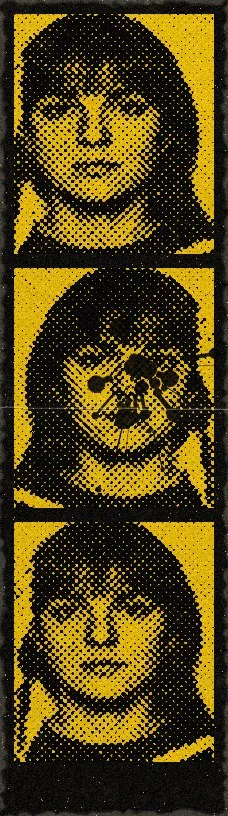
FILE NO. 0123Case status Convicted
Leonarda Cianciulli was an Italian serial killer convicted in 1946 for the murders of three women in Correggio between 1939 and 1940. She targeted victims with promises of marriage or employment, coerced them into transferring their assets, and staged their voluntary departures through pre-written correspondence before killing them.
To conceal the crimes, Cianciulli used caustic soda to destroy the human remains. While popular legends claim she turned the victims into soap and baked goods, these accounts depend largely on unverified confessions. Investigation of financial trails ultimately led to her arrest, trial, and conviction with diminished capacity.
Leonarda Cianciulli: The Correggio Murders, Victims & Soap-Maker Myth
Correggio, Reggio Emilia, Italy: 1939–1940

Leonarda Cianciulli Quick Answers
Concise answers for the highest-intent search questions before the full forensic dossier.
Who Was Leonarda Cianciulli?
Leonarda Cianciulli was an Italian murderer convicted in 1946 of killing Ermelinda Faustina Setti, Francesca Clementina Soavi and Virginia Cacioppo in Correggio between 1939 and 1940. She lured the women with promises of marriage or employment, obtained control of money or property, and concealed their deaths with pre-written correspondence.
How Many People Did Leonarda Cianciulli Kill?
Leonarda Cianciulli was convicted of murdering three women in Correggio, Italy: Ermelinda Faustina Setti, Francesca Clementina Soavi and Virginia Cacioppo.
Did Leonarda Cianciulli Really Make Soap?
Her use of caustic soda to break down human remains is chemically plausible and consistent with alkaline hydrolysis. The public record does not establish that she produced refined, usable soap bars predominantly from human remains.
Did She Bake Human Blood Into Cakes?
Cianciulli claimed she dried victims’ blood, mixed it with flour and baked cakes. The claim is physically possible but remains confession-dependent; no tested food sample or independently identified consumer proves that human material was actually eaten.
How Was Leonarda Cianciulli Caught?
The investigation accelerated after Virginia Cacioppo’s family challenged her supposed departure. A Treasury bond belonging to Cacioppo was traced through intermediaries back toward Cianciulli, linking the disappearance to transferred property.
Why Did Leonarda Cianciulli Kill?
Financial gain is directly supported by property transfers, jewellery, bonds and other assets. Cianciulli also claimed the murders were sacrifices meant to protect her son Giuseppe, but that supernatural explanation comes largely from her own account.
Leonarda Cianciulli Case Overview
The secure legal frame before memoir, wartime reporting and the “soap-maker” legend are allowed into the record.
Three Murders
Setti, Soavi and Cacioppo disappeared after confidential dealings with Cianciulli. She was convicted of killing all three and appropriating their property.
Fabricated Departures
Each victim was encouraged to keep the opportunity secret and prepare correspondence that could be mailed after death to imitate voluntary relocation.
Caustic Alkali
The judgment and later museum record support destruction of remains through cutting and caustic treatment. Exact recipes, timings and finished products remain less secure.
Prison and Asylum
The court accepted diminished but not absent responsibility. Cianciulli remained institutionalized until her death at Pozzuoli in 1970.
Leonarda Cianciulli’s Three Victims
Leonarda Cianciulli was convicted of murdering three women in Correggio between 1939 and 1940: Ermelinda Faustina Setti, Francesca Clementina Soavi and Virginia Cacioppo.
Ermelinda Faustina Setti
Approach: a promised marriage and relocation to Pola.
Control mechanism: secrecy, signed letters or postcards and authority to manage the sale of property.
Evidence note: ages and exact sums vary sharply across reports; the deception and appropriation are more secure than the printed totals.
Francesca Clementina Soavi
Approach: a respectable job at a girls’ school in Piacenza.
Control mechanism: confidential preparation for departure and pre-written messages.
Pattern value: the second case demonstrates a reusable method rather than one impulsive killing.
Virginia Cacioppo
Approach: secretarial work for a theatrical impresario in Florence.
Assets: reports identify money, bonds, jewellery, clothing and shoes.
Detection: Albertina Fanti’s refusal to accept the disappearance story helped expose the common link.
Evidence Boundary
Four levels prevent a lurid confession from being treated as a complete forensic record.
Geography of the Correggio Murders
Migration, disaster, a socially accessible apartment and the institutions that later held the case.
Montella: Origin Record
Birthplace in Irpinia. Later claims about a maternal curse, early suicide attempts and prophecy are autobiographical and should not be treated like civil records.
Lauria: Fraud Before Homicide
The family lived in Lauria, where Cianciulli was convicted of continuing fraud in 1927. This is a documented behavioural antecedent: deception and financial appropriation preceded the murders.
Lacedonia: Earthquake Displacement
The family lost its home in the 1930 earthquake and relocated north. Disaster and economic disruption form the practical background beneath the later supernatural narrative.
Correggio: Controlled Crime Setting
The family apartment at 11 Corso Cavour was a familiar domestic space where neighbours visited, business was conducted and the three final meetings occurred.
Reggio Emilia: Investigation and Trial
Police, prosecutors, psychiatric experts and the Court of Assizes assembled the fraud, property, confession and remains evidence.
Pozzuoli: Final Confinement
Cianciulli died in the women’s judicial psychiatric institution at Pozzuoli on 15 October 1970.
Leonarda Cianciulli Murder Timeline
Open each row to follow the fraud, disappearances, investigation, trial and confinement.
Birth in Montella
Most Italian records cited in modern summaries give 18 April 1894; some databases give 14 April. The discrepancy is retained rather than silently resolved.
Marriage to Raffaele Pansardi
The marriage was opposed by her family. Cianciulli later used the alleged maternal curse as an origin story for repeated loss.
Fraud conviction
A pre-homicide conviction establishes repeated deception and financial predation.
Earthquake and relocation
After the Lacedonia earthquake destroyed the family home, the Pansardis resettled in Correggio.
Setti disappears
Setti’s supposed marriage journey was supported by prepared correspondence and transfer of property.
Soavi disappears
The promised Piacenza position reproduced the secrecy-and-relocation script.
Cacioppo disappears
Many summaries give 30 September; some Italian reporting gives 30 November. The dossier flags the conflict instead of presenting false precision.
Arrest and investigation
Tracing Cacioppo’s Treasury bond through intermediaries brought the financial trail back to Cianciulli. Arrest dates are commonly given as 1 or 3 March.
Trial opens
The crowded post-war trial combined murder, theft, destruction of remains and psychiatric responsibility.
Conviction
The court found Cianciulli guilty and accepted diminished rather than absent responsibility.
Death at Pozzuoli
She died after decades of institutional custody.
Leonarda Cianciulli Crime Scene Reconstruction
Explicit scene mechanics, separated from claims that the historical record cannot independently verify.
Setti Scene File: First Confirmed Pattern
Entry and isolation: Setti arrived expecting the final stage of a marriage arrangement. The home was familiar enough not to signal immediate danger. Her prior letters and authorizations had already created the appearance of a planned departure.
Fatal assault: Cianciulli later described striking Setti on the head with an axe or hatchet. Contemporary TIME reporting added drugged wine; other retellings use coffee or do not establish sedation. No surviving autopsy can resolve drugging, number of blows or exact wound path.
Blood and dismemberment: Her memoir claims the body was dragged into a small room, the blood collected in a basin, and the body divided into nine parts. This is explicit but confession-dependent. A complete scene sketch, blood-pattern record and medical examination are not available.
Disposal: She said the sections were placed in a vessel with approximately seven kilograms of caustic soda, heated and stirred into a dark slurry, then emptied into a cesspit. The broad alkali-disposal claim is consistent with the conviction; exact weights and processing time remain unverified.
Soavi Scene File: Repeated Architecture
Deception: Soavi arrived believing a position at a girls’ school in Piacenza was available. The private job narrative justified silence and departure preparations.
Assault: Later accounts describe a blow to the head delivered from behind or above. The precise weapon, number of impacts and whether incapacitation was immediate cannot be independently reconstructed because no intact body was recovered.
Processing: Cianciulli claimed she repeated the cutting and caustic treatment used on Setti. The level of anatomical detail in her memoir has been challenged by later commentators, who note errors in cutting method and chemistry.
Scene continuity: The apartment remained an operating family and commercial space. Successful concealment required cleaning, control of odour, disposal of liquid and return to ordinary domestic behaviour.
Cacioppo Scene File: Financial Trail Survives
Final approach: Cacioppo was promised work in Florence and brought movable property consistent with relocation.
Fatal force: Accounts again describe a head strike with an axe or hatchet. Because the remains were fragmented or destroyed, the record cannot supply a complete cranial-injury map or reliable count of wounds.
Dismemberment and chemical treatment: Cianciulli’s memoir gives the most elaborate sensory account for Cacioppo, claiming the body produced “creamier” soap after perfume was added. That language is self-dramatizing and not a laboratory result.
What endured: Unlike the claimed soap and cakes, Cacioppo’s financial instruments left a trace. A Treasury bond passed through other hands and ultimately directed police back to Cianciulli.
The Apartment After the Killings
The practical scene was not a gothic laboratory but a domestic apartment with a kitchen, small work or storage space, water, heat, cutting tools and ordinary household traffic. The body-processing narrative implies prolonged occupation of the scene after death: draining or collecting blood, separating limbs and trunk, reducing sections in a heated alkaline mixture, cleaning tools and containers, carrying residue to a disposal point and managing property.
That sequence would create blood transfer, tissue, odour, splash, tool marks and chemical residue. The surviving popular record does not preserve a modern laboratory map of those traces. Later museum display proves that tools were retained as exhibits, not that every item’s individual role can now be reconstructed.
How Cianciulli Disposed of the Bodies
What the process would require, what the confession says and what chemistry can actually establish.
Mechanical Reduction
Axe or hatchet, saw and knives would be used to separate the body into pieces small enough for a domestic vessel. Museum photographs show cutting and striking tools attributed to the case.
Blood Collection
Cianciulli said blood was collected in a basin, allowed to coagulate, dried and ground. No surviving food sample or laboratory result proves later ingestion.
Strong Alkali and Heat
Sections were reportedly covered with water and caustic soda, heated and stirred. Alkali can destroy soft tissue and convert some fat into fatty-acid salts.
Mixed Residue
A whole body does not become clean bar soap. Protein breakdown, fat saponification, bone mineral and contaminants produce a corrosive mixed residue.
Liquid and Solid Disposal
Cianciulli said buckets of dark material were emptied into a nearby cesspit. Dental and bone material reported from the home suggest destruction was incomplete.
Evidence in the Leonarda Cianciulli Case
Numbered exhibits with provenance, limitations and investigative value rather than a decorative list of weapons.

Display Is Not Chain of Custody
A museum photograph confirms that objects are preserved and attributed to the case. It does not, by itself, prove which instrument caused which injury, when each object was seized, how it was packaged or whether trace material survived.
The locker below distinguishes documentary evidence, financial tracing, reported physical exhibits, museum attribution, confession and legal judgment.
| Exhibit | Item | Provenance | Status | Investigative value / limitation |
|---|---|---|---|---|
| LC-01 | Pre-written letters and postcards | Victims prepared messages before death. | Documentary / corroborated | Extended the appearance of voluntary departure; handwriting was genuine while circumstances were false. |
| LC-02 | Delegations and property authority | Setti and others reportedly signed documents permitting sale or management of assets. | Documentary / reported | Shows fraud architecture and transfer of control before disappearance. |
| LC-03 | Cacioppo Treasury bond | A bond associated with Cacioppo was presented through intermediaries. | Financial / corroborated | The traceable instrument led investigators back to Cianciulli. |
| LC-04 | Victims’ jewellery and personal property | Later reporting says jewellery was held by intermediaries and some was concealed in a church alms box. | Physical / reported | Connected missing property to the network around Cianciulli; exact inventory requires trial-file verification. |
| LC-05 | Dentures or dental material | Investigators reportedly found a denture in or connected to the home. | Physical / reported | Potentially identifiable because dental appliances can survive caustic treatment better than soft tissue. |
| LC-06 | Human bone fragments | Later Italian reporting describes human bones recovered at the residence. | Physical / reported | Supports incomplete body destruction; published chain-of-custody and anthropological reports are not readily available. |
| LC-07 | Axes or hatchets | Striking tools attributed to the crimes are displayed in the Rome criminological collection. | Museum exhibit / attributed | Consistent with the confession and head-trauma narrative, but individual wound-tool matching is unavailable. |
| LC-08 | Hand saw | A saw displayed with the case instruments. | Museum exhibit / attributed | Mechanically consistent with dismemberment; the public record does not provide modern trace or kerf analysis. |
| LC-09 | Knives | Large knives are displayed among the attributed tools. | Museum exhibit / attributed | Could support soft-tissue cutting and joint separation; exact item-to-victim linkage is unclear. |
| LC-10 | Caustic soda and vessel claim | Cianciulli said she purchased caustic soda for soap making and used a large vessel. | Confession plus contextual support | Chemically plausible; precise quantities and recipe are disputed. |
| LC-11 | Copper ladle | TIME reported her courtroom statement about donating the ladle used to skim fat. | Contemporary press / confession | Illustrates self-dramatization; the report is not a laboratory inventory. |
| LC-12 | Confession and memoir | Hundreds of pages attributed to Cianciulli described motive and method. | Confessional / authorship disputed | Provides operational claims but had legal, protective and theatrical functions. |
| LC-13 | Psychiatric reports | Filippo Saporito and other experts assessed criminal responsibility. | Legal-medical record | The court accepted diminished capacity, not total incapacity. |
| LC-14 | Trial judgment and sentence | The Court of Assizes convicted Cianciulli in 1946. | Court-established | The strongest source for legal findings; a complete critical edition remains difficult to access online. |
How Leonarda Cianciulli Was Caught
The case was broken by family persistence, financial tracing and a repeated deception pattern, not by the soap legend.
Albertina Fanti Refuses the Story
Cacioppo’s sister-in-law did not accept the promised Florence job as sufficient explanation. Her persistence converted private worry into a police problem.
The Treasury Bond Is Traced
A bond belonging to Cacioppo surfaced at a bank through a priest and another intermediary. The chain led back to Cianciulli and joined the disappearance to property.
Three Missing Women, One Adviser
Investigators identified the same confidential helper at the centre of three apparent departures. Similar scripts, property transfers and correspondence shifted the case from coincidence to pattern.
Search of the Home
Later reporting describes recovery of dental material, human bone and victims’ property. A complete public inventory and laboratory file are not available, so each item is presented as reported rather than silently upgraded.
Suspicion Reaches Giuseppe
Authorities considered whether the son assisted with postcards or disposal. Cianciulli’s confession functioned in part to remove him from jeopardy.
Leonarda Cianciulli’s Confession and Memoir
A source can be incriminating, protective, legally useful and self-mythologizing at the same time.
Why the Confession Matters
Cianciulli admitted the killings and supplied details about luring, striking, dismemberment and disposal. Confession is probative where it matches property, remains or known movements.
Why the Confession Is Not Transparent
She was protecting Giuseppe, arguing for mental incapacity and shaping an extraordinary public identity. Those incentives can coexist with genuine guilt.
The 700-Page Memoir Problem
The long text commonly called Confessioni di un’anima amareggiata may have been assisted, edited or legally shaped. Limited formal education does not prove non-authorship, but manuscript history matters.
The Courtroom Performance
Contemporary accounts describe Cianciulli correcting prosecutors and insisting she could demonstrate rapid dismemberment. This behaviour is evidence of control and self-presentation, not independent verification of every anatomical claim.
Corroboration Rule
The confession identifies claims; financial instruments, property, witnesses, physical remains and the judgment determine which claims can be stated as fact.
Leonarda Cianciulli Trial and 1946 Conviction
The post-war court rejected total insanity while recognizing substantially reduced responsibility.
Murder, Theft, Remains
The proceedings covered three murders, appropriation of property and destruction or indignity to the victims’ remains.
Partial Incapacity
Expert Filippo Saporito reportedly favoured total incapacity. The court accepted only diminished capacity, leaving Cianciulli criminally responsible.
Thirty Years Plus Asylum
The sentence is commonly summarized as thirty years’ imprisonment and at least three years in a criminal asylum. She remained institutionalized until death.
Why Did Leonarda Cianciulli Kill?
Observable benefit, claimed belief and behavioural control can coexist.
Financial Acquisition
Money, bonds, jewellery, clothing and other property moved into Cianciulli’s control. Her prior fraud conviction makes greed a concrete, observable benefit rather than speculation.
Sacrificial Protection
She claimed the women were sacrifices intended to protect Giuseppe from military danger and a curse. The claim may reflect sincere delusion, legal strategy, self-dramatization or a combination.
Narrative Control
She selected the opportunity, secrecy rule, paperwork, destination, final meeting and post-disappearance message. Control over the victims’ identities continued after death.
Multiple Motives
Greed, possessive motherhood, magical thinking, narcissistic performance and pleasure in control do not exclude one another. The record does not require a single motive.
Letters, Fraud and Manufactured Absence
The most sophisticated tool was not the axe or caustic soda. It was the victim’s own authentic handwriting.
Identify a Hope
Marriage, employment, status or a new start created a plausible reason to trust.
Demand Secrecy
Confidentiality isolated the victim from people who might test the story.
Prepare Messages
Letters and postcards were written before death and mailed later. Authentic handwriting supported a false timeline.
Transfer Assets
Property was sold, packed or delegated as if the victim were relocating.
Extend the Fiction
Delayed correspondence bought time while physical evidence was destroyed and property dispersed.
Did Leonarda Cianciulli Really Make Human Soap?
Chemistry explains what is plausible; the surviving record decides what is proven.
The Soap Claim
Cianciulli’s use of caustic soda to break down human remains is chemically plausible. Some body fat could undergo saponification, producing fatty-acid salts. But the public record does not establish refined soap bars made predominantly from human remains.
The Cake Claim
Cianciulli claimed she dried victims’ blood and baked it into cakes. No tested food sample or independent consumer identification establishes that human material was actually eaten.
Chemically Plausible
Strong sodium hydroxide, water, heat and time can destroy most soft tissue and saponify part of the fat.
Historically Unverified
Exact recipe, duration, yield, perfume addition, bar formation and distribution to neighbours are not established by surviving laboratory reports.
Cake Claim
Drying blood and mixing it into food is physically possible. No tested food sample or identified consumer proves the famous cannibalism narrative.
The Soap-Maker of Correggio: Fact vs Myth
How one body-disposal claim displaced the documentary architecture of the murders.
The “Soap-Maker” Nickname
The nickname compresses three victims, a fraud scheme, wartime Italy and a contested confession into one grotesque product. It is memorable and evidentially flattening.
TIME and the 1946 Spectacle
TIME’s “A Copper Ladle” captured the trial as international sensation, printing dramatic recipes, sums and culinary claims. It is valuable contemporary evidence of publicity, not a neutral forensic report.
Museum Display
Preserved tools provide material continuity and public access. Display labels and arrangement still require the same provenance questions as any other evidence presentation.
The Cakes Become the Case
Later retellings often lead with neighbours eating human remains, even though the three murders and thefts are far better established. Repetition has outpaced corroboration.
Female-Offender Exceptionalism
Coverage frequently portrays Cianciulli as uniquely maternal, domestic and monstrous. Those frames can explain cultural response while also obscuring ordinary criminal techniques: fraud, isolation, theft and evidence destruction.
Unresolved Questions in the Leonarda Cianciulli Case
Open questions that do not weaken the three convictions but do limit the legend.
What Was the Exact Date of Cacioppo’s Death?
Sources conflict between late September and late November 1940. A critical edition of the court record is needed to settle the chronology.
How Much Physical Evidence Survives?
Museum tools survive, but the location and condition of bone, dental material, paper records and chemical exhibits require archival verification.
Were Complete Soap Bars Produced?
Some fat could saponify, but no public laboratory report establishes refined bars made predominantly from the victims.
Did Anyone Eat Human Material?
The famous cakes remain a claim attributed to Cianciulli. No tested sample or independent consumer identification is established in the public record.
What Was Giuseppe’s Exact Role?
He may have mailed postcards and was investigated. The conviction did not establish him as a participant in the killings.
Who Authored the Memoir?
Cianciulli may have dictated, written, revised or received assistance. Manuscript, editorial and legal history should be examined before quoting it as unmediated speech.
Can the Tools Be Matched to Injuries?
Without intact remains, preserved trace and contemporary toolmark documentation, individual weapon-to-wound attribution is likely impossible.
What Did the 1946 Judgment Actually Find?
A complete translated judgment would allow precise separation of admitted facts, proven facts, psychiatric conclusions and newspaper embellishment.
Leonarda Cianciulli Sources and Image Records
Archival gateways, contemporary press, museum records, image licences and chemistry references.
TIME: “A Copper Ladle”
Trial-era international reporting on the confession, alleged recipe, victim finances and courtroom performance. A record of 1946 reporting; its sensational details need independent corroboration.
Open source ↗Corriere della Sera: Leonarda Cianciulli case reconstruction
Detailed modern Italian reconstruction that distinguishes financial motive, memoir claims, the bond trail, arrest and trial, while also questioning technical details in the confession.
Open source ↗Archivio di Stato di Reggio Emilia
Official research institution for surviving judicial and administrative records. The online site is a research gateway rather than a digital edition of the case file.
Open source ↗Museo Criminologico di Roma
Official/public information on the criminological museum that preserves objects associated with Italian criminal history, including attributed Cianciulli tools.
Open source ↗Museo Nazionale di Fotografia: Federico Patellani trial photographs
Catalogued 1946 photographs of Cianciulli, Giuseppe and the Reggio Emilia trial, with archival ownership and subject data.
Open source ↗Wikimedia Commons: Leonarda Cianciulli, 1939
Public-domain portrait with date, source history and Italian/US copyright tags.
Open source ↗Wikimedia Commons, attributed case instruments
Public-domain photograph of museum-displayed tools attributed to the case.
Open source ↗Rome Criminological Museum, archived English exhibit
Historic case-exhibit page useful for tracing how the museum presented the case.
Open source ↗Encyclopaedic overview of saponification
Basic chemical explanation of alkaline hydrolysis of triglycerides. Chemistry can assess plausibility but cannot prove historical distribution claims.
Open source ↗UCLA Organic Chemistry: Saponification
Concise chemistry definition: triglycerides reacted with aqueous hydroxide form glycerol and fatty-acid salts. Used to support the distinction between chemical plausibility and proven historical soap production.
Open source ↗PubMed: Postmortem Tissue Alteration by Corrosives
Forensic scoping review covering corrosive agents, including alkaline substances such as sodium hydroxide, in postmortem tissue alteration and evidence destruction contexts.
Open source ↗Forensic and Chemistry Glossary
Definitions used to keep chemistry, confession, evidence and legend separate.
Alkaline hydrolysis
Breakdown of biological tissue by strong alkali, water and heat. It is broader than the saponification of fat.
Saponification
Reaction of triglyceride fat with alkali to produce fatty-acid salts and glycerol. Whole-body residue is not automatically clean soap.
Confession-dependent
A claim known principally through the accused person’s statement rather than independent physical or documentary corroboration.
Chain of custody
The documented history of seizure, packaging, transfer, storage and testing of an exhibit.
Diminished capacity
A legal conclusion that mental disorder reduced but did not eliminate criminal responsibility.
Manufactured absence
A concealment strategy in which letters, travel plans and property movement make a murdered person appear to have left voluntarily.
Victim substitution
When a nickname, offender, weapon or body-disposal story becomes the main narrative and the victims become scenery.
Retrospective diagnosis
Assigning a modern psychiatric label to a historical person from incomplete records created for other purposes.
Corroboration
Independent evidence that supports a material part of a confession, witness account or theory.
Court-established
A finding supported by the judgment or uncontested legal record, distinct from press description or memoir.
Browse every case in the Case File Index
Discover more from The Dark Side of Humanity
Subscribe to get the latest posts sent to your email.