FILE NO. 0154Case status Archived
Necrophilia
Necrophilia is often presented as gothic spectacle or a killer’s grotesque signature. The documented record is more disturbing and consequential: grave violation, occupational access, sexual homicide, institutional failure, and families forced to mourn twice.
A corpse cannot consent. This dossier keeps clinical categories, court findings, historical allegations, offender claims and institutional evidence separate.

Evidence Frame
What this dossier covers, and what it refuses to flatten.
Forms of Necrophilic Abuse
Similar outward acts can arise from different offending structures.
Grave Violation
Removal of a body or remains from burial, with or without sexual activity, possession, reconstruction, mutilation or concealment. Historical cases are especially vulnerable to sensational retelling and source drift.
Occupational Abuse
Offending made possible by legitimate proximity to the dead, including mortuaries, hospitals, funeral settings, cemeteries and related work. The central investigative question is not only who had access, but whether access made operational sense.
Postmortem Activity After Murder
Sexual activity or other body use after homicide does not automatically establish that attraction to corpses was the primary motive for killing. Sequence, planning, prior fantasy, retention and repeated behavior matter.
Necrophilic Homicide
In the narrowest usage, homicide is committed to obtain access to a corpse. This category requires evidentiary support for motive and should not be inferred merely because postmortem sexual activity occurred.
Fantasy Without Physical Offending
Clinical literature may include recurrent fantasy or attraction without a known physical offense. Fantasy, diagnosis and criminal conduct are separate questions.
One Label Is Not One Mechanism
Possession, non-resistance, sadism, reunion fantasy, sexual preference, trophy retention, concealment and institutional opportunity can overlap. A label should organize evidence, not replace it.
The Boundary Death Is Meant to Draw
Full research narrative retained.
Death is supposed to end a person’s exposure to human demand.
The body can no longer speak, choose, retreat, or refuse. It passes into the care of other people: relatives, nurses, porters, pathologists, mortuary technicians, funeral directors, and cemetery workers. Their duties vary, but the moral premise beneath them is constant. The person who has died is no longer able to protect the body that carried them through life, so the living must do it for them.
Necrophilic abuse is a betrayal of that premise. It is not a forbidden romance, an eccentric taste, or an encounter between unconventional partners. A corpse cannot participate in a sexual act. It cannot communicate consent. It cannot revoke access that was never freely granted. Whatever story an offender tells about affection, reunion, loneliness, curiosity, or preference, the act itself is unilateral.
That fact can disappear beneath the folklore. Historical offenders were called vampires. Modern serial killers are packaged as monsters with lurid nicknames. The language makes the conduct seem supernatural, as if it belongs to crypts, horror films, and a realm safely detached from ordinary life. Yet many documented offenses have depended on thoroughly ordinary systems: a hospital pass, a poorly monitored door, a cemetery job, an isolated room, an overlooked work pattern, a freezer, a vehicle, or a supervisor who assumed that a long-serving employee could be trusted.
The mythology also obscures the people whose bodies were violated. Their names are displaced by the offender’s pathology. Their lives become a preface to his appetite. In the most exploitative retellings, a dead woman is transformed into a macabre bride, a murdered person into a prop, and a family’s grief into atmosphere.
A responsible account has to reverse that perspective. It must ask what is established, what is alleged, what comes from trial testimony, what was added decades later, and who was harmed. It must also recognize that necrophilic behavior is not uniform. Grave robbery, occupational abuse, postmortem assault after murder, homicide committed to obtain a body, and fantasy without physical offending are not interchangeable. The distinctions matter clinically and investigatively. None of them turns abuse into intimacy.
The central issue is not whether the offender believed he loved the dead. It is what he believed death entitled him to do.
A Rare Behavior, Often Misdescribed
Full research narrative retained.
Reliable prevalence data do not exist. Necrophilia is considered rare, but the available literature is largely based on reported cases, clinical material, criminal investigations, and historical accounts. Such sources can describe patterns among known cases; they cannot tell us how often the interest or behavior occurs in the general population.
One of the most frequently cited studies remains the 1989 review by psychiatrists Jonathan P. Rosman and Phillip J. Resnick. They examined 122 published and unpublished cases involving necrophilic acts or fantasies. The authors distinguished necrophilic fantasy, what they called regular necrophilia, necrophilic homicide, and “pseudonecrophilia,” in which contact with a corpse occurred without a persistent primary attraction to the dead. Their terminology is now decades old, and their sample carried obvious selection limits, but the review remains useful for one corrective finding: neither psychosis nor sadism was inherent in every case.
That point is easily misunderstood. Saying an offender was not necessarily psychotic does not minimize the conduct. It prevents a different distortion: the assumption that anyone who commits an incomprehensible act must have lost contact with reality. Some offenders plan, conceal, repeat, catalog, and take precautions. They know rules exist. They exploit access and avoid discovery. A shocking act is not, by itself, proof of legal insanity or any particular diagnosis.
Rosman and Resnick found that the most commonly reported motive in the material they reviewed was the desire for a non-resistant, non-rejecting partner. They also observed occupational access in a substantial portion of the cases. Those findings do not establish a universal explanation, and they should never be stretched into amateur diagnosis. They do, however, identify two recurring structures: removal of the other person’s agency and opportunity created by proximity to the dead.
Other cases appear to involve reunion fantasies focused on a specific deceased person. Some involve sexual attraction to corpses as such. Some arise within sadistic or homicidal offending. In a few, postmortem activity is one element of a broader pattern of mutilation, trophy-taking, concealment, or ritualized control. The same outward act can carry different meanings for different offenders, which is why a label cannot substitute for evidence.
Nor should loneliness be offered as a moral explanation. Researchers have considered isolation and fear of rejection in individual cases, including later comparative work on Jeffrey Dahmer and Dennis Nilsen. But loneliness is common, and necrophilic violence is rare. Most lonely people do not violate anyone, living or dead. When an offender describes wanting someone who would not leave, the important word is not “lonely.” It is “would.” The fantasy depends on converting another human being into a permanently captive object.
How Desecration Became “Vampire” Folklore
Full research narrative retained.
Long before behavioral science tried to classify necrophilic conduct, newspapers gave it a monster’s vocabulary.
In France, cases involving grave violations were repeatedly narrated through the figure of the vampire. The name suggested something ancient and predatory, but it also made the offender the center of the story. The dead became scenery in his legend.
The 1901 case of Victor Ardisson, later called the “Vampire of Le Muy,” shows both the value and the danger of the historical record. Research published by the Presses universitaires de Provence, drawing on contemporary press and medical material, recounts that Ardisson’s father discovered the decomposing body of a girl in the family home. Gendarmes found the severed head of another girl and religious objects. Ardisson was institutionalized, and his 1912 escape revived the story in newspapers.
Modern summaries sometimes assign Ardisson precise victim totals or highly specific rituals. Those claims should be handled carefully. The surviving record is filtered through turn-of-the-century journalism, the period’s medical categories, and a public language built around disgust. What can responsibly be said is already grave enough: bodies were removed from burial, remains were kept in a home, and authorities treated Ardisson’s conduct as both a public danger and a subject for psychiatric confinement.
Another French case, that of former gravedigger Henri Blot, produced the nickname “Vampire of Saint-Ouen.” Archival newspaper material collected by RetroNews records that Blot was arrested and convicted in 1886 after sexually violating two bodies he had exhumed from cemeteries. A defiant remark attributed to him at trial, reducing his acts to personal “taste,” has circulated for generations. Whether every word survived accurately through courtroom reporting is less important than the moral evasion embedded in the phrase. Taste describes a preference among available choices. A dead person’s body is not an available choice.
The vampire label did some cultural work. It separated the offender from normal society and gave readers a recognizable villain. But it also concealed the mechanisms that made the crimes possible. Ardisson was not a supernatural creature. Blot did not cross a magical threshold. One man had access to graves through family work; the other had been a gravedigger. Their acts were committed through knowledge, opportunity, and human decisions.
That distinction remains relevant. Treating abuse as an eruption of unimaginable evil can relieve institutions of the obligation to imagine it. Doors are left unmonitored because no one wants to contemplate what might happen behind them. Work patterns are not questioned because questioning would require naming a risk that feels too repellent to discuss. The offender benefits from everyone else’s refusal to think concretely.
Sensational language can therefore become a form of camouflage. The “vampire” is made so extraordinary that the unlocked gate, the familiar employee, and the absent audit disappear.
Elena Hoyos and the Romance That Was Written Over Her
Full research narrative retained.
The story of Elena Milagro Hoyos Mesa and Carl Tanzler is often called a love story. That description is one of the case’s longest-running injuries.
Elena was 22 and suffering from tuberculosis when she died in Key West on October 25, 1931. Tanzler, a German-born radiologic technologist who styled himself Count Carl von Cosel, had met her at the Marine Hospital the previous year. He claimed that visions had identified her as his destined partner. He brought gifts, visited her family home, and attempted unproven treatments. None of the reliable historical material establishes that Elena returned his romantic fixation.
After her death, Tanzler paid for an elaborate tomb and visited it frequently. He later removed Elena’s remains without her family’s permission. At his property, he attempted to preserve and reconstruct the body using materials such as plaster, silk, wax, and glass eyes. In October 1940, after years in which he had kept the remains, the body was discovered, and Tanzler was arrested.
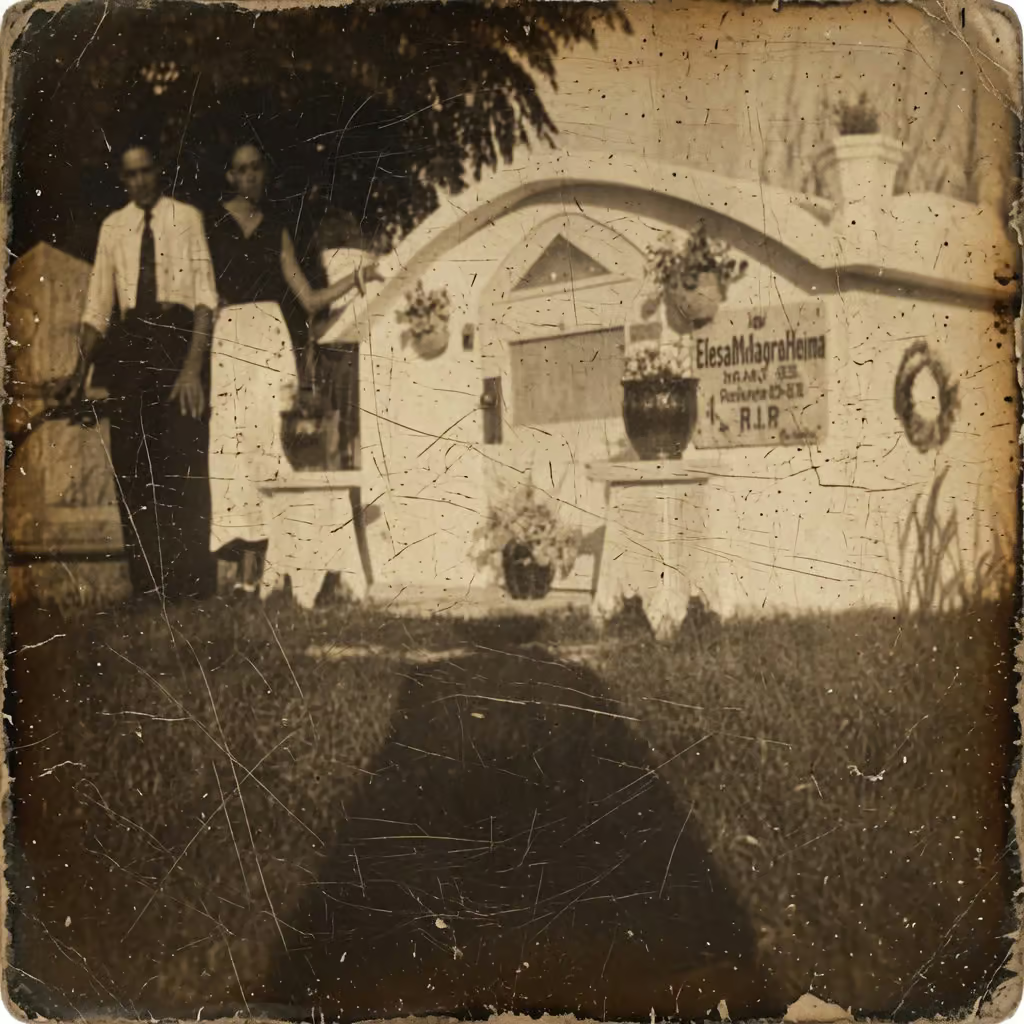
Those facts are supported by the Key West Art and Historical Society’s account and local archival material. They establish obsession, grave theft, concealment, and prolonged possession. They do not establish a mutual relationship. Elena’s silence cannot be admitted into evidence to support Tanzler’s version of events.
The most explicit sexual allegation requires a separate caution. Later accounts state that two physicians who examined Elena’s remains recalled a tube positioned to permit intercourse. But that recollection surfaced publicly more than three decades after the 1940 examination. No surviving contemporary photograph demonstrates it, and the allegation was not presented at the preliminary hearing. It is therefore responsible to describe sexual contact as alleged and disputed, not as a settled forensic finding.
That qualification does not redeem Tanzler. The documented conduct is itself a sustained desecration. He removed a woman’s body from a tomb, reconstructed it according to his private image of her, dressed it, hid it, and kept it under his control. He claimed a bond that the living Elena had not publicly confirmed and the dead Elena could never reject.
The popular “undying love” frame asks readers to admire the intensity of his attachment. It makes persistence stand in for reciprocity. But obsession is not made tender by duration. A fixation can survive for years precisely because it never has to encounter the other person’s independent will.
The physical reconstruction made that erasure visible. Elena’s changing remains did not fit the stable image Tanzler wanted, so he imposed new surfaces and features. The result was not the preservation of Elena as a person. It was the maintenance of an object that could continue carrying his fantasy.
The case also demonstrates how communities participate in mythmaking. Contemporary coverage often portrayed Tanzler as a pitiable romantic eccentric. That framing shifted attention away from Elena and her family, whose burial had been violated. It asked whether his devotion was strange, rather than whether he had any right to possess her body.
He did not.
Elena was not an eternal bride. She was a young Key West woman who died during a devastating era of tuberculosis and was denied the privacy of her grave. The clearest way to tell her story is to stop allowing Tanzler’s claims to define it.
When Murder Produces the Body
Full research narrative retained.
Grave theft and mortuary abuse begin with access to someone already dead. Necrophilic homicide crosses another line: the offender kills in order to obtain a corpse, or murder and postmortem violation become linked parts of the same event.
Even here, precision matters. Not every sexual homicide involving postmortem contact is proof that attraction to corpses was the offender’s primary motive. The conduct may reflect a preferred sexual object, an extension of sadism, an effort to erase personhood, a ritual, a trophy practice, or opportunistic assault after death. Investigators have to establish sequence, behavior, and meaning rather than assume them.
The California case against Douglas Clark provides an unusually detailed court record. A jury convicted Clark of six first-degree murders and one count of mutilating human remains in connection with killings in the Los Angeles area in 1980. The California Supreme Court later affirmed the murder and mutilation judgment while reversing separate attempted-murder and mayhem convictions on legal grounds.
The appellate opinion carefully distinguishes physical evidence from Carol Bundy’s testimony. Bundy, Clark’s housemate, had confessed to killing and decapitating her lover, Jack Murray. Called by the defense at Clark’s trial, she described statements she said Clark had made about his crimes. According to her testimony, Clark said he sexually violated the bodies of Cynthia Chandler and Gina Marano after shooting them. She also testified that he described intercourse with another victim after death.
Some of her account was corroborated by physical evidence detailed in the opinion. Exxie Wilson’s decapitated body was found in a parking lot, and her severed head was recovered days later in a wooden box. The coroner concluded the head had probably been removed after death, though the opinion allowed that Wilson might have been dying or unconscious. The head had been frozen and cleaned. Bundy testified that she saw it in the apartment and that Clark asked her to apply makeup before becoming concerned about fingerprints.
The point is not the theatrical horror of a severed head. It is the sequence of control. A woman was selected, killed, dismembered, transported, altered, and discarded. Each act pushed her further from recognition as a person and deeper into being used as evidence of the offender’s power.
The court record also shows why attribution matters. Clark denied an interest in necrophilia and blamed Bundy and Murray. Bundy was not a neutral narrator; she was implicated in serious crimes and gave her account while the defense tried to place responsibility elsewhere. Yet a jury convicted Clark; forensic and circumstantial evidence supported significant parts of the prosecution’s case, and the state’s highest court left the murder and mutilation verdicts intact. A responsible narrative can state all three facts without pretending that every quoted confession was independently recorded.
This discipline is particularly important in true crime. Postmortem allegations can become more graphic each time they are retold. Court records force the writer to identify the source of knowledge: autopsy finding, witness testimony, defendant’s statement, physical exhibit, prosecution theory, or judicial conclusion. Those categories do not carry equal weight.
Jeffrey Dahmer and the Danger of a Single Motive
Full research narrative retained.
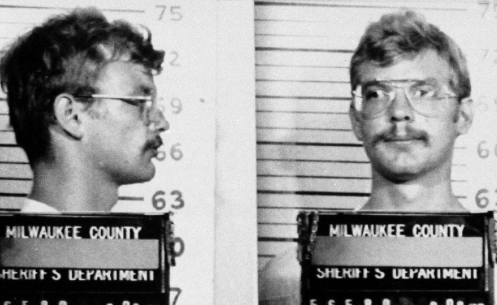
Jeffrey Dahmer’s case is often compressed into a story about loneliness: a man so afraid of abandonment that he tried to create companions who could not leave. The description contains part of the documented psychology, but it can also become an alibi-shaped narrative if detached from what he did.
In July 1991, a man escaped Dahmer’s Milwaukee apartment with a handcuff still attached to his wrist and led police back to the building. Investigators found remains belonging to 11 victims. The FBI later assisted with DNA, chemical, biological, tool-mark, photographic, and computer analysis. Dahmer admitted to murders that included torture, mutilation, and abuse of corpses. He was convicted in Wisconsin and later in Ohio, and he died in prison in 1994 after another prisoner attacked him.
At Dahmer’s 1992 sanity trial, experts disagreed about the diagnosis and the legal meaning of his behavior. Several used the term necrophilia. Testimony reported at the time also complicated the label: some experts noted that Dahmer had tried to create living but completely compliant victims, suggesting that death was not his only desired condition. The jury rejected the insanity defense.
That conflict is instructive. A diagnosis offered in court answers a clinical question; legal sanity answers a narrower question about criminal responsibility under a jurisdiction’s rules. Neither should be collapsed into a total explanation of a person or a crime.
Nor does a fear of abandonment transform murder into a failed attempt at intimacy. Dahmer’s victims did not leave because he killed them. They did not become companions because he retained their remains. His desired solution to human unpredictability was to destroy the human being who possessed it.
This is where the language of “company” becomes dangerous. It borrows the emotional needs of an ordinary relationship while excluding every duty it entails. A companion can disagree. A partner can withdraw. Another person exists outside the self. Dahmer’s offenses were built around eliminating that outside existence.
The case is best understood not through one motive but through converging behaviors: predation, incapacitation, murder, postmortem sexual activity, dismemberment, preservation of remains, and concealment. Loneliness may have been part of his internal account. It was not the cause of his victims’ deaths in any sense that diminished his agency.
David Fuller and the Institution That Did Not Look
Full research narrative retained.
The most consequential modern British case began not in a cemetery or a killer’s apartment, but inside hospitals.
David Fuller worked in maintenance at Kent and Sussex Hospital and later at Tunbridge Wells Hospital. His employment gave him legitimate reasons to enter restricted parts of the buildings. It also gave him a staff identity, technical knowledge, and the comfort of familiarity. Colleagues saw a long-serving worker. The mortuary became part of his routine.
In December 2020, Kent Police arrested Fuller for the 1987 murders of Wendy Knell and Caroline Pierce in Tunbridge Wells. The case had remained unsolved for more than three decades. A renewed familial DNA search identified a relative whose profile pointed investigators toward Fuller; a direct sample from that relative then matched crime-scene DNA. Preserved evidence also produced a fingerprint match. Fuller pleaded guilty to both murders in 2021.
The sentencing record restores something that offender-centered narratives routinely take away: who the women were. Wendy Knell was 25, successful at work, planning to marry, and remembered by her family as hard-working and trusted. Caroline Pierce was 20, lively, and finding her place in the world. Their mothers described losses that had continued across decades. The judge concluded that the murders were premeditated and sexually motivated, and that sexual conduct most likely occurred after death.
The search of Fuller’s home exposed another history. Investigators found concealed digital storage containing records of his abuse of bodies in hospital mortuaries. The final Phase 1 inquiry report documented 140 offenses against 101 victims between 2005 and 2020. The youngest victim was nine; the oldest was over 100. Ten remained unidentified when the report was published.
The scale is almost impossible to absorb, which is one reason numbers must not replace people. The inquiry spoke with 54 family members representing 33 victims. They described the revelation as a second injury, one that altered memories of hospital care, last visits, and the time between death and burial. Some felt they had failed to protect someone who was, by definition, beyond their physical protection. Some wished they had never been told. The offender’s acts occurred in private, but the harm did not remain there.
Fuller’s crimes also destroyed the idea that mortuary abuse could be prevented by trust alone. The inquiry did not find a single locked door that everyone had forgotten. It found a system in which his access became normal.
Swipe-card data showed that Fuller entered the mortuary 444 times between December 2019 and December 2020. The inquiry found no record of reactive maintenance work there after October 2018. He nevertheless visited frequently, sometimes carrying tools that provided a ready explanation. Mortuary staff allowed him to work unsupervised, including when bodies were present. His habit of working late was known but not effectively challenged. A large share of the documented offenses occurred between 6 p.m. and midnight.
The institutional weaknesses reinforced one another. Management was limited. Responsibilities were fragmented between the National Health Service trust and contractors. Staff accepted Fuller’s presence because they had seen it before. Some colleagues preferred not to enter the mortuary themselves and were content for him to handle work there. Electronic access existed, but access data were not being used as an active safeguarding system. Familiarity became its own credential.
The inquiry’s language is instructive: Fuller “normalized his presence.” That is how many long-running abuses become invisible. The first unexplained visit might have attracted attention. The fiftieth looked like routine. Repetition did not prove legitimacy, but it created the appearance of it.
The case therefore cannot be reduced to one aberrant employee. Fuller alone committed the crimes, and he is responsible for them. But the opportunity structure belonged to the institution. Safeguarding failed because the deceased were not consistently treated as vulnerable people requiring active protection.
The Phase 2 inquiry widened the lens beyond the two hospitals. Published in July 2025, its final report examined NHS and independent hospitals, hospices, funeral directors, local authorities, care homes, faith organizations, and other settings in England. Its conclusion was stark: regulation and oversight of post-death care were partial, ineffective, and, in significant areas, absent. The chair warned that similar offending remained possible, particularly in sectors without statutory regulation.
That finding exposes a common error in security thinking. Organizations often imagine that the threat will come from an intruder. They design doors to keep outsiders away, then give insiders broad access without meaningful review. A pass records an entry, but no one asks whether the entry makes sense. A camera covers a corridor, but not the room in which harm occurs. A contractor stays late, and longevity is treated as evidence of character.
The inquiry recommended regulation, clearer accountability, controlled access, auditing, and safeguards designed as a whole system. That last principle matters. No single device protects the dead. A swipe card without review is only a log. CCTV without oversight is only stored footage. A policy without a named executive responsible for it is only text.
Fuller’s offenses ended because he was arrested for murders committed in 1987, not because the mortuary system detected his conduct. That chronology should haunt every institution responsible for human remains. For 15 years, the protective system did not find him. Another investigation was done.
What the Crime Scene Can and Cannot Say
Full research narrative retained.
Investigators sometimes distinguish an offender’s modus operandi from signature behavior. The M.O. is what makes the crime possible and helps the offender avoid detection. It is learned and can change. A signature is the more persistent expression of a psychological need, beyond what is practically required to complete the offense
In postmortem crimes, that distinction can help organize evidence. Concealing a body may be practical. Returning to it, posing it, preserving selected remains, or engaging in repeated sexual acts may reveal a ritual or fantasy. But the framework is not a license for certainty. Decomposition may erase evidence. Different offenders can perform similar acts for different reasons. An offender may alter behavior as opportunities change. Linkage analysis requires detailed, multi-source comparison, not a dramatic detail and an intuition.
The cases examined here demonstrate different relationships between method and meaning. Tanzler’s grave theft gave him possession; the prolonged reconstruction of Elena’s body belonged to the fantasy he imposed on her. In Clark’s case, the California court record combined testimony about postmortem acts with physical evidence of murder and mutilation. Dahmer’s retention and abuse of remains existed alongside efforts to create living but incapacitated victims, complicating any single label. Fuller exploited occupational access, while his recording, cataloging, and repetition went far beyond what was needed merely to enter a mortuary unnoticed.
The word “signature” can become sensational in itself if treated as a killer’s personal brand. Its legitimate use is narrower. It may help investigators compare offenses and understand repeated behavior. It should never turn the crime scene into an artist’s canvas or the victim’s body into the offender’s work.
The body is evidence of what was done to a person. It is not a monument to the person who did it.
Dignity, Law, and the Harm That Continues
Full research narrative retained.
It is sometimes argued that necrophilic abuse is victimless because the dead cannot experience pain. The argument mistakes sensation for harm and overlooks everyone forced to live with the violation.
Families entrust hospitals and funeral workers with more than tissue. They entrust them with the interval between death and farewell. They assume that a last visit occurred in privacy, that clothing remained where it was placed, and that a body awaiting examination or burial was not available for private use. When that trust is broken, memory itself changes. A relative may replay a hospital visit, a closed coffin, or a delay in release and wonder what happened out of their sight.
The Fuller sentencing record made this secondary harm visible. Families described damaged mental health, guilt, loss of trust, and the impossibility of forgetting what they had learned. One relative felt as though he had lost his mother again. The offense was committed against remains, but its consequences entered the lives of the living.
The law has often struggled to name that harm. Legal systems may protect possession, burial, public decency, evidence, or family interests without treating a corpse as a legal person. Offenses also vary sharply by jurisdiction. The absence of a single legal theory does not imply the absence of a social duty. It shows how many institutions meet at the body after death: criminal law, health regulation, funeral standards, property rules, human-tissue governance, religion, and family life.
In England and Wales, section 70 of the Sexual Offenses Act 2003 criminalized sexual penetration of a corpse but did not cover every form of sexual touching. At the time Fuller was sentenced for his mortuary offenses, the maximum penalty for that section was two years per count, a limit the judge had to navigate across an exceptional number of offenses.
Parliament has since enacted a broader framework. The Crime and Policing Act 2026 provides for a new offense of sexual activity with a corpse, covering intentional sexual touching as well as penetration. It raises the maximum penalty for penetrative activity to seven years and sets a five-year maximum for non-penetrative activity. The Act received Royal Assent on April 29, 2026. Government commencement guidance stated that provisions not already brought into force would take effect through later regulations, so the date on which the replacement offense becomes operational must be checked rather than assumed.
The legal change matters because it closes a gap between the reality of abuse and the conduct the statute could describe. Yet criminalization is the last line of defense. It applies after a body has been violated and the violation has been discovered. The Fuller inquiry’s deeper demand is preventive: treat people after death as vulnerable, regulate every setting in which bodies are kept, limit access to genuine need, review access records, assign responsibility, and make questioning part of care.
There is also an editorial duty. Responsible reporting should use the minimum graphic detail needed to explain the evidence. It should not repeat a sexual allegation as fact merely because it has become famous. It should avoid posthumously diagnosing people from anecdotes. It should distinguish a court’s finding from a witness’s account and a witness’s account from folklore. Above all, it should give the dead back their names and their lives.
Elena Hoyos was more than the body Carl Tanzler stole. Cynthia Chandler, Gina Marano, Exxie Wilson, Wendy Knell, and Caroline Pierce were more than scenes in men’s offending. The identified and unidentified victims in Fuller’s mortuary crimes were not a statistic. They were people whose families believed their care had continued after death.
That belief should not be naive. It should be the minimum standard of a civil society.
The Last Boundary
Full research narrative retained.
Necrophilic abuse takes different forms, but its most persistent logic is possession without negotiation.
Some offenders seek a body already dead. Some exploit a profession that places the dead within reach. Some carry sexual violence beyond the moment of murder. Some kill because death removes resistance. In each form, the offender treats the end of another person’s agency as the beginning of his own entitlement.
The romantic language fails first. A lover can answer. A partner can refuse. A companion can leave. Where none of those acts is possible, the relationship exists only in the offender’s account.
The monster language fails next. It turns human choices into gothic inevitability and distracts from the doors, policies, witnesses, and institutions that might have interrupted them.
What remains is a duty both plain and demanding. Protect the dead as people who can no longer protect themselves. Protect families from a second violation. Record claims with precision. Refuse to let an offender’s fantasy become the victim’s biography.
Death ends a life. It does not make the body ownerless, nor does it make consent irrelevant.
The grave is a boundary because the living agree to defend it.
Archival and Institutional Context
Images identify people and places without turning remains into spectacle.



Frequently Asked Questions
Answers preserved from the source article.
What is necrophilia?
Necrophilia generally refers to sexual attraction to corpses or sexual acts involving human remains. Researchers distinguish fantasy, recurrent attraction, opportunistic acts, occupational abuse, and homicide connected to obtaining or using a body after death.
Is necrophilia always connected to psychosis?
No. A major psychiatric review found that psychosis was not inherent in the known cases it examined. A shocking act does not by itself establish psychosis, legal insanity, or any specific diagnosis.
Why is necrophilic abuse not considered victimless?
A corpse cannot consent, and the abuse violates the deceased person’s dignity. Disclosure also causes documented harm to relatives, including renewed grief, guilt, loss of trust, and lasting distress about what happened before burial or cremation.
Did Carl Tanzler sexually abuse Elena Hoyos’s body?
Sexual contact has been alleged, based largely on recollections reported decades after the body was examined. The claim was not presented at the 1940 preliminary hearing and is not confirmed by surviving contemporary photographs, so it should be described as disputed. His grave theft and prolonged possession of Elena’s reconstructed remains are well documented.
How many victims were identified in the David Fuller mortuary case?
The final Phase 1 inquiry report documented 101 victims and 140 offenses between 2005 and 2020. Ten victims remained unidentified when that report was published.
How did David Fuller avoid detection for so long?
The inquiry found overlapping failures: unchallenged staff access, weak supervision, fragmented responsibility, late working that was not effectively managed, mortuary visits that became normalized, and access data that were not used as an active safeguarding system.
What is the difference between M.O. and signature behavior?
Modus operandi is the practical method used to commit a crime and avoid detection; it can change with experience. Signature behavior expresses a more persistent psychological or ritual need beyond what is required to complete the offense.
What did the Crime and Policing Act 2026 change?
The Act provides for a broader offense in England and Wales covering sexual touching of a corpse, not only penetration. It also raises the maximum penalties. Commencement must be confirmed in accordance with the relevant regulations.
Source Ledger
Peer-reviewed, court, institutional and archival records.
Rosman and Resnick, 1989
Review of 122 published and unpublished cases involving necrophilic acts or fantasies. Important for classification and for the finding that psychosis and sadism were not universal.
Victor Ardisson / Presses universitaires de Provence
Historical analysis drawing on contemporary press and medical material for the case later labeled the Vampire of Le Muy.
Henri Blot / RetroNews
Archival material on the former gravedigger later labeled the Vampire of Saint-Ouen.
Key West Art and Historical Society
Historical account used for the documented Elena Hoyos and Carl Tanzler chronology.
People v. Clark
California Supreme Court opinion separating convictions, physical evidence, testimony and legal findings.
FBI: Jeffrey Dahmer
FBI account of the Milwaukee investigation and federal forensic assistance.
David Fuller Inquiry, Phase 1
Documents 101 victims, 140 offenses, access patterns, family impact and institutional failures.
David Fuller Inquiry, Phase 2
Examines post-death safeguarding across hospitals, hospices, funeral settings, care homes, local authorities and faith organizations.
OJP / NCJRS: M.O., Signature and Staging
Used for the distinction between modus operandi, signature behavior and staging.
Crime and Policing Act 2026
Used for the England and Wales legal update on sexual activity with a corpse.
Historical necrophilia cases are especially vulnerable to folklore and retrospective embellishment. Where a claim is disputed, late-reported or dependent on a witness account, the dossier says so.
Discover more from The Dark Side of Humanity
Subscribe to get the latest posts sent to your email.