FILE NO. 0167Case status Convicted
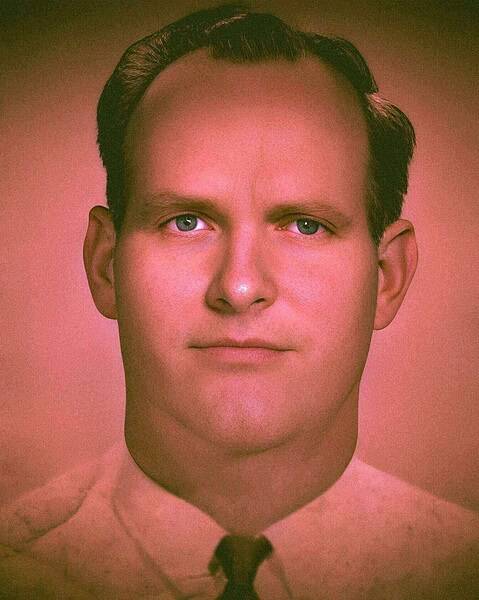
Between 1978 and 1995, Theodore Kaczynski executed a domestic terrorism campaign across the United States by deploying sixteen explosive devices. Targeting individuals linked to universities, airlines, and technology sectors, the attacks resulted in three deaths and twenty-three injuries over a seventeen-year period.
The investigation broke open in 1995 following the public release of Kaczynski’s anti-technology manifesto. His family recognized his writing style and alerted authorities. Forensic linguistic analysis led to a search warrant for his Montana cabin, where physical evidence was recovered, leading to his arrest, guilty plea, and life sentence.
The Unabomber: Theodore Kaczynski
Words ended the manhunt. The cabin proved the case.
From 1978 through 1995, Theodore Kaczynski mailed or placed sixteen bombs across the United States. Three people (Hugh Scrutton, Thomas Mosser and Gilbert Murray) were killed and twenty-three others were injured. The decisive break came after publication of Kaczynski’s 35,000-word anti-technology essay: his brother David recognized the language, supplied earlier writings, and helped investigators build the comparison record that supported a Montana search warrant. Inside the cabin, agents found bomb components, extensive journals describing the crimes, the original manifesto manuscript and a completed live bomb.

What Was the Unabomber Case?
Direct case answer
The UNABOM investigation was a seventeen-year federal manhunt for the person behind a series of university, airline and technology-linked bombings. Theodore Kaczynski was arrested in 1996 after his family recognized his writing in the published manifesto. He pleaded guilty in 1998 and received life imprisonment without parole.
Case Snapshot
Confirmed campaign, casualties, arrest and sentence
The federal case record attributes sixteen bombs to Kaczynski. Some detonated, some malfunctioned and others were intercepted or safely destroyed.
Hugh Scrutton was killed in 1985, Thomas Mosser in 1994 and Gilbert Murray in 1995.
Survivors experienced burns, shrapnel wounds, amputations, eye damage, hearing loss and long-term psychological harm.
The known campaign ran from May 1978 to Gilbert Murray’s murder in April 1995.
FBI agents arrested Kaczynski near Lincoln, Montana, on April 3 after the family lead and linguistic comparison supported a search warrant.
He pleaded guilty in January 1998 and received life imprisonment without parole, avoiding a capital trial.
Victims Before Mythology
Symbolic targets versus the people who absorbed the blast
Institutions were symbols; people were real
The devices moved through universities, airlines, computer businesses, genetics, advertising and forestry. Investigators concluded that targets were often selected through public research rather than a stable personal relationship. The ideological categories were broad; the people opening packages were specific, and sometimes not even the named addressee. For a separate case where ideology was directly fused to a multi-state murder campaign, compare ideologically motivated domestic terrorism in the Pedersen-Grigsby file.
Do not make the cabin the protagonist
The image of an isolated mathematical genius can erase the ordinary workplace moment in which a package exploded. Intelligence, austerity and coherent prose do not elevate an offender above Hugh Scrutton, Thomas Mosser, Gilbert Murray or the many survivors.
Who Were the Unabomber Victims?
Named victims before offender mythology
Hugh Scrutton
Computer-store owner Hugh Scrutton was killed on December 11, 1985, by a device left near his Sacramento business.
Thomas Mosser
Advertising executive Thomas Mosser was killed at his New Jersey home on December 19, 1994, after opening a package bomb.
Gilbert Murray
California Forestry Association president Gilbert Murray was killed on April 24, 1995, after opening a mailed package bomb.
Seventeen-Year Chronology
Attacks, pauses, manifesto publication and arrest
A package associated with two Chicago universities injured a campus security officer, establishing the early pattern of deceptive packaging and academic association.
A bomb detonated in a Boeing 727 cargo compartment during flight. It failed to rupture the aircraft, but smoke filled the cabin and passengers required treatment.
A device left near a Sacramento computer store caused the first death.
A Salt Lake City device severely injured Wright and produced the widely circulated hood-and-sunglasses composite.
Mailed bombs injured geneticist Charles Epstein and computer scientist David Gelernter after a six-year bombing gap.
A package bomb killed the advertising executive at his New Jersey home.
The California Forestry Association president died after opening a mailed package.
The Washington Post printed the essay after consultation with federal authorities. The decision exposed the author’s habitual language to millions of readers.
Earlier letters and a 1971 essay became comparison material for FBI analysis and the warrant process.
Agents found bomb components, extensive journals, descriptions of attacks, the manifesto manuscript and a completed live bomb.
Kaczynski admitted the federal charges and received life imprisonment without parole.
The Cabin as Evidence
Location, living space and seized material
Exterior, Lincoln, Montana
The cabin became the evidentiary centre of the prosecution after the April 1996 search.
Source: Wikimedia Commons / FBI evidence photograph
Interior documentation
Living-space evidence recorded the compressed conditions in which writings, tools and materials were stored.
Source: Wikimedia Commons / FBI evidence photograph
Parts and containers
Ordinary materials became probative through comparison with device fragments, journals and the wider cabin record.
Source: Wikimedia Commons / FBI evidence photographMethod & Evidence
Construction, concealment, delivery and escalation
Forensic Linguistics
The bridge from manifesto to warrant
The family supplied comparison material
David Kaczynski and Linda Patrik recognized a larger pattern of ideas, phrasing and verbal habits rather than one dramatic sentence. Through counsel, they supplied letters and a 1971 essay that could be tested against the bombing timeline and manifesto.
The manifesto narrowed the field
FBI analysts compared repeated terminology, spelling preferences, syntax and concepts. Linguistic evidence alone did not prove every bombing; combined with biography, travel history and documentary records, it supported probable cause for the cabin search. A related investigative comparison is BTK, where offender communications that exposed identity became part of the capture sequence.
Where Profiling Broke Down
Useful hypotheses that became dangerous when treated as identity
Occupation
Technical competence suggested mechanics, engineers, scientists or advanced training, but capability did not identify a specific profession. The devices were refined through long experimentation with common materials.
Geography
Mailing origins and attack clusters did not map directly to residence. Kaczynski travelled and mailed devices away from Montana, while long pauses distorted location patterns. Complex multi-jurisdictional investigations also carry structural risks from major case information-sharing failures.
Age and appearance
The 1987 witness composite became culturally dominant even though a seventeen-year campaign made any fixed age estimate progressively less useful.
“Freedom Club” was not a cell
The initials “FC” and plural voice suggested organization. The cabin evidence instead documented a solitary offender projecting a collective identity.
Ideology versus practical indifference
Kaczynski assigned symbolic meaning to occupations, but victims were often selected remotely and sometimes the person harmed was not the named addressee.
Psychiatry is not a shortcut
Competency, diagnosis, ideology and criminal responsibility are separate questions. Coherent writing does not prove wellness; diagnosis does not automatically explain or excuse seventeen years of planned violence.
The Family Lead
Recognition, risk and the ethical cost of coming forward
The decisive lead came from people who knew the voice
Their willingness to examine a painful suspicion created the lead that conventional component analysis had not produced. Intermediaries helped transmit the concern while attempting to protect the family’s identity.
Confidentiality did not hold
David sought confidentiality and feared both retaliation and the death penalty. His identity nevertheless became public. The case remains a warning that family informants may be essential to prevention while facing severe personal and media consequences.
Legal Outcome
Search warrant, capital prosecution, competency conflict and guilty plea
Documents & Living Space
Clippings, stored material and the record inside the cabin

Newspaper clippings
Recovered clippings formed part of the documentary record of attention, grievance and self-documentation.
Source: Wikimedia Commons / FBI evidence photograph
Books and directories
Reference material found in the cabin is significant as part of a larger documentary record, not as proof by itself of any single attack.
Source: Wikimedia Commons / FBI evidence photograph
Sleeping area
The cot and bedding document the compressed living space investigators searched alongside writings, tools and bomb-related materials.
Source: Wikimedia Commons / FBI evidence photograph
Cabin wall triptych
Multiple views document the density and arrangement of the cabin interior without turning the crime scene into memorabilia.
Source: Wikimedia Commons / FBI evidence photographQuestions the Case Still Raises
Identification is resolved; institutional lessons are not
Could publication under threat be justified again?
The 1995 decision produced the decisive lead, but it also rewarded coercion with national distribution. Future cases may not offer the same identifiable writing pattern or credible promise of cessation.
Why did confident models diverge for so long?
Travel, long pauses, common materials and remote target research generated misleading signals. The case tests how investigators manage contradictory models without overcommitting to one.
How random was victim selection?
Ideological meanings were attached to occupations, yet some victims were selected through public research and some people harmed were not the named addressee.
Why does mythology still eclipse the victims?
The manifesto circulates widely, often detached from the devices and casualties that forced its publication. Responsible analysis must resist turning murder into intellectual branding.
Unabomber Case FAQ
Direct answers to the case’s highest-intent questions
Who was the Unabomber?
The Unabomber was Theodore Kaczynski, who pleaded guilty in 1998 after a seventeen-year bombing campaign attributed to sixteen devices, three deaths and twenty-three injuries.
How was the Unabomber caught?
The major break came after the manifesto was published. David Kaczynski and Linda Patrik recognized the writing style, supplied comparison material and helped investigators build the linguistic record that supported the Montana search warrant. The sequence resembles other cases where offender communications that exposed identity became decisive.
What did investigators find in the cabin?
Investigators found bomb components, journals, the original manifesto manuscript and a completed live bomb, making the cabin the evidentiary centre of the case.
Who was killed by the Unabomber?
Hugh Scrutton, Thomas Mosser and Gilbert Murray were killed. Twenty-three other people were injured during the bombing campaign.
What sentence did Theodore Kaczynski receive?
Kaczynski pleaded guilty in January 1998 and received life imprisonment without parole.
Was the manifesto why he was caught?
The manifesto created the public comparison opportunity, but it did not identify him by itself. Family recognition led to known writings; investigators then built linguistic and biographical probable cause; the cabin search supplied the direct physical and documentary evidence.
Sources & Verification
Primary case record, investigative method and forensic standards
FBI: The Unabomber
Official case history covering the device timeline, task-force work, manifesto decision, family lead and cabin recovery.
Open FBI case historyFBI: The Words of a Killer
Retrospective account of how family writings, distinctive wording and the manifesto helped establish the search-warrant bridge.
Read FBI retrospectiveAssociated Press chronology
Historical account of the September 19, 1995 manifesto publication and its role in identification and capture.
Read AP history entryNational Academies
Broader standards context for validating forensic methods, documenting limitations and resisting conclusions stronger than evidence supports.
Open standards reportU.S. Department of Justice
The Justice Department’s January 22, 1998 statement records the federal settlement and guilty-plea endpoint of the UNABOM prosecution.
Open DOJ settlement statementUnited States v. Kaczynski
The Ninth Circuit record documents the guilty plea, restitution and later litigation over property seized from the Montana cabin.
Open Ninth Circuit opinionReviewed by The Dark Side of Humanity editorial team. Last reviewed September 2026.
Primary case records and federal sources are prioritized; secondary reporting is used for chronology and context only. This file separates confirmed devices, legal admissions, linguistic inference, psychiatric dispute and later ideological mythology. To flag an error or provide documentation, submit a correction or research lead.
Browse every case in the Case File Index
Discover more from The Dark Side of Humanity
Subscribe to get the latest posts sent to your email.