FILE NO. 0122Case status Convicted
Mary Ann Cotton: The Arsenic Murders, Victims & Evidence
Victorian arsenic poisoning, suspected household deaths and the 1873 conviction
Mary Ann Cotton was convicted in 1873 of poisoning her seven-year-old stepson, Charles Edward Cotton, with arsenic. Historians have linked her to a much larger pattern of suspicious deaths involving husbands, children and household associates, but those additional deaths were not individually proved at trial. This dossier separates the court-established murder from the wider Victorian death cluster: arsenic evidence, sickroom scenes, insurance motives, investigation, trial and execution.
Mary Ann Cotton was a Victorian-era serial killer convicted in 1873 for the arsenic poisoning of her stepson, Charles Edward Cotton. Between the 1850s and 1873, she moved through several households in North-East England where numerous family members died from similar gastrointestinal symptoms. She was executed at Durham County Gaol.
While the court only proved one murder, historians attribute between 11 and 21 deaths to Cotton, including multiple husbands and children. Her primary method involved administering arsenic, which mimicked common diseases. Motives likely included financial gain from life insurance and the removal of domestic burdens to facilitate new marriages.
Forensic detail noticeThis version does not mute the unpleasant record. It discusses wrenching vomiting, abdominal spasms, dehydration, inflamed stomach linings, arsenic recovered from viscera, decomposing exhumed remains, and the slow strangulation mechanics of Cotton’s 1873 hanging.
Mary Ann Cotton Case Answers
Fast, source-conscious answers before the full evidence ledger.
Who Was Mary Ann Cotton?
Mary Ann Cotton was a Victorian English murderer convicted in 1873 of poisoning her seven-year-old stepson, Charles Edward Cotton, with arsenic. She was later linked by historians to a wider cluster of suspicious deaths across husbands, children and household associates.
What Was She Convicted Of?
Cotton was legally convicted of one murder: the arsenic poisoning of Charles Edward Cotton. Earlier deaths remain historically suspected, not separate murder convictions.
How Many People Did She Kill?
The only court-proven victim is Charles Edward Cotton. Historical estimates commonly range from 11 to 21 possible victims, but that larger count rests on patterns, symptoms, records and inference rather than individual verdicts.
How Was Mary Ann Cotton Caught?
Parish official Thomas Riley became suspicious after Charles Edward Cotton died. A postmortem examination and chemical testing identified arsenic in the child’s remains, turning repeated household suspicion into a provable murder case.
What Poison Did She Use?
Mary Ann Cotton was convicted of murder by arsenic poisoning. Arsenic compounds were widely available in Victorian Britain and could mimic common gastrointestinal disease through vomiting, diarrhoea and abdominal pain.
How Did Mary Ann Cotton Die?
She was hanged at Durham County Gaol on March 24, 1873. The execution was carried out after her conviction for murdering Charles Edward Cotton.
Mary Ann Cotton’s Victims
Mary Ann Cotton was convicted of one murder, but historians connect her to a broader series of suspicious household deaths. Estimates vary, commonly ranging from 11 to 21 possible victims.
Charles Edward Cotton
Age: 7
Status: convicted victim
Note: arsenic found in the child’s body after Riley raised alarm.
Frederick Cotton
Age: adult husband
Status: strongly suspected
Note: died after violent intestinal illness in 1871.
George Ward
Age: adult husband
Status: strongly suspected
Note: second husband; brief marriage followed by painful decline.
Joseph Nattrass
Age: lodger / lover figure
Status: strongly suspected
Note: ill with stomach complaints; Cotton benefited from his assets.
Mowbray Child Cluster
Status: historically attributed
Note: several of her children with William Mowbray died young after sickness.
Robert Cotton
Age: child
Status: suspected
Note: one of Frederick Cotton’s children who died before Charles Edward.
Margaret Cotton
Age: adult
Status: suspected
Note: Frederick Cotton’s sister; died in March 1870.
Total Count Uncertain
Range: 11–21 deaths
Note: newspapers and later historians disagree sharply because Victorian child mortality obscured proof.
Geography of the Mary Ann Cotton Murders
The pattern stretches across the north-east of England, with each move resetting Cotton’s social reputation while preserving the same domestic method.
Low Moorsley
Birthplace in County Durham, where Mary Ann Robson was born on 31 October 1832.
Sunderland
Households linked to William Mowbray and later George Ward, where early family deaths accumulated among cholera, typhus and ordinary Victorian misery.
West Auckland
The Cotton household and later the death of Charles Edward Cotton. This is the location most tightly connected to the conviction.
Mary Ann Cotton Murder Timeline
From Mary Ann Robson’s first marriage to the child-murder conviction and short-drop hanging.
1832: Birth in County Durham
Low Moorsley
Mary Ann Robson was born into a working-class north-eastern English environment where death in the home was common and chemical poisons were purchasable with little scrutiny.
1852: Marriage to William Mowbray
First household
Cotton’s first major family unit produced multiple children and multiple child deaths. William himself died in 1865 after a period of illness; the death was not then treated as murder.
1865–1866: George Ward dies
Second husband
Within a short second marriage, George Ward sickened with stomach pain, vomiting and diarrhea before dying. Cotton again drew financial advantage from the death.
1870–1871: Frederick Cotton household
Fourth (bigamous) husband
Frederick Cotton married Mary Ann after she had worked in or around the household. Soon children died, then Frederick himself succumbed to another violent intestinal illness.
1871–1872: Joseph Nattrass declines
Lodger / lover
Nattrass, associated with Cotton as a lover or lodger depending on the account, became sick and died after she had positioned herself to benefit from his money or possessions.

July 1872: Charles Edward Cotton dies
Convicted murder
Charles suffered the now-familiar pattern: sudden sickness, prostration, vomiting and collapse. Assistant relieving officer Thomas Riley already distrusted Cotton and helped trigger a postmortem chemical examination.
March 1873: Durham trial
Assizes
The prosecution focused on a single count, the murder of Charles Edward Cotton, because one provable poisoning could secure a death sentence without litigating the full historical catalogue.
24 March 1873: Execution
Durham County Gaol
Cotton was hanged by William Calcraft. Accounts describe a short-drop execution that did not break the neck, leaving her to die by strangulation with visible body movement and respiratory struggle rather than instant unconsciousness.
The Sickroom as Crime Scene
These were not spectacular blood scenes. The violence appeared in repeated medical crisis: bowls, basins, wet sheets, retching bodies, and a domestic atmosphere made lethal by poison.
What Witnesses Often Saw
The household scene was typically a bed, a chamber pot or wash basin, cooling tea, a spoon or dosing glass, and a patient in visible gastrointestinal distress. Victims complained of searing stomach pain, burning in the throat, repeated vomiting, diarrhea, cramps, thirst, weakness and collapse. Because arsenic poisoning could mimic cholera or enteritis, the room looked like disease rather than homicide.
What Made It Grisly
The cruelty lay in the duration. This was not a quick blow. Arsenic often produced hours of retching, watery or bloody diarrhea, cold clammy skin, drawn facial features and a desperate need for water while the stomach and intestines became inflamed. A child or adult could be washed, soothed and redosed in the same room where the killer played nurse.
Scene reality The most disturbing image in the Cotton case is not an axe or knife; it is the repeated household tableau of a victim treated for “ordinary sickness” while poison continued to pass through spoon, cup or medicine glass.
How Mary Ann Cotton Used Arsenic
Arsenic was cheap, common and effective. In the Victorian home it could masquerade as medicine, settle invisibly in food, and kill through symptoms familiar to doctors who lacked modern toxicology.
Access
Arsenic circulated in rat poison, weed killer, flypapers, pigments and other household or agricultural products. Purchases were not tightly controlled.
Delivery
Historical arsenic could be concealed in food, drink or medicinal preparations. The precise delivery vehicle used in every death attributed to Cotton is not established, and repeated dosing remains a toxicological possibility rather than a proved sequence for every suspected victim.
Advantage
Symptoms imitated infectious gastric disease: vomiting, diarrhea, abdominal pain and collapse. In an era of poor sanitation, that mimicry made suspicion easy to suppress.
Murder of Charles Edward Cotton
The murder count that the court could prove.
Final Illness
Charles Edward Cotton, a stepson standing between Mary Ann and a cleaner financial and domestic arrangement, became acutely ill in 1872. He experienced stomach pain, vomiting and collapse consistent with arsenic poisoning. Witness recollections and later summaries emphasize how quickly the boy failed once the final illness began.
Thomas Riley, a parish relieving official, had become suspicious after Cotton discussed the burden of keeping the boy. His alarm was critical: instead of accepting another childhood death, he pushed for the body to be examined.
Postmortem Findings
The child’s viscera were analysed and arsenic was identified. In practical terms, that transformed a common Victorian death into a prosecutable murder. The prosecution did not need to prove every earlier death; one chemically demonstrated poisoning of a child was enough to expose the larger pattern.
Historically, this is why Charles matters so much. He is not merely “the last victim.” He is the case that converted rumor into evidence.
Suspected Mary Ann Cotton Victims and Death Clusters
Grouped files show how suspicion accumulated across marriages, children and household dependants.
William Mowbray and the Early Children
Historically attributed, not legally proved
Mary Ann’s first husband, William Mowbray, died after illness in 1865. Before and around his death, several of their children also died. Because Victorian child mortality was high and records are inconsistent, historians argue over how many of these deaths should be counted as murder. What makes the cluster suspicious is sequence and repetition: burial after burial, compensation or insurance following some deaths, and Cotton’s rapid movement into another household once the family unit was depleted.

George Ward
Strongly suspected
Ward, Cotton’s second husband, complained of stomach illness and died not long into the marriage. Accounts describe a pattern familiar from other victims: sudden gastric distress, progressive weakness, death, then Cotton’s financial or social exit. No decisive chemical proof survives comparable to the Charles Edward case, but the similarity of symptoms and timing keeps Ward near the center of every serious reconstruction.
Frederick Cotton and the Cotton Children
Strongly suspected household cluster
After entering Frederick Cotton’s orbit, Mary Ann eventually married him. Children in the household died first, then Frederick himself in 1871 after what witnesses saw as a brutal intestinal illness. Reports describe vomiting, bowel disturbance and a decline that looked infectious but fit arsenic poisoning. Children linked to this household, including Robert Cotton, also died, as did Frederick’s sister, Margaret Cotton. The cluster is one of the strongest historical foundations for the higher victim estimates.
Joseph Nattrass
Suspected benefit death
Nattrass, usually described as a lover or lodger, died after stomach complaints in a context where Cotton expected to benefit from his property. The physical scene would have looked grimly familiar: drawn face, retching, diarrhea, weakness and the household nurse hovering over the bed. His death reinforced the impression that anyone whose continued life obstructed Cotton’s next move was in danger.

Arsenic Toxicology in the Mary Ann Cotton Case
Arsenic kills by shredding the body’s internal equilibrium. The pathology is less cinematic than bloodshed, but physiologically vicious.
Living Symptoms
- Intense burning pain in the stomach and throat.
- Repeated vomiting, sometimes to the point of dry heaving.
- Profuse diarrhea causing dehydration and electrolyte collapse.
- Cramps, cold clammy skin, collapse, weak pulse and exhaustion.
- In children, rapid deterioration with extreme thirst and inability to keep liquids down.
Postmortem Indicators
- Inflamed gastric lining and irritated intestines.
- Arsenic recoverable from stomach contents, tissues or preserved viscera.
- Exhumed remains often already decomposing, making analysis unpleasant and technically difficult.
- Chemical confirmation depended on nineteenth-century analytical methods such as the Marsh test or related arsenic assays.
- The case is grisly because decomposition and poison evidence had to be read together: rotting bodies yielding proof of deliberate internal burning.
Comparative Poisoner Case
Cotton belongs to a longer forensic history of domestic arsenic cases; compare the later Amy Archer-Gilligan arsenic murders, where caregiving access, natural-looking deaths and toxicology also shaped the case.
How Mary Ann Cotton Was Caught
The case broke because one official refused to treat another dead child as routine.
Thomas Riley
Assistant relieving officer Thomas Riley heard Cotton speak about the burden of Charles Edward and grew suspicious. His intervention ensured the child’s death would not disappear into the background noise of Victorian mortality.
Medical Examination
Instead of quick burial and closure, Charles Edward received a postmortem examination. Chemical analysis revealed arsenic, producing the hard evidence that earlier deaths lacked.
Pattern Recognition
Once one poisoning was demonstrated, investigators could re-read the past: multiple husbands dead, children dead, a lover dead, money following funerals, and Cotton moving smoothly from one bereaved household to the next.
Evidence Against Mary Ann Cotton
Not every exhibit was a physical object. The nineteenth-century case file was a mix of viscera, witness memory, burial records and financial documents.
| Exhibit | Item | Status | Why it mattered |
|---|---|---|---|
| E-01 | Charles Edward Cotton’s stomach and intestinal contents | Court-established | The core physical proof. Chemical testing identified arsenic and anchored the murder conviction. |
| E-02 | Postmortem report on Charles Edward | Court-established | Connected symptoms in life to pathological findings after death. |
| E-03 | Toxicological assay for arsenic | Court-established | Converted suspicion into scientific evidence that a jury could follow. |
| E-04 | Thomas Riley’s testimony | Court-established | Explained why suspicion fell on Cotton and why the child’s body was not buried without scrutiny. |
| E-05 | Parish relief and household support records | Documented | Showed Cotton’s practical burdens and possible financial motives tied to dependants. |
| E-06 | Burial and death records from prior households | Historically significant | Demonstrated the abnormal concentration of deaths around Cotton across multiple homes. |
| E-07 | Life insurance or benefit claims tied to earlier deaths | Historically cited | Supported the argument that bereavement was repeatedly monetized. |
| E-08 | Marriage records: Mowbray, Ward, Cotton | Documented | Mapped her movement through households and showed how rapidly she re-established a new domestic setting after death. |
| E-09 | Witness accounts of vomiting, diarrhea and rapid decline | Mixed reliability | Symptoms alone did not prove poisoning, but their repetition across victims made the pattern harder to dismiss. |
| E-10 | Exhumation findings from earlier suspected victims | Partial / uneven | Important to the historical narrative, though not as decisive or uniform as the Charles Edward evidence. |
| E-11 | Nattrass property / benefit trail | Historically cited | Suggested that Cotton positioned herself to gain after his death, consistent with other clusters. |
| E-12 | Household poison access | Contextual | Arsenic’s easy availability made the method plausible in every home Cotton entered. |
| E-13 | Durham Assizes judgment | Court-established | Formally fixed the only legally proven victim and preserved the case’s procedural core. |
| E-14 | Execution and prison records | Documented | Closed the legal narrative while also preserving the grim details of her death on the gallows. |
Mary Ann Cotton Trial and Execution
The state prosecuted one murder to stand for many suspicions, then ended Cotton’s life with a nineteenth-century execution method that was itself brutal.
Durham Assizes
Cotton was tried in March 1873 for the murder of Charles Edward Cotton. The strategic strength of the prosecution lay in focus: once arsenic in the child’s body could be demonstrated, the state did not need to prove every earlier funeral in her history. She was convicted and sentenced to death.
The trial also fixed an enduring boundary for the case. Charles Edward is the legal certainty. The rest of the catalogue remains a historical reconstruction built from repeating circumstance, documentary trails and symptomatic similarity.
Execution Detail
On 24 March 1873, Cotton was hanged at Durham County Gaol by William Calcraft. Contemporary descriptions emphasize that Calcraft’s short-drop method often killed by strangulation rather than neck fracture. That means Cotton’s death was likely not instantaneous: the rope tightened under the jaw, the body dropped only a short distance, and consciousness may have persisted as breathing failed and the body convulsed. It was a grisly public coda to a case built on less visible internal suffering.
Why Did Mary Ann Cotton Kill?
Greed alone is too thin; pathology alone is too vague. Cotton’s pattern likely fused money, domestic control and the removal of inconvenient dependants.
Financial Gain
Insurance money, burial clubs, household relief and access to the property of husbands or lodgers made death materially useful.
Domestic Clearance
Children and spouses complicated mobility, remarriage and new alliances. Poison removed obstacles while letting Cotton continue to perform care.
Control Through Nursing
The method let her dominate the final hours: dose, comfort, wash, reassure and witness death inside an intimate space she controlled.
Related Pattern
This domestic poisoning structure also connects to broader patterns of female serial homicide and poisoning and black-widow and family-poisoning patterns.
Victimology
The common factor was proximity. Cotton killed where trust, dependency and privacy already existed.
Why Children Were Vulnerable
Children could not interpret medicine, household dosing or the motives of an adult caregiver. Their symptoms could be explained away as ordinary sickness until it was too late.
Why Husbands and Lodgers Were Vulnerable
Adults often relied on the woman of the house for food, nursing and medicines during illness. Cotton’s social role granted her both access and plausible authority while a victim deteriorated.
Mary Ann Cotton: Myth, Victim Count and Legacy
Cotton became one of Britain’s most famous female poisoners, but the mythology often flattens the case into body counts and nursery-rhyme memory.
The Counting Problem
Modern headlines often call her Britain’s first female serial killer or assign her 21 victims outright. That certainty is misleading. The exact number remains unsettled because many deaths occurred in a period of rampant disease and poor forensic oversight.
Why the Case Endures
The horror lies in banality: home as murder site, caregiver as executioner, poison as “medicine,” and family death converted into cash or freedom. Unlike spectacular weapon murders, Cotton’s violence happened under blankets and behind curtained beds.
First Serial Killer Problem
The label “Britain’s first serial killer” is historically slippery; see the related discussion of the problem with naming Britain’s first serial killer.
Open Questions
What we still cannot prove, even after conviction.
How many victims did she actually kill?
Unresolved body count
Serious estimates range from eleven to twenty-one. The higher figures depend on clustering every suspicious family death with Cotton; the lower figures reflect evidentiary caution.
What dose pattern did she prefer?
Method detail uncertain
It is plausible she used a series of sublethal doses before a terminal one, but for most suspected victims we do not possess enough medical detail to reconstruct exact dosing schedules.
Did every suspicious death involve arsenic?
Chemical uncertainty
Arsenic best fits the known case, but the historical record does not allow uniform proof for every death attributed to her.

Glossary
Working definitions used in this dossier.
Court-established
A fact proven in the 1873 prosecution, such as the arsenic murder of Charles Edward Cotton.
Historically strong
A claim supported by clustered symptoms, timing, financial benefit and multiple later historians, but not formally adjudicated at trial.
Marsh test
A classic nineteenth-century chemical method for detecting arsenic by converting it to arsine gas and then depositing metallic arsenic.
Short-drop hanging
An execution method in which the drop is too short to reliably break the neck, so death occurs mainly through strangulation.
Citations & Sources
Key Sources
This dossier is built from the stable historical core: nineteenth-century trial summaries, prison records, later crime histories and scholarship on Victorian poisoning.
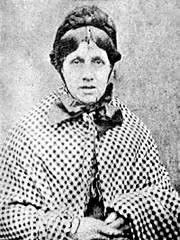
Wikimedia Commons: Mary Ann Cotton Portrait
Public-domain scan of a contemporary photograph, dated circa 1870, used as the dossier hero image.
The National Archives: Discovery Catalogue
Research gateway for surviving English criminal, prison and court material connected to Mary Ann Cotton and the Durham case.
British Newspaper Archive: Mary Ann Cotton Reports
Victorian press coverage for trial reporting, execution coverage, witness detail and inconsistent body-count claims.
Capital Punishment UK: Mary Ann Cotton
Execution-focused case chronology and hanging context for Cotton’s March 1873 death at Durham.
ATSDR: Toxicological Profile for Arsenic
Institutional toxicology reference for arsenic exposure, symptoms, tissue effects and chemical hazards.
Royal Society of Chemistry: Arsenic and the Marsh Test
Background on nineteenth-century arsenic detection and why chemical proof mattered in poisoning cases.
Capital Punishment UK: Mary Ann Cotton – The West Auckland Poisonings
Frederick Cotton’s bigamous marriage to Mary Ann on 17 September 1870, the death of his sister Margaret, and his own death on 20 September 1871, from the death certificate.
Wikipedia: Mary Ann Cotton
Her marriages to William Mowbray, George Ward, James Robinson and Frederick Cotton, and the death of Frederick’s sister Margaret in late March 1870.
The Dark Side of Humanity: Female Serial Homicide
Related page on female serial homicide, poison, domestic access, financial motives and familiar victims.
Justice Narrowly Proven
The state proved one child murder and executed Cotton for it. History suggests a larger death pattern, but this dossier keeps the wider catalogue graded rather than absolute.
Image credits
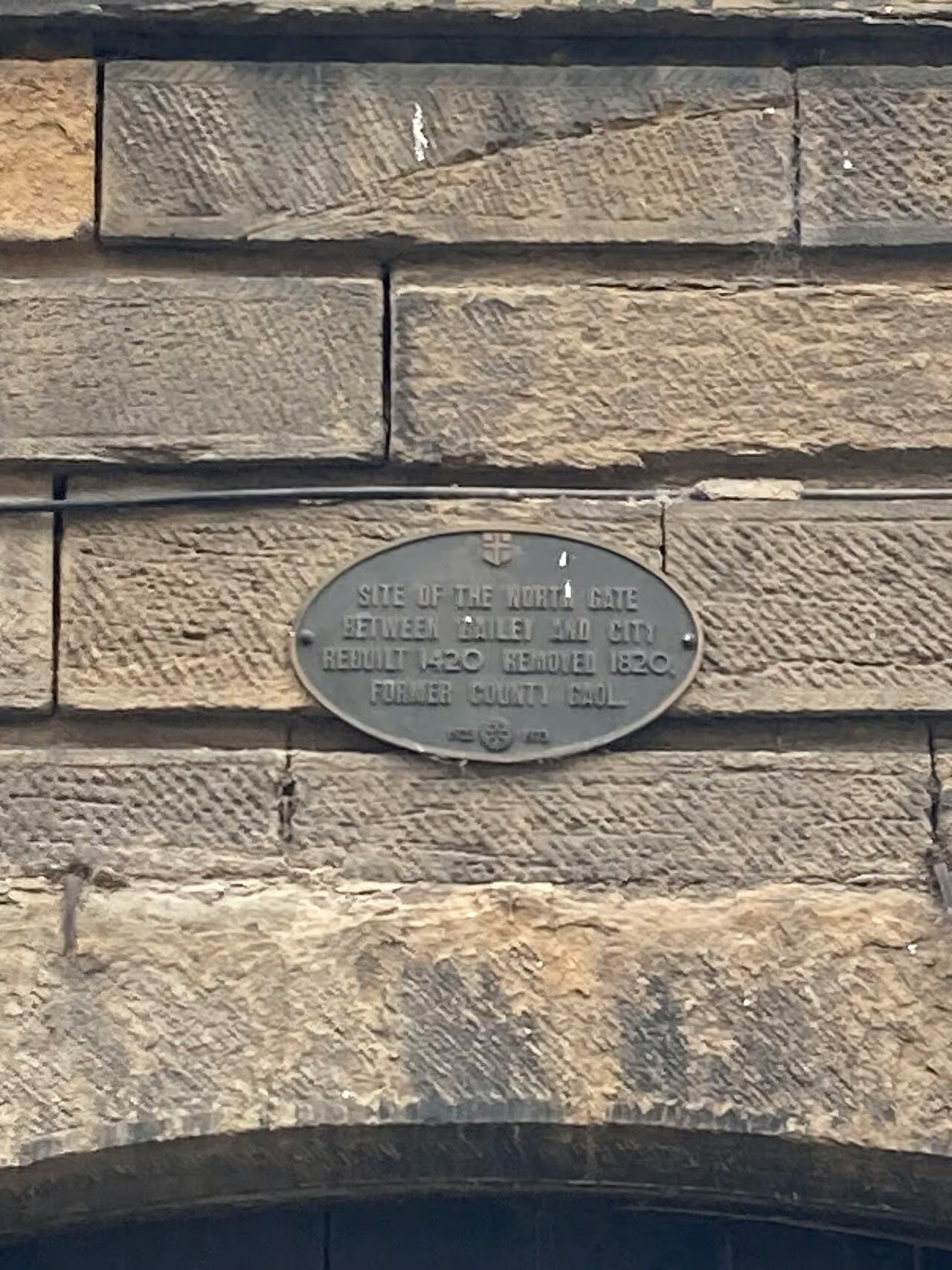
- EXHIBIT P-01. Credit: Carpet Weaver / Wikimedia Commons. Licence: CC BY-SA 4.0. Source: North Gate, Durham Bronze Plaque.jpg.
- EXHIBIT P-02. Credit: David Dixon / Wikimedia Commons. Licence: CC BY-SA 2.0. Source: West Auckland Methodist Church – geograph.org.uk – 2481846.jpg.
- EXHIBIT P-03. Credit: John Illingworth / Wikimedia Commons. Licence: CC BY-SA 2.0. Source: Durham Prison – geograph.org.uk – 228811.jpg.
- EXHIBIT P-04. Credit: Gordon Griffiths / Wikimedia Commons. Licence: CC BY-SA 2.0. Source: Durham Jail – geograph.org.uk – 729454.jpg.
- EXHIBIT P-05. Credit: Stanley Howe / Wikimedia Commons. Licence: CC BY-SA 2.0. Source: Wesleyan Chapel, Millbank, West Auckland – geograph.org.uk – 2081962.j.
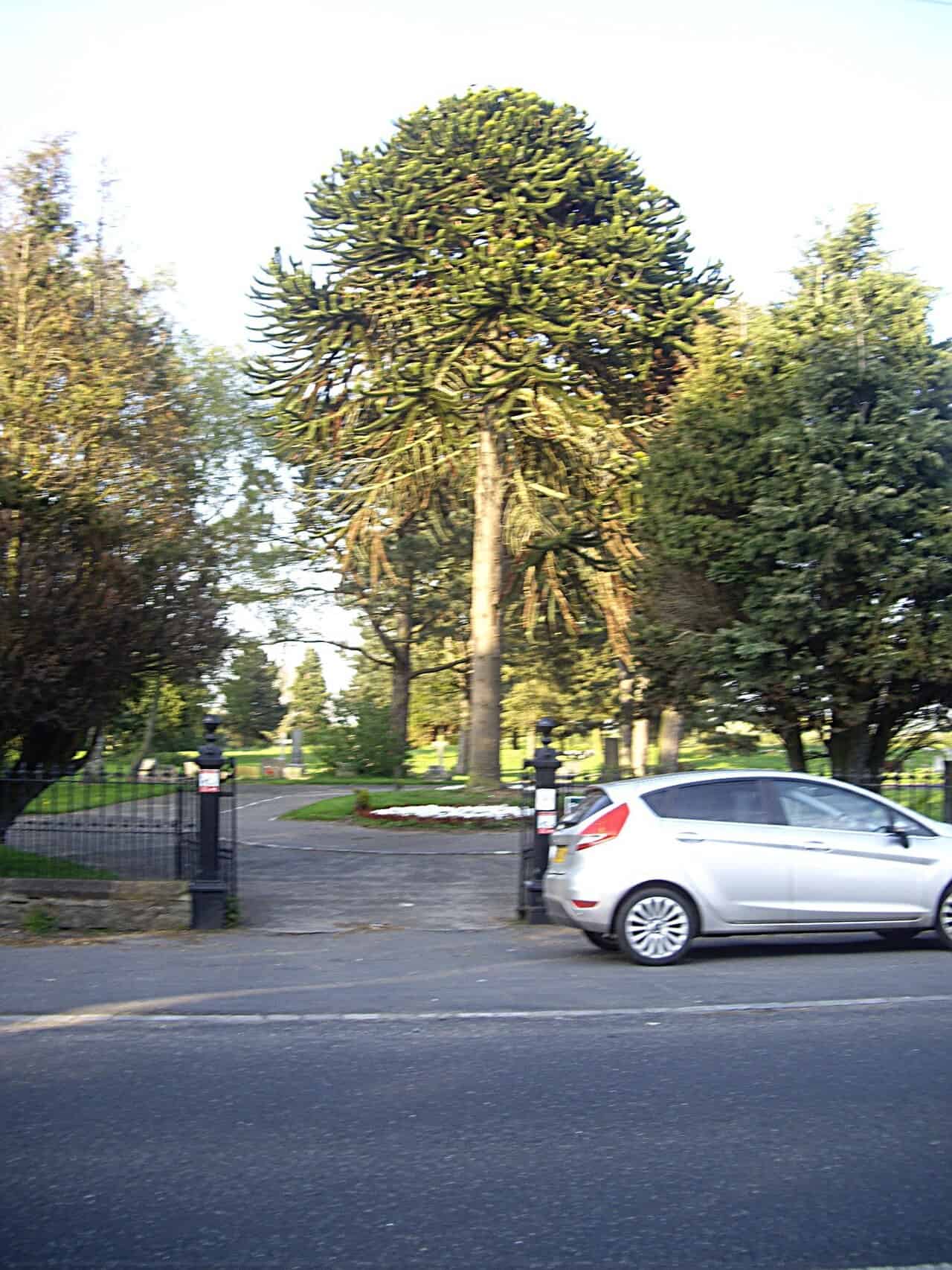
- EXHIBIT P-06. Credit: Stanley Howe / Wikimedia Commons. Licence: CC BY-SA 2.0. Source: West Auckland Cemetery – geograph.org.uk – 2960566.jpg.
Browse every case in the Case File Index
Discover more from The Dark Side of Humanity
Subscribe to get the latest posts sent to your email.