FILE NO. 0197Case status No Charges
A nanny went downstairs to make a cup of tea and never came back up. Her employer ran into a Belgravia pub covered in blood, and the man she named as her attacker was her own husband. By morning the 7th Earl of Lucan had vanished. He has never been found.
Case snapshot
- Victim: Sandra Rivett, 29, the Lucan family’s nanny, killed in the basement of 46 Lower Belgrave Street, Belgravia, on 7 November 1974
- Survivor: Veronica, Countess of Lucan, attacked at the top of the basement stairs; she named her estranged husband as her attacker
- Named by the inquest: Richard John Bingham, 7th Earl of Lucan; verdict “Murder by Lord Lucan”, June 1975
- Disappeared: 8 November 1974, last confirmed seen at Uckfield, East Sussex; his borrowed Ford Corsair was found at Newhaven on 10 November
- Status: Never arrested, charged or tried; declared legally dead in 1999; death certificate granted on 3 February 2016
- Where the case stands: The Metropolitan Police says the inquiry into Sandra Rivett’s death remains open
Richard John Bingham, 7th Earl of Lucan, was never arrested, charged or tried. A warrant for his arrest on charges of murdering Sandra Rivett and attempting to murder his wife, Veronica, was issued on 12 November 1974. In June 1975 an inquest jury at Westminster returned the verdict “Murder by Lord Lucan”, the last time a coroner’s court in England committed a named person for trial; the Criminal Law Act 1977 removed that power. Lucan was declared legally dead in 1999, and the High Court granted a death certificate on 3 February 2016. The Metropolitan Police says the inquiry into Sandra Rivett’s death remains open. Because no criminal court has ever heard the evidence, he is described here as the man an inquest jury named, not as a convicted killer.
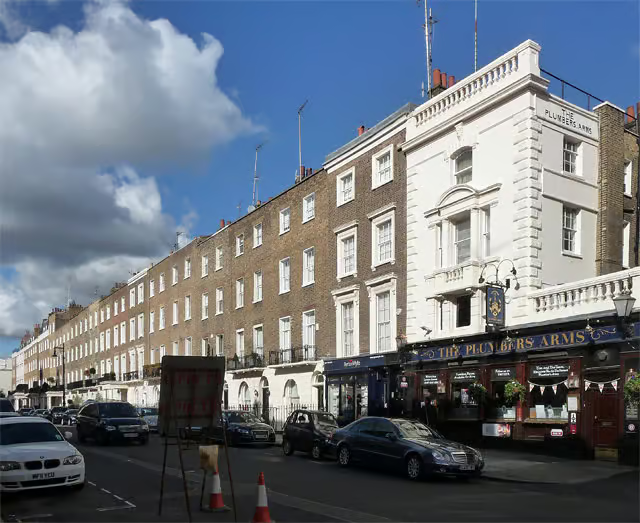
On the evening of Thursday, 7 November 1974, a woman covered in blood pushed open the door of a pub in Belgravia, one of the richest streets in London. The landlord of the Plumbers Arms later told an inquest that she had shouted “Help me, help me, I’ve just escaped from being murdered!” and then, “My children, my children, he’s murdered my nanny!”
The woman was Veronica, Countess of Lucan. The nanny was Sandra Rivett, 29 years old, who had been working for the family for only a few weeks. Her body was found in a canvas sack in the basement of 46 Lower Belgrave Street. The man Veronica named as her attacker was her estranged husband, John Bingham, the 7th Earl of Lucan: Old Etonian, former Guards officer, professional gambler and a regular at one of the most exclusive gaming clubs in Mayfair.
By the next morning Lord Lucan was gone. He drove a borrowed Ford Corsair 42 miles to a friend’s house in Sussex, wrote letters protesting his innocence, and drove off into the dark. The car turned up three days later in a side street in Newhaven, a ferry port on the Channel coast, with a length of taped lead pipe in the boot. Lucan himself has never been found.
Fifty-two years later the case still has two victims who are too often treated as footnotes, a suspect who became a punchline, and a long tail of sightings, hoaxes and theories that say more about Britain’s appetite for aristocratic scandal than about what happened in that basement. Strip those away and what is left is the evidence, what the inquest found, what Lucan himself claimed, and the one question nobody has ever answered: where did he go?
Lucky Lucan: the gambler peer
He was born to a title with blood already on it. Richard John Bingham was born on 18 December 1934 at 19 Bentinck Street, Marylebone, the elder son of George Bingham, 6th Earl of Lucan, and Kaitlin Dawson. The family name carried history: his great-great-grandfather, the 3rd Earl, led the Charge of the Light Brigade. His parents, unusually for their class, were agnostics and socialists.
In 1939, with war approaching, he and his elder sister Jane were taken to Wales. In 1940 the Bingham children crossed the Atlantic, first to Toronto and then to Mount Kisco, New York, where they spent five years with the multi-millionaire Marcia Brady Tucker. Their parents, who preferred an austere life, could not match that style of living when the children came home. At Eton, according to Wikipedia’s account drawn from his biographers, the young Bingham ran a bookmaking sideline and slipped out to race meetings. His mother later said his academic record was “far from creditable”.
He did National Service with the Coldstream Guards, mainly in Krefeld, West Germany, where he took up poker. In 1954 he joined William Brandt’s Sons and Co., a merchant bank in the City, on £500 a year. The bank did not hold him. After a win of £26,000 at chemin de fer around 1960, and resentful that a colleague had been promoted ahead of him, he quit. His reported explanation became part of the legend: “Why should I work in a bank, when I can earn a year’s money in one single night at the tables?”
Gambling became his profession. He was an early member of John Aspinall’s Clermont Club at 44 Berkeley Square, the private casino where a circle of very rich men played backgammon, bridge and chemin de fer for high stakes. He was a skilled backgammon player, once rated among the world’s top ten, and won the St James’s Club tournament. Friends called him “Lucky” Lucan. The nickname flattered him. Over time his losses easily outweighed his winnings, and on single bad nights he lost £8,000 and £10,000, sums that a relative had to help him cover.
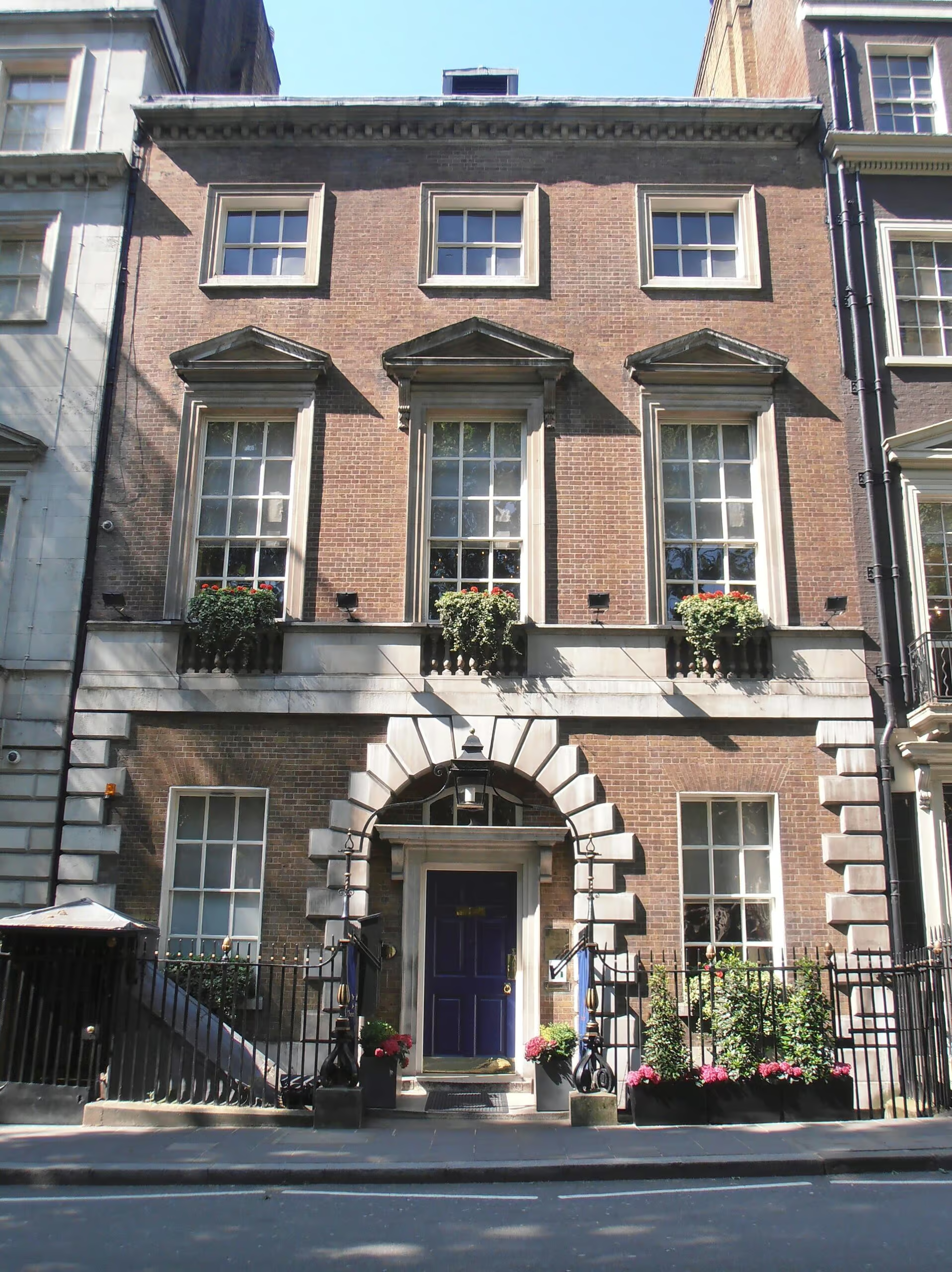
His routine, as later reconstructed, was precise. Breakfast at nine, letters, newspapers, the piano. Lunch at the Clermont, backgammon in the afternoon, home to change into black tie, then back to the tables until the early hours. He raced power boats, drove an Aston Martin and, in 1966, screen-tested for a film part. In 1965, still at the bank, he had written that he wanted “£2m in the bank”. He never got close.
The marriage of Lord Lucan and Lady Lucan
They met at a golf club function in 1963, and by January 1964 she was a countess. Lucan met Veronica Duncan early in 1963. She was born in 1937, the daughter of Major Charles Moorhouse Duncan, who died in a car accident when she was young; after a spell in South Africa the family returned to England, and she worked in London as a model and then a secretary. Her sister Christina had married into the wealthy Shand Kydd family, and it was through that world that the couple met. They married at Holy Trinity, Brompton, on 20 November 1963 and honeymooned on the Orient Express.
Two months later, on 21 January 1964, Lucan’s father died and he inherited the earldom. With help from a family marriage settlement he bought 46 Lower Belgrave Street, a tall stucco town house a few minutes’ walk from Victoria station, and Veronica became the Countess of Lucan. They had three children: Frances, born in 1964; George, born in 1967; and Camilla, born in 1970.
The marriage did not survive the gambling, the money worries and Veronica’s health. After the births of George and Camilla she suffered post-natal depression. In 1971 Lucan took her to a psychiatric clinic in Hampstead, where she refused to be admitted; she agreed instead to home visits and a course of antidepressants. Two weeks after a strained Christmas in 1972, Lucan moved out to a small property in Eaton Row nearby. Veronica later dated their formal separation to January 1973.
The custody war
He moved out of the house, but he never stopped watching it. What followed was the conflict that, on almost every account, set the stage for 7 November. Lucan wanted the children. To prove that Veronica was an unfit mother he began watching the house; his car was regularly seen parked in Lower Belgrave Street. He hired private detectives. He asked doctors to confirm she was mentally ill. They told him she was suffering from depression and anxiety, and had not “gone mad”.
In March 1973 Lucan and two private detectives confronted the family’s nanny, Stefanja Sawicka, near Grosvenor Place while she was out with two of the children. They told her the children had been made wards of court and must be handed to him, and she complied. Sawicka later said Veronica had told her Lucan had hit her with a cane and once pushed her down the stairs, and had warned her not to be surprised “if he kills me one day.”
The custody hearing came in June 1973. Veronica booked herself into the Priory Clinic for four days to be assessed, and the doctors found no sign of mental illness. In court, after several weeks of evidence heard in private, the case turned against Lucan: instead of proving his wife unfit he found himself defending his own conduct. On his lawyers’ advice he conceded. Mr Justice Rees gave Veronica custody and Lucan access every other weekend.
He did not let go. He taped telephone calls with his wife on a small Sony recorder and played them to friends. He told them, and his bank manager, that Veronica was “spending money like water”. He paid her £40 a week, may have cancelled her standing food order at Harrods, and delayed paying the milkman and the agency that supplied the live-in nanny the court required her to employ. He befriended one temporary nanny, bought her drinks and pumped her for information. Another temporary nanny reported odd telephone calls to the house, some with heavy breathing.
Into this household, in the autumn of 1974, came Sandra Rivett.
Broke at the tables
“Lucky” Lucan’s luck had run out. The custody case cost him an estimated £20,000. By late 1974 he was in serious trouble. He was drinking more and chain-smoking. He borrowed £4,000 from his mother, asked his old American guardian for £100,000 and was refused, and turned to anyone plausible for a loan. The financier James Goldsmith guaranteed a £5,000 overdraft. A lender called the Edgware Trust gave him £3,000 of the £5,000 he asked for. His four bank accounts were all overdrawn, at Coutts, Lloyds, National Westminster and Midland. Roy Ranson, the detective who later led the hunt for him, estimated in his 1994 book that Lucan ran up about £50,000 in debts in September and October 1974 alone. Three nights before the murder, his friend Taki Theodoracopulos lent him £3,000 in cash.
More disturbing were the conversations. In drunken talk with friends, including Aspinall and his own mother, Lucan discussed killing his wife. Greville Howard later gave police a statement describing how Lucan had said that killing Veronica might save him from bankruptcy, that her body could be disposed of in the Solent, and that he “would never be caught”.
Then, in late October, his mood seemed to lift. His best man, John Wilbraham, thought the obsession with the children had eased. On 6 November a young woman he met, Charlotte Andrina Colquhoun, said that “he seemed very happy, just his usual self, and there was nothing to suggest that he was worried or depressed”. That evening he dined at the Clermont with the racing driver Graham Hill.
Sandra Rivett
She was not supposed to be at home that night. Sandra Eleanor Hensby was born on 16 September 1945, the third child of Albert and Eunice Hensby. The family moved to Australia when she was two and returned to England in 1955. She trained briefly as a hairdresser, worked as a secretary in Croydon, and after a failed romance was treated for depression as a voluntary patient at a hospital near Redhill, Surrey. On 13 March 1964 she had a son, Stephen, whom her parents adopted in May 1965; as an adult he would take the name Neil Berriman and spend years investigating his mother’s death.
She married Roger Rivett, a former Royal Navy seaman, in Croydon on 10 June 1967. The marriage broke down in May 1974, and she signed on with a domestic agency in Belgravia, first caring for an elderly couple and then, a few weeks later, starting work for Veronica Lucan. Her parents said she got on well with her employer and was extremely fond of the children.
Thursday was usually Rivett’s night off, when she went out with her boyfriend, John Hankins. That week she had changed her day off and had seen him the evening before. It meant that on the night of 7 November she was at home in Lower Belgrave Street, a detail that sits at the centre of every theory about what happened next.
7 November 1974: the last ordinary day
Lucan normally slept late. On 7 November he broke his routine, calling his solicitor early in the morning. He arranged to meet Charlotte Colquhoun at the Clermont at about 3 pm and never arrived. He also missed a 1 pm lunch at the club. At 4 pm he called at a chemist’s on Lower Belgrave Street, close to his wife’s home, and asked the pharmacist to identify a small capsule; it was Limbitrol 5, a drug for anxiety and depression.
Between 6:30 pm and 7 pm he met a friend, the literary agent Michael Hicks-Beach, at his flat on Elizabeth Street to talk about an article on gambling he had been asked to write for an Oxford University magazine. At about 8 pm he drove Hicks-Beach home, not in his own blue Mercedes-Benz but, by the friend’s account, in “an old, dark, and scruffy Ford”. It was probably a Ford Corsair he had borrowed from another Clermont regular, Michael Stoop, several weeks before.
At 8:30 pm he called the Clermont to check a dinner reservation for a group including Greville Howard, whom he had told to meet him there at 11 pm. He did not turn up, and he did not answer his telephone.
At 46 Lower Belgrave Street, Veronica and Sandra Rivett had put the younger children to bed. Frances, who had turned ten two weeks earlier, was still up. According to Veronica, at about 8:55 pm Rivett asked whether she would like a cup of tea and went down to the basement kitchen to make one.
The basement
When Rivett did not come back, Veronica went to look for her. She called down from the top of the basement stairs. The stairwell was dark. A man came at her, struck her on the head, and told her to “shut up.” She said later that in that moment she recognised her husband’s voice.
The two struggled on the stairs. Veronica bit his fingers. When he forced her to the carpet she managed to grab his testicles, and he let go of her throat. She asked where Rivett was. On her account, Lucan was evasive at first and then admitted that he had killed her. Terrified, Veronica played for time, telling him she would help him get away if he stayed in the house for a few days while her injuries healed.
They went upstairs together. Frances later told police that she heard a scream and, a few minutes afterwards, saw her mother, with blood on her face, come into the room with her father, and that her mother sent her to bed. Veronica lay down on a bed in another room. Lucan, she said, told her to put towels down first so as not to stain the bedding, asked whether she had any barbiturates, and went to the bathroom for a wet towel. The moment he was out of earshot she ran down the stairs, out of the front door and along the street to the Plumbers Arms.
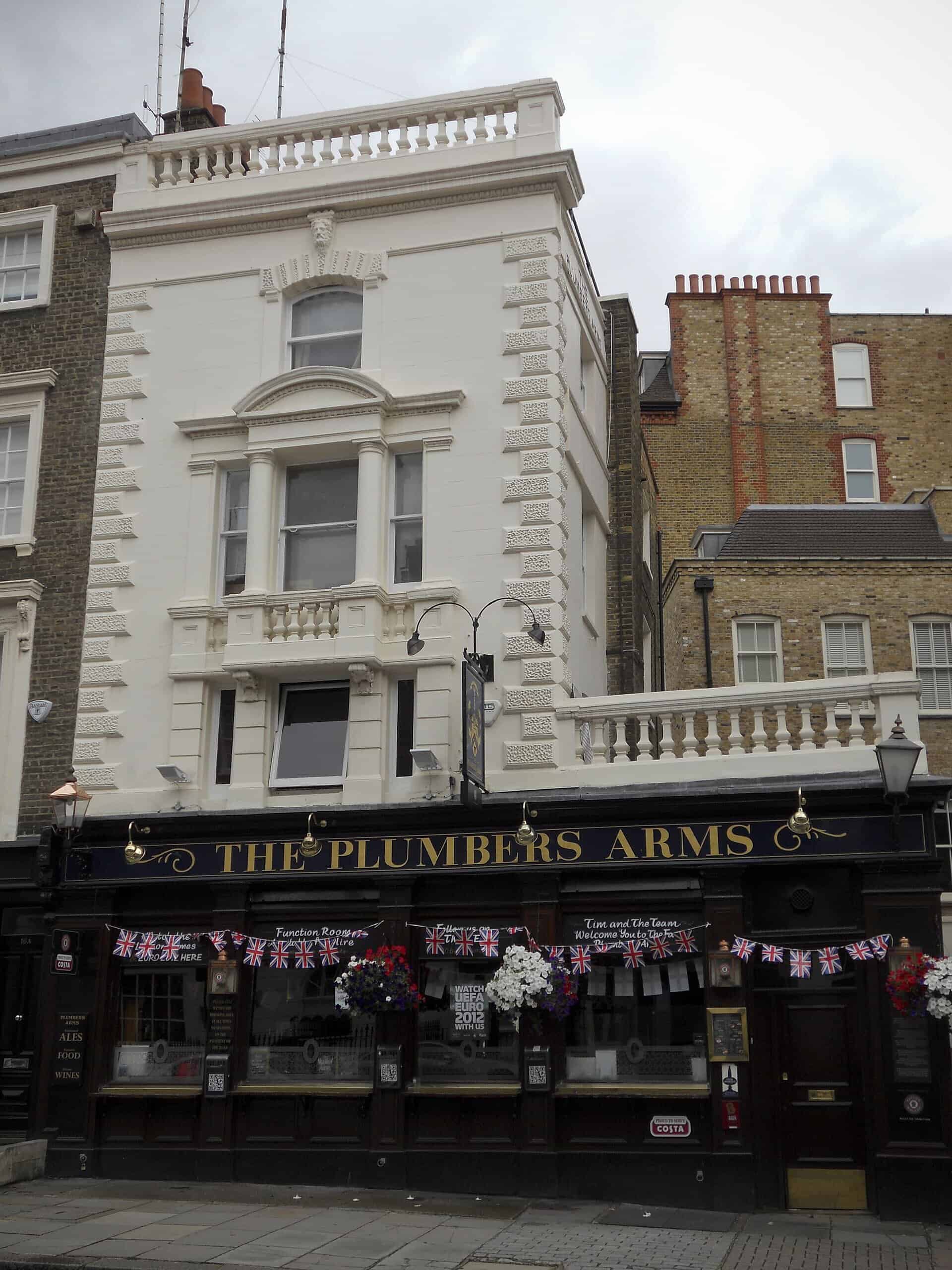
The landlord told the inquest she arrived covered “head to toe in blood” and then fell into “a state of shock”. Police and an ambulance were called. Officers forced their way into number 46 and found a scene that has been described ever since in almost the same words. A bloodstained lead pipe lay on the floor near the top of the basement stairs. Pictures on the staircase walls hung askew, and a metal banister rail was damaged. At the foot of the stairs two cups and saucers lay in a pool of blood. In the kitchen, Rivett’s arm protruded from a canvas sack. The light fitting at the bottom of the stairs was missing its bulb, which was found on a chair; tested later, it worked.
The divisional surgeon pronounced Sandra Rivett dead. Veronica was taken to St George’s Hospital. Upstairs, the three children were unhurt.
Calls, letters and a drive to the coast
Somewhere in the dark, a man with blood on him was making telephone calls. What Lucan did next is pieced together from those calls, a doorstep and two letters. Between 10 pm and 10:30 pm someone may have called at the Chester Square home of Madelaine Florman, the mother of one of Frances’s school friends. Alone in the house, she did not answer the door, then took an incoherent telephone call and put the receiver down. Bloodstains on her doorstep were later found to be a mixture of blood groups A and B, the groups of Veronica and Sandra Rivett.
Between 10:30 pm and 11 pm Lucan rang his mother and asked her to collect the children from Lower Belgrave Street. According to her, he spoke of a “terrible catastrophe” at his wife’s home. His story was that he had been passing the house, seen Veronica fighting a man in the basement, let himself in and found his wife screaming. Where he made that call from has never been established.
He then drove the Corsair 42 miles to Uckfield, East Sussex, to the home of his friends Ian and Susan Maxwell-Scott, and spoke with Susan. She later told the inquest he looked “dishevelled”, his hair “a little ruffled”, with a damp patch on the right hip of his trousers. He gave her the same story: that he had seen Veronica being attacked, gone in, slipped in a pool of blood at the bottom of the stairs, that the attacker ran off, and that Veronica was “very hysterical” and accused him of hiring a hitman to kill her.
At Uckfield he wrote two letters to his brother-in-law, Bill Shand Kydd, and posted them. One spoke of “a traumatic night of unbelievable coincidence”; in another passage he wrote that “the circumstantial evidence against me is strong”. A third letter, to Michael Stoop, was delivered to Stoop’s club. Stoop threw away the envelope, so its postmark could never be checked. Lucan then drove away from the Maxwell-Scott house in the Corsair. Susan Maxwell-Scott is the last person confirmed to have seen him.
At about 12:30 am he had rung his mother again, telling her he would be in touch later that day. A police constable was with her. Lucan declined to speak to him and said he would call the police in the morning. He never did.
The Corsair at Newhaven
The flat looked as if its owner had stepped out for the evening. Detective Chief Superintendent Roy Ranson took charge on the morning of 8 November. Officers searched 5 Eaton Row and Lucan’s flat at 72a Elizabeth Street. On the bed lay a suit and shirt beside a book about Greek shipping millionaires. His wallet, car keys, money, driving licence, handkerchief and spectacles were on the bedside table. His passport was in a drawer, and his blue Mercedes was parked outside with a cold engine and a flat battery. Whatever happened, he had not packed for a journey.
On 10 November the borrowed Ford Corsair was found in Norman Road, Newhaven, about 16 miles from Uckfield. Witnesses suggested it had been parked there between 5 am and 8 am on 8 November. Inside were bloodstains. In the boot police found a piece of lead pipe wrapped in surgical tape and a full bottle of vodka.

Ranson’s first instinct was suicide. A full search of the Newhaven Downs was judged impossible; a partial search with tracker dogs turned up only the skeletal remains of a judge who had vanished years earlier. Divers searched the harbour, and the following year an infrared photographic survey of the area was tried. Nothing was found. On 12 November a warrant was issued for Lucan’s arrest for the murder of Sandra Rivett and the attempted murder of his wife, and his description went to Interpol.
What the forensic evidence showed
The science pointed one way, but it did not quite close the circle. The lead pipe found in the house carried a mixture of blood group A, Veronica’s, and blood group B, Rivett’s, as well as hair matching Veronica’s. The pipe in the Corsair had neither blood nor hair on it. Home Office scientists thought it likely that both pieces had been cut from the same length of piping but could not prove it, and the tape wrapped round them was similar but could not be conclusively linked.
The letters to Bill Shand Kydd were stained with blood thought to come from both women. The letter to Stoop had no blood on it, but its paper was shown to have been torn from a writing pad found in the Corsair’s boot. Blood in the car was group AB, which the report said might be a mixture from both women, and hair similar to Veronica’s was found in the car too.
The pattern of stains inside the house showed that Rivett had been attacked in the basement kitchen and Veronica at the top of the basement stairs. The pathologist Keith Simpson found that Rivett died of “blunt head injuries” and “inhalation of blood”, that the lead pipe was most likely responsible, and that some injuries, to her left eye and mouth, were more likely caused by punches from a clenched fist. He was certain she was dead before she was put into the sack.
The Eton mafia and the tigers
The day after the murder, Lucan’s friends gathered at his club. On the afternoon of 8 November a group including John Aspinall, Bill Shand Kydd, Dominic Elwes, Charles Benson, Daniel Meinertzhagen and Stephen Raphael met at the Clermont. Meinertzhagen and Raphael later insisted it was a sensible discussion between worried friends. The police did not see it that way, and some officers complained that an “Eton mafia” was working against them. Lucan’s friends had closed ranks, or at least appeared to.
When Aspinall’s mother, Lady Osborne, was asked whether she could help find Lucan’s body, she replied: “The last I heard of him, he was being fed to the tigers at my son’s zoo”. The police searched the house and the animal cages. They searched 14 country houses and estates, including Holkham Hall and Warwick Castle. They found nothing.
The press, meanwhile, ignored the risk of libel and treated Lucan as the killer from the first editions, under headlines such as “Body in sack … countess runs out screaming”. Elwes, an artist and one of Lucan’s circle, was later ostracised by his friends over his part in a Sunday Times Magazine article critical of Lucan. He died by suicide in September 1975.
The inquest: “Murder by Lord Lucan”
The inquest into Sandra Rivett’s death opened on 13 November 1974 before Gavin Thurston, coroner for inner west London. Roger Rivett confirmed he had identified his wife’s body, and Simpson gave the cause of death. After adjournments in December 1974 and March 1975, the full hearing began on 16 June 1975.
Thurston called 33 witnesses. Veronica gave evidence each day in a dark coat and white headscarf. A Queen’s Counsel retained by Lucan’s mother tried to question her about her marriage and whether she hated her husband, and Thurston ruled that line of questioning out. Detective Constable Sally Blower read the statement Frances had given on 20 November 1974, including her recollection that Rivett did not normally work on Thursday nights. The Plumbers Arms landlord, the pathologist and Susan Maxwell-Scott all testified.
When Thurston had summed up, the jury retired. At 11:45 am the foreman announced the verdict: “Murder by Lord Lucan”. Lucan became the first member of the House of Lords to be named a murderer since 1760, when Laurence Shirley, 4th Earl Ferrers, was hanged for killing his bailiff. He was also the last person committed for trial by a coroner’s jury; the Criminal Law Act 1977 abolished the power. Sandra Rivett’s body, held for weeks after the murder, had been released to her family and cremated at Croydon crematorium on 18 December 1974.
Lucan’s mother said the inquest had not served “any useful purpose at all”. Veronica’s sister Christina spoke of “great sadness and sorrow”. Susan Maxwell-Scott went on insisting he was innocent.
Lucan’s story against the evidence
Because Lucan never came back, his version of events exists only in his letters and in what he told his mother and Susan Maxwell-Scott. Tested against the physical evidence, it struggles.
- The view from the street. Officers trying to show that a passer-by could see into the basement kitchen from the pavement could do so only by stooping low. With the bulb removed, the basement was dark.
- The missing intruder. The basement’s front door was locked. The back door led to a walled garden with no trace of anyone leaving. There was no sign that anyone left by the main front door, and no witness reported seeing a stranger near the house.
- The pipes. His account offers no explanation for the taped lead pipe in the boot of the car he was driving.
- The talk of murder. Several people described him discussing killing his wife in the months before.
- The basement. Veronica said she never went into the basement that night, contradicting Lucan’s claim that he saw her fighting there. The blood pattern supported her.
There are loose ends. Lucan’s fingerprints were not found at the scene. Small traces of Veronica’s blood were found in the basement, in the garden and on the sack, which may be explained by contamination as officers moved through the house. Neil Berriman has spoken publicly about “blood contamination” at the scene. These details have fed alternative theories for decades. None has produced a credible second suspect.
Bankrupt, presumed dead, then certified
While police searched, Lucan’s money ran out on paper. In August 1975 his creditors were told he had unsecured debts of £45,000 against assets estimated at £22,632. The family silver was sold in March 1976 for around £30,000, and the family trust paid off the rest of his debts in the years that followed.
He was presumed dead in chambers on 11 December 1992 and declared legally dead on 27 October 1999, which allowed probate on his estate. No death certificate was issued, however, and his son George was refused permission to take the title and his father’s seat in the House of Lords. The Presumption of Death Act 2013 changed the law. On 3 February 2016, after a hearing that lasted less than an hour at the Rolls Building, Mrs Justice Asplin granted a death certificate, and George Bingham became the 8th Earl of Lucan.
Outside court he said: “I am very happy with the judgment of the court in this matter.” He added that it had “been a very long time coming”, and asked the press to “consider a person did die here in terrible circumstances, and a family lost a father”. Neil Berriman, who had withdrawn his objection to the certificate, stood beside him. “There is no getting away from the fact that whatever happened that night he [Lucan] is guilty of something in my eyes,” he said. The hearing was told that police had no live lines of inquiry, though the case had not been closed.
Lord Lucan theories: suicide, Africa, a Swiss grave
Every theory about Lucan’s fate starts from the same blank: the Corsair at Newhaven and nothing after it.
Suicide. Ranson’s first view was that Lucan had “done the honourable thing” and “fallen on his own sword”. Many of his friends agreed. Aspinall said he believed Lucan was guilty and had killed himself by scuttling his motorboat and jumping into the English Channel with a stone tied to his body. Veronica believed he had died “like the nobleman he was”. His son George has said he thinks his father died that night, possibly by his own hand.
Escape. Ranson later changed his mind, deciding that a drowning at sea was implausible and that Lucan had more likely reached southern Africa. A detective who led a fresh investigation 32 years after the murder said the evidence pointed to Lucan having left the country and lived abroad for a number of years. In 2012 his brother Hugh said he was “sure” Lucan had fled to Africa, before saying he did not know whether he was alive or dead.
Murdered by his protectors. Susan Maxwell-Scott told the author John Pearson that Lucan might have been smuggled out of the country by shadowy financiers, judged too great a risk, killed and buried in Switzerland. The advertising executive Jeremy Scott proposed a similar theory.
None of these has ever been tested in a court, and no body has ever been found.
Fifty years of Lord Lucan sightings
The first “Lucan” turned out to be a politician who had faked his own death. The sightings began almost at once and have never stopped. That early one, soon after the murder, was the Labour politician John Stonehouse. Police went to France in 1975 on another lead. A man in Colombia proved to be an American businessman. Police in Cape Town checked fingerprints on a beer glass a man had reportedly held. In 1982 the bounty hunter John Miller, who had once kidnapped the train robber Ronnie Biggs, claimed to have captured Lucan and was exposed as a hoaxer by the News of the World.
In 2003 a former Scotland Yard detective said he had tracked Lucan to Goa, India, where he had supposedly lived as a hippy until 1996. The man was Barry Halpin, a folk singer from Merseyside. Veronica told Sky News: “It’s unutterably boring. I could never imagine my husband looking so pathetic.” In 2007 reporters in New Zealand interviewed a homeless British expatriate whom neighbours took for Lucan. Other stories placed him in an old Nazi colony in Paraguay, on an outback sheep station, on the slopes of Mount Etna and waiting tables in San Francisco.
The Daily Mirror journalist Garth Gibbs made a career joke of it: “I have successfully not found him in more exotic spots than anybody else.” The hoaxer Rocky Ryan fed sightings to newsdesks for years, and reports placed Lucan everywhere from Botswana to Guam.
Lord Lucan’s children, Gabon and Treetops
One theory is darker than the others because it involves the children. Stories surfaced that Frances and George were sent to Gabon in the early 1980s so their father could secretly watch them “from a distance”. George Bingham denied ever visiting the country. In the BBC series Lucan, broadcast in November 2024, the journalist Glen Campbell interviewed an unnamed woman who said she had been Aspinall’s secretary. She claimed she arranged for the children to visit “Treetops” in Kenya so that Lucan could see them, and that she had spoken to him by telephone to confirm the plans. Her account has not been independently corroborated.
Veronica Lucan (Lady Lucan): the long aftermath
The woman who survived the attack lived the rest of her life inside the story. After the murder she became addicted to antidepressant drugs, and in 1982 her children went to live with her in-laws, the Shand Kydds. She remained estranged from them for the rest of her life. She dismissed the sightings as “nonsense” and said her husband “was not the sort of Englishman to cope abroad”. In a 2017 ITV interview she said she believed he had made the “brave” decision to take his own life, and spoke of her depression and of his violence after their marriage.
On 26 September 2017, police forced entry to her home in Belgravia and found her dead, aged 80. An inquest heard that she had become convinced she had Parkinson’s disease, though no doctor had diagnosed it, and had attended a meeting on assisted suicide the year before. The coroner, Dr Fiona Wilcox, recorded a conclusion of suicide. Her will left her estate to the housing charity Shelter.
Neil Berriman’s search and the Australia claim
For most of the public, Sandra Rivett was for decades “the nanny”, a role in somebody else’s story. Her son has spent years trying to change that. Raised by his grandparents, he has made his mother’s name the centre of his campaign. “My mission is to keep my mother’s memory very much alive and to seek justice,” he has said. “She is not ‘just the nanny’, she is a victim of violent crime who became secondary because her killer was a lord, a lord who was protected and who vanished abroad with the aid of his rich and powerful friends rather than face justice.”
In 2020 Berriman’s search led to a man in his eighties living in what was described as a Buddhist community in the outer suburbs of Brisbane, Australia. Professor Hassan Ugail of the University of Bradford compared photographs using facial recognition software and was quoted in the Daily Mirror as saying: “It’s him.” Speaking to the Guardian he was more careful: “I can’t 100% confirm it’s Lord Lucan. It looks remarkably like him.” The man denied, through his carers, that he was Lucan. The Metropolitan Police said that “in April 2021, following extensive inquiries and investigations made by the Australian federal police on behalf of the Metropolitan police, the person was conclusively eliminated from the investigation.” The BBC series later named him as Derek Crowther, who had performed on stage in Canada in 1969, five years before the murder.
The Met’s position has not changed: the inquiry remains open “as is the case with all unsolved murders. Any significant new information will be considered.”
The theory that blames Veronica
The newest theory turns the survivor into the suspect. George and Lady Camilla Bingham have said they are not convinced their father killed Sandra Rivett. The writer Laura Thompson went further in a 2024 article, proposing that Veronica herself killed Rivett and framed her husband. Her argument rests on Veronica’s mental state, the small amount of her blood found in the basement, and medical evidence that it was possible, though unlikely, that her head injuries were self-inflicted.
It is speculation. It conflicts with the forensic pattern, which placed Veronica’s attack at the top of the stairs and not in the kitchen, with the taped pipe in the car Lucan was driving, and with Lucan’s own letters, which never accused his wife of murder. It belongs in any account of the case because it is part of the public argument, not because the evidence supports it.
Why the case will not close
Lord Lucan is remembered as a mystery, but the core of the case is not very mysterious. A woman was beaten to death in a dark basement. Another was attacked on the stairs above it and named her attacker. The man she named was driving a car that turned up at a ferry port with a taped lead pipe in the boot, had talked about killing his wife, was drowning in debt, and wrote, in his own hand, that the evidence against him was strong. An inquest jury took those facts to their conclusion in 1975.
What remains unknown is where he went and whether anyone helped him. That question has been kept alive by money, class and the press. His friends were rich, closed and unhelpful to police. Newspapers found the story of a fugitive earl irresistible, and every sighting sold copies. As the columnist John Junor reportedly told Garth Gibbs: “Laddie, you don’t ever want to shoot the fox. Once the fox is dead there is nothing left to chase.”
Sandra Rivett was 29. She had worked in the house for a few weeks, and she went downstairs to make a cup of tea. Fifty-two years later, the fox has had more column inches than she ever did.
Where the accounts disagree
- The day of the week. 7 November 1974 was a Thursday, and the inquest heard that Rivett did not normally work on Thursday nights. One line of the main Wikipedia account calls the day “Wednesday, 7 November”. The calendar settles it: the murder happened on a Thursday evening.
- Lucan’s debts. Estimates of what Lucan owed vary with the date. Roy Ranson estimated about £50,000 of new debt in September and October 1974; the bankruptcy figure given to creditors in August 1975 was £45,000 of unsecured debt.
- When the separation began. Lucan moved to Eaton Row two weeks after Christmas 1972. Veronica dated their formal separation to January 1973. The BBC timeline places the collapse of the marriage in 1972.
- Which law. Wikipedia refers to the Presumption of Death Act 2013; the Guardian’s 2016 report refers to the 2014 act, the year it came into force. They are the same statute.
- The Goa claim. The BBC reported the 2003 theory that Lucan lived in Goa as Barry Halpin until 1996. The Guardian notes that Halpin was a folk singer from St Helens, and Wikipedia calls him a folk singer from Merseyside.
- The Brisbane identification. Professor Ugail was quoted as saying “It’s him”; he later told the Guardian he could not be 100% sure. Another facial recognition firm had concluded the men were not the same person, and Australian police eliminated the man in April 2021.
Timeline
- 18 December 1934: Richard John Bingham born in Marylebone, London.
- 16 September 1945: Sandra Eleanor Hensby born.
- Around 1960: Bingham leaves the merchant bank after a £26,000 win at chemin de fer.
- 20 November 1963: Marries Veronica Duncan at Holy Trinity, Brompton.
- 21 January 1964: Becomes 7th Earl of Lucan on his father’s death.
- January 1973: The Lucans separate; Lucan moves to Eaton Row.
- June 1973: Mr Justice Rees awards custody of the children to Veronica.
- Autumn 1974: Sandra Rivett starts work at 46 Lower Belgrave Street.
- 7 November 1974, about 8:55 pm: Rivett goes down to make tea and is killed in the basement. Veronica is attacked and escapes to the Plumbers Arms.
- 8 November 1974: Lucan leaves the Maxwell-Scott home in Uckfield; last confirmed sighting.
- 10 November 1974: The Ford Corsair is found in Norman Road, Newhaven.
- 12 November 1974: Arrest warrant issued for murder and attempted murder.
- 13 November 1974: Inquest opens.
- 18 December 1974: Sandra Rivett cremated at Croydon.
- June 1975: Inquest jury returns “Murder by Lord Lucan”.
- 11 December 1992: Lucan presumed dead in chambers.
- 27 October 1999: Declared legally dead; probate granted.
- 2003: The “Goa” claim; the man is Barry Halpin.
- 3 February 2016: High Court issues a death certificate; George Bingham becomes 8th Earl.
- 26 September 2017: Veronica, Countess of Lucan, found dead at her home.
- April 2021: The Brisbane man is eliminated by Australian federal police.
- November 2024: BBC broadcasts the three-part series Lucan.
Frequently asked questions
Was Lord Lucan ever convicted of murder?
No. He disappeared before he could be arrested. An inquest jury in June 1975 returned the verdict “Murder by Lord Lucan”, but he was never tried in a criminal court.
Who was Sandra Rivett?
Sandra Rivett, born Sandra Eleanor Hensby in 1945, was the 29-year-old nanny to the three Lucan children. She had worked for Veronica Lucan for only a few weeks when she was killed in the basement of 46 Lower Belgrave Street on 7 November 1974.
What happened to Lord Lucan?
Legally, he is dead. He was declared dead in 1999, and the High Court issued a death certificate in February 2016. His body has never been found, and nobody has confirmed seeing him alive since the night of the murder.
Was Lord Lucan ever found?
No. Neither Lucan nor his body has ever been found. The last person confirmed to have seen him was Susan Maxwell-Scott, at her home in Uckfield, East Sussex, on the night of the murder. Sightings have placed him everywhere from Goa to Brisbane, but none has been confirmed: the Goa man was the folk singer Barry Halpin, and the Brisbane man was conclusively eliminated by Australian federal police in April 2021.
Who was Lady Lucan?
Lady Lucan was Veronica Lucan, born Veronica Duncan in 1937. She married Lord Lucan at Holy Trinity, Brompton, on 20 November 1963 and became Countess of Lucan when he inherited the earldom in January 1964. They had three children. On 7 November 1974 she was attacked at the top of the basement stairs at 46 Lower Belgrave Street, escaped to the Plumbers Arms and named her estranged husband as her attacker. She was found dead at her home in Belgravia on 26 September 2017, aged 80, and the coroner recorded a conclusion of suicide.
When did Lord Lucan disappear?
On the night of 7 to 8 November 1974. After the attacks at Lower Belgrave Street on the evening of 7 November, he drove the borrowed Ford Corsair to the Maxwell-Scott home in Uckfield, East Sussex, and drove away again. That was the last confirmed sighting. Witnesses suggested the car was parked in Newhaven between 5 am and 8 am on 8 November, and police found it there on 10 November.
What happened to Lord Lucan’s children?
Frances, George and Camilla were unhurt on the night of the murder. In 1982 they went to live with the Shand Kydds, and their mother, Veronica Lucan, remained estranged from them for the rest of her life. George became the 8th Earl of Lucan in February 2016, after the High Court issued his father’s death certificate. George and Lady Camilla Bingham have said they are not convinced their father killed Sandra Rivett, and George has denied claims that he and Frances were sent to Gabon so their father could watch them.
Where was Lord Lucan’s car found?
The borrowed Ford Corsair was found on 10 November 1974 in Norman Road, Newhaven, East Sussex, with bloodstains inside and a taped lead pipe in the boot.
Is the case still open?
Yes. The Metropolitan Police says the inquiry into Sandra Rivett’s death remains open and that significant new information will be considered.
Who is the current Earl of Lucan?
George Bingham, Lucan’s son, became the 8th Earl of Lucan after the High Court issued his father’s death certificate in 2016.
Related case files
- The Murder of Martha Moxley: Belle Haven, 1975, and a Case Without a Conviction
- Dr. Hawley Harvey Crippen
- Sam Sheppard: The Bay Village Murder, the Press and the Supreme Court
Works Cited
Online sources were consulted on November 1, 2026.
News
- BBC News, Lord Lucan death certificate granted, 3 February 2016.
- The Guardian, Lord Lucan death certificate granted more than 40 years after disappearance, 3 February 2016.
- BBC News, Lady Lucan, widow of Lord Lucan, found dead in London, 27 September 2017.
- BBC News, Lady Lucan died after taking ‘cocktail of drink and drugs’, 10 January 2018.
- The Guardian, ‘It’s him’: Lord Lucan hunt continues 48 years after nanny murder, 7 November 2022.
Reference
- Wikipedia, John Bingham, 7th Earl of Lucan, accessed November 1, 2026.
Images
- Wikimedia Commons, 14-46 Lower Belgrave Street.jpg), Stephen Richards, CC BY-SA 2.0.
- Wikimedia Commons, Plumbers Arms in Lower Belgrave Street (June 2012).jpg), Carcharoth (Commons), CC BY-SA 3.0.
- Wikimedia Commons, Clermont Club, 44 Berkeley Square, Ham, CC BY-SA 3.0.
- Wikimedia Commons, Newhaven Harbour, 1989, Ben Brooksbank, CC BY-SA 2.0.
Image credits
- Photo: Stephen Richards, via Wikimedia Commons. CC BY-SA 2.0.
- Photo: Ham, via Wikimedia Commons. CC BY-SA 3.0.
- Photo: Carcharoth (Commons), via Wikimedia Commons. CC BY-SA 3.0.
- Photo: Ben Brooksbank, via Wikimedia Commons. CC BY-SA 2.0.