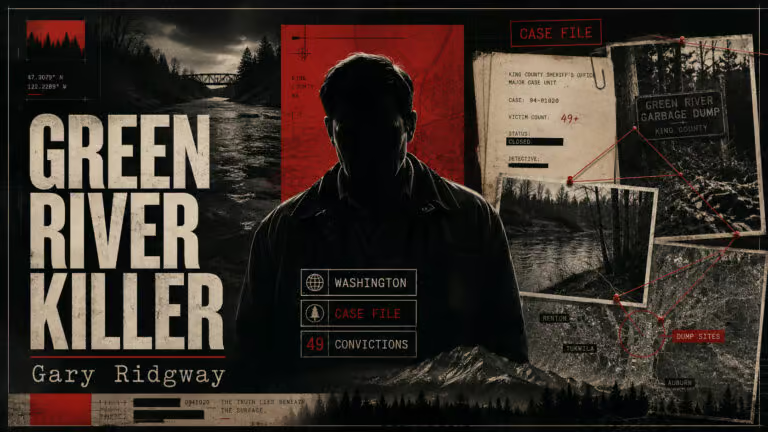
Gary Leon Ridgway, known as the Green River Killer, was convicted of 49 murders committed in Washington State. The investigation began in 1982 after the discovery of several victims. Ridgway was arrested in 2001 when preserved biological evidence linked him to the crimes through improved DNA testing.
Ridgway avoided the death penalty by entering a plea bargain requiring him to disclose information about the killings. He pleaded guilty to 48 murder counts in 2003 and a 49th in 2011. While serving life without parole, law enforcement continues investigating potential additional victims.
The Green River Killer: Gary Ridgway
Gary Leon Ridgway, known as the Green River Killer, was convicted of murdering 49 women after one of the longest serial-murder investigations in American history. This dossier traces the Washington State victims, the Green River timeline, DNA evidence, the plea deal, and the unresolved cases that still keep the file open.
Gary Ridgway, known as the Green River Killer, is one of the most prolific convicted serial killers in United States history. He pleaded guilty to 48 murders in 2003 and a 49th in 2011. The Green River investigation began in Washington State in 1982 and ultimately relied on preserved biological evidence, improved DNA testing and decades of police work to identify Ridgway and connect him to the murders.
Evidence standard: convictions are stated as confirmed. Additional claimed victims remain suspected unless supported by official identification, court records or corroborated investigative evidence. Missing people and possible Green River links are kept separate from convicted murders.
The Green River case began with the discovery of Wendy Lee Coffield in the Green River on July 15, 1982. Within a month, King County records say four more bodies were found on the riverbank: Debra Lynn Bonner, Marcia Faye Chapman, Opal Charmaine Mills, and Cynthia Jean Hinds.
The investigation became one of the longest and largest serial murder investigations in United States history. Decades of investigative work, DNA testing, trace evidence, and renewed case review eventually led to Gary Leon Ridgway’s 2001 arrest and his 2003 guilty plea to 48 counts of aggravated murder in the first degree.
| Full name | Gary Leon Ridgway. |
|---|---|
| Known as | Green River Killer. |
| Primary offender | Gary Leon Ridgway, known publicly as the Green River Killer. |
| Primary jurisdiction | King County, Washington, with investigative links across the Seattle-Tacoma corridor and Oregon. |
| Confirmed court outcome | Ridgway pled guilty to 48 counts in 2003 and later pled guilty to the 1982 murder of Rebecca “Becky” Marrero in 2011, producing a 49th life sentence without parole. |
| Case status | Convicted, incarcerated, and still tied to active cold-case questions. King County continues to seek information on remaining missing women and possible associated identities. |
| Editorial caution | Use official counts and court outcomes. Ridgway may have killed more women, but uncharged or uncorroborated claims must remain labeled as suspected, possible, or unresolved. |
Gary Leon Ridgway was the Washington serial killer known as the Green River Killer. He became the central defendant in the Green River murders after investigators connected preserved biological evidence to him through DNA testing. For broader offender-pattern context, see Gary Ridgway’s intelligence and the serial-killer mastermind myth.
Ridgway’s confirmed court record is the editorial baseline: 48 guilty pleas in 2003, one additional guilty plea for Rebecca “Becky” Marrero in 2011, and 49 total murder convictions. Higher victim counts should be described only as suspected, claimed, or possible unless tied to a confirmed court record or official identification.
The public name came from the river, but the case geography widened far beyond the water. The early cluster around the Green River created the label; later recoveries and investigative links pulled the file through wooded dumpsites, ravines, the Pacific Highway South corridor, and locations outside King County. For another Pacific Northwest serial-homicide case built around geography, victims, and investigative pressure, see Ted Bundy’s Washington serial-killer case.
The case should be written as a geography of disposal and vulnerability, not as a single riverbank scene.
The official King County victim list is the backbone of the file. Many victims were teenagers or young women whose disappearances were filtered through prejudice, street-level risk, and investigative delay.
In this layout, the offender gets the headline because it is the search term. The body of the dossier keeps returning to the names.
Ridgway’s arrest followed a DNA link, but the case did not become solvable in a single moment. It took preserved evidence, renewed testing, old witness work, and a prosecution strategy built around corroborated admissions.
The later identifications of victim remains show the same pattern: cold-case evidence remained alive long after the courtroom file looked closed. That unresolved-remains thread also connects to The Cleveland Torso Murderer and its unidentified-victim problem.
King County records state that in June 2003, prosecutors agreed not to seek the death penalty in exchange for Ridgway’s agreement to plead guilty to the King County murders he committed and provide complete, truthful, candid information.
The bargain remains one of the central ethical and prosecutorial arguments in the case: punishment against information, retribution against recovery, certainty against capital litigation.
1982
Wendy Lee Coffield is found
King County identifies the discovery of 16-year-old Wendy Lee Coffield in the Green River as the opening event in the official Green River homicide investigation.
1982
The riverbank cluster expands
Within a month, four other bodies were found on the riverbank: Debra Lynn Bonner, Marcia Faye Chapman, Opal Charmaine Mills, and Cynthia Jean Hinds. The case began to move from homicide investigation to serial homicide investigation.
1986
FBI joins GREENMURS
The FBI states that local authorities formed a task force, that the Bureau joined in summer 1985 after two victims were found near Portland, and that 10 additional FBI agents were assigned in January 1986 to the investigation known internally as Major Case 77, GREENMURS.
2001
Ridgway is arrested
The FBI history records Ridgway’s arrest on November 30, 2001, after DNA was positively identified on one of the victims. King County records say he was first charged with the murders of Cynthia Jean Hinds, Marcia Faye Chapman, Opal Charmaine Mills, and Carol Ann Christiansen.
2003
Additional charges
Ridgway was charged with three additional murders: Wendy Lee Coffield, Debra Lynn Bonner, and Debra Estes.
2003
The bargain is struck
King County records state that Ridgway agreed to plead guilty to all King County murders he committed and to provide full information. In return, prosecutors agreed not to seek the death penalty.
2003
Forty-eight guilty pleas
Ridgway pled guilty to 48 counts of aggravated murder in the first degree. The case shifted from a hunt for an unknown killer to an enormous victim identification and truth-recovery file.
2011
Rebecca Marrero becomes the 49th conviction
Ridgway pled guilty to the 1982 murder of Rebecca “Becky” Marrero and received another life sentence without the possibility of parole.
2024
Tammie Liles remains identified
Authorities confirmed that remains previously known as Bones 20 belonged to 16-year-old Tammie Liles, a previously identified victim. Reporting attributed the identification to DNA work and the King County Sheriff’s Office.
Gary Ridgway has 49 murder convictions: 48 guilty pleas entered in 2003 and one additional guilty plea in 2011 for Rebecca “Becky” Marrero. That 49-count court record is the safest published number.
Investigators and public histories have long noted that Ridgway may have killed more women. Those additional claims should remain described as suspected, possible or unconfirmed unless tied to official identification, court findings or corroborated investigative evidence.
Ridgway targeted women and teenage girls whose vulnerability was intensified by poverty, sex work, runaway status, addiction, unstable housing and the geography of Pacific Highway South. The pattern was not random glamour-crime mythology; it was offender opportunity built around people who were too often discounted before they were even missing.
That victimology belongs beside the official name ledger because the case is not only a forensic file. It is also a record of delayed recognition, social invisibility and how marginalized victims can be made easier targets by systems already trained to look away. For a broader discussion of victim selection and systemic invisibility, see Gary Ridgway’s victim selection.
Gary Ridgway Victims Listed By King County
This name ledger follows the public King County Green River homicide page and keeps the emphasis on identified victims rather than offender mythology.
Are Green River Killer Cases Still Open?
King County lists three women as still missing and uncharged in the official Green River Homicides list: Kassee Ann Lee, Kelly Kay McGinnis, and Patricia Ann Osborn. The Sheriff’s Office also asks for help identifying or locating information related to Linda Jackson / WyLynda L. Wells, a woman known as Michelle, and a possible missing woman known only as Angie.
The arrest is inseparable from the preservation of biological evidence. The FBI’s official history says Ridgway was arrested after DNA was positively identified on one of the victims.
That is the editorial pivot: the case did not simply wait for a confession. It waited for science strong enough to turn an old suspect into a charged defendant. For a related capture-by-technology comparison, see the BTK investigation.
The FBI describes the investigation as Major Case 77, GREENMURS, with a local task force and later federal support. King County describes it as one of the longest and largest serial murder investigations in U.S. history.
Large files can produce manpower and momentum. They can also produce fragmentation, tunnel vision, and archival chaos. The later DNA identifications matter because they show how much of the case lived in records for decades, a problem echoed in The Scarborough Rapist: Paul Bernardo Case File.
Ridgway’s admissions were not treated as a replacement for evidence. The 2003 bargain required complete, truthful, candid information; the later Marrero case depended on corroboration after her remains were discovered.
That distinction matters: serial offender claims can inflate body counts. Corroborated admissions move cases; unsupported claims stay in the suspect file.
Ridgway is convicted, but the public case record still asks for help. King County continues to publish missing and identity-assistance notices connected to the Green River file.
For newsroom purposes, that means the correct status is not simply solved. It is convicted, sentenced, and still historically active around missing persons and possible links.
Confirmed record: Ridgway pled guilty to 48 murders in 2003 and to a 49th in 2011. The FBI has noted that he may have killed more women, but higher numbers remain outside the confirmed conviction count.
The investigation involved dozens of victims, multiple recovery sites, changing jurisdictions, a large suspect pool and thousands of records. Scale can create momentum, but it can also bury pattern recognition under volume.
Ridgway had been known to investigators before his arrest. The decisive shift came when preserved biological evidence could be tested with improved DNA methods strong enough to support charges.
Many victims were sex workers, runaways or economically vulnerable young women. Delayed recognition of disappearances gave the offender time, distance and opportunity.
The Green River file did not stop with sentencing. Later identifications and unresolved missing-person questions show why preserved evidence, old reports and family knowledge still matter.
- Investigators preserved biological evidence from early Green River victims.
- Ridgway had previously provided biological samples during the investigation.
- Improved DNA testing later connected evidence to Ridgway.
- Police arrested Gary Ridgway on November 30, 2001.
The DNA evidence did not erase decades of investigative failure, but it changed the file from a long-running suspect investigation into a prosecutable case. For a second comparison point on delayed forensic processing, see The Scarborough Rapist: Paul Bernardo Case File.
Ridgway avoided the death penalty through a King County agreement that required him to plead guilty to the King County murders he committed and provide complete, truthful, candid information. On November 5, 2003, he pled guilty to 48 counts of aggravated murder in the first degree.
In 2011, Ridgway pled guilty to the 1982 murder of Rebecca “Becky” Marrero, bringing the confirmed conviction total to 49. That number should remain the primary published count unless a future court outcome or official identification changes the record.
Gary Ridgway is serving life sentences without parole for the Green River murders. Public custody information can change, so this section should be read as a current-status snapshot rather than a permanent placement record.
In September 2024, Ridgway was briefly transferred to King County. Later reporting based on unsealed court documents said detectives took him to locations where he claimed he could help locate additional remains.
Last status check: September 3, 2026. Custody placement, transfer details, and medical status can change; current Department of Corrections records remain the controlling custody reference.
Gary Leon Ridgway was the Washington serial killer known as the Green River Killer. He pled guilty to 48 murders in 2003 and to the murder of Rebecca Marrero in 2011, bringing his murder convictions to 49.
The name came from the Green River in Washington, where Wendy Lee Coffield was found in July 1982 and several additional victims were discovered shortly afterward.
Ridgway has 49 murder convictions. Investigators have long believed he may have killed additional women, but claims beyond the confirmed court record should not be presented as proven murders.
Investigators preserved evidence from the original cases and later used improved DNA testing to link Ridgway to victims, leading to his arrest on November 30, 2001.
King County prosecutors agreed not to seek the death penalty in exchange for his guilty pleas and his agreement to provide complete and truthful information about murders he committed in King County.
King County lists Kassee Ann Lee, Kelly Kay McGinnis, and Patricia Ann Osborn as missing and uncharged cases associated with its Green River investigation.
Ridgway’s 49 murder convictions are established, but King County still lists missing and uncharged cases connected to the Green River investigation. Possible links should be described separately from confirmed convictions.
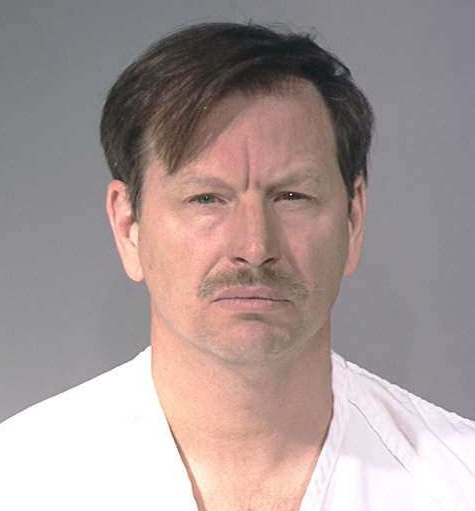
Gary Ridgway Official FBI-hosted mugshot image. This offender image is included as case-identification context and is separated from the victim archive.

Wendy Lee Coffield Official King County Green River homicide victim image. Coffield’s discovery in the Green River on July 15, 1982 anchors the public beginning of the case.

Marie Malvar Official King County victim image from the Green River homicide archive.

Kassee Ann Lee King County lists Lee as still missing and uncharged in the Green River Homicides list.

Kelly Kay McGinnis King County lists McGinnis as still missing and uncharged in the Green River Homicides list.

Tammie Liles King County victim image. In 2024, authorities confirmed that remains previously known as Bones 20 belonged to Liles, closing one of the last known unidentified-remains questions in the Green River file.
King County Green River Homicides Investigation
Used for the first discovery, 2001 arrest summary, 2003 charges, plea details, still-missing list, help-identify notices, and victim archive.
FBI Seattle Field Office History
Used for FBI involvement, Major Case 77 / GREENMURS, the DNA-linked 2001 arrest, the 2003 plea summary, and the caution that Ridgway may have killed more women.
FBI Gary Ridgway Mugshot
Official FBI-hosted image record for Ridgway’s 2001 mugshot, also embedded in the photo archive as offender-identification context.
Rebecca Marrero Plea
Used for the 49th conviction and life sentence after Ridgway pled guilty to the 1982 murder of Rebecca “Becky” Marrero.
Tammie Liles / Bones 20
Used for the 2024 identification of the last known set of remains connected to the Green River case as Tammie Liles.
2024 King County Transfer Coverage
Used only for a narrow status note: reporting said Ridgway was briefly moved to King County in 2024 while officials said potentially related cases remained under investigation.
2025 KIRO / MyNorthwest Transfer Documents
Used for the narrow current-status update that unsealed documents linked Ridgway’s September 2024 King County transfer to renewed efforts to locate additional remains.
Discover more from The Dark Side of Humanity
Subscribe to get the latest posts sent to your email.