Plea agreements in Canada allow the Crown and defense to resolve criminal cases without trials. These negotiations can involve charge reductions or joint sentencing recommendations. While these agreements streamline the legal system, they are subject to judicial oversight to ensure they are voluntary, informed, and supported by facts.
Judges maintain final authority over sentencing, though they typically accept joint submissions unless the proposal harms the public interest. While victims must be informed of agreements in serious cases, they do not hold veto power. The framework balances judicial discretion with the need for certainty in negotiated resolutions.
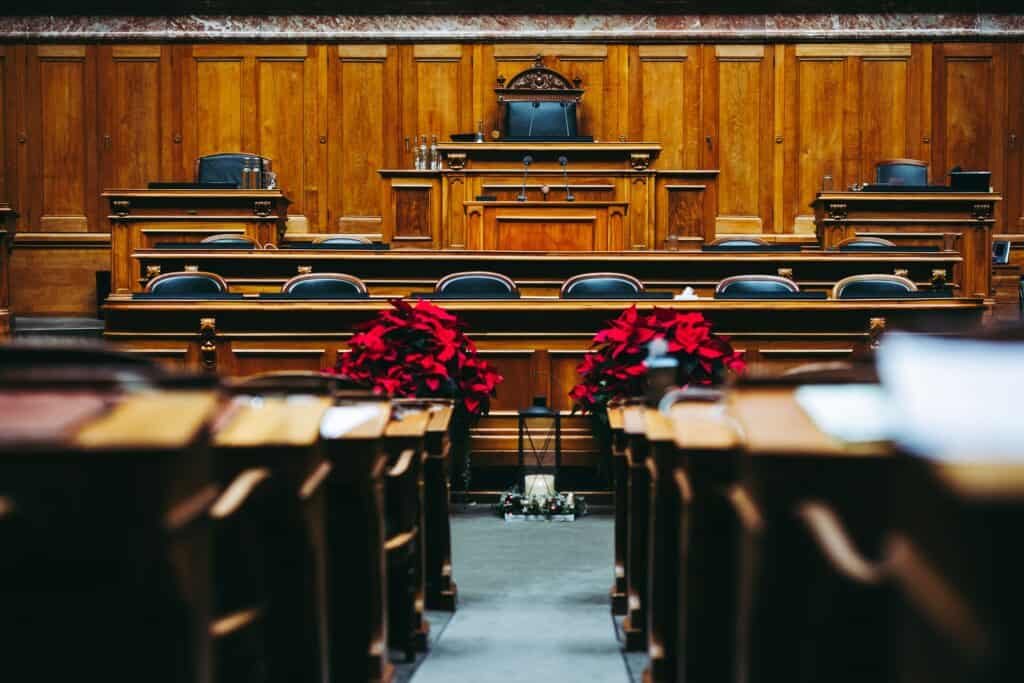
A Canadian plea agreement can resolve charges or recommend a sentence, but it does not displace the judge. The plea must be voluntary, informed and supported by the facts, and the court retains final authority over the sentence.
Plea agreements are part of the ordinary operation of Canadian criminal courts. They allow the Crown and defence to resolve a case without a contested trial, often by agreeing on the charge to which an accused will plead guilty, the facts admitted, or the sentence the lawyers will recommend.
That broad description can create the wrong impression. A plea agreement is not a private contract that binds a judge, nor is it simply an exchange of a confession for leniency. Understanding how plea agreements work in Canada requires separating negotiations between counsel from the guilty plea entered in court and the sentence ultimately imposed.
What Can Be Negotiated
Canadian lawyers often call the process “resolution discussions.” Those discussions can take several forms:
- Charge discussions: The accused may plead guilty to one or more charges while other counts are withdrawn, stayed or reduced.
- Sentence discussions: The parties may recommend the same sentence, known as a joint submission, or make separate submissions within an agreed range.
- Fact discussions: Counsel may agree on a statement of facts for the plea and sentencing hearing.
- Procedural discussions: The parties may resolve how or when the case will proceed, including whether the accused will cooperate in another investigation.
The Public Prosecution Service of Canada’s guideline on resolution discussions, which governs federal prosecutors rather than every provincial Crown office, provides a useful public model. It says a prosecutor should not accept a plea unless the prosecution standard is met, the accused unequivocally acknowledges guilt, and the plea is informed and voluntary. It also warns against accepting a plea to an offence unsupported by the evidence.
There is no automatic right to a particular bargain. The Crown must exercise prosecutorial discretion in the public interest, while defence counsel must ensure the accused understands the agreement and the consequences of pleading guilty.
What the Judge Must Establish
The agreement negotiated outside court and the guilty plea entered before a judge are related, but they are not the same event.
Under section 606 of the Criminal Code, a court may accept a guilty plea only after being satisfied that it is voluntary, and the accused understands three essential points: the plea admits the essential elements of the offence; it carries legal consequences; and the court is not bound by any agreement between the accused and prosecutor. The court must also be satisfied that the facts support the charge.
These safeguards matter because a guilty plea gives up the right to require the Crown to prove the case at trial. A properly entered plea is itself a formal admission of guilt, not merely a promise contained in negotiations.
Joint Sentencing Submissions and the Anthony-Cook Test
When Crown and defence jointly recommend a sentence, Canadian courts give that recommendation substantial weight. Accused people, witnesses, victims and the justice system must be able to rely on a negotiated resolution with a high degree of certainty.

In R. v. Anthony-Cook, 2016 SCC 43, the Supreme Court of Canada held that a judge should reject a joint sentencing submission only when accepting it would bring the administration of justice into disrepute or otherwise be contrary to the public interest. The Court described this as a stringent test. A judge cannot reject a joint recommendation simply because another sentence would have been preferred after a conventional sentencing analysis.
The rule does not make joint submissions untouchable. A judge who has serious concerns can ask counsel for further submissions and, in the rare case that the public-interest threshold is met, impose a different sentence. The high bar exists because routinely unravelling negotiated outcomes would make future resolutions unreliable.
The Role of Victims
Victims do not direct prosecutions and do not hold a veto over a plea agreement. Their interests nevertheless form part of the process. In specified serious cases, section 606 requires the court to ask whether reasonable steps were taken to inform victims of a plea agreement. Failure to provide that information does not invalidate an otherwise lawful plea, but the inquiry creates accountability for communication that was once too easily overlooked.
Victim impact statements may also inform sentencing. They describe the harm caused by the offence; they do not determine whether the negotiated resolution is legally valid.
Why Plea Agreements Remain Controversial
Resolution agreements can spare witnesses from testifying, produce an earlier finding of guilt, secure cooperation against another accused, narrow disputed issues and make finite court resources available for cases that must be tried.
They can also expose serious risks. An accused person may feel pressure to plead. A charge reduction may appear to understate the conduct. Evidence can later emerge that changes the public understanding of the bargain.
The federal prosecution service expressly recognizes another danger: no prosecutor should support a resolution when there is reason to believe the accused may be factually innocent. Its review of wrongful convictions notes that expediency cannot replace confidence in guilt.
The Karla Homolka plea bargain remains the most notorious Canadian example of a resolution made before critical evidence was available to prosecutors. The later discovery of videotapes changed the perceived gravity of Homolka’s participation, but it did not automatically erase an agreement she had already performed.
That history illustrates both the utility and moral hazard of negotiated justice. A bargain is assessed on the admissible evidence and lawful choices available at the time, while historical truth may continue to develop afterward.
Plea agreements are therefore neither exceptions to justice nor guarantees of justice. They are controlled exercises of discretion, subject to an informed guilty plea, judicial scrutiny and public-interest limits. That is the essential framework for understanding how plea agreements work in Canada.
Sources
- Criminal Code, section 606: pleas
- Public Prosecution Service of Canada: Resolution Discussions
- Supreme Court of Canada: R. v. Anthony-Cook
- Public Prosecution Service of Canada: Innocence at Stake
- Department of Justice Canada: Honouring Resolution Agreements
Discover more from The Dark Side of Humanity
Subscribe to get the latest posts sent to your email.