FILE NO. 0113Case status Unsolved
The Zodiac Killer case involves a series of unsolved attacks in Northern California during the late 1960s: another American mystery file that, like the D. B. Cooper hijacking, still attracts speculative identity theories. The confirmed record includes five murder victims, two survivors, and four attack scenes. Although correspondence claimed thirty-seven victims, only five homicides have been officially verified by law enforcement.
Alongside the attacks, the perpetrator sent taunting letters and ciphers to local newspapers. Cryptographers solved two of these ciphers, known as Z408 and Z340, while two remain unparsed. Despite decades of investigation and numerous public suspects, no individual has been legally identified or convicted.
The ZodiacKiller
Confirmed victims, Bay Area attacks, mailed threats, Z408 and Z340 ciphers, suspect discipline and the forensic limits of an open case.
The Zodiac Killer case is not one mystery but a layered record: four confirmed attack scenes, seven named victims and survivors, a communications campaign, partial physical evidence and decades of theories. This dossier separates documented facts from the true crime mythology and media distortion that grew around the unidentified offender.
EDITORIAL RULE The killer claimed 37 victims in correspondence. That number belongs to the communications record; it is not the confirmed homicide count.

What Was the Zodiac Killer Case?
Direct answer for readers, search engines and AI summaries
The Zodiac Killer case is an unsolved series of confirmed Northern California attacks in 1968 and 1969 followed by letters, threats and ciphers mailed to newspapers. The confirmed record includes five people killed, two surviving wounded victims, four confirmed attack scenes and authenticated communications. No person has been legally identified or convicted as the Zodiac Killer.
Case Snapshot
Confirmed record, claimed body count and evidence confidence
Count discipline: five confirmed homicide victims is not interchangeable with the killer’s claimed total of 37. The latter is a boast within the communications campaign and is not a verified body count.
Confirmed
Named victims, police records, surviving witness evidence and authenticated case material.
Attributed
Letters, ciphers or details historically accepted as Zodiac-linked but still read with source discipline.
Disputed
Events or people argued in public record but not conclusively connected to the confirmed series.
Unsupported
Claims lacking official confirmation, cryptographic proof or reliable independent forensic support.
Victims Before Symbol
Seven named people define the confirmed human record
Betty Lou Jensen
Sixteen-year-old student killed on Lake Herman Road near Benicia.
KilledDavid Arthur Faraday
Seventeen-year-old student killed in the same Lake Herman Road attack.
KilledDarlene Ferrin
Twenty-two-year-old waitress and mother fatally shot at Blue Rock Springs Park.
KilledMichael Mageau
Nineteen-year-old survivor of the Blue Rock Springs shooting.
SurvivedCecelia Shepard
Twenty-two-year-old college student stabbed at Lake Berryessa; she died two days later.
KilledBryan Hartnell
Twenty-year-old survivor who described the hooded attacker at Lake Berryessa.
SurvivedPaul Stine
Twenty-nine-year-old San Francisco cab driver killed in Presidio Heights.
KilledDisputed Extensions
Cheri Jo Bates, Kathleen Johns and Donna Lass shaped public interpretation but are not treated here as confirmed Zodiac victims.
Documented Attack Record
Four confirmed scenes, separated from later claims
Lake Herman Road
Betty Lou Jensen and David Arthur Faraday are killed near Benicia.
The attack was not publicly signed as Zodiac at the time. It was later claimed in the July 1969 communications and became the first confirmed scene in the canonical series.
Blue Rock Springs
Darlene Ferrin is killed and Michael Mageau survives a shooting in Vallejo.
A caller soon contacted Vallejo police from a nearby payphone, reported the attack and claimed the earlier Lake Herman Road murders.
Lake Berryessa
Cecelia Shepard and Bryan Hartnell are stabbed by a hooded attacker.
Hartnell survived and provided one of the case’s clearest behavioural accounts. A message written on his car door linked the attack to earlier dates.
WITNESS EVIDENCEPresidio Heights
Cab driver Paul Stine is shot in San Francisco.
Teenage witnesses observed the offender near the cab. Later letters included pieces of Stine’s shirt, making this one of the strongest attribution points in the case.
STRONG ATTRIBUTIONArchival Evidence
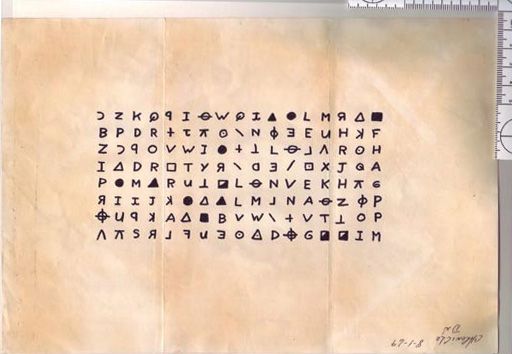
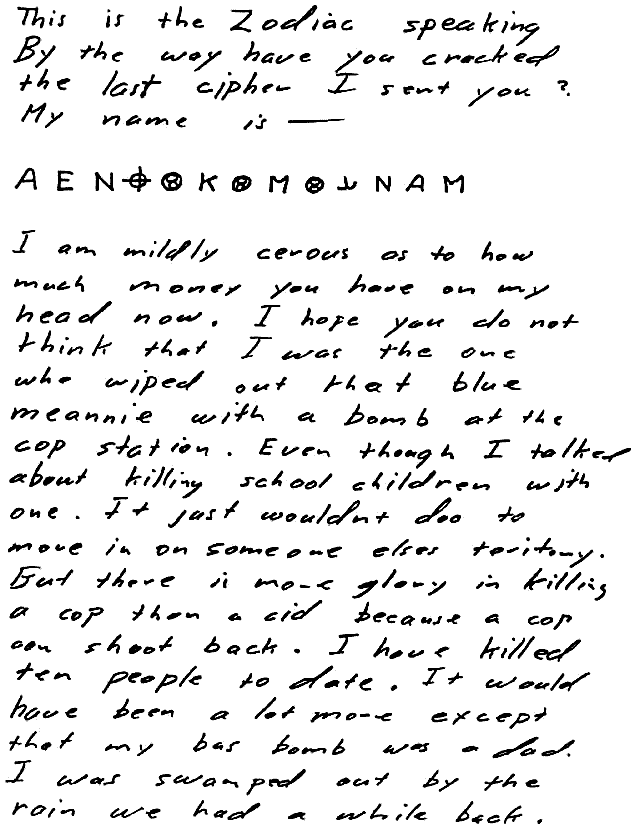
Police imagery and cipher documents, used as evidence rather than iconography

Ciphers and Communications
Solved messages, unresolved fragments and media performance
The Zodiac case includes four major ciphers: Z408, solved in 1969; Z340, solved in 2020; and the shorter Z13 and Z32, which remain unresolved in any officially accepted way. None has legally identified the killer.
The ciphers matter as evidence because they turned newspapers, police and the public into part of the offender’s communications strategy. They are not a licence to convert every plausible name into proof.
Interpretive rule // repeatable method before identity claims
Z408
Sent in three sections to Bay Area newspapers and solved by Donald and Bettye Harden. The plaintext contained violent boasting and afterlife fantasy but did not identify the offender.
Z340
Sent in November 1969 and solved by David Oranchak, Sam Blake and Jarl Van Eycke. The solution continued the taunting communications campaign but did not reveal a legal identity.
VERIFIED SOLUTIONZ13
The 13-symbol April 1970 cipher has generated many proposed names. Its short length makes false-positive solutions easy to manufacture without independent evidence.
Z32
The June 1970 cipher tied to bomb claims remains unresolved in any officially accepted way and cannot safely carry an identification by itself.
A useful comparison is offender communications that exposed identity in the BTK case; Zodiac’s communications produced notoriety and evidence, but not a legally established name. Another unsolved comparison is the killer communications and failed suspect theories surrounding the Monster of Florence.
Suspect Discipline
Names are hypotheses, not verdicts
The case has produced a market of names. A responsible dossier does not launder accusation into fact. This is the same editorial problem seen in an unsolved homicide shaped by suspect mythology: repetition can make a theory feel stronger than the evidence behind it.
Arthur Leigh Allen
The most famous long-running suspect. He was investigated and searched but never charged; he died in 1992.
Gary Francis Poste
Named by a private group decades later. Public claims have not produced an official closure or charge.
Cheri Jo Bates / Riverside
The 1966 Riverside murder is often argued as possible pre-Zodiac activity but remains outside the confirmed Bay Area series.
AI and Cipher Names
Modern code-breaking tools can generate plausible names much faster than they generate corroborating evidence.
Hoax Communications
Later notoriety encouraged imitators and disputed letters, making attribution more difficult rather than easier.
No Legal Identification
No person has been legally identified or convicted as the Zodiac Killer.
What Could Still Matter
Forensic avenues only work when provenance and chain of custody hold
DNA
Potentially useful only if biological material can be authentically tied to the sender or offender and survives contamination review.
Fingerprints
Partial prints from scenes and documents matter, but partials are not automatic identifiers and must be interpreted within provenance limits.
Handwriting
Comparison may support or weaken attribution, but handwriting alone cannot safely carry a public accusation.
Ballistics
Firearms evidence helps define the confirmed shooting scenes and test possible weapon linkage.
Cryptanalysis
Valid cipher work requires repeatable method, low degrees of freedom and independent corroboration.
Evidence Restraint
Compare this with another unidentified offender case file and with broader profiling limits and evidence restraint: dramatic behaviour is not an identity test.
Zodiac Killer FAQ
Direct answers to the case’s highest-intent questions
Has the Zodiac Killer been identified?
No. No person has been legally identified or convicted as the Zodiac Killer. Public suspects remain suspects or theories unless official evidence establishes otherwise.
How many people did the Zodiac Killer kill?
The confirmed record includes five people killed and two surviving wounded victims. The killer’s claimed total of 37 is not the confirmed homicide count.
Who were the confirmed victims?
Betty Lou Jensen, David Arthur Faraday, Darlene Ferrin, Cecelia Shepard and Paul Stine were killed. Michael Mageau and Bryan Hartnell survived confirmed attacks.
Which Zodiac ciphers were solved?
Z408 was solved in 1969 and Z340 in 2020. Z13 and Z32 remain unresolved in any officially accepted way.
Was Arthur Leigh Allen the Zodiac Killer?
Allen was extensively investigated and remains a famous public suspect, but he was never charged and no legal finding identifies him as Zodiac.
Was Cheri Jo Bates a Zodiac victim?
The Riverside case is debated as a possible pre-Zodiac crime but is not part of the confirmed Bay Area series.
Case Record and Sources
Primary files, cipher scholarship and high-credibility reporting
Case Overview
FBI archive overview of the Zodiac case. Open FBI archive
Zodiac Files
Digitized FBI case material, laboratory correspondence and investigative records. Open FBI Vault
Z340 Technical Paper
David Oranchak, Sam Blake and Jarl Van Eycke’s technical account of the Z340 solution. Read paper
FBI Awareness of Z340
Contemporary reporting on the 2020 solution and FBI acknowledgment. Read CBS report
Police Reports and Files
Case-document index useful for locating underlying reports and archival materials. Open index
Cipher Museum
Historical overview of Zodiac cipher status and cryptographic context. Open cipher history
Last reviewed: September 2026. Source hierarchy: FBI records, police reports, cipher scholarship, reputable reporting and clearly labelled disputed claims. To flag an error or submit documentary material, submit a correction or source lead. The case remains part of the site’s unsolved case files cluster.
Browse every case in the Case File Index
Discover more from The Dark Side of Humanity
Subscribe to get the latest posts sent to your email.