FILE NO. 0163Case status Convicted
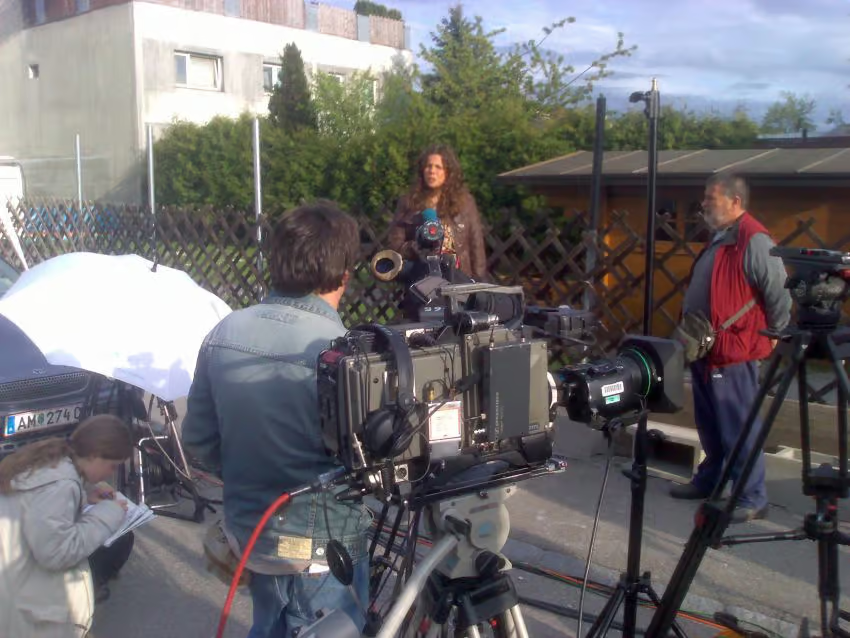
Between 1984 and 2008, Josef Fritzl imprisoned his daughter Elisabeth in a hidden cellar beneath his property in Amstetten, Austria. He maintained control through coercive physical architecture and a fabricated cover story that she had joined a religious sect, fathering seven children with her during her captivity.
Institutional fragmentation allowed the crime to persist, as separate welfare, legal, and building authorities processed isolated details without directly verifying Elisabeth’s safety. The captivity ended in April 2008 after a medical emergency required her hospital presence, leading to Fritzl’s 2009 life sentence for murder by omission and enslavement.
Crime Dossier / Coercive Architecture / Institutional Fragmentation / Austria
The House Built Around a Lie
Elisabeth Fritzl and the Josef Fritzl case. For almost 24 years, one man controlled the door, the paperwork and the explanation. The cellar survived not because nobody ever looked at the family, but because every institution saw a different piece of it.
Convicted
Amstetten
1984-2008
Life sentence
Coercive control
Institutional failure
Status reviewed Sep 2026
Central Finding
The house hid people. The story hid the house.
Fritzl paired a concealed physical prison with a narrative that explained every missing person, unexpected child and closed door. When one institution finally demanded Elisabeth herself instead of another account about her, the entire system collapsed.
Primary survivorElisabeth Fritzl
Captivity28 Aug 1984, Apr 2008
ChildrenSeven born / six survived
Legal outcomeGuilty on all counts / life imprisonment
Dossier ContentsEvidence / architecture / family / law / aftermath
Content and Evidence WarningWhat Happened in the Josef Fritzl Case?Case Status and Evidence BoundaryCase SnapshotThe Two Families Inside One HouseBefore the Cellar: A Pattern of ControlThe Rape Conviction That Later Disappeared From View1978: The Building Permit Was RealThe House Had Two MapsThe Route Down: Privacy Became a Security SystemThe Underground Rooms Were Infrastructure, Not a HomeCoercive Architecture: The Door Was Only Half the PrisonAugust 28, 1984: The Door ClosedThe Sect Story: A Lie Designed to Explain ContradictionsThe Letters Were Genuine Handwriting and False EvidenceSeven Births Inside a Hidden SystemThe Children “Left at the Door”Child Welfare Saw a Family Taking Children InThe Clean Record Was Technically True and Materially MisleadingWhy DNA Testing Was Not the Obvious 1990s AnswerTenants, Noises and the Workshop BufferLife Underground: Survival Inside a Closed SystemMichael: The Death That Turned Concealment Into HomicideApril 2008: Kerstin’s Body Broke the Story“Bring the Mother to the Hospital”The Interview: A Survivor Finally Spoke Without the GatekeeperOpening the CellarDid Rosemarie Fritzl Know?The Investigation Rebuilt the Crime as a SystemThe 2009 Trial: Elisabeth’s Evidence Changed the PleaWhy the Enslavement Conviction MattersWhy Authorities Did Not Discover Elisabeth EarlierThe Failure Was Verification, Not Mere BeliefWhat Might Have Exposed the Cellar Earlier?The House Was Not Invisible; the Crime Was CompartmentalizedWhere Is Josef Fritzl Now?What Happened to the Fritzl House?After Rescue: Recovery Without a Public PerformanceMaster ChronologyMyth vs. RecordArchival Image FileRelated Dark Side FilesSource Ledger
Content and Evidence Warning
Survivor-first reporting / sexual violence / captivity / child harm
Content Warning
This dossier concerns prolonged captivity, incestuous sexual violence, coercive control, childbirth without ordinary medical care, child endangerment and the death of a newborn. The physical facts are described only where they explain the mechanics of confinement, concealment, legal responsibility or survival; the page does not reproduce graphic detail for spectacle.
The evidence rule is equally strict. Claims about who “must have known,” exact assault counts, precise room dimensions and private details about Elisabeth Fritzl or the six surviving children are not treated as established merely because they have been repeated in retrospective media. Where public records disagree, this dossier preserves the narrower fact that can be supported.
What Happened in the Josef Fritzl Case?
The case in one evidence-led answer.
Verified Core
Elisabeth Fritzl was imprisoned beneath her family home for almost 24 years.
On August 28, 1984, Josef Fritzl confined his 18-year-old daughter Elisabeth in hidden rooms beneath the family property in Amstetten, Austria. He kept her there until April 2008, repeatedly sexually assaulted her, fathered seven children with her and controlled the family through locked architecture, threats, dependence and a public story that Elisabeth had voluntarily run away to join a sect.
The concealment survived because the physical prison and the documentary cover story reinforced one another. Three surviving children remained underground with Elisabeth, three were moved upstairs and presented as children their absent mother had left for her parents to raise, and one newborn died after Fritzl failed to seek medical care. The crime was exposed only after the oldest underground daughter, Kerstin, became critically ill and doctors insisted on direct information from her mother.
In March 2009 Fritzl was convicted on all counts, including murder by omission in the newborn’s death, enslavement, rape, incest, coercion and deprivation of liberty, and received a life sentence. He was moved from forensic-therapeutic detention into ordinary prison custody in 2024; later applications for conditional release were rejected, and current reporting reviewed in September 2026 still describes him as incarcerated.
Case Status and Evidence Boundary
Convicted offender / surviving family protected / current custody reviewed.
Case statusConvicted
SentenceLife imprisonment
Captivity1984-2008
LocationAmstetten, Lower Austria
Children born7 / 6 survived
Status reviewSeptember 2026
Core criminal record
The imprisonment, repeated sexual violence, coerced family structure, newborn death, cover letters, 2009 convictions and life sentence are supported by the criminal proceedings and contemporaneous Austrian reporting. These are not allegations left unresolved by the case.
Details that vary
Published accounts differ on the exact dimensions of individual rooms, the timing of every enlargement, some medical details and the precise frequency of assaults. Those differences matter because a responsible dossier should not convert approximate or translated reporting into false precision.
Knowledge by proximity
The fact that relatives, tenants or officials were physically close to the concealed rooms does not prove that they knew who was inside. Investigators did not establish that Rosemarie Fritzl participated in the captivity, and ambiguous noises or unusual household arrangements are not substitutes for evidence of knowledge.
Life after rescue
Elisabeth and the surviving children were given protected identities and privacy after rescue. Later reporting about their current names, location, relationships or private health should not be repeated unless it comes from the family or a clearly authorized source.
Case Snapshot
The legal, architectural and family frame at a glance.
Primary survivorElisabeth Fritzl
Age at confinement
Captivity began28 August 1984
Disclosure26-27 April 2008
DurationAlmost 24 years
OffenderJosef Fritzl
Children bornSeven
Surviving childrenSix
Raised undergroundThree
Raised upstairsThree
TrialSt. Pölten, March 2009
Current legal postureLife sentence remains in force
The Two Families Inside One House
One building held two different realities, each with its own public biography.
Fritzl’s most effective deception was not merely that he hid a room. He split one family into two administrative realities. Upstairs, three children went to school, met social workers and were known to public systems as grandchildren being raised by Josef and Rosemarie; underground, Elisabeth and three other surviving children had no ordinary route into schools, doctors, neighbours or official records.
The division made the visible family work as camouflage for the invisible one. Each child brought upstairs appeared to confirm Fritzl’s story that Elisabeth was alive somewhere else and periodically abandoning children she could not keep. The more successfully the upstairs household functioned in public, the harder it became for outsiders to imagine that another branch of the same family existed below them.
| Person or group | Actual location / status | Public explanation |
|---|---|---|
| Elisabeth | Confined underground, 1984-2008 | Runaway adult who had joined a sect and rejected family contact |
| Three surviving children | Raised underground with Elisabeth | Their existence was unknown to public systems |
| Three surviving children | Raised upstairs | Children supposedly left by Elisabeth for her parents to raise |
| Michael | Died shortly after birth in 1996 | His existence was concealed |
| Rosemarie Fritzl | Upstairs household | Investigators did not establish that she knew of the hidden family |
| Josef Fritzl | Moved between both worlds | Father, grandfather, landlord and gatekeeper of the family’s story |
Before the Cellar: A Pattern of Control
The imprisonment was an escalation, not the beginning of abuse.
Elisabeth before the disappearance
Elisabeth was born in 1966 and grew up in Amstetten. She completed compulsory schooling and trained for work in hospitality, and in 1983 she left home for Vienna with a friend before police located her and returned her to her parents. That earlier attempt to leave later gave Fritzl a ready-made explanation for her 1984 disappearance: she had left before, so a second departure could be framed as another voluntary break from the family.
Elisabeth later described sexual abuse by her father beginning years before the underground confinement. That history changes the way the 1984 crime should be understood. The hidden rooms were not the spontaneous invention of a man who suddenly became controlling; they were the physical endpoint of an existing pattern in which Fritzl had already treated his daughter as someone whose autonomy could be overridden.
The danger of retrospective simplicity
It is tempting to read the earlier runaway episode as an obvious warning that should have revealed everything that followed. In reality, a teenager leaving home does not by itself prove sexual abuse, future abduction or a hidden prison. The stronger lesson is that returning a young person to a controlling household without a genuinely private assessment can leave the controlling adult as the only reliable-looking narrator of what the family conflict means.
The Rape Conviction That Later Disappeared From View
A prior sexual-violence conviction existed, but ordinary record checks no longer showed it.
Fritzl’s sexual violence was not entirely unknown to the justice system. In 1967 he was convicted of rape after attacking a woman, received an 18-month sentence and served roughly a year; contemporary reporting also linked him to other sexual-offence allegations or incidents. The conviction was serious and plainly relevant in hindsight to later decisions about whether he should be trusted around vulnerable children.
By the time authorities evaluated Josef and Rosemarie as carers for children who appeared at their home in the 1990s, Austrian rehabilitation rules had removed the conviction from the ordinary criminal-record extract available for that process. This is different from an official seeing a rape conviction and ignoring it. The safeguarding system was presented with a record that effectively said there was nothing to see.
System Question
When should legal erasure stop being operational erasure?
Expungement serves a legitimate purpose by allowing people to move beyond old convictions. The Fritzl case exposes the harder policy problem: whether serious sexual-violence history should remain accessible to a narrowly authorized safeguarding process when an adult is seeking official responsibility for dependent children whose mother cannot be interviewed directly.
1978: The Building Permit Was Real
Lawful construction created a shell for unlawful excavation.
Local authorities approved an extension involving basement construction in 1978, years before Elisabeth was imprisoned. That fact is often sensationalized into the false idea that officials somehow approved the dungeon itself. The approved plans covered legitimate building work; the hidden rooms were created beyond what was represented as lawful habitable space.
The distinction matters because it explains how extensive work below ground could occur without automatically appearing criminal. Materials, excavation, concrete, wiring and repeated basement activity had a plausible explanation in the permitted project. Fritzl could use legitimate construction as visual noise while gradually developing areas that did not appear on the public plan.
Police-plan contextORF: house plans and additional cellar access
The House Had Two Maps
The approved building and the operational prison were not the same structure.
Every building has a physical layout, but this property effectively had two maps. The first was the map visible to authorities, tenants and family members: residential rooms, an ordinary cellar, storage, workshops and a permitted extension. The second was Fritzl’s operational map, in which the workshop became a checkpoint, shelving concealed access, locked doors formed successive barriers and rooms beyond the official mental map contained people.
This difference helps explain why a person could enter the basement without discovering the prison. Discovery required more than reaching the correct floor; it required crossing the specific sequence of spaces Fritzl treated as private and then recognizing that an apparently final wall or storage boundary was not actually the end of the building. The concealment exploited expectation as much as masonry.
01Public streetOrdinary urban frontage
02Residential houseFamily, tenants, visible daily life
03Ordinary cellarUtilities and storage
04Private workshopFritzl-controlled buffer zone
05Concealed secured accessHidden behind ordinary-looking boundaries
06Occupied hidden roomsWindowless family confinement
The Route Down: Privacy Became a Security System
Multiple barriers converted an ordinary basement into a controlled sequence.
Police described a concealed route through workshop and basement areas into a network protected by heavy doors and electronic locking. Contemporary Austrian reporting described a principal entrance hidden behind shelving and secured by a massive steel-reinforced barrier operated through an electronic mechanism, with additional doors separating the outer basement from the deepest rooms.
The layers did two jobs at once. From inside, they made escape dependent on the one person who controlled the locking system; from outside, they created plausible stopping points that discouraged curiosity. A relative, tenant or tradesperson could be allowed into one basement zone while still remaining several barriers away from the occupied rooms.
Police image recordORF: 2008 police photographs of the concealed rooms and entrance
The Underground Rooms Were Infrastructure, Not a Home
Electricity and basic amenities sustained captivity by reducing outside contact.
By 2008 the concealed complex contained narrow sleeping areas, rudimentary cooking and washing facilities, a toilet, electrical service, ventilation and basic media equipment. Austrian police reporting described ceilings around 1.7 metres in parts of the complex and a total area that had expanded over time. These amenities can sound domestic when listed without context, but their function was the opposite of normal domestic life.
Every service Fritzl brought below ground reduced the need for an outsider to enter. Electricity meant lighting and appliances without a technician routinely seeing the occupants; food storage meant longer periods without supply runs; a television brought information into the space without granting movement out of it. The same infrastructure that helped the family survive also deepened their dependence on the person controlling the door.
Coercive Architecture: The Door Was Only Half the Prison
Physical barriers and psychological threats amplified one another.
Fritzl told the captives that interference with the entrance could trigger lethal consequences, including claims about electrocution or gas. Investigators later concluded that some of those supposed mechanisms were inventions rather than functioning systems. The distinction would have meant little to people whose food, electricity, medicine and physical safety were controlled by the same man who built the locks.
Effective coercion does not require every threat to be technically real. It requires the target to believe that testing the threat is too dangerous, especially after prior violence has established that the person making it can cause serious harm. The architecture supplied visible proof of Fritzl’s technical control, while the threats expanded that control into hazards the captives could not safely verify.
Related frameworkCompare how controlled spaces can become instruments of captivity in the David Parker Ray dossier.
August 28, 1984: The Door Closed
The disappearance was manufactured to look voluntary almost immediately.
On August 28, 1984, Fritzl brought 18-year-old Elisabeth into the basement under the pretext that he needed help with a door or renovation work. He overpowered her and confined her in the hidden area. Rosemarie reported her missing, while Fritzl supplied the interpretation that would shape the first official response: Elisabeth had run away again and was probably living with a sect.
Within roughly a month, a letter in Elisabeth’s own handwriting arrived telling the family not to search for her. Fritzl had forced her to write it and arranged for it to be posted from elsewhere. The letter changed the problem from an unexplained disappearance into an apparent exercise of adult choice, making invasive investigation of the family property much harder to justify.
The Sect Story: A Lie Designed to Explain Contradictions
It made absence, secrecy and unusual behaviour look like ideology rather than coercion.
The sect explanation was strategically powerful because it could absorb almost any contradiction. Elisabeth could be alive but unreachable, emotionally attached enough to write but unwilling to appear, capable of travelling yet impossible to locate, and prepared to surrender children while still refusing ordinary family contact. A secretive religious group made irrational or self-denying behaviour seem internally coherent.
More importantly, the story relocated control away from Fritzl. If Elisabeth was obeying a sect, then her silence appeared to be the result of another group’s influence rather than her father’s force. Fritzl could present himself as the abandoned parent coping with a difficult adult daughter while remaining the only person who actually knew where she was.
Narrative Control
The lie worked because it explained why the primary witness could never be interviewed.
A cover story is strongest when it does more than explain the past. Fritzl’s story also explained why the normal verification step, speaking privately with Elisabeth, supposedly could not happen, allowing him to remain the interpreter of her absence.
The Letters Were Genuine Handwriting and False Evidence
Coercion can make an authentic document carry a fabricated meaning.
Letters attributed to Elisabeth appeared across the years and were persuasive precisely because the handwriting was hers. A forged signature might have created a technical question about authorship; coerced handwriting did not. At the level most readily inspected, the documents were authentic, while the crucial fact, whether the writer was free to choose the words or refuse the message, remained invisible.
This is why the letters should not be described simply as “forgeries.” They were evidence manufactured through control of a real person. Fritzl turned Elisabeth herself into the production mechanism for documents that told authorities she was safe, voluntary and elsewhere, a form of concealment more sophisticated than inventing a paper identity from scratch.
Seven Births Inside a Hidden System
The family grew while access to medicine remained controlled by one person.
Elisabeth gave birth to seven children during the captivity without ordinary obstetric care. Three surviving children remained underground with her, three were taken upstairs and incorporated into the public household, and one newborn, Michael, died shortly after birth. Each pregnancy and birth increased the physical, medical and logistical demands inside a space never designed for normal family life.
The births also created a recurring risk of exposure. Pregnancy complications, neonatal illness or routine registration could have brought doctors or officials into contact with the hidden family, so Fritzl’s secrecy depended on keeping medical care outside the normal system. The same control that concealed the births made the consequences of illness far more dangerous.
The Children “Left at the Door”
Repeated foundlings made an extraordinary story look administratively familiar.
When infants appeared upstairs, Fritzl claimed Elisabeth had left them for her parents to raise and disappeared again, sometimes with a letter explaining why she could not keep the child. The scenario was remarkable: a woman supposedly hidden from police could repeatedly return close to the family property, deliver a baby and vanish without direct contact. Yet because the explanation repeated the existing sect story, each new event could be processed as another chapter in the same narrative instead of as evidence that the narrative was impossible.
The children became public proof that Elisabeth still existed somewhere outside the household. Their presence therefore worked in two directions at once. They created legitimate contact with welfare authorities, but they also strengthened Fritzl’s role as the responsible grandfather who was cleaning up the consequences of an absent daughter’s choices.
Child Welfare Saw a Family Taking Children In
Official contact was controlled rather than avoided.
Social workers and local authorities evaluated the upstairs household in connection with the children who were being fostered or adopted. They saw visible children being fed, clothed and incorporated into what appeared to be a stable home with grandparents prepared to take responsibility. Their mandate was not to conduct a structural search of private cellar space or reopen every aspect of Elisabeth’s old missing-person file.
This is one of the case’s most important inversions. Fritzl did not stay hidden by avoiding all state contact; he used carefully bounded contact to make the public household look legitimate. An offender who refuses every visit may trigger suspicion, while an offender who invites officials into the safe part of the story can gain the credibility of having been “seen” by the state.
What workers could seeChildren upstairs, food, clothing, caregiving, household routine.
What workers were not tasked to findHidden rooms, unregistered siblings, coerced letters, the complete building history.
What the process lackedPrivate direct contact with Elisabeth, the supposed mother of the children.
The Clean Record Was Technically True and Materially Misleading
Administrative rehabilitation severed one relevant fact from the safeguarding decision.
When child-welfare checks were conducted, Fritzl’s old rape conviction no longer appeared on the ordinary extract because it had been expunged under Austrian law. Officials later acknowledged that the record available to them did not reveal the conviction. That meant a man previously convicted of serious sexual violence could be assessed as a carer without the assessor receiving a fact that would have radically changed the risk conversation.
The institutional lesson is not that every old conviction must remain public forever. It is that a safeguarding decision can fail when a legal rule designed for rehabilitation is allowed to erase information that is directly relevant to a narrow protective task. The case exposes a tension between privacy after sentence completion and the special duty to evaluate adults seeking control over vulnerable children.
Why DNA Testing Was Not the Obvious 1990s Answer
Confirming maternity would have confirmed the cover story, not disproved it.
After the crime was exposed, commentators asked why genetic testing had not been used when the upstairs children appeared. During the earliest placements, routine DNA verification was not a standard feature of this kind of family-care assessment, and authorities did not dispute the claim that Elisabeth was the mother. A test showing that she was their biological mother would therefore have told officials exactly what Fritzl had already told them.
The explosive comparison would have been between the children and Josef Fritzl, because it would have revealed that the apparent grandfather was also their biological father. Nothing in the information then assembled by the agencies appears to have generated that suspicion. Technology cannot answer a question that no one has reason to ask, and the cover story was designed to prevent the relevant question from forming.
Tenants, Noises and the Workshop Buffer
Ambiguous observations remained disconnected from the missing-person story.
Tenants lived in parts of the property during the captivity, and some later recalled noises from below. In an old, subdivided building with plumbing, heating, workshop equipment and multiple occupied units, sound did not travel with a label explaining its source. Fritzl could attribute unusual noises to pipes, machinery or maintenance while reinforcing the expectation that his work areas were private.
The workshop was especially important because it normalized exclusion. Hours spent below ground, electrical equipment, locks, tools and restricted access could all be explained by technical work before anyone reached the concealed entrance. A tenant would have needed not only to hear something unusual but also to connect that sound to a missing woman whom official documents said was living elsewhere.
Life Underground: Survival Inside a Closed System
Elisabeth became parent, teacher, nurse and organizer under conditions designed to prevent independence.
The hidden family had to build routines without sunlight, schools, ordinary medical care, unrestricted movement or reliable contact with the outside world. Elisabeth taught the children, managed food and illness, created structure and explained a world they could see only through limited media. The work required to keep children alive under those conditions should be understood as active family leadership rather than passive endurance.
Fritzl controlled the resources that made those routines possible. Food, medicine, electrical power, repairs, information and access to the surface all moved through him, allowing him to make himself simultaneously the source of danger and the source of necessities. That is a classic mechanism of coercive control: dependency is manufactured by the same person who then points to the provision of basic needs as evidence of care.
Expansion from within
As the underground family grew, the concealed space was enlarged. Accounts indicate that Elisabeth and older children were forced to assist with excavation or movement of material, which reduced the need for outside workers to enter the sensitive area. The prison therefore adapted to the consequences of the crimes committed inside it, with captives compelled to help modify the structure that confined them.
Michael: The Death That Turned Concealment Into Homicide
The newborn’s need for care collided directly with Fritzl’s need to keep the cellar secret.
In 1996 Elisabeth gave birth to twins. One survived and was later taken upstairs; the other, Michael, developed serious breathing problems and died shortly after birth. Fritzl did not obtain medical assistance, later removed the body and disposed of it, and prosecutors argued that the child could have survived had ordinary care been sought.
The homicide count was legally significant because the fatal responsibility rested on omission rather than a separately inflicted injury. Fritzl alone controlled the door and therefore controlled whether a doctor could be called without exposing the hidden family. He chose the secrecy of the system over the child’s chance of survival, which is why Austrian reporting describes the conviction as Mord durch Unterlassung, murder by omission.
April 2008: Kerstin’s Body Broke the Story
A medical emergency created a demand the cover narrative could not satisfy with another letter.
On April 19, 2008, 19-year-old Kerstin became critically ill and lost consciousness. Fritzl eventually brought her to hospital and repeated the familiar account that the young woman’s missing mother had left her at the family home. The hospital now confronted a patient whose condition could not be safely understood through a family story because she lacked the ordinary medical history doctors needed.
Kerstin’s illness created a different kind of institutional pressure. Police and welfare agencies had previously been able to accept explanations for why Elisabeth did not want direct contact; physicians treating a critically ill patient could not replace maternal medical history with a note transmitted by the grandfather. The missing mother ceased to be a biographical question and became an urgent clinical necessity.
“Bring the Mother to the Hospital”
Medicine demanded the person Fritzl had spent decades replacing with documents.
Doctors and police appealed publicly for Elisabeth to come forward so the hospital could obtain information relevant to Kerstin’s treatment. That request changed the rules of the concealment. For years, Fritzl had answered questions about Elisabeth by producing explanations, letters and children; now the institution wanted the woman herself.
Fritzl had reportedly prepared letters that could support a future staged return, but Kerstin’s collapse forced the timing. Elisabeth and the two other children then still below ground were brought out, and Fritzl attempted to convert the crisis into the end of his own sect narrative. The plan failed because once Elisabeth reached a public institution, officials were able to separate the witness from the man who had always interpreted her.
The Interview: A Survivor Finally Spoke Without the Gatekeeper
The decisive forensic event was independent contact, not a technological breakthrough.
At the hospital and during police contact, Elisabeth was eventually placed in conditions where Fritzl could not control the conversation. Officers assured her that she would not have to return to him and that he would be kept away. She then disclosed that she had never joined a sect, had not voluntarily abandoned her children and had been imprisoned beneath the family home since 1984.
That testimony reorganized decades of apparently unrelated facts in a matter of hours. The missing-person letters became coerced documents, the abandoned children became part of a divided captive family, the private workshop became a security buffer and the responsible grandfather became the offender connecting every anomaly. The case did not crack because investigators discovered a new data point; it cracked because the person at the centre of the existing data was finally allowed to define it herself.
Opening the Cellar
The physical space corroborated a story that had previously sounded almost impossible.
Police needed Fritzl to explain how to access the hidden area because the entrance and electronic security were not self-evident. Inside, investigators documented windowless rooms, low ceilings, beds, cooking and washing facilities, electrical systems, stored food and the accumulated possessions of people who had lived there for years. The architecture transformed Elisabeth’s statement from an extraordinary disclosure into a crime scene that could be photographed, measured and reconstructed.
DNA testing then confirmed the biological relationships within the family. The same kind of technology that had not been prompted during earlier welfare proceedings became decisive once criminal suspicion supplied the correct comparison. Investigation now moved in the opposite direction from the earlier years: instead of asking whether each odd fact could fit Fritzl’s story, police asked how each fact had been used to sustain the crime.
Did Rosemarie Fritzl Know?
Proximity is not proof, and the criminal investigation did not establish complicity.
Rosemarie lived in the same property, raised the three children brought upstairs and accepted the account that Elisabeth had left to join a sect. Those circumstances have produced intense public suspicion, but investigators did not establish that she knew Elisabeth and the other children were imprisoned below the house. Elisabeth also stated that her mother had not known where she was.
The distinction between “hard to understand” and “proved” is essential. A spouse can accept implausible explanations, defer to a controlling partner or avoid private areas of a building without possessing knowledge of a hidden prison. The prosecution did not charge Rosemarie with participating in the confinement, and a responsible account should not reverse that legal and evidentiary boundary simply because hindsight makes the household look impossible.
The Investigation Rebuilt the Crime as a System
Plans, letters, welfare files and the cellar became one evidentiary structure.
Investigators examined the building history, the hidden alterations, the coerced letters, child-placement files, Fritzl’s old criminal record, hospital events and the logistics of maintaining two households. The significance of each piece changed once it was connected to the others. A building permit became relevant not because it authorized a prison but because it explained access to below-ground construction; a letter became evidence not because it was forged but because the author had been coerced.
The investigation also showed how long the concealment had been prepared. Police said the underground construction predated the 1984 confinement and had been developed over years, supporting a finding of planning rather than opportunistic imprisonment. The case therefore became less a mystery about a single secret door than an examination of a long-running control system with architectural, documentary, familial and bureaucratic components.
The 2009 Trial: Elisabeth’s Evidence Changed the Plea
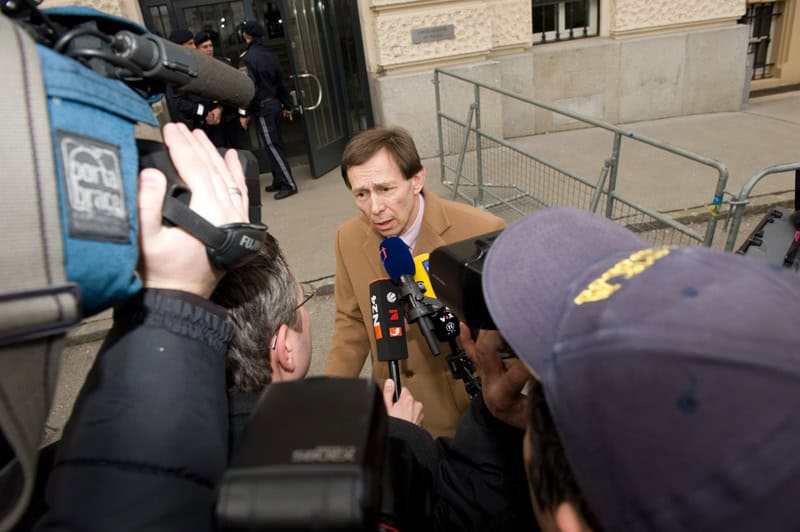
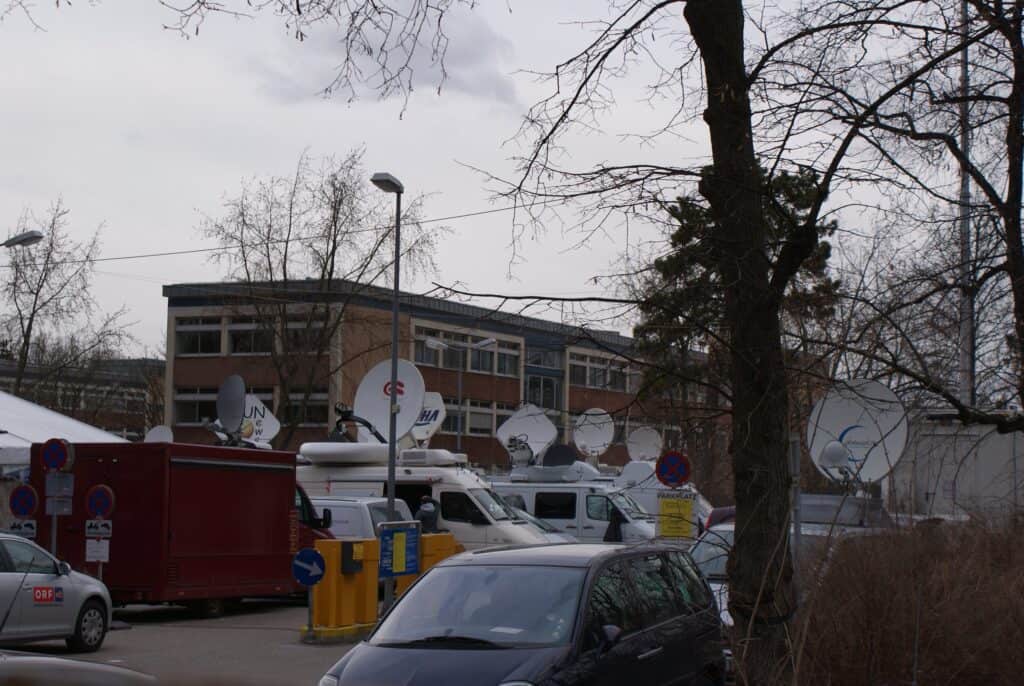
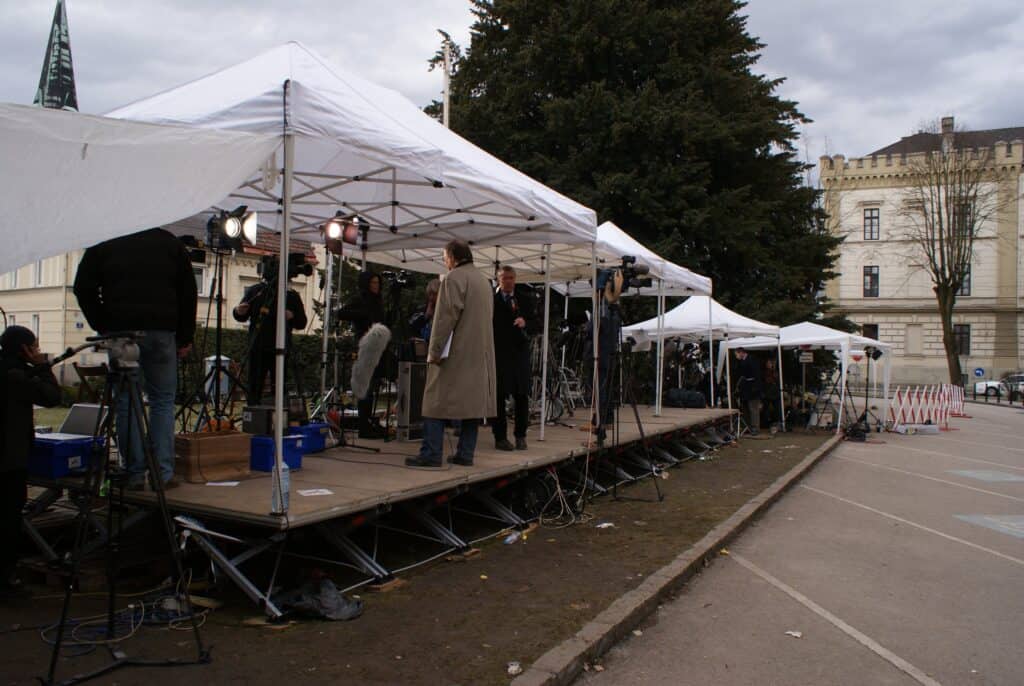
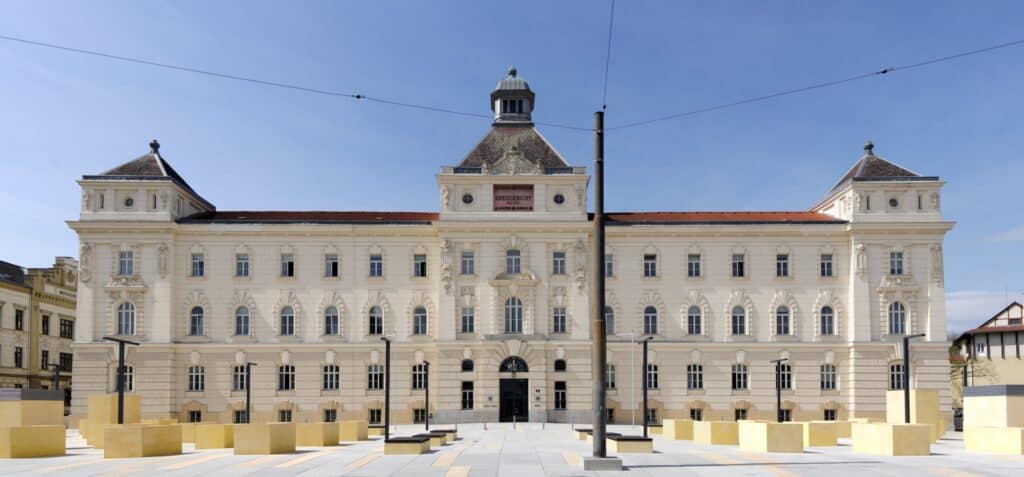
The courtroom did not require her to confront Fritzl live in open court.
Prosecutors charged Fritzl with offences including rape, incest, deprivation of liberty, coercion, enslavement and homicide relating to Michael’s death. Elisabeth’s evidence was presented largely through a lengthy prerecorded statement, allowing the court to hear her account without requiring an ordinary public confrontation with her father. Fritzl initially admitted some conduct while resisting full responsibility for the most serious counts.
After the court viewed Elisabeth’s evidence, he changed his position and pleaded guilty to all charges. On March 19, 2009, the jury convicted him on every count and the court imposed life imprisonment together with placement in a secure psychiatric institution. Fritzl accepted the judgment and waived appeal, closing the guilt phase without a prolonged appellate dispute over the central facts.
Trial recordAP/CBS contemporaneous sentencing report
Why the Enslavement Conviction Matters
False imprisonment describes a locked door; enslavement describes control over a life.
The enslavement finding captured conduct that cannot be reduced to unlawful confinement. Fritzl controlled where Elisabeth lived, whether she could seek medical care, what resources entered the rooms, whether the children could leave, how the outside world understood her and the conditions under which she performed domestic and parental labour. He exercised powers that treated another person as if her choices belonged to him.
That is why the case is analytically stronger when described as a system of ownership-like control rather than merely a spectacular hidden-room crime. The cellar was a tool within that system, not the system itself. Documents, threats, family roles, resource dependence and the management of outsiders were equally important to maintaining domination across decades.
Why Authorities Did Not Discover Elisabeth Earlier
No single institution held the whole picture, and each institution could complete its own narrow task without solving the larger case.
The phrase “the authorities failed” suggests one coherent body that saw every warning and chose to do nothing. In reality, building officials knew about approved construction, police had a missing-adult file and apparent letters, child-welfare workers assessed visible children, schools saw the upstairs family, doctors encountered individual patients and criminal-record systems no longer surfaced the old rape conviction. Each institution possessed a fragment that made sense inside its own administrative frame.
The dangerous gap was between those frames. No routine process required the building history to be read beside the repeated appearance of children, the old missing-person story, the inaccessible mother and the father’s role as sole communicator. Fritzl benefited from institutional specialization because every agency could say something true about its own file while no file represented the actual household.
PoliceMissing adult + lettersCould treat departure as voluntary.
BuildingApproved extensionCould verify visible lawful work.
Child welfareVisible children upstairsCould assess apparent grandparents.
Criminal recordsExpunged convictionCould return a clean ordinary extract.
SchoolsPublic childrenCould see only registered siblings.
Missing linkIndependent ElisabethNo agency spoke privately with her for 24 years.
The Failure Was Verification, Not Mere Belief
Fritzl repeatedly remained the single point through which Elisabeth could be known.
The cover story did not require every official to find Fritzl personally trustworthy. It required the system to accept substitutes for direct verification: letters instead of a private interview, a father’s explanation instead of a mother’s appearance, a criminal-record extract instead of historical sexual-violence context, and a visible household instead of a complete structural understanding of the property. Each substitute was individually plausible enough to close an immediate question.
The most important missing safeguard was therefore independent contact. No police officer, social worker, doctor or judge privately interviewed Elisabeth between 1984 and 2008. As long as Fritzl remained the channel through which her wishes, location and motherhood were interpreted, he controlled not only access to her body but also the administrative meaning of her absence.
Investigative Lesson
Never let the gatekeeper be the only translator of the missing person’s wishes.
Where a supposedly voluntary absence is repeatedly used to justify major family or welfare decisions, independent confirmation of safety can be more important than another document. A coerced person can sign, write and appear compliant while still lacking any meaningful ability to choose.
What Might Have Exposed the Cellar Earlier?
No single safeguard guarantees discovery, but several would have reduced Fritzl’s monopoly over the story.
Independent welfare confirmation
A live, private encounter with Elisabeth could have tested whether she was safe and voluntarily absent. If she could not be produced, the repeated use of her supposed wishes in later proceedings should have remained an unresolved safeguarding problem rather than a settled fact.
Cross-agency anomaly review
The appearance of multiple children from a mother who remained uncontactable could have triggered a multidisciplinary review combining the missing-person history, child-welfare file and property information. The value would not have been bureaucratic volume but the ability to see the pattern across domains.
Restricted access to serious spent convictions
A narrowly authorized safeguarding check might have surfaced the old rape conviction without making it permanently public. That fact alone would not prove captivity, but it could have changed the threshold for accepting Fritzl as a trusted intermediary and carer.
Structural reinspection after major alterations
Closer comparison of approved and actual underground construction might have identified unauthorized voids or additions. Even then, inspectors would have needed legal authority and a reason to penetrate finished walls, so the measure should be understood as risk reduction rather than a guaranteed solution.
The House Was Not Invisible; the Crime Was Compartmentalized
The ordinary facade mattered because ordinary systems interacted with it in ordinary ways.
The Amstetten property was not an isolated bunker in the wilderness. It was an urban residential building with tenants, utilities, family life and administrative history. That ordinariness is what makes the case analytically disturbing: the crime coexisted with normal property ownership, building permits, foster-care processes, school attendance and routine neighbourhood observation.
Fritzl did not defeat society by disappearing from it. He learned how much each institution needed to know in order to finish its task and supplied that minimum. The hidden family survived in the negative space between completed forms, finished inspections and questions that appeared to have already been answered.
The cellar was concealed by concrete. The crime was concealed by fragmentation.Central dossier finding
Where Is Josef Fritzl Now?
Life sentence intact / ordinary prison custody / release requests rejected.
Fritzl was originally placed in a secure psychiatric regime alongside his life sentence. In May 2024 a court decision allowing transfer from the forensic-therapeutic measure into ordinary prison custody became legally effective, reflecting expert findings about age, physical decline and reduced danger of the type required for continued special placement. The ruling did not cancel or shorten the life sentence.
In October 2025 the Krems Regional Court rejected a new application for conditional release, citing concerns that included risk, poor social prognosis and the lack of an adequate release structure. A further application, filed in November 2025 after his lawyer said she had found a suitable care facility, was also rejected, and an appeal went to the Higher Regional Court in Vienna. In June 2026 his lawyer filed again for transfer to a dementia care home. As of October 2026 he remains in custody at Stein prison, serving life.
2024Moved from forensic measure to ordinary prison custody2025Conditional release rejected2026Still reported in custody
What Happened to the Fritzl House?
The hidden rooms were neutralized; the wider building eventually returned to ordinary use.
After the investigation, the concealed rooms were filled with concrete so the site could not easily become a destination for intrusion or crime tourism. The measure also made the underground prison physically unusable. Years later the property was sold and renovated, with apartments restored and the building’s exterior altered from the images that became globally associated with the case.
Removing the prison did not remove the institutional lessons encoded in the property. The building remains important because it demonstrates how a secret space can exist inside a heavily documented urban structure when access, paperwork and human attention are compartmentalized. The architecture is evidence of method, not a relic that needs to be fetishized.
After Rescue: Recovery Without a Public Performance
Privacy is part of the survivor-first record.
After the disclosure, Elisabeth, the six surviving children and Rosemarie received protected medical and psychological care. The siblings raised above and below ground had to meet one another as members of the same family after radically different childhoods, while Kerstin recovered from the illness that had brought the hidden household into public view. Authorities also had to protect them from extraordinary international media pressure.
The family’s later life is not an open-ended extension of the crime story. Reports about names, partners, exact residence, private medical treatment or the children’s adult lives are often sourced to tabloids or anonymous acquaintances and can reproduce the same loss of control that responsible reporting should resist. The stable public fact is that the survivors were entitled to new identities, support and the possibility of ordinary private lives.
Master Chronology
From prior conviction to current imprisonment.
1967Prior rape convictionFritzl is convicted of rape and serves a custodial sentence.
1978Basement extension approvedAuthorities approve legitimate construction involving a cellar addition.
1984Elisabeth imprisonedOn August 28, Fritzl confines his 18-year-old daughter below the property.
1984 onwardSect cover storyCoerced letters make the disappearance appear voluntary.
1990sTwo households developSome children remain underground while others are presented upstairs as abandoned by Elisabeth.
1996Michael diesThe newborn dies after Fritzl fails to seek medical assistance.
2002Youngest surviving child born undergroundThe hidden family continues to grow.
19 Apr 2008Kerstin hospitalizedA medical crisis creates the first demand Fritzl cannot satisfy through paperwork alone.
26-27 Apr 2008Disclosure and cellar entryElisabeth speaks outside Fritzl’s control and police open the hidden rooms.
Mar 2009Guilty on all countsFritzl receives life imprisonment and secure psychiatric placement.
May 2024Ordinary prison custodyThe transfer from the forensic-therapeutic measure becomes effective.
Oct 2025Conditional release rejectedThe Krems Regional Court refuses the application.
Sep 2026Status reviewNo authoritative release report located; custody status retained.
Myth vs. Record
What shorthand retellings flatten, distort or overstate.
“Nobody ever entered the house.”
People lived in and visited the property, and officials interacted with the family. The concealment worked because access stopped before the correct sequence of private rooms, not because the entire building was sealed from the world.
The prison was behind a known basement.
The ordinary cellar, workshop and private areas acted as layers between public access and occupied hidden rooms. A person could know that Fritzl had a basement without knowing the basement contained another inaccessible structure.
“Social workers saw the cellar and ignored it.”
The child-welfare task concerned the visible children and apparent grandparents. Workers were not conducting a criminal search for hidden rooms and did not receive the historical sexual-violence information that might have changed their risk assessment.
The system saw fragments, not the whole case.
Different agencies held different facts and lacked a mechanism that forced those facts into one review. The recurring failure was not simple indifference but the absence of independent verification across institutional boundaries.
“DNA testing the children would automatically have solved it.”
A maternity test would have supported the story that Elisabeth was their mother. Only a comparison revealing Josef as both grandfather and biological father would have exposed the incestuous parentage, and officials had no established reason to order that test.
The hospital changed the verification requirement.
Kerstin’s medical crisis made Elisabeth’s physical presence clinically relevant in a way that earlier agencies had not required. The concealment collapsed when another letter was no longer an acceptable substitute for the missing woman.
Archival Image File
Licensed context images and official-source pathways.
Cellar rooms and concealed entrance
ORF preserved police photographs showing the passage, washing area and electronically secured entrance. The page links to the images rather than hotlinking rights-unclear institutional files.
House plan and two access points
ORF’s archival report reproduces police plans presented during the 2008 investigation. It is the preferred source pathway for the spatial record because it preserves the official context.
Related Dark Side Files
Contextual links that deepen captivity, coercive-control and institutional-failure analysis.
David Parker RayPurpose-built captivity and coercive architecture.
Turpin Family CaptivityHousehold control, deprivation, isolation and the decisive survivor call.
The Ant Hill KidsCoercive systems, gatekeepers and fragmented institutional intervention.
Fan Man-yeeA closed domestic system where abuse continued near ordinary urban life.
Frequently Asked Questions
What happened to Elisabeth Fritzl?
Josef Fritzl imprisoned his daughter Elisabeth beneath the family property in Amstetten from August 1984 until April 2008. She disclosed the captivity after her daughter Kerstin’s medical emergency brought her into contact with police outside her father’s control.
How long was Elisabeth Fritzl imprisoned?
Almost 24 years, from August 28, 1984, until late April 2008.
How old was Elisabeth when she was imprisoned?
Eighteen. Public reporting also places sexual abuse before 1984, so the confinement escalated earlier abuse.
How many children were born during the captivity?
Seven, of whom six survived. Three stayed underground with Elisabeth, and three were raised upstairs after Fritzl presented them as children their absent mother had left behind.
Why did police think Elisabeth had joined a sect?
Fritzl supplied the sect story and forced Elisabeth to write letters that appeared to show she was alive and choosing not to return.
How was the Fritzl case discovered?
Kerstin became critically ill in April 2008 and doctors needed information from her mother. Once Elisabeth was questioned away from Fritzl, she described the imprisonment and led police to the hidden rooms.
Did Rosemarie Fritzl know?
Investigators did not establish that she knew Elisabeth and the children were imprisoned beneath the house.
What was Josef Fritzl convicted of?
In 2009 he was convicted on all counts, including murder by omission over the death of the infant Michael, enslavement, rape, incest, coercion and deprivation of liberty. He was sentenced to life imprisonment with secure psychiatric placement.
Is Josef Fritzl still in prison?
Yes. In May 2024 he was moved from the forensic measure into ordinary prison custody, which did not shorten the life sentence. Release applications were rejected in October 2025 and again after a November 2025 application, and as of October 2026 he remains in custody at Stein prison.
What happened to the house?
The concealed rooms were filled with concrete, and the wider property was later sold and renovated for ordinary residential use.
Source Ledger
Citations & Sources
Primary, near-primary and high-quality contextual sources used to define the record.
ORF: Ten years after the Amstetten case
Used for the core chronology of confinement, seven births, the sect story and the 2008 exposure. ORF provides a strong Austrian reference point for the basic criminal record.
ORF: How they lived in the cellar
Preserves police descriptions and images of the concealed entrance, passage, washing area, sleeping rooms and low ceiling heights. Used for architectural description without reproducing sensational detail.
ORF: Additional access discovered
Documents police presentation of the house plan, multiple access points and the expansion of the concealed area. Useful for separating approved construction from the later hidden configuration.
The Guardian, May 2008
Used cautiously for the historical rape conviction, its later expungement from ordinary records and the resulting child-welfare blind spot. These details are cross-read against Austrian reporting and later summaries.
AP via CBS, March 2009
Documents the verdict, life sentence, secure psychiatric placement and the set of offences proven at trial. Used for the legal-outcome section and terminology cross-check.
ORF, May 2024
Explains the move from the forensic-therapeutic measure into ordinary prison custody and why that change was not a release from the life sentence. This is the key source for the 2024 legal distinction.
ORF, October 2025
Reports the Krems Regional Court’s rejection of the conditional-release application and the reasons cited by the court. It anchors the most recent Austrian judicial status in the dossier.
A&E, July 2026
Provides a recent secondary-status check describing Fritzl as still in custody after the 2025 release refusal. It is used only for freshness, not to replace Austrian legal reporting.
Wikimedia Commons: Fritzl case
Provides the Amstetten house and 2009 trial-context photographs used in the dossier. Captions retain creator and licence information rather than treating archive images as anonymous decoration.
Last reviewed / September 2026This dossier centres Elisabeth and the surviving family, treats the cellar as infrastructure rather than spectacle, and keeps the strongest analytical claim narrow: Fritzl controlled architecture, narrative and access while institutions verified separate fragments rather than the whole household.
Discover more from The Dark Side of Humanity
Subscribe to get the latest posts sent to your email.