FILE NO. 0068Case status Closed
CULTURAL INFLUENCE DOSSIER: Plainfield → Psycho → Silence of the Lambs.
Scope: How Edward Theodore Gein’s 1957 case was refracted into Norman Bates (Psycho) and Jame “Buffalo Bill” Gumb (The Silence of the Lambs), what fiction borrowed, what it invented, and where the record stops.
Offender file: The case chronology, farm inventory and legal record are covered in full below, from The Crucible of Plainfield through Legal Outcome.
Status: Influence documented. Buffalo Bill is fictional and composite. Bates is fictional. Gein confessed to two murders; cultural fame ≠ body-count fame.
Was The Silence of the Lambs based on Ed Gein? Partly, and only at one hinge. Thomas Harris built Buffalo Bill as a composite predator. The skin-suit project tracks Gein’s macabre craftwork. The lure tactics track Ted Bundy. The basement captivity tracks Gary Heidnik. Norman Bates, three decades earlier, came from Robert Bloch’s reading of the situation in Plainfield, a quiet rural man whose crimes went unnoticed, not from a beat-by-beat biography of Gein. Prestige true-crime and search-engine folklore keep collapsing the three into one “true story.” This dossier restores the seams.
Influence Chronology (Record)
| Date / work | What the record supports |
|---|---|
| 16 Nov 1957 | Bernice Worden’s body found at Gein farm, Plainfield, Wisconsin; arrest; national press. |
| Dec 1957 | Time, Life, and wire coverage frame maternal fixation, farmhouse artifacts; some outlets speculate about sex-change desire before full psychiatric evaluation. |
| 1959 | Robert Bloch (Weyauwega, WI, ~35 miles from Plainfield) publishes Psycho. Bloch later states he based the novel on the situation, not on Gein as a person. |
| 1960 | Alfred Hitchcock / Joseph Stefano film Psycho; Anthony Perkins as Norman Bates. |
| 1968 | Bench trial: Gein found guilty of Worden’s murder, then not guilty by reason of insanity; returned to institutional custody. Tried for Worden only. |
| 1974 | Tobe Hooper’s The Texas Chain Saw Massacre. Hooper later describes childhood Wisconsin relatives’ “boogeyman” story of a grave robber who used bones and skin, Gein unnamed to him then, as one formative memory among others. |
| 1988 / 1991 | Harris novel The Silence of the Lambs; Jonathan Demme film. Buffalo Bill (Jame Gumb) as composite; skin-suit motif from Gein case. |
| 26 Jul 1984 | Gein dies in institutional custody (respiratory failure associated with cancer in standard biographies). |
Record vs Fiction (Do Not Collapse)
| Common claim | What holds |
|---|---|
| “Was Silence of the Lambs based on Ed Gein?” | Partly. Gein supplies the woman-suit / skin-craft signature. Bill is not a portrait of Gein. |
| “Who is Buffalo Bill based on?” / “who inspired Buffalo Bill” | Composite: Gein (skin suit), Bundy (feigned-need lure), Heidnik (basement captivity). Profiler John Douglas has said Harris drew on lecture material covering such cases. |
| “Was Buffalo Bill a real person?” / “is Buffalo Bill real” | No. Fictional. Real tactics were borrowed. |
| “Was Norman Bates based on Ed Gein?” | Situationally inspired. Bloch denied modeling Bates as Gein; later noted startling similarities after learning more detail. Gein did not run a motel, kill in a shower, or preserve his mother’s corpse. |
| “Did Ed Gein inspire Texas Chain Saw?” | Aesthetic / childhood-memory influence, not a biopic. Leatherface ≠ Gein. Cannibal family plot is fiction. |
| “What serial killer is Silence of the Lambs based on?” | Plural. No single killer equals Buffalo Bill. |
| Body count | Gein confessed to two murders (Mary Hogan, Bernice Worden). Most remains, by his account, came from graves. |
The Enduring Shadow of Plainfield
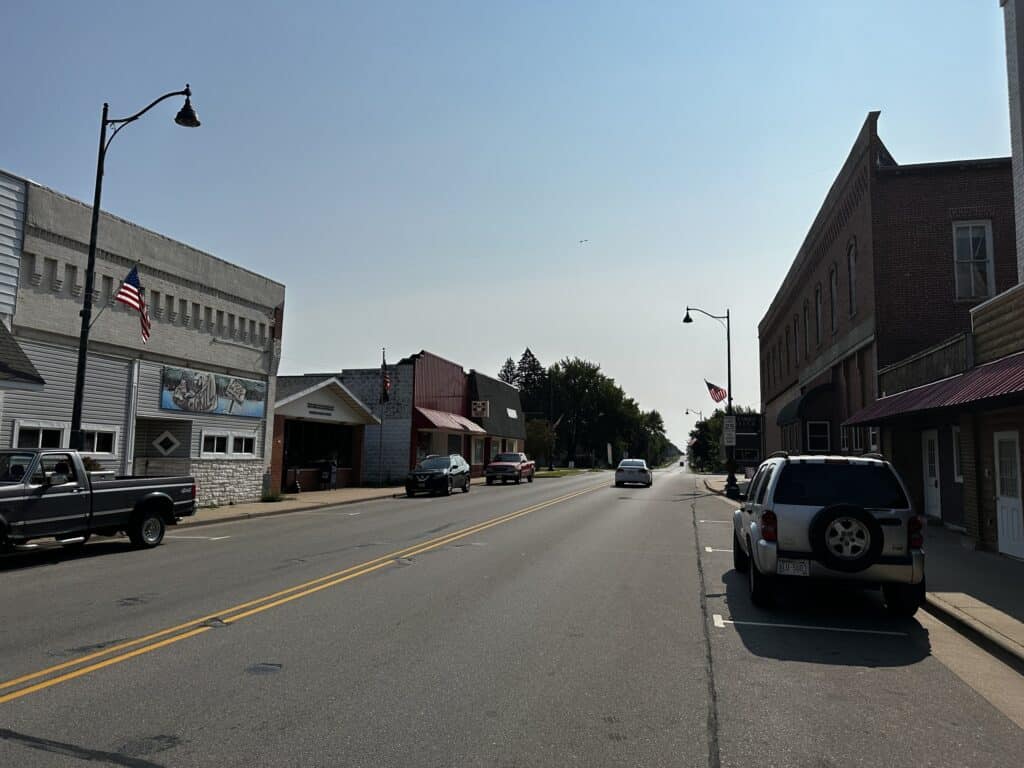
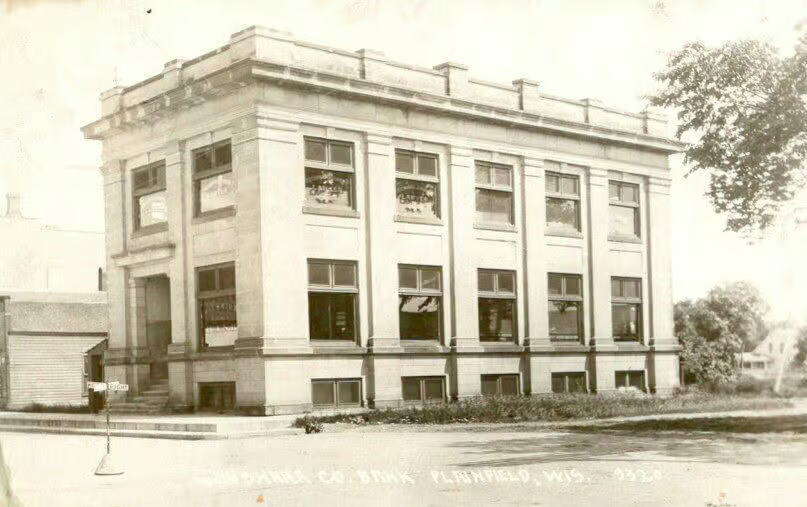
On November 16, 1957, the insulated world of Plainfield, Wisconsin, cracked open. The arrest of Edward Theodore Gein (a reclusive, fifty-one-year-old handyman) and the search of his farmhouse produced a scene that traumatized a small town and rewired American popular culture. Human remains fashioned into household objects, clothing, and masks shattered the postwar comfort myth of the benign “man next door.” Rural quiet stopped meaning safety. It started meaning a possible cover story.
Gein was not a prolific serial killer in the conventional sense. He confessed to two murders. His cultural potency was never about quantity. It was about kind: systematic grave robbery, macabre craftsmanship, and a pathological fixation on his deceased mother that mid-century press and psychiatry already narrated as Gothic. The Gein affair became a modern American folktale that happened to be real, which is exactly why novelists and directors could not leave it alone.
From that unquiet grave, two primary fictional heirs diverged. Norman Bates, Robert Bloch’s Psycho (1959) and Alfred Hitchcock’s 1960 film, internalizes Gein’s horror: repression, fractured identity, a dead parent who survives as a voice. Jame “Buffalo Bill” Gumb, Thomas Harris’s The Silence of the Lambs (1988) and Jonathan Demme’s 1991 film, externalizes and operationalizes Gein’s craft: willed transformation, calculated cruelty, identity stolen as material. A third cousin, Leatherface, keeps the visceral workshop and drops the essayistic psychology.
This report stays inside that lineage. It establishes only as much of Gein’s life as the adaptations require, then traces how Bloch, Hitchcock, Harris, and Demme each selected, distorted, and weaponized different facets of the same farmhouse. For the full offender chronology, cemetery routes, artifact ledger, and hearing record, use the site’s offender hub: Butcher of Plainfield: The Horrifying True Story of Ed Gein.
The Architect of Nightmares: What Fiction Needed From Edward Gein
The Crucible of Plainfield: A Psychologically Sealed Environment
The psychological landscape storytellers inherited was forged in isolation and dominated, in nearly every early account, by Augusta Gein. Contemporary magazine portraiture, notably Time’s December 1957 “Portrait of a Killer”, presents Augusta as the undisputed head of household: railing against modern women’s dress and paint, reading flood-and-damnation scripture in heavy weather, favoring younger son Eddie, producing a man who “never went out on dates.” George Gein appears as an intermittent, alcoholic presence scratching a living on a comfortless farm (no electricity, no plumbing in the Time sketch).
Edward Theodore Gein was born in La Crosse County, Wisconsin, on August 27, 1906, the second of George and Augusta Gein’s two sons; his older brother was Henry. In La Crosse, George worked as a carpenter, tanner and firefighter and briefly owned a grocery store before selling it. Around 1915 the family moved from La Crosse to a remote 155-acre farm in the town of Plainfield. Seclusion was not scenic; it was Augusta’s closed system. Peers at the one-room school shunned Ed for shyness and physical oddities; friendship attempts, later biographers say, were discouraged. The point for this dossier is not to litigate every private cruelty. The point is that by the time Hollywood needed a mother-complex killer, the press had already shipped Gein as one. Fiction did not invent Augusta’s tyranny from whole cloth; it inherited a magazine archetype and sanded it into Norma Bates.
A House of Silence and Death: The Catalyst of Loss
George died in 1940. Henry Gein, Ed’s older brother, died May 16, 1944, after a marsh fire on the property; bruises and Ed’s uncanny ability to lead searchers to the body later fed suspicion, but the death was ruled accidental then. Treating Henry’s death as murder remains a researcher hypothesis, not a conviction. Augusta died December 29, 1945, after stroke complications. Ed sealed her most-used rooms as a pristine shrine while squalor claimed the rest of the house: the factual ancestor of every “Mother’s bedroom” in Psycho production design.
Loneliness after 1945 is the hinge both true-crime writers and novelists grab. Bloch needed a man hollowed out enough to host another personality. Harris needed a man for whom other women’s bodies could become raw material. The sealed rooms serve both.
The Ghoul’s Work: From Desecration to Murder
By his account, Gein’s nocturnal cemetery visits began in the late 1940s: exhuming recently buried middle-aged women he associated with his mother’s appearance, working in what he called a “daze-like” state. Grave robbery stocked the workshop. Murder followed when the dead were not enough.
Mary Hogan, fifty-one, tavern owner in nearby Pine Grove, disappeared December 8, 1954: blood and a spent cartridge left behind. Gein later admitted shooting her; her face mask and skull turned up among the farmhouse horrors. Bernice Worden, fifty-eight, Plainfield hardware-store owner, vanished the morning of November 16, 1957, opening day of deer season. Deputy Frank Worden, her son, found blood and a sales slip for a gallon of antifreeze, remembered Gein’s promise to return for it, and pointed investigators at the farm.
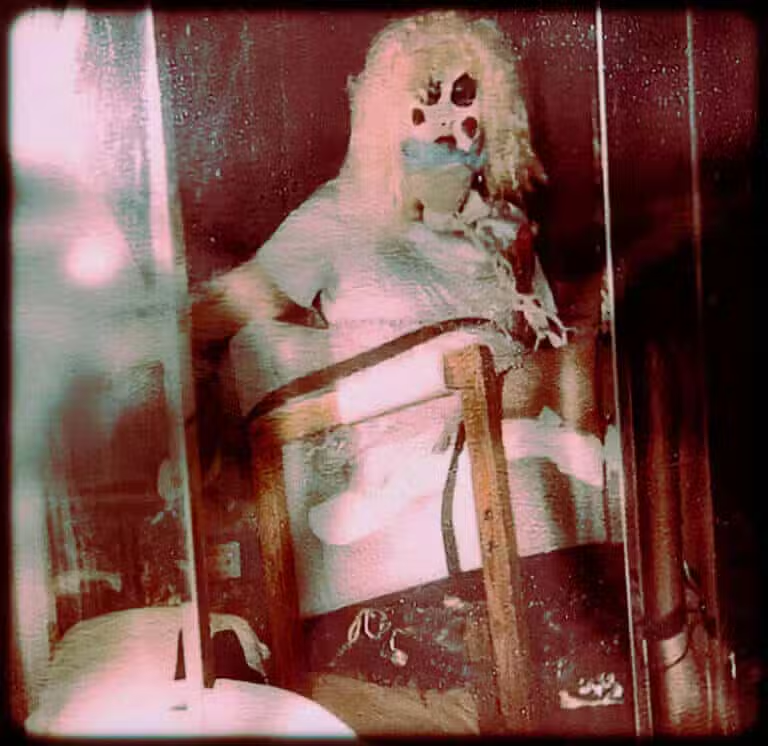
In a shed: Worden hung upside down, decapitated, dressed out like a deer, shot with a .22. Inside: the inventory that would outlive the man.
An Inventory of Horrors: The Gein Farmhouse as Genre Set
The farmhouse was not random butchery. It was a museum of boundary collapse: human form converted into furniture, fashion, and fetish object. Secondary catalogs commonly list:
- Wastebasket and chair seats upholstered in human skin
- Bowls from sawn skull caps
- Belts and small articles fashioned from human tissue
- Lampshade claims involving facial skin (treat specific “face lampshade” wording carefully across sources)
- Skulls on bedposts; boxes of noses, preserved genitalia, lips on a shade pull
- Worden’s head in a sack; heart in a bag near the stove
- Hogan’s face mask and skull
- Skin leggings; a female torso “corset” / vest from shoulders to waist; multiple face masks
That last cluster, the so-called “woman suit”, is the portable myth. It is the object Buffalo Bill’s entire plot orbits. It is also the object most abused by later gender speculation.
Time in 1957 hedged a claim later media often drops: on evidence then available, Gein apparently practiced neither cannibalism nor necrophilia, preserving remains “just to look at.” That contemporary hedge is more reliable than later atrocity inflation. HISTORY.com and other retrospectives sometimes blur those lines; where sources conflict, this page notes the conflict rather than choosing the gorier version.
The “Woman Suit” and the Motive Problem
Gein’s skin garments are real as recovered artifacts. The motive sentence attached to them is where culture and clinic diverge. Popular retellings favor “he wanted to become his mother” or “crawl into her skin.” Psychiatric commentary preserved in later researched accounts (Warmington and others, as discussed in K.E. Sullivan’s Jump Cut essay drawing on Harold Schechter’s Deviant) stresses a physical substitute for Mother that could be kept indefinitely, possession and denial of loss, more than a coherent transgender identity project.
Meanwhile, within weeks of arrest, Life and the Milwaukee Journal pipeline floated that Gein “wished he were a woman,” including armchair talk of sex-change curiosity, before thorough psychiatric evaluation, and to the surprise of locals and crime-lab voices who said such framing was news to them. Suggestible interrogation answers about wearing female parts (polygraph sequences Schechter reproduces and Sullivan critiques) are not the same thing as a stable self-identification. Sullivan’s conclusion matters here: the press myth of Gein-as-transvestite/transsexual is what fed Norman’s closet and Bill’s needle tray more cleanly than the clinical file did.
The Mind of the Monster: Legal Outcome
Arraigned on first-degree murder, Gein pleaded not guilty by reason of insanity, was diagnosed with schizophrenia in the institutional process, found incompetent, and committed to Central State Hospital for the Criminally Insane (later transfers included Mendota). In 1968, doctors cleared him for trial. Before Judge Robert H. Gollmar, without a jury at defense request, he was found guilty of Worden’s murder; in the sanity phase he was found not guilty by reason of insanity and returned to custody for life. Cost and strategy meant Worden only; Hogan remained an admission. Staff later described a mild “model patient.” He died at the Mendota Mental Health Institute in Madison on July 26, 1984, aged 77, of respiratory failure brought on by lung cancer.
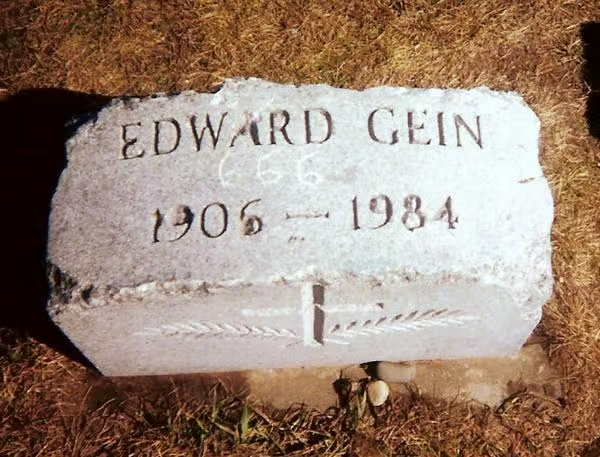
He was buried in Plainfield Cemetery between his parents and his brother Henry. Souvenir hunters chipped pieces off his gravestone for years until the stone itself was stolen in 2000. It was recovered near Seattle in June 2001 and has been kept in storage by Waushara County authorities rather than returned to the grave.
That legal arc matters here only to kill two myths: that Gein “got away with it” in the streets, and that he was a free-range genius predator like Lecter. He was a committed patient whose fame is posthumous and cinematic.
The Boy and His Mother: The Genesis of Norman Bates (Psycho)
From Fact to Fiction: Robert Bloch’s Inspiration
The transformation of Plainfield into fiction begins with proximity. Bloch lived in Weyauwega, about thirty-five miles from Gein’s farm, when the 1957 headlines hit. He was already circling a novel about ordinary evil wearing a neighborly face. Wisconsin handed him proof of concept.
Bloch’s own sentences are the anti-legend. On the official Robert Bloch website he writes that the grim Wisconsin case led him to invent a seemingly normal rural resident leading a dual life as a psychotic murderer unsuspected by neighbors: “I based my story on the situation rather than on any person, living or dead involved in the [Ed] Gein affair.”
His memoir Once Around the Bloch, quoted by the American Heritage Center and by Wisconsin feature writers marking Psycho’s anniversary, tightens the claim: he knew “very little of the details concerning that case and virtually nothing about Gein himself at the time.” Only later, writing on Gein for Anthony Boucher’s The Quality of Murder, did he discover “how closely the imaginary character I’d created resembled the real Ed Gein both in overt act and apparent motivation.”
Fact-checks of Ryan Murphy’s Monster: The Ed Gein Story recover Bloch at the 1991 World Horror Convention refusing the biopic fantasy: he did not use Gein as the basis for Bates; he used the circumstance that someone could live in a small town where everyone knows everyone’s business and still conduct murders unsuspected. “Ed Gein did not run a motel. He killed nobody in the shower. He did not preserve the body of his mother.” Those were Bloch’s plot requirements. The novel’s glancing line about “that fellow in Wisconsin” is homage, not citation.
When prestige television shows Hitchcock walking Perkins through a Gein-house mockup as if it were research method, it is printing the legend. Print Bloch instead.
The Psychology of Norman Bates: Internalizing the Horror
Bloch ran Plainfield through Freudian machinery the 1950s already found legible. In the novel, Norman’s foundational crime is matricide: jealousy when widowed Norma takes a lover; poison; then a mind that resurrects Mother as cruel alternate personality. “Mother” murders to police Norman’s desire: Augusta’s puritan script rewritten as alter.
Bloch’s triad, Norman (timid son), Norma (possessive parent), Normal (functional adult who cleans up), is a narrative technology Gein never offered. Gein’s personality, however psychotic, was not a tidy three-act dissociative play. Bates makes the horror legible as internal war. That legibility is why Perkins could become iconic and Gein remained a newspaper grotesque.
The sharpest visual rhyme remains preservation: Norman’s taxidermy and kept maternal corpse versus Gein’s shrine-rooms and corpse-craft. The rhyme is not identity. Gein did not keep Augusta’s body in the fruit cellar. Fiction sharpened the metaphor until audiences forgot the difference.
Hitchcock’s Vision: The Cinematic Norman
The film rights sale itself is part of the cultural record: Bloch later joked that after agent, publisher, and taxes, he cleared roughly $6,250 while Hitchcock got Psycho and “the rest is history”, a line preserved in American Heritage Center commentary on Bloch’s papers. The novel kept circulating; the film became the memory. That imbalance matters when audiences say “Psycho is Gein’s story.” Most of what they remember is Stefano and Hitchcock’s construction.
Hitchcock and Stefano made the commercial decision that sealed the archetype: replace Bloch’s middle-aged, heavier, alcoholic Norman with Anthony Perkins, young, handsome, awkwardly sympathetic. The reveal becomes tragedy, not only revulsion. Production design literalizes duality: Gothic vertical house (Mother, past, repressed) looming over horizontal motel (the attempt at normal). Parlor birds equate taxidermy with the need to freeze and control. Overheard arguments give “Mother” acoustic body.
None of the shower murder’s global fame maps to Gein’s MO. The most famous Psycho image is pure invention relative to Plainfield, which is precisely why “Psycho was based on Ed Gein” is both true enough to trend and false enough to mislead.
Divergent Paths: Gein vs. Bates: Comparative Analysis
| Axis | Ed Gein (factual core) | Norman Bates (fiction) |
|---|---|---|
| Transformation | Physical skin garments | Psychological Mother persona / dress |
| Mother’s body | Rooms preserved as shrine; corpse not kept | Corpse preserved and addressed |
| Victim pattern | Middle-aged women resembling mother (two confirmed) | Young women who arouse Norman / trigger Mother |
| Stage | Farm, graves, hardware store | Motel + Victorian house |
| Path into madness | Gradual: graves after natural maternal death | Explosive: matricide → guilt → fracture |
| Cultural job | Source inventory + mother myth | Make madness intimate and almost pitiable |
Gein’s suit is literal. Bates’s “suit” is psychosis. Same maternal gravity; opposite physics.
The Metamorphosis of Evil: The Creation of Buffalo Bill (The Silence of the Lambs)
A Composite Killer: Thomas Harris’s Synthesis
If Bates is Gein’s psychology distilled, Buffalo Bill is Gein’s workshop inserted into an organized offender’s toolkit. In the 1988 novel, Harris builds Jame Gumb as a composite. A&E’s account of the inspiration stack, aligning with long-circulating profiler anecdotes, notes John Douglas’s recollection that Harris drew on lecture material covering killers including Ted Bundy, Ed Gein, and Gary Heidnik.
Break the borrowings cleanly:
- Ed Gein → the suit. Skin as identity project; farmhouse craft as nightmare precedent. Bill’s signature is Gein’s portable myth upgraded from grave goods to homicide supply chain.
- Ted Bundy → the lure. Feigned injury or helplessness; ask a woman for help with a cast, crutches, or loading furniture into a van; strike when she closes distance. Demme stages this as one of the film’s coldest captures.
- Gary Heidnik → the pit. Philadelphia basement captivity; prolonged control of living prisoners. Catherine Martin in the dry well is Heidnik’s architecture, not Plainfield’s shed.
Harris’s line: “Everything has happened. Nothing’s made up”: claims that reality supplies atrocity enough for fiction. It does not claim Buffalo Bill walked out of Waushara County. Searchers asking “was Buffalo Bill a real person” need that “no” in the first screenful.
The Bundy piece is behavioral, not biographical. Bundy’s documented approach sometimes involved feigned vulnerability (casts, crutches, dropped objects) to recruit assistance from women he then attacked. Silence restages that social-engineering move without importing Bundy’s full timeline, victim list, or Florida endgame. Likewise Heidnik: the 1987 Philadelphia basement dungeon case gave Harris a contemporary captivity architecture while he was writing. Ted Levine has described studying taped interviews of offenders who held women in basement lairs as performance research: preparation, not identity theft. Gein remains the suit; Bundy and Heidnik remain the hunt and the cage.
Jerry Brudos and other names sometimes appear in fan wikis as additional Bill ingredients (footwear fetish, clothing of victims). Those are secondary attributions unless Harris or Douglas primary notes confirm them; this page keeps the A&E/Douglas three-name core (Gein, Bundy, Heidnik) as the load-bearing composite and flags extras as unverified lore.
The Skin Is the Goal: A Pragmatic Process of Horror
Unlike Mother’s eruptive murders in Psycho, Gumb’s violence is industrial. Large women kidnapped, held, starved until skin loosens, flayed. Death is a manufacturing step. Cruelty is logistics.
The Death’s-head hawkmoth raises the logistics into ritual. Gumb breeds the insects, inserts a cocoon into victims’ throats as signature, and reads metamorphosis, larva to winged imago, as allegory for his own rebirth fantasy. That entomology is Harris, not Gein. It is also why “Ed Gein Silence of the Lambs scene” searches misfire: there is no Gein scene in the film, only Gein DNA in Bill’s project.
Critical distinction of method: Gein primarily processed the already dead. Bill murders to harvest. Fiction escalates agency and sadism while keeping the suit as trophy-goal.
Gender, Identity, and Monstrosity: A Controversial Figure
Both novel and film include an explicit disclaimer. Lecter tells Clarice that Bill is not a “true transsexual”; surgeons rejected him because they saw profound psychopathy and identity confusion, not a gender-affirmation case. Harris frames violent narcissistic metamorphosis, not a census of transgender people.
The disclaimer lost the image war. Levine’s Bill (sewing, makeup, “I’d fuck me,” kimono, poodle Precious) coded gender nonconformity as monstrosity for a global audience. LGBTQ+ critics argued the film fused queer/trans signaling with predation even as Lecter’s dialogue tried to pry them apart. Sullivan’s Jump Cut essay tracks the longer lineage: Gein press myths → Psycho’s closet reveal → Silence’s suit reveal, a cinematic habit of unveiling “secret” gender deviance in the same beat as unveiling the killer. Them’s later critique of Monster: The Ed Gein Story notes the same loop when a series stages lingerie-and-skin spectacle and only afterward has a Christine Jorgensen fantasy-conversation deny kinship.
In short:
- Harris and Demme included a textual disclaimer.
- The reception harm and the stereotype charge are part of the record.
- The 1957 “wished he were a woman” coverage ran ahead of evaluation, and clinical notes emphasize maternal substitution more than trans identity.
- Speculation is not diagnosis.
- The film’s visual codes are not “just entertainment” with no social residue.
A Tale of Two Suits: Gein vs. Gumb
| Axis | Gein’s suit (case) | Gumb’s suit (fiction) |
|---|---|---|
| Temporal direction | Backward: preserve / replace Mother | Forward: escape self into new form |
| Material source | Mostly exhumed dead | Murdered living women |
| Craft level | Isolated, crude, ad hoc | Novel presents skilled tailoring |
| Psychological story | Maternal substitution / possession | Self-hatred + metamorphosis fantasy |
| Ontological status | Physical artifacts, 1957 | Fictional project |
Gein’s suit tries to stop time. Gumb’s suit tries to reboot identity. Same leather; opposite eschatology.
Who Inspired Whom: Entity Map
| Entity | Role on this page |
|---|---|
| Edward Theodore Gein / Ed Gein / Butcher of Plainfield / Plainfield Ghoul | Factual source code |
| Plainfield; Waushara County; Wisconsin | Geography of discovery |
| Augusta Gein; George Gein; Henry Gein | Family context fiction absorbed (Henry death contested) |
| Mary Hogan; Bernice Worden; Frank Worden | Confirmed victims / path to arrest |
| Robert Bloch; Weyauwega; Psycho (1959); Once Around the Bloch; The Quality of Murder | Novel pathway + primary self-statements |
| Alfred Hitchcock; Joseph Stefano; Anthony Perkins; Bates Motel; Norma Bates | Film pathway |
| Thomas Harris; The Silence of the Lambs (1988); Jonathan Demme; Ted Tally | Novel/film pathway |
| Jame Gumb / Buffalo Bill; Clarice Starling; Hannibal Lecter; Catherine Martin | Fiction; Bill = composite |
| Ted Bundy; Gary Heidnik; John Douglas | Named non-Gein composite sources |
| Tobe Hooper; Leatherface; The Texas Chain Saw Massacre (1974) | Visceral craft cousin |
| Death’s-head hawkmoth | Bill’s symbol only |
| Monster: The Ed Gein Story / Netflix | Dramatization: myths corrected |
Synthesis and Bloodline: The Gein Archetype in Modern Horror
Mirrors of Madness: Comparative Analysis
Gein is the chaotic factual source. Bates is the internalized psychological monster: tragedy of guilt and repression. Gumb is the externalized operational monster: method, craft, predation as process. The lineage is evolution by selection pressure: each era of horror took the Plainfield pieces it could use and discarded the rest.
| Feature | Edward Gein (factual) | Norman Bates (fictional) | Jame “Buffalo Bill” Gumb (fictional) |
|---|---|---|---|
| Core motivation | Pathological attachment to deceased mother; preserve / become / substitute | Matricide guilt; puritan Mother-persona jealousy | Extreme self-hatred; metamorphosis via suit |
| Mother relationship | Dominated by Augusta (as press/psych frames) | Dominated by Norma; murders her | Traumatic childhood / abandonment motifs in novel, not Augusta-clone |
| Primary crimes | Grave robbery; two confessed murders; corpse craft | Matricide; murders under Mother persona | Kidnap, imprison, murder, skin multiple women |
| Psychological label (popular) | Schizophrenia diagnosis in process; Oedipal readings; gender speculation contested | Dissociative / psychosis; cross-dressing as Mother manifestation | Sadistic psychopathy; text denies “true transsexual” |
| Woman-suit concept | Literal garments from remains | Metaphorical psychological “suit” | Explicit goal of the killing program |
| Cultural legacy | Real-life monster / gore grandfather / source inventory | Sympathetic complex killer; mother-complex trope | Transformative serial killer; gender-representation flashpoint |
The Grandfather of Gore: Gein’s Broader Influence
Beyond Bates and Bill stands Leatherface. The Texas Chain Saw Massacre (1974) is not Gein’s biography. Its cannibal family and power-tool murders are inventions. Its aesthetic (skin mask, bone furniture, house as trophy case) is Plainfield translated into Texas heat and Vietnam-era dread.
Some marketing and later listicles flatten Hooper’s film into “the Ed Gein movie.” That flattening helps clicks and hurts accuracy. Gein denied cannibalism in standard case summaries; the Sawyer family’s dinner-table horror is invented American nightmare, not Plainfield minutes. What transfers is the look of a domestic interior that has stopped respecting the difference between furniture and corpse.
Hooper, in a late interview with The Flashback Files, refused to remove Gein from the equation while refusing to center him as sole muse. Relatives from Wisconsin, visiting when Hooper was a small child, told of a man in a nearby town who dug graves and used bones and skin in his house. They did not use the name. To the child he was “a real boogeyman.” That memory returned alongside a doctor’s cadaver-skin story and the famous department-store chainsaw daydream. Influence with receipts, and with limits.
Deranged (1974) tracks closer to the lonely-farmer character study. Later echoes (American Horror Story’s Bloody Face, songs, documentaries, Murphy’s Monster) keep the brand warm. When Monster stages Bloch and Hitchcock as if they were co-writing Gein’s case into Psycho shot lists, send readers back to Bloch’s situation-not-person rule.
Conclusion: The Unquiet Grave of Ed Gein
Gein’s endurance is taboo violation: family, identity, the body’s supposed sanctity, the grave’s supposed rest. He was not merely a murderer. He was a desecrator who turned people into inventory. That objectification is what filmmakers keep renting.
Norman Bates and Buffalo Bill are not Gein with better lighting. They are cultural translations, guilt psychology and procedural evil, that let audiences tour the farmhouse without smelling it. Leatherface is the third translation: craft without confession. Edward Gein’s body lies in Plainfield Cemetery, once guarded against souvenir blades. His cultural remains are harder to fence. They keep walking into scripts whenever someone needs a suit, a Mother, or a house that furnishes itself with the dead.
In short:
- Was Silence of the Lambs based on Ed Gein? Partly: the suit.
- Who is Buffalo Bill based on? Gein + Bundy + Heidnik.
- Was Buffalo Bill real? No.
- Was Norman Bates Ed Gein? No, situation-inspired fiction with later-noticed parallels.
- Did Gein inspire Texas Chain Saw? Visually / folklorically, not as a biopic.
Reading Monster and Other Retellings Against This Dossier
Ryan Murphy’s Monster: The Ed Gein Story and similar prestige treatments often dramatize three compressions this page exists to resist:
- Bloch + Hitchcock as Gein researchers workshopping Plainfield into shower set pieces, contradicted by Bloch’s situation-not-person statements and by his list of inventions Gein never committed.
- Gein as simply Buffalo Bill: erases Bundy lure and Heidnik pit; erases Harris’s composite method.
- Gein as transgender ur-text: recycles 1957 press speculation and interrogation suggestibility into identity fact, then either exploits or half-denies it on screen.
Related Case Files
Gein’s skin-suit fixation sits beside the cases in our study of post-mortem dismemberment. For another killer whose crimes became horror folklore, read Albert Fish and his cannibalistic horror, and for the screen retelling of this case, see Monster: The Ed Gein Story. Browse every dossier in the A to Z Case File Index.
Frequently Asked Questions
How many people did Ed Gein kill?
He confessed to two murders, Mary Hogan and Bernice Worden. By his account, most remains came from graves.
When was Gein arrested?
On November 16, 1957, when Bernice Worden’s body was found at his farm in Plainfield, Wisconsin.
Was Gein convicted?
In a 1968 bench trial he was found guilty of Worden’s murder, then not guilty by reason of insanity, and returned to institutional custody. He was tried for Worden only.
When did he die?
On July 26, 1984, in institutional custody.
Was Norman Bates based on Ed Gein?
In part. Robert Bloch wrote Psycho from the situation, not from Gein as a person, and Hitchcock filmed it in 1960.
Was Buffalo Bill based on Gein?
Partly. Thomas Harris’s Buffalo Bill is a composite. Gein supplies the skin-suit motif, not the whole character.
Did Gein inspire The Texas Chain Saw Massacre?
Tobe Hooper later described a childhood story from Wisconsin relatives about a grave robber who used bones and skin, though Gein was not named to him then.
Works Cited / Sources
Citations & Sources
Primary / near-primary self-statements & contemporary reportage:
- Robert Bloch Official Website: Psycho page (situation-rather-than-person quotation). https://www.robertbloch.net/psycho1.html
- American Heritage Center, “Psycho: Robert Bloch’s Modest Masterpiece” (memoir quotation; papers). https://ahcwyo.org/2024/10/28/psycho-robert-blochs-modest-masterpiece/
- Time, “Medicine: Portrait of a Killer” (2 Dec 1957). https://time.com/archive/6888153/medicine-portrait-of-a-killer/
- HISTORY.com Editors: Bernice Worden / 16 Nov 1957 entry. https://www.history.com/this-day-in-history/november-16/ed-gein-kills-final-victim-bernice-worden
Composite / SOTL / TCM influence:
- A&E: “The Real Killers Who Inspired ‘The Silence of the Lambs’” (Gein / Bundy / Heidnik; Douglas). https://www.aetv.com/articles/silence-of-the-lambs-real-killers
- Flashback Files: Tobe Hooper interview (Wisconsin relatives / grave-robber memory). https://www.flashbackfiles.com/tobe-hooper-interview-1
- TODAY / Collider secondary interviews summarizing Hooper on Gein vs Leatherface limits.
Critical / reception (gender trope, use carefully, do not invent clinical claims):
- K.E. Sullivan: “Ed Gein and the figure of the transgendered serial killer,” Jump Cut no. 43. https://www.ejumpcut.org/archive/onlinessays/JC43folder/EdGein.html
- Mathew Rodriguez: Them, Monster / transgender-killer trope (Oct 2025).
Bloch fact-checks vs Monster dramatization:
- Esquire; Mirror / Yahoo reprints: Bloch 1991 World Horror Convention distinctions.
Secondary cross-checks (orientation, not sole authority):
- Biography.com Gein features; CrimeReads Gein/Psycho/Chainsaw essay; Wisconsin Post-Crescent Weyauwega/Bloch feature; standard legal summaries of 1968 Gollmar proceedings.
Related reading:
Discover more from The Dark Side of Humanity
Subscribe to get the latest posts sent to your email.