FILE NO. 0175
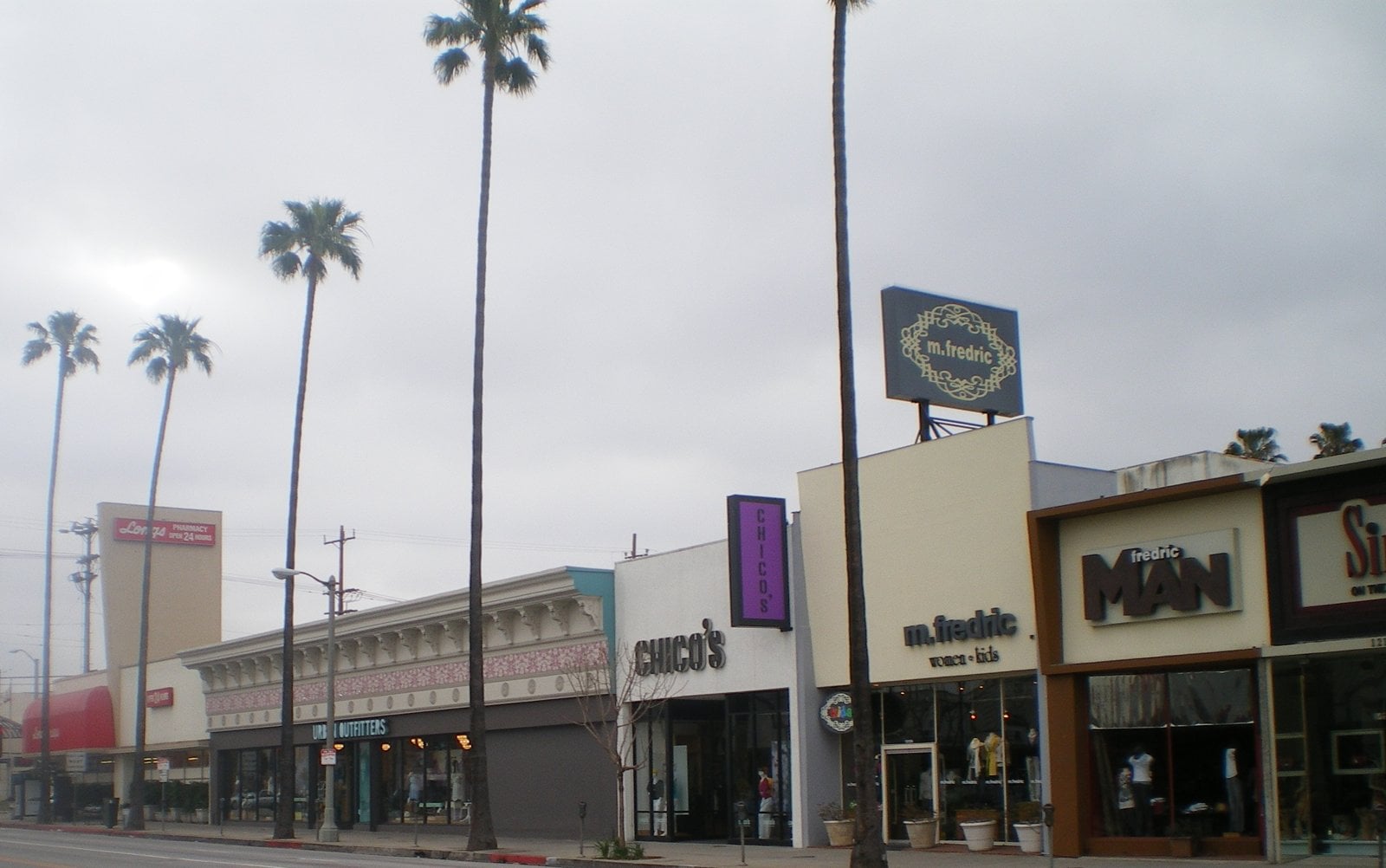
At about 9:50 on the night of May 4, 2001, a film director named Sean Stanek opened his front door in Studio City to find Robert Blake, the former star of “Baretta,” telling him his wife had been hurt. Stanek called 911 and the two men ran across the street to Blake’s car. Bonny Lee Bakley was in the passenger seat. She was still alive, Stanek told CNN, “but there was blood everywhere.” The autopsy would find that she had been shot twice, once through the right cheek and once through the right shoulder. Paramedics arrived almost immediately and gave her CPR, Stanek said. She was declared dead on arrival at a nearby hospital. She was 44 and had been married to Blake for six months.
Robert Blake was acquitted of the murder of Bonny Lee Bakley and of soliciting Gary McLarty to murder her on March 16, 2005, by a jury in Los Angeles County Superior Court in Van Nuys. The jury deadlocked 11 to 1 in favour of acquittal on the count of soliciting Ronald Hambleton, and Judge Darlene Schempp dismissed that count. Blake was never convicted of any crime in the case. Earle Caldwell’s only charge, conspiracy to commit murder, was dismissed for lack of probable cause on October 31, 2003, before trial; he was never tried and never convicted, and the civil jury later found that he had not taken part in the killing. The separate civil jury that found Blake liable for her death applied the civil standard, a preponderance of the evidence, under which nine of twelve jurors had to agree that he was more likely than not responsible. That verdict is a finding of liability for money damages. It is not a conviction, and it did not disturb the acquittal.
Case snapshot
- Victim Bonny Lee Bakley, 44, mother of four, married to Robert Blake in November 2000
- Date and place Friday, May 4, 2001, about 9.30 to 9.50 p.m., in Blake’s parked car about a block and a half from Vitello’s restaurant on Tujunga Avenue, Studio City, Los Angeles
- Cause of death two gunshot wounds; the autopsy, as reported by the Los Angeles Times and summarised by the forensic scientist Bryan R. Burnett, found one bullet entered the right cheek and travelled into the brain, and a second entered the right shoulder and cut the right carotid artery
- Weapon an unregistered World War II era 9 mm Walther P-38 pistol, found in a dumpster about 10 to 14 feet from the car, with no fingerprints and, according to police affidavits, coated in fresh motor oil
- Accused Robert Blake, 67 at the time of the shooting, arrested April 18, 2002; his handyman and part time bodyguard Earle Caldwell, 46, arrested the same day for conspiracy
- Criminal outcome Blake acquitted of murder and one count of solicitation of murder on March 16, 2005; the jury deadlocked 11 to 1 for acquittal on the second solicitation count, which the judge dismissed; the conspiracy charge against both men was dismissed on October 31, 2003, and Caldwell was never tried
- Civil outcome on November 18, 2005, a civil jury in Burbank found 10 to 2 that Blake “intentionally caused the death” of Bakley and awarded $30 million; the Court of Appeal cut it to $15 million on April 25, 2008
- Status no one has been convicted of killing Bonny Lee Bakley; Blake died on March 9, 2023, at 89
The case ran through the courts for nearly seven years. The Los Angeles Police Department arrested Blake almost a year after the shooting and declared the case solved. The District Attorney charged him with murder with the special circumstance of lying in wait, and with trying to hire two former stuntmen to do the killing. A criminal jury acquitted him. A civil jury, under the lower standard, found him liable. An appeals court halved the damages. Nobody else has ever been charged.
Who Bonny Lee Bakley was
Bonny Lee Bakley was 44 when she died. The Los Angeles Times described her as a mother of four. The wrongful death suit later filed for her estate was brought on behalf of all four children, three from earlier relationships and a daughter born in June 2000 whose father was Blake. Her family included her mother, siblings and a sister, Margerry Bakley, who spoke for the family after the killing.
Much of what was published about her came from people with reasons to shape it. CNN reported weeks after the shooting that Blake’s lawyer was describing her as a woman with a “sordid past.” The Associated Press, in its verdict story, said she “had been married several times, had a record for mail fraud and made a living scamming men out of money with nude pictures of herself and promises of sex.” The Los Angeles Times called her “a small-time scam artist who dreamed of snagging a celebrity husband” and described a “mail-order pornography business.” When Blake married her, the AP reported, she was on probation for fraud, and prosecution witnesses later testified that Blake had schemed to get that probation revoked on an Arkansas fraud case.
Her family fought that portrait. When Blake buried her at Forest Lawn Memorial Park on May 25, 2001, her relatives stayed away. “They have attempted to dehumanize LeeBonnie,” said Cary Goldstein, a lawyer for her sister, using the family’s name for her. “She had siblings, she had children other than her child with Blake. She has a mother, and they’re all grieving at her death. She is not a cartoon character.” Barry Novack, the lawyer who filed the estate’s suit, told the Times she had kept helping to support her grown children in Tennessee. “She was a warm, caring and loving mother,” he said.
Inside the criminal courtroom, the Times reported after the verdict, her past “played a surprisingly small role,” despite early efforts by the defence to point at her mail order business as a reason someone else might have wanted her dead.
Robert Blake before the case
Robert Blake was born Michael James Gubitosi on September 18, 1933, in Nutley, New Jersey. He was performing as a small child and was in films by the late 1930s, in the “Our Gang” shorts and as Little Beaver in the Red Ryder westerns. In 1967 he played Perry Smith, one of the two men who murdered the Clutter family, in the film of Truman Capote’s “In Cold Blood.”
His widest fame came in 1975 with “Baretta,” in which he played a New York detective with a pet cockatoo, and for which he won an Emmy. He kept working after the series ended in 1978, less often. In 1993 he played John List, the New Jersey man who murdered his mother, wife and three children in 1971, in “Judgment Day: The John List Story,” and was nominated for an Emmy. His last major film was David Lynch’s “Lost Highway” in 1997.
By 2001 he was 67, living in Studio City behind a wrought iron gate, on a property that CNN reported had the words “Mata Hari Ranch” painted on the front, and a regular at Vitello’s, a few blocks away. Steve Restivo, one of the restaurant’s owners, told CNN that Blake had eaten there for 20 years, often twice a week, and that anything ordered “a la Robert Blake” came with spinach.
The relationship and the marriage
The Los Angeles Times reported that Blake met Bakley in 1998 at a Burbank jazz club that has since closed; NPR’s 2023 obituary put the meeting in 1999. By late 1999 she was pregnant. At the preliminary hearing in 2003, prosecutors played a recording in which, CNN reported, Blake told her she had “swore on her life” she would never get pregnant and that he would never forget all her “rotten, stinking, filthy” lies. DNA tests showed the father was Blake.
The daughter was born in June 2000. A former employee of Blake’s testified at trial that shortly afterwards Blake refused to return the baby to her mother after a visit. Bakley filed kidnapping charges, the Times reported, and dropped them after Blake agreed to marry her. Prosecution witnesses testified that Blake also tried to have her arrested over her mail order business. Those accounts came from prosecution witnesses in a trial that ended in acquittal.
They married in November 2000 at Blake’s home in Studio City. According to the AP, it was a no frills ceremony at which “the bride wore an electronic monitoring bracelet because she was still on probation for fraud.” Bakley went to Arkansas after the wedding and did not return until March 2001, the Times reported. Five days before she was killed, she moved into the guest house at the rear of Blake’s property, which CNN described as a bungalow behind his four bedroom house. They lived separate lives; dinner together at Vitello’s was, in the Times’s words, “an unusual public outing together.”
At trial the prosecutor, Shellie Samuels, called all of this motive. “He was tricked by Bonny Lee and he hated her for it,” she told the jury, according to the AP. “He got taken by a small-time grifter.”
May 4, 2001: the shooting near Vitello’s
Friday, May 4, 2001, was an ordinary night at Vitello’s, an Italian restaurant on Tujunga Avenue in Studio City. Steve Restivo told CNN that Blake and Bakley sat in a booth at the back and ordered soup and an entree. According to Court TV, Blake ate pasta with spinach and tomatoes.
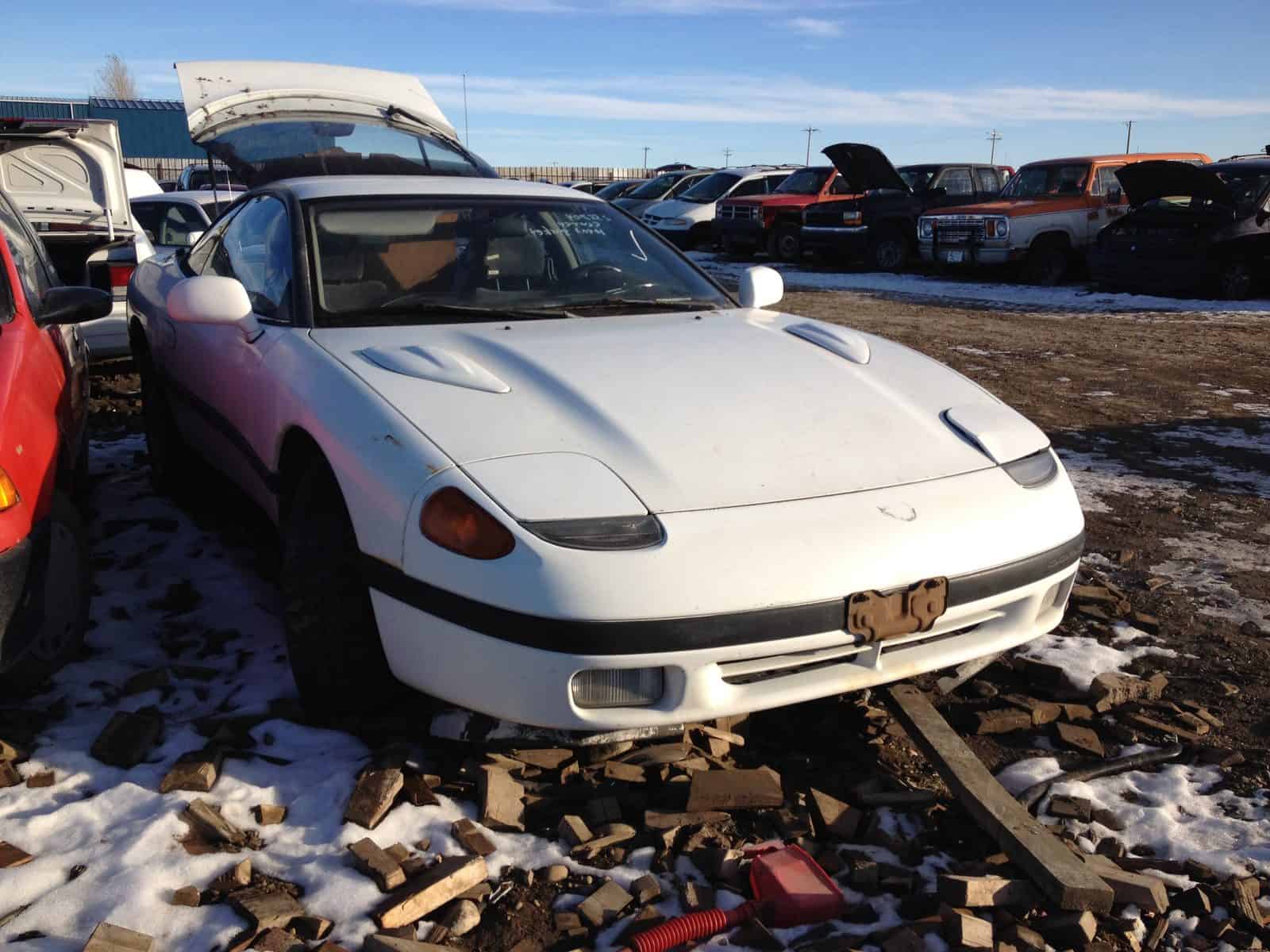
Blake’s account, given to police that night and relayed by the LAPD spokesman Guillermo Campos, was that the couple left the restaurant at 9:40 p.m. and walked to his car, a black 1991 Dodge Stealth parked on a side street. Court TV put the car a block and a half from Vitello’s; the Los Angeles Times said about a block. Blake said he realised he had left something behind and went back for it. He later told police the item was his .38 caliber revolver, which he was licensed to carry and which, the Times reported, “apparently had slipped from his waistband.” He told detectives he carried it because Bakley feared for her safety. When he got back to the car, he said, he found her “bleeding from the head,” slumped in the passenger seat.
Joe Restivo, the other owner, gave a different picture of the return trip. As his brother Steve relayed it to CNN, Blake came back shortly after the couple left, “appeared flustered,” asked for two glasses of water, drank them and left. “It did not appear that the actor retrieved anything,” Steve Restivo said his brother told him.
Another diner, Andrew Percival, told CNN that he and his wife left about 9:30 p.m. and, walking home on the same block, saw a man in black who looked like Blake stride “very, very briskly” down the middle of the street, past them, toward a car they later saw surrounded by police.
Blake ran across the street to the home of Sean Stanek, whose house faced the restaurant parking lot. Stanek told CNN he heard the knock about 9:50 p.m., called 911 and ran to the car with Blake. Bakley was still alive, he said, “but there was blood everywhere.” Paramedics arrived almost immediately and gave her CPR. The Times reported that Blake also went back into the restaurant looking for a doctor. CNN reported that Bakley was declared dead on arrival at a nearby hospital; the Times wrote that she died at the scene.
Several witnesses testified at the 2005 trial that while paramedics worked on Bakley, Blake sat on the curb nearby, crying and vomiting, and never went to his wife, Court TV reported. Two other men from the restaurant, Michael Dufficy and Richard Noel, testified that they saw vomit containing bits of spinach in the trash can in the men’s room at Vitello’s. “I saw it when I was washing my hands,” Dufficy said. “I covered it up with paper towels. I didn’t think anyone else needed to see it.” Both said Blake had been “twisting his hair and making faces.” Under cross examination they conceded they did not know him well enough to say whether that was unusual for him. The prosecution’s theory was that he was so nervous about the killing that he threw up before and after it. The defence said he had chronic indigestion and often vomited after meals.
In its April 2002 arrest release, the LAPD gave the location where Bakley was found as “the 11400 block of Woodbridge Street in North Hollywood,” and said she was “slumped in the front seat of her husband’s car. She had been shot.” News reports placed the car in Studio City, a block or so from Vitello’s.
The wounds, the gun and the gunshot residue
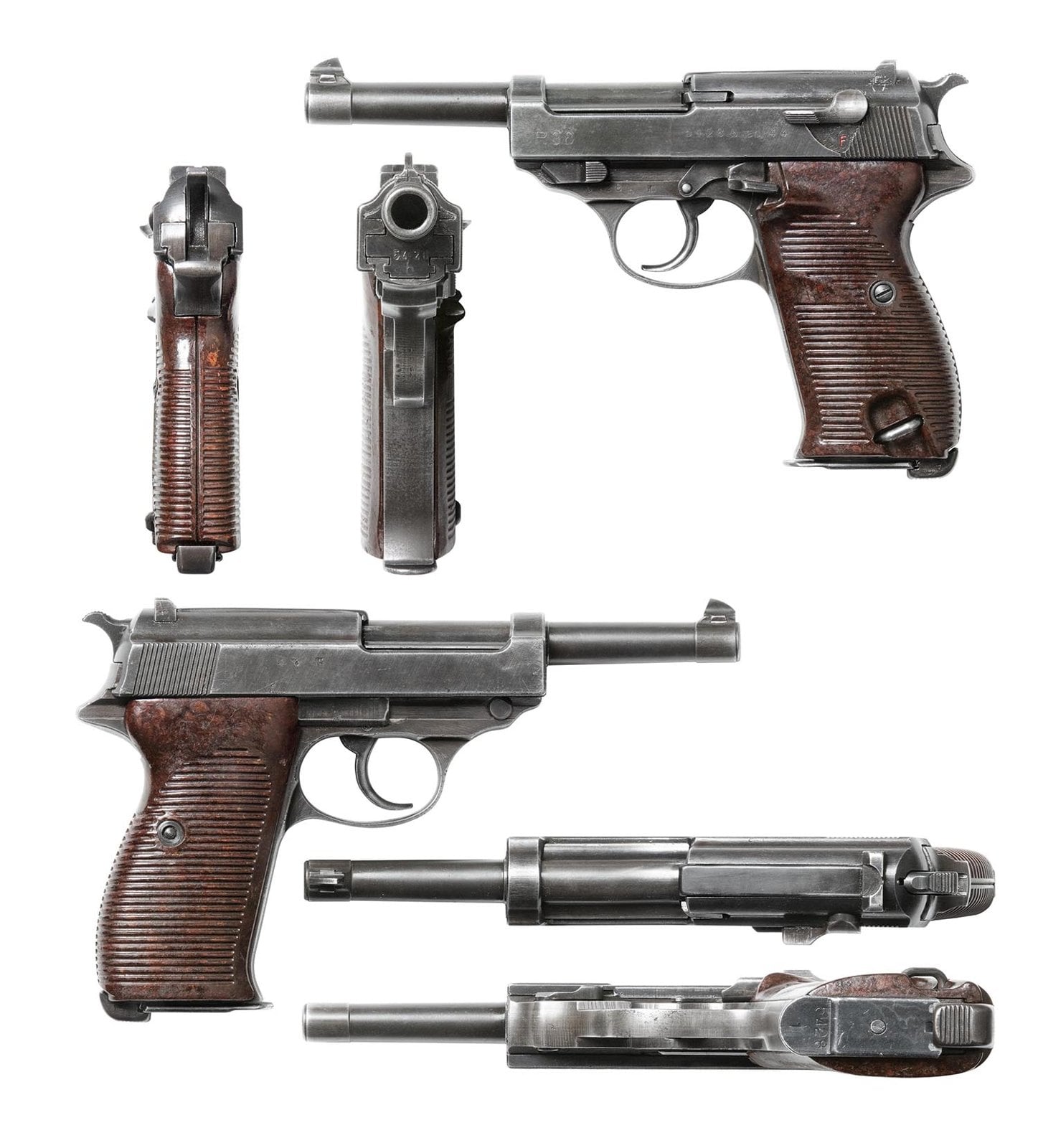
The first police statements said Bakley had been shot once in the head. The autopsy found two wounds. The Los Angeles Times reviewed the autopsy report in April 2002 and wrote that she “was shot once in the right shoulder and again in the right cheek at an upward angle.” The forensic scientist Bryan R. Burnett, who analysed the trial’s gunshot residue evidence in a paper later published in the International Journal of Forensic Sciences, summarised the same report in more detail.
According to Burnett’s summary, one bullet entered her right cheek, went through the skin of the cheek and the bones at the base of the skull, and came to rest in the left side of her head: the bullet core in the left temporal muscle and the jacket in the left temporal lobe of the brain. Its path ran right to left and slightly upward. The autopsy called it a fatal gunshot wound. The second bullet entered at the right shoulder, passed through the soft tissue of the neck, cut through the right carotid artery and stopped near the seventh cervical vertebra, where the core and jacket were recovered. The autopsy described that wound as “potentially” fatal. No soot or powder stippling was found around either entrance wound, which the pathologist read as a shot from a distant or indeterminate range rather than a contact or near contact shot.
The autopsy also found gunshot residue on both of Bakley’s hands, which, the Times reported, “indicates she may have tried to protect herself.” Burnett counted five characteristic particles on her left hand and one lead particle on her right.
The murder weapon was a 9 mm Walther P-38, a pistol made for the German armed forces in the Second World War. The felony complaint called it “an unregistered vintage Walther P-38 automatic pistol.” LAPD criminalist Michael Mastrocovo testified that it had been thrown into a dumpster about 14 feet from the front of Blake’s car and still had one live round in the chamber, Court TV reported. Earlier police affidavits, as the Times reported in 2002, put the dumpster about 10 feet from the car, and said the gun had no fingerprints and “was covered in fresh motor oil.” Burnett’s summary described it as covered with dirt and motor oil. A separate forensic report found no fingerprints on the gun, the magazine or the cartridge. “The gun was ultimately untraceable,” Court TV reported.
The gun was not found on the night of the shooting. LAPD Capt. Jim Tatreau said in April 2002 that police recovered it from a trash bin “about a day after the killing,” the AP reported, and the Times wrote in 2005 that it was found in a commercial trash bin the day after. On the Monday after the shooting, CNN reported, police spent about 45 minutes at a construction site less than two blocks from Vitello’s and took away at least one item from a garbage can. At trial the defence attacked the handling: Mastrocovo wore thick gloves when he picked up the gun, and the dumpster was towed to a landfill and its contents spilled out there instead of being searched where it stood. “I don’t understand the logic of picking things off the top, when you are in the perfect location to be shot,” Mastrocovo testified.
Two shell casings were recovered. One was in the gutter near Bakley’s open passenger window. The other was in “a bloody fold between the seat cushion and the seat back,” Court TV reported. “The one bullet left in the gun matched two casings found in and near the car,” the Times reported in 2002. Tatreau said Blake’s own .38 had not been used.
The jurors were shown the car. Court TV described “graphic photos of dried vomit and the bloody car seat where Bonny Lee Bakley was shot to death.” On the driver’s door of the Stealth was a dried, clear substance that ran from the window across the door panel and onto the handle, as if someone had vomited out of the window while the car was moving. DNA tests showed it was not Bakley’s. Mastrocovo said he never tested whether it was Blake’s or when it had been left there.
Gunshot residue became the forensic centre of the trial. Blake’s hands were sampled at the police station at about 11:55 p.m., roughly two and a half hours after the shooting, according to Burnett. The coroner’s office, the Times reported in 2002, found residue on Blake’s hands and clothing but concluded it could have come from a source other than the murder weapon. “If Mr. Blake is in the environment of firearms, i.e., handles firearms on a regular basis, then these results could be the result of that contact,” the coroner’s report said. The clothes Blake wore that night were not collected until the next day, and, according to Burnett, were then kept in an open cardboard box in the trunk of a police car for more than 48 hours before they were properly packaged.
At trial the coroner’s criminalist, Steven Dowell, testified that the swabs from Blake’s hands showed five particles consistent with gunshot residue, and that he also found residue on the clothes Blake wore that night: black leather boots, a black cotton T-shirt, Levi’s jeans, a turquoise belt buckle and black socks, Court TV reported. Dowell told the jury that Blake could have picked up the residue from guns other than the murder weapon, including his own licensed revolver, which Sgt. Melvin Patton identified in court as a Smith & Wesson .38 Special five shot. Asked by Samuels whether anything in his tests could exclude the possibility that Blake fired the Walther, Dowell answered: “I can’t exclude that possibility.” The detective who collected the clothes testified that he put them in a lidless cardboard box in the trunk of his patrol car over the weekend. Dowell ran a simulation with a new white T-shirt in the same trunk; the shirt tested negative, but the inside of the test box tested positive for residue.
The defence called Celia Hartnett, a forensic scientist, who test fired the Walther with ammunition of the same make and specification. Two shots fired in quick succession, she testified, produced 2,440 particles of residue. By her calculations, after two and a half hours Blake should still have had 97 or 98 particles on his hands. The samples showed four, she said; Dowell had counted five. Hartnett said the ammunition had been out of production since 1994, and acknowledged that she had been paid $40,000 for her work. After the verdict, several jurors told the Times that the residue testimony had weighed heavily in the acquittal.
The investigation and the arrest
Blake was interviewed that night as a witness. LAPD spokesman Don Hartwell told CNN the next day that Blake was not a suspect. “He wasn’t questioned, he was interviewed as a witness to the crime,” Hartwell said. “There is no weapon that has been recovered at this point, and there are no primary suspects.” The coroner completed the autopsy within days, but the LAPD placed a security hold on the report, which the coroner’s spokesman Scott Carrier called routine in high profile cases.
Two days after the killing, Blake moved to the Hidden Hills home where his adult daughter lived and where the toddler was being cared for, the Times reported. Detectives searched his Studio City house at least twice and took two 9 mm pistols, more than 100 rounds of ammunition and credit card receipts. His first lawyer, Harland Braun, pushed the theory that someone from Bakley’s past had killed her, and gave detectives three trunks, four suitcases and several boxes of her letters and other papers.
On April 18, 2002, almost a year after the shooting, detectives from the LAPD’s Robbery Homicide Division arrested Blake at about 5:30 p.m., according to the department’s release. The same evening Earle Caldwell, 46, of Burbank, was arrested for conspiracy. The LAPD said detectives had examined more than 900 items of evidence, interviewed more than 150 people, followed up more than 150 tips from the public and worked in some 20 states. “All other possible suspects were investigated and have been eliminated,” the release said. “The LAPD’s investigation has developed compelling and conclusive evidence that Robert Blake killed Bonny Lee Bakley.”
“The Bonny Lee Bakley case is solved,” Police Chief Bernard C. Parks said that night. “Robert Blake shot Bonny Bakley,” Capt. Tatreau said. “The motive was Robert Blake’s contempt for Bonny Bakley and the marriage he felt was forced upon him.” Braun answered: “I believe that the real killer is out there.”
The LAPD described Caldwell as a man who had met Blake about five years earlier while working at a car stereo and alarm shop that serviced Blake’s vehicle. About two years before the arrest, Blake hired him as a full time handyman for his properties. He also worked part time as a bodyguard for Bakley.
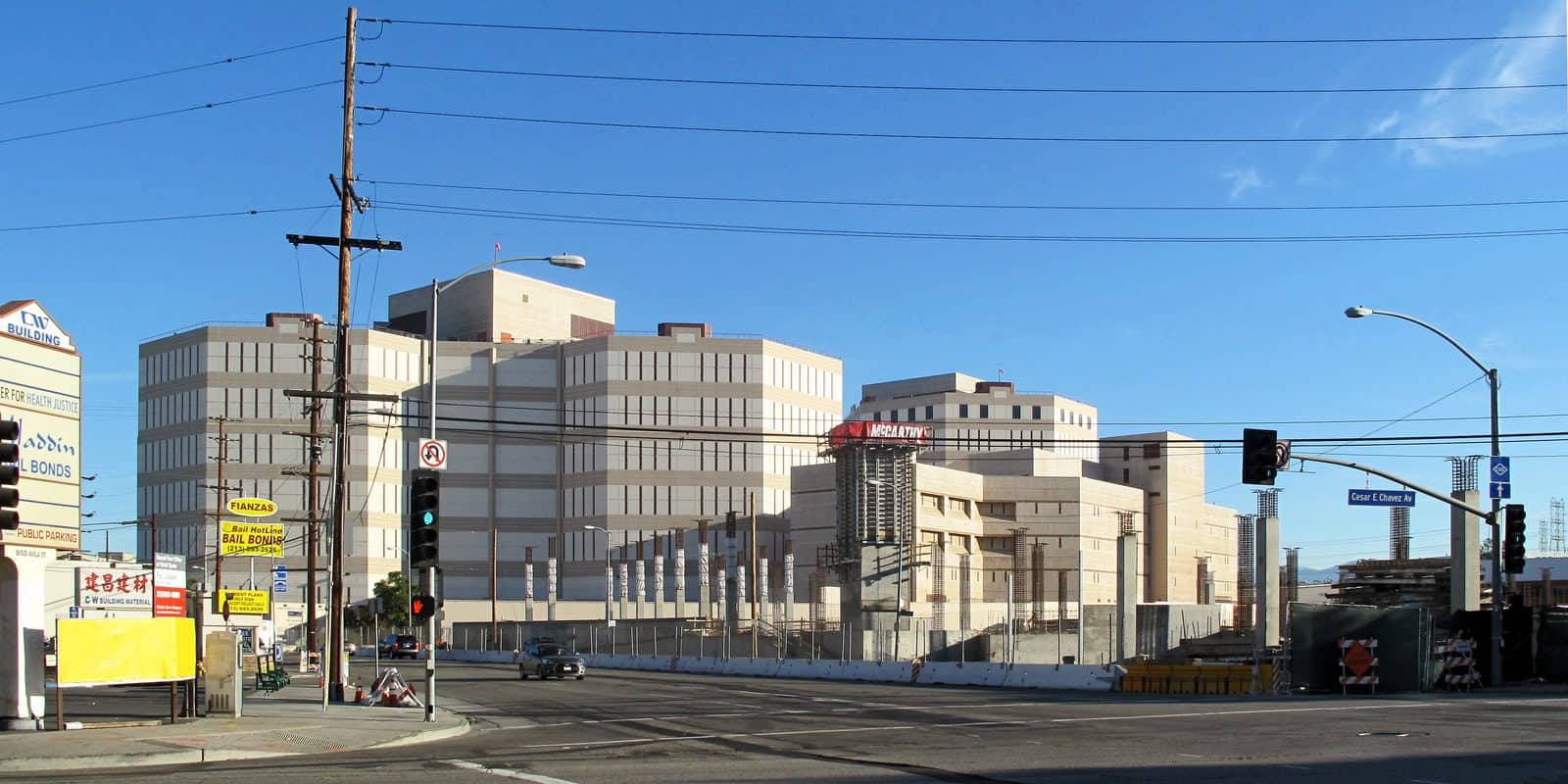
Blake was jailed without bail at Men’s Central Jail in downtown Los Angeles and held in a private cell, according to the Times. His hair, which he had dyed jet black, went grey there. Caldwell was released after Blake’s private investigator posted his $1 million bail with a cashier’s check, CNN reported. On May 1, 2002, Judge Lloyd M. Nash denied Blake bail.
The charges
On April 22, 2002, the District Attorney filed a felony complaint, case LA040377, against Robert Blake and Earle Caldwell. Blake, then 68, was charged with:
- murder, with the special circumstance that he intentionally killed Bakley “by means of lying in wait” and an allegation that he personally and intentionally fired the handgun that killed her
- two counts of solicitation of murder
- conspiracy to commit murder, with Caldwell
Caldwell was charged with a single count of conspiracy. Both men pleaded not guilty. Prosecutors announced that they would not seek the death penalty and would ask for life in prison.
The complaint set out a series of alleged “overt acts.” It alleged that in early 2001 Caldwell made a list of items for the killing that CNN summarised as two shovels, a small sledge, a crowbar, a .25 caliber gun, old rugs, duct tape, Drano, pool acid and lye. It alleged that in March 2001 Blake asked one man to hide in his van in a desert area and kill Bakley, telling him that Caldwell would already have dug holes for the burial, and that Blake asked a second man to kill her in a parked car near Bullhead City, Arizona. It alleged that Blake showed both men a small gun in a zippered case that he said was untraceable, suggested to both that the killing could also be done behind or outside Vitello’s, and drove one of them to look at possible sites. It alleged that on or about March 11, 2001, Blake bought an AT&T prepaid phone card at a 7 Eleven and used it to call the two men from his home. Prosecutors also alleged a failed plan in April 2001 for Caldwell to kill Bakley on a trip to Parker, Arizona, and Three Rivers, California. Finally it alleged that on May 4, 2001, Blake shot Bakley twice with the Walther and threw it into a nearby garbage container.
All of these were allegations. A jury later acquitted Blake of the murder and of soliciting one of the two men, and the conspiracy count against both men never reached trial.
Bakley’s family filed a wrongful death suit on April 29, 2002, five days before the first anniversary of her death, in Los Angeles County Superior Court in Burbank. “It has nothing to do with myself, my brother, my mother or anyone else,” her sister Margerry said. “We can never replace their mother, but this may ease their lives a bit, help them through life a little.”
The preliminary hearing and the end of the conspiracy charge
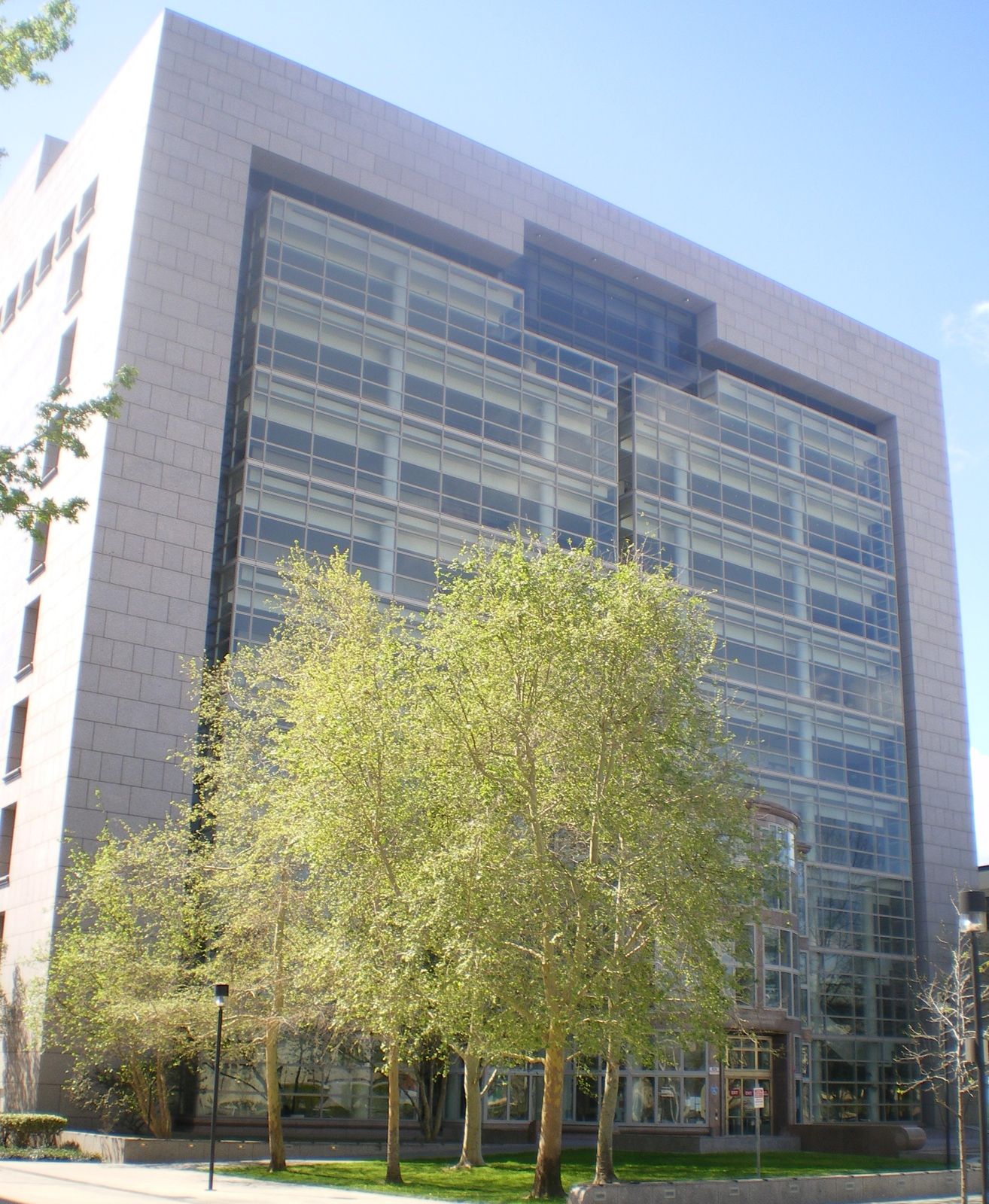
The preliminary hearing opened in Van Nuys in late February 2003 before Superior Court Judge Lloyd M. Nash. Its purpose was narrow: to decide whether there was enough evidence to hold Blake and Caldwell for trial.
The first of the prosecution’s three key witnesses was William Welch, a retired Los Angeles homicide detective who had worked for Blake as a private investigator. Welch testified that Blake approached him in October 1999, when Bakley was single and pregnant. “He said, ‘We’re going to hire a doctor, we’re going to abort her, and if that doesn’t work we’re going to whack her,’” Welch said, according to CNN. Welch said he told Blake he wanted no part of it and suggested paying Bakley $20,000 to $100,000 “so she would go away.”
The second was Gary McLarty, a stuntman who had worked with Blake. He testified that Blake asked him to “pop” his wife and offered him $10,000.
The third was Ronald “Duffy” Hambleton, 66, a retired stuntman from Lucerne Valley. “‘Snuff’ was the word he used,” Hambleton told the court on February 28, 2003, the Los Angeles Times reported. He testified that Blake took him to parking lots near Vitello’s and talked about how someone could wait nearby to kill Bakley, and that Blake suggested at least half a dozen other ways and places: in her bedroom, in his camper, on a street, at a motel, outside Laughlin, Nevada, near the Grand Canyon, or anywhere between Memphis and Los Angeles. Hambleton said Blake told him that “if I wouldn’t do it, he would.” He said he felt threatened when Blake kept mentioning his children and grandchildren. “It was not a question of will you…. It was a question of you will,” he testified.
Hambleton also produced the case’s most solid documentary evidence. He testified that he told Blake to buy a prepaid phone card to keep his calls untraceable. Police traced a card bought at a convenience store near Blake’s home. Detectives never found the card itself, but its call logs, according to court papers cited by the Times, showed 56 calls to Hambleton and three to McLarty between March 2001 and the killing. On the day Bakley died, Hambleton said, Blake called and asked: “Are you sure there is no way they can trace calls made from a calling card?”
On cross examination, Blake’s second lawyer, Thomas Mesereau Jr., confronted Hambleton with his first interview with police in May 2001. “Your answer was, ‘I wouldn’t have the slightest idea,’” Mesereau read, when police asked who might have killed Bakley. Hambleton agreed that he had twice told police he knew nothing before “telling it like it is.” He said he had feared reprisals against his family.
In March 2003 Nash ordered Blake to stand trial on murder, both solicitation counts and conspiracy, with the special allegation of lying in wait, the Times reported. Caldwell was held for trial on the conspiracy count. Blake was released that month on $1.5 million bond after 11 months in jail and fitted with an electronic monitor on his leg.
The case was then assigned to Superior Court Judge Darlene E. Schempp. Mesereau filed a 67 page motion to dismiss. On October 31, 2003, Schempp threw out the conspiracy count against both men. “I cannot find a strong suspicion,” she said of the case against Caldwell, according to the AP. “I think the evidence here is so speculative it carries very little weight. I simply don’t find there is probable cause.” The main evidence against Caldwell was his handwritten list of items, which included shovels, a sledge, duct tape, lye, pool acid and the note “Get blank gun ready”; his lawyer, Dana Cole, said they were ordinary handyman supplies. Schempp ordered his $1 million bail returned.
She refused to dismiss the murder count against Blake. “It appears there was probable cause to hold defendant Blake to answer,” she said. A new prosecutor, Shellie Samuels, called Bakley “a sitting duck.” “The defendant had a very strong motive. He called her the scum of the earth. He despised Bonny Lee Bakley,” Samuels told the court. “His intent was to get the baby and get rid of Bonny.” Outside, Caldwell told reporters: “A great weight has been lifted … As far as what they wanted me to say, I wasn’t going to lie.”
That was the end of the criminal case against Earle Caldwell. He was never tried and never convicted. Scott Ross, a private investigator who worked for Blake’s defence, told NBC News in 2016 that police logs showed Caldwell was served with a grand jury subpoena in November 2001, and argued that prosecutors would have done better to seek his cooperation than to charge him.
The criminal trial: the stuntmen on the stand
Blake was tried in Van Nuys for murder and the two solicitation counts, with Schempp presiding. Blake, now 71, was represented by his third criminal lawyer, M. Gerald Schwartzbach. Over 12 weeks, the Times reported, 110 witnesses testified, 74 for the prosecution and 36 for the defence. Blake did not testify.
There was no eyewitness to the shooting and no forensic evidence that tied Blake to the Walther. Samuels built her case on motive and on the men Blake was said to have asked to do the killing.
In the second week of February 2005 three of them testified on consecutive days. Gary “Whiz Kid” McLarty, 64, of Lake View Terrace, said Blake outlined four plans to ambush a woman he took to be Blake’s wife and offered him $10,000. He acknowledged that Blake never used the word “kill.” He also admitted that he had been hospitalised the year before for a drug induced breakdown, during which he believed police were tunnelling under his house and satellites were tracking him.
Frank Minucci, whom the Times described as a street hoodlum turned New York preacher, testified that Blake wanted to “annihilate” Bakley, called her a “pig,” and suggested a blank check would be waiting if Minucci came to California to kill her.
Hambleton, now 68, testified that Blake proposed eight scenarios for the killing, including one outside Vitello’s. He said he drove more than 100 miles from his Lucerne Valley ranch to meet Blake at a Studio City diner in March 2001, thinking it was about film work, and that Blake drove him to the alley behind Vitello’s, two blocks from where Bakley would be shot. When he refused the job, he said, Blake answered: “Well, if you’re not going to do it, then I sure as hell am.” In most of the plans, he said, Blake wanted to be present. “Don’t worry about it. I’m an actor, you know, I’ll take care of it,” he quoted Blake as saying. Under cross examination he was confronted with his past methamphetamine use and his first statements to police.
The defence called the stuntmen drug users prone to delusion. Schwartzbach told the jury that police “convicted Mr. Blake on the night of the murder, and then they conducted an incompetent investigation.” He suggested that one of the many men Bakley had taken money from could have killed her while she sat alone in the car, and pressed the absence of eyewitnesses, fingerprints and forensic links to the gun. Some witnesses testified that Blake’s grief that night did not look sincere; one said he seemed to be “turning it on and off,” the AP reported.
The jury did not hear Blake on the stand, but it did see a videotape of his jailhouse interview with Barbara Walters, in which he denied killing his wife.
The verdict: March 16, 2005
On Wednesday, March 16, 2005, after nine days of deliberation, the jury of seven men and five women acquitted Robert Blake of the murder of Bonny Lee Bakley. It also found him not guilty of soliciting Gary McLarty to kill her. On the count of soliciting Ronald Hambleton, the jurors deadlocked 11 to 1 in favour of acquittal. Schempp dismissed that count, telling the courtroom, as CNN reported, that another trial “would not result in anything different.” The Times reported the dismissal as “in the interest of justice.”
When the verdict was read, CNN reported, Blake smiled, hugged his lawyer, put his head on the table and sobbed. He nearly collapsed and fumbled with a bottle of water.
Prosecutors “couldn’t put the gun in his hand,” the jury foreman, Thomas Nicholson, told the Times. “I felt the primary thing from what I saw was that the circumstantial evidence was flimsy.” Nicholson told CNN that McLarty’s testimony was “so disjointed and so irregular” that “it had no bearing at all in terms of the case,” and called Hambleton a “prolific liar.” “I didn’t believe either one of them,” said Charles Safko, a 50 year old truck driver from Winnetka. “I thought they were both so full of it, it was unbelievable.”
Samuels, who had won 48 of 49 murder cases before this one, said she was “blown away.” “I can’t believe a jury would not convict on this,” she said. Sandi Gibbons, a spokeswoman for the District Attorney, told CNN that prosecutors and police believed they had a “solid circumstantial case.” “We believe the evidence was compelling,” she said.
Blake came out of the courthouse more than an hour later, smoking, and called friends and relatives who had spoken against him “liars” and “commode scum.” “If you want to know how to go through $10 million in five years, ask me,” he said. “I used to be a rich man,” he told the Times. “Right now I couldn’t buy spats for a hummingbird.” Asked who killed his wife, he shouted, “Shut up!” He asked for scissors to cut off the monitor on his leg. “I never lost hope,” he said, according to CNN.
Bakley’s daughter Holly Gawron wept in the courtroom as the verdict was read. “It was not what I wanted to hear, but I will accept it and move on,” she told the Times. “At this point there is nothing I can do. I would like him to suffer.” Her lawyer, Eric Dubin, said: “I completely respect the jury’s decision, but in America, money and fame will buy you freedom.”
The civil case: Tual v. Blake
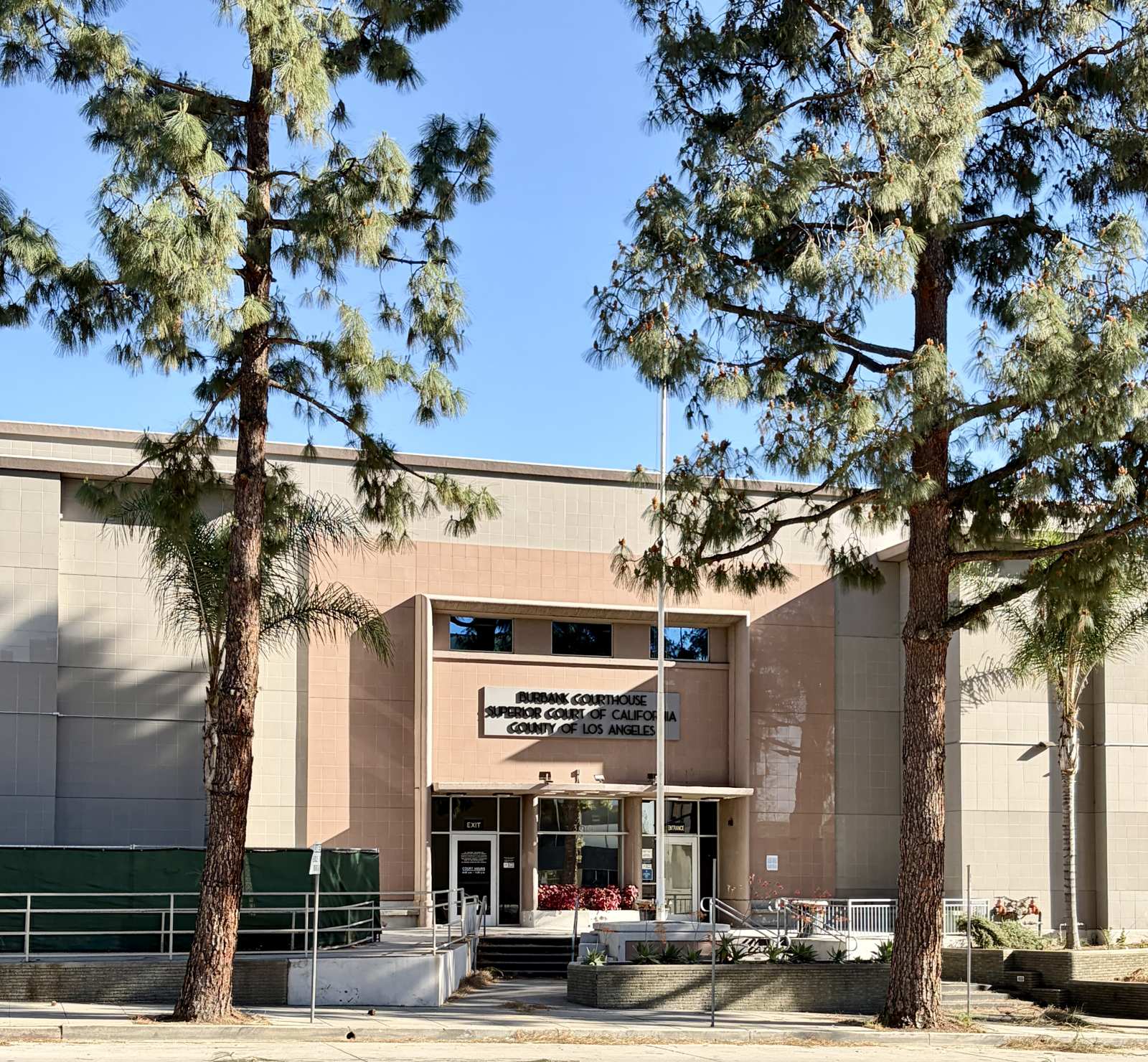
The acquittal did not end Blake’s legal exposure. The wrongful death suit filed in Burbank in April 2002 went to trial in the autumn of 2005 before Superior Court Judge David M. Schacter. The plaintiff of record was Blanchard E. Tual, the administrator of Bakley’s estate, suing on behalf of her four children, who were represented by Eric Dubin. Earle Caldwell was also a defendant.
The standard of proof was different. In the criminal trial, all 12 jurors had to agree that guilt was proved beyond a reasonable doubt. In the civil case, as CBS and the AP explained, only nine of 12 jurors had to find by a “preponderance” of the evidence, meaning more likely than not, that Blake was responsible. Dubin argued that Blake either killed Bakley himself or hired someone to do it; the jury was not asked to say which.
This time Blake testified, for eight days. He denied killing his wife and repeated his account of going back to the booth for his gun. He sparred with Dubin, lodged his own objections and called him “chief,” “junior” and “sonny.” “We expected Mr. Blake to conduct himself in a professional manner,” juror David Lopez said afterwards. “He was always very angry, back and forth with Mr. Dubin.” Blake’s civil lawyer, Peter Ezzell, argued that many people had wanted Bakley dead and portrayed her as a grifter who preyed on lonely men. A criminalist testified for Blake that there were only scant traces of gunshot residue on his clothing.
On Friday, November 18, 2005, after eight days of deliberation, the jury found 10 to 2 that Blake “intentionally caused the death” of Bonny Lee Bakley and awarded her children $30 million. It found that Caldwell had not taken part in the killing. “We believe that Mr. Blake was probably his worst enemy on the stand,” the foreman, Bob Horn, said outside court. Blake, in a black suit and tie, looked down as the verdicts were read and left without comment.
None of Bakley’s four children was in the courtroom. “These kids lost their mom, and that got overlooked over the years,” Dubin said. “This was a real family. This was a real person. And to have that validated in a court of law means an awful lot to these kids.”
The civil verdict was a finding of liability for money damages under the civil standard of proof. It was not a criminal conviction and it did not change the acquittal. O.J. Simpson, who had been through the same sequence in 1995 and 1997, told the AP: “I still don’t get how anyone can be found not guilty of a murder and then be found responsible for it in any way, shape or form.” The comparison runs through both cases; TDSH covers the first one in its file on the O.J. Simpson trial.
Bankruptcy and the appeal
On Friday, February 3, 2006, Blake filed for bankruptcy, the Los Angeles Times reported. He listed his largest debts as the $30 million judgment, a $1,274,783 federal tax bill and a $334,337 state tax assessment, and put his assets at between $100,001 and $500,000. Ezzell said he had capped his fees at $250,000 and written off about $200,000 more. “Otherwise, I wouldn’t have written off $200,000 in fees,” he said of his belief that Blake was broke. Dubin was unconvinced: “The concept of Robert Blake doing everything he can to avoid paying was highly anticipated. And we’re ready for it.”
At a hearing before the bankruptcy trustee in March 2006, the AP reported, Blake said he had contracted to pay each of his three criminal lawyers, Harland Braun, Thomas Mesereau Jr. and M. Gerald Schwartzbach, $450,000, though he was not sure they had been paid in full, and that he had paid as many as 10 investigators $7,000 a month each.
Blake appealed the civil judgment. On April 25, 2008, the California Court of Appeal, Second Appellate District, Division Three, decided Tual v. Blake, case B191050, in an unpublished opinion. It rejected his arguments about the evidence, the jury instructions and juror misconduct, including the complaint that jurors had discussed O.J. Simpson and Michael Jackson as celebrities who, in the AP’s paraphrase of the court, “purportedly had gotten away with murder or molestation.” But it held the damages too high. “$30 million is excessive and compels the conclusion that the jury was influenced by passion or prejudice,” the court wrote. It ordered the award reduced to $15 million if the plaintiff consented, and a new trial on damages alone if not. Dubin said he would accept and estimated the award with interest at about $24 million. “I see every reason to accept it and be happy about it,” he said. “We are going to start collecting.” Schwartzbach said he knew of no assets to collect: “If Robert had money he would be paying me.”
After the verdicts
In a 2016 interview with NBC News, Scott Ross, the private investigator who had worked on his defence, said: “I do not believe for one second that he pulled the trigger. But yes, I do believe that he was involved.” Blake was never charged again, and no one else was ever charged with the killing.
Robert Blake died on Thursday, March 9, 2023, at 89, at home in Los Angeles. A statement released on behalf of his niece, Noreen Austin, said he died of heart disease, surrounded by family, and that he had spent his last years “enjoying jazz music, playing his guitar, reading poetry, and watching many Hollywood Classic films.” NPR’s obituary noted that many remembered him not as the dark haired star of “Baretta” but “as a spectral, white-haired murder defendant.”
Bonny Lee Bakley was buried at Forest Lawn Memorial Park on May 25, 2001, after a brief Catholic graveside service attended by about two dozen people, CNN reported. Her own family stayed away, upset at the way Blake’s lawyer had described her.
Myths the court papers do not support
“Robert Blake was convicted of killing his wife.” He was not. A criminal jury acquitted him of murder and of one solicitation count, and the second solicitation count was dismissed after an 11 to 1 deadlock for acquittal. The civil jury found him liable for damages, which is not a conviction.
“The gun was a Walther PPK.” The weapon named in the felony complaint and described at trial was a Walther P-38, a 9 mm military pistol from the Second World War, not the smaller PPK.
“Blake’s own gun killed her.” Police said his .38 caliber revolver, the gun he said he went back for, was not used. The Walther was unregistered and, Court TV reported, untraceable.
“Earle Caldwell was convicted as an accomplice.” The conspiracy count against him was dismissed for lack of probable cause in October 2003, before trial, and the civil jury found he had not taken part in the killing.
“Blake won an Emmy for playing John List.” He won his only Emmy for “Baretta” in 1975. The Television Academy lists his 1993 John List role as a nomination, not a win.
“She was shot inside Vitello’s.” She was shot in the passenger seat of Blake’s parked car, a block or more from the restaurant, while, by Blake’s account, he was inside.
People
- Bonny Lee Bakley: 44, the victim; married Robert Blake in November 2000
- Robert Blake: actor, born Michael James Gubitosi in 1933; acquitted of murder in 2005; found civilly liable in 2005; died in 2023
- Earle Caldwell: Blake’s handyman and Bakley’s part time bodyguard; conspiracy charge dismissed in 2003; never tried
- Holly Gawron: Bakley’s daughter
- Margerry Bakley: Bakley’s sister
- Sean Stanek: film director who called 911
- Steve and Joe Restivo: owners of Vitello’s
- Michael Dufficy and Richard Noel: diners who testified about Blake’s behaviour that night
- Michael Mastrocovo: LAPD criminalist who recovered the gun
- Steven Dowell: coroner’s criminalist who tested Blake for gunshot residue
- Celia Hartnett: defence gunshot residue expert
- William Welch: retired LAPD homicide detective and Blake’s private investigator
- Gary McLarty: stuntman, 64 at trial; the subject of the solicitation count on which Blake was acquitted
- Ronald “Duffy” Hambleton: retired stuntman, 66 at the preliminary hearing and 68 at trial; the subject of the deadlocked and dismissed solicitation count
- Frank Minucci: prosecution witness at trial
- Judge Lloyd M. Nash: presided at the preliminary hearing and denied bail in 2002
- Judge Darlene E. Schempp: dismissed the conspiracy count in 2003 and presided at the criminal trial
- Judge David M. Schacter: presided at the civil trial
- Shellie Samuels: prosecutor
- Harland Braun, Thomas Mesereau Jr. and M. Gerald Schwartzbach: Blake’s three criminal defence lawyers
- Peter Ezzell: Blake’s civil lawyer
- Eric Dubin: lawyer for Bakley’s children
- Scott Ross: private investigator for the defence
Where the accounts disagree
How many times she was shot. On the night of the shooting and for a year afterwards, police and news reports said Bakley had been shot once in the head; CNN quoted LAPD spokesman Guillermo Campos to that effect on May 5, 2001, and the Times was still writing “shot once in the head” on the day of the arrest. The autopsy report, as reviewed by the Times in April 2002 and summarised by Burnett, records two wounds, to the right cheek and the right shoulder, and the felony complaint charged that Blake shot her twice.
Where she died. CNN, relaying Stanek, reported that she was declared dead on arrival at a nearby hospital. The Times wrote in April 2002 that she “died at the scene.”
Where the car was. The LAPD release placed her in “the 11400 block of Woodbridge Street in North Hollywood.” News reports placed the car in Studio City, about a block (the Times) or a block and a half (Court TV) from Vitello’s.
How far away the gun was. Police told the Times in 2002 that the gun was in a trash bin “a few yards” from the scene. Affidavits reported by the Times later that year said about 10 feet from the car. Criminalist Michael Mastrocovo’s trial testimony, as reported by Court TV, put the dumpster about 14 feet from the front of the car.
When the gun was found. Capt. Tatreau said police recovered it “about a day after the killing”; the Times in 2005 said the day after the slaying. CNN reported police searching a construction site less than two blocks away on Monday, May 7, 2001.
How much gunshot residue was on Blake’s hands. Coroner’s criminalist Steven Dowell testified to five consistent particles. Defence expert Celia Hartnett said the samples sent to her showed four. Mesereau’s 2003 motion to dismiss, as reported by the Times, referred to two lead particles on Blake’s hands that prosecution experts called “consistent with gunshot residue.” Burnett later argued that the wrong spectra images had been attached to Dowell’s report on Blake’s hands, so the true counts are uncertain.
Where Blake was arrested. The LAPD release gave a time, 5:30 p.m., but no address. The Times reported the arrest “around 6 p.m.” at the Hidden Hills home where he was living, and later at his daughter’s Hidden Hills home; the AP, via CBS, said his sister’s home in Hidden Hills.
When they met. The Times reported 1998 at a now defunct Burbank jazz club. NPR’s obituary said 1999. The AP verdict story said “five years ago,” which also points to about 2000.
What Blake went back for. Blake told police he returned for the .38 he carried, which had slipped from his waistband or been left in the booth. Joe Restivo, through his brother, told CNN that Blake did not appear to retrieve anything and only drank two glasses of water.
Why the second solicitation count ended. CNN quoted Schempp as saying a retrial “would not result in anything different.” The Times reported the dismissal as “in the interest of justice.”
Blake’s Emmys. NPR’s 2023 obituary said he “won another Emmy” for the John List film in 1993. The Television Academy’s own listing shows that role as a nomination and credits him with one Emmy, for “Baretta.” The Times, in 2005, also called the 1993 role a nomination.
Timeline
- September 18, 1933Michael James Gubitosi, later Robert Blake, is born in Nutley, New Jersey.
- 1967Blake plays Perry Smith in “In Cold Blood.”
- 1975“Baretta” begins on ABC; Blake wins an Emmy for the role. The series ends in 1978.
- 1998 or 1999Blake meets Bonny Lee Bakley at a Burbank jazz club (the year differs by source).
- October 1999According to William Welch’s later testimony, Blake tells him he wants Bakley to have an abortion and, failing that, to “whack her.”
- June 2000Bakley gives birth to a daughter; DNA tests show Blake is the father.
- November 2000Blake and Bakley marry at his Studio City home.
- March 2001Bakley returns from Arkansas. Prosecutors later allege Blake asks Gary McLarty and Ronald Hambleton to kill her. On or about March 11 he buys a prepaid phone card, according to the felony complaint.
- About April 29, 2001Bakley moves into the guest house behind Blake’s Studio City home, five days before her death.
- May 4, 2001Bakley is shot twice in Blake’s car near Vitello’s in Studio City, at about 9.30 to 9.50 p.m., and dies.
- About May 5, 2001Police recover a Walther P-38 from a nearby dumpster.
- May 25, 2001Bakley is buried at Forest Lawn Memorial Park.
- April 18, 2002The LAPD arrests Blake in Hidden Hills and Earle Caldwell in Burbank.
- April 22, 2002Felony complaint filed; Blake pleads not guilty to murder, two counts of solicitation and conspiracy; Caldwell pleads not guilty to conspiracy.
- April 29, 2002Bakley’s estate files a wrongful death suit in Burbank.
- May 1, 2002Judge Lloyd M. Nash denies Blake bail.
- February and March 2003Preliminary hearing before Nash; Blake and Caldwell are held for trial. Blake is released on $1.5 million bond after 11 months in jail.
- October 31, 2003Judge Darlene E. Schempp dismisses the conspiracy count against both men; Caldwell’s case ends. The murder count stands.
- February 2005McLarty, Minucci and Hambleton testify on consecutive days at trial.
- March 16, 2005Blake is acquitted of murder and of soliciting McLarty; the jury deadlocks 11 to 1 for acquittal on the Hambleton count, which Schempp dismisses.
- November 18, 2005A civil jury in Burbank finds 10 to 2 that Blake intentionally caused Bakley’s death and awards $30 million; Caldwell is found not to have taken part.
- February 3, 2006Blake files for bankruptcy.
- April 25, 2008The Court of Appeal, in Tual v. Blake, cuts the award to $15 million if the plaintiff consents.
- March 9, 2023Robert Blake dies at home in Los Angeles at 89.
Frequently asked questions
Q.01 Who was Bonny Lee Bakley?
Bonny Lee Bakley was a 44 year old mother of four who married the actor Robert Blake in November 2000, after DNA tests showed he was the father of her baby daughter. She was shot to death in his car in Studio City on May 4, 2001. After her death, her family’s lawyer objected to the way she was being portrayed and said: “She is not a cartoon character.”
Q.02 How was Bonny Lee Bakley killed?
She was shot twice as she sat in the passenger seat of Blake’s parked Dodge Stealth near Vitello’s restaurant. According to the autopsy, as reported by the Los Angeles Times and summarised by forensic scientist Bryan Burnett, one bullet entered her right cheek and lodged in the left side of her brain, and the other entered her right shoulder and cut her right carotid artery. The weapon was a World War II era 9 mm Walther P-38 found in a nearby dumpster.
Q.03 Was Robert Blake convicted of murdering his wife?
No. On March 16, 2005, a Los Angeles jury acquitted Blake of murder and of soliciting one man to kill her, and the judge dismissed a second solicitation count after the jury deadlocked 11 to 1 for acquittal. He was never convicted of any crime in the case.
Q.04 Why was Robert Blake found liable in civil court after being acquitted?
The civil case used a lower standard of proof, a preponderance of the evidence, and needed only nine of 12 jurors to agree. On November 18, 2005, a Burbank jury voted 10 to 2 that Blake intentionally caused Bakley’s death and awarded her children $30 million. A civil finding of liability is not a criminal conviction.
Q.05 How much did Robert Blake have to pay Bakley’s children?
The jury awarded $30 million in 2005. On April 25, 2008, the California Court of Appeal ruled that amount excessive and reduced it to $15 million if the plaintiff consented, which Bakley family lawyer Eric Dubin said he would accept. Blake had filed for bankruptcy in February 2006, and his lawyer said he had no assets to pay it.
Q.06 What happened to Earle Caldwell?
Caldwell, Blake’s handyman and Bakley’s part time bodyguard, was arrested in April 2002 and charged with conspiracy to commit murder. Judge Darlene Schempp dismissed that charge on October 31, 2003, saying she could not find probable cause. He was never tried or convicted, and the civil jury found he had not taken part in the killing.
Q.07 Who were the stuntmen in the Robert Blake case?
Gary McLarty and Ronald “Duffy” Hambleton were former stuntmen who testified that Blake asked them to kill Bakley in early 2001. Jurors said they did not believe either man, citing their past drug use, and Blake was acquitted on the McLarty count while the Hambleton count was dismissed after an 11 to 1 deadlock.
Q.08 What gun was used to kill Bonny Lee Bakley?
Police identified the murder weapon as an unregistered 9 mm Walther P-38, a German military pistol from the Second World War, recovered from a dumpster near the car about a day after the shooting. It had one live round in the chamber, no fingerprints and, according to police affidavits, a coating of fresh motor oil. Blake’s own .38 revolver was not the murder weapon.
Q.09 When did Robert Blake die?
Robert Blake died of heart disease at his home in Los Angeles on March 9, 2023, at the age of 89. No one else has ever been charged with killing Bonny Lee Bakley.
Related case files
- The Clutter family killings in Holcomb, Kansas: the murders behind “In Cold Blood,” in which Blake played the killer Perry Smith
- The O.J. Simpson trial: the other Los Angeles celebrity case that ended in a criminal acquittal and a civil finding of liability
- Phil Spector and the death of Lana Clarkson: a Los Angeles celebrity shooting case that went to two criminal trials
- The Black Dahlia murder: Elizabeth Short’s unsolved 1947 killing in Los Angeles
- Who killed Bugsy Siegel?: the unsolved 1947 shooting on Linden Drive in Beverly Hills
- The dark art of execution: a history of the punishments the state reserves for those it convicts
Works Cited
Documents and sources
Court and police records
- Los Angeles Police Department. “Robert Blake Arrested For Murder Of Bonny Lee Bakley.” News release, April 18, 2002. Archived copy of the LAPD newsroom page (lapdonline.org blocks automated requests; the archived copy was read).
- Superior Court of California, County of Los Angeles. Felony complaint, People v. Robert Blake and Earle Caldwell, case LA040377, April 22, 2002, as posted by FindLaw for CNN. Archived PDF.
- California Court of Appeal, Second Appellate District, Division Three. Tual v. Blake, No. B191050, April 25, 2008 (not to be published). Verbatim excerpts captured in October 2026 from the search index of the Casetext copy (casetext.com/case/tual-v-blake-b191050-cal-app, now offline and returning HTTP 410); summarised by Horvitz & Levy, April 28, 2008.
Forensic analysis
- Burnett, Bryan R. “The Alternative Science of the Robert Blake Criminal Trial.” International Journal of Forensic Sciences 9, no. 3 (2024): 000399. DOI 10.23880/ijfsc-16000399. PDF.
- Burnett, Bryan. “The Gunshot Residue Evidence of People v. Robert Blake.” Manuscript, Meixa Tech. PDF hosted by Murderpedia.
News reports, 2001 to 2002
- CNN. “Search warrant obtained for actor Blake’s home after wife’s death.” May 5, 2001. cnn.com.
- CNN. “Police seek clues in death of Robert Blake’s wife.” May 8, 2001. cnn.com.
- CNN. “Blake buries slain wife, thanks her for baby.” May 25, 2001. cnn.com.
- CBS News / Associated Press. “Robert Blake Arrested In Wife’s Murder.” April 2002. cbsnews.com.
- Los Angeles Times. “Robert Blake Arrested as Triggerman in Wife’s Killing.” April 19, 2002. latimes.com.
- CNN. “The charges against Robert Blake.” April 22, 2002. cnn.com.
- CNN. “Blake pays $1 million bail for release of bodyguard.” April 27, 2002. cnn.com.
- Los Angeles Times. “Bakley Heirs File Suit Against Blake.” April 30, 2002. latimes.com.
- CNN. “Blake denied bail in wife’s killing.” May 2, 2002. cnn.com.
- Blankstein, Andrew. “Police Find Guns Near Blake’s Home.” Los Angeles Times, October 23, 2002. latimes.com.
News reports, 2003
- CNN. “Former cop says Blake wanted him to ‘whack’ wife.” February 27, 2003. cnn.com.
- Los Angeles Times. “2nd Man Says Blake Asked Him to Kill.” March 1, 2003. latimes.com.
- Los Angeles Times. “Blake Accuser Says Changing Story Was ‘Right Thing to Do.’” March 4, 2003. latimes.com.
- CBS News / Associated Press. “Stuntman Cross-Examined At Blake Trial.” March 4, 2003. cbsnews.com.
- Los Angeles Times. “Blake’s Lawyer Seeks Dismissal of Charges.” September 20, 2003. latimes.com.
- CNN. “Judge tosses out conspiracy charges against Robert Blake.” October 31, 2003. cnn.com.
- CBS News / Associated Press. “Robert Blake Faces Murder Trial.” October 31, 2003 (the CBS archive page carries a February 21, 2003 date stamp; its content covers the October 31, 2003 hearing). cbsnews.com.
News reports, 2005 trials
- Sweetingham, Lisa. “Jurors see gritty crime scene photos in Blake murder trial.” Court TV via CNN, January 12, 2005. cnn.com.
- Court TV via CNN. “Expert: Gunshot residue does not mean Robert Blake killed his wife.” January 19, 2005. cnn.com.
- Los Angeles Times. “3rd Testifies Blake Wanted Wife Killed.” February 10, 2005. latimes.com.
- CBS News / Associated Press. “Man: Blake Wanted Wife ‘Snuffed.’” February 2005 (the CBS archive page carries a December 2004 date stamp; its content covers the trial testimony). cbsnews.com.
- Los Angeles Times. “Blake Had Little Gun Residue.” February 23, 2005. latimes.com.
- Associated Press via Today. “Expert says it’s unlikely Blake fired gun.” February 22, 2005. today.com.
- CNN. “Blake found not guilty in wife’s killing.” March 16, 2005. cnn.com.
- CBS News / Associated Press. “‘Not Guilty’ Verdict For Blake.” March 16, 2005. cbsnews.com. The same AP story appears at today.com.
- Los Angeles Times. “Actor Robert Blake Acquitted in Shooting Death of His Wife.” March 17, 2005. latimes.com.
- CBS News / Associated Press. “Jury: Blake Behind Wife’s Killing.” November 18, 2005. cbsnews.com.
News reports, 2006 to 2023
- Los Angeles Times. “Robert Blake Seeks Bankruptcy Protection.” February 4, 2006. latimes.com.
- Associated Press via Fox News. “Blake Files for Bankruptcy.” February 4, 2006. foxnews.com.
- Associated Press via the Press Democrat. “Actor tells trustee he can’t pay taxes, creditors after paying lawyers.” March 25, 2006. pressdemocrat.com.
- Deutsch, Linda. “$30 million wrongful-death judgment against Robert Blake cut.” Associated Press via Today, April 26, 2008. today.com.
- Connor, Tracy. “15 Years Later, Robert Blake’s Private Eye Speaks Out.” NBC News, May 4, 2016. nbcnews.com.
- NPR / Associated Press. “Robert Blake, the actor acquitted in wife’s killing, dies at 89.” March 9, 2023. npr.org.
Reference
- Television Academy. “Robert Blake: Emmy Awards and Nominations.” televisionacademy.com.
- Television Academy. “Outstanding Lead Actor in a Miniseries or Special, 1993.” televisionacademy.com.
Image credits
- Ventura Boulevard, Studio City: Cbl62 / Wikimedia Commons, CC BY-SA 3.0
- 1991 Dodge Stealth: dave_7 / Wikimedia Commons, CC BY 2.0
- Walther P38 pistol: Bouillant Achille / Wikimedia Commons, CC0 1.0
- Los Angeles Men’s Central Jail: Downtowngal / Wikimedia Commons, CC BY-SA 3.0
- Van Nuys Courthouse: Cbl62 / Wikimedia Commons, CC BY-SA 3.0
- Burbank Courthouse: Alexis Doine / Wikimedia Commons, CC0 1.0