FILE NO. 0146Case status Convicted
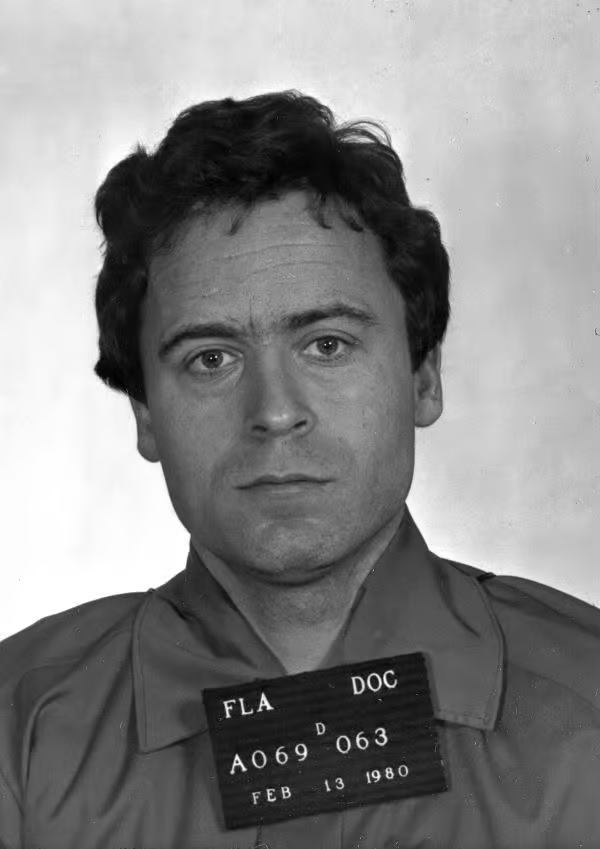
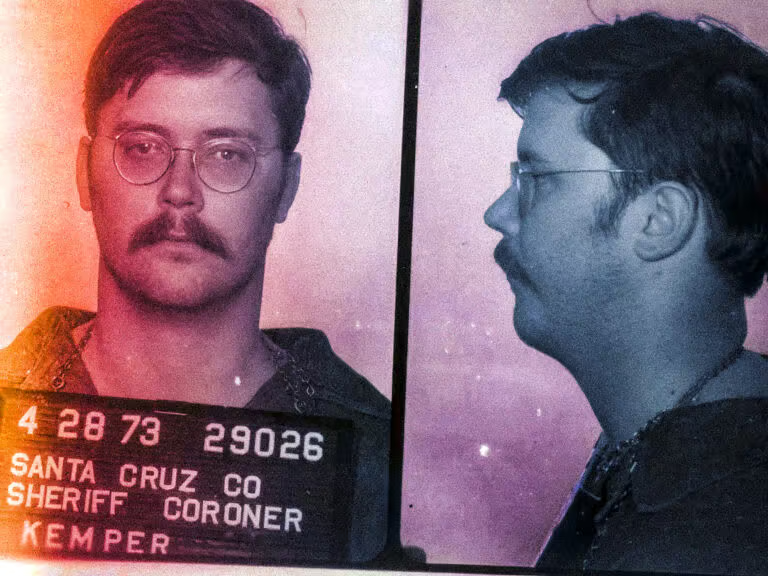
This chronological history traces Ted Bundy’s crimes from 1974 through his 1989 execution, covering cases in Washington, Utah, Colorado, and Florida. It emphasizes the experiences of victims and survivors while distinguishing between proven convictions and unverified confessions. The account provides a factual overview of his path across the West.
The record highlights the evolution of forensic science, comparing discredited bite-mark testimony with modern DNA results. Recent 2026 testing provided definitive closure in the Laura Ann Aime case. By prioritizing documented evidence and survivor legacies, the narrative shifts focus from the offender’s public image to verified historical facts.
For more than half a century, Ted Bundy’s name has threatened to eclipse the women and girls whose lives were taken or altered by his violence. This chronological account follows the verified record from the first known attacks through the Florida trials, the disputed forensic methods used against him, and the DNA result that closed one Utah case in 2026.
A File That Stayed Open for 51 Years
On April 1, 2026, relatives of Laura Ann Aime sat inside the Utah County Sheriff’s Office in Spanish Fork and heard an official conclusion that had taken more than half a century to reach. Laura was 17 when she left a Halloween party in Lehi in 1974. Her body was found weeks later down an embankment beside American Fork Canyon Road. Ted Bundy had been suspected for decades. Investigators said he had acknowledged the killing before his execution, but he had not given them enough detail to make a confession stand as proof.
The physical evidence had endured. Analysts at the Utah Bureau of Forensic Services used technology acquired in 2023 to work with small, degraded samples containing genetic material from multiple people. From body fluids preserved in Laura’s case, the laboratory developed a single male DNA profile. It was entered into CODIS, the national law-enforcement DNA database. In March 2026, Florida authorities reported the match: the profile belonged to Bundy.
Sheriff Mike Smith declared the case closed. Laura’s sister, Michelle Impala, spoke about the older sister with whom she had shared a bedroom on the family farm, a young woman who loved horses and brought her 12-year-old sister along. The press conference did not reveal a new name. Laura had long appeared on lists of the Ted Bundy victims. What changed was the category beside her name. Suspicion and a late confession had become a forensic identification.
That distinction matters throughout the Ted Bundy case. Bundy was convicted of one kidnapping in Utah and three murders in Florida. He was charged but never tried for a Colorado murder. He admitted to 30 homicides in his final days, according to investigators and later official accounts, but not every admission was independently verified. Other disappearances have been attached to him through geography, resemblance, or rumor alone. The true number of people he killed remains unknown.
The record is therefore not a clean list. It is a series of different records laid over one another: missing-person reports, recovered remains, witness accounts, court findings, attributed confessions, and, now, DNA. Any honest chronology has to show those layers. It also has to resist a familiar distortion. Bundy spent years manufacturing a public image of cleverness and control. The enduring facts are not his image. They are the names of the people who did not come home, the testimony of those who survived, and the failures that allowed a convicted kidnapper to escape custody twice.
Before the Disappearances Had One Name
Theodore Robert Cowell was born on November 24, 1946, in Burlington, Vermont. He later took his stepfather’s surname, John Bundy, after moving with his mother to Tacoma, Washington. He graduated from the University of Washington with a psychology degree in 1972, worked in state and local political circles, and enrolled in law school, first in Washington and later at the University of Utah.
Those biographical facts became central to the mythology that followed. Reporters and spectators repeatedly treated education, conventional dress, and verbal confidence as evidence that Bundy was somehow anomalous among violent offenders. They were not. A degree did not confer insight into his crimes. Law school did not make him a criminal mastermind. Respectability was a useful cover in a culture inclined to confuse social ease with safety.
The earliest crimes attributed to Bundy remain unsettled. He was suspected in cases that predated 1974, including the 1961 disappearance of eight-year-old Ann Marie Burr in Tacoma, but he denied involvement in that case, and no sufficient physical evidence has established it. Speculation about such cases often expanded after his name became infamous, sometimes because an unsolved victim resembled those he was known to target or because he might have been in the region. Possibility is not proof.
The more defensible chronology begins in Seattle in January 1974. An 18-year-old University of Washington student was asleep in her basement apartment when an intruder attacked her. She suffered a fractured skull and permanent injuries. The assailant also committed a severe sexual assault. She survived. Later investigators and historians widely attributed the attack to Bundy because it anticipated the pattern that followed, but there was no prosecution, and public accounts have not all treated the identification with the same degree of certainty.
That survivor is sometimes reduced to the phrase “the first victim.” It is an inadequate description. She lived for decades beyond the attack, though with injuries that reshaped her life. Her survival is also an early warning against a narrative that portrays Bundy as moving through the West without resistance or error. The record contains women who fought him, escaped him, identified him, testified against him, and lived long enough to insist that their lives were larger than the encounter.
Seattle, 1974: A Pattern Forms in Absence
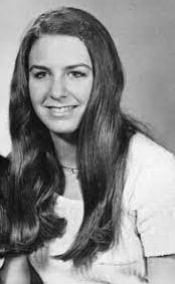
Late on January 31 or in the early hours of February 1, 1974, 21-year-old Lynda Ann Healy disappeared from the basement bedroom she rented near the University of Washington. She was a psychology student and gave morning ski-condition reports for a local radio station. When she failed to appear, her housemates found blood on her bedding. Her clothes and personal items suggested she had not left voluntarily.
At first, Lynda’s disappearance was a single mystery. Then other young women began to vanish.
Donna Gail Manson, 19, disappeared on March 12 while walking to a concert at The Evergreen State College in Olympia. Her remains have never been found. Bundy later confessed to killing her, but the late admission did not provide her family with a recoverable body or a complete, independently testable account.
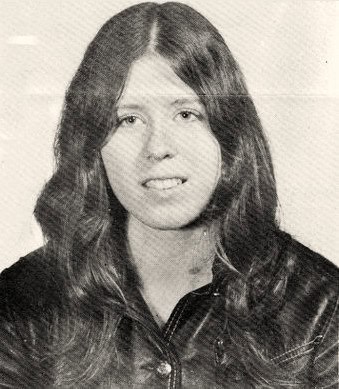
On April 17, Susan Elaine Rancourt, 18, disappeared from Central Washington State College in Ellensburg. Witnesses described a man with an arm in a sling asking women to help carry books to a Volkswagen Beetle. The request appeared harmless because it was designed to make refusal feel unkind. It would recur in accounts from other places.
Roberta Kathleen Parks, 20, vanished from the Oregon State University campus in Corvallis on May 6. Her case crossed the state line that initially divided the investigations: she disappeared in Oregon, but her remains were recovered in Washington. On June 1, Brenda Carol Ball, 22, was last seen after leaving a tavern in Burien, south of Seattle. Ten days later, 18-year-old Georgann Hawkins disappeared while walking the short distance between a fraternity house and her sorority near the University of Washington.
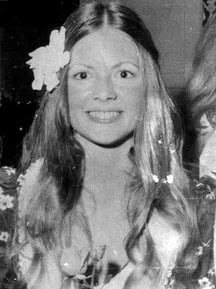
The people investigating these cases did not yet have a body of evidence that pointed cleanly to one man. The women had disappeared in several jurisdictions. Local police departments kept their own reports, worked their own leads, and operated without the integrated digital systems that later investigators would take for granted. A missing adult could be treated as someone who had chosen to leave, especially in the first hours when speed mattered most. The remains, where they existed, were elsewhere.
The pattern was visible before it was provable. The missing women were young. Several were students. They had vanished while walking alone or leaving public places. Witnesses in more than one location remembered a man who appeared injured and asked for help. But pattern recognition carries a danger of its own: once a suspected pattern is announced, unrelated cases can be pulled into it. Investigators had to find a way to distinguish a real series from coincidence and later suggestion.
On July 14, 1974, the problem became public.
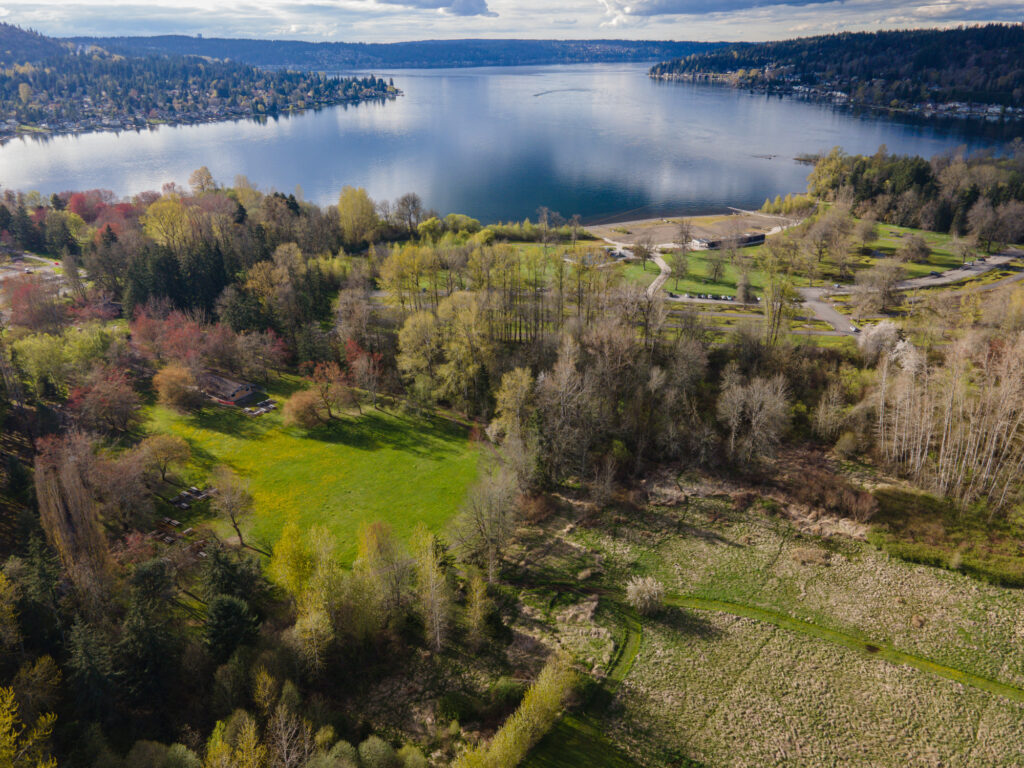
Lake Sammamish State Park was crowded that Sunday. Witnesses later told police that a young man wearing an arm sling had approached women and introduced himself as Ted. He said he needed help with a sailboat and directed attention toward a Volkswagen Beetle. Some women declined. Two did not return.
Janice Ann Ott, 23, was a probation caseworker. Witnesses saw her leave with the man during the afternoon. Denise Marie Naslund, 19, disappeared from the same park later that day. The fact that two women had vanished from a busy public place, after encounters with a man who volunteered his first name, gave police something the earlier cases had not: a concentrated group of witnesses describing the same behavior, car, and suspect.
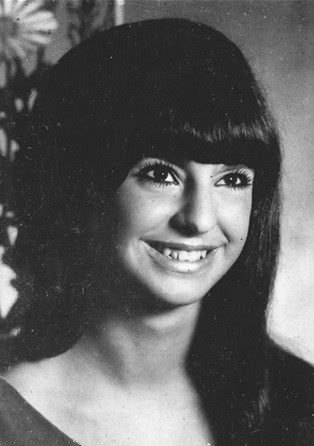
Investigators circulated a composite drawing and sought a man named Ted who drove a light-colored Volkswagen. The description produced an enormous volume of tips. Bundy’s then-partner, Elizabeth Kloepfer, was among those who gave police his name. Others who knew him recognized parts of the description. But a common first name, a popular car, and a likeness in a sketch did not amount to probable cause. Bundy also benefited from assumptions about who a serial predator ought to be. He was educated, politically connected at a modest level, and outwardly conventional. Those traits did not eliminate him, but they made some people less willing to believe it was possible.
In September, hunters found human remains in a wooded area east of Seattle. Dental records identified Janice Ott and Denise Naslund. Other remains were present, but the recovery did not answer every question. In early 1975, the discovery of remains on Taylor Mountain linked several of the earlier disappearances to homicide. Lynda Healy, Susan Rancourt, Roberta Parks, and Brenda Ball were identified among those recovered. Georgann Hawkins was not. Bundy would later describe her abduction and direct investigators toward an area already disturbed by searches and time, but her remains were never conclusively recovered.
No Washington jury convicted Bundy of those murders. The 1992 FBI multiagency report lists eight identified Washington-linked homicide victims within the 11 Washington cases to which investigators said he confessed. It also lists Roberta Parks under Oregon because she was abducted there, although her remains were found in Washington. The report is important, but it is not a collection of verdicts. It records how investigators reconciled Bundy’s late statements with known cases after his death.
By the time the remains were giving investigators a clearer picture, Bundy had moved to Salt Lake City. The disappearances in Washington slowed. In Utah, another sequence had begun.
Utah, 1974: The Woman Who Got Out of the Car
Bundy arrived in Utah in the fall of 1974 to attend the University of Utah College of Law. Within weeks, 16-year-old Nancy Wilcox disappeared from Holladay. Her body has never been recovered. Bundy later confessed to the killing, but his account did not lead investigators to the remains.
Melissa Anne Smith, 17, disappeared from Midvale on October 18. Her body was found nine days later near Summit Park. She had suffered a severe blunt-force injury to the head. As in the Washington cases, the distance between the place a victim was last seen and the place her body was left complicated the work. A local disappearance had become a regional homicide.
On October 31, Laura Ann Aime left a Halloween gathering in Lehi. Hikers found her body on November 27 in American Fork Canyon. She had been bound and beaten. For decades, investigators considered Bundy responsible, but suspicion was not enough to close the file. That restraint is why the 2026 announcement mattered: authorities waited until the preserved evidence supplied the confirmation that his reputation and final statements could not.
Then, on November 8, Bundy approached Carol DaRonch at Fashion Place Mall in Murray. She was 18. He represented himself as a police officer and told her that someone had tried to break into her car. The claim gave him borrowed authority. DaRonch accompanied him, expecting official procedure. Instead of a police car, he led her to a Volkswagen.
Once she was inside, the deception gave way to force. Bundy attempted to restrain her with handcuffs, but one cuff was not secured properly. DaRonch fought him, escaped the car, and reached a passing motorist. Her account supplied police with a living witness who could describe the man, the vehicle, the ruse, and the restraint he used.
Later that evening, 17-year-old Debra Kent left a school play at Viewmont High School in Bountiful to collect her younger brother from a nearby skating rink. She never arrived. Investigators found a small handcuff key in the school parking area. It fit the restraint used against DaRonch. The two events, separated by hours, gave investigators a physical connection between an attempted abduction with a survivor and a disappearance without one.
For Debra’s family, certainty came in fragments. Shortly before his execution, Bundy told investigators he had killed her and indicated where he said he had left her body. A 1989 search recovered a human kneecap among many animal bones. The bone was given to the family, an evidentiary decision that later investigators could not fully explain. Decades afterward, Bountiful police retrieved it for testing. DNA analysis established that it belonged to Debra. The identification was announced publicly in 2019. Most of her remains have never been recovered.
DaRonch’s escape changed the case because it created the possibility of a prosecution independent of the murder investigations. When she later identified Bundy, prosecutors did not have to prove the entire Western Series. They had to prove what he had done to her.
That narrowing would eventually put him in prison. Before it did, the trail continued across state lines.
The Western Trail Widens in 1975
On January 12, 1975, Caryn Eileen Campbell disappeared from a corridor at the Wildwood Inn in Snowmass Village, Colorado. Caryn was a 23-year-old nurse from Michigan who was visiting the ski area with her fiancé and his children. Her body was found the following month near Owl Creek Road. She had suffered severe head injuries.
The Campbell investigation would become Colorado’s principal case against Bundy. Travel and credit-card records placed him in the region. A ski-area brochure later seized from his residence was marked at the Wildwood Inn. Microscopic hair comparison, then widely admitted in court, was said to show that a hair recovered from Bundy’s Volkswagen was consistent with Caryn’s. Such a comparison could not identify one person the way a DNA profile can, and it should not be described today as a genetic match. In 1976, however, the combined circumstantial evidence was sufficient for Colorado authorities to charge him with murder.
Other 1975 disappearances were linked later through confession rather than trial. Julie Cunningham, 26, disappeared from Vail on March 15. Denise Lynn Oliverson, 24, vanished in Grand Junction on April 6; her bicycle and sandals were found, but her body was not. Days before his execution, Bundy gave Colorado investigators accounts of both killings. Colorado’s official cold-case entry for Denise records that he said he had disposed of a body in a river outside Grand Junction. The confession supported the attribution, but it did not recover her remains.
On May 5, 12-year-old Lynette Dawn Culver disappeared after leaving school in Pocatello, Idaho. Bundy later admitted killing her. Her body has not been found. Utah’s sequence continued as well. Fifteen-year-old Susan Curtis was last seen on June 27 while attending a youth conference at Brigham Young University. The Utah Bureau of Criminal Identification still describes Bundy as the prime suspect because of his admission. Susan remains missing.
The gaps are as important as the links. A confession delivered by a practiced liar under an imminent death warrant is not self-validating. Investigators compared details with information not publicly known, checked Bundy’s movements, and looked for remains. Some admissions persuaded them. Others remained too vague. The final tally of 30 is best understood as what Bundy acknowledged, not as 30 cases that proved to the same standard.
Meanwhile, the evidence from Carol DaRonch’s escape was pointing toward a suspect.
August 1975: A Traffic Stop and a Name in Common
In the early hours of August 16, 1975, a Utah patrol officer noticed a Volkswagen moving suspiciously in a residential area. When the officer attempted to stop the vehicle, the driver fled before pulling over. The driver was Ted Bundy.
The search of the car produced objects that were not crimes in themselves but took on a different meaning when placed beside DaRonch’s account: handcuffs, rope, a ski mask or pantyhose mask, a crowbar, and other tools. Investigators in Utah contacted their counterparts in Washington. The car, the restraints, the physical description, the movement between the two states, and the name already sitting among Washington’s thousands of tips began to converge.
Police placed Bundy in a lineup on October 2. DaRonch identified him. He was charged with aggravated kidnapping and chose a bench trial, placing the decision with a judge rather than a jury. Her testimony was tested in court, including through cross-examination. On March 1, 1976, Judge Stewart Hanson found Bundy guilty. He was later sentenced to a term of one to 15 years in Utah State Prison.
The conviction was narrower than the suspicions surrounding him. Utah did not try Bundy for the killings of Melissa Smith, Laura Aime, Debra Kent, or the disappearances of Nancy Wilcox and Susan Curtis. Washington did not yet bring homicide charges. Colorado, however, had the Campbell case. In October 1976, authorities there charged Bundy with Caryn’s murder. In January 1977, he was transferred to Colorado to await proceedings.
The arrest is sometimes told as the moment investigators solved the Ted Bundy murders. It was not. DaRonch’s identification gave prosecutors a viable kidnapping case. The western homicide cases remained a difficult combination of scattered remains, missing bodies, circumstantial links, and agencies that had only recently begun coordinating at scale. The conviction stopped him temporarily. It did not produce answers for most families.
Nor did it keep him contained.
June 1977: The First Escape
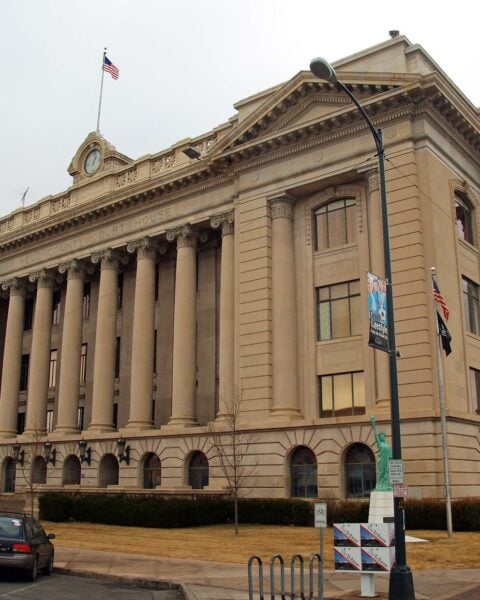
Bundy participated actively in his Colorado defense and had been permitted to appear without the restraints normally used on a prisoner. On June 7, 1977, during pretrial proceedings at the Pitkin County Courthouse in Aspen, he was allowed into the courthouse law library. He moved behind a bookcase, opened a second-story window, and jumped.
He fled into the mountains above Aspen. The search involved roadblocks, law-enforcement teams, aircraft, and residents suddenly conscious that a convicted kidnapper charged with murder was somewhere in the surrounding country. Bundy broke into a cabin and took supplies. Injured, cold, and unable to pass the perimeter easily, he eventually returned toward town. Six days after the escape, officers captured him in a stolen vehicle.
The first escape was not an ingenious feat so much as a custodial failure. A defendant’s right to participate in his defense did not require that he be left with an open route out of a public building. The mythology later celebrated the leap. The practical consequence was fear across a community and a demonstration that the agencies holding him had underestimated the risk.
Bundy was returned to the Garfield County Jail in Glenwood Springs. There, he prepared a second escape over a longer period. He lost enough weight to fit through an opening above his cell, accumulated information about the building, and waited for staffing to thin around the holiday period.
On the night of December 30, 1977, he climbed into the ceiling space, moved into another part of the building, entered the jailer’s living quarters, changed clothes, and walked out. His absence was not discovered until the following day. By then, he had gained a lead that no immediate search could erase.
Colorado still had not tried him for Caryn Campbell’s murder. The charge remained pending. Had the second escape failed, his future would have been determined through that proceeding and the Utah sentence already in force. Instead, the escape transferred the danger to people who had no part in the failures that led to his release.
Bundy traveled east, moving through Chicago and then south. By early January 1978, he was in Tallahassee, Florida, living under an alias in a rooming house called The Oak near Florida State University.
Tallahassee, January 15, 1978
Bundy rented his room at The Oak on January 7. One week later, on the evening of January 14, witnesses saw him in a bar near the Florida State campus and the Chi Omega sorority house. In the early hours of January 15, an intruder entered the house.
At about 3 a.m., resident Nita Neary returned from a date and came in through the back. As she moved toward the front hall, she heard someone running down the stairs. She reached the hall in time to see a man at the front door. He wore a dark jacket and cap with lighter trousers. In his right hand, he carried a heavy length of wood wrapped with cloth. She saw his profile for several seconds before he left.
Upstairs, the quiet of the sleeping house had been broken with extreme violence. Margaret Bowman, 21, and Lisa Levy, 20, were dead. Kathy Kleiner and Karen Chandler had suffered grave injuries in the room they shared.
The Florida Supreme Court’s later summary of the trial record described Bowman and Levy as having been beaten with the wooden branch and strangled. Bowman’s skull had been crushed and opened by the blows. Levy bore a human bite wound forceful enough to leave visible tooth impressions, which technicians photographed. The sentencing record also described sexual battery. Those facts belong in the account because they explain the cause and manner of death, the attempted-murder charges, and the evidence later placed before the jury. They do not need to be repeated or embellished.
Kleiner later recalled waking as the bedroom door opened and seeing the intruder raise the club. The first blow broke her jaw in three places. Chandler suffered a skull fracture, a broken jaw and facial bones, a broken arm, and crushed fingers. Kleiner remembered a car’s headlights sweeping across the room as another resident arrived outside. The sudden light, she believed, interrupted the attack. Both women survived.
Within roughly an hour, a few blocks away on Dunwoody Street, Cheryl Thomas was attacked in her apartment. Neighbors heard the noise, telephoned her, and received no answer. Police found her gravely wounded. Thomas suffered five skull fractures, a broken jaw, and a dislocated shoulder. She was in a coma and was left permanently deaf in one ear. She, too, survived.
The two scenes were joined by time, distance, victim profile, and method. At trial, the state also presented microscopic hair-comparison testimony concerning hairs found in Thomas’s apartment, along with evidence that Bundy had been seen in the neighborhood before the crimes and at his rooming house afterward. As with the Campbell hair evidence, the testimony must be understood as comparison evidence from its era, not as DNA identification.
Neary’s observation gave investigators an eyewitness who had seen the intruder leave the sorority house. Her account also became legally complicated. Eight days after the attacks, police subjected her to hypnosis in an effort to improve her memory. A defense expert later identified suggestive questioning during the session. The trial judge allowed her testimony after concluding that the description she gave immediately after the crimes had remained materially consistent and that she did not rely on details produced only under hypnosis. The Florida Supreme Court upheld that decision while acknowledging the general danger that suggestion can create false memories.
The Tallahassee attacks did not immediately identify Bundy. Their method looked different from the planned public approaches reported in the West. He was an escaped prisoner, but he was one name among possibilities. Investigators still needed to connect a fugitive living near the campus to the man seen in the house.
Then another child disappeared.
Kimberly Leach
On the morning of February 9, 1978, 12-year-old Kimberly Diane Leach was reported missing from Lake City Junior High School, about 100 miles east of Tallahassee. A large search followed. Her partially decomposed body was found on April 7 in a wooded area near the Suwannee River, roughly 45 miles from the school.
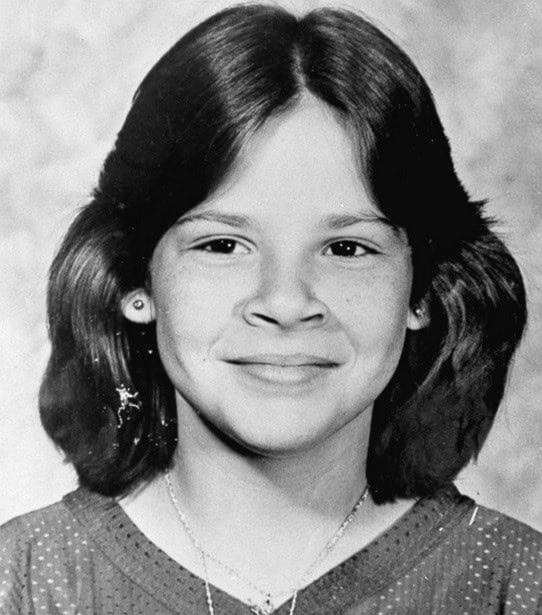
The condition of the remains limited the autopsy. At sentencing, the trial court described homicidal violence to the neck region. On appeal, however, the Florida Supreme Court made a crucially narrower finding: no specific cause of death could be determined from the autopsy reports. The court also said there was no clear evidence establishing that Kimberly had struggled, experienced prolonged fear, or was sexually assaulted before death. Clothing recovered near her body bore blood and other stains, but the court would not treat inference as proof when reviewing one of the aggravating factors used at sentencing.
That distinction has often been lost in later summaries, which state a precise mechanism or sexual assault as settled fact. Kimberly was kidnapped and murdered; a jury convicted Bundy of both crimes. The evidentiary record nevertheless placed limits on what could be said about her final injuries. Respect for the victim requires accuracy, not additional horror supplied by assumption.
The prosecution’s case connected Bundy to Lake City through a white van, witness testimony, lodging records, fiber evidence, and his movements after the crime. A Florida State University media-center van disappeared in early February and was later recovered. Tests did not link fingerprints or hairs in the vehicle to Bundy or Kimberly, and soil from the van differed from soil at the recovery site. The blood on the van carpet was type B, as was Kimberly’s, but that type is shared by more than 15 percent of the population.
The state also presented fiber-comparison testimony. An analyst said it was highly probable that clothing associated with Bundy and Kimberly had come into contact with the van’s carpet and with each other. Bundy had registered under another name at a Lake City motel on February 8. A crossing guard placed a man he identified as Bundy in a white van near the school.
The central abduction witness was Clarence Anderson. Months after Kimberly vanished, Anderson contacted the police after seeing Bundy on television. He said the man resembled someone he had seen leading a girl toward a white van near the school. Prosecutors arranged two hypnosis sessions. Afterward, Anderson supplied greater detail and identified Bundy and Kimberly.
The defense attacked the testimony as a product of delay, publicity, and suggestion. The Florida Supreme Court agreed that parts of Anderson’s post-hypnotic recollection should not have been admitted, but it ruled the error harmless because other evidence supported the verdict. When the United States Supreme Court later declined to review the case, Justice Thurgood Marshall dissented, arguing that Anderson had supplied a crucial link and that the harmless-error analysis did not adequately address reliability in a capital case.
Those objections do not erase the conviction. They show that the Kimberly Leach case was not the uncomplicated wall of forensic certainty described in some popular accounts. It was a circumstantial prosecution containing evidence of different strengths, including a witness whose memory had been deliberately altered through a technique courts were beginning to distrust.
February 15, 1978: The Final Arrest
Six days after Kimberly disappeared, Pensacola police officer David Lee saw an orange Volkswagen Beetle driving west in the early morning. The car had been reported stolen. When Lee attempted a stop, the driver fled. A struggle followed before the officer secured the arrest.
The man gave the name Kenneth Misner. Over the following days, he disclosed his identity. The fugitive flyer and fingerprints confirmed that he was Ted Bundy, wanted in Colorado for escape and the pending Campbell murder charge.
The arrest ended the period in which he could attack again. It did not immediately settle where he would be tried or which case could carry the strongest prosecution. Florida authorities had the Chi Omega and Dunwoody Street crimes, a community saturated with publicity, and an escaped prisoner whose name was already attached to disappearances across the West. They also had to build cases that could withstand appeal without relying on reputation.
On July 21, 1978, a grand jury indicted Bundy for the kidnapping and murder of Kimberly Leach. Later that month, another Florida indictment charged him with the murders of Margaret Bowman and Lisa Levy, the attempted murders of Kathy Kleiner, Karen Chandler, and Cheryl Thomas, and burglary.
For the families and survivors, the indictments opened another long phase. Their losses and injuries would be turned into exhibits. Their memories would be examined in court. And the defendant would become the subject of a national spectacle that repeatedly confused visibility with importance.
The Chi Omega Trial: Evidence and Theater
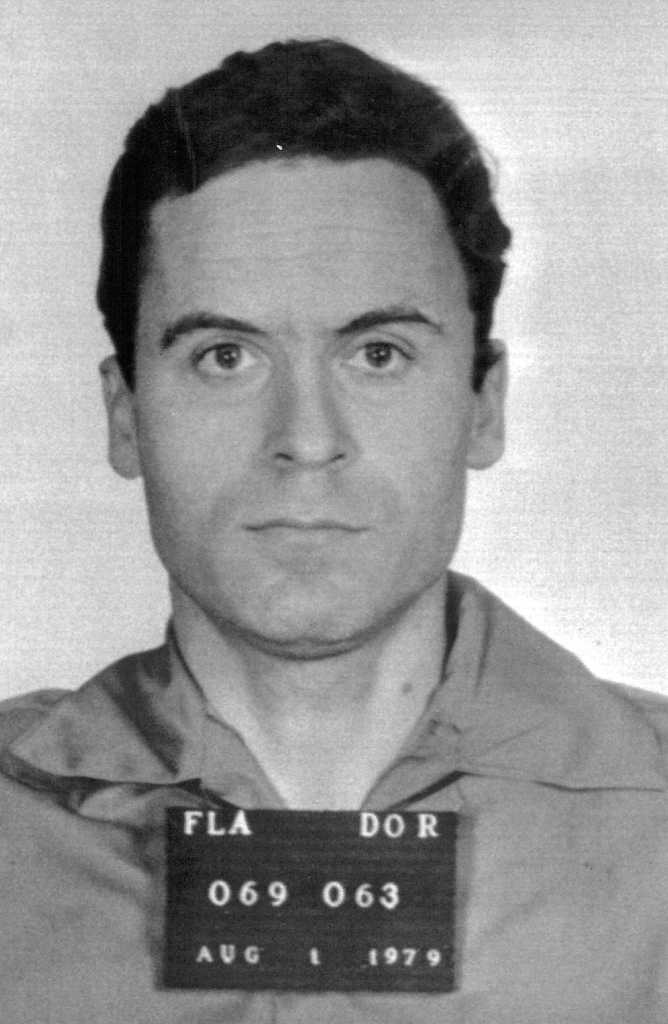
Pretrial publicity made it difficult to assemble an impartial jury in Tallahassee. At the defense’s request, the Chi Omega trial was moved to Miami. Jury selection began in June 1979, and the proceedings became one of the early American criminal trials broadcast widely on television.
Bundy did not stand alone as his own lawyer, despite the shorthand that had hardened around the case. He had appointed counsel. He also asserted a right to participate, questioned witnesses, argued motions, and used the courtroom attention to project the controlled persona that news coverage repeated. The distinction matters because the myth of a lone defendant outwitting the system credits him with the work of lawyers and turns ordinary legal procedure into part of his legend.
The prosecution’s case was cumulative. Nita Neary identified Bundy as the man she had seen leaving the Chi Omega house. Witnesses placed him in the nearby bar before the attacks and at his boarding house afterward. The state linked the sorority crimes to the assault on Cheryl Thomas through their close timing, location, and method. It introduced hair-comparison testimony, evidence of Bundy’s flight from police in the weeks after the crimes, and statements the prosecution considered incriminating.
The most visually powerful evidence was the bite wound on Lisa Levy. Investigators had obtained a court order to photograph and cast Bundy’s teeth. Forensic dentists compared those models with enlarged photographs of the injury. At the time, prosecutors and experts argued that the arrangement of a person’s teeth was sufficiently distinctive to identify the source of a bite. The jury could see the overlays and casts. The Florida Supreme Court later called the comparison one of the two principal items of evidence, together with Neary’s identification.
On July 24, 1979, the jury found Bundy guilty of two counts of first-degree murder, three counts of attempted first-degree murder, and two counts of burglary. Judge Edward Cowart imposed two death sentences on July 31 for the murders of Bowman and Levy. The survivors had helped establish the human consequences of the attack. Chandler and Thomas later said they considered testifying part of their responsibility: the jury needed to see that the attempted-murder counts concerned living people, not secondary incidents attached to the homicide case.
The television coverage often moved in the opposite direction. Cameras returned to the defendant’s expressions. Commentators examined his demeanor, clothes, and exchanges with the judge. Spectators described fascination. Cowart’s sentencing comments included a remark that Bundy could have become a good lawyer, words that would be replayed for decades while the names of Bowman and Levy were compressed into “the sorority girls.”
That imbalance is not merely a question of taste. It changes what the public thinks solves a case. The trial was not won by charm, but by greater charm. It was built by witnesses, technicians, patrol officers, survivors, and lawyers. Some evidence was strong. Some was circumstantial. Some methods accepted in 1979 would not carry the same scientific authority later.
What Later Science Says About the Bite Mark
The bite-mark comparison became a defining image of the Chi Omega prosecution. It also became an example of how courtroom confidence can outrun scientific foundation.
In 1984, the Florida Supreme Court upheld the admission of the dental testimony. The court accepted the era’s premise that individual dentition was highly unique and reasoned that jurors could inspect photographs and models for themselves. The comparison, in that view, was sufficiently reliable to go before the jury, with disputes left to weight and credibility.
Scientific review has since undermined the premises behind that reasoning. In its final 2023 scientific foundation review, the National Institute of Standards and Technology reported that forensic bite-mark analysis lacked a sufficient scientific foundation for identifying a biter. The review identified three central problems. Researchers had not established that the relevant patterns of human teeth are unique at the individual level. Skin does not consistently reproduce dental patterns because it moves, stretches, swells, and heals. And examiners had not been shown to analyze the resulting marks accurately enough to identify or reliably exclude a person as the source.
Current professional guidelines have accordingly narrowed the language that examiners should use. The issue is not that Lisa Levy was not bitten. The injury was documented. The issue is whether photographs of an injury in elastic human tissue can identify one person’s teeth with the certainty presented to juries in earlier decades.
This later scientific assessment does not by itself vacate Bundy’s convictions, nor does it establish that the jury would have acquitted him without the dental evidence. The Chi Omega case included Neary’s identification and other circumstantial proof. Bundy also later admitted to a series of murders, and no credible alternative account has displaced the Florida verdicts. But accuracy requires two statements to stand together: the state secured valid convictions that survived appeal, and one of its most celebrated forensic techniques is no longer supported as a reliable means of individual identification.
That is a more useful lesson than the claim that Bundy’s teeth uniquely betrayed him. Forensic evidence is not a fixed category of truth. Methods must be validated, error rates studied, testimony constrained, and old conclusions revisited when the science changes. A notorious defendant does not make an unreliable method reliable. Indeed, accepting overstated evidence because a defendant appears obviously guilty creates a precedent that can later be used against the innocent.
The Kimberly Leach Trial
Bundy’s second Florida murder trial began in Orlando in January 1980 after another change of venue. The state charged him with kidnapping and first-degree murder. The evidence was less visually singular than the bite-mark display and, in some respects, more contested.
Witnesses and records placed Bundy in Lake City and connected him to the stolen white van. Fiber testimony links the clothing and the van carpe, in the analyst’s opinion. His use of an alias at a Lake City motel, his presence near the school, his flight from officers, and the stolen license plates found in his orbit all contributed to the circumstantial chain of evidence. Clarence Anderson testified that he had seen Bundy leading Kimberly toward the van.
The defense focused sharply on hypnosis. Anderson had not come forward until months after the disappearance, after extensive publicity. His recollection became more detailed after two hypnotic sessions arranged by the prosecution. Other witnesses in the investigation had also been hypnotized, reflecting a period when police used the technique as a memory aid without a settled understanding of how suggestion, confidence, and confabulation could alter recall.
The jury convicted Bundy of kidnapping and first-degree murder in February 1980. The court imposed life imprisonment for the kidnapping and a third death sentence for the murder on February 12. During the proceedings, Bundy and Carole Ann Boone exchanged a marriage declaration in court under Florida law. The episode generated headlines and became another durable part of the public story. It did nothing to explain the evidence or restore Kimberly to the center of her own case.
In 1985, the Florida Supreme Court affirmed the convictions and the death sentence. It ruled that some hypnotically enhanced details should not have reached the jury but concluded that the remaining evidence made the error harmless. The court also struck one aggravating finding because the evidence did not establish a specific cause of death or the circumstances necessary to prove that the killing was especially heinous, atrocious, or cruel under Florida’s capital-sentencing standard. Other aggravating factors remained, so the death sentence stood.
The ruling illustrates the difference between a murder conviction and the subsidiary findings used to determine punishment. The jury could find beyond a reasonable doubt that Bundy kidnapped and killed Kimberly, while the appellate court simultaneously held that the state had not proved precisely how she died or what she experienced beforehand. Later articles that provide those missing facts do not add clarity. They are crossing a line the court itself refused to cross.
Appeals and the Long Delay Before Confession
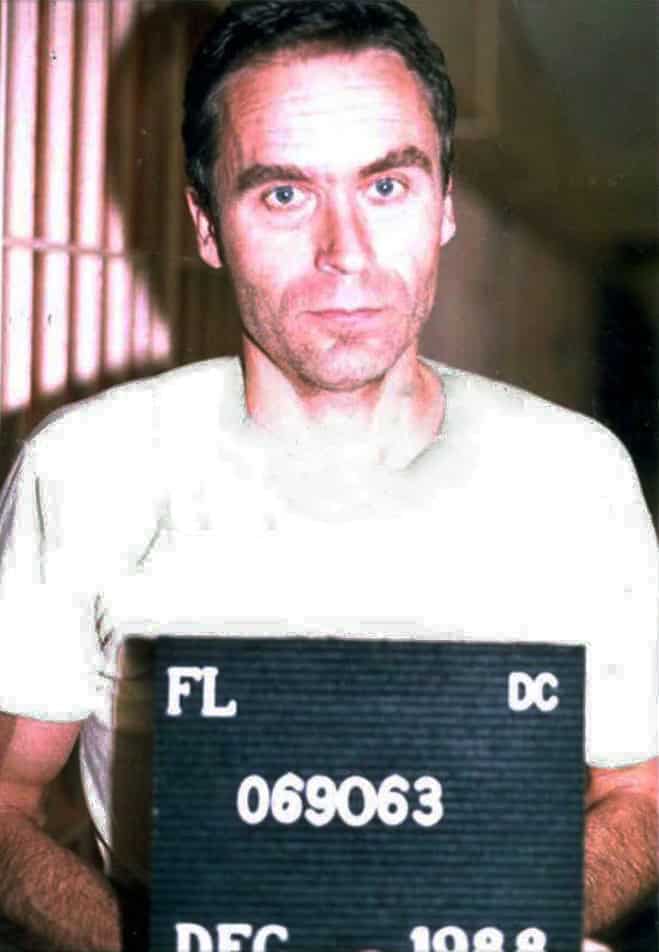
For most of the 1980s, Bundy remained on Florida’s death row while state and federal courts considered challenges to the convictions, sentences, counsel, competency, publicity, hypnosis, and other issues. The process was lengthy because capital punishment is irreversible and because the trials raised genuine constitutional and evidentiary questions. Describing every appeal as a trick obscures the purpose of review, even when the claims ultimately fail.
The Florida Supreme Court affirmed the Chi Omega convictions in 1984 and the Leach conviction in 1985. Federal litigation continued. Courts examined whether Bundy had been competent to stand trial and whether his lawyers had performed constitutionally adequate work. Stays interrupted earlier execution dates. In January 1989, after the remaining review had narrowed and Governor Bob Martinez signed another death warrant, the execution was set for January 24.
Only then did Bundy begin giving investigators the concentrated series of admissions that many had waited for. Detectives and officials came from Washington, Utah, Colorado, and Idaho. They sought names, disposal sites, and details that could distinguish genuine knowledge from an opportunistic claim. Bundy controlled the pace and divided the information among interviewers. Authorities and his own lawyers understood that he hoped the promise of more information might buy time.
Some statements resolved important questions. He described Georgann Hawkins’s abduction to Washington investigator Robert Keppel and acknowledged Washington cases that had never been prosecuted. He admitted the killings of Nancy Wilcox and Debra Kent to Utah investigators. He discussed Julie Cunningham and Denise Oliverson with Colorado detectives and Lynette Culver with Idaho investigators. He referred to victims who were never identified and to remains he could not or would not locate.
The interviews did not produce a complete, stable ledger. Numbers reported in real time varied. The FBI later summarized Bundy as having admitted to more than two dozen murders; the generally cited total became 30. It’s a 1992 multiagency report that organized identified and unidentified cases by state, noting, for example, 11 confessed Washington homicides with eight identified victims, and eight confessed Utah homicides with five identified victims. Those totals reflected an investigative assessment after the interviews, not 30 courtroom findings.
Bundy’s reliability also varied. He had denied guilt for years, manipulated interviewers, and changed accounts. Imminent execution gave him a reason to offer enough truth to appear valuable while withholding enough to remain necessary. Investigators evaluated nonpublic details and movements, but time had erased scenes and scattered remains. Some families received confirmation. Others received only another version of uncertainty.
No delay was granted. On January 24, 1989, at age 42, Bundy was executed by electrocution at Florida State Prison. The sentence was legally carried out for the murder of Kimberly Leach, alongside the two death sentences imposed for the murders of Margaret Bowman and Lisa Levy.
Outside the prison, a crowd treated the execution as public entertainment. The scene was often described in terms of celebration, souvenirs, and spectacle, an ending that mirrored the media culture surrounding the trials. It offered finality in the legal sense. It did not recover the missing, undo the injuries of survivors, or settle the true number of dead.
What Survived the Spectacle
The women who survived the Florida attacks carried injuries that continued after the verdict. Kathy Kleiner rebuilt a life, raised a family, and later spoke publicly about the assault. Karen Chandler married, had children and grandchildren, and resisted being defined by the night in Tallahassee. Cheryl Thomas completed graduate studies and worked with deaf and hearing-impaired people through dance. The attack had left her deaf in one ear, but it did not become the totality of her identity.
Thomas said the media focus on Bundy meant “they forgot about the women.” Decades later, she made the correction more personal: she wanted to be Cheryl Thomas, not just the person Bundy attacked. Her point reaches beyond naming etiquette. A perpetrator-centered story grants him continuity while victims appear only at the moment of violence. A victim-centered history records the studies, work, families, ambitions, and years that existed before and after.
For those who died, the available record is uneven. Some families protected their privacy. Some victims left abundant photographs and school records; others survive publicly as a name, age, and last known movement. That inequality of documentation should not be mistaken for inequality of importance. Donna Manson’s unrecovered remains do not make her less certain to her family. Georgann Hawkins’s missing body does not make her an abstraction. Debra Kent’s identification from one preserved bone shows how little physical evidence may be left after decades and how much meaning it can carry.
The case also exposed institutional vulnerabilities without single-handedly creating every reform later associated with it. Investigators in the 1970s lacked modern national missing-person systems, rapid digital records, genetic databases, and the routine capacity to compare cases across jurisdictions. Bundy’s movement between states exploited those limits. His two escapes, however, required no futuristic technology to prevent. They resulted from decisions about security, supervision, and risk.
The FBI used behavioral assessment during the 1978 fugitive search and later included Bundy’s case in the development of its work on serial violence. Information sharing improved in the decades that followed. VICAP, CODIS, computerized records, and broader forensic databases gave investigators tools the original teams did not possess. It would be historically careless, though, to claim that one killer directly created all of them. They emerged from many cases, policy decisions, scientific developments, and failures.
Technology also carries no guarantee of truth. The 1979 bite-mark evidence looked scientific and persuasive but rested on assumptions later found to be unsupported. The 2026 DNA match in Laura Aime’s case came from a method with a far stronger empirical foundation, applied to carefully preserved biological evidence and compared through a national database. Both were called forensic evidence. They should not be treated as epistemically equivalent.
The Ted Bundy Victim Count and the Cases That Remain
How many people did Ted Bundy kill? The responsible answer is not a dramatic number. He admitted to 30 homicides, and authorities have linked him to at least 30 women and girls. Some cases are supported by recovered remains, investigative evidence, and detailed confessions. Three Florida murders resulted in convictions. Laura Aime’s case now has a direct DNA match. Other admissions concern people who have never been identified or found. Additional cases remain suspicious due to insufficient evidence.
Bundy’s death fixed the legal record but not the historical one. He can no longer be questioned. Biological material may still be tested, and the full DNA profile developed in the Aime investigation can be compared with evidence from other jurisdictions. That prospect does not justify attaching his name to every unsolved disappearance along his travel routes. It creates a way to test some of those claims.
The difference can be seen in two Utah cases. Debra Kent’s family spent decades with an admission and a single recovered bone; DNA ultimately identified it as hers. Laura Aime’s family lived with a long-standing attribution until preserved body-fluid evidence produced Bundy’s profile in 2026. In both cases, investigators moved from an offender’s words toward independent verification. Where that verification does not exist, the uncertainty should remain visible.
There is a temptation to frame such uncertainty as part of Bundy’s final power, as if every missing name enlarged his legend. That grants him too much. The unresolved cases involve missing people and their families. Uncertainty is not a trophy carried by the offender. It is an investigative condition that can sometimes be narrowed by records, evidence, and the passage of time.
The Record After the Myth
The familiar Ted Bundy timeline begins with a clean-cut law student and ends in an electric chair. That shape is convenient, but it is not the case. The actual chronology begins repeatedly: with an injured student in a Seattle apartment; with Lynda Healy’s empty room; with Donna Manson walking toward a concert; with witnesses at Lake Sammamish remembering a first name; with Carol DaRonch forcing her way out of a car; with a handcuff key in a school parking lot; with a courthouse window left accessible; with a jail ceiling no one secured; with survivors waking in hospitals; with a 12-year-old missing from school.
It also continues after January 1989. Debra Kent was identified through DNA decades later. Laura Aime’s preserved evidence closed her case in 2026. Kathy Kleiner, Karen Chandler, and Cheryl Thomas spoke on their own terms about lives that continued. Scientists re-examined the methods once praised in the Florida trial and found that bite-mark source attribution lacked the foundation jurors had been led to trust.
Bundy’s name remains culturally durable because the cameras, books, and films made it so. The site’s separate examination of why Ted Bundy’s public image persists addresses that fascination. It is part of the historical record, but it is not the most important part. The useful questions are less flattering and more exact: Which women were identified? Which cases were proven? Which were confessed? What did the witnesses actually see? Where did officials fail? Which forensic claims can still bear scrutiny?
In 2026, a laboratory answered one of those questions with a DNA profile. The result did not make Laura Ann Aime more real than she had been the day she disappeared. It made the public record more accountable to her. After 51 years, the file could finally carry a conclusion that did not depend on Ted Bundy’s willingness to tell the truth.
Frequently Asked Questions
When was Ted Bundy executed?
On January 24, 1989, by electrocution at Florida State Prison, aged 42.
Where did Bundy commit his crimes?
In Washington, Utah, Colorado and Florida, from 1974 until his final arrest on February 15, 1978.
What happened in Tallahassee on January 15, 1978?
In the early hours an intruder entered the Chi Omega sorority house near the Florida State campus. Resident Nita Neary, returning at about 3 a.m., heard someone running. The attack led to Bundy’s Chi Omega trial.
Who was Kimberly Leach?
A 12-year-old girl Bundy was convicted of kidnapping and murdering in Florida.
Did bite-mark evidence really convict him?
It was used at the Chi Omega trial. The file explains that later science does not support claims that his teeth uniquely identified him.
What changed in the Laura Ann Aime case?
On April 1, 2026, the Utah County Sheriff’s Office told her relatives that 2026 testing had provided definitive closure.
Sources
Citations & Sources
Primary and Official Records
- Bundy v. State, 455 So. 2d 330 (Florida Supreme Court, 1984): Chi Omega convictions and evidence
- Bundy v. State, 471 So. 2d 9 (Florida Supreme Court, 1985): Kimberly Leach conviction and evidence
- Bundy v. State, 538 So. 2d 445 (Florida Supreme Court, 1989): final postconviction proceedings
- Bundy v. Florida, 479 U.S. 894 (1986): denial of review and Justice Marshall’s dissent
- FBI: Ted Bundy’s Campaign of Terror
- FBI: The Birth of Behavioral Analysis
- FBI, Ted Bundy Multiagency Investigative Team Report (1992)
- Utah County Sheriff’s Office: definitive evidence in Laura Ann Aime’s case (2026)
- Utah Bureau of Criminal Identification: Susan Curtis cold-case record
- Colorado Cold Case Files: Denise Lynn Oliverson
- NIST IR 8352: Bitemark Analysis, A NIST Scientific Foundation Review (2023)
Reporting and Survivor Accounts
- Associated Press: DNA testing confirms Bundy killed Laura Ann Aime
- Associated Press: What to know about Ted Bundy and the documented case history
- Deseret News: Officer recalls Bundy’s 1975 Utah capture
- Deseret News: DNA identification of Debra Kent
- CBS News: Kathy Kleiner, Karen Chandler, and Cheryl Thomas on survival and aftermath
- UPI archive: contemporaneous report on the January 24, 1989 execution
Discover more from The Dark Side of Humanity
Subscribe to get the latest posts sent to your email.