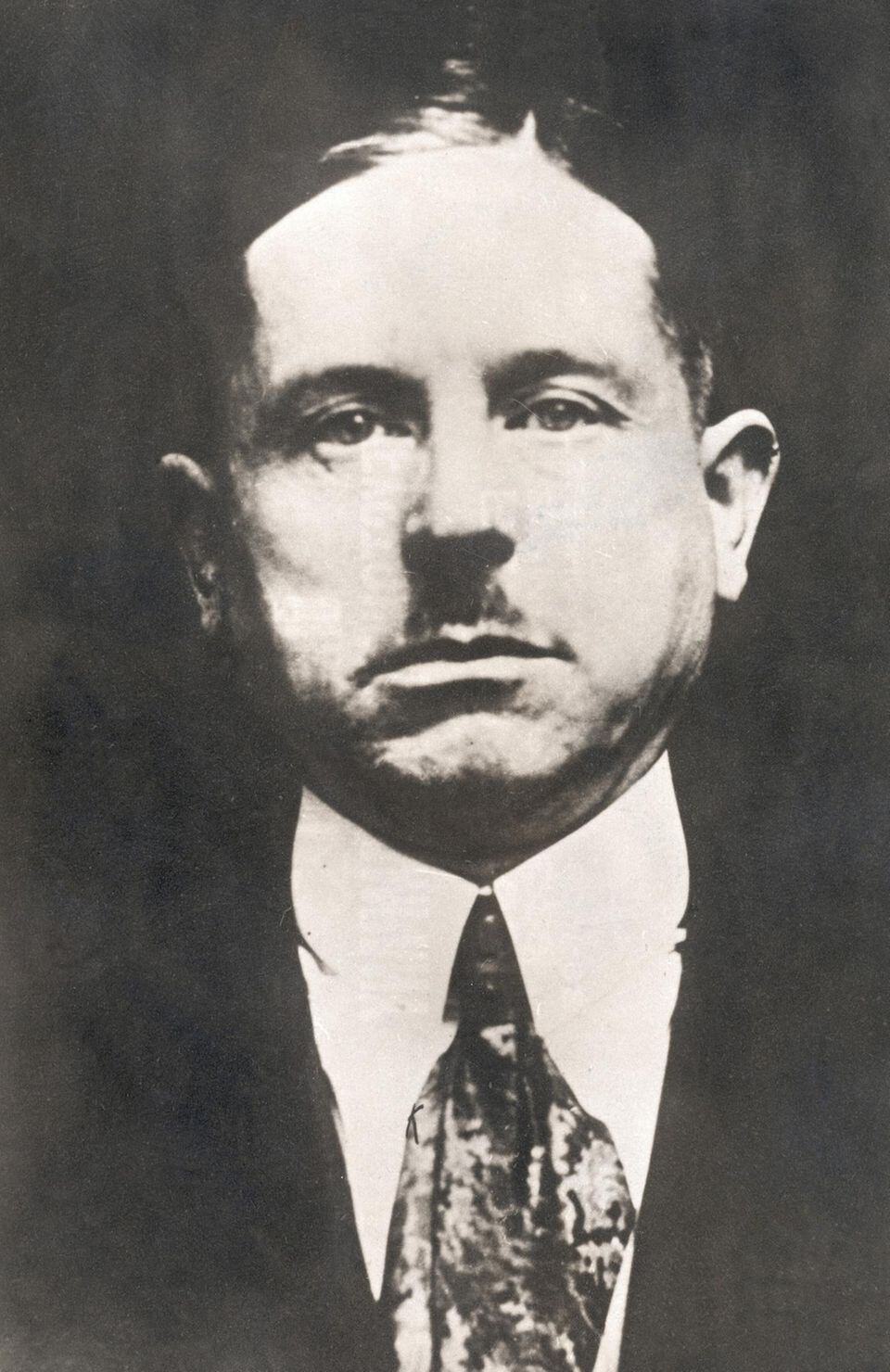
FILE NO. 0035Case status Convicted

Cody Alan Legebokoff killed three women and a 15-year-old girl in and around Prince George, British Columbia, between October 2009 and November 2010. He was 19 at the first killing and 20 at the last. Police had never looked at him until the night of November 27, 2010, when a rookie RCMP constable pulled over a speeding pickup coming off a logging road north of Vanderhoof. On September 11, 2014, a jury in the Supreme Court of British Columbia convicted him of four counts of first-degree murder. On September 16, 2014, Justice W. G. Parrett sentenced him to life imprisonment with no eligibility for parole for 25 years. The B.C. Court of Appeal dismissed his appeal in 2016, and the Supreme Court of Canada refused leave to appeal in February 2017.
The account below follows Justice Parrett’s oral reasons for sentence, R. v. Legebokoff, 2014 BCSC 1746, in which the judge made his own findings of fact after the jury’s verdicts. Other sources are named where used.
The Offender
Legebokoff was born on January 21, 1990, at Fort St. James, B.C., one of three children. He told the court he had a normal childhood with loving parents, built around camping, hunting and fishing. He played hockey and graduated from high school. He was born with nerve damage to his left arm, which he said never really affected him. In June 2008 he moved to Lethbridge, Alberta, and worked a series of jobs, then returned to Fort St. James in the summer of 2009. In mid to late August 2009 he moved to Prince George, into a house on Carney Street shared with friends from home.
Wikipedia, drawing on press coverage, adds that friends and family described him as popular and not violent, that he had a minor criminal record but was not on police radar, that he worked at a Ford dealership, and that he used the social networking site Nexopia under the handle “1CountryBoy.” Justice Parrett noted that he towered over even the tallest of his victims by about 8 inches and outweighed even the heaviest by about 100 pounds.
Jill Stuchenko

Jill Stacey Stuchenko was born on December 2, 1973, and was 35. The judgment describes her as a mother of six; CBC reported five. She was last seen or heard from on about October 9 or 10, 2009, the Thanksgiving weekend. On October 26, 2009, Johnny Pius found her body half buried in a shallow grave in a gravel pit near Otway Road and Ospika Boulevard in Prince George, and walked to the nearby RCMP detachment to report it.
She had suffered massive blunt force blows to the back and right side of her head and to her face, with skull fractures and brain injuries, and bruises to her forehead, arms and knees. The blood loss was so great that the pathologist had trouble drawing a sample. An unknown male DNA profile from her fingernail and from internal swabs was later matched to Legebokoff. Her blood was found soaked into a large couch in his later apartment on Liard Drive, and then on the carpet of the Carney Street basement suite where that couch had stood. The judge found she was killed in that basement suite over the Thanksgiving weekend while his roommates were away.
Natasha Montgomery
Natasha Lynn Montgomery was born on March 14, 1987, and was 23, a mother of a son and a daughter. CBC reported she was originally from Quesnel. She had been released from the Prince George Regional Correctional Centre on August 19, 2010, and was staying with an acquaintance. The judge found she died between August 30 and September 1, 2010. Her body has never been found.
The DNA case against him was dense. Her profile turned up twice on the shorts he wore when arrested, thirty times on a light blue bed sheet in his apartment, on a comforter, the box spring, the dining room linoleum, the hallway carpet, the bath mat and a hoodie, and in thirty-three swabs from almost every room. An axe in the entry closet carried fourteen matches to her on its handle and head. The judge found she was killed in the Liard Drive apartment in “a very violent incident,” and that the axe was used in the killing or in disposing of her body. Wikipedia notes that she is on the list of missing women and girls examined in the Highway of Tears cases.
Cynthia Maas
Cynthia Frances Maas was born on May 29, 1975, and was 35, the mother of a little girl. CBC reported that she was from a First Nations family, as was Montgomery. The judge found she was last seen on the evening of September 10, 2010, at a friend’s apartment, where she cleaned up and was given fresh clothes, including the jacket she was found in. On October 9, 2010, two police officers on patrol found her body in a remote part of L.C. Gunn Park, dragged against a tree line, naked from the waist down, her pants rolled over her feet.
A pathologist counted sixteen impacts to her skull, multiple facial fractures, broken ribs, a broken collarbone and shoulder blade, penetrating wounds to the right chest and neck, and fractures to her wrist and hands. A woman’s black sweater and a bloodied white sock behind the driver’s seat of his truck carried her DNA. A pair of black DVS shoes in his closet matched her profile at 25 of 28 tested areas. A pickeroon, a pick axe tool, in his bedroom matched her at all nine sampled points. The judge found the pickeroon was one of the weapons used.
Loren Leslie

Loren Donn Leslie was born on January 5, 1995, and was 15. Wikipedia reports that she was legally blind, with no sight in one eye and half vision in the other, and that she met Legebokoff online through Nexopia. CBC reported she was from Fraser Lake. The texts between them began on November 1, 2010, when, the judge found, his purpose was “purely sexual.” On November 27, she texted him at 6:04 p.m. His girlfriend left his apartment at 6:30; at 6:31 he replied and within a minute was arranging to meet. He urged her not to tell anyone about him. The last message was at 8:22 p.m., after he bought alcohol at a Cold Beer and Wine store in Vanderhoof.
Shortly after 8:31 p.m., a witness saw a dark pickup by the fence of W.M. McLeod Elementary School and a person in shorts walking toward the swings, where Leslie sat. Between 8:30 and 8:35 p.m. she texted a friend that she was out driving with Cody, a friend from Prince George. They reached the logging road off Highway 27, about 40 to 45 kilometres north of Vanderhoof toward Fort St. James, at around 9 p.m. Constable Kehler saw his truck reach the highway at about 9:35 p.m. and stopped it at 9:47. The judge found that everything at that site happened within 30 to 35 minutes, at the first and only meeting between the two.
She died of blood loss and brain injury from five to eight massive blows to the head and two stab wounds to the neck. The judge found that fractures and a cut to her fingers were defensive injuries, and rejected outright Legebokoff’s claim that she had injured herself.
The Traffic Stop

Wikipedia, citing the officer’s report, says Constable Aaron Kehler stopped the 2004 GMC pickup on a hunch that the driver was poaching; nobody had reason to be on that road that late in a frigid November. CBC reported that the officer saw a blood smear on Legebokoff’s face and legs and a pool of blood in the truck. Legebokoff said he had clubbed a deer. Wikipedia quotes him: “I’m a redneck, that’s what we do for fun.” There was no deer. A conservation officer, Cameron Hill, went up the road to look for the poaching scene and found Leslie’s body near midnight, face down under an evergreen, dragged into the brush beside a gravel pit, her pants rolled down to her ankles.
The judge listed what was on Legebokoff and in his truck: her blood and DNA on his shirt, shorts and shoes; her cell phone in his shorts pocket; a Leatherman multi-tool with her blood inside it in his cargo pocket; a pipe wrench with her blood in the cab; her backpack, wallet and ID on the passenger seat; and the partly drunk alcohol they had texted about. He was arrested for her murder on November 28, 2010. The three earlier investigations then merged into one.
Trial and the Men Called X, Y and Z
Jury selection began in Prince George on May 31, 2014. CBC reported that Legebokoff offered to plead guilty to four counts of second-degree murder, saying he was present at the deaths but did not commit them, and that the plea was not accepted. On August 26 and 27, 2014, he testified. He said three men he would identify only as X, Y and Z, connected to a drug dealer, carried out the killings of Stuchenko, Maas and Montgomery in his home, using his tools, while he sat on the couch. He announced at the start of his testimony that he would not tell the whole truth because he would not name them.
Justice Parrett found that X, Y and Z did not exist. They passed through three murder scenes, he noted, without leaving “a shred of DNA evidence.” He traced how Legebokoff’s account to police shifted from a deer to finding the body, to Leslie hurting herself, to hitting her “once, maybe twice,” and finally to hitting her because he was angry. “Nothing is ever his fault,” the judge said. He accepted Legebokoff’s admission that he was present at the three earlier killings and took part. “The difficulty for Mr. Legebokoff,” he said, “is that he was the only one there.”
The judge found that the killings of Montgomery, Maas and Leslie were both planned and deliberate and committed during a sexual assault. He had a reasonable doubt that the first killing, Stuchenko’s, was planned, but found it was first-degree murder because it was committed during a sexual assault. The similarities between the four cases, he said, put the idea of coincidence “entirely outside the realm” of possibility.
Sentence
On each of the four counts the law required life imprisonment without parole eligibility for 25 years. Justice Parrett also imposed a lifetime firearms ban, a DNA order and a lifetime order under the Sex Offender Information Registration Act, and ordered the axe, the pickeroon, the pipe wrench and the Leatherman forfeited. Two family members, Judy Maas and Luanne Montgomery, spoke in court; other statements were read into the record.
The judge said the injuries in each recovered body were “massive and disfiguring,” aimed “not simply” at killing but at “degrading and destroying” the victims. “These are not the actions of a simple killer but something infinitely worse,” he said. He noted that on the arrest recording Legebokoff referred to Leslie’s body as “it.” CBC reported that the judge’s voice cracked during sentencing and that he paused for water.
The reasons state that Legebokoff is not eligible for parole until November 28, 2035, and that after 15 years he may apply under section 745.6 of the Criminal Code, the so-called faint hope clause, for a reduction of that period. CBC explained that the clause was repealed in 2011 for multiple murders but still applied because the killings came before the change. Doug Leslie, Loren’s father, told CBC: “I’m sure he’s not ever going to see daylight, but just the way everything was put, the system still seems to lean to the criminal.”
Appeals and Custody
Legebokoff appealed. The B.C. Court of Appeal dismissed the appeal on September 26, 2016 (2016 BCCA 386, file CA42557). The Supreme Court of Canada dismissed his application for leave to appeal on February 16, 2017 (file 37313). Wikipedia reports that he was first held at Kent Institution and was transferred in March 2019 to Warkworth Institution.
Legal Status
Cody Legebokoff stands convicted of four counts of first-degree murder. He is serving four concurrent life sentences with no parole eligibility until November 28, 2035. His appeals are exhausted. No faint hope application has been reported.
Frequently Asked Questions
Who did Cody Legebokoff kill?
Three women and a 15-year-old girl in and around Prince George, B.C., between October 2009 and November 2010: Jill Stuchenko, Natasha Montgomery, Cynthia Maas and Loren Leslie.
How old was he?
19 at the first killing and 20 at the last.
How was he caught?
On November 27, 2010, an RCMP constable pulled over his speeding pickup coming off a logging road north of Vanderhoof.
What was the verdict?
On September 11, 2014, a jury in the Supreme Court of British Columbia convicted him of four counts of first-degree murder.
What was the sentence?
Life imprisonment with no parole eligibility for 25 years, imposed by Justice W. G. Parrett on September 16, 2014.
Did he appeal?
The B.C. Court of Appeal dismissed his appeal in 2016, and the Supreme Court of Canada refused leave in February 2017.
When can he apply for parole?
Not before November 28, 2035.
Sources
Citations & Sources
- R. v. Legebokoff, 2014 BCSC 1746, Oral Reasons for Sentence, Justice W. G. Parrett, September 16, 2014 (text reproduced by Murderpedia).
- Supreme Court of Canada, case information, file 37313, Cody Alan Legebokoff v. Her Majesty the Queen.
- “Cody Legebokoff sentenced to life on 4 counts of 1st-degree murder,” CBC News, September 16, 2014.
- Wikipedia, “Cody Legebokoff.”
Discover more from The Dark Side of Humanity
Subscribe to get the latest posts sent to your email.