FILE NO. 0023Case status Archived
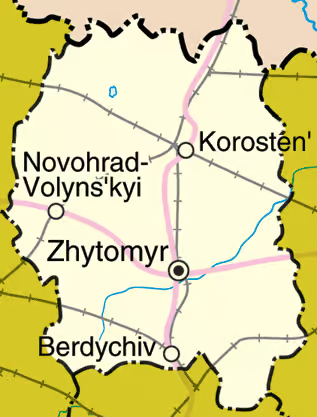
Anatoly Onoprienko killed 52 people in Ukraine between 1989 and 1996, by the finding of the Zhytomyr regional court. Nine died in a first series in the summer of 1989. Forty-three died in a second series between October 1995 and March 1996, most of them members of rural families shot in their own homes, which he then set on fire. The Independent called him “a shy and quietly spoken ex-sailor.” On April 1, 1999, the court sentenced him to death by shooting. Ukraine did not carry it out. After Ukraine abolished capital punishment the sentence was replaced with life imprisonment, and he died of heart failure in a Zhytomyr prison colony on August 27, 2013, aged 54.
Lasky and the Orphanage
Onoprienko was born on July 25, 1959, in the village of Lasky in Zhytomyr oblast, then part of the Ukrainian SSR. He was the younger of two sons; his brother Valentin was born in 1946. Their father, Yuri, had gone to the front at 14 and come back a sergeant with decorations. The Ukrainian Wikipedia biography, drawing on later interviews and the case record, says the father drank, beat the children and left the family when Anatoly was one. His mother died of heart failure on September 15, 1962, when he was three. His grandmother and an aunt raised him for a time, then he was placed in a children’s home in the village of Pryvitne in the Malyn district. Valentin, already married with children, kept no room for him. Onoprienko resented that his father kept away while his brother stayed with family, and later told an interviewer that this predetermined his destiny.
After eight grades he entered the Malyn forestry college, completed two years, and went into the army. He then trained at a maritime school, sailed on merchant ships, joined the Communist Party, and, by his own account, stole and smuggled without being caught. He left the sea in 1986 after a conflict with superiors and became a firefighter. He had a partner, Iryna, whom he met when she was a waitress on a liner, and a son, Dmytro. He bought a hunting gun and joined the hunters’ society. In the autumn of 1989 he left his family, taking the household’s savings, and was not heard from for six years.
The First Series, 1989
Early in 1989, in Dniprorudne, he befriended Sergei Rogozin, an Afghan war veteran with a wife and a small daughter. According to the account given in the investigation, Onoprienko proposed robbing people asleep in their cars by the road at night.
On June 14, 1989, returning with Rogozin from selling cherries, he stopped by a Zhiguli with a trailer in the Synelnykove district. He shot the sleeping driver, Oleg Melnyk, then shot Melnyk’s wife when she screamed for help. He hid the bodies behind a tree belt and burned the car. On July 16 he killed another couple in similar circumstances. On August 16 he robbed a car and killed the family of five inside it. He said later that he had not wanted to kill, but the father resisted, and he then decided to leave no witnesses. When he began burning the bodies he saw that a young woman was still alive and stabbed her with a hunting knife. The English Wikipedia list, drawn from his confessions, numbers the 1989 victims differently, beginning with a family of ten; the Ukrainian account and the court’s total of nine for 1989 are used here.
Europe and the Pavlov Hospital
About a month later he left for Western Europe on false papers. He was deported to Ukraine several times and returned each time. He lived mainly in Germany, worked as a gardener, dishwasher and cook, applied for political asylum and was refused, and served short prison terms for theft in Germany and for a shop robbery in Vienna. He was deported from Germany for the last time in the spring of 1994. On May 31, 1994, he was detained at Kyiv railway station for erratic behavior and sent to the Pavlov city psychiatric hospital, where he spent three and a half months and was discharged with a diagnosis of paranoid schizophrenia. No one connected him with the 1989 killings. He went back to Germany for about a year, was deported again, and moved in with Valentin in Narodychi in Zhytomyr oblast.
The Second Series, 1995 to 1996
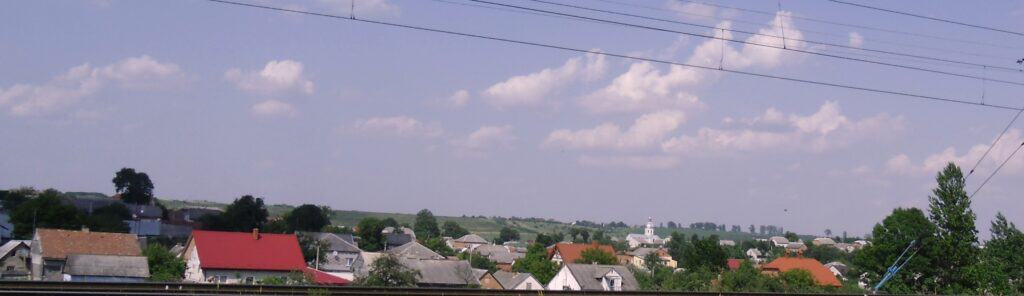
In October 1995 he stole a TOZ-34 hunting shotgun, a knife and a cartridge belt from a hunter he knew, and sawed the gun off. He left his brother’s home on November 4, 1995. The Independent, reporting the verdict, said he killed 43 people in less than six months, travelling by train and using the sawn-off gun, knives and axes. According to the English Wikipedia summary of his confessions, his method was to choose an isolated house, draw the occupants out with a commotion, kill the adult man first, then the woman, then the children, and set the building alight. He killed anyone who crossed his path.
The cases listed from his confessions include these:
- December 24, 1995, Garmarnia. The Zaichenko family of four, including a three-month-old baby, shot in their home, which was then set on fire. He could never say why he killed the child.
- January 2, 1996. A family of four shot, then a male passer-by killed as a witness.
- January 6, 1996. Four people killed on the Berdyansk-Dniprovsk highway after he stopped their cars, among them a navy ensign named Kasai and a taxi driver named Savitsky.
- January 17, 1996, Bratkovychi, Lviv oblast. The Pilat family of five shot and their house burned, then two witnesses killed, a 27-year-old railway worker and a 56-year-old pedestrian. In all, 12 of his killings took place in Bratkovychi.
- January 30, 1996, Fastiv, Kyiv oblast. A woman named Marusina, her two sons and a 32-year-old visitor shot dead.
- February 19, 1996, Olevsk, Zhytomyr oblast. The Dubchak family. By his account he shot the father and son and beat the mother and daughter to death with a hammer.
- February 27, 1996, Malyn. The Bodnarchuk family. He shot the parents and killed their daughters, aged seven and eight, with an axe, then shot a neighbor named Tsalk who came by about an hour later.
- March 22, 1996. The Novosad family of four, his last victims. The Ukrainian account says the dead were a married couple, their small daughter and the woman’s deaf sister.
The Manhunt and Yury Mozola
Investigators at first treated the cases separately. After the seven killings of January 17, 1996, they concluded that the family murders were linked and the work of one man, and the Ministry of Internal Affairs took control of the case. The Independent reported that the search involved 2,000 police, thousands of national guards and more than 3,000 troops, some with armored vehicles. Several innocent men were arrested. In March 1996, officers of the Security Service of Ukraine (SBU) in Lviv and a prosecutor’s office representative held a 26-year-old named Yury Mozola as a suspect. Over three days they tortured him with fire, electric shocks and beatings. He refused to confess and died. Seven people were sentenced to prison terms for his death, and his parents received compensation.
Arrest in Yavoriv
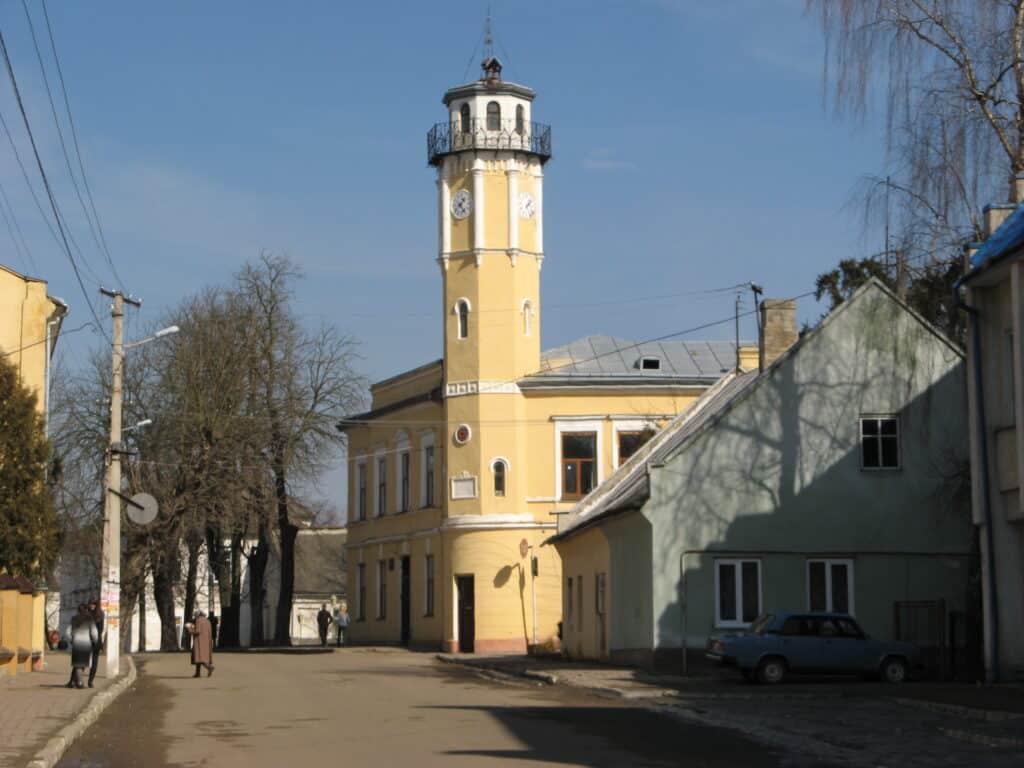
On April 14, 1996, Easter Day, police arrested Onoprienko in Yavoriv in Lviv oblast, in the flat of his partner, Hanna Kozak. Accounts differ on who tipped them off. He did not resist. The search turned up weapons and items taken from victims; the English Wikipedia entry says 122 items in all, including the sawn-off TOZ-34. He was first charged with 40 killings and eventually confessed to all 52, including some he had not been suspected of. While in custody he said he killed on commands from inner voices. He also named Rogozin, who was arrested. “On the one hand, he is a completely normal, intelligent and eloquent, obviously educated, a man who thinks before he says anything,” an investigator said shortly after his capture. “But when he talks about the reasons for the killings, he completely loses his resemblance to a rational person.” The investigation took two and a half years and filled 99 volumes.
The Trial
The trial opened on November 23, 1998, in Zhytomyr. Onoprienko sat in an iron cage. Psychiatric examination found him sane. He was charged with murder, rape, theft and banditry, among other crimes. He admitted the killings, denied banditry, at times retracted and repeated confessions, and refused to give evidence after the court turned down his demand for a different lawyer. His court-appointed counsel was Ruslan Moshkovsky. He told the court he had wanted to draw “a cross on the body of Ukraine” with corpses. Relatives of victims called for his execution in the courtroom. The evidence closed on March 3, 1999. The prosecutor asked for death for Onoprienko and 15 years for Rogozin.
Sentence
On April 1, 1999, after a reading that lasted about 12 hours, the Zhytomyr oblast court convicted Onoprienko on all counts, including 52 murders, and sentenced him to death by firing squad. The Kyiv Post reported that the victims included 10 children and four pensioners. BBC Ukrainian later put the number of children at 11. RTÉ reported that the judge said Onoprienko presented a particular threat to the state and society. Rogozin was sentenced to 13 years, with his Afghan service, his young child and his cooperation counted in mitigation. Onoprienko greeted the sentence “impassively,” the Independent reported. “I’ve been close to death so many times that it’s even interesting for me now to venture into the afterworld,” he had told an interviewer.
In late August 1999 the criminal chamber of the Supreme Court of Ukraine removed some minor counts but left the death sentence standing, and reduced Rogozin’s term to 12 years.
The Death Penalty Question
The sentence collided with Ukraine’s commitments to the Council of Europe. Ukraine had imposed a moratorium on executions, and the Independent noted that carrying out the sentence would have needed a special parliamentary vote. The Ukrainian account says President Leonid Kuchma favored executing Onoprienko and asked the Council of Europe for an exception, and was refused. In 2000, after Ukraine abolished capital punishment, his death sentence was replaced with life imprisonment.
Prison and Death
He served about 13 years in solitary confinement. No relatives or friends visited him. Valentin renounced him after the trial and died while he was in prison. Shortly before his death he gave a final interview to the Ukrainian channel ICTV, saying he still did not understand why he had killed and would not ask for clemency. On August 27, 2013, he died at 5:15 p.m. of a heart attack in a prison colony in Zhytomyr oblast, said Ihor Andrushko, spokesman for the head of the State Penitentiary Service, as quoted by BBC Ukrainian. Andrushko said Onoprienko had heart problems before. He was 54.
Aftermath
The case led the interior minister, Yuri Kravchenko, to create the first dedicated headquarters for a single serial case in Ukraine’s history. Viktor Korol, who headed the investigation team and later became deputy interior minister, said he dismissed about 60 officers for poor work.
Legal Status
Anatoly Onoprienko was convicted on April 1, 1999, by the Zhytomyr oblast court of 52 murders and other crimes and sentenced to death. The Supreme Court of Ukraine upheld the sentence in August 1999. The death sentence was replaced with life imprisonment after Ukraine abolished capital punishment in 2000. He died in custody on August 27, 2013. Sergei Rogozin was convicted as his accomplice in the 1989 killings and sentenced to 13 years, reduced on appeal to 12.
Frequently Asked Questions
How many people did Onoprienko kill?
52, by the finding of the Zhytomyr regional court: nine in 1989 and 43 between October 1995 and March 1996.
Who was his accomplice?
Sergei Rogozin, in the 1989 killings. He was sentenced to 13 years, reduced on appeal to 12.
Where was he arrested?
In Yavoriv, Lviv oblast, on April 14, 1996.
Who was Yury Mozola?
A 26-year-old suspect who died after being tortured by SBU officers and a prosecutor’s representative in March 1996. Seven people were jailed for his death.
What was his sentence?
Death by shooting, imposed on April 1, 1999, and upheld by the Supreme Court of Ukraine in August 1999.
Was he executed?
No. After Ukraine abolished capital punishment in 2000, the sentence was replaced with life imprisonment.
How did he die?
Of a heart attack in a Zhytomyr oblast prison colony on August 27, 2013, aged 54.
Sources
Citations & Sources
- “Killer of 52 gets death sentence,” The Independent, April 2, 1999.
- “Ukraine court sentences serial killer to death,” RTÉ News, April 1, 1999.
- “When will Soviet killers be put on trial?” Kyiv Post, April 8, 1999.
- “Серійний вбивця Онопрієнко помер від серцевого нападу,” BBC News Ukrainian, August 27, 2013.
- “Онопрієнко Анатолій Юрійович,” Ukrainian Wikipedia, and “Anatoly Onoprienko,” English Wikipedia, both accessed October 16, 2026 (used for biography, case chronology and trial detail not found in the news sources).
Discover more from The Dark Side of Humanity
Subscribe to get the latest posts sent to your email.