FILE NO. 0176Case status Unsolved
Content warning: this dossier describes the beating death of a 15 year old girl with a golf club.
The Murder of Martha Moxley: Belle Haven, 1975, and a Case Without a Conviction

A 15 year old was killed in a gated Greenwich enclave in 1975. A Kennedy cousin was convicted 27 years later, the verdict was vacated, and the case remains unsolved.
Legal status, as of October 22, 2026: No one stands convicted of the murder of Martha Moxley. Michael Skakel was convicted of her murder in 2002, but that conviction was vacated. A habeas judge ordered a new trial in 2013, the Connecticut Supreme Court reinstated the conviction in 2016, and then, on reconsideration, the same court affirmed the order for a new trial in a decision officially released on May 4, 2018. The United States Supreme Court declined to review that ruling in January 2019, and on October 30, 2020, Connecticut prosecutors announced that they would not retry him. Michael Skakel is presumed innocent and has always maintained his innocence. His brother Thomas Skakel was never charged and has denied any involvement. Two civil lawsuits Michael Skakel filed in 2023 against the Town of Greenwich and the case’s longtime investigator are pending in Connecticut Superior Court; their claims are allegations that no court has decided. Officially, the killing remains unsolved.
Martha Moxley was 15 years old when she was killed in the gated Belle Haven section of Greenwich, Connecticut, on the night of October 30, 1975. For nearly half a century her death has been one of the most written about homicides in the United States: a teenager beaten to death a few hundred yards from her own front door, in one of the wealthiest enclaves in the country, with the neighbors across the street related by marriage to the Kennedy family.
The case has passed through almost every stage the American justice system offers. It went cold for more than two decades. It was revived by a private investigation, a stolen file, a best selling novel and a true crime book by a former Los Angeles detective. It produced a rare Connecticut one judge grand jury, a juvenile court proceeding for a 39 year old defendant, a celebrated 2002 trial, a conviction, a long run of appeals, a habeas ruling, a reinstatement, a reversal, and finally a decision by prosecutors that the case could not be proved. Through all of it, Martha’s mother, Dorthy Moxley, kept her daughter’s name in public view until her own death in December 2024.
This dossier sets out what the official record shows, from court opinions, prosecutors’ statements and contemporaneous reporting, and separates that record from the theories that have grown up around it. Where the record is disputed, it says so. Where people were accused in books or in court filings but never charged, it does not repeat those accusations as fact.
Martha Moxley and Belle Haven
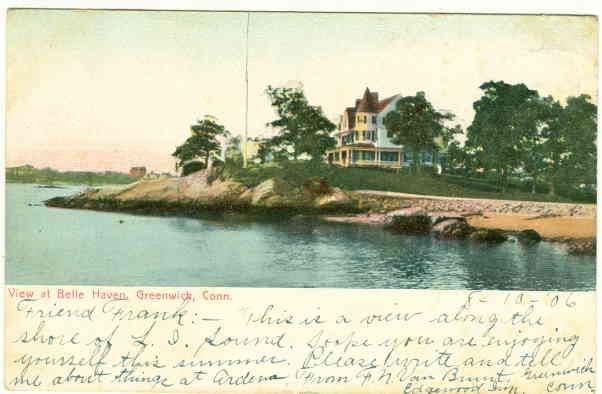
Martha Elizabeth Moxley was born on August 16, 1960, in San Francisco. Her parents, David and Dorthy Moxley, married in 1956; Dorthy had taught fifth grade in California, and David, a former naval officer, built a career in business. By 1975 the family, including Martha’s older brother, John, had settled in Belle Haven, a private, gated association of large homes on a peninsula jutting into Long Island Sound at the western edge of Greenwich. Friends described Martha as lively and well liked; one phrase that recurs in accounts of her is “joy on legs.”
Across the street lived the family of Rushton Skakel Sr., whose father had founded the Great Lakes Carbon Corporation, and whose sister was Ethel Skakel Kennedy, the widow of Senator Robert F. Kennedy. Rushton Skakel’s wife, Anne, had died of brain cancer in 1973, and he was raising seven children: Rushton Jr., Julie, Thomas, John, Michael, David and Stephen. The children were close in age to Martha and moved in the same circle of neighborhood teenagers.
The night of October 30, 1975
October 30 is known in parts of the Northeast as Mischief Night, the evening before Halloween when teenagers roam their neighborhoods playing pranks. According to the facts set out by the Connecticut Supreme Court in its 2018 opinion, Martha left her house that evening and spent time with her friend Helen Ix and other neighborhood children.
That same evening, the Skakel children, their cousin James Terrien, their tutor Kenneth Littleton and Julie Skakel’s friend Andrea Shakespeare had dinner at the Belle Haven Club. The group returned home shortly before 9 p.m. Around then, Martha, Ix and an 11 year old neighbor, Geoffrey Byrne, came by the Skakel house. Michael Skakel led the visitors outside, and the young people sat in the family’s Lincoln Continental in the driveway, talking and listening to music. Thomas Skakel joined them.
At about 9:25 p.m., Rushton Skakel Jr., John Skakel and James Terrien came out and said they needed the car to take Terrien home, where they planned to watch Monty Python’s Flying Circus at 10 p.m. According to the account the courts accepted, Michael Skakel rode with them to the Terrien house in another part of Greenwich. Helen Ix and Geoffrey Byrne began walking home. Ix later said that as the Lincoln pulled out, Martha remained in the Skakel driveway with Thomas Skakel, who was then 17. That was the last time any of Martha’s friends reported seeing her.
Ix reached home at about 9:30 p.m. and telephoned a friend. At about 9:45 p.m., her Australian shepherd, Zock, began barking near the entrance to the Moxley driveway, directly across the street. Ix described the barking as “scared” and “violent” and said the dog, which normally came when called, refused to come in. Dorthy Moxley later said she heard a commotion outside between about 9:30 and 10 p.m. When Martha had not come home by 11 p.m., her mother began calling every friend she could think of. At 3:48 a.m. on October 31, she called the Greenwich police.
What investigators found
Martha’s body was found in the early afternoon of October 31, 1975, beneath a pine tree behind her parents’ home, roughly 200 yards from the house by one contemporary account. Investigators concluded from blood evidence that the attack began on or near the Moxley driveway. The Connecticut Supreme Court described her as having been “severely and repeatedly beaten with a golf club.”
The weapon was a six iron from a set of Toney Penna clubs that had belonged to Anne Skakel, the late mother of the Skakel children. The club had broken during the attack. Pieces were recovered at the scene, and the club matched a set owned by the Skakel family; the handle portion was never recovered. News reports described her injuries as including a wound from the broken shaft. No evidence of sexual assault was established. Those details, recorded by the medical examiner and repeated at trial, are as far as this dossier goes in describing the injuries.
The question of when she died became central decades later. A forensic pathologist retained by police estimated the time of death at about 10 p.m. Another expert who testified in later proceedings placed it within a broader window, from about 9:30 p.m. to midnight or 1 a.m., most likely toward the earlier end. The difference mattered because the defense would argue that Michael Skakel was miles away, at the Terrien home, during the earlier part of that window.
No eyewitness to the attack ever came forward. No fingerprints or other forensic evidence would ever link any identified person to the crime. When the Connecticut Supreme Court reviewed the case in 2018, it described the eventual prosecution as “devoid of any forensic evidence or eyewitness testimony linking the petitioner to the crime.”
The first investigation and the long cold years
The Greenwich police had almost no experience with homicide. When the Los Angeles Times reported on the case in 2000, it noted that killings were so rare in the town that only one had been reported in the previous 13 years. Detective Thomas G. Keegan, who led the investigation, later testified that officers canvassed the entire neighborhood in an effort to find anyone who could shed light on what had happened. The case was nonetheless marked from the start by what that Los Angeles Times report called charges of bungled police work, and critics would spend decades cataloging the early missteps.
The early focus fell on people who had been near Martha that evening. According to the Connecticut Supreme Court’s summary of the history, police in 1976 sought permission from the state’s attorney to apply for an arrest warrant for Thomas Skakel, the last person reported to have seen her. Permission was denied, because the state’s attorney did not believe the facts in the application were sufficient to establish probable cause. Thomas Skakel was never charged with any crime in connection with Martha’s death, and he has denied having anything to do with it.
For a number of years, the court’s opinion adds, the Skakel children’s tutor, Kenneth Littleton, was also regarded as a prime suspect. The court’s own words on the outcome are the ones that matter: “after considerable investigation, he was exonerated.” He was never charged.
Michael Skakel was not a focus of the original investigation. He told police in 1975 that he had been at the Terrien home during the critical period. In the years that followed, his family sent him to the Elan School, which the 2018 opinion describes as an alcohol and drug rehabilitation facility for troubled adolescents in Maine. What was said at Elan would surface decades later as the core of the prosecution.
By the 1980s the case had gone cold. David Moxley died suddenly in 1988, and Dorthy Moxley later moved to New Jersey to be closer to her son. She kept calling investigators and reporters, determined that the case would not be forgotten.
The case reopens
On August 9, 1991, Connecticut prosecutors announced that it was taking a new look at the unsolved killing. Frank Garr, an inspector with the state’s attorney’s office, became the investigator most closely associated with the case for the next decade; later court filings describe him as the state’s lead investigator. Garr’s conduct of the investigation is today the subject of a pending civil suit, discussed below; the claims against him are unproven allegations.
Several developments in the early 1990s pushed the case back into public view. In 1993, the novelist and Vanity Fair writer Dominick Dunne published “A Season in Purgatory,” a best selling novel drawn from the case. The Connecticut Supreme Court’s 2018 opinion lists the novel first among the events that led to the reopening of the investigation, noting that its fictional murderer was a depiction of Thomas Skakel. It was fiction, Thomas Skakel was never charged, and no official finding ever supported the novel’s plot. But the book, later adapted as a television movie, revived national interest in the real case, and Dunne became one of its most persistent public voices.
Sutton Associates and the stolen files
The renewed attention reached the Skakel family. According to the 2018 opinion, Rushton Skakel Sr. hired a private security firm, Sutton Associates, to investigate the murder “in the hope of exonerating his family.” The effort backfired.
Sutton’s investigators interviewed both Thomas and Michael Skakel, and both disclosed that they had not told police the full truth in 1975 about their movements that night. Thomas Skakel told the investigators that after his brothers left to take their cousin home, at about 9:30 p.m., he had spent about 20 minutes with Martha in the Skakel backyard before going inside. Michael Skakel told them that after returning from the Terrien home at around 11 p.m., he had gone back out at around midnight, wandered the neighborhood and climbed a tree near the Moxley house before going home. He later gave the same account to Richard Hoffman, a ghostwriter he hired in 1997 to help with a memoir.
Neither account was an admission of the killing, and both men denied any role in it. But the changed stories, and the fact that they had been kept private for nearly two decades, became public in an unusual way. In 1994, the court records, a Sutton Associates employee stole the firm’s files on the case, including detailed suspect profiles, and gave them to Dunne and to Leonard Levitt, a journalist who had written about the case for years. On November 26, 1995, Levitt published the first of a series of newspaper articles disclosing that the two brothers had changed their accounts of the night of the murder. Dunne later passed the stolen files to Mark Fuhrman.
Mark Fuhrman and “Murder in Greenwich”
Fuhrman was the former Los Angeles police detective who had found a bloody glove at O.J. Simpson’s estate in 1994 and whose testimony in the 1995 Simpson criminal trial was undermined by recordings of him using a racial slur. In October 1996 he pleaded no contest to one felony count of perjury arising from that testimony. Retired from policing, he turned to writing, and the Sutton files gave him the basis for a book about Greenwich.
“Murder in Greenwich: Who Killed Martha Moxley?” was published by HarperCollins in 1998. In the Connecticut Supreme Court’s summary, the book accused Michael Skakel of the murder and his family of conspiring to cover it up, and it urged that a grand jury be convened immediately. Fuhrman told the Los Angeles Times in 2000 that the case was “my greatest victory in law enforcement.”
The book’s influence on the later prosecution is part of the official record, and so are its errors. The 2018 majority opinion noted that claims in the book about Martha’s diary, and about a supposed relationship between Martha and Michael Skakel, “were debunked” at trial. According to her diary, the court wrote, she had only become acquainted with him two months before her death. The court also found that key prosecution witnesses came forward more than 20 years after the crime, “only after either learning of the sizeable reward being offered in the case, reading Mark Fuhrman’s 1998 book,” or both. Other books followed, including Timothy Dumas’s “A Wealth of Evil” (1999) and, after the trial, Levitt’s “Conviction” (2004). Robert F. Kennedy Jr., Michael Skakel’s cousin, argued the opposite case in a 2003 Atlantic article and later in a 2016 book, “Framed.”
The one judge grand jury, 1998 to 2000
Connecticut prosecutors in that era had no subpoena power of their own, and they had long complained that they could not force reluctant witnesses to talk. State law allowed them to ask for an investigative grand jury when other methods had failed, a step taken only a handful of times in the preceding years. In 1998, Superior Court Judge George N. Thim, a former public defender, was appointed to sit as a one man grand jury on the Moxley case. Sources differ on the month: a CBS News report and a contemporaneous timeline place his appointment in June 1998, while the Connecticut Supreme Court’s 2018 opinion says the grand jury was convened in September 1998.
Thim spent about 18 months on the case. According to CBS News, he interviewed 53 witnesses and reviewed transcripts and evidence in proceedings that were never made public. Rushton Skakel Sr. fought a subpoena to testify. As targets of the inquiry, neither Thomas nor Michael Skakel testified. One of the witnesses was Georgeann Dowdle, a cousin of the Skakels and the sister of James Terrien, who testified that she had been at the Terrien home that night with her young daughter and her “beau” and had told police days after the murder that she had seen Michael Skakel and two of his brothers there. That single word, “beau,” would become one of the most consequential details in the entire case, though no one realized it for more than a decade.
In January 2000, Thim issued his report. He found sufficient evidence to recommend an arrest, and prosecutors sought a warrant naming an unnamed juvenile, because Michael Skakel had been 15 in 1975.
The arrest and the juvenile court transfer

On January 19, 2000, Michael Skakel, then 39, surrendered at Greenwich police headquarters. Police Chief Peter Robbins said he “was processed as an arrestee for the crime of murder.” He was released on $500,000 bond. His lawyer, Michael “Mickey” Sherman, said: “Michael Skakel is innocent. He was innocent 24 years ago. He is innocent today.”
The charge was murder, which carried no statute of limitations; the defense later argued that the prosecution was time barred anyway, and the courts rejected that claim. Because he had been a juvenile at the time, the case began in juvenile court, where he was arraigned in March 2000. At one appearance he approached Dorthy Moxley and told her, as NBC News later recounted, “I feel your pain. But you’ve got the wrong guy.” She called the remark “very rehearsed.”
The juvenile setting created an unusual problem. Under the juvenile laws in force in 1975, a juvenile could not have been sentenced to more than four years, and no juvenile facility in Connecticut could accept a man nearly 40 years old. On January 31, 2001, Judge Maureen Dennis ruled that the case should be transferred to the adult criminal docket, writing that “the facilities of the adult criminal division of the Superior Court afford and provide a more effective setting for the disposition of this case.” John Moxley called the ruling “great news.” The defense appealed the transfer, and the Connecticut Supreme Court later upheld it.
The 2002 trial
The trial opened on May 7, 2002, in Norwalk Superior Court before Judge John F. Kavanewsky Jr. State’s Attorney Jonathan C. Benedict prosecuted; Sherman led the defense. There was no confession to police, no eyewitness and no physical evidence tying the defendant to the scene. The prosecution’s case rested instead on statements Michael Skakel was alleged to have made over the years, on his own changing accounts of the night, and on an argument that his alibi was false.
The Elan witnesses. Two former Elan School students, Gregory Coleman and John Higgins, testified that Skakel had confessed to them in the late 1970s. In the 2018 opinion’s words, their testimony “would become the cornerstone of the state’s case.” Both were vigorously challenged. Coleman had contacted a television station in 1998, the court wrote, after seeing a tabloid program based on Fuhrman’s book and learning of the reward, and it was conceded that he had testified before the grand jury under the influence of heroin. He died of a drug overdose in 2001, before trial, and his earlier testimony from a probable cause hearing was read to the jury. Even the prosecutor acknowledged in closing that Coleman had “some facts kind of backwards.” Higgins acknowledged on cross examination that when police first contacted him, he repeatedly told them Skakel had never confessed in his presence, and that he changed his story after learning the reward had risen to $100,000. Other former Elan residents testified that the school’s director, Joseph Ricci, constantly taunted Skakel about the murder, accusing him of committing it or of knowing who did.
The alibi. The defense argued that Martha was almost certainly killed between 9:30 and 10 p.m., and that Michael Skakel was then at the Terrien home, miles away. His brothers Rushton Jr. and John and his cousin James Terrien testified that he was with them there from about 9:30 to about 11 p.m. The prosecution answered that the family witnesses were lying to protect him. To support that, it called Andrea Shakespeare, who testified that to her recollection he had not left the house; Julie Skakel, who said she had told police at the time that a figure darted through the yard at about 9:20 p.m.; and Helen Ix, on who had been in the driveway and who had left in the car. The 2018 court later observed that Shakespeare “completely changed her account of that evening after reading Fuhrman’s book.”
The tapes. The most memorable moment came in closing argument. Benedict played excerpts from Skakel’s 1997 recorded interviews with the ghostwriter Richard Hoffman, alongside other testimony, to argue that Skakel’s own words revealed guilty knowledge. Skakel and his supporters have always said the passages described a teenager’s panic about having been near the Moxley house that night, not a confession. Observers quoted by CNN after the verdict said that the closing, built around the book interviews and his changing story, had helped win the case.
The verdict. The jury of six men and six women began deliberating on June 4 and returned a guilty verdict on June 7, 2002, on its fourth day. During deliberations the jurors asked to have the testimony of Julie Skakel, Shakespeare and Ix read back, specifically on “who was in the driveway and who left in the car.” Skakel stood frozen as the verdict was read; Martha’s mother and brother wept. “This is Martha’s day,” Dorthy Moxley told reporters. Skakel’s younger brother David said the family’s faith “has been tested today immeasurably.”
The sentence. On August 29, 2002, Kavanewsky sentenced Skakel to 20 years to life. In a tearful statement, Skakel insisted he was innocent: “I would love to be able to say that I did it, but I cannot do that.” The judge said he had considered Skakel’s age at the time of the killing, his work counseling others and his upbringing. The day before, Kavanewsky had denied a defense motion for a new trial based on claims that prosecutors withheld evidence, including a composite sketch drawn after the murder; prosecutors said the sketch depicted a man who had been questioned and ruled out.
Appeals, 2002 to 2012
Skakel’s first round of appeals failed. On January 12, 2006, the Connecticut Supreme Court affirmed the conviction in State v. Skakel, rejecting claims that the prosecution was time barred, that the juvenile transfer was improper, that prosecutors had withheld evidence and that Coleman’s earlier testimony should not have been read to the jury. Theodore Olson, a former United States solicitor general, then asked the United States Supreme Court to hear the case. It declined in November 2006.
A separate petition for a new trial, filed in 2005, raised several claims of newly discovered evidence. The most publicized involved a man named Gitano Bryant, who said in a videotaped interview that he had been in Belle Haven that night with two acquaintances and that remarks they later made led him to believe they had committed the killing. Both men invoked their Fifth Amendment rights rather than testify, and neither was ever charged. This dossier does not name them.
The courts gave Bryant’s account no weight. In 2007, Superior Court Judge Edward Karazin denied the petition. As the Connecticut Supreme Court later summarized his ruling, the judge found that Bryant’s account was not credible “because it lacked any genuine corroboration and could not be challenged through cross-examination,” and so was not likely to produce a different result at a new trial. Karazin also rejected claims that the state’s lead investigator and an author had entered into a secret book deal before the arrest and that witnesses had been threatened, and claims that newly located witnesses contradicted Coleman. On April 12, 2010, the Connecticut Supreme Court affirmed, 4 to 1. Justice Richard Palmer dissented, pointing to what he called the state’s thin case.
In October 2012, the Connecticut Board of Pardons and Paroles denied Skakel parole. He continued to maintain his innocence.
The habeas ruling of 2013
Skakel’s new lawyer, Hubert J. Santos, took a different approach: a petition for a writ of habeas corpus claiming that Sherman, his trial lawyer, had been constitutionally ineffective. On October 23, 2013, Judge Thomas A. Bishop, sitting as a judge trial referee in the habeas case, agreed and ordered a new trial.
Bishop’s ruling was blunt. “The defense of a serious felony prosecution requires attention to detail, an energetic investigation and a coherent plan of defense capably executed,” he wrote. “Trial counsel’s failures in each of these areas of representation were significant and, ultimately, fatal to a constitutionally adequate defense.” Among the failures he identified were Sherman’s handling of the alibi and his failure to call a crucial alibi witness. The judge also faulted Sherman for not presenting a defense pointing jurors to another possible suspect; that finding concerned trial strategy, not any finding of anyone else’s guilt.
The missing alibi witness was the man behind Georgeann Dowdle’s word “beau”: Denis Ossorio, who had been visiting her at the Terrien home that night. Ossorio testified at the habeas hearing that he had seen Michael Skakel there that evening. Sherman had never tracked him down.
Dorthy Moxley, then 81, said she was stunned. “I have not given up and I do believe Michael Skakel killed my daughter,” she told reporters, adding: “If there is a new trial, I will be there.” On November 21, 2013, after more than 11 years in custody, Skakel was released on $1.2 million bond while the state appealed.
Reinstated in 2016, reversed in 2018

The state’s appeal was argued before the Connecticut Supreme Court on February 24, 2016. Prosecutor Susann Gill told the justices that Sherman had mounted a “well-planned, well thought-out, professional defense” and that there was “substantial” evidence against Skakel. Santos argued that his client “did not get a fair shake.”
On December 30, 2016, a divided court sided with the state. Writing for a 4 to 3 majority, Justice Peter T. Zarella concluded that “the petitioner’s trial counsel rendered constitutionally adequate representation” and reinstated the conviction. Skakel remained free on bond while his lawyers sought reconsideration.
What happened next was highly unusual. Zarella retired shortly after writing the decision. The court granted Skakel’s motion for reconsideration, and a newly appointed justice, Gregory T. D’Auria, joined the panel in Zarella’s place. On reconsideration, the balance shifted.
In a decision officially released on May 4, 2018, the court ruled 4 to 3 the other way. Writing for the new majority in Skakel v. Commissioner of Correction, Justice Palmer held that Sherman’s failure to secure Ossorio’s testimony was “constitutionally inexcusable.” Ossorio, the court said, was “a disinterested alibi witness whom the habeas court found to be highly credible,” and his account would have provided powerful support for the defense. The majority then laid out the weakness of the state’s case with unusual directness. It described the case as “devoid of any forensic evidence or eyewitness testimony linking the petitioner to the crime.” It found that the state’s primary witnesses had come forward more than two decades later, after learning of the reward, reading Fuhrman’s book, or both. And it concluded, agreeing with Bishop, that “all of the state’s witnesses were eminently impeachable.” The court affirmed the order for a new trial. Three justices dissented, maintaining that Sherman’s representation had been adequate.
Connecticut asked the United States Supreme Court to step in, in a case docketed as Connecticut v. Skakel, No. 18-185. On January 7, 2019, the Supreme Court denied the petition without comment. The 2002 conviction stood vacated, and Michael Skakel was again a defendant awaiting a possible retrial, presumed innocent.
October 30, 2020: no retrial
The decision about whether to try him again fell to Richard J. Colangelo Jr., the prosecutor then responsible for the case, whom CNN identified as the state’s attorney and NBC News as the chief state’s attorney. On October 30, 2020, 45 years to the day after Martha went missing, Colangelo addressed Stamford Superior Court. “Looking at the evidence, your honor, looking at the state of the case, it is my belief that the state cannot prove this case beyond a reasonable doubt,” he said. He told the court that he had “basically reinvestigated the case,” had found no additional evidence to present, and that of 51 potential witnesses, 17 were now dead.
Skakel, then 60, did not address the court. His lawyer, Stephan Seeger, told CNN: “It’s a relief that the state has concluded they could not prove their case beyond a reasonable doubt,” adding, “they never could.” He said Skakel “should never have been convicted in the first place.”
John Moxley told the court that he agreed with the decision and thanked law enforcement for its work. Outside court, he told reporters that his personal view of the case had not changed. Dorthy Moxley had said after the 2018 ruling that she had lived with the case for half her life and could live with it for the rest of it.
The announcement left the case where it legally stands today. No one is charged. No one is convicted. Michael Skakel spent more than 11 years in custody on a conviction that no longer exists, and under the law he is as innocent as anyone who has never been accused.
Since 2020: Skakel’s civil suits

Michael Skakel has since gone to court as a plaintiff. Two lawsuits are pending in Connecticut Superior Court in Stamford, and as of October 22, 2026, the state judicial branch’s public docket shows no ruling on the merits in either. Everything in them is, for now, a claim.
The tapes case. The first suit, Skakel v. Town of Greenwich, et al. (docket FST-CV23-6060861-S), was filed in April 2023. It concerns the audiotapes and related materials from Skakel’s 1997 memoir interviews that were used against him at trial. In a revised complaint filed in December 2023, Skakel alleges that the investigator Frank Garr and the Greenwich Police Department kept custody of the evidence and that the materials are missing, and he seeks damages including on a claim of conversion. The town filed a response denying many of the allegations and arguing that his claims are barred by governmental immunity, among other defenses.
The civil rights case. The second suit, Skakel v. Garr, et al. (docket FST-CV23-6064002-S), was filed in late 2023 against the town and against Garr in his official and individual capacities. It alleges violations of Skakel’s civil rights, malicious prosecution and abuse of process. Among other things, it claims that investigators ignored other possible suspects, overlooked alibi evidence, withheld evidence from his trial lawyers and threatened witnesses. Garr is represented by state lawyers. When CNN reported on the suits in January 2024, the state’s attorney’s office representing him said it had no comment. Garr has not been found liable for anything; these are allegations.
Seeger described the cases in stark terms. “Michael spent over 11 years in jail for a crime he didn’t commit,” he told CNN, adding that “like other wrongfully convicted persons recourse is limited to the judicial system.” He told Greenwich Time that it was “time those responsible are held accountable.”
Where the suits stand. In 2026 the court, Judge Sheila Ozalis presiding, granted motions to consolidate the two cases, and Law360 reported that they had been combined and set for trial in November 2026. At the town’s request, the trial was then postponed. The docket now lists the November 2026 jury selection as off, with a trial management conference scheduled for September 2027 and jury selection and trial scheduled to begin on October 5, 2027. Those dates can change. No settlement, verdict or dismissal has been entered.
Skakel in his own words. In November 2025, nearly 50 years after the killing, Skakel spoke at length in public about the case for the first time, in an NBC News Studios podcast, “Dead Certain: The Martha Moxley Murder,” hosted by the journalist Andrew Goldman. He has consistently said he did not kill Martha Moxley. Thomas Skakel, who has never been charged, has made no new public statement on the record that this dossier could find. He has denied any involvement.
Dorthy Moxley’s long advocacy
Dorthy Moxley, born Dorthy Elaine Jolgren in Iron River, Michigan, on June 5, 1932, was a former schoolteacher. For almost half a century she was the public face of her daughter’s case. She worked with police, prosecutors and journalists, regularly attended court proceedings, gave interviews and appeared in documentaries, and kept the case before the public through the decades when it had stalled.
Her advocacy reached beyond her own family. Her son, John, said police departments in other states asked her to meet with families of murder victims who were uncomfortable speaking with investigators, and she spoke at police and victims’ advocacy conferences. Once, he recalled, someone called her tough. “I’m not tough,” she replied. “I’m just strong.”
She never hid her belief about who was responsible, and reporters quoted it often, but she also accepted the legal outcome when it came. After prosecutors declined to retry Skakel, the family said it was at peace with the decision. “My mother was always grateful and chose to focus on the communal spirit, if you will, rather than the law,” John Moxley said after her death. Dorthy Moxley died on December 24, 2024, at her home in Summit, New Jersey, of complications of influenza. She was 92.
Myth versus record
Myth: Michael Skakel was convicted of killing Martha Moxley, so the case is solved. Record: the 2002 conviction was vacated. The Connecticut Supreme Court affirmed the order for a new trial in 2018, the United States Supreme Court declined review in 2019, and prosecutors announced in 2020 that they could not prove the case beyond a reasonable doubt. No one stands convicted. He is presumed innocent.
Myth: The conviction was thrown out on a technicality. Record: the courts found that his trial lawyer failed to locate and call a disinterested alibi witness whom the habeas judge found highly credible, and that this failure undermined confidence in a verdict in a case the 2018 majority called devoid of forensic evidence or eyewitness testimony linking him to the crime. Ineffective assistance of counsel is a constitutional ruling, not a technical one.
Myth: Thomas Skakel was the real killer. Record: Thomas Skakel was investigated in 1975 and 1976, but prosecutors refused to seek a warrant for lack of probable cause, and he was never charged. He has denied any involvement. Claims to the contrary come from fiction, advocacy and defense argument, not from any official finding.
Myth: Two other men confessed. Record: Gitano Bryant’s 2003 videotaped account implicating two acquaintances was found not credible by a trial judge in 2007, for lack of genuine corroboration, and that ruling was affirmed in 2010. Neither man was ever charged.
Myth: The family tutor did it. Record: Kenneth Littleton was for years a prime suspect, but in the 2018 opinion’s words, “after considerable investigation, he was exonerated.”
Myth: Mark Fuhrman’s book solved the case. Record: the book helped prompt the grand jury, but the Connecticut Supreme Court found that key claims in it were debunked at trial and that the state’s witnesses came forward only after the reward, the book, or both.
Myth: The Kennedys were behind the cover up. Record: no court has found any cover up by anyone. The prosecution’s theory at trial of a Skakel family scheme was an argument, and the 2018 majority concluded that Ossorio’s credible alibi testimony would have undercut that theory.
People
- Martha Moxley (1960 to 1975): homicide victim, killed in Belle Haven at 15.
- Dorthy Moxley (1932 to 2024): Martha’s mother and the case’s most persistent advocate.
- David Moxley (died 1988): Martha’s father.
- John Moxley: Martha’s brother.
- Michael Skakel: neighbor, 15 in 1975; convicted in 2002, conviction vacated; not retried; presumed innocent; plaintiff in two pending civil suits.
- Thomas Skakel: Michael’s older brother, 17 in 1975; never charged; has denied involvement.
- Rushton Skakel Sr.: the Skakel children’s father; hired Sutton Associates.
- Kenneth Littleton: the Skakel children’s tutor; investigated and, per the 2018 opinion, exonerated.
- Helen Ix: Martha’s friend; among the last to see her.
- Georgeann Dowdle and Denis Ossorio: Dowdle, a Skakel cousin, told the grand jury she was home with her “beau”; Ossorio, that beau, became the alibi witness the courts found highly credible.
- Thomas G. Keegan: Greenwich police detective who led the original investigation.
- Frank Garr: inspector with the state’s attorney’s office; defendant in pending civil suit; no finding of liability.
- Dominick Dunne: author of the 1993 novel “A Season in Purgatory.”
- Leonard Levitt: journalist who reported the brothers’ changed accounts in 1995; author of “Conviction.”
- Mark Fuhrman: former Los Angeles police detective; author of “Murder in Greenwich” (1998); pleaded no contest to perjury in 1996.
- George N. Thim: Superior Court judge who served as the one man grand jury.
- Maureen Dennis: judge who transferred the case to adult court in 2001.
- Jonathan C. Benedict: state’s attorney who prosecuted the 2002 trial.
- Michael “Mickey” Sherman: trial defense lawyer, found constitutionally ineffective.
- John F. Kavanewsky Jr.: trial judge.
- Thomas A. Bishop: habeas judge who ordered a new trial in 2013.
- Hubert J. Santos and Stephan Seeger: Skakel’s post conviction lawyers.
- Richard J. Colangelo Jr.: prosecutor who announced in 2020 there would be no retrial.
Timeline
- Aug 16, 1960: Martha Elizabeth Moxley is born.
- Oct 30, 1975: Martha is last seen at about 9:30 p.m. in the Skakel driveway in Belle Haven.
- Oct 31, 1975: Her body is found in the early afternoon under a pine tree behind her family’s home.
- 1976: The state’s attorney declines to authorize an arrest warrant application for Thomas Skakel, finding no probable cause.
- Aug 9, 1991: Prosecutors announce a new look at the case.
- 1993: Dominick Dunne publishes “A Season in Purgatory.” Rushton Skakel Sr. later hires Sutton Associates.
- 1994: A Sutton Associates employee steals the firm’s files and gives them to Dunne and Leonard Levitt.
- Nov 26, 1995: Levitt reports that the Skakel brothers changed their accounts.
- 1998: Mark Fuhrman publishes “Murder in Greenwich.” Judge George N. Thim is appointed a one man grand jury.
- Jan 19, 2000: Michael Skakel, 39, surrenders and is released on $500,000 bond.
- Jan 31, 2001: Judge Maureen Dennis transfers the case to adult court.
- May 7, 2002: Trial opens in Norwalk.
- June 7, 2002: The jury returns a guilty verdict.
- Aug 29, 2002: Skakel is sentenced to 20 years to life.
- Jan 12, 2006: The Connecticut Supreme Court affirms the conviction. The U.S. Supreme Court declines review that November.
- 2007: Judge Edward Karazin denies a petition for a new trial based on Gitano Bryant’s account.
- Apr 12, 2010: The Connecticut Supreme Court affirms that denial, 4 to 1.
- Oct 2012: Parole is denied.
- Oct 23, 2013: Judge Thomas A. Bishop grants habeas relief and orders a new trial.
- Nov 21, 2013: Skakel is released on $1.2 million bond.
- Dec 30, 2016: The Connecticut Supreme Court reinstates the conviction, 4 to 3.
- May 4, 2018: On reconsideration, the court affirms the habeas ruling, 4 to 3. The conviction is vacated.
- Jan 7, 2019: The U.S. Supreme Court denies Connecticut’s petition.
- Oct 30, 2020: Prosecutors announce there will be no retrial.
- 2023: Skakel files two civil suits against the Town of Greenwich and Frank Garr.
- Dec 24, 2024: Dorthy Moxley dies at 92.
- Nov 2025: Skakel speaks publicly in the podcast “Dead Certain.”
- 2026: The civil suits are consolidated; a November 2026 trial date is postponed.
- Oct 5, 2027: Scheduled start of jury selection in the consolidated civil suits.
Frequently asked questions
Who killed Martha Moxley?
Officially, no one knows. The only conviction in the case was vacated, prosecutors declined to retry it in 2020, and no one else has ever been charged. The case remains unsolved.
Is Michael Skakel guilty?
No court judgment of guilt stands against him. His 2002 conviction was vacated after the Connecticut Supreme Court found his trial lawyer constitutionally ineffective, and the state chose not to retry him. Under the law he is presumed innocent, and he has always denied killing Martha Moxley.
Why was the conviction overturned?
Because his trial lawyer never found or called Denis Ossorio, a disinterested witness who said he saw Skakel at the Terrien home, away from Belle Haven, during the time the killing most likely took place. The 2018 majority found that failure “constitutionally inexcusable” and said it undermined confidence in a verdict resting on witnesses who were “eminently impeachable.”
Why did the Connecticut Supreme Court change its mind?
The 2016 decision reinstating the conviction was 4 to 3. Its author, Justice Zarella, then retired, the court granted reconsideration, and a new justice joined the panel. The 2018 decision went 4 to 3 the other way.
What weapon was used?
A six iron from a set of Toney Penna golf clubs that had belonged to Anne Skakel. The club matched a set owned by the Skakel family, but no forensic evidence ever tied any person to it, and the handle portion was never recovered.
What was the one man grand jury?
A Connecticut procedure in which a single judge investigates with subpoena power. Judge George N. Thim heard dozens of witnesses over about 18 months and in January 2000 found enough evidence to recommend an arrest.
What is happening in the civil suits?
Skakel’s two 2023 suits against the Town of Greenwich and investigator Frank Garr have been consolidated, and as of October 2026 jury selection is scheduled for October 2027. No court has ruled on the merits. The town disputes the claims and has raised governmental immunity among its defenses.
When did Dorthy Moxley die?
On December 24, 2024, at her home in Summit, New Jersey. She was 92.
Citations & Sources
Sources
Court records
- Connecticut Supreme Court: Skakel v. Commissioner of Correction, 329 Conn. 1 (2018), majority opinion
- FindLaw: Skakel v. Commissioner of Correction (2018)
- Connecticut Judicial Branch: State v. Skakel, SC 18158, case summary
- Supreme Court of the United States: Docket No. 18-185
- Connecticut Division of Criminal Justice: State of Connecticut v. Michael Skakel
- Connecticut Judicial Branch civil case inquiry: Skakel v. Town of Greenwich, et al., FST-CV23-6060861-S, and Skakel v. Garr, et al., FST-CV23-6064002-S (docket as of October 22, 2026)
News reports
- Los Angeles Times: Kennedy Kin Surrenders in ’75 Killing of Neighbor
- CBS News: The One-Man Grand Jury
- New York Post: Skakel to Get ‘Adult’ Trial in Moxley Slaying
- CNN: Observers: Closing won conviction against Skakel
- CNN: Skakel gets 20 years to life
- Greenwich Time: State Supreme Court denies Skakel new trial in Moxley murder
- CNN: Judge orders retrial for Michael Skakel, Kennedy cousin
- CBS News: Michael Skakel, Kennedy cousin, has murder conviction reinstated in Martha Moxley’s 1975 death
- CNN: Court vacates Michael Skakel’s murder conviction and orders a new trial
- NBC Connecticut: US Supreme Court Denies Request from State to Hear Case of Kennedy Cousin Michael Skakel
- CNN: Connecticut will not retry Michael Skakel in Martha Moxley murder
- NBC News: Kennedy cousin Michael Skakel won’t face retrial in 1975 killing, prosecutor says
- Greenwich Time: Skakel sues Greenwich: Lawsuit claims improper procedures sent him to jail for Martha Moxley’s murder
- CNN: Kennedy cousin Michael Skakel sues lead investigator and Connecticut town years after his murder conviction was overturned
- NBC News: Dorthy Moxley, whose daughter Martha Moxley was killed in 1975 murder case, dies at 92
- CNN: Mother who fought for justice in daughter’s murder case involving Kennedy cousin has died
- NBC News: Kennedy cousin Michael Skakel talks publicly for the first time about the Martha Moxley killing
- Law360: Skakel Gets Nov. Trial Date In Suits Over Moxley Murder Probe
- Law360: Skakel Civil Rights Trial Delayed At Conn. Town’s Request
Image credits
- Photo: Unknown author, via Wikimedia Commons. Public domain.
- Photo: Noroton, via Wikimedia Commons. Public domain.
- Photo: Kenneth C. Zirkel, via Wikimedia Commons. CC BY 4.0.
- Photo: Ajay Suresh, via Wikimedia Commons. CC BY 2.0.
Browse every case in the Case File Index
Discover more from The Dark Side of Humanity
Subscribe to get the latest posts sent to your email.