FILE NO. 0155Case status Convicted
The Ant Hill Kids was a Canadian religious cult led by Roch Thériault from 1977 to 1989 across Quebec and Ontario. Thériault established total authority over commune members through isolation, forced labor, physical abuse, and medical mutilation.
The group collapsed in 1989 when survivor Gabrielle Lavallée escaped severe abuse and notified police. Thériault subsequently pleaded guilty to aggravated assault and second-degree murder, receiving a life sentence. He died in prison in 2011.
The Ant Hill Kids: Roch Thériault
The Ant Hill Kids cult, led by Roch Thériault, moved from Quebec to the Ontario wilderness and concentrated spiritual, sexual, parental, medical, and disciplinary authority in one man. The commune became the scene of severe abuse, mutilation, child endangerment, assault, and murder. This dossier treats the Ant Hill Kids as a system of coercive control, not a parade of atrocities.
The existing article labels the case “unsolved,” but that is misleading. Thériault pleaded guilty to aggravated-assault offenses in 1989 and to second-degree murder in the death of Solange Boilard in 1993. Many other allegations and injuries were never separately litigated, so the correct frame is convicted leader, historical cult, incomplete criminal accounting.

Content and Evidence Warning
Severe violence, sexual abuse, child abuse, coercive control, and medical mutilation.
What Were the Ant Hill Kids?
The case in one evidence-led answer.
The verified core
The Ant Hill Kids were a Canadian religious commune and coercive group led by convicted murderer Roch Thériault, also known as Moïse or Moses. The name is most strongly associated with the later Ontario phase of the group. The group began around a health-and-religion network in Quebec in the late 1970s, withdrew to an isolated settlement in the Gaspé Peninsula, then relocated to a remote property near Burnt River, Ontario in 1984. Over time, Thériault fused apocalyptic belief, isolation, forced dependency, plural sexual relationships, labor control, humiliation, punishment, and self-appointed medical authority into a total system of domination. The group collapsed after survivor Gabrielle Lavallée escaped in August 1989 following catastrophic violence. Police then arrested Thériault and several followers. He received a 12-year sentence for assault offenses and, in 1993, life imprisonment after pleading guilty to second-degree murder in the death of Solange Boilard.
Case Status and Evidence Boundaries
Convictions exist. The full abuse record was never fully adjudicated.
Why the Record Is Messy
Memoir, sealed evidence, local archives, trial reporting, and cult mythology do not carry equal weight.
Some Famous Details Are Secondary
Biographical accounts repeat claims that Thériault was conceived through incestuous sexual violence, was brutally beaten in childhood, and experienced formative humiliation through his father’s involvement with the White Berets. Those claims may be relevant to biography, but they are difficult to verify through the strongest public records and should not be treated as a clinical explanation for later violence.
Counts Drift Across Sources
Sources variously describe eight or nine plural wives, roughly 20 to 26 children fathered by Thériault, and changing numbers of adults and children at different stages of the group. Those differences are partly chronological: membership, births, removals, departures, and legal custody changed over time. A serious dossier preserves the date attached to a count instead of pretending every source describes the same moment.
Roch Thériault Before the Ant Hill Kids
Biography matters, but it is not a diagnosis and it is not destiny.
Thetford Mines
Thériault grew up in Quebec and was associated in later life with Thetford Mines. Accounts describe an intelligent but poorly schooled young man, a skilled woodworker, a persuasive speaker, and someone drawn to grandiose claims about his health and abilities. He married Francine Grenier in the 1960s and had children before the religious commune existed.
Later writers often search this period for a single origin point for his violence. That is not a sound forensic method. Childhood adversity can shape a life, but it cannot retrospectively explain murder, assault, or coercive control as if those outcomes were inevitable.
No Retrospective Diagnosis
The record supports descriptions of grandiosity, manipulation, entitlement, coercive domination, episodic heavy drinking, and self-appointed medical authority. It does not support diagnosing Thériault from a distance with psychopathy, narcissistic personality disorder, delusional disorder, or any other modern condition. Behaviour can be documented without pretending that a label explains it.
The Health Mission Became a Religious Movement
Recruitment began before the wilderness and before open terror.
1977: A Legitimate-Looking Entry Point
Academic research on the Holy Moses Mountain Family places the group’s beginnings in Thériault’s conversion to Seventh-day Adventism and his work around health, detoxification, literature evangelism, and religious teaching. The movement did not initially present itself as a torture commune. It offered certainty, discipline, health reform, spiritual meaning, and a community built around a charismatic organizer.
That matters because coercive groups rarely recruit by advertising their eventual worst behavior. The early proposition is usually intelligible to the recruit: belonging, healing, mission, purity, purpose, or escape from an unsatisfying life.
April 1978: External Authority Falls Away
Thériault’s theology and conduct increasingly diverged from Adventist oversight. Academic sources place his excommunication in April 1978. The expulsion removed both legitimacy and practical support, but it also eliminated an institution that could contradict him. The followers who remained no longer belonged to a church in which Thériault was one member among many. They belonged to Thériault.
The Eternal Mountain: The Ant Hill Kids’ Quebec Commune
Isolation turned belief into infrastructure.
Gaspé Withdrawal
In 1978 the remaining followers moved into the Gaspé Peninsula, where the community became known as the Holy Moses Mountain Family. Thériault claimed a special prophetic role, the members took new biblical names, and the group prepared for an apocalyptic event expected in February 1979.
When the prophecy failed, the group did not automatically collapse. Failed prophecy can deepen commitment when members have already surrendered money, relationships, status, and identity. Thériault reframed the failure rather than surrendering authority.
Identity Was Rewritten
New names were not merely religious decoration. They helped replace outside biography with inside identity. Existing marriages and loyalties were subordinated to a new patriarchal order. Thériault cited biblical models to justify plural sexual relationships and positioned himself as spiritual father, household ruler, healer, judge, and final interpreter of God’s will.
How the Control System Worked
Dependence was manufactured across every domain of ordinary life.
Geographic Isolation
Remote settlements made unplanned contact, private travel, outside employment, medical care, and confidential disclosure difficult.
Exhaustion
Long workdays, inadequate rest, and late-night religious instruction reduced the time and cognitive space needed for resistance or planning.
Food and Scarcity
Rationing and chronic material insecurity made basic survival dependent on compliance with the household hierarchy.
Information Control
Outside authority was increasingly framed as corrupt, persecutory, or spiritually inferior, making intervention easier to dismiss.
Sexual Hierarchy
Thériault dismantled ordinary couple boundaries and centralized sexual access and reproduction around himself.
Shared Complicity
Members could be ordered to punish, restrain, monitor, or assist in harm to others. Once participation crossed criminal or morally catastrophic lines, leaving could feel like confessing one’s own involvement.
People Inside the Commune
Roles changed over time, and loyalty did not erase victimization.
| Person | Role or relationship | Record significance | Outcome |
|---|---|---|---|
| Roch Thériault | Founder; called himself Moïse or Moses | Final religious, sexual, medical, disciplinary, and household authority | Convicted Life sentence for second-degree murder; killed in prison in 2011 |
| Gisèle Tremblay | Long-term partner and senior woman in the group | Her later disclosures helped expose the murder of Solange Boilard | Survivor / witness |
| Gabrielle Lavallée | Follower and commune nurse | Survived severe mutilation; final escape in August 1989 triggered police action | Key survivor |
| Solange Boilard | Long-term follower; described as a favored partner and senior organizer | Killed during Thériault’s self-styled medical intervention in 1988 | Murder victim |
| Jacques Giguère | Male follower | Charged in the 1989 assault case alongside Thériault | Convicted Five-year sentence in the 1989 case |
| Nicole Ruel | Follower and partner | Charged in the 1989 assault case | Convicted 18 months plus probation |
| Chantal Labrie | Follower and partner | Charged in the 1989 assault case | Convicted Two years less a day plus probation |
| Guy Veer | Follower | Subjected to a coercive mock proceeding and severe mutilation by Thériault | Survivor |
| Samuel Giguère | Young child in the community | Died in 1981 after abuse and a botched procedure described in later accounts | Child death |
1981: Death, Mutilation, and the First Criminal Reckoning
The early commune crossed from coercion into openly criminal violence.
Samuel Giguère
Two-year-old Samuel Giguère died during the Quebec phase. Later reporting describes a mixture of abuse and an improvised medical procedure by Thériault. Global News, summarizing evidence from the coroner’s inquest, reported allegations that the child had been beaten and that Thériault cut into a genital lesion with scissors. The body was later burned.
The important evidence boundary is legal: the episode produced criminal-negligence proceedings, not a murder conviction. Later academic work nevertheless identifies Samuel’s death as one of the first major violent ruptures in the group.
Guy Veer and the Mock Trial
Accounts describe Thériault staging a group proceeding around Guy Veer, then inflicting severe genital mutilation despite the group’s own purported verdict. The event illustrates how pseudo-legal ritual can serve domination: the group is made to speak the language of judgment while the leader retains the power to discard the judgment.
Participation by followers did not create equality. It spread responsibility downward while power remained concentrated upward.
1984: The Ant Hill Kids Move to Burnt River, Ontario
The commune became harder to reach and easier to romanticize from the outside.
A 200-Acre Buffer
Local archival reporting places the Ontario settlement on roughly 200 acres near Burnt River, accessible only through difficult bush roads. In 1984 a Fenelon Falls Gazette reporter described tents, goats and chickens, gardens, log cabins, a grist mill, a sawmill, hand-built furniture, and a self-sufficiency project. At that moment the group could still be presented publicly as an austere back-to-the-land commune.
That benign surface is historically important. The horror was not obvious from the architecture. Cabins, gardens, hand tools, and children working in the bush could be read as eccentric rural life rather than as infrastructure of coercion.
The Ant Hill Name
Later accounts connect the name “Ant Hill Kids” to the group’s relentless labor and the image of followers working like ants while Thériault directed the community. Whether the label was used internally at every stage or became more common in Ontario reporting, it captures the central imbalance: many bodies labored to sustain one authority.
The Public Facade
Charisma worked because outsiders were shown a selective reality.
The 1984 Newspaper Visit
The Fenelon Falls Gazette recorded Thériault speaking in philosophical language about truth, suffering, self-sufficiency, children, and natural living. The article also observed that most women stayed quiet in the background and that the household was organized around one male leader and multiple women described as wives.
Read retrospectively, the article is not proof that the reporter missed an obvious crime scene. It is evidence of how normal surfaces and leader-controlled interviews can obscure internal conditions.
Never Interview Only the Gatekeeper
Closed groups can manufacture consent for outsiders by controlling who speaks, who translates, where interviews happen, and what consequences follow after officials leave. Private, independent access to vulnerable members is not a procedural nicety. It is often the difference between observing a community and observing its public performance.
Children Inside the System
Custody, dependency, and the limits of adult consent.
Children Were Not Voluntary Members
The commune contained many children, including children fathered by Thériault and children born to other relationships. They depended on the adults controlling food, shelter, medical care, schooling, movement, and contact with the outside world. Any description of the group as a freely chosen alternative lifestyle must separate adult belief from children’s lack of meaningful choice.
Local museum history says that Children’s Aid eventually removed 23 children and babies from the commune. Contemporary and later sources report varying numbers because removals and births occurred over time.
The 1986-1987 Assessment Story
It is reported that a 1986 psychological assessment recommended returning children and that a judge later condemned that assessment before making the children permanent wards of the Crown. That account appears in secondary retellings, but a public copy of the underlying assessment and judgment has not been located. The dossier therefore preserves the allegation of institutional failure without presenting every quoted phrase as primary-source fact.
Violence Became Governance
Punishment was not incidental. It was part of how authority was maintained.
| Control domain | Documented pattern | Function inside the group |
|---|---|---|
| Physical violence | Beatings, restraint, forced injury, severe mutilation, and improvised procedures | Terror, punishment, demonstration of leader power |
| Medical authority | Thériault diagnosed, treated, cut, extracted teeth, and performed procedures without legitimate medical authority | Converted bodily vulnerability into dependence on the leader |
| Sexual authority | Plural partnerships centered on Thériault, coerced sexual conduct, and reported sexual abuse within the group | Destroyed private boundaries and concentrated reproductive power |
| Food and labor | Hard labor, rationing, scarcity, and role assignments | Produced exhaustion and practical dependence |
| Humiliation | Public degradation, informant dynamics, ritualized punishments, and forced participation in others’ discipline | Reduced solidarity among members and normalized domination |
| Religious interpretation | Thériault presented punishment and medical intervention as spiritually meaningful or necessary | Made resistance appear sinful, disloyal, or dangerous |
Solange Boilard
The death that ultimately produced Thériault’s murder conviction.
September 1988
Solange Boilard, a long-term member of the commune and a senior figure in its internal hierarchy, became ill. According to the joint factual account later reported from court, an intoxicated Thériault decided to perform abdominal surgery despite having no legitimate surgical training or facility. He cut into her abdomen and manipulated internal tissue. Boilard died after prolonged suffering.
The legal significance is firm. Thériault eventually pleaded guilty to second-degree murder in her death. The surrounding ritualized acts, including the later handling of her remains, were described in court reporting but should not replace the simpler fact that a woman died because the leader claimed authority over her body.
Source: Lindsay Daily Post court reporting preserved by Maryboro Lodge.
Do Not Reduce Her to “Favorite Wife”
Calling Boilard a favorite or senior wife describes her position within Thériault’s hierarchy, not her identity. High status inside a coercive system does not immunize a person from victimization. Members can enforce rules, benefit relative to others, and still live under a structure in which the leader can abruptly redefine them as disobedient, contaminated, sick, or punishable.
Gabrielle Lavallée and the Escape That Broke the System
Leaving once does not mean coercive control is over.
Multiple Attempts to Leave
The 1989 court record preserved in the Lindsay Daily Post archives is especially important because it complicates the simplistic question, “Why didn’t she just leave?” Lavallée described leaving the commune several times after assaults or threats and then returning after promises that Thériault would change, including promises about his drinking.
Return after escape is common in coercive relationships. Practical dependence, trauma bonding, fear, isolation, shame, hope, children, and loss of outside networks can pull a survivor back toward the same system that harmed them.
July and August 1989
In July 1989 Thériault subjected Lavallée to a prolonged assault that culminated in the removal of her right arm. She survived. After returning briefly to the community, she left for the final time on August 14 and sought help. Her disclosure gave police a living witness to conduct that the commune could no longer explain as eccentric religion or private family life.
At the October 1989 hearing, the defendants accepted that the material facts in her statement were substantially correct before entering guilty pleas.
Source: 1989 court-era reporting and Lavallée statement excerpts.
Gisèle Tremblay and the Quiet Exit Route
Welfare work became part of the investigative chain.
Orillia, August 1989
Welfare caseworker Gordon Manktelow met Gisèle Tremblay in Orillia. She appeared frightened, was living under precarious conditions, and initially gave a limited account of her circumstances. Manktelow nevertheless treated the encounter as a safeguarding problem rather than simply an administrative inconsistency.
That episode matters because exits from closed groups often look messy from the outside. A survivor may use an alias, give incomplete information, contradict prior records, conceal children, or appear unreliable. Bureaucratic inconsistency can be a sign of deception, but it can also be the footprint of flight.
Believe Enough to Keep Looking
Manktelow did not need a full criminal narrative before recognizing danger. His role illustrates a basic systems lesson: front-line workers do not have to solve the case. They have to preserve access, reduce immediate vulnerability, document anomalies, and avoid pushing a frightened person back toward the system they are trying to leave.
The 1989 Manhunt and Arrests
The wilderness that had protected the commune also gave the fugitives room to hide.
Lavallée Leaves for Good
Gabrielle Lavallée reaches the outside world and reports the violence to authorities.
Jacques Giguère Arrested
Local archival reporting says police arrested Giguère near the commune. Thériault was sighted but escaped into the bush.
Thériault Captured
Police found Thériault with Nicole Ruel, Chantal Labrie, and children in a concealed shelter roughly two miles from the commune.
Unexpected Guilty Pleas
What was expected to be a bail appearance became a rapid plea hearing after Thériault announced that he wished to plead guilty and the others followed.
Roch Thériault’s 1989 Assault Convictions
A rare moment where the public record preserves the mechanics of obedience after arrest.
Against Legal Advice
Maryboro Lodge’s archive of Lindsay Daily Post reporting says Thériault, Jacques Giguère, Nicole Ruel, and Chantal Labrie entered guilty pleas despite a duty lawyer urging them to obtain independent counsel. The sequence is striking because it occurred after the physical isolation of the commune had already been broken.
Thériault received 12 years on three aggravated-assault counts and one count of unlawfully causing bodily harm. Giguère received five years, Labrie two years less a day plus probation, and Ruel 18 months plus probation.
Source: Lindsay Daily Post court archive.
Obedience Can Survive the Compound
Coercive control does not end automatically when the gate opens. Shared identity, fear, loyalty, dependence, and internalized authority can survive arrest, separation, and even public evidence of abuse. The synchronized pleas and continued statements of loyalty are therefore part of the case history, not proof that the relationships had been freely consensual all along.
The Solange Boilard Murder Case
First-degree allegation, second-degree committal, second-degree guilty plea.
Remains Recovered
Police recovered Boilard’s skeletal remains from the former commune property after disclosures following the arrests.
Preliminary Hearing
Thériault initially faced a first-degree murder charge. After the preliminary hearing, he was committed to stand trial on second-degree murder.
Guilty Plea and Life Sentence
Thériault pleaded guilty to second-degree murder. The court imposed life imprisonment with parole eligibility after 10 years.
What the Plea Bargain Left Untried
Legal closure did not equal factual completeness.
The Narrow Conviction Record
Thériault’s life sentence rested on one murder conviction. That does not mean the criminal record contained only one severe act. It means a plea agreement resolved the homicide case without putting every allegation of assault, sexual abuse, child abuse, unlawful confinement, mutilation, and other harm through separate trials.
About 80 Potential Charges
In a June 1994 Ontario legislative committee, MPP Bob Runciman said the Crown had catalogued roughly 80 possible criminal charges and asked why a dangerous-offender application had been withdrawn after the plea arrangement. The exchange does not prove 80 offenses beyond a reasonable doubt. It does show that the narrow final conviction had already raised concerns about how much alleged conduct never reached adjudication.
Source: Ontario Legislature committee transcript, June 1, 1994.
Why Did People Stay?
“Brainwashing” is less useful than the accumulation of constrained choices. See also the broader evidence on coercive control in deadly cults.
Sunk Cost
Followers had surrendered relationships, money, years of labor, and social identity. Leaving meant admitting that those sacrifices had not produced salvation.
Isolation
Remote living reduced private contact with outsiders and made every exit logistically difficult.
Fear and Unpredictability
Violence could be arbitrary, ritualized, or reframed as medical necessity. Unpredictable punishment makes people monitor the leader continuously.
Children
Parents could fear separation, custody consequences, or leaving children behind. Children also deepened practical dependency.
Intermittent Reward
Periods of approval, intimacy, spiritual importance, or promises of reform can make escape psychologically unstable.
Return Is Not Consent
Lavallée’s repeated returns after prior escapes show why a single exit attempt cannot be treated as a clean measure of free choice.
Victim, Accomplice, Witness, Follower
The categories overlap, but they are not interchangeable.
Coercion Does Not Erase Agency
Some followers participated in restraints, punishments, concealment, or assaults. Several were criminally convicted in the 1989 case. A victim-centered account should not flatten those acts into “they were brainwashed, therefore nothing was their responsibility.” Courts evaluate individual conduct, intent, knowledge, and defenses.
Agency Does Not Erase Coercion
The opposite simplification is equally poor. Participation in harm does not prove that a person was free of domination. Closed authoritarian groups can create layered victim-offender roles in which people who are abused also enforce rules against others. Understanding that overlap is necessary both for accountability and for accurate analysis of how the system perpetuated itself.
Institutional Failure Was a Process
No single missed visit explains a decade of harm.
Jurisdiction and Visibility
The group crossed provincial boundaries, changed locations, used remote property, moved children through births and custody interventions, and presented itself alternately as religion, family, commune, and rural household. A useful household-scale comparison is the Turpin family captivity case, where control over necessities, movement, communication, and outside access also became structural. Each frame could split responsibility among police, courts, social services, medical professionals, schools, and child-protection agencies.
Charisma and Cultural Deference
Officials and neighbors were not always fooled because they were foolish. Some encountered a coherent speaker, children who appeared attached to caregivers, handmade buildings, religious language, and adults who defended the leader. The lesson is not “trust no unusual family.” It is that private access, independent verification, and repeated cross-agency review are essential when credible harm indicators coexist with a persuasive gatekeeper.
After the Commune
Physical dissolution did not instantly undo years of dependency.
Survivors
Some former members cooperated with investigators or rebuilt lives away from Thériault. Gabrielle Lavallée later published an account of her experiences. Gisèle Tremblay became an important source for investigators and writers. The long-term consequences included physical disability, trauma, disrupted family relationships, and the difficulty of rebuilding identity after years in a leader-centered world.
Continuing Loyalty
Other followers remained emotionally loyal after incarceration. Reports describe women moving near Kingston and continuing relationships with Thériault. This can look incomprehensible when viewed as a normal romantic choice, but it is more intelligible when understood as the continuation of a total identity system. Prison separated Thériault physically from followers without necessarily removing the meaning structure built around him.
Roch Thériault in Prison: Parole and Death
The criminal sentence outlived the movement.
Life Sentence
Thériault begins serving life imprisonment for second-degree murder, alongside the earlier assault sentence.
Parole Denied
The National Parole Board denied release, according to CBC and Global reporting, citing continuing risk.
Source: CBC News, parole denial.
Prison Art Controversy
Correctional authorities intervened when artwork attributed to Thériault was marketed through a U.S. murder-memorabilia site, raising questions about offender notoriety and profit.
Killed at Dorchester
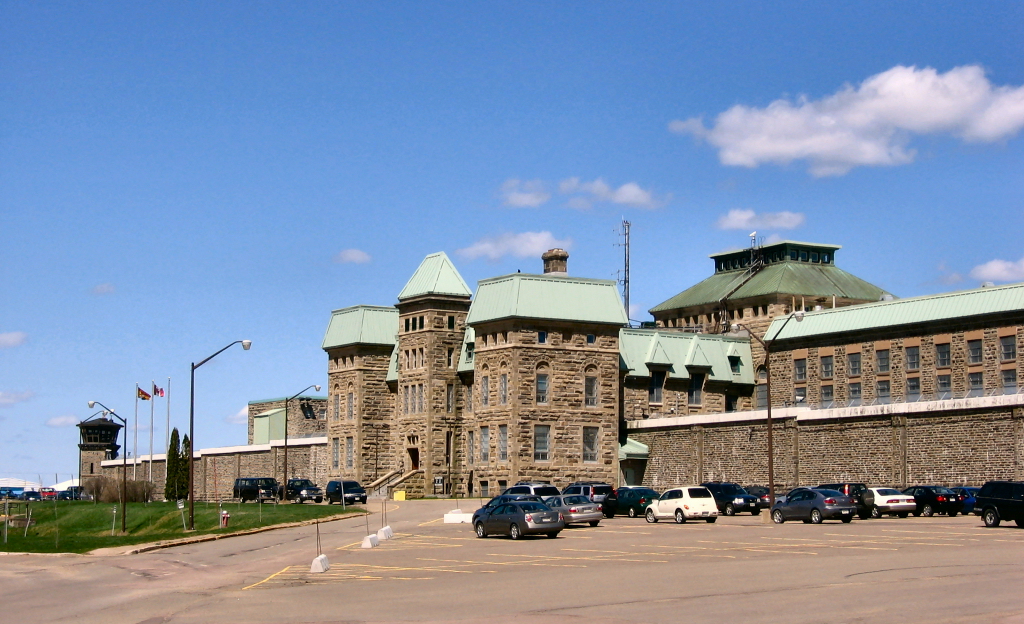
Thériault died after an altercation with cellmate Matthew Gerard MacDonald at Dorchester Penitentiary in New Brunswick.
Source: CBC News, February 2011.
MacDonald Sentenced
MacDonald pleaded guilty to second-degree murder and received life imprisonment with 25 years before parole eligibility.
Master Chronology
From health mission to prison death.
Birth
Roch Thériault is born in Quebec.
Marriage and Early Adulthood
He marries Francine Grenier, works in trades and crafts, and develops a reputation for intelligence, stubbornness, and charisma.
Adventist and Health-Mission Phase
Thériault builds a following through health reform, religious teaching, and evangelistic work.
Excommunicated
Seventh-day Adventist leaders remove him from the church as his theology and conduct diverge from institutional control.
Move to Gaspé
The group retreats to the wilderness, becomes the Holy Moses Mountain Family, and adopts new biblical names.
Failed Apocalypse
The predicted end of the world does not occur. Thériault reframes the failure and maintains authority.
Samuel Giguère Dies
The child’s death and the mutilation of Guy Veer produce the first major criminal intervention around the group.
Move to Burnt River
The commune establishes a remote settlement in Ontario and becomes publicly known as the Ant Hill Kids.
Child Protection Escalates
Children are progressively removed from the commune as concerns about welfare and safety intensify.
Solange Boilard Dies
Boilard dies after Thériault performs a catastrophic abdominal procedure.
Lavallée’s Final Crisis and Escape
After severe mutilation, Gabrielle Lavallée leaves the group for the final time and alerts authorities.
Arrests and Assault Convictions
Thériault and several followers are captured. Guilty pleas produce substantial prison sentences.
Murder Proceedings
A preliminary hearing moves the Boilard case toward a second-degree murder trial.
Murder Plea
Thériault pleads guilty to second-degree murder and receives life imprisonment.
Parole Denied
The National Parole Board refuses release.
Thériault Killed in Prison
He is killed by a cellmate at Dorchester Penitentiary.
Myth vs. Record
What sensational retellings flatten or distort.
Myth: “The case is unsolved.”
Record: Thériault was convicted of assault offenses and later second-degree murder. The unresolved issue is the full scope of untried conduct, not whether the leader faced criminal responsibility.
Myth: “Everyone stayed because they believed he was God.”
Record: belief mattered, but so did isolation, dependency, children, fear, trauma, shame, exhaustion, material scarcity, and repeated narrowing of exit options.
Myth: “The women were simply willing wives.”
Record: the group was structured around one man’s control of intimacy, reproduction, punishment, housing, and spiritual status. Continued loyalty after abuse does not erase coercive conditions.
Myth: “All reported deaths were murder convictions.”
Record: the sources discuss multiple deaths associated with Thériault’s conduct, but Boilard’s death produced the second-degree murder conviction. Other deaths have distinct legal and evidentiary histories.
Myth: “He fooled every authority until 1989.”
Record: police, child-protection workers, courts, former members, and local observers had contact with the group before its collapse. The problem was fragmented intervention and incomplete understanding, not total invisibility.
Myth: “The horror explains itself.”
Record: graphic details can overwhelm analysis. The more useful question is how housing, labor, belief, family structure, medicine, punishment, and secrecy were organized so one man could repeatedly violate others.
Archival Image File
Non-graphic context images, not spectacle.



What the Case Adds to Cult Analysis
Ant Hill Kids should not be treated as simply “Canada’s Jonestown.”
Not All Deadly Cults End in Mass Death
Jonestown and the Peoples Temple system ended in a rapid mass-killing event. Aum Shinrikyo developed an organizational program of assassination and mass-casualty terrorism. The Ant Hill Kids case looks different: a small household-scale group in which violence became chronic, intimate, bodily, and embedded in daily governance over more than a decade.
The Household Can Be the Institution
The case shows why analysts should not imagine a cult only as a church, corporation, or large organization. A few adults and many children living on remote land can still contain a full authoritarian structure: ideology, hierarchy, labor system, surveillance, reproductive policy, punishment code, medical authority, internal court, and information monopoly.
Frequently Asked Questions
Short answers to the claims most likely to be searched.
Who founded the Ant Hill Kids?
Roch Thériault, a Quebec-born religious leader who called himself Moïse or Moses, built the group from a late-1970s religious and health-reform following.
Why were they called the Ant Hill Kids?
Later accounts link the name to the followers’ constant work building and maintaining the commune, which Thériault compared to ants working in an anthill.
Was Roch Thériault convicted of murder?
Yes. In January 1993 he pleaded guilty to second-degree murder in the death of Solange Boilard and received life imprisonment.
What happened to Gabrielle Lavallée?
She survived years of abuse and a catastrophic assault that resulted in the loss of her right arm. Her final escape in August 1989 triggered the police investigation that dismantled the commune.
How many children lived in the cult?
The number changed over time as children were born and removed. Sources cite different counts at different dates, including 12 children in a 1984 local profile and roughly two dozen children by the late 1980s.
Did Children’s Aid know about the commune?
Yes. Child-protection authorities had repeated involvement and ultimately removed children. The case is therefore about incomplete and fragmented intervention, not complete institutional ignorance.
Why did members return after escaping?
Return can reflect coercive control, fear, children, practical dependency, isolation, trauma bonding, promises of reform, and loss of outside supports. It should not be read as proof that prior abuse was voluntary.
How did Roch Thériault die?
He was killed by cellmate Matthew Gerard MacDonald at Dorchester Penitentiary on February 26, 2011, while serving his life sentence.
Does the Ant Hill Kids cult still exist?
No. The commune ceased functioning as an operating group after the 1989 arrests. Some former followers remained personally loyal to Thériault during his imprisonment, but the Ant Hill Kids did not continue as the same organized wilderness commune.
Who was Solange Boilard?
Solange Boilard was a long-term member and senior figure within Thériault’s commune. She died in 1988 after Thériault performed an unauthorized abdominal procedure, and her death became the basis of his 1993 second-degree murder conviction.
Source Ledger
Primary-adjacent archives, legal reporting, academic research, and high-quality secondary sources.
Andrew Ames, 2020
“Roch Thériault and the Holy Moses Mountain Family (Ant Hill Kids),” in The Mystical Geography of Quebec. Useful for the group’s religious development, Gaspé phase, failed prophecy, excommunication, and escalation of violence.
Maryboro Lodge Museum
Preserves photographs, local newspaper reporting, the 1984 Fenelon Falls Gazette visit, 1989 arrest and plea coverage, and later trial reporting.
Lindsay Daily Post excerpts
Reproduced by Maryboro Lodge and used for arrest chronology, Lavallée’s statement, guilty pleas, sentences, preliminary hearing, and 1993 murder disposition.
Ontario Legislature, 1994
Committee transcript documenting political questions about roughly 80 contemplated charges and the abandoned dangerous-offender application. It is evidence of the controversy surrounding the plea resolution, not proof of 80 convictions.
Global News
Used for Thériault’s prison death, prior convictions, 2002 parole denial, and retrospective summary of the Samuel Giguère proceedings.
Maclean’s, 1993
Paul Kaihla and Ross Laver’s “The Ant Hill Kids” remains an important longform source because it was published after the murder plea lifted restrictions on previously unavailable evidence. Later sources provide firmer legal detail on some points.
Gabrielle Lavallée
Lavallée’s memoir is central to understanding the lived experience of coercion and abuse. Survivor memoir supplies perspective unavailable from legal summaries, but remembered detail should still be distinguished from independently corroborated evidence.
The Dark Side of Humanity
The Jonestown, Aum Shinrikyo, Turpin, and Beyond Brainwashing files offer comparative analysis of coercive control. These are contextual links, not primary evidence for the Thériault prosecution.
Browse every case in the Case File Index
Discover more from The Dark Side of Humanity
Subscribe to get the latest posts sent to your email.