 Evidence #01
 Evidence #02
 Evidence #03
 Evidence #04
Overview
He died before any jury could try him
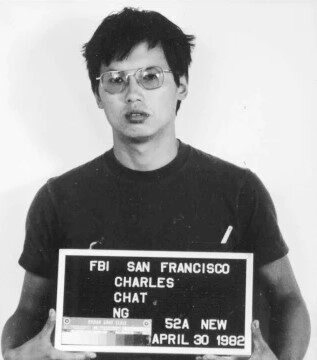
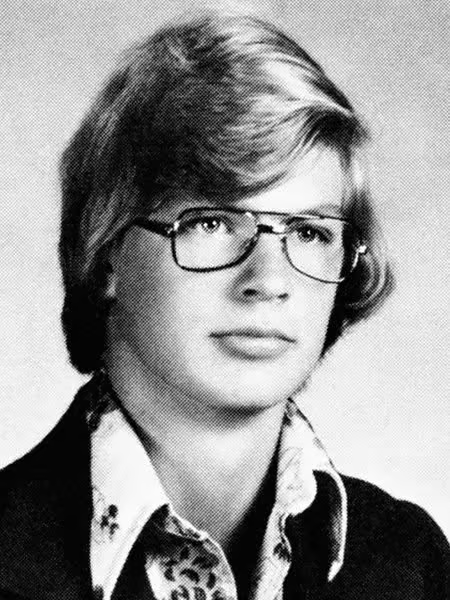
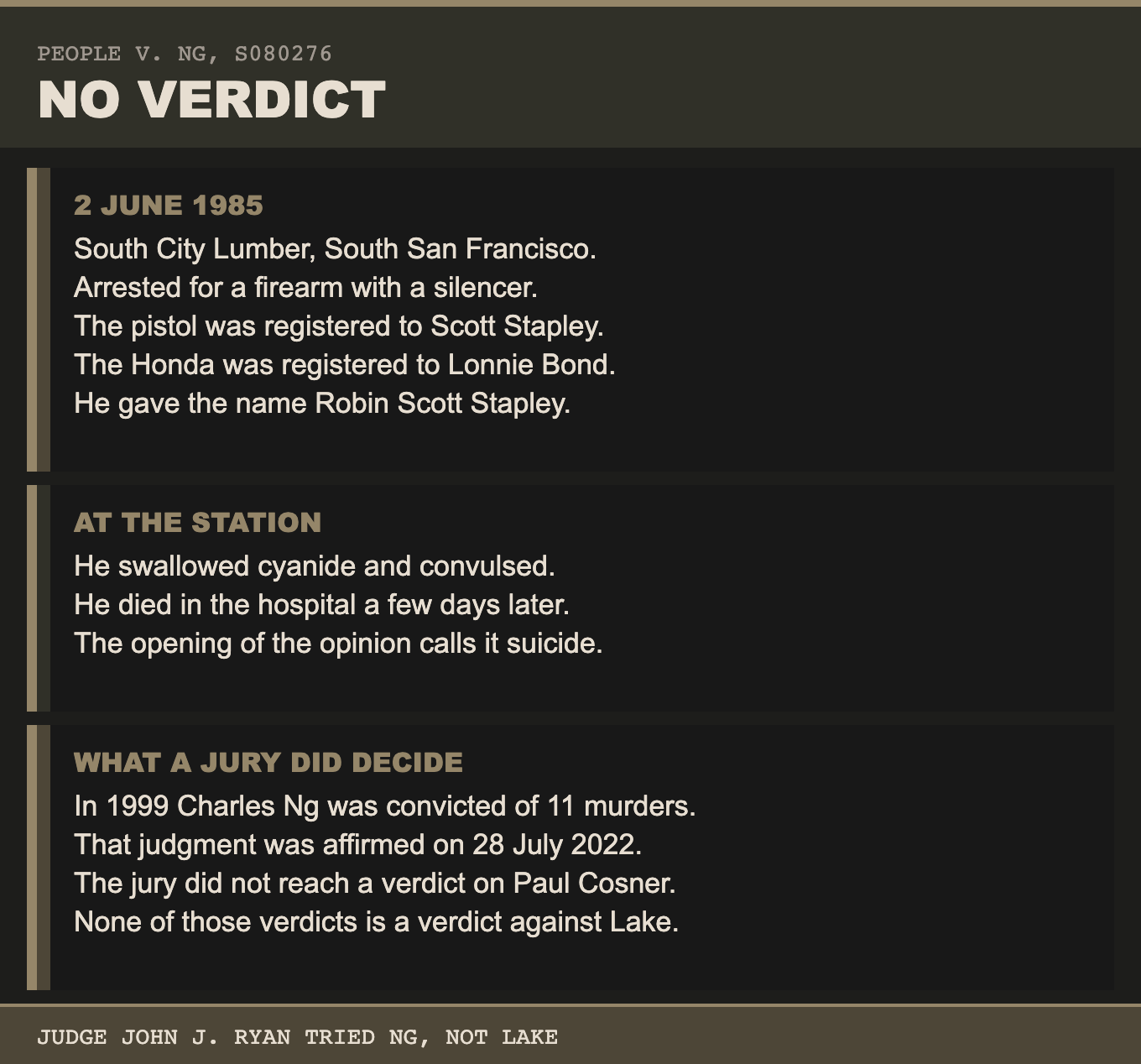
Leonard Lake is the accomplice named in People v. Ng, S080276. He is not a defendant in that appeal. On 2 June 1985 South San Francisco police arrested him for possession of a firearm with a silencer. At the station he swallowed cyanide, convulsed, and died in a hospital a few days later. The opening of the opinion calls that a suicide. The facts it then gives are the cyanide, the convulsion, and the death. No jury returned a verdict against him. The only judgment in this paper is the one against Charles Chitat Ng: eleven counts of first-degree murder, the multiple-murder special circumstance, a death verdict on 30 April 1999, a sentence of death in 1999, affirmed in its entirety on 28 July 2022. Those verdicts name Ng. They do not name Lake as the man convicted.
What the opinion does put on Lake is the property, the bunker, the name he gave the officer, the cars and the papers, the words on the buried tape, and the lie he told Scott Stapley’s girlfriend. The defense then tried to make him the only killer. The trial court let some of that in and kept the diary out. The Supreme Court left those rulings standing.
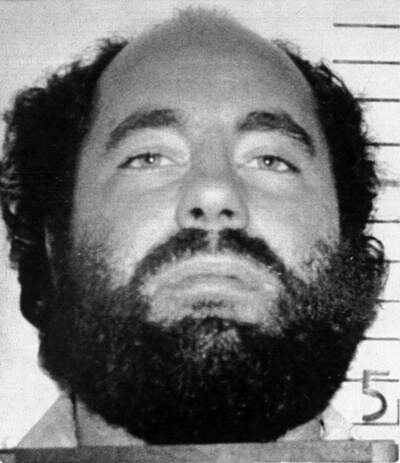
The arrest
He gave the dead man’s name and a dead man’s license
On 2 June 1985 John Kallas, a reserve officer of the South San Francisco Police Department for twenty-eight years, was at South City Lumber Company. He watched an Asian man, later identified as Ng, carry a large vise past the checkout counter and out the door. A clerk said it had not been sold. About fifty feet away the man stood at the passenger door of a gold Honda, then walked toward the street. The trunk was ajar. The vise was inside. While Kallas was calling the police, a bearded man, later identified as Lake, came up and asked if he could pay for the vise. Kallas told him to speak to a clerk. Kallas did not work there.
Officer Daniel Wright ran the plate. The Honda was registered to Lonnie Bond. In the open trunk, with the vise, was a backpack. Wright opened it and found a semiautomatic pistol and a silencer. The serial number was registered to R. Scott Stapley. He put the gun and the silencer back as Lake approached. Lake said he had paid for the vise his friend took. Asked his name, he said he was R. Scott Stapley and handed over a California driver’s license in the name Robin Scott Stapley. He said the car belonged to Bond and that Bond was up north. Wright arrested him for the firearm with the silencer. That is the charge on the day he died. It is not a murder charge.
At the station he ingested cyanide and started convulsing. He was taken to the hospital and died a few days later. Before he convulsed he wrote a note to Lyn. In part it said he loved her, he forgave her, freedom is better than all else, and to tell Fern he was sorry for all the trouble. Fern Ebeling is his sister. In 1984 she had been passing mail between him and Ng. The opinion does not say that Lyn is Claralyn. It prints the name Lyn on the note, and it prints Claralyn B. as his ex-wife on the power bill.
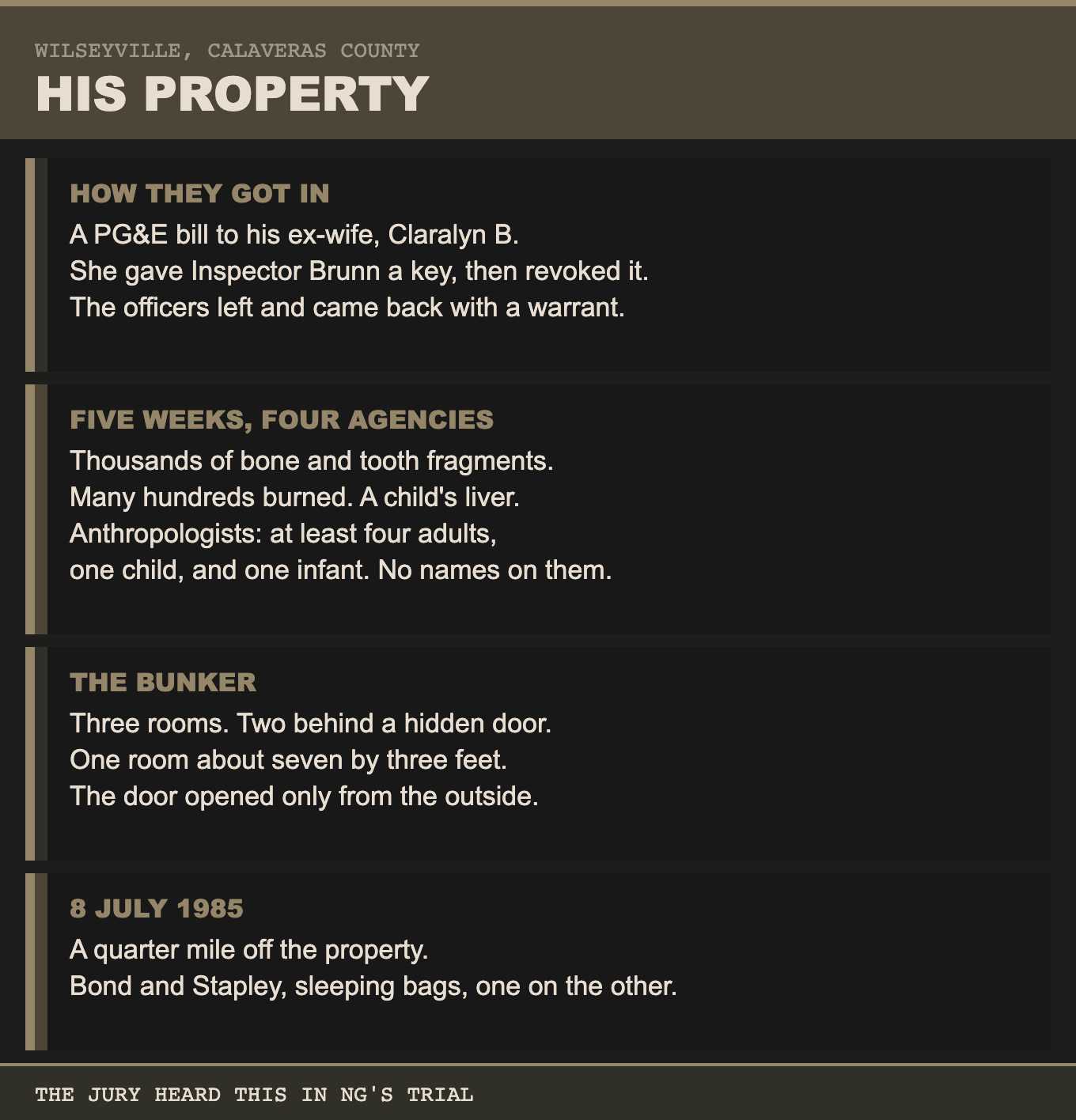
Officers then ran the Honda’s vehicle identification number. It belonged to Paul Cosner, missing since 2 November 1984. The South San Francisco police turned the car over to Inspector Irene Brunn of the San Francisco missing-persons unit, who was already investigating Cosner and, separately, the Dubs family. Inside the car she found a Pacific Gas and Electric bill addressed to Claralyn B. The envelope listed an address in Wilseyville, a town in Calaveras County, which the opinion places approximately three hours west of San Francisco.
What holds up
What this opinion can say about him
- He was arrested on 2 June 1985 for a firearm with a silencer, not for murder. He gave Scott Stapley’s name and Stapley’s license. The pistol was Stapley’s. The Honda was registered to Lonnie Bond and, by the identification number, was Paul Cosner’s. He swallowed cyanide and died a few days later. No jury tried him.
- The opinion calls Wilseyville his property. Claralyn gave Inspector Brunn a key on 4 June and then revoked it. A warrant followed. Five weeks and four agencies produced thousands of bone and tooth fragments, many hundreds of them burned, a child’s liver, and a bunker whose smallest room opened only from the outside. Two anthropologists said the fragments were at least four adults, one child, and one infant. The opinion does not put names on those fragments.
- On the buried tape he is the man who tells Kathleen Allen she will cook, clean, and fuck for them, or be tied to the bed, raped, shot, and buried where they buried Michael Carroll. He tells Brenda O’Connor the same choice, and that they will probably not let her family go. On 8 July 1985 Bond and Stapley were found a quarter mile from the property, in sleeping bags, shot, gagged, and bagged.
- The defense said he killed without Ng, including his brother Donald and his best friend Charles Gunnar, and that he used the name Charles Gunnar. That is defense evidence of uncharged killings. This judgment does not decide them. The diary the defense wanted read, the parts that blamed him alone, stayed out.
Snapshot
The man, in the only judgment that names him
Status
Dead a few days after 2 June 1985. Never tried.
The charge that day
A firearm with a silencer. Stapley’s pistol.
The name he gave
Robin Scott Stapley. Also used Charles Gunnar.
Property
Wilseyville, Calaveras County. His, in the opinion.
The judgment
People v. Ng. He is the accomplice. Ng is the convict.
Ex-wife
Claralyn B. Immunity. She was not questioned.
The property
She gave them the key, and then she took it back
On 3 June Inspector Brunn met Claralyn at a cafe, hoping she could help find Ng. They arranged to meet at the Wilseyville property the next day. Claralyn gave Brunn a key and permission to search. In the living room Brunn found two pieces of equipment, including a VCR missing from the Dubs apartment. She called her office, read the serial number, and confirmed it. Claralyn then revoked permission. The officers left, secured the premises, and obtained a warrant.
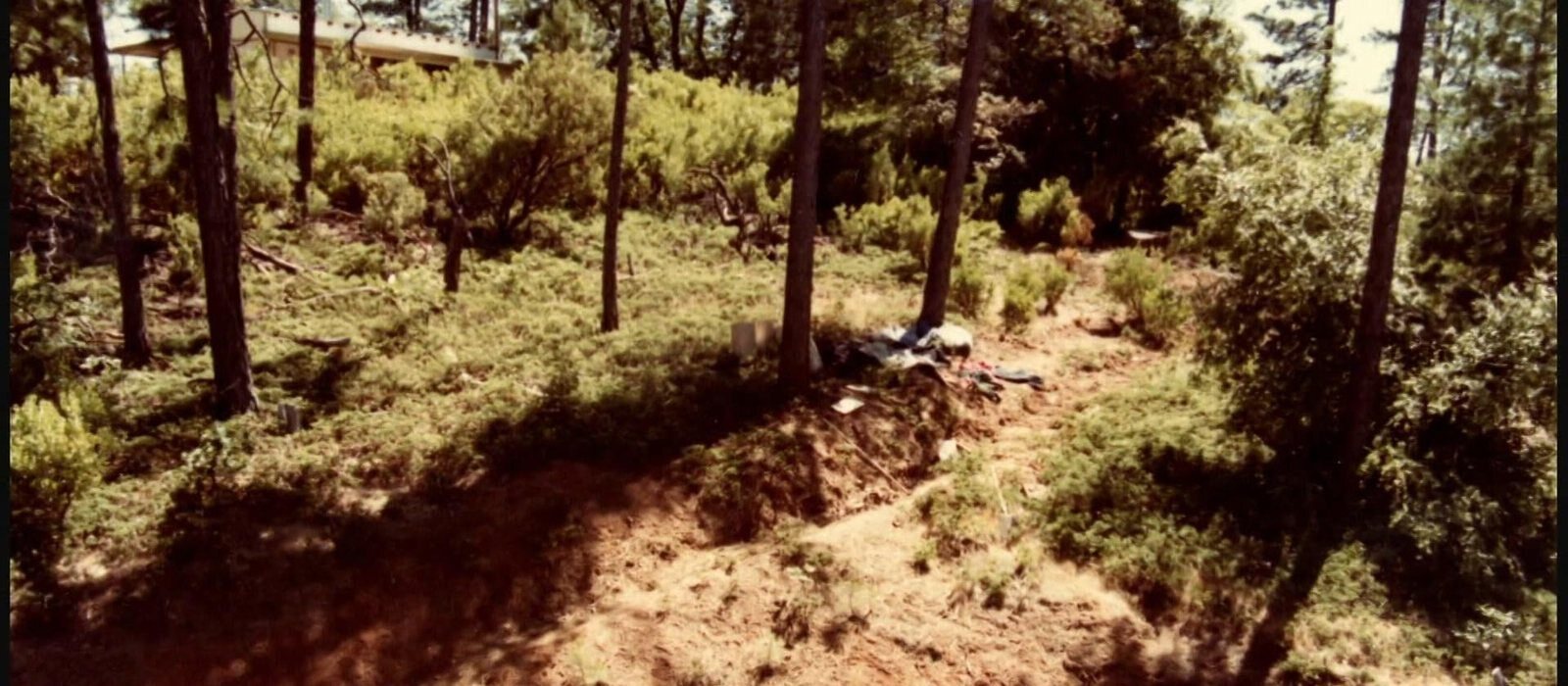
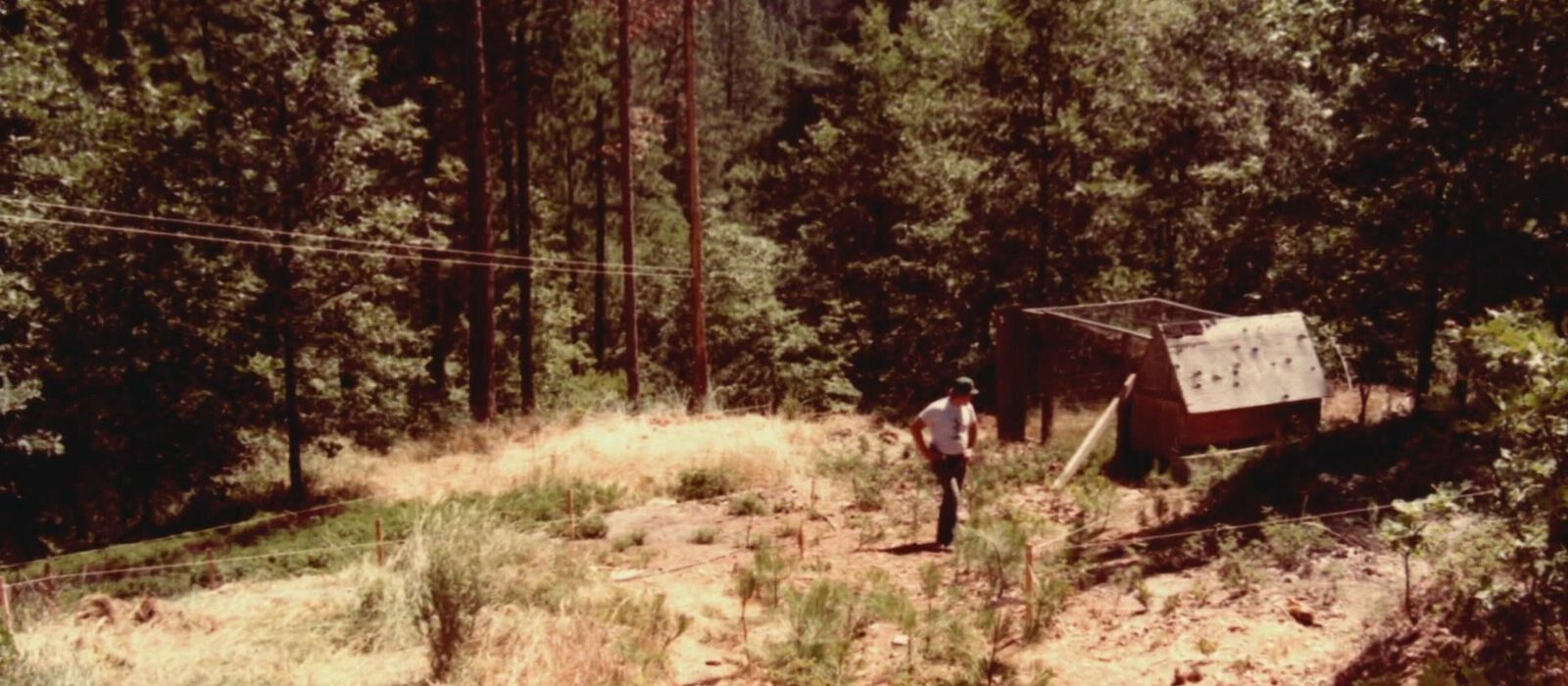
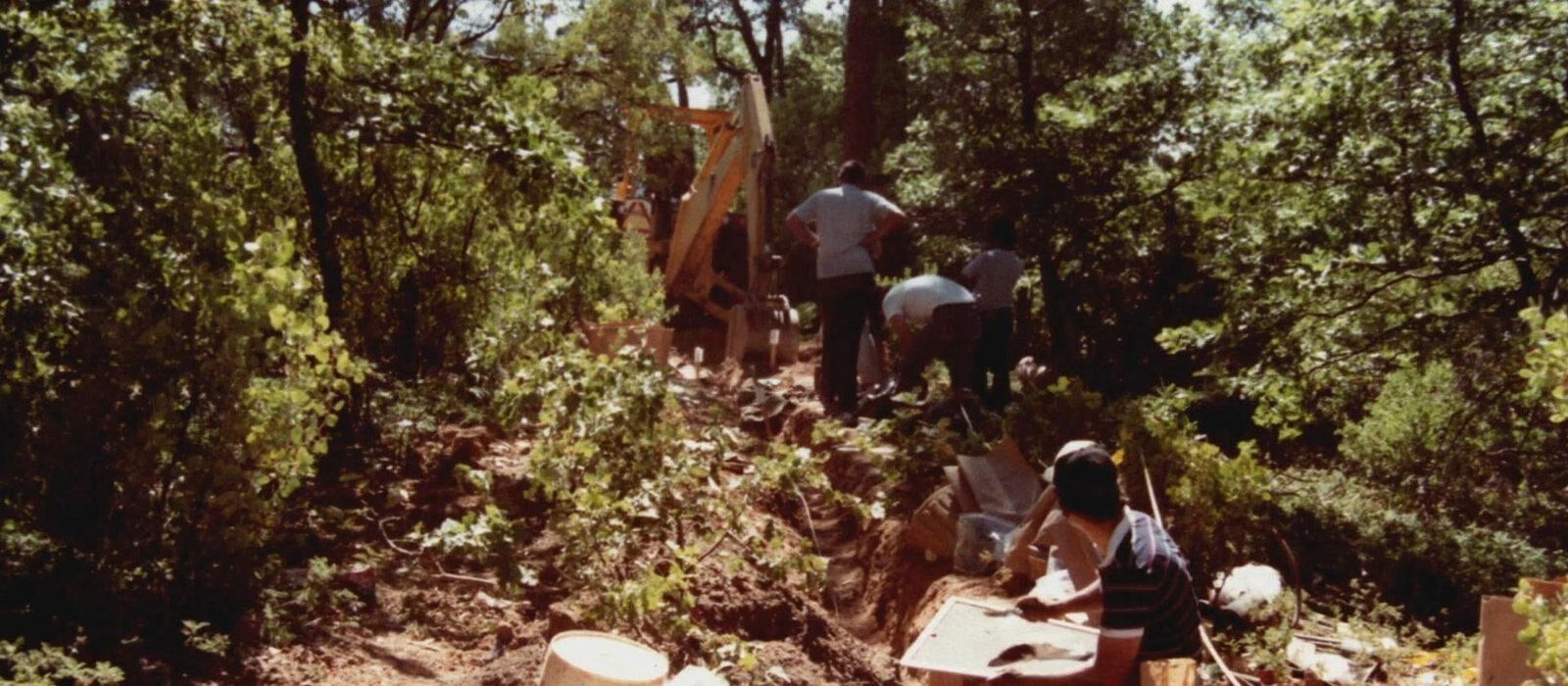
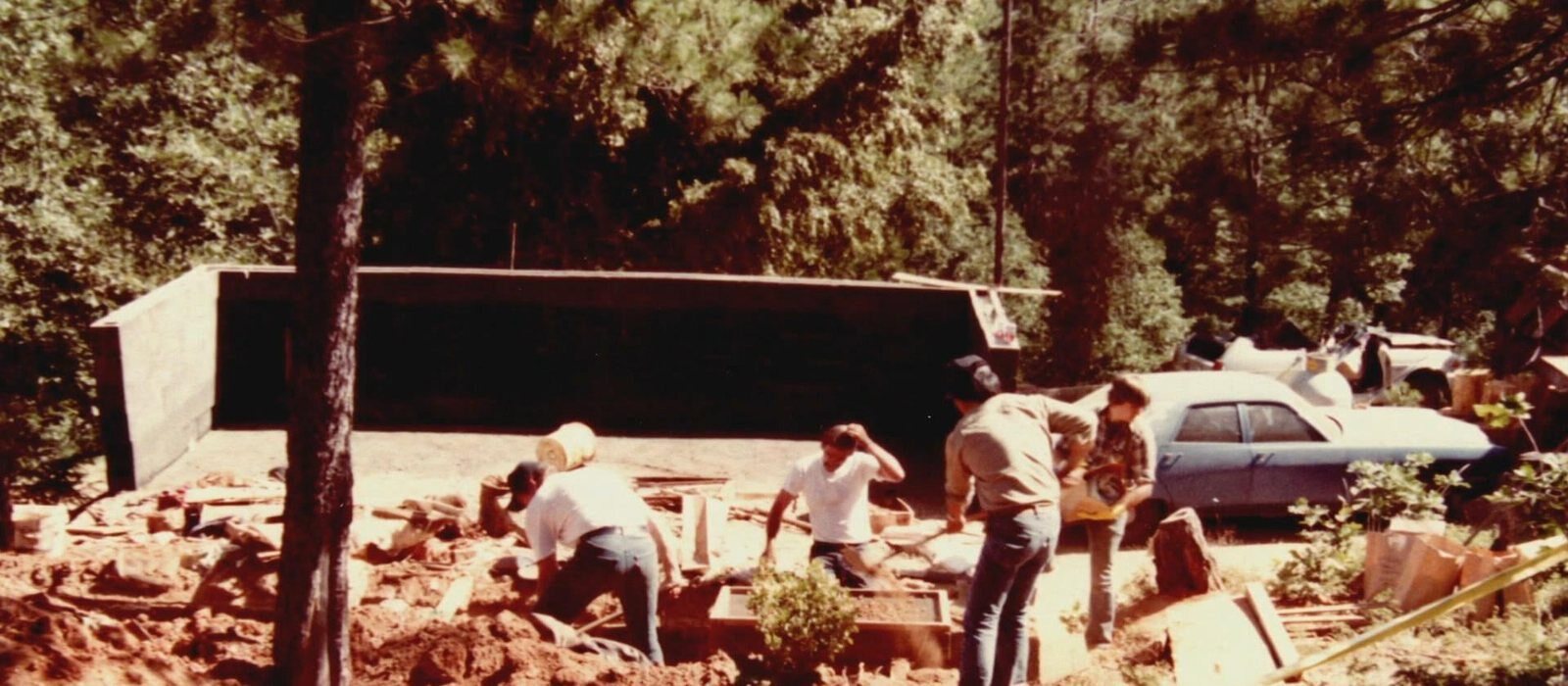
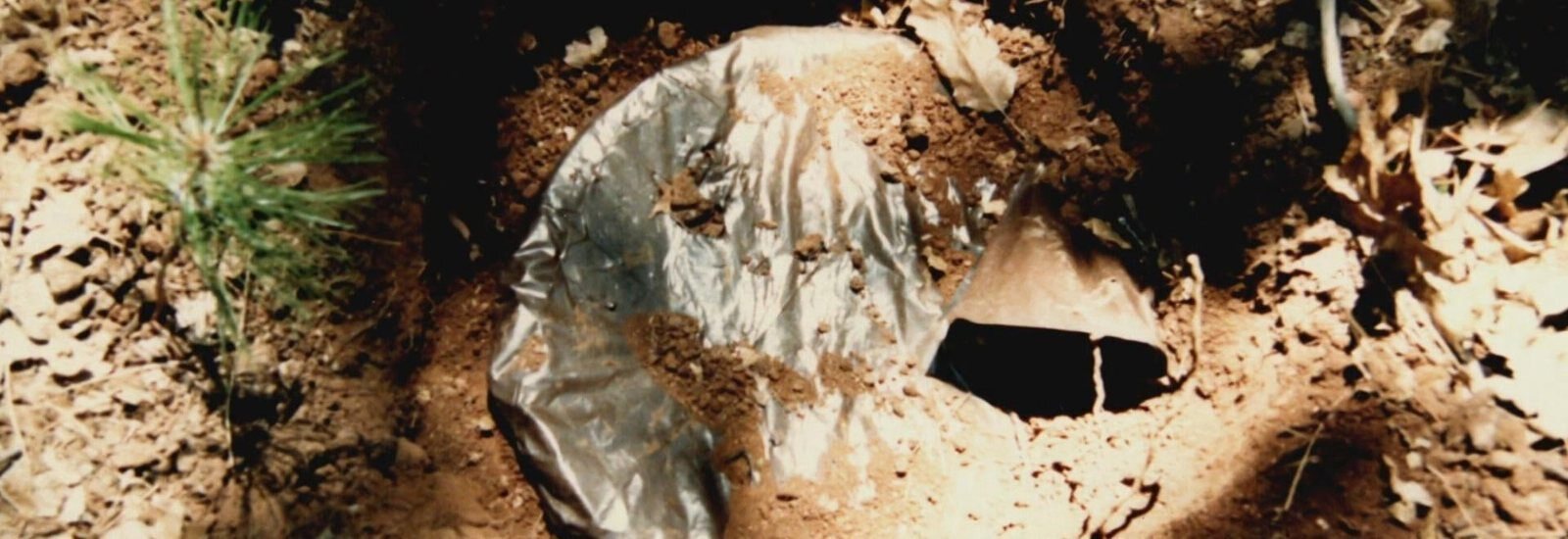
The search lasted five weeks and involved four law enforcement agencies. Investigators found thousands of bone and tooth fragments buried throughout the property. At least four dental specimens belonged to a child under the age of three. Two forensic anthropologists, after reviewing the fragments, concluded they belonged to at least four adults, one child, and one infant. Many hundreds of the bone fragments showed various degrees of burning. Investigators also found a child’s liver buried on the property. The opinion does not match those fragments, or the liver, to a named person. Lonnie Bond, Sr., and Scott Stapley were found later, as bodies, off the property. Sharon O’Connor, Brenda’s mother, said the absence of remains meant there could be no funeral for her daughter and for the infant.
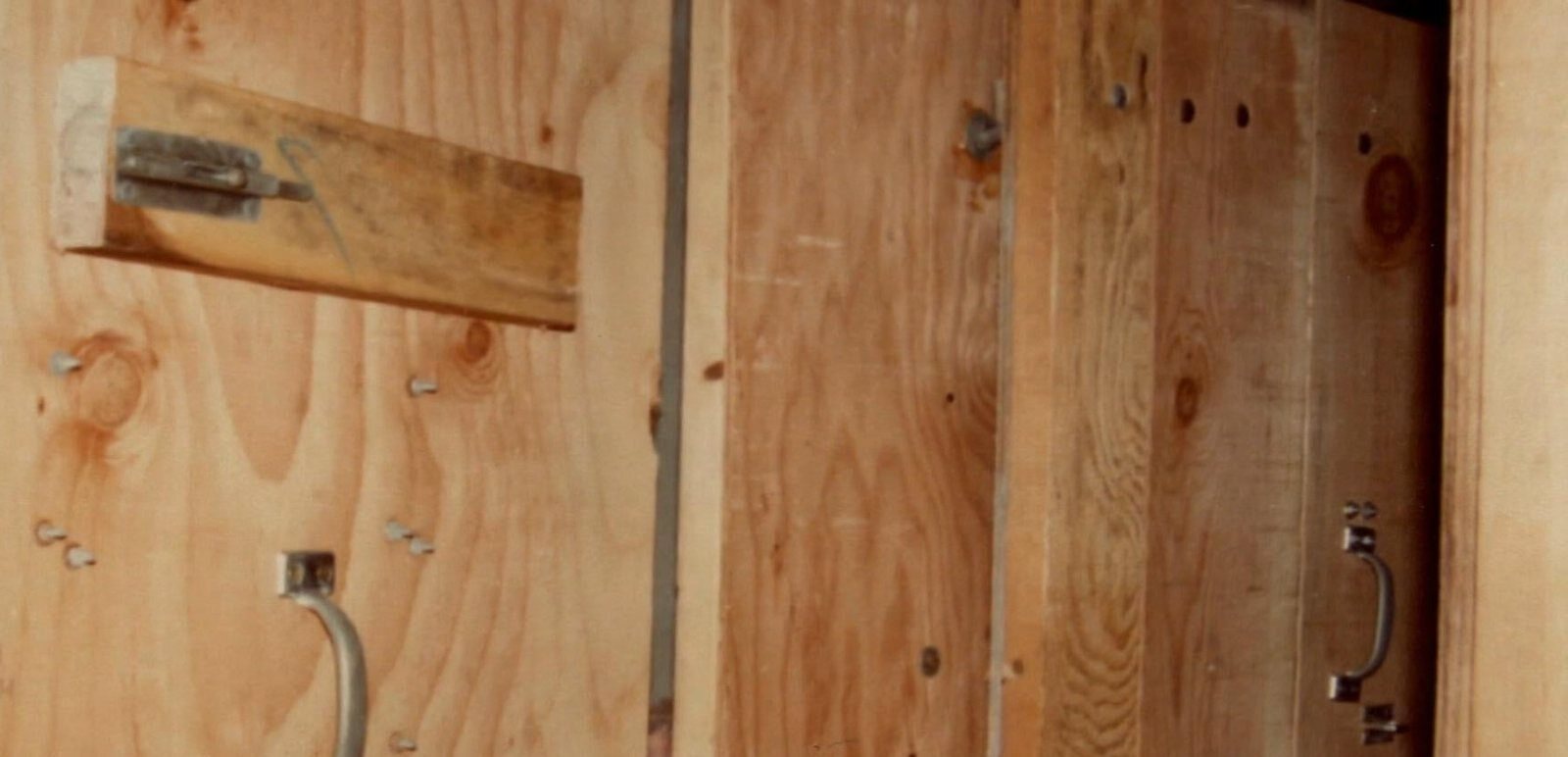
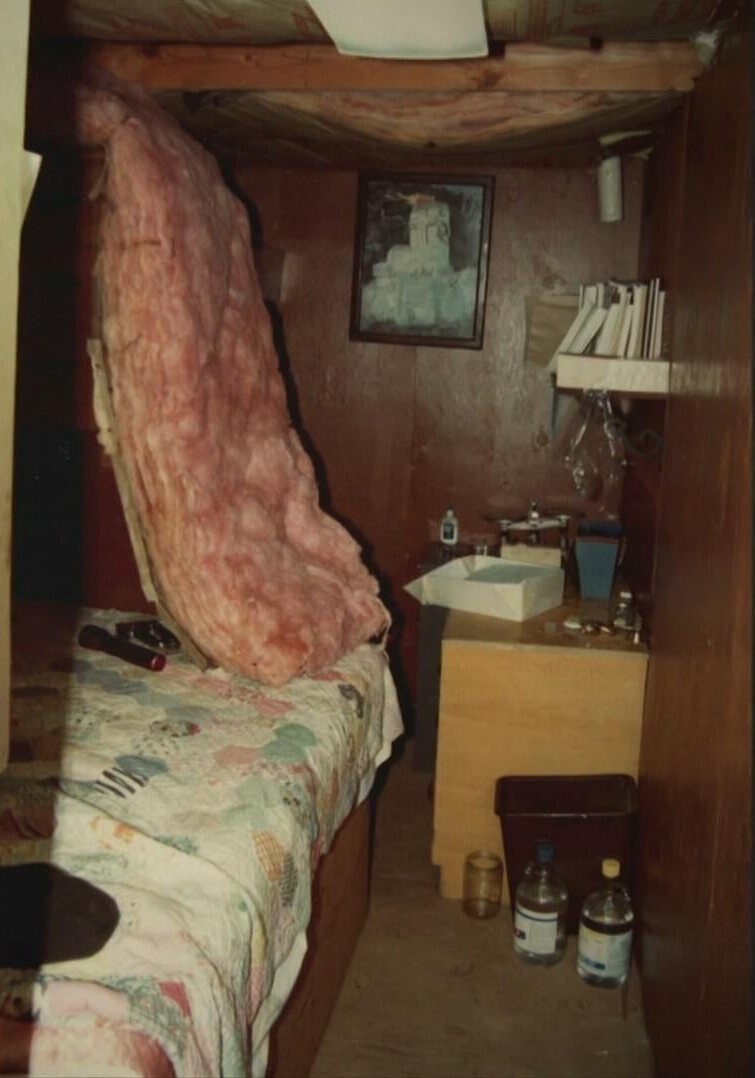
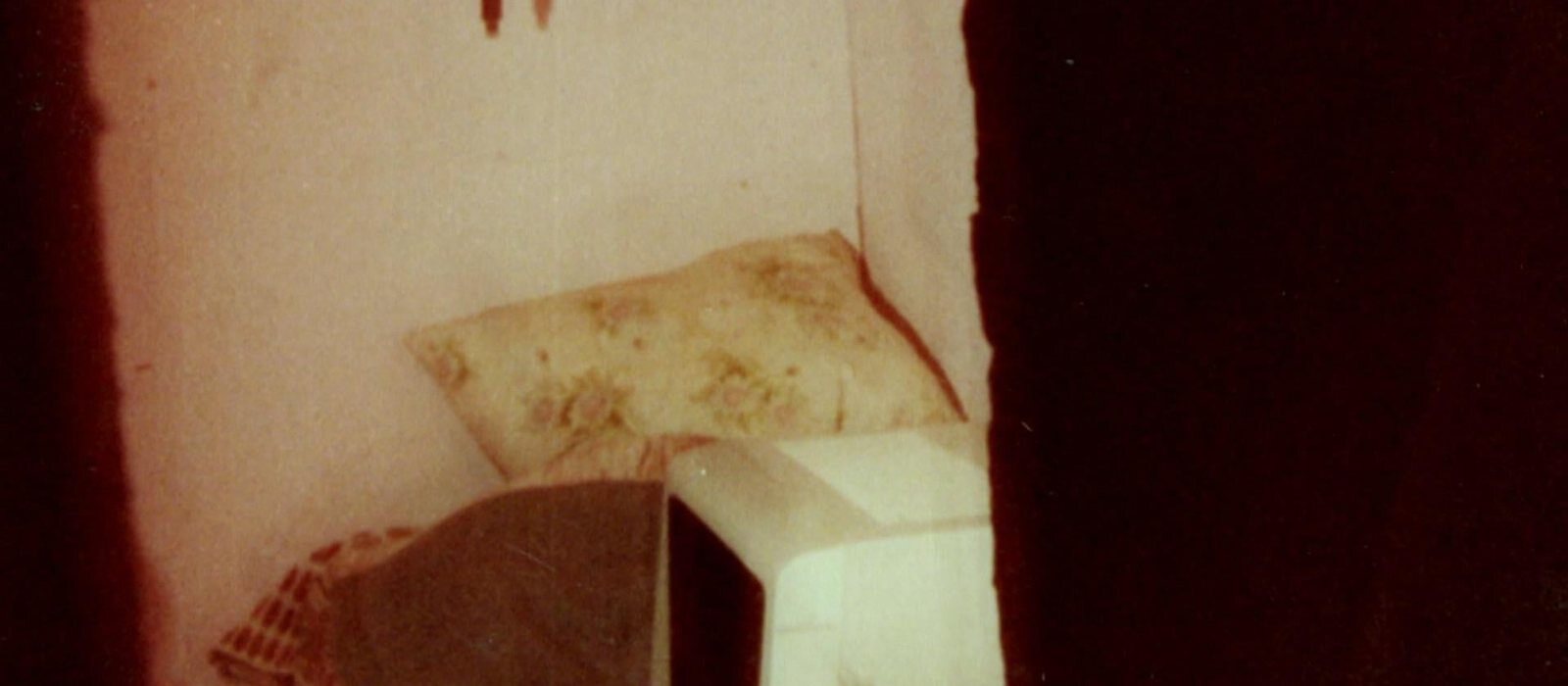
Besides the house there was a bunker. Three rooms. Two of them behind a hidden doorway. One hidden room held a bed, a desk, dressers, and some food. The second was about seven by three feet, closed by a wooden door. Inside were a small bed with a foam pad, a plastic bucket, a roll of toilet paper, and a small lamp. The door into that room could be opened only from the outside. Ng said that when he was court-martialed, Lake sent him photographs of the bunker under construction, and that he did not know Lake was building a place to keep sex slaves. The court later allowed the defense to refer to one journal entry, and only as a reference, that Lake had written bunker fantasies for some twenty-odd years before any of this started. The rest of the diary did not go to the jury.
His voice on the tape
Cook, clean, and fuck, or be buried with the last one
Investigators found a videotape titled M Ladies, Kathi, Brenda buried on the property. Kathleen Allen is shackled in a chair. Lake and Ng tell her that if she cooperates, thirty days later they will drug her, blindfold her, and release her somewhere. If she does not, they will shoot her and bury her in the same place they buried Michael Carroll. They want Carroll’s bank accounts and the names of the people they need to write. Lake tells her she will need to write letters so that Mike can be phased off, moved over the horizon, and people will think he moved to God knows where and was never heard from again. He says that is semi-acceptable. He tells her they will keep her busy and she must agree to cook, clean, and fuck for them. That is the choice in a nutshell, he says, and it is not much of a choice unless she has a death wish. He says he and Ng are being selfish bastards, and that if she cooperates they will be as nice as they can within the limits of keeping her prisoner. If she does not, they will tie her onto the bed, rape her, shoot her, and bury her.
After she agrees, Lake unshackles her and the men force her to strip. Ng says he wants to shower with her and that it will not be the last time. When she looks nervous, Lake says they do not want to have to make an example of her. She undresses and walks off camera with Ng. In a later scene she is face down, shackled to a bed, wearing only shorts, and Lake is taking pictures. He tells her she tried to beat down the door. He says he has cyanide pills and if he ever got caught he would take them. He threatens to hit her and whip her if she tries to escape again. He says he normally does not confess his sadistic tendencies to strangers, but he can talk to her because she is going to go away and he is never going to have to deal with her again, unfortunately for her. He makes her put on lingerie, takes more photographs, and tells her to get dressed because they are going outside. Ng later told Maurice Laberge that he killed her quicker because she tried to break out of the cell, and that he put his gun inside her vagina and made her call Safeway for time off. On the stand Ng said the tape was Lake’s idea, that he did not have sexual intercourse or oral sex with her, and that she was still alive when he left for San Francisco. He denied the words to Laberge.
Brenda O’Connor is in the same chair, hands bound, asking what they did to her family. They tell her they did not kill Bond or the baby. When she asks if they are going to let her family go, they say probably not. Lake tells her they hate her, and that the neighborhood hated the family after they moved into the Carter house next door. He says they were going to give the infant, Lonnie, to a family in Fresno that did not have kids. She pleads for the baby, over and over. Lake tells her she must work, clean, and fuck for them, or they will tie her to the bed, rape her, and shoot her. She agrees. Ng cuts off her T-shirt and bra with a knife and tells her she is totally theirs, and that she can cry like the rest of them and it will do no good. Lake says Ng has his heart set on showering with her and he does not want to turn Ng down. She says she is dizzy, hot, and does not feel well. They tell her to suffer, then get her water. She says she does not need a shower. Ng says it is a house rule that she be clean before he and Lake fuck her. The scene ends with her and Ng going to the shower. Lake tells Ng to be careful with her. The opinion does not describe a body identified as Brenda O’Connor or as the infant. It does describe the two men.
What is tied to his hands
The letter, the motorcycle, the bloody sheet, the funeral he described
Clifford Peranteau worked with Ng at Dennis Moving and disappeared after a Friday night in January 1985. About a week later his motorcycle was gone. Dennis Goza, the owner, received a letter that said Cliff was sorry to leave on short notice, that a new job, a place to live, and a honey had come together, and to send the last three days’ pay and the W-2 to a post office box in Mokelumne Hill, about twenty miles from Wilseyville. The body of the letter was typed. The signature and the address were handwritten. The signature did not look genuine. Analysis said the letter was typed on a typewriter found at Wilseyville. A police investigator testified that Lake had forged it. In April 1985 Lake sold the motorcycle to a man in Wilseyville and said Peranteau was a friend in San Francisco who had asked him to sell it. Ng told Laberge he shot Peranteau while Peranteau pleaded, kept the pen set by mistake, and burned Peranteau and Jeffrey Gerald so they would not be found. On the stand he denied all of that. No body identified as Peranteau, and none identified as Gerald, is described in the opinion. Gerald’s guitar was at the property. His Social Security card was buried there.
The day after Gerald disappeared, 25 February 1985, a Wilseyville neighbor saw Lake with a bloody sheet wrapped around his body. The same day a local doctor treated Lake for a gunshot wound in the hand. That is what the defense put on, as evidence that Lake, not Ng, was the man who came back hurt. Gerald had told his roommate he was meeting Ng at a bus station for a side job. Both facts are in the opinion. They are not reconciled into one killer.
Michael Carroll’s Mercury Capri ended up in Lake’s hands through George Blank in San Jose. On 14 April 1985, the day Allen left the Milpitas Safeway in Cosner’s Honda, Lake called Blank about a car stranded in Milpitas. He said it belonged to friends and that he would send a man named Charles to the bus depot with the keys. Ng met Blank’s daughter, Debra, and gave her the keys and a letter of directions. Blank found the Capri in the Safeway lot. On 26 April Lake came to the house, inspected the car, took things out of it, and asked Blank to fix it and try to sell it. On 8 or 9 May Blank got a letter and paperwork from Lake: a pink slip, a release of liability, and an insurance policy, all in Carroll’s name, a deposit slip in Allen’s name, and an envelope from the Safeway Federal Credit Union. After the sale and Blank’s share for the repairs, the balance was to go into a named account. A check of Allen’s dated 2 May 1985, more than two weeks after she disappeared, was payable to Randy Jacobson. A handwriting expert said Lake wrote the face of the check and probably signed Allen’s name. Jacobson’s body was found at Wilseyville. He is not one of the eleven counts against Ng. The opinion does not say how Jacobson died. On the tape, Lake tells Allen they buried Carroll. Ng said on the stand that he was not paying attention when Lake said that, and that he did not help kill or bury Carroll.
A few days before Paul Cosner disappeared, a neighbor saw Cosner talking with Lake in the garage of Cosner’s building. Cosner left on 2 November 1984 to deliver the gold Honda he was selling, the car at the lumber store seven months later. Ng told Laberge he did not want to kill that punk, but Lake wanted the Honda, a cheap Honda, and he described the sounds Cosner made after Ng shot him. On the stand Ng said Lake told him the Honda was a hot car from drug dealers, and he denied shooting Cosner. The jury did not reach a verdict on Cosner. He is the twelfth missing person in the opening of the opinion, and not one of the eleven convictions.
Lonnie Bond, Sr., rented the Carter house next door in January 1985. The houses shared a driveway. Lake called the property manager and complained that someone was firing guns from the house and that Bond was not locking the gate. He later told another Wilseyville neighbor that the Bond family were pests, and that it was all right to kill someone if they were bugging you. Stapley’s girlfriend, Tori Doolin, met Lake in February when he came to the Carter house to talk to Bond and Stapley. She last saw Stapley on the evening of 19 April 1985 in San Diego. He was going to drive O’Connor and the baby back north. On 23 April Ng crashed Stapley’s truck in Kern County. The next day Lake and Ng were at Doolin’s apartment. Ng waited in the car. Lake told her he had found Stapley, Bond, O’Connor, and the baby dead in the Carter house, that he had burned the bodies in a kind of funeral ceremony, buried them, and cleaned the house. He wanted Stapley’s belongings so it would look as if Stapley had moved out. Doolin gave him the bicycle, the clothing, and other things. Outside, he showed her the damage to the truck. In May he told the property manager he thought the tenants had left town, and that Bond had left his car because he owed Lake money. When he was arrested he had Stapley’s gun and Stapley’s credit cards and bank card.
On 8 July 1985, back in Calaveras County, officers a quarter mile from the property saw tufts of cloth that looked like the fill of a sleeping bag. Animals had dug the fill up with some bone. Excavation found Bond and Stapley in separate sleeping bags, one on top of the other. Bond had been shot once in the head. His wrists were handcuffed. A plastic bag was over his head. A leather strap with a ball gag was around his neck. Stapley had been shot three times, in the front of the mouth, above the right eyebrow, and in the right collarbone. A plastic bag covered his head and shoulders. His hands and ankles were bound with duct tape. He had the same strap and gag. Ng told Laberge he shot both men and buried them. On the stand he said he was not there when they were killed. He said Lake later showed him the two bodies under the porch, that he himself bound Bond, gagged him, and put him in a sleeping bag, and that Lake did the same to Stapley, because Lake wanted it to look like rival drug dealers. The bodies match the bindings he described putting on after death. The opinion does not say which of the two men fired the shots. Lake was already dead by 8 July. He could not be asked.
The defense portrait
Charles Gunnar, a pocket of cyanide, and a bunker he had wanted for twenty years
Ng met him through a man Ng knew in Hawaii in the summer of 1981, while Ng was posted there with the Marine Corps and the other man was in the Army. The opinion does not say Lake was that soldier. The man gave Ng an address. For part of 1982 Ng lived with Lake and Claralyn in Philo, Mendocino County. A neighbor, Ernie Pardini, said Lake reprimanded Ng, spoke to him in a degrading and domineering way, and that Ng seemed timid and eager for Lake’s approval. In 1984 Fern Ebeling passed their mail. That Thanksgiving Ng ate at Lake’s mother’s house, the only person there who was not family. In December Ng introduced him to a coworker who needed work on a house. Sometimes Lake stayed in Ng’s San Francisco apartment and kept bedding, a change of clothes, tools, ammunition, and marijuana there. Ng said he met Lake at twenty-two or twenty-three, looked up to him, and was grateful Lake took him when he was not a citizen, could not drive, had no job, and had a criminal record. He knew Lake was a survivalist, building shelters and stockpiling for the end of the world.
The defense presented him as the dominant man, and in places as the only one. Witnesses, including Ng, said he frequently used the name Charles Gunnar. The defense offered evidence of his involvement in several uncharged murders, including his brother Donald and his best friend Charles Gunnar. The opinion records that offer. It does not find that he killed either of them. He carried cyanide in his pocket and told several witnesses he would take it if he were captured. He told witnesses he wanted a bunker for a nuclear war, and he had fantasies of keeping women hostage in it. He told a Wilseyville neighbor the Bonds were pests and that it was all right to kill someone who was bugging you. Ng said he regretted the tape, that he was young and adventurous, and that he did not exercise independent judgment. On the day of the lumber-store arrest he said he crouched in the back of Claralyn’s car as she drove past and saw Lake standing in the lot with the police. That night Ng bought a one-way ticket to Chicago and went on to Canada. He was arrested there for shoplifting on 6 July, with a .22 that had belonged to Lake. The opinion says Lake died a few days after 2 June. It does not print the calendar date of the death. By the Calgary arrest, he was dead.
What the jury did not get
The diary that blamed him alone was kept out on purpose
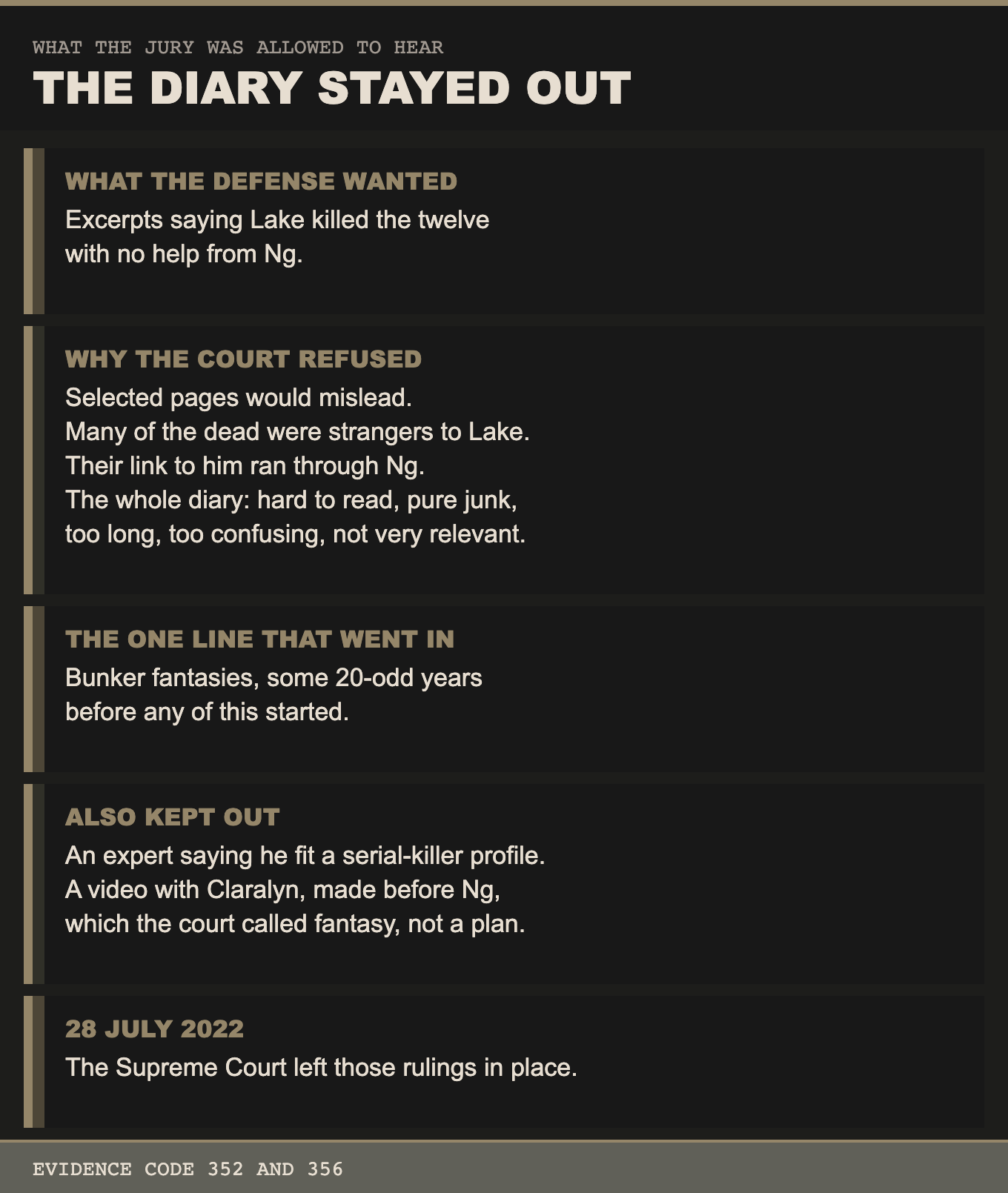
The defense wanted selected pages of his journal, to show his state of mind and to show he murdered many people with no knowledge or help from Ng, and so could have murdered these people the same way. The prosecution said that if those pages came in, other pages had to come in too, including pages that implicated Ng. The court agreed that edited portions would mislead. The pages the defense wanted suggested he killed the twelve victims with no assistance from Ng. The court said that picture was misleading because many of the victims were strangers to Lake, their connection to him was through Ng, and the evidence showed Ng was available to assist. Under Evidence Code section 356, a party cannot put in a piece of a writing and leave out the part that makes it understood.
Counsel then asked the court to admit the entire diary. The court refused under Evidence Code section 352. The diary as a whole was hard to read, largely pure junk, too time consuming, too confusing, and literally not very relevant. The court said it would reconsider a reedited version. Two weeks later the defense offered one new edited excerpt. The prosecution objected again, because the excerpt removed every reference to Ng. The court said it would not allow a partial statement when the next statement clearly implicated Ng, and that Lake’s motive and plan were not in dispute. The bunker fantasies and the claim that he acted without Ng were already in front of the jury through other evidence. The court did allow the defense to refer to one entry, Lake’s long-held bunker fantasies, to show he really wrote a diary and had had the fantasy for some twenty-odd years before this started. On 28 July 2022 the Supreme Court held that excluding the rest was within the trial court’s discretion. The diary the defense wanted the public to read as his confession is not the evidence. One reference to a twenty-year fantasy is.
The defense also wanted an expert to testify that Lake fit the profile of a serial killer. The trial court sustained a relevance objection and said the jurors did not need an expert to come in and tell them that. On appeal Ng argued the expert was needed to show Lake fit the profile and he did not. The offer of proof at trial had not been made that way. The Supreme Court said whether Lake was a serial killer was not a disputed fact on the offer as it was made, and the exclusion stood. That is a ruling about an expert. It is not a verdict that Lake was a serial killer, and it is not a verdict that he was not.
Ng also challenged the exclusion of a video of Lake and Claralyn having sex while talking about capturing other women and children. The tape was made before Ng was involved with Lake. The trial court read the transcript and excluded it. The court said there was no relevance, no plans were made to do anything, it was hard to tell why either of them said what they said, and the talk appeared to have been an S and M exercise, fantasies during a sexual encounter. Ng argued on appeal that the tape showed Lake committed crimes with other people’s help. Elsewhere in his own brief he acknowledged that the video suggested Claralyn did not take Lake seriously and thought she was merely a character in his fantasy. The Supreme Court agreed the exclusion was proper. The conversation, the court said, does not prove anything about Lake and Ng, and it does not prove anything about Ng’s involvement in the charged offenses. Claralyn’s immunity agreement with the prosecution went to the jury by stipulation. Neither side asked her a question while she was on the stand. After Ng testified, the defense asked to recall her and made no offer of what she would say. The court refused. She was not available that day, the prosecution had already closed, and putting her on immediately after Ng would have given her testimony a weight the rest of the evidence did not have. That ruling was affirmed.
Limits
What this opinion does not do to him
It does not convict him. He was dead. The eleven guilty verdicts, the special circumstance, and the death sentence are Ng’s, affirmed on 28 July 2022, Orange County No. 94ZF0195, Judge John J. Ryan. The jury did not reach a verdict on Paul Cosner. Randy Jacobson’s body was at the property and he is not one of the eleven. Donald Lake and Charles Gunnar are names in a defense offer about uncharged killings, not findings. The diary, except the one reference to a twenty-year bunker fantasy, is not evidence the jury heard. The anthropologists’ count of at least four adults, one child, and one infant is not a list of names. Bond and Stapley are the two bodies it describes. The opinion prints Wilseyville as about three hours west of San Francisco, and as a town in Calaveras County. It does not print the date he died, only that it was a few days after 2 June 1985. It does not print a birth date.
Timeline
- Summer 1981 A man Ng knew in Hawaii gives him Lake’s address. For part of 1982 Ng lives with Lake and Claralyn in Philo.
- 1984 Fern Ebeling passes their mail. Ng eats Thanksgiving at Lake’s mother’s house, the only guest who is not family.
- 2 November 1984 Paul Cosner leaves to deliver the Honda. A neighbor had seen him talking with Lake in the garage a few days before. The jury later reaches no verdict on Cosner.
- January 1985 Bond rents the Carter house next door. Peranteau disappears. Lake later sells the motorcycle and, an investigator testified, forged the goodbye letter.
- 24 and 25 February 1985 Jeffrey Gerald leaves for a side job and does not come home. The next day a neighbor sees Lake in a bloody sheet, and a doctor treats a gunshot wound in Lake’s hand.
- 14 to 24 April 1985 Allen leaves in Cosner’s Honda. Lake moves Carroll’s Capri through George Blank. He tells Tori Doolin he found four people dead and burned them in a funeral.
- 2 June 1985 The vise, Stapley’s pistol, Bond’s plate, Stapley’s name. Cyanide at the station. Death in the hospital a few days later.
- 4 June and 8 July 1985 Claralyn’s key, then the warrant. On 8 July, Bond and Stapley in the sleeping bags, a quarter mile off the property.
- 24 February 1999 and 28 July 2022 Ng is convicted of the eleven. The judgment is affirmed. Lake is the accomplice in the opinion, and not the man sentenced.
Questions
Questions this opinion can answer
Was Leonard Lake convicted?
No. On 2 June 1985 he was arrested for possession of a firearm with a silencer. He swallowed cyanide and died in a hospital a few days later. People v. Ng, S080276, names him as the accomplice. The convictions and the death sentence in that judgment are Charles Ng’s, affirmed on 28 July 2022.
What name did he give the police?
R. Scott Stapley, and a California driver’s license in the name Robin Scott Stapley. The pistol in the backpack was registered to Stapley. The Honda was registered to Lonnie Bond. Witnesses also said he often used the name Charles Gunnar.
What was found on the property?
After Claralyn revoked a consent search, a warrant and five weeks of work by four agencies produced thousands of bone and tooth fragments, many hundreds burned, a child’s liver, and a bunker room that opened only from the outside. Two anthropologists said the fragments were at least four adults, one child, and one infant. The opinion does not name those fragments. On 8 July 1985 Bond and Stapley were found a quarter mile away.
Did the jury hear his diary?
No, except a reference to one entry. The defense wanted pages saying he killed the twelve with no help from Ng. The court said those pages would mislead, because many of the dead were strangers to him and were tied to him through Ng. The whole diary was excluded as hard to read, largely junk, and not very relevant. The Supreme Court affirmed. The one reference the jury got was that he had written bunker fantasies for some twenty-odd years.
Who is Claralyn?
The opinion calls her Lake’s ex-wife, Claralyn B. Her name was on the power bill that led police to Wilseyville. She gave Inspector Brunn a key and then revoked it. Her immunity agreement went to the jury by stipulation. Neither side asked her a question. The court would not let the defense recall her after Ng testified.
Sources
The paper this account uses
Every date, every name he used, the cyanide, the tape, the bodies, and the rulings on the diary are People v. Ng, S080276, filed 28 July 2022. Where the defense said he killed alone, and where Ng said he shot the men himself because Lake wanted the Honda, both are kept. Where eleven convictions, a hung count, and a body that is not a count do not match, all three are kept. None of them is a conviction of Leonard Lake.
Opinion
People v. Ng, S080276
Supreme Court of California, 28 July 2022. Justice Groban. Orange County No. 94ZF0195, Judge John J. Ryan. Lake is the accomplice. Ng is the man the judgment affirms.