FILE NO. 0189
Content warning: This case file describes the abduction and murder of seven young travellers in New South Wales between 1989 and 1992, the attempted abduction and shooting at an eighth, the discovery of human remains in a forest, references to sexual violence, and unsolved disappearances of other young people. Injuries are described without graphic detail. One section briefly mentions self-harm in prison, and a crisis line follows it. The seven people who were killed are named, with their ages and home countries as the saved sources give them.
Ivan Milat: The Backpacker Murders and the Record
Seven young travellers vanished from the roads south of Sydney between 1989 and 1992. Their remains were found in the Belanglo State Forest. A British hitchhiker who escaped a gunman in 1990 identified the man, and a jury convicted Ivan Milat of all seven murders in 1996. This case file names the seven, sets out what the court record and the reporting say, and keeps the cases he was only suspected of apart from the convictions.
Legal status: Ivan Robert Marko Milat was convicted in the Supreme Court of New South Wales on July 27, 1996, of the murders of seven people: Deborah Everist, James Gibson, Simone Schmidl, Gabor Neugebauer, Anja Habschied, Caroline Clarke and Joanne Walters. He was sentenced to life imprisonment on each murder count, without parole. He was also convicted over the 1990 attack on British traveller Paul Onions; the High Court of Australia records that offence as “one count of detaining for advantage,” while Wikipedia and the BBC describe convictions for attempted murder, false imprisonment and robbery. The New South Wales Court of Criminal Appeal dismissed his appeal on February 26, 1998, a High Court application was dismissed in 2004, and a final appeal was refused on October 27, 2005, according to Wikipedia. Milat died in custody on October 27, 2019, aged 74, without confessing. Every other killing or disappearance linked to him in this file is a suspicion, a coroner’s finding of interest or a media claim, attributed to its source. None is a conviction. Status checked against the saved sources on October 23, 2026.
On January 25, 1990, a 24-year-old Englishman named Paul Onions stood outside a shop in Casula, on the south-western edge of Sydney, with a rucksack on his back. A driver asked whether he needed a lift. He introduced himself as Bill. Somewhere past Mittagong, less than a kilometre from the Belanglo State Forest, Bill pulled over, produced a gun and a length of rope, and Onions ran for his life along the Hume Highway while shots were fired behind him.
He lived. He flagged down a car, reported the attack to police in Bowral, and went home to England. The report went into a drawer. Nearly four years later, after the remains of seven missing travellers had been found in Belanglo, Onions picked up the telephone. His call, and his identification of the man who called himself Bill, became the case that police and prosecutors needed against Ivan Milat.
The seven people Milat was convicted of killing were young, mostly travelling on a budget, and trusting the old Australian habit of hitchhiking. Deborah Everist and James Gibson, both 19, were from Victoria. Simone Schmidl was from Germany. Gabor Neugebauer and Anja Habschied were a German couple. Caroline Clarke and Joanne Walters were British friends. This file tells what happened to them as the court record and the saved reporting set it out, and keeps a clear line between the seven murders a jury decided and the many other cases that were only ever suspected.
On the road south, 1989 to 1992

The BBC summed up the pattern in one line: the victims “were picked up when hitchhiking on a long stretch of road between Sydney and Melbourne - some in pairs, others alone.” The ABC put it more precisely: they “were all hitchhikers travelling south along the Hume Highway near Liverpool in western Sydney, who disappeared between 1989 and 1992.” Wikipedia’s Backpacker murders article notes that, until the mid-1990s, hitchhiking in Australia “was viewed as an adventurous and inexpensive, if not completely safe, means of travel.”
The first two to vanish were Australians. Deborah Everist and James Gibson, both 19, were a couple from Frankston, Victoria, according to Wikipedia. They travelled to Sydney and stayed at a backpacker hostel in the inner city, then set off on December 30, 1989, to hitchhike to ConFest, an alternative festival near Albury. They never arrived. The next day a bushwalker found Gibson’s camera by the road at Galston Gorge in northern Sydney, far from the route they should have taken. Wikipedia’s account says the camera was reported only after Gibson’s empty backpack turned up in the same area; one passage dates the backpack find to March 13, 1990, and another says “a month later.” The two finds pointed north, while the couple had been heading south, and for years they puzzled investigators.
Simone Schmidl was a German traveller. Wikipedia gives her age as 21 in one section and 20 in another; the ABC, the BBC’s list and the Sydney Morning Herald’s 2019 report give 21. She left Sydney on January 20, 1991, to hitchhike to Melbourne, where, Wikipedia says, she planned to meet her mother, who was flying in from Germany for a camping holiday. She was last seen at a train station preparing to leave for western Sydney to try for a lift.
Gabor Neugebauer, 21, and Anja Habschied, 20, were a German couple. They left the Backpackers Inn at Kings Cross on December 26, 1991. Wikipedia’s accounts disagree on where they were going: one says they left a Kings Cross hostel for Mildura, another says they planned to hitchhike to Adelaide and Darwin. Either way, the road out of Sydney ran south-west along the Hume.
Caroline Clarke, 21, and Joanne Walters, 22, were British friends. They were last seen in Kings Cross on April 18, 1992, when they set out to hitchhike around Australia, heading for Victoria to pick fruit. Wikipedia says they reportedly made it as far as the Bulli Pass, near Wollongong, where they asked for directions to the Hume Highway.
Nobody had yet linked the cases. Wikipedia notes that earlier unsolved disappearances had already led those who still hitchhiked “to begin to travel in pairs for safety.” Most of the people in this file did exactly that.
Belanglo, September 1992

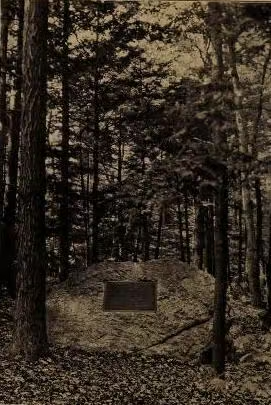
The Belanglo State Forest is a planted forest of about 3,800 hectares, mostly pine with some native bush around the edges. Wikipedia places it south of Berrima in the Southern Highlands, three kilometres west of the Hume Highway between Sydney and Canberra. It is owned by the New South Wales government, and the first radiata pines there were planted in 1919. Fire trails run through it, and it was open to the public.
On September 19, 1992, two runners orienteering in Belanglo found a concealed body. The next morning police found a second body about 30 metres from the first. Dental records quickly confirmed that they were Caroline Clarke and Joanne Walters, missing since April. Wikipedia’s accounts, drawn largely from a podcast and from contemporary reporting, describe multiple stab wounds in one case and multiple gunshot wounds in the other; they give the number of shots as ten in one passage and 11 in another. The ABC, in its 2019 report, said that court documents recorded that all but one of the seven victims had been subjected to “sexual interference, either before or after death.” This file does not go further into the injuries than that.
Joanne Walters’s parents had already travelled to Sydney. The ABC reporter Philippa McDonald recalled covering their media conference in August 1992, before the bodies were found, in which they pleaded for information. “Everything at this stage is important, because whoever has done this thing, these are evil-minded people,” they said. McDonald wrote that she never imagined that conference “would be the first clue Australia was being terrorised by a serial killer.”
After the discovery, police searched the forest thoroughly and, according to Wikipedia, ruled out the possibility of further discoveries. They were wrong. For another year, the forest held five more people.
October and November 1993: five more

On October 5, 1993, a local man searching for firewood found bones in a remote part of Belanglo. Wikipedia’s Backpacker murders article names him as Bruce Pryor, a potter, and says he had searched the area on his own for nine months before he found the remains, was at first treated as a suspect himself, and later developed post-traumatic stress disorder from his dealings with detectives. He returned with police, and two bodies were found and later identified as James Gibson and Deborah Everist. They had been missing for nearly four years. Gibson’s presence in the forest, south-west of Sydney, deepened the puzzle of his camera and backpack, found on the roadside at Galston Gorge, which Wikipedia puts more than 120 kilometres to the north.
On November 1, 1993, during a police sweep, searchers found a skeleton in a clearing along a fire trail. It was identified as Simone Schmidl’s. Clothing found nearby was not hers. It matched the clothes of another missing traveller, Anja Habschied, and on November 4, on a nearby fire trail, police found the remains of Habschied and Gabor Neugebauer, in shallow graves about 50 metres apart.
Philippa McDonald of the ABC was taken to the site that day by a senior investigator. Writing in 2019, she called it “a day that I will never forget.” It was also, she wrote, “the first day that police publicly admitted they were looking for a serial killer, or killers.” Within about ten days of the October find, police had located all of the other known victims. “This quiet corner of NSW had become a mass graveyard,” McDonald wrote.
Clive Small, the senior officer who would lead the investigation, later told the ABC that the scenes were “so chilling” his officers had seen nothing like them before. Wikipedia summarises the forensic picture without much hedging: the bodies had been left in remote bushland and covered with sticks and ferns, matching .22 bullets, shell casings and cartridge boxes from two weapons linked the scenes, and campsites close to each body suggested the killer had spent considerable time with his victims. Many of the victims showed signs of sexual assault, the same article says. The details of the injuries were set out in evidence at the trial and are not repeated here.
Because most of the victims had been taken in pairs, killed in different ways and buried separately, speculation arose that there was more than one killer. That question would follow the case through the trial and long after it.
Task Force Air
The New South Wales Police set up Task Force Air on October 14, 1993, between the first and second discoveries of that autumn. Wikipedia says it began with more than twenty detectives and analysts. On November 5 the state government raised the reward for information to A$500,000, and the public, especially international travellers, were warned not to hitchhike along the Hume Highway.
Small, described as a former police superintendent, recalled the investigation on the ABC’s Australian Story in 2004. “I was the officer in charge of the backpacker investigation,” he said. By October 1993, he explained, “we had an emerging picture of an offender who apparently spent more and more time at the scenes.” Wikipedia says the police then faced an enormous volume of data from numerous sources. Investigators applied link analysis technology to cross-reference Roads and Traffic Authority vehicle records, gym memberships, gun licensing and internal police records, and narrowed a list of suspects to 230 and then to 32.
The Milat family surfaced in that work. “The Milat family became interesting to the investigation very quickly,” Small said in 2004, adding that the family “was generally known in the area and by police to be quite eccentric.” He described how the profile narrowed: “We thought, given what had happened, that the person must have lived somewhere between Liverpool and Goulburn. It also became quite obvious that the person was very familiar with firearms.” Small also said that some investigators came to believe that one or two family members had suspected Ivan of violent crimes but “chose not to do anything about it.” That is his view; no relative was charged over the murders.
None of that was proof. What investigators lacked was a living witness. He had come forward in 1990, and his report was sitting at Bowral.
Paul Onions and the man called Bill
Paul Onions was from Birmingham and had recently left the Royal Navy when he came to Australia in 1990. “Australia seemed the one last place I thought on earth where there was plenty of adventure left,” he told a Nine reporter in 1996, in an interview the reporter revisited when Milat died. It was the Australia Day long weekend. Onions planned to hitchhike to Mildura to pick fruit.

On January 25, 1990, he was hitchhiking from Liverpool station and accepted a ride south out of Casula, Wikipedia says. Nine places the meeting outside a shop. “As I came out of the shop, he’d seen me rucksack on me back and he says, ‘Do you need a lift?'” Onions recalled. “I said, ‘Oh yeah. Great, great!’ And I thought, ‘This is where the journey starts.'” The driver introduced himself as Bill. The ABC, reporting Milat’s death, said he had introduced himself as “Bill” and that Onions was then 24.
The drive did not stay friendly. Onions said the driver ranted about immigration, seemed stressed and kept checking his mirror. “I was so happy to get the ride but now I thought ‘Oh, no. First go, I’ve got the nutter!'” South of Mittagong, and less than a kilometre from Belanglo, according to Wikipedia, Bill stopped the vehicle and produced a weapon and some rope, saying it was a robbery. The accounts disagree on the weapon. Wikipedia says a revolver, Nine says a handgun from under the driver’s seat, and the ABC’s 2019 feature says a shotgun.

Onions ran. “I just thought ‘I’m out of here’. I was obviously panicking and running off… I heard the gun go off and it was like a massive jolt to your system. You knew it was so real, like, oh God.” Cars passed him without stopping. He decided he would step in front of the next one. “I’m just going to stop the next car no matter what. It was either stop a car or get killed or go back to (Milat) and face the end that way.”
The car that stopped was driven by Joanne Berry of Canberra, according to Wikipedia; the ABC describes her as a local woman driving with her children. Together, Wikipedia says, they described the attacker, his vehicle and its registration number to police at Bowral. The BBC reports Onions’s account of what happened next: police “merely handed him A$10 (£5; $7) to get back to the British High Commission in Sydney.” The report, the BBC says, “lay filed in a drawer at Bowral police station for years.”
Onions went home to England. “Shortly after his brush with death Mr Onions moved back to the United Kingdom,” the ABC reported. Nearly four years later he read about the Belanglo killings in a newspaper and, on November 13, 1993, contacted police. The ABC and Wikipedia say he reached the New South Wales Police; the BBC says the Australian Federal Police. His call was logged, and then, like his first report, it waited.
Cinnabar Street, May 1994
By early 1994 Ivan Milat was already among the people Task Force Air was watching. Police surveillance of his house in Cinnabar Street, Eagle Vale, in south-western Sydney, began on February 26, 1994, according to Wikipedia. Detectives learned that he had sold his silver Nissan Patrol four-wheel drive shortly after the bodies of Caroline Clarke and Joanne Walters were found, and confirmed, Wikipedia says, that he had not been at work on any of the days of the attacks. Acquaintances told police about his obsession with weapons.
Then the two strands met. On April 13, 1994, detectives re-found the note of Paul Onions’s November call. Wikipedia says his account was corroborated by Joanne Berry and by the girlfriend of a man who worked with Milat. Onions flew back to Australia, and on May 5, 1994, Wikipedia says, he positively identified Milat as the man who had picked him up and tried to shoot him. The ABC says Onions was “flown back to Sydney in 1994, where he identified a photo of Milat,” who was by then of interest to police because of other tip-offs. The BBC’s account dates his return flight to 1996, the year of the trial; the other saved sources put the identification in 1994.
Small described what followed on Australian Story: “At dawn, in late May ’94, we started the raids on the Milat family homes.” On May 22, 1994, about fifty police officers, including heavily armed members of the Tactical Operations Unit, surrounded Milat’s house and arrested him on robbery and weapons charges relating to the attack on Onions. It was the Onions case, not the murders, that put him in custody first.
The search of the house turned up a cache of weapons. Wikipedia lists a .22-calibre Anschütz rifle, parts of a .22-calibre Ruger 10/22 rifle that matched the type used in the murders, a Browning pistol and a Bowie knife. Police also found items belonging to several of the victims, including, the Backpacker murders article says, foreign currency, clothing, a tent, sleeping bags, camping equipment and cameras. The ABC reported that possessions of the murdered tourists were found “hidden in the walls” of the house. Homes belonging to several of his relatives were searched too, and more of the victims’ belongings were found there.
“What we did find was a veritable goldmine,” Small said. He met Milat for the first time at Campbelltown Police Station after the arrest. “He struck me simply as being a very silent type who lacked any form of emotion,” Small said. “But also gave a very strong air of confidence, and you had the feeling that he was saying in his own mind, they haven’t got anything on me.”
Milat appeared in court on May 23 and did not enter a plea. On May 31, 1994, aged 49, he was charged with the seven backpacker murders. On June 28 he sacked John Marsden, described by Wikipedia as his family’s lawyer, and sought legal aid for his defence. The BBC says he dismissed the lawyer after being advised to plead guilty. A committal hearing ran from October 24 to December 12, 1994, with more than two hundred witnesses, and at the beginning of February 1995 he was remanded in custody until June that year.
The man before Belanglo
Ivan Robert Marko Milat was born on December 27, 1944, in Guildford, in western Sydney, the ABC reported. He was the fifth of 14 children. The family lived first on a small farm at Bossley Park, west of Sydney, and later moved to Liverpool, according to Wikipedia. The ABC described a “brutally violent, financially strapped home” and said the Milat boys “were keen hunters and gun enthusiasts, and were frequently in trouble with police.” This file does not name his parents or siblings; none of them was convicted of the backpacker murders, and none is essential to the record of what he did.
His record began early. The ABC says that by 17 he had been sent to juvenile detention for six months on burglary charges, “beginning an adulthood in and out of prison for various theft offences.” Wikipedia lists an 18-month sentence for breaking and entering in 1964, two years’ hard labour soon afterwards for driving a stolen car, and a three-year sentence for theft in September 1967, when he was 22. Small summarised it on Australian Story: “From about 1962, Ivan was constantly in trouble with both the police and the courts.”
On April 7, 1971, two 18-year-old women hitchhiking near Liverpool railway station accused Milat of abducting them at knifepoint and raping one of them. He was arrested and charged. The ABC says he was “accused of abducting two 18-year-old female hitchhikers, threatening them at knifepoint and raping one of them before they escaped.” He was not convicted. Before the case came to trial, Wikipedia says, he left the state and spent time in New Zealand; he was rearrested in 1974, and the case against him failed at trial. The ABC reports that he “was acquitted in 1974, however, after his lawyer, John Marsden, discredited the women by accusing them of being lesbians, such were the prejudices of the time.” The BBC also records that he was acquitted. Under the law, he was not guilty of those charges, and this file treats them that way.
In 1975 he took a job as a truck driver, and by the time of his arrest in 1994 he had worked on and off for the Roads and Traffic Authority for about 20 years, Wikipedia says. “When not in jail, Milat had worked for the Roads and Traffic Authority out of Liverpool but travelled all over the state,” the ABC reported. That road work would later matter to investigators trying to place him in areas where other people went missing. The ABC also reports that he was briefly married in the 1980s and divorced.
The trial, 1996

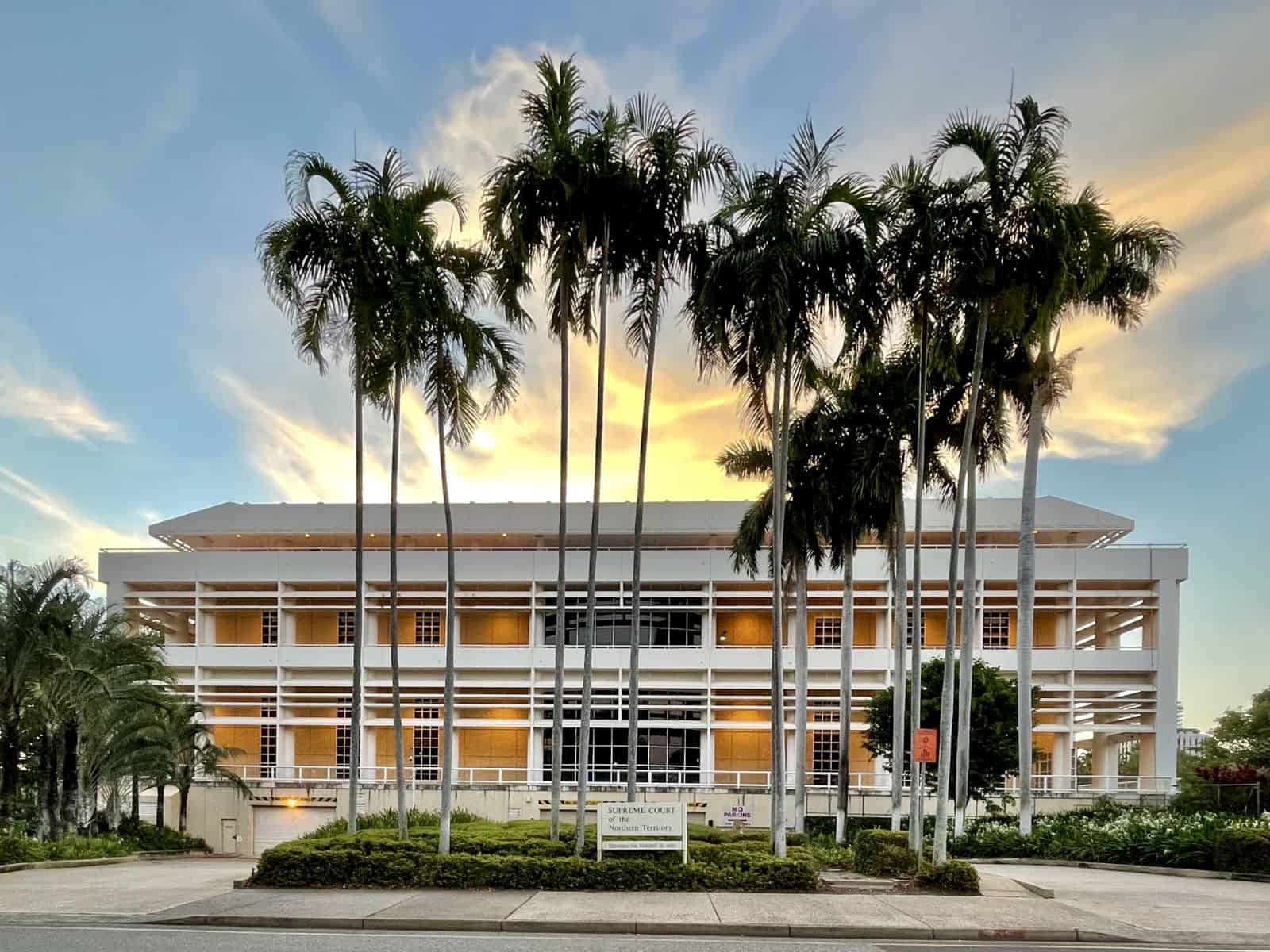
Milat’s trial opened in the Supreme Court of New South Wales in Sydney on March 26, 1996. The Crown case was led by Mark Tedeschi. The judge was Justice David Hunt, whom the High Court’s 2004 judgment refers to as “Hunt CJ at CL.”
The Crown case rested on what had been found and who had seen him. Police had recovered the victims’ belongings from Milat’s home and from the homes of relatives. They had matched the weapons to the type used in the killings. And they had Paul Onions, who could put Milat on the Hume Highway near Belanglo with a gun and rope. The BBC said media at the time described Onions as the “star witness” in a four-month trial. “Mr Onions returned to Sydney to be the prosecution’s star witness at Milat’s trial,” the ABC recalled in 2019.
The defence, as Wikipedia describes it, argued that there was no non-circumstantial proof of Milat’s guilt and tried to shift the blame to other members of his family. Nine reported that defence lawyer Terry Martin “suggested that despite some of the victims’ belongings being found concealed in the walls of his client’s house, other Milat family members might have committed the crime.” The BBC says the defence tried “unsuccessfully” to shift the blame onto one of his brothers. The High Court, reviewing the case in 2004, set out the Crown’s position that “the evidence against the applicant was so strong that counsel for the applicant conceded that a member of the Milat family, or someone closely associated with it, must have committed the murders.”
That defence implicated relatives who were never charged with the murders. Small rejected it. “There is overwhelming evidence that Milat was the murderer, and they are the simple facts of the case,” he told Australian Story. Milat himself later distanced himself from the strategy. In a recorded phone call aired in 2004, the ABC reported, he said: “I never argued that in the first place.” He went on, in the ABC’s report: “My basic defence in my trial was, ‘it wasn’t me’. I didn’t know who did it. It was up to them to prove my guilt, not to me to prove my innocence.”
Wikipedia says 145 witnesses took the stand, including members of the Milat family who tried to provide alibis. On June 18, 1996, Milat gave evidence himself. He pleaded not guilty to all charges, the BBC says, and he maintained his innocence.
Verdict and sentence, July 1996
On July 27, 1996, after eighteen weeks of evidence, the jury found Ivan Milat guilty of the murders of Deborah Everist, James Gibson, Simone Schmidl, Gabor Neugebauer, Anja Habschied, Caroline Clarke and Joanne Walters. He was 51. He was sentenced to life imprisonment on each of the seven counts, without the possibility of parole. Wikipedia and the BBC describe the terms as seven consecutive life sentences.
He was convicted over the attack on Paul Onions as well, but the saved sources describe that conviction in different words. The High Court of Australia, in its 2004 judgment, records convictions “on seven counts of murder and one count of detaining for advantage.” Wikipedia says he was “also convicted of the attempted murder, false imprisonment and robbery of Onions, for which he received six years’ imprisonment each,” and the BBC uses the same three offences. The ABC says he was found guilty “of the abduction of Mr Onions.” This file treats the High Court’s wording as the most authoritative of the saved sources, and notes the difference.
At sentencing, Justice Hunt raised the question that the investigation never fully closed. A&E quotes him: “In my view, it is inevitable that the prisoner was not alone in that criminal enterprise.” Small disagreed. “At the end of the day my view was, and the view of most people was, that there was only the one offender, and that was Ivan,” he said in 2004. The ABC reported in 2019 that Small said new technology had proved the second-killer theory wrong and “confirmed Milat acted alone.” Nobody else has been charged with any of the seven murders.
Appeals, 1997 to 2011

Milat never stopped contesting the verdict. In November 1997, Wikipedia says, he appealed on the ground that he had been denied his right to legal representation, citing Dietrich v The Queen. The New South Wales Court of Criminal Appeal dismissed the appeal. The High Court gives the date of that order as February 26, 1998.
He then sought special leave to appeal to the High Court. The application was filed on June 24, 2002, about four and a quarter years late. Milat claimed the trial had miscarried over identification evidence and that the jury might have used the Onions conviction to convict him of murder. The Crown said the disputed evidence, about “a vertically mounted spare wheel on the rear of the applicant’s four-wheel drive,” was not crucial, and that “the convictions for murder did not depend on the conviction for detaining for advantage.”
Milat asked to be brought to Canberra to argue the application in person, or to appear by video link from Goulburn Correctional Centre. On February 24, 2004, Justice McHugh dismissed that summons. He made no ruling on the merits but noted that “an application, brought so long out of time, faces a formidable hurdle in obtaining the grant of special leave to appeal.” Wikipedia says the leave application itself was ultimately dismissed in 2004. On October 27, 2005, in the New South Wales Supreme Court, his final avenue of appeal was refused, according to Wikipedia, and two further applications in 2006 and another in November 2011 were also rejected.
Maitland, Goulburn and Supermax

Milat began his sentence at Maitland Gaol, where, Wikipedia says, another inmate beat him on his first day. On May 16, 1997, he took part in a failed escape attempt with another prisoner, and was afterwards moved to the maximum-security section of Goulburn Correctional Centre. In 2001 he was transferred to one of the new units of the High Risk Management Corrections Centre, known as Supermax, inside the Goulburn complex. The ABC reported in 2019 that he spent most of his sentence in solitary confinement there.
In 2006 a toaster and television given to Milat in his cell caused a public outcry, Wikipedia says. The ABC said that in prison he “became desperate for power,” using hunger strikes and self-harm as part of his demands for better conditions or perks. Wikipedia reports that he harmed himself in 2001; that on January 26, 2009, he injured his own hand, intending to send part of it to the High Court to force an appeal, and was taken to hospital and returned to prison the next day; and that in May 2011 he went on a nine-day hunger strike in an unsuccessful attempt to be given a PlayStation 3. The psychologist Holly Schiff, who told A&E she never evaluated him professionally, believes he was not suicidal. “He engaged in self-harm in order to highlight the issues he was having in getting his appeal,” she said.
He kept up his denials in interviews. On Australian Story in 2004, the ABC reported, Milat said his brothers had not been involved in the murders, and acknowledged that the defence of blaming a brother “was not based in truth.” Asked on the phone whether he had been confident of acquittal, he said: “I was fairly confident, going on the evidence.”
If you or someone you know is struggling or thinking about suicide, help is available. In Australia, call Lifeline on 13 11 14.
Long Bay, October 2019

In May 2019 Milat was moved from Goulburn to the Prince of Wales Hospital in Randwick and diagnosed with terminal cancer of the oesophagus and stomach. The NSW Homicide Squad formed a strike force with one aim, the Sydney Morning Herald reported: a confession. Detectives questioned him eight times, at Long Bay and at his hospital bedside, and played him recorded interviews with relatives of two of the victims. “You could put a blow torch to my ears or eyes or whatever and… I still can’t help you,” he told them.
Detective Chief Inspector Wayne Walpole, who led the strike force, called him “a completely cold evil killer.” On October 11 Milat went back to the Prince of Wales Hospital for pain relief, then to the hospital wing at Long Bay, where he died at 4.07am on October 27, 2019, the ABC reported. He was 74. He died of cancer, not by his own hand. “His body will now be transferred to the Coroner, who investigates all deaths in custody,” the ABC added. He was cremated, Wikipedia says. He never confessed.
The cases that stayed open
Milat was convicted of seven murders and the Onions offence, and of nothing else. Police and others have long suspected him of more. These are suspicions only. He was never charged with any of the following cases.
Small, who led the investigation, told the ABC in 2004 that “of the unsolved murders there are probably three or four where we would say Ivan is highly likely to have been the offender.” Wikipedia lists three cases police linked by similarities in method: Keren Rowland, 20, who disappeared in February 1971 and was found near Canberra that May; Peter Letcher, 18, missing in November 1987 and found in the Jenolan State Forest in 1988; and Dianne Pennacchio, 29, who disappeared in September 1991 and was found in the Tallaganda State Forest. The SMH spells her name Pennachio. Of Letcher, Small told the BBC: “I’m satisfied the 1987 murder of Peter Letcher was Ivan Milat.” He told the ABC that “there wasn’t quite enough evidence to charge him.”
In 2001 Milat was ordered to give evidence at an inquest into three disappearances in the Newcastle area: Leanne Goodall, 20, in December 1978, and Robyn Hickie, 18, and Amanda Robinson, 14, in April 1979. State coroner John Abernethy named him a person of interest because of his links to the Hunter Region, where he had worked as a road worker, Wikipedia says. Milat denied any involvement. In 2019 he told detectives that “You could bore me eyes out with a blowtorch” and he still could not tell them anything about missing people in the Newcastle area. Wikipedia also records a 2005 inquiry into the disappearance of hitchhiker Annette Briffa, and says no charges were laid.
The families, and the man who got away
For the families of the seven, the trial settled who killed their children. Deborah Everist’s mother, speaking in 2006, told the BBC: “Who knows what Deborah could have made of her life? She was a clever kid.” For the families of the suspected cases there was no such answer. Leanne Goodall’s sister told the ABC in 2019: “We would have loved to have answers, to know where [Leanne] was, where she was buried.”
Paul Onions went back to England. The BBC says he later declined a police reward of more than A$200,000. Nine’s reporter recalled that, when they last spoke, he “was still suffering post-traumatic stress some years after the event.”
What the record leaves open
The record settles the core facts: a jury convicted Ivan Milat of seven murders and of the Onions offence, and every appeal failed. It leaves open whether he acted alone; Justice Hunt thought it “inevitable that the prisoner was not alone,” and Small concluded otherwise. It leaves open the cases he was suspected of but never charged with. And it leaves small conflicts in the sources: Simone Schmidl’s age, where Neugebauer and Habschied were heading, the weapon Onions saw and the year he flew back. Milat died without answering any of it.
Frequently asked questions
What was Ivan Milat convicted of?
On July 27, 1996, Ivan Milat was convicted in the Supreme Court of New South Wales of the murders of seven people: Deborah Everist, James Gibson, Simone Schmidl, Gabor Neugebauer, Anja Habschied, Caroline Clarke and Joanne Walters. He was sentenced to life imprisonment on each murder count, without parole. He was also convicted over the 1990 attack on British traveller Paul Onions; the High Court of Australia records that offence as “one count of detaining for advantage.”
How was Milat identified?
Paul Onions escaped a gunman on the Hume Highway south of Mittagong on January 25, 1990, and reported the attack to police in Bowral. After the remains of seven missing travellers had been found in Belanglo, he contacted police on November 13, 1993. Wikipedia says that on May 5, 1994, he positively identified Milat as the man who had picked him up. Milat was arrested on May 22, 1994, and on May 31, 1994, he was charged with the seven murders.
Did Milat act alone?
The record leaves that open. At sentencing, Justice Hunt said, as quoted by A&E: “In my view, it is inevitable that the prisoner was not alone in that criminal enterprise.” Clive Small, who led the investigation, disagreed; in 2004 he said there was “only the one offender, and that was Ivan.” The ABC reported in 2019 that Small said new technology had “confirmed Milat acted alone.” Nobody else has been charged with any of the seven murders.
Did Milat ever confess?
No. He pleaded not guilty to all charges, the BBC says, and he maintained his innocence. The New South Wales Court of Criminal Appeal dismissed his appeal on February 26, 1998, and a final appeal was refused on October 27, 2005, according to Wikipedia. In 2019 detectives questioned him eight times seeking a confession, the Sydney Morning Herald reported. He died of cancer in the hospital wing at Long Bay on October 27, 2019, aged 74, without confessing.
Citations & Sources
Sources
- High Court of Australia: Milat v The Queen [2004] HCA 17, McHugh J, February 24, 2004, via casechat.au.
- ABC News: “Australian serial killer Ivan Milat dies in Long Bay prison, aged 74” (October 27, 2019); “Ivan Milat dead at 74, takes secrets of other murders to grave” (October 27, 2019); “Milat says brothers innocent” (November 8, 2004).
- ABC TV, Australian Story: transcripts of the 2004 Milat episode, parts one and two.
- BBC News: “The ‘backpacker killer’ and unanswered questions,” by Gary Nunn (October 27, 2019).
- The Sydney Morning Herald: police strike force tried eight times to get a deathbed confession (October 28, 2019).
- Nine: “Ivan Milat’s death: Paul Onions’ escape brought serial killer undone” (2019).
- A&E Crime + Investigation: Ivan Milat.
- Wikipedia: Ivan Milat; Backpacker murders; Belanglo State Forest; Law Courts Building, Sydney.
- Lifeline Australia: 13 11 14.
- Images: Wikimedia Commons, credited in each caption.
Image credits
- Photo: Sardaka, via Wikimedia Commons. CC BY 3.0.
- Photo: FNMG, via Wikimedia Commons. CC BY-SA 4.0.
- Photo: Maksym Kozlenko, via Wikimedia Commons. CC BY-SA 4.0.
- Photo: Maksym Kozlenko, via Wikimedia Commons. CC BY-SA 4.0.
- Photo: Maksym Kozlenko, via Wikimedia Commons. CC BY-SA 4.0.
- Photo: Chris Olszewski, via Wikimedia Commons. CC BY-SA 4.0.
- Photo: Thennicke, via Wikimedia Commons. CC BY-SA 4.0.
- Photo: AYArktos, via Wikimedia Commons. CC BY-SA 2.5.
- Photo: Samuel Martin, via Wikimedia Commons. CC BY-SA 4.0.
Browse every case in the Case File Index
Discover more from The Dark Side of Humanity
Subscribe to get the latest posts sent to your email.