 Evidence #01
 Evidence #02
 Evidence #03
 Evidence #04
Overview
Christa Worthington was found dead in her Truro house. The man who took her trash was convicted.
Truro, Cape Cod, Massachusetts · 6 January 2002
On the afternoon of Sunday, 6 January 2002, Tim Arnold found Christa Worthington dead in her house in Truro. She was naked from the waist down. A knife had passed through her chest and out her back. Her two year old daughter was alive beside her. Christopher M. McCowen, who collected her trash, matched the DNA on her body. On 16 November 2006 a Barnstable jury convicted him of first degree murder, aggravated rape, and aggravated burglary. The Supreme Judicial Court affirmed on 10 December 2010. A third motion for a new trial was denied in 2014. Those convictions are the judgment in force.
Sunday, 6 January 2002
Arnold came to return a flashlight
The facts the Supreme Judicial Court said a jury could find are set out by Justice Ralph D. Gants in Commonwealth v. McCowen, 458 Mass. 461, decided 10 December 2010. In the late afternoon of Sunday, 6 January 2002, Christa Worthington was found dead in her home in Truro by Tim Arnold, a former boyfriend, who had stopped to return a flashlight. She was naked from the waist down. Her legs were spread apart. Her face was badly bruised. Her torso was splattered with blood. A vaginal swab showed semen. Her two year old daughter was alive beside her and could not tell investigators anything about the death. The exterior door from the driveway into the kitchen area and the passageway where the body lay was ajar. Damage to the door and the deadbolt showed it had been forced.
The Commonwealth’s medical examiner testified that the cause of death was a stab wound to the chest. The knife entered the front of the chest, penetrated the left lung, and the tip of the blade exited through the back. She also had contusions to the nose and chest, abrasions on the face, hands, arms, and legs, and internal hemorrhaging in the skull. The examiner said those injuries were consistent with blunt impact. That testimony reached the jury through Dr. Henry Nields, who had not done the autopsy. Dr. James Weiner had. Weiner was ill and did not testify. Nields knew the case from Weiner’s reports, notes, and charts. The court later held that the opinions and findings in those papers were testimonial hearsay, admitted in error because the defence did not object, and that the error did not create a substantial likelihood of a miscarriage of justice. The physical condition of the body at the scene, the court said, added nothing of significance to other evidence that was properly admitted. The time of death opinion is a separate problem, and it is kept separate below.
Weiner arrived at the house at 7:55 p.m. on 6 January 2002. He conducted the autopsy on 7 January. Three charts he prepared, showing where the wounds were, were part of what Nields described. The court’s summary of the cause and the wound path is the account the jury heard. It is not a sentence Nields claimed to have seen with his own eyes on the night of 6 January. He was reading another doctor’s notes. The wound path itself, front to lung to back, is the finding those notes carried into the trial.
Outside, the scene suggested she had been hurt before she was inside. Trace dried blood was under the fingernails of both hands. Small pieces of grass or other vegetation were twisted into the hair on her head and in her pubic hair. Between the house and her car, investigators found a pair of women’s eyeglasses, a barrette, a pair of socks, and her keys. Near the keys, beside the car, the dirt driveway was disturbed. Two long, irregularly parallel, furrow-like tracks ran from the back of the car toward the entrance. Investigators recreated similar marks by dragging a person across the driveway. The court treated that recreation as evidence the jury could use. It is not a finding that a named person dragged her. It is a demonstration that a dragged body could make those tracks.
CBS, reporting the verdict on 16 November 2006, described her as lying in a pool of blood with her two year old daughter clinging to her body. The opinion says the daughter was alive beside her, the torso was splattered with blood, and the daughter could not describe what had happened. “Clinging” and “a pool of blood” are the news report. “Alive beside her” and “splattered” are the court’s. Both describe the same discovery. They are not the same sentence, and they are not averaged here. The opinion does not name the child. This account does not supply a name the court left out.
When she died
Friday night, Saturday morning, or Saturday afternoon
Apart from the medical examiner’s time of death, the court said the other evidence allowed the jury to infer that she was killed after 8 p.m. on Friday, 4 January, when she telephoned a babysitter, and before noon on Saturday, 5 January, when she missed a hairdressing appointment. The Saturday newspaper and the Sunday newspaper were still at the bottom of the driveway when the body was found on Sunday afternoon. That is the non-medical window: a phone call at the start, a missed appointment at the end, and two papers nobody brought in.
Weiner’s estimate, admitted through Nields and later called erroneous hearsay, pointed somewhere else. The court said it favoured the defence because it suggested she had most likely been killed between 8 a.m. and 8 p.m. on Saturday, 5 January, rather than late Friday night or shortly after midnight on Saturday morning, which is where McCowen’s statement put the night. On cross-examination, defence counsel tried to get Nields to agree that if Weiner’s outside estimate of thirty-six hours were accepted, the earliest possible time of death was 8 a.m. on Saturday. Nields did not give his own opinion on the time. The court said he could have, from his own expertise and from reading Weiner’s notes, and that he did not. A footnote records that defence counsel failed to elicit a concession, and that Nields testified Weiner’s estimate did not set an outside time limit. So the papers suggested a Saturday daytime death. The man reading the papers told the jury the estimate was not a hard outer bound. The other evidence, the babysitter and the hairdresser, stopped the window at noon on Saturday. A death at 8 p.m. on Saturday would sit outside that noon line. A death at 8 a.m. on Saturday would sit inside it. The jury heard all three clocks.
After the prosecution rested, the defence called a neighbour. In the body of the opinion he is Gerard Smith. In a footnote he is Gerald Smith. He testified that at about 1 p.m. on 5 January he saw a dark “work type van” leave her driveway “at a very fast speed,” driven by a dark-skinned Caucasian man. The footnote says he told police the driver was the sole occupant. Defence counsel argued in closing that she died on Saturday, that the man in the van and not McCowen killed her, and that the Commonwealth’s own medical examiner put the time of death on Saturday. The court said there was no substantial likelihood of a miscarriage of justice where the defence did not object to the hearsay time of death and then used that hearsay to attack the prosecution’s timing.
CBS, in the same verdict story, described the sighting differently. It said the lawyer told jurors that police failed to take seriously a neighbour’s report of a white man driving a dark-coloured van or truck, speeding out of the driveway about twelve hours after police believed she was killed. The opinion’s witness is named, the time is about 1 p.m. on 5 January, the vehicle is a dark work type van, and the driver is a dark-skinned Caucasian man, alone if the police statement in the footnote is the one he gave. CBS’s “white man,” “van or truck,” and “about twelve hours” are the news condensation of the defence argument. They are not the testimony the opinion prints. The name Gerard and the name Gerald are both in the opinion. This account does not pick one spelling and hide the other.
The route
He said he only waved
McCowen worked for a private disposal company that took the trash she left each week outside the house. On 3 April 2002, State Troopers Christopher Mason and William Burke interviewed him. He said he did not know her, had never spoken with her, and had no contact beyond an occasional wave as he picked up garbage from a wooden bin in the yard. They told him items had been recovered from the scene and asked if he would give fingerprints or a DNA sample later. He said he would have no problem.
On 18 March 2004 the troopers came back. The state police crime laboratory had by then identified a DNA profile from swabs of her vagina and her breasts. The second interview was part of a wider collection of samples from men who had been interviewed. He repeated that he did not know her, had never spoken to her, and had never been inside the house. He agreed to a sample. They swabbed the inside of his cheek. The sample went to the laboratory in July 2004 with a batch of others.
The written report came on 13 April 2005. He “matched the major profile” in the mixture from her right breast. He was “included as a potential contributor of the minor profile” in the mixture from the sperm in her vagina. Warrants followed, for his arrest and for a search of his residence. Officers arrested him at his home in Hyannis shortly after 7 p.m. on 14 April 2005 and took him to the South Yarmouth state police barracks. The indictments were returned in Barnstable Superior Court on 14 June 2005. Judge Gary A. Nickerson heard the suppression motions and tried the case.
The laboratory
Four swabs, four different strengths
Christine Lemire, the Commonwealth’s DNA analyst, testified to four results, and they are not equally strong. The swab of the right breast was a mixture from more than one person. McCowen’s DNA matched the major profile. Worthington was included as a potential contributor of the minor profile. Lemire put the probability of that major-profile match at one in 5.2 trillion in the Caucasian population, one in 99.8 billion in the African-American population, and one in fifteen trillion in the Hispanic population.
The vaginal swab was also a mixture. Worthington matched the major profile. McCowen was included as a potential contributor of the minor profile, which is the sperm fraction the arrest report had already described. The probability Lemire gave for that minor profile was one in 7.2 billion among Caucasians, one in 1.1 billion among African Americans, and one in 10.2 billion among Hispanics. The breast match and the vaginal match are the results that put him in the house and on her body. They are not the same statistic, and the court prints both.
The left breast was a third mixture. The daughter’s DNA matched the major profile. Worthington and McCowen were included as potential contributors of the minor profile. A randomly selected unrelated person would have been included at about one in sixty-two among Caucasians, one in 769 among African Americans, and one in 124 among Hispanics. That is a different order of number from the trillions on the right breast. The court states it as the laboratory’s figure for that mixture, which includes a child who was alive on her mother’s body. It is a DNA result. It is not a finding that the child was harmed. The opinion says she was alive and could not describe the death.
Male DNA in the fingernail clippings from the right hand was weaker still. The analyst said McCowen was a potential contributor, and the frequency was one in six among Caucasians, one in twelve among African Americans, and one in eight among Hispanics. The court said the testing did not allow as definitive a conclusion. A profile that common cannot do the work the breast and vaginal numbers do. The defence was entitled to that difference, and the opinion records it.
Lemire’s opinion used results generated by another analyst. The court held that this, too, was error of a kind, and that it did not create a substantial likelihood of a miscarriage of justice. An expert may use another analyst’s findings to reach her own opinion, and those findings had no meaningful probative value without her testimony. The numbers above are the numbers she gave. They are the numbers the jury used. They are not a printout this account has retested.
14 April 2005
Six hours, and he would not be recorded
Around 7 p.m. he was arrested, handcuffed, and walked to a cruiser. Mason told him he was under arrest for the murder and read the Miranda warnings from a standard form. McCowen said he understood and wanted to discuss the case. Mason told him to wait until the barracks, where there was recording equipment. At the barracks he sat in a conference room with Mason and Burke. The handcuffs came off. At 7:32 p.m. the warnings were read again. He signed once to acknowledge the rights and again to waive them. Mason asked to record the interview. McCowen said he did not want to be recorded unless the refusal would “make me look like an asshole.” Mason said courts preferred a recording and that the decision was his. He declined and signed a form saying so. Mason told him he could use a telephone. He said he wanted to talk first “to straighten everything out,” and that he would call his girlfriend later. Mason offered medical attention. He did not ask for a doctor and did not appear in physical or mental distress.
The interview ran in what the judge called a loose format. The troopers did not raise their voices. He was talkative. He began where he had been in 2002 and 2004. He had never been in the house. He had never spoken with her. He admitted sex with some women on the trash route and said she was not one of them. The last pickup at her house, he said, was the Thursday before the body was found, and he had not been back. Mason showed him the DNA report and said the laboratory had concluded the DNA on the body was his. He looked at the report for about a minute and said, “It could have been me.”
Then the night of Friday, 4 January 2002, started to appear, in pieces. He said he had been with Jeremy Frazier and had gotten “piss ass drunk” in the parking lot of the Juice Bar, a club in Orleans. Frazier drove him to Dennis. He visited the mother of his baby for about forty to sixty minutes. They went back to the Juice Bar. He drank to “blackout,” did not recall what he did after that return, and did not “remember having sex with this lady.” Mason told him that recalling one small event often brings back the events around it. McCowen then said he had had consensual sex with her that night. He added, “Anything could have happened. I know I didn’t kill her.”
The next version put Frazier at the house. Frazier drove, following McCowen’s directions, and came inside with him. McCowen said he and Worthington had vaginal sex on the floor in the hallway off the kitchen, which is where the body was found, and then said they may have had sex in an office or the living room. At first everything was “cool.” As they parted he gave her his telephone number and left. Later he said she “flipped” when she saw Frazier going through her belongings and screamed at them as they were leaving.
What happened next changed again while he was still talking. First, when she confronted Frazier, Frazier started punching her and followed her as she ran back to the house, while McCowen stayed in the car. Then he said he told Frazier she had a telephone to her ear and was calling the police, that Frazier ran to the house and kicked in the front door while McCowen stayed in the car, and that Frazier was inside about ten minutes. After the troopers said they thought he had more to say, he said, “It was a mistake.” Then he said that after Frazier struck her, he “automatically started firing on her” and punched her once in the face and once in the chest, knocking her out. When she fell, her head hit the gravel “so hard that he could still hear it to this day.” After she was on the ground, he said, “We put the boots to her.” They dragged her inside. He watched Frazier take a knife from the kitchen and stab her in the chest. He finished, “I had sex with her. I beat her ass, but it was [Frazier] that stabbed her.” He said, “I never meant for that lady to get killed. It’s a nightmare after nightmare. And not a day goes by that I don’t think about it.” Asked what he would say if the troopers found Frazier was somewhere else that night, he said, “Then it’s all on me.”
At 11:20 p.m. pizza and soda came in. He took a soda and refused the food. After the final version, Burke left the room and the interview stopped. During the break McCowen said he knew he could have a lawyer and wanted to cooperate instead. He wanted his attorney to meet him at court in the morning. At 12:09 a.m. he left a voicemail for the attorney. Mason said they would book him. McCowen said he was not finished. Mason twice said he would wait for the lawyer. McCowen said he wanted “to clear things up,” and they went back in. Nothing significant was added. At 12:40 a.m. Burke advised him of the right to a prompt presentment. He waived it. At 1:15 a.m. he called his girlfriend. At 1:35 a.m., after he said the story was not going to change, the interview ended. He had refused a recording for the whole of it. The judge found him sober, not under the influence of marijuana, Percocet, or alcohol, and not suffering from any defect of intellect or mental disorder. His answers were rational and cogent, sometimes in narrative. His signatures were firm. His diagrams of the scene were accurate. The interrogation, the judge said, was not heavy-handed. It was more like guiding a cooperative, if cagey, witness.
The defence said he was marginally retarded and that the six hours overbore his will. The judge was entitled, the Supreme Judicial Court held, to credit the troopers. He had tried to talk his way out of the predicament. He could say no: he had refused the recording right after waiving Miranda. The waiver in the cruiser and the waiver at 7:32 p.m. were knowing, intelligent, and voluntary. The statement was voluntary beyond a reasonable doubt. The jury also decided voluntariness under the humane practice rule. The testimony at trial on that point was, in every significant respect, the same as at the motion hearing. There is no tape of the words. There is the troopers’ account, the judge’s findings, and the forms he signed.
The other man
Frazier said he slept at Mulvey’s house
Jeremy Frazier testified that he was with McCowen at the Juice Bar that night and drove him to Dennis to see the mother of the baby. Frazier said he later went back to the Juice Bar and then to a house party in Eastham, in a car driven by a friend, Shawn Mulvey. McCowen, according to Frazier, followed them to the party in a separate car that McCowen drove. After the party broke up, Frazier left with Mulvey and spent the night at Mulvey’s house. Mulvey testified, “There is no doubt in my mind,” that Frazier spent the night there. Both said McCowen was at the party and did not leave with them. If that night is the Friday McCowen described, Frazier’s account removes Frazier from the house at the time McCowen placed the stabbing on him, and it leaves McCowen in his own car after the party.
CBS reported that the friend McCowen named was never charged, and that the jury was told it could convict McCowen of murder even if it believed the friend used the knife, under a joint venture theory. The opinion does not use the phrase “never charged.” It does record McCowen’s own line that if Frazier was elsewhere, “it’s all on me.” The verdict the court affirmed is his verdict, on his indictments. Frazier was a witness, not the man the jury convicted.
A second sexual encounter was offered and kept out. On voir dire, a clinical psychologist, Dr. Brown, said McCowen told him the diagram of the house was drawn from memory of being inside on Thursday afternoon, 3 January 2002, during a “sexual encounter” with her. The judge found the prosecutor had not opened that door and excluded the statement as hearsay. McCowen did not testify. In the April 2005 interview he had not described a Thursday encounter. He had said Friday night was the first and only time. In closing, defence counsel suggested it was a reasonable inference from the facts in evidence that there had been a Thursday encounter. The prosecutor did not object. The jury was not given Brown’s testimony. It was given an argument. Dr. Richard Ofshe, a social psychologist called by the defence, testified about false confessions and about circumstances that raise the risk of one. He did not offer an opinion on whether the April 2005 statement was false.
The man who found her
Arnold’s semen was on a blanket used to cover her
Tim Arnold is not only the former boyfriend who walked in with a flashlight. On cross-examination, defence counsel drew from Trooper Mason that Arnold had not been arrested, even though Arnold’s semen and hair were found at the scene and even though Arnold had what counsel called a rocky relationship with her. The question that followed was why McCowen was not given the luxury of an interview instead of an arrest. Mason said there were other things he considered. He mentioned additional information in the arrest warrant affidavit and did not describe it. Counsel’s theme, as the judge later named it, was that the case was pretty thin: a DNA report plus old denials, and a lead investigator who had been less than scrupulously fair. That theme opened the door to the protective orders. It also put Arnold’s biological material in front of the jury without, at that moment, saying where the semen was.
The footnote answers the semen. Arnold and Worthington lived together in her house for about a year while they were involved. He moved out when the relationship ended, sometime in the early months of 2001, roughly a year before she was killed. His semen was on a blanket that an emergency responder took from a couch to cover her after she was found. Christine Lemire testified that DNA may remain on an item for twenty to thirty years. A blanket from the couch, used to cover a body, can carry semen from a man who used to live there. That is the court’s explanation of the semen the defence had treated as a reason to arrest Arnold. It is not a finding that Arnold had sex with her on the night she died. The opinion does not give a matching explanation for the hair. Counsel said semen and hair were at the scene. The footnote locates the semen. The hair is named and not placed.
The same cross is why the jury heard about five protective orders and District Court charges. The judge had kept that evidence out, and counsel had said he would not raise an anger management denial. Counsel then spent the cross on the fairness of the arrest. The prosecutor was allowed, on redirect, to ask the questions that brought the orders in, for the limited purpose of Mason’s state of mind. What the jury did not hear is as specific as what it did. The prosecutor did not ask what conduct produced the orders, or when they issued. The prosecutor did not describe the District Court charges or how they ended. Nobody mentioned them again until the charge, and then only because the defence asked the judge to remind the jury of the limit. The Supreme Judicial Court added a caution that is not a holding about this verdict: opening a door does not force a judge to admit prejudicial evidence. The judge still weighs it. Here, the court found he had not abused his discretion.
What Nields could say himself
The stabbing did not kill her at once, and the clock started Sunday evening
The hearsay problem did not swallow every sentence Nields spoke. Using the photographs in evidence, he could, and did, describe the location and nature of the injuries from his own expertise as a forensic examiner. He also gave his own opinion on the cause of death: a stab wound to the chest. And he gave his own opinion that death from that wound was not instantaneous. The opinion does not say how many minutes passed between the thrust and the death. It says the death was not instant. A woman who is stabbed through the lung and out the back, and who does not die at the moment of the thrust, is still the woman whose head McCowen said hit the gravel so hard he could still hear it, and whose body was then dragged. The order of those events is his statement. The fact that the stabbing did not kill at once is Nields’s opinion. The court does not merge them into a single timeline of minutes.
The twenty-four to thirty-six hour estimate is Weiner’s, and Nields told the jury how it was counted. On cross-examination he said the period was measured from the time Weiner saw the body on the evening of 6 January, not from the autopsy on 7 January. Weiner was at the house at 7:55 p.m. Thirty-six hours before that evening observation is the morning of Saturday, 5 January. Twenty-four hours before it is the evening of Saturday. That is why the court could say the estimate suggested a death most likely between 8 a.m. and 8 p.m. on Saturday, and why the defence tried to lock the earliest time at 8 a.m. Saturday if the thirty-six hour figure were accepted. Nields would not give them the lock. He testified that Weiner’s estimate did not set an outside time limit for the time of death. Counsel failed to elicit the concession they wanted. The estimate favoured a Saturday death when set beside a Friday night confession. It did not, in Nields’s mouth, forbid a Friday night death.
Put the clocks on one table and they still do not agree. The babysitter call at 8 p.m. Friday is the last proof, other than the medical estimate, that she was alive. The missed hair appointment at noon Saturday is the point after which the non-medical evidence stops treating her as a woman who was going to keep an appointment. The uncollected Saturday and Sunday papers were still at the foot of the driveway on Sunday afternoon. Smith’s van leaves at about 1 p.m. Saturday. Weiner’s range, measured from Sunday evening, covers Saturday daytime and reaches back to Saturday morning. McCowen’s statement covers Friday night: the Juice Bar, the drive to Dennis, the return, the blackout, the sex on the hallway floor or in another room, the scream, the punch, the gravel, the boots, the kitchen knife. A death that is not instantaneous can begin on Friday night and end later. The court does not say that is what happened. It says the jury heard a confession that placed the attack on Friday night, a medical estimate that pointed at Saturday, a neighbour who saw a van on Saturday afternoon, and a set of ordinary appointments that bracketed Friday night through Saturday noon. The conviction does not include a special finding of the hour.
The sex, in his statement, was vaginal, on the floor of the hallway off the kitchen, which is where the body was found, or possibly in an office or the living room. He said it was consensual, that he gave her his telephone number, and that the violence started when she saw Frazier in her things, or when she got on the telephone. The jury convicted him of aggravated rape. A conviction for rape is a rejection of consent, not a finding that no sex occurred. The DNA is the evidence that his semen was in the vaginal sample and that his profile dominated the right breast. His words are the evidence of how he said the sex happened. The verdict is the evidence of what the jury called it. Frazier’s night at Mulvey’s house is the evidence that the man McCowen named as the stabber was, on that testimony, somewhere else. McCowen had already answered that possibility. If Frazier was elsewhere, he said, it was all on him.
What the house itself still shows, independent of whose hour is right, is a struggle that began outside and ended in the passageway by the kitchen. Blood under both sets of fingernails. Grass in the hair of her head and in her pubic hair. Eyeglasses, a barrette, socks, and keys on the ground between the house and the car. A disturbed patch of driveway. Two furrow-like tracks that investigators could match by dragging a person. A door ajar, a damaged door, a damaged deadbolt. A body naked from the waist down, legs apart, face bruised, torso splattered with blood, a knife path through the chest and out the back, blunt injuries on the nose, chest, face, hands, arms, and legs, and blood inside the skull. A two year old daughter alive beside her, unable to say what she had seen, and present as the major DNA profile on the left breast because she had been against her mother’s body. None of that depends on whether the fatal interval started Friday night or Saturday morning. It is the condition in which Arnold found her, and the condition Weiner recorded when he got there at 7:55 p.m.
The statement, in the order he gave it
Seven accounts, one body
The jury did not receive a single story. It received a stack, and the stack is the case. In April 2002 he was the man who waved from the wooden bin. In March 2004 he was the man who had never spoken to her and had never been inside, and who would give a cheek swab because he had nothing to hide. On the night of 14 April 2005 he opened in that same place, and he added a distinction: he had sex with some women on the trash route, and she was not one of them. The last time he had been at the house, he said, was the Thursday pickup before the body was found. Then Mason put the laboratory report in front of him. A minute later the denial became “It could have been me.”
The next sentence was a blackout. Drunk with Frazier at the Juice Bar, a drive to Dennis, forty to sixty minutes with the mother of his baby, back to the bar, nothing remembered, and no memory of sex with “this lady.” Mason told him that one small memory often pulls the rest. The small memory arrived as consensual sex, with the reservation that anything could have happened and that he knew he had not killed her. Then Frazier was in the car and in the house. The sex was vaginal, on the hallway floor where the body was found, or maybe in an office, or maybe in the living room. At first the parting was ordinary. He gave her a telephone number. Then she flipped, because Frazier was in her belongings, and she screamed.
The violence arrived in three drafts. In the first, Frazier punched her and chased her back to the house while McCowen stayed in the car. In the second, McCowen told Frazier she was on the telephone to the police, Frazier kicked in the front door, and McCowen still stayed in the car for the ten minutes Frazier was inside. In the third, after the troopers said there was more, it was a mistake: he automatically started firing on her, one punch to the face and one to the chest, she went down, her head hit the gravel hard enough that he could still hear it, and then “We put the boots to her.” They dragged her in. He watched Frazier take a kitchen knife and stab her in the chest. The last line of that draft is the one that survived the rest of the night. He had sex with her. He beat her. Frazier stabbed her. He never meant for her to be killed. And if the troopers found that Frazier was somewhere else, it was all on him.
Several of those drafts touch a fact that does not depend on him. A damaged door and a damaged deadbolt are what a kicked-in door looks like, and the second draft is the one in which Frazier kicks the door. Facial bruising and bleeding inside the skull are what a head striking gravel can look like, and the third draft is the one in which he says he heard that impact. Blunt injuries to the chest, arms, and legs are what boots and punches can leave, and “we put the boots to her” is his phrase, not the examiner’s. Furrows in the driveway are what a dragged person can leave, and he said they dragged her inside. A knife through the chest and out the back is the wound Nields attributed to a stabbing that did not kill at once, and he said he watched a kitchen knife go into her chest. Semen in the vagina and his profile on the right breast are what sex, or a sexual assault, leaves, and he said the sex happened on the floor where she was found. None of those matches proves which draft is true. They are why the third draft is harder to walk away from than the wave from the bin. The first two years of denials do not explain the DNA. The blackout does not explain the diagram the judge called accurate. The claim that he stayed in the car does not explain “we.”
Other facts cut the other way, and the jury heard them too. Frazier and Mulvey put Frazier in a bed in Eastham, or at Mulvey’s house, after a party McCowen attended in his own car and did not leave with them. If that testimony is the Friday night McCowen described, the man he named as the stabber was not at the house, and his own answer to that possibility was that the killing was then his. Smith’s van, a dark-skinned Caucasian man, alone, leaving fast at about 1 p.m. Saturday, is a person the opinion never identifies and never says was charged. Weiner’s twenty-four to thirty-six hours, counted from Sunday evening, point at Saturday. Arnold’s semen was on a blanket taken from the couch to cover her, and he had moved out in early 2001 after about a year in the house. DNA on cloth can last decades. That blanket does not put Arnold in the hallway on Friday night. It does explain why a defence lawyer could say, truthfully as far as the cross went, that Arnold’s semen was at the scene, and why the footnote had to say where.
The jury’s verdict did not choose a draft by name. It chose legal theories. First degree murder on extreme atrocity or cruelty, and first degree murder on felony murder. Aggravated rape. Aggravated burglary. The opinion states both murder theories and the two accompanying convictions. It does not, in a separate sentence, name which felony was the predicate for felony murder. This account does not supply that predicate. The rape conviction is the jury’s answer to his claim that the sex was consensual. The burglary conviction is the jury’s answer to a forced door and a man who said he had never been inside, and who then described being inside. Life without parole followed because Massachusetts law required it for first degree murder. He told Nickerson he was an innocent man. The Supreme Judicial Court, reading the same record, left the convictions where the jury had put them.
After he had a lawyer’s number
He left a voicemail and went back into the room
The interview did not end when he asked for a lawyer. At 12:09 a.m. he called his attorney and left a voicemail, asking the lawyer to meet him at court in the morning. Mason said booking could proceed. McCowen said he was not finished discussing the case. Mason twice said he was willing to wait for the attorney. McCowen said he wanted to clear things up, and they returned to the conference room. He added nothing significant. At 12:40 a.m. he waived prompt presentment. At 1:15 a.m. he called his girlfriend, which is the call he had postponed at the start when he said he wanted to straighten everything out first. At 1:35 a.m. he said the story would not change, and the interview stopped. The Supreme Judicial Court treated that sequence as evidence his will was not overborne. He could refuse the recording. He could ask for a lawyer. He could then choose, against an offer to wait, to keep talking. The defence claim that he was marginally retarded did not overcome the judge’s finding, credited by the court, that his answers were articulate enough to be an attempt to talk his way out.
A grand juror who knew the family did not stop the indictment. Days after the indictments of 14 June 2005, it became clear that one grand juror knew Worthington, the child, and the child’s father. A judge who was not Nickerson questioned her, without counsel in the room, and a transcript was made. She said she had been totally destroyed by what she saw and learned on the grand jury. She also said that when she was seated she believed she could put her feelings aside, and that she believed she had done so. The oath of a Massachusetts grand juror is to indict no one from hatred or malice. The Supreme Judicial Court said a defendant who wants a dismissal has to show bias so serious that the indictment came from envy, hatred, or malice rather than from the evidence. Knowing the victim and her child and the child’s father, and being devastated by the evidence, did not meet that test on this record. A second attack on the indictment, that prosecutors hid exculpatory material from the grand jury, failed as well. The case that reached Nickerson was the case the grand jury had returned.
The last review the Supreme Judicial Court gave the convictions was the one the statute requires in a first degree murder appeal. Under chapter 278, section 33E, the court reads the whole record and may reduce the degree of guilt or order a new trial if justice requires it, even when the specific legal claims fail. Gants wrote that after that reading there was no basis to reduce the verdict and no basis to try the case again. Ireland’s concurrence did not dissent from the affirmance. The 2014 denial, aimed at Nields’s credentials rather than at the DNA or the statement, left the same verdict standing. As of the rulings opened for this account, Christopher McCowen stands convicted of murdering Christa Worthington, of aggravated rape, and of aggravated burglary, and the sentence is life without parole.
The verdict
First degree murder, aggravated rape, aggravated burglary
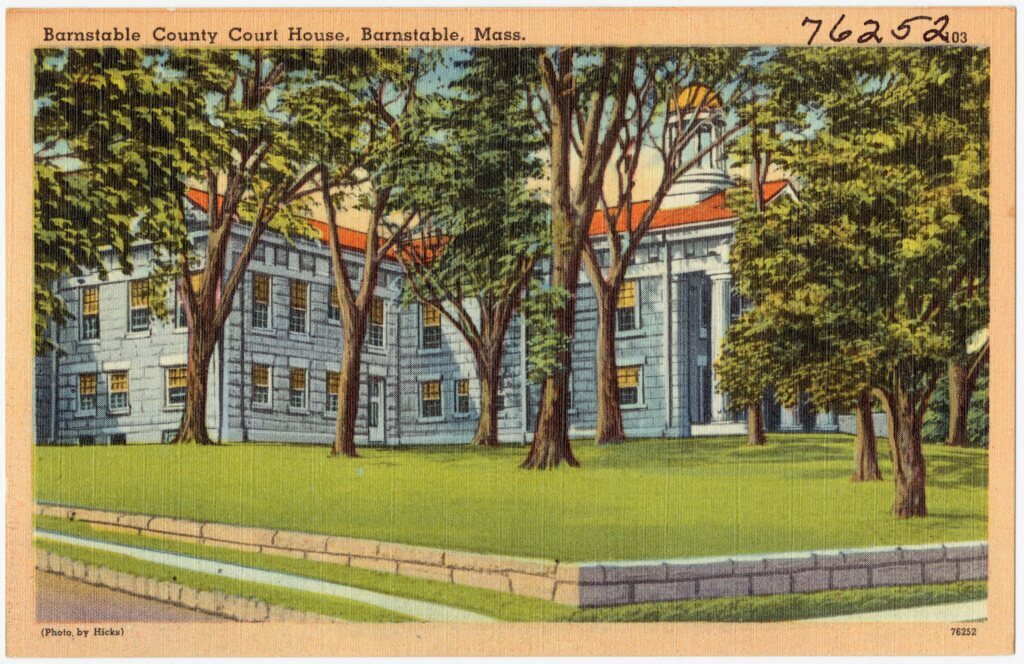
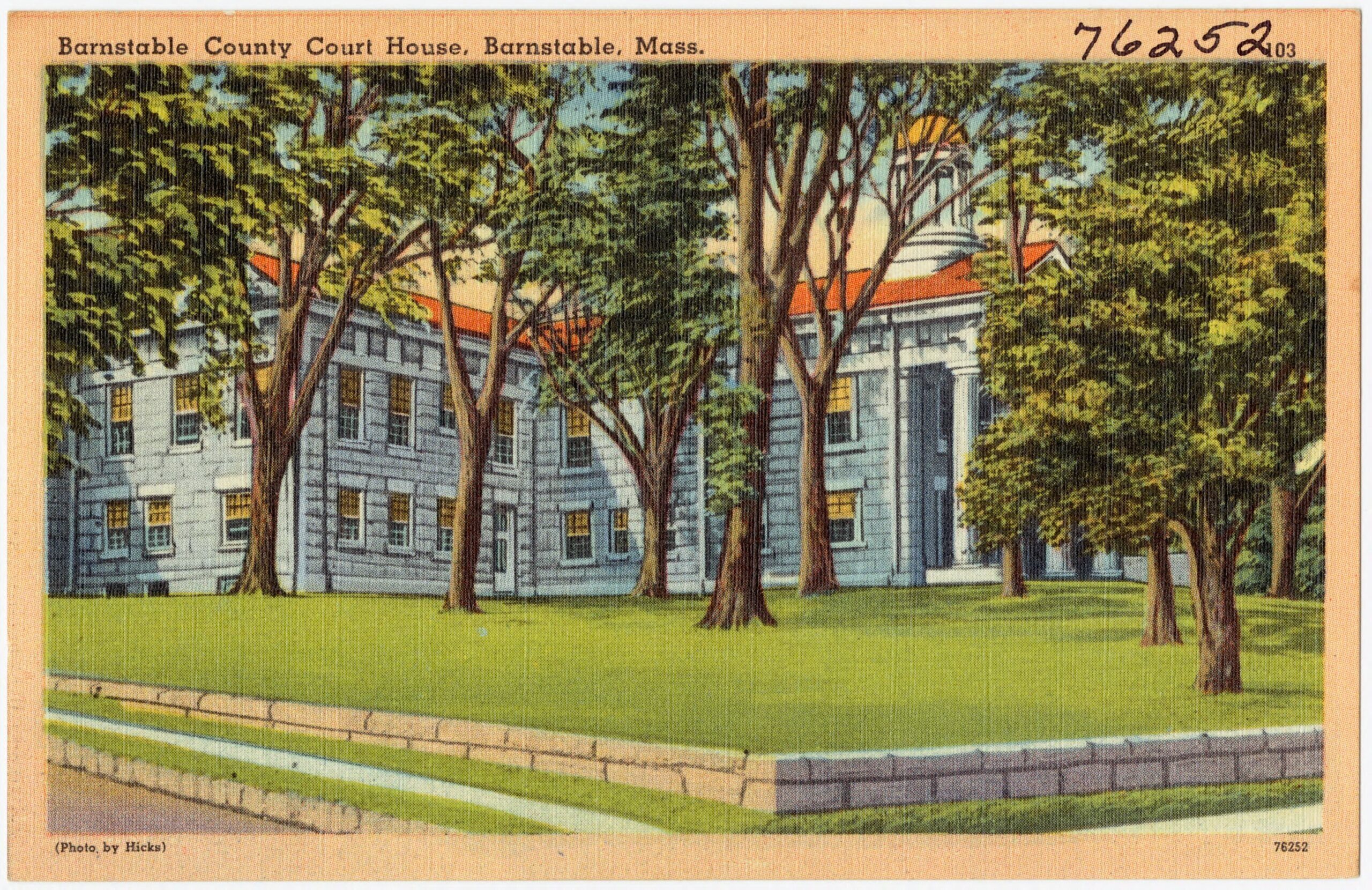
Gants wrote that the jury convicted McCowen of murder in the first degree on the theories of extreme atrocity or cruelty and felony murder, of aggravated rape, and of aggravated burglary. The indictments were returned 14 June 2005. Nickerson tried the case. The New York Times, on 17 November 2006, reported the verdict of the day before: guilty of first degree murder with extreme atrocity, aggravated rape, and aggravated armed burglary, with three concurrent terms of life in prison without parole. CBS the same day said life without parole for the murder, concurrent with life sentences for aggravated rape and aggravated murder, and it called the trial six weeks. Nickerson’s 2014 memorandum, released by the Cape and Islands district attorney, says a five week trial ended on 16 November 2006 with a guilty verdict of first degree murder. The court’s counts are murder, aggravated rape, and aggravated burglary. The Times adds the word “armed” to the burglary. CBS calls the third life sentence aggravated murder, which is not a count the Supreme Judicial Court lists. The length of the trial is five weeks in the judge’s later memorandum and six weeks in CBS. McCowen was 34 and Worthington was 46, in the CBS report. After the verdict, CBS quotes him: “Your honor, all I can say is I’m an innocent man in this case.” He shook his head as the verdict was read. One juror cried, bit her lip, and said “guilty” when polled.
Massachusetts law made the first degree murder sentence life without parole, and it sent the conviction to the Supreme Judicial Court automatically. Robert A. George tried the case, with Gary G. Pelletier. Julia K. Holler was the assistant district attorney on the appeal. The case was argued 7 May 2010. Marshall, Ireland, Spina, Cowin, Cordy, Botsford, and Gants sat. Ireland wrote a concurrence. On 10 December 2010 the court affirmed the convictions and the denial of the new trial motions. After review under General Laws chapter 278, section 33E, it found no basis to reduce the degree of guilt or to order a new trial.
Before that affirmance, several rulings had already shaped what the jury could hear. A grand juror knew Worthington, the child, and the child’s father. Questioned by a different judge, without counsel present, she said she had been “totally destroyed” by what she saw and learned, and that when the grand jury was selected she believed she could put her feelings aside and had done so. The trial judge refused to dismiss the indictments. The Supreme Judicial Court agreed. Knowing the family was not, on this record, a showing that the indictment rested on hatred or malice rather than the evidence. A separate claim that the Commonwealth hid exculpatory material from the grand jury also failed.
Nickerson refused a change of venue and refused to sequester the jury from the start. He sequestered them once deliberations were underway, because one juror’s involvement in an unrelated criminal matter raised the chance that news coverage would reach the jury. The Supreme Judicial Court called that a reasonable use of discretion. Pretrial publicity had not, in his judgment, made a fair jury impossible.
Trooper Mason was allowed to testify that five protective orders had been brought against McCowen by five different women, and that he had a number of criminal charges in Barnstable District Court. The judge had first kept that out. On cross-examination the defence attacked the basis for the arrest warrant and, the court held, invited the explanation. The jury was told at once, and again in the final charge, that the evidence was only to explain why the trooper sought the warrant, and that it was not proof he “must have done the matter that we’re now on trial for.” The Supreme Judicial Court found no palpable error. Those orders are not findings that he killed Worthington. They are background the defence opened and the judge limited.
The jury
A deadlock, a removed juror, and a hearing on race
The jury reported a deadlock. Nickerson then found a compelling reason to discharge a deliberating juror. The father of her child, with whom she had a strong ongoing relationship, was awaiting prosecution by the same district attorney’s office. The Supreme Judicial Court upheld the discharge. CBS names her Rachel Huffman, 22, and says the original jury had deliberated more than twenty-eight hours over five days, declared itself deadlocked on Monday, was told to keep going and was sequestered, and that on Tuesday Nickerson removed her after she was recorded talking to her jailed boyfriend about media reports and disparaging police. The Cape Cod Times, as CBS relayed it, said she was under investigation in connection with a shooting in East Falmouth, that her car had been used by two suspects, that police found 306 stolen inspection stickers in the car, and that one man wanted in the shooting was found in her closet. The opinion does not print her name or the sticker count. It does hold that the conflict with the same prosecutor’s office was enough. A footnote says the court does not rely on a finding that she deceived police about whether she and the child’s father were splitting up. She was not present at the second hearing on the recordings. The defence did not ask that she be brought in to explain them. Two other deliberating jurors were later excused, without objection, for health and travel. An allegation that an alternate joined the deliberations was rejected, and the defence did not challenge that finding on appeal.
After the verdict, the defence moved for a new trial on the ground that racial bias had denied an impartial jury. Nickerson held an evidentiary hearing in open court, questioned jurors and other witnesses, and found no factual basis for the allegations. The Supreme Judicial Court said those findings were supported by the record and were not clearly erroneous. The detail of what he credited and what he did not is in the footnotes, and it is specific. One affiant described a juror, called Juror Z in the opinion, as black. Nickerson wrote that by physical appearance one might say the man was black, and that to a judge who had lived his life in southeastern Massachusetts, where Cape Verdeans are a large part of the minority community, Juror Z appeared Cape Verdean. The judge did not credit testimony that Juror Z said he did not like blacks. He did not credit the discharged juror at all. He found that another juror had heard the claim from the discharged juror rather than from Juror Z. He did not credit Juror Z’s great-aunt, whom he called a storyteller, perhaps someone seeking fifteen minutes of fame. From voir dire, from the hearing, and from watching the juror through the trial, he found Juror Z had not expressed prejudice against blacks and had served as an impartial juror. “Nothing in his demeanor suggested a closed mind.”
A different statement was about the injuries. The judge could not fix the precise words, but a juror had spoken of the source of the injuries as either “a big black man” or “this big black man.” He concluded she was referring to the defendant, not to black men as a class. He found that another juror, Juror X, feared the defendant, and that the fear was not because of race. A black woman on the jury had called a remark racist. Nickerson called her role honorable and said her anger was a warning that the words had to be scrutinized. Each juror had been through a voir dire on racial bias. The final instructions told the jury to keep bias out. Other jurors had said the same thing in the room. The statement, he found, was made once in eight days of deliberations. The Supreme Judicial Court agreed that unconscious racial bias is a real risk and that it is best met by recognizing it, as the judge had done in questions and instructions and as jurors had done in the room. Ireland concurred. The allegations did not, on the findings, require a new trial.
CBS reported the defence theory of the investigation in the same story as the verdict. George told jurors that police had spent three years on former boyfriends before arresting McCowen in April 2005, and that police decided the sex was rape because they could not believe a black, uneducated garbage man had consensual sex with a white, sophisticated woman who had worked as a fashion writer in New York and Paris. Several former boyfriends were scrutinized, including Tim Arnold, who found the body, and Tony Jackett, Provincetown’s shellfish constable, who fathered the child. A 48 Hours report in 2003, CBS said, had laid out a list of possible suspects. On that list was a 29 year old woman described as a heroin addict and former prostitute, allegedly involved with Worthington’s 73 year old father, a former Massachusetts assistant district attorney. Those are the people the investigation looked at, as a news report of the defence argument describes them. They are not findings that any of them killed her. The jury’s finding is the one the Supreme Judicial Court left in place.
2014
The third motion attacked the pathologist, and it failed
On 5 October 2010, while the appeal was still pending, George and then-counsel filed a third motion for a new trial. It alleged that Dr. Henry M. Nields had testified falsely about his credentials. The support was an affidavit from Dr. Stanton C. Kessler: that Kessler had stopped Nields from finishing a fellowship at the Office of the Chief Medical Examiner, and that signatures on papers supporting Nields’s board certification were forged. The motion and the affidavit were public at once. District Attorney Michael O’Keefe later called the claim a smear. State Police investigated. Captain Christopher Mason, the same trooper who had interviewed McCowen in 2002, 2004, and 2005, finished that investigation in August 2011.
Kessler died in December 2011. Gary Pelletier, who had taken the case alone after George’s federal conviction and prison sentence for money laundering in October 2012, asked to withdraw the motion because Kessler was the only witness and was dead. O’Keefe asked the court to decide the motion on the merits. Nickerson heard it on 27 January 2014, took Mason’s affidavit and the supporting papers, and denied the motion. The district attorney announced the denial on 1 May 2014. The memorandum’s printed date line is garbled in the public PDF. The announcement date is not.
Mason’s investigation, as the judge recited it, showed that Nields completed the fellowship in 1998. Kessler did not send the certifying agency the documents he said carried his forged signature. Allegations about a disruption in the morgue and about sexual harassment concerned other people, and Kessler had attributed them to Nields anyway. Nields rose to Chief Medical Examiner. Kessler’s path ran through South Carolina and Alaska. From 2007 to 2009 Kessler tried to return to Boston. On 19 August 2009 he emailed human resources and blamed Nields for his failure to get a job. Nickerson found the affidavit wholly without merit, the product of a disgruntled man bent on revenge, and he denied the new trial. Pelletier conceded in open court that he could not meet the burden. The 2010 affirmance and the 2014 denial are the last rulings this account has opened. No later reversal appears in them.
Conflicts
What the sources do not settle
The time of death is three clocks. The babysitter call and the missed hair appointment support an inference of death after 8 p.m. on Friday, 4 January, and before noon on Saturday, 5 January. Weiner’s estimate, heard through Nields, suggested Saturday between 8 a.m. and 8 p.m., and a thirty-six hour outside figure that would put the earliest time at 8 a.m. Saturday. Nields said that estimate did not set an outside limit, and he gave no opinion of his own. McCowen’s statement put the sex, the beating, and the stabbing on Friday night. Smith’s van sighting is about 1 p.m. on Saturday. A Saturday afternoon death fits the van and part of Weiner’s range. It does not fit the noon appointment if that appointment is treated as proof she was already dead. The jury convicted anyway.
The man in the van is not one description. The opinion’s witness, spelled Gerard in the text and Gerald in the footnote, saw a dark work type van, moving very fast, driven by a dark-skinned Caucasian man, and he told police the driver was alone. CBS’s account of the defence argument says a white man in a dark van or truck, about twelve hours after police thought she died. The stabbing is his statement that Frazier used a kitchen knife, against Frazier’s testimony that Frazier slept at Mulvey’s. The sex is his statement that it was consensual, against a conviction for aggravated rape. The third count is aggravated burglary in the Supreme Judicial Court, aggravated armed burglary in the Times, and aggravated murder in CBS. The trial is five weeks in Nickerson’s 2014 memorandum and six weeks in CBS. The scene is “splattered” and a living child beside her in the opinion, and a pool of blood with the child clinging to her in CBS.
There is no recording of the six hour interview. The words in this account are the words the opinion attributes to him, as the troopers reported them and the judge credited them. Ofshe explained how a false confession can happen and did not say this one was false. The Thursday sexual encounter is a statement to Dr. Brown that the jury did not hear, and a closing argument that it did. The daughter’s name is not in the opinion. Her DNA is, as the major profile on the left breast. Frazier was not the defendant. CBS says he was never charged. The opinion does not.
Chronology
Chronology
- Thursday, 3 January 2002. McCowen later told Dr. Brown he had a sexual encounter with Worthington that afternoon and drew the house from that memory. The jury did not hear Brown. In the April 2005 interview he said Friday was the only time.
- Friday, 4 January 2002, 8 p.m. She telephones a babysitter. This is the start of the non-medical window.
- Friday night, 4 January 2002. In the statement he eventually gave, he is drunk with Jeremy Frazier at the Juice Bar in Orleans, goes to Dennis, returns, blacks out, and then describes sex, a beating, and a stabbing at her house. Frazier and Shawn Mulvey testify that Frazier slept at Mulvey’s after a party in Eastham.
- Saturday, 5 January 2002, before noon. She misses a hairdressing appointment. The Saturday paper is later found uncollected.
- Saturday, 5 January 2002, about 1 p.m. Neighbour Gerard Smith, also spelled Gerald in a footnote, sees a dark work type van leave the driveway at speed, driven by a dark-skinned Caucasian man. He told police the driver was alone.
- Saturday, 5 January 2002. Weiner’s estimate, admitted through Nields, suggested death most likely between 8 a.m. and 8 p.m. Nields said the estimate set no outside limit.
- Sunday, 6 January 2002, late afternoon. Tim Arnold finds her dead while returning a flashlight. The two year old daughter is alive beside her. The door and deadbolt are damaged. Tracks in the driveway can be recreated by dragging a person.
- Sunday, 6 January 2002, 7:55 p.m. Dr. James Weiner arrives at the scene.
- 7 January 2002. Weiner performs the autopsy. The wound path later described to the jury runs from the front of the chest through the left lung and out the back.
- 3 April 2002. McCowen tells Troopers Mason and Burke he only waved at her from the trash bin.
- 18 March 2004. He repeats the denial and gives a cheek swab.
- 13 April 2005. A laboratory report matches him to the major profile on the right breast and includes him on the minor profile from sperm in the vagina.
- 14 April 2005, shortly after 7 p.m. Arrested at home in Hyannis. At the South Yarmouth barracks he waives Miranda, refuses a recording, and over about six hours moves from a denial to “It could have been me,” to consensual sex, to Frazier as the stabber, to “We put the boots to her,” and to “Then it’s all on me.”
- 14 June 2005. Indictments returned in Barnstable Superior Court.
- 16 November 2006. Guilty of first degree murder on extreme atrocity or cruelty and on felony murder, and of aggravated rape and aggravated burglary. Life without parole. He says he is an innocent man.
- 7 May 2010. The Supreme Judicial Court hears the appeal. Gants writes. Ireland concurs.
- 5 October 2010. A third new trial motion alleges that Dr. Henry Nields lied about his credentials, based on an affidavit of Dr. Stanton Kessler.
- 10 December 2010. Convictions and the earlier new trial rulings are affirmed. Section 33E review finds no reason to reduce the verdict or to try the case again.
- August 2011. Captain Mason finishes the investigation of the Kessler affidavit. Kessler dies in December 2011.
- 27 January 2014. Nickerson hears the third motion. He denies it. The district attorney announces the denial on 1 May 2014. The affidavit is found wholly without merit.
Questions
Was Christopher McCowen convicted?
Yes. On 16 November 2006 a Barnstable jury found him guilty of first degree murder, on the theories of extreme atrocity or cruelty and felony murder, and of aggravated rape and aggravated burglary. Judge Gary A. Nickerson sentenced him to life in prison without parole. The Supreme Judicial Court affirmed on 10 December 2010. His third motion for a new trial was denied in 2014. Those are the rulings this account has opened.
How did Christa Worthington die?
The medical examiner’s notes, read to the jury by Dr. Henry Nields because Dr. James Weiner was ill, say a knife entered the front of her chest, passed through the left lung, and the tip came out through her back. She also had blunt-impact injuries: contusions of the nose and chest, abrasions of the face, hands, arms, and legs, and bleeding inside the skull. She was naked from the waist down, with semen on a vaginal swab. Tracks in the driveway could be recreated by dragging a person. Her two year old daughter was alive beside her.
What did McCowen tell the troopers?
In 2002 and again in 2004 he said he only waved at her and had never been in the house. On 14 April 2005, after he was shown a DNA report, he said “It could have been me,” then that the sex was consensual, then that Jeremy Frazier punched her and stabbed her with a kitchen knife, then that he himself punched her, that her head hit the gravel, and that “We put the boots to her.” He said that if Frazier was somewhere else, “it’s all on me.” He refused to let the interview be recorded. Frazier testified he spent that night at Shawn Mulvey’s house. Mulvey agreed.
How strong was the DNA?
On the right breast, Christine Lemire said his DNA matched the major profile at one in 5.2 trillion among Caucasians, one in 99.8 billion among African Americans, and one in fifteen trillion among Hispanics. On the vaginal sperm fraction he was included on the minor profile at one in 7.2 billion, one in 1.1 billion, and one in 10.2 billion for those same groups. The left breast mixture was dominated by the daughter’s DNA, and the statistic there was far weaker. The right-hand fingernail result was weaker still, about one in six among Caucasians. The court treated that last result as not definitive.
Did the appeal succeed on race or on the removed juror?
No. Nickerson removed a deliberating juror after a deadlock because the father of her child was being prosecuted by the same office. The Supreme Judicial Court upheld that discharge. On race, he held a post-verdict hearing, did not credit the discharged juror, and found no factual basis for the bias claims, including a statement he read as referring to McCowen rather than to black men as a class. The court affirmed those findings. It also said unconscious racial bias is a risk that the voir dire, the instructions, and the jurors had addressed.
Who is the man in the van?
The opinion does not identify him. A neighbour, spelled Gerard Smith in the text and Gerald Smith in a footnote, testified that about 1 p.m. on 5 January a dark work type van left the driveway at speed, driven by a dark-skinned Caucasian man. He told police the driver was alone. CBS described the defence argument as a white man in a dark van or truck. The opinion does not say that man was arrested for this killing.
Sources
Sources opened for this account
- Commonwealth v. McCowen, 458 Mass. 461 (10 December 2010), Gants, J. Justia.
- CBS/AP, “Trash Collector Convicted In Cape Cod Slay,” 16 November 2006. CBS News.
- The New York Times, “Trash Collector Guilty in Cape Cod Slaying,” 17 November 2006. The page timed out on a full fetch. The verdict, the three counts as the Times named them, and the three concurrent life terms are taken from the opening of that story as returned in search.
- Cape and Islands District Attorney Michael O’Keefe, press release and Nickerson’s memorandum on the third motion for a new trial, announced 1 May 2014. mass.gov.