 Evidence #01
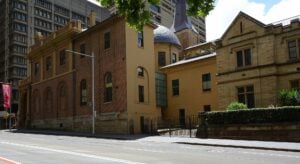 Evidence #02
 Evidence #03
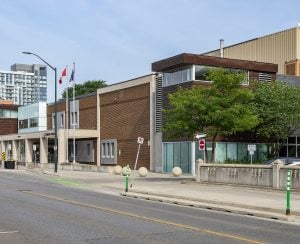 Evidence #04

Overview
He offered a boy a lift at a bus stop. The boy was dead before the next bus arrived.
Kiel Mountain Road overpass, Woombye · 7 December 2003
On 7 December 2003 Daniel Morcombe, 13, left his home at Palmwoods to catch a bus to Sunshine Plaza at Maroochydore. About three minutes after an express bus passed him at the Kiel Mountain Road overpass, he was gone. On 13 March 2014 a jury convicted Brett Peter Cowan, also known as Shaddo N-Unyah Hunter, of his murder, of indecent treatment of a child under 16, and of interfering with a corpse. Atkinson J sentenced him to life imprisonment, with parole eligibility after 20 years. On 21 May 2015 the Court of Appeal dismissed his appeal and the Attorney-General’s appeal against that sentence.
The overpass
A replacement bus, a signal from the driver, and three minutes

The afternoon was common ground at the trial. Daniel left the family home at Palmwoods, on the Sunshine Coast, to catch a bus to Sunshine Plaza. He was wearing navy blue long shorts, a red Billabong T shirt, and grey Globe sneakers. At about 2.15 pm he tried to hail a bus at the Kiel Mountain Road overpass, on the northern side of Nambour Connection Road. A church stands near the overpass on the northern side. A caravan sales yard is on the southern side.
The bus did not stop. It was an express service, and it was a replacement. Another bus had broken down at the Woombye turnoff, and this one had taken its passengers. The driver signalled to Daniel that another bus was not far behind. People on that bus saw at least one man standing some distance behind the boy. None of them noticed a vehicle. About three minutes later a shuttle bus came by. Daniel had disappeared.
Other witnesses, not all of them on the bus, saw him talking to a man, being watched by a man, or standing near a man or men associated with a boxy, blue, older model sedan at or near the overpass. Some of those witnesses said the man near the blue sedan had tattoos on his shoulder and his calf, and a goatee beard. The disappearance was covered heavily. Much of that description was published. The Court of Appeal recorded that publication because it mattered later, when the defence said a man who had read the coverage could have invented a confession.
A separate set of witnesses saw a man near the bus stop standing on one leg, with the other leg against the wall. Cowan’s former wife, and police officers, said he often stood that way. He lived in the area. He attended the church near the overpass. He was already a suspect because of a criminal history of violent sexual offending against young boys. One witness saw a white four wheel drive near the bus stop. He owned a vehicle of that kind at the time.
Police interviewed him in 2003, in 2005, and in 2006. He denied any involvement. He denied it again when he was questioned at the coronial inquest in March and April 2011. On 14 September 2006, in an interview with officers Wright and Hickey, he showed some reluctance to speak. He still spoke. The appeal court later held that speaking and denying is not the same thing as staying silent.
His account of the same afternoon, given eight years later to a man he thought was the head of a criminal gang, starts earlier in the day than the bus stop. He said he was going to his boss’s father’s place to pick up a wood mulcher. He had been lopping trees in the yard and needed a small one. On the way home there was a broken down bus. He saw Daniel. He did not know him. He was not sitting on the highway. He parked behind, near the church, walked down, and sat there. The bus drove past. He asked the boy if he wanted a lift. The boy said yes and jumped in. He sat in the front passenger seat. They chatted. The drive to Beerwah, where Cowan said he lived, took about half an hour.
That is his account of the pickup, not a finding that every witness who described a blue sedan was wrong. The prosecution case was that neither a blue car nor the man who owned one was involved. The defence case was that the prosecution had not excluded them. The jury heard both. The verdict is that he did it.
The counts were charged as occurring on 7 December 2003 at Glasshouse Mountains, not at the overpass. The overpass is where he was last seen alive by people other than the man who took him. On the confession, the drive from that church to Beerwah was about half an hour, and the killing was in an empty house at the end of Roys Road, in the Glasshouse Mountains. Lot 1, Kings Road is the house he later walked the officers to. The sandmining site, the embankment, and the bridge over the creek sit in that same country, not under the Kiel Mountain Road overpass. Palmwoods is the home he left. Maroochydore is where the bus was supposed to take him. Beerwah is where he told Arnold he lived. Bli Bli is a later address Mr McLean described, when he said he sometimes stayed there with Cowan and Cowan’s wife, Tracey. The former wife who described the way he stood is a different person from the wife he said he greeted when he got home that afternoon. The judgment does not give the former wife’s name, and it does not say Tracey was the wife on 7 December 2003.
What he said
An abandoned house at the end of Roys Road, a hand on the throat, and a shovel a week later
On 9 August 2011, in Western Australia, he confessed to undercover police officers he believed were a criminal gang. The Court of Appeal set out a long extract of the conversation with the man he knew as Arnold, so the words and the setting could be read together. He had already told Arnold there was no DNA. They had searched his car, he said, and found nothing. Then he said he did it.
He took the boy to an abandoned house he knew, at the end of Roys Road. Arnold misheard the name as Endaroys. Cowan spelled it out: Roys Road, at the end. He said there was nothing there. He had put the body under bushes and gone back, and it had already gone. Arnold asked what happened in the house. There was a pause. Arnold said he was not judging him. Cowan answered that he never got to molest him or anything like that. The boy panicked. He panicked. He grabbed him around the throat, and before he knew it the boy was dead.
Arnold asked how long the strangling took. Cowan said he lost track of time. It did not seem long. They were not in the car. They were out of it. The house had no furniture. It happened in the first room, in the door. He did not know of any blood spat in that room. The clothing was still on. Arnold asked whether the vehicle was a white four wheel drive. It was. The seats had been taken out of the back. The mulcher was in there. He laid the body in the back, next to the mulcher. He did not think the body touched the mulcher. He did not think he left prints. The house, he said, had just gone.
From the house he had about a hundred and fifty metres to go, through bush, in a fenced area he said he had been going to lease so he could do sandblasting. He described an embankment where sand mining had got up to, then trees and bush grown over it, then the old sand mining lake. On a map he drew for Arnold, the end of Roys Road came in toward a macadamia or avocado farm, with sheds, and the house. A little track went off through a gate to nothing much: a caravan and an old mobile. He carried the body over and threw it down the embankment. He put the drop at about a metre and a half. He said it left no marks. Then he went down and dragged the body through sandy ground until he found a place he thought would do.
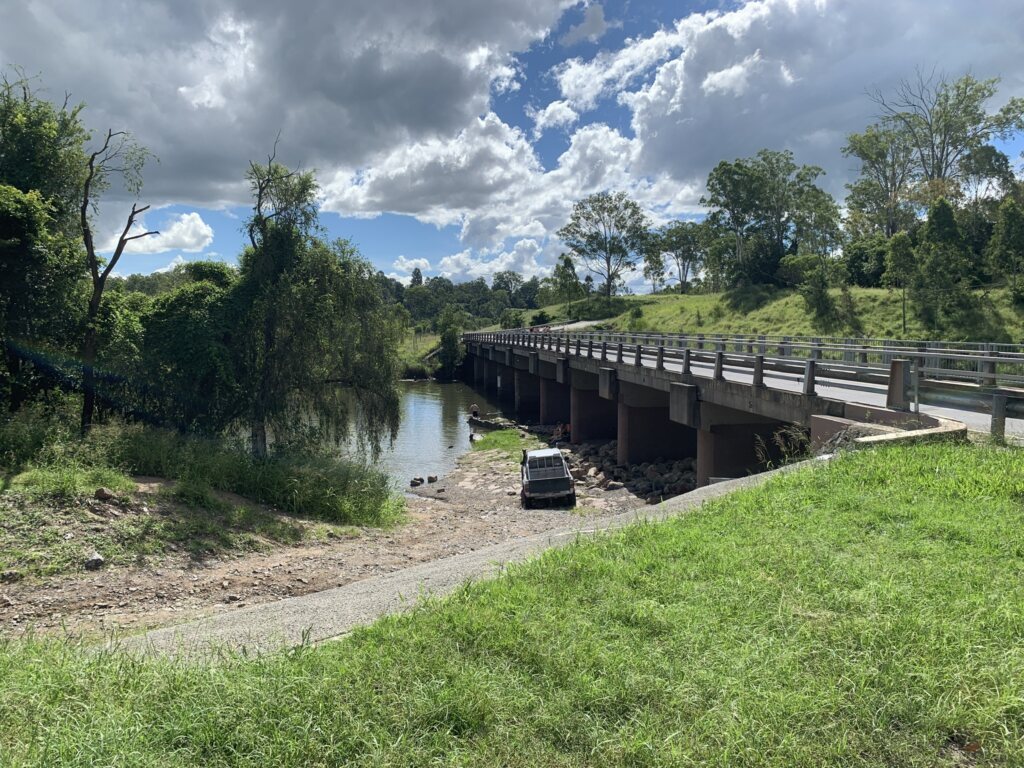
The clothes were still on when he threw the body down. He stripped them off. He covered the body with trees and branches. He took the clothes back with him and threw them into a creek. He was not sure of the creek’s name. It was not beside the body. It was on the way home, still secluded, at what he called an old logging bridge. The creek was fast flowing. He did not bag the clothes. He threw them in. He said they sank, and floated away.
He stopped at his dealer’s on the way and picked up drugs. He told Arnold that the people who said he was not there were lying. He was there. He spent about fifteen or twenty minutes, which he said he always did, and he liked to spend half an hour so he was not walking in and out. There was a fifty. He said he never bought big quantities. Then he went home, went inside, said g’day to his wife, told her he was back, and went out and started chipping the timber.
About a week later, or within that week, he went back. By then the disappearance was in the press as a missing person. He took a shovel, in the same car. At the place he had put the body he found a fragment of bone. The rest was gone. He could tell where it had been, he said, because there was fat on the ground. Asked what he thought had happened, he said he did not know. There were a lot of yabbies and animals. What was left was a little piece of bone. He thought it was part of the skull. He broke it up with the shovel and buried it. Arnold said DNA could still be got from a fragment. Cowan agreed they would have to deal with that.
The Court’s own summary of the same confession is not identical in every noun to that extract. The summary says he offered Daniel a lift, drove him to an isolated place, tried to pull down his pants, and that Daniel resisted and was strangled in the struggle. It says he threw the body over a bank at an abandoned sandmining site, removed the clothes and the shoes, and threw them from a bridge into the nearby creek. It says he returned about a week later, that the body had mostly been taken by wild dogs or pigs, and that he smashed the few remaining bones with a shovel and buried them. Later in the same conversation, when Arnold asked again how he had strangled the boy, Cowan said that when the boy started to struggle he started to pull his pants down, and the boy said oh no and struggled. Both versions are in the judgment. The jury convicted him of indecent treatment as well as murder. His line that he never got to molest the boy is what he said to Arnold. It is not the verdict.
He told Arnold the time was lunch time, then lunch time or afternoon. He did not know the clock time exactly. After the long account, Arnold said he would make enquiries, put Cowan up for the night, and get him on a plane the next day with some of the boys to sort it out. Cowan said he was prepared to cut all ties, even to the extent of a death certificate.
He then had lunch with the man he knew as Paul, and he repeated the admissions. He told Paul that reports of two people and a blue car were wrong. It was just he and Daniel. He said he liked to take his father to police interviews, and that the last time his father had a go at the officers for the way they were conducting themselves. He said that next time they spoke to him they should arrest him or leave him alone. He was worried about the inquest because he could not tell that court to leave him alone. He hoped any process would not issue in his present name, Shaddo Hunter, so that it would not have effect.
What was found
Bones near the sandmining site, clothes in the creek, shoes that were not
The day after the confession he flew to Queensland with undercover officers who were still posing as members of the gang. Over the next few days he directed them to the abandoned house, Lot 1, Kings Road, Glasshouse Mountains, and to an old sandmining site. He pointed out where he said he left the body. He showed them a small bridge where he said he had thrown the clothing into the creek. Other police arrested him at the Kings Road site on 13 August 2011. He declined to answer questions.
After an extensive search, police found bones containing DNA consistent with Daniel’s, near the abandoned sandmining site. They found remnants of clothing consistent with what he had been wearing, in the nearby creek to which Cowan had taken the undercover officers. The shoes were not in the creek. He had told them he threw the shoes into the creek with the other clothing. The shoes were found in the sandmining area. The Court of Appeal said the admissions were otherwise consistent with where that evidence was later found. At the trial the prosecution called expert evidence on the likely effect of weather, flooding, and animal behaviour on where those things ended up.
The bones were not at the precise spot he indicated. Atkinson J reminded the jury of that. She also reminded them of the evidence of wild animals in the vicinity, and of the shoes. Defence counsel used both discrepancies. He submitted that Cowan took police to the wrong spot because he did not know where the bones were, that he got the position of the shoes wrong, that he knew the remains were down the embankment but did not know where, and that the admissions did not match the objective facts because he was not guilty. The prosecution answer was that a detailed confession, followed by taking the officers to the site of the bones and the clothes, was the conduct of the man who killed the boy. The jury accepted that case. The appeal did not retry the map. It held that the conflict was left to the jury, and that the directions did not take it away from them.
There is no pathology of a body in these reasons, because there was no body to examine in 2003 or in 2011 in the sense of an intact corpse. What the courts describe is bone, clothing, and his account of the killing. He said he grabbed the boy around the throat in the first room of an empty house, that it did not seem to take long, and that the boy was dead before he was put in the back of the vehicle. He said there was no blood he knew of in that room. A week later, on his account, a fragment he thought was skull was all that remained, with fat on the ground, and he broke that fragment with a shovel. The judgment does not add a pathologist’s measurement of a hyoid, a ligature, or a time of death beyond what he said and what the DNA on the bones could show. The charge of interfering with a corpse is the stripping, the disposal, the return, and the breaking and burying of what was left.
The other man
A blue Commodore, a goatee, and a prisoner who said he remembered nothing
Douglas Jackway owned a 1980 blue Commodore. It broadly matched the sedan some witnesses described. He had tattoos on his shoulder and calf. In December 2003 he had a goatee. He had been released from prison a month before Daniel disappeared. The sentence he had been serving was for abducting a young boy, pulling him into a car, and sexually assaulting him. He lived at Goodna, about an hour and a half from the overpass. He had planned to be on the Sunshine Coast on the day Daniel disappeared. There was no direct evidence he was there that day. He told police his car broke down at or near the overpass the day after. He initially lied about where he was on 7 December 2003, and he gave inconsistent versions. When police took the car for scientific examination he became violently upset. He denied any involvement. His fiancée told police he threatened her so that she would give him a false alibi. The prosecution case was that neither the blue car nor Jackway had anything to do with the disappearance.
At the trial Jackway gave evidence by video link. In evidence in chief he denied he was involved in any way in the abduction. He was cross examined at length about his criminal history, including the occasion when he dragged a boy into a car and committed a sexual offence against him. Atkinson J told the jury that history was relevant to whether they believed him, and that a criminal history did not by itself make him an untruthful witness. He agreed he had been in Moreton B Correctional Centre. He did not recall meeting another prisoner, Leslie McLean. He said he was in the Goodna area on 7 December 2003 and travelled to the Sunshine Coast to visit his sister on 8 December.
McLean was called by the prosecution. The prosecutor asked him his name and that he lived in Brisbane, and nothing else. The defence case was built in cross examination. He seemed to have known Jackway from prison and to have met him after they were both released. He sometimes did and said things he could not later remember, and he spoke of multiple personalities. On the facts that mattered to the defence, he was adamant his memory was intact. He denied telling Cowan that someone had told him about Daniel’s disappearance. He denied saying the bones could be found near a demountable building at a sandmining site, down a gully. He denied saying an unnamed person had abducted Daniel on the way to Sunshine Plaza. He denied saying the clothes had been thrown over a bridge into running water. He denied asking Cowan what he was going to do with that information, and he denied telling Cowan not to repeat it because he was scared of being beaten up for talking.
McLean said Cowan sometimes visited him at his house at Stafford Heights, and that he sometimes visited Cowan at a residence at Bli Bli. He sometimes stayed with Cowan and his wife, Tracey. On occasions they went to church together. He did not know a sandmining site in the hinterland. He did not recall Cowan working as a sandblaster. Cowan phoned him a couple of times from Western Australia, and once said police had interviewed him about the disappearance. Defence counsel suggested to him that he and Cowan had been to a particular sandmining site. He did not accept that. The judge told the jury there was therefore no evidence the two of them had ever been to any sandmining site at all.
Cowan did not give evidence and did not call evidence. The defence, in the opening, in the closing address, and in the questions put to Jackway and McLean, was that the prosecution had not proved the confession was true. The chain they asked the jury to consider ran like this. Jackway had the blue sedan, the tattoos, the beard, the recent release, the plan to be in the area, and the lies. McLean knew him from prison and spoke to Cowan about the investigation. McLean sometimes could not remember what he had said. It was possible, the defence said, that Jackway told McLean what had been done, that McLean told Cowan, and that Cowan used those details to give a false confession so the gang would build him an alibi for the inquest. The methods used before the confession were designed to extract an admission. The remains were not exactly where he pointed, because he was repeating someone else. The shoes were not where he said he threw them, for the same reason. Unless the Crown had excluded Jackway, and excluded the blue car, the defence said the verdict had to be not guilty. Counsel told the jury it was not a popularity contest, and that it was more likely men in a blue car had stalked the boy and dragged him in.
Atkinson J told the jury there was no direct evidence that Jackway gave McLean information about the killing, or that McLean gave that information to Cowan. She told them they could act on the confessions to Arnold and Paul only if they were satisfied the confessions were made and that they were true. She told them the defence case was that the prosecution had not disproved that Jackway committed the offences. Read as a whole, the Court of Appeal held, those directions required the jury to be satisfied beyond reasonable doubt that the defence hypothesis was not open, before they could convict. The refusal to give a further redirection was not an error of law and did not cause a miscarriage of justice. The jury convicted. The appeal against conviction was dismissed. Jackway was not charged with this killing in any order these judgments make. The prosecution case, which the jury accepted, was that he was not the man at the overpass who took Daniel.
The operation
Thirty six officers, twenty five scenarios, and a boss who wanted the truth before the big job
A covert investigation involving 36 undercover police officers, in Queensland, Western Australia, and Victoria, began after he left the inquest. On 1 April 2011, the day he finished his evidence, an officer using the name Joe Emery met him on the plane home to Western Australia and befriended him. Over the following months Emery introduced him to people who appeared to be a criminal gang. They were police. They played out scenarios that appeared to be more and more serious crimes, and they paid him. He had lost his job. He believed the police were responsible for that. He began to spend more time with two officers he knew as Jeff and Paul. Across about three months he took part in 25 scenarios. They were built to end in one meeting, with a man he would know as the big boss, Arnold, whose job was to get a confession to Daniel’s murder.
The inquest was the lever, and the courts examined how it was used. The inquest into Daniel’s death had started on 11 October 2010, independently of this operation. There were legitimate grounds for ordering Cowan to attend on 31 March and 1 April 2011, and his discharge on 1 April was unexceptional. He was not legally represented. He was cross examined at length, and sometimes aggressively, by counsel assisting the coroner, by the coroner, by counsel for the Queensland Police Service, and by a solicitor for the Morcombe family. He was not warned that he could claim privilege and refuse to answer questions about the disappearance. At the end of 1 April he was excused.
Counsel assisting told him he was under suspicion. He could not account for his whereabouts at key periods on 7 December 2003. His alibi, that he was at the home of a woman named Ms Drummond, was not supported. Counsel said he was one of the very few people in Queensland, perhaps in Australia, with an established history of kidnapping and sexually assaulting young boys after taking them from public places. He was on the Sunshine Coast when Daniel was abducted. A man fitting his description had been seen near the bus stop. A car like his had been parked about 100 metres away. Police had told him in 2005 that his history made them worry about a stretch of time he could not account for. He told them he had not mentioned Ms Drummond at first because she was his drug dealer and he did not want her raided. He had earlier told them about getting drugs from another person he described as a mate at the time. Counsel called the alibi ridiculous. He said it was truthful. Counsel later called it worthless: it had been given three years after the first interview, nobody supported it, and there were between 35 and 50 minutes he still could not account for. Counsel said the inquest existed to find who had taken Daniel and to rule out people who had not. Counsel put to him that he had seen the boy, abducted him, sexually assaulted him, and killed him, either accidentally or on purpose. He denied it. Counsel for the police and the family’s solicitor pressed the same gap in the afternoon. If he could not fill it, they said, he could not be eliminated as the prime suspect.
After that evidence, counsel assisting kept working with the coroner and with police. On 20 April 2011 he asked police for further statements about the alibi. After the evidence of Ms Drummond and of a Mr Fitzpatrick, he decided Cowan should be recalled. He was also concerned that Cowan may have been affected by marijuana when he gave evidence. Police asked that the notice to attend be delayed. The coroner was unhappy about the delay. On 3 June 2011 he said he wanted Cowan recalled on or about 29 August 2011. Assistant commissioner Condon then met the coroner privately and asked him to hold the notice back. The coroner told counsel assisting the notice would wait because of the police investigation, and would not issue until police were ready. There is no evidence the coroner helped plan the covert operation. He agreed to a delay when he was asked, and later, when police said an early date would no longer hurt the operation, the court issued the notice.
Officer Carey said the notice was meant to work as a tactical trigger. It would start talk about Daniel inside the operation and put pressure on Cowan. The time police preferred for a recall was from 24 October 2011. They told the coroner’s office that. A notice requiring him to attend on 26 October 2011 was signed on 29 July 2011. On 4 August, Craig, an undercover officer acting as a corrupt police officer, told Paul, in Cowan’s presence, that a fresh subpoena had come out of the Coroners Court and that it was something they could fix without any hassle. Cowan told them about sexual offences he had been convicted of, and he still said he had nothing to do with the disappearance. His alibi, he said, was a hundred percent. Police were after him only because of his history. That was why he had changed his name. The subpoena would not work, he said, because the change of name was legal. Paul told him he did not care what Cowan had done, so long as Cowan did the right thing by them and was honest. Prior convictions, Paul said, could be fixed. Later Paul told him he did not give a damn what Cowan had done, so long as he was honest all the time.
On 9 August, before the long confession, Arnold said there were things they needed to talk about. Cowan thought the subpoena had already been dealt with. Arnold said they could sort it out, but he needed everything, because what they did was based on respect and honesty. He did not care what Cowan had done. He wanted loyalty, respect, and honesty. Cowan told him about two child sex offences, which he dated to 1987 and 1993. He said he was living in the area when Daniel disappeared, that police had hounded him because of the earlier offending, and that they reckoned they had shot to pieces half an hour of his alibi. He said he had lost his two eldest children because people wrongly accused him of things. He had been questioned at the inquest in March and April and thought that was the end of it. He was surprised when Craig spoke of a warrant or a subpoena. He insisted he had nothing to do with the disappearance. Arnold asked about DNA. Cowan said there was none. Then he confessed.
The offer wrapped around that confession was practical, and it was false. He could not stay in the gang, could not take part in the big job, and could not have his share, put at $100,000, while he remained the principal suspect. They would give him a watertight false alibi that would clear him when he was recalled, but only if the confession was truthful and complete. At the pretrial hearing he said that was why he talked. Had he been warned at the inquest that he could claim privilege, he would have claimed it. The questioning made him think the authorities did not believe the alibi, that he was the only suspect, and that the coroner thought he had committed offences against Daniel. If he did not produce an airtight alibi he thought he would be charged. If he did, he thought he would be free to go. He thought the coroner had absolute power to have him charged, and that the lawyers questioning him could influence the coroner. When the undercover officers raised the summons, he thought of the inquest and of the hole in the afternoon. He would not have made the admissions if Arnold had not raised the alibi. He also wanted his record wiped, to stay in the gang, and to see his children again. The main reason, he said, was the alibi. He planned to use it at the inquest so he would not be charged. But for the cross examination, he said, he would not have confessed to Arnold.
Atkinson J, who heard the exclusion application over seven days in November 2013 and ruled on 12 December 2013, refused to keep the admissions out. For the purpose of that application he conceded the reliability of the confessions. Reliability was not the question on the voir dire. It became the question at the trial, where the defence said the confession was a story he had bought from McLean and sold to a gang. The same ruling kept out evidence of his prior sexual misconduct with two boys, identified in the ruling as A and B. The jury did not hear that evidence as similar fact evidence. The sentencing judge, who was the same judge, heard the criminal history later, after the verdict, when the question was punishment rather than proof.
Why the confession stayed in
No threat at the inquest, and four months later he was talking to men he thought were criminals
The conviction appeal was heard on 26 and 27 November 2014 by a court that then included Carmody CJ, Fraser JA, and Margaret McMurdo P. On 7 May 2015 Carmody CJ recused himself. On 18 May 2015 he issued a certificate under section 31(2) of the Supreme Court of Queensland Act 1991 that he was incapable of sitting. Under section 31(1) the court was then McMurdo P and Fraser JA. Judgment was given on 21 May 2015. Counsel for Cowan were P J Davis QC and A J Edwards, instructed by Bosscher Lawyers. Counsel for the Crown, and for the Attorney-General on the sentence appeal, were A W Moynihan QC and G P Cash, instructed by the Director of Public Prosecutions. The trial had run for 30 days, eight of them the pretrial hearing. He was convicted on 13 March 2014. He was sentenced to life imprisonment on the murder, with parole eligibility after 20 years, to three and a half years on the indecent treatment, and to two years on interfering with a corpse. Nine hundred and forty five days of presentence custody were declared time already served.
The first ground was that the admissions, and everything found because of them, should have been excluded under section 10 of the Criminal Law Amendment Act 1894. That section says no confession shall be received if it has been induced by any threat or promise by a person in authority, and that every confession made after such a threat or promise is deemed to have been induced by it unless the contrary is shown. The prosecution must prove voluntariness on the balance of probabilities. He did not rely on the common law rule of basal involuntariness, the rule that excludes a confession when the speaker is overborne by duress, intimidation, persistent importunity, or undue pressure, and is not exercising a free choice. He relied on section 10.
His argument was that the cross examination at the inquest was itself the inducement. If he did not give the coroner a tighter, supported alibi, he would be prosecuted. If he satisfied the coroner, he would be cleared. Police then timed the notice of 29 July 2011, did not serve it on him in the ordinary way, and used it inside the operation to remind him of that pressure. Until Arnold offered an alibi, he had denied everything: in three police interviews, on oath at the inquest, and in the recorded scenarios before 9 August. The admissions to Arnold and Paul were the inducement still working on him. If the prosecution had not proved the contrary, section 10 made the confession inadmissible as a matter of law, and the judge had no choice.
The High Court decision in Tofilau v The Queen was the starting point, and it did not finish the argument. In four unrelated cases, men confessed to undercover officers pretending to be a gang. The High Court held they were not confessing to persons in authority. The officers were not using the state’s coercive power, and the men did not reasonably see them as having the lawful authority of the state to investigate. It was not in dispute in Cowan’s appeal that the gang’s claim to be able to exert unlawful influence was not a representation by a person in authority. The Crown went further and said section 10 therefore could not apply at all, because the confession was not made to a person in authority. McMurdo P rejected that reading. The section is not limited to confessions made to the person who made the threat. She gave the example of a police officer who tells a suspect his wife will be charged unless he admits the offence to his best friend in the next room. If he then confesses to the friend because of that threat, section 10 still operates. The mere fact that Arnold and Paul were not persons in authority did not answer the ground.
The coroner and counsel at the inquest were persons in authority. The question was whether they made a threat or a promise. McMurdo P held they did not. A coroner has a statutory job to find, if possible, whether a death happened and how, when, where, and by what cause. The Coroners Act does not limit a police investigation of a death. The Coroners Court is not bound by the rules of evidence. It can order a person to attend, to take an oath, and to answer. If a witness refuses because the answer would incriminate him, the coroner may still require the answer when that is in the public interest, but that answer, and evidence derived from it, cannot be used against him in a criminal proceeding other than for perjury. A coroner must not find that a person is or may be guilty of an offence. If the coroner reasonably suspects an indictable offence, the information goes to the Director of Public Prosecutions. Questioning at an inquest can be, and in this inquest was, more robust than questioning at a criminal trial. Encouraging truthful answers on oath, and testing the evidence against a witness, was what the Act required. Neither the coroner nor counsel acted improperly, and neither made a threat or a promise amounting to an inducement under section 10. X7 v Australian Crime Commission did not help him. X7 had already been charged and was awaiting trial when he was examined about those same charges. Cowan had not been charged with anything the inquest was examining.
The President also decided the ground on the footing that she might be wrong about the inquest. If the questioning was an inducement, the prosecution still had to show, on the balance of probabilities, that he was not acting under it when he confessed. The cross examination was on 31 March and 1 April 2011 in Brisbane. The confession was on 9 August 2011 in Western Australia, four months later, to men he believed were his criminal associates. The notice was used as a catalyst, and it was meant to put psychological pressure on him. They told him he could not stay, could not do the big job, and could not take the $100,000 while he was the principal suspect, and that the false alibi depended on a complete confession. McMurdo P was satisfied he confessed for those reasons, not because of anything held out at the inquest. If there was a threat or a promise from a person in authority, he was not acting on it in Western Australia. Atkinson J had been right. Fraser JA agreed, for the reasons at those paragraphs in particular, and said he did not need to add any general observation about the questioning at the inquest.
The second way of putting the ground was discretion: unfairness, public policy, and abuse of process. He had not asked the trial judge to exclude the evidence as an abuse of process or on public policy. He asked the Court of Appeal to do it anyway, to avoid a miscarriage of justice. An appeal court interferes with a discretion of that kind only if the decision was unreasonable or clearly unjust, or if it came from an error of fact or law, a failure to take account of something material, or undue weight given to some circumstance. The question, as Dixon J put it in McDermott v The King, is not only whether police acted unfairly. It is whether using the statement against the accused would be unfair, because the way it was obtained affects its reliability and so jeopardises a fair trial. He did not say unreliability was a point in his favour on that discretion. Reliability is a factor. It is not the only one. There is also a discretion to exclude a confession, even without unfairness, where public policy requires it.
He leaned on Swaffield. Swaffield had been charged with property offences and discharged at committal. Two years later he confessed to an undercover officer posing as a buyer of drugs. The High Court did not disturb the Queensland Court of Appeal’s decision that his choice whether to speak to police had been so clearly breached that it was unfair to use the confession. Pavic, heard with Swaffield, went the other way. Pavic had been warned, had spoken to a solicitor, and had made no comment. A witness, not an agent who set the meeting up for police, wore a microphone and truthfully told him police had clothing stained with blood. Pavic then made admissions about a murder. The High Court found no illegality and no reason to interfere. Neither case decided Cowan’s appeal. Both show how hard it is to overturn this kind of discretion. The closer comparison was Clarke, the fourth man in Tofilau. A twenty year old killing was revived by a police visit and a calling card, timed to fit a covert operation that ended in a meeting with a boss. The boss produced a three page police report, false, which Clarke believed. It named him as the only suspect and said approval would be sought to charge him. He was told the boss could fix anything if he told the absolute truth. The High Court held it was open to admit that confession. McMurdo P held that using a lawful notice to attend a lawfully conducted inquest was no more unfair than the visit to Clarke and the false report.
He also relied, in writing, on the Canadian decision in R v Hart. In oral argument senior counsel accepted that Canadian law on this point has taken a different path, and that Swaffield governs in Queensland until the High Court says otherwise. Hart presumes that admissions made in this kind of undercover operation are inadmissible in Canada unless the prosecution proves, on the balance of probabilities, that probative value outweighs prejudicial effect. The Canadian court was concerned about an aura of violence, and about state power that threatens the integrity of the system. McMurdo P held that even if Hart bound her, it would not help him. Reliability was not a point in his favour. And this operation, unlike Hart, did not involve threats of violence against people who were untrustworthy or who betrayed the gang. In Tofilau, Callinan, Heydon and Crennan JJ had said some covert operations should lead to exclusion. This was not one of those. There was no illegal conduct by the undercover officers, and none in the dealings between police and the coroner and his staff. The notice of 29 July 2011 issued for legitimate reasons. Liaising with the coroner about when to issue it, and then using it to start a conversation, was not improper. Traditional methods had failed. This was the technique police then used.
He would not have confessed if he had known who they were. That was accepted. They were not exercising the coercive power of the state when he did. He thought he was among criminal friends. They told him to tell the truth so they could help him. He was free to leave. They were not threatening or violent, and they had not in truth committed offences with him. He chose to give a detailed confession so he could obtain a false alibi, use it when he was recalled, stay in the gang, and take part in a job he thought would pay him $100,000. There was no abuse of process. Fairness and public policy, separately or together, did not require exclusion. The decision to admit the evidence was a sound exercise of discretion. Fraser JA agreed. He also rejected the argument that the earlier denials were an exercise of the right not to incriminate himself. A positive statement that wholly denies guilt goes beyond refraining from self accusation. The Latin the President used is the same idea: nemo tenetur se ipsum prodere. No one is required to incriminate himself. That principle did not require police to stop investigating a crime against a child.
The remaining conviction ground was the direction about Jackway and McLean. Trial counsel, who was junior counsel on the appeal, asked for a redirection and did not get it. The argument on appeal was that the direction failed to keep the burden on the prosecution, that the jury can convict only if they reject every reasonably open inference consistent with innocence, and that the direction effectively told the jury how to reason toward guilt. The Court of Appeal held the summing up, read as a whole, did the opposite. The jury were told the confessions could be used only if they were made and were true, and that the defence was that the prosecution had not disproved Jackway. There was no misdirection. Both grounds failed. The appeal against conviction was dismissed.
The sentence
Life, with parole eligibility after twenty years, and an Attorney-General who said that was not enough
He was 34 at the time of the offences and 44 when he was sentenced. The criminal history the Court of Appeal set out, for the sentence and not as evidence the jury used to decide guilt, runs through Queensland and the Northern Territory. At 17 he was placed on probation in Queensland for property offences. He kept committing property offences. In 1989 he was sentenced to one month in prison for breach of probation. In September 1989, after a jury trial, he was sentenced to two years for indecently dealing with a boy under 14. He was 18. The offence was in a public toilet. He inserted his finger into the anus of a seven year old boy, and he fondled and sucked the child’s penis. The sentencing judge called it a bad instance of indecent dealing. In 1992 he received short prison terms for possession of dangerous drugs and for false pretences. In 1997 he was sentenced to 12 months for burglary. In 2004 he was convicted and fined for stealing as a servant. In 2006 he was fined for minor drug offences.
In the Northern Territory in 1994, when he was 24, he was sentenced to an effective term of seven years for an aggravated act of gross indecency, unlawfully causing grievous harm, and deprivation of liberty. The victim was a six year old boy, a neighbour, alone and wearing only underpants, looking for his sister in a caravan park. Cowan took him for a walk in the bush. He pulled down the boy’s underpants, removed his own shorts, and masturbated while holding the boy’s leg. He ejaculated and used the child’s underpants to wipe the semen from his penis. Still holding the boy with one hand, he inserted his right middle finger into the child’s anus. The child winced and struggled in pain. He tried to kiss the boy. The boy struggled and was visibly distressed. He carried the boy about 300 metres through scrub and left him inside a rusty motor vehicle. About an hour later the boy staggered into a service station, naked, dazed, and distressed. He was taken to hospital and placed in intensive care. He had a collapsed and punctured left lung, deep cuts to the back of his head and the base of his scrotum, a bloodied nose, blackened eyes, and scratch marks on his torso. Cowan at first denied it. He later confessed in full and told police he needed help. The injuries were consistent with asphyxiation, blunt force, sharp force, and anal penetration. It was accepted that the attempt to strangle the boy happened incidentally during the assault. The prosecutor at the Morcombe sentence emphasised how close that pattern sat to the afternoon of 7 December 2003.
What he told Arnold was not the same chronology. He spoke of two child sex offences in 1987 and 1993. The sentences the Court of Appeal recorded are the September 1989 Queensland sentence, for conduct when he was 18, and the 1994 Northern Territory sentence, when he was 24. The years he gave Arnold and the years of the convictions are not the same numbers. The appeal judgment states both. It does not treat his dates as a correction of those convictions.
Atkinson J had already refused to let the prosecution lead the prior sexual misconduct, under the names A and B, at the trial. The ruling of 12 December 2013 says the application to exclude that evidence was allowed. The sentence hearing is a different proceeding. After the verdict, the history was before her for punishment. Daniel’s father and his older brother, Dean, read victim impact statements. The prosecutor read statements from Daniel’s mother and from his twin brother, Bradley. The Court of Appeal described them as an account of living through what it called every family’s worst nightmare, and of the effect of the offending on people who loved him.
Under the law in force at the time of the murder, parole eligibility on a single count of murder under section 305(1) of the Criminal Code would ordinarily have fallen at 15 years. The judge could postpone it. The prosecutor asked her to do that, as Douglas J had done in R v Abell on 8 October 2013. The reasons given were the criminal history, the gravity of the offending, the lack of remorse, the denial of responsibility, the fact that the crimes were uncovered by the covert operation, negligible prospects of rehabilitation, and an ongoing danger to the community. The maximum for the indecent treatment was 14 years. The maximum for interfering with a corpse was two years, and the prosecutor said this was the worst category, so the maximum should be imposed.
Defence counsel at sentence relied on what Cowan had told the undercover officers: that he killed Daniel in a struggle, not to avoid being caught. Counsel said that made the offence closer to a felony murder than to a murder committed with intent to kill or to do grievous bodily harm. Counsel accepted the discretion to go past 15 years, and pointed to R v Sica and R v Maygar, ex parte Attorney-General, where the discretion had been used. In each of those cases three people were murdered. This was one killing. Counsel tendered a medical report of emphysema.
The judge adjourned overnight. The next day she sentenced him. She spoke of the Morcombe family’s determination and of the professionalism of the investigation and the trial. She summarised the crimes and their effect on the family. She said he had shown no remorse. She noted the effect on the wider community and the previous sexual offending. She called him a convincing and adaptable liar. The words the Court of Appeal sets out are these. Whenever anyone is considering the prospect of granting him parole many years in the future, they should mark her words that he is a convincing, plausible and adaptable liar, prepared to lie to advance his own interests. Any profession of being rehabilitated would have to be seen in that light. She was concerned that, in admitting the offences, he was untroubled by the enormity of what he had confessed, and that he had expressed confidence he could not be pinned for it.
The only sentence for murder is life imprisonment. Section 9(1) of the Penalties and Sentences Act 1992 sets out the purposes of sentencing. Because of the history and the enormity of the crimes, she set parole eligibility after 20 years. She said that did not mean she thought he should be released in 20 years. That was not under her control. It was a matter for the parole authorities. They should take into account that he is a plausible and opportunistic liar before they consider any view he might have about whether he has been rehabilitated. The emphysema could be managed in prison and did not warrant a lesser sentence. On the indecent treatment she imposed three and a half years. On interfering with the corpse she imposed two years. Nine hundred and forty five days were declared time served.
The Attorney-General appealed under section 669A of the Criminal Code. The ground was that postponing parole eligibility by only five years was manifestly inadequate, and unreasonable and unjust in the sense of House v The King. Counsel told the Court of Appeal this was only the second time a Queensland court had postponed eligibility where the sentence was under section 305(1) rather than section 305(2). Abell was the first. Section 305(2) is the provision for more than one conviction of murder, or for a person who already has a conviction for murder. Hayes, Sica, and Maygar are examples of postponement in that different class. The considerations the President identified for the discretion are the adequacy of punishment, protection of the community, denunciation, vindication of the victim and the family, criminal history, lack of remorse, and prospects of rehabilitation. The wilful killing of a child is regarded with particular abhorrence. It is worse when a child is killed to avoid detection for other offending. Deterrence matters when a person going about ordinary business in a public place is attacked, and it matters more when the person is a child.
The Attorney-General’s argument, as the President recorded it, was that the history showed a real risk of further violent and sexual acts against children, that rehabilitation had already failed, and that he is a recidivist dangerous sex offender. Five years beyond the minimum, on that argument, did not adequately punish, denounce, vindicate, deter, reflect the absence of remorse, or protect the community. The Court of Appeal did not disagree that the crimes called for a heavy penalty. Few crimes, the President wrote, are more serious than luring a child or a young person from a public place, sexually abusing and murdering them, and then interfering with the body so the family is left uncertain for years. The criminality was aggravated by the earlier offending, by the complete lack of remorse and insight, and by poor prospects of rehabilitation. The effect on Daniel’s parents and brothers was life shattering. The court said they channelled grief and anger into finding out what happened and into seeing justice done, and that they inspired the investigators and a wider community.
The sentence still stood. Atkinson J had sat through a six week trial and the sentence hearing. She had taken the history, the lack of remorse, the effect on the family, and the poor prospects into account when she added five years to the minimum. A life sentence means he is not released unless a parole board later considers release appropriate. She warned that board in terms. Merely setting a date does not mean release on that date. There was no previous Queensland sentence in which parole eligibility for a single murder had been postponed beyond 20 years. The Attorney-General did not show a specific error, and did not show that the sentence was so unreasonable as to be an error of law. Fraser JA agreed. The appeal against sentence was dismissed on 21 May 2015, in the same orders as the conviction appeal. The published judgment on Queensland Judgments is marked as determined, with special leave to the High Court refused. These reasons do not set out the date or the bench of that refusal. The orders that are fully reasoned, and that stand in the judgment, are the two dismissals of 21 May 2015.
Chronology
From a bus that did not stop to two appeals that failed
- September 1989. After a jury trial in Queensland, he is sentenced to two years for indecently dealing with a boy under 14 in a public toilet. He was 18. The child was seven.
- 1994. In the Northern Territory, aged 24, he is sentenced to an effective seven years for offences against a six year old boy at a caravan park, including grievous harm and deprivation of liberty. He confessed after first denying it.
- 7 December 2003, about 2.15 pm. Daniel Morcombe, 13, tries to hail a bus at the Kiel Mountain Road overpass. The bus is an express replacement and does not stop. About three minutes later he is gone. He was wearing a red Billabong T shirt, navy shorts, and grey Globe sneakers.
- 2003, 2005 and 2006. Police interview Cowan. He denies involvement. On 14 September 2006 he shows some reluctance and still speaks.
- 11 October 2010. The coronial inquest into Daniel’s death begins.
- 31 March and 1 April 2011. He gives evidence, unrepresented, and is cross examined. He is not warned of privilege. He maintains the alibi and denies the killing. He is excused.
- 1 April 2011. On the flight to Western Australia, an undercover officer using the name Joe Emery befriends him. A covert operation of 36 officers follows. He takes part in 25 scenarios.
- 3 June 2011. The coroner wants him recalled on or about 29 August. Assistant commissioner Condon asks that the notice be delayed. The coroner agrees.
- 29 July 2011. A notice is signed for him to attend the inquest on 26 October 2011.
- 4 August 2011. An officer posing as a corrupt policeman tells him, through Paul, that a fresh subpoena can be fixed. He still denies the disappearance.
- 9 August 2011. In Western Australia he tells Arnold, and then Paul, that he killed Daniel at an abandoned house at the end of Roys Road, disposed of the body at a sandmining site, and threw the clothes into a creek from a bridge.
- 10 August 2011 and the days after. He flies to Queensland with the officers and shows them Lot 1, Kings Road, the sandmining site, and the bridge.
- 13 August 2011. He is arrested at the Kings Road site. He declines to answer police questions.
- After the arrest. Bones with DNA consistent with Daniel’s are found near the sandmining site. Clothing remnants consistent with what he wore are found in the creek. The shoes are found in the sandmining area, not the creek.
- 6 to 20 November 2013, across seven sitting days. Atkinson J hears the application to exclude the admissions and the prior sexual misconduct.
- 12 December 2013. She refuses to exclude the admissions. She excludes the prior sexual misconduct with A and B from the trial.
- 13 March 2014. A jury convicts him of murder, indecent treatment of a child under 16, and interfering with a corpse. He did not give or call evidence.
- The next day, after she adjourns overnight. Life imprisonment, parole eligibility after 20 years, three and a half years, and two years. 945 days are declared time served.
- 26 and 27 November 2014. The Court of Appeal hears his conviction appeal and the Attorney-General’s sentence appeal.
- 7 May 2015 and 18 May 2015. Carmody CJ recuses himself and certifies that he is incapable of sitting. The court is then McMurdo P and Fraser JA.
- 21 May 2015. Both appeals are dismissed. The murder conviction and the sentence stand.
Questions
Questions
Was Brett Cowan convicted of murdering Daniel Morcombe?
Yes. On 13 March 2014 a jury in the Supreme Court at Brisbane convicted him of murder, of indecent treatment of a child under 16, and of interfering with a corpse. Each count was charged as occurring on 7 December 2003 at Glasshouse Mountains. On 21 May 2015 the Court of Appeal dismissed his appeal against those convictions. The court did not find that Douglas Jackway was the killer. The prosecution case, which the jury accepted, was that Jackway and the blue car were not involved.
Should the confession to the undercover officers have been excluded?
The trial judge refused to exclude it, and the Court of Appeal agreed. Section 10 of the Criminal Law Amendment Act 1894 did not make it inadmissible. The coroner and counsel made no threat or promise amounting to an inducement. Even if they had, the confession four months later in Western Australia was made so he could stay in the gang, do the job he thought would pay him $100,000, and obtain a false alibi. Unfairness, public policy, and abuse of process did not require exclusion. For the purpose of the exclusion application he conceded the confession was reliable. At the trial the defence said it was false. The jury were told they could use it only if they were satisfied it was made and it was true.
Were the shoes where he said he threw them?
No. He told the undercover officers he threw Daniel’s shoes into the creek with the other clothing. The shoes were found in the sandmining area. Remnants of clothing consistent with what Daniel wore were found in the creek he showed them. Bones containing DNA consistent with Daniel’s were found near the sandmining site, not at the precise spot he indicated. The prosecution called expert evidence about weather, flooding, and animals. The defence said the mismatches showed he was repeating someone else’s account. The jury convicted him anyway.
Did the Attorney-General obtain a longer wait before parole eligibility?
No. Atkinson J imposed life imprisonment and set parole eligibility after 20 years, five years past the 15 year minimum that then applied to a single murder under section 305(1). She said that date was not a promise of release. On 21 May 2015 the Court of Appeal dismissed the Attorney-General’s appeal. There was no previous Queensland case in which eligibility for a single murder had been postponed beyond 20 years, and the sentence was not shown to be manifestly inadequate. The published judgment is marked with special leave to the High Court refused. The date of that refusal is not in these reasons.
Sources
Sources opened for this account
R v Cowan [2013] QSC 337, Atkinson J, 12 December 2013, applications under section 590AA of the Criminal Code. The admissions stayed in. The prior sexual misconduct with A and B stayed out of the trial. https://www.queenslandjudgments.com.au/caselaw/qsc/2013/337
R v Cowan; R v Cowan; Ex parte Attorney-General (Qld) [2015] QCA 87, Margaret McMurdo P and Fraser JA, 21 May 2015, heard 26 and 27 November 2014. Conviction appeal dismissed. Attorney-General’s sentence appeal dismissed. Reported at [2016] 1 Qd R 433. https://www.queenslandjudgments.com.au/caselaw/qca/2015/87