 Evidence #01
 Evidence #02
 Evidence #03
 Evidence #04
Overview
Hall J convicted Bradley Edwards of two wilful murders and acquitted him of the third.
Claremont, Perth · 27 January 1996
Sarah Ellen Spiers, Jane Louise Rimmer, and Ciara Eilish Glennon were taken from Claremont in 1996 and 1997. On 24 September 2020, after a judge-alone trial of 95 days, Hall J found Bradley Robert Edwards guilty of the wilful murders of Jane Rimmer and Ciara Glennon, and not guilty of the wilful murder of Sarah Spiers. Spiers’ body has never been found.
Three nights
A secretary, a childcare worker, and a solicitor, all last seen in Claremont
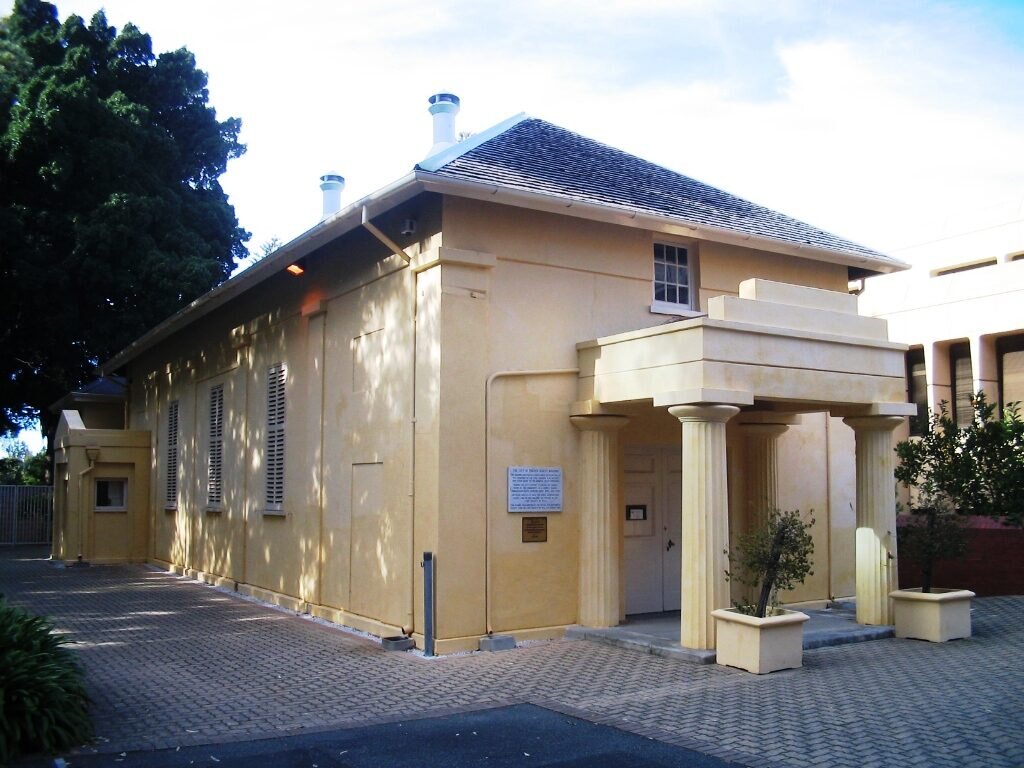
Sarah Spiers was 18 and worked as a secretary. She was last seen in Claremont in the early hours of 27 January 1996, after a night out that had begun on Australia Day. At 2.06 a.m. she called a taxi and gave Mosman Park as the destination. A taxi was sent. By the time it arrived she was gone. A short time later screams were heard in Mosman Park. Two witnesses who heard them saw a light coloured station wagon parked near a telephone box. She has not been seen since. There has been no contact with friends or family, no access to her bank accounts, and no record of her leaving the country. Hall J was satisfied the only reasonable conclusion is that she is dead, and that she was abducted and killed. How she was taken, and how she died, he held were unknown. Her body has never been found.
Jane Louise Rimmer was born on 12 October 1972. She was 23 and worked in childcare. She lived alone at 5/276 Cambridge Street, Wembley, and had been there about six months. In about March 1996 she bought a silver Mazda coupe. Her parents, Jennifer and Trevor Rimmer, lived on Keightley Road, Shenton Park, with the household that had also included her siblings Lee and Adam, who were not living at home in 1996. On Saturday 8 June 1996 she arrived at her mother’s at about 9.30 a.m. to wash clothes, left for the hairdresser Déjà Vu on Onslow Road, came back, had lunch, and had trouble starting the car. Trevor came home about 2 p.m., cleaned the terminals, and it started. That evening she rang her father at 6.50 p.m. and asked for a lift to the Shenton Park Hotel. He picked her up at the unit. She was in jeans and a dark jacket, with a small handbag. He dropped her outside at about 7.15 p.m. She seemed happy. Jennifer, already at the hotel, sat with her for about half an hour. Jane was wearing blue denim jeans, a navy sweatshirt, a dark navy corduroy jacket, and black boots, and she had a small handbag with a silver clasp. She had a packet of Stradbroke Extra Mild cigarettes, her Ventolin, and a can of beer. She left the hotel at about 7.40 p.m., behaving normally.
Later that night she was with friends in Claremont. At about 11.53 p.m. they were waiting for a taxi. She walked off. A friend flagged a taxi. They had it drive down Bay View Terrace and stop near where she was standing. They asked if she wanted to leave with them. She declined. The last sighting was soon after, just after midnight on 9 June 1996. On Sunday Jennifer went to the unit with a key Jane had given her. The Mazda was there. The bed was made. The clothes Jane had been wearing were not. They rang the police. Her body was found at Wellard on 3 August 1996. Screams had been heard in that area in the early morning of 9 June.
Ciara Eilish Glennon was 27 and worked as a solicitor. On the evening of 14 March 1997 she went for drinks in Claremont with colleagues. She left The Continental Hotel on foot, alone, shortly before midnight, meaning to walk home. She was seen on Bay View Terrace and then along Stirling Highway. Some witnesses described a woman of her description close to a white VS Holden Commodore station wagon. The prosecution said that car was his, and that she either accepted a lift or was taken in what they called a blitz attack. Her body was found on 3 April 1997 in bushland near Pipidinny Road at Eglinton. Hall J was satisfied she was last seen in Claremont in the early hours of 15 March 1997, and that when last seen she was in the vicinity of a white VS Holden Commodore.
The bodies
A sharp instrument at the neck, vegetation pulled over the body, and a neck the pathologist could only partly read
Hall J found that the same person killed Jane Rimmer and Ciara Glennon. The similarities he listed were not the general ones that also fitted Sarah Spiers. Both were young women who had been out with friends in Claremont and were last seen there, alone, in the early hours of a weekend. The two disappearances fell inside nine months, June 1996 to March 1997. Both were killed by a sharp force injury to the neck. Both had defensive wounds from trying to fend off an attacker with a sharp weapon. Both bodies were left in semi rural places on the edge of metropolitan Perth, on the ground, covered with plant material from the vegetation around them. Both had fibres consistent with having been in a VS Holden Commodore habitually used by a Telstra employee. Those similarities, he held, proved beyond reasonable doubt that one person killed both.
For Jane, his finding was that Edwards abducted her in Claremont in the early morning of 9 June 1996 and used his work vehicle, a VS Holden Commodore station wagon. It was not possible to say exactly how she got into the car. He drove her to Wellard. A violent struggle followed. She was able to scream. He had a knife or some other sharp object. She tried to fend it off and took a defensive injury to her wrist. He then, intending to kill, stabbed or slashed her, causing one or more fatal injuries to her neck. Because of the screams, Hall J thought it likely the struggle was at Wellard. He removed her clothing and disposed of the body there. He either took the clothes or concealed them. He put her on the ground and covered her with vegetation he gathered from around the spot, to reduce the chance she would be found and the killing discovered.
The pathology of that neck is more cautious than the verdict sentence. Decomposition and animal predation had changed the wound. A breach of the skin would have been a sharp force injury, either an incised slice or a penetrating stab. The exact nature, extent, and number of the original breaches could not be determined. The ragged skin margins were consistent with animal predation. An injury to the neck was a possible cause of death. Hall J’s conclusion, after the whole of the evidence, was that she was killed by a sharp instrument inflicting a fatal injury or injuries to the neck, and that she had a defensive injury to the forearm as well as the wrist injury in his narrative of the struggle. The pathologist’s “possible” and the judge’s finding of a fatal neck wound are both in the reasons. They are not the same sentence.
The prosecution also pointed to a Telstra issued knife found on Woolcoot Road, near the Wellard scene. Hall J’s own account of the weapon is “a knife or other sharp object.” He did not, in the conclusions, identify that particular knife as the one that cut her neck.
For Ciara, he found the same sequence with one difference that mattered for identity. Edwards abducted her in the early morning of 15 March 1997 as she walked home, again in the VS Holden Commodore station wagon, and again it was not possible to say exactly how she got into the car. A violent struggle followed in which she scratched or clawed him and got his DNA under the nails of her left hand. She took a defensive injury to her arm. He stabbed or slashed her neck, intending to kill. The pattern of blood soaking on her clothes made it likely the fatal wound or wounds were inflicted at Eglinton. He put the body on the ground in bushland and covered it with vegetation he gathered or broke off from the trees and bushes, for the same reason: so that she would not be found. Some of the branches torn near her body came from as high as two metres, which the prosecution said meant a fairly tall person. That measurement is the State’s point. His finding is the covering, the place, and the intention to hide the body.
The nails
Eighty million times more likely, and the fight was about how it got there
Samples were taken at the Eglinton scene and at the post mortem. The first DNA work found nothing that identified a killer. In 2008 the nails were sent for low copy number testing. PathWest was not accredited for that method, so the work was done by the Forensic Science Service in the United Kingdom. A mixed profile came from debris combined from two nails of Ciara Glennon’s left hand, marked AJM40 and AJM42. The mixture was likely from two people, at least one of them male. Because the debris came from her nails, she was taken as one contributor, and a male profile could be predicted from what remained. Edwards had not yet been named as a suspect. The male component matched the suspected perpetrator of the Karrakatta offences, checked against intimate swabs from that victim.
He was identified in 2016. After his arrest in December that year a reference sample was sent to the Institute of Environmental Science and Research in New Zealand. The Forensic Science Service had closed. ESR still used the same multiplex kit, SGM Plus, and the same low copy number method. His profile was consistent with the male contributor: alleles matching his were present at each tested site. The statistical result, using Caucasian population data, was that the mixture was 80 million times more likely to be Edwards and Ciara Glennon than an unknown unrelated man and Ciara Glennon. Hall J was satisfied beyond reasonable doubt that Edwards’ DNA was in AJM40 and AJM42. That part of the evidence, he wrote, was clear, consistent, and largely uncontested.
The contest was the route. The prosecution said the DNA went under the nails in a violent struggle as she defended herself from the fatal attack. He accepted that a struggle happened. There were defensive wounds to the right arm, a torn left thumbnail, and a torn right fingernail. The left thumbnail, AJM40, was jagged, unlike the smooth and apparently manicured look of most of the other nails. Dr Margolius and Dr Cooke both thought the nail damage was recent, though Dr Cooke accepted that damage of that sort could not be timed. Hall J accepted the nail was damaged in the struggle with her attacker, and that this made the DNA more significant. There was no evidence he and Ciara had ever met in an innocent social setting, or been close enough in one for his DNA to transfer that way.
The defence explanation was contamination. The defence did not have to prove it. The State had to prove its own route. It called the history of testing, storage, and movement of the exhibits. The defence pointed to containers that might not originally have held his DNA, or that might have been opened at a time nobody wrote down, and to the absence of a description or photograph of what the nail samples looked like when they were first taken. Hall J accepted there was no direct evidence of that first appearance. The video of the process did not make him doubt that samples were collected. AJM40 may have been small pieces of debris rather than one defined piece of nail. That did not mean DNA from under or around the nails could not have been in the sample.
The containers were not sealed with evidence tape when they were taken, or for some years after. They were screw top. Opening one would have taken a deliberate effort, and the obvious reason to open one was a procedure that should have been recorded. A theory that someone could have opened an unsealed pot and left no note was, in his words, a mere theoretical possibility. The evidence was against it. He accepted Mr Bagdonavicius’s evidence that he did not open AJM40 in 1997 or in 2003 when he was deciding whether the contents were fit to test, even though some records were wrong, including a matrix Bagdonavicius prepared in 2003. The cross examination of those records did not, for the judge, show that the witness was generally careless or that his evidence about the containers was unreliable.
Scratches or striations on the AJM40 container were unexplained with certainty. Mr Talbot, by video from Scotland and looking at a photograph, said he had swabbed the container with a swab dampened with water or buffer. He could not say whether the marks were dried liquid. Hall J looked at the original exhibit. In the photograph the marks looked like scratches or cracks. On the container itself they looked more like dried lines of liquid. He said so during closing addresses and let counsel answer. He held that the DNA got under the nails in a violent struggle shortly before her death, and that contamination had not been left open as a reasonable possibility. The DNA, he wrote, was critical to the prosecution case. The fibres and the propensity evidence sat with it. Together they proved he killed her.
8 June 1996
Jeans at the hotel, a navy dress at a front door, and a wave from a pole
The Saturday is told by people who saw her at different hours, and they do not dress her the same way. Ellen Magditch worked part time at the Shenton Park Hotel and had known the Rimmers for at least 20 years. She was there from about 5.10 p.m. Jennifer joined her in the saloon bar at about 5.30. Jane came later, in a dark corduroy jacket, jeans, and a dark shirt, and seemed quite happy. She went to the public bar for a few minutes to see if friends were there, came back, and said she was going to the Lacrosse Club at Rosalie Park in Shenton Park. She left alone. Magditch never saw her again.
Clare McGuirk, then Clare Humphreys, was 23. During the week she was a Telstra customer service representative and did not wear a uniform. On Saturday mornings she cut hair at Déjà Vu on Onslow Road. Jane was her 10 a.m. client. McGuirk remembered shoulder length hair and a basic cut. She put a gown on her and a towel around the neck. Towels were changed between customers. Cutting gowns, a waterproof fabric she thought was nylon, might not be. They went back on a rack and might be used for the next haircut. She brushed the hair, wet it with a spray, cut it in centimetre sections from the bottom, combed it straight, and blow dried it. She could not recall ever washing Jane’s hair. The cut took about half an hour. She brought her own tools, sterilised them in blue liquid, and cleaned scissors, combs, and brushes between cuts. That Saturday morning haircut later mattered because fibres were found in the hair. The salon gown, the towel, and a Telstra employee who did not wear a uniform on weekdays are all in the evidence of the woman who cut it.
Sharon McColl, secretary of the Subiaco Lacrosse Club, was at home in Shenton Park watching television. Her son Peter was out. At about 9 p.m. a woman with blonde, shiny hair knocked. McColl opened the security panel. The woman asked if Peter was there. Told he was not, and asked who she was, she said Jane Rimmer. McColl knew the name because the family belonged to the club. Jane said she had just called to see if he was there, not that they were supposed to meet. McColl thought she looked very dressed up: earrings with pearls and diamantes, a dark jacket, and a dark navy dress. Jane said she was okay and left. McColl wrote her son a note. The note dates the visit to Saturday 8 June 1996.
That dress does not match the jeans. Jennifer, at the hotel until about 7.40, described jeans, a navy sweatshirt, a navy corduroy jacket, and black boots. Magditch described jeans. Sian Chapman, who met Jane at the Ocean Beach Hotel in Cottesloe, described a blue top, jeans, a corduroy jacket, and a bag over her shoulder. Lynda Donovan, who worked with Jane at the Nedlands Child Care Centre, both of them childcare assistants, described jeans, a black long sleeved shirt, a black jacket, pull on boots, a black bag across the body, a silver bracelet, a silver Guess watch, and a chain with an amethyst. Donovan lived upstairs in the same block on Cambridge Street. She thought Jane had lived downstairs for about three months. Trevor Rimmer thought it had been about six months. The times also refuse to line up into one clock. Trevor dropped her at the Shenton Park Hotel at about 7.15, and Jennifer had her there until about 7.40. Donovan said Jane arrived at the Ocean Beach Hotel by herself at around 7 p.m., as dinner was finishing. Chapman said the dinner group had been at the Ocean Beach Hotel from about 7, and that Jane joined them at about 8, as they finished. A woman cannot be in both hotels for the same half hour. The statements stand as each witness gave them.
Chapman was 25. She knew Jane through Donovan, for about 18 months. The dinner was with Donovan, Ben Rundell, and Christine Loxton. After Jane arrived they sat for 10 or 15 minutes, moved to the main bar for half an hour to an hour, and had another drink. Chapman called her happy. At about 8.30 or 9 they looked for a taxi outside. One came quickly, a white sedan, Chapman in front, brown vinyl inside. In cross examination she accepted that the description of the taxi could well be wrong. The ride to the rank on Gugeri Street, across from The Continental in Claremont, took about 10 minutes.
They started in the lower bar. It was busy, so they went upstairs to the balcony. Everyone was drinking, Jane included. Security footage from 21.55.35 showed Chapman and Donovan as they first entered. At some point Chapman saw that Jane was upset. Jane and Donovan went off and talked for five or ten minutes. Chapman saw that Jane had been crying. Chapman, Loxton, and Rundell stayed on the balcony. When the two came back, the group stayed upstairs and danced.
At about 11.30 they decided to go to Club Bayview. Loxton went about five or ten minutes ahead. Footage from 23.40.17 shows Chapman waiting out the front of The Continental and then walking away with Donovan and Jane. Footage from Club Bayview at 23.49.10 shows Chapman, Rundell, and Jane at the front of the club. Donovan went inside to find Loxton, for about five minutes. Jane leaned on a car a few metres from Chapman and Rundell. When Loxton and Donovan came down, the five walked back the way they had come. Footage the witness was shown from 23.56.07, from the front entrance of The Continental, has Chapman, Loxton, Donovan, and Rundell walking away from Club Bayview, with Jane a little behind. Footage from the front of The Continental starting at 23.53.12 shows Chapman, Loxton, and Donovan walking past the entrance, then Rundell and Jane behind them. Those two camera times are both in the evidence summary. 23.53 comes before 23.56. The reasons set them out as the witness was shown them.
At the Gugeri Street rank the five waited about ten minutes. Taxis passed full, or did not stop. Jane waited with them and then walked back to The Continental. A taxi came. Chapman, Donovan, Rundell, and Loxton got in, heading for Chapman’s house in City Beach. The taxi turned into Bay View Terrace and slowed past The Continental. Donovan leaned out and told Jane they were leaving and that she should come. Jane was leaning against a pole outside the front doors. Chapman said she was sort of waiting, and that she waved them off. Chapman did not see her again. That is the last of the friends. The prosecution’s account of the same moment is the one already given: she had left the group while they waited, the taxi was sent down Bay View Terrace, she was asked if she wanted to leave, and she declined. Just after midnight she was gone. On 9 June her mother found the Mazda at the units, the bed made, and the clothes of the day before missing.
14 March 1997
Home from a year away, back at the firm for four days, then The Continental
Ciara Eilish Glennon was born on 20 November 1969 in Zambia. Her mother, Caitriona Una Glennon, gave police the birth certificate. From 1993 Ciara worked as a solicitor at Blake Dawson Waldron. In early 1996 she took a 12 month break to travel. She returned to Perth on 1 March 1997 and moved back into the family home in Mosman Park. On 10 March 1997 she resumed at the same firm, at 221 St Georges Terrace. She had been back at work for four days when she did not come home.
Her father, Denis Glennon, spoke to her at about 3.30 p.m. on Friday 14 March while she was at work. She seemed fine. He expected her that evening. She had gone to work in a black suit with a skirt above the knee, a white T shirt with a faint outline of pink flowers under the jacket, and black heeled shoes. She wore a Claddagh brooch on the jacket, and earrings, and she carried a black briefcase type bag with a shoulder strap. He woke early on Saturday for a trip to Rottnest and saw that she had not come home. During the morning his wife telephoned him several times. They rang Ciara’s friends to ask if she had stayed the night with one of them. He later learned that she and some colleagues had been driven to The Continental in Claremont the night before by Neil Fearis, a partner at the firm. Denis went home and reported her missing. Police came to the house. He gave them a photograph. She was 27, about 152 centimetres, slim, fair but tanned, with dark brown hair. Several days later he found a more recent photograph in which the hair looked a lighter brown, and he gave them that as well.
After the trip she used her sister’s car, a 1978 white Mazda sedan. In March 1997 Denis drove a 1994 silver Mercedes Benz C180. She might have been a passenger in it in the two weeks she had been back. He remembered dropping her at a bus station once. His wife drove a white Mercedes Benz sedan. No one in the family owned or had access to a Holden Commodore VS series I or series II station wagon, or to a Toyota Lexcen series T4 or T5 station wagon. No one in the family worked for Telstra, did work for Telstra, or had a Telstra uniform. Denis knew of no connection Ciara had to Telstra in those two weeks, and no reason she would have been in a Telstra vehicle or in contact with a Telstra employee. That evidence is aimed at the fibres and the car. If the family had no such wagon and no such uniform, the Telstra fibres and the Commodore were not explained by home.
Caitriona’s day starts earlier. At about 7.45 a.m. she dropped Ciara near a bus stop outside Hungry Jack’s in Claremont, for a bus into the city. At about 4.45 p.m. she rang to ask how Ciara was getting home. She expected her later. By the time Caitriona went to bed, Ciara had not returned. The next sighting the prosecution relied on is the one at The Continental: she left on foot, alone, shortly before midnight, to walk home, and was seen on Bay View Terrace and then Stirling Highway, near a white VS Holden Commodore station wagon. Hall J was satisfied that when she was last seen she was in the vicinity of that car, and that he was driving a vehicle of that kind. He was not satisfied, and said it was not possible to determine, exactly how she got into it.
Before Claremont
A kimono left in a bedroom, and a girl taken from Rowe Park to Karrakatta
On 21 October 2019 Edwards pleaded guilty to the first five counts on the indictment. Counts 1 and 2 were the Huntingdale offences. The plea section of the reasons dates them to 15 February 1988. The evidence summary of the young woman the court calls AH dates the night to 14 February 1988. Counts 3 to 5 were the Karrakatta offences, dated in the reasons to 12 February 1995. Convictions were recorded on the pleas. Sentence waited until after the murder trial. The pleas proved the essential elements. The defence would not agree a statement of facts, so anything beyond those elements had to be proved by evidence if the State wanted to use it.
AH was 18. She lived with her parents and two brothers in a house on Bullfinch Street, Southern River. She knew Edwards because his younger brother was friends with her brothers, his mother was her netball coach, and they had gone to the same primary school and the same high school. On the day of the attack she had been out with her boyfriend. She was home at 6.30 p.m. and in bed by about 10.30 or 11. She slept with her head at the foot of the bed, on her stomach, hands under the pillow. She woke to a weight on her, something pressing either side of her from the waist down, below her arms. A hand covered her mouth. She said it was okay, she would not scream, because she thought her boyfriend had come back in. Another hand came onto the back of her head, one pushing up and one pushing down. She moved her head, stopped, moved again. She asked what he was doing and told him to let go. The hand left the back of her head. The weight shifted as if he were reaching behind. She felt fabric in his left hand. The right hand was calloused.
She moved her mouth and said she loved him. The pressure eased enough for her to pull a hand from under the pillow. She reached to stroke his face. Her finger met stubble. Her boyfriend had shaved that day. She dug a fingernail into the man’s cheek as hard as she could. He got off. She heard a light landing on the carpet and said he was very light. She covered her head and braced, expecting a blow. She looked toward the door. A man stood in the doorway, almost as tall as the frame, in something like a long sleeved white cotton nightie. The State’s account of that night, which it relied on as propensity, was that he attacked her in her bed while she slept, tried to stuff a stocking into her mouth, and fled leaving a silk kimono. The kimono had his DNA on it. Police held it for the next 18 years. On the State’s case the Huntingdale conduct showed a tendency to attack vulnerable women who were effectively strangers, from behind and without warning, to restrain them, and to use fabric in or over the mouth. Hall J did not use Huntingdale as the propensity that identified the killer of Jane Rimmer and Ciara Glennon. The propensity he relied on for that purpose was Karrakatta alone.
Karrakatta, on the State’s allegation proved for the propensity use, was the early hours of 12 February 1995. He drove a Telstra van to Rowe Park in Claremont and waited in the dark, ready to attack, subdue, abduct, and sexually assault a woman he did not know. The victim was 17. She was walking alone through the park, intoxicated. He grabbed her from behind without warning and forced her to the ground. He tied her wrists behind her back with cord he had brought, already knotted into improvised handcuffs, and forced cloth or fabric into her mouth. He carried her to the van, put her in the back, bound her feet, and put a hood over her head. He drove her to an isolated part of Karrakatta Cemetery and twice sexually penetrated her, with force enough to cause injuries. He dropped her into bushes and went back to the vehicle. Hall J’s finding from that evidence was a tendency to attack and abduct young women violently from the Claremont area. The reasons also examine a Hollywood Hospital incident and a Telstra Living Witness project. Neither was the propensity he used to name the killer.
On 22 December 2016, in an electronically recorded interview, he denied the Huntingdale and Karrakatta offences. He said he had no idea where Rowe Park was. He said he had never been to Karrakatta Cemetery at night or in the early hours, and he distanced himself from the area. Three years later he pleaded guilty to those counts. The interview lies and the later pleas sit side by side in the reasons. The pleas did not rewrite the interview. They ended the contest about the essential elements of those five counts.
The car
A Telstra station wagon, and fibres the judge tied to the hours before death
Edwards worked for Telstra. The vehicles and the uniforms were a whole section of the evidence: what he drove, and what he wore, across the years that included 1996 and 1997. Hall J was satisfied that at the relevant times he drove a VS Holden Commodore station wagon of the kind habitually used by a Telstra employee. The fibre evidence, as he found it, put both Jane Rimmer and Ciara Glennon in such a car in the time shortly before they died. For Jane he specified a station wagon. For Ciara he specified the same, and he was satisfied that when she was last seen she was near a white VS Holden Commodore.
The prosecution went further on the clothing. It said a fibre in Jane Rimmer’s hair, and fibres in Ciara Glennon’s hair and on her shirt, had been identified as coming from pants or shorts manufactured for Telstra and issued to its technicians, including Edwards, from the middle of 1993. It also said other fibres matched the uniforms he wore. His finding, in the list of similarities and in the identity conclusions, is the car. The clothing match is the State’s identification. He used the fibre evidence, with the DNA and with Karrakatta, to find that he was the killer of both women. He did not, in those conclusions, isolate a particular Telstra garment as the source the way he isolated the car.
Operation Macro was the name WA Police gave the investigation into the three disappearances. It widened as other matters were drawn in. The ChemCentre and PathWest changed names over the decades of the file. Hall J used the later names for simplicity. Exhibits sat at the old headquarters on Adelaide Terrace, in the DNA and Exhibits Coordination Unit, and later at the Exhibit Management Unit in Midland, moving in security movement envelopes and tracked on the property tracing system. The brief that came to trial was 178 lever arch files in 44 boxes, and an electronic copy that occupied multiple terabytes. There were 14 pre trial hearings over 19 sitting days before the murder counts were tried.
Sarah Spiers
More likely, and not enough
The State asked Hall J to treat all three as one killer, and then to use the forensic links from the two bodies to name him for Sarah Spiers as well. He refused that first course. The similarities he would allow were that all three were young women, that all had been out with friends in Claremont and were last seen there alone, that all went missing in the early hours of a weekend, that the three nights fell inside 14 months from January 1996 to March 1997, and that all three were abducted and killed. Those likenesses were general, and they were far fewer than the likenesses between Jane and Ciara. A possibility, or even a probability, that one man killed all three was not proof beyond reasonable doubt. Evidence that identified the killer of Jane and Ciara could not, on that reasoning, identify the killer of Sarah.
The second course used the proved killings, and Karrakatta, as propensity, and then asked whether anything about Sarah’s own night carried the identification. She was last seen in Claremont in the early hours of 27 January 1996. She was abducted and killed. The circumstances of the taking, and the manner of death, were unknown. There was no forensic evidence at all. The Mosman Park screams did not close the gap. The accounts were inconsistent in ways that stopped him concluding the screams were hers. Even if they were, they fitted an abductor who lured her into a car and took her on toward a destination, and that manner did not match the Karrakatta tendency of a sudden attack from behind. The car near the telephone box could not be tied to the screams, and it could not be found to be the make or model he was driving. What remained was propensity. Karrakatta showed the tendency to attack and abduct. The killings of Jane and Ciara showed that the tendency had come to include killing with a sharp instrument and leaving a body in a semi rural place. That made it more likely he killed Sarah. Without any other evidence of who her killer was, more likely was not enough.
On count 6, that on or about 27 January 1996 at Claremont and elsewhere he wilfully murdered Sarah Ellen Spiers, Hall J found him not guilty. There would be a judgment of acquittal. The State’s phrase for the three nights, an enigma of the dark, stayed an enigma for her. The absence of a body was not itself the reason for the acquittal. Jane’s body and Ciara’s body supplied the DNA, the fibres, the wounds, and the vegetation. Sarah’s night supplied a taxi that arrived too late, a set of screams the judge would not attribute, and a car he would not identify.
The accused
Born in 1968, married twice, a softball game that ended at 5.15, and a house transferred the day a body was found
A set of signed admissions puts Bradley Robert Edwards’ own dates on the page. He was born on 7 December 1968. He and the person the admissions call EB became the registered proprietors of 10 Fountain Way, Huntingdale, on 4 June 1991, and they began living there sometime between that date and their wedding. They married on 23 November 1991. On 3 April 1997 they transferred the title to Ronald Hilgert and Gail Hilgert. That is the same date on which Ciara Glennon’s body was located at Eglinton. The admissions state a transfer. They do not say why the house was sold that day. He and the person the admissions call CG became the registered proprietors of 344 Acton Avenue, Kewdale, on 15 August 2000. He lived there from sometime between that date and their wedding until 22 December 2016, the day of the recorded interview. They married on 16 December 2000.
His brother, Troy Adam Edwards, was born on 28 April 1971. The admissions say Troy was working for Telecom in the Denham and Shark Bay area from 22 January 1996 to 8 February 1996, a span that includes the night Sarah Spiers disappeared. That is Troy’s work, not a claim about where Bradley was. His parents, Bruce Robert Edwards and Elizabeth Kaye Edwards, left Australia on 7 December 1996 and returned on 12 January 1997, and left again on 19 January 1997 and returned on 22 May 1997. On 22 February 1997 he and a person called KM stayed the night at the Grange Motel in Margaret River. In the course of his employment with Telecom and then Telstra he worked on PABX systems at places and on dates set out in a schedule annexed to the admissions. The schedule itself is not reproduced in the passages of the reasons that quote the admissions.
On 8 June 1996, the Saturday of Jane Rimmer’s last day, he played softball for the Kelmscott Bulldogs at the Langford Park Sporting Complex on Langford Avenue, Langford. The game was scheduled to start at 3.45 p.m. and end at 5.15 p.m. That admission covers an afternoon. Jane was still at her mother’s at lunchtime, still having her car started, and she was not at the Shenton Park Hotel until evening. A game that ends at 5.15 does not account for Bay View Terrace after midnight.
The taxi
A woman who said her name was Spiers, at Stirling Highway and Stirling Street
On Friday 26 January 1996 Ms Key was a telephonist for Swan Taxis, rostered from 7 p.m. to 3 a.m. At 2.06 a.m. she took a call from a woman who asked for a taxi to the corner of Stirling Highway and Stirling Street, Claremont. The caller identified herself as Spiers and said she was going to Mosman Park. Key typed the job into the computer to be dispatched. The State’s case, and Hall J’s finding about the aftermath, is that a taxi was sent and that by the time it arrived she was no longer there. A short time later a series of screams was heard in Mosman Park. Two of the people who heard them saw a light coloured station wagon parked near a telephone box. She has not been heard of since. No contact with friends or family, no use of her bank accounts, no record of leaving the country.
Hall J would not turn the screams into proof that Edwards had her. The accounts were inconsistent. They did not let him conclude the screams were hers. Even if they were, the picture they made was of an abductor who got her into a car and drove her on toward wherever he meant to take her. That, he held, did not match the Karrakatta tendency, which was a sudden grab from behind, a binding, a hood, and a van. The station wagon by the telephone box could not be shown to be the source of the screams, and it could not be shown to be the make or model he drove. Sarah Ellen Spiers was abducted and killed. Who did it was not proved. Count 6 was not guilty.
Wellard
A diamond shaped defect, a wrist bent back on itself, and flesh that had both dried and turned to soap
Dr Cooke described the neck at Wellard as he saw it, which was not the neck as it had been on 9 June. The defect followed the surface of the jawline, came down in an approximate diamond to the top of the collarbone, and followed the collarbones to the top of the breastbone. It was a large open defect. It exposed the bones of the spine. Most of the soft tissue underneath was gone. He said this was on the front of the body, the part protected by lying against the ground. The back was different. The back showed post mortem scavenging. The left arm was not where he expected it. Most people who die have their arms alongside the torso. On Jane’s body the arm was by the head, extending upwards. A feature he called really unusual was the wrist, hyperextended, turned back on itself.
There had been a lot of post mortem change, and it was of two kinds at once. Mummification, where tissue dries and becomes leathery, is what he associated with exposure to a drying environment. Adipocere, where skin and fat become soap like, is what he associated with contact with a moist environment. Both were on this body. That is why the original injury could not be counted. A breach of the skin would have been a sharp force injury, a slice or a stab. How many breaches, and how deep, could not be recovered from what the animals and the weather had left. Ragged skin margins fitted predation. An injury to the neck was a possible cause of death. Hall J, using that evidence with the rest, found one or more fatal sharp force injuries to the neck, a defensive injury, and an intention to kill. The pathologist’s possible cause and the judge’s finding are both required if the neck is to be described honestly. The body had been in the bush from the early hours of 9 June until it was located on 3 August 1996.
The State’s fibre case, beyond the car Hall J accepted, included fibres on Ciara Glennon’s shirt, on the shorts of the Karrakatta victim the reasons call KJG, and in a vehicle he had used which was found 22 years later. It included blue clothing issued to him before the Karrakatta offences. It included the proposition that Ciara was seen talking to someone in a car matching his Telstra car, the make and model from which the automotive fibres came. His finding is narrower and firmer: she was in the vicinity of a white VS Holden Commodore, she had been in a Telstra employee’s Commodore shortly before she died, and he drove such a vehicle. Talking to someone, and exactly how she entered the car, he did not find. The State also grouped Hollywood Hospital with Huntingdale and Karrakatta as a tendency to attack women he did not know, violently and in a particular manner. For the identification of the killer of Jane and Ciara, the propensity he actually used was Karrakatta, and then, for Jane, the proved killing of Ciara as well.
7 May 1990
She broke free in a toilet corridor. He pleaded guilty to common assault.
Before Huntingdale and before Karrakatta there was Hollywood Hospital. On 7 May 1990, on the State’s account, he attacked a woman he did not know, without warning and without provocation. He grabbed her from behind, forced cloth or fabric over her mouth, and dragged her backwards toward a toilet cubicle. She struggled, fought him off, and broke free. He was caught at the time. He pleaded guilty to common assault. The State said this showed the same tendency it argued from Huntingdale: an attack on a vulnerable stranger, from behind, with force used to hold her, and fabric used over the mouth to stop the sound. It said each of the three, Huntingdale, Hollywood, and Karrakatta, established that tendency on its own, and that together they made it irrefutable. It also pointed to conduct in what the reasons call the Telstra Living Witness Project. Hall J’s identification of the killer did not rest on that project, and it did not rest on Hollywood or on Huntingdale. The propensity he used was Karrakatta, and then the proved killing of Ciara when he turned to Jane.
He did not pretend the other incidents were irrelevant. The five counts he admitted, and the Hollywood Hospital incident, were propensity evidence the prosecution relied on. He took that evidence into account to the extent it was relevant, and he said he had been careful to avoid the prejudice such conduct can produce. The task, as he put it, was to draw logical conclusions from the evidence as a whole, and to put sympathies and prejudices aside. A fair trial required that, in the interests of the prosecution, of the accused, of the families, and of the public. An account, from a report writer, of his reasons for the Hollywood assault was irrelevant. Some of the background evidence stayed in because it went to whether he had the opportunity to commit each offence.
EB, the woman he later married, was asked about a day he did not pick her up from work. She said it was the date of the Hollywood Hospital incident. She was a law clerk in the city. She expected him to collect her. He did not. She waited until 5.30 p.m. and caught the bus home to Noranda. He was not there. She saw him later that evening at his parents’ house, after a friend drove her over. The night before, she said, they had argued about getting married. She had raised it. She could not remember the exact words. She recalled asking if he was thinking about them getting married. He started to get upset. She got upset and went into the bedroom. He tried to console her a few times. She did not want to talk about it. Later that night they talked, hugged, and made up. That is her account of the evening around the assault. It is not a finding that the argument caused the attack in the hospital. The reasons record both, and they keep them as her evidence.
The pattern the State wanted the court to see is visible without being turned into a single script. At Hollywood a stranger was grabbed from behind, cloth over the mouth, and dragged toward a cubicle, and she got away, and he pleaded guilty to common assault. At Huntingdale a young woman who knew his family woke with a weight on her back and a calloused hand on her mouth, jabbed a fingernail into stubble, and watched a tall man in a white nightie leave a silk kimono behind. At Karrakatta a 17 year old in Rowe Park was bound with cord already tied as handcuffs, hooded, driven in a Telstra van to the cemetery, sexually penetrated twice, and dropped in the bushes. At Wellard and at Eglinton the struggle did not end in a broken hold. It ended in a sharp instrument at the neck, clothes taken or concealed, and vegetation pulled over the body. Hall J used the cemetery attack, the car, the fibres, and Ciara’s nails to name him for the two bodies. He would not use that name for Sarah Spiers. The common assault in 1990, the kimono in 1988, and the pleas in 2019 explain why the propensity evidence was in the trial. They are not a substitute for the DNA.
Where he was
Fountain Way through both murders, and Kewdale until the interview
Hall J kept some of the background because it went to opportunity. The admissions put him at 10 Fountain Way, Huntingdale, from sometime after 4 June 1991, through the wedding on 23 November 1991, and on until the transfer of that title on 3 April 1997. Sarah Spiers was taken on 27 January 1996. Jane Rimmer was taken on 9 June 1996. Ciara Glennon was taken on 15 March 1997. All three nights fall inside the years the admissions have him living at Fountain Way with EB. The title left the two of them on the day Ciara’s body was found. Nothing in the admissions says the sale was arranged because of that finding. The date is simply the same date.
What the admissions do not do is place him on Bay View Terrace or on Stirling Highway at the hours that matter. The softball game on 8 June 1996 is an afternoon at Langford, scheduled to finish at 5.15 p.m. Jane was still alive that evening, at the Ocean Beach Hotel, at The Continental, and at the rank on Gugeri Street. His brother Troy’s Telecom work at Denham and Shark Bay from 22 January to 8 February 1996 is Troy’s roster, covering the week Sarah disappeared, and it is not an account of Bradley’s movements. His parents’ travel, out of Australia from 7 December 1996 to 12 January 1997 and again from 19 January to 22 May 1997, covers Ciara’s disappearance and the finding of her body, and says where Bruce and Elizabeth Edwards were, not where their son was at midnight. The night at the Grange Motel in Margaret River with KM is 22 February 1997, three weeks before Ciara was taken. Opportunity, in the reasons, is the combination of a man who lived in Perth, who drove a Telstra VS Holden Commodore station wagon at the relevant times, and who had already attacked a woman in Claremont at Karrakatta in February 1995. It is not a roster that puts him on a particular corner at 2.06 a.m.
From 15 August 2000 he and CG held 344 Acton Avenue, Kewdale. He lived there until 22 December 2016. That is the date of the interview in which he denied Huntingdale and Karrakatta, said he did not know Rowe Park, and said he had never been to the cemetery at night. The kimono from 1988 was still in police storage. The nails from Eglinton had already been through low copy number testing in 2008, and the male profile had already matched the Karrakatta offender, before anyone had taken a reference sample from the man at Acton Avenue. The sample after the arrest is what put his name on that profile, at 80 million times the likelihood of an unknown man, on the Caucasian figure ESR reported. He stayed at Kewdale until the day of that interview. The pleas to the five counts came on 21 October 2019. The murder verdicts came on 24 September 2020. The life sentences, with a minimum of 40 years on each, came on 23 December 2020.
The trial
Ninety five days, no jury, and two verdicts that do not include Sarah Spiers
The indictment was INS 164 of 2018 in the Supreme Court of Western Australia. The State applied under section 118 of the Criminal Procedure Act 2004 for trial by judge alone. Edwards consented. On 1 November 2018 Corboy J made the order. The four factors were the extent of pre trial publicity, the likely length, the graphic and disturbing nature of the evidence, and the technical complexity of the expert evidence. Hall J wrote that it would be disingenuous to pretend he did not know the publicity, and that publicity can work on a person without that person noticing. He said he had tried to limit that risk by naming it, by looking only at the evidence, and by writing the reasoning out.
A judge sitting alone applies, so far as practicable, the same law and procedure as a jury trial, and may view a place or a thing. Any finding or verdict has the same effect as a jury’s. The prosecution was led by Ms C. Barbagallo SC, with Ms T. M. Payne, Mr B. M. Hollingsworth, and Ms S. J. Bowman, instructed by the Director of Public Prosecutions. The defence was Mr P. D. Yovich SC and Ms G. M. Cleary, instructed by Mony De Kerloy. The murder counts were heard over 95 sitting days between 25 November 2019 and 25 June 2020. Two hundred and forty witnesses were called or had their evidence read. There were 10,828 pages of transcript and 2,879 exhibits. The reasons were delivered on 24 September 2020 as The State of Western Australia v Edwards [No 7] [2020] WASC 339. The associates’ certificate at the end of those reasons is dated 23 September 2020.
Wilful murder, under the Criminal Code as it then stood for these counts, required proof that he killed the named person, that the killing was unlawful, and that he intended to cause death. If the intent proved was something less, the Code allowed murder or manslaughter. Hall J was satisfied of the intent to kill both Jane and Ciara from the circumstances of the abductions and the nature of the neck wounds. On count 7, that on or about 9 June 1996 at Claremont and elsewhere he wilfully murdered Jane Louise Rimmer, guilty. On count 8, that on or about 15 March 1997 at Claremont and elsewhere he wilfully murdered Ciara Eilish Glennon, guilty. Judgments of conviction followed on those two counts.
He sentenced Edwards on 23 December 2020. On each of the two wilful murders the sentence was life imprisonment with a minimum term of 40 years. The sentences on the five counts he had admitted, the Huntingdale break in and deprivation of liberty and the Karrakatta deprivation of liberty and sexual penetrations, were ordered to be served concurrently with the life terms. He had declined to take part in a psychiatric report prepared for that hearing. The verdict reasons do not themselves impose the penalty. The penalty is the order of 23 December 2020, The State of Western Australia v Edwards [2020] WASCSR 49.
Conflicts
What these reasons refuse to fold into one story
Three women were taken from the same nightlife streets inside 14 months. Two bodies were found, covered in vegetation, with sharp force injuries to the neck and defensive wounds. One body was not found. The judge used the two bodies to prove one killer, and he refused to use that proof to convict for Sarah Spiers. Propensity made him more likely to be her killer. Likelihood was not the standard.
The Mosman Park screams may have been Sarah. The inconsistencies stopped him saying they were. Even on the assumption that they were, the picture was of a woman got into a car and driven on, which he held did not match a Karrakatta style attack from behind. The station wagon by the telephone box was not shown to be his. The white VS Commodore near Ciara Glennon was a different sighting, on a different night, and he did treat her as being near that car.
Jane’s neck, after decomposition and animal predation, could not be counted wound by wound. An injury there was a possible cause of death. The verdict finds one or more fatal sharp force injuries to the neck, and a defensive injury. The Telstra knife on Woolcoot Road is part of the prosecution case. His finding is a knife or another sharp object. The clothing fibres are the State’s identification of Telstra issue pants or shorts. His finding is the car.
His DNA under Ciara’s left hand nails was not the fight. Eighty million to one, on the Caucasian figure, and a match that first pointed at the Karrakatta offender before anyone had his name, were largely uncontested. Contamination was the fight: unsealed screw top pots, a missing first description of the debris, errors in a 2003 matrix, marks on AJM40 that look like scratches in a photograph and like dried liquid on the pot. He held those were not a reasonable possibility of an innocent transfer. AH’s evidence dates Huntingdale to 14 February 1988. The plea narrative dates it to 15 February 1988. On 22 December 2016 he denied both earlier attacks. On 21 October 2019 he pleaded guilty to them. The murder trial still had to prove Jane and Ciara. It did. It did not prove Sarah.
Chronology
Chronology
- 14 or 15 February 1988. AH, 18, of Bullfinch Street, Southern River, is attacked in her bed. She gouges the man’s cheek when she feels stubble. He leaves a silk kimono. His DNA is on it. Police keep the kimono for 18 years. Her evidence dates the night to 14 February. The plea section of the reasons dates the Huntingdale counts to 15 February.
- 12 February 1995, early hours. A 17 year old walking alone through Rowe Park, Claremont, is grabbed from behind, bound with cord already tied as improvised handcuffs, gagged, hooded, and driven in a Telstra van to Karrakatta Cemetery. She is sexually penetrated twice and dropped into bushes.
- 27 January 1996, 2.06 a.m. Sarah Ellen Spiers, 18, a secretary, calls a taxi from Claremont for Mosman Park. The taxi arrives and she is gone. Screams are heard in Mosman Park. A light coloured station wagon is seen near a telephone box. She is never seen again. Her body is never found.
- 9 June 1996, just after midnight. Jane Louise Rimmer, born 12 October 1972, 23, a childcare worker of 5/276 Cambridge Street, Wembley, declines a taxi on Bay View Terrace. Her body is found at Wellard on 3 August 1996, covered with vegetation. Screams were heard at Wellard in the early hours of 9 June.
- 15 March 1997, early hours. Ciara Eilish Glennon, 27, a solicitor, leaves The Continental Hotel just before midnight on 14 March, walks Bay View Terrace and Stirling Highway, and is last seen near a white VS Holden Commodore. Her body is found on 3 April 1997 in bushland near Pipidinny Road, Eglinton, covered with branches.
- 2008. Low copy number testing at the Forensic Science Service in the United Kingdom finds a mixed male and female profile in debris from two nails of Ciara’s left hand, AJM40 and AJM42. The male component matches the Karrakatta offender. Edwards is not yet a named suspect.
- 22 December 2016. In a recorded interview he denies Huntingdale and Karrakatta, says he does not know Rowe Park, and says he has never been to Karrakatta Cemetery at night. He is arrested in December 2016. A reference sample later goes to ESR in New Zealand. The mixture is 80 million times more likely to be his DNA and Ciara’s than an unknown man’s and hers.
- 1 November 2018. Corboy J orders a judge alone trial, with Edwards’ consent.
- 21 October 2019. He pleads guilty to counts 1 to 5. The pleas prove the elements only. Other facts still have to be proved. He pleads not guilty to the three wilful murders.
- 25 November 2019 to 25 June 2020. Hall J hears the murder counts over 95 days. 240 witnesses. 2,879 exhibits. 10,828 pages of transcript.
- 24 September 2020. The State of Western Australia v Edwards [No 7] [2020] WASC 339. Not guilty of the wilful murder of Sarah Ellen Spiers. Guilty of the wilful murders of Jane Louise Rimmer and Ciara Eilish Glennon. The associates’ certificate is dated 23 September 2020.
- 23 December 2020. Hall J sentences him to life imprisonment on each wilful murder, with a minimum of 40 years. The sentences on the five admitted counts run concurrently. The State of Western Australia v Edwards [2020] WASCSR 49.
Questions
Was Bradley Edwards convicted of the Claremont killings?
Of two of them. On 24 September 2020 Hall J found him guilty of the wilful murders of Jane Louise Rimmer and Ciara Eilish Glennon, and not guilty of the wilful murder of Sarah Ellen Spiers. The reasons are The State of Western Australia v Edwards [No 7] [2020] WASC 339.
Was Sarah Spiers’ body found?
No. Hall J was satisfied she was abducted and killed after she was last seen in Claremont in the early hours of 27 January 1996. There was no forensic evidence identifying her killer. Propensity made Edwards more likely to be that person. He was acquitted.
What identified him for Ciara Glennon?
His DNA in debris from two fingernails of her left hand, AJM40 and AJM42. Low copy number testing in 2008 produced a mixed profile. After his arrest the profile was 80 million times more likely to be his and hers than an unknown man’s and hers. Hall J found the DNA got there in a violent struggle shortly before she died, not by contamination. Fibres put her in a Telstra VS Holden Commodore, and the Karrakatta attack was the propensity he relied on.
How were Jane Rimmer and Ciara Glennon killed?
Hall J found each was killed by a sharp instrument, with one or more fatal injuries to the neck, after trying to defend herself. Jane’s body was at Wellard. Ciara’s was at Eglinton. Both were covered with vegetation. Decomposition and animal predation meant the original neck wound on Jane could not be fully reconstructed. An injury to the neck was a possible cause of death on the pathology. The verdict finds the fatal injuries.
What is the sentence?
On 23 December 2020 Hall J imposed life imprisonment for each wilful murder, with a minimum term of 40 years. The sentences for the Huntingdale and Karrakatta counts, which he had admitted, run concurrently. The citation is The State of Western Australia v Edwards [2020] WASCSR 49.
Sources
Sources opened for this account
- The State of Western Australia v Edwards [No 7] [2020] WASC 339, Hall J, delivered 24 September 2020. Judge alone verdicts on three counts of wilful murder. AustLII.
- The State of Western Australia v Edwards [2020] WASCSR 49, Hall J, 23 December 2020. Sentence of life imprisonment on each wilful murder, minimum term 40 years, with the sentences on the admitted counts concurrent. The penalty is taken from those sentencing remarks, not from the verdict judgment.