FILE NO. 0192
Content warning: This case file describes the abduction, sexual assault and murder of children and teenagers in British Columbia in 1980 and 1981. It names the 11 young people Clifford Olson admitted killing, as they have been named in the public record since 1981. It does not name living survivors of his sexual offences or the relatives of his victims, and it contains no images of victims, of children or of the dead.
Clifford Olson: The Cash for Bodies Killer
Legal status: Clifford Robert Olson was convicted in the Supreme Court of British Columbia in Vancouver on January 14, 1982, of 11 counts of first degree murder, after he changed his pleas to guilty. The Federal Court of Canada later recorded that he was sentenced to life imprisonment without parole eligibility for 25 years on each count, the sentences to run concurrently. The trial judge recommended that he never be released. His application for early parole eligibility under the faint hope clause was denied in August 1997, and the National Parole Board denied him parole in 2006 and 2010. He was never formally designated a dangerous offender under the Criminal Code, although some coverage described him that way (see below). He died in federal custody in Quebec on September 30, 2011. A search of court records, CBC, The Canadian Press and the Supreme Court of Canada dockets found no publication ban or sealing order covering the identities of the victims. Status checked against the saved sources on October 23, 2026.
Richmond, reform school and a long record
“If there is a benchmark for evil, in the minds of many Canadians it is Clifford Robert Olson.” Maclean’s opened its 1997 profile with that sentence, and few who followed the case would have argued. In nine months, from November 1980 to the end of July 1981, Olson abducted and killed eight girls and three boys between the ages of 9 and 18 in the Lower Mainland of British Columbia. He did it while he was out of prison on mandatory supervision, after a quarter century in which he had spent only a few years free.
The killings are only part of why the name still carries weight in Canada. After his arrest, the RCMP agreed to pay $10,000 for each victim he helped them find, with the money held in trust for his wife and infant son. The deal, made public only after he was sentenced, became known as cash for bodies. It led to a lawsuit that reached the Supreme Court of Canada, a debate in Parliament, and a question that police, prosecutors and the families of the dead never fully settled: was it the only way, or a price that should never have been paid?
Olson spent the next 30 years in segregation and special handling units. He sued his jailers, wrote to the families of the children he had killed, applied for early parole under the faint hope clause, and collected an old age pension in his cell. Each episode changed a law. This file sets out what the sources say, attributes what is disputed, and notes where the record disagrees with itself.
Sources: Olson v. Canada (T.D.), [1996] 2 F.C. (Federal Court Reports, via Library and Archives Canada); The Globe and Mail, “The life and death of Clifford Olson,” September 30, 2011; Maclean’s, “Olson’s Faint Hope,” August 18, 1997 (via The Canadian Encyclopedia); CBC News, “Serial killer Clifford Olson dies,” September 30, 2011; UPI Archives, January 14 to 16, 1982; Supreme Court of Canada dockets 19893 and 26505; House of Commons Standing Committee on Justice, Evidence, February 17, 1998.
Clifford Robert Olson Jr. was born in Vancouver on January 1, 1940. Maclean’s noted that his first appearance in the city’s newspapers came that month, in a list of babies born on New Year’s Day. He was the eldest of four children. His father delivered milk and his mother worked at a fish cannery, and the family lived on a street of modest houses in Richmond, just south of the city.
The accounts of his childhood are consistent. The Globe and Mail described a bully and petty thief who tormented cats and dogs and picked berries and flowers from neighbours’ yards, then tried to sell them back to the people who had grown them. Maclean’s, drawing on the 1982 book The Olson Murders by Jon Ferry and Damian Inwood, described a boy who sold out-of-date lottery tickets door to door and stole money left out for the milkman. He took up boxing. A former coach remembered him as a “good boy” who was runner up in a Bronze Gloves tournament in 1954. He left school after Grade 8.
He was 17 when he went to jail for the first time. A House of Commons committee heard in 1998 from RCMP Inspector Gary Bass that Olson’s criminal convictions “date back to July of 1957 for break, entry, and theft.” By 1960, Bass said, he had added convictions for 19 offences of theft and break and entry. Through the 1960s he was convicted of a further 43 offences, including armed robbery, false pretences and escapes, and through the 1970s of another 25. Between 1961 and 1982, 16 more charges were stayed or dismissed. The Globe counted more than 90 convictions and seven escapes from custody, and reported that he spent all but four years of that quarter century behind bars. CBC put it at all but five years of his adult life, and added that fellow inmates had tried to kill him.
For most of that time he was seen as a con man, not a danger. “He was seen as a thief, a false-pretense artist, a garrulous, extroverted, egotistical kind of person, but not as a sexual offender,” a former parole worker, Bob Lusk, told Maclean’s. The record shows otherwise. Maclean’s reported that in 1974 Olson was accused of repeated sexual attacks on a 17-year-old fellow inmate at the B.C. Penitentiary, and that in 1978 he was identified as the man who indecently assaulted a seven-year-old girl in Sydney, Nova Scotia. Those complainants have never been publicly identified, and they are not identified here.
English Wikipedia records that in 1976, while serving a sentence for crimes committed as a con artist, Olson won favourable terms for himself by informing on a cellmate, and that he later claimed his conversations with that cellmate had led to his sexual interest in children. The claim comes from Olson and cannot be tested.
He was released from Matsqui Institution in July 1980. In February of that year he had met the woman he would marry in May 1981, a month after their son was born. She is not named in this file.
Sources: The Globe and Mail, “The life and death of Clifford Olson,” September 30, 2011; Maclean’s, “Olson’s Faint Hope,” August 18, 1997 (via The Canadian Encyclopedia); House of Commons Standing Committee on Justice, Evidence, Meeting 28, February 17, 1998 (testimony of RCMP Insp. Gary Bass); CBC News, “Serial killer Clifford Olson dies,” September 30, 2011; The Canadian Encyclopedia, “Clifford Olson Case” (Hendley and Stroppel); English Wikipedia, “Clifford Olson.”
November 1980: Christine Weller
The first known victim was Christine Weller of Surrey. The Canadian Press, in sketches of the victims published at Olson’s death, said she was 12 when she disappeared on November 17, 1980, while riding her bike home. Maclean’s gave the same date and age and added that she had gone window shopping at a local mall and borrowed a friend’s bicycle to ride home. The Globe and Mail gave her age as 13. Inspector Bass told MPs in 1998 that she died on November 19, 1980.
According to Maclean’s, a week passed before her disappearance was reported, and police treated her as a runaway. The Canadian Press said police initially did not treat the case as suspicious. On Christmas Day, a man walking his dog along the Fraser River dikes in Richmond found her body. CBC reported that she had been strangled and stabbed.
What happened next, in the courts rather than on the street, became one of the most painful parts of the record. Bass told the Commons justice committee that in November 1980 Olson had been charged with buggery involving a 15-year-old boy. “Just six weeks later, on January 2, 1981, Olson was charged with rape, buggery, and other sexual offences and weapons offences in relation to an offence that undoubtedly would have ended in murder had the victim not escaped,” Bass said. “In April 1981 these charges were all stayed by the crown.” Bass added that twice that summer Olson was arrested and charged for sex-related offences and released again on bail, and that on July 2, 1981, a warrant was issued for his arrest for a sexual assault committed two weeks earlier.
Bass was testifying in support of a national DNA data bank, and his point was that Olson had passed through the justice system many times before and during the murders. “We will never know how many sex-related offences Olson committed before and during the time he was committing the murders,” he said. “However, there were many; by some accounts in excess of 100.” None of those complainants is named in the public record consulted for this file, and none is named here.
The mother of Daryn Johnsrude, one of the later victims, made the same argument to CBC in 2011. She said she believed that if the system had worked as it was supposed to, Olson “would have been in jail serving time for other sex crimes that went unattended, that were stayed by the courts.”
Sources: The Canadian Press, “Small sketches of Olson’s 11 victims,” via Global News, September 30, 2011 (text only); Maclean’s, “Olson’s Faint Hope,” August 18, 1997 (via The Canadian Encyclopedia); The Globe and Mail, September 30, 2011; CBC News, “Serial killer Clifford Olson dies,” September 30, 2011; House of Commons Standing Committee on Justice, Evidence, February 17, 1998.
Spring 1981: four more disappearances
Olson did not kill again, so far as is known, for five months. In early April 1981, Maclean’s reported, he and his pregnant girlfriend moved into public housing in Coquitlam, which became his base. Their son was born in April. The killings resumed within days.
The sources describe a method that rarely changed. The Canadian Encyclopedia says he typically rented cars and enticed young people with promises of odd jobs, often at a construction company he claimed to own. Maclean’s said his usual offer was work washing windows or cleaning up job sites at $10 an hour, twice the going rate, and that he sealed the deal with a drink. The drink was often laced with chloral hydrate, a sedative that left his victims disoriented and helpless. CBC reported that he lured them with the promise of a job and plied them with alcohol and drugs. The Globe said he posted an advertisement for teenage window washers on the bulletin board of the church he attended.
Colleen Marian Daignault, 13, disappeared on April 16, 1981. Maclean’s said Olson picked her up in North Delta as she was on her way home; the Globe described her as being from Surrey. The Canadian Press said her body was dumped in isolated woods and found five months later. Police announced in September 1981 that they knew she was dead before her remains had been recovered, UPI reported.
Daryn Todd Johnsrude, 16, disappeared on April 21, 1981, according to The Canadian Press and Maclean’s. English Wikipedia gives April 22. The accounts of where he was taken also differ. The Canadian Press said he had been in Vancouver for two days on a visit from Saskatoon when he disappeared from a mall. Maclean’s said he was staying with his mother and stepfather two blocks from Olson’s apartment, and CBC said he had gone on an errand to a corner store near his home in Coquitlam. His body was found on May 2, less than two weeks later.
Sandra Wolfsteiner, 16, of Langley, was hitchhiking from her boyfriend’s home on May 19, 1981, when, according to The Canadian Press, Olson picked her up and offered her a window cleaning job. The Globe dated her abduction to within days of Olson’s wedding. Her killing was the last to be formally laid against him: UPI reported that it had not been conclusively linked to him until the 11th charge was read in court in January 1982.
Ada Anita Court, 13, of Burnaby, disappeared on June 21, 1981, while waiting for a bus after a babysitting job. The Canadian Press said the job was in the same apartment complex where Olson lived and that a logging camp chef interrupted Olson as he was disposing of her body. Her remains were found two months later.
By the end of June, four young people had vanished in three months from suburbs that ring Vancouver. Each case was handled as a separate file. The Canadian Encyclopedia notes that Olson committed his crimes in different police jurisdictions, which made it difficult to establish links between them.
Sources: Maclean’s, “Olson’s Faint Hope,” August 18, 1997 (via The Canadian Encyclopedia); The Canadian Press, “Small sketches of Olson’s 11 victims,” via Global News, September 30, 2011 (text only); The Globe and Mail, September 30, 2011; CBC News, September 30, 2011; The Canadian Encyclopedia, “Clifford Olson Case”; UPI Archives, September 1, 1981, and January 15, 1982 (text only); English Wikipedia, “Clifford Olson.”
July 1981: six killings in four weeks
In July the pace accelerated. Six young people were killed in less than a month.
Simon Partington, 9, of Surrey, disappeared on July 2, 1981, while riding his bike to a friend’s home. The Canadian Press said police, who had classified earlier disappearances as runaways, accepted that Simon had been the victim of foul play. Maclean’s placed his disappearance in Richmond. He was the youngest of the 11.
Judy Kozma, 14, of New Westminster, was abducted on July 9, 1981. Maclean’s said Olson and a friend picked her up at a bus stop and described her as a promising gymnast. Her body was found on July 25 near a lake at Agassiz, east of Vancouver; English Wikipedia identifies the lake as Weaver Lake. Hers was the murder for which Olson was first charged.
Raymond King Jr., 15, of New Westminster, was at a youth employment centre on July 23, 1981, when, The Canadian Press reported, Olson lured him away with the promise of work. His body was left at a remote campground.
Sigrun Arnd, 18, a student visiting from West Germany, disappeared on July 25. The Canadian Press said her disappearance was not noticed until Olson confessed, and that he cashed her travellers cheques two days later at a bank in Hope, the same day he killed another teenage girl. Maclean’s spelled her surname Arndt.
Terri Lyn Carson, 15, of Surrey, disappeared on July 27, 1981. The Canadian Press said her body was left in a wooded area along the Fraser River.
Louise Marie Chartrand, 17, of Maple Ridge, was abducted on July 30, 1981, on her way to a night job as a waitress. The Canadian Press said Olson drove her to an area near Whistler and buried her in a shallow grave. The Globe gave her name as Marie Louise Chartrand.
The last two killings took place after police had started watching him. Maclean’s reported that the RCMP had been aware of Olson since Christine Weller’s disappearance, but did not put him under surveillance until hours after Terri Lyn Carson was taken on July 27. The Canadian Press added a detail that the families never forgot: hours before Louise Marie Chartrand was abducted, RCMP investigators met with Olson and offered him cash to act as an informant to help with unsolved murders. CBC reported that police later said they lacked the resources to keep track of him as he drove thousands of kilometres around the province in rental cars.
The 11 victims, as named in the public record:
- Christine Weller, 12, of Surrey, disappeared November 17, 1980.
- Colleen Marian Daignault, 13, disappeared April 16, 1981.
- Daryn Todd Johnsrude, 16, of Coquitlam, disappeared April 21, 1981.
- Sandra Wolfsteiner, 16, of Langley, disappeared May 19, 1981.
- Ada Anita Court, 13, of Burnaby, disappeared June 21, 1981.
- Simon Partington, 9, of Surrey, disappeared July 2, 1981.
- Judy Kozma, 14, of New Westminster, disappeared July 9, 1981.
- Raymond King Jr., 15, of New Westminster, disappeared July 23, 1981.
- Sigrun Arnd, 18, of West Germany, disappeared July 25, 1981.
- Terri Lyn Carson, 15, of Surrey, disappeared July 27, 1981.
- Louise Marie Chartrand, 17, of Maple Ridge, disappeared July 30, 1981.
Ages and dates follow The Canadian Press sketches of September 2011 unless noted above. Other sources differ on some ages, dates and hometowns, as set out in this file.
Sources: The Canadian Press, “Small sketches of Olson’s 11 victims,” via Global News, September 30, 2011 (text only); Maclean’s, “Olson’s Faint Hope,” August 18, 1997 (via The Canadian Encyclopedia); The Globe and Mail, September 30, 2011; CBC News, September 30, 2011; UPI Archives, September 1, 1981 (text only); English Wikipedia, “Clifford Olson.”
Arrest on Vancouver Island
Maclean’s reported that Louise Marie Chartrand was killed just as the RCMP was setting up a task force on the abductions and murders. Two weeks later, police followed Olson to Vancouver Island. According to The Canadian Encyclopedia, he picked up two young women who were hitchhiking and drove them to a remote stretch of the island. Maclean’s said officers, suspecting he was about to attack one of them, moved in and arrested him. The Globe and Mail placed the arrest near Port Alberni on August 12, 1981, and said he was facing more than a dozen outstanding charges at the time. The two women have not been publicly identified.
The date of the arrest is August 12 in the Globe, CBC, The Canadian Encyclopedia and English Wikipedia. A UPI report of September 1, 1981, said he had been in custody since August 18.
Olson was taken to Chilliwack for questioning. The Globe said he was charged two days after his arrest with the murder of Judy Kozma. On August 31, special Crown prosecutor John Hall laid eight more first degree murder charges in Burnaby. “I laid eight (charges) today in Burnaby … against Cliff Olson,” Hall told UPI. RCMP Superintendent Bruce Northorp, who led the investigation, said police knew that two more missing young people, Colleen Marian Daignault and Sandra Wolfsteiner, were dead, and that further charges would follow when their bodies were found. UPI also reported that the FBI, at the RCMP’s request, was checking police records in Oregon, Washington and California for similar patterns.
By the end of 1981 he faced ten counts of first degree murder, for the deaths of seven girls and three boys. He was held at the Oakalla Correctional Centre while awaiting trial. Justice Allan McEachern of the B.C. Supreme Court had earlier imposed a ban on publication of all pretrial proceedings, which he reiterated on December 30, 1981, when he postponed the trial to January 11, 1982, and ordered that the reasons for the delay not be reported. That order, as UPI described it, covered the pretrial proceedings; it did not concern the names of the victims, which had been published since the summer.
Sources: Maclean’s, “Olson’s Faint Hope,” August 18, 1997 (via The Canadian Encyclopedia); The Canadian Encyclopedia, “Clifford Olson Case”; The Globe and Mail, September 30, 2011; CBC News, September 30, 2011; UPI Archives, September 1, 1981, and December 31, 1981 (text only); English Wikipedia, “Clifford Olson.”
Cash for bodies: the deal
When Olson was arrested, police had four bodies and little evidence to tie him to any of them. The Globe and Mail described investigators caught between the need to convict a murderer without concrete evidence and the need to answer families who were desperate to know what had happened to their children. Olson offered a way out, at a price.
The terms, as reported in January 1982, were these. The Globe said police agreed to pay $30,000 for evidence on the four bodies already recovered and $10,000 for each further murder site he identified or body he helped them find. Olson insisted that the money go to his wife, who had moved with their son to her parents’ home. He was so pleased with the arrangement, the Globe said, that he gave details of one killing free of charge, which he called “a freebie.” The Canadian Encyclopedia says he helped find seven missing bodies and gave information on four that were already found. The total was $100,000.
The RCMP gave its account at a news conference on January 15, 1982. Inspector Larry Proke, one of the lead investigators, said Olson had raised the idea of selling his story elsewhere. Olson did “dwell on going to the media” and “did mention the parents” as possible sources of cash, Proke said, and “while in custody Olson did contact one newspaper in this town.” Proke said the force agreed six days after Olson made his demand, pressed by the lack of evidence and by a wish to end the families’ anguish. He said police had considered a ruse. “There was consideration from the start that possibly a scam type of situation could be arranged where the money did not in effect change hands,” Proke said. “However, because of the way it ended up coming down on the 25th and 26th (of August), the money had to be deposited in a trust fund prior to progressing any further.” The decision to pay federal RCMP funds was made on August 26, 1981, after approval from British Columbia’s attorney general, Allan Williams, and the federal solicitor general, Robert Kaplan.
Williams explained his reasons on the day of sentencing. He said the money was “paid to Mrs. Olson’s solicitor to be held in a trust fund and as the evidence was provided and the bodies located, authorization from time to time was given to release, for the benefit of Mrs. Olson and her child, the sum of $10,000 on each event.” He said he agreed after he “came to the conclusion that if Olson would identify the locations of the bodies that we would be able to establish sufficient proof to support the charges of murder but also that we would be able to put to rest the minds of the parents and families of the young people.” UPI reported that Williams said the RCMP had exhausted its search, and that he called the case “completely unique.”
Kaplan, in Ottawa, said he learned of the bargain after it was made and did not revoke it because of a “tradition” that the federal government did not interfere with RCMP investigations under provincial jurisdiction. “The circumstances in this case were so unusual … it would be worth it to know whether the children were indeed dead (and) whether the police should continue to look for another murderer,” he said. Some parents had refused to believe their children were dead, Kaplan said. “At least this policy settled that.” He said the payments “do not set a precedent.”
Proke said he doubted the money had been a motive for the killings. He said the last $10,000 was never released because Olson did not provide enough information to recover one body, and that RCMP lawyers were moving to get it back. On that account, $90,000 had been paid. Williams said the same day that, “to the best of our knowledge today $10,000 still remains in that trust account.” Later accounts, including CBC and the Globe, say his wife received $100,000.
Sources: The Globe and Mail, September 30, 2011; The Canadian Encyclopedia, “Clifford Olson Case”; UPI Archives, January 14, 1982 (“A $10,000 payment was released to the wife of…”), January 15, 1982 (Mary Ferguson, sentencing) and January 16, 1982 (Mary Ferguson, “RCMP have revealed a deal made with convicted killer…”), all text only; CBC News, September 30, 2011.
Cash for bodies: the reaction
The deal was disclosed in court minutes after Olson changed his pleas, UPI reported, and the response was immediate. His own defence lawyer, Robert Shantz, called the payment “improper” and said he expected an investigation.
In Ottawa, Conservative MP Walter Baker demanded that Justice Minister Jean Chrétien investigate. “That a large sum of money be paid on a per unit basis for a confession to a violent criminal act is an odious precedent,” Baker told a news conference. “I know of no other precedent in Canadian jurisprudence.” He went on: “It’s common knowledge funds are paid from time to time … for informers with respect to criminal acts, but to set up a kind of criminal entrepreneurship as a substitute for a police investigation is something that cannot be tolerated.” “It is not only immoral,” he said. “It is by no means clear it is legal.” Baker also said it would be “totally immoral” for the government to try to recover the money.
In Winnipeg, Manitoba Premier Howard Pawley said: “A payment to those who commit a crime is abhorrent and can generate much more difficulty for the justice system.” He said such payments would be “totally unacceptable” in his province.
The reaction among the families was divided. UPI quoted the mother of one victim who said the payment did not bother her and the father of another who called it “ridiculous.” CBC reported in 2011 that the deal angered many of the families, who felt Olson had profited from their losses.
The legality of the payment itself was not seriously in doubt. The Canadian Encyclopedia notes that the Supreme Court of Canada had held in Palmer v. The Queen (1979) that payment for evidence was legal, but says the case fed a growing demand for attorneys general to set ethical guidelines, and raised the concern that such inducements could create “professional witnesses” who profit from crimes they took part in. UPI also observed in January 1982 that Canada had no criminal law, as some countries did, barring criminals from profiting from their crimes.
One factual dispute ran through the first week. UPI reported that Williams had first denied knowledge of any payment, and Baker’s account described the $30,000 lump sum as paid “for information leading to the recovery of stolen goods.” Williams’s own statement, and the later accounts in the Globe and The Canadian Encyclopedia, tie the $30,000 to evidence on the four victims found before the arrest.
Sources: UPI Archives, January 14, 1982, January 15, 1982 (Sheila Brady, “The federal government’s payment of $100,000 to child-killer Clifford…”) and January 15, 1982 (Mary Ferguson), text only; CBC News, September 30, 2011; The Canadian Encyclopedia, “Clifford Olson Case”; The Globe and Mail, September 30, 2011.
January 1982: the pleas and the sentence
The trial opened before Justice Harry McKay and a jury in Vancouver on January 11, 1982. The Globe and Mail described Olson entering a packed courtroom carrying an annotated Criminal Code and answering “not guilty” in a clear, flat voice as each of the ten charges was read. Crown and defence had said the trial could take four to five weeks.
It lasted four days. On January 14, Olson changed his pleas. The accounts differ on the mechanics. UPI reported that after he changed his pleas to guilty on the ten counts, the jury took about ten minutes to find him guilty on all ten, and that an unexpected 11th charge, for the killing of Sandra Wolfsteiner, was then entered and he immediately pleaded guilty to it. The Globe said he admitted his guilt to 11 counts of first degree murder in a voice that “began firmly, wavered and finally broke.” The Canadian Encyclopedia says his lawyer explained the change as a wish to spare the families further torment. Olson’s confession to police, read in court, described the killings as “planned and deliberate,” UPI reported.
Justice McKay imposed 11 concurrent life sentences. “I do not have the words to adequately describe the enormity of your crimes, or to describe the heartbreak and anguish you have caused,” he said, according to the Globe. UPI quoted him as saying “there is no punishment in a civilized society that is adequate” for the murders; the Globe rendered the line slightly differently. English Wikipedia, quoting the sentencing, gives his recommendation: “My considered opinion is that you should never be granted parole for the remainder of your days. It would be foolhardy to let you at large.”
A judge’s recommendation did not change the law. As the Federal Court later recorded, the sentence was life without parole eligibility for 25 years on each count, concurrent. UPI’s report that the terms were “without parole” was wrong. The 25 year mark would fall in 2006, and the faint hope clause in the Criminal Code allowed him to seek earlier eligibility after 15 years.
Sources: The Globe and Mail, September 30, 2011; UPI Archives, December 31, 1981, and January 15, 1982 (Mary Ferguson), text only; The Canadian Encyclopedia, “Clifford Olson Case”; English Wikipedia, “Clifford Olson”; Olson v. Canada (T.D.), [1996] 2 F.C.; Maclean’s, August 18, 1997 (via The Canadian Encyclopedia).
The families’ lawsuit over the trust
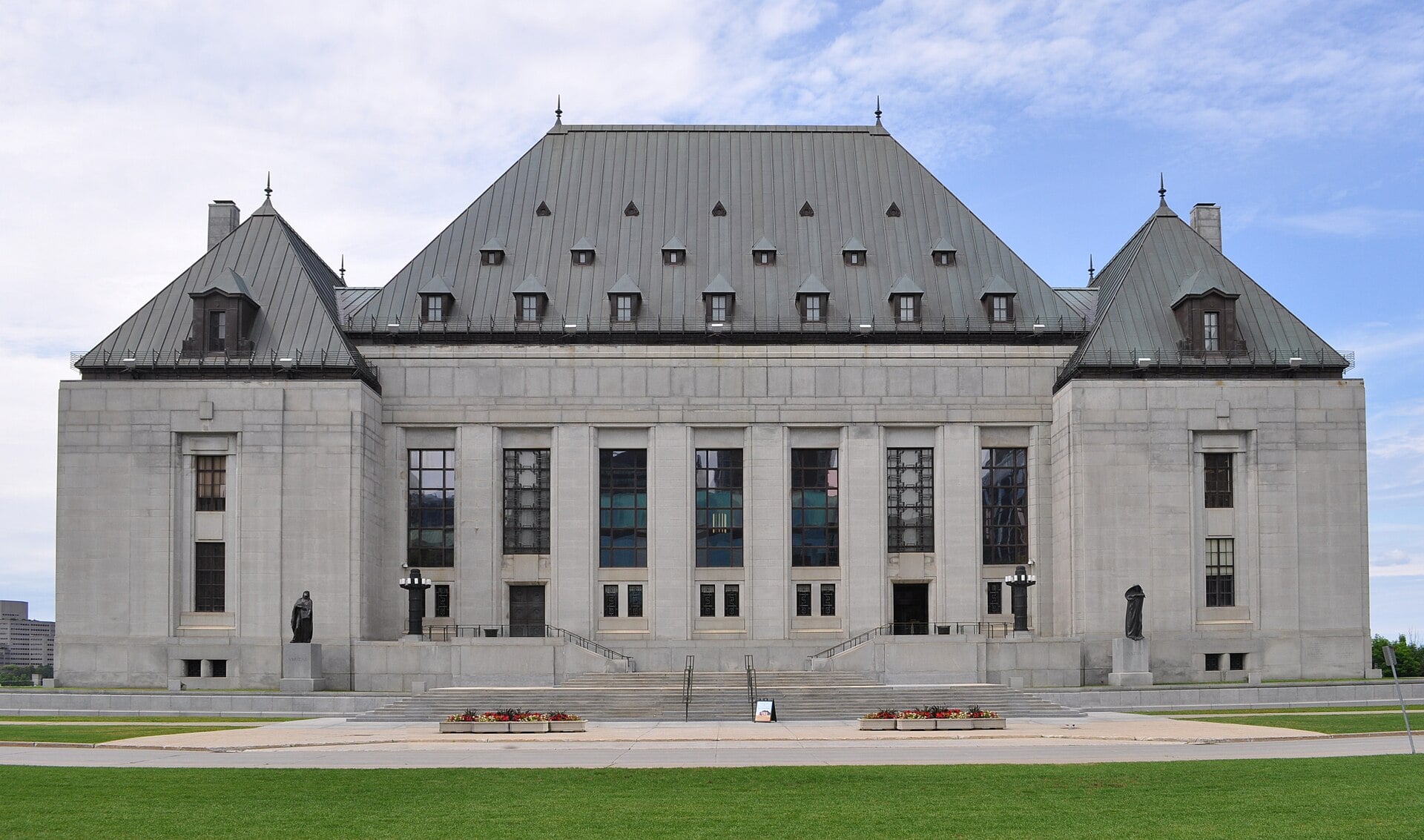
In October 1984, the families of seven victims sued in the B.C. Supreme Court to have the trust declared fraudulent and the remaining money paid to them as compensation, the Globe and Mail reported. Olson’s wife testified. She had by then gone back to her maiden name, and she divorced him in 1985. The Globe said she told the court that he had confessed to her after his trial.
The Canadian Encyclopedia says Justice Trainor of the B.C. Supreme Court ruled that the families were entitled to claim against the money. The Supreme Court of Canada docket in the case records that judgment on December 7, 1985, and its reversal by the B.C. Court of Appeal on March 12, 1986. The Globe quoted the appeal court’s unanimous finding that the RCMP payment “was not made as compensation for the deaths of the children” but was authorized “to obtain evidence to convict Olson of the murders.” On July 31, 1986, the Supreme Court of Canada dismissed the families’ application for leave to appeal. The docket records no publication ban.
Sources: The Globe and Mail, September 30, 2011; The Canadian Encyclopedia, “Clifford Olson Case”; Supreme Court of Canada, docket 19893 (leave application, dismissed July 31, 1986); Maclean’s, August 18, 1997 (via The Canadian Encyclopedia).
Kingston, Prince Albert and the media ban
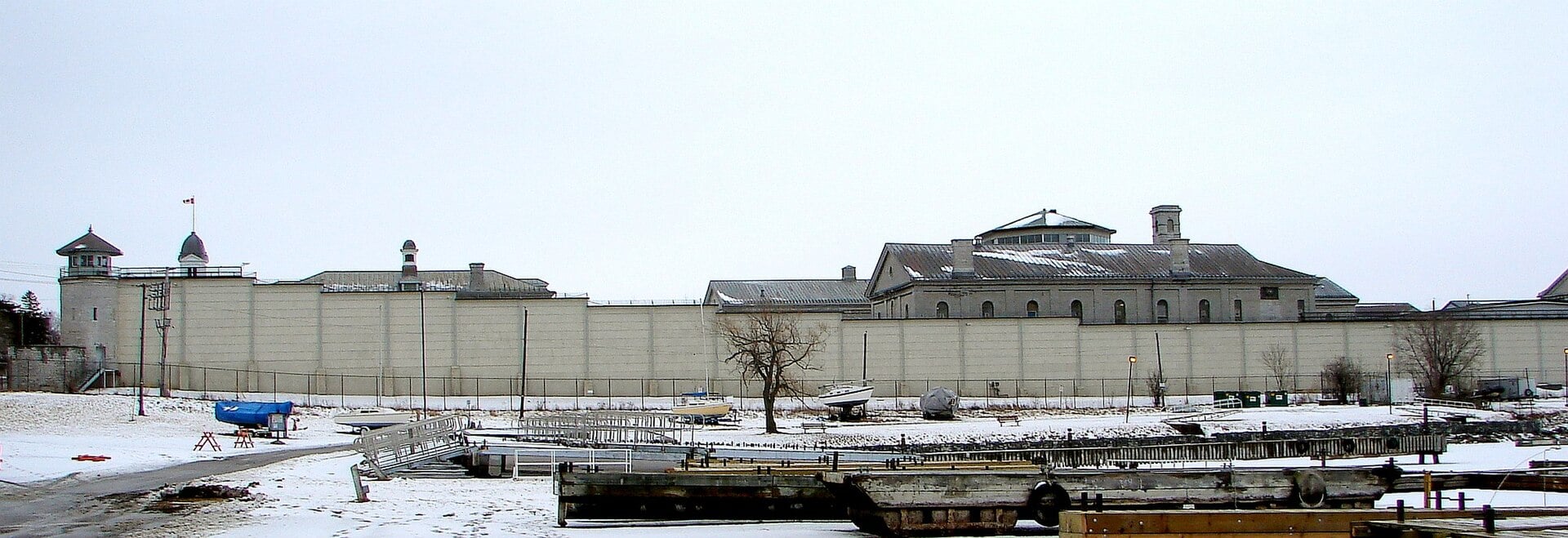
Olson was sent to Kingston Penitentiary in February 1982. The Globe and Mail said he spent 23 hours a day in his cell in a segregation unit for inmates who needed protection from other prisoners, and later in a reinforced cell with Plexiglas over the bars. He filed lawsuits and Charter challenges, wrote to the families of his victims until his mail was screened, and, Maclean’s reported, recorded hours of video about his crimes. CBC said the stepfather of Daryn Johnsrude received a letter from him in 1986 describing what he had done to their son.
In 1992, the Globe reported, X-rays at a Kingston hospital found a handcuff key he had hidden on his body. On December 6, 1992, he was moved to the Special Handling Unit at the Saskatchewan Penitentiary in Prince Albert. An acting deputy warden later testified that senior officials considered him an “extreme escape risk.”
In September 1993, after a Saturday Night magazine story by the journalist Peter Worthington, the prison told Olson that his access to the media was being restricted “so as to reduce his notoriety.” In a letter that month, Minister Douglas Lewis said he had reinstated a ban on media interviews “in order to prevent further victimization of family members of victims of violent crimes.” Olson sued. A prison report quoted in the case said he showed “an insatiable desire to have his name in the news media.” Dr. Thomas Dalby, whose expert opinion was before the court, wrote: “The mirror in this case is the media.” In February 1996, Deputy Judge Heald of the Federal Court dismissed the action, finding the limits on Olson’s freedom of expression justified. That ban restricted Olson’s own contact with reporters. It was not a publication ban and did not touch the identities of victims or witnesses.
Olson also claimed to have killed elsewhere. Worthington wrote that Olson told him he had killed 69 people in the United States, a number that later grew to 97. In 1996, Maclean’s reported, the RCMP took him out of prison for a day to guide them to alleged grave sites in eastern Saskatchewan. “When he got to the area,” said Corporal John Kubat, “he couldn’t orient himself to anything. He seemed like it was his first time there.” No bodies were found.
Sources: The Globe and Mail, September 30, 2011; Olson v. Canada (T.D.), [1996] 2 F.C. (via Library and Archives Canada); Maclean’s, “Olson’s Faint Hope,” August 18, 1997, including Peter Worthington’s sidebar (via The Canadian Encyclopedia); CBC News, September 30, 2011.
Was he a dangerous offender?
CBC’s obituary in 2011 described Olson as “declared a dangerous offender.” The saved court and parliamentary record does not support that as a legal designation. Under the Criminal Code, a dangerous offender designation is a separate finding, sought by Crown prosecutors after conviction, that can bring an indeterminate sentence. The Federal Court’s account of his sentence in 1996 describes only concurrent life terms with 25 years of parole ineligibility, and no other source consulted for this file records a dangerous offender proceeding.
In 1998, RCMP Inspector Gary Bass made the point directly to MPs, while arguing that police did not use the designation as often as they should. “There are in fact a lot of dangerous offenders in our institutions who are not declared dangerous offenders under the Criminal Code,” Bass said. “That’s the case with Olson, of course.” A life sentence for first degree murder already kept Olson in custody, and he never left it. This file treats the CBC wording as a description of his risk, not of his legal status.
That risk was assessed many times. The forensic psychiatrist Stanley Semrau, who interviewed him at length, scored him 38 out of 40 on the Hare Psychopathy Checklist, the highest score Semrau said he had recorded, and called him a “master manipulator” who “can kill, not out of anger or bitterness, but in a lighthearted way, as a sport.”
Sources: CBC News, September 30, 2011; House of Commons Standing Committee on Justice, Evidence, February 17, 1998; Olson v. Canada (T.D.), [1996] 2 F.C.; English Wikipedia, “Dangerous offender” and “Clifford Olson”; The Canadian Encyclopedia, “Clifford Olson Case.”
The faint hope hearing, 1997
Section 745 of the Criminal Code, the faint hope clause, dated from 1976, when Parliament abolished the death penalty. It allowed a prisoner serving life with no parole for more than 15 years to ask a jury, after 15 years, to reduce that period. Olson became eligible in August 1996 and applied. In January 1997, Parliament amended the clause to bar applications by multiple murderers and to add a judge’s screening, but the new rules took effect on January 9, after his application was filed, and federal lawyers concluded they could not be applied to him. Under the old rules, Maclean’s explained, he needed at least eight of the 12 jurors.
Maclean’s reported that an RCMP jet was to fly him from his prison near Montreal to the court complex in Surrey, where the hearing before Justice Richard Low of the B.C. Supreme Court began on August 18, 1997. CBC said the court heard four days of evidence and victim impact statements, and that the jury took 15 minutes to reject his application. The Supreme Court of Canada docket records the ruling of August 21, 1997, as “Application for reduction in term of imprisonment without eligibility denied.” His application for leave to appeal was dismissed on June 18, 1998.
The families had spent days facing him in court. CBC reported that they and others staged a demonstration in British Columbia soon afterward, and that his behaviour fed a campaign to end the clause. The 1997 amendments meant that he was the last multiple murderer in Canada allowed to apply. The clause itself was repealed by the Serious Time for the Most Serious Crime Act, which received royal assent in March 2011 and applies to offences committed after December 2, 2011.
Sources: Maclean’s, “Olson’s Faint Hope,” August 18, 1997 (via The Canadian Encyclopedia); CBC News, September 30, 2011, and July 18, 2006; Global News, faint hope clause backgrounder; Supreme Court of Canada, docket 26505; English Wikipedia, “Faint hope clause.”
Parole hearings, 2006 to 2010
At 25 years, Olson was entitled to a regular parole review. The National Parole Board heard him at Sainte-Anne-des-Plaines on July 18, 2006, with relatives of three victims present to give impact statements. CBC reported that he told the panel he was not seeking parole, that the board had no jurisdiction over him, and that he had a deal with the U.S. attorney general over information about the September 11 attacks. He then said he would stay in his cell rather than return for the decision. “Mr. Olson presents a high risk and a psychopathic risk,” board member Jacques Letendre said. “He is a sexual sadist and a narcissist. If released, he will kill again.” CBC later reported that officials called him a “clear and present danger.” CBC said a hearing scheduled for 2008 was abruptly cancelled.
The last hearing came on November 30, 2010. Caseworkers presented an assessment describing him as narcissistic, antisocial, a psychopath and a pedophile with no remorse. “If he was to reoffend, it would be in a violent manner,” parole officer Geneviève Theriault said. Worthington, who had corresponded with him for more than 20 years, acted as his assistant at the hearing, passing him documents. “I’m here because I have a right to appear,” Olson said. “I’m not asking the board for parole, because I know I’m going to be turned down.” He filed an affidavit saying he would not take part in future hearings. “This is the final time,” he told the board, according to the Globe and Mail. “Never again. I’m out.” Parole was denied.
Sources: CBC News, “Clifford Olson ‘will kill again’ if freed, parole board says in ruling,” July 18, 2006; CBC News, “Serial killer Clifford Olson denied parole,” November 30, 2010; CBC News, September 30, 2011; The Globe and Mail, September 30, 2011.
Pensions and the law changes
In 2010, Olson told Worthington he had been collecting Old Age Security since he turned 65, CBC reported, and he was also entitled to the Guaranteed Income Supplement. English Wikipedia puts the total at $1,169.47 a month, held in trust. Prime Minister Stephen Harper’s government called the payments “outrageous” and “offensive,” according to Wikipedia, and legislation ending pension payments to some federal prisoners took effect at the start of 2011. In March 2011, Parliament also lengthened the time between parole hearings for multiple murderers. CBC credited his case as well with spurring the victims’ rights movement and a national tracking system for violent crimes.
Sources: CBC News, September 30, 2011; The Globe and Mail, September 30, 2011; English Wikipedia, “Clifford Olson.”
Death in 2011

On September 21, 2011, CBC reported, citing the families of victims, that Olson was dying of cancer and had been moved to a hospital in Laval; the correctional service would not confirm his health or location. He died on September 30, 2011, at 71. Serge Abergel of the Correctional Service of Canada said he died at the health care centre of the federal complex in Sainte-Anne-des-Plaines, and that the funeral would likely be at an undisclosed location. The father of Raymond King Jr. told reporters: “I don’t have to think about it anymore. About him, anyway.” The mother of Daryn Johnsrude told CBC: “There is no closure. There is a different way of living but there is no closure, it’s an open wound that goes on and on.”
Sources: CBC News, “Serial killer Clifford Olson dies,” September 30, 2011; CBC News, September 21, 2011; The Globe and Mail, September 30, 2011.
What the record leaves open
Some questions were never settled, and the sources still disagree on details:
- Whether the payment was necessary. The RCMP and both governments said the bodies could not otherwise be found; Baker, Pawley and many families said no killer should be paid.
- Whether $90,000 or $100,000 was paid out, and what the first $30,000 bought.
- How the pleas were entered on January 14, 1982: as a jury verdict after a plea change, or as guilty pleas to all 11 counts.
- Some dates, ages and spellings, including Daryn Todd Johnsrude’s date of disappearance, Christine Weller’s age and Sigrun Arnd’s surname.
- Whether Olson killed anyone else. He claimed dozens of victims; the 1996 search found nothing.
Related case files: Robert Pickton: The Case File of the Missing Women, another serial murder case from the Lower Mainland of British Columbia, and Paul Bernardo and Karla Homolka: Convictions, Plea, and the Tapes, another Canadian case in which a deal with an offender divided the public.
Sources: as cited in each section above.
Frequently asked questions
What was Clifford Olson convicted of?
Clifford Robert Olson was convicted in the Supreme Court of British Columbia in Vancouver on January 14, 1982, of 11 counts of first degree murder, after he changed his pleas to guilty. Justice McKay imposed 11 concurrent life sentences. The Federal Court of Canada later recorded that he was sentenced to life imprisonment without parole eligibility for 25 years on each count. The trial judge recommended that he never be released. A judge’s recommendation did not change the law.
What was the cash for bodies deal?
After his arrest, the RCMP agreed to pay for information. The Globe said police agreed to pay $30,000 for evidence on the four bodies already recovered and $10,000 for each further murder site he identified or body he helped them find. Olson insisted that the money go to his wife. The Canadian Encyclopedia says he helped find seven missing bodies and gave information on four that were already found. The total was $100,000. CBC reported in 2011 that the deal angered many of the families.
Did Olson ever get parole?
No. His application for early parole eligibility under the faint hope clause was denied in August 1997. CBC said the court heard four days of evidence and victim impact statements, and that the jury took 15 minutes to reject his application. The 1997 amendments meant that he was the last multiple murderer in Canada allowed to apply. The National Parole Board denied him parole in 2006 and 2010. At the last hearing he said he was not asking the board for parole.
Was he a dangerous offender, and how did he die?
He was never formally designated a dangerous offender under the Criminal Code, although some coverage described him that way. CBC’s obituary in 2011 described Olson as “declared a dangerous offender,” but the saved court and parliamentary record does not support that as a legal designation. He died on September 30, 2011, at 71, in federal custody in Quebec. Serge Abergel of the Correctional Service of Canada said he died at the health care centre of the federal complex in Sainte-Anne-des-Plaines.
Citations & Sources
Sources
- Olson v. Canada (T.D.), [1996] 2 F.C., T-1212-94, Federal Court Reports, via Library and Archives Canada.
- Supreme Court of Canada, case information, dockets 19893 (1986) and 26505 (1998).
- House of Commons Standing Committee on Justice, Evidence, Meeting 28, February 17, 1998.
- CBC News: July 18, 2006; November 30, 2010; September 21, 2011; September 30, 2011.
- The Canadian Press, “Small sketches of Olson’s 11 victims,” via Global News, September 30, 2011 (text only).
- Global News, faint hope clause backgrounder.
- The Globe and Mail, “The life and death of Clifford Olson,” September 30, 2011.
- Maclean’s, “Olson’s Faint Hope,” August 18, 1997, via The Canadian Encyclopedia.
- The Canadian Encyclopedia, “Clifford Olson Case,” by Nate Hendley and Richard A. Stroppel.
- UPI Archives: September 1, 1981; December 31, 1981; January 14, 15 and 16, 1982 (text only).
- English Wikipedia: Clifford Olson; Faint hope clause; Dangerous offender.
- Images: Wikimedia Commons, credited in each caption.
Image credits
- Image: Dig deeper, via Wikimedia Commons. Licensed CC BY 4.0.
- Image: P199, via Wikimedia Commons. Public domain (released by the author, as tagged on Commons).
- Image: DomLemLali, via Wikimedia Commons. Licensed CC BY-SA 4.0.
Browse every case in the Case File Index
Discover more from The Dark Side of Humanity
Subscribe to get the latest posts sent to your email.