FILE NO. 0183
Content warning: This case file describes the 1979 murder of a schoolteacher and the disappearance of her two children, aged 11 and 10, who are presumed dead and whose bodies have never been found. It includes injuries recorded at autopsy (described without graphic detail), a fatal morphine overdose, death sentences, and prosecutorial misconduct. The victims are named.
The Main Line Murders: Susan, Karen and Michael Reinert, 1979, and the Conviction That Did Not Stand
In June 1979 Susan Reinert, an Upper Merion English teacher, was found dead outside Harrisburg, and her children Karen and Michael were never seen again. William Bradfield was convicted of all three murders in 1983. Jay C. Smith was convicted in 1986, but the Pennsylvania Supreme Court reversed his convictions and in 1992 barred a retrial because prosecutors had hidden evidence. In law he is innocent. This is what the court record shows.
Legal status: Two men were convicted of these murders, and only one of those convictions was set aside. William S. Bradfield Jr. was found guilty in Dauphin County, Pennsylvania, in October 1983 of three counts of first-degree murder and sentenced to three consecutive life terms. In 1986 the Superior Court sent his case back for a hearing on whether his trial lawyer had been ineffective; no record of that hearing’s outcome was found, but later court and news reports describe him as serving his life sentences when he died in prison in 1998. Jay C. Smith was convicted of the same three murders on April 30, 1986, and sentenced to death. The Pennsylvania Supreme Court reversed his convictions on December 22, 1989, and on September 18, 1992 ordered him discharged and barred any retrial because of prosecutorial misconduct. He was never retried. In law he is innocent of the murders of Susan, Karen and Michael Reinert, and he denied them until his death in 2009. No charge against anyone else was found. Status checked against the court record and published reports on October 23, 2026.
At about 5:20 in the morning on Monday, June 25, 1979, a township police officer in Swatara Township, outside Harrisburg, found a woman’s nude body in the hatchback trunk of a car parked at a Host Inn. She was Susan Reinert, an English teacher at Upper Merion High School in Montgomery County, roughly 100 miles to the east. She had last been seen three nights earlier at her home in Ardmore, near Philadelphia, with her daughter Karen, 11, and her son Michael, 10. Neither child has been seen since.
UPI called it “one of the most widely publicized murder cases in modern Pennsylvania history.” Both men eventually charged were her colleagues at Upper Merion: Bradfield, a fellow English teacher, and Smith, the school’s former principal. Smith’s defense attorney, William C. Costopoulos, later wrote Principal Suspect: The True Story of Dr. Jay Smith and the Main Line Murders; Joseph Wambaugh’s Echoes in the Darkness told the prosecution’s version.
Susan, Karen and Michael Reinert
The court record says little about Susan Reinert’s life outside the case. UPI gave her age as 36 at her death; a 2009 Philadelphia Inquirer article gave it as 37. CNN described her as divorced, living with her two children in what it called “Philadelphia’s Main Line suburbs.”
Karen and Michael’s father and paternal grandmother testified that they had heard nothing from the children after June 22, 1979. When the Pennsylvania Supreme Court later explained why the jury could treat the children as dead, it pointed to the length of their absence, “its unexplained character,” and their failure to contact any known relative or friend.
Money mattered in the case. By the summer of 1979 Susan Reinert had made William Bradfield the primary beneficiary of her will and the sole beneficiary of $730,000.00 in life insurance, and had arranged for him to become guardian of her children. The court said she did this “believing Bradfield and she were to be married.” The Superior Court recorded that she had told witnesses she intended to marry him and move to England, and planned to give him $25,000 to invest for her.
Friday, June 22, 1979

The last people known to have seen the family were a next door neighbor, Mary Grove, and her granddaughter, Beth Ann Brook. They testified that at about 9:20 p.m. on Friday, June 22, they saw Susan Reinert with Michael and Karen on the porch, and shortly afterward heard them drive away in her car. The granddaughter testified that Karen was wearing “a little green pin with a white” letter P. That detail would become one of the most disputed pieces of evidence in the case.
The Inquirer’s 2009 account adds that the evening came during a hailstorm. The hailstorm turns up again in the record in a stranger place: in words witnesses said Bradfield spoke that weekend at the New Jersey shore. Where the family went after leaving Ardmore has never been established.
The car at the Host Inn
The car was noticed before anyone looked inside it. According to the evidence summarized by the Pennsylvania Supreme Court, someone saw it on the evening of Sunday, June 24, 1979, “with the trunk open and an object protruding.” At about 2:00 a.m. on Monday, the Swatara Township officer who would make the discovery drove past and saw the hatch up, but a radio dispatch sent him to another call. He came back after an anonymous telephone call and, at about 5:20 a.m., found the body. The car was Susan Reinert’s own. Her clothes were never recovered.
The autopsy findings appear in the 1989 opinion in clinical terms, and this file keeps to them. A forensic pathologist found “massive hemorrhaging in the eye area” and abrasions, and said certain bruises on her back were “consistent with the imprint of a chain.” The cause of death was asphyxiation from an overdose of morphine, consistent with criminal agency. In his opinion she probably died during the morning of Sunday, June 24. The defense never disputed that she was murdered.
What was collected from the body
Three small things found with the body shaped the rest of the case. The first was a comb, found under the body in the rear of the car, imprinted “79 USARCOM,” which the court described as the designation of a U.S. military unit. The second was a set of red fibers that Corporal John Balshy of the Pennsylvania State Police said he found on the body before the autopsy began. The third was what Balshy called a “sparkle” on her feet. He used rubber lifters, adhesive devices normally used for fingerprints, to collect it: five lifters in all, two of which each held a single grain. He later conceded that it “could have been sand.” He handed the lifters to another trooper, Ronald F. Colyer.
The comb and the fibers would be used to accuse Jay Smith. The lifters disappeared from view for years. When they resurfaced, they would end his prosecution.
William Bradfield and the weekend at the shore
According to the evidence the Commonwealth presented, Susan Reinert had been romantically involved with William S. Bradfield, a fellow English teacher, from about 1973 until her death. UPI described Bradfield, then 50, as the man she had called “my future husband.” The Pennsylvania Supreme Court wrote that he told his friends and his lover, Susan Myers, that Reinert was infatuated with him but that he was not interested, “all the while promising Reinert he would marry her in the summer of 1979.”
The $25,000 she meant to invest through him became a separate case. In August 1981 Bradfield was convicted in Delaware County of theft by deception for having “allegedly received $25,000 from Susan Reinert” and kept it. UPI reported in 1986 that the U.S. Supreme Court declined to review that conviction.
Cape May
Bradfield spent the weekend of June 22, 1979, at Cape May, New Jersey. In the account given at Smith’s trial by Vincent Valaitis, another English teacher at Upper Merion, Bradfield had urged him to come, and Susan Myers and another teacher, Chris Pappas, went too. The 1989 opinion records that Bradfield told the group that Smith was going to kill Reinert that weekend and that their presence with him would serve as an alibi.
Witnesses quoted Bradfield as saying: “I’m afraid this is it. I’m afraid this is the night that Jay C. Smith is going to kill Susan Reinert. I followed him. He circled her house 14 times, and I lost him in a hailstorm.” When the group returned, according to the same testimony, Bradfield made a telephone call and announced, “Thank God Smith’s in jail.” It was not the first such trip: another witness testified that at Christmas 1978 he, Bradfield and Myers went to Florida “for the express purpose of providing an alibi for Bradfield.”
The Pennsylvania Supreme Court later stressed what this testimony was. “The Commonwealth conceded that the contents of the statements were fabrications designed to portray Smith as a vicious, depraved killer in an effort to cast blame upon Smith for these murders.” The defense theory, in the 1992 opinion’s words, was “that the murder occurred in Cape May, New Jersey, where Bradfield had been and appellant had not.”
Pappas testified that when Bradfield got a call telling him of the murder, he said that “apparently Jay Smith had gone through with his threats and had killed her.”
Jay C. Smith before June 1979
Jay C. Smith had been the principal of Upper Merion High School, where both Susan Reinert and Bradfield taught. The Pennsylvania Supreme Court found “no evidence of any relationship other than a professional one” between Smith and Susan Reinert, and Smith later said he did not know her outside school.
By the summer of 1979 Smith was in serious legal trouble of his own. The 1989 opinion describes a theft at a Sears store in Montgomery County in August 1977. Smith was charged, and his trial took place in May 1979 in Dauphin County after a change of venue. Bradfield appeared at that trial as an alibi witness for Smith.
The Inquirer reported in 2009 that in 1978 Smith was arrested in a shopping center parking lot in Devon, and that police found a mask, four loaded semiautomatic weapons, a homemade silencer, a syringe of knockout drugs, a rope and strapping tape. Smith gave a different account in his 2008 memoir, as summarized by the Inquirer: the Sears convictions were mistaken identity, the marijuana found in his home belonged to his daughter, and in Devon he had been looking into vans in a search for his daughter, who had disappeared. The Inquirer’s obituary said his daughter, Stephanie, “has not been seen since 1978.”
The federal appeals court later listed his record at the time of his 1986 arrest: theft by deception, receiving stolen property, possession of a firearm without a license and possession of marijuana. The sources reviewed do not show that any of those convictions was set aside. They are separate from the murder charges.
The Commonwealth’s theory of a link

Prosecutors would argue that the theft case is where he and Bradfield became partners. In the 1989 court’s summary, between the theft and the trial “Bradfield and Smith established what the Commonwealth contended was a conspiratorial relationship.” An FBI agent testified about an unsigned, typed letter dated October 1978 that discussed a telephone code system and proposed alibi testimony; Smith’s fingerprint was found on an envelope that purportedly held it, though the court noted it was unclear whether the letter had ever been in that envelope. The Commonwealth also offered a second motive: that Susan Reinert was killed “to assure that she would not disclose that Bradfield had offered perjured testimony on Smith’s behalf.”
On Monday, June 25, 1979, the day her body was found outside Harrisburg, Smith was due in court in Harrisburg to be sentenced. The Inquirer reported in 2008 that he “showed up late.”
The search for Karen and Michael
Karen and Michael Reinert were not in the car, and no trace of them was found near it. Evidence at Smith’s trial showed that the FBI assigned eighteen agents full time for five months to find the children and drew on each of its fifty-nine field offices. “Every lead received during this period was thoroughly investigated,” the Pennsylvania Supreme Court wrote. Nothing was found.
Ordinarily Pennsylvania law presumed death only after seven years of unexplained absence. The court held that the jury could nonetheless find that the children had been killed. Their ages, their dependence on their family and their silence toward every relative and friend led, it wrote, “to the inevitable conclusion that they shared their mother’s fate and are no longer alive.” The jury “could properly infer” that those who caused Susan Reinert’s death also caused theirs.
The photograph in Bradfield’s cell
CNN reported in July 2009 that the Pennsylvania State Police had released a photograph that turned up a decade earlier in Bradfield’s prison cell, among boxes of his belongings that also included writings that appeared to be in code. Police said the film had been developed in 1986. It shows a stone marker in the woods that resembles a hooded figure. Investigators had not been able to find the marker.
Trooper Brian Krause, then the lone investigator, told CNN at least one person who was never charged might know what happened to the children. “I would certainly say that there is a possibility of a third person out there,” he said, and then added, “a probability.”
The federal appeals court, writing in 2000, put the central fact simply: “Bradfield died in prison in 1998 without ever disclosing the location of the bodies of the Reinert children.” No source reviewed reports that their remains have been found. Anyone with information can contact the Pennsylvania State Police; confirm the current number with the state police, since the tip line CNN published dates from 2009.
The case against Bradfield
The first lead investigator was Joseph Van Nort, a criminal investigator with the Pennsylvania State Police. He died during the investigation, and his partner, John (Jack) Holtz, became the lead investigator.
The investigation ran for years through a multicounty investigating grand jury. Bradfield later argued that the grand jury had no power over his case; the Superior Court disagreed, finding that killing for insurance proceeds fit the statutory definition of a continuing criminal conspiracy aimed at large economic gain.
Arrest and trial, 1983
Bradfield was arrested on April 6, 1983, and his trial began in Dauphin County on October 11, 1983. In between, the Superior Court counted, 44 articles about the case appeared, mainly in The Patriot and The Evening News of Harrisburg. The trial lasted seventeen days.
The Commonwealth did not claim that Bradfield personally killed anyone. Its theory, the Superior Court wrote, was that he was “criminally liable for their deaths as an accomplice or co-conspirator,” and its evidence showed “a conspiracy between appellant and an unidentified second person” to kill Susan Reinert for her insurance. The jury heard testimony that Bradfield had told a man named Proctor Nowell that he had been present when Susan Reinert and the children were killed but had not killed them himself, a statement the appellate opinion describes as “alleged.” Bradfield’s lawyer, Joshua Lock, presented evidence that Smith, “not Bradfield, committed the crimes,” as UPI put it. Smith was not called as a witness and at that point had never been charged.
The jury found Bradfield guilty in late October 1983. Judge Garb, as UPI gives his surname, granted a defense motion to dismiss the jury and impose life sentences, because the prosecution had not satisfied the state’s requirements for a death penalty. Bradfield’s friends shouted, “We love you, Bill.” The prosecutor, Deputy Attorney General Richard Guida, told UPI: “We’re going to do our best to continue the investigation and find the other people involved.”
The appeal
The trial court arrested judgment on the conspiracy counts because the statute of limitations had expired. On May 2, 1986, the Superior Court rejected Bradfield’s challenges to venue, the grand jury, pretrial publicity and hearsay, but sent the case back for new counsel to pursue a claim that trial counsel had been ineffective. “The judgment of sentence is vacated, at least for the time being,” it wrote. The outcome of that hearing was not found in the sources reviewed; the 2000 Third Circuit opinion and CNN in 2009 describe Bradfield as serving his life terms until his death.
A writer, a waiver and $50,000
While the investigation was still in its early stages, the federal court later found, Susan Reinert’s former husband sent newspaper clippings to Joseph Wambaugh, the former police officer known for true crime books and police novels. Wambaugh contacted Van Nort about a book and offered him $50,000 for a “personal depiction waiver,” releasing Wambaugh from liability for the way Van Nort was portrayed. Van Nort died before any payment was made.
Holtz, who took over the investigation, found a letter from Wambaugh outlining the agreement. Holtz “later entered into an identical agreement with Wambaugh and received the $50,000.00,” the court wrote. Echoes in the Darkness became a best seller and, the Inquirer reported, a television miniseries in 1987.
The money became the center of Smith’s later claims. In his civil suits and his 2008 memoir, he alleged that the investigators manipulated evidence because of the payment. As the Inquirer summarized his book, “Getting that sum required the mercurial principal to be convicted as the murderer, Smith claims.” Those are Smith’s allegations.
The federal court rejected the claim against Wambaugh. In a 1995 ruling, Judge McClure, as the opinion gives him, dismissed Smith’s state tort claims against the author as time-barred but let the federal civil rights claim go forward. On December 17, 1998, the same court granted Wambaugh summary judgment, finding no evidence that he agreed with any state official to deprive Smith of his rights. It rejected Smith’s description of the payment as a “bounty,” noting that Holtz “was the only state actor who knew of the agreement.”
Wambaugh did not change his view. Asked in 2008 whether the hidden evidence had changed his mind, he told the Inquirer: “Are you joking?” and “No. Everybody knows who did it.” That is Wambaugh’s opinion. No court judgment that still stands has found Smith guilty of these murders.
Jay Smith on trial, 1986
Prosecutors had never claimed Bradfield acted alone. In 1986 Smith, who was then in prison on his earlier convictions, was charged with the three murders. He was presumed innocent. The trial was held in Harrisburg and lasted about three weeks, UPI reported. The prosecutor was again Richard Guida; the defense lawyer was William C. Costopoulos.
The Commonwealth’s theory, as the federal district court later summarized it, was that Bradfield and Smith had conspired, with Bradfield “assisting with the original abduction” of Susan, Karen and Michael Reinert during a time not covered by his alibi, and Smith then committing the murders “(or at least Susan Reinert’s)” in the expectation of sharing in her will and insurance. Neither Bradfield nor Smith testified.
The evidence
The Pennsylvania Supreme Court later listed the state’s main evidence:
- A green pin with a white “P,” similar to the one Karen Reinert was wearing when last seen, recovered from under the front seat of Smith’s car.
- A hair similar to Susan Reinert’s found inside Smith’s home, and fibers on her body similar to those from the carpet in his basement.
- The “79 USARCOM” comb. Smith had been a member of that unit, and a bag of identical combs was recovered from his home. The National Registry of Exonerations reports that the comb was “one of more than 20,000 passed out in Pennsylvania.”
- A letter from Smith to his wife asking her to dispose of the carpet and to clean the inside of his car.
- The October 1978 letter and the evidence that Bradfield’s alibi testimony for Smith had been false.
Two of Smith’s fellow inmates also testified. According to the 1989 opinion, one said Smith had asked him to kill the state police detectives investigating the case; the other said Smith had confessed. One of them was Raymond Martray, whom the 1992 court described as the Commonwealth’s “chief witness.”
Verdict and sentence
On April 30, 1986, the jury found Smith guilty of three counts of first-degree murder. UPI reported that he “sat expressionless as the verdicts were read.” The jury voted for death. On September 8, 1987, Judge Lipsitt, as UPI gives his surname, imposed three death sentences. Smith spoke for nearly 50 minutes beforehand and denied any involvement. “There is no Reinert blood on my hands,” he said. His case went to the Pennsylvania Supreme Court for automatic review.
What Bradfield told his friends
The most damaging testimony at Smith’s trial was not physical. It was what William Bradfield had told the people around him in the year before the murders. Bradfield never took the stand, so none of it could be tested by cross-examination.
Vincent Valaitis testified that Bradfield described Smith as a dangerous man who intended to harm several people, including Susan Reinert. On one occasion, he said, Bradfield told him that Smith “was a screened hitman for the Mafia and wanted to kill a number of people, including Susan Reinert.” Other statements Bradfield attributed to Smith, as Valaitis related them, were that Smith “knew how to take an ordinary household item and kill anyone with it” and that “the best time to commit murders would be during holidays.”
Susan Myers, described in the opinion as “an admitted lover of Bradfield,” testified that Bradfield told her “Dr. Smith intended to kill Susan Reinert” and that Smith “tended to kill on holidays.” Wendy Zeigler testified that Bradfield told her Smith was “mentally unstable” and had a list of people to dispatch. Chris Pappas testified that Bradfield told him Smith “wanted to kill the judge, the people leading the investigation and people who were remotely associated with the investigation.”
The Commonwealth did not argue that the statements were true. It “conceded that the contents of the statements were fabrications designed to portray Smith as a vicious, depraved killer.”
Why the court said it mattered
The Pennsylvania Supreme Court held that the jury should not have heard these statements. Offered for their truth, the court wrote, they “are clearly hearsay,” and admitting them “also offends an essential concept of this nation that an accused has a fundamental right to confront his accuser.” The Third Circuit later summarized the holding: the evidence was sufficient to sustain the convictions, but allowing the “prejudicial hearsay statements into evidence constituted reversible error.” The ruling was about the fairness of the trial, not about whether a jury could ever convict.
In the same opinion the court wrote: “Lest we, as a society, be accused of being barbaric, we must objectively test compliance with our standards before imposing such a penalty.”
Two grains of sand
The turn in the case came out of the autopsy room. Corporal John Balshy, by then a former state trooper, testified at Smith’s trial as a Commonwealth witness. On cross-examination he said he had used adhesive lifters to remove granular particles from between Susan Reinert’s toes, and that the material “could have been sand.” The federal district court later explained why that mattered: sand on her feet “would support the defense theory of a murder at a seaside resort.” The federal appeals court noted that “the precise location of this material is not clear.”
The prosecution reacted hard. In the words of the 1992 opinion, “The Commonwealth excoriated Corporal Balshy, implying that he had fabricated his testimony about the adhesive lifters.” The prosecutor recommended to his superiors that Balshy be investigated for perjury, and the Commonwealth even argued that the defense had paid Balshy to make up his testimony.
The locker
“A few days later, while appellant’s trial was still in progress,” the state Supreme Court wrote, the state police found the missing lifters in their evidence locker. The Third Circuit gave the date as April 24, 1986, and the finder as Trooper Victor Dove. According to the federal district court, Dove waited until May 1, 1986, the day after the trial ended, to tell Holtz. Holtz told Guida, who decided not to disclose them.
When Guida knew is disputed. The federal district court concluded that he did not know during the trial. The state Supreme Court concluded that he did, relying on a mid-trial memorandum from the prosecutor to his superior: “The sand, therefore, is extremely material to the defense case.” The Third Circuit said it was “still not clear exactly when” the state court believed he first learned of them.
Balshy was cleared. Investigations after the trial found no evidence of perjury or falsification by him. The 1992 court said he had been made “the scapegoat for the misconduct.”
Martray
Martray denied at trial that he had any bargain for his testimony. The 1992 court found that he “was in fact awaiting sentencing for unrelated crimes and did in fact receive favorable treatment by the Commonwealth at his sentencing,” which deprived Smith of the chance to show the jury his motive to testify falsely. The National Registry of Exonerations reports that a state prosecutor admitted in 1988 that police had helped Martray win release in return for his testimony; that account is attributed to the Registry.
Disclosure
Guida later resigned from the Attorney General’s office; the Inquirer reported in 2009 that he pleaded guilty to cocaine distribution and was sentenced to nine months in federal prison. Robert Graci, the assistant attorney general who took over the appeal, learned of the lifters in July 1988 and decided they had to be disclosed, though his superior, Yatron, did not agree. On July 12, 1988, more than two years after the convictions, the Commonwealth told Smith’s counsel the lifters existed.
Reversed: December 22, 1989
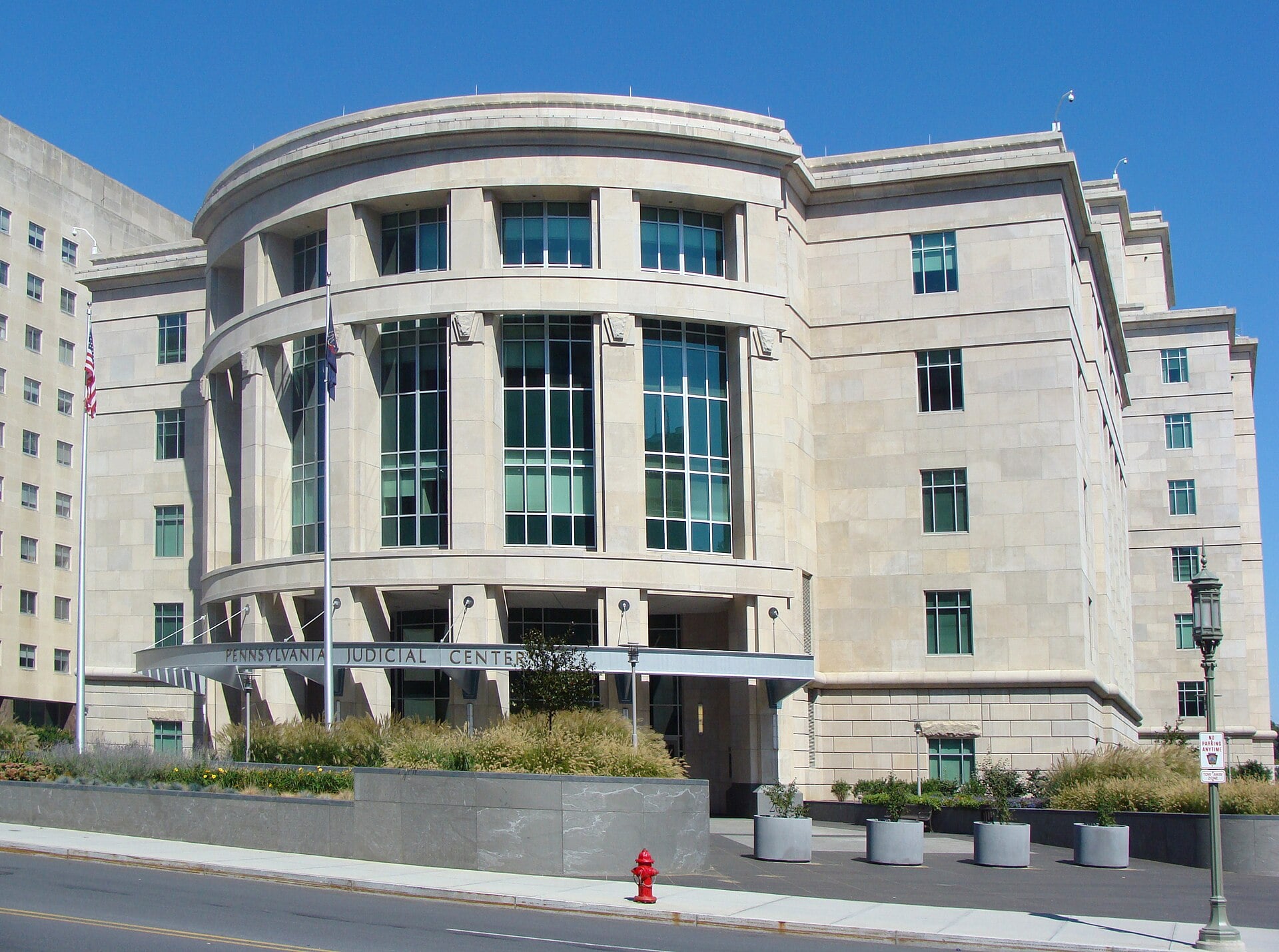
The lifters reached the Pennsylvania Supreme Court before it had decided Smith’s automatic appeal. After the July 1988 disclosure, Smith’s lawyers asked the court to vacate his sentences because of prosecutorial misconduct. On January 19, 1989, the court ordered the Dauphin County court to hold an evidentiary hearing. The trial court found the prosecution guilty of serious misconduct but denied Smith relief.
On December 22, 1989, in an opinion by Chief Justice Nix, as the opinion gives him, the court reversed all three convictions. It found the evidence sufficient, but held that the hearsay from Bradfield’s friends should not have been admitted. “For the foregoing reasons,” the court wrote, “we are constrained to conclude that the convictions must be reversed and the cause remanded for a new trial.”
The court did not decide the lifter issue, because a new trial was already required: “This evidence will now be available at a subsequent trial, and the jury will be given the opportunity to assess its import within the totality of the evidence presented.”
Smith’s death sentences fell with the convictions. He was once again a defendant charged with three murders and presumed innocent, facing a possible retrial. He did not go free: “Smith remained in prison pending a second trial,” the Third Circuit later wrote.
Discharged: September 18, 1992
Before any retrial, Smith asked the Dauphin County court to dismiss the charges on double jeopardy grounds. Senior Judge Walker, as the Superior Court refers to him, denied the motion on May 15, 1990, reasoning that existing case law barred retrial only after a mistrial deliberately provoked by the prosecution. He also wrote that “neither the Attorney General’s Office nor the Pennsylvania State Police can take any great pride in the manner in which this case was handled.”
On September 20, 1991, the Superior Court affirmed. It said Smith “makes a compelling argument” for relief against “undisclosed harassing prosecutorial action designed to obtain a conviction,” but held that precedent tied its hands.
The Supreme Court’s answer
The answer came on September 18, 1992, in an opinion by Justice Flaherty, as the opinion gives him; Justices Larsen and McDermott did not participate. It opened bluntly: “In this infamous murder case, we are compelled to order the discharge of appellant Jay C. Smith.”
The Commonwealth had concealed the sand evidence “for more than two years after the trial.” It had denied the Martray agreement. It had attacked Balshy while hiding the lifters, “vigorously arguing all the while that this court should affirm appellant’s death sentence.” The court called the lower court’s comment about pride “a gross understatement” and wrote that “it would be hard to imagine more egregious prosecutorial tactics.”
Then it changed the law. “We now hold that the double jeopardy clause of the Pennsylvania Constitution prohibits retrial of a defendant not only when prosecutorial misconduct is intended to provoke the defendant into moving for a mistrial, but also when the conduct of the prosecutor is intentionally undertaken to prejudice the defendant to the point of the denial of a fair trial.” Its order read: “Order reversed and appellant discharged.”
What the ruling means
Smith was released. The Third Circuit confirmed in 2000 that “Smith was never retried.” No judgment of guilt against him for the deaths of Susan, Karen and Michael Reinert still stands. In law he is innocent of those charges, and he denied the murders for the rest of his life.
The 1992 decision was not a finding that someone else killed the Reinerts, nor a finding about the strength of the evidence. It was a ruling that the state, through its prosecutors and police, had forfeited the right to try him again. Some people involved in the case, including Wambaugh, said they still believed him guilty. Those are opinions, and they are reported as such.
Smith sues
On September 15, 1993, Smith filed a federal civil rights suit against State Troopers John Holtz, Ronald Colyer and Victor Dove, and against Paul Yatron, John Purcell and William Lander of the Attorney General’s office, alleging that they had violated his rights by deliberately concealing the lifters. On September 14, 1994, he sued Wambaugh as well.
The defendants argued he had waited too long. The Third Circuit disagreed in June 1996: such claims did not accrue while the prosecution was pending, which in Smith’s case lasted until 1992. Wambaugh argued in the alternative that the claims had not yet accrued, because the double jeopardy ruling “was not premised on a finding of Smith’s actual innocence.” The court was “unpersuaded”: “Actual innocence is not required for a common law favorable termination.”
The 1998 trial
The claims against Colyer, Lander and Purcell were dropped before or during trial. Christopher Fiedler of the FBI laboratory testified that the quartz was “common sand,” calling it “ubiquitous,” and said he would expect at least two such crystals on anyone in the courtroom. Smith’s expert had said it was consistent with beach sand.
The jury found for all the defendants on September 4, 1998. Denying Smith’s post-trial motions on December 14, the district court wrote that “having these crystals on one’s feet is as indicative of a trip to the moon as a trip to the beach.”
The Third Circuit, 2000
The Third Circuit affirmed on April 13, 2000, in an opinion by Judge McKee, as the opinion gives him. It called the moon remark “hyperbole” but shared the conclusion. It was plain about the misconduct: “The lifters containing two grains of quartz crystals that could have been beach sand were favorable to Smith,” and it described “reprehensible and unethical conduct” by some of those involved. But it held that Smith had not shown a due process violation, writing: “We remain firmly convinced of the integrity of those guilty verdicts.”
That sentence needs context. It came in a civil damages case. It did not revive the convictions, which the state Supreme Court had reversed in 1989, and could not authorize a retrial, which that court had barred in 1992. The Third Circuit itself noted that the state court had never done a Brady analysis. No murder conviction against Smith stood.
After the verdicts
The box in the trooper’s house
The Inquirer reported in 2008 that Smith was freed after “a man hired to clean out a state policeman’s house found documents” showing evidence had been hidden from his lawyer. That man was Mark A. Hughes, who later owned a bowhunting store in Wellsville, Pennsylvania. A federal court opinion, describing the allegation, said the find came in March 1992, in the basement and attic of Holtz’s home.
The National Registry of Exonerations says the box held a comb identical to the one found in the car, statements that Karen’s pin was blue rather than green, the Wambaugh letter, notes in which Martray quoted Smith as saying he did not commit the crime, and a statement from Bradfield saying he had acted alone. Those items are attributed to the Registry; the court opinions reviewed do not confirm each one. Hughes told the Inquirer: “Jay Smith never contacted me to thank me, if what I did helped him in life.”
Bradfield’s death
Bradfield was not called to testify at Smith’s trial, the 1989 court noted. The Inquirer reported that he “died in Graterford Prison in February 1998 at age 65,” of a heart attack; CNN reported that he “died of heart failure in 1998 while serving three life sentences.”
Smith’s last years

The Inquirer reported that after prison Smith worked for several years as a state-certified nursing home administrator near Wilkes-Barre, spoke for the anti-death-penalty group Witness to Innocence and married in 2002. In 2008 he self-published a 439-page book, Joseph Wambaugh and the Jay Smith Case, arguing that he had been framed. “I didn’t do it,” he told the Inquirer. Of Bradfield, he said: “I was disgraced, and I think he thought I would be an easy mark.”
Smith died on May 12, 2009, at Wilkes-Barre General Hospital, where he had been admitted for a heart condition. He was 80. “He brought a lot of controversy to the legal community, but he always maintained his innocence,” said his longtime lawyer. His wife, Maureen Smith, said: “I believe the man was innocent.” Wambaugh called the death “good news.”
What the record leaves open
Karen and Michael Reinert have never been found, and no court settled where their mother died. CNN reported in 2009 that the case was open but “inactive.”
What the courts did settle is narrower than the public argument. Bradfield was convicted of three murders in 1983 and died serving life sentences. Smith was convicted in 1986; that conviction was reversed in 1989 because of hearsay, and in 1992 the Pennsylvania Supreme Court barred any retrial because prosecutors had hidden evidence while arguing for his execution. He was never tried again. Under the law he is innocent of the Reinert murders, and he denied them until he died.
Wambaugh, and a federal appeals panel deciding a civil damages claim, said they still believed in his guilt. Those are opinions and civil findings, not convictions. The ruling that ended the criminal case said nothing about whether anyone else was responsible, and the record cannot say who besides Bradfield, if anyone, was involved.
Frequently asked questions
Who was convicted of the Main Line Murders?
William S. Bradfield Jr. was found guilty in Dauphin County, Pennsylvania, in October 1983 of three counts of first-degree murder and sentenced to three consecutive life terms. Later court and news reports describe him as serving his life sentences when he died in prison in 1998. Jay C. Smith was convicted of the same three murders on April 30, 1986, but that conviction did not stand.
Is Jay C. Smith legally guilty of the murders?
No. The Pennsylvania Supreme Court reversed his convictions on December 22, 1989, and he was once again a defendant charged with three murders and presumed innocent. On September 18, 1992 the court ordered him discharged and barred any retrial because of prosecutorial misconduct. He was never retried. In law he is innocent of the murders of Susan, Karen and Michael Reinert, and he denied them until his death in 2009.
Were Karen and Michael Reinert ever found?
No. Karen, 11, and Michael, 10, were last seen with their mother at their home in Ardmore on June 22, 1979. Bradfield died in prison in 1998 without ever disclosing the location of the bodies of the Reinert children, and no source reviewed reports that their remains have been found. CNN reported in 2009 that the case was open but “inactive.”
Why did the sand evidence matter?
Corporal John Balshy used adhesive lifters to collect grains from Susan Reinert’s feet and said the material “could have been sand,” which would support the defense theory of a murder at a seaside resort. The lifters were found while Smith’s trial was still in progress, but the Commonwealth did not tell his counsel they existed until July 12, 1988, more than two years after the convictions.
Citations & Sources
Sources
- Superior Court of Pennsylvania, Commonwealth v. Bradfield, 352 Pa. Super. 466 (1986).
- Supreme Court of Pennsylvania, Commonwealth v. Smith, 523 Pa. 577 (1989), decided December 22, 1989.
- Superior Court of Pennsylvania, Commonwealth v. Smith, 404 Pa. Super. 553 (1991), decided September 20, 1991.
- Supreme Court of Pennsylvania, Commonwealth v. Smith, 532 Pa. 177 (1992), decided September 18, 1992.
- U.S. District Court for the Middle District of Pennsylvania, Smith v. Wambaugh, 887 F. Supp. 752 (1995), decided May 15, 1995.
- U.S. Court of Appeals for the Third Circuit, Smith v. Holtz, 87 F.3d 108 (1996), decided June 26, 1996.
- U.S. District Court for the Middle District of Pennsylvania, Smith v. Holtz, 30 F. Supp. 2d 468 (1998), decided December 14, 1998.
- U.S. District Court for the Middle District of Pennsylvania, Smith v. Wambaugh, 29 F. Supp. 2d 222 (1998), decided December 17, 1998.
- U.S. Court of Appeals for the Third Circuit, Smith v. Holtz, 210 F.3d 186 (2000), decided April 13, 2000.
- United Press International archives: October 31, 1983; April 30, 1986; May 19, 1986; September 8, 1987.
- Derrick Nunnally, The Philadelphia Inquirer, “Book alleges frame-up in famous murder case,” November 17, 2008.
- Derrick Nunnally, The Philadelphia Inquirer, “Jay Smith dies; convicted, then freed, in Susan Reinert murder,” May 13, 2009.
- Derrick Nunnally, The Philadelphia Inquirer, “Jay C. Smith, figure in Reinert case, dies at 80,” May 14, 2009.
- John F. Morrison, The Philadelphia Inquirer, “Jay Smith dies at 80; was key figure in ’79 Reinert slaying case,” May 14, 2009.
- Ann O’Neill, CNN, “Does photo found in cell show children’s grave?” July 2, 2009.
- National Registry of Exonerations, “Jay C. Smith,” case entry.
Image credits
- Photo: Lucius Kwok, via Wikimedia Commons. CC BY 2.5.
- Photo: Niagara, via Wikimedia Commons. CC BY-SA 3.0.
- Photo: 8bit12man, via Wikimedia Commons. CC BY-SA 4.0.
- Photo: Niagara, via Wikimedia Commons. CC BY-SA 3.0.
- Photo: Montgomery County Planning Commission, via Wikimedia Commons. CC BY-SA 2.0.
Browse every case in the Case File Index
Discover more from The Dark Side of Humanity
Subscribe to get the latest posts sent to your email.