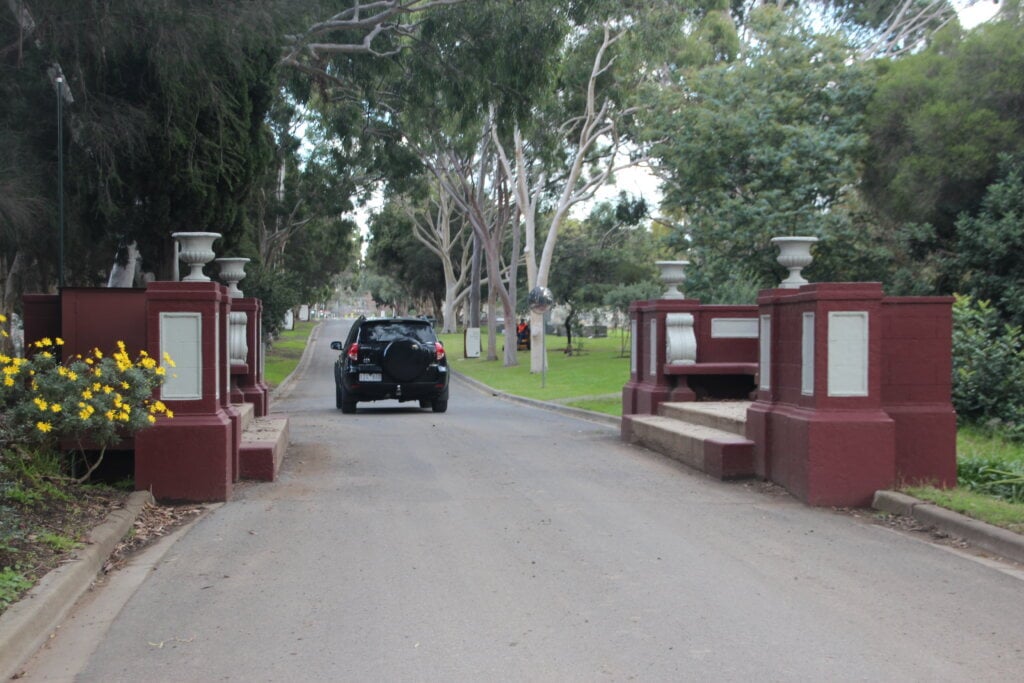
 Evidence #01
 Evidence #02
 Evidence #03
 Evidence #04
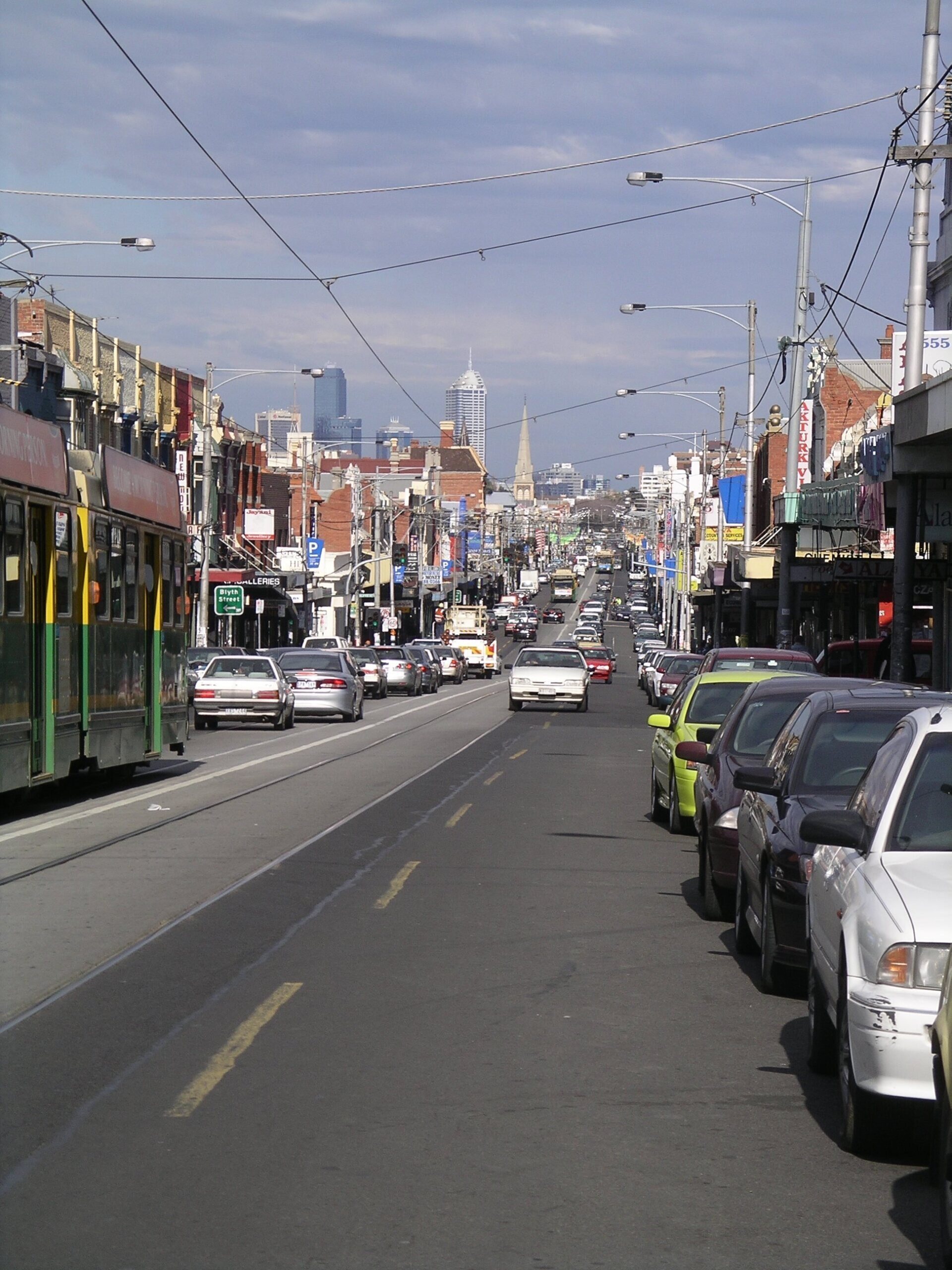
Overview
She was five minutes from home. He was on parole, and on bail.
Sydney Road, Brunswick · 22 September 2012
Gillian Edie Meagher, known as Jill, was 29. Just after 1.30 am on 22 September 2012 she walked north on Sydney Road toward a home about five minutes away. Adrian Ernest Bayley raped her in a laneway off Hope Street and strangled her. He buried her in a grave 35 centimetres deep at Gisborne South. On 19 June 2013 Nettle JA sentenced him to life imprisonment for her murder and 15 years for the rape. Leave to appeal that sentence was refused. In 2016 the Court of Appeal left the life sentence in place and fixed a new non-parole period of 40 years, running from 28 May 2015, across that sentence and later sentences imposed for other offences.
Sydney Road
A birthday drink, a bad phone line, and a man who walked past and turned back
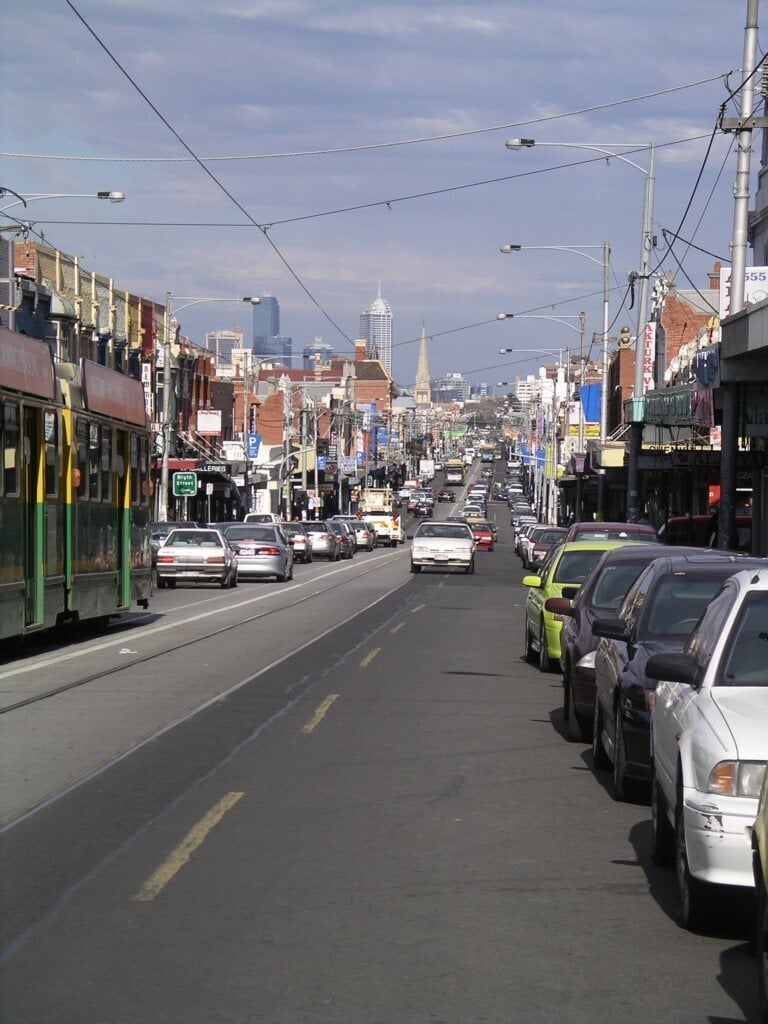
Gillian Meagher worked at the Australian Broadcasting Corporation. She was married. On the evening of Friday 21 September 2012 she and other people from the Corporation went to a birthday party for a colleague at Fad Gallery in the city. She left at about 9 pm with three of them. They took a taxi to the Brunswick Green Hotel on Sydney Road. When that bar closed at about 1 am, she and one colleague walked up Sydney Road to Bar Etiquette for a last drink. At about 1.30 am the colleague offered to walk her home. She said she lived only five minutes away, and she set off north along the west side of Sydney Road.
Cameras along the road caught her. She spoke with three women walking the other way. One of them gave her a cigarette. A man driving past noticed her. At 1.35 am she was on the phone to her brother, who was in Perth, about their father’s health. The line was poor. She hung up expecting him to call back. She was then about 550 metres from home. Within a minute he tried three times. The phone rang out.
Bayley’s account of his own evening, given to Professor James Ogloff on 17 May 2013, starts earlier. He had been drinking with his partner at a pub and then at a nightclub in the city. CCTV confirms that part. They argued. She left. When he realised she was gone he took a taxi home to Coburg. She was not there. He decided to take another taxi to Newmarket to collect his car. He told Ogloff he had drunk so much that the driver feared he would vomit and put him out somewhere on Sydney Road. That, he said, was when he came upon Gillian Meagher. He also told Ogloff that after the taxi dropped him he decided to jog home to Coburg along Sydney Road. Nettle JA thought that unlikely if he was as drunk as the driver believed. Either way, he ended on the western footpath, walking north, behind her.
At 1.38 am, outside the Duchess Boutique at 517 Sydney Road, the footage shows him. He walked past her and then turned back. He told police on 27 September 2012 that she looked upset about her father’s health, that he offered to help, and that she flipped him off. That made him angry, he said, because he had been trying to do a nice thing. He said it was not really his intention to hurt her. He said he walked off and she followed, that he walked in front of her and she followed, and that it got worse. He did not want to go through it in detail. He said he did not even know if he could remember where he put her.
The account he gave Ogloff on 17 May 2013, after the plea of guilty and before the plea hearing, is different on who turned back. He said that after he walked off she called him back to the corner of Sydney Road and Hope Street, and that they walked together along Hope Street toward her home until they reached the first laneway after the left turn from Sydney Road. The judge sentenced him on the footing that it was not proved he had formed the intention to rape her until he was at that intersection. Nettle JA thought it more likely the intention was formed earlier, on Sydney Road, at or before the boutique. He could not say so beyond reasonable doubt, so the earlier moment was not the basis of the sentence. The rape that followed was, on either timing, a rape of a woman who was not consenting.
The laneway
A slap, a bonnet, a hand on the neck, and a minute he said was enough
The Crown case was that at the laneway he attacked her, dragged her in, and raped her by introducing his penis into her vagina until he ejaculated. What he told Ogloff is, on those details, little different. He said that when they reached the laneway he kissed her and tried to touch her bottom. She stepped back and slapped him across the face. He said he lost it, because he always had trouble when someone put their hands on him, and that he fights. He pulled her toward him, turned her around, pushed her onto the bonnet of a car, tore her panties, and raped her until he ejaculated. Then, he said, he strangled her.
To police, on 27 September 2012, the only thing he said about the killing was that he strangled her with his hands. To Ogloff he added a sequence. After he had ejaculated and was pulling up his pants, she became aggressive. He told her to calm down. She became angry, grabbed at him, and hit him with her mobile telephone. She said she was going to call the police. He put his arms around her, he said, to quieten her down. She went back and hit her head on the concrete. He could feel blood coming from her head. He held her down with his hand on the bottom part of her neck and kept the pressure until she stopped moving. Asked how long that took, he said no more than a minute. He said he was not a small person, and fairly strong, and that he should have known.
She was 157 centimetres tall and weighed 55 kilograms. Nettle JA held that a man of Bayley’s size and strength could easily have controlled her. Apart from the fact that she was about to call the police, and apart from what the judge called the sadistic pleasure he evidently derived from hurting women, there was no reason to hold her on the ground by the neck until she ceased to breathe. He gave no sworn account of his intention. From the admissions, the injuries, and the disparity in size, the judge was satisfied beyond reasonable doubt that he strangled her intending to kill her, either because she would otherwise have called the police or because of some form of pleasure in taking her life. Counsel had argued it was at worst an unplanned rape followed by a reckless murder in a panic, the panic of a man who reacts violently when his authority is challenged. That was not the finding.
The pathologist who gave evidence at the committal could not say how long the compression took, or how much force was required. The neck injuries were of a kind seen in both fatal and non-fatal cases. The damage to the larynx was unusual in sitting lower than is typical, between the breast bone and the voice box. At one point the defence faintly suggested that this fitted a hand placed on the upper chest which then moved upward, compressing the neck without an intention to kill. The judge did not sentence on that possibility.
The post mortem found facial congestion and petechial haemorrhage in the conjunctivae and in the skin of the forehead, around the eyes, and around the ears. There was bruising at the left mastoid and along the body of the mandible on the left. Inside the mouth, on the inner part of the lower lip, there was a laceration from blunt trauma. On the neck, bruising ran across the front and to the right. In places it took a discrete discoid form. On the left, post mortem change slightly obscured the bruising. The circular marks raised the possibility of fingertips, and so of manual strangulation. There were no abrasions of the kind fingernails leave. The hyoid bone was not broken. Inside the neck there was haemorrhage in the strap muscles on both sides, in all four layers. The larynx was damaged: a fracture of the right inferior thyroid cartilage cornua, and disruption of the cricoid-thyroid membrane on the right. The bruises, on both the naked eye and the microscope, had the features of recent injuries from the period around death. The cause of death was compression of the neck.
When police asked him why, he said only that he had been trying to be nice, that she went from nice to nasty to nice, and that he raped and strangled her. The judge’s reading of the Ogloff account is more specific. She had rejected him. He was not put off. He kissed her and touched her. When she slapped him, which she was entitled to do, he was outraged that she should repel him. He was determined to have his way. He overpowered her and raped her where she stood. He attacked her again because she was threatening to call the police, and in that attack he strangled her.
The grave
A shovel from Coburg, a grave thirty five centimetres deep, and four new tyres
He told Ogloff that after she stopped breathing he sat in the laneway crying and panicking. He left her body there and went home to Coburg. There he collected a shovel and his other car, a white Holden Astra, not the car he had left at Newmarket, and he drove back. He was at the lane at 4.22 am. He put her in the boot and left at 4.26 am. He drove out to Blackhill Road at Gisborne South, dug a shallow grave at the side of the road, and buried her. The grave was 35 centimetres deep and barely as long as she was. She was still partly naked from the waist down, where he had ripped her panties and stockings aside to rape her. He threw in the remains of the stockings and the bra he had torn off. On the drive back toward the city he threw items of her property out of the car at random. At home he destroyed her mobile telephone.
On Sunday 23 September he cleaned the inside and the outside of the car thoroughly. On 24 September he had four new tyres fitted. He had planned the tyres before he killed her, for a roadworthiness certificate. He was in the habit of detailing his cars every weekend. Nettle JA also found that he went ahead with the fitting in the hope of erasing forensic traces that would connect the car to the scene. Both belong in the account. A habit of washing the car does not cancel the finding that the new tyres were fitted, after the killing, in the hope of defeating the scene. It was not enough. CCTV from points along Sydney Road, CityLink records of vehicles passing under the gantry at Moreland Road, telephone data from a number of sources, and witness statements put him there. Nettle JA did not set out the cell tower measurements or the registration number. The finding is that those materials, taken together, identified him as the man who killed her.
Police arrested him at his home at 2.08 pm on 27 September 2012 and took him to the St Kilda Road police complex. For the next three and a half hours of the interview he denied any involvement and lied about where he had been. As the interview went on, and as the officers laid the evidence in front of him, he began to admit what he had done. The admissions ended in a confession that he had raped and killed her. He then went with police to the place at Gisborne South. Crime scene investigators exhumed the body. Back at the complex he was charged with rape and murder and remanded.
He pleaded guilty on 5 April 2013. The plea in mitigation was heard on 11 June 2013. Nettle JA sentenced him on 19 June 2013. The plea to murder came relatively late. Up to that point he was also charged with other offences, which were then withdrawn. The judge treated the lateness as explicable on that basis. He also treated the plea as worth its full utilitarian value, the saving of a trial and the sparing of witnesses, and as reflecting some small degree of real remorse. In the interview, once the evidence was in front of him, he appeared for a time overwhelmed and penitent. He took police to the grave. Ogloff said he had expressed guilt to him and to other clinicians in custody, that part of the regret was for the destruction of his own life, and that he had played the system before, but that he appeared sincere in regretting the rape and the killing. He had made one serious attempt at suicide in custody. Asked why, he said he sincerely wanted to die because of what he had done and the grief he had caused. The judge did not treat any of that as a sign that he would be rehabilitated.
Before Brunswick
Eighteen, then the laneways, then parole, then bail
He was born on 14 July 1971 as Adrian Ernest Edwards, the eldest of five children, and he grew up in metropolitan Melbourne. Still a teenager, he formed a relationship with a young woman of about his own age. They married on 21 April 1990. They had two children, one born in October 1990 and one in May 1996. On 8 June 1990, when he was 18 and his wife was three or four months pregnant, he detained another young woman, attempted to rape her, and raped her in the bedroom of his home. He was charged on 10 June 1990 and released on bail.
On bail, on 30 August 1990, he attacked a 17 year old girl walking home from a bus stop. He poked her in the eyes several times, ripped off her clothes, and touched her breasts and vagina. He attempted to put his penis into her vagina. He threatened to kill her. Among the things he said was that she must think he was stupid, and that he was not going to do anything that would be evidence for her to take to the police. After his wife gave birth in October 1990, on 12 December 1990, he gave a lift to a 16 year old girl hitch hiking on the Woori Yallock to Healesville road at Woori Yallock. She expected to be taken to Healesville. He detoured and stopped. When she tried to get out he grabbed her face, put a hand across her mouth, and with the other hand grabbed the hair at the back of her head and tried to force her down toward his legs. She escaped. She gave police a precise description, and that description found him.
When arrested he denied all three attacks and produced a diary he had falsified as an alibi. Confronted with the evidence, he admitted them. On 7 June 1991 he was sentenced to five years imprisonment with a non-parole period of three years, for detention for sexual penetration, two counts of attempted rape, rape, a threat to kill, and assault with intent to rape. The County Court judge was told he was a very remorseful young man with excellent prospects and no likelihood of offending again. The judge was not persuaded. The motive seemed unfathomable. The pleas looked like a response to an overwhelming case, not like contrition. The depression and anxiety looked like fear for himself. Nettle JA, twenty two years later, called those observations incisive.
In 1995 he separated from his wife. In July 2000 he changed his name by deed poll to Bayley. After the separation he began a relationship with another woman. They had two children, in 1998 and in 2001. On 17 April 2001, while she was pregnant with the second of those children, he was arrested and charged with 16 counts of rape against five women, committed between 1 September 2000 and 31 March 2001. That day he admitted sexual activity with each of them and denied force or any other wrong. Confronted again, he admitted guilt and expressed remorse.
On 26 April 2002 Judge Duckett sentenced him to 11 years imprisonment with a non-parole period of eight years. The five women were prostitutes. The judge said he saw them as easy victims, unlikely to complain. In each case he negotiated a price for specified acts, then drove the woman to a laneway and parked so close to a fence that she could not get out. He used threats and violence to force a series of sexual acts. He forcibly raped three of them anally. One bled for three weeks. When they cried out and wept, he forced them into further acts. He told one of them that she was going to do what he wanted, that if she fought he would fight her back, that no one went around that alley, that he could keep her there all night, and that she should not try to get out of the car. In another attack, after forcing the woman to fellate him, he inserted his fist into her vagina. She screamed. He then penetrated her vagina with his penis and told her she was nothing, that no one cared for her, that he could dump her in the alley and no one would give a shit, and that he could do whatever he wanted. The judge said the humiliation was even more disturbing than the violence, and that protection of the community required a long sentence and then the chance of parole.
He was released on parole on 17 March 2010. He reoffended almost at once. On 12 August 2011 he recklessly caused serious injury. On 27 February 2012 the Magistrates’ Court at Geelong sentenced him to three months imprisonment, cumulative on the 2002 sentence. He appealed and was granted bail pending the appeal. On 22 September 2012, when he raped and murdered Gillian Meagher, he was on parole and on bail. He had already served 11 years for sexual offences, including multiple rapes with violence. He knew another rape conviction would mean another long sentence. In the interview he said he was going to gaol for a long time, that he was 41, that he had already done eight years, and that he could not do another 20 or 25. He said they should bring back the death penalty for people like him. The Court of Appeal later described the history the judge had laid out as 20 sexual assaults, including 17 rapes.
Ogloff did not consider him psychopathic. The testing showed problematic personality traits, uncommon in their severity even in clinical samples, consistent with borderline personality disorder: rapid and extreme mood swings, and poorly controlled anger, made worse by alcohol dependence. Considered on its own, the likelihood of further violent offending was moderate. The likelihood of further sexual offending was very high, at least two or three times that of the average sex offender, and when he offended sexually he also offended violently. Ogloff said the risk would require intervention and ongoing change in every area before it could become manageable. He conjectured, from what Bayley told him, that physical and sexual abuse in childhood had raised the statistical risk of sexual deviance and personality disorder, and that innate sexual deviance, the personality features, and alcohol, with its effect on cognition and on sensitivity to slights, all contributed to the rape and the murder. The judge accepted that account as fitting the history. It explained the offending. It did not excuse it. Verdins, the authority that can moderate a sentence where impaired mental functioning reduces culpability, was not engaged. Earlier clinicians had been optimistic about rehabilitation. Every one of those opinions had failed. Ogloff’s prognosis was very guarded. Risk of sexual offending declines with age on average, and not by very much until 60 at the earliest.
What was admitted, and when
Not guilty to murder in March. Guilty in April. The intention argument failed in October.
The interview on 27 September did not begin as a confession. For three and a half hours he denied he had been there and lied about where he was. The Court of Appeal called those lies a number of lies about his whereabouts. Nettle JA called them a farrago. The shift came when the officers put the assembled evidence in front of him. He then admitted the rape and the killing. He took them to Blackhill Road. The body was exhumed. He was charged the same day, after the return to St Kilda Road.
His parole on the sentence Judge Duckett imposed on 26 April 2002 was cancelled on 28 September 2012, the day after the arrest. From that cancellation until the sentence on 19 June 2013 he was in custody. All but four of those days are attributable to the recalled parole, which is why the murder sentence declares only four days, including the day of sentence, as already served. The four days are not a claim that he was free until 15 June. They are the days the court did not count as the old sentence.
He was also on bail that night for a different matter. On 12 August 2011 he committed what the sentencing remarks call one charge of recklessly causing serious injury. On 27 February 2012 the Magistrates’ Court at Geelong sent him to prison for three months, cumulative on the 2002 sentence. He appealed, and he was on bail for that appeal when he killed Gillian Meagher. The Court of Appeal described the same bail as following conviction for an unprovoked assault on a male passer-by, and the appeal as an appeal to the County Court against three months in jail. The charge name in the sentencing remarks and the description in the appeal are not the same words. They are the same three months, the same court, and the same bail. He was on parole and on that bail together.
At the committal on 12 March 2013 he pleaded not guilty to murder and not guilty to two charges of rape, and guilty to rape. On 5 April 2013 he pleaded guilty to one charge of murder and one charge of rape. Those are the two charges on which he was sentenced. Murder is the common law offence, picked up by section 3 of the Crimes Act 1958. Rape is section 38 of that Act. Nettle JA said the guilty plea to murder came relatively late because, until then, he was also charged with other offences which were withdrawn. The committal pleas are the detail of that lateness. A plea of guilty to one count of rape in March is not a plea of guilty to murder, and it is not a plea of guilty to every rape count then on the sheet.
What he said about intention does not line up in one sentence. To police he said it was not really his intention to hurt her. He also said he could not believe that it went that way. He said he strangled her with his hands. To Ogloff he described pressure on the bottom of the neck until she stopped moving, for no more than a minute, and said that because of his size and strength he should have known better. He did not, in those words, say “I meant to kill her.” On the plea, Ogloff was asked whether there was a prospect Bayley would not have killed her if she had not resisted. Ogloff said it was very difficult to give that opinion. He thought one of the features Bayley used, when he described the offending, was resistance, which caused increasing levels of anger and rage and retaliation.
Nettle JA nevertheless found intention to kill, beyond reasonable doubt, from the admissions, the injuries, and the fact that a man of his size did not need to hold a woman of 157 centimetres and 55 kilograms by the neck until she stopped breathing. The two reasons he was prepared to infer were that she was about to call the police, or that Bayley took some form of perverted pleasure in taking her life. The sentencing remarks record the Crown argument as this: because of the previous offending, the court ought be satisfied the killing was to avoid detection and punishment, and on that view it was an intentional killing after a violent rape, in the worst category. Counsel for Bayley argued the opposite, that neither intention to kill nor a killing to avoid detection was proved, and that at worst it was an unplanned rape and a reckless murder in a panic. The Court of Appeal later recorded a different description of the Crown position on the plea: that the Crown argued the offending was a reckless killing, and that Bayley eventually conceded it would not matter whether the killing was called intentional or reckless. Both descriptions are in the judgments. The finding that was made, and that the appeal court upheld, is intention to kill. The concession was about the outcome, not a withdrawal of the finding.
On the leave application the defence said the intention finding was an essential step in the aggravating motives, and that none of the three inferences was open: intention to kill, pleasure in the killing, or a killing to stop her calling the police. The Ogloff admissions were said to be silent on intent. The interview was said to contain no admission of intent, and to contain the opposite, the line about not meaning to hurt her. The prior convictions were acknowledged as a shocking history of gratuitous violence against vulnerable women. They were said not to support an inference of pleasure in killing her, because the Crown had not asserted that motive on the plea and it had not been discussed. The Court of Appeal rejected the ground. Reading isolated lines out of the remarks was, the court said, wholly artificial. The remarks include the earlier rapes, his own description of his size and strength, and her fighting back and saying she would call the police. The history could not be put aside when the question was what inference the neck, the minute, and the threat to call police would bear.
A further argument was that the judge had put the case in the wrong group of murders, beside Hudson, Williams, Dupas, and Denyer. Those cases, the defence said, involved multiple victims, premeditation, or torture. Hudson had shot a man who came to help a woman Hudson was assaulting. Williams had murdered three men in killings connected to drug gang wars. The defence said a finding of pleasure in the killing was being used to drag a single, unplanned murder into that group, and that pleasure in the killing was the same thing as intention, which was not open. The court was not persuaded. Features of some of those cases were absent. Features of this one were not: a stranger rape and a killing by a larger man of a smaller woman, a murder to stop a report to police, a history of violence against people smaller and weaker than him, most of them women, and parole and bail. If the intention finding stood, the other labels did not change the sentence. Life had been conceded. The non-parole period was inside the range for this offending.
The second ground was that 35 years gave too much weight to protecting the community, and that protection belongs to the head sentence, not the non-parole period. Counsel relied on Bugmy v The Queen for the different jobs of the two numbers, and on Southwell J in R v Denyer: fixing a non-parole period does not decide when, or whether, a prisoner serving life will be released. It only empowers the Parole Board to decide after the period has been served. If the board, on the evidence it then has, thinks the community still needs the prisoner inside, it does not grant parole. Counsel said using risk to lengthen the minimum was preventive detention, and that protection is already considered when parole is actually granted.
There was also a construction argument. Section 6D of the Sentencing Act makes protection of the community the principal purpose when sentencing a serious offender, and it allows a longer sentence than proportionality if protection requires it. Counsel said “sentence” in that section, and through the Act, means the head sentence only. Sections 11, 14, and 15 deal with non-parole periods in their own words. The court disagreed. Sentencing under the Act is a whole. If Parliament had meant section 6D to stop at the head sentence, it would have said so. A word used through an Act keeps its meaning unless the text changes it. Nettle JA was entitled to treat protection as relevant to both numbers. He had listed the enormity of the offending, the gravity and frequency of what came before, and the need for protection, and he had said the non-parole period would exceed the usual range however long Bayley lived. That was not an error. There was, separately, no reasonable prospect of a less severe sentence. Leave was refused on 26 September 2013. The reasons are dated 21 October 2013.
The conviction that did not stand
A face on a missing person page, a photo board at Lilydale, and an acquittal
The life sentence for Gillian Meagher did not depend on any other complainant. The non-parole period did, once later sentences were added and then partly taken away. The first of those later trials concerned a woman the Court of Appeal calls GH. The offences were alleged to have happened sometime between 31 October and 1 December 2000. What follows is the evidence she gave. It is not a finding that Bayley did it. In 2016 the court held there was no evidence on which a jury could convict him once her identification was removed, and it entered an acquittal on every charge in that trial.
GH said that around her 18th birthday she was addicted to heroin and sometimes engaged in street prostitution. Her boyfriend, CN, was a drug dealer and usually supplied her. One day after her birthday he withheld the drug so he could watch her suffer. She felt sick and went, that afternoon, to a health service for prostitutes, the Prostitutes Collective, in Inkerman Street, St Kilda, and picked up a pamphlet called Ugly Mugs, a list of bad things that had happened to other women on the streets. She then went to Grey Street.
She said a man in a two door red Mini Minor pulled up and asked if she wanted to make some money. She said yes and got in. She described long spiky hair, a colour she called ranga, meaning red, and orange hairy arms. He looked like an ordinary man. He wore blue jeans. She was pretty sure the shirt was blue, and she said she was a bit iffy on the colour. About five minutes later, while she was reading the pamphlet and saying there were so many bad men and so many attacks, he punched her in the side of the face and said he was one of those bad men. He drove into a narrow alley behind houses and parked so that his door would open and hers would not. He called her a junkie slut and inserted his fingers into her vagina. He took a condom from a glove box she said was full of condoms, which she thought was weird, and dragged her into the back seat. She agreed in cross examination that the seats, the doors, the trim, and the panelling were tan.
She said that while she pleaded for her life he had violent penile vaginal sex with her, and then anal sex that horrified her and put her in agony. When another car came into the alley she started hitting the window. He put his fingers down her throat and said he would kill her if she did not stop screaming and hitting the glass. After about half an hour he took her purse and read her name and address from her driver’s licence. He drove off with her, away from the city. She got out. A woman driver picked her up and wanted to take her to a police station. GH refused. She thought the police would not believe her. The woman took her to Balaclava station. Later she met CN at a hotel in the city and told him she had been raped. He did not believe her. He called her a slut and punched her in the face.
She did not identify Bayley in 2000. She identified him in 2012, from a screen. She was at home, looking at a Facebook page set up because Jill Meagher was missing. She saw his face and said she knew, a hundred percent, that he was her guy. The photograph was an exhibit. By the time she called Crime Stoppers she knew, from the coverage, that Meagher’s body had been found in a shallow grave some distance from Melbourne, and she knew from Facebook that Bayley had been arrested for that rape and murder. She spoke by telephone to someone from the Homicide Squad. Detective Senior Constable Christine Stafford contacted her. GH made a statement to Stafford on 29 October 2012. On 1 February 2013 Stafford told her that Bayley had been charged with the offences against her. On 11 February Stafford asked her to go to Lilydale police station to look at photographs. On 12 February Detective Senior Constable Susan Weinberg, whose name the judgment also prints as Weinbergs, showed her a folder of 12 photographs. GH opened it and said photograph 4, which was Bayley, definitely looked like the man. Between the Facebook page and the folder she had seen his picture in the media a number of times. When she looked at the folder she knew he had been charged with the rape and murder of Jill Meagher, and she knew he had been charged with the offences against her.
Before the jury was empanelled, his counsel asked the judge to exclude that identification under section 137 of the Evidence Act 2008. The judge refused, in a ruling the Court of Appeal called careful and detailed. The judge held that the Facebook identification was reliable and relevant to who attacked GH, that its probative value was significant and was not outweighed by unfair prejudice, that any prejudice could be met by directions, and that the photo board identification was capable of significant probative value. The jury convicted. The Court of Appeal held the evidence should have been excluded. The circumstances in which she saw the face, a missing person page for a woman Bayley had by then been arrested for raping and murdering, and the later board, after the media and after she had been told he was charged with attacking her, carried a risk of unfair prejudice greater than the probative value. The headnote of the judgment records that comparison. The reasons say that without the identification there is simply no evidence on which a jury could find him guilty. The convictions were set aside as unsafe. A judgment of acquittal was entered on each charge.
That acquittal does not reopen the plea to the rape and murder of Gillian Meagher. It removes the sentences that had been built on the GH verdicts. The judge in the County Court had used a charge from the HS trial as the base sentence, and had cumulated five years and three months from the GH trial on top of it. With those GH sentences gone, and with the court unwilling to change the individual sentences or the cumulation orders from the BC trial and the HS trial, what remained was 12 years and nine months. Section 16(1) of the Sentencing Act puts that term alongside the life sentence, not on top of it. The 43 year non-parole period fixed on 28 May 2015 could not survive the quashing. The court fixed 40 years in its place, from the same date, and said general and specific deterrence, denunciation, and just punishment required no shorter minimum. Release at the end of it, if he is still alive, is not the court’s order. It is a question for the Parole Board.
What the body could and could not prove
An intact hyoid, a fractured cartilage, and a grave that was barely as long as she was
The cause of death is compression of the neck. That is the post mortem finding Nettle JA set out, and it is the mechanism he described to police in one sentence and to Ogloff in several. The body does not, by itself, time the pressure or grade the force. The pathologist at the committal could not say how long it would have taken or how much force was required. Neck injuries of this kind appear in cases where the person lives and in cases where the person dies. The laryngeal damage sat lower than is typical, between the breast bone and the voice box. From that, the defence once suggested a hand on the upper chest that rode upward and compressed the neck without an intention to kill. The suggestion was faint. It was not the basis of the sentence.
What the dissection did show is recent injury, in the period around death, on both the naked eye and the microscope. The face was congested. Petechial haemorrhage marked the conjunctivae and the skin of the forehead, the area around the eyes, and the area around the ears. There was bruising at the left mastoid and along the left side of the jaw. Inside the mouth, the inner part of the lower lip was lacerated by blunt trauma. He had told Ogloff that her head hit the concrete and that he felt blood. The post mortem describes that lip laceration and the facial bruising. It does not, in the sentencing remarks, describe a measured scalp wound or a volume of blood on the concrete. The neck bruising ran across the front and to the right, and in places it was discoid, circular, the sort of mark fingertips can leave. On the left, post mortem change slightly hid the bruise. There were no skin abrasions of the kind a fingernail makes. The hyoid was intact. Under the skin, the strap muscles of the neck were haemorrhaged on both sides, in all four layers. The right inferior cornu of the thyroid cartilage was fractured. The cricoid-thyroid membrane on the right was disrupted. Manual strangulation is the reading those marks invite. It is the account he gave. The unbroken hyoid does not contradict it. The court did not treat an intact hyoid as a reason to doubt the cause of death.
Her size is part of the intention finding, not a separate insult. One hundred and fifty seven centimetres, 55 kilograms. He described himself as not small, and fairly strong, and said he should have known better. The judge held he could have controlled her without holding her by the neck until she stopped breathing. The minute he gave Ogloff, “no more than a minute,” is his estimate. The pathologist would not turn that estimate into a measurement. After she stopped breathing, on the account the Court of Appeal records, he sat in the lane and cried and panicked. Then he left her and went for the shovel and the Astra.
The clothing is not identical in the two judgments, and it should not be forced into one list. Nettle JA said he tore her panties, raped her, and that in the grave she was still partly naked from the waist down where the panties and stockings had been ripped aside. He threw in the remains of the stockings and the bra he had also torn off. The Court of Appeal said he tore her clothes, and that he threw into the grave the remains of the clothes he had torn from her when he raped her. Panties, stockings, and bra are the sentencing list. “Clothes” is the appeal’s summary of the same disposal. Personal items went out of the car at random on the way back to the city. The telephone was destroyed at home. The grave itself was 35 centimetres deep and barely her length, at the side of Blackhill Road, Gisborne South. The appeal calls it small and shallow, and records that by the time GH saw the coverage, the public knew a body had been found in a shallow grave some distance from Melbourne.
The car is named in the appeal and only described in the sentence. He had left one car at Newmarket. The car he took back to the lane was another one, a white Holden Astra. He was there at 4.22 am, the body was in the boot, and he left at 4.26 am. Four minutes. On the Sunday he cleaned the Astra inside and out. On the Monday he fitted four new tyres. The appeal adds that the tyres had been planned so the car could get a roadworthiness certificate, and that he detailed his cars every weekend. The sentence adds the use he then made of a plan he already had: he went ahead in the hope of getting rid of forensic traces from the scene. Neither court sets out a DNA result from the boot, the lane, or the body. The identification of him as the man on Sydney Road is put, in the sentence, on CCTV from the shops, CityLink records at the Moreland Road gantry, telephone data, and witnesses. The times that are stated are 1.35 am for the call to her brother, 1.38 am outside 517 Sydney Road, and 4.22 am, then 4.26 am, at the lane.
The orders around the life sentence are easy to misread as extra punishment piled on top of life. They are not. The 15 years for rape was expressed as cumulative. Because the murder sentence is life, that cumulation changes nothing about the head sentence, which is what the Court of Appeal meant by calling order 3 otiose. The cumulation on whatever remained of Judge Duckett’s 2002 sentence does have work to do: about three years of that sentence were still to be served when parole was cancelled, and the new sentences sit after that remainder, not instead of it. The non-parole period of 35 years was fixed for all sentences he had to serve or complete. Four days of the custody between 28 September 2012 and 19 June 2013 were declared against the new sentence. The rest of that custody was the recalled parole. A forensic sample was ordered retained under section 464ZFB(1) of the Crimes Act 1958. A disposal order was made under section 78(1) of the Confiscation Act 1997. Reporting under the Sex Offenders Registration Act 2004, which the appeal table also calls the Sex Offender Registration Act, is for the rest of his life if he is ever released. But for the plea, the same judge would have imposed life without a non-parole period at all.
The sentence
Life, fifteen years, and thirty five years before parole could even be asked
Murder carries a maximum of life imprisonment. Rape carries a maximum of 25 years. Nettle JA called the combination particularly heinous, and worse again because he tried to conceal the body and because he was on parole and on bail. The Crown asked him to find, beyond reasonable doubt, that the killing was to avoid detection and punishment, and therefore an intentional killing in the aftermath of a violent rape, among the worst category for sentencing. He made that finding. Moral culpability, he said, ranked among the worst kinds conceivable.
The principal purposes were denunciation, general deterrence, and specific deterrence, informed by the need to protect the community. Veen v The Queen (No 2) allows a court to treat prior convictions as showing that the new offence is not an aberration, and as lighting up moral culpability, a dangerous propensity, and the need for condign punishment. The similarities between this rape and murder and the earlier sexual violence did that work. He was satisfied beyond reasonable doubt of a propensity to subject women to rape and violence to satiate sexual desire. Victim impact statements from her husband, her parents, and her brother described grief the judge said could only be imagined by people who had not lived it. He had taken from her husband her love and the children they had looked forward to, from her parents the chance to see her mature and to have grandchildren, and from her brother his only sister. Colleagues at the ABC, and people in the wider community who knew her or knew of her, were part of what the sentence had to denounce.
The plea required a discount. Community protection limited how far that discount could go. The full utilitarian value was allowed. A further, small, allowance was made for remorse. Neither was treated as evidence he would stop. He had already spent 11 years in prison, more than a quarter of his life and almost half the time since he began offending at 18. Previous guilty pleas had been followed by further offences. Prison would be extremely hard because he would have to be isolated for his own safety. Counsel conceded there was little scope to reduce the sentence for that hardship. About three years of the 2002 sentence remained, because parole had been breached, and totality required that remainder to be kept in view. The judge decided the new sentences should be cumulative on it.
He accepted that this was not a life sentence without parole. The plea and the small degree of remorse kept it out of that class. Counsel’s survey of murders punished by terms of less than life was less persuasive. Nothing short of life would suffice. The allowance for the plea could not reduce the head sentence. It could only affect the non-parole period. For the rape, sentencing statistics from 2007-08 to 2011-12 ran from two years to 16, with a median of five. Those figures were of scant help. Gill, a violent rape of a 22 year old woman seized in a public place, drew 16 years from a man of 28 with no prior sexual convictions. Tutchell, a failure to withdraw when asked, by a 49 year old man with an intellectual disability, drew 12 years with a non-parole period of nine. This rape was in the particularly serious category. She was a stranger. He was larger. He dragged her off the street, late at night, close to her home. It was savage, degrading, and it took time. The injuries were serious, if not life threatening. Had she lived, the emotional injury would have lasted. And unlike Gill, he had been convicted before, many times, of violent rape and other violent sexual crime. The Court of Appeal’s later count of that history was 20 sexual assaults, involving 17 rapes.
Because of the earlier prison sentences for serious violence, he stood to be sentenced for the murder as a serious violent offender. Because of the earlier prison sentences for rape and other sexual offences, he stood to be sentenced for the rape as a serious sexual offender. Section 6D(a) of the Sentencing Act 1991 made protection of the community the principal purpose of each sentence. Section 6D(b) allowed a sentence longer than proportionate if protection required it. He did not use that power. Proportionate sentences were enough. Section 6E required the rape term to be cumulative on the murder term, and cumulative on any uncompleted sentence, unless he directed otherwise. He did not direct otherwise. He was satisfied beyond reasonable doubt that Bayley posed a risk to the sexual safety of the community, and he ordered reporting under the Sex Offenders Registration Act 2004 for life.
On 19 June 2013 the orders were these. For murder, life imprisonment. For rape, 15 years. Under section 6E, the rape sentence was to be served cumulatively on the life sentence, so the total effective sentence was life. Under section 16(3B), both were cumulative on any part of Judge Duckett’s sentence of 26 April 2002 that he still had to serve in prison. He was declared a serious violent offender on the murder and a serious sexual offender on the rape. The non-parole period, for all sentences he had to serve or complete, was 35 years. But for the plea, the judge would have imposed life without parole. Four days, including the day of sentence, were declared already served. Forensic sample and disposal orders were made in the terms the Crown submitted. He was to be given notice of the reporting obligations, if he lived long enough to be released. He was almost 42. The non-parole period was set as an incentive to try at rehabilitation, and the judge said that whatever its length, and however long Bayley lived, it was bound to exceed the usual range. Counsel were G J C Silbert SC with B L Sonnett and D Mandie for the Crown, and S Holt SC with P Smallwood for Bayley.
The appeals
Leave refused in 2013. Forty years, not thirty five, from 2016.
He sought leave to appeal the sentence. The Court of Appeal, Warren CJ, Neave and Coghlan JJA, heard the application on 26 September 2013 for about an hour and a half. They refused it that day and published reasons on 21 October 2013. Holt SC and Smallwood appeared again, instructed by Victoria Legal Aid. Silbert SC and Sonnett appeared for the Crown. The grounds were that the judge was wrong to find an intention to kill, and that he gave too much weight to community protection when he fixed the non-parole period.
The court would not read isolated sentences out of the remarks. The remarks include the earlier rapes, the comparison of his size and strength with hers, and what he told police and Ogloff about her fighting back and saying she would call the police. The findings were open. Features of some other life sentences were absent. Other features of this killing were present and called for condign punishment: a stranger rape and a killing by a comparatively large man of a small woman, a murder to stop the rape being reported, an appalling history of violence against people smaller and weaker than him, most of them women, and the fact of parole and bail. He was a violent sexual predator who killed the woman he had raped. Counsel had conceded on the plea that it would not matter, for the outcome, whether the killing was categorised as intentional or reckless. The court added that if the intention finding was open, and it was, the other characterisations did not make much difference. Life was conceded to be warranted. The non-parole period was within range. The moderation for the early plea and for some remorse was limited, and it had to be. He had denied involvement until the evidence was put in front of him. Protection of the community was relevant both to the head sentence and to the non-parole period. There was also no reasonable prospect of a less severe sentence, which section 280 of the Criminal Procedure Act 2009 required before leave could be granted.
One order was tidied in the reasons and left standing. Order 3 said the rape sentence was cumulative on the life sentence, so the total was life. A term cannot be served cumulatively on life in any way that changes the head sentence. The order was otiose. Nothing turned on it.
The life sentence for Gillian Meagher was not reopened. While he was serving it, he faced three County Court trials for rape and other offences against three further women, anonymised in the 2016 appeal as GH, BC, and HS. Juries convicted him on the indictments in each trial. On 28 May 2015, after a plea, the judge sentenced him to 18 years imprisonment and fixed a new non-parole period of 43 years, to commence that day. By section 16(1) of the Sentencing Act, that sentence was to be served concurrently with the life sentence of 19 June 2013. He sought leave to appeal the convictions in the first trial, GH, and the third, HS. He did not seek leave to appeal the convictions in the second trial, BC. He also sought leave to appeal the sentence, on the ground that 43 years before parole was manifestly excessive.
On 13 July 2016 Warren CJ, Weinberg and Priest JJA allowed the GH appeal. The identification should not have gone to the jury. GH said she recognised him from a photograph on a Facebook page about Gillian Meagher, a photograph taken in 2011 of a man by then publicly charged with rape and murder, and she later picked him from a board after she had seen him in the media and after police had told her he had been charged with her rape. The circumstances gave the identification virtually no probative value, and the risk of unfair prejudice outweighed whatever value it had. Without it there was no evidence on which a jury could convict. The convictions were unsafe. A judgment of acquittal was entered on each charge in that trial, and the sentences on those charges were set aside. On the HS appeal, leave was granted and the appeal was dismissed. The court saw no reason to disturb the individual sentences, or the orders for cumulation, imposed after the second and third trials. Once the first trial’s sentences were removed, the total effective sentence on what remained was 12 years and nine months, still concurrent with the life sentence.
The quashing made a new non-parole period necessary. The court did not rehearse the HS facts beyond this: a protracted violent sexual attack on a vulnerable young woman, committed while he was on parole for earlier sexual offences and on appeal bail for other violence. It set out the sentencing judge’s description of the BC offending and did not rest the Meagher sentence on those facts. General and specific deterrence, denunciation, and just punishment required that he serve no less than 40 years before he could be eligible for parole. Whether he is released at the end of that period is for the Parole Board, or whatever succeeds it. The new period takes effect from 28 May 2015. The other orders of the County Court stand. Leave to appeal the sentence was otherwise refused. Holt and Smallwood appeared pro bono, instructed by James Dowsley and Associates. Silbert QC and S Flynn appeared for the Crown. The life sentence for the rape and murder of Gillian Meagher is the sentence that remains from 19 June 2013. The 35 years Nettle JA fixed is not the non-parole period that now governs. The period that governs is 40 years from 28 May 2015.
Chronology
From a bedroom in 1990 to a non-parole period fixed in 2016
- 14 July 1971. Adrian Ernest Edwards is born. In July 2000 he changes his name by deed poll to Bayley.
- 8 June 1990. Aged 18, he detains a young woman and rapes her in the bedroom of his home. He is bailed on 10 June.
- 30 August 1990. On bail, he attacks a 17 year old girl walking home from a bus stop.
- 12 December 1990. He picks up a 16 year old hitch hiker at Woori Yallock. She escapes and describes him.
- 7 June 1991. Five years imprisonment, non-parole period three years, for the 1990 offences.
- 17 April 2001. He is charged with 16 counts of rape against five women, committed between 1 September 2000 and 31 March 2001.
- 26 April 2002. Judge Duckett sentences him to 11 years, with a non-parole period of eight years.
- 17 March 2010. He is released on parole.
- 12 August 2011. He recklessly causes serious injury. On 27 February 2012 Geelong Magistrates’ Court imposes three months, cumulative. He is bailed pending appeal.
- 21 September 2012, about 9 pm. Gillian Meagher leaves a work birthday at Fad Gallery. By about 1.30 am on 22 September she is walking north on Sydney Road, Brunswick, five minutes from home.
- 1.35 am. She speaks to her brother in Perth. The line fails. He calls back three times. The phone rings out.
- 1.38 am. Outside 517 Sydney Road, Bayley walks past her and turns back.
- About 4.22 am. He returns to the laneway off Hope Street with another car and a shovel, and loads her body into the boot. He buries her in a grave 35 centimetres deep on Blackhill Road, Gisborne South.
- 23 and 24 September 2012. He cleans the car. He has four new tyres fitted.
- 27 September 2012, 2.08 pm. He is arrested at home. After three and a half hours of denials he confesses and takes police to the grave.
- 5 April 2013. He pleads guilty. On 17 May he gives Professor Ogloff the account of the slap, the bonnet, the telephone, and the hand on the neck. The plea is heard on 11 June. On 19 June Nettle JA imposes life for murder, 15 years for rape, and a non-parole period of 35 years.
- 26 September 2013. The Court of Appeal refuses leave to appeal the sentence. Reasons are published on 21 October 2013.
- 28 May 2015. For later offences against BC and HS, and at that time against GH, a County Court judge imposes 18 years and a new non-parole period of 43 years, concurrent with the life sentence.
- 13 July 2016. The Court of Appeal quashes the GH convictions and enters acquittals. The sentences that remain total 12 years and nine months, still concurrent with the life sentence. The non-parole period is fixed again, at 40 years from 28 May 2015.
Questions
Questions
Was Adrian Bayley convicted of murdering Jill Meagher?
Yes. He pleaded guilty on 5 April 2013 to her rape and murder at Brunswick on 22 September 2012. On 19 June 2013 Nettle JA sentenced him to life imprisonment for the murder and 15 years for the rape. On 26 September 2013 the Court of Appeal refused leave to appeal that sentence. The life sentence was not set aside in 2016. What changed in 2016 was the non-parole period, because later sentences for other offences were adjusted after one set of those convictions was quashed.
Did the court find he intended to kill her?
Yes. Nettle JA was satisfied beyond reasonable doubt that he strangled her with intent to kill, because she was going to call the police or because of pleasure in taking her life. He was not satisfied beyond reasonable doubt that the intention to rape was formed on Sydney Road rather than at the laneway, and he sentenced on the later moment. The Court of Appeal held the intention finding was open. Counsel had conceded on the plea that calling the killing intentional or reckless would not change the outcome.
How long must he serve before parole can be considered?
Nettle JA fixed 35 years. On 13 July 2016 the Court of Appeal fixed a new single non-parole period of 40 years, taking effect from 28 May 2015, across the life sentence and the later sentences that remained. Eligibility is not release. The court said that question belongs to the Parole Board. But for the plea of guilty, Nettle JA would have imposed life without parole.
Were the convictions for the other women all left standing?
No. The 2016 appeal quashed the convictions in the trial concerning GH and entered acquittals, because identification from a Facebook photograph and later media coverage should not have been admitted. The appeal against the HS convictions was dismissed. He did not appeal the BC convictions. The sentences that remained total 12 years and nine months, to be served concurrently with the life sentence for Gillian Meagher.
Sources
Sources opened for this account
R v Bayley [2013] VSC 313, Nettle JA, 19 June 2013. Plea and conviction 5 April 2013. Plea hearing 11 June 2013. https://www.austlii.edu.au/cgi-bin/viewdoc/au/cases/vic/VSC/2013/313.html
Bayley v The Queen [2013] VSCA 295, Warren CJ, Neave and Coghlan JJA, reasons 21 October 2013, leave refused at the hearing on 26 September 2013. Reported at (2013) 43 VR 335. https://www.austlii.edu.au/cgi-bin/viewdoc/au/cases/vic/VSCA/2013/295.html
Bayley v The Queen [2016] VSCA 160, Warren CJ, Weinberg and Priest JJA, 13 July 2016, heard 9 March 2016. GH convictions quashed. New non-parole period of 40 years from 28 May 2015. https://www.austlii.edu.au/cgi-bin/viewdoc/au/cases/vic/VSCA/2016/160.html