 Evidence #01
 Evidence #02
 Evidence #03
 Evidence #04
Overview
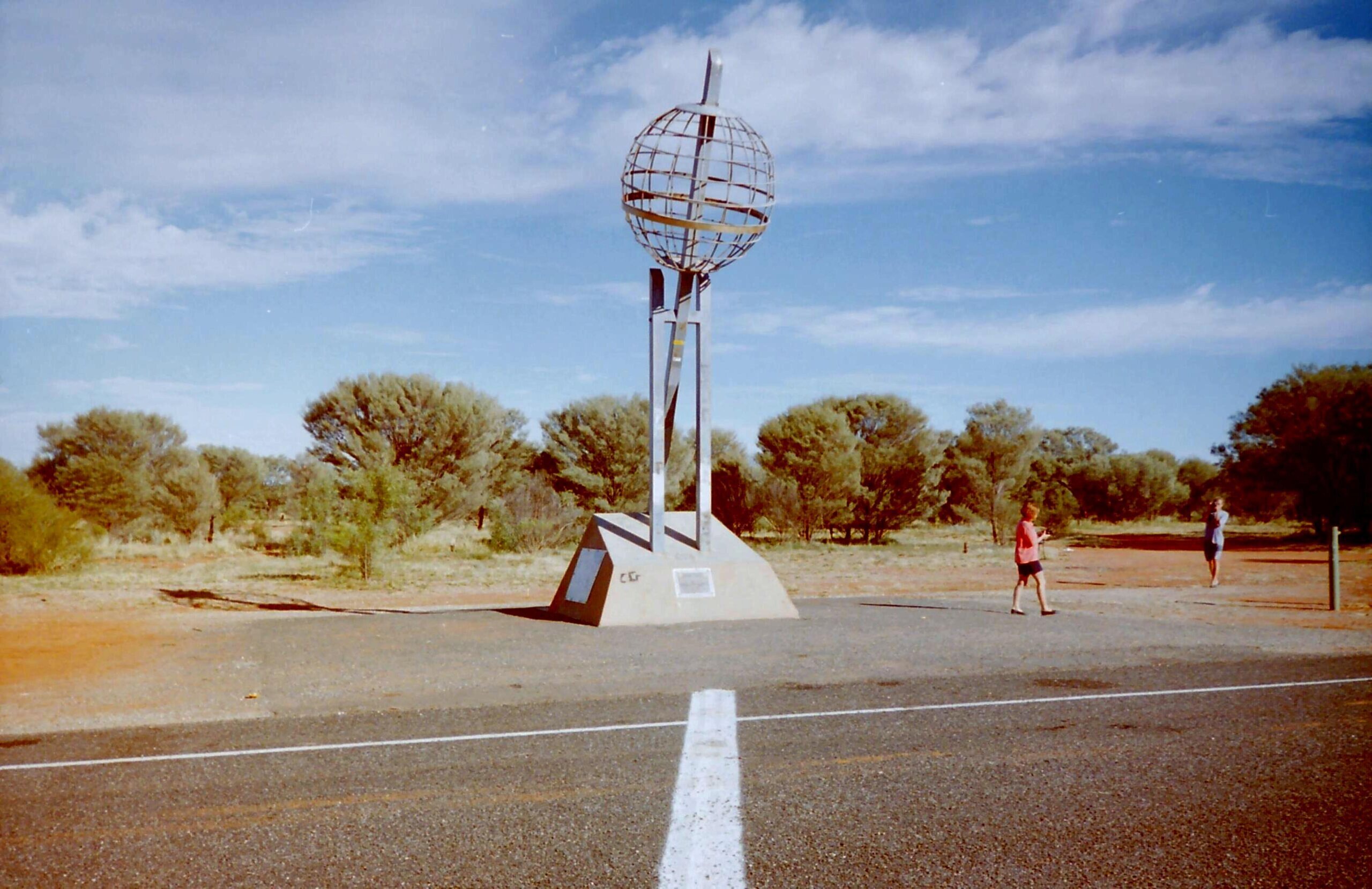
Peter Falconio was killed on the Stuart Highway. Joanne Lees got away. His body has not been found.
Stuart Highway, near Barrow Creek · 14 July 2001
On the night of 14 July 2001 a man in a white four wheel drive stopped an orange Kombi north of Barrow Creek, on the Stuart Highway in the Northern Territory. Peter Falconio, 27, got out to look at the exhaust. Joanne Lees, 28, heard a sound like a backfire. She was manacled with cable ties and tape, punched, and put into the other vehicle. She ran into the bush. A jury convicted Bradley John Murdoch of Falconio’s murder, of depriving Lees of her liberty, and of aggravated assault. On 10 January 2007 the Court of Criminal Appeal dismissed his appeals against the convictions and against a non parole period of 28 years.
The highway
A man with a Mexican moustache, a dog on the passenger seat, and a revolver at her temple
Joanne Lees and Peter Falconio met in 1996 and had lived together since August 1997. In July 2001 she was 28 and he was 27. After he graduated in 2000 they started a trip around the world. They reached Sydney in January 2001 on a working holiday, stayed several months, and bought an orange Kombi. On 25 June 2001 they left Sydney meaning to go through Canberra, Melbourne, Adelaide, and Alice Springs, and then on to Darwin. After that the plan was Cairns, Brisbane, and New Zealand, with a side trip Falconio wanted to make to New Guinea while Lees stayed in Sydney. They reached Alice Springs on 11 July 2001.
On 14 July, some time after the Camel Cup, they drove north on the Stuart Highway toward Barrow Creek and stopped at Ti Tree to watch the sunset. The Camel Cup race itself started at about 2:30 p.m. An accountant, Ms Laracy, had seen Falconio at 10 that morning for about fifteen minutes and given him advice about his tax. Several witnesses said two people of their general description, and an orange Kombi, were at the Aileron roadhouse, about 132 kilometres north of Alice Springs, between 3:30 and 4:30 p.m., and were served toasted sandwiches. Whether that pair was actually Falconio and Lees was an issue at the trial. A note Constable Andrews made on a brown paper bag, from a conversation with Lees on 23 July, put their departure from Alice Springs at about 4 p.m. to 4:30 p.m., after the airport and the races. Lees’s own memory, when she gave evidence, was that the Red Rooster store had been the last place they visited before they left, and that they had eaten inside.
Shortly after they passed through Barrow Creek, at about 8 p.m., when it was dark, another vehicle came up behind the Kombi. It was a white four wheel drive utility with a bull bar. It pulled alongside. The interior light was on. The driver wore a black baseball cap with a motif, and a long sleeve shirt with a T shirt or something else under it. He had a moustache Lees called Mexican, drooping past the sides of his mouth. A dog sat on the passenger seat. He gestured them to pull over and pointed at the back of the van. Falconio stopped with the nearside wheels on the gravel and the offside wheels on the bitumen. The utility stopped somewhere behind.
Falconio got out and went to the rear. Lees slid into the driver’s seat so she could see. The other driver was out and talking to him near the back of the Kombi. The driver’s door had not shut properly when Falconio left, so the interior light stayed on. She heard them talk about sparks from the exhaust. Falconio came back to the door, took his cigarettes, and asked her to rev the engine, which was still running. She did, several times, after he had gone back to the rear. Then she heard a sound like a vehicle backfiring. The man she later identified as the driver came to the driver’s door with a silver revolver in his right hand.
He told her to turn the motor off. She was shaking too much to do it. He leaned partway in, she backed away, and he turned the key. Twice he told her to put her head down and her hands behind her back, with the gun at her right temple. He cuffed each wrist tightly. The cuffs were joined about three or four inches apart. They were handcuffs made of tape and cable ties. She could not remember exactly how she left the van. She was taken out through the passenger door and forced onto her knees. He straddled her, facing her legs, and tried to tie her legs. Her head pointed into the bush and her feet toward the Kombi. She struggled. The tape on her legs did not hold. He punched her right temple and partly stunned her, then lifted her from behind with a hand at the base of her neck. She screamed for Falconio. There was no answer.
He forced her to the utility and tried to tape her mouth. She kept calling for help and he did not get the tape across. He lifted the corner of the canvas canopy behind the passenger door, pulled out a sack, and put it over her head for a short time. She ended up in the passenger area and saw the dog on the driver’s seat, medium build, chunky, patchy black or dark brown and white. The bag was off her head. The interior light was on. His face was about eighteen inches from hers. Then she was in the rear of the utility. At first she thought she might have gone through a gap between the front seats. Later she said he might have pushed her through the side canvas. She was clear that she did not walk around and climb in from the back. She was on her stomach, then turned over. She asked why he was doing it. Did he want money. Did he want to rape her. He told her to shut up or he would shoot her.
He went away briefly. She heard a noise like gravel scraping, as if something was being moved. With her hands still tied behind her she sat up, eased toward the back of the tray, hung her legs over, got to the ground, and ran into the bush, a little to the right of the near side. The scrub thickened. She stumbled. It was pitch black. She could hear him behind her. She crouched under bushes. She heard him moving and at one point saw torchlight. After a time she heard doors, an engine, headlights, and a vehicle she thought drove off to the south. She stayed. She heard crunching again, as of a person moving. Then doors, something being dragged, a door closing, an engine, and a vehicle driving south. She thought she stayed in the bush for some hours. When the second vehicle left she passed her legs through her arms so the manacles were in front of her. She tried to bite through the join and could not. She got a tube of lip balm from a pocket of her board shorts, bit the top off, spat it out, and rubbed the balm on the wrist bands. They still would not come off. The tube fell.
The road train
She let one car pass, then ran in front of a road train with her hands still tied
Lees went back to the bitumen while it was still pitch black, crossed to the far side, and collapsed in long grass. She waited for a road train. A car came and she let it go. She was afraid the man would come back in a vehicle like that. When she saw the road train she ran onto the road with her hands in front, then off again when it looked as if it would not stop. It stopped after it had passed her. She ran after it. The driver was Mr Millar. Mr Adams was with him. She showed them the manacles and asked them to help her get them off and to find her boyfriend.
Millar’s account of the clock is shortly before 1 a.m. on 15 July 2001. He was driving south toward Barrow Creek. A young woman jumped from the left side of the road in front of the prime mover, hands up near her head. He swerved right, straightened, and braked, thinking she might have gone under a trailer. It took nearly a kilometre to stop. When he walked back he heard her running down the other side. She came to his side by moving, crab like, under a trailer, and asked him to look at her hands. The light was poor, so he took her to the front. The ties would not undo. He woke Adams, who was sleeping, and sent him to a toolbox for cutters. Adams cut the ties while Millar held her hands. They pulled duct tape from her legs and from her hair. The cut ties and the tape went into the toolbox. She gave them a short account of what had happened.
She asked them to look for Falconio and for the Kombi. Millar and Adams drove the road train off the road, unhitched the prime mover, and went back to about where he had first seen her. He saw what he called a small pyramid of dirt on the road and could not remember exactly where it sat. Lees did not know what it was. They did not find Falconio, the Kombi, or the utility. Fresh vehicle marks ran on a track toward a gate. They hitched the trailers on again and took her to Barrow Creek, a little over ten kilometres away, arriving shortly before 2 a.m. Mr Pilton, who kept the Barrow Creek Hotel, put the road train’s arrival at about 1:30 a.m. A party was going on. The Ti Tree police station was not manned. Pilton helped Millar call Alice Springs. Adams stayed in the cab at first and used a first aid kit. Pilton found her in the cab in a foetal position. They coaxed her inside. He saw severe red marks on both wrists, lacerations on both elbows and knees, and a swelling on an ankle. Her face looked swollen. She said where’s Pete, I can’t find Pete, I need Pete. He made up a bed.
Millar’s report reached the Alice Springs police complex at about 2 a.m. Police were at Barrow Creek at about 4:20 a.m. and he took them to where he had picked her up. She was taken to Alice Springs for treatment. Dr Wright examined her at about 6:40 p.m. that day. He noted multiple abrasions on both elbows and knees, some of them dirty and in need of cleaning, scratches around one ankle, a small laceration on the front of the left knee, and a scratch on the lower back. Adams said that when he first saw her she was shaking and shivering and appeared to be in shock.
Her description to police was a tall man, “45 +”, with a long and ovalish face, narrow, deep set eyes, sunken cheeks, and scraggly hair coming out from under the black cap. There was a lot of grey in the collar length hair, and grey flecks in the eyebrows and the moustache. The moustache drooped at the ends. The eyes drooped. The face was very lined. He wore a check shirt over a dark T shirt, and heavy trousers, possibly jeans. After the police arrived she looked at a standard white Toyota Land Cruiser utility with a green canvas cover and said it was somewhat similar, with differences. In the one she was shown, a person could not go through from the cab to the tray. The inside of the canopy seemed a different colour. She stayed in Alice Springs for some weeks to help the police.
The verge
A pool of his blood under a pile of dirt, and the Kombi a hundred metres into the trees
Shortly after 7 a.m. on 15 July, police walked south along the highway from about the place Millar had stopped. About a kilometre south of that place, an officer on the west side saw the top of a van in the tree line, about 104 metres off the road, or a little further. It was an orange Kombi, and it looked empty. Back on the highway in that general area they found a stain with dirt and rubble on it. That was the dirt pyramid. The area was cordoned off. Examiners looked at the Kombi where it stood. A tow truck took it to Alice Springs that evening and it was locked in the forensic building. Track marks led from the general area of the stain to where the van had been hidden. No keys were in the ignition. A metal detector did not find them in the scrub. Some keys were later found in the Kombi, under other items. There was no presumptive sign of blood where the van was found, and no human blood on or in the van itself.
Luminol at night lit a number of places on the road and the ground. The main one was a pool of apparent blood on the bitumen near the edge, covered with dirt and loose stones, about 60 centimetres by 40. Two smaller areas lay to the south and might have been scatter from the main stain. There was dotting to the west. The main stain and several nearby samples were human blood. The DNA profile was identical to Falconio’s. His profile was checked against specimens from his father and his brother. A Ventolin inhaler said to be his, for asthma, was in the van and yielded a profile that matched that family comparison. Profiles were also taken from Lees, Adams, and Millar.
On 16 July a lip balm lid was found in the scrub by a tree or bush about 63 metres south of the bloodstained area, with flattened grass nearby. On 15 October a lip balm tube and two pieces of black tape were under that bush. Chemical analysis found the residue in the tube and the cap identical with a greasy residue on the cable ties cut from Lees. The segments of tape from her body, from the lip balm area, and from the manacles were of various types, all of them ordinary retail products, and similar to rolls later found at places said to have been occupied by Murdoch. Pathology evidence was that a fatal wound from a small calibre gun might make no sound after the shot, might push no brain or other tissue out of the body, and might leave relatively little blood. Lees had heard one sound like a backfire, and then silence when she called Falconio’s name. Searches of the scene and of country further out found no trace of him and no weapon or other relevant piece of metal. Nothing has been heard of him since, except one possible sighting whose validity was not verified. The Court of Criminal Appeal, years later, stated the fact in the sentence appeal without softening it. His body has not been found. He has not told anyone what he did with it. The appeal court used the absence of the body, and the absence of remorse, as reasons the non parole period sat above the ordinary term.
Two other travellers put vehicles on that road the same night, and their accounts do not match each other cleanly. Pamela Brown was in a car with her partner and family, heading south after a football match at Ali Curung, on a Saturday night before a Sunday on which she heard of an incident near Barrow Creek. They stopped at Taylors Crossing to change a flat tyre. It was dark and moonless. She saw headlights come off the verge onto the road, then a white vehicle that looked like a Toyota Land Cruiser wagon pass them heading north. After that she saw an orange Kombi on the side of the road, facing north, lights off. She marked the places on a photograph, exhibit P 52. Her partner, Jasper Haines, knew the ground because he hunted there. A bore road ran west off the highway just north of the scene, about twelve kilometres, and ended at an old bore and cattle yards. He hunted the next day and saw police cars. At the trial his memory was that the white vehicle was a four wheel drive Land Cruiser utility with a green canopy. That was not what he had told the police, or the magistrate at the committal. Earlier he thought it might have been a Troop Carrier or a Ford Courier. The appeal judgment leaves both versions in place.
The shirt
Wet blood on the back of her left shoulder, matched across sixteen sites, and a Red Rooster story the court called fanciful
The prosecutor called one stain the single most significant piece of evidence in the crime. It was a spot of blood on the rear of the left shoulder of the T shirt Lees wore that night. There was no dispute that it was her shirt, or that it went to the forensic laboratory in Darwin. The forensic biologist, Ms Eckhoff, said the stain did not look like blood that had been flicked. It was a deposit from contact with wet blood, and it was smudged. That opinion was not challenged. She tested the shirt in July 2001. The profile did not match Falconio, Lees, the truck driver, or his offsider. The appeal judgment, in that one paragraph, calls the driver Mr Miller. Everywhere else he is Mr Millar. She could not match the profile to any database in Australia. In January 2003 a different test confirmed the first ten sites and added six more. She had a profile across sixteen sites. She did not match it to a named man until December 2003, when she received Bradley Murdoch’s profile. On 31 December 2003 it was an exact match across all sixteen sites. Her opinion, shared by Dr Buckleton, whose statement went in without objection, was that it is at least 150 quadrillion times more likely that the DNA on the shirt came from Murdoch than from a person chosen at random from the population used for the calculation. That conclusion was not challenged on the appeal.
The live question was how the blood got there. Nobody suggested to the jury that it was put on the shirt after Barrow Creek. The shirt was taken from her at the hotel, secured, and sent to Darwin. The defence said it might have been an accident in Alice Springs that same day, at the Red Rooster or somewhere else. Both of them were in town on 14 July. Blood might have been left on a seat or a door frame, still wet, and she might have brushed it. Or they might have touched without knowing.
Murdoch gave evidence. He said he was at the Red Rooster at about 10:30 a.m. He had just arrived in Alice Springs and pulled in there first, a place he and the dog used. He bought a chicken roll, a box of nuggets for Jack, because Jack liked nuggets, and a full chicken for the trip. He did not eat in the store. He took the food in a little white carry bag and went to the Toyota agent. He did not say he was bleeding. He did not say he ever noticed blood on the bag. Asked how his blood came to be on her shirt, he said he did not know. On his account he had been driving for some hours, went straight into the store, bought takeaway, and left. There was no evidence he sat down, stayed, or touched anyone there.
Lees also went to that Red Rooster on 14 July. She did not remember the place being busy. She did not remember bumping into anyone, or anyone coming close, or anyone speaking to her. She did not remember seeing Murdoch. When she gave evidence she thought the store was the last stop before they left Alice Springs, which would put them there in the afternoon. Cross examination took her to the conversation with Constable Andrews on 23 July, which she could not recall. Andrews had written it on a brown paper bag. On that note, they got up at 7:30, drove to the Araluen Centre, walked to the Stuart Caravan Park and each had a shower, drove into town and parked near the library, and Lees used the internet. Falconio went to an accountant and then to the library. Lees waited in the Kombi while he finished email. They drove to the Red Rooster and ate inside. The note says one other couple inside, and quiet. Then the airport, the Camel Cup, and the road at about 4 p.m. to 4:30 p.m. The accountant confirmed the appointment was at 10 a.m. and that he was with her about fifteen minutes. So the morning Red Rooster in Murdoch’s story and the visit in Lees’s story might have overlapped, or they might not. The court said that on one view of the evidence the times could have been close. What was clear was that when she was there it was quiet.
The Court of Criminal Appeal called primary or secondary transfer in the way the defence described it fanciful. Nothing suggested he was bleeding, or likely to bleed, before he walked into the store, or anywhere else in Alice Springs that day. Apart from the store, nothing put their paths across each other. Her day, on the account she gave, included the library, a cafe in the mall, the airport, the Araluen Centre, the caravan park, and the Camel Cup. Those were not places he said he went. The stain was wet when it met the cloth, and smudged, which is contact, not a flick from a cut. Neither of them said they touched. A wet smear left on a door or a piece of furniture, then picked up on the top rear of her shirt, was unreal. The Alice Springs explanation only arises if his evidence about the store is accepted. The Crown asked the jury to reject it. The appeal court agreed the suggestion was not sustainable.
The night near Barrow Creek did supply the contact. There was an altercation with Falconio. Lees was handled roughly. The man was behind her more than once. He lifted her from behind. He took her from near the Kombi to the utility with a hand at the base of her neck. He was above her during part of the struggle. There were many chances for his blood to reach the rear of that shirt in the place that was tested. On the shirt alone, the appeal court said, there was enough to find beyond reasonable doubt that Murdoch was the assailant. With the other evidence that had been properly admitted, he was guilty of the offences.
There was more DNA, and the appeal court refused to rest the proviso on it. The Crown said the offender drove the Kombi away from the stop and hid it off the road. Dr Whittaker, a forensic biologist from the United Kingdom, found a mixed profile on the gearstick consistent with Falconio and with Murdoch, Murdoch the major contributor. The bands that matched Murdoch would be expected in about one in 19,000 of the United Kingdom Caucasian population. Dr Buckleton, using the Northern Territory database, put a second copy of that profile at one in 13,000. The steering wheel had DNA from at least three people. Whittaker could not exclude Murdoch. The trial judge told the jury that many, many others were not excluded either. From the inner layers of the duct tape on the cable tie restraints, Whittaker said the major profile was consistent with Murdoch, about one in 100 million of the United Kingdom population, and Buckleton reached the same figure on the Northern Territory database. The sample came from the adhesive of the innermost layer, the surface that had been against the inside of the cable tie. Minor bands also existed in the profiles of Lees and of Falconio.
Before the trial, the defence challenged the method, low copy number testing. In The Queen v Murdoch [2005] NTSC 76 the trial judge ruled that the method had a sufficient scientific basis and general acceptance to be a proper subject of expert evidence, and he let it in. Whittaker then gave that evidence to the jury. The defence called Dr Both, from the Forensic Science Centre in Adelaide. The trial judge called her well qualified and experienced. She did not regard low copy number work, as Whittaker applied it, as scientifically proven. She said he was pushing science to the limit, and that the technique was dangerous. She was worried about contamination and about stutters that can mask a true allele, so that a person might be included who should not be, or excluded who should not be. The judge told the jury each of them was very firm. He heard them and confirmed his ruling. That ruling was not itself a ground of the appeal. For the proviso, though, the conflict mattered. An appeal court deciding whether guilt was proved beyond reasonable doubt on the admissible evidence cannot simply prefer the jury’s choice of expert when it did not see the witnesses. The opinions stayed in conflict. The court did not find Both’s criticisms compelling, but it put the gearstick, the steering wheel, and the handcuffs to one side. The shirt was a different test. It was not low copy number. It was the sixteen site match. That was the DNA the proviso used.
The face
She saw his photograph on the internet in Sicily. The positive identity from body mapping should not have been given. The conviction stood anyway.
On 15 July 2001 Lees gave a police artist the description set out above. The appeal court said it accurately described the key facial characteristics of Murdoch. She identified him at least three times. The first was in October 2002, while she was working in Sicily, when his picture appeared on the internet. The trial judge found she opened the page on 10 or 11 October 2002, not long after police had telephoned to say they had a suspect, and that she did not know the article would carry a picture. On 22 October 2002 Murdoch declined an identification parade. The second identification was a photoboard on 18 November 2002 in the United Kingdom. He was shown there in a quite different way from the internet photograph. The third was in the dock, which the appeal court treated as essentially a formality that added no weight.
The internet identification, as she gave it at trial, was spontaneous and unequivocal. She said she had not been influenced by what she might have read, and she could not remember what the article said. She said she would recognise him anywhere. The appeal court approached that kind of evidence with the usual care, because a victim who has been told there is a suspect can be pulled toward a face, and still accepted it. The photoboard, weeks later and in a different presentation, was a positive identification without difficulty. That consistency had a weight it would not have had if the second picture had simply repeated the first. The appeal court called her identification powerful support for the Crown case. It did not say the case depended on it. The shirt, with the other properly admitted evidence of what happened at that place, was already enough. Her identification made the case overwhelming.
A different identification was an error, and the court said so. Dr Sutisno gave evidence about the man in a video at a truck stop. The Crown used the video to put Murdoch at that stop at 12:38 a.m. on 15 July 2001. She compared images and, on a combination of facial mapping and body mapping, said the man in the video was Murdoch. The Court of Criminal Appeal held that facial mapping could support evidence of similarities a jury might not see for itself. Body mapping, and face and body mapping as a combined technique for saying two images were the same person, had not been shown to be a field of specialised knowledge. She should not have been allowed to give the opinion that the two men were one man. She could describe similarities of face, and similarities of body and movement, and she could say there were no relevant dissimilarities. The positive identification was wrongly received. Beverley Anne Allan, Brian Charles Johnston, and James Tehi Hepi, who knew Murdoch, also looked at the video. Despite its poor quality, each of them pointed to physical characteristics like his. Hepi went further and said it was the same man. Professor Spring’s evidence about the poor quality of the tape had to be kept in mind. The appeal court found the three witnesses consistent, firm, and convincing on the similarities, and treated Sutisno’s admissible comparison as support for them, not as a substitute.
The same video showed a vehicle. Allan said it was similar. Hepi, who knew Murdoch’s vehicle well, identified it as his by oversized wheels with white rims and a bug deflector, but his description of the bull bar did not match what the video shows. Johnston, who had transferred the canopy from an F100 onto that vehicle, said it looked very similar to the one Brad had, that the canopy configuration looked very much the same, and that the bull bar looked like it. He dated the truckie style bull bar to before 15 July 2001 by the date he had left Broome. There are many vehicles of that make and general shape on those roads. The similarities were still, in the court’s view, cogent. Lees had described a white four wheel drive utility with a bull bar, and a canopy she could be pushed through.
The dog was never identified as Jack. Lees saw a dog on the passenger seat and later on the driver’s seat, chunky, medium, patchy black or dark brown and white. Other evidence was that Murdoch travelled with a dog named Jack. Photographs of Jack, of a dog called Tex at Barrow Creek, and of an Australian cattle dog in a dogalog were all in evidence. Lees pointed to similarities: colouring, width, breed, a quite broad face, head, and ears. She was challenged on how those descriptions had shifted. The appeal court did not treat her opinion as shaken, and it kept the evidence inside its limit. It was not proof that the dog that night was Jack. It was proof that the offender had a dog with features like the dog Murdoch travelled with. Nuggets for Jack, in his Red Rooster story, are his own evidence that the dog was with him in Alice Springs that morning.
The revolver
A silver western gun at her temple, and four witnesses who did not describe the same weapon
No gun was found. The pathology evidence allowed a small calibre shot to kill without a second sound, without tissue leaving the wound, and without much blood. Lees heard one noise like a backfire. The Crown case was that Falconio was shot. The defence told the appeal court there was no real issue that he was shot dead, and that, without a body, the defence could not properly concede it. The person who pulled the Kombi over was, on that argument, the person who shot him. What was in issue was whether that person was Murdoch, and whether evidence that he owned and carried guns should have been in front of the jury at all.
Lees had two looks at the weapon. One was through the window of the Kombi. The other was when he pointed it at her head. She said she had never seen a gun before. It was a silver revolver. To her it looked like a western gun. It had engraving in a rectangular box down the barrel. She did not see the butt, which was under his hand, and she did not see the trigger. She told the artist to draw the weapon. The artist drew the butt and the trigger without instructions from her. In cross examination she could not describe the engraving beyond scrolling along the barrel. She agreed that her first account was accurate: a scroll like pattern, no words or symbols, engraved in a box like border. She showed the length of the barrel with her hand, from the wrist to the fingertips. Measured on a ruler, that was about six to seven inches, which the trial judge converted as about fifteen and a quarter centimetres for six inches. The drawings are exhibit P 31. She said the pattern on the final drawing was not a good representation, that it was hard to describe, and that she could not remember the engraving vividly, only that there was some. Asked whether the drawing was similar to what she saw, she said it was similar. She also said that when he came into the van she was looking at his face, not at the gun.
The trial judge’s ruling on this evidence is The Queen v Murdoch (No 5) [2005] NTSC 79, published on 15 December 2005. Before the jury he had statements, and in some cases committal evidence, from William Gibbs, James Hepi, Brian Johnston, Julie Anne McPhail, and Rachel Maxwell. Gibbs did not give evidence at the committal and did not appear at the trial. His statement of 7 November 2002 stayed outside the jury’s hearing. It is in the ruling. He described, as at 14 July 2001, a silver six shot .22 revolver with a wooden grip and a barrel of about four inches, a silver Chinese copy of a .45 pistol, and a .308 rifle with a scope and a five shot magazine. He said the .45 copy was kept under the seat and the .22 stainless revolver in the driver’s side pouch. He also spoke of a .357 Magnum and two black Glock 9 mm pistols, the Glocks bought after Falconio disappeared, and the Magnum in Gibbs’s own possession at the time of the events. Because he was not called, those details are not trial evidence. They show what the judge was shown before he ruled.
Hepi met Murdoch in 1998. In a statement of 14 September 2002 he said Murdoch owned a .22, and he was unsure whether it was a pistol or a revolver, and a .357 Magnum, black and grey, with a wooden stock. One weapon sat in the centre of a fold up camping table in the back of the vehicle. Another was inside the seal of the driver’s door. A statement of 4 November 2002 put the .357 barrel at ten to twelve inches, wooden stock with a criss cross pattern, and the .22 all black. He could not remember engraving. The handguns were kept fairly close to Murdoch at all times. The last time he saw them with Murdoch was in South Australia after these events, in the vehicle, between the legs of the folding table. At the preliminary examination in June 2004 he said the .22 was a revolver with a rolling chamber, not a magazine, and that he had not taken much interest in it. He recalled no distinctive markings. The trial judge later told the jury that the weapons Hepi described were two dark coloured handguns, not a silver one.
Johnston met him about 2000. In a statement of 27 March 2003 he described a trip on which Murdoch pulled back the inside panel of the driver’s door, took out a gun wrapped in a rag with brown packing tape, and put it in the centre well of the spare tyre. They met another man. Murdoch said he had a loaded gun he did not want to take into Broome, retrieved it, and handed it over. He said something to that man’s wife about it being a girlie gun she could use. At the preliminary examination in August 2004 Johnston said he saw a .357 Magnum and a smaller weapon, apparently a .38, both revolvers, dark grey metal. The .38 was usually in a cavity in the long range fuel tank. The trial judge told the jury Johnston did not see a silver handgun.
McPhail met him briefly in June 2001. They were travelling in separate vehicles from Western Australia toward South Australia. In a statement of 2 December 2003 she said she came up behind him where he had stopped in the bush. He was at the passenger side holding a small ladies revolver. He fired two rounds into the bush and offered to sell it. She declined. She called it plain silver, about seven to ten centimetres long. At the preliminary examination she said a small revolver, silver barrel, spin around chamber. In the summing up the judge added her account of wanting a pearl handled ladies gun, of being told at a quarantine station to go ahead, and of finding him stopped in a dip near a sign for the Iron Triangle, where he could not be seen until a driver was on him. She described a silver palm sized revolver, short barrel, and she did not recall ammunition. Murdoch denied any talk of her buying a weapon. He said his last contact with her was west of Ceduna, and he mentioned Penong. He denied the later stop and the weapon. He said he did not own a silver handgun. Counsel for the defence, Mr Algie, asked the jury to treat the story as unbelievable, and to weigh her use of alcohol and drugs and the times she gave for the drive from Ceduna into the Iron Triangle. Rex Wild QC, for the Crown, said Murdoch agreed the journey together was bizarre and disputed the parts that hurt him. The judge told the jury that if they doubted her on the weapon they should put her evidence aside, and that if they accepted it, a silver handgun in late June 2001 was another circumstance, consistent with what Lees saw.
Maxwell met him in January 2001, introduced by Hepi. In about March 2001, at a table, she saw him and Hepi with bits of a gun. She does not like guns and said she avoids them. The gun was silver, not high tech, and reminded her of a western or John Wayne gun, with a wooden bit on the handle. She did not notice engraving. It had a round chamber that looked as if it would turn. She compared the whole length to an average tissue box of 200 tissues. In evidence she said a wooden handle, a silver barrel, and the silver part that shoots the bullet. Asked about television, she said an old gun John Wayne would have used. The rest was silver and shiny, though not ultimately shiny, and she remembered no pattern. She knew it was later wrapped and hidden. She never saw that silver gun again. The summing up places the table at Hepi’s place at Sedan and gives a length of about 21 centimetres, a swinging chamber, and a country and western weapon. The Crown said that was very consistent with Lees.
Those descriptions do not make one gun. Lees: silver, western, engraved in a box, barrel shown as six to seven inches, butt and trigger unseen. McPhail: plain silver, palm sized, seven to ten centimetres, no recalled engraving, two shots into the bush in June. Maxwell: silver, wooden handle, John Wayne, about the length of a tissue box or about 21 centimetres, no pattern she remembered, March, at Sedan. Hepi and Johnston: dark weapons, a long .357, a black .22, a .38 in a fuel tank. The trial judge said that, leaving Gibbs out, Hepi and Johnston could support a finding that Murdoch ordinarily kept a handgun in the vehicle he travelled in, and that with McPhail and Maxwell the evidence had probative value as to his capacity, in July 2001, to kill by shooting. In isolation it could not prove he had the weapon Lees described. As one circumstance it could. He thought a jury that also heard he traded cannabis across thousands of kilometres would not be surprised that he carried a weapon, and that with directions the risk of using the guns as proof of bad character was small. After he heard the witnesses other than Gibbs, he stayed with that view.
He directed the jury in those terms more than once. After Hepi, he warned them as he had warned them about cannabis. Access to a weapon was material because Lees said one was pointed at her. Whether it linked to her evidence was for them. Hepi’s two guns were dark. They must not reason that a man who carried weapons was of poor character and therefore guilty. Hepi had borrowed one because he was worried about being ripped off over drugs. A person moving drugs from South Australia to Western Australia might carry a weapon for that protection. In the summing up the Crown’s use was capacity: the practice of carrying a weapon on trips, so that he could well have had one on this occasion. If they accepted a small calibre shot that did not cause a large amount of bleeding, a .22 revolver could be such a weapon. Possession of means does not itself prove the murder. It is one piece with the rest. Amphetamine use was in the same warning. Propensity reasoning from drugs or guns was forbidden.
On the appeal, grounds 6 and 7 attacked that ruling and those directions. Mr Barker QC said none of the handguns matched Lees, that the jury heard a series of guns that did not match her, that most of them were a larger calibre than the small calibre weapon the Crown was putting forward, and that the evidence showed only a predisposition to carry firearms. He relied on Festa, where guns bought after the robberies did no more than point to criminal tendency. The Crown said that overstated the mismatch. Given the trauma, her description might not have been precise, and some of the weapons were silver and could be regarded as reasonably consistent, in particular the revolver McPhail said she saw a few weeks before Barrow Creek. Much of the mismatched detail got in because the defence wanted the jury to see that many of the guns were the wrong colour, the wrong calibre, and the wrong shape. The evidence was not admitted as propensity. It was admitted, like the dog and like a vehicle of the same general kind, on opportunity and capacity. Wild said McPhail’s silver revolver was consistent with the Crown thesis of a small calibre silver weapon. The court said there was an air of unreality in the complaint. In many trials, habitual carrying of firearms would be irrelevant and highly prejudicial. Here it was inevitable that the jury would hear he was of bad character, had been accused of other serious offences, and was a habitual drug runner, because those facts were interwoven with the events. A drug runner operating as he did would be expected to carry firearms. The directions dealt with the permissible and the forbidden uses. The court could not see the prejudice that was asserted. The probative value, as one circumstance among others, was significant. There was no substance in the grounds. Leave was extended because the point was fit to argue. The grounds failed.
What the failure of those grounds does not do is identify the revolver. Lees’s barrel, shown at six to seven inches, is not McPhail’s seven to ten centimetres, and it is not a tissue box. Hepi and Johnston did not describe a silver gun. Murdoch denied owning one. Gibbs, who described a silver .22 of about four inches, never entered the witness box. The appeal court did not find that any named weapon was the one at the driver’s door of the Kombi. It found that the jury was allowed to hear, with warnings, that he had the habit and the means, and that a silver revolver seen in June could be treated as consistent, in a general way, with what Lees saw. The weapon itself was not recovered. The pool on the bitumen was blood, not a bullet.
After Broome
He said he was 500 kilometres away on the Tanami Track. Three people who knew him put him on the truck stop tape at 12:38 a.m.
Murdoch’s account of 14 and 15 July was a different road. He said he reached Alice Springs at about 10:30 a.m. on the Saturday, went to the Red Rooster, took the vehicle to a car wash, bought things at Barbeques Galore, and refuelled at a BP station. He said he drove north and turned onto the Tanami Track at about 3:30 p.m. Between midnight and 1 a.m. on 15 July he said he was somewhere near the Granite Mine on that track, about 500 kilometres from the Stuart Highway. He denied being at the Shell truck stop in the early hours of 15 July. The Crown asked the jury to disbelieve the truck stop denial and the 10:30 Red Rooster time. Allan, Johnston, and Hepi described a man on the 12:38 a.m. tape with his physical characteristics. Sutisno’s admissible list of similarities, with no relevant dissimilarities, supported them. The appeal court treated his denial of the truck stop as a lie.
When he got back to Broome his face and his vehicle had changed. Allan had known him as a close friend for about twelve months. She said he came back completely clean shaven, no moustache, head shaved to a complete crew cut. It was the first time she had seen him without a moustache. She last saw him around October 2001, and by then the whole back of the vehicle had been changed. Until then, she said, the vehicle had stayed basically the same. Hepi said that in July 2001 Murdoch had a long handlebar moustache and longish hair. On the return the hair was cut and the moustache was shorter, and on the day of the return the moustache came off completely and the hair went back to a number 1 or a number 2. Hepi allowed that Murdoch sometimes changed his look after a trip. This one seemed quite dramatic, and shaving the whole moustache was unusual. He had once told police the change was from full facial hair to none, and in cross examination he kept to the point that it was unusual. Murdoch said the change was his usual routine, and that he still had the moustache when he saw Allan. Allan said the opposite.
The vehicle changes were admitted. The fight was about what they meant. He said they had been planned for a while, and that working on vehicles was a hobby. Counsel told the jury the Crown would call it a complete transformation, and that after the work it was still a four wheel drive Land Cruiser with a green canopy and a black bull bar, done locally, where everybody knew his name. The appeal court said that understated the evidence. Parts from three vehicles were swapped. The canopy changed. The bull bar changed. The compliance plate changed. A turbocharger was added. From a distance there was still a general likeness to the July vehicle. On a closer look it was a different vehicle. The court put the return to Broome at 16 July 2001 for those changes. Taken with the shirt, the identification, the dog, and the truck stop, the changes were part of an already compelling case. They were not, by themselves, the proof.
Hepi’s evidence carried a warning, and the appeal court repeated it. The trial judge had warned the jury strongly. The defence criticisms were real. His bull bar description did not match the tape. His evidence had to be scrutinised with great care. A significant part of what he said was either not in issue or was backed by other acceptable evidence: the truck stop likeness, the change of face, and the change of vehicle. On those points the court saw no reason to doubt him. That is a narrower finding than a finding that everything Hepi said was reliable.
Darwin, 2007
Life, with 28 years before parole, running from 10 November 2003
A jury in the Supreme Court of the Northern Territory convicted Bradley John Murdoch of murder, of deprivation of liberty, and of aggravated assault. The appeal is from that court, file 20215807, and from reasons the trial judge published on 15 December 2005, including The Queen v Murdoch on the identification evidence. The judgment of the Court of Criminal Appeal does not print the trial judge’s name. Angel ACJ, Riley J, and Olsson AJ sat on the appeal in Darwin. They heard it on 12, 13, 14, and 15 December 2006 and delivered judgment on 10 January 2007, file CA 2/06. He had been refused leave by a single judge to appeal the sentences for deprivation of liberty and aggravated assault. He asked the Court of Criminal Appeal to consider that application under section 429(2) of the Criminal Code, and on the hearing he did not pursue the request. He did appeal, by leave, against the non parole period.
The court had found an error. Sutisno’s opinion that the truck stop man and Murdoch were the same person should not have been admitted. The proviso in the Criminal Code lets the court dismiss an appeal if no substantial miscarriage of justice has actually occurred, even where a point might be decided for the appellant. Following Weiss v The Queen, the appeal court had to decide that question for itself, on the evidence properly admitted, and it had to be persuaded that guilt was proved beyond reasonable doubt. If the limits of an appeal, which does not see the witnesses, stopped it from being sure, the proviso would fail and, except in unusual cases, there would be a new trial. The court was sure. The core issue was identity. The blood on the back of Lees’s shirt established beyond reasonable doubt that Murdoch was there when she was attacked just north of Barrow Creek. With the other properly admitted evidence of what happened at that place, his guilt of the murder of Peter Falconio was established beyond reasonable doubt. Her identification of him made the case overwhelming. The gearstick, the steering wheel, and the cable ties were not needed for that conclusion, because Whittaker and Both remained in conflict. The wrongly admitted part of Sutisno’s evidence did not undo it. There was no substantial miscarriage of justice. The conviction appeal was dismissed.
The sentence appeal failed as well. The trial judge had imposed life imprisonment for the murder, four years for deprivation of liberty, and two years for aggravated unlawful assault, all concurrent. The non parole period was 28 years, commencing on 10 November 2003. Section 53A of the Sentencing Act set a standard non parole period of 20 years for a murder in the middle of the range of objective seriousness. The defence said this murder was not sexually linked and was not a multiple murder, so the standard was the relevant floor, and 28 years for a man of his age left little real prospect of parole. The trial judge had already said the crime was not in the middle of the range and not at the top, but in the upper end, and that a longer period was warranted. He noted there was no plea of guilty and no benefit of one, and that the way the defence was conducted was not itself a reason to punish. General deterrence was, in his words, a very significant factor. He found a complete lack of remorse. He said that given at least the next 20 years in jail it was impossible to predict rehabilitation with confidence, that history includes people who change after a long sentence, and that he was still driven to the conclusion that the prospects were minimal. He referred to the nature of the crime, personal history including prior offending, obvious aggression, lack of remorse, and maturity. The appeal judgment quotes that passage and does not list the prior offences. This account does not supply them. He said he had borne in mind the age at which Murdoch would become eligible and the real prospect that he would die in gaol.
The Court of Criminal Appeal set out why it would not interfere. The killing was cold blooded and premeditated. There was no remorse, and the body has not been found. As the Crown put it, there can be no closure for the people grieving, because he has chosen not to reveal what he did. The offences against Lees were inherently serious. She had every reason to anticipate at least sexual violation and at worst her own death. Nothing mitigated the conduct. It was cruel, remorseless, and completely unprovoked. Those facts called for a non parole period substantially above the standard term. Minds could differ about the exact number of years above 20. Twenty eight was not outside a reasonable range. The sentence appeal was dismissed. Leave to argue two additional conviction grounds, grounds 6 and 7, was extended and allowed as an application. The other applications for extension of time and leave on conviction grounds were dismissed. The conviction appeal and the sentence appeal were both dismissed.
Left in conflict
A Troop Carrier or a Land Cruiser, a morning shop or an afternoon one, and DNA the appeal court declined to use
The shirt is not the gearstick. Eckhoff’s sixteen site match, contact with wet blood, 150 quadrillion, was not challenged on appeal and was enough, with the scene, to identify the assailant. Whittaker’s low copy number results on the gearstick, the steering wheel, and the inner tape of the cable ties were admissible at trial and were fought by Dr Both. The appeal court left that fight unresolved and put those three results aside when it asked whether the proviso could save the conviction. A reader who folds all of the DNA into one match is reading past the judgment. The steering wheel, even on Whittaker’s view, came from at least three people, and many others were not excluded.
The vehicles do not collapse into one description. Lees said the utility was white, with a bull bar, a canvas canopy, and a dog, and that the Land Cruiser police showed her was only somewhat similar, because she could not pass from cab to tray and the canopy lining looked different. Brown saw a white vehicle like a Land Cruiser wagon going north, then an orange Kombi facing north with its lights off. Haines at trial remembered a Land Cruiser utility with a green canopy. At committal and to police he had said a Troop Carrier or a Ford Courier. Hepi’s bull bar did not match the truck stop video. Johnston’s did, and he dated it before 15 July. After Broome the canopy, the bull bar, the compliance plate, and a turbocharger changed, using parts from three vehicles, and it was still, at a glance, a Land Cruiser with a green canopy and a black bull bar. The dog was similar to Jack. It was not proved to be Jack. Tex and a cattle dog in a catalogue were comparison pictures, not identifications.
The day in Alice Springs has two clocks. Murdoch said Red Rooster at 10:30 a.m., then a car wash, Barbeques Galore, a BP station, and the Tanami Track by 3:30 p.m., and the Granite Mine, 500 kilometres from the highway, between midnight and 1 a.m. Lees at trial thought Red Rooster was the last stop, in the afternoon. Andrews’s note has them eating inside in the morning, one other couple, quiet, then the airport and the races, and the highway at 4 to 4:30 p.m. The accountant is fixed: 10 a.m., about fifteen minutes. Aileron, between 3:30 and 4:30, with toasted sandwiches and an orange Kombi, may or may not have been them. The appeal court did not need to decide the Aileron stop in order to dismiss the appeal. It did decide that an accidental transfer of wet blood onto the back of her shirt, at the Red Rooster or anywhere else in town, was fanciful.
Names slip once. The road train driver is Millar through the narrative and Miller in the paragraph that lists the people Eckhoff excluded from the shirt. The offence of assault is charged as aggravated assault in the opening and sentenced as aggravated unlawful assault. The non parole period is 28 years from 10 November 2003, not from the night on the highway and not from the date of the appeal. The body has not been found. One possible sighting was not verified. No gun was found. The lip balm in the scrub matched grease on the cable ties. The tape was ordinary retail tape, similar to rolls at places he had occupied, which is similarity, not a unique roll. The appeal court did not say a later court had reconsidered the case. Its orders, on 10 January 2007, are that the conviction appeal and the sentence appeal are dismissed.
Chronology
From Sydney in January 2001 to the orders on 10 January 2007
- 1996. Joanne Lees and Peter Falconio meet. They live together from August 1997. In July 2001 she is 28 and he is 27.
- January 2001. They arrive in Sydney, stay several months, and buy an orange Kombi. On 25 June they leave for Canberra, Melbourne, Adelaide, Alice Springs, and Darwin.
- 11 July 2001. They reach Alice Springs.
- 14 July 2001. Falconio sees an accountant at 10 a.m. The Camel Cup race starts about 2:30 p.m. They drive north, stop at Ti Tree for the sunset, and shortly after Barrow Creek, at about 8 p.m., a white utility pulls them over.
- That night. Lees hears a sound like a backfire, is manacled with tape and cable ties, punched, and put into the utility. She runs into the bush. Falconio is not seen again.
- 15 July 2001, shortly before 1 a.m. Lees stops Millar’s road train. They reach the Barrow Creek Hotel before 2 a.m. Police are called at about 2 a.m. and arrive about 4:20 a.m. Dr Wright examines her at about 6:40 p.m.
- About 7 a.m. Police find the Kombi about a kilometre south of the pickup, roughly 104 metres off the highway, and a pool of Falconio’s blood under dirt on the bitumen, about 60 by 40 centimetres. On 16 July a lip balm lid is found in the scrub. The tube is found on 15 October.
- 12:38 a.m. on 15 July. A video at a Shell truck stop shows a man and a vehicle. Murdoch says that at that hour he was near the Granite Mine on the Tanami Track.
- July 2001, Broome. Allan and Hepi describe a shaved head and a moustache removed. The vehicle’s canopy, bull bar, compliance plate, and engine are later altered. Eckhoff tests the shirt in July 2001 and cannot match the profile. On 31 December 2003 it matches Murdoch across sixteen sites.
- 10 or 11 October 2002. In Sicily, Lees sees his photograph on the internet and identifies him. On 22 October he declines an identification parade. On 18 November she identifies him from a photoboard in the United Kingdom.
- 10 November 2003. The 28 year non parole period later imposed is ordered to run from this date.
- A jury convicts him of murder, deprivation of liberty, and aggravated assault. On 15 December 2005 the trial judge publishes reasons, including the identification ruling. The sentence is life, four years, and two years, concurrent, with 28 years before parole.
- 12 to 15 December 2006. The Court of Criminal Appeal hears the appeal. On 10 January 2007 Angel ACJ, Riley J, and Olsson AJ dismiss the appeal against the convictions and the appeal against sentence.
Questions
Questions
Was Bradley Murdoch convicted of murdering Peter Falconio?
Yes. A jury in the Supreme Court of the Northern Territory found him guilty of murder, of deprivation of liberty, and of aggravated assault. On 10 January 2007 the Court of Criminal Appeal dismissed his appeal against those convictions and his appeal against sentence. The sentence is life imprisonment, with four years and two years concurrent for the offences against Joanne Lees, and a non parole period of 28 years from 10 November 2003.
Was Peter Falconio’s body found?
No. Searches at the scene and further out found no trace of him and no weapon. Nothing has been heard of him since, apart from one possible sighting that was not verified. A pool of blood on the Stuart Highway, about 60 centimetres by 40, covered with dirt, matched his DNA. The Kombi was found empty in the trees. The appeal court recorded that the body has not been found, and that Murdoch has not said what he did with it.
How was Murdoch identified if Lees escaped in the dark?
The appeal court treated a bloodstain on the back of the T shirt she wore that night as sufficient, with the other properly admitted evidence, to prove he was the assailant. It matched his profile across sixteen sites. She also identified him from an internet photograph in Sicily in October 2002, from a photoboard in the United Kingdom on 18 November 2002, and formally in the dock. The dock identification added nothing. An expert’s opinion that a truck stop video was positively him should not have been admitted. The court said that error did not produce a substantial miscarriage of justice.
Sources opened for this account. Murdoch v The Queen [2007] NTCCA 1, Court of Criminal Appeal of the Northern Territory, Angel ACJ, Riley J and Olsson AJ, delivered 10 January 2007, file CA 2/06 (20215807), including the court’s account of the trial in the Supreme Court and of The Queen v Murdoch [2005] NTSC 76. The judgment as published by the Supreme Court of the Northern Territory: https://supremecourt.nt.gov.au/__data/assets/pdf_file/0011/774704/2007NTCCA1-Murdoch-v-The-Queen-10-Jan-2007.pdf