 Evidence #01
 Evidence #02
 Evidence #03
 Evidence #04
Overview
Five people were shot dead at White House Farm. Jeremy Bamber’s murder convictions still stood when the Court of Appeal last reviewed them in these judgments.
White House Farm, Tolleshunt D’Arcy · 7 August 1985
In the early hours of 7 August 1985, Ralph Nevill Bamber, June Bamber, their daughter Sheila Caffell, and her six year old sons Daniel and Nicholas were shot dead with a .22 rifle at White House Farm in Essex. On 28 October 1986 a jury at Chelmsford convicted Jeremy Bamber of all five murders by 10 to 2. The Court of Appeal dismissed a Criminal Cases Review Commission reference on 12 December 2002. On 14 May 2009 the same court refused to disturb a whole life order.
The house
A magistrate, his wife, their adopted daughter, and two boys in their beds

The Court of Appeal set the people out before it set out the argument, because the argument only has two shapes and both of them run through the same five bodies. Ralph Nevill Bamber was known as Nevill. He was 61, a farmer and a local magistrate, 6 feet 4 inches tall, and in good physical health. People who knew him called him good and fair. He and June had married in 1949 and soon after took the tenancy of White House Farm. They could not have children of their own. They adopted Sheila and Jeremy.
June Bamber was also 61. Religion had always been a large part of her life, and in her later years it came to dominate her thinking to a point the court described as obsessive. In 1982 she was treated at a psychiatric hospital in Northampton. Nevill kept guns at the farm, shotguns and the rifle that was used that night. He shot on his own land and at local shoots. Witnesses at the trial spoke of the care he took with those weapons. He cleaned them after use. He did not leave them lying about.
The rifle was a .22 Anshutz automatic. Nevill bought it on 30 November 1984, with a Parker Hale sound moderator, telescopic sights, and 500 rounds. There was evidence that it was used on rabbits and that it was only ever used with the moderator and the sights fitted. A screwdriver was needed to take the sights off, and the evidence was that this was not normally done, because realigning them took time. Anthony Pargeter, Nevill’s nephew and a competition shot, stayed at the farm from 26 to 28 July 1985. He saw the rifle in the gun cupboard in the ground floor office. The sights and the moderator were on it. It looked new. There were no scratches.
Sheila Caffell was born in 1957 and was 28. She was educated privately, went to secretarial college in London, and worked as a model. She met Colin Caffell in London and they married in May 1977. Their twin sons, Daniel and Nicholas, were born on 22 June 1979. They were six when they were killed. Shortly after the marriage Sheila’s mental health began to fail. The couple divorced in May 1982. During 1983 she was admitted to a psychiatric hospital and was diagnosed as a paranoid schizophrenic. In March 1985 she was admitted again and discharged a little under four weeks later. For the months before the killings the boys lived with their father and saw their mother often. On 4 August 1985 Colin Caffell took Sheila and the boys to the farm to spend a few days with their grandparents.
Jeremy Nevill Bamber was born on 13 January 1961. In August 1985 he was 24. He too was educated privately, then attended college in Colchester, and spent time in Australia and New Zealand. For about a year before the killings he worked with his father on the farm. He lived at 9 Head Street, Goldhanger, a house his parents had bought. Goldhanger is some three to three and a half miles from White House Farm. By car the trip was about five minutes. On a bicycle, by the shortest route, about fifteen. In 1983 he met Julie Mugford, a student at Goldsmith College in London. The relationship lasted until shortly before his arrest in September 1985.
The family had other farming interests, and a share of the Osea Road caravan site, owned jointly by June, her sister Pamela Boutflour, June’s niece Ann Eaton, and Jeremy. The Court of Appeal in 2002 put the value of the joint estate he stood to inherit, once the five were dead, at about £435,000. The 2009 court, summarising the same deaths for a sentence appeal, said the parents’ estate was valued in excess of £400,000 and that, with Sheila and the boys dead, he was the sole beneficiary. The two figures are not the same sum. Both are the courts’ figures for what the deaths were worth to him. The prosecution case at trial was that inheritance of the whole estate was the probable motive.
Two accounts
Either he shot all five, or Sheila shot four and then herself
There was no dispute at trial that four of the five had been murdered. The fifth was Sheila, and the issue at the heart of the case was whether she had been murdered, as the prosecution said, or had killed herself, as the defence said. Unusually, everyone at trial accepted that the facts which were common ground ruled out any other possibility. The prosecution said Jeremy killed all five with the .22, probably so that he would inherit the whole estate. The defence said Sheila, who had a history of mental illness, murdered her parents and her sons and then turned the gun on herself.
That fork decides what every object in the house is for. If Sheila killed the others and then herself, the rifle on her body, the Bible beside her, the telephone call in which Jeremy said his father had rung to say she had gone crazy with the gun, and the calm he showed outside, are the leavings of a woman in a psychotic attack and a brother who arrived too late. If he killed all five, those same objects are a scene he built so that the first explanation would be the one the police accepted. The jury took the second. The Court of Appeal in 2002, after a fresh look at the science that had been the reason for the referral, left that verdict where the jury had put it.
6 August
Sheila seemed well. Nevill, on the telephone, did not.
The housekeeper saw Sheila several times on Monday 5 August and saw nothing unusual. The next day Julie and Leonard Foakes, working on the farm, saw Sheila with the children several times. She appeared happy. At 9.30 that night Barbara Wilson, the farm secretary, telephoned the farmhouse and spoke to Nevill. He was not cheerful. She thought she had interrupted an argument. In evidence she called him abrupt, very impatient, and very short. Pamela Boutflour telephoned at about 10 p.m., spoke first to Sheila, who was quiet, and then to June. She noted nothing unusual in her sister’s mood or in the conversation.
Jeremy’s account of the gun, given to officers outside the house before anyone went in, was that he had loaded the .22 the previous night because he thought he had heard rabbits. He said he left it on the kitchen table with a full magazine and a box of ammunition nearby. At trial he agreed that his father was reasonably careful with guns, that Nevill would have put the rifle away in the cupboard if he had seen it lying in the kitchen, and that returning it would have taken him about thirty seconds. He said he had been lazy. He also confirmed that he had not seen his sister fire a gun as an adult. That sits against what he told the officers in the lane, which was that Sheila could use a gun, that they had gone target shooting together, and that she had used all the guns in the house before.
The call
He rang Chelmsford on a direct line and said his father had been cut off
The police were first alerted by Jeremy. He telephoned Chelmsford police station on a direct line, not 999, and spoke to PC West. He said his father had just rung him and said, please come over, your sister has gone crazy and has got the gun, and then the line went dead. He said he had tried to ring his father back and could not get a reply. He said his sister had a history of psychiatric illness and that there were guns at his father’s house, White House Farm, Tolleshunt D’Arcy. PC West used a radio link to Malcolm Bonnet in the Chelmsford headquarters information room. The judgment also spells that name Bonnett. Both spellings are in the same account of the same officer.
PC West recorded the call at 3.36 a.m. At trial it was accepted that he had misread a digital clock. His contact with the information room was logged at 3.26 a.m., and the court said the call must have been at 3.26 or very shortly before. When West went back to Jeremy, Jeremy complained about the time the officer was taking and said that when his father rang he had sounded terrified. West described him as very laconic and calm in the first part of the conversation, with no sense of urgency, and as more urgent and distressed the second time. He was told to go to the farm and wait. At 3.35 a.m. a car was sent. At 4.30 a.m. a British Telecom operator checked the farm line. The receiver was off the hook. All the operator could hear was a dog barking.
PS Bews, PC Myall and PC Saxby drove from Witham and passed Jeremy in his car on the way. He was travelling much more slowly than they were. Ann Eaton’s evidence was that he was normally a very, very fast driver. His car arrived one or two minutes after the police. He told them about the call and said it sounded as though someone had cut his father off. Asked if his sister might be inside with a gun, he said yes. He said he did not get on with her. Asked if she was likely to have gone berserk with a gun, he said he did not really know, that she was a nutter, and that she had been having treatment. Asked why his father had called him and not the police, he said his father was not the sort to get organisations involved and preferred to keep things in the family. Asked why he had not dialled 999, he said he did not think it would have changed how long the police took to arrive. In the witness box he said that after the call from his father it had not crossed his mind to use 999, and that he spent a little time looking up the number for Colchester police station. The directory page he was shown reads, in bold, that in an emergency one should call the operator.
There was no sound from the farm except the dog. Fearing a hostage situation, the officers waited for daylight. He dictated a list of the firearms in the house. Those who saw him described him as remarkably calm. Armed officers from the Essex tactical firearms unit arrived at about 5 a.m. At about 5.30 he said to PS Adams that if anything had happened in there, they were all the family he had. He became visibly upset and asked to telephone Julie Mugford, who was later driven from London. At some point that morning he spoke about cars, and said the Osea Road caravan company would be able to stand him a Porsche during the year. Reconnaissance showed the doors shut and the windows shut except one, in the main bedroom on the first floor.
Inside
The kitchen had been fought in. The boys were still in their beds.
At about 7.30 a.m. the decision was made to go in. Through the kitchen window an officer saw a body that looked like a woman and was Nevill. Entry was forced through the rear door, which had been locked from the inside. Nevill’s body was slumped forward over an overturned chair next to the hearth, his head just above a coal scuttle. Other chairs and stools were upturned. There was broken crockery, sugar, and what appeared to be spots of blood on the floor. A ceiling lampshade was broken. On the evidence at trial, the kitchen looked as though a violent struggle had taken place. A telephone on one of the surfaces had the receiver off the cradle. A quantity of .22 shells lay beside it. Later searches found Nevill’s bloodstained wristwatch under a rug, and a piece of the broken butt of the rifle on the floor.
Upstairs, June and Sheila were on the floor of the main bedroom. June’s body was very heavily bloodstained and lay by the doorway. Sheila’s was by her parents’ bed. The .22, with the sound moderator and the telescopic sights removed, lay on her body. Her right hand rested lightly on it. The muzzle sat just below the wounds in her neck. Immediately to her right, on her upper right arm and the floor, was a Bible that belonged to June. Daniel and Nicholas were in their beds in another bedroom. Firearms officers checked the gun cupboard in the ground floor office to make sure the other weapons were safe. They did not know that anything in that cupboard might matter. Neither they nor any other officer then examined the cupboard for a moderator or for sights.
Dr Craig arrived at 8.10 a.m. to certify the deaths. In cross-examination he said the deaths could have occurred at any time during the previous night. The appearance of Sheila’s body suggested to him that the wounds had been inflicted by her own hand. Answering the judge, he made clear that this was not an opinion the jury should treat as a true indication that the injuries were self-inflicted. He also saw Jeremy outside. He appeared to be in shock. At one stage he broke down and cried, and he appeared to vomit. He told the doctor there had been considerable discussion the previous evening about the future of Sheila’s children, that fostering had been raised, and that the family was concerned she had been abusing them. That is what he told the doctor. It is not a finding that she had abused the boys.
The senior officers, and to some extent the pathologist who attended, readily accepted at that stage that Sheila was responsible for all five deaths. Some junior officers thought from early on that the scene did not add up. Members of the wider family soon thought the same. It was not until early September that the possibility someone else had killed all five was properly addressed, and the senior investigating officer was changed. Julie Mugford then came forward. The focus moved to Jeremy, and to another person said to be connected to him. He was charged with the five murders. The court said that unusual history matters, because the behaviour of the police has to be read against a first theory that Sheila had done it.
The examinations
Eight shots to Nevill, seven to June, five to Daniel, three to Nicholas, two to Sheila
The bodies went to the Chelmsford and Essex mortuary. Nevill and Sheila were examined on 7 August. June and the boys were examined the next day. Nevill was in his pyjamas. He had been shot eight times. Two wounds were to the right side of the head and two to the top. If those four were not immediately fatal, their combined effect would have been immediate unconsciousness and incapacitation. There was a wound to the left side of the lip and another to the left part of the lower jaw. That jaw injury severely fractured the jaw and the teeth in that area and damaged soft tissue in the neck and the larynx. Blood flowed into the mouth. In the pathologist’s opinion Nevill would not have been able to engage in purposeful talk after it. There were also gunshot wounds to the left shoulder and a grazing wound above the left elbow.
The same examination found black eyes, a broken nose, linear bruising to the cheeks, lacerations to the head, linear bruising to the right forearm, bruising to the left wrist and forearm, and three circular burn-type marks on the back. The linear marks were consistent with being struck with a long blunt object, possibly a gun. A man of 6 feet 4, in good health, was beaten as well as shot, in a kitchen of broken chairs, broken crockery, and a broken rifle butt. The prosecution case was a struggle. The 2009 court’s one-paragraph summary of the same night says the family were asleep when he broke in and that he fired 25 bullets into their bodies. Twenty-five is the sum of the wound counts in the 2002 judgment: eight, seven, five, three, and two. Asleep is not the kitchen the officers described. The detailed evidence is the struggle. The later summary compresses the night into a plan carried out on sleeping people. Both sentences are in the Court of Appeal. They do not describe the same minutes in the kitchen.
June was barefoot, in a nightdress. She had seven gunshot wounds. One to the forehead and one to the right side of the head would have caused death very quickly. She was also shot in the right side of the lower neck, the right forearm, twice in the right side of the chest, and in the right knee. There was a great deal of blood on her body and her clothing. From the pattern, it appeared that at some stage of the attack she had been upright.
Daniel had five gunshot wounds to the back of the head. They appeared to have been fired in an arc and in quick succession. Nicholas had three gunshot wounds to the head. Both boys were in their beds. Sheila was in her nightwear and barefoot. She had two contact or near-contact bullet wounds to her throat. The higher would have killed her almost instantaneously. The lower would have been fatal, but not immediately, and a person with that injury might have been able to stand and walk for a little time. The lack of heavy blood on her nightdress suggested that had not happened. The lower wound had to be the first, because it caused haemorrhaging inside the neck, and that bleeding would not have occurred to the same extent if the immediately fatal wound had come first.
Dr Vanezis said the bloodstains on the nightdress suggested Sheila was sitting up when she received both injuries, and that after the second she would have fallen straight back. There was no other mark on her body of the kind that comes from a fight or a scuffle. From the pathology alone he could not say whether she had been murdered or had killed herself. That sentence is the limit of the body. The rifle, the moderator, her hands, and the reach of her arms are what the prosecution used to cross it.
Her hands
Clean nails, almost no lead, and a fingerprint pointing down the butt
The firearms officers who first saw Sheila noted that her feet and hands were perfectly clean. Her fingernails were manicured and not broken. There were no marks or indentations on her fingers. Her fingertips were free of blood, dirt, and powder, and there appeared to be no lead dust of the kind usual from handling .22 ammunition. Loading the magazine of an automatic, which on the prosecution case was done at least twice, would be expected to leave lubricant and material from the bullets on the hands.
DC Hammersley, the scenes of crime officer, put plastic bags over her hands and feet before the body was moved. He saw some blood on the back of the right hand. Apart from that, to his eye, the hands were clean and the nails intact. Her feet were free of blood and of debris such as the sugar on the kitchen floor. At the mortuary the bags came off and her hands and forehead were swabbed. Extremely low traces of lead were found, consistent with ordinary handling of things around a house. Volunteers at the laboratory who loaded a magazine with eighteen rounds left significantly higher traces. Sheila’s right ring fingerprint was on the right side of the butt, pointing downwards. Three further marks on the rifle had too little detail to identify.
A fingerprint pointing down the butt is consistent with a hand laid on the gun, which is how the officers found her right hand, resting lightly on the rifle. It is a poorer fit for a hand that had worked the rifle through a struggle in the kitchen, loaded it twice, and then placed the muzzle against her own throat. The defence did not have to explain a dirty hand. The prosecution had to explain a clean one if she was the shooter, and a posed one if she was not. The lead comparison was the prosecution’s answer on the loading. The pose of the hand was there for the jury to see in the description of the room.
The moderator
Blood inside the silencer, red paint from the shelf above the Aga, and a reach that did not include the trigger
On 10 August 1985 members of the family who did not believe Sheila had done the killings went to the farm with Basil Cock, the executor. During the afternoon David Boutflour found the sound moderator and the telescopic sights at the back of the gun cupboard in the downstairs office. His father, his sister Ann Eaton, the executor, and the farm secretary saw the recovery. The moderator was taken to Ann Eaton’s house. That evening the family examined it. The gun blue was damaged. There appeared to be red paint and blood on it. They told the police. DS Jones collected it on 12 August and noticed a grey hair, about an inch long, attached to it. By the time the moderator reached the Forensic Science Service at Huntingdon, the hair was gone.
Blood smears were on the outside in three places: the flat surface at the muzzle end, the knurled end, and the ridge at the gun end. That blood was human. There was not enough of it to group. Inside, on the four or five baffles nearest the end the bullet leaves, there was a considerable amount of blood. At one point it had pooled and dried into a flake. The flake was grouped. Four of the five tests gave a result. Mr Hayward, the forensic scientist, said the blood could have come from Sheila and could not have come from any of the other people involved. He also said it was possible the blood was a mixture, and that a mixture of Nevill’s blood and June’s could account for the grouping. He judged that possibility remote. He would have been very surprised to find, inside the muzzle of a moderator, blood from a person who had not been shot with a contact or very close contact shot. There was no blood in the barrel of the rifle. He concluded she had been shot while the moderator was fitted.
Mr Fletcher, the firearms expert, gave the jury the same opinion and the mechanism. With an ordinary shot the gas behind the bullet disperses into the air. With a contact shot there is nowhere for it to go. The gas follows the bullet into the wound, pressure builds, and blood and tissue are driven back toward the weapon. That is back-spatter. It is seen when the muzzle is in contact with the body or very close to it. Laboratory tests established that a woman of Sheila’s height and reach could not have operated the trigger and shot herself with the moderator still on the rifle. She could not reach it. She could have killed herself with that rifle only if the moderator had been taken off. The rifle on her body had the moderator off. The moderator in the cupboard had her blood group inside it, on Hayward’s reading, and none of the others except on a remote mixture he discounted. The prosecution case was that the moderator was on the gun when she was shot, was then taken off, and was hidden, so that the rifle on her chest would look like a suicide she was physically able to perform.
The family, having seen what they thought was red paint, went back to the farm and looked at the red painted mantel shelf above the Aga. On the underside they found what appeared to be recent damage. On 14 August DI Cook examined that underside, found score marks, and took a paint sample. The sample and the paint from the knurled end of the moderator each contained the same fifteen layers of paint and varnish. On 1 October 1985 casts were taken of the marks. They were consistent with the moderator, and with more than one contact between the moderator and the shelf. A struggle in which a long gun, with the moderator fitted, struck the shelf above the Aga is the prosecution’s reading of those layers. The broken butt on the kitchen floor is the same struggle, later in the life of the same rifle.
The 2002 referral existed because of fresh scientific evidence about that blood. The Criminal Cases Review Commission considered DNA techniques that had not been available at trial. Its view, as the court recorded it, was that if the blood in the moderator could not be given the significance it had at trial, the rest of the evidence would not be sufficient to maintain the convictions. The court heard that argument and the others added once a reference is made. It dismissed the appeal. Each member, Lord Justice Kay, Mr Justice Wright, and Mr Justice Henriques, concluded that nothing raised before them threw doubt on the safety of the convictions. The court was explicit that its job was not to decide whether the jury had been right. It had not seen the witnesses. What it decided was that the convictions were not unsafe.
The rifle
Twenty-five discharges, two reloads, and his fingerprint on the barrel
The wound counts are eight, seven, five, three, and two. The firearms evidence treated the night as twenty-five discharges of the same rifle. Loading gets harder as the magazine fills. Loading the tenth round is exceptionally hard. If the magazine started full, firing twenty-five times meant reloading at least twice more. That is the mechanical reason the prosecution said Sheila’s hands should have carried lead if she was the person who kept the rifle fed. A scientist said that if she had loaded eighteen cartridges into a magazine, the hand swabs should have shown appreciably higher deposits than they did. Her nightdress was bloodstained, and the blood was consistent with her own. The garment was also checked for firearm discharge residue and for oil from the rifle. None was found. The same scientist said there would be a strong chance of finding residue or markings on the clothing of a person who had fired a rifle twenty-five times.
The stock was damaged. A piece of wood was missing. The broken piece on the kitchen floor was that piece. Blood was smeared on the barrel around the fore-sight and around the mechanism, and there were splashes of blood on the left side of the weapon. The pattern was consistent with the rifle having been used to strike somebody who was already bleeding. The blood was human. Grouping tests failed. A pull-through of the barrel found no blood inside the weapon. That empty barrel is the other half of Hayward’s conclusion about the moderator: the blood from the close shot was in the silencer, not in the barrel, so the silencer was on the gun for that shot and off the gun when the gun was laid on Sheila.
Two prints on the rifle were identified. Jeremy’s right forefinger was on the breech end of the barrel, above the stock, pointing across the gun. Sheila’s right ring fingerprint was on the right side of the butt, pointing downwards. Three other marks were not clear enough to name. His print is on a part of the barrel a person handles when the rifle is being used or moved. Hers is on the butt, pointing the way a hand rests when it is placed on a gun already lying on a body. He had an innocent explanation available, because he lived in that house’s work and he said he had loaded the rifle the night before for rabbits. The jury had that explanation beside the print, the broken stock, and the blood of someone already bleeding.
The Bible beside her belonged to June and was normally kept in a cupboard to the right of June’s bed. Fingerprints on it were mostly June’s. A small number could not be compared. One appeared to have been made by a small child. The judgment does not report Sheila’s print on that book. Blood and urine taken at the post-mortem showed she had consumed cannabis some days before her death, and that she had been taking haloperidol, the anti-psychotic that had been prescribed. Cannabis days earlier is not a dose that explains a shooting at 3 a.m. Haloperidol is the drug in her system because she was being treated. Neither result, in the judgment, is offered as the cause of the five deaths.
Sheila
A woman who threw pans, feared the devil, and had never, her family said, used a gun
The defence case needed Sheila to be capable of killing four people with a rifle and then killing herself. The people who knew her were called on that question and mostly answered against it. Pamela Boutflour said Sheila was not a violent person, that she had never known her to use a gun, and that in her opinion Sheila would not know how. Ann Eaton had never seen her with a gun and said she would not know one end of a barrel from the other. She was not practical, Eaton said, and her hand-eye coordination was very bad. Other witnesses said the same, except for a modelling photograph in which she was pictured carrying a gun. That is a picture of a prop, not a lesson on the farm.
Colin Caffell said there had been violent outbursts during the marriage. They were pots and pans thrown, and sometimes she struck him. To his knowledge she had never harmed the children or been violent to anyone else. Jeremy, in the lane, had said she could use a gun and had used all the guns in the house. In the witness box he said he had not seen her fire one as an adult. The family evidence and his evidence do not meet. The jury had both.
The illness was real and it was specific. The earlier narrative in the judgment says she was diagnosed as a paranoid schizophrenic. Dr Ferguson, the consultant psychiatrist at St Andrew’s Hospital in Northampton who had her care from August 1983 until her death, described the diagnosis he reached at the start as a schizo-affective disorder, a disturbance of thinking and perception. Her general practitioner had referred her. He first saw her on 2 August 1983, agitated and psychotic, and admitted her on 4 August. She was depressed in a paranoid way. She struggled with good and evil. She was caught up with the idea that the devil had taken her over and given her the power to project that evil onto others, including the twins. She spoke of a fear that she could create in the children an ability to have sex and to do violence with her. The discharge letter recorded morbid thoughts, including the idea that she was capable of murdering the children or of communicating to them an ability to kill. She had spoken of suicide. He did not regard her as a suicide risk. She responded to treatment and was discharged on 10 September 1983. He continued to see her after that.
Those thoughts are what she said to the psychiatrist. They are not a finding that she harmed the boys before 7 August, and Colin’s evidence was that she had not. They are also not a finding that she fired the rifle. A woman who had once believed she might murder her children, and who was not regarded as a suicide risk, can be described honestly without turning the belief into the shooting. The defence asked the jury to treat the illness as the cause. The prosecution asked the jury to treat the illness as the reason she could be left holding the gun. The moderator, the reach, the clean hands, and the blood in the silencer were the prosecution’s answer to the illness. The jury convicted him. The pathologist still could not, from the throat wounds alone, say which of the two accounts was true.
The windows
One sergeant found a kitchen transom half open. A chief inspector said the ground floor was locked.
How anyone left a house whose rear door was locked from the inside was always going to matter, because Sheila’s body was upstairs and a killer who was not Sheila had to get out. Sergeant Golding found two windows that were not fully fastened. The ground floor bathroom window was closed, but the catch was open. He shut the latch. The other was a transom in a casement window in the kitchen, open about halfway. He secured that too. DCI Jones, who led the first stage and who died in May 1986, made a statement on 7 October 1985 that he had been at the farm at about 9.15 a.m. on 7 August, checked every ground floor room, and found all the ground floor windows secure and locked except the dairy. That statement was read to the jury as part of the defence case.
The defence complained that part of a final report by Mr Ainsley had not been disclosed. Ainsley wrote that there was no apparent entry or exit, that Jones had found the ground floor windows shut and secured, and that after Jones’s inspection someone had partly opened the kitchen transom and opened the catch on the bathroom window. Ainsley could not discover who. He noted comment about the smell in the kitchen and the flies. He wrote that there was no reason to believe the bathroom window was opened as a point of entry, and that after the scenes of crime officer left, Sergeant Golding secured the windows he had mentioned. The Court of Appeal rejected the complaint that this passage should have been disclosed. It called the passage commentary on evidence. Golding’s open transom, Jones’s locked ground floor, and Ainsley’s unknown person who opened a window after the inspection are three descriptions. They are not averaged here into one open window at one minute. The prosecution’s route, from Mugford, was a kitchen catch that did not work on the way in and a different window that latched from outside on the way out. The defence’s reading of Jones was a house that was shut, which fitted a killer who was still inside it, dead on the bedroom floor.
The first senior view, Jones’s among them, was that Sheila had murdered her parents and the boys and then killed herself. The court said that view affected how thoroughly the house was searched. The moderator stayed in the cupboard until the family found it three days later. The grey hair was seen and then lost. The windows were secured by one officer and described as already secure by another. A scene examined on the theory that the shooter is dead on the carpet is not the same examination as a scene examined on the theory that the shooter is standing in the lane. The change of senior investigator in early September, and Mugford’s account on 7 September, are what turned the second theory into the charge. The jury heard the cost of the first theory. The Court of Appeal, looking at the police conduct alleged on the appeal, said nothing had emerged to make it believe there was improper conduct by the investigators that threatened the integrity of the trial. That is not a finding that the first search was complete. It is a finding that the incompleteness the defence described did not, in that court’s judgment, make the convictions unsafe.
The later tests
In 1986 the blood flake pointed to Sheila. Years later, June’s DNA was in the same moderator.
The referral existed because the science of 1986 could be looked at again. At trial Mr Hayward grouped a dried flake of blood from inside the moderator. Four of five tests worked. The blood could have come from Sheila. It could not have come from the others, unless it was a mixture, and a mixture of Nevill and June was, in his judgment, remote. There was no blood in the rifle barrel. From that he said she was shot with the moderator on. That finding carried the prosecution’s answer to suicide, because she could not reach the trigger while the moderator was fitted.
The tests done for the Commission were Low Copy Number DNA profiling. The court described that method as a way of raising the sensitivity of earlier DNA tests so that, in theory, only a few cells are needed. Mixed profiles are expected. The test does not say what body fluid the DNA came from, or when it was put on the object. Because it is that sensitive, contamination has to be considered. The procedures later used to keep crime-scene items clean did not exist in 1985, and at the trial nobody treated the exhibits as if a future DNA test would be run on them. The moderator had been handled by the family at Ann Eaton’s house, collected by DS Jones, and examined at Huntingdon, all before those precautions existed.
Miss Groombridge reported DNA through the moderator, including on baffles where no blood had been found. The distribution of the DNA did not follow the distribution of the blood. DNA on baffles that had been clean of blood meant something other than the original bleeding had moved cellular material around inside the tube. She thought that if the number of contributors was significantly more than thirteen, that gave some support for Sheila’s DNA being present. She could not put a statistical weight on that support. Dr Clayton respected her view and allowed that the point might be valid. He still thought it unsafe to draw the conclusion. The court recognised that her evidence might have merit, and doubted a jury would have placed enough weight on it to change a view reached on the other evidence.
The conclusions the court itself used were narrower than either scientist’s hope. June Bamber’s DNA was in the moderator when it was examined. Sheila’s DNA may have been in it, and it was not possible to say that it was or that it was not. There was DNA from at least one male. The test could not say that any of that DNA came from blood. Hayward’s considerable amount of blood on the baffles nearest the muzzle remained the evidence about blood. The DNA did not re-do his grouping. It sat beside it, years later, in an object that had not been kept for this kind of test. One description before the court was that the DNA results were completely meaningless. The court was satisfied they did not lead to a conclusion that the verdicts were unsafe, and that they did not establish how June’s DNA came to be in the moderator.
That is the conflict the referral was built to test, and it stays a conflict. The 1986 flake said Sheila’s blood, not the others, remote chance of the parents mixed. The later DNA said June’s DNA was there, Sheila’s was only a maybe, and a man’s DNA was there too, without a date and without a fluid. A jury in 1986 did not hear the second result. The Court of Appeal in 2002 did, and it held that the second result did not make the five convictions unsafe. Hayward, for his part, had satisfied the court that he had checked his own reasoning. He started from evidence that the inside of a moderator is a very turbulent place when a rifle is fired. Turbulence explains how blood from a contact shot can be driven back into the baffles. It does not, by itself, explain June’s DNA on a later test of an exhibit that had already been opened, carried, and examined. The court did not choose one of those mechanisms and call it proof. It chose to leave the verdicts standing.
Julie Mugford
The day after, she said nothing against him. On 7 September she did.
Julie Mugford’s first statement, the day after the killings, said nothing adverse to Jeremy. She spoke of a call from him at about 3.30 a.m. He sounded disjointed and worried and said there was something wrong at home. She had been sleepy and had not asked what. On 7 September she contacted the police and said she had left things out. The account she then gave is the one she repeated to the jury.
She said it became obvious soon after they met that he disliked his family. He resented his parents, who he said tried to run his life. He did not get on with Sheila. He was angry that she lived in an expensive flat in Maida Vale which his parents maintained. Between July and October 1984 he said his parents were getting him down and that he wished he could get rid of them all. In evidence she said that included his sister and the children, because if he was going to get rid of them it would have to be all of them. He told her his father was getting old, his mother was mad, Sheila was mad as well, and the twins, in the way they had been brought up, were emotionally disturbed and unbalanced. Those descriptions are his, as she reported them. They are not medical findings about the boys. He also told her he had seen copies of his parents’ wills. In December 1984 he had proposed to her.
The conversations about killing became more frequent between October and December 1984. At first he spoke of being at the house for supper, drugging the family, driving back to Goldhanger, and returning on foot or by bicycle to burn the house down. He then seemed to realise that burning the house would be difficult and would destroy the valuables. Later he said he had decided to shoot them. He told her the catch on the kitchen window did not work and that he could get in that way. He planned to leave by a different window, one that latched when it was shut from the outside. He spoke of Sheila as a good scapegoat because of her admission to hospital at Easter 1985, and said that afterwards he would make it seem as if she had done it and then killed herself.
She spent the weekend before the killings with him in Goldhanger. He dyed his hair black. She saw his mother’s bicycle at the address. Other witnesses saw the bicycle at his home after the killings. Robert Boutflour saw mud on the walls of the tyres but not on the tread, as if the bicycle had been through deep mud. At about 9.50 p.m. on Tuesday 6 August Jeremy telephoned her and said he was pissed off, that he had been thinking about the crime all day, and that it was tonight or never. The next morning a call woke her at her lodgings in London. He said everything was going well, something was wrong at the farm, he had not had any sleep all night, bye honey, and I love you lots. She did not take him seriously and went back to sleep. She put that call between 3.00 and 3.30 a.m. Helen Eaton, a housemate she consulted when she first made a statement, put it at 3.00 and agreed in cross-examination that it might have been as late as 3.30.
The jury knew she had been in trouble with the police over offences with another girl, and that neither had been prosecuted. She told the jury she had got a caution for it. The judge, summing up, referred to a police caution. On the 2002 appeal the defence said the jury had been misled, because what she received was not a formal police caution. The court accepted that the judge may have misunderstood her word. It did not accept that the legal distinction would have changed the weight of her evidence. What mattered was that she had given one account the day after the deaths and a different account a month later, after the relationship was ending, and that the jury heard both and convicted.
A later entry through a bathroom window is not the kitchen-window plan she described. After his arrest, a day or two from 13 September, he said he got into the farm through the downstairs bathroom window because he had left his keys in London and needed documents for a trip to the south of France. He did not accept that this was unwise in the circumstances, or that he could easily have borrowed keys from the housekeeper who lived nearby. That admission is about a visit after the killings. It shows he knew the downstairs windows. It is not, by itself, proof of the route on the night. The route on the night, in Mugford’s evidence, was the kitchen catch that did not work, and a leaving window that latched from the outside. The rear door the police forced was locked from the inside. One upstairs window was open. The prosecution did not have a photograph of him climbing in. It had her account of the plan, the locked door, and a scene that looked arranged.
The courts
Ten to two at Chelmsford, leave refused in 1989, the appeal dismissed in 2002, a whole life order left in place in 2009
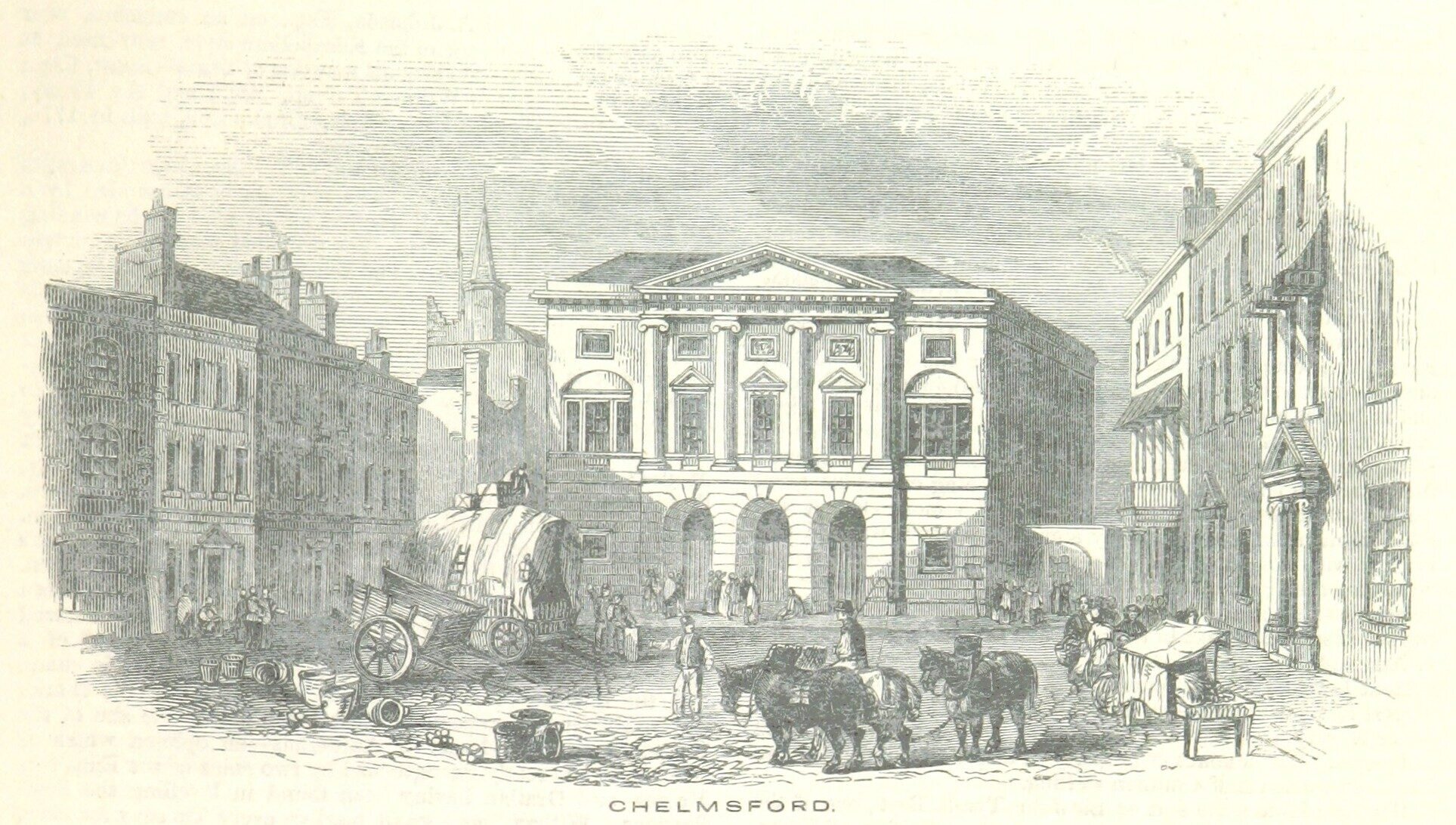
On 28 October 1986, after a 19 day trial in the Crown Court at Chelmsford before Mr Justice Drake, the jury convicted Jeremy Nevill Bamber of five counts of murder by a majority of 10 to 2. He was sentenced to life imprisonment with a recommendation that he serve a minimum of 25 years. He sought leave to appeal. The single judge refused on the papers. He renewed the application. On 20 March 1989 the full court, presided over by the Lord Chief Justice, Lord Lane, heard it and dismissed it.
The case returned because the Criminal Cases Review Commission referred it under section 9 of the Criminal Appeal Act 1995. The reference, the court said, came about solely because of fresh scientific evidence. Once a reference is made, the legislation then in force let the appellant raise any other point, related or not, without leave. Lord Justice Kay, sitting with Mr Justice Wright and Mr Justice Henriques, heard argument from 17 October to 1 November 2002. Michael Turner QC and M. Duck appeared for Bamber. Victor Temple QC, J. Laidlaw, and A. Darlow appeared for the Crown. On 12 December 2002 the court dismissed the appeal. The judges said they had rejected each ground, and that nothing before them threw doubt on the safety of the convictions.
One of those grounds concerned the kitchen telephone. The defence said the receiver off the hook fitted Nevill having called his son. The prosecution said Jeremy had set the scene. The 2002 court considered whether, if a call had been made from the office and the kitchen handset replaced and then taken off again, that handling could have wiped visible blood from the handset. It looked at the extent of Nevill’s injuries and at the blood on the work surface. It concluded that the possibility of every visible trace being removed, just by putting the handset back and taking it off again, was fanciful. The jaw wound is the reason that conclusion has force. Blood was running into his mouth. The pathologist said he could not have engaged in purposeful talk after that injury. A father who rang his son, sounded terrified, and spoke a warning about the gun had to do that speaking before the jaw shot, or the call was never his. The handset, off its cradle beside a quantity of .22 shells, is either the end of his call or an object placed there afterwards. Wiping it clean of his blood by the ordinary act of lifting it was, in the court’s word, fanciful. That is a finding about a possibility. It is not a finding that the judges had reheard the witnesses and retried the night.
The sentence came back in a different appeal. On 16 May 2008 Mr Justice Tugendhat, reviewing the sentence under schedule 22 of the Criminal Justice Act 2003, ordered a whole life tariff. Bamber applied for leave to appeal that order. The Lord Chief Justice, Mr Justice David Clarke, and Mr Justice Wyn Williams heard Richard Horwell QC on 28 April 2009. Victor Temple QC and Miss A. Darlow again appeared for the Crown. On 14 May 2009 the court refused the application. It said the application was not about the convictions or their safety. It said the murders were planned, that he was 24, that he fired 25 bullets, and that the gain was the estate. It said the sound moderator was removed and concealed because, had it stayed on the rifle, the investigation would almost certainly have concluded that Sheila could not have killed herself. It said he had been notified in writing, many years earlier, that he would be subject to a whole life order, so the 2008 decision was not a surprise substituted for a realistic hope of a parole review at 25 years. Even a 25 year minimum would not have meant release. It would have meant the Parole Board could then consider licence. The court said a whole life order is rare and for the most extreme cases, and that on these crimes, even by a relatively young man, punishment and retribution in that form were fully justified. It saw no basis for interfering. The order was neither wrong in principle nor manifestly excessive.
These two judgments are the courts opened here. The 2002 judgment holds the convictions safe. The 2009 judgment holds the whole life order. A later reference, a later refusal, or a later grant is not in either document. Nothing in them quashes the five murder counts or substitutes a minimum term for the order Tugendhat made.
Conflicts
What the two judgments do not settle into one sentence
The night is a struggle in the 2002 account of the kitchen and a house of sleeping people in the 2009 summary. The estate is about £435,000 in 2002 and in excess of £400,000 in 2009. The call is logged at 3.36 and accepted as about 3.26. Mugford’s morning call is 3.00, or as late as 3.30, against a police call at about 3.26. Bonnet and Bonnett are two spellings of one officer. Sheila could use every gun in the house, in what Jeremy told the officers, and he had not seen her fire a gun as an adult, in his evidence. Dr Craig’s first impression was suicide. He then told the judge the jury should not rely on that impression. Dr Vanezis could not say, from the body alone, murder or suicide. Hayward’s flake matched Sheila and not the others, unless a remote mixture of the parents. The grey hair Jones saw never reached the laboratory.
The moderator makes the suicide physically impossible and was not on the rifle when the rifle was found on her. His right forefinger was on the barrel, pointing across the gun. Her right ring finger was on the butt, pointing down. The Bible that sat against her arm was June’s, normally kept in a cupboard to the right of June’s bed, and the prints reported on it were June’s and one that appeared to be a child’s. Sheila’s nightdress carried her own blood and no firearms residue, though a scientist said a person who fired twenty-five times would be likely to leave some.
The moderator makes the suicide physically impossible and was not on the rifle when the rifle was found on her. The Bible, the light hand on the gun, the muzzle at the throat, and the telephone off the hook are either the remains of her attack and Nevill’s last call, or a scene built after the shooting. The jury heard both and chose. Ten jurors to two. The Court of Appeal in 1989 would not give leave. The Court of Appeal in 2002, with the new science in front of it, dismissed the appeal. The Court of Appeal in 2009 left him on a whole life order.
Chronology
Chronology
- 1949. Nevill and June Bamber marry and take the tenancy of White House Farm. They later adopt Sheila and Jeremy.
- 13 January 1961. Jeremy Nevill Bamber is born.
- May 1977. Sheila marries Colin Caffell. On 22 June 1979 their twins, Daniel and Nicholas, are born.
- May 1982. Sheila and Colin divorce. In 1983 she is diagnosed as a paranoid schizophrenic. In March 1985 she is admitted again and discharged within four weeks.
- 1983. Jeremy meets Julie Mugford. In December 1984 he proposes. Between October and December 1984, she later says, he moves from talk of drugging and burning the house to talk of shooting the family and leaving Sheila as the killer.
- 30 November 1984. Nevill buys a .22 Anshutz rifle, a Parker Hale sound moderator, telescopic sights, and 500 rounds.
- 26 to 28 July 1985. Anthony Pargeter sees the rifle in the gun cupboard, sights and moderator fitted, looking new.
- 4 August 1985. Colin takes Sheila and the boys to the farm. On 5 and 6 August she is seen and appears well. At 9.30 p.m. on 6 August Barbara Wilson finds Nevill abrupt. At about 10 p.m. Pamela Boutflour notices nothing unusual in June.
- About 9.50 p.m., 6 August 1985. Jeremy tells Mugford it is tonight or never.
- About 3.00 to 3.30 a.m., 7 August 1985. He rings Mugford in London. She goes back to sleep. At about 3.26 a.m. he rings PC West on a direct line and says his father rang to say Sheila had the gun, then the line went dead. The log reads 3.36. The court accepts the earlier time.
- 3.35 a.m. A police car is sent. At 4.30 the farm telephone is off the hook and a dog can be heard. Officers wait. Armed police arrive about 5 a.m. At about 7.30 they enter through the rear door, locked from the inside.
- 7 August 1985, after entry. Nevill is in the kitchen, eight gunshot wounds plus beating injuries. June, seven gunshot wounds, is in the main bedroom doorway. Sheila, two contact or near-contact wounds to the throat, is on the floor with the rifle, moderator and sights removed, and June’s Bible beside her. Daniel, five wounds to the back of the head, and Nicholas, three to the head, are in their beds. Dr Craig certifies death at 8.10 a.m.
- 8 August 1985. June and the boys are examined. Sheila’s hands show only ordinary traces of lead. Her right ring fingerprint is on the rifle butt, pointing down.
- 10 August 1985. David Boutflour finds the moderator and the sights at the back of the gun cupboard. The family see red paint and blood. On 12 August DS Jones collects it and sees a grey hair that is later lost. Hayward says the blood flake inside could be Sheila’s and not the others, a parental mixture being remote. Fletcher says she could not have reached the trigger with the moderator fitted.
- 14 August 1985. DI Cook samples the underside of the red mantel above the Aga. The paint matches the moderator in fifteen layers. On 1 October casts of the marks are consistent with more than one contact from the moderator.
- 7 September 1985. Julie Mugford gives the account of the plan. Jeremy is charged. He is arrested in September 1985. The relationship with Mugford ends shortly before that arrest.
- 28 October 1986. Chelmsford Crown Court. Guilty on five counts of murder, 10 to 2, after 19 days. Mr Justice Drake. Life, with a recommendation of 25 years minimum.
- 20 March 1989. Lord Lane and the full court refuse leave to appeal.
- 17 October to 1 November 2002. The Court of Appeal hears the CCRC reference. On 12 December 2002 Lord Justice Kay, Mr Justice Wright, and Mr Justice Henriques dismiss the appeal. The convictions are not unsafe.
- 16 May 2008. Mr Justice Tugendhat orders a whole life tariff. On 14 May 2009 the Lord Chief Justice, Mr Justice David Clarke, and Mr Justice Wyn Williams refuse to interfere.
Questions
Was Jeremy Bamber convicted of the White House Farm murders?
Yes. On 28 October 1986 a jury at Chelmsford convicted him of five counts of murder by 10 to 2. Mr Justice Drake sentenced him to life with a recommended minimum of 25 years. Leave to appeal was refused on 20 March 1989. On 12 December 2002 the Court of Appeal dismissed a reference by the Criminal Cases Review Commission and held that nothing argued threw doubt on the safety of the convictions.
How were Nevill, June, Sheila, Daniel, and Nicholas killed?
All five died of gunshot wounds from the family’s .22 Anshutz rifle in the early hours of 7 August 1985. Nevill, in the kitchen, had eight gunshot wounds and injuries from a beating. June had seven gunshot wounds. Daniel had five to the back of the head. Nicholas had three to the head. Sheila had two contact or near-contact wounds to the throat. The 2009 court summarised the firing as 25 bullets.
Why did the sound moderator matter?
It was not on the rifle when the rifle was found on Sheila’s body. David Boutflour found it on 10 August in the gun cupboard. Blood inside it could have come from Sheila and not from the others, a mixture of the parents’ blood being a remote alternative. Tests showed a woman of her size could not reach the trigger with the moderator fitted. She could have shot herself only if it had been removed. Paint on it matched fifteen layers from the mantel above the Aga.
What did Julie Mugford tell the jury?
The day after the killings she said nothing against him. On 7 September she said he had talked for months about killing the family, had settled on shooting them and making it look as if Sheila had done it, and on the night of 6 August had told her it was tonight or never. She also described a call in the middle of the night in which he said everything was going well. The jury knew her first statement and her later one.
Did the 2002 appeal quash the convictions?
No. The Criminal Cases Review Commission referred the case because of fresh scientific evidence about the blood in the moderator. Lord Justice Kay, Mr Justice Wright, and Mr Justice Henriques dismissed the appeal on 12 December 2002. They said the convictions were not thrown into doubt.
What is the sentence?
Life imprisonment, imposed in 1986 with a judicial recommendation of 25 years. On 16 May 2008 Mr Justice Tugendhat ordered a whole life tariff. On 14 May 2009 the Court of Appeal refused to interfere and said a whole life order was fully justified. That order does not come from the murder counts being quashed or reduced.
Sources
Sources opened for this account
- R v Bamber [2002] EWCA Crim 2912, 12 December 2002, Lord Justice Kay, Mr Justice Wright, and Mr Justice Henriques. Criminal Cases Review Commission reference. BAILII.
- R v Bamber [2009] EWCA Crim 962, 14 May 2009, the Lord Chief Justice, Mr Justice David Clarke, and Mr Justice Wyn Williams. Appeal against the whole life order. BAILII.