 Evidence #01
 Evidence #02
 Evidence #03
 Evidence #04
Overview
David Martin and Theodore Fields were shot leaving Liberty Park. The federal conviction still stands.
Liberty Park, Salt Lake City · 20 August 1980
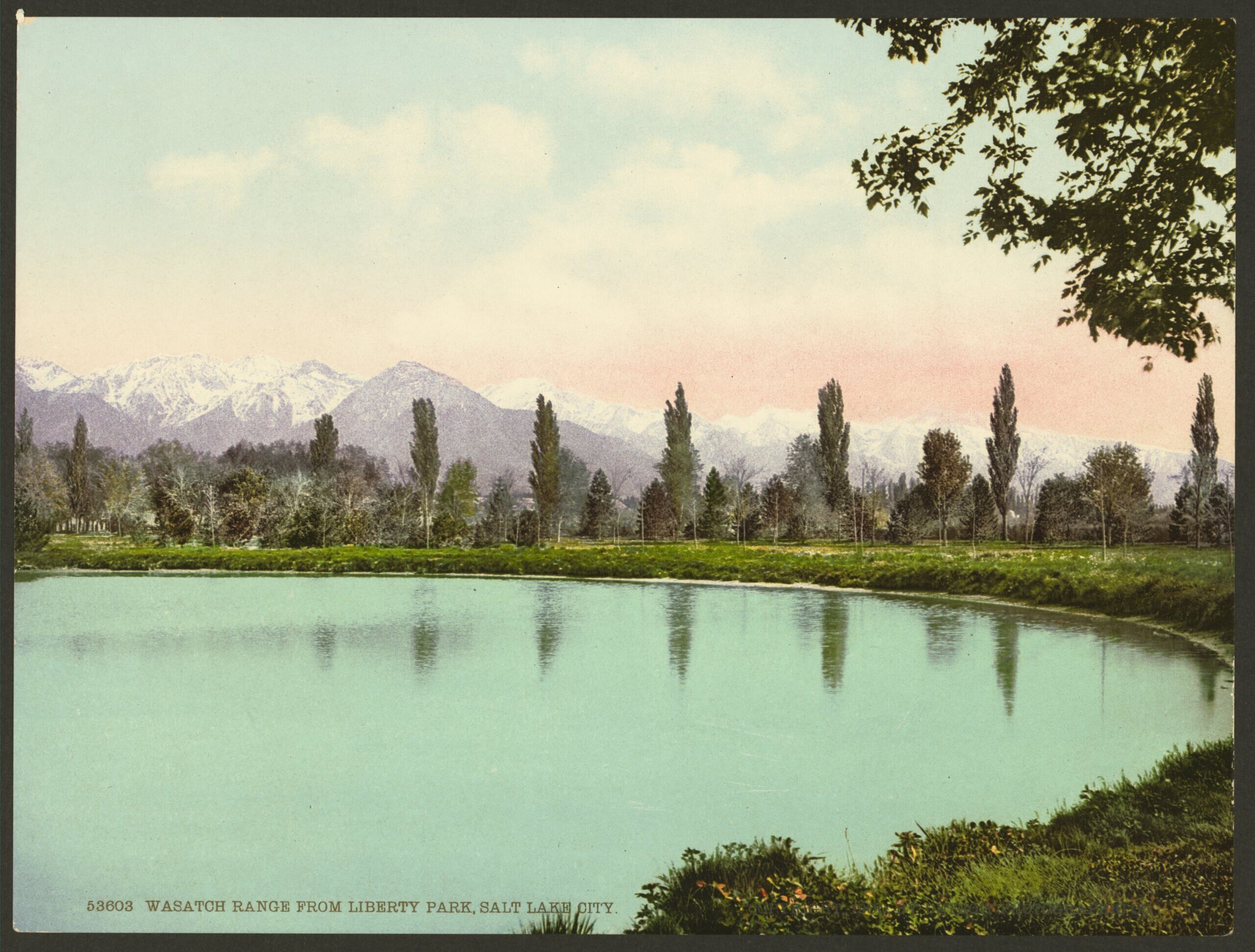
On 20 August 1980, between 10:00 and 10:15 p.m., David Martin and Theodore Fields were shot and killed at Ninth South and Fifth East as they left Liberty Park. They had been jogging with two white women. A federal jury convicted Joseph Paul Franklin of killing them because of their race while they used a public facility. The Tenth Circuit affirmed on 12 April 1983. Utah later imposed its own life sentences for the same two deaths. Missouri executed him on 20 November 2013 for a different killing.
20 August 1980
Two men, two women, and a corner outside the park
United States v. Franklin, 704 F.2d 1183, is the judgment of the United States Court of Appeals for the Tenth Circuit, filed 12 April 1983. Judge Stephanie K. Seymour wrote it. Judges McWilliams and Logan sat with her. The docket is 81-1343. The court said it was summarizing the evidence in the light most favorable to the Government, after a trial of these shootings that lasted seven days and heard some eighty witnesses. On 20 August 1980 two black men, David Martin and Theodore Fields, were jogging with two white women at Liberty Park in Salt Lake City. Martin and Fields were shot and killed between 10:00 and 10:15 p.m. at the intersection of Ninth South and Fifth East as they left the park. The opinion does not name the two women. It does not print the ages of the two men. The Deseret News archive piece of 28 September 2024, looking back at the state sentencing, calls them Ted Fields, 20, and David Martin, 18, and calls the killings sniper shootings in the park. A Fort Walton Beach newspaper of 24 March 1981, reporting the federal sentence, also prints David Martin, 18, and Ted Fields, 20. Theodore and Ted are the same man under two spellings. The ages are the newspapers’. The hour, the corner, and the two unnamed women are the court’s.
Witnesses heard between five and seven shots. Police found six cartridges near the spot where one neighbour had seen someone. Ballistics tests showed that the bullets had all been fired from one rifle, a type that could fire seven shots and eject only six cartridges. The doctor who autopsied Fields and Martin testified that their wounds were consistent with seven shots fired from the field. The opinion does not name the doctor, does not name the rifle’s make, and does not say which man was hit how many times, or whether either died at once. What it does fix is a single firearm, six recovered cartridges, a capacity of seven, and wounds that fit seven shots from the open ground rather than from inside a car.
Gary Spicer lived near the park. He saw a dark Camaro with mag wheels park in the lot between his house and the intersection. He saw a man about six feet tall get out. Fifteen minutes later he heard the shots, saw a flash coming from the lot, and saw the victims at the intersection. He shined a light on a man in the lot who was holding what appeared to be a gun. When the shooting stopped, that man ran to the Camaro, threw a long object into the trunk, and drove off. Another witness saw an orange-brown Camaro pull out of the lot after the shooting ceased. Two others described a man wearing a baseball cap and carrying what appeared to be a rifle. John Fellows, who also lived near the park, noticed a dark Camaro with mag wheels. The court does not say Fellows saw the shots. It says he noticed the car.
The car
Brown, maroon, and orange-brown
Franklin is 5 feet 11 inches tall. At the time of the shootings he had shoulder-length blond hair. He owned a metallic brown 1975 Camaro with extra high gloss and red pin stripes. It had chrome mag wheels, four tires of the same make with white raised letters, plaid vinyl seat covers, dual exhausts, and a spoiler. Tire prints in the lot were similar to prints that would have been left by those tires. Similar is the court’s word. It is not a laboratory identification of a unique tire to the exclusion of every other car.
The people who saw a car that night did not use one colour. One of the women jogging with Fields and Martin noticed a car that looked like a Camaro, slowly driving the wrong way on a one-way road through the park. She said it looked new and pretty shiny. Sefo Manu, who owned a Camaro himself, noticed a Camaro going the wrong way on the park road. He followed it as it left the park and turned into a lot. He described it as newer than his own 1974 Camaro, dark maroon with red trim, mag wheels, writing on the tires, a spoiler, and a dual exhaust. He said the driver had shoulder-length hair. Spicer and Fellows said dark. Another witness said orange-brown. Franklin’s own car, as the Government proved he owned it, was metallic brown with red pin stripes. Maroon, dark, shiny, and orange-brown are four ways of seeing one glossy brown car at night, or they are a conflict the jury was allowed to resolve. The court affirmed without treating the colour words as a reason to reverse. The height is a smaller version of the same problem. Franklin is 5 feet 11. Spicer saw a man about six feet tall. An inch, in the dark, from a neighbouring house, is the difference between those two measurements.
A day or two after he had stopped a lifeguard on her way to the park, Lori Jacobs saw him driving the Camaro through Liberty Park. About 9:00 on the night of the shooting, two white women he had picked up hitchhiking near the park saw him driving the Camaro near the intersection where Fields and Martin were shot. Those sightings put the car, and a man those witnesses knew as Franklin, at the corner in the hour before the shots. They are not the same as Spicer’s man with the long object. The jury had both.
The ten days
Six motels, and a park he said he would not swim in
Several witnesses testified about Franklin’s activities in Salt Lake City in the ten days immediately before the shooting. He stayed in at least six motels. He registered under assumed names. He asked motel employees whether his room had ever been occupied or cleaned by blacks. The opinion does not print the false names or the motel signs. The fact it preserves is the question he asked, over and over, about who had been in the room.
Mickey Farman-Ara spent an evening with him a few days before the shootings. He told her he hated blacks. She told him she disliked two black pimps, and they discussed killing those two men. He showed her two handguns. She noticed a rifle in the closet of his motel room. Driving past Liberty Park, she told him that the east side was predominantly white, the west side predominantly Mexican, and the middle was where, in her words, the blacks and the pimps hung out to pick up the girls. Later they talked again about killing the two pimps. She warned him he would be caught. He disagreed. He said you follow them and pick out the right time, and even if it is in a crowd you can just shoot them, and if there are enough cars hiding you, you can get away with it. That is a conversation about two pimps, not a confession to the jogger shootings. It is also a description, days beforehand, of a method: follow, wait, shoot from cover, leave. The shots at Ninth South and Fifth East were fired from a lot beside the intersection, and the shooter ran to a car.
A day or two before the murders he stopped his car and called to Lori Jacobs, a lifeguard on her way to work at Liberty Park. He told her he did not go around Liberty Park because there were too many, and he used the slur the opinion prints, in Liberty Park. He said he would come and visit her in the park but would not go swimming because of who swam there, and he used the slur again. A day or two later Jacobs saw him driving the Camaro through the park. About 5:30 on the evening of the shooting he picked up two white women hitchhiking near the park. He told them he hated to see white girls with, and again the opinion prints his slur, because it was not right. About 9:00 those two women saw him driving the Camaro near the intersection where Fields and Martin were shot an hour to an hour and a quarter later. The court uses his language because the charge required the Government to prove he acted because of race. The words are evidence. They are not a style.
After the shots
A window in Florence, a haircut in Cincinnati, a telephone in Tampa
On 25 September 1980 Franklin was arrested in Florence, Kentucky, after a routine check erroneously indicated that his car was stolen. Police found two handguns and two rifles in his motel room. At the station he first denied ever having been to Utah. Then he said he had been there five years before. Then he conceded he had been there in August. He became nervous when the officer began to ask about a double homicide involving his Camaro there. The officer was called out of the room. Franklin went out a window. He hitchhiked to Cincinnati, had his hair cut and dyed, and bought all new clothes. The Deseret News later compressed this into a September arrest in Kentucky, a brief escape, and a capture in Florida a month after that. The opinion’s dates are 25 September for Florence and 28 October for Florida. A month is a fair description of the gap. The window, the dyed hair, and the new clothes are the opinion’s detail, not the archive piece’s.
In late August or early September he had visited his former wife, Anita Cooper, in Birmingham, Alabama, driving a brown Camaro. In late September or early October he visited her again, this time on foot. His hair was dyed and styled differently. He wore new glasses. When she failed to recognize him he laughed and said that if he could fool her, he could fool anyone. During the conversation he talked about Salt Lake City and two joggers. He said it would be funny if he did it. That sentence is not “I did it.” It is a conditional, spoken to a woman who had not known him at the door. The telephone call from Tampa, after the Florida arrest, is the sentence without the conditional.
He was arrested in Florida on 28 October. He told the agent who questioned him that he had owned several weapons, particularly handguns and high-powered rifles, and that he considered himself an expert in their use. He said he considered himself a racist. He expressed a very strong dislike for black people and for Jews. He said he had no remorseful feelings at all at the deaths of these people. He talked about the mixing of the black and white races and, with very strong emotion, his disapproval of that mixing. He refused a hamburger the agent offered because the agent could not guarantee the hamburger was not cooked by, and the opinion prints the slur he used. He acknowledged having been in Salt Lake City from 15 August to 22 August 1980, which brackets the night of the 20th. He described four guns he had had with him. He said he had been to Liberty Park but had stopped going because he had seen a lot of racial mixing there. He denied having been involved in the murders.
From the police station in Tampa he telephoned Anita Cooper. Near the beginning of the conversation he said, “Have you heard about the two joggers in Salt Lake? I did that.” Cooper testified to the call. The defence later argued that using her testimony violated the Fifth Amendment and the Sixth Amendment right to counsel. The court rejected both arguments. His right to counsel had not attached, because he had been arrested and adversary judicial proceedings had not yet been initiated by formal charge, preliminary hearing, indictment, information, or arraignment. And the remark was not one federal agents had deliberately elicited. He placed the call. He said the sentence. She repeated it at trial.
The jail
He told two inmates he shot the joggers to do something about it
While he was in the Salt Lake County Jail awaiting trial, he admitted killing the two joggers to two fellow inmates, Richard Hawley and Robert Herrera. He told Hawley that he had gone out to a park, noticed blacks and whites associating together, and decided he was going to do something about it. He told Herrera that he did not like seeing a lot of blacks and whites together in the park, so he drove around to find a place to park and a place where it would be best to get a good shot at somebody. He threw his rifle in his trunk and drove away. Later he sold the rifle at a flea market in San Rafael, California. Herrera recited other details of the shooting which he said Franklin had told him. The opinion does not set those other details out. On the sufficiency of the evidence, Seymour wrote that Hawley and Herrera both testified he told them he shot two black joggers to do something about the racial mixing. The jury could infer he intended to deprive the victims of the opportunity to enjoy a public facility. That inference is the element the statute required and the defence said the Government had not proved.
Herrera almost did not testify, and the fight over him is its own chapter. He was an inmate of the Salt Lake County Jail. On 17 February 1981, six days before trial, he contacted the FBI and said he was in the same cellblock as Franklin and that Franklin had admitted shooting the two joggers. The agent passed that to the United States Attorney’s office on 18 February. The prosecutors interviewed Herrera the next day. He added more, including escape plans, and he said Franklin himself had suggested that Herrera go to the FBI with the story and later recant it on the witness stand. The Government decided not to follow its open-file policy as to Herrera. On Friday, 20 February, his name was pencilled onto the witness list with a question mark. The prosecutors did not decide to use him until Monday, 23 February, the first day of trial, when they learned the results of a polygraph he had been given on Friday. His name then went on the formal witness list. The opinion does not say whether he passed or failed the polygraph. It says the results were what the prosecutors waited for.
On the morning of the fourth day of trial the Government gave defence counsel a copy of the FBI report dated the 18th. Counsel moved at once to exclude Herrera, or for a mistrial, which Franklin opposed, or for a continuance. The judge did not exclude him. The judge asked the Government to delay calling him until Monday, so the defence would have Thursday afternoon, Friday, and the weekend. Franklin conceded that no federal rule or case had been broken by the delay in disclosure. He argued that exclusion was the only proper sanction for violating the open-file policy. The court of appeals held that sanctions for a discovery failure sit with the trial judge, and that giving the defence several days to meet a witness whose usefulness was not settled until the eve of trial was not an abuse of discretion. Herrera testified. The admission he described is in the case the jury decided.
The intersection
Elrod’s arm was burning. Martin said they had him. Fields told them to run.
The Tenth Circuit left the two women unnamed. The trials did not. United Press International, covering the state case on 8 September 1981, names Terry Elrod, then 16, and Karma Ingersoll, then 17. The Salt Lake Tribune, interviewing Franklin on 18 November 2013, two days before the Missouri execution, spells the second name Karma Ingersol and says both girls were 15. Elrod, Ingersoll, and Ingersol are the same two people under the spellings the papers used. Sixteen and seventeen in 1981, and fifteen in a 2013 retelling, do not match. The opinion’s silence on their names is why the ages never entered the affirmance.
Elrod’s account, as UPI printed it from the state trial, is the sequence of the bodies. The four of them trotted into the lighted intersection, laughing. Then there were shots and her arm started burning. She looked at Dave. He looked as if he could not talk, and as if he were in a lot of pain. Another shot. He stumbled and said, “God, I think they got me.” Ted caught him and they started dragging him out of the intersection. The shots kept going. Ted, holding Dave, told them to run. Elrod and Ingersoll bolted. The Tribune’s later rendering of the same memory is close and not identical. She heard what sounded like a firecracker, then noticed her arm was bleeding. She could not tell where the next shot came from. Martin said, “They’ve got me.” She and Fields began to drag him. There were more blasts. Fields told her to run. She did. “God, I think they got me” and “They’ve got me” are two reports of one sentence. The burning arm and the bleeding arm are the same wound described twice. What does not move is the order: she is hit, Martin is hit and cannot go on, Fields holds him, the girls are told to run, the firing continues until both men are down in the street.
UPI’s state-trial story says Fields and Martin were hit by at least six bullets from a 30-caliber rifle, and that investigators placed the fire in a field catty-corner to the park. The federal opinion, from the earlier trial, says six cartridges, one rifle, a type that can fire seven and eject six, and wounds consistent with seven shots from the field. Six recovered cartridges and at least six hits and seven shots are three counts of the same volley. They are not a contradiction so much as a rifle that holds one more round than the brass the police picked up. A lever gun that fires seven and leaves six empties is the mechanical fact the court used. It did not name the make.
The make comes from the federal trial, and it does not match the guns in the Kentucky motel. UPI on 26 February 1981 reported that ballistics experts said the Salt Lake rifle was probably a .30-30 Marlin, a pattern sold by Sears, Western Auto, Montgomery Ward, and J.C. Penney. Florence detective Dennis Collins told that jury the weapons seized on 25 September were a Smith & Wesson .357 Magnum, a .44-caliber Ruger, and two .30-06 rifles, one Browning and one Remington, both with telescopic sights. A .30-30 is not a .30-06. The probable murder rifle was not, on that testimony, either of the scoped rifles in the car a month later. Officer Jesse Baker told the same jury the three versions of Utah: never been there, might have passed through five years earlier, then last August. Franklin was calm at the Florence arrest and nervous when the murders came up. The Tribune adds the place of the Florida arrest the opinion only calls Florida: Lakeland, at a blood bank, after a technician recognized a Grim Reaper tattoo on his right arm. He had been out of the Florence jail, the Tribune says, for five hours before the escape was complete. The opinion says he went out a window when the officer left the room. Five hours and a window are both in the public accounts. They describe different clocks for the same escape.
In 2013 Franklin told the Tribune he had not been waiting for Fields and Martin. He said he had been watching an interracial couple go into a 7-Eleven on the corner, an address that later became a coffee shop, and that he had chosen an empty lot north of the store to ambush that couple. He waited. No one came out. Then he saw “this interracial couple jogging.” He said he had not expected them. He said they were in the wrong place at the wrong time. He swung the rifle and shot one of the young men. He was surprised that after the first man dropped, the other man and the women tried to drag him across the street. He pushed the lever and shot, in his word, the second black. When that man dropped he heard one of the girls say run. He swung the rifle toward the women and did not have a clear shot. He said he would have wiped both of them too. That last sentence is his, thirty-three years later, on the telephone, two days before an execution for a different murder. It is not a sentence in the 1983 opinion. It matches Elrod’s run, and it matches a lever-action, which is what a .30-30 Marlin is. It also rewrites the federal element. The jury found he killed them because they were black men using a public park with white women. His 2013 account says he was hunting a different couple and took the joggers because they appeared. Both can be true of a man who had already decided to shoot an interracial pair and then fired at the pair that crossed the light. The court did not need his 2013 interview. The jury had Hawley, Herrera, Farman-Ara, Jacobs, and the hitchhikers.
Elrod, the Tribune says, later realized she had seen the Camaro earlier, going the wrong way through the park, and that the driver had stopped and asked the two women, who were behind their friends, if they needed a ride. That is the same wrong-way Camaro the opinion gives to one of the jogging women and to Sefo Manu. The offer of a ride is not in the opinion. It is in the 2013 article’s account of what she came to understand. Rhonda Rainwater, 21, is a different pair of hitchhikers. On the fourth day of the federal trial she said she and a friend were picked up near the park on 20 August, that he asked if they liked blacks, and that he said he hated to see white girls with the slur the opinion also prints. She saw him driving the brown Camaro near the vacant lot only hours before the shots. The opinion’s “two white women” at 5:30 and again at 9:00 are this pair, or they are Elrod and her friend, or the opinion has folded more than one pair into one description. Rainwater is named. Elrod is named. The opinion names neither. The times, 5:30 and 9:00 and about 10:15, can hold both a hitchhiker ride and a jogger who was offered a ride. They should not be collapsed into one woman.
The lot
One man in a baseball cap, or a man in a wide-brimmed hat and someone running
Gary Spicer is the neighbour in both trials, and he did not tell the same story in the same words. In the federal opinion he sees the dark Camaro park in the lot between his house and the intersection, sees a man about six feet tall get out, and fifteen minutes later hears the shots, sees a flash from the lot, and sees the victims at the corner. He shines a light on a man holding what appears to be a gun. When the shooting stops, the man runs to the Camaro, throws a long object in the trunk, and drives off. Two other witnesses, not named as Spicer, describe a man in a baseball cap carrying what appears to be a rifle. The opinion’s shooter, on that record, is one man.
At the state trial, UPI reports, Spicer told a jury of seven men and five women a sharper and a wider scene. He was on his porch. A car parked in the weed-covered vacant lot minutes before 10 p.m. A man in a leather coat and a wide-brimmed hat got out and took something out of the trunk. Spicer went back inside. The explosions sounded like firecrackers and brought him out. His flashlight found a person standing upright, holding something that looked like a rifle. That man ran to a car similar to Franklin’s brown 1975 Camaro, tossed the long object into the trunk, and sped off. Under cross-examination by David Yocom, Spicer then remembered a second person at the rear of the field while Martin and Fields lay dying, running at full speed toward the back of Spicer’s yard, away from the intersection. Prosecutors had told that jury Franklin acted alone. Earlier defence lawyers, including Robert Van Sciver in the federal case, had said he was a drifter who traveled alone, and that a second sniper would mean he was not the shooter. A second person running away is not, by itself, a second rifle. It is a fact the state’s own witness added, and it is not in the Tenth Circuit’s summary of the federal evidence. The hat is not in that summary either. A baseball cap and a wide-brimmed hat are two headgears. Leather coat is not in the opinion. One running figure is not in the opinion. The long object in the trunk is in both.
The state case could have ended in a firing squad. UPI said a first-degree murder conviction could bring that sentence. The jury did not impose it. The Tribune quotes prosecutor Robert L. Stott, who had asked for death and who said he respected the jury’s decision. Banks gave consecutive life terms. Stott called it a shooting at an intersection of the most used park in the city, and a shock. Franklin, in the same 2013 interview, said he was glad he was caught, that he had been out of his mind, and that killing David Martin had been, in his phrase then, another special operation, mission accomplished. He offered Johnnie Mae Martin, David’s mother, an apology and asked her to forgive him. She told the paper that anyone with that much hate had to be sick, and that she did not hate any race. She had one question for him: how did he feel after he shot her son. His answer is the one above. Terry Elrod, by then Terry Jackson-Mitchell, said she had forgiven him for what he did to her and could not forgive him for what he did to her friends, because that forgiveness was not hers to give. She said the life verdicts broke her heart because she thought the Salt Lake killings should have been the death case, and that he was instead going to die for killing a white man. The paper prints that as her conflict, not as a holding. Franklin said she was the only victim who had reached him, and that he told her he had been told by the Lord she was his daughter in a previous incarnation. She is quoted as having told him he was already forgiven. That conversation is 2013. It is not evidence from 1981. It is what the two of them said to a reporter at the end.
What he said in 2013
A telephone interview, two days before Missouri killed him
On 18 November 2013 Brooke Adams of the Salt Lake Tribune published an hour-long telephone interview conducted as Franklin waited to be executed just after midnight on the Wednesday, for the 1977 murder of a man in Missouri. He was 63. He had been moved on 23 October to the Eastern Reception, Diagnostic and Correctional Center in Bonne Terre, where the state carries out executions, and he was in solitary confinement, as he said he had been for three decades. The interview is not the Tenth Circuit record. It is the account he gave when he knew the date. He said he had no trouble remembering. He described a campaign, from 1977 to 1980, of two bombings, sixteen bank robberies, eight known murders, and suspected ambushes that left at least a dozen other people dead or injured. Those totals are his, as the paper reports them. They are not a judgment in the Salt Lake City case, and they are not a count this account has verified charge by charge.
He said he traveled in the late 1970s “on my mission, and my mission was to try to target any people I felt were enemies of the white race.” The route he named ran from Tennessee to Wisconsin, Missouri to Georgia, Oklahoma to Indiana, Ohio to Pennsylvania, and Virginia. Utah was on it, he said, because he had joined The Church of Jesus Christ of Latter-day Saints in 1974, at 24, while living in Atlanta. A church spokesman told the paper the church does not verify an individual’s membership. He said he liked the faith’s rule against fornication and its prohibitions on smoking, alcohol, coffee, and tea. He had already been baptized by the Baptists and by the Church of Christ. Biographer Mel Ayton, as the paper cites him, said Franklin had moved through other religions and through numerology. He first came to Utah in 1975 to see the church’s hometown. He found the state beautiful and said he could not help noticing “all the miscegenation going on there.” His enthusiasm faded. In 1978 the church allowed black members to hold the lay priesthood. He said that was when he became disillusioned with “their attitude on race.” By then, the paper reports, his views had been set by the Ku Klux Klan, the American Nazi Party, and the National States Rights Party. He told the Southern Poverty Law Center he had taken up Nazism as a teenager after learning that his mother’s relatives in Germany had been party supporters, and that he stole Mein Kampf and read it over and over. He called the killing a God-given calling to start a race war. None of that biography is in the 1983 opinion. The opinion’s proof of motive is what he said in Salt Lake City in August 1980 and what he did with a can of mace in 1976.
The first shootings he described to Adams were in August 1977, in Madison, Wisconsin. Alphonse Manning Jr. and Toni Schwenn, both 23. He said he had gone to Wisconsin to kill a judge who had released two black men suspected of raping a white woman. On the way he robbed a bank and almost was caught. In Madison he gave teenage girls a ride to a mall and asked about that case. Talking about it made him angry. Leaving the lot, Manning, who was black, almost backed into him. Schwenn, who was white, was the passenger. Franklin held the horn down. Manning stopped, got out, and walked toward him. Franklin said he reached under the seat, pulled a .357 Magnum with a six-inch barrel, and shot Manning twice. He said Manning’s eyes opened when he saw the barrel. Then, because he expected a life sentence anyway and because Schwenn had been with Manning, he got out and shot her once, saw her getting out of Manning’s car, pulled alongside, and shot her again. He used a slur for Manning that the Tribune printed with the letters removed. The shots, as he told them, are two into the man who walked up and then the woman who had been in the car with him. That is his 2013 account of a Wisconsin double killing. It is not a Wisconsin judgment opened for this piece.
He described other killings as equally unplanned once he had decided to shoot. He said he was waiting on a Cincinnati overpass for an interracial couple when Darrell Lane, 14, and Dante Evans Brown, 13, walked past on their way to buy sodas. They were cousins. Both were black. He shot them instead of the couple he had been watching for. Many of the people he named were doing ordinary things in public: a grocery store, fast food, a hitchhike, leaving work. He said a childhood bicycle crash left him blind in one eye and with poor sight in the other, and that he taught himself to shoot at a range in Memphis. He stalked Vernon Jordan and Larry Flynt, choosing a place where he would not be seen or could leave quickly. He was surprised he got away. “Fate helped me get away,” he said. The Deseret archive, opened separately, says he confessed to shooting Flynt in 1978 and Jordan in 1980, that he was not convicted in either case, and that the confessions came years later. Flynt, the Tribune adds, was paralyzed from the waist down and, with the Salt Lake branch of the NAACP and the ACLU of Missouri, was among those seeking a stay in 2013. Franklin said he had learned of Flynt’s opposition to the death penalty and was glad of it. The stay did not come. He was killed at Bonne Terre for Gerald Gordon, not for Martin and Fields, and not for Manning and Schwenn, and not for the two boys in Cincinnati.
He told Adams the cause of all of it was a poor, abusive house run by his mother after his alcoholic father left. He said he was small and weak from malnourishment. He said his mother beat him and was a sadist, and that once, in the Birdville neighbourhood of Mobile, she poured boiling water over the back of a puppy he and other children were playing with. That is his childhood, as he told it. Johnnie Mae Martin’s answer to the hatred was that anyone with that much hate had to be sick, and that she was glad she did not have it. He said that at the time he shot her son he was out of his mind and counted it a mission accomplished, and that he now regretted the young man’s life and wanted her forgiveness. He said that as a general rule he had hated blacks, not every one of them, that he still thought race mixing was a sin but no longer an unpardonable one, and that he would not now think of violence. He called himself very mentally ill at the time of the spree. He said he meditated and read the Bible, the Koran, and the Bhagavad Gita. The paper prints those sentences beside Elrod’s refusal to forgive him for her friends and beside her grief that the death sentence was for a white victim. The Salt Lake life sentences, federal and state, are what the juries did with Martin and Fields. The needle in Missouri is what another jury’s penalty became, fifteen years after he reached that state’s death row, for Gordon.
The firing position
A hill, forty yards, and seven shots instead of one
On 24 October 2002, while snipers were killing people in and around Washington, Pat Reavy of the Deseret News asked the Salt Lake lawyers who had tried Franklin what the Liberty Park shooting had looked like from their side of the case. The Tenth Circuit opinion, written nineteen years earlier, had left the ground as a field and a lot. It had a flash, six cartridges, and wounds consistent with seven shots. It did not measure the distance. Reavy’s story is not a new trial. It is what Deputy District Attorney Bob Stott and investigator Mike George said the shooting had been.
Stott had asked a state jury for death and had lived with the life verdict. In 2002 he called Franklin one of the most disgusting persons he had ever met. George, lead investigator for the Salt Lake District Attorney’s office on the case, said Franklin thought black people should not be on the face of the earth and that there should not be interracial mixing of any type. Stott’s account of the night is a man passing through, the latest stop on a trip that investigators only later understood as a run of killings. He happened to be at Liberty Park. He saw a black man and a white woman walking together. That sight, Stott said, infuriated him. He looked over a vacant lot kitty-corner from the park. He hid behind a hill forty yards away. He waited with a high-powered hunting rifle fitted with a scope until another mixed couple walked past. The next people through that light were Fields and Martin.
Forty yards is Stott’s distance, not a measurement printed in the 1983 opinion. A hill is Stott’s cover. A scope is Stott’s optic. The opinion’s shooter throws a long object into a trunk and is seen, by Spicer, holding what appeared to be a gun after a flash from the lot. UPI’s ballistics witnesses, at the federal trial, thought the Salt Lake rifle was probably a .30-30 Marlin of a pattern sold by Sears, Western Auto, Montgomery Ward, and J.C. Penney. The two rifles seized a month later in Florence were .30-06s, Browning and Remington, and those two did have telescopic sights. A scoped hunting rifle in Stott’s 2002 sentence and a probable unscoped .30-30 in the 1981 ballistics testimony are not the same description of the weapon. Both can be reported. They cannot be averaged into one gun. What the counts do share is seven. The opinion’s doctor said the wounds fit seven shots from the field. Stott said Franklin fired seven times, against the sniper habit of one shot and one kill. Six cartridges on the ground and seven shots in the bodies are the same arithmetic the court used in 1983. The extra round is the one the rifle did not eject, or a seventh shot the brass search missed. The opinion does not say which.
George and Stott also described the method as a choice about evidence. Investigators told Reavy that Franklin apparently thought a sniper shooting would make him harder for witnesses to pick out and would keep him off the physical evidence. Stott said he had a trunk full of powerful rifles, weapons, and ammunition, and that the trip was a mission. That trunk, in the opinion, is the Camaro’s trunk on the night of the shots and, a month later, a Florence motel room holding two handguns and two rifles. The opinion never puts the murder rifle in either inventory. Herrera said the rifle was sold at a flea market in San Rafael. The six cartridges stayed in Salt Lake. The gun that fired them, on the opened proof, did not.
Stott’s wait and Franklin’s own 2013 wait are not the same wait. In 2002 Stott said he saw one interracial pair walking, took a position, and fired when the next mixed pair came through, and that the next pair was Fields and Martin. In 2013 Franklin told the Tribune he had followed a different couple into a 7-Eleven, waited in a lot north of that store for them to come out, and only then saw the joggers, who were, in his later phrase, in the wrong place at the wrong time. The opinion’s jail admissions are a third version: he went to the park, saw blacks and whites together, decided to do something about it, and drove until he had a place to park and a place for a good shot. A hill forty yards off the corner can sit inside any of those three stories. It does not decide which pair he thought he was waiting for. The jury that convicted him did not have the 2002 interview or the 2013 interview. It had the park, the lot, the cartridges, and what he had said to Farman-Ara, Jacobs, the hitchhikers, Cooper, Hawley, and Herrera.
Reavy’s story adds people the opinion does not need and a lead the opinion does not use. George said Franklin liked pornography, and that a prostitute he had been with in Salt Lake City gave police information that eventually led to the Kentucky arrest. The opinion’s Florence arrest is a routine check that wrongly said the Camaro was stolen. It is not a tip. A liaison in Salt Lake and a false stolen-car hit can both be true of the same month, and this account does not have a name for the woman George meant. Mickey Farman-Ara is the woman the opinion puts in the motel, looking at the guns and hearing the talk about shooting in a crowd. The opinion does not call her a prostitute. She is not renamed here to fit George’s sentence. George also called snipers cowards who will not face the people they shoot, and he said that was how he saw Franklin: a man who hid behind the crime and could not keep a relationship. By 2002, Reavy wrote, Franklin had been convicted, was awaiting trial, or had reportedly confessed to at least twenty murders and a synagogue bombing, and he had been linked to the shooting of Larry Flynt. Those totals are the 2002 paper’s. They are not the Tenth Circuit’s count, and they are not the eight murders Franklin himself named for the Tribune in 2013. He had, Stott said, maintained his innocence through the whole Salt Lake trial. The paper’s later line, that he was then serving six life sentences in a federal prison in Missouri, is that article’s description of October 2002. The death that came in November 2013 was a Missouri execution at Bonne Terre for Gerald Gordon.
David Yocom, who had been the state defence lawyer and by 2002 was the Salt Lake County district attorney, told Reavy he had not been the first lawyer. Franklin went through several attorneys. A judge then asked Yocom to take him. Yocom said he was belligerent and demanding at the start and personable once known, and that a visit to the jail was not a visit he made alone. He took a deputy. The federal defence lawyer UPI names at the first trial is Robert Van Sciver. The lawyers on the brief in the Tenth Circuit are a different office: Vicki Mandell-King and Michael G. Katz of the Federal Public Defender in Denver for Franklin, and, for the United States, Irving Gornstein with Assistant Attorney General Wm. Bradford Reynolds, Walter W. Barnett, and Harold Levy. The prosecutors the Tribune names in the Salt Lake courtroom, when it describes the day Jenkins sentenced him, are Steven Snarr and Richard Roberts.
Tampa
The FBI had her line. He placed the call.
The sentence to Anita Cooper is not only a former wife’s memory of a telephone call. The opinion says the FBI had already contacted her, and that she had consented to have her phone tapped. She was on the line when he called from the police station in Tampa on the night of the 28 October arrest. Near the start of that conversation he asked whether she had heard about the two joggers in Salt Lake and said that he did that. She repeated that sentence at trial. The fight on appeal was whether the FBI contact, and her consent to the tap, made the words unusable.
His lawyers argued the Sixth Amendment first, under Massiah. That case bars the use of a defendant’s own incriminating words when federal agents have deliberately elicited them after indictment and in the absence of counsel. Seymour’s answer has two steps, and either one would have been enough. The right to counsel had not attached. He had been arrested. Adversary proceedings had not been begun by formal charge, preliminary hearing, indictment, information, or arraignment. Kirby v. Illinois is the case the court used for that line, and Franklin sat on Kirby’s side of it, not Massiah’s. Even if the right had attached, the court held the sentence was not one agents had deliberately elicited. United States v. Henry, the paid-informant case, was the comparison the defence wanted. In Henry an agent told a cellmate to listen, the cellmate was to be paid, and the conversations went on under that arrangement. Cooper was not paid and she was not instructed. On the papers the court reviewed, she was what Henry’s opinion calls a passive listener. Franklin pointed out that she did ask him about Salt Lake City. The court agreed that she questioned him, and it placed those questions in later conversations. The admission the jury heard was the one he volunteered at the beginning. Later questions did not reach back and spoil it.
The Fifth Amendment argument failed on a different ground. He was in custody. The court says so in those words: a police station, officers guarding him, an arrest already made. Miranda applies to custodial interrogation. The open question was whether a call he placed to his former wife was interrogation by the police. Rhode Island v. Innis limits interrogation to words or actions by officers that they should have known were reasonably likely to produce an incriminating answer. Accepting his call, the court said, is not that. There was no compulsion. Hoffa is the citation for the requirement that compulsion be real before a statement becomes compulsory self-incrimination. He picked up the telephone. He said the sentence. Cooper repeated it for the jury. The court left it in.
The last day
An inmate who would say Herrera meant to set him up
Herrera’s late appearance was one fight. A second fight started when the defence, on the last day of trial, found another inmate. That inmate, the defence said, would testify that Herrera had said he intended to set Franklin up, and to get an early release, by claiming Franklin had confessed. The motion was for a new trial on newly discovered evidence. The trial judge denied it. The court of appeals affirmed the denial. The newspaper of 24 March 1981 records the same judge, Bruce S. Jenkins, denying a new trial on the day he imposed the two life terms. The opinion does not print the other inmate’s name.
The test the Tenth Circuit applied comes from United States v. Maestas. The defendant has to show that the evidence was discovered after trial, that he was reasonably diligent, and that the evidence is not merely cumulative or impeaching but is material and of a kind that would probably produce a different result. The trial court took those requirements in order. The inmate was found while the trial was still going, and the story was verified as the trial was about to end. Counsel could have asked the judge to reopen the defence for one more witness before closing argument. The court also said counsel could have learned from Franklin himself the basic facts of who Herrera was. And the new testimony, if the inmate had given it, would not have been about whether Franklin shot the joggers. At best it impeached Herrera. The judge found that Franklin had not shown a different verdict was probable even if the jury had heard it. Seymour wrote that those findings were supported and that the denial was not an abuse of discretion.
The days just before that motion show what the defence did have. Herrera’s name went on the formal witness list on Monday 23 February, after a Friday polygraph whose result the opinion never states. On the morning of the fourth day the defence received the FBI report of 18 February. The judge pushed Herrera’s testimony to the following Monday. That gave Thursday afternoon, Friday, and the weekend. Defence investigators did interview Herrera over that weekend. On Monday the defence did not ask again for a continuance. The court treated that silence, with the interview already done, as enough time. Franklin had opposed a mistrial when the late disclosure first came up. He wanted Herrera kept off the stand, or time. He got time. He did not get exclusion. The jury heard the confession Herrera described, and it did not hear the other inmate.
The statute those jurors were applying is 18 U.S.C. section 245(b). It reaches a person who, by force or threat of force, willfully injures, intimidates, or interferes with another, or attempts to, because of that person’s race, color, religion, or national origin, and because that person is or has been participating in or enjoying a benefit, service, privilege, program, facility, or activity provided or administered by a state or a subdivision of a state. Liberty Park is the facility. The deaths are the force. If the injury is not fatal, the statute as it then stood allowed a fine of not more than $10,000, or not more than ten years, or both. If death results, the punishment is imprisonment for any term of years or for life. There is no death sentence in that subsection. Jenkins gave the top of it twice, consecutive, one life for each man. The firing squad UPI described was a Utah first-degree murder penalty, not a federal civil-rights penalty, and the state jury did not impose it. Banks gave life as well.
One theory of the mace evidence never reached the jury. At a bench conference the Government argued that the 1976 spraying could also prove identity. The trial judge rejected that use. On appeal the Government mentioned identity again, in a footnote, and relied on motive. Because the court held the evidence admissible on motive, it did not decide whether identity would have been a lawful second door. Franklin had admitted the racism and denied the shooting. He did not offer to stipulate the intent element. The court treated that refusal as leaving the element open, which is why a four-year-old can of mace stayed in a case about a rifle at a park. The jury was told, twice, to use it for motive only. Identity stayed out.
1976
Mace on a dead-end street, admitted only as motive
The jury also heard a crime from almost four years earlier, and the judge told them twice what they could use it for. In September 1976, in the Washington area, Aaron Miles, who is black, had been to a play with Carol Eastwood, who is white. On the way home a man drove behind their car for about fifteen minutes and followed them into a dead end. When Miles asked if he was following them, the man said, “Following you? No one’s following you, boy. This is a free country. I can go where I want.” He then sprayed Miles and Eastwood with mace. A Montgomery County, Maryland officer testified that the man, later identified as Franklin, told him he thought interracial interaction was wrong. The trial judge heard Miles outside the jury’s presence before letting the testimony in. The jury was cautioned before Miles testified and again in the final instructions: the incident was offered on motive only.
Franklin’s argument on appeal was that his racism was not in dispute. He had admitted it throughout the trial. What he denied was being the shooter. Rule 404(b) bars other acts when they are used only to prove character. It allows them for motive, intent, and identity, among other purposes. The statute he was charged under, 18 U.S.C. section 245(b), proscribes willfully injuring any person because of his race. Intent is an element. The Government had to prove not only that he killed Fields and Martin but that he did so because of their race. Admitting racism in general did not remove that element, and he gave no enforceable pretrial assurance that he would not dispute intent. The mace spraying was four years before Liberty Park. The court said there is no absolute number of years that makes an earlier act too old, and that on these facts the judge’s decision was not an abuse of discretion. The incident is not a conviction recited as a fact that he killed the joggers. It is a prior attack on an interracial couple, admitted so the jury could weigh motive, with a limit the judge stated twice.
One internal conflict in the opinion should stay visible. The opening says the trial lasted seven days. In the discussion of the mace evidence, Seymour writes that Miles testified on the fifth day of a six-day trial. Both sentences are in the same opinion. A seven-day trial and a six-day trial are not the same count. The court did not reconcile them. The verdict date the Fort Walton Beach paper prints is 4 March 1981, and the opinion says trial began on 23 February. A trial that starts on 23 February and ends in a verdict on 4 March can contain seven trial days without being seven consecutive calendar days. The paper does not count the days. The opinion counts them twice, and the two counts do not match.
The sentences
Two life terms in federal court, then two more in Utah
The federal jury found him guilty. The newspaper of 24 March 1981 says the verdict was 4 March, and that on the Monday before that paper, District Judge Bruce S. Jenkins sentenced him to the maximum of two consecutive life terms for violating the civil rights of the two joggers by shooting them to death. The paper says he was 30 and of Mobile, Alabama. It says he denounced the judge and the prosecutors, called the proceeding a frame in language the OCR garbles, used slurs for the two prosecutors, and called Jenkins an agent of a communist system. Marshals wrestled him to the floor and handcuffed him. Jenkins denied a new trial and said the tragic affair should not have happened and must not happen again. The paper says he had steadfastly maintained his innocence and had told reporters before trial that the pair deserved to die. His lawyers filed an appeal the same day. The appeal is the opinion of 12 April 1983, and the court affirmed. Every point he raised failed: the mace evidence, Cooper’s testimony, Herrera’s late disclosure, the new-trial motion, and the claim that the evidence did not prove the public-facility element.
Utah tried him separately for the murders. The Deseret News archive, republished in 2024 from its 28 September 1981 front page, says that on 28 September 1981 Third District Judge Jay Banks sentenced him to consecutive life terms for killing the two men. Security was tight. Two days earlier, during a recess as that trial wrapped up, while he was in a holding area on the fifth floor of the Hall of Justice in Salt Lake City, he tampered with a key-operated elevator, rode to the third floor, and used a sharpened piece of metal to remove the pins of a door. A locking device kept the door shut. He was caught about fifteen minutes later. The same article says he had also been convicted in civil court for violating the civil rights of his victims. That phrase is the archive’s. The Tenth Circuit opinion is a criminal appeal from a federal jury. It is not a civil judgment. The federal case and the state case are two prosecutions for the same two deaths, with two pairs of life sentences. Calling the federal prosecution a civil case is a mistake in the later retelling, and it is kept here as that mistake.
The opinion stops at the federal affirmance. It does not sentence him, and it does not mention Missouri. The Deseret piece, which is a 2024 retelling and not the 1983 opinion, says he was convicted of several murders and received four life sentences and two death sentences. It says he confessed to the attempted murders of Larry Flynt in 1978 and Vernon Jordan in 1980, that he was not convicted in either of those cases, and that the confessions came years after the crimes. It says he was on Missouri’s death row for fifteen years for the 1977 murder of Gerald Gordon, a sniper shooting at a suburban St. Louis synagogue, and that he was executed by lethal injection on 20 November 2013 at the prison in Bonne Terre. The piece says he was 63. Those facts are the newspaper’s account of the rest of his life. They are not findings of the Tenth Circuit. The Salt Lake City judgment that stands is the federal conviction for Martin and Fields, affirmed in 1983, and the Utah life sentences Banks imposed in 1981. The execution ended his life. It was imposed for Gordon, not for the two men at Ninth South and Fifth East.
Conflicts
What the sources do not settle
The car is metallic brown with red pin stripes in the proof of what he owned, dark maroon with red trim to Manu, dark to Spicer and Fellows, pretty shiny and new-looking to one of the women, and orange-brown to the witness who saw it leave the lot. The driver is 5 feet 11 in the Government’s description of Franklin and about six feet in Spicer’s estimate. The rifle was thrown in the trunk, sold later at a flea market in San Rafael, and never, in this opinion, recovered and matched to the six cartridges. The cartridges and the wounds establish one rifle of a type that fires seven and ejects six. They do not, in the opinion, name the weapon in his closet or the four guns he described in Florida as that rifle.
His own words point in two directions on the same night. To the Florida agent he denied the murders, said he had stopped going to Liberty Park because of racial mixing, and placed himself in Salt Lake City from 15 to 22 August. To Cooper, on the telephone from Tampa, he said he did it. To Hawley and Herrera he said he shot the joggers to do something about blacks and whites together in the park. To Cooper in Birmingham, earlier, he said it would be funny if he did it. To reporters before trial, the March 1981 paper says, he maintained his innocence and also said the pair deserved to die. The jury heard the denials and the admissions that were in evidence. It convicted him. The court of appeals left that verdict in place.
The length of the trial is seven days in the statement of facts and six days in the mace discussion. Theodore Fields in the opinion is Ted Fields in the newspapers. The ages 18 and 20 are not in the opinion. The two women who were jogging are not named in the opinion. The federal case is criminal. A 2024 Deseret retelling calls it civil court. The execution in 2013 was for Gerald Gordon in Missouri. It did not reopen, and it did not erase, the Salt Lake City convictions.
Chronology
Chronology
- September 1976. Franklin follows Aaron Miles and Carol Eastwood into a dead end in the Washington area and sprays them with mace. He tells a Montgomery County officer that interracial interaction is wrong. The Salt Lake City jury hears this only on motive.
- 15 to 22 August 1980. He later tells a Florida agent he was in Salt Lake City across these days. He stays in at least six motels under assumed names and asks whether black people have occupied or cleaned the rooms.
- A few days before 20 August. Mickey Farman-Ara sees two handguns and a rifle in his motel room. He describes shooting someone in a crowd and getting away if cars hide him. Lori Jacobs hears him refuse Liberty Park because of who uses it.
- 20 August 1980, about 5:30 p.m. He tells two white hitchhikers he hates to see white girls with black men.
- 20 August 1980, about 9:00 p.m. Those women see his Camaro near Ninth South and Fifth East.
- 20 August 1980, between 10:00 and 10:15 p.m. David Martin and Theodore Fields are shot and killed at that intersection as they leave Liberty Park. Witnesses hear five to seven shots. Six cartridges from one rifle are found. Wounds fit seven shots from the field. A man runs to a Camaro and throws a long object in the trunk.
- Late August or early September 1980. He visits Anita Cooper in Birmingham in a brown Camaro.
- 25 September 1980. Arrested in Florence, Kentucky, on a false stolen-car check. Two handguns and two rifles are in the motel room. He revises his story about Utah three times, then escapes out a window. In Cincinnati he cuts and dyes his hair and buys new clothes.
- Late September or early October 1980. He visits Cooper again, on foot, unrecognized until he laughs. He says it would be funny if he did the Salt Lake joggers.
- 28 October 1980. Arrested in Florida. He calls himself a racist, denies the murders, refuses a hamburger, and then telephones Cooper: “I did that.”
- 17 to 23 February 1981. Robert Herrera tells the FBI that Franklin admitted the shooting and suggested Herrera should later recant. Trial starts 23 February. Herrera is added after a polygraph whose result the opinion does not state.
- 23 February 1981. The federal trial begins. On 26 February Rhonda Rainwater tells the jury she rode in the Camaro that afternoon and saw it near the lot that night. Ballistics testimony, as UPI reports it, calls the Salt Lake rifle probably a .30-30 Marlin. The guns seized in Florence are two scoped .30-06 rifles, a .357, and a .44.
- 4 March 1981, or 5 March. The Fort Walton Beach paper and a September UPI story date the federal guilty verdict to 4 March. The Salt Lake Tribune in 2013 dates it to 5 March. On 23 March Judge Bruce S. Jenkins imposes two consecutive life terms. Franklin lunges, is wrestled down, and is handcuffed.
- 8 September 1981. At the state trial Gary Spicer describes a wide-brimmed hat and a second person running from the field. Terry Elrod, 16 in that report, describes her burning arm, Martin saying they got him, and Fields telling the girls to run. Karma Ingersoll is 17 in that story and 15, spelled Ingersol, in the Tribune’s 2013 account.
- 28 September 1981. Judge Jay Banks, in Utah state court, imposes consecutive life terms for the two killings. Two days earlier Franklin gets an elevator to move and is caught after about fifteen minutes.
- 12 April 1983. The Tenth Circuit affirms the federal convictions. Seymour writes.
- 20 November 2013. Missouri executes him at Bonne Terre for the 1977 killing of Gerald Gordon. He is 63. That sentence is not the Liberty Park case.
Questions
Was Joseph Paul Franklin convicted of killing David Martin and Theodore Fields?
Yes. A federal jury convicted him of two counts under 18 U.S.C. section 245(b)(2)(B), killing the two men because of their race while they used a public facility. The Tenth Circuit affirmed on 12 April 1983. Judge Bruce S. Jenkins had sentenced him on 23 March 1981 to two consecutive life terms. On 28 September 1981 Judge Jay Banks imposed consecutive life terms in Utah state court for the same two deaths.
How were they killed?
They were shot between 10:00 and 10:15 p.m. on 20 August 1980 at Ninth South and Fifth East, leaving Liberty Park after jogging with two white women. Witnesses heard five to seven shots. Police found six cartridges from one rifle, a type that can fire seven rounds and eject six. The autopsy doctor said the wounds fit seven shots from the field. A neighbour saw a flash from a parking lot, a man holding what looked like a gun, and that man throwing a long object into the trunk of a Camaro.
Did he admit it?
He denied the murders to the agent in Florida. On the telephone to Anita Cooper from the Tampa station he said, of the two joggers, “I did that.” In the Salt Lake County Jail he told Richard Hawley and Robert Herrera that he shot them to do something about black and white people together in the park, and that he later sold the rifle at a flea market in San Rafael. To Cooper in Birmingham, before that arrest, he had said only that it would be funny if he did it.
Why was a 1976 mace spraying in the trial?
Aaron Miles and Carol Eastwood, an interracial couple, were sprayed with mace after a man followed them into a dead end. The man was Franklin, and he told a Montgomery County officer that interracial interaction was wrong. The judge admitted that testimony only on motive, because the federal statute required proof he killed Martin and Fields because of their race. The jury was instructed twice that the 1976 incident was not proof of character.
Was the 2013 execution for these two murders?
No. The Deseret News account says Missouri executed him on 20 November 2013 at Bonne Terre for the 1977 sniper killing of Gerald Gordon outside a St. Louis synagogue. The Liberty Park convictions were life sentences, federal and state. The execution ended his life. It was a different case.
Were the two women he was jogging with named?
Not in the Tenth Circuit opinion. It says two white women. It names Lori Jacobs, the lifeguard, and two other white women he picked up hitchhiking, and it does not print the hitchhikers’ names. Ages for Martin and Fields, 18 and 20, come from the newspapers, not from the opinion.
Sources
Sources opened for this account
- United States v. Franklin, 704 F.2d 1183 (10th Cir. 12 April 1983), Seymour, J. Justia. CourtListener.
- Chris Miller, “Deseret News archives: Joseph Paul Franklin sentenced for Utah murders,” Deseret News, 28 September 2024, recounting the 28 September 1981 state sentencing. Deseret News.
- Fort Walton Beach Playground Daily News, 24 March 1981, page 4, report of the federal sentencing before Judge Bruce S. Jenkins. The OCR of that page is uneven. Slurs and the parole arithmetic in the scan are not used where the letters do not resolve.
- Steven Christensen, United Press International, 26 February 1981, federal-trial testimony of Rhonda Rainwater, Jesse Baker, and Dennis Collins, and the ballistics opinion that the rifle was probably a .30-30 Marlin. UPI.
- Steven Christensen, United Press International, 8 September 1981, state-trial testimony of Terry Elrod and Gary Spicer. UPI.
- Brooke Adams, “Mormon faith brought serial killer to Utah,” Salt Lake Tribune, 18 November 2013. Salt Lake Tribune.
- Pat Reavy, “U.S. serial sniper killings include 2 in S.L.,” Deseret News, 24 October 2002. Stott’s account of a hill forty yards off the corner, and George’s account of the Kentucky lead. Deseret News.