FILE NO. 0185
Content warning: This account describes the killing of about 120 men, women and children in Utah Territory in September 1857, and the execution of the only man convicted for it. It names the dead, as far as the memorial lists allow, and the seventeen surviving children, as the public record does. It contains no images of the dead or of human remains.
Mountain Meadows Massacre: The 1857 Killings and Trials
Legal status: John D. Lee is the only person ever convicted for the Mountain Meadows Massacre. He was one of nine men indicted by a territorial grand jury in 1874. His first trial, in Beaver in 1875, ended in a hung jury; at a second trial there in September 1876, an all-Mormon jury convicted him of first degree murder. He was executed by firing squad at Mountain Meadows on March 23, 1877. None of the other eight men indicted was ever tried or convicted. Statements in this account that any of them, or anyone else, ordered or took part in the killings are attributed to the person or source that made them.
A wagon company from northwest Arkansas
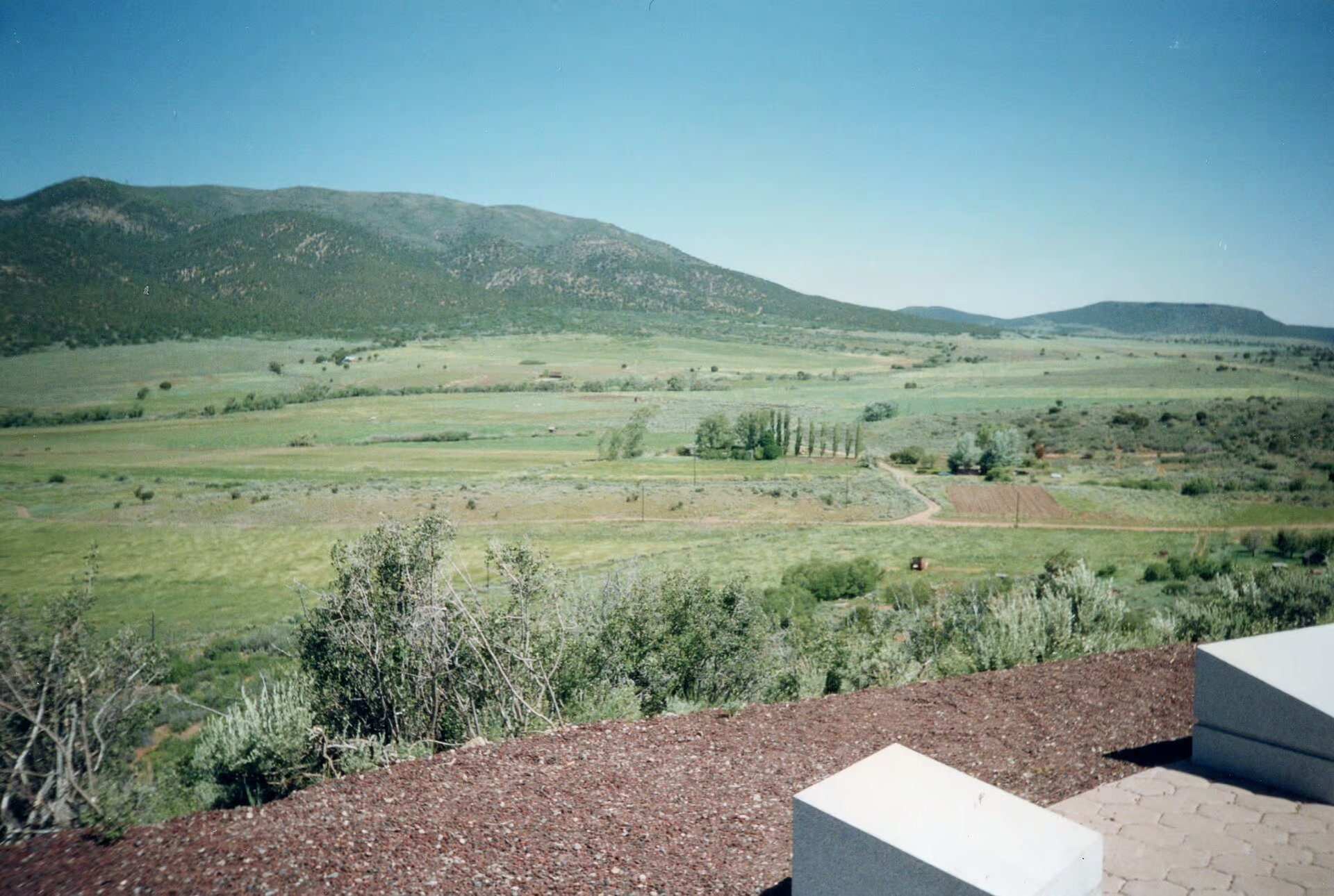
In early September 1857, a wagon company of families from northwest Arkansas stopped to rest their cattle in a high grassy valley in the far southwest of Utah Territory, on the trail to Southern California. On the morning of Monday, September 7, they came under fire. On Friday, September 11, a militia officer named John D. Lee walked into their camp under a white flag and offered them safe passage. They accepted, gave up their guns, and walked out in a column with armed escorts beside them. At a signal, the escorts turned on them. About 120 people were killed. Seventeen young children were spared.
The men who planned and carried out the killing were members of the territorial militia from Cedar City, Parowan and nearby settlements, and they were members of the Church of Jesus Christ of Latter-day Saints. They recruited some Southern Paiutes to take part and then, for decades, blamed the Paiutes for all of it. The church itself now says that responsibility “lies with local leaders” of the church in the region “who also held civic and military positions and with members of the Church acting under their direction.”
Almost everything else has been argued over for more than 160 years: how many died, what the emigrants did on the road, who gave the final order, why only one man was punished, and what Brigham Young, the church’s president and the territory’s governor, knew. This account attributes each contested claim to the historian, witness or institution that made it.
Sources: Douglas O. Linder, “The Mountain Meadows Massacre of 1857 and the Trials of John D. Lee: An Account” and “Chronology”, Famous Trials; Richard E. Turley Jr., “The Mountain Meadows Massacre”, Ensign, September 2007; “150th Anniversary of Mountain Meadows Massacre”, Newsroom of The Church of Jesus Christ of Latter-day Saints; English Wikipedia, “Mountain Meadows Massacre” and “Investigations and prosecutions relating to the Mountain Meadows Massacre”.
The company that died at Mountain Meadows was put together in the spring of 1857 in the Ozark counties of northwest Arkansas. The Encyclopedia of Arkansas says that in April 1857 between 120 and 150 settlers, mostly Arkansans, set out from near Harrison, in what is now Boone County, and that about forty families from Marion, Crawford, Carroll and Johnson counties gathered at Beller’s Stand, just south of Harrison. On the road the group was called the Baker train and the Perkins train; it became known as the Fancher train, or the Baker-Fancher party, after its parts combined in Utah. Others from Missouri and neighbouring states joined along the way, which is one reason no one has ever settled exactly how many people were in it.
It was not a poor company. Will Bagley, writing in Wild West magazine in 2005, described it as “about a dozen large, prosperous families” and their hired hands, driving about 18 wagons and several hundred cattle toward Southern California; English Wikipedia’s account of the siege puts the herd at about 800 head. Bagley counted 135 to 140 members, almost 100 of them women and children. The best known of its leaders, Alexander Fancher of Carroll County, had already made the trip to California twice. Fancher died at the Meadows, and so did most of his family.
The emigrants reached Salt Lake City in the summer and, according to English Wikipedia’s account of the siege, left on or about August 5, 1857, taking the southern road toward the Old Spanish Trail rather than the main California Trail.
Sources: James Finck, “Mountain Meadows Massacre”, Encyclopedia of Arkansas; Will Bagley, “Rescue of the Mountain Meadows Orphans”, Wild West, February 2005, via HistoryNet; English Wikipedia, “Baker-Fancher party” and “Conspiracy and siege of the Mountain Meadows Massacre”.
Utah Territory in the summer of 1857
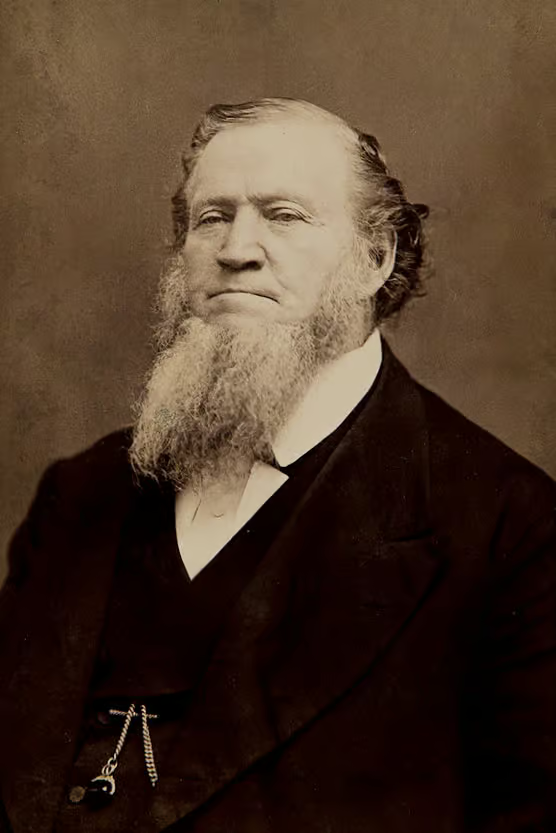
The Arkansans arrived in a territory preparing for war. It was governed by Brigham Young, who was also the church’s president and the territory’s superintendent of Indian affairs. Early that year President James Buchanan, acting on reports from federal officials that Young and the Saints were in rebellion, decided to replace Young as governor and sent an army of about 1,500 troops to escort his successor. The church’s Gospel Topics essay on violence says Latter-day Saints feared the army “would renew the depredations of Missouri and Illinois and again drive the Saints from their homes.” The conflict became known as the Utah War.
The territory was also in the middle of what the church calls a “reformation.” The church’s essay says that Young, his counselor Jedediah M. Grant and other leaders “preached with fiery rhetoric, warning against the evils of those who dissented from or opposed the Church,” and that leaders taught “that some sins were so serious that the perpetrator’s blood would have to be shed in order to receive forgiveness.” On May 13, 1857, the apostle Parley P. Pratt was killed near Fort Smith, Arkansas, by Hector McLean, the estranged husband of a woman Pratt had converted. News of the killing reached Utah weeks later, along with eastern newspaper reports that celebrated it.
Young declared martial law. The Encyclopedia of Arkansas dates it to August 5. Richard E. Turley Jr., then the church’s assistant historian, wrote in the Ensign in 2007 that “Not a kernel of grain was to be wasted or sold to merchants or passing emigrants.” The apostle George A. Smith carried those instructions through the southern settlements in August. On September 1, Young met in Salt Lake City with Southern Paiute leaders who had travelled north with Smith’s party and asked for their help against the army; English Wikipedia reports that the chiefs were reluctant, saying they “would raise grain.”
Sources: “Mountain Meadows Massacre”, Church History Topics; “Peace and Violence among 19th-Century Latter-day Saints”, Gospel Topics Essays; James Finck, “Mountain Meadows Massacre”, Encyclopedia of Arkansas; Richard E. Turley Jr., “The Mountain Meadows Massacre”, Ensign, September 2007; English Wikipedia, “Mountain Meadows Massacre” and “Conspiracy and siege of the Mountain Meadows Massacre”.
The road south and the rumours
The emigrants needed to buy food along the way and mostly could not. Turley’s Ensign account says their herds had to compete with local cattle for feed and water and that they “had a difficult time purchasing grain and ammunition.” On August 25 George A. Smith, returning north, camped near the company at Corn Creek, and the church’s interpreter Jacob Hamblin suggested they rest their cattle at Mountain Meadows, near his homestead.
Around Corn Creek and Fillmore a story took hold that the emigrants had poisoned a spring and the carcass of an ox to kill Indians. Turley called that story inaccurate: “Historical research shows that these stories are not accurate.” The Encyclopedia of Arkansas says, “No conclusive evidence of such acts exists, and considerable evidence refutes them.” Jacob Forney, the federal Indian superintendent, found no basis for it in 1859, according to the historian Glen M. Leonard. Walker, Turley and Leonard, in their 2008 book Massacre at Mountain Meadows, argued instead that the deaths were consistent with anthrax. In 2012 the Deseret News reported that a test of that theory on the exhumed remains of Proctor Hancock Robison, a 14-year-old Fillmore boy who died after skinning one of the dead cattle, found none: “None of the bacteria cultures grown from the samples were Bacillus anthracis.”
On Thursday, September 3, the company reached Cedar City, the last place on the route where it could grind grain and buy supplies. Turley wrote that “the miller charged a whole cow” to grind a few dozen bushels. Tempers broke. According to accounts given later by Mormon settlers, one emigrant claimed to have the gun that had killed Joseph Smith, and others threatened to join the incoming troops. Turley wrote that Fancher “rebuked these men on the spot” and that the threats “were most likely idle threats made in the heat of the moment.” The company left after about an hour and went on toward the Meadows.
Sources: Richard E. Turley Jr., “The Mountain Meadows Massacre”, Ensign, September 2007; James Finck, “Mountain Meadows Massacre”, Encyclopedia of Arkansas; Glen M. Leonard, “Revisiting the Massacre at Mountain Meadows”, 26th Annual Juanita Brooks Lecture, Dixie State College, March 18, 2009; Michael De Groote, “DNA, anthrax and a Mountain Meadows Massacre murder mystery”, Deseret News, March 22, 2012; English Wikipedia, “Mountain Meadows Massacre” and “Conspiracy and siege of the Mountain Meadows Massacre”.
Cedar City and Parowan: the councils
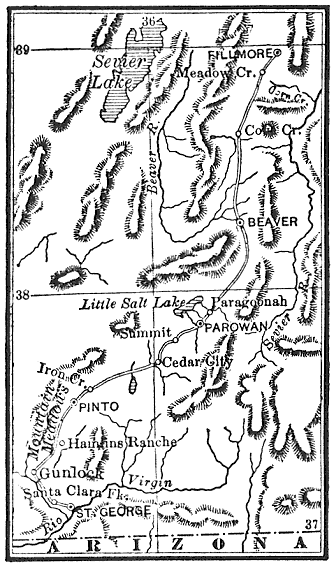
The men who decided what happened next held church, civic and military office at the same time. Isaac C. Haight was mayor of Cedar City, president of the Cedar City stake and a major in the territorial militia. William H. Dame, his militia commander, was stake president in Parowan, to the north. John D. Lee was a militia major at Fort Harmony and, in Turley’s words, a federally funded “Indian farmer” to local Paiutes.
After the company left Cedar City, Haight asked Dame for permission to call out the militia to arrest the men who had made threats. Dame convened a council and refused. His reply, as quoted by Turley, began: “Do not notice their threats.” Turley wrote that Cedar City’s leaders then settled on a different plan: they would persuade local Paiutes to give the Arkansas company “a brush,” killing some or all of the men and taking their cattle. In a late night conversation, Lee told Haight that the Paiutes would “kill all the party, women and children, as well as the men” if incited to attack.
Turley also wrote that “The generally peaceful Paiutes were reluctant when first told of the plan,” and that Cedar City’s leaders “promised them plunder” and told them the emigrants were aligned with troops who would kill Indians as well as settlers. Who authorized the plan is one of the oldest disputes in the case. English Wikipedia’s siege article notes that Lee said Haight told him the orders came from Dame, while Philip Klingensmith, a Cedar City bishop, said they came from “headquarters” but could not say whether that meant Parowan or Salt Lake City.
On Sunday, September 6, Haight put the plan to a council of local leaders after church services. Turley described the response as “stunned resistance by those hearing it for the first time.” Council members asked whether Haight had consulted Brigham Young; he had not, and he agreed to send an express rider to Salt Lake City for instructions. The rider was James Haslam. Utah had no telegraph, and the round trip on horseback took about six days.
Sources: Richard E. Turley Jr., “The Mountain Meadows Massacre”, Ensign, September 2007; English Wikipedia, “Conspiracy and siege of the Mountain Meadows Massacre”.
The siege, September 7 to 10
The attack did not wait for the answer. Early on Monday, September 7, before Haight’s letter had even left, Lee and a force of Paiutes and militiamen, some of them painted to look like Indians, fired into the emigrant camp at the Meadows rather than at the planned site in the canyon. Bagley wrote that the first volley came as the travellers “brewed coffee not long after dawn” and killed or wounded “about a quarter of the able-bodied men.” English Wikipedia’s account puts the first day’s toll at seven killed and sixteen wounded.
The emigrants drove the attackers back. They chained their wagons into a corral, lowered them, and dug a pit in the centre to shelter the women and children. Turley wrote that two more attacks followed over the next two days of what became a five-day siege. The camp was cut off from the spring.
Then the deception broke. Turley wrote that two Cedar City militiamen fired on two emigrant horsemen found a few miles from the corral, killing one; the other “escaped to the emigrant camp, bringing with him the news that his companion’s killers were white men, not Indians.” “The conspirators were now caught in their web of deception,” Turley wrote.
On Wednesday, September 9, Haight rode to Parowan with his counselor Elias Morris to ask Dame again for the militia. A second council in Parowan decided that men should be sent to help the emigrants continue on their way. According to Turley, after the meeting Haight and Morris took Dame aside and told him what the council had not heard: that the emigrants probably knew white men were involved and that most of them were believed already dead. Dame changed his mind. Haight returned to Cedar City and called out “some two dozen militiamen, most of them officers,” to join those already at the Meadows. John M. Higbee, a Cedar City militia officer, was in command on the ground.
Haslam reached Salt Lake City and Young wrote a reply dated September 10. It reached Cedar City on September 13, two days after the massacre. Turley quoted the operative passage:
“In regard to emigration trains passing through our settlements,” Young wrote, “we must not interfere with them untill they are first notified to keep away. You must not meddle with them. The Indians we expect will do as they please but you should try and preserve good feelings with them. There are no other trains going south that I know of[.] [I]f those who are there will leave let them go in peace.”
Turley wrote that when Haight read it “he sobbed like a child and could manage only the words, ‘Too late, too late.'” The letter is central to every later argument about Young, set out below.
Sources: Richard E. Turley Jr., “The Mountain Meadows Massacre”, Ensign, September 2007; Will Bagley, “Rescue of the Mountain Meadows Orphans”, Wild West, via HistoryNet; English Wikipedia, “Conspiracy and siege of the Mountain Meadows Massacre” and “Mountain Meadows Massacre”.
Friday, September 11
On Friday Lee walked into the wagon fort under a white flag, accompanied by William Bateman. Turley wrote that Lee “somehow convinced the besieged emigrants to accept desperate terms”: the militia would escort them past the Indians to Cedar City if they left their property and gave up their weapons. They accepted.
The order of march was the plan. The youngest children and the wounded went first in two wagons. The women and older children followed on foot. The men and older boys came last, each walking beside an armed militiaman. Bagley wrote that “The surviving men cheered their rescuers when they fell in with their escort.” Accounts differ on how far they walked, from three quarters of a mile to about a mile and a half. At a signal, which accounts attribute to Higbee and render as “Do your duty,” each militiaman turned and shot the man beside him. Turley wrote that Indians “rushed from their hiding place to attack the terrified women and children,” and that “Militiamen with the two front-running wagons murdered the wounded.”
Turley wrote that some 50 to 60 local militiamen took part, and that despite plans to blame the Paiutes, the militia member Nephi Johnson “later maintained that his fellow militiamen did most of the killing.” Bagley quoted Johnson directly: “white men did most of the killing.” The church’s history topic says that between the first attack and the final slaughter the massacre took the lives of 120 men, women and children. Only children judged too young to tell what they had seen were spared.
Sources: Richard E. Turley Jr., “The Mountain Meadows Massacre”, Ensign, September 2007; Will Bagley, “Rescue of the Mountain Meadows Orphans”, Wild West, via HistoryNet; Douglas O. Linder, “The Mountain Meadows Massacre of 1857 and the Trials of John D. Lee: An Account”, Famous Trials; “Mountain Meadows Massacre”, Church History Topics; English Wikipedia, “Conspiracy and siege of the Mountain Meadows Massacre”.
The seventeen children
The killers spared the youngest. Bagley wrote that they believed the children “would be too young to be credible witnesses,” and that Mormon teaching of the time treated anyone under eight as “innocent blood.” Bagley also wrote that at least half a dozen children aged eight or younger were killed anyway. Seventeen survived, ten girls and seven boys, between infancy and age six. They were taken into Mormon homes in southern Utah.
The survivors’ names are part of the public record. Bagley listed them with their parents and their ages at the time:
- Children of George and Manerva Baker: Mary Elizabeth, 5; Sarah Frances, 3; William Twitty, 9 months.
- Children of Alexander and Eliza Fancher: Christopher “Kit” Carson, 5; Triphenia D., 22 months.
- Children of Joseph and Matilda Miller: John Calvin, 6; Mary, 4; Joseph, 1.
- Children of Jesse and Mary Dunlap: Rebecca J., 6; Louisa, 4; Sarah Ann, 1.
- Children of Lorenzo Dow and Nancy Dunlap: Prudence Angeline, 5; Georgia Ann, 18 months.
- Child of Peter and Saladia Huff: Nancy Saphrona, 4.
- Children of Pleasant and Armilda Tackitt: Emberson Milum, 4; William Henry, 19 months.
- Child of John Milum and Eloah Jones: Felix Marion, 18 months.
Some were old enough to remember. “The scenes and incidents of the massacre were so terrible that they were indelibly stamped on my mind, notwithstanding I was so young at the time,” Nancy Huff Cates said in 1875. Bagley wrote that surviving children identified Lee as one of the killers when federal officials collected them in 1859.
Sources: Will Bagley, “Rescue of the Mountain Meadows Orphans”, Wild West, via HistoryNet; English Wikipedia, “Baker-Fancher party”; James Finck, “Mountain Meadows Massacre”, Encyclopedia of Arkansas.
The dead
No complete roll of the dead exists. The names below are those on the 1990 monument at Mountain Meadows, as compiled in English Wikipedia’s article on the Baker-Fancher party, with ages as given there. The church’s figure for the dead is 120.
- Aden: William Allen Aden (19).
- Baker: George W. Baker (27), Manerva A. Beller Baker (25), Mary Levina Baker (7), John Twitty Baker (52), Abel Baker (19).
- Beach: John Beach (21).
- Beller: David W. Beller (12), Melissa Ann Beller (14).
- Cameron: William Cameron (51), Martha Cameron (51), Tillman Cameron (24), Isom Cameron (18), Henry Cameron (16), James Cameron (14), Martha Cameron (11), Larkin Cameron (8), Nancy Cameron (12).
- Deshazo: Allen P. Deshazo (20).
- Dunlap: Jesse Dunlap Jr. (39), Mary Wharton Dunlap (39), Ellender Dunlap (18), Nancy M. Dunlap (16), James D. Dunlap (14), Lucinda Dunlap (12), Susannah Dunlap (12), Margerette Dunlap (11), Mary Ann Dunlap (9), Lorenzo Dow Dunlap (42), Nancy Wharton Dunlap (39), Thomas J. Dunlap (17), John H. Dunlap (16), Mary Ann Dunlap (13), Talitha Emaline Dunlap (11), Nancy Dunlap (9), America Jane Dunlap (7).
- Eaton: William M. Eaton (adult).
- Edwards: Silas Edwards.
- Fancher: Alexander Fancher (45), Eliza Ingrum Fancher (32), Hampton Fancher (19), William Fancher (17), Mary Fancher (15), Thomas Fancher (14), Martha Fancher (10), Margaret A. Fancher (8), Sarah G. Fancher (8), James Mathew Fancher (25), Robert Fancher (19).
- Huff: Saladia Ann Brown Huff (38), John Huff (14), William C. Huff (13), James K. Huff (8).
- Jones: John Milum Jones (32), Eloah Angeline Tackitt Jones (27), a daughter whose name is not recorded, Newton Jones (23).
- McEntire: Lawson A. McEntire (21).
- Miller: Josiah (Joseph) Miller (30), Matilda Cameron Miller (26), James William Miller (9).
- Mitchell: Charles R. Mitchell (25), Sarah C. Baker Mitchell (21), John Mitchell (an infant), Joel D. Mitchell (23).
- Prewit: John Prewit (20), William Prewit (18).
- Rush: Milum Lafayette Rush (28).
- Tackitt: Cynthia Tackitt (49), Marion Tackitt (20), Sebron Tackitt (18), Matilda Tackitt (16), James M. Tackitt (14), Jones M. Tackitt (12), Pleasant Tackitt (25), Armilda Miller Tackitt (22).
- Wilson: Richard Wilson (27).
- Wood: Solomon R. Wood (20), William Edward Wood (26).
Walker, Turley and Leonard identified further victims who appear on neither monument: Edward Coker (27), Charity Porter Coker (37) and two Coker children; William E. Cooper (29) and Abbey Cooper (29); John Gresly (21); Mary E. Huff (11) and a Huff son whose name is not known; and William H. Tackitt (23). Four names on the monuments are doubtful and are left out above: Elisha Huff, Charles Stallcup, Frances Fulfer Fancher and a “(Thomas?) Hamilton.”
Sources: English Wikipedia, “Baker-Fancher party”, victims table; “Mountain Meadows Massacre”, Church History Topics.
The cover story
The plan to blame the Paiutes did not end with the killing. Bagley wrote that the participants “took a blood oath to blame the slaughter on the local Paiutes.” Lee rode to Salt Lake City and met Young on September 29, 1857. English Wikipedia’s article on the investigations summarises the account Lee gave there: the emigrants had poisoned a spring and beef, the enraged Indians had killed them after a long siege, and the Mormons had saved some of the children. Lee later said he had told Young that Mormons were involved; Young later testified that he cut Lee off. As Indian superintendent, Young reported to Washington, in the words Bagley quoted, that “Capt. Fancher & Co. fell victims to the Indians’ wrath.”
Jacob Hamblin, who led the church’s Southern Indian Mission and had passed Lee on the road north, said Lee admitted the killings to him and that he relayed the account to Young and George A. Smith. Bagley wrote that when Hamblin met Young again in June 1858 and told him “everything,” Young told him, “Don’t say anything about it.”
The emigrants’ property went to the settlements. According to Carleton’s 1859 report as summarised in that article, cattle were distributed and other goods were auctioned at the church tithing office in Cedar City. Bagley wrote that $30,000 worth of property “and presumably some cash had been distributed among Mormon church officials at Cedar City within a few days of the massacre.” The father of two of the murdered men, who also lost a married daughter, wrote to Senator W.K. Sebastian of Arkansas: “I must have satisfaction for the inhuman manner in which they have slain my children.”
Sources: Will Bagley, “Rescue of the Mountain Meadows Orphans”, Wild West, via HistoryNet; English Wikipedia, “Investigations and prosecutions relating to the Mountain Meadows Massacre”.
1859: Forney, Carleton and Cradlebaugh
The Utah War ended in the summer of 1858 without a battle. Young accepted a presidential pardon, Alfred Cumming replaced him as governor and Jacob Forney became superintendent of Indian affairs. Congress appropriated $10,000 to recover the surviving children and send them home. Forney reached the southern settlements in the spring of 1859. Bagley’s account has him collecting the children, going to Lee’s home in Harmony on April 22 and leaving for the north with 16; the last of them was found later. Forney found that none of the children had lived among the Indians. He reported in September 1859 that he had begun hoping to clear “all white men from any participation in this tragedy,” and had concluded otherwise. In Bagley’s account he named Haight, Klingensmith, Lee, Higbee and his own guide, Ira Hatch, as responsible. Nothing came of it.
Brevet Major James Henry Carleton of the First Dragoons reached the Meadows that May with an Army detachment, buried the remains his men found and raised a rock cairn over them. His report to Congress called the killings a “heinous crime” and, according to English Wikipedia, blamed both local and senior church leaders. He recorded that Hamblin, who still blamed the Paiutes, admitted that in 1856 the local band had only three guns.
Judge John Cradlebaugh, a federal judge, convened a grand jury in Provo in March 1859. It returned no indictments. He then toured the area with a military escort and tried to arrest Lee, Haight and Higbee, who fled. English Wikipedia reports that Cradlebaugh publicly called Young an “accessory before the fact.”
The children went home first. Escorted by dragoons, they reached Fort Leavenworth in late August 1859, and a crowd gathered at Carrollton, Arkansas, to welcome them. Bagley dates that gathering to September 15; English Wikipedia’s article on later remembrances gives September 25. The grandfather of two of the Dunlap girls, an Arkansas state senator, collected them. “You would have thought we were heroes,” Sarah Frances “Sallie” Baker recalled in 1940. “They had a buggy parade for us.” All the children were raised by relatives.
Sources: Will Bagley, “Rescue of the Mountain Meadows Orphans”, Wild West, via HistoryNet; English Wikipedia, “Investigations and prosecutions relating to the Mountain Meadows Massacre”, “Mountain Meadows Massacre” and “Remembrances of the Mountain Meadows Massacre”; Douglas O. Linder, “Chronology”, Famous Trials.
Excommunication, the Poland Act and the arrests
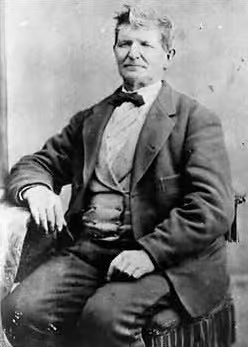
The church removed two of the men from membership. English Wikipedia’s investigations article says Young excommunicated participants including Haight and Lee in 1870; the church’s history topic says two Latter-day Saints were eventually excommunicated for their participation. Glen M. Leonard said in his 2009 Juanita Brooks lecture that Haight was reinstated within four years.
The legal obstacle was the jury box. Douglas O. Linder’s account for the Famous Trials project describes the Poland Act, passed by Congress in 1874, as the key: it “restricted the authority of Mormon-controlled probate courts and opened all Utah juries to non-Mormons.” A grand jury that, in the church’s words, “included Latter-day Saints” indicted nine men: Lee, Dame, Haight, Higbee, Klingensmith, William C. Stewart, Ellott Willden, Samuel Jukes and George Adair Jr. Lee was found near Panguitch and arrested on November 7, 1874; Dame was arrested soon after. Haight, Higbee, Stewart and Jukes went into hiding. Bounties were posted for Haight, Higbee and Stewart.
Sources: English Wikipedia, “Investigations and prosecutions relating to the Mountain Meadows Massacre” and “Mountain Meadows Massacre”; “Mountain Meadows Massacre”, Church History Topics; Douglas O. Linder, “The Mountain Meadows Massacre of 1857 and the Trials of John D. Lee: An Account”, Famous Trials; Glen M. Leonard, “Revisiting the Massacre at Mountain Meadows”, 26th Annual Juanita Brooks Lecture.
The first trial, Beaver, 1875
Lee’s first trial opened on July 23, 1875, in Beaver, before U.S. District Judge Jacob Boreman. The prosecutors were William C. Carey and Robert Baskin. Linder wrote that Lee’s four defence lawyers were “bankrolled by Brigham Young”.
The prosecution’s main witness was Klingensmith. Linder’s account says he testified that Lee and the others acted on orders from Higbee, which came from Haight and, he thought, from Dame, and that weeks after the massacre Young told a group of them: “What you know about this affair do not tell to anybody; do not even talk about it among yourselves.” Neither Young nor George A. Smith appeared; both gave depositions denying involvement, Young saying he was too unwell to travel. The defence argued that the emigrants had provoked the Indians and called witnesses to the poisoning story. Linder wrote that “On cross-examination, however, the defense’s poison story fell apart.”
The jury could not agree, and the trial ended on August 5, 1875. Accounts of the jury differ. Linder wrote that it was eight Mormons, one former Mormon and three non-Mormons, and that the Mormons and the former Mormon voted to acquit while the three non-Mormons voted to convict. English Wikipedia describes a jury of eight Mormons and four non-Mormons.
Sources: Douglas O. Linder, “The Mountain Meadows Massacre of 1857 and the Trials of John D. Lee: An Account” and “Chronology”, Famous Trials; English Wikipedia, “Investigations and prosecutions relating to the Mountain Meadows Massacre”.
The second trial, 1876
The second trial looked nothing like the first. In April 1876 Sumner Howard replaced Carey as U.S. attorney for Utah. Linder wrote that Howard concluded a unanimous verdict could not be reached without Young’s cooperation, and that the two men met. Baskin, the former prosecutor, later speculated that Howard promised an all-Mormon jury and no further prosecutions in return for witnesses who would convict Lee. Linder notes that Howard denied any deal in a letter to the attorney general and suggested Lee’s lawyer had invented it.
The charges against Dame were dropped shortly before the trial began. The dates differ: September 14, 1876, in Linder’s account and September 13 in English Wikipedia’s. The jury was all Mormon. Leonard named the eyewitnesses at this trial as Nephi Johnson, Samuel Knight and Samuel McMurdy. By Linder’s account, their testimony placed Lee at the centre of the killing, and none of them could remember who else had taken part. Johnson testified that Lee and Klingensmith seemed to be “engineering the whole thing.” The defence called no witnesses.
Lee’s lawyer, William Bishop, told the jury: “The Mormon Church had resolved to sacrifice Lee, discarding him as of no further use.” At 3:30 in the afternoon on September 20, 1876, the jury convicted Lee of murder in the first degree. Under territorial law he could choose to be hanged, shot or beheaded. He told Judge Boreman, “I prefer to be shot.”
Sources: Douglas O. Linder, “The Mountain Meadows Massacre of 1857 and the Trials of John D. Lee: An Account”, Famous Trials; Glen M. Leonard, “Revisiting the Massacre at Mountain Meadows”; English Wikipedia, “Investigations and prosecutions relating to the Mountain Meadows Massacre” and “Brigham Young and the Mountain Meadows Massacre”.
March 23, 1877
On March 23, 1877, U.S. Marshal William Nelson brought him to Mountain Meadows. Linder wrote that Lee sat on his coffin while the death warrant was read and then spoke to the officers, the firing squad and about seventy spectators. Linder’s text of the speech includes the lines “I do not believe everything that is now being taught and practiced by Brigham Young. I do not care who hears it.” He also said, in English Wikipedia’s rendering, “I have been sacrificed in a cowardly, dastardly manner.” The firing squad was hidden in wagons. Lee was shot where the emigrants had died almost twenty years before.
He was the only person ever convicted for the Mountain Meadows Massacre. His memoir, published in 1877 as Mormonism Unveiled, accused George A. Smith and, through him, Young. Smith, he wrote, had been sent to southern Utah to prepare the people for the killing “by the direct command of Brigham Young.” English Wikipedia’s biography notes that Lee had also maintained that Young knew nothing until after the event, and that the book was written by Lee “(or an editor).” Bagley, quoted by Linder, said Lee “reconstructed his chronology to distance himself from the initial attack.” Young died five months after the execution. In 1961 the church posthumously restored Lee’s membership; Leonard said the church’s president, David O. McKay, also restored his temple blessings.
Of the other eight indicted, Leonard said four were released for lack of evidence after legal consultations; English Wikipedia says prosecutors chose not to pursue their cases against Dame, Willden and Adair, and Klingensmith became a witness. Haight, Leonard said, “fled to Mexico, and eventually died in Arizona,” and “escaped trial because he could not be found.” Higbee, English Wikipedia’s investigations article says, was said to have shouted the command to begin the killings and claimed that he took part reluctantly. Linder writes that critics of the deal theory point to government efforts, which he describes as rather half hearted, to pursue other perpetrators until 1888, when the case was dropped. Lee’s own list of killers, Linder wrote, included apart from those who admitted it “only his enemies.”
Sources: Douglas O. Linder, “The Mountain Meadows Massacre of 1857 and the Trials of John D. Lee: An Account” and “Last Statement of John D. Lee”, Famous Trials; Glen M. Leonard, “Revisiting the Massacre at Mountain Meadows”; English Wikipedia, “John D. Lee” and “Investigations and prosecutions relating to the Mountain Meadows Massacre”.
What Brigham Young knew
The church says plainly that Latter-day Saint militiamen planned and carried out the killing. The dispute is about Brigham Young, and the sources do not settle it.
The church’s position, set out in its Gospel Topics essay and its history topic, rests on the 2008 Oxford University Press book by Ronald W. Walker, Richard E. Turley Jr. and Glen M. Leonard, written after church historians “scoured archives throughout the United States” and opened every church record on the massacre. The authors concluded that “intemperate preaching about outsiders by Brigham Young, George A. Smith, and other leaders contributed to a climate of hostility,” but that “President Young did not order the massacre.” The church topic says Lee’s execution “fueled false allegations that the massacre had been ordered by Brigham Young.” Juanita Brooks, the Latter-day Saint historian whose The Mountain Meadows Massacre appeared in 1950, concluded, as Leonard quoted her, that Young “did not order the massacre, and would have prevented it if he could,” and also that he “was accessory after the fact, in that he knew what had happened, and how and why it happened.”
Will Bagley, in Blood of the Prophets, argued that the September 10 letter does not clear Young: in English Wikipedia’s summary of his reading, the letter’s “real message” was that the Indians should be left to “do as they please.” Lee’s memoir, quoted above, put the order on Young. Lee’s lawyer, William Bishop, wrote after the trial that Young was “the real criminal.” None of these accusers was neutral.
Some of what Young did afterward is recorded by people close to him. Visiting the site in May 1861, Young saw the inscription on Carleton’s cross; Wilford Woodruff recorded him as saying “it should be vengeance is mine and I have taken a little,” and the cross was then torn down. Asked after Lee’s execution whether he believed in blood atonement, Young replied, in an interview cited by English Wikipedia, “I do, and I believe that Lee has not half atoned for his great crime.” English Wikipedia’s article on Young and the massacre states the position as it stands: historians debate whether the Haight letter absolves Young of any complicity.
Sources: “Peace and Violence among 19th-Century Latter-day Saints”, Gospel Topics Essays; “Mountain Meadows Massacre”, Church History Topics; Glen M. Leonard, “Revisiting the Massacre at Mountain Meadows”; English Wikipedia, “Brigham Young and the Mountain Meadows Massacre”, “Investigations and prosecutions relating to the Mountain Meadows Massacre”, “John D. Lee” and “Remembrances of the Mountain Meadows Massacre”; Douglas O. Linder, “The Mountain Meadows Massacre of 1857 and the Trials of John D. Lee: An Account”, Famous Trials.
The Paiutes and the blame
The plan to blame the Southern Paiutes was made before the shooting began, and it worked for a long time. Lies, the historian Barbara Jones Brown told KUER, unfairly cast blame on the Paiute people for generations. The 1932 plaque at the site said the emigrants were “attacked by white men and Indians.”
The record of Paiute involvement is thin and contested. Leonard said he and his co-authors found twenty-five Paiute names associated with the massacre; for fifteen, “strong evidence suggests that they participated in or witnessed the killing of emigrants,” and for the other ten “The evidence is inconclusive.” Nephi Johnson, who gave the Paiutes their orders on the Friday, put their number that day at about one hundred and fifty. A contemporary Paiute who knew participants said, as Leonard quoted, “All the Indians there were not more than one hundred.” The non-Mormon Indian agent Garland Hurt reported in 1857 that Paiutes “acknowledged having participated in the massacre of the emigrants, but said that the Mormons persuaded them into it.” The anthropologist Martha Knack wrote that “Southern Paiute culture, political structure, and economy could not have produced an action like the Mountain Meadows Massacre without Mormon stimulus and support.”
Paiute accounts go further. English Wikipedia’s investigations article cites Richard Stoffle and Michael Evans as stating that Paiutes had no history of attacking wagon trains, and that no Native Americans were charged, prosecuted or punished by federal officials for the massacre. In a 1998 interview published by the BYU history department, Clifford Jake, then eighty, retold what Isaac Hunkup had told him: two Paiute brothers hunting deer near Pine Valley heard gunfire and watched. “I don’t see any Indians around here,” they said. They followed the attackers east and saw them take off their Indian clothes. “And they were white people,” Jake said.
The church’s 2007 statement addressed the point directly. “A separate expression of regret is owed to the Paiute people who have unjustly borne for too long the principal blame for what occurred during the massacre,” it said. “Although the extent of their involvement is disputed, it is believed they would not have participated without the direction and stimulus provided by local Church leaders and members.”
Sources: Glen M. Leonard, “Revisiting the Massacre at Mountain Meadows”; English Wikipedia, “Investigations and prosecutions relating to the Mountain Meadows Massacre” and “Remembrances of the Mountain Meadows Massacre”; Brigham Young University Department of History, “Document #12: An interview with Clifford Jake”; “150th Anniversary of Mountain Meadows Massacre”, Newsroom of The Church of Jesus Christ of Latter-day Saints; KUER, “For 150 years, site markers didn’t name who committed Utah’s Mountain Meadows Massacre”.
Monuments, apology and the landmark
The markers at Mountain Meadows have changed with what people were willing to say. Carleton’s 1859 cairn carried a cedar cross with the words “Vengeance is mine, I will repay saith the Lord.” KUER reported that it was destroyed, rebuilt in 1864 and destroyed again. In 1932 the Utah Pioneer Trails and Landmarks Association and local residents built a wall around what was left and put up the plaque that blamed white men and Indians.
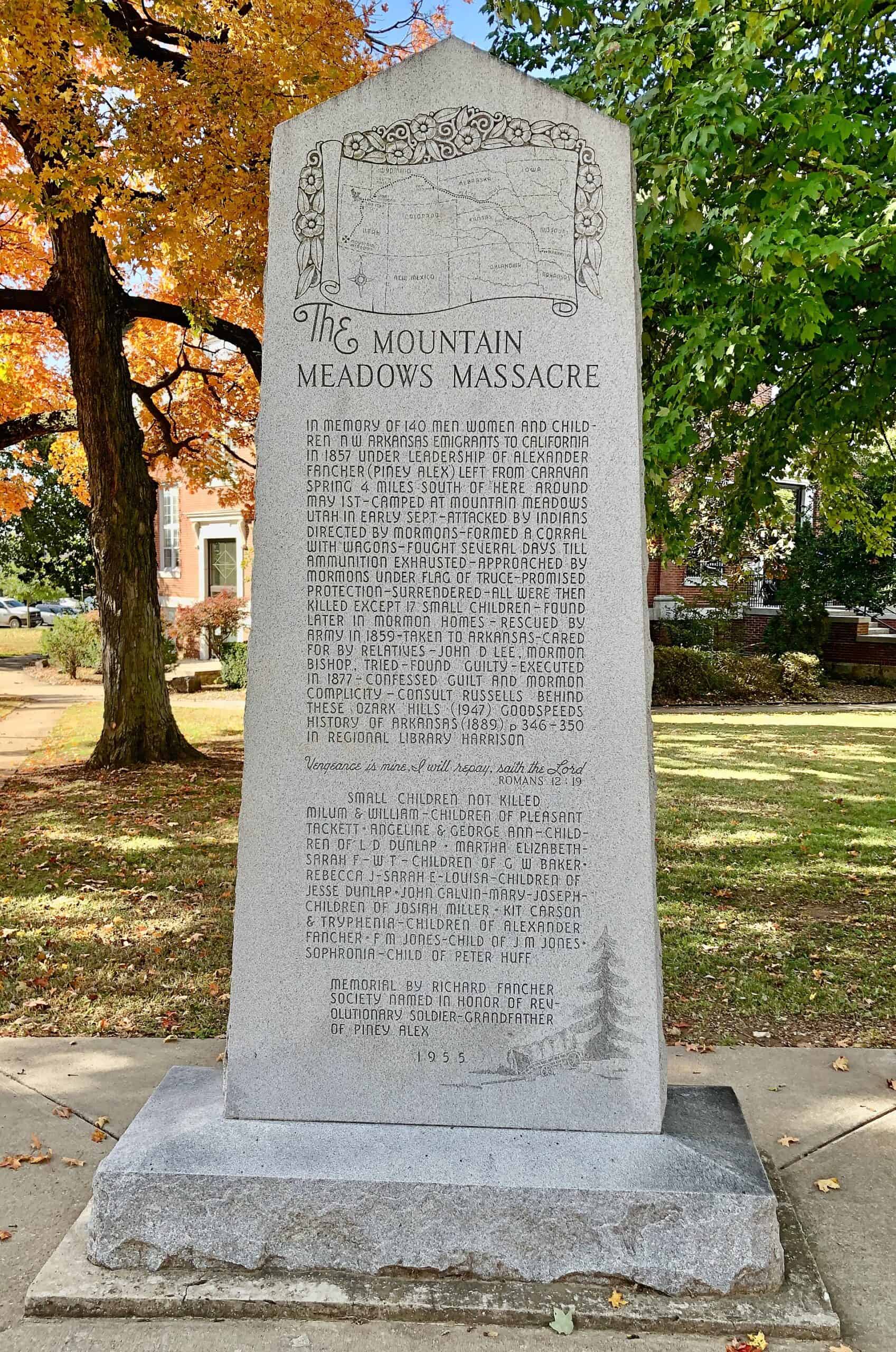
Arkansas remembered sooner and more bluntly. KUER reported that groups in Arkansas put up markers as early as 1936 and that “Those did not hold back about who murdered their ancestors.” A monument in the town square of Harrison was unveiled at a Fancher family reunion on September 4, 1955. Leonard said five hundred people gathered, and that Juanita Brooks accepted an invitation to speak.
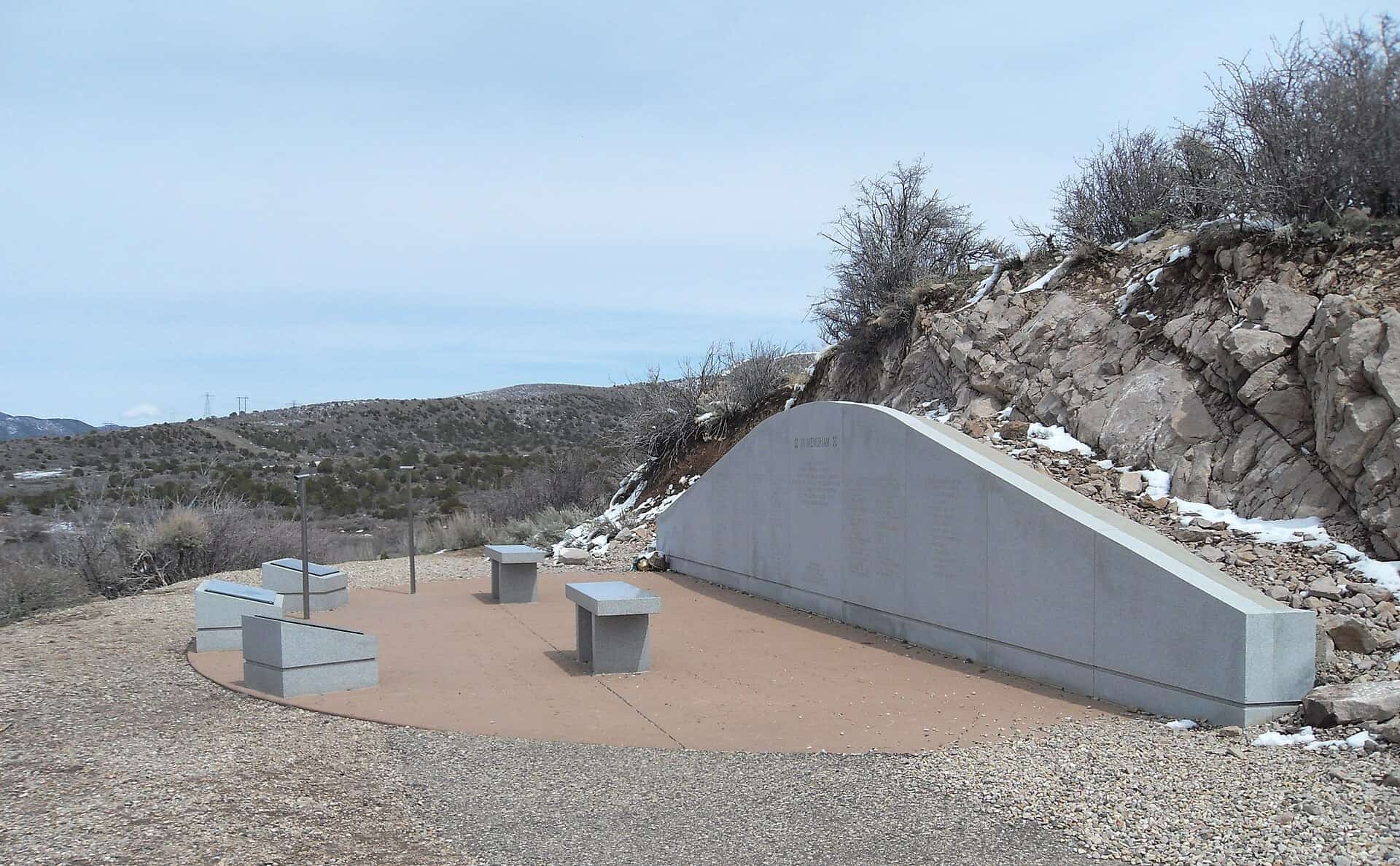
On September 15, 1990, descendants, with support from the church and the State of Utah, dedicated a monument on Dan Sill Hill listing the names of the dead. The church’s history topic says representatives of the Paiute Nation also took part. The president of Brigham Young University, a descendant of John D. Lee, thanked the victims’ descendants “for your Christian-like willingness to forgive.” Gordon B. Hinckley, then a counselor in the church’s First Presidency, said, “Now if there is need for forgiveness, we ask that it be granted.” KUER noted that it did not say who was responsible.
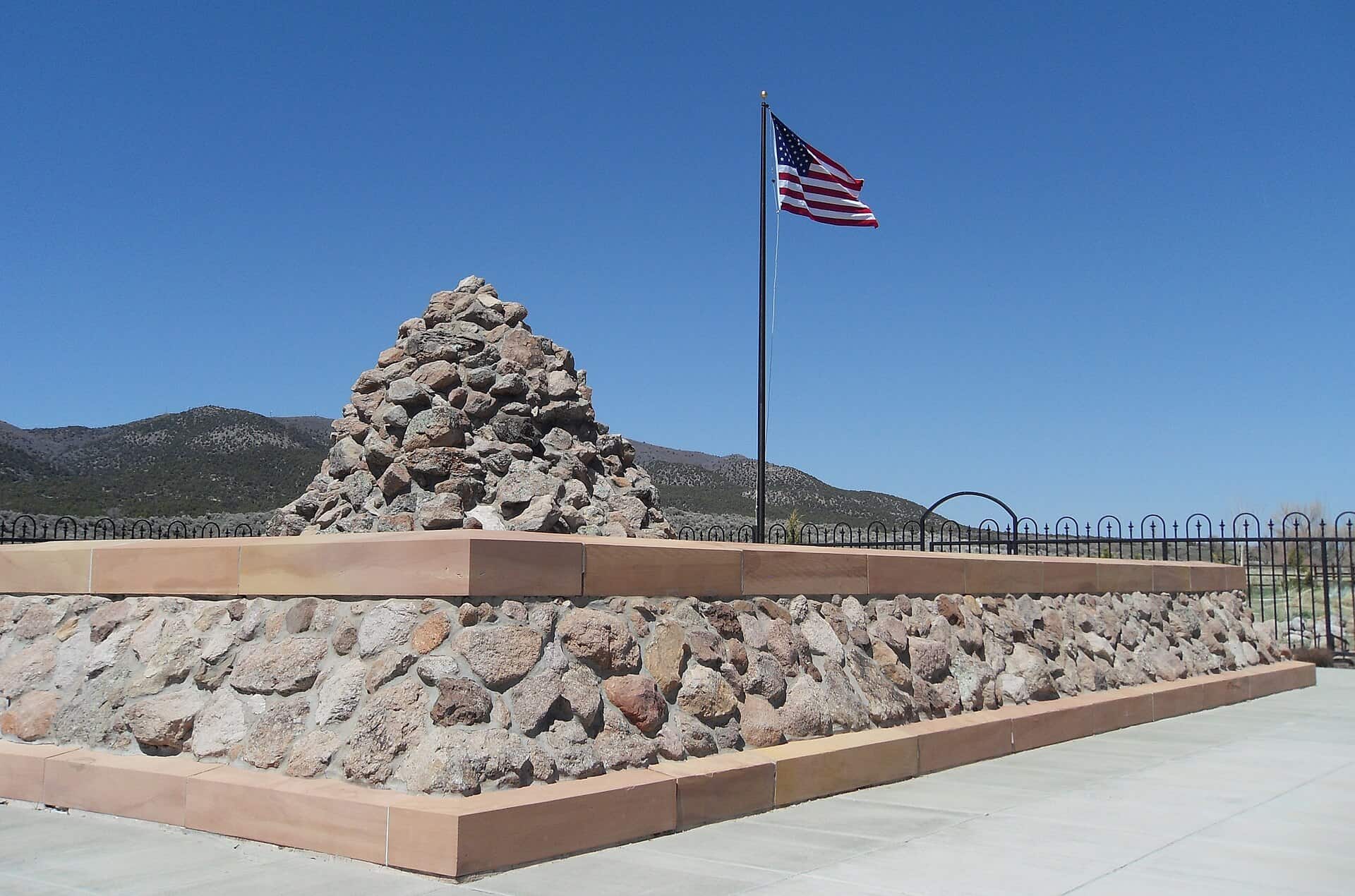
After Hinckley, by then church president, visited the meadows in 1998, the church rebuilt the cairn. Construction disturbed a burial, and the remains were reinterred in a vault under the new monument before it was dedicated on September 11, 1999. Hinckley said there, in English Wikipedia’s quotation, “That which we have done here must never be construed as an acknowledgment of the part of the church of any complicity in the occurrences of that fateful day.” Eight years later, on the 150th anniversary, Henry B. Eyring read the church’s statement: “We express profound regret for the massacre carried out in this valley 150 years ago today and for the undue and untold suffering experienced by the victims then and by their relatives to the present time.”
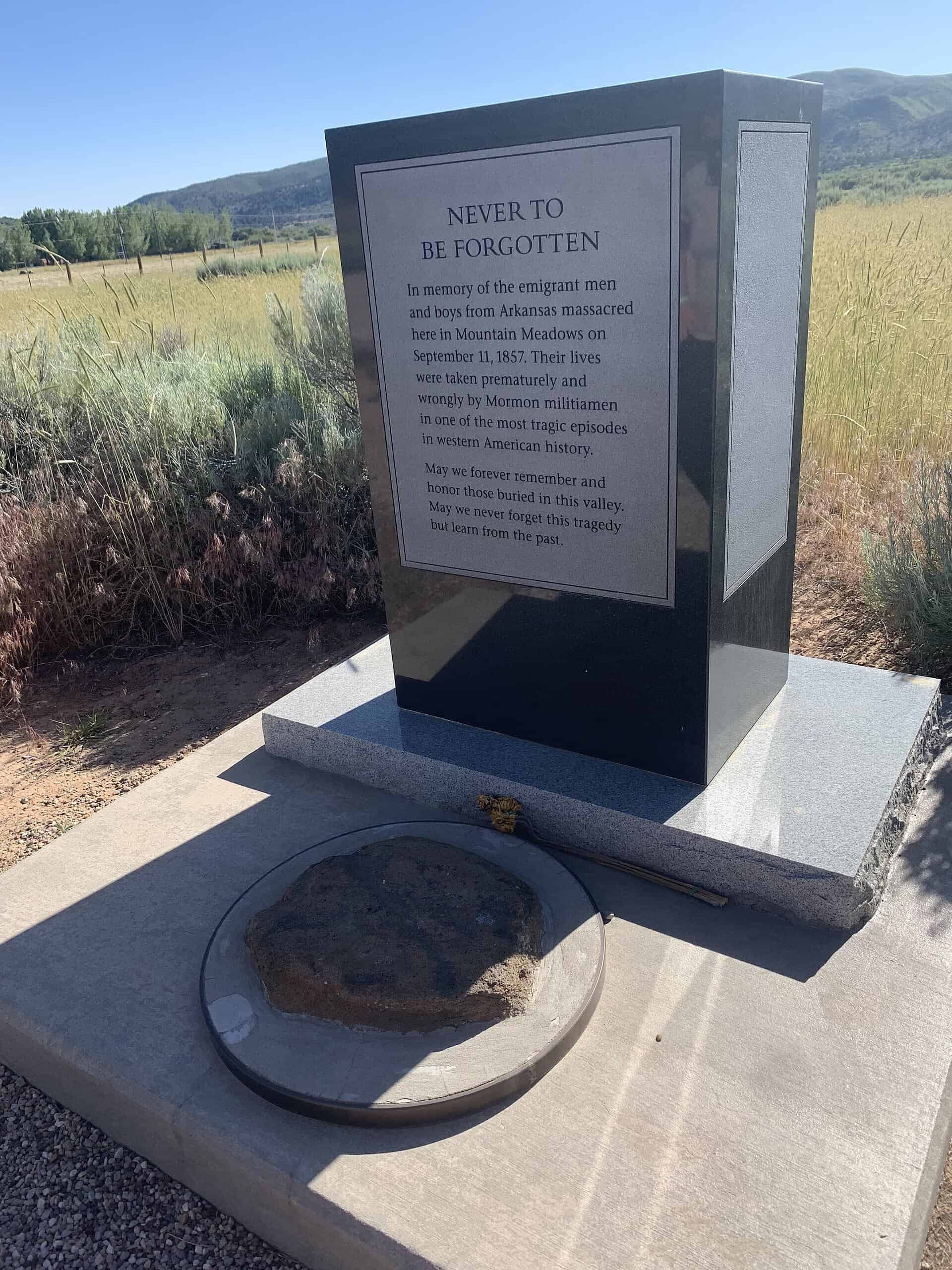
On June 30, 2011, the Secretary of the Interior designated the Mountain Meadows Massacre Site a National Historic Landmark. The Interior Department’s release described the massacre of 120 emigrants “by militiamen associated with the Church of Jesus Christ of Latter-day Saints.” Starting that year, KUER reported, descendants of victims and perpetrators worked with the church on more than 20 new markers. Turley, speaking to KUER in 2024, called the one by State Route 18 the first marker to say plainly what happened and who was responsible. Its text reads, in part, that the emigrants’ “lives were taken prematurely and wrongly by Mormon militiamen in one of the most tragic episodes in western American history.” KUER reported that the church paid for and maintains the new markers and has bought hundreds of acres of the valley.
Sources: KUER, “For 150 years, site markers didn’t name who committed Utah’s Mountain Meadows Massacre”; English Wikipedia, “Remembrances of the Mountain Meadows Massacre”; Glen M. Leonard, “Revisiting the Massacre at Mountain Meadows”; “Mountain Meadows Massacre”, Church History Topics; “150th Anniversary of Mountain Meadows Massacre”, Newsroom of The Church of Jesus Christ of Latter-day Saints; U.S. Department of the Interior, “America’s Great Outdoors: Secretary Salazar Designates 14 New National Historic Landmarks”.
What the record leaves open
- What Brigham Young knew before September 11. The church says he did not order the massacre; Brooks called him an accessory after the fact; Bagley reads his letter differently.
- The number of dead. The church and the Interior Department give 120; the lists compiled since do not match name for name.
- The extent of Paiute participation.
- Who killed whom. The testimony came from participants with reasons to shift blame.
- Whether Sumner Howard and Young reached an understanding before the second trial. Baskin believed so; Howard denied it.
- Where all the dead are buried. English Wikipedia reports that in 2014 the archaeologist Everett Bassett found rock piles he believes mark the northern graves.
- How reliable some long-cited documents are. The Deseret News reported in 2010 that a 1924 affidavit implicating a man named William Edwards was judged by forensic document examiners to be a forgery linked to Mark Hofmann.
Sources: as cited in each section above, and Michael De Groote, “Mountain Meadows Massacre affidavit linked to Mark Hofmann”, Deseret News; English Wikipedia, “Remembrances of the Mountain Meadows Massacre”.
Frequently asked questions
Who was convicted for the Mountain Meadows Massacre?
John D. Lee is the only person ever convicted for the Mountain Meadows Massacre. He was one of nine men indicted by a territorial grand jury in 1874. His first trial, in Beaver in 1875, ended in a hung jury; at a second trial there in September 1876, an all-Mormon jury convicted him of first degree murder. He was executed by firing squad at Mountain Meadows on March 23, 1877. None of the other eight men indicted was ever tried or convicted.
What happened at Mountain Meadows in September 1857?
A wagon company of families from northwest Arkansas stopped to rest their cattle in the valley on the trail to Southern California. On the morning of Monday, September 7, they came under fire. On Friday, September 11, John D. Lee walked into their camp under a white flag and offered them safe passage. They gave up their guns and walked out with armed escorts beside them. At a signal, the escorts turned on them. About 120 people were killed. Seventeen young children were spared.
Did Brigham Young order the massacre?
The sources do not settle it. The church, drawing on the 2008 book by Walker, Turley and Leonard, says “President Young did not order the massacre.” Juanita Brooks concluded, as Leonard quoted her, that Young “did not order the massacre, and would have prevented it if he could,” and also that he “was accessory after the fact.” Will Bagley argued that Young’s September 10 letter does not clear him. Historians debate whether that letter absolves Young of any complicity.
What part did the Paiutes play?
The extent of their involvement is disputed. The plan to blame the Southern Paiutes was made before the shooting began, and for decades they were blamed for all of it. Leonard said he and his co-authors found twenty-five Paiute names associated with the massacre, with strong evidence for fifteen and inconclusive evidence for the other ten. Richard Stoffle and Michael Evans, as cited by English Wikipedia, state that no Native Americans were charged, prosecuted or punished by federal officials for the massacre.
Citations & Sources
Sources
- “Mountain Meadows Massacre”, Church History Topics, The Church of Jesus Christ of Latter-day Saints
- “Peace and Violence among 19th-Century Latter-day Saints”, Gospel Topics Essays, The Church of Jesus Christ of Latter-day Saints
- “150th Anniversary of Mountain Meadows Massacre”, Newsroom of The Church of Jesus Christ of Latter-day Saints, September 11, 2007
- Richard E. Turley Jr., “The Mountain Meadows Massacre”, Ensign, September 2007
- Glen M. Leonard, “Revisiting the Massacre at Mountain Meadows”, 26th Annual Juanita Brooks Lecture, Dixie State College, 2009
- Will Bagley, “Rescue of the Mountain Meadows Orphans”, Wild West, February 2005, via HistoryNet
- James Finck, “Mountain Meadows Massacre”, Encyclopedia of Arkansas
- Douglas O. Linder, “The Mountain Meadows Massacre of 1857 and the Trials of John D. Lee: An Account”, “Chronology” and “Last Statement of John D. Lee”, Famous Trials
- Michael De Groote, “DNA, anthrax and a Mountain Meadows Massacre murder mystery”, Deseret News, March 22, 2012
- Michael De Groote, “Mountain Meadows Massacre affidavit linked to Mark Hofmann”, Deseret News, September 7, 2010
- David Condos, “For 150 years, site markers didn’t name who committed Utah’s Mountain Meadows Massacre”, KUER, April 22, 2024
- U.S. Department of the Interior, “America’s Great Outdoors: Secretary Salazar Designates 14 New National Historic Landmarks”, June 30, 2011
- Brigham Young University Department of History, “Document #12: An interview with Clifford Jake”
- English Wikipedia: “Mountain Meadows Massacre”; “Baker-Fancher party”; “Conspiracy and siege of the Mountain Meadows Massacre”; “Investigations and prosecutions relating to the Mountain Meadows Massacre”; “Brigham Young and the Mountain Meadows Massacre”; “John D. Lee”; “Remembrances of the Mountain Meadows Massacre”
- Images: Wikimedia Commons, credited in each caption.
Image credits
- Image: Lankyrider, via Wikimedia Commons. CC BY-SA 4.0.
- Image: Charles William Carter, via Wikimedia Commons. Public domain.
- Image: Hubert Howe Bancroft, History of Utah, via Wikimedia Commons. Public domain.
- Image: unknown photographer, Utah State Historical Society, via Wikimedia Commons. Public domain.
- Image: Epachamo, via Wikimedia Commons. CC BY-SA 4.0.
- Image: Mark Hilton, via Wikimedia Commons. CC BY-SA 4.0.
- Image: Mangoman88, via Wikimedia Commons. CC BY-SA 3.0.
- Image: Mangoman88, via Wikimedia Commons. CC BY-SA 3.0.
- Image: Nutmeg801, via Wikimedia Commons. CC BY-SA 4.0.
Browse every case in the Case File Index
Discover more from The Dark Side of Humanity
Subscribe to get the latest posts sent to your email.